Modern Rugs, Contemporary Designs for Today’s Interiors
Hand-Knotted Modern Rugs, Curated by Experts
Modern rugs done right are not a compromise between quality and contemporary design, they’re an expression of both. The pieces in this collection are hand-knotted and hand-loomed in wool, silk, and refined blends, designed with the same compositional intelligence we apply to every antique and vintage rug we handle. Abstract, geometric, tonal, and transitional, each one selected because it works in a real room, not just in a photograph.
Nazmiyal Collection has been operating from our New York City gallery for over 45 years. We know what makes a rug last, what makes it look right, and what separates an honest piece from a well-marketed one. Browse the full collection below, explore by style or size, or let our team put a selection together for you.
“The modern rugs we carry are held to the same standard as our antiques. If the construction isn’t honest — if the materials don’t match what’s described — we don’t carry it. A great modern rug should still look interesting in 40 years.”
— Jason Nazmiyal, Nazmiyal Collection Head and Rug Expert (45 years in the trade)
What Makes a Modern Rug Worth Buying
Modern rugs are newly made rugs, produced in the last few decades and designed with contemporary aesthetics rather than traditional regional motifs. At their best, they bring the same material integrity and compositional structuring you’d expect from a serious antique through honest construction, premium fiber, and a design that holds up over time. At their worst, they’re machine-made imitations dressed up in marketing language.
At the Nazmiyal Collection, we’ve spent over 45 years handling rugs of every kind. That depth of experience shapes how we evaluate modern rugs. We’re not looking for what’s trendy. We’re looking for what’s good: material integrity, construction honesty, and design that earns its place in a real room.
This page is built to help you understand what separates a genuinely well-made modern rug from everything else, and to help you find the right piece for your space, whether you browse independently or work with our team directly.
Modern rugs don’t belong to a single design tradition the way antique rugs do. They’re defined instead by how they approach space, color, and surface. Understanding the major design families helps you shop more deliberately and match the right rug to the right room.
Abstract Modern Rugs
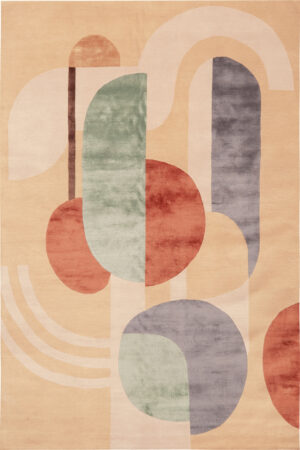
Abstract modern rugs are the closest thing in floor coverings to contemporary art. They use painterly movement, soft transitions between tones, and layered surface texture to create pieces that read as compositions rather than patterns. The best examples work at two scales simultaneously, both striking from across the room, as well as rich and interesting up close. They tend to be statement pieces by nature, working best in rooms where the furniture is relatively restrained and the rug is invited to lead.
Geometric and Architectural Rugs
Geometric modern rugs bring structure: grids, chevrons, interlocking shapes, strong linear frameworks. Where abstract rugs evoke feeling, geometric rugs define space. They’re exceptionally well-suited to open-plan interiors, modern apartments with clean-lined furniture, and rooms that need visual anchoring without decorative noise. The key quality indicator here is edge precision. The lines in a well-made geometric rug are sharp and consistent, not fuzzy or irregular.
Tonal and Texture-Forward Rugs
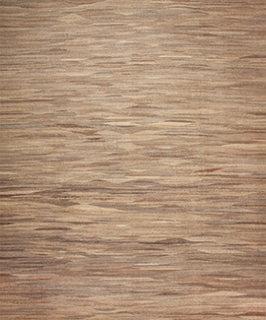
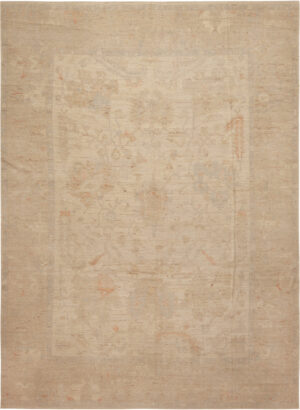
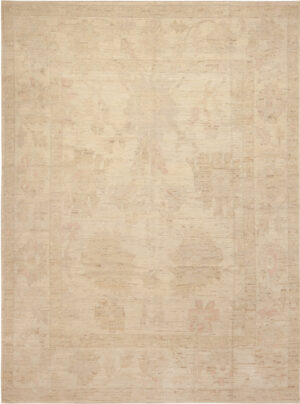
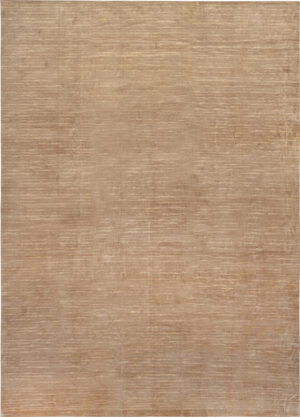
Tonal rugs are often the most underestimated category. They are more subdued, sometimes with a single color across the whole field, but they do significant work in a room through surface variation, pile direction, and the way they interact with light at different times of day. A well-chosen tonal modern rug in a calm interior is the difference between a room that feels complete and one that feels unfinished. These are also among the most versatile pieces we carry as they pair with almost anything.
Transitional Modern Rugs
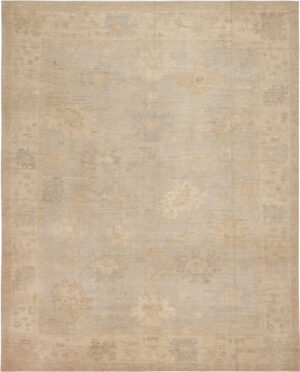
Transitional rugs occupy the space between traditional design grammar and contemporary aesthetics. They might draw on a Persian floral layout but render it in muted modern tones, or reference a tribal geometric but scale it up and simplify it. They’re especially useful when a room mixes antique furniture with modern architecture, able to speak both languages without being either.
Minimalist and Monochromatic Modern Rugs
Solid or near-solid colored modern rugs in premium materials like hand-knotted wool or silk blends, are often understated and the most sophisticated option in a serious interior. The entire value is in the material, the handle, and the finishing. These are also the category most often faked with inferior fiber. A flat, lifeless solid rug in synthetic material looks very similar in a photograph to a beautifully crafted wool piece. In person though, they’re night and day.
Materials and Construction: What Actually Separates Good from Great
The technical aspect of a rug holds much more importance than the average buyer might think. A modern rug that looks beautiful in photos can disappoint profoundly in person if the materials aren’t right. Here’s what we evaluate before carrying anything in our collection.
Wool Quality
Wool is the foundation of most quality modern rugs and it varies enormously. Quality wool, like the hand-spun or high-lanolin wool from specific regions, is springy, resilient, and develops a natural luster over time. Lower-quality wool mats down quickly, pills, and goes flat within a few years of use. You can feel the difference immediately: quality wool pushes back against your hand while flat wool just compresses.
The origin of the wool matters too. Rugs woven in Afghanistan, Nepal, and certain parts of India and Turkey often use higher-quality wool than those produced primarily for the mass market. The provenance isn’t a guarantee, but it’s a useful signal when the listing is transparent about it.
Silk and Silk Blends
Silk adds luster, definition, and a visual depth that wool alone can’t achieve. In a well executed modern rug, silk is used as a highlight, making certain design elements catch the light differently, rather than as the primary fiber throughout. Pure silk rugs are extraordinarily beautiful but require more careful placement and handling. Bamboo silk is a common alternative, both softer and more affordable, with similar visual sheen, but less durable under heavy foot traffic.
Hand-Knotted vs. Hand-Loomed Construction
As the name suggests, hand-knotted rugs are made by tying individual knots around warp threads. It’s a labor-intensive process that produces exceptional structural integrity and longevity. A high-quality hand-knotted modern rug can last generations when properly maintained. Hand-loomed rugs are woven on a loom rather than knotted. The process is faster and the results can still be excellent, but the structure is generally less robust over decades of use. Both can be premium products. What matters is that the listing is honest about which you’re buying.
“When I evaluate a modern rug, I start with the back. The foundation tells you everything — how it was made, how long it will last, whether the pile will hold. Buyers rarely think to look there, but that’s where the piece is most honest.”
Pile height affects how a rug feels underfoot, performs under furniture, and how it wears over time. Medium pile is generally the most practical for living rooms and dining rooms under heavy use. Very high pile can be luxurious but tends to mat and flatten in high-traffic areas. Very low pile, including flatweaves and kilims, is extremely durable but offers less cushioning. Pile density (how tightly the fibers are packed) matters at least as much as height. A dense medium-pile rug will outperform a sparse high-pile rug in almost every practical metric.
Dye Stability
Color fastness in modern rugs varies widely. Vegetable dyes and high-quality synthetic dyes hold their tone beautifully over decades. Cheaper dyes bleed, fade unevenly, or run when wet. We look for rugs where the color on the back closely matches the front, as a significant color difference between pile face and foundation is a sign the dye didn’t fully penetrate, typically indicative of early fading.
Finishing: Edges, Corners, and Shape
Finishing problems rarely improve with time, so it’s important to keep an eye out for rugs that don’t lie flat, have curling corners, or irregular edges. We check that every rug in our collection lays properly, has clean and secure edge finishing, and holds a consistent shape. These details are invisible in most product photography but immediately obvious when the rug arrives in your home.
How to Choose the Right Modern Rug for Your Room
Most rug-buying mistakes come from the same few sources. Here’s how our team approaches the conversation with every client, whether they’re furnishing a living room in Manhattan or selecting a statement piece for a second home in the Hamptons.
Start with Size, Not Pattern
The single most common mistake is buying a rug that’s too small. An undersized rug makes furniture float, visually shrinks a room, and looks like an afterthought. In a living room, the rug should ideally sit under the front legs of all major seating pieces, or under all legs entirely in smaller configurations. In a dining room, the rug should extend at least 24 inches beyond the table on all sides, enough that chairs remain on the rug when pulled out.
“The most common mistake I see is buying a rug that’s too small. People want to play it safe, but an undersized rug makes a room feel unfinished. When in doubt, go larger.”
— Jason Nazmiyal, Founder, Nazmiyal Collection
Match the Rug’s Energy to the Room’s Energy
A graphic, high-contrast modern rug in a room full of bold furniture creates competition rather than composition. A muted tonal rug in a room with very little going on can feel flat and uninspired. The most successful pairings treat the rug as part of the room’s visual hierarchy, usually as a grounding element that either provides contrast to busy furniture or warmth and texture to a minimal space.
Choose Texture Before Color
Color is the first thing people look at and often the last thing that matters. The tactile and visual surface quality of the pile determines how a rug performs in light, how warm or cool it feels in the room, and whether it will continue to interest you after the novelty of the color has faded. We recommend choosing texture and construction first, then finding that quality in the color range that works for your space.
Think About Foot Traffic
A hand-knotted wool rug in a high-traffic hallway will outlast a silk or bamboo silk piece in the same location by decades. Silk and silk-blend rugs belong in lower-traffic areas like bedrooms, formal sitting rooms, and studies. For dining rooms under heavy use, dense wool pile or a durable flatweave is the practical choice. Our team will always steer you toward the right construction for your particular at-home traffic, not the most expensive option.
Consider the Light
Natural light transforms how a rug reads in a room. A tonal rug that appears flat in a showroom photograph can become animated and dimensional in a south-facing room with strong afternoon light. Silk highlights catch directional light in ways that change dramatically as the day progresses. If possible, view rugs in the lighting conditions of your actual space or ask us for photos taken in different light. We’re happy to send them.
Deciding Between Modern Rugs vs. Vintage and Antique Rugs
We carry all three categories — modern, vintage, and antique — and clients often ask how to choose between them. The honest answer is that it depends on what you need the rug to do.
Most predictable. You know exactly what you’re getting
Condition varies; natural wear is part of the appeal
Requires careful evaluation; age introduces variables that demand expertise
Investment character
Premium modern rugs hold value well; exceptional pieces appreciate
Strong vintage pieces have appreciated significantly in recent decades
Highest collectibility; museum-quality pieces are genuinely irreplaceable
Best fit
Crisp modern interiors, clean architectural spaces, buyers who want certainty
Rooms that benefit from character, history, and imperfection
Collectors, serious design rooms, buyers investing in depth and provenance
Decision shortcut
You want control over exactly how the room looks
You want warmth and history without full antique complexity
The rug is the point. Everything else decorates around it
If you’re drawn to traditional design language but want something made for contemporary living, Persian rugs and modern Persian-inspired designs often bridge the gap beautifully. Our team can help you identify pieces that work in either direction.
Featured Modern Rugs from Our Current Collection
These are three pieces from our current inventory that illustrate what we look for: strong design, honest construction, and genuine decorating usefulness.
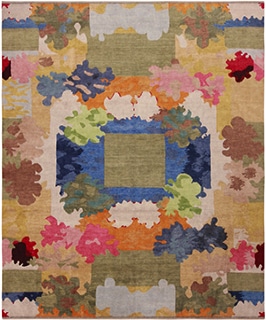
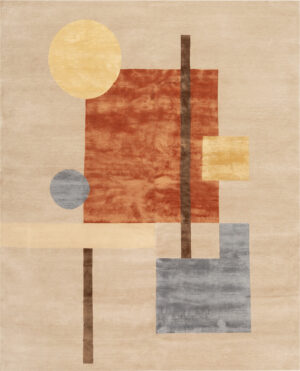
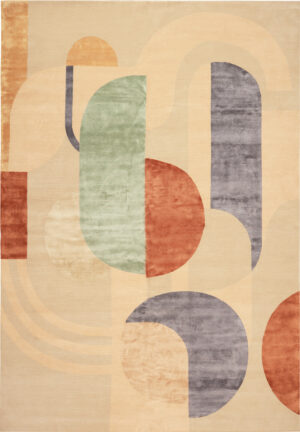
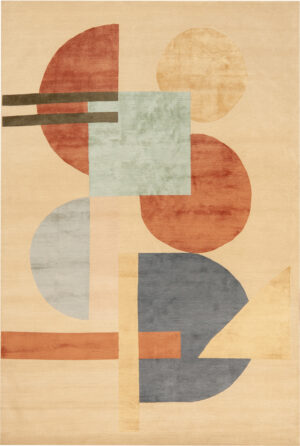
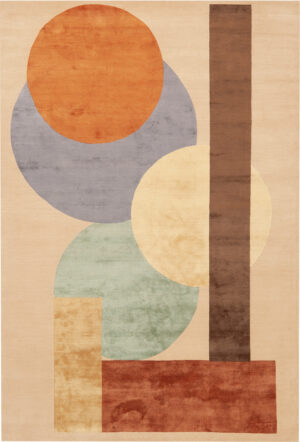
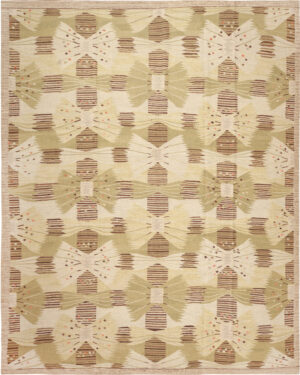
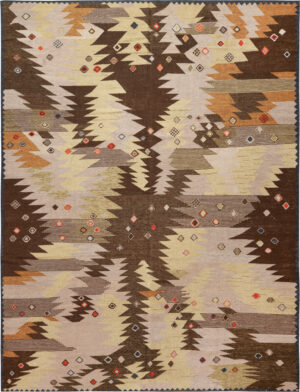
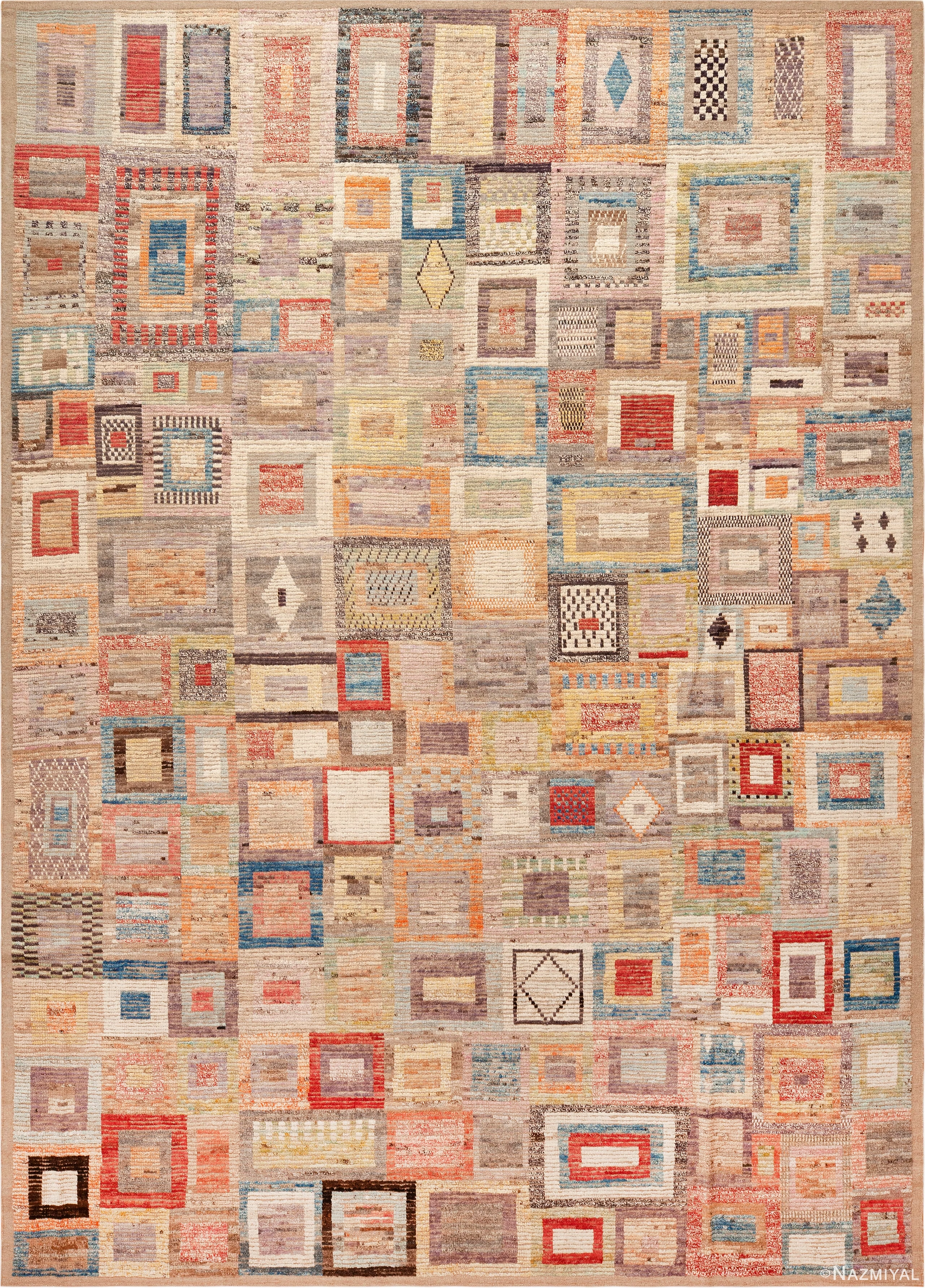
Artful Composition Elegant Modern Rug #12331
A room-size abstract composition built from layered geometric blocks and warm-to-cool color transitions. This is the kind of rug that leads the room, setting the palette and mood rather than responding to them. It works best in a living room where the furniture is relatively restrained and you want the floor to be the focal point.
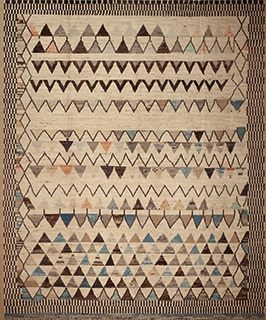
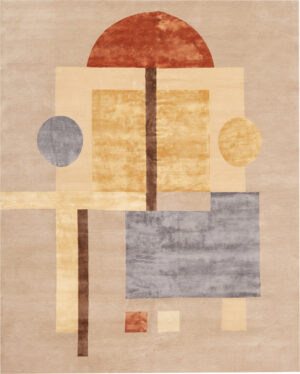
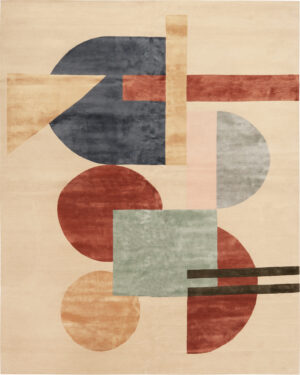
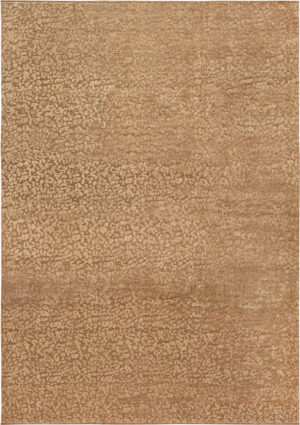
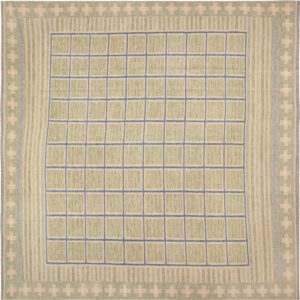
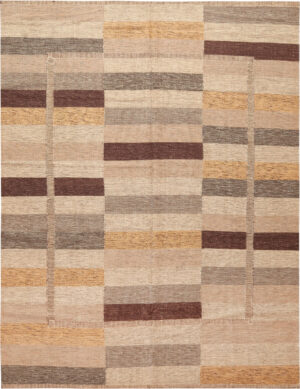
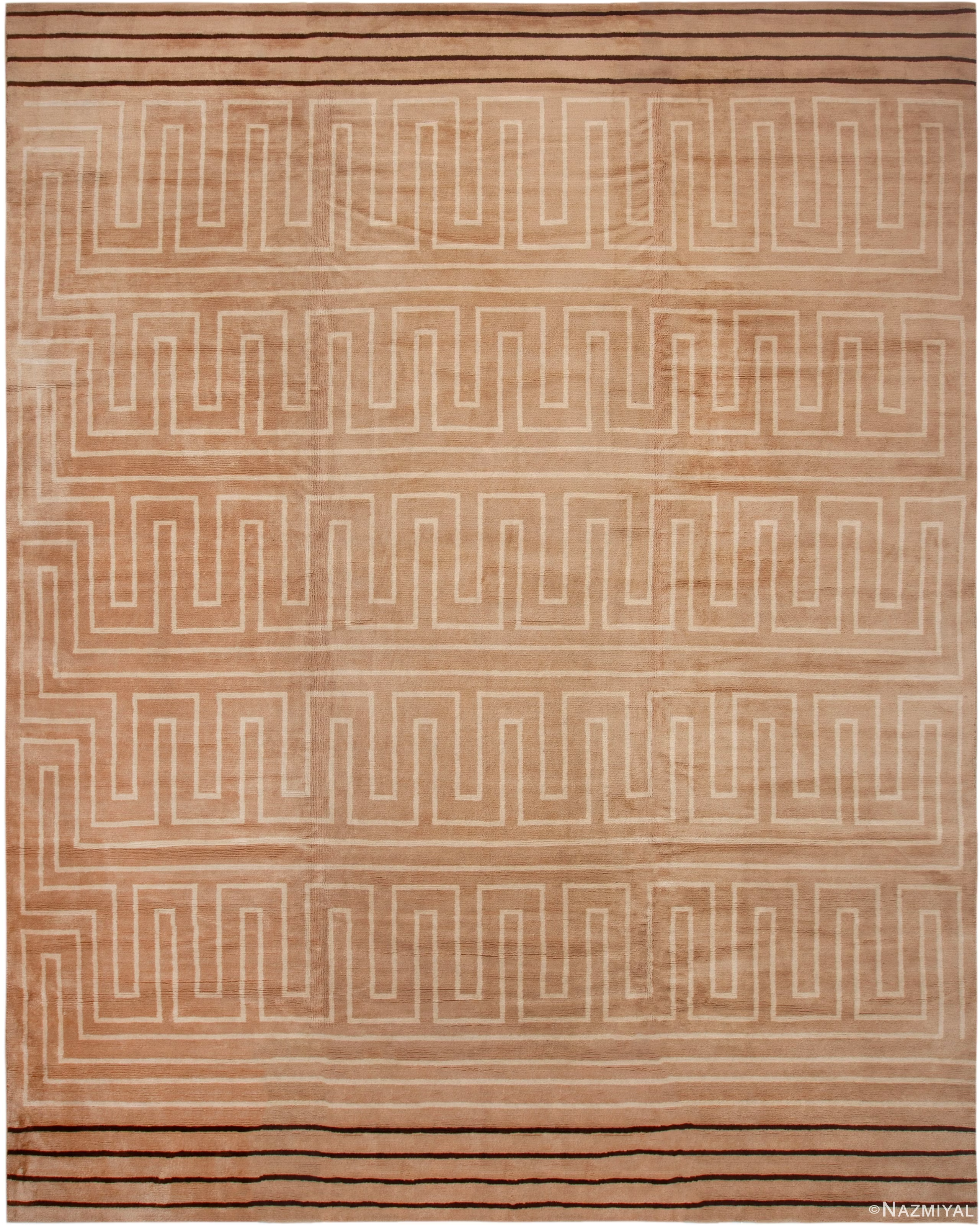
Geometric Modern Contemporary Rug #61153
A clean architectural layout with a neutral ground and structured linework. This rug defines space without competing for attention making it ideal for open-plan living areas, home offices, and interiors where the architecture or the furniture is already doing the heavy lifting visually. It is one of the most versatile pieces in the collection.
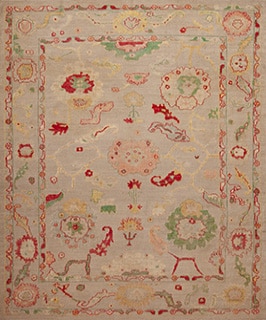
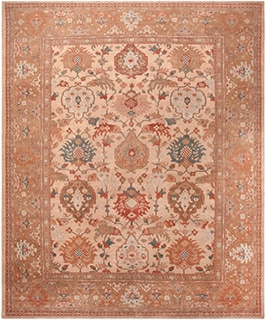
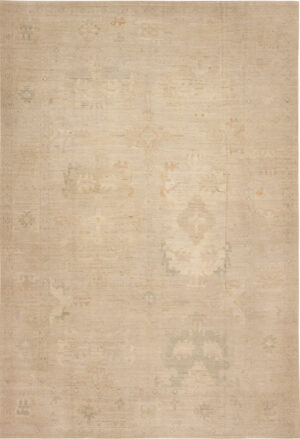
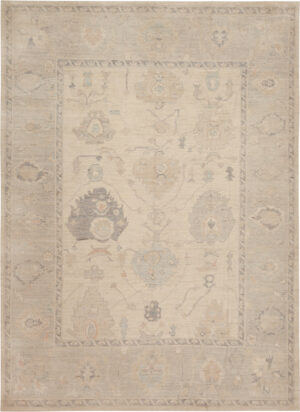
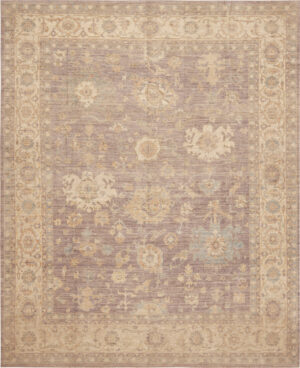
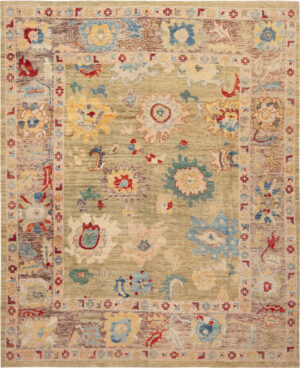
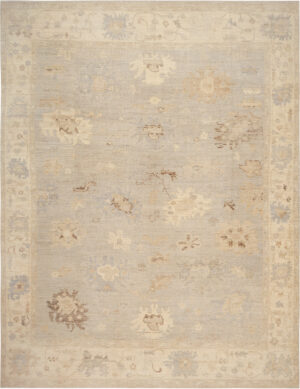
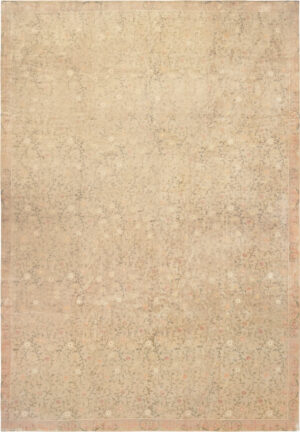
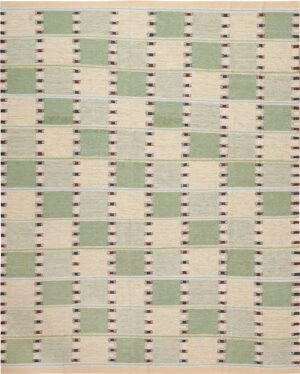
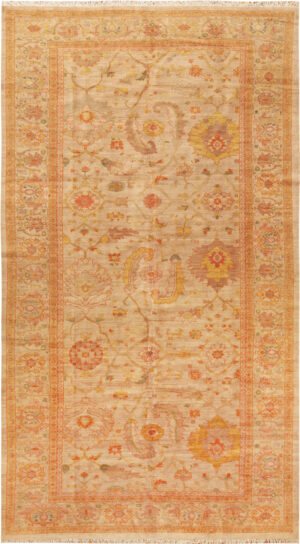
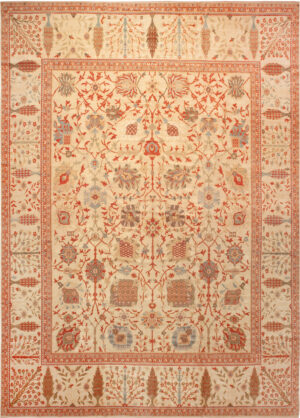
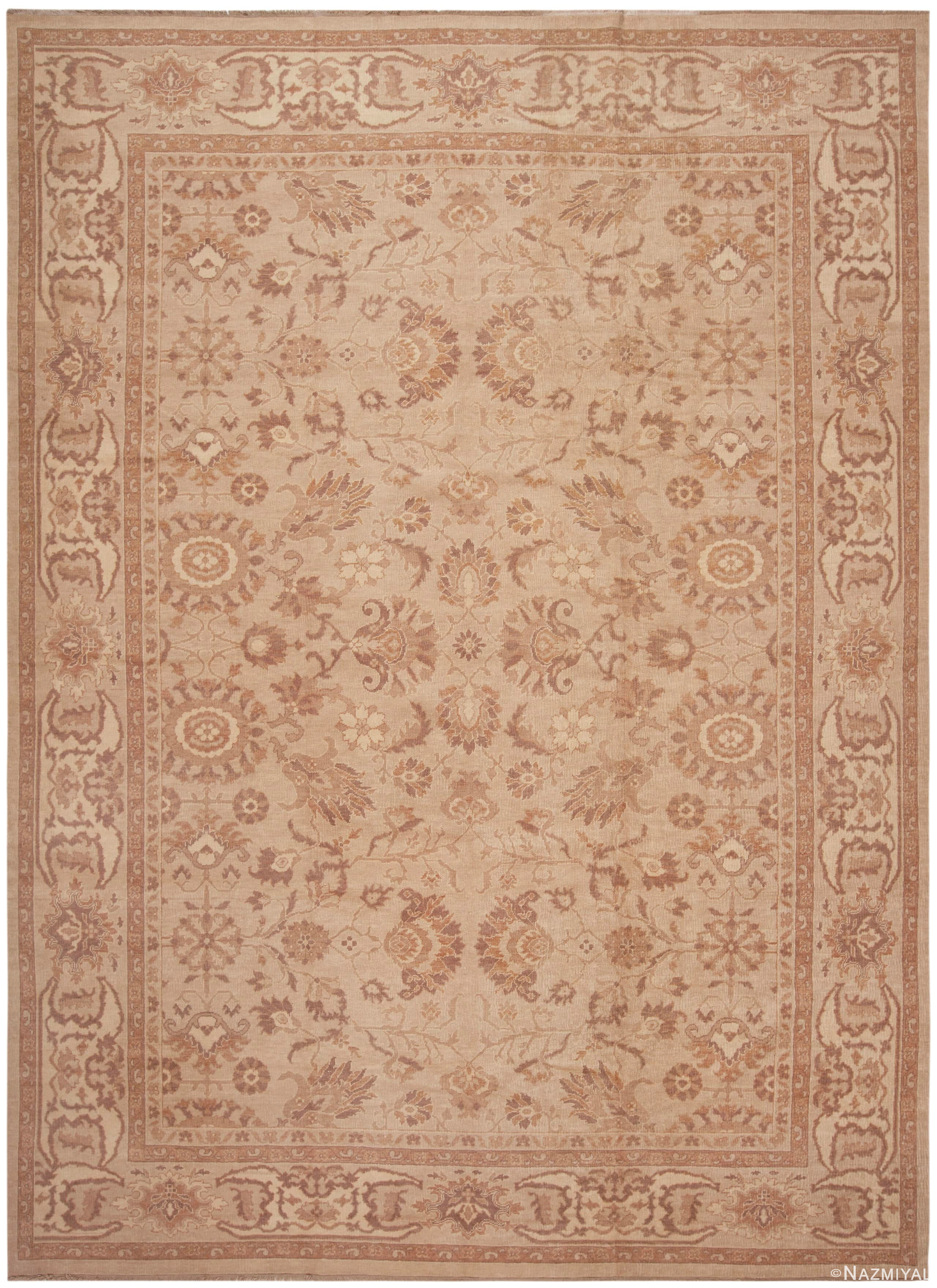
Floral Sultanabad Design Area Rug #61136
A transitional piece that draws on the classic Sultanabad floral tradition but renders it in a soft, decorator-friendly modern palette with generous field breathing room. This is the kind of pattern that works in rooms that mix periods, like a modern interior with antique furniture, or a traditional room being updated. This makes for a strong choice for dining rooms and master bedrooms.
A Note on What We Don’t Carry
We’re often asked what distinguishes our modern rug collection from what you’d find at a large online retailer. The answer is selectivity. We don’t carry rugs we wouldn’t put in our own homes or recommend to our most discerning clients. That means no machine-made pieces passed off as handmade, no synthetic fiber dressed up with premium-sounding descriptions, and no designs that look like they were produced to follow a trend rather than outlast one. Our collection is smaller as a result, but every piece in it is there because it’s genuinely good.
Glossary
Hand-knotted: construction method where individual knots are tied around warp threads by hand. The most labor-intensive and structurally durable method. A quality indicator, not a guarantee. Execution and materials still determine the result.
Hand-loomed: woven on a loom by hand rather than knotted. Faster to produce than hand-knotted; can be excellent in quality but generally less structurally robust over decades.
Flatweave / kilim: woven construction with no pile, with the pattern created by the weave structure itself. Extremely durable, reversible, and lightweight. A different aesthetic from pile rugs.
Pile: the surface fibers you walk on. Pile height affects feel, performance, and visual texture. Pile density matters as much as height.
Foundation: the warp and weft structure underneath the pile. Determines structural integrity and how the rug holds its shape over time.
Abrash: natural tonal variation in the dyed fiber, visible as subtle color shifts across the field. Common in hand-dyed rugs; considered a mark of authenticity and character rather than a flaw.
Transitional: a rug that combines traditional design elements with contemporary colors or scale; bridges the aesthetic gap between antique and modern.
Bamboo silk: a plant-based fiber that approximates the visual sheen of silk at a lower cost. More fragile than wool; best in low-traffic settings.
Nazmiyal Collection has been operating from our New York City gallery on East 32nd Street for over 45 years. We ship worldwide and work with clients remotely as readily as we do in person. Detailed photographs, honest condition notes, and real expertise are standard, not premium services.
If you’d like help finding the right modern rug for a specific room, call us at (212) 545-8029, visit our NYC showroom, or let our team put a selection together for you. We’ll tell you what works and what doesn’t based on the room, not a sales target.
Trustindex verifies that the original source of the review is Google.
My wife and I are so pleased with the antique Uzbek Bokhara Rug purchased from the Nazmiyal Collection. Not only does the rug have a spectacular design, it also was very reasonably priced. The way it transforms our living room, reconciling the classic modern furniture with the 1913 Craftsman interior is remarkable.
Posted on Google
Terence Hayes
Trustindex verifies that the original source of the review is Google.
I have purchased multiple rugs at multiple Nazmiyal auctions and I am extremely pleased with the quality, price, and experience. Highly recommended!
Posted on Google
Victor Florintsev
Trustindex verifies that the original source of the review is Google.
The only ones I'd ever buy rugs from. The best.
Posted on Google
Jeffrey NeumanB
Trustindex verifies that the original source of the review is Google.
I bought two gorgeous Serapi rugs from Farhad at Nazmiyal Rugs! Beautiful carpets, fair prices and great service. Very happy customer. Farhad (the sales person) was very patient and gave us great service.
Posted on Google
john haid
Trustindex verifies that the original source of the review is Google.
Alen is a gentleman and an expert. Really great to work with.
Posted on Google
Edward Yasuna
Trustindex verifies that the original source of the review is Google.
I recently purchased a modern Kandinsky rug from Nazmiyal Auctions. It was just as described, and the director (Farhad) of the auctions had it sent to me quickly and safely. Payment was easy, the rug was reasonably priced, and I highly recommend Nazmiyal Auctions and Antique Rugs. Quality merchandise and first-class service.
Posted on Google
Nicholas Carr
Trustindex verifies that the original source of the review is Google.
Had a excellent experience buying a rug in Nazmiyal's 1/18/26 online auction. First, prior to the auction, viewing a number of lots at the 32nd St showroom (I had prepared a list from the online catalog). The staff were great to work with: helpful, knowledgable, honest, and flexible. Second, after placing an online bid and winning the desired item, arranging payment and pickup was simple and straightforward. Everything went seamlessly and the overall experience was educational and fun. Many thanks to Jason and his team.
Posted on Google
Andrea Gared
Trustindex verifies that the original source of the review is Google.
Everyone at Naziyal is proffessional, especially Jason and Farhad.
They are knowledgeable, truthful, and true gentlemen. I have sold several rugs through them and will always go to them first, to buy or sell. The best in the business!
Frequently Asked Questions
A modern rug is a newly produced rug designed with contemporary aesthetics—abstract, geometric, tonal, or minimalist—rather than traditional regional motifs. Modern refers to the design approach, not a specific weaving technique: modern rugs can be hand-knotted, hand-loomed, or flatwoven. What distinguishes them from vintage or antique rugs is when they were made and how they were designed.
The best ones are. Hand-knotted and hand-loomed modern rugs represent the top tier of the category and are made by skilled artisans, sometimes taking months or years to complete depending on size and complexity. Mass-market modern rugs are typically machine-made, which is why construction is the first thing to evaluate. Every listing in the Nazmiyal Collection clearly states whether a rug is hand-knotted, hand-loomed, or flatwoven.
The terms overlap significantly and are often used interchangeably. In the trade, contemporary sometimes implies a broader, more trend-responsive aesthetic reflecting what's currently happening in interior design, while modern often implies something slightly more structured and deliberately composed. For practical purposes, searching either term returns much of the same inventory.
Evaluate four things: the fiber (genuine wool, silk, or a stated blend versus synthetic), the construction (hand-knotted or hand-loomed versus machine-made), the finishing (whether it lays flat with clean edges and a stable shape), and the dye quality (whether the color on the back matches the front). In a showroom you can assess all four directly; when buying remotely, honest descriptions and detailed photographs from a trustworthy dealer are essential.
For most living rooms, an 8x10 is the minimum that reads as intentional, and a 9x12 or 10x14 is often better. The standard guidance is that all front legs of major seating should sit on the rug, ideally all four legs of each piece. If there's any doubt about size, choosing larger rather than smaller almost always looks more considered.
Yes, often beautifully. A clean, tonal or geometric modern rug can act as a neutral ground that lets older furniture and art read more clearly. The contrast between a crisp modern rug and an antique piece can be more interesting than matching periods, as long as one element—usually the rug—anchors the room and everything else responds to it.
In many cases, yes. A number of designs are available for custom production in specific sizes, proportions, and color adjustments, though lead times and minimums vary by piece. Contacting the Nazmiyal team directly is the fastest way to confirm whether a specific rug or design can be produced to custom specifications.
The modern rugs in the Nazmiyal Collection come primarily from Afghanistan, Nepal, India, and Turkey—regions with deep weaving traditions and access to high-quality wool and skilled artisans. Pieces from other origins are also carried when the quality meets Nazmiyal's standards, and the origin is stated clearly in each listing.
THE NAZMIYAL NEWSLETTER
Discover Your Next Favorite Rug
Get new arrivals, rug inspiration, educational blogs, and collection highlights delivered to your inbox.
By subscribing, you agree to receive marketing emails from Nazmiyal. Unsubscribe anytime. View our Privacy Policy.