Updated March 27, 2026 • Reviewed by Jason Nazmiyal
Savonnerie, Aubusson, and Art Déco design rugs all originated and were produced in France. Decades later, the French domestic rug culture is still alive and well, with collectors that possess a deep understanding of provenance and condition.
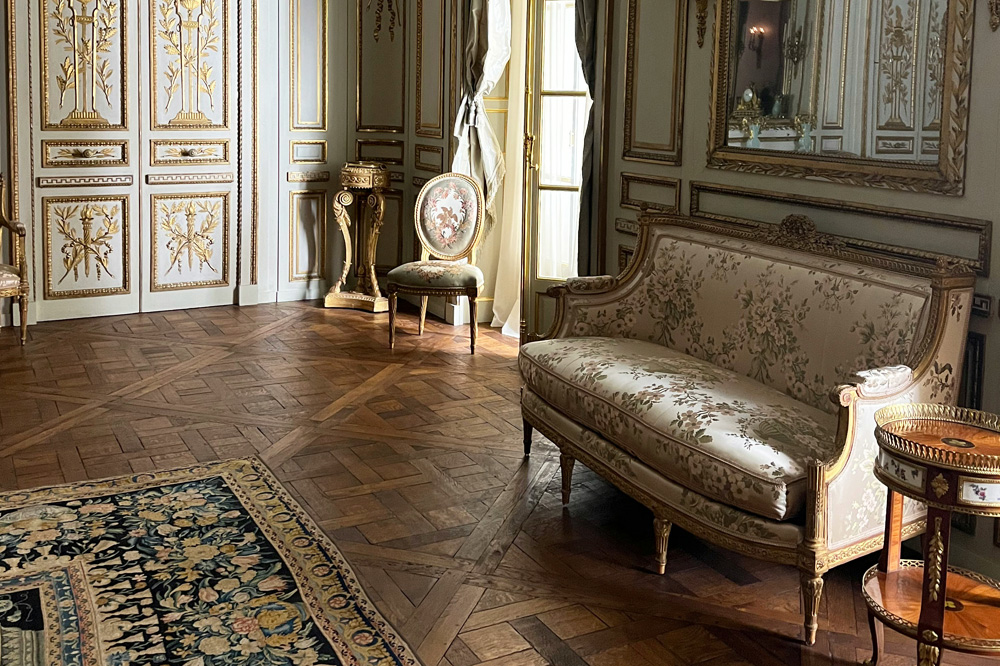
France has an artistic history in mixing patterns from different traditional cultural conventions. Traditionally French rug designs blended European and western aesthetics with those of the popular rug trade coming out of the Middle East.
This is all to say that French collectors and designers are uniquely appreciative of antique foreign rugs.
Key Takeaways
- France has a unique and historical relationship with antique textiles.
- Paris has long been an established design hub due to France’s historic government backing of creative fields.
- The city of Lyon was, and still is, an important center for silk manufacturing in the Western world.
- France has its own history with antique textile art, namely the Aubusson and Savonnerie rugs.
- Art Déco originated in Paris in the early 20th century and remains a popular design style to this day.
At-A-Glance Specs
- Style: French classical / Art Deco
- Colors: Pastels, gold
- Best Rugs: Aubusson, Savonnerie, Art Deco
Sourcing Internationally for Parisian Design
Paris has become one of the fashion and design capitals of the world, an exclusive title that few cities can claim. Its status as a culturally relevant and design forward hub is due to its rich history in both economic and artistic avenues. Historically, the French government allocated plenty of resources into craftsmanship and creative pursuits, placing emphasis on quality. Strong government backing cultivated an environment that encouraged designers and creatives to flourish, establishing the city of Paris as an important design center.
Designers still flock to Paris today, creating a diverse demographic that isn’t afraid to take inspiration from alternative cultures. This has made it so that Paris projects source internationally when it comes to design in any form. Parisian fashion brands regularly introduce patterns and designs from other parts of the world. The same goes for interior design and the decorative textile industry.
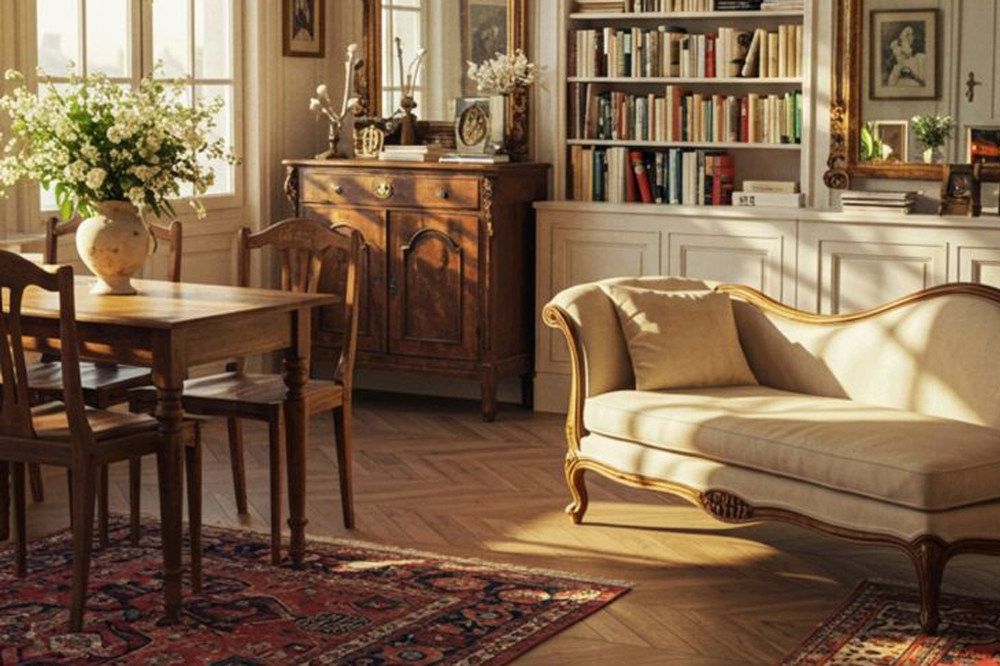
Antique rugs from Middle Eastern countries or Eastern cultures such as India and China have become increasingly popular in affluent circles. They, ironically, represent something new, despite their actual age. Motifs and design conventions used in foreign antique textiles completely differ from the traditional ones found in European productions. Rugs from abroad add a worldly and cultured dimension to contemporary spaces. Their status as luxury items perfectly aligns with the commonplace idea that Paris is synonymous with “upscale” and “exclusive”.
Lyon’s Historic Silk Industry – La Fabrique
Lyon is the capital city of France’s Auvergne-Rhône-Alpes region and holds an important spot in textile history, specifically in silk production dating back to the fiber’s introduction to Europe during the Renaissance period. Silk as a viable fiber for textile weaving was discovered in ancient China during the Neolithic Age. It was a revolutionary discovery that changed the course of weaving history. The harvesting of silkworm cocoons was a carefully kept secret that kept the silk industry a Chinese monopoly for many years. It wasn’t kept forever, though, with the Byzantine empire becoming privy to the production method in the 6th century, where it eventually became widespread knowledge.
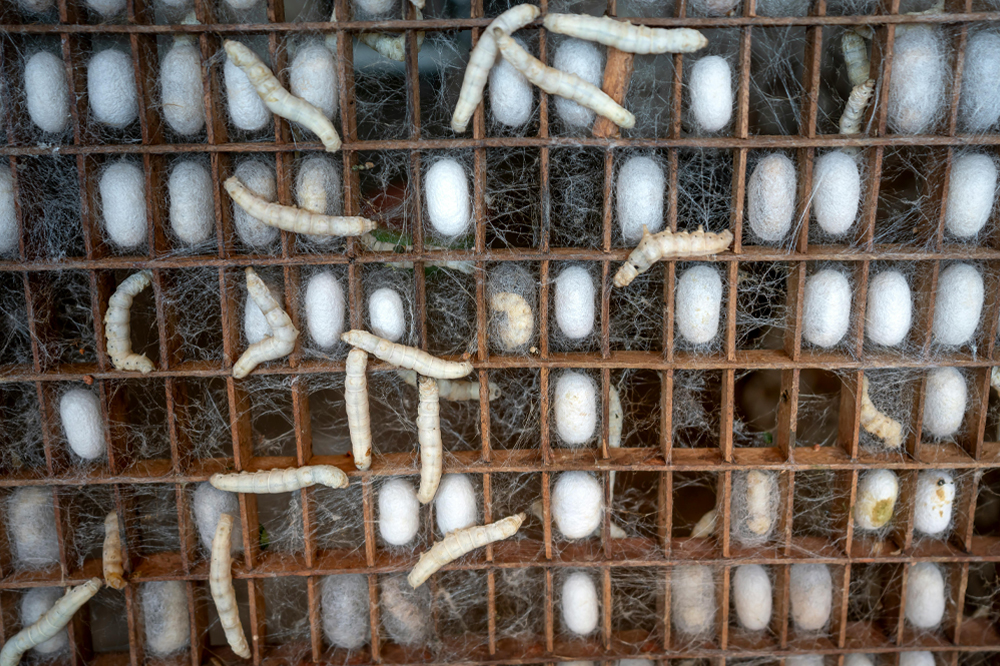
While silk has existed in Europe since the 4th century, silk weaving wasn’t introduced until the Middle Ages. It came from the Byzantine world where the technique was transmitted to Islamic cultures. During this time period, significant regions of Europe were under Muslim rule, including both Sicily and Spain. Knowledge of silk weaving and production transferred over after the eventual Christian conquest of these regions.
Silk production in Lyon specifically came about during the Renaissance because the city was a central location for trade fairs. Italian silks were among the traded textiles most in demand by the French elite, resulting in the establishment of the silk manufacturing industry in Lyon. Silk as a material was seen in French-produced rugs, tapestries, clothing, and bedding. The city’s silk industry was closely tied to the royal court and their appetite for the fabric, though it survived the monarchy’s demise during the French Revolution and is still around today. While the industry has shifted from mass production and commercial textiles to one of luxury fabric, Lyon remains a center for the silk industry.
Antique French Rugs
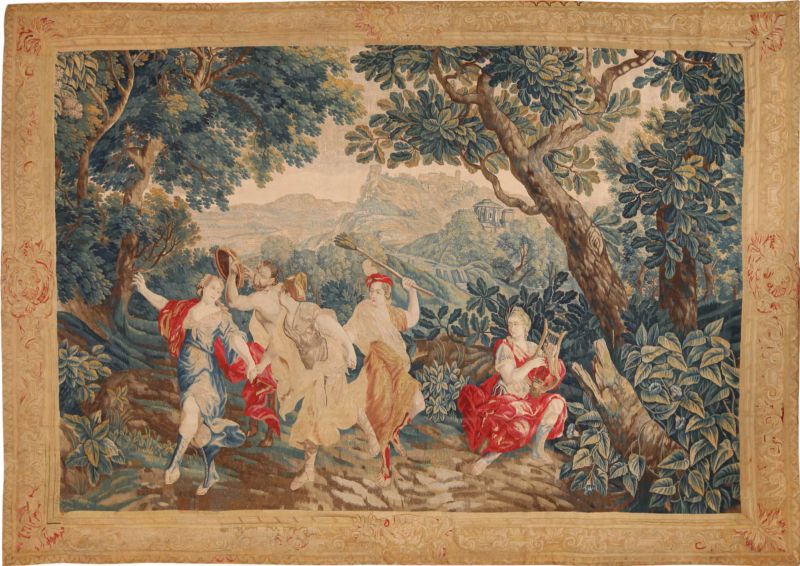
As previously stated, France has its own culture with rug production. Namely the antique stylings of Aubusson and Savonnerie carpets, meant to furnish wealthy homes and royal courts. Both styles were heavily influenced, in both design and construction, by Persian rugs and Turkish rugs of the time.
Aubusson Rugs
One of France’s most prolific eras in textile-making resulted in the Aubusson rug style. The style is named after a commune in the Creuse region of Central France, once an important weaving center. Its proximity to the Creuse River was a significant reason why the textile business flourished there. The river has particularly acidic waters which aided weavers in degreasing wool and setting fabric dye.
Originally established in the 14th century, the Aubusson weaving community didn’t gain recognition until centuries later, when their work began attracting European elites. These weavers have Flemish roots, originating in Belgium and settling in France after fleeing religious persecution.
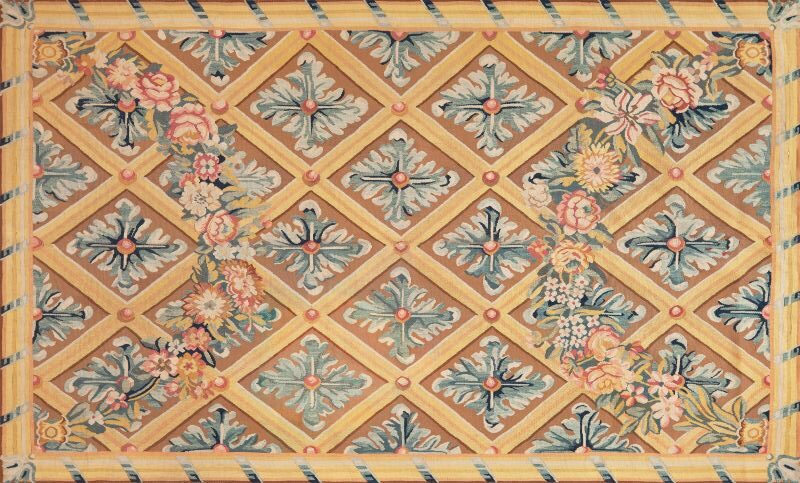
Before royal recognition, Aubusson weavings were made for local commerce. They were made like tapestries, flat-woven rather than piled. Their illustrative quality was made possible through carefully planned designs drawn out prior to the weaving. As they grew in popularity, Aubusson transformed into a market town, with several now-established workshops. Today, Aubusson rugs famously adorn the Palace of Versailles and are known for their royal ties.
Browse Nazmiyal’s collection of French Aubusson Rugs.
Savonnerie Rugs
A significant staple of French weaving history were the Savonnerie rugs. The name of the style comes from the French word for “soap,” as the rugs were mostly produced in a repurposed soap factory. While the history behind the making of Savonnerie rugs is not necessarily a positive one, the rugs were beautiful. Made specifically for members of the wealthy European class, the rugs were a reflection of the opulent interiors they would one day decorate.
They were deliberately modeled after Middle Eastern rug styles, which had risen in popularity internationally. Authentic Middle Eastern rugs were considered luxury items, but importing them was time consuming and expensive. The solution was to produce the rugs locally. Apart from solving the issue of transporting, this also presented the opportunity to tweak the look of the rugs. They borrowed from traditional patterns and mixed them with European design styles to create a newer hybrid for a Western market.
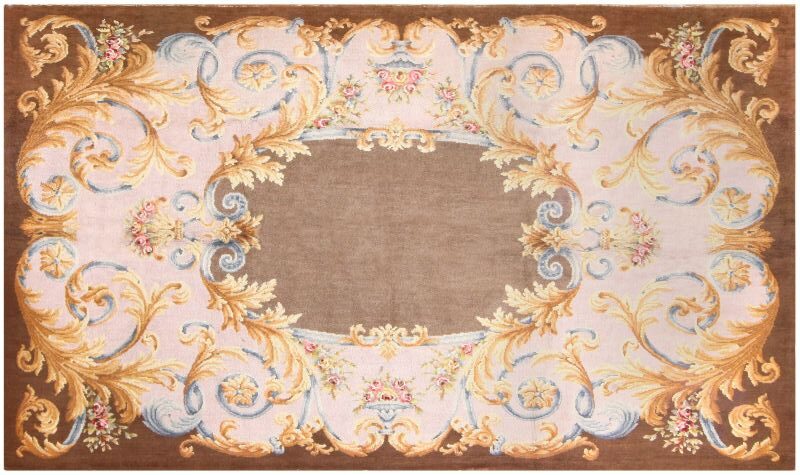
Savonnerie rugs were all pile carpets, created with high quality wool to give them a plush and luxurious appearance. Vibrant colors were a staple of these rugs, specifically golds, blues, and pinks, all popular during the later Baroque period and early Neoclassical. Designs were made up of lush florals, wreaths, scrolls, and architectural motifs, all encased in layers of borders.
Browse Nazmiyal’s selection of French Savonnerie Rugs.
Art Déco’s Origins
Art Déco first appeared in the famed Paris Exhibition in the early 20th century. It came about as a move toward the future and as a counter-culturist movement to the old-world organic forms of its predecessor, Art Nouveau. The futuristic aesthetic came from the use of clean geometric lines and simple forms balanced by extravagant embellishments. The movement came about just before the first world war which deeply impacted its development, as did the second. Additionally, it was heavily influenced by contemporary art movements like Cubism and Vienna Secession. While originally a French art and design movement, the style quickly spread, becoming an ever-growing international phenomenon.
Art Déco influenced every aspect of design, including rugs. Textiles made in this style implement field designs that abide by the Art Déco geometric conventions. Color palettes are often limited and forms tend to be linear and abstracted.
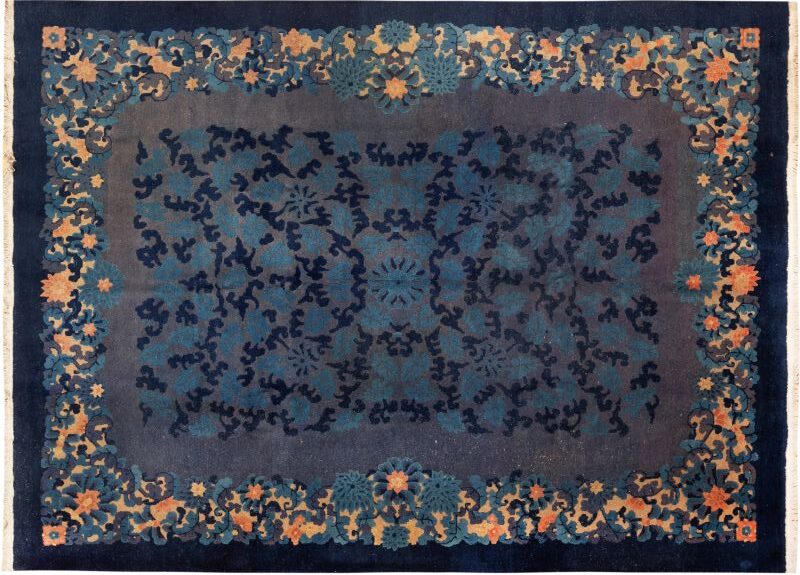
In the case of the Chinese Art Déco rugs, the conventions become an interesting cultural exchange between Eastern and Western ideals. American businessman Walter Nichols set up a rug production factory in China and mixed the growing Western aesthetic of Art Déco with traditional Eastern motifs. This resulted in an entirely new subsection of Art Déco rugs.
Browse Nazmiyal’s collection of Art Déco rugs.
Choosing the Right Rugs for a French Interior
Choosing a rug for a French interior depends on a few different factors, namely color palette, tone, and spacing. For true French interiors, colors should be kept on the lighter side. Focus on rugs that feature gold or pastels. Floral patterns and curvilinear designs are staples of French design and are welcome motifs on rug fields. The rugs don’t necessarily have to have originated in France. In fact, many antique Persian productions include these elegant details. For simpler, more minimal designs, instead look toward Art Déco style vintage productions. Spacing is something you should always keep in mind as well, especially when looking to source authentic French carpets. The typical rug sizes for these weaves are large and oversized, as they were originally made to furnish grand palaces with large, open spaces. Look for rugs with similar styles and smaller sizing to properly fit your interiors.
What to Avoid
While modern French interiors utilize contemporary design stylings, they’re rooted in elegant antique aesthetics. Avoid rugs that are too modern or seem too modern. Victorian style homes are often the ones implementing this kind of interior design. Because they often feature beautiful intricate architectural elements, it’s best to avoid rugs with overly-busy patterns that would stand out in a European style home. While a busy floral decorative pattern may fit in well, bold geometric tribal patterns would be better appreciated in a more Bohemian style living space.
Featured Rugs
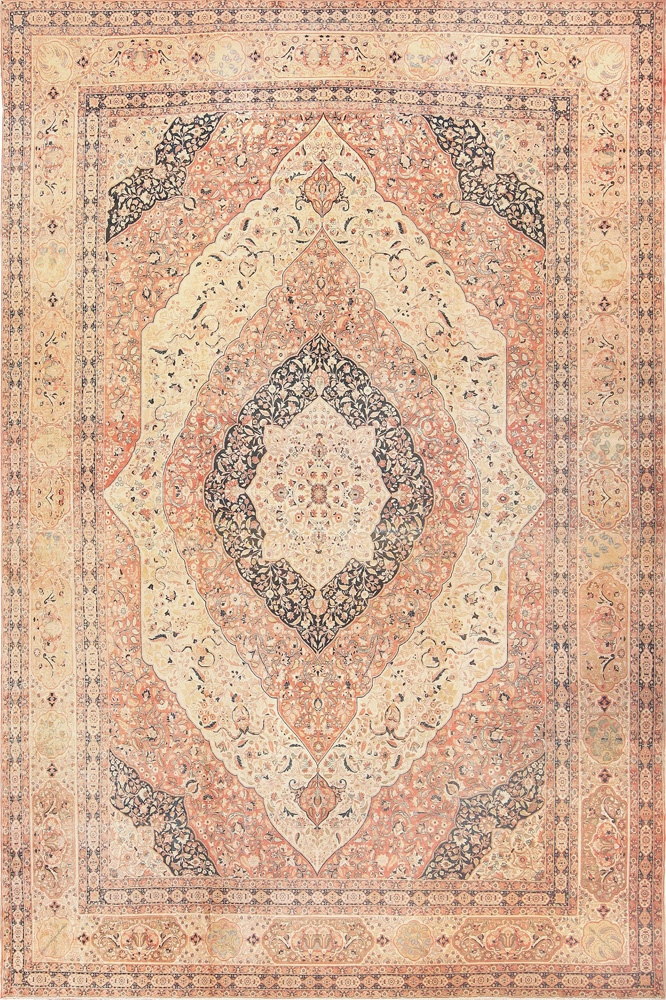
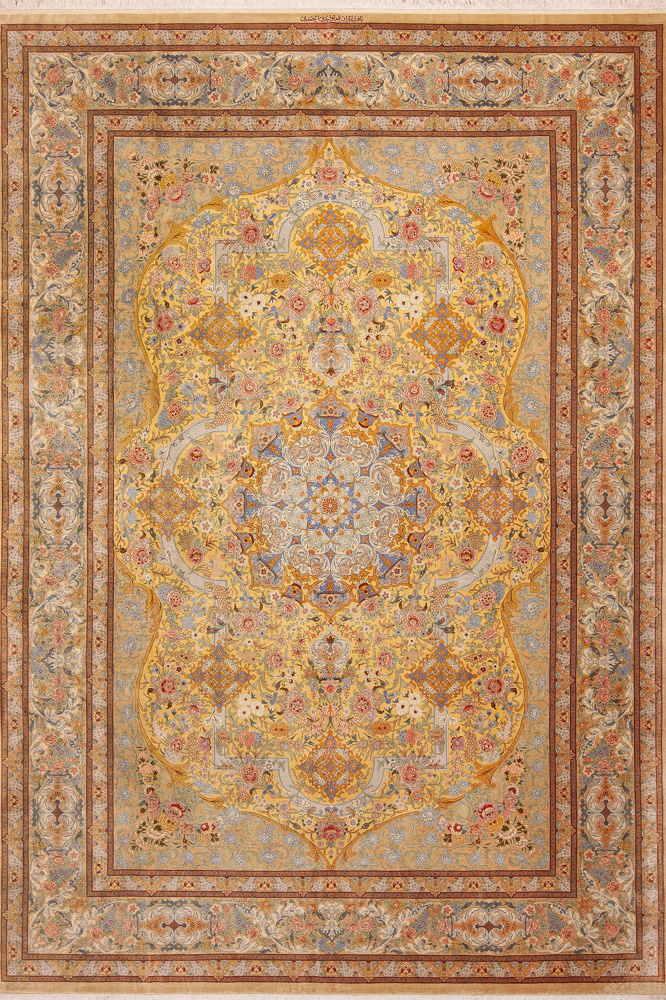
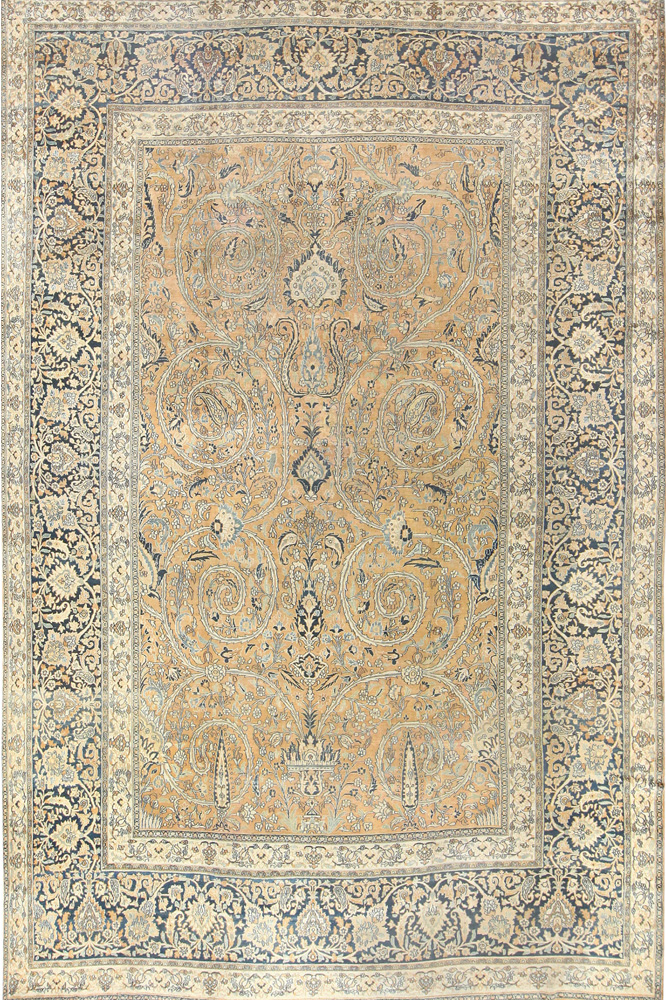
Browse The Nazmiyal Collection for antique and vintage Persian and European rugs perfect for furnishing French interiors.
Final Thoughts
France has a unique culture around textiles and rugs. Antique rugs like the Aubusson and Savonnerie textiles originated in France, meant to adorn royal courts and affluent homes. The country’s basis as a creative hub made it so that craftsmen and artisans flocked to Paris, Lyon, and other large French cities. Lyon in particular occupies an important place in western textile history due to its silk production industry. Today, it remains a center for silk manufacturing, though it’s shifted from mass commercial production to a luxury product. Savonnerie and Aubusson rugs are a staple in antique western textile art history, both originating in France and made to furnish aristocratic interiors. In the early 20th century, the Art Déco style developed out of Paris. It was a style characterized by mixing ornamental decorative elements with clean geometry, meant to look toward the future and rebel against the old-world look.
Frequently Asked Questions
Why did France develop such a rich artistic scene?
France’s government invested a substantial amount into the arts, even after the monarchy’s fall.
How did silk manufacturing become an established practice in Lyon?
The city of Lyon was a trading hub during the Renaissance due to its frequent trade fairs. Italian silk was one of the imported goods found there and was popular among the French elite class. Eventually, demand for silk became high enough that the monarchy decided to set up silk manufacturing in the city.
Where did Art Déco develop?
The design style Art Déco originated in the Paris Exhibition just before the first world war. The style would survive and evolve for decades after that and is still popular today.
What makes French rug collectors different?
Due to France’s unique history with art and design, French rug collectors have a special appreciation for antique pieces.