Updated May 20, 2026 • Reviewed by Jason Nazmiyal
China is an ancient country with a long and rich history in rug production. Examples of hand-woven carpets are known to have existed in China for thousands of years. Materials like wool and silk were both incorporated into productions, valuable in the international market.

Today, Chinese collectors and designers are drawn to the art of rug-making with a uniquely deep understanding of the practice. This is true of weavings made in other parts of the world, with Persian and Central Asian rugs taking center stage in many Chinese collections. There are distinct favored rug styles within China, with modern cities like Beijing, Shanghai, and Hong Kong each developing their own taste.
Across antique, vintage, and modern rugs, China remains an important presence in the rug industry for collectors and designers alike.
Key Takeaways
- China has a rich history of rug production and trade
- Chinese collectors have a unique appreciation for antique and vintage rugs
- The silk trade was a major Chinese contribution in the history of the rug and textile industry
- Beijing, Shanghai, and Hong Kong are all important cultural hubs
- Many Persian, Turkish, and foreign-made rugs are becoming increasingly popular for Chinese collectors
At-a-Glance Specs
Style: Chinese Traditional; Persian; Turkish
Colors: Deep indigo, ivory, gold; jewel-tones
Best rugs: Peking; Tabriz; Qum; Hereke; Oushak
China’s History in the Weaving Industry
The earliest surviving evidence of hand-knotted rugs in China suggests cross-cultural trade existed long before the conception of the Silk Road. Productions believed to have originated in Persia along with Chinese silk weaves dating back thousands of years indicate China’s ancient historical relevance as both an exporter and importer of woven goods. While early wool rug production began in ancient Persia, China was responsible for the invention and development of sericulture. It held a monopoly on the silk industry for a long time, leveraging the fine fabric for trade with other regions of the world.
Sericulture and the International Trade of the Silk Road
Wool as a material was much scarcer in many parts of China than in other parts of the world. Carpets hand-knotted with wool were a popular product, with Persian rugs and Turkish rugs both gaining international recognition throughout history. Instead, China cornered a different market in the weaving industry: silk. Sericulture, or the harvesting of silk, was invented in Neolithic China by the Yangshao culture of the 4th millennium BCE.
Silk quickly became a highly coveted commodity, synonymous with luxury due to its lustrous natural sheen and soft, sleek texture. The process for silk production is incredibly involved, as it’s a protein fiber that comes from a species of insect. Specifically, it comes from the mulberry silkworm, a kind of moth whose caterpillars weave silk cocoons. Sericulture was a closely guarded secret in China for centuries, allowing the country to dominate commercially. At one point in time, silk was equivalent to gold in value.
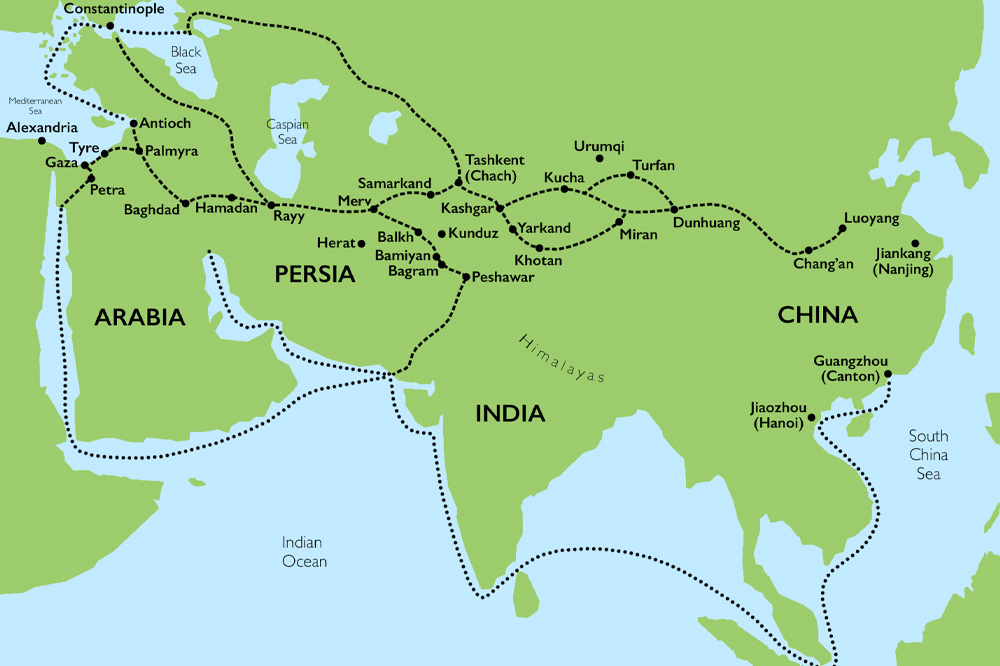
Silk had a global impact, partially responsible for the intermingling of culture across what was later known as the Silk Road. While it wasn’t a literal road, the Silk Road was a network of trade routes that spanned through the Asian continent reaching as far as the Middle East and Southern Europe. Many products were traded along this network alongside silk fabrics and weavings, inadvertently causing important cultural exchanges that influenced art, politics, philosophy, religion, and science alike.
The Difference Between Modern Beijing, Shanghai, and Hong Kong Rug Culture
Beijing, Hong Kong, and Shanghai have all developed their own distinct rug cultures around the preferred pieces collected. They’re each influenced by their surrounding socio-economic politics and histories, seeking differing aesthetics.
Beijing’s Private Collector Culture and Traditional History
Beijing, also known as The Forbidden City, is China’s capital and a leading city in art, education, politics, and business. It’s the world’s most populous national capital city, located in the north-eastern region of the country.
Historically Beijing was romanized as Peking, a name meaning “Northern Capital,” famous for its production of fine antique rugs. Many weavings originating there are today still referred to as Peking rugs, despite the city’s universally recognized change in name. The city’s history of rug-making originated in the mid-1800s as urban productions, often court sponsored and eventually meant to meet the rising demand of international trade.
Peking rug aesthetics and constructions stand out as luxury items due to their origins in imperial workshops. These productions were standardized in their designs, colors, and sizing, all dictated by the governing taste.
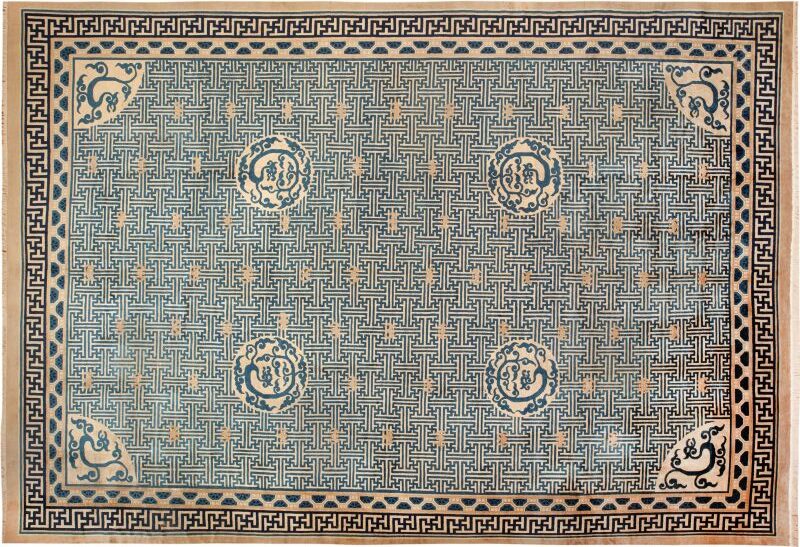
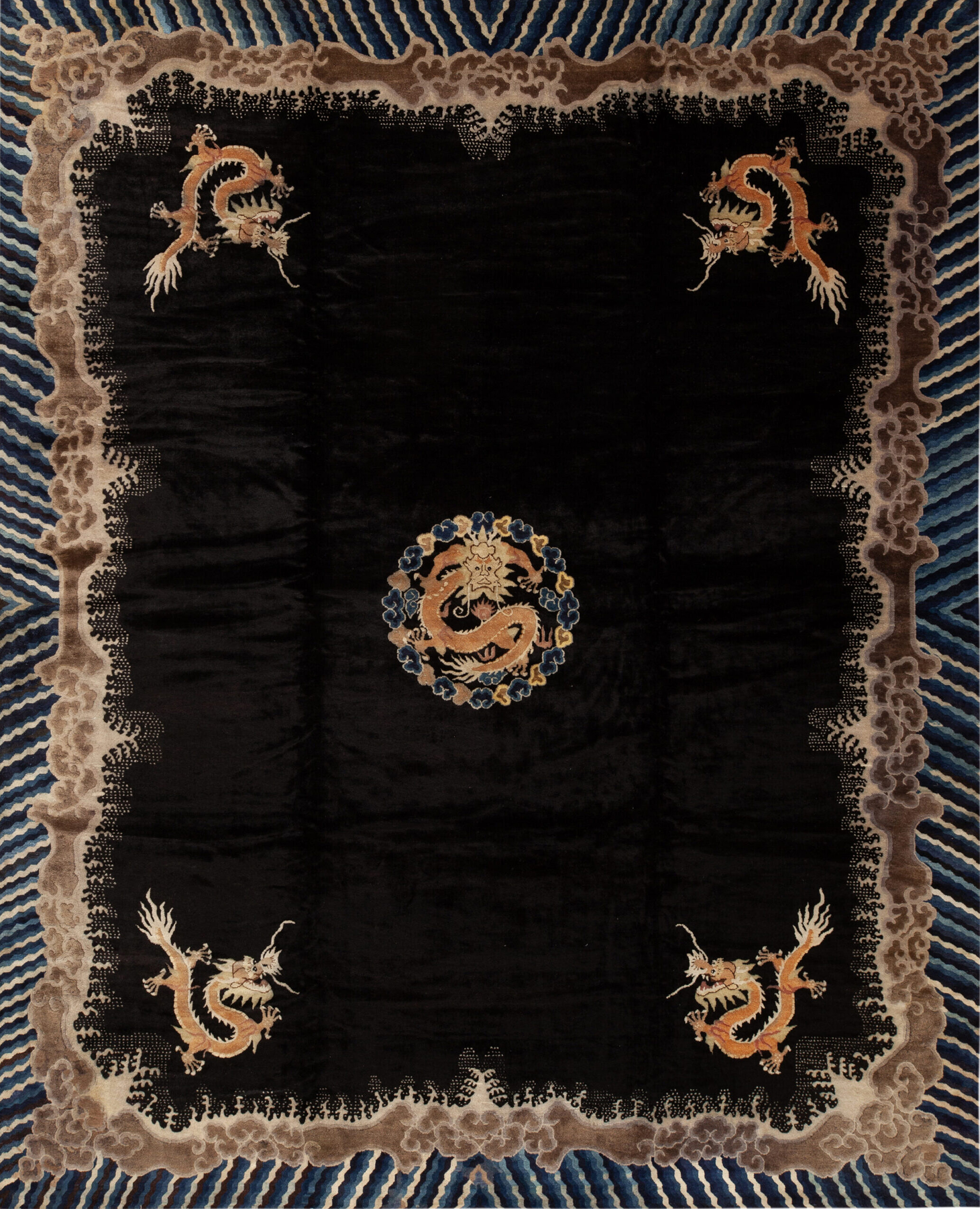
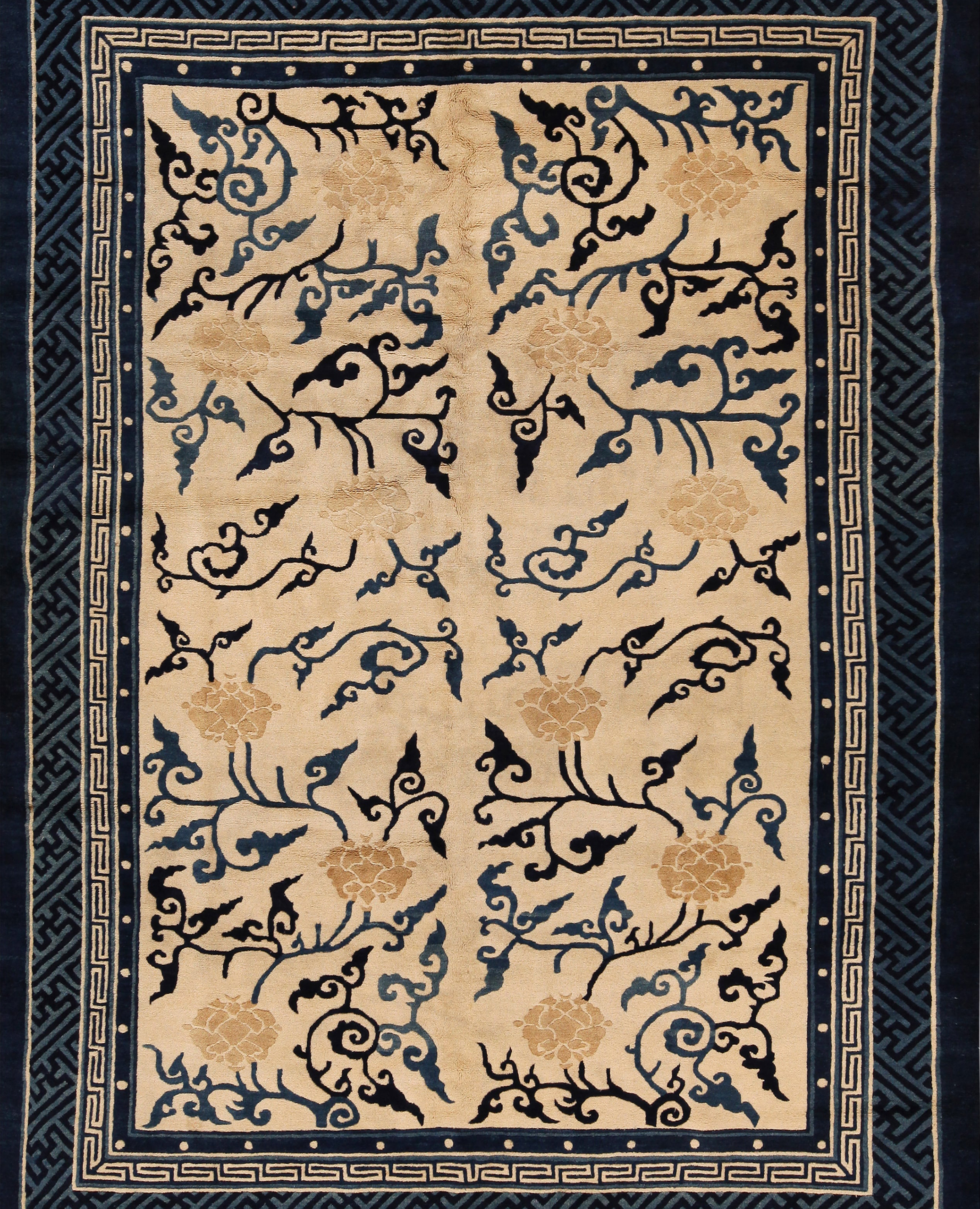
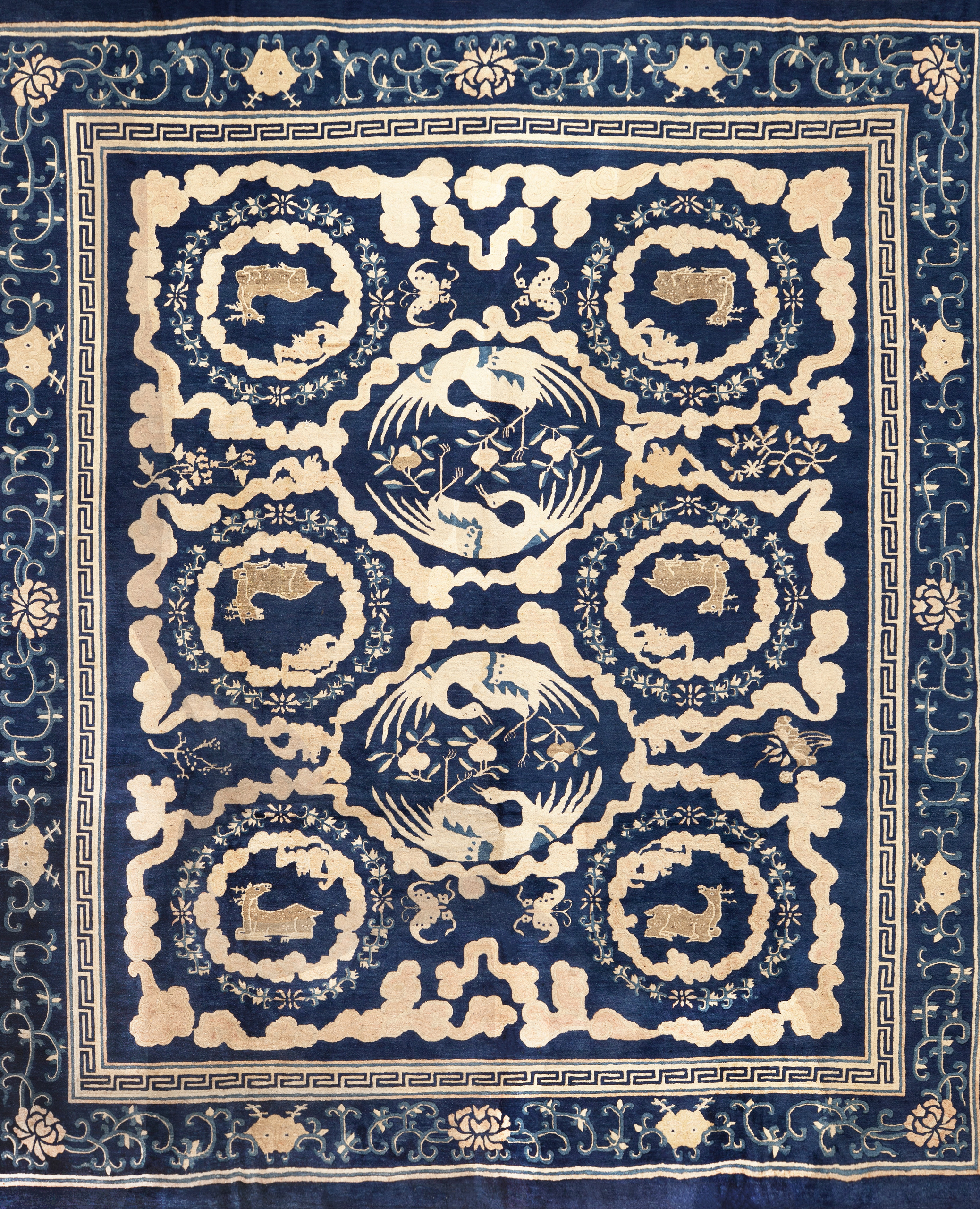
Unlike its Persian and Anatolian contemporaries, Peking rugs showcased a minimalist design style, with intricate border designs and medallions offset by open design fields. The overall composition of these rugs sought to emulate feelings of calmness, emphasizing a symmetrical balance. Color palettes remained limited to deep indigo, ivory, and the occasional gold, mirroring that of China’s famed porcelain ceramics. Traditional Chinese symbols and motifs were heavily incorporated in Peking rugs, representing spirituality, prosperity, and peace.
The imperial patronage of the making of Peking rugs made it so that these textiles were crafted with the finest materials and masterful construction. Their high quality, luxurious craftsmanship, and rich history have made them highly sought after items for collectors.
Shanghai’s Internationality and Community Tastes
The city of Shanghai has long established itself as an important trading port. Its status as a major commercial hub has indirectly inspired the mass migration of peoples from different backgrounds, cementing the city as a cosmopolitan melting pot. This cultural diversity resulted in what is known as Haipai, the blending of traditional Eastern customs and those of the Western world. The Western influence in Shanghai has greatly impacted the city, embracing a culture of openness, modernity, foreign-investment and business.
But what does this mean in terms of rug collection and design? Shanghai’s diversity has generated a fairly international design community. Shanghai collector tastes are varied, often dictated by Western-educated buyers.
Hong Kong’s Aesthetic Diversity
Hong Kong is located on China’s southern coast. It holds an interesting political presence within China due to its British colonial influence. Similar to Shanghai, Hong Kong embraces a blend of Western and traditional Eastern ideals in its culture. It’s no different when looking at Hong Kong’s current rug market.
There’s been a recent surge in popularity concerning Oushak rugs and textiles that echo the dramatic and beautiful environment. Cosmopolitan elegance, dense skyscrapers, and a harbor view, are all deciding factors to what’s made Turkish rugs popular furnishings. Both in materiality and in design, Hong Kong collectors value the cultural divergence these pieces provide in comparison to the strictly traditional Chinese weavings.
The Foreign Rug Trade in China
While China itself has a substantial past in rug production, its historic trade economy wasn’t one way. While they exported plenty of goods, they also imported commerce from foreign countries. This was certainly the case for Persian rugs, where hand-knotted rugs have been an established craft for centuries. Persian rugs were internationally renowned and imported to China to decorate important spaces. Their popularity also influenced many Chinese designs, with Persian conventions implemented into traditional Chinese ones.
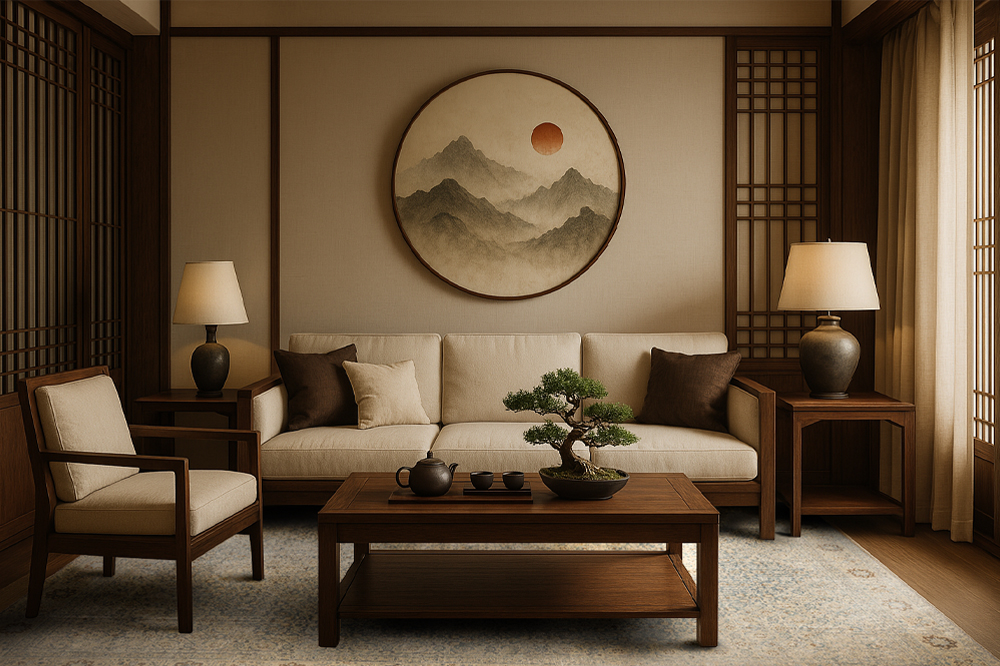
Today’s China still has a notable appreciation for fine Persian productions. Collectors in China possess a unique admiration for antique Persian rugs, informed by their own country’s long history in the weaving industry. Cultural and historical context contributes greatly to this, as does the common blend of fine wool and silk to create a truly masterful textile. Collectors value a variety of components in a rug, including aesthetic design, rarity, condition, and historical significance, all of which are principal factors in high-quality Persian rugs. This is especially true with rugs featuring unconventional designs, like those of tribal productions, benefiting from their artistic novelty.
Antique rugs, vintage rugs, and modern rugs alike have captured the interest of Chinese collectors and dealers.
Persian and Turkish Collector Rugs
Persian and Turkish rugs are a particularly coveted category of textile in China among foreign-made weavings. The masterful level of craft that went into producing pieces as finely made as these is an important determining factor in whether or not the rug market is interested.
Persian Tabriz rugs exhibit a disciplined form of weaving and design as is common in workshop productions. They implement an architectural look and consistent quality, though their designs are fairly varied. Both medallion and allover compositions are showcased in Tabriz rugs along with a very fine knot-density. Tabriz rugs were originally court sponsored and tend to be large or oversized carpets, meant to furnish grand interiors.
Persian Qum rugs are distinct in their incredibly detailed and intricate field designs, made possible by a high knot count and the incorporation of silk. They vary in design composition, color, and sizing, making them extremely versatile, capable of occupying different interiors. While Qum rug piles are sometimes mixed with wool, they always utilize silk. The use of silk fibers allows for the extreme level of detail in their designs as well as gives the textile its lustrous sheen. Qum rugs are recognizable by their carefully planned and precise delicate floral patterns and jewel tones. Their beauty and quality makes them highly desirable in the rug market.
Hereke rugs are Turkish productions known for their use of silk and metallic thread to achieve a brilliant appearance. They tend to employ a rich and eye-catching color palette to embellish intricate border patterns, medallions, and floral motifs. Their history is tied to the Ottoman imperial court, commissioned especially for high-ranking figures and important authorities. The use of high-quality materials, beautiful designs, and their scarcity makes Hereke rugs valuable collectors items.
Featured Rugs
The Nazmiyal Collection is committed to providing collectors, dealers, and interested parties a wide selection of Chinese rugs, and rugs that similarly fit current design and collection trends in China.
Final Thoughts
China’s historical relevance in the world of textiles is one that spans thousands of years. From the innovation of silk, to the famed Silk Road trade route, China’s been responsible for several monumental parts of rug history. This has given modern Chinese rug collectors a unique understanding of textile art, especially in cultural hubs like the cities of Beijing, Shanghai, and Hong Kong, each which have their own personal histories with weaving production, such as the Peking rugs of Beijing. Foreign-made rugs are having their moment, as modern aesthetics value a collected and multicultural aesthetic. Persian Tabriz and Qum rugs are coveted for their beauty and craftsmanship, as are Turkish Oushak and Hereke rugs.
Frequently Asked Questions
Are collectors in China interested in foreign rugs?
Yes. The culture around rug collecting in China is fairly diverse, especially in multicultural cities like Shanghai and Hong Kong. Persian and Turkish rugs are especially coveted for their beauty and quality.
What is “sericulture”?
Sericulture is the process of farming silk from mulberry silkworms.
Where did Peking rugs originate?
Peking rugs are from the city of Beijing and came about in the mid-1800s. They’re characterized by balanced designs, limited palettes, auspicious motifs, and their use of negative space.
How do Chinese collectors differ from collectors in other parts of the world?
China has a deep connection and history with the textile industry dating back thousands of years. This cultural appreciation for fabric art translates well to those with an eye for collecting.
Which Persian and Turkish rugs are popular among Chinese collectors?
Finely made rugs like Tabriz, Hereke, and silk Qum rugs are highly sought after in the Chinese rug market.