Updated March 17, 2026 • Reviewed by Jason Nazmiyal
Definition – Art Deco interior design is a 20th century style characterized by geometric architectural designs and opulent decorative elements, complemented well by embellishing textile elements.
What kind of rugs should be incorporated into Art Deco interiors? Vintage Rugs and Antique designs that follow geometric forms make perfect accessories for Art Deco interiors.
Key Takeaways
- Art Deco is a 20th century design style.
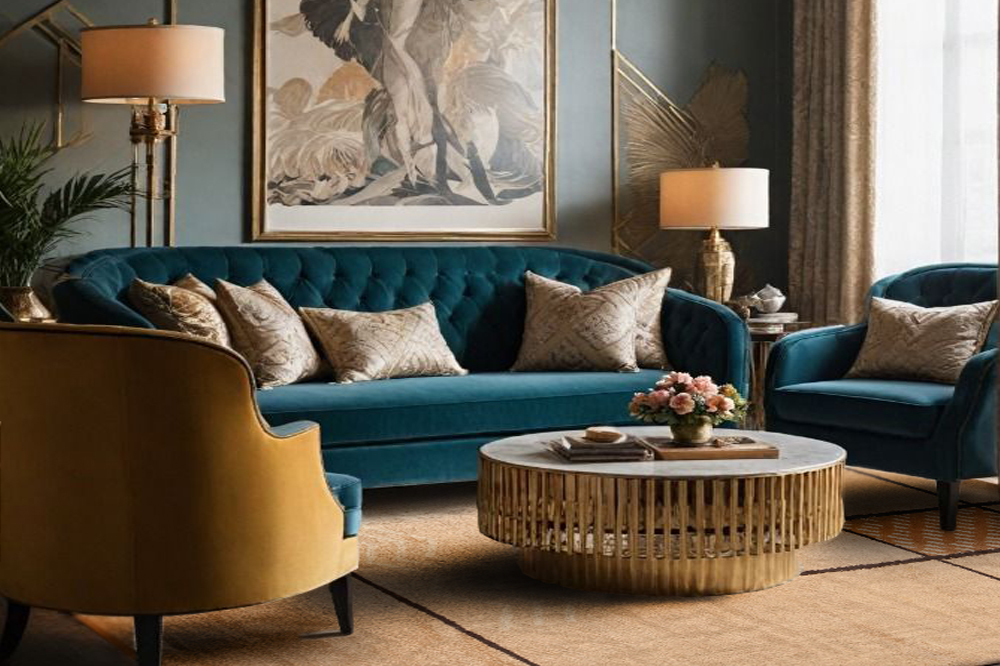
- Geometric architectural forms, limited palettes, gold accents, and glamorous decorations are key elements.
- Vintage rugs, antique Malayers, and rugs with ordered patterns complement Art Deco interiors well.
- Stay away from clashing color palettes and flatweaves.
What is Art Deco?
Art Deco is a staple of the early 20th century, originating in France which quickly became a global phenomenon. The design movement began in the 1910s where it would develop for the following decades. It was heavily influenced by artistic movements such as Vienna Secession and Cubism, implementing both extravagant aesthetics and geometric conventions, developing them into a decorative style. While Art Deco valued a highly ornamental look, its design was dictated by clean lines, strict symmetry, and angular characteristics.
Art Deco survived the first world war, beginning just before it was started and ending in the 1940s, well after its end. While it persevered, it was greatly impacted by the devastation Europe endured. The war left a lasting impact on culture in general, and kickstarted Art Deco into what we know it to be today. It represented a divergence from nostalgic designs seeking to emulate past aesthetics, and instead embraced a futuristic and industrial look.
In the United States, the Great Depression’s economic impact was another defining factor of the design style. Product design shifted to satisfy both the consumer’s desire for attractive decor and the manufacturer’s tight budget. This cost-effective approach forced designers to create the minimal yet opulent look we know as Art Deco.
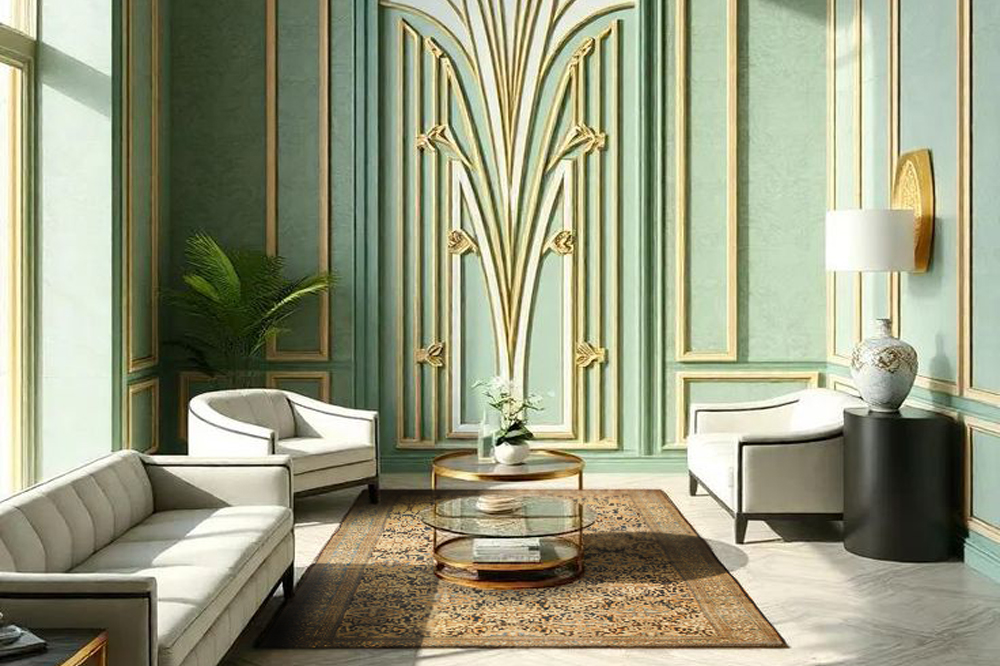
What do Different Art Deco Styles Look Like?
Art Deco design styles underwent an interesting divergence developed through geographic location. Popular in the east coast, both northern Art Deco styles and southern Art Deco styles follow the same basic principles, but with distinct presentations. In northern cities like New York or Chicago, Art Deco follows strict vertical lines and angular geometry, with dark palettes accented in gold. This was the original style implemented in the 1920s-30s.
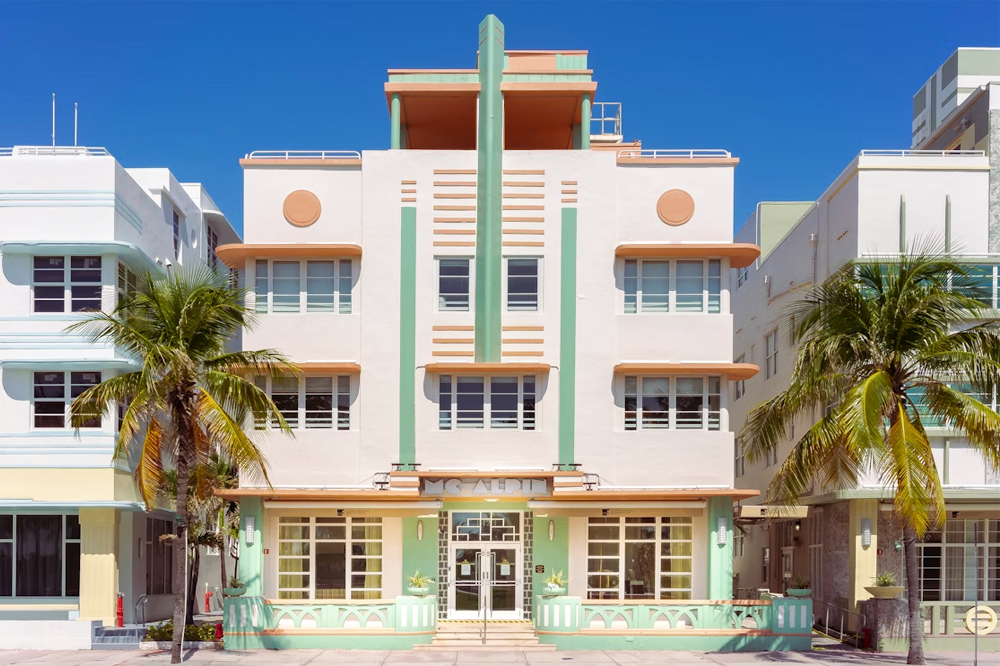
In southern coastal cities like Miami, Art Deco came about a little later in the 1930s-40s and developed a style more suited to the tropical environment. Built as a vacation destination, buildings and interiors were designed with softer conventions, still highly symmetrical and geometric but rounded rather than angular. Color palettes were made up of whites and bright pastels to better fit the sunny climate.
There’s also the case of Chinese Art Deco. This was an influential chapter of design in the rug industry kicked off by American businessman Walter Nichols. It was a moment of cultural fusion that mixed Eastern traditional motifs and conventions with those of the Art Deco movement of the time.
- Bold geometric lines, shapes, and angles
- Refined abstraction
- Opulent and glamorous
- Negative space
- Dark, cool tones and gold accents
Art Deco vs Art Nouveau
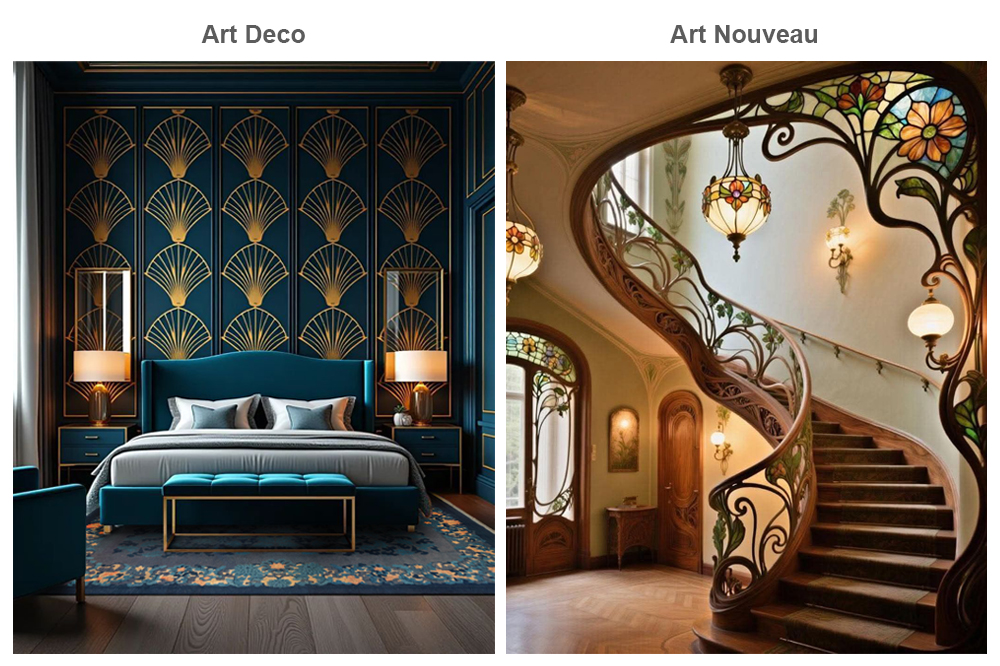
Art Nouveau was Art Deco’s predecessor, similar purely for its chronological and local adjacency. It is characterized by organic forms and curves, with nature-inspired motifs. Soft naturalism with domed ceilings and polished wood were staples of Art Nouveau, emulating botanic characteristics of roots and vines. It emerged just before Art Deco in the late 19th century and was popularized through a Paris gallery. Art Nouveau came about as a reactionary movement against industrialization, embracing creativity and the natural world. WWI saw its eventual decline, where it was then replaced by Art Deco.
While both are highly decorative styles, Art Deco emphasizes a bold geometry and seeks to emulate a futuristic aesthetic. This is in direct contrast to the sinuous, twisting, tree-like and floral look of Art Nouveau.
What Rugs Work Best in Art Deco Interiors?
1. Art Deco Rugs – The Obvious Choice
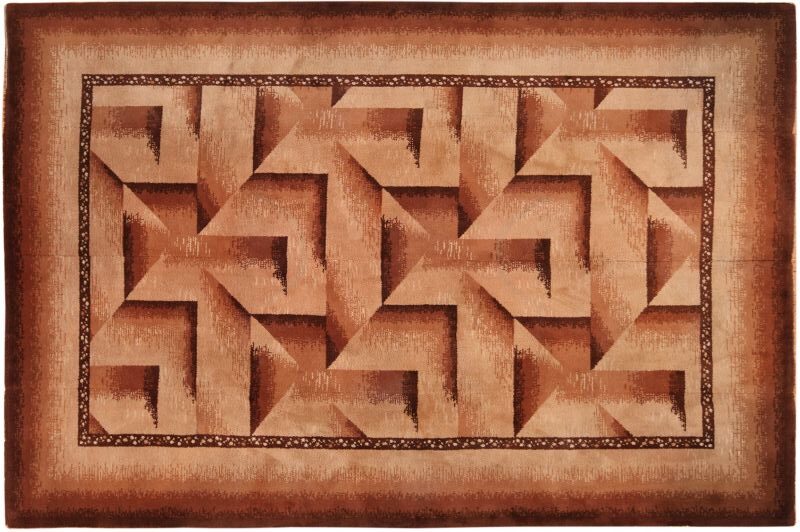
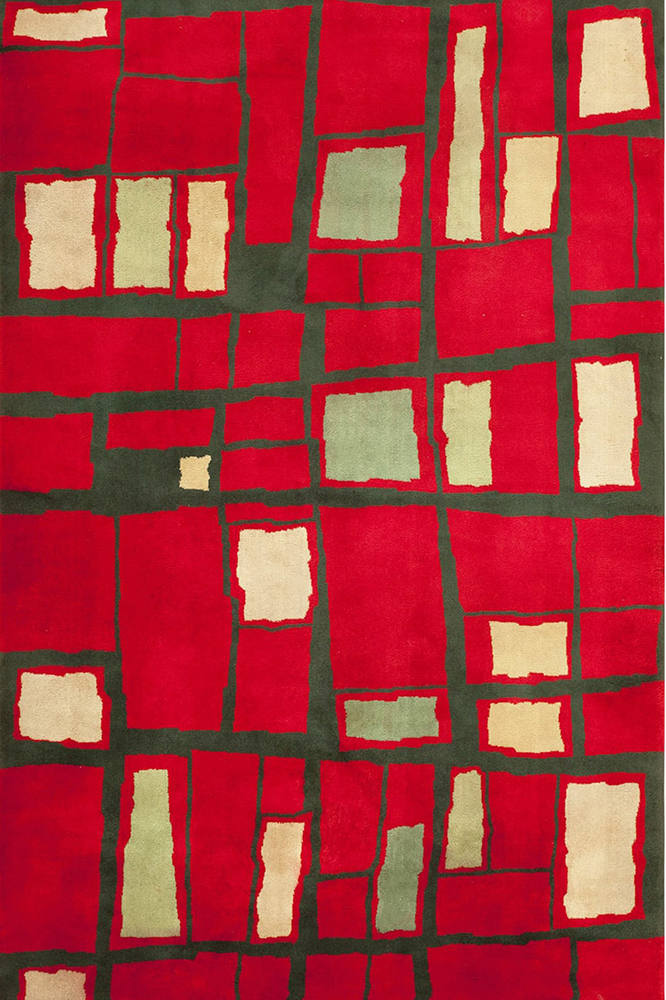
There are plenty of genuine Art Deco rugs to choose from, both created during the Art Deco period and implementing those conventions. Art Deco rugs see the abstracted linear designs and architectural qualities to their patterning.
2. Minimalist Textiles – Using Negative Space
Art Deco design understands the importance of leaving negative space. This little bit of breathing room opens up an interior, giving the illusion of a larger room, as well as centering other decorative aesthetic features without distraction. Look for minimalist rugs with decorative borders and open field plans.
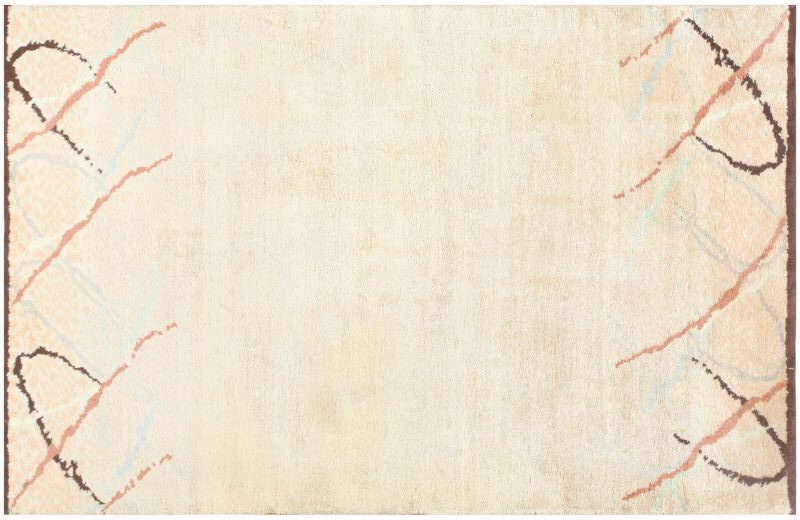
3. Geometric Patterns – Lines and Grid Systems
Keep your rugs’ patterning in line with the Art Deco aesthetic. That is to say, don’t shy away from the bold lines and geometric angles that make up the core of Art Deco design. Look for geometric rugs and gridded patterns to complement the natural sense of order in these interiors.
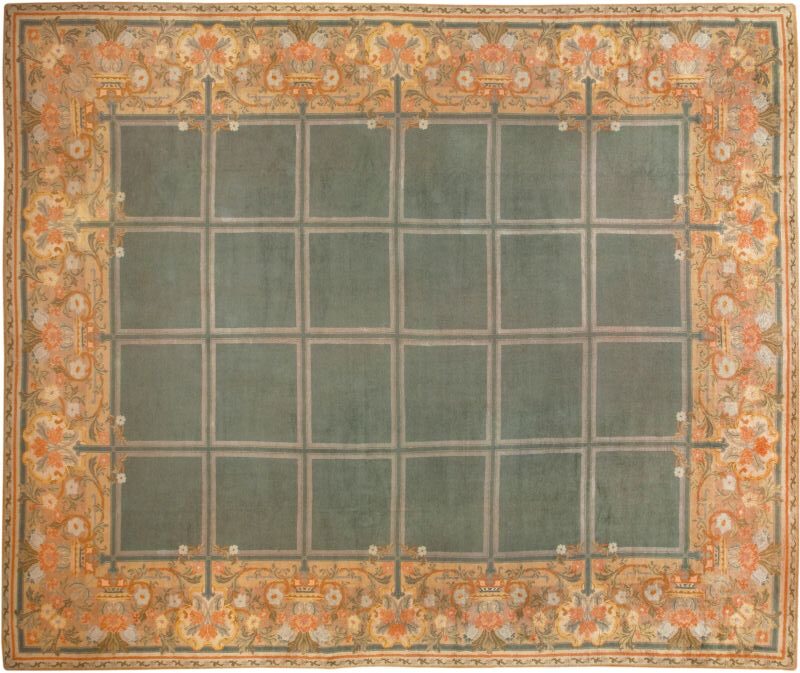
4. Chinese Art Deco – Mixing Cultures and Conventions
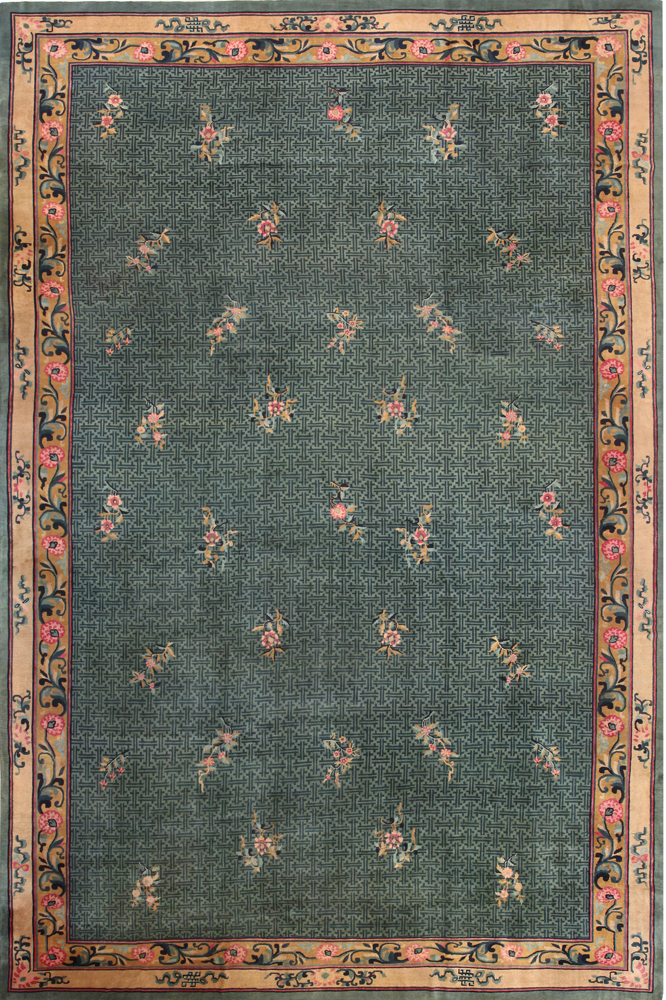
Mixing traditional Eastern motifs like florals and cloud designs with western Art Deco conventions, Chinese Art Deco rugs are a natural furnishing choice. Their designs feature strong color choices, making them wonderful accent pieces. These rugs make perfect use of negative space, often with open plan field designs which work well to keep the space looking elegant and uncluttered.
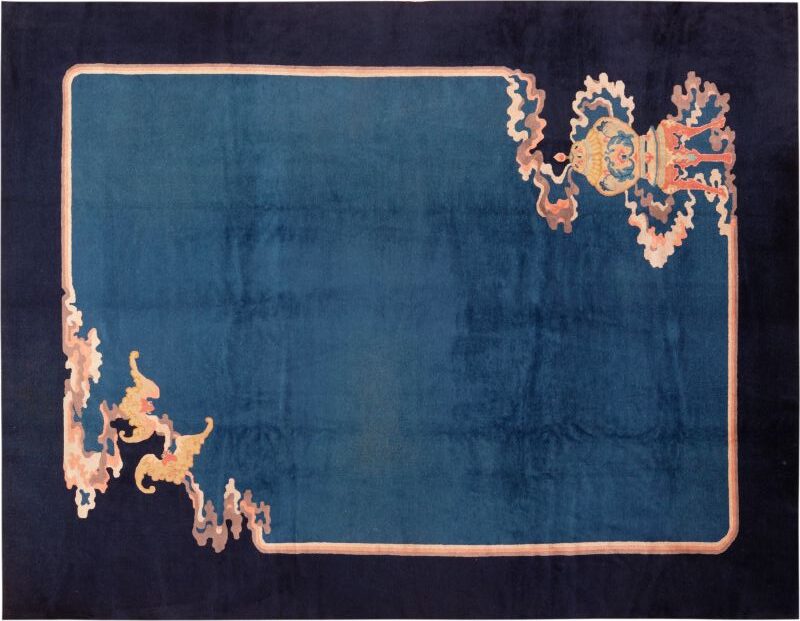
5. Decorative Antiques – Persian Malayer Rugs
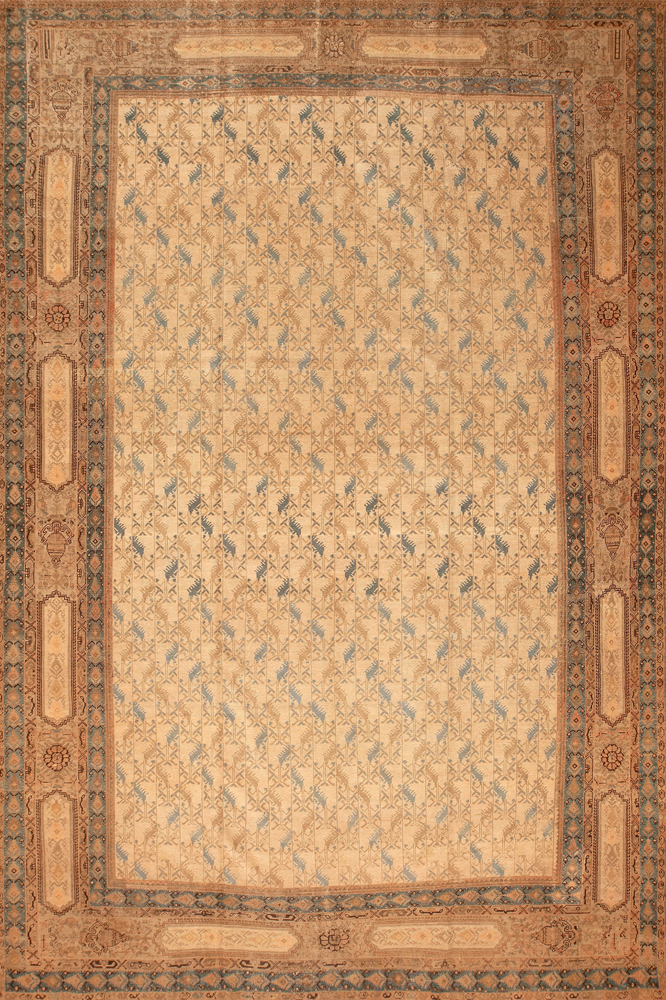
Though Art Deco rugs are squarely in the “Vintage” category of rug, certain decorative antique styles make attractive accessories. Keeping color palette in mind, seek out antique decorative rugs with geometric patterns that follow a gridded system. The gold and blue opulent stylings of many antique Persian Malayer rugs are a wonderful way to introduce a further element of history to an Art Deco interior.
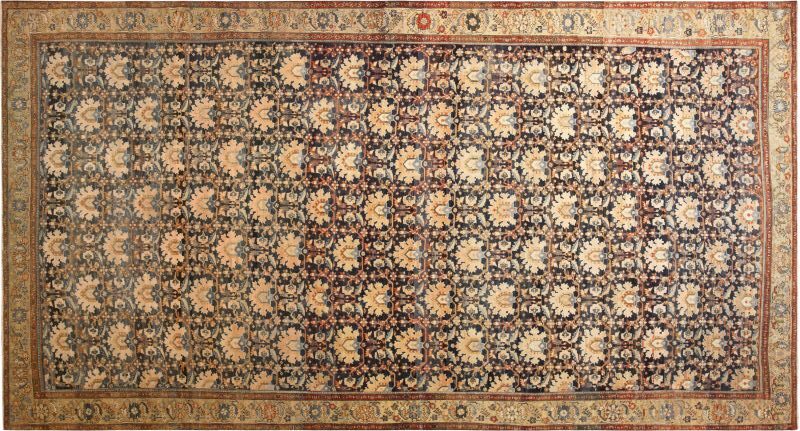
Avoid These Mistakes!
1. Forgetting Texture – The geometric stylings of Art Deco already gives the space a flat affectation. Using flatweaves may further emphasize this, making the space 2-dimensional and boring.
2. Too Antique – While plenty of antiques fit Art Deco interiors nicely, we must keep in mind that the point of the design style is a futuristic appeal. Relying too heavily on traditionally antique aesthetics can work against you.
3. Too Many Colors – While an opulent style and decorative quality is a hallmark of Art Deco design, it’s best not to overwhelm the space with too many colors. It’s embellishments come from strategic gold accents rather than vibrant palettes.
Instead, Choose…
- Textured Piles – Lush wool piles and silk detailing are staples of opulent textiles. Adding these to an Art Deco interior keeps the space from looking too flat.
- Vintage Designs – Art Deco designs are extremely distinct and “of their time.” Choose rugs that feel complementary to the period of time the style developed in.
- Sober Palettes – Keep rugs limited to palettes of only a few colors. Dark blues paired with golds are an easy and common choice. Even for pastel palettes, the amount of color should be kept concise.
Featured Rugs
The Nazmiyal Collection features a selection of not only authentic Art Deco rugs, but rugs that will fit Art Deco style interiors. Below are curated examples of rugs that embody Art Deco design principles.
Final Thoughts
Art Deco interior design came about in the beginning of the 20th century in France. It was characterized by a futuristic and architectural quality mixed with opulent embellishments inspired by both Cubist and Vienna Secession art movements of the time. Both vintage and antique rugs make wonderful additions to Art Deco interiors, as long as their designs align with the style’s ideals. Choose patterned rugs with gridded designs, as well as vintage productions that were made in tandem with the actual design era. For an antique touch, consider Persian Malayer rugs, often with gold palettes and repetitive patternings.
Frequently Asked Questions
What are the main principles of Art Deco?
Clean lines, architectural geometry, negative space, gold accents, and highly decorative elements.
How does Art Deco interior design differ from Art Nouveau?
Art Deco designs are futuristic and place emphasis on rigid forms that follow strict geometry, while Art Nouveau designs rely on vine-like naturalist forms reminiscent of plant-life.
Do antique rugs make for proper furnishings in Art Deco interiors?
Yes. Antique rugs that follow similar design conventions add a charming history and elegance to Art Deco spaces.
Are pile rugs an ideal option for Art Deco spaces?
Plush carpet piles add a much needed textural element that breaks up an otherwise flat space. A pile rug also emphasizes the opulence of the textile, a staple of Art Deco design.