Updated May 11, 2026 • Reviewed by Jason Nazmiyal
There are rugs that you admire, and then there are rugs that stay with you. Gabbeh rugs have always stayed with me.
After more than 45 years in the antique and vintage world, I’ve handled many of the finest Persian, Turkish, Caucasian, Indian, European, and decorative carpets ever made. But Gabbeh rugs speak to me in a different way. Their beauty isn’t about perfection, formality, or technical showmanship. Their beauty comes from instinct, color, freedom, and feeling.
In my opinion, the Gabbeh rug is among the most underappreciated art forms in the world.
They’re woven paintings, music in wool, and tribal abstract expressionism created by weavers who followed their own imagination.
My First Gabbeh Exhibition in America
I still remember organizing my Gabbeh exhibition at the Paper Mill Playhouse in New Jersey in the early 1980s. To the best of my knowledge, it was the first exhibition to introduce Gabbeh rugs to America and the American public in a serious way.
At that time, Gabbeh rugs were not fully understood. Many collectors and dealers were trained to look for fine knotting, perfect symmetry, formal Persian drawing, and courtly refinement. Gabbehs challenge that idea with their freeform designs and personal motifs.
I invited Georges D. Bornet to be my guest speaker. He was a Scandinavian collector whose early Gabbeh collection helped open people’s eyes to these rugs. His presence was important because he understood what I felt so deeply: Gabbeh rugs were not simply tribal floor coverings. They were art.
That exhibition was not just about showcasing rugs. It was also about asking people to see the Gabbehs with respect and as spontaneous, emotional, and deeply personal works of woven art.
What is a Gabbeh Rug?
A Gabbeh is a tribal Persian rug, most often associated with the Qashqai, Luri, and other weavers of southwestern Iran. Traditionally, Gabbehs were woven with thick wool, natural dyes, and open, expressive designs. Unlike other fine antique rugs, Gabbehs were made for daily life rather than as palace decorations. Their purpose as practical objects made them durable and comfortable, in addition to being beautiful.
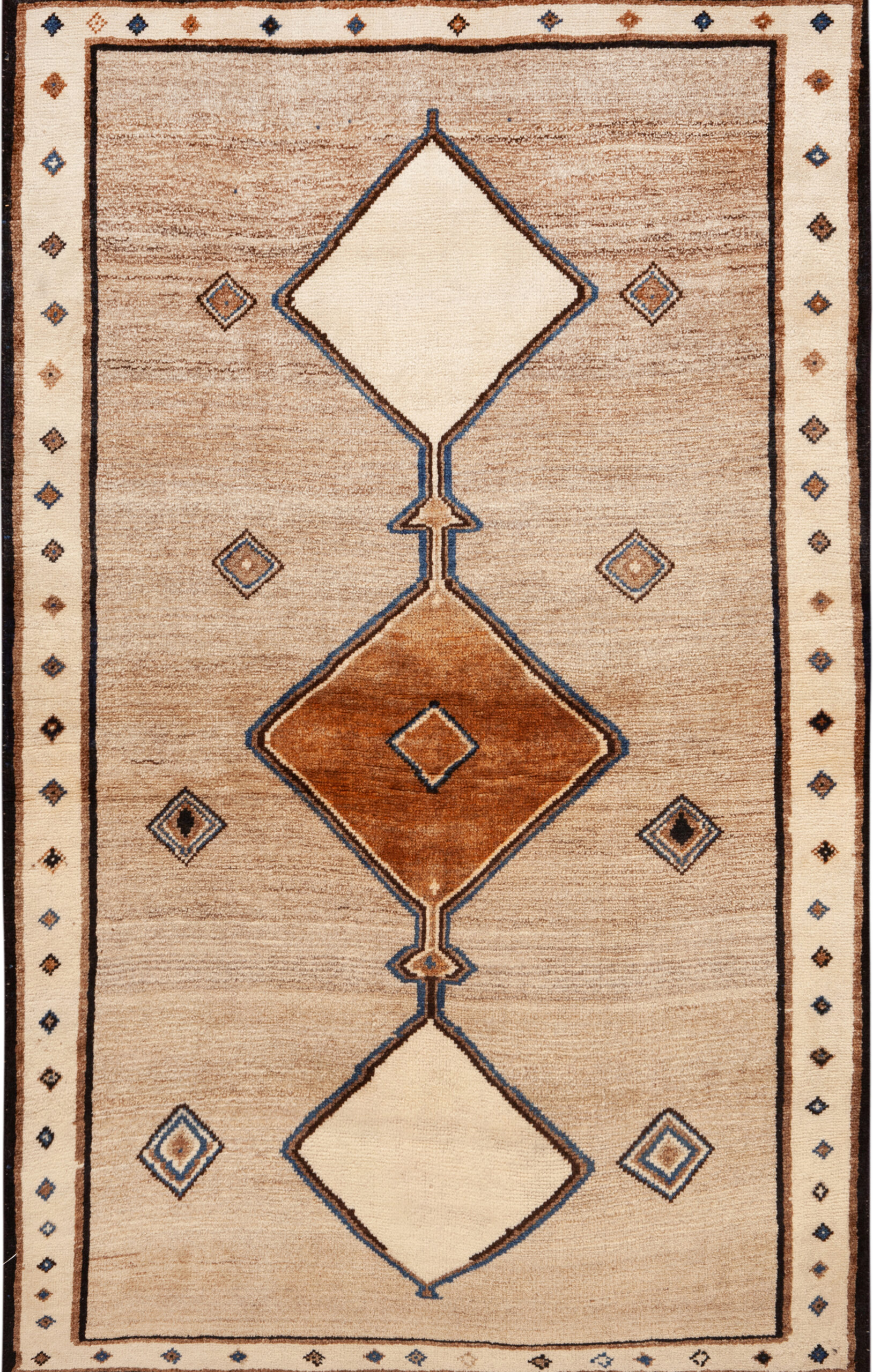
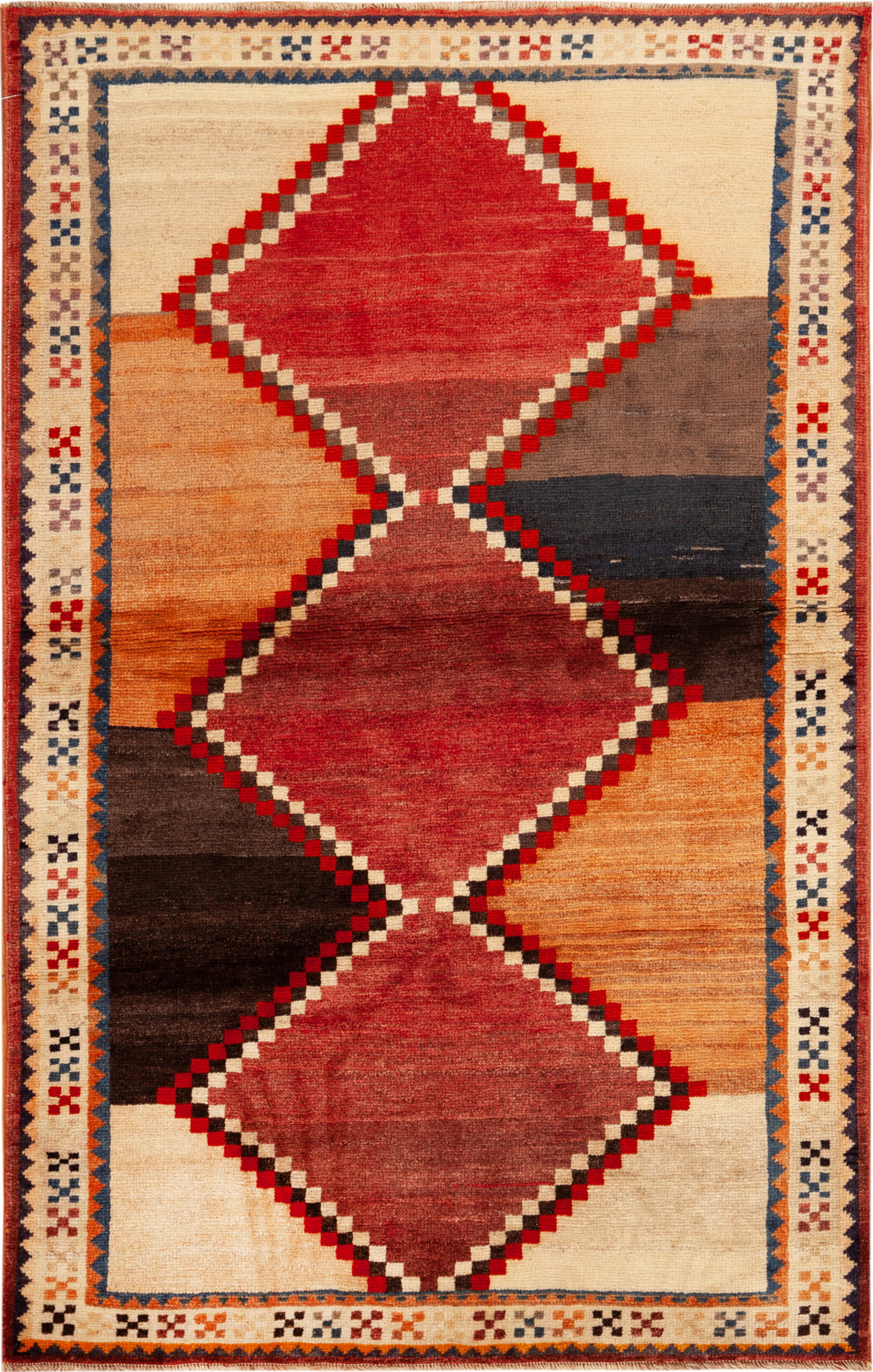
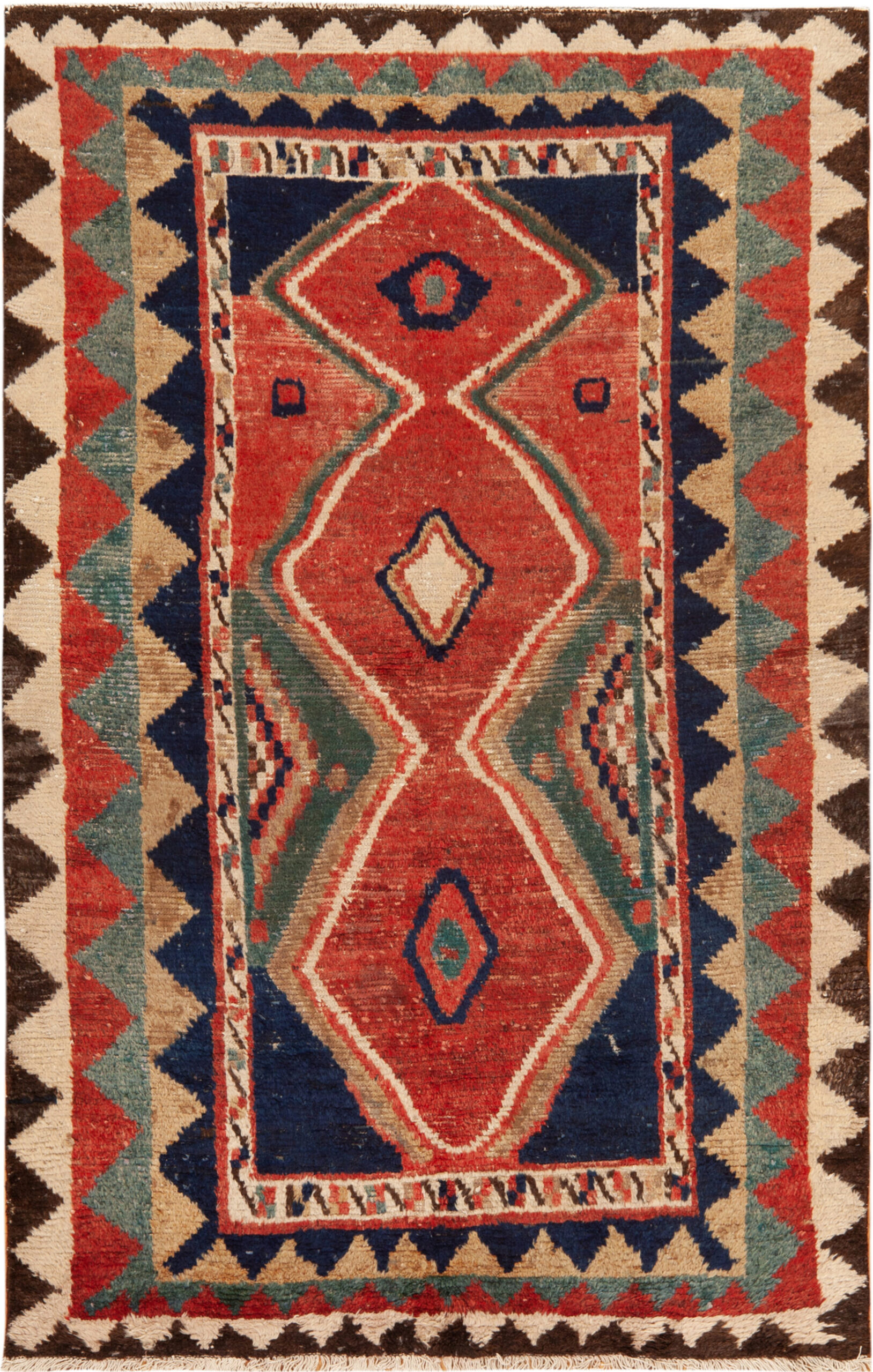
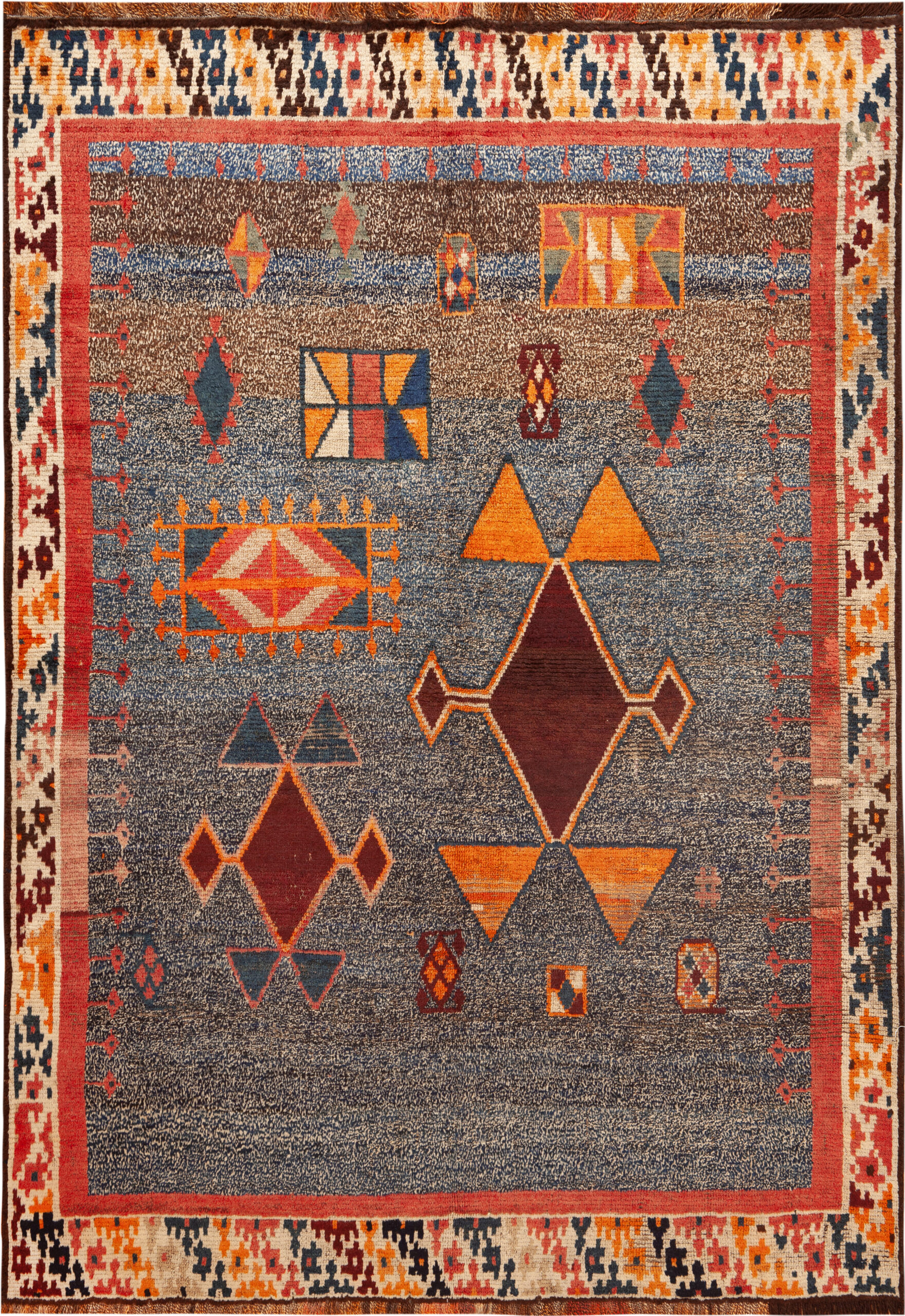
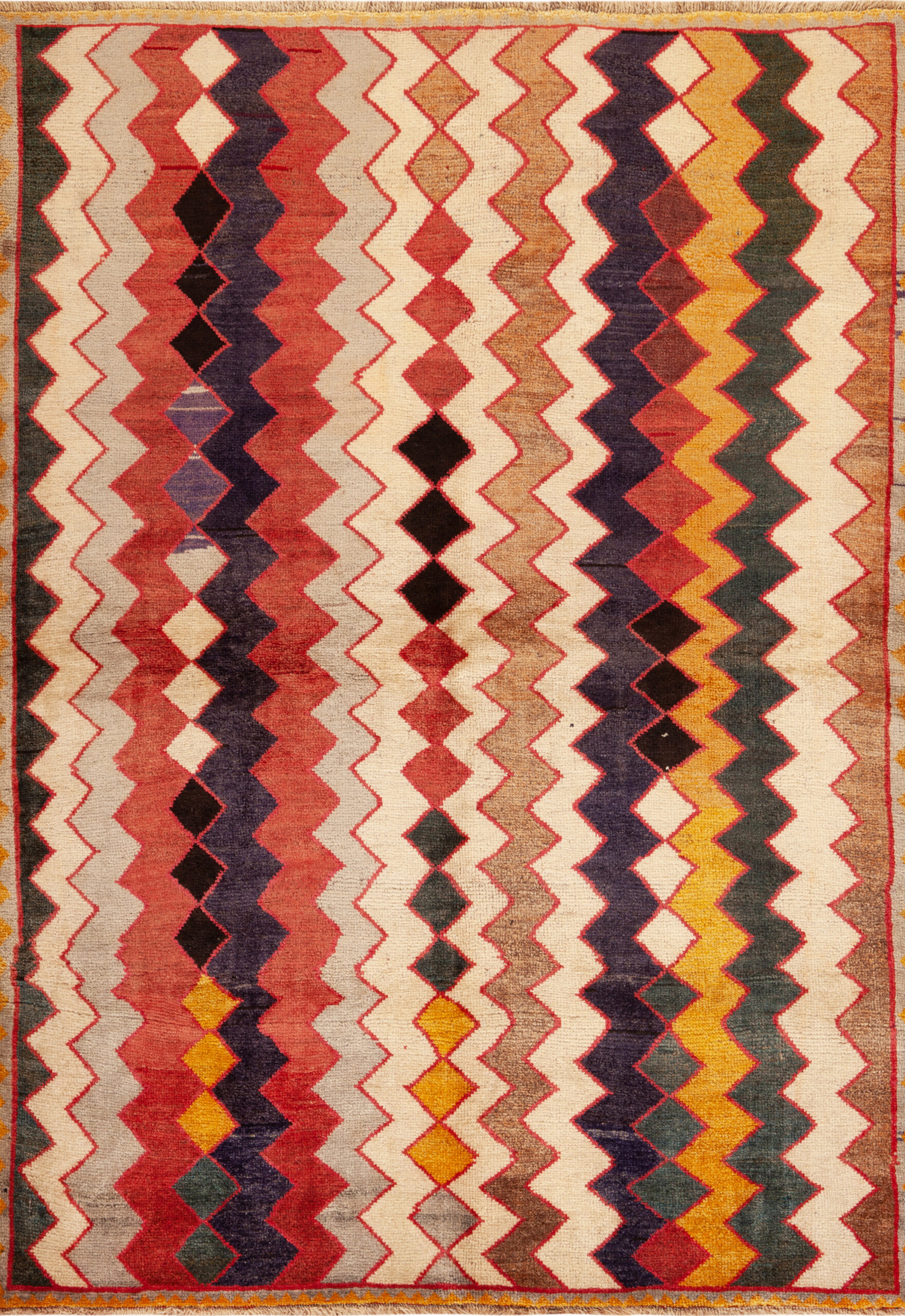
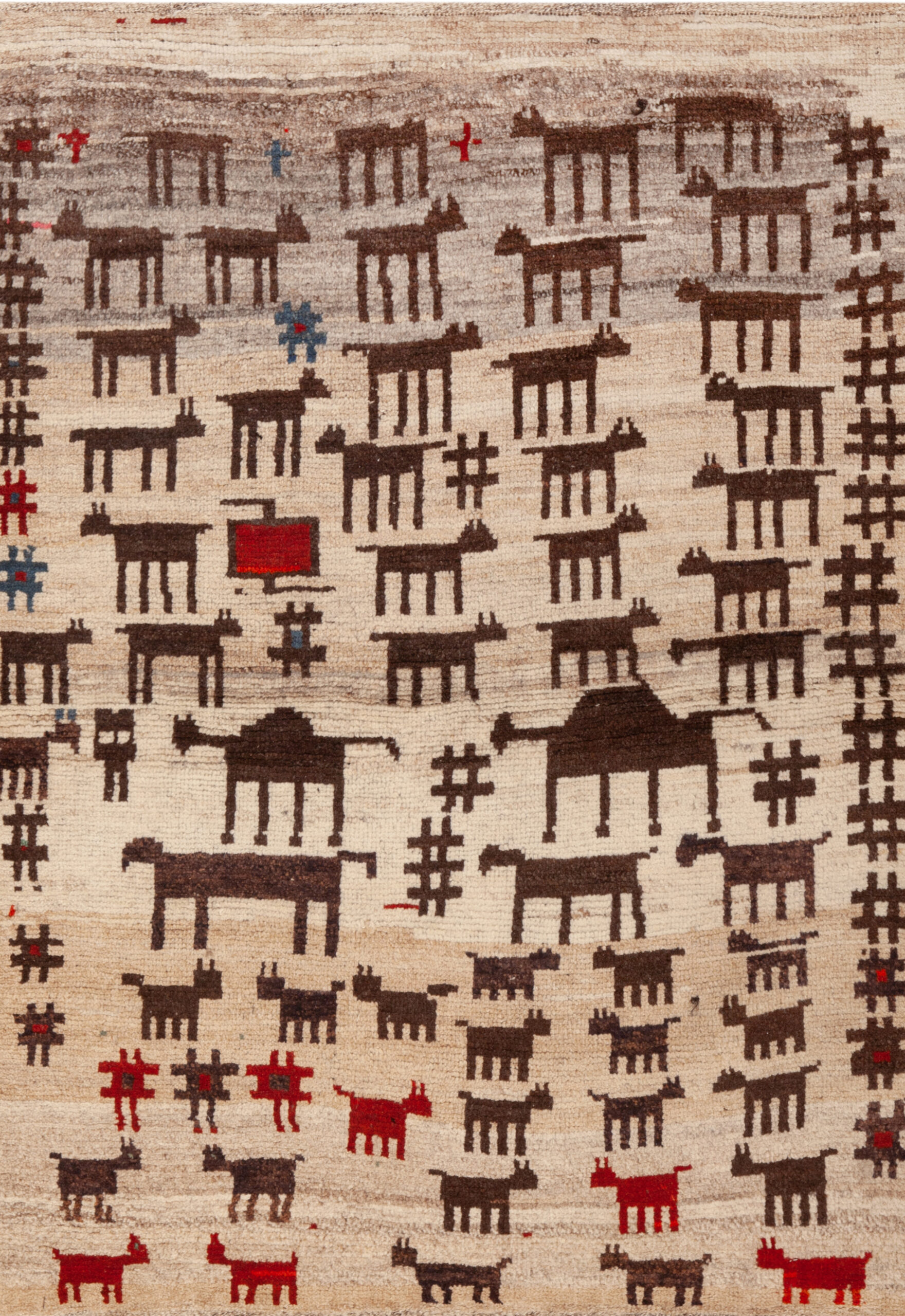
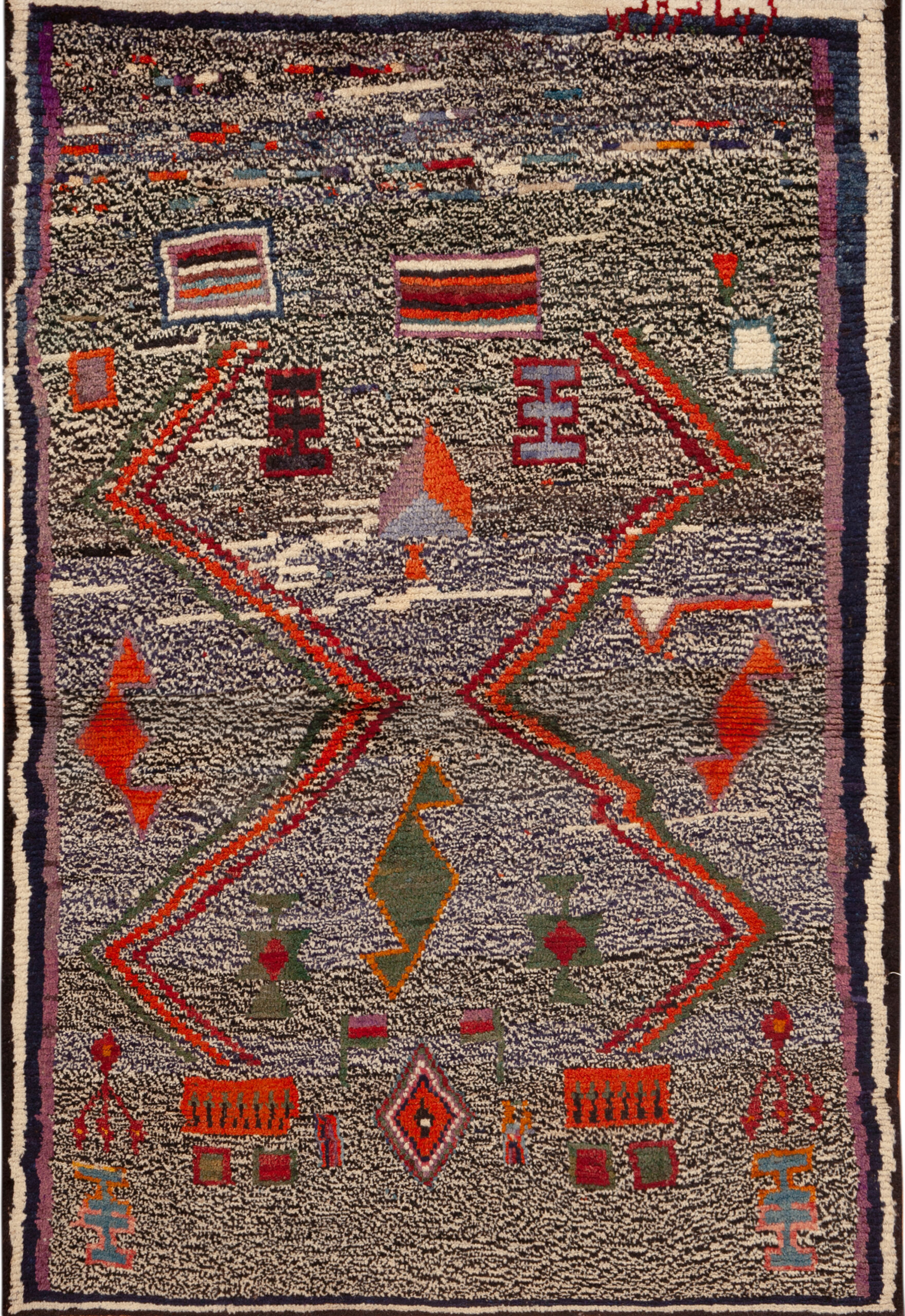
But a Gabbeh is much more than just a rug category. A Gabbeh is a woven expression of life. You may see a tree, a small animal, a human figure, a checkerboard, a floating square, or a large empty field of color. Some feel like dreams, while others feel almost like a child’s drawing. They all, however, possess the soul and memory of an old culture.
The Weaver as Artist
What I love most about Gabbeh rugs is their freedom. Gabbehs were never commissioned pieces for royal courts or affluent homes. Instead, they were made by local domestic weavers, often women of the tribal community. In these textiles, the weaver wasn’t following a rigid cartoon or formal city pattern. She was composing from memory, imagination, and instinct. The compositions are free-flowing, based on the weaver’s stream of consciousness, not a planned design. Because of this, each Gabbeh rug is a truly unique production. They each contain a humble authenticity to them that becomes rarer by the day.
I think of a Gabbeh’s composition developing the same way a pianist sits at a piano and plays from the heart.
That’s why a good Gabbeh always feels alive, with its own rhythm, pause, surprise, and emotion. The irregularities aren’t flaws. Instead they’re evidence of the human hand. They are the weaver’s signature.
Gabbeh Rugs and Abstract Expressionism
Long before many people connected rugs with modern art, Gabbeh weavers were creating powerful abstract compositions in wool. Their designs look simple at first, but become more interesting the longer you live with it. What looks like simple figures, unexpected blocks of color, and vibrant open fields are so much more.
A great Gabbeh can have the same emotional strength as an abstract expressionist painting. Not because the weaver was trying to imitate modern art, but because both come from freedom, gesture, and feeling.
The main difference between the two isn’t the medium of art, but that Gabbeh rugs were made to be lived with.
A Gabbeh is a highly individualized piece of artwork. The productions are visually strong and impactful, easily read from across the room. Their purpose is for everyday life, meant to occupy the homes of everyday people. They are deeply personal, and hold a unique authenticity not often seen in workshop productions or commissioned pieces.
The Gabbeh as Wall Art
The graphic and often pictorial nature of Gabbeh rugs deserves to be seen at eye level. When you hang a Gabbeh on the wall, it becomes clear that you’re looking at a painting made of wool. The colors become stronger, the composition clearer, and the small details more meaningful.
Something like an animal figure stitched into the corner, a lonely tree, or a floating square of color aren’t decorative elements on a rug. Instead, these features are key to the larger composition and make up a work of art.
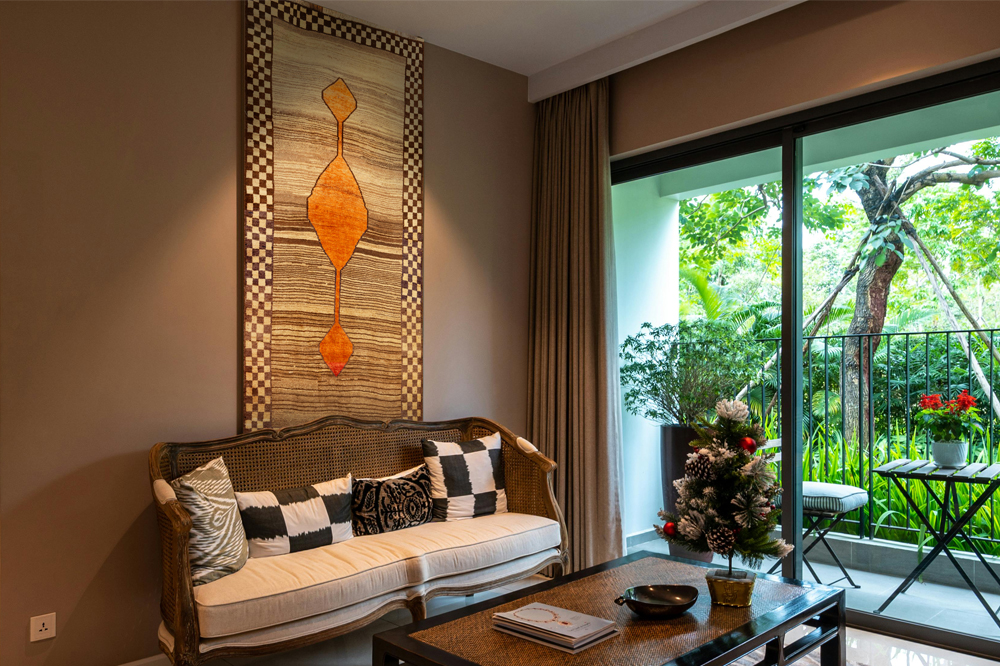
The making of Gabbeh rugs plays a big role in why they’re often displayed as wall art rather than floor coverings. Aside from the graphic quality of their designs, their scale is important to consider. Gabbeh rugs are primarily tribal productions from nomadic cultures. They are woven on portable looms, smaller in stature than the stationary looms found in village workshops. Consequently, the textiles and rugs produced were smaller as well. Though their pile remains thick, their scale makes them easy to move and overall lighter than room-size rugs and larger. They are well suited as wall hangings both from a technical standpoint as well as a curatorial one.
As wall art, Gabbeh rugs bring warmth, texture, culture, and emotion to a room. They can look beautiful in a modern apartment, a country house, a loft, a library, or a bedroom. They are both ancient and modern, humble and powerful.
Gabbeh Rugs as Floor Art
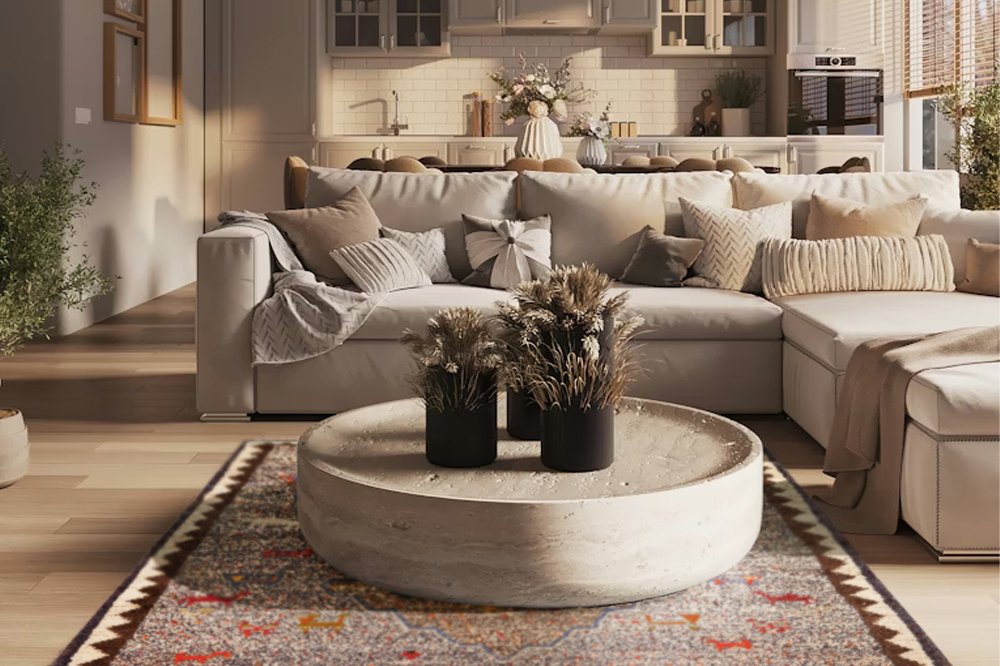
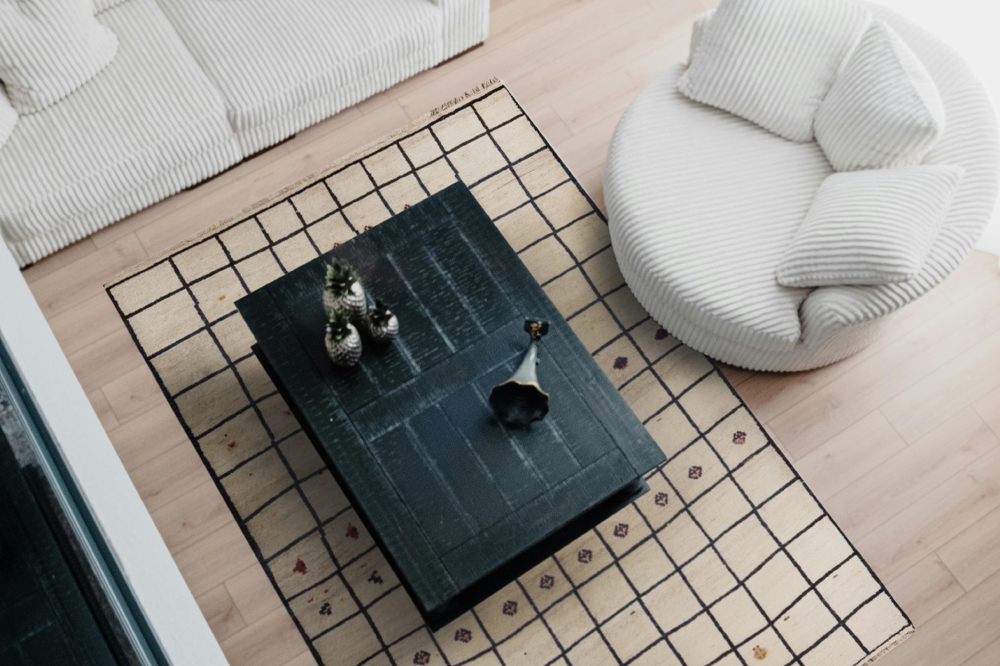
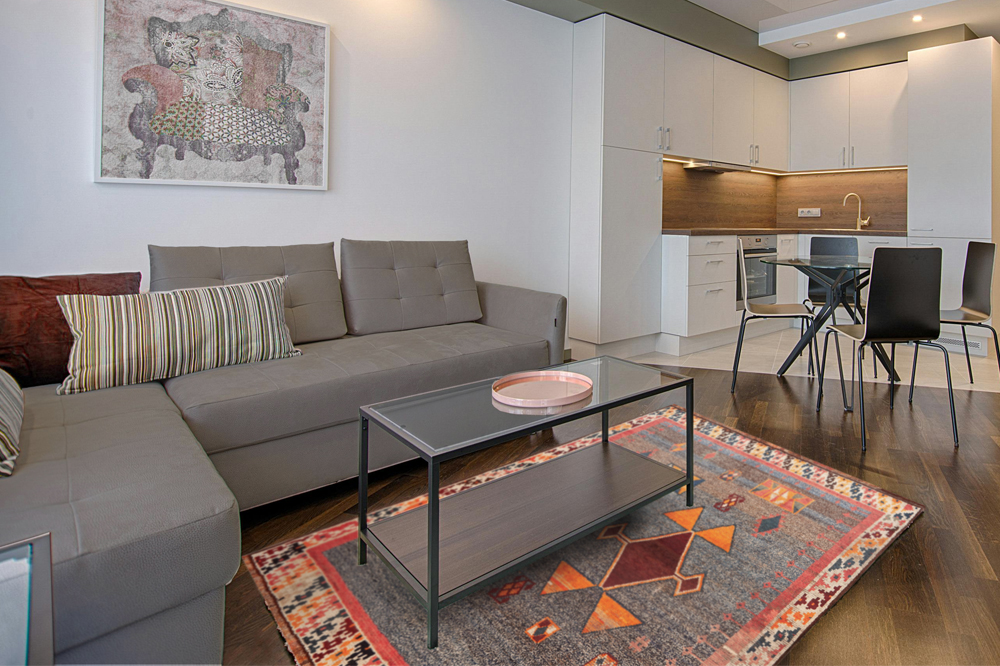
Gabbehs are also extraordinary on the floor. Their open fields, strong use of color, and abstract designs beautifully compliment modern furniture. Despite their strong graphic quality, these rugs are on the smaller side so they don’t overwhelm a space, rather giving it warmth and personality.
A Gabbeh can make a clean, modern room feel less like a set and more human. They bring a sense of relaxation to formal rooms as well as color without feeling forced.
That is why I call them floor art. They are not just rugs underfoot, but compositions you live with.
Organic Beauty: Wool, Vegetable Dyes, and the Human Hand
The charm of a Gabbeh comes from their inherent organic beauty. The obvious evidence of the human touch behind a Gabbeh rug’s construction is something that cannot be manufactured. Beyond the literal and technical weaving, the materiality itself contains a unique depth.
Gabbeh rugs were woven with real wool, sheared and processed all by hand. For color, natural vegetable-based dyes were used, something that was vibrant in its time and has now aged beautifully. A red is never just red. It must carry rust, rose, madder, orange, or brown within it, giving the hue it’s own individual narrative.
Gabbehs feel alive through their natural compositions. They come from the earth, the sheep, the plant, the hand, and the imagination, all working in tandem to create something beautiful and timeless.
Still One of the Great Values in Art
One of the most surprising things about Gabbeh rugs is that despite their beauty, many of them remain affordable. In today’s art market, people spend large sums on paintings, prints, and design objects. Yet many handmade, naturally dyed, and deeply expressive Gabbeh rugs can still be found for under $4,000. Additionally, these are one of the only types of rugs not produced for commercial demand at the beginning of the 20th century, making them even more exclusive and authentic finds.
It’s a remarkable and frankly surprising deal. For that price, a person can own a real work of handmade woven art full of feeling, culture, and individuality.
Why I Never Get Tired of Gabbeh Rugs
Over the years, I have bought and sold thousands of Gabbeh rugs. Even after all this time, I can honestly say that I’ve never gotten tired of looking at them.
Some rugs are instantly impressive with stunning colors, designs, and an imposing scale. But Gabbeh rugs are the kinds of textiles that are continuously impressive. Each time you look, you notice something new. A small animal, a shift in color, a strange proportion, or a landscape-like field can all come to life.
Perhaps this is because they were not over-designed. They leave room for the viewer and allow you to feel.
Featured Rugs
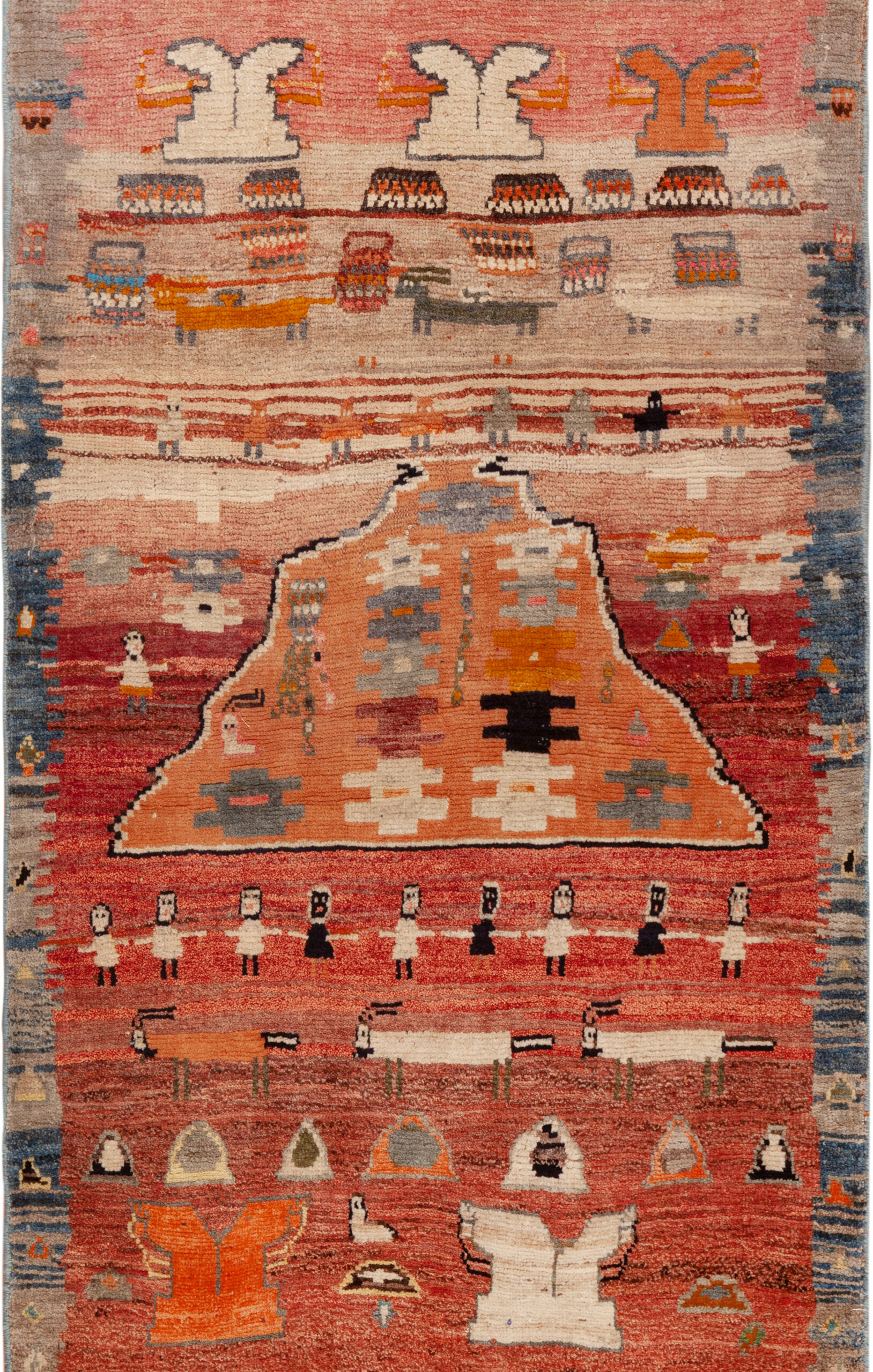
The Nazmiyal Collection is home to a selection of high-quality decorative Gabbeh rugs. From open fields, to rich compositions of personal motifs and geometric patterns, find the Gabbeh that best fits you.
Final Thoughts
Gabbeh rugs are among the most honest art forms I know. They somehow manage a visual simplicity while remaining complex. They’re primitive in the best sense, but never unsophisticated. They carry the imagination of the weaver, the life of the wool, the depth of natural color, and the freedom of true artistic expression.
I consider them something more akin to a wool painting. They are abstract expressionist works made not for museums, but for everyday living. After more than 45 years in the rug business, I still believe Gabbeh rugs are one of the least appreciated art forms in the world. Their importance will continue to grow, because true art does not always announce itself loudly.
Sometimes it is woven quietly, with wool, vegetable dye, and the imagination of a weaver who found her own rhythm.
Frequently Asked Questions
What is a Gabbeh rug?
Gabbeh rugs are tribal Persian rugs, often smaller in scale and with graphic colors, motifs, expressive designs, and thick piles.
Can Gabbeh rugs be used as wall hangings?
Yes. Gabbeh rugs are well suited for wall displays due to their smaller scale and graphic artistic quality.
Are Gabbeh rugs durable?
Gabbeh rugs are built to withstand the wear of everyday life and tend to have a thicker pile. That being said, the state of a Gabbeh’s durability ultimately depends on its condition.
Why are Gabbeh rug designs so expressive?
Gabbeh rug designs are expressive due to the nature of their conception. Gabbeh weavers didn’t follow a plan or design, but instead created the design and any motifs depicted spontaneously.
How are Gabbeh rugs valued in the art and design market?
Gabbeh rugs are remarkably affordable in comparison to other antique and vintage productions. Many authentic high-quality Gabbeh rugs are available for under $4,000.