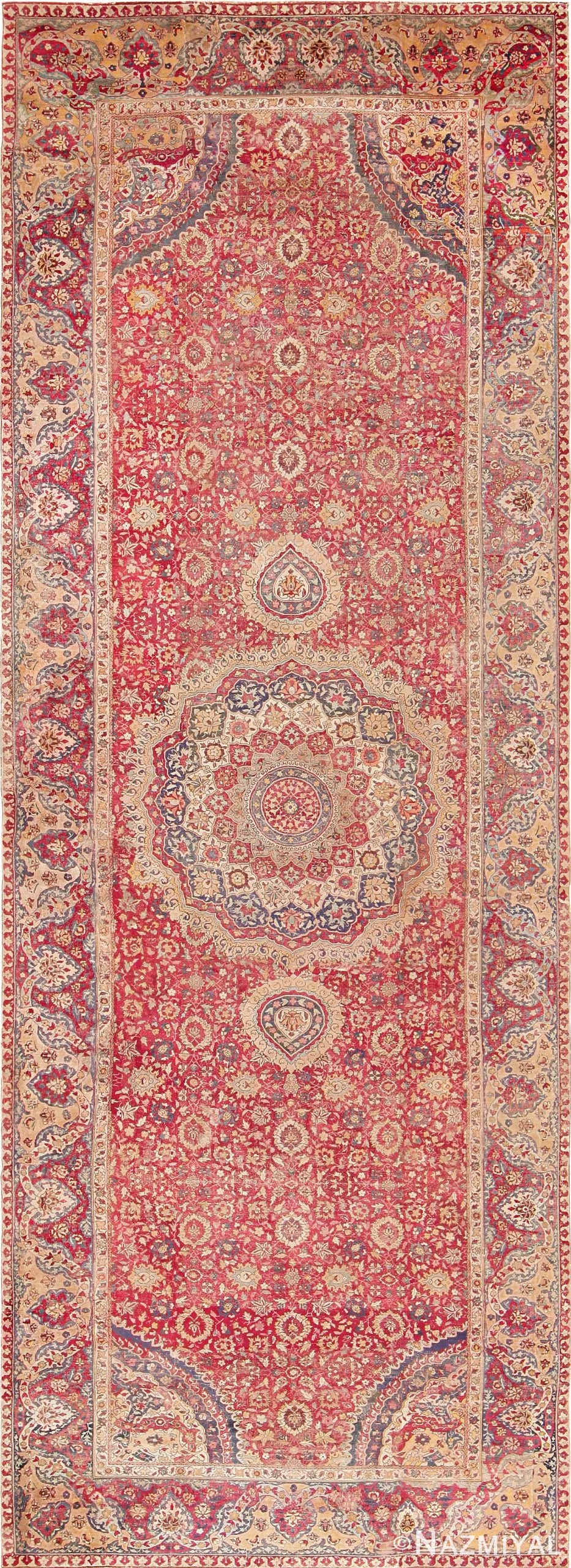
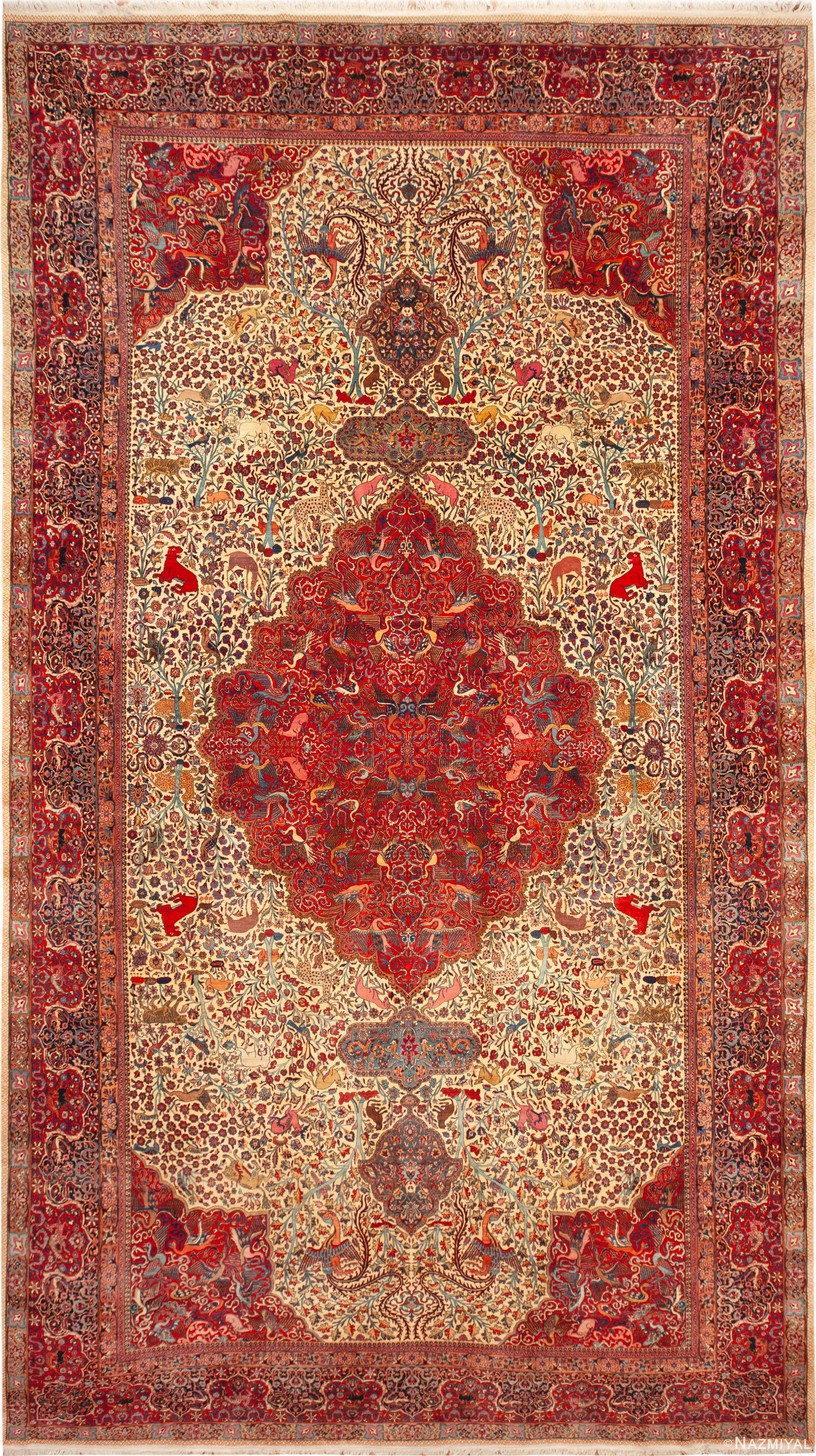
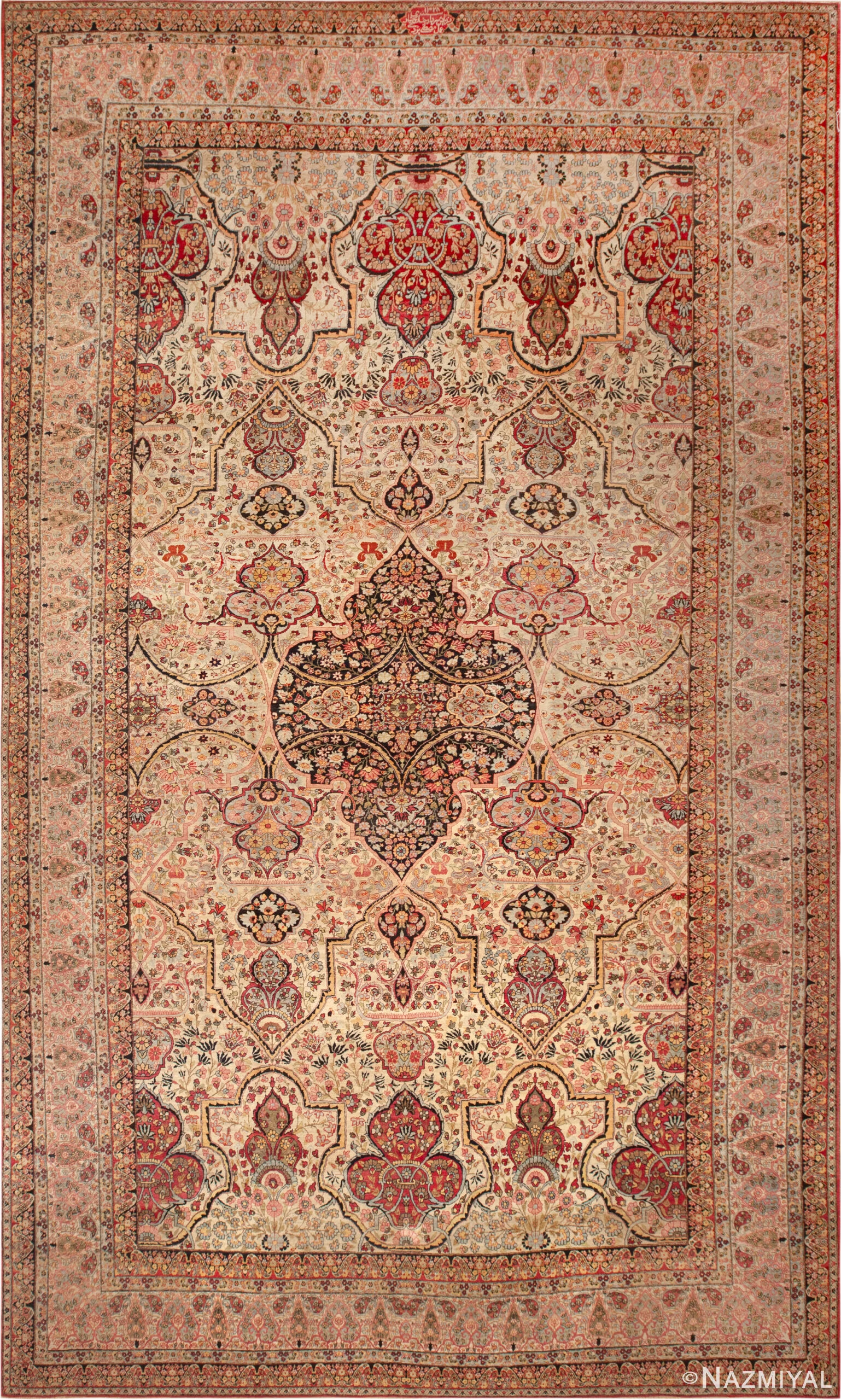
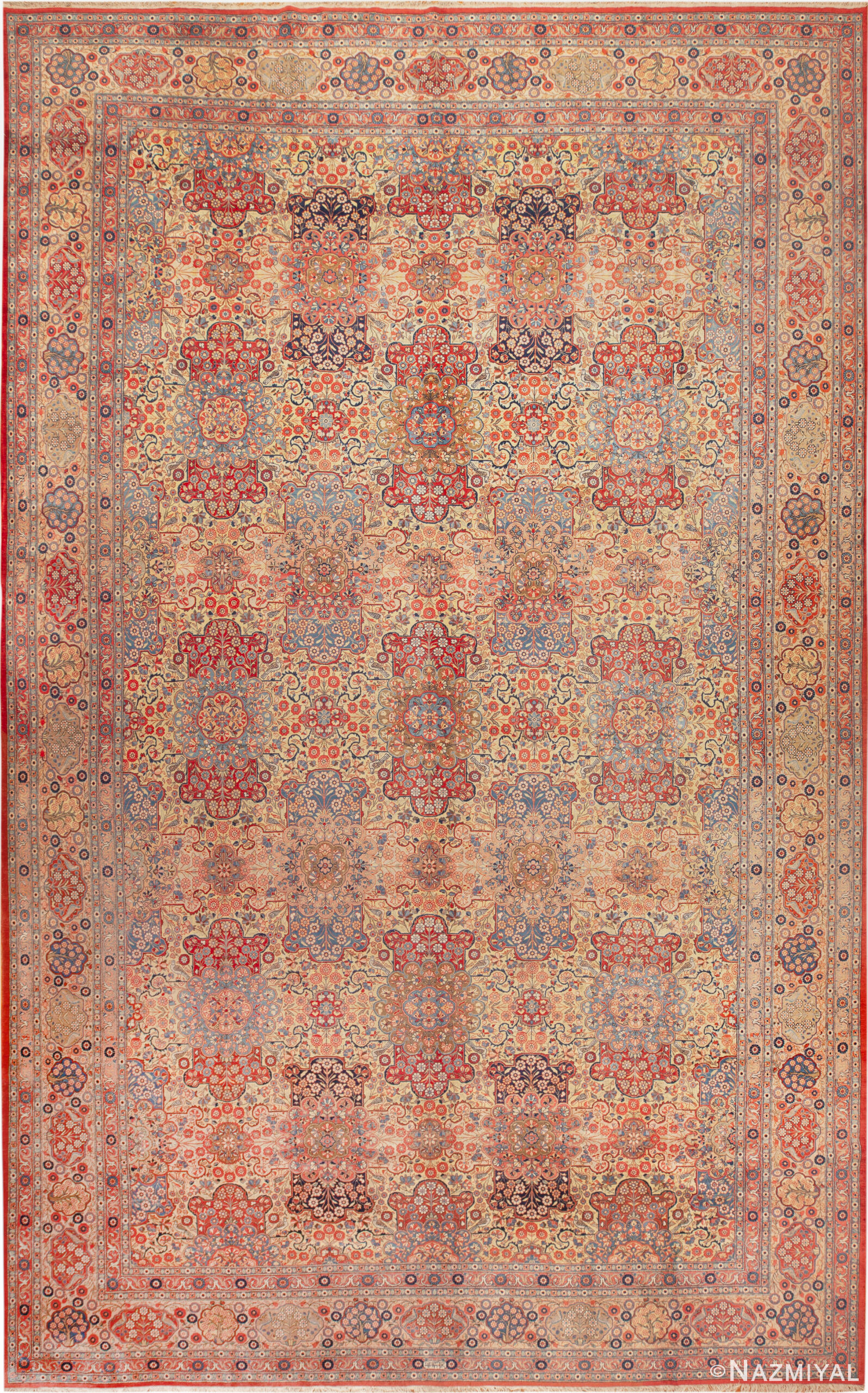
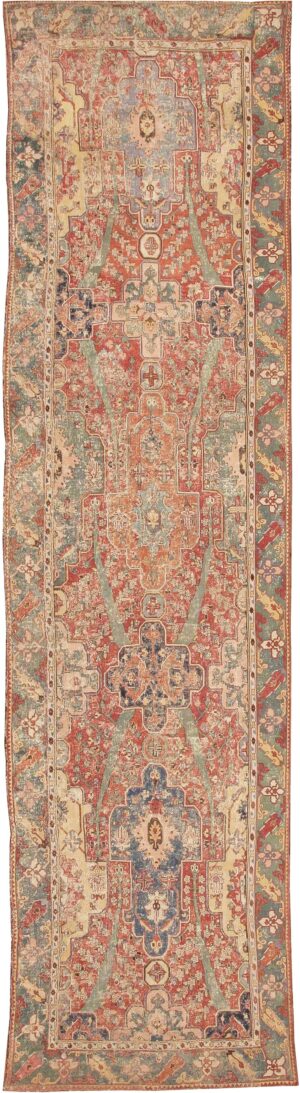
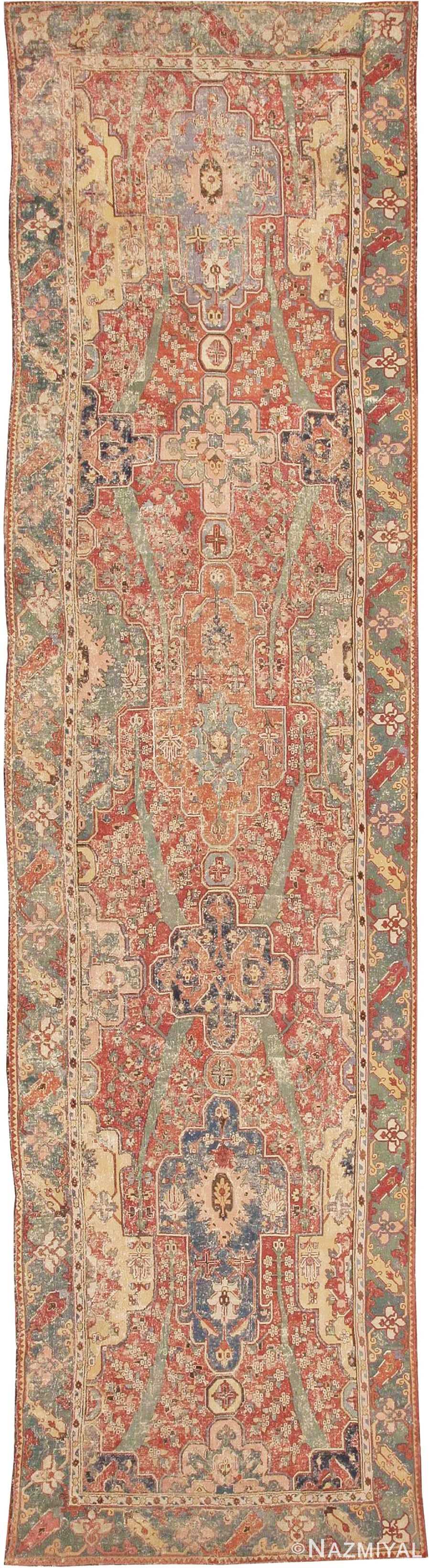
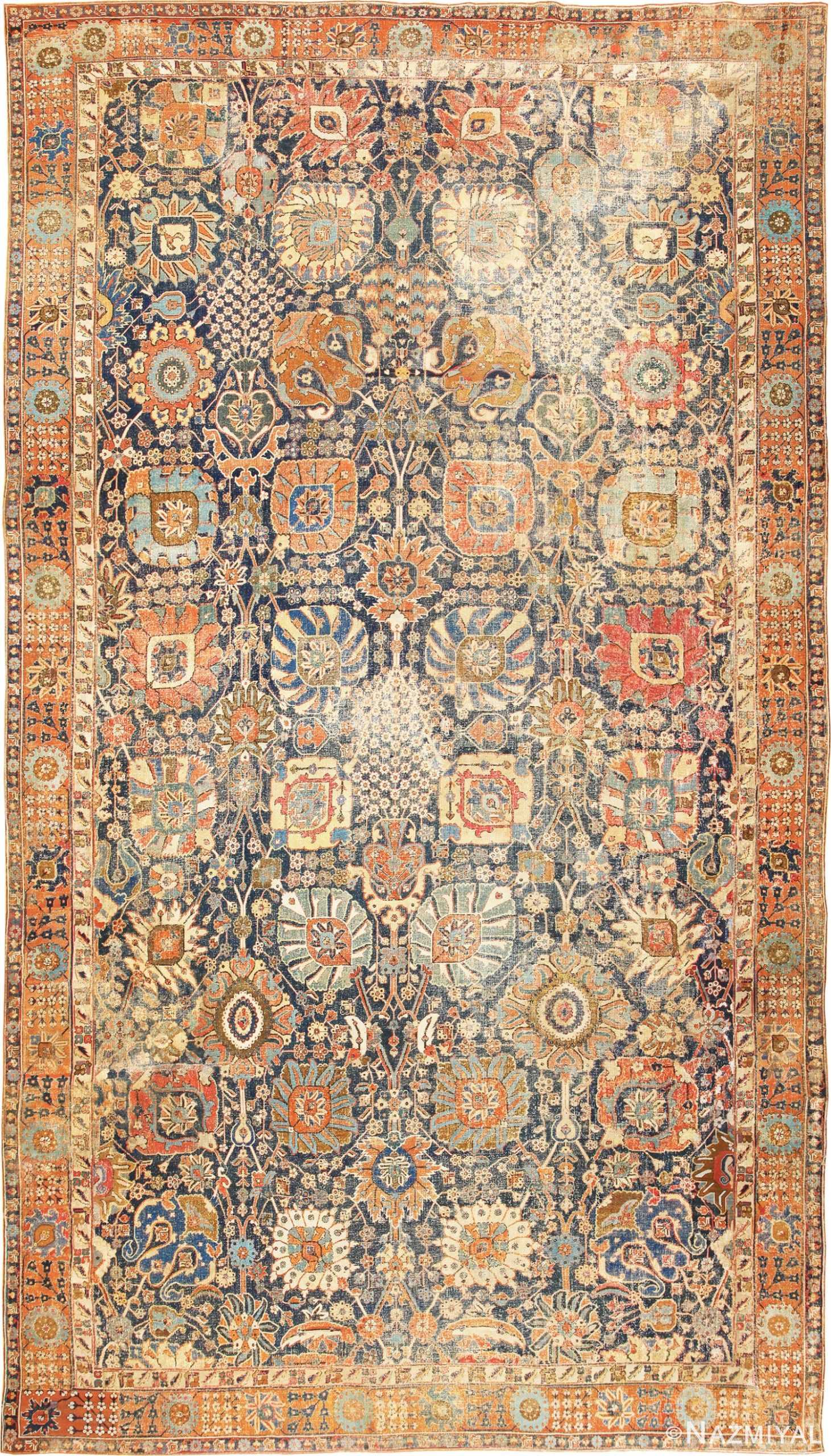
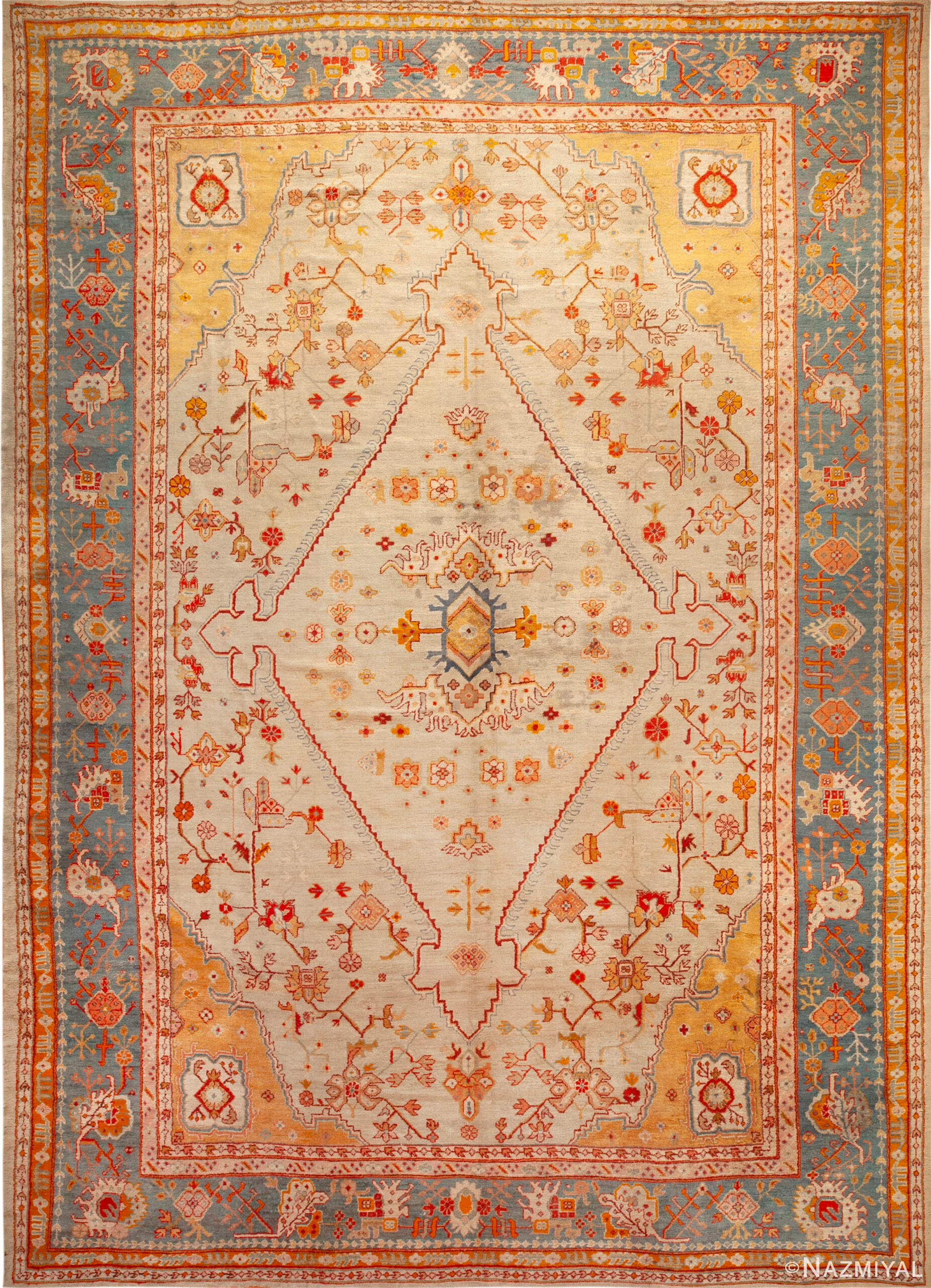
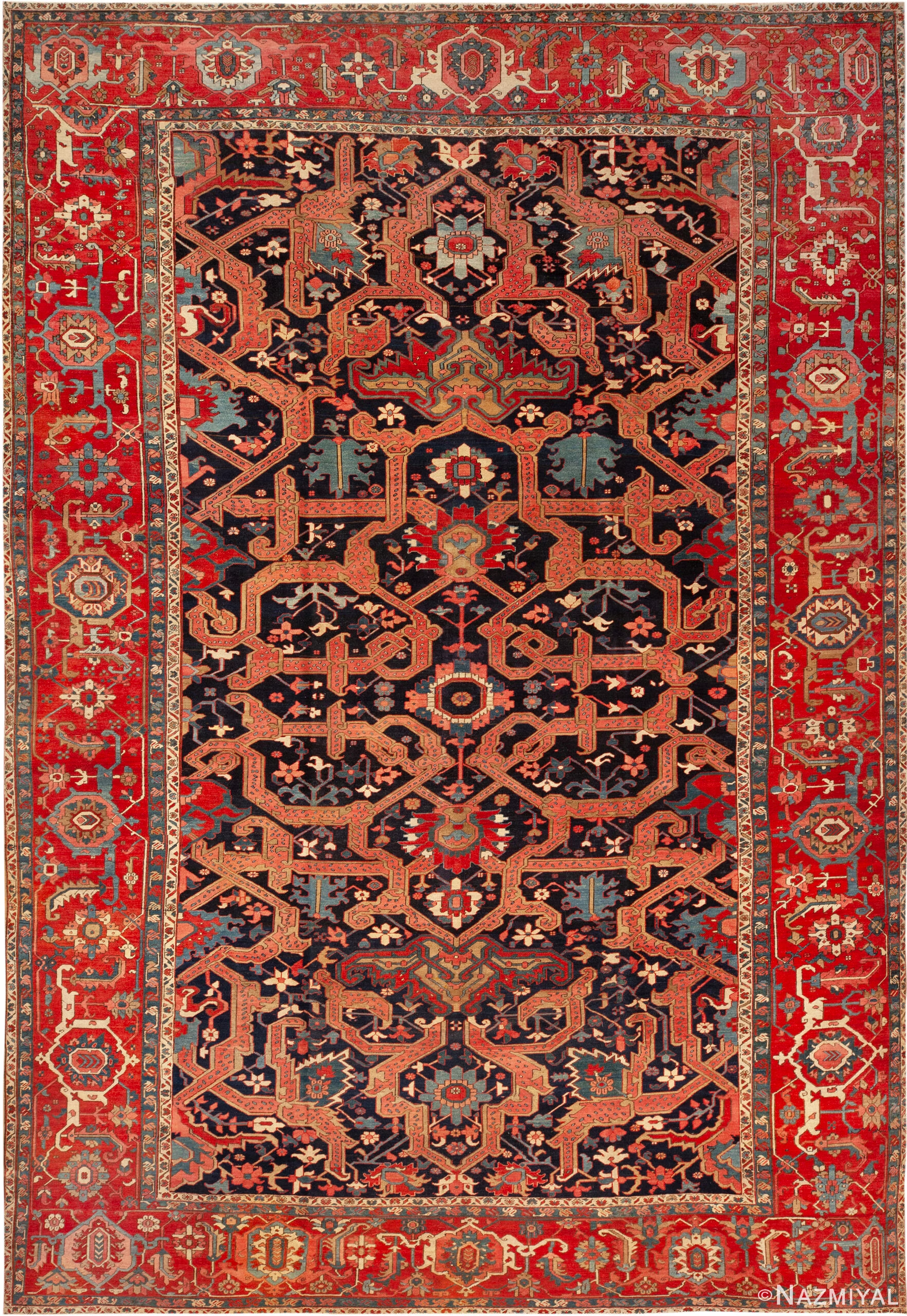
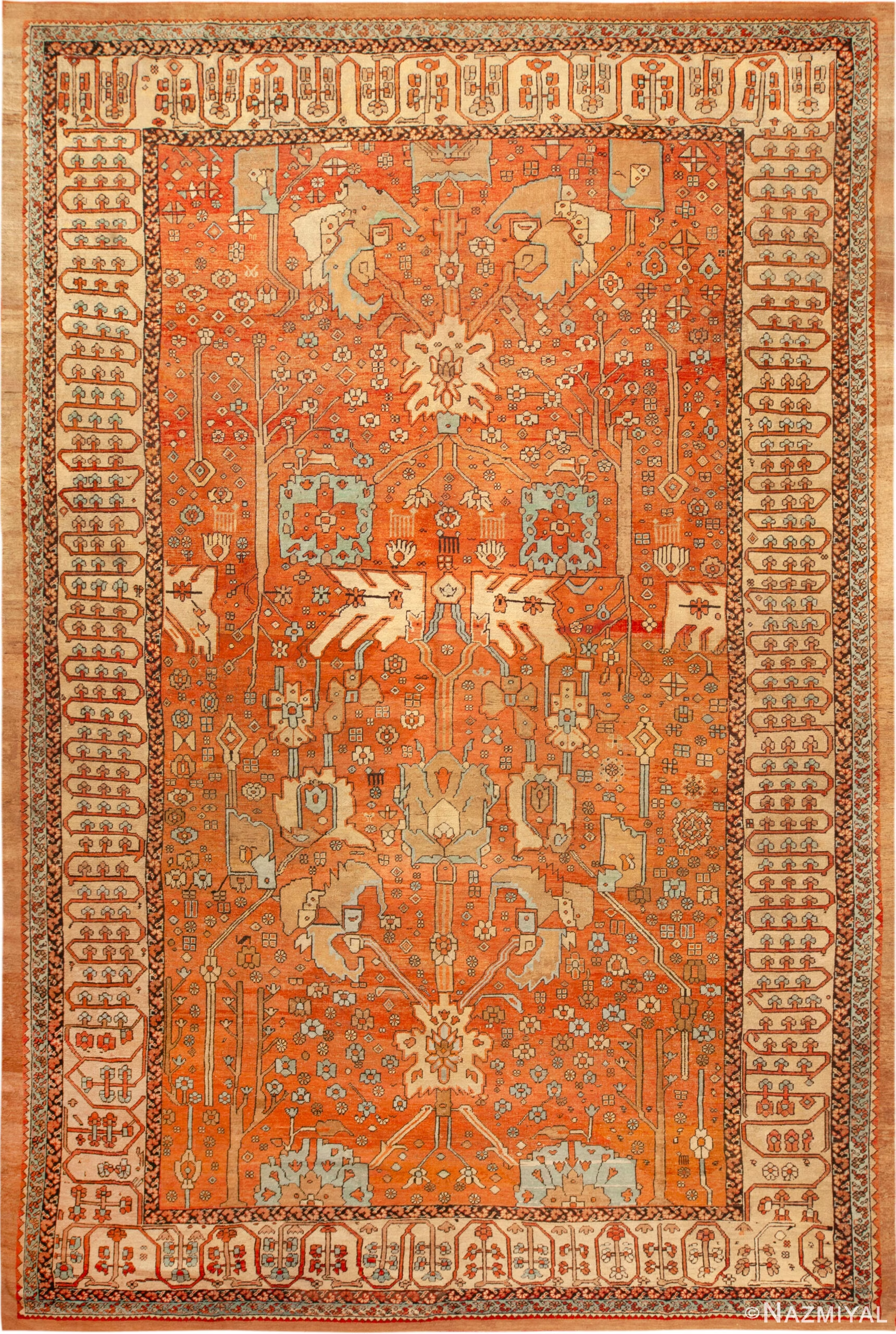
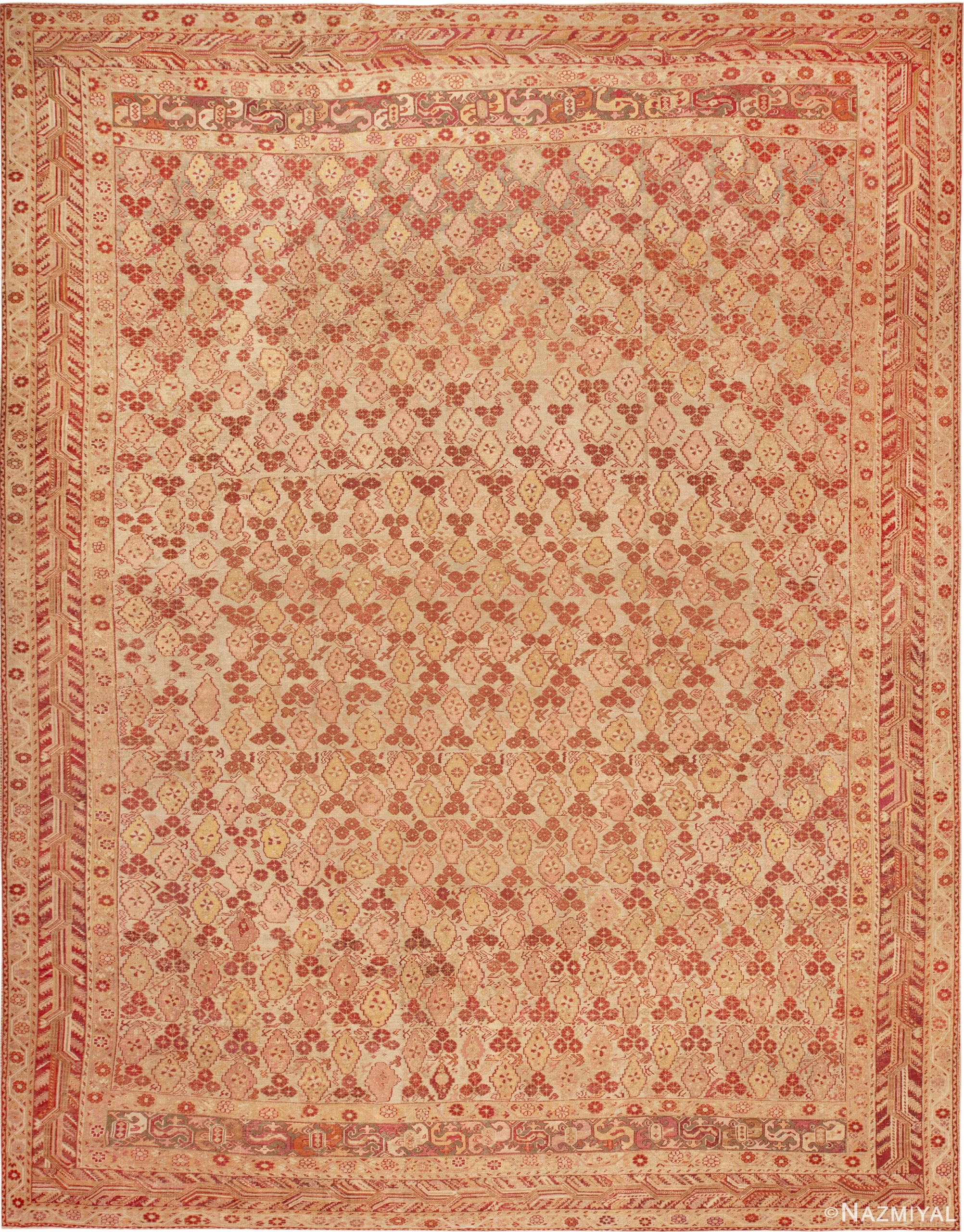
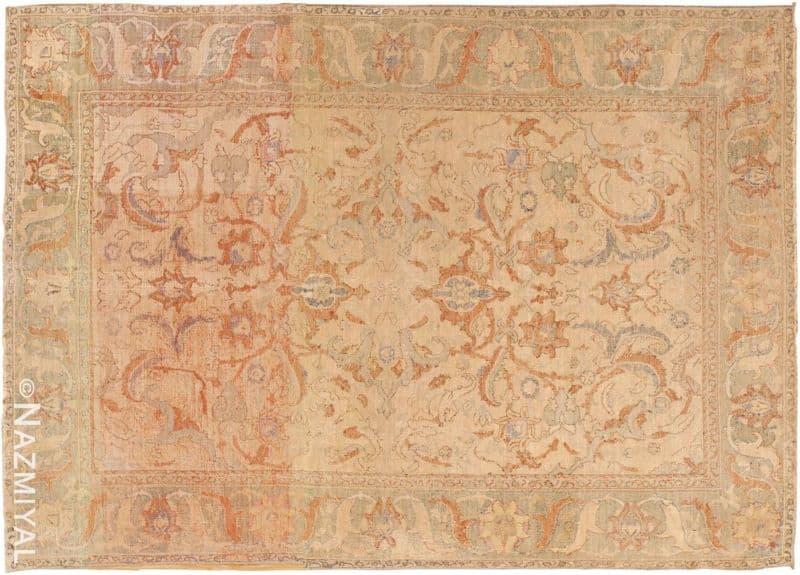
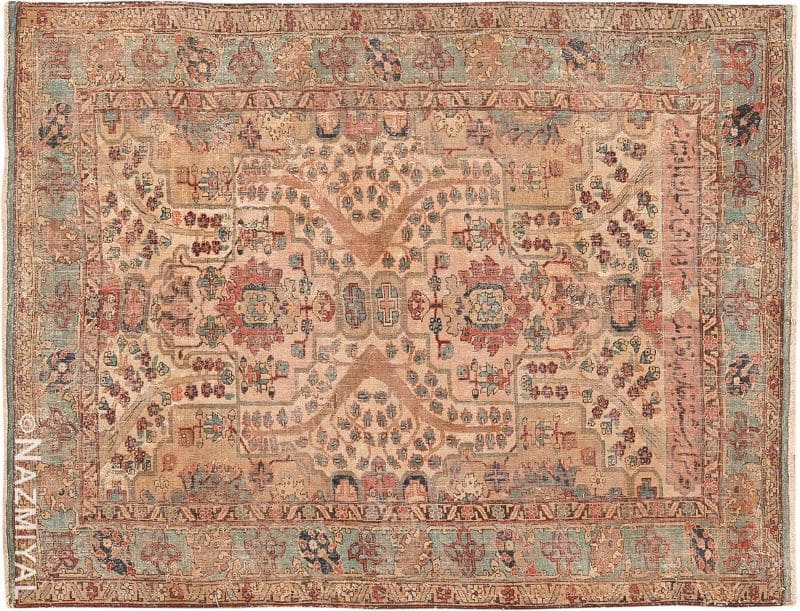
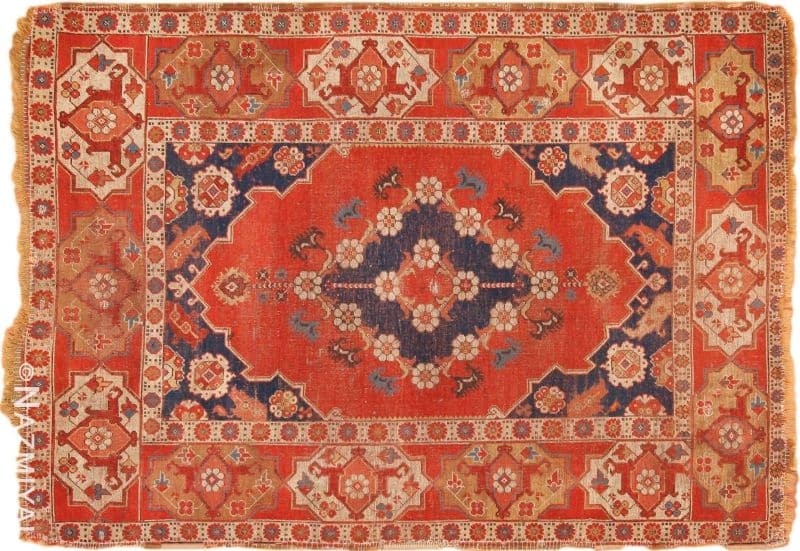
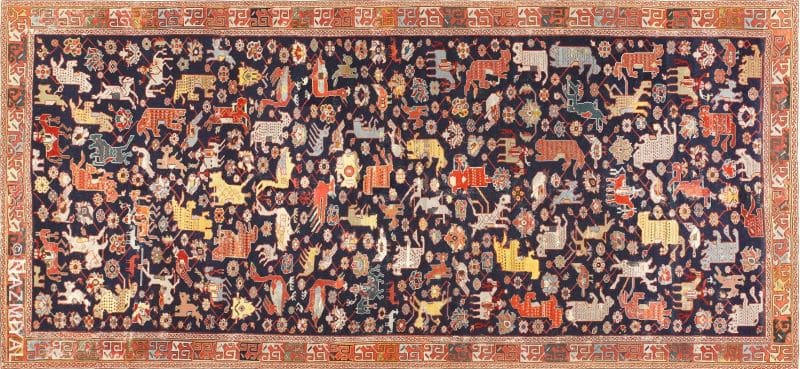
A collectible rug typically refers to a rug that is considered valuable or highly sought after by collectors. These rugs often have unique designs, intricate patterns, historical significance, or exceptional craftsmanship. Collectible rugs can come from various regions and cultures, and they are often handmade using traditional techniques. Factors such as rarity, age, condition, and cultural significance can contribute to the value of a collectible rug.
Some collectors may focus on specific types of rugs, such as antique Persian rugs, Oriental rugs, or tribal rugs, while others may seek out contemporary or artist-designed pieces. The market for collectible rugs can vary, and auctions, specialty dealers, and galleries are common places where collectors may find and acquire these unique pieces.
Why are some rugs collectible while others are not?
Several factors contribute to why some rugs are considered collectible while others are not.
Here are some key reasons why certain rugs are “collectible”:
Craftsmanship and Quality: Collectible rugs often exhibit exceptional craftsmanship, with attention to detail in weaving, knotting, and materials used. Higher quality materials and skilled craftsmanship contribute to a rug’s collectability.
Design and Patterns: Rugs with unique and intricate designs, as well as patterns that showcase artistic or cultural significance, are more likely to be collectible. Distinctive motifs, colors, and styles can set a rug apart in terms of collectability.
Age and Rarity: Antique or vintage rugs, especially those that are rare or hard to find, tend to be more collectible. Older rugs may have historical significance or be representative of specific time periods and artistic traditions.
Cultural or Historical Significance: Rugs tied to specific cultures, historical events, or renowned weaving traditions can be highly collectible. Certain types of rugs, such as Persian rugs, tribal rugs, or those from specific regions, may have cultural importance.
Condition: The overall condition of a rug significantly affects its collectability. Well-preserved rugs with minimal wear, fading, or damage are more likely to be sought after by collectors.
Artist or Weaver Recognition: Rugs created by renowned artists or weavers may gain collectability due to their association with skilled artisans. The reputation of the creator can enhance the value of the rug.
Market Demand: Trends and market demand play a role in determining collectability. If there’s a heightened interest in a particular style, period, or type of rug, it may become more collectible.
Documentation and Provenance: Rugs with documented histories, provenance, or connections to famous collectors may be more attractive to enthusiasts. Knowing the origin and history of a rug can add to its collectible appeal.
Collectability is subjective and can vary among individuals and markets. Some collectors may prioritize specific characteristics, while others may focus on a broader range of factors. Ultimately, the combination of craftsmanship, design, history, and rarity contributes to the collectability of a rug.
What are some of the most collectible types of rugs?
Several types of rugs are highly sought after by collectors due to their unique characteristics, historical significance, and craftsmanship.
Here are some of the most collectible types of rugs:
Persian Rugs: Persian rugs, known for their intricate designs and rich colors, are among the most collectible. Examples include Tabriz, Isfahan, and Kashan rugs.
Oriental Rugs: Originating from various Asian countries, Oriental rugs often feature detailed patterns and symbols. Types include Turkish, Afghan, Chinese, and Indian rugs.
Antique Rugs: Rugs that are several decades or centuries old are often highly collectible due to their rarity and historical value. Antique Persian and Caucasian rugs are examples.
Tribal Rugs: Handwoven by nomadic or semi-nomadic tribes, tribal rugs often have bold geometric designs and vivid colors. Examples include Baluch, Qashqai, and Kazak rugs.
Caucasian Rugs: Hailing from the Caucasus region, these rugs are known for their bold colors, geometric patterns, and tribal influences. Examples include Kazak and Shirvan rugs.
Kilim Rugs: Flat-woven rugs like Kilims are highly collectible for their vibrant colors and intricate patterns. They are popular in regions like Turkey and Iran.
Silk Rugs: Rugs made entirely or partially of silk are prized for their luxurious texture and fine craftsmanship. Silk Hereke rugs from Turkey are particularly collectible.
Navajo Rugs: Native American Navajo rugs, woven by Navajo artisans, are collectible for their unique designs and cultural significance. They often feature bold geometric patterns.
Arts and Crafts Rugs: Rugs created during the Arts and Crafts movement in the late 19th and early 20th centuries are collectible for their handmade quality and simple, nature-inspired designs.
Contemporary and Designer Rugs: Some collectors seek out rugs designed by contemporary artists or renowned designers. These rugs may be limited editions or one-of-a-kind pieces.
Remember that collectability is subjective, and individual collectors may have different preferences and criteria. The rarity, condition, and cultural or historical importance of a rug can also influence its status as a collectible item.
What do people do with rare and collectible rugs?
People do various things with rare and collectible rugs, depending on their interests, preferences, and intentions.
Here are some common ways individuals may interact with rare and collectible rugs:
Display in Homes: Many collectors choose to prominently display their rare and collectible rugs in their homes. These rugs can become focal points in living rooms, dining areas, or private collections, enhancing the aesthetic appeal of the space.
Investment: Some individuals view rare rugs as valuable investments. They may acquire these pieces with the expectation that their value will appreciate over time. In some cases, collectors may later sell or auction the rugs for a profit.
Cultural Appreciation: Collectors often appreciate rare rugs for their cultural and historical significance. These rugs may serve as a form of art that reflects the traditions, craftsmanship, and artistic expressions of specific regions or communities.
Special Occasions and Events: Certain collectors may reserve their rare rugs for special occasions or events. For example, they might use these rugs during formal gatherings, ceremonies, or celebrations to create a unique and elegant atmosphere.
Preservation and Conservation: Preservation enthusiasts may take measures to ensure the longevity of rare rugs. This includes proper cleaning, storage, and conservation efforts to maintain the condition and integrity of the rugs over time.
Educational Purposes: Some collectors view rare rugs as educational tools. They may share their collections with others, either informally with friends and family or by lending them to museums and exhibitions to contribute to public understanding and appreciation of rug artistry.
Customizing Interior Design: Interior designers often incorporate rare and collectible rugs into their projects to add a distinctive touch to interior spaces. These rugs can complement specific design styles or serve as focal points within a room.
Passing Down through Generations: Collectors may view their rare rugs as family heirlooms and pass them down through generations. This ensures that the rugs remain within the family and continue to be appreciated for their cultural and sentimental value.
Participation in Rug Communities: Some collectors actively engage with rug communities, attending events, auctions, and exhibitions. They may also connect with other collectors and enthusiasts to share knowledge, insights, and experiences related to rare rugs.
Overall, the ways people interact with rare and collectible rugs are diverse and often reflect a combination of personal enjoyment, investment strategies, cultural appreciation, and a desire to preserve and share these unique pieces.
More about collectible area rugs
As a finite commodity antique rugs have an intrinsic value which generally appreciates over time. While financial investment or value may not be a primary motivation for rug collecting, it does become an issue in various ways.
Collector trends or demands can have a direct effect on the value of a rug. Collectible rugs in high demand will have commensurately higher prices, so following collector trends can be costly. It may be some time before one can recoup the price of the rug on a resale if it is bought at a high level. It is therefore preferable to buy independently, searching for quality rugs rather than what is popular.
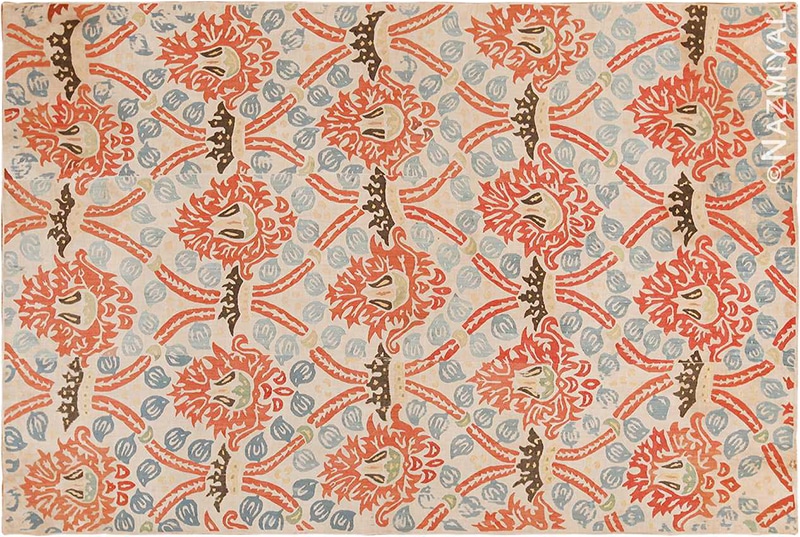
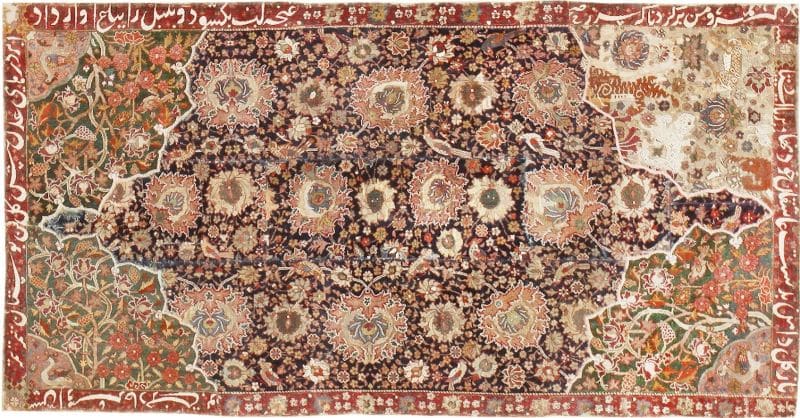
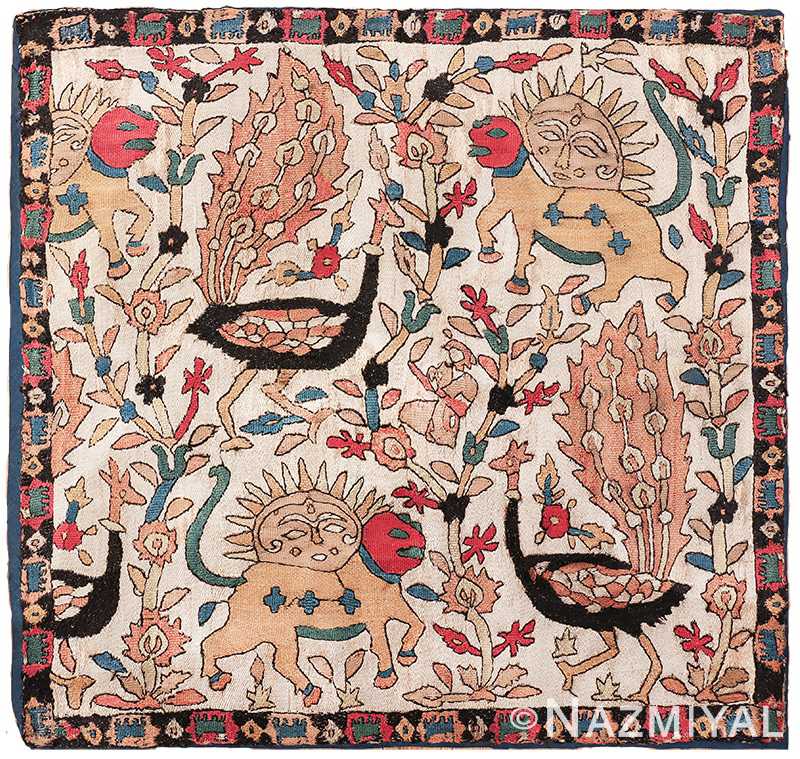
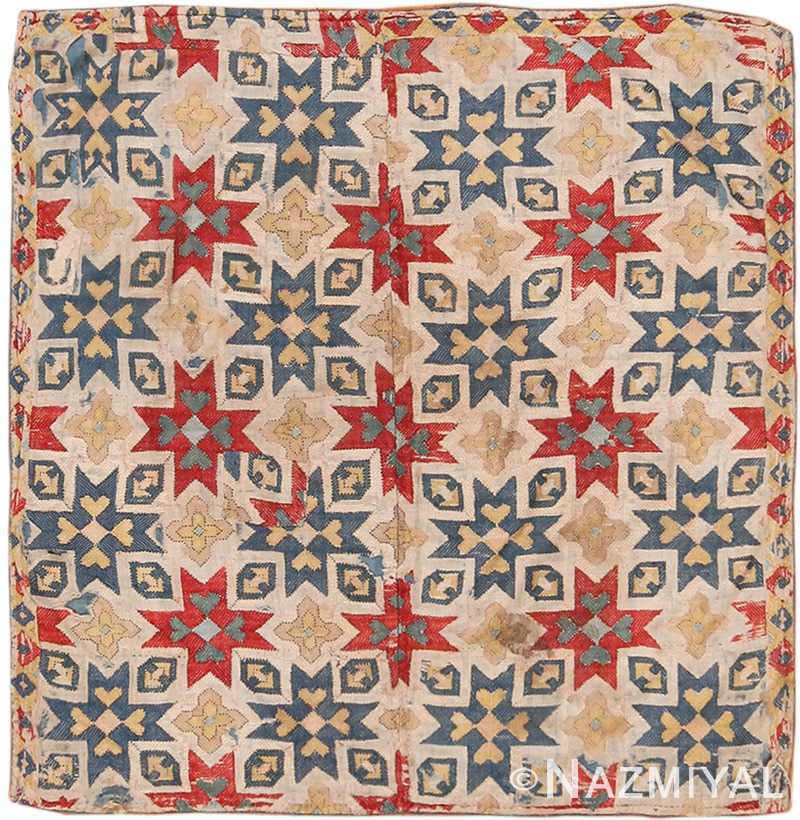
17th Century Antique Ottoman Embroidered Textile
Over the long term a good antique rug will hold its value or increase unless its price reflects hot market trend, so one should purchase accordingly. If one possesses what has become trendy and purchased it at a lower price, a period of peak demand is a good time to sell if one does not mind giving the piece up.
Decisions regarding restoration also intersect with investment potential. In the main, quality restoration will increase the value of a rug, but its cost must be weighed against the realistic price that the rug can be expected to achieve.
It is not worth putting two thousand dollars of repairs into a two thousand dollar rug, unless one is particularly fond of it and does not expect to sell it in the near future.
How To Build An Antique Rug Collection
Rugs are works of art that are unreproducible. Many people assemble a rug collection of substantial uniqueness and rarity. There is an impassioned, intimate group of international connoisseurs who recognize the artistry of the most exquisite antique rugs. Their appreciation grows as new generations discover these exceptional weavings.
Collecting 19th century tribal and Persian rugs is a fascinating adventure. It provides the opportunity to develop and test a person’s sense of virtuoso technique and beauty. Collecting becomes an intensely personal lifelong endeavor. Collectors come from all walks of life. Every antique rug collector places slightly different value on aesthetics and quality of antique and vintage rugs. Generalizing what pleases them all is nearly impossible.
John Rockefeller and William Randolph Hearst are well known antique rug collectors. During the 16th century, Cardinal Woolsey and King Henry VIII reportedly competed for the best and finest rugs from Persia and the Ottoman Empire of Turkey for their rug collection. The culture and classic skills that supported the production of the rugs are barely in existence today.
Building An Antique Rug Collection
The small number of remaining early rugs are collectible and pieces of art. Commercial interests drove the rug industry in the 20th century. When placed next to an exemplary piece that is 100 to 200 years old or even older, the newer rugs pale even to many with an untrained eye.
The carpets produced in Persia during the 19th century are remarkable and highly coveted by museums and collectors. Evidence supports Oriental rugs as the forerunner to Western art. Artists revered today understand the value of Persian rugs.
Bauhaus art icons such as Kandinsky and Paul Klee studied abstract tribal rug forms. The rugs’ inventive use of color enthralled Paul Gauguin. He felt painters who sought color knowledge by studying carpets had the basics of all knowledge. Being surrounded by textiles and carpet throughout his life influenced the work of Henri Matisse.
When deciding to embark on the adventure of rug collection, there are many factors to consider. The two main concerns are what to rugs collect and how much money to invest. This article presents guidelines in those areas. There are different echelons of collectible antique carpet that allow you to enjoy the collecting process and rise to a level that is comfortable for you.
Art Collectors and Rug Collecting
The learning curve for those experienced in building any collection is much less drastic. The seasoned art collectors trust their eyes and easily recognize something that is genuinely artistic and special. The challenge for them is to identify rugs that resonate with the art on display and appeal to their personal aesthetic.
The breadth of colors and styles from ornate to subdued give a connoisseur many options for their rug collection. Collectible antique carpets are stunning companions to a range of art collection from Renaissance to modern paintings, pre-Colombian pottery to photography, etc.
Stunning homes have impeccable art collections that sit above antique Oriental rugs. They serve as the unifiers to help group pieces of art. The carpets add a palpable beauty, supporting the entire space. The use of small area rugs emphasizes and directs attention to individual specimens. They also add an exciting counterpoint to the horizontal plane.
Because of increased interest, the crème de la rug availability diminishes. There is undiscovered, dramatically undervalued art in comparison to other forms among the 19th-century rugs. They present a window of opportunity for investors and collectors.
These rugs are on the edge of being recognized as world-class art. Collectors plan to hold onto them until the intrinsic value of the rugs receives a universal acknowledgment. The rugs decorate floors and hang on walls. They are also under glass tabletops. Collectors rotate the pieces with others in storage. These rugs, like all art, bring emotional and visceral satisfaction. Using them seems to make time stand still and provide an antidote to modern life complexity.
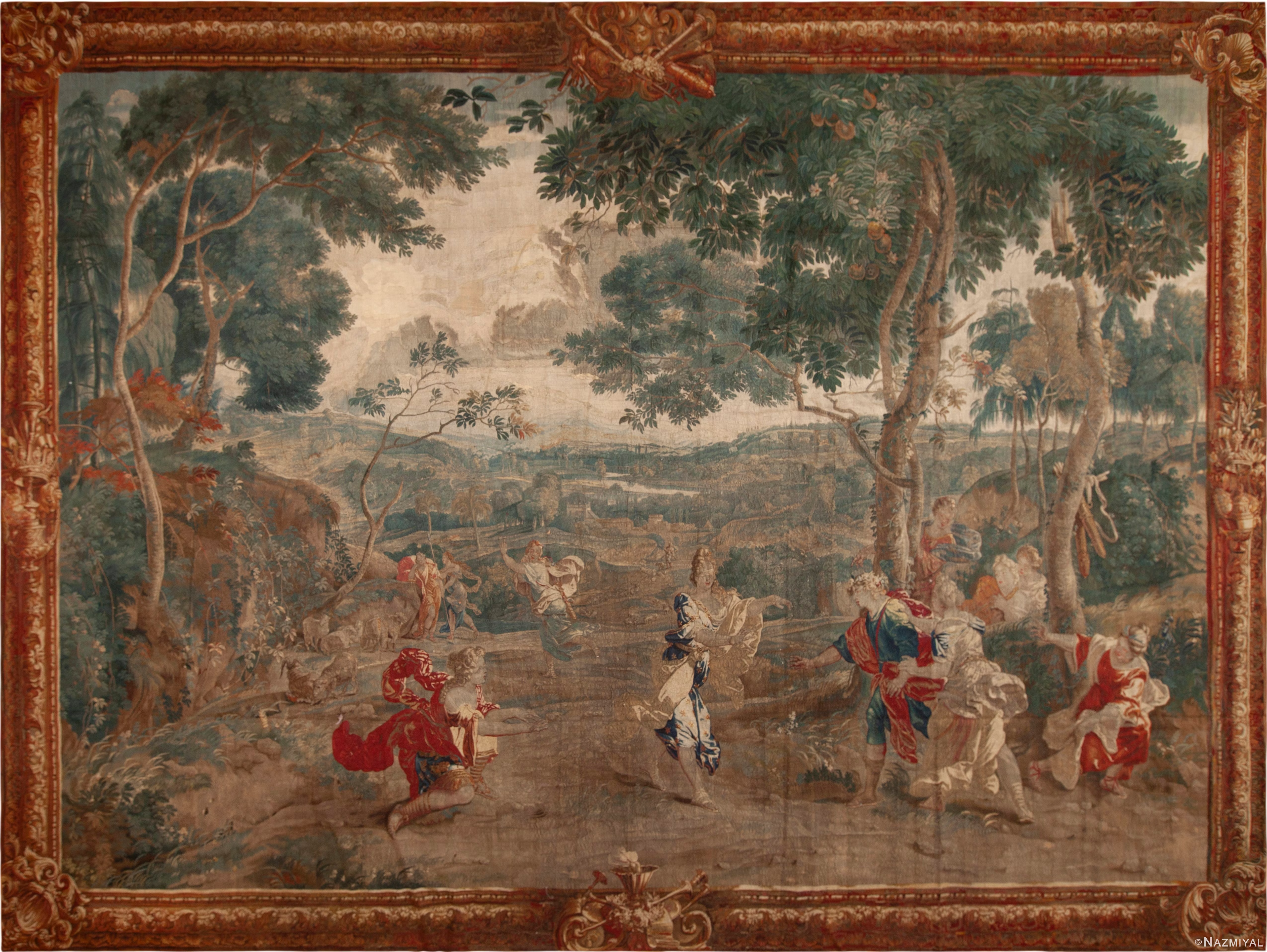
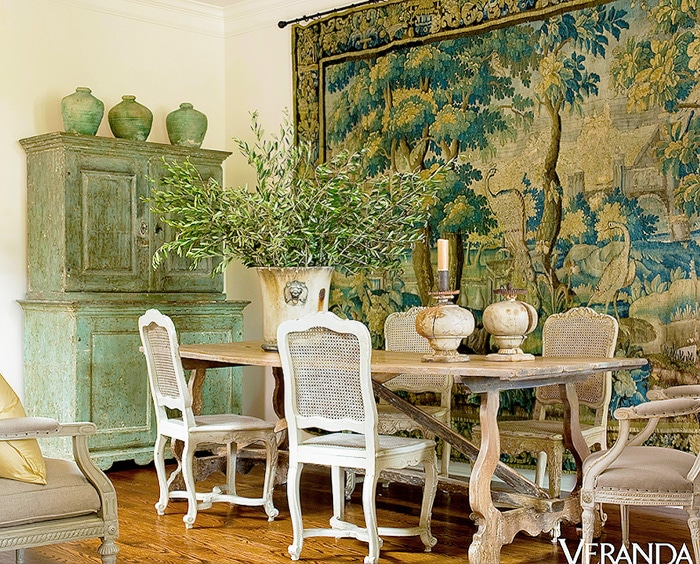
A dining room with a tapestry hung on the wall.
Seasoned Rug Collectors
Some collectors assemble a rug collection to fill a home. They buy what piques their artistic taste. Every tribal group, village, and city workshop has a color palette, vocabulary, design, and signature of its own. Oriental carpets come from an artistic tradition that is over 4000 years old.
Each style developed into a mature understanding of art. Finely woven town and city rugs from regions such as Kashan, Tabriz, Farahan Sarouk, Kirman, and elsewhere are part of one collection. Someone else seeks fundamental carpet qualities found in tribal weavings from the Caucasus Mountains or the Bakshaish village in Northwest Persia.
Other rug collectors explore a gamut of art forms that are diverse and satisfy and fascinate their interests. It requires an investment of both resources and time to move from novice to veteran when becoming a collector. The process is engaging and endless.
As the acquisition of rare carpets grows, personal rewards and excitement become a driving motivation to collect more. Regardless of the investment, what starts as a passion becomes an exhilarating addiction. Some collectors have cellars, rug vaults, and museums of their own.
Novice Rug Collectors
Although there is a vast choice of styles, most people gravitate to specific subgroups. Finding a style is not a daunting task. Some weaving traditions are more well-known than others. Those high in popularity include Persian finely woven town and city rugs from Mohtasham Kashan or Laver Kirman, idiosyncratic village rugs of Azerbaijan (Camelhair, Serapi, Bakshaish), or tribal carpets from the Caucasus Mountains.
For collectors who want the best investment, these antique rugs tend to appreciate quickly. One of these types is the most appealing. Further exploration of that category of collectible rugs ensues. An initial $10,000 purchase often yields an exciting art piece for the novice collector that serves as the basis for the ultimate, substantial collection.
Even those who lack ‘collector mentality’ enjoy a majestic antique rug collection. Collectible carpets have a profound impact on elegant home furnishing. People become proud owners of a collection of rugs by putting together carpets chosen for a high level of artistry that enhances the décor of their home. Connoisseurs joke that a collector continues to buy rugs when there are no more walls or floors in a home to display them.
The setting where weaving small collectible rugs takes place is different than that of oversize, room-size, and art-level carpets used to furnish large rooms in the home. European and Persian upper class of the 19th century, often commissioned the most talented village cooperatives and city workshops in areas like Tabriz, Sultanabad, and Kermanshah to weave large pieces.
These pieces exhibited the exquisite craftsmanship, artistic spirit, and mature innovation that garners a homeowner-collector’s response. Individual weavers, who were tribal, town, or city artisans, make smaller rugs used in the home. Small rugs have a broader array of color combinations and designs as well as a higher level of innovation and artistic expression.
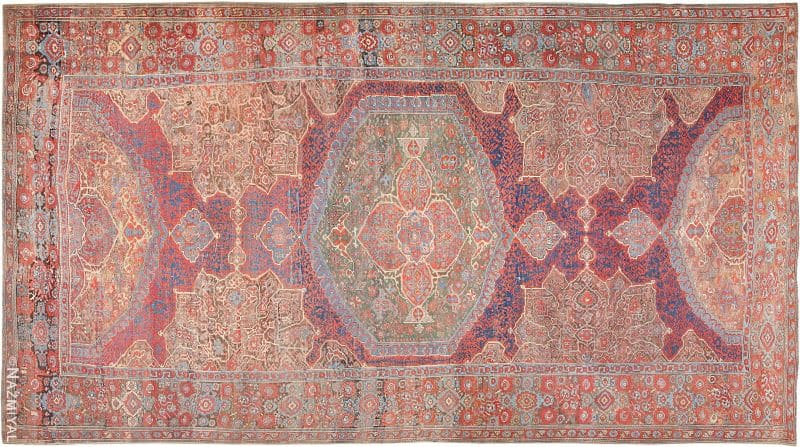
An investment rug (sold)
Area rugs are the focus of the most serious rug collectors. Furnishing small spaces is also a delightful adventure for the homeowner-collector. Furnishing a home with 19th and early 20th-century art-level rugs typically, involves three to eight large pieces and sundry scatter rugs and runners.
The size of the carpets affects the budget. An investment of $100,000 to $500,000 is the expectation of those working with established galleries. The bottom line is substantially more for homeowner-collectors who want to start high-level collecting.
Shopping at a long-established and respected store instead of a local one is better for two reasons. An established gallery is likely to have a Full Exchange Guarantee policy that allows budding collectors to upgrade as their tastes mature.
A large gallery has a selection of rare handwoven rugs represented that are not available in local stores. Advice to a novice rug collector is to begin by studying rugs available online. Rug books provide broad exposure to the types of carpets.
They sometimes offer illustrations of rugs on the collectible level. The problem is many books are dated. The number of available rugs is less than it was ten to 20 years ago. Online shopping provides the novice with practical information about what is available.
Below Are Some Of The Rarest Examples For Those Looking To Establish An Impressive Rug Collection:
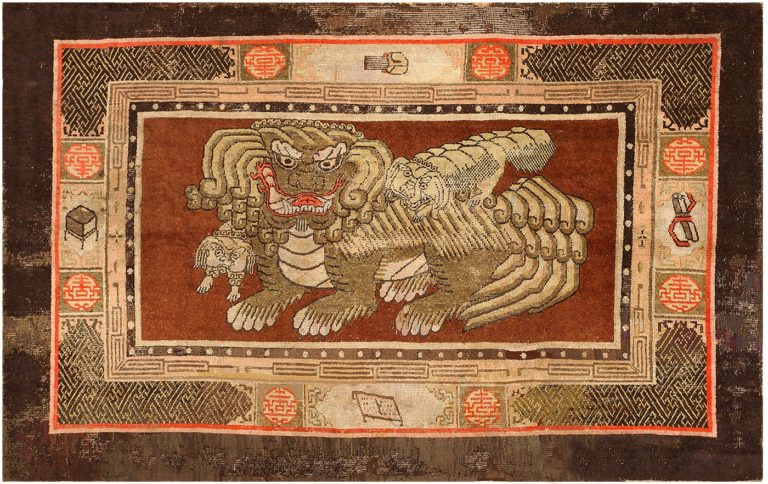
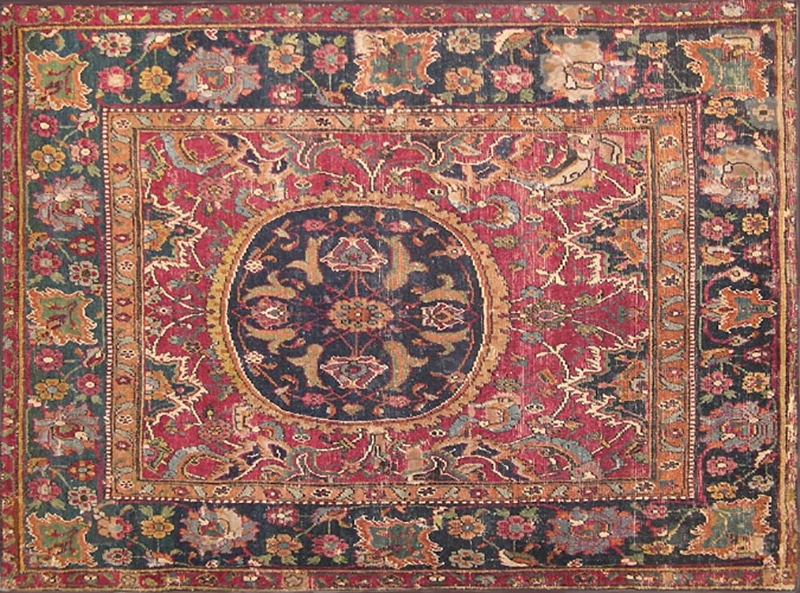
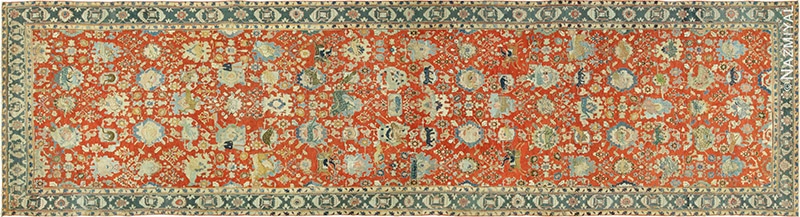
Antique 17th Century Silk Persian Polonaise RugSmall Size 17th Century Persian Khorassan RugAntique 17th Century Transylvanian RugAntique 18th Century Caucasian Rug with Animal DesignAntique 17th Century Chinese Fu Dogs RugAntique 16th Century Persian Safavid Salting Rug
Do Rug Collectors Follow Trends or Do They Set Them?
Antique Rug collectors do not operate in a vacuum. They function within a larger community of collectors with whom they share their passions for antique rugs and against whom they compete on one level or another to acquire the best examples.
Within such a community it is always possible to discern trends, largely though tracking rug auctions and dealer sales. At times a particular type or pattern of rug suddenly become “hot,” often without any prior indication.
17th Century Persian Esfahan Rug
Perhaps a new type, previously under-emphasized or unnoticed, comes into the spotlight, and collectors scramble to acquire one. There are various scenarios of this sort.
Collectors must therefore decide if they wish to jump on such bandwagons, which can temporarily or permanently inflate prices, or pursue their antique rug collecting based on goals and interests hat they establish for themselves. The true trend setters are invariably collectors of this latter kind.
Rug Age – How Old is a Antique Collectible Rug?
When it comes to collectible rugs, there are many factors that go into determine the collect-ability level of a particular antique rug or vintage carpet. Naturally, the age of the piece in question is an important piece of information to consider.
Strictly speaking, the need for a rug to be old depends on what one seeks to collect. Collectors generally want rugs that are antique – that is, at least one hundred years old. But for those who collect European Art Deco rugs, for example, they will only be produced between 1925 and 1950, which is not very old by rug standards.
17th Century Hunting Scene Persian Isfahan Rug
In the case of antique rug styles, again it depends on what one collects. For those who insist upon condition or need usable rugs that can be walked on, this will be the younger generation of antique rugs produced in the last quarter of the nineteenth century.
For antique rug collectors who insist upon culturally authentic “pre-commercial” pieces, they will want pieces up to half a century older, or more. For those interested primarily in classical pieces, the decade around 1800 is a decisive cutoff point.
How Does the Rarity of an Antique Rug Affect Its “Collectability” Level or Value?
Antique Rare Rugs for Rug Collecting – The rarity increases the value and interest in any antique, and this is certainly true in the case of antique rugs. Generally speaking, antique rug collectors prize what is rare and unusual and should be willing to compete for it if they value it. Rarity is a function of production and age.
Some types of rugs were made in limited quantities, which account for a few of them being preserved. But rugs wear out a disappear over time, and many, even those once extant in large supply become rare over longer periods of time.
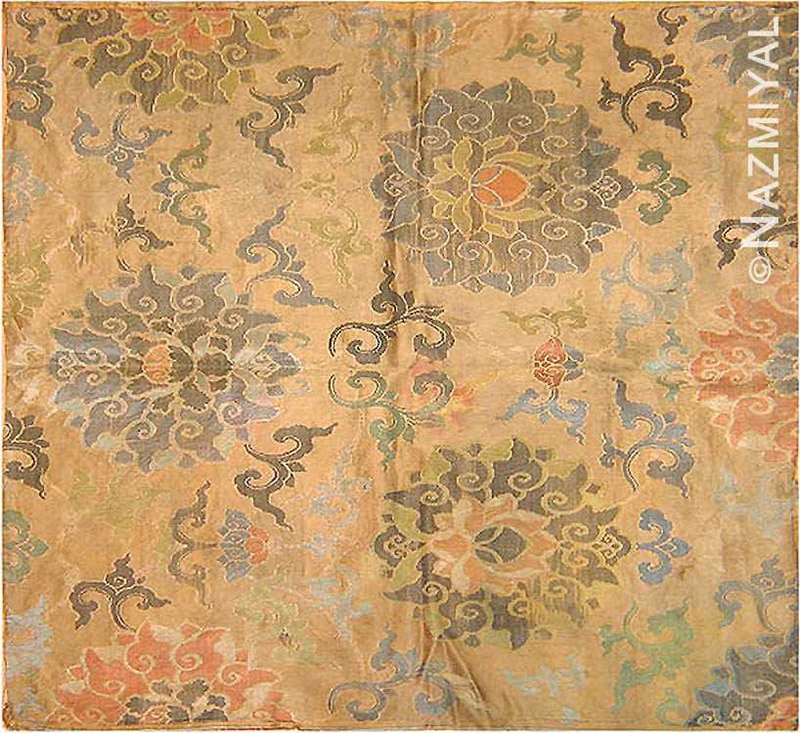
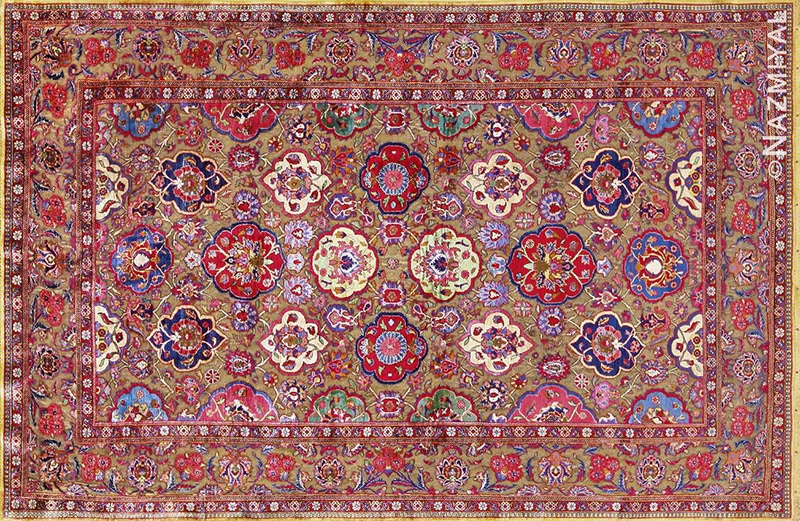
17th Century Silk Persian Kashan Textile
Example of rare rugs can be those those carpets that are over two hundred years old. The earlier rugs are far rarer than those fifty to a hundred years younger. Classical antique carpets are rarer still, especially if they are in relatively good condition.
For some rug collectors rarity is an objective in and of itself – the thrill of owning what few others may possess. For others, however, rarity may play a subordinate role in quality, condition, and pure visual appeal.
What Antique Rug Collectors Look For In Rug Colors and Dyes
What rug colors and carpet dyes do collectors seek
Antique Rug Colors and Dyes – Rug collectors obsess endlessly over color and the dyes used to achieve them in antique rug weaving. The introduction of synthetic dyes between about 1860 and 1880 marks a kind of cutoff point between what is generally collectible and what is not.
Even small amounts of synthetic dye will put some antique rug collectors off from buying a rug for fear of the reaction the piece will provoke among fellow aficionados. Within the rug-collecting culture, this ethos may be too rigid, but it is nonetheless hard to avoid. It is therefore necessary to learn to recognize synthetic color from vegetable dyes.
The more positive side of an interest in color has to do with appreciating the quality of vegetable dye in absolute aesthetic terms. Color has two main aspects – intensity or saturation, and transparency or depth. Intense vibrant color is difficult to achieve with natural dyes, and it is therefore prized.
Even more difficult and sought after is the transparent luminous quality of the color, which also depends to some extent on the wool quality. The number of colors in a rug is also a criterion of quality, and whenever a rug with good dyes is exceptionally colorful, it becomes all the more desirable to collectors.
A Selective Approach to Collecting of Antique Rugs
Should You Be an Eclectic or a Selective Antique Rug Collector?
Collecting of Antique Rugs – Anyone seeking to become a serious antique rug collector needs to find a focus, or at least a set of boundaries that will govern the range or nature of the collection.
The most common approach to collecting of antique rugs, is to focus on antique rugs from a particular region, say, only Turkish rugs, or Caucasian rugs, or Turkoman. Within such an approach it is even possible to settle on a few specific sub-groupings, say Kazak or Kuba for Caucasian, or Yomud for Turkomans. One can then decide whether to go for a representative range of specific designs, or to focus even more on a few specific design types.
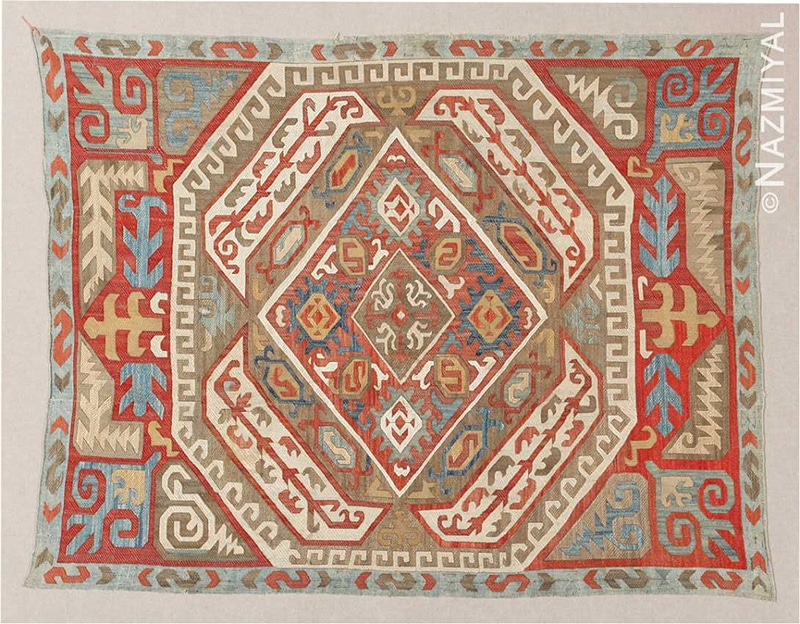
Antique Azerbaijan Textile
A collector may possibly emphasize stages of development. Alternatively, it is possible to approach collecting from an eclectic perspective. One can collect a wider range of different rug types from various regions, with a focus on quality of drawing and coloration.
The decision to go either way is a matter of taste and temperament. Specialists are not more knowledgeable than eclectics. Indeed, an eclectic collector will have to learn a great deal in order to become familiar and competent with the wider range of rugs they acquire.
Effects of Antique Carpet Restoration on Values and Rug Collecting
Restoration and Antique Rug Collecting – Restoration of worn and damaged rugs is widely practiced in the old and antique rug market. High quality restoration is not immediately detectable, and often it is can only be detected on the reverse of the rug to a well trained eye.
There can be no doubt that the average buyer and user of antique rugs desires pieces that appear complete and nicely preserved, regardless of the origin and style of the antique rug. For buyers of this kind, and many antique rug collectors as well, high quality restoration is indispensable for making many fine antique pieces usable and desirable.
But some rug collecting aficionados are sticklers or purists.
Antique Chinese Oriental Carpet
They would rather that the rug were completely original, especially if it is a very early piece. Since collectors must always consider that an acquisition may be sold at some future time, they must weigh carefully whether to restore a piece or even to buy a restored piece, since it could affect the solubility of the rug to collectors at a later time. As a rule of thumb, rug restoration is more acceptable in vintage rugs.
It is less advisable on early pieces where a worn or damaged condition is to be expected. In any case, repair within the context of rug collecting should be conservative – seeking to preserve the original everywhere possible, rather than radically altering the piece to make it look good as new.
Learn About Antique Rug Drawing in rug Collecting
How Important is the Antique Rug Drawing to a rug Collector?
Antique Rug Drawing – While you might be surprised to learn that “drawing” is an extremely important facet of rug design, collectors and aficionados of antique rugs have long considered the drawing of a piece to be a crucial component in its overall quality.
Just as it does in other art forms, the term “drawing,” when applied to rugs and other weaves, refers to the particular rendering of form and line. Indeed, a rug’s drawing is among the most closely observed facets of a piece when it is being evaluated by rug collectors and admirers, as a rug’s drawing may say a great deal about the piece.
Antique Persian Kashan Rug
For those who are interested in classical and urban rugs, fine drawing will be an indicator of first-rate, precision weaving. For those who collect village and tribal or nomadic rugs, loose or erratic drawing may be quite desirable, as it may serve as an indicator of cultural vitality, expressiveness and authenticity.
There is no single standard or value associated with drawing, but it is very often a factor in the decision to buy a rug or pass on it. While there isn’t an objectively “good” style of rug drawing, neither is there an objectively “bad” style.
Rather, what matters is the individual collector’s own tastes. The drawing of a rug is as important to its overall composition as is the drawing of a painting to its overall composition. And, just as with painting, it is personal taste that should dictate whether a particular piece is found to be appealing or otherwise.
Learning about antique rug collectors and what they look for
Rug collectors are a breed apart. While they generally have a virtually professional familiarity with rug types, designs, etc, and well-developed critical judgment in evaluating the quality and origin of rugs, they are motivated by a peculiar sensitivity to the personality of the weaver that resides in all good antique rugs – collecting what may be termed the life of the rug.
Collectors are deeply concerned with the cultural authenticity of rugs and strive for pieces that they judge to posses such authenticity. Most immediately this translates into searching out rugs that predate the process of commercial expansion that took place in the later 19th century, a process which collectors feel led to the production of rugs for western markets, pieces that were therefore inherently less authentic than those made for local consumption.
Some collectors are sticklers for condition, but since they are frequently seeking out older, more authentic pieces, many collectors have learned to place less emphasis on condition if the piece has outstanding artistic merit. Collectors also prize rugs that are unusual and rare, for these too are deemed to reflect a greater cultural authenticity rather than catering to the marketplace.
Some collectors are focused, concentrating on building a representative collection of a specific type or rug. Others have more eclectic taste, focusing purely on quality or rarity.
Rug Condition and Trade Offs when Collecting Antique Carpets
How Do Collectors Look for the Condition of Antique Rugs?
Rug Condition – At times these various qualities of condition, age, and rarity affect one another mutually and antique rug collectors must decide which of them they are willing prize at the expense of the other.
One may demand excellent condition for antique rugs a century or so old, but as one moves in older pieces, good condition becomes increasingly rare, and many rare, very early pieces may prove to be in no better than fair condition.
Indeed, a compromised or damaged condition becomes increasingly acceptable for very old or early pieces. Antique rugs in good condition, tend to be younger, and they are also less rare.
Collectors must become familiar with the range of antique rug options and they must learn to establish priorities. Some collectors are in the habit of collecting especially old pieces, while others may prefer mid-century carpets.
Should You Collect Classic Antique Rugs or Unusual Rugs?
Do Collectors Seek Classic Rugs or Unusual Rugs?
Classic Antique Rugs vs Unusual Rugs – Because of the wide variety and ancient history of antique rugs, there are a myriad of factors that antique rug collectors need to consider when determining whether a carpet may be classified as a classic.
In addition to establishing general parameters for acquisition, collectors must also decide whether they wish their rugs to be a representative selection of classic, well-known types, or a selection that focuses on unusual antique rugs which stand outside the main developments. In many ways, the first route is tried and true, so long as one goes for quality.
Fine Antique Silk And Metalic Thread Persian Souf Kashan Rug
The second alternative is riskier and more demanding in terms of knowledge and instinct, but potentially it is a far more exciting way to go, one that could produce a collection that stands apart from others.
Here, above all, it is a matter of personal orientation and temperament. The finest antique carpets – the true classics – represent a singular and unique development in the world of art. A genuinely classic rug is woven with great care, and exhibits a timeless beauty.
Learning about What Antique Rug Collectors Look For In Weaves and Structure
What Do Antique Rug Collectors Look For in Antique Rug Weaves?
Antique Rug Weaves and Structure – One of the most important aspects of an antique rug is its weave. Antique rug collectors pay considerable attention to how a given rug is woven since this is among the better indicators of where the piece was originally made, its quality, and, some times, its age.
Knot types, warp-depression, and wefts are important indicators of the various groupings and sub-groupings whose identification so preoccupies and fascinates collectors. It is important to note that there is no single quality or aspect of weave that is inherently superior to others; rather, it is often the case that different rugs will be woven with a certain weaving style based largely on the virtue of who was weaving it, where, when, and even why.
Antique Kaitag Azerbijan Embroidery Dagestan
A good example of this phenomenon is the tightness of a weave: for whole tightness of weave can be an indication of quality, it is also the case that many nomadic weavings are more loosely woven – and such rugs can certainly be highly desirable, most especially to collectors, who admire tribal weaves for their authenticity and cultural importance.
A tightly woven rug that is nonetheless supple, however, will probably be an older piece of the type collectors seeks. Weave in rugs and carpets is an important facet of what makes them what they are, and offers good insight into the range of styles of fine rugs and carpets.
Learning About How Collectors Approach Imperfections in Antique Rugs?
Rug collectors approach to imperfections in antique rugs – One of the the more subjective aspects of judging an antique rug have to do with assessing its quality and its imperfections. When quality is assessed on the basis of the wool, dyes, and weaving technique, it is a fairly objective process.
When the issue turns to drawing style, it becomes more of an issue of taste. The same is true with “imperfections.” Dropped knots, looseness or inconsistencies in tightness are technical imperfections. But are abrash – abrupt changes in color, sudden changes in design, or adjustments in proportion at the corners or the borders or ends of the field to be judged as imperfections?
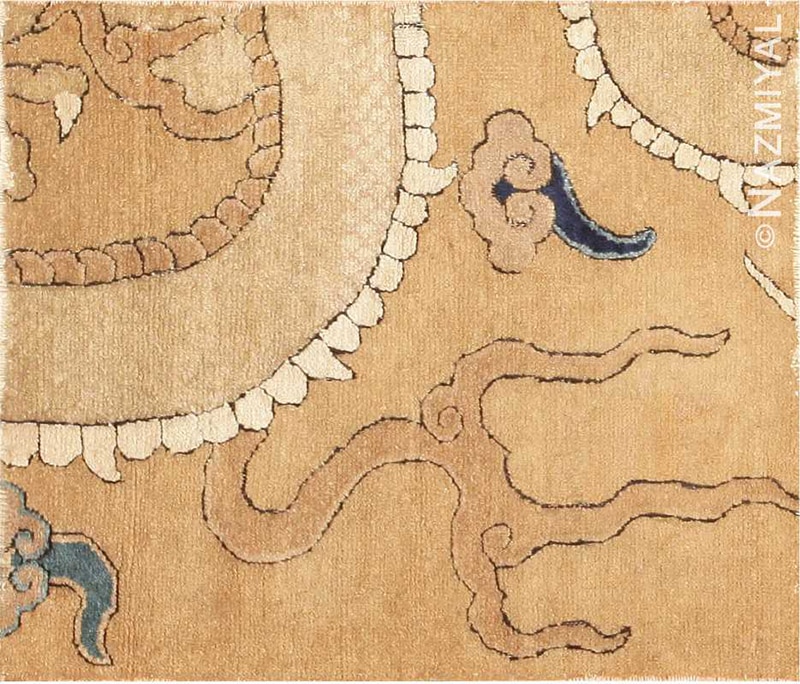
16th Century Ming Dynasty Chinese Dragon Carpet
Or as changes that are part of the deliberate intention of the weaver, and therefore part of her creative expression? Some rug buyers may be put off by such qualities. They may prefer a workshop rug that is perfectly straight, with consistent color and design.
But others will appreciate that the personality of the village weaver confronts us every time she inserts a willful twist and turn of color or pattern, or in her struggle to maintain straight proportions in a wool foundation, that that she is in a sense alive in the rug in all such variations or inconsistencies.
             Posted on Google        Victor Florintsev     Trustindex verifies that the original source of the review is Google. The only ones I'd ever buy rugs from. The best.         Posted on Google        Jeffrey NeumanB     Trustindex verifies that the original source of the review is Google. I bought two gorgeous Serapi rugs from Farhad at Nazmiyal Rugs!  Beautiful carpets, fair prices and great service.  Very happy customer.  Farhad (the sales person) was very patient and gave us great service.         Posted on Google        john haid     Trustindex verifies that the original source of the review is Google. Alen is a gentleman and an expert.  Really great to work with.         Posted on Google        Edward Yasuna     Trustindex verifies that the original source of the review is Google. I recently purchased a modern Kandinsky rug from Nazmiyal Auctions.  It was just as described, and the director (Farhad) of the auctions had it sent to me quickly and safely.  Payment was easy, the rug was reasonably priced, and I highly recommend Nazmiyal Auctions and Antique Rugs.  Quality merchandise and first-class service.         Posted on Google        Nicholas Carr     Trustindex verifies that the original source of the review is Google. Had a excellent experience buying a rug in Nazmiyal's 1/18/26 online auction.  First, prior to the auction, viewing a number of lots at the 32nd St showroom (I had prepared a list from the online catalog). The staff were great to work with: helpful, knowledgable, honest, and flexible.  Second, after placing an online bid and winning the desired item, arranging payment and pickup was simple and straightforward. Everything went seamlessly and the overall experience was educational and fun. Many thanks to Jason and his team.         Posted on Google        Andrea Gared     Trustindex verifies that the original source of the review is Google. Everyone at Naziyal is proffessional, especially Jason and Farhad.
They are knowledgeable, truthful, and true gentlemen. I have sold several rugs through them and will always go to them first, to buy or sell. The best in the business!         Posted on Google        Lori Silverberg     Trustindex verifies that the original source of the review is Google.          Posted on Google        Jesse Zilberman     Trustindex verifies that the original source of the review is Google. Excellent customer service! Alen was very helpful over the phone and email. The rug we acquired was stunning, and photos do not do it justice. I would definitely work with Alen and team again!         Posted on Google        Rachel Paul     Trustindex verifies that the original source of the review is Google. Jason was incredibly kind and helpful! I work for a small museum that had some rugs we had no information on. Jason responded to us quickly and gave us the information we needed for free! Incredible service, we are super thankful for his help!

 Size: 7 ft 2 in x 9 ft 9 in (2.18 m x 2.97 m)
 Size: 14 ft 8 in x 25 ft 4 in (4.47 m x 7.72 m)
 Size: 9 ft x 24 ft 8 in (2.74 m x 7.52 m)
 Size: 13 ft 5 in x 23 ft 8 in (4.09 m x 7.21 m)
 Size: 13 ft 9 in x 23 ft (4.19 m x 7.01 m)
 Size: 13 ft 3 in x 21 ft 3 in (4.04 m x 6.48 m)
 Size: 5 ft 4 in x 20 ft 4 in (1.63 m x 6.2 m)
 Size: 11 ft 5 in x 20 ft 2 in (3.48 m x 6.15 m)
 Size: 13 ft x 19 ft 9 in (3.96 m x 6.02 m)
 Size: 12 ft x 19 ft (3.66 m x 5.79 m)
 Size: 12 ft 9 in x 18 ft 8 in (3.89 m x 5.69 m)
 Size: 13 ft x 18 ft 6 in (3.96 m x 5.64 m)
 Size: 12 ft 3 in x 18 ft 4 in (3.73 m x 5.59 m)
 Size: 11 ft 4 in x 17 ft (3.45 m x 5.18 m)
 Size: 13 ft 4 in x 16 ft 8 in (4.06 m x 5.08 m)
 Size: 12 ft 5 in x 16 ft 7 in (3.78 m x 5.05 m)
 Size: 11 ft 8 in x 16 ft 5 in (3.56 m x 5 m)
 Size: 11 ft 8 in x 16 ft 4 in (3.56 m x 4.98 m)
 Size: 12 ft 3 in x 16 ft (3.73 m x 4.88 m)
 Size: 12 ft 3 in x 16 ft (3.73 m x 4.88 m)
 Size: 9 ft 10 in x 15 ft 9 in (3 m x 4.8 m)
 Size: 12 ft 2 in x 14 ft 8 in (3.71 m x 4.47 m)
 Size: 12 ft 5 in x 14 ft 2 in (3.78 m x 4.32 m)