Few art forms capture pure creativity as vividly as the vintage Persian rug. Woven by the nomadic Qashqai and Luri tribes of southern Iran, these extraordinary textiles rise beyond function to become woven expressions of imagination. Each Gabbeh begins with the weaver’s vision. Guided by instinct and emotion, she composes freely, shaping color and pattern as ideas flow through her hands. The result is a creation that feels alive. Uneven hues, playful motifs, and shifting rhythms reveal the personality and spirit of its maker.
To encounter a Gabbeh is to witness art in its most human form. Their compositions can appear minimal yet hold remarkable depth. Texture, color, and movement merge to create a sense of warmth and sincerity that enriches contemporary interiors. Each rug carries an unspoken narrative, born from the freedom of its creation and the authenticity of its voice.
What gives these rugs their sense of spontaneity and emotion? How did a tribal weaving tradition evolve into a language that mirrors modern abstract art? And why do Gabbehs remain among the most heartfelt and accessible examples of handmade expression? This article explores the whimsical spirit of Persian Gabbeh rugs, celebrating freedom, art, and the soul of the weaver.
The Origins of the Gabbeh: Nomadic Life and Creative Freedom
Across the sunlit plains of Fars and the rugged mountains of southern Iran, the nomadic Qashqai and Luri tribes cultivated a weaving tradition unlike any other. Their lives followed the rhythm of migration – from summer pastures to winter valleys – and this sense of movement shaped their art. Weaving was never a trade; it was a way of living, a language passed through generations. Within family tents, surrounded by stories, songs, and the scent of dyed wool, the Gabbeh emerged – an intimate expression of identity, memory, and emotion.
Originally made for warmth and comfort, vintage Gabbeh rugs soon became canvases of imagination. Women, often using wool from their own flocks, dyed fibers with saffron, indigo, walnut husks, and pomegranate rinds. Without blueprints or formal patterns, they wove by instinct – guided by rhythm and feeling. Each rug reflected the weaver’s inner world: grazing animals, distant hills, or abstract shapes inspired by light and landscape.
What makes early Gabbehs extraordinary is their sincerity. They carry traces of daily life and the natural world, distilled into color and form. Their beauty lies not in perfection but in authenticity – uneven borders, asymmetrical motifs, and spontaneous design choices that capture life as it unfolds.
While the Persian court prized symmetry and technical mastery, Gabbeh weavers embraced freedom. Their work, born in solitude and silence, anticipated modern abstraction long before it entered Western art. These rugs became visual diaries of nomadic existence – the rhythm of herds, the glow of sunrise, the stillness of open land.
In every Gabbeh lies the spirit of creation without rules – a quiet act of self-expression. They are not just woven objects, but living records of intuition, nature, and imagination – art born from the heart of a wandering world.
The Weaver’s Voice: Imagination Woven into Wool
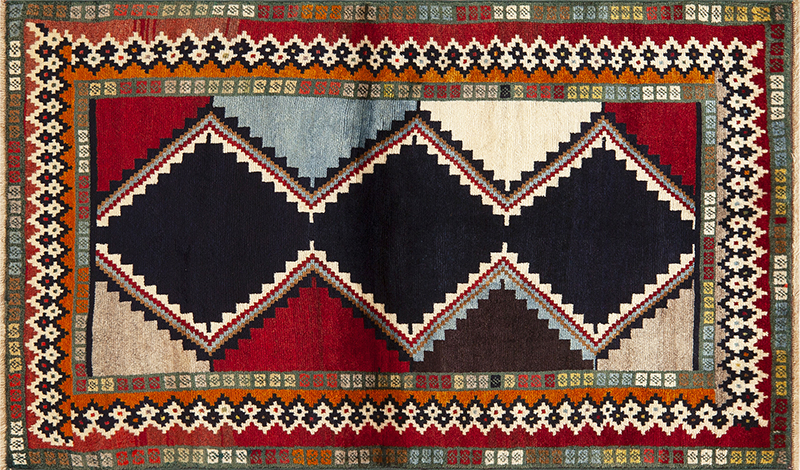
In the world of Persian Gabbeh rugs, individuality defines artistry. Each weaver brings her own rhythm and emotional depth to the loom. What begins as hand-spun wool, dyed with natural pigments from the land, becomes a visual statement shaped by instinct. The weaver creates not for commerce, but to express passing thoughts and feelings. That authenticity gives every Gabbeh a living presence – a soul no pattern or machine could imitate.
Freedom and Expression
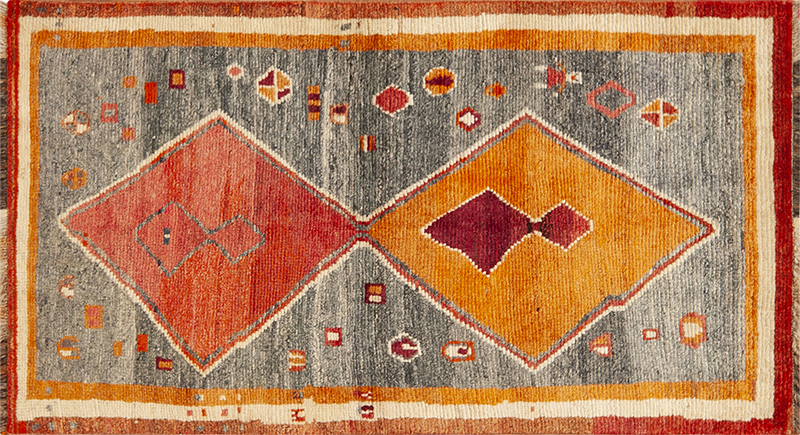
Freedom lies at the heart of Gabbeh weaving. Some weavers choose bold tones that mirror vitality, while others prefer softer shades that evoke calm. Patterns often shift mid-creation, guided by emotion rather than plan. This spontaneity gives Gabbehs their fluid character – where intuition takes precedence over symmetry. A fine example of such organic artistry is our modern minimalist Persian Gabbeh rug, balancing free expression with contemporary design sensibility.
Imperfection as Authenticity
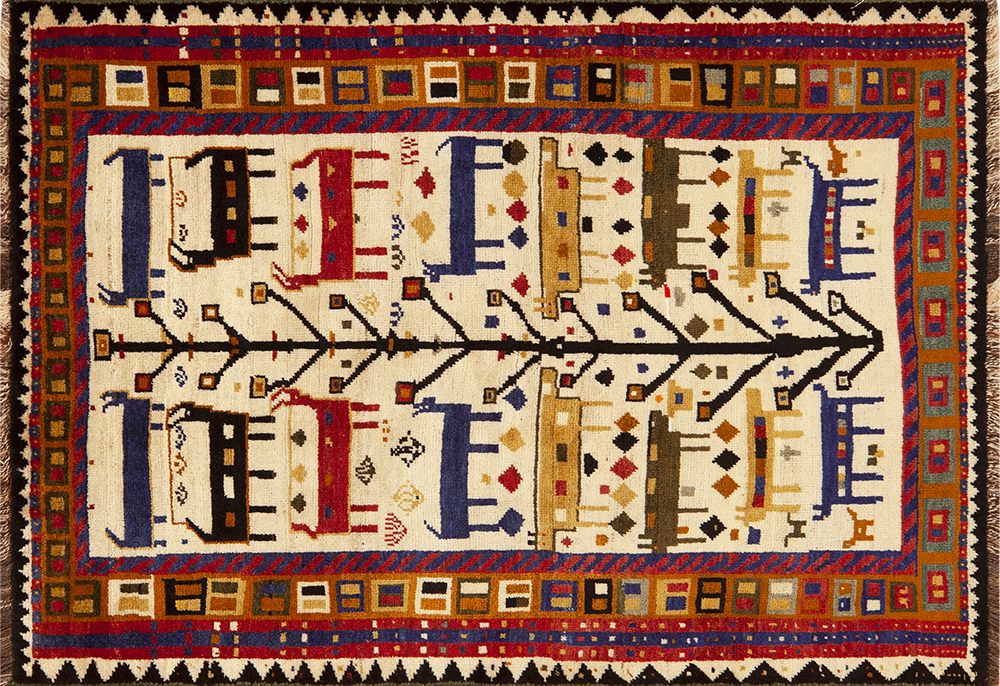
Many Gabbehs reveal glimpses of daily life – a solitary figure, grazing animals, or abstract shapes that echo light and memory. Their irregularities are not flaws but moments of truth. A crooked line or uneven border reveals the pulse of a human hand at work. These imperfections breathe vitality into the design, transforming weaving into emotional honesty. Our vintage Persian flatweave Gabbeh celebrates this beauty of imperfection.
In every Gabbeh lies the courage to create without constraint – art born from life itself. Each one stands as a quiet testament to imagination, instinct, and the enduring eloquence of human touch. Explore more eclectic tribal Gabbehs that embody this spirit at the Nazmiyal Collection.
From Tribal Tents to Modern Art: A Dialogue Across Time
The Language of Color and Texture
Color is the heartbeat of every Persian Gabbeh rug. It is not decoration but emotion translated through wool. The weaver selects each hue instinctively, guided by memory rather than formula. Every shade holds a story – the red of pomegranate rind, the blue of distant shadows, the gold of dry summer grass. These natural dyes are alive, drawn from earth and plant. As time passes, they shift and soften, forming layers that record use and life. This quiet evolution gives the rug a living presence, one that deepens with every year.
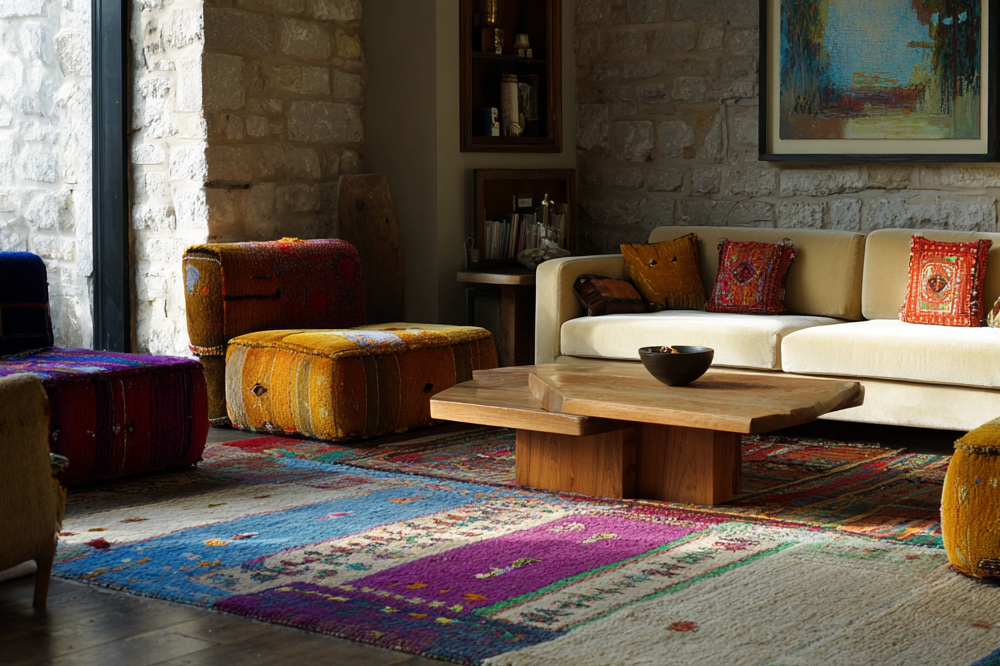
The palette of a Gabbeh is both simple and expressive. Some display muted tones that evoke twilight; others glow with vibrant contrasts full of energy and warmth. No two color arrangements ever repeat, just as no two moods are the same. Through this freedom, each rug becomes a field of emotion – spontaneous yet harmonious, spirited yet calm.
Texture completes this visual dialogue. The wool, hand-spun from tribal flocks, carries a sheen and softness that industrial fibers cannot match. The pile is thick and irregular, shaped by both the weaver’s rhythm and nature’s touch. As light moves across the surface, the rug shifts in tone, much like a painting under changing daylight. It invites touch, grounding vision in warmth and sensation.
In Gabbeh weaving, color and texture are inseparable. Together they create a language that conveys mood and movement. The hand-dyed tones, uneven pile, and layered softness express something human and immediate. When placed in a space, a Gabbeh does not shout; it resonates. It lends warmth where design feels cold and depth where precision dominates. Through hue, texture, and touch, the Gabbeh reveals its essence – an art born from instinct and perfected through time.
Living with a Gabbeh: Art Beneath Your Feet
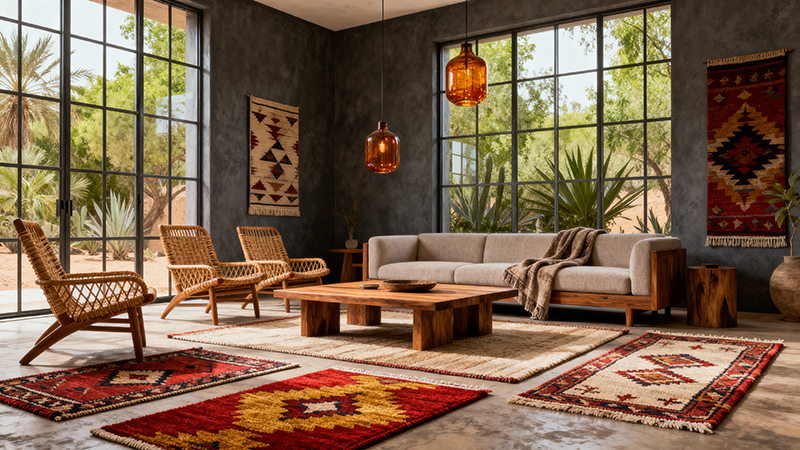
To live with a Persian Gabbeh rug is to invite warmth, sincerity, and creativity into daily life. More than decoration, these rugs quietly transform a room. Their hand-spun wool, natural dyes, and organic textures soften modern interiors, adding emotion that synthetic design can’t replicate. As a result, a Gabbeh harmonizes beautifully with its surroundings, bringing calm and authenticity to any space.
Unlike art that stays on walls, a Gabbeh lives with you – underfoot, by the window, beside a favorite chair. Its texture, tone, and gentle sheen change with time and light. Gradually, footsteps polish its surface, deepening color and character. This natural evolution links the present home to centuries of tribal artistry, much like our vintage tribal Gabbehs that grow richer through use.
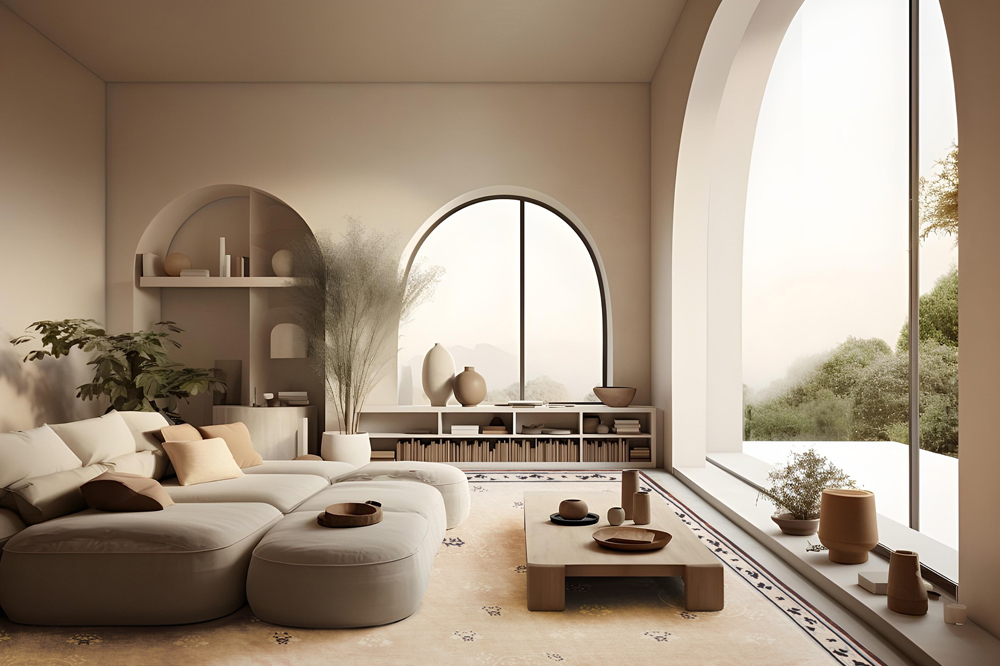
Moreover, Gabbehs complement contemporary interiors effortlessly. Their abstract patterns pair well with minimalist furniture, while natural fibers add depth and warmth. Each piece – such as our vintage Persian flatweave Gabbeh – reminds us that true art is lived, not observed. Through daily touch and quiet presence, every Gabbeh continues its story – weaving humanity, beauty, and tradition into modern life.
The Nazmiyal Collection: Curating Creativity and Heritage
At the Nazmiyal Collection in New York City, Gabbeh rugs are celebrated not only as cultural artifacts but as works of art that bridge tradition and modern design. Each piece in the collection has been thoughtfully curated to highlight the individuality of the weaver’s hand and the expressive spirit of tribal creativity. The selection ranges from early nomadic examples to contemporary interpretations that honor the same free, emotional language of color and form. Visitors encounter rugs that resonate with history yet feel perfectly at home in today’s interiors. Nazmiyal’s commitment to authenticity and artistry ensures that every Gabbeh tells its story with clarity and soul. Through careful preservation and curation, the collection continues to share the beauty of this heritage – keeping alive the vision, freedom, and imagination that have defined Gabbeh weaving for generations.
Final Thoughts
The Persian Gabbeh rug stands as one of the most honest expressions of human creativity. Woven from instinct rather than instruction, each piece carries the warmth of a hand, the rhythm of a life, and the freedom of imagination. What began as a humble tribal necessity evolved into a universal art form – one that continues to speak across cultures and centuries.
In a world of mass production, the Gabbeh reminds us that beauty is born from imperfection and emotion. Its uneven tones, tactile wool, and spontaneous patterns celebrate individuality – the essence of true artistry. To live with a Gabbeh is to welcome authenticity, connection, and the quiet poetry of the handmade.
At the Nazmiyal Collection, these rugs are not merely preserved; they are celebrated as living art – bridges between tradition and modern design, between heart and home.
Frequently Asked Questions About Persian Gabbeh Rugs
What is a Persian Gabbeh rug?
A Persian Gabbeh is a tribal handwoven rug created by nomadic Qashqai and Luri weavers. It features thick wool, freeform designs, and vivid natural dyes that express emotion and individuality.
Why are Gabbeh rugs considered unique?
Each Gabbeh is designed intuitively without a fixed pattern. Its irregularities – asymmetry, uneven tones, and spontaneous motifs – reflect the weaver’s personality and creative freedom.
How do Gabbeh rugs differ from other Persian rugs?
While traditional Persian rugs emphasize precision and symmetry, Gabbehs embrace simplicity and spontaneity. They are bolder in texture and more expressive in color and form.
Do Gabbeh rugs fit modern interiors?
Yes. Their minimalist patterns, organic wool texture, and natural colors complement both contemporary and traditional spaces, adding warmth and artistic depth.
How are Gabbeh rugs made?
Each Gabbeh is handwoven from hand-spun wool, dyed with natural pigments like saffron, indigo, walnut husks, and pomegranate rind. The process reflects a balance of skill, instinct, and emotion.
Why choose a Gabbeh from the Nazmiyal Collection?
Nazmiyal curates Gabbeh rugs for their authenticity, artistic merit, and emotional resonance – from rare antique examples to modern interpretations suited for today’s interiors.