Quick Navigation
Key Takeaways
- Animal motifs can be symbolic (power, protection, luck) or narrative (hunting scenes, courtly life, mythology).
- Expect wide variety: dragons, tigers, birds, deer, fish, and legendary creatures appear across multiple regions and eras.
- Shopping is largely about drawing quality, condition, and how the imagery reads at room distance—especially in pictorial and scene rugs.
At-a-Glance Specs
- Common origins: Persia/Iran • China • Tibet • Turkey/Anatolia • India • Central Asia
- Construction: mostly knotted-pile rugs (some flatweaves also include animal motifs)
- Typical looks: pictorial scenes • hunting scenes • single “hero” animal • repeating animal emblems • mythic beasts
- Best rooms: libraries • studies • living rooms • dens • children’s rooms (depending on motif) • statement halls
- What to look for: legible drawing • balanced composition • stable foundation • honest wear • appealing palette
Popular Searches
Persian hunting rugs | Rug motifs & symbols | Rug patterns & designs | Antique rugs | Vintage rugs
Featured Animal Rugs from the Collection
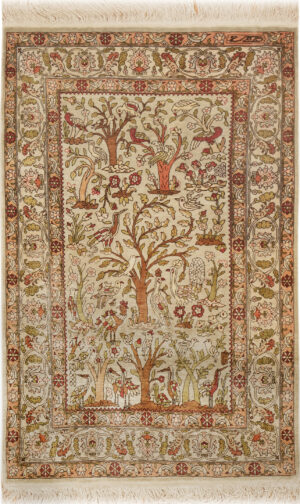
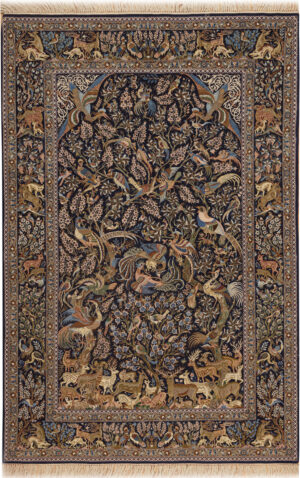
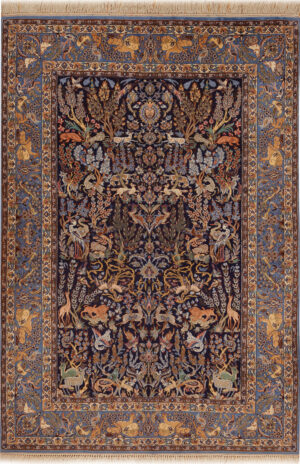
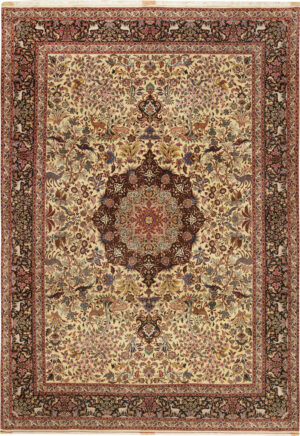
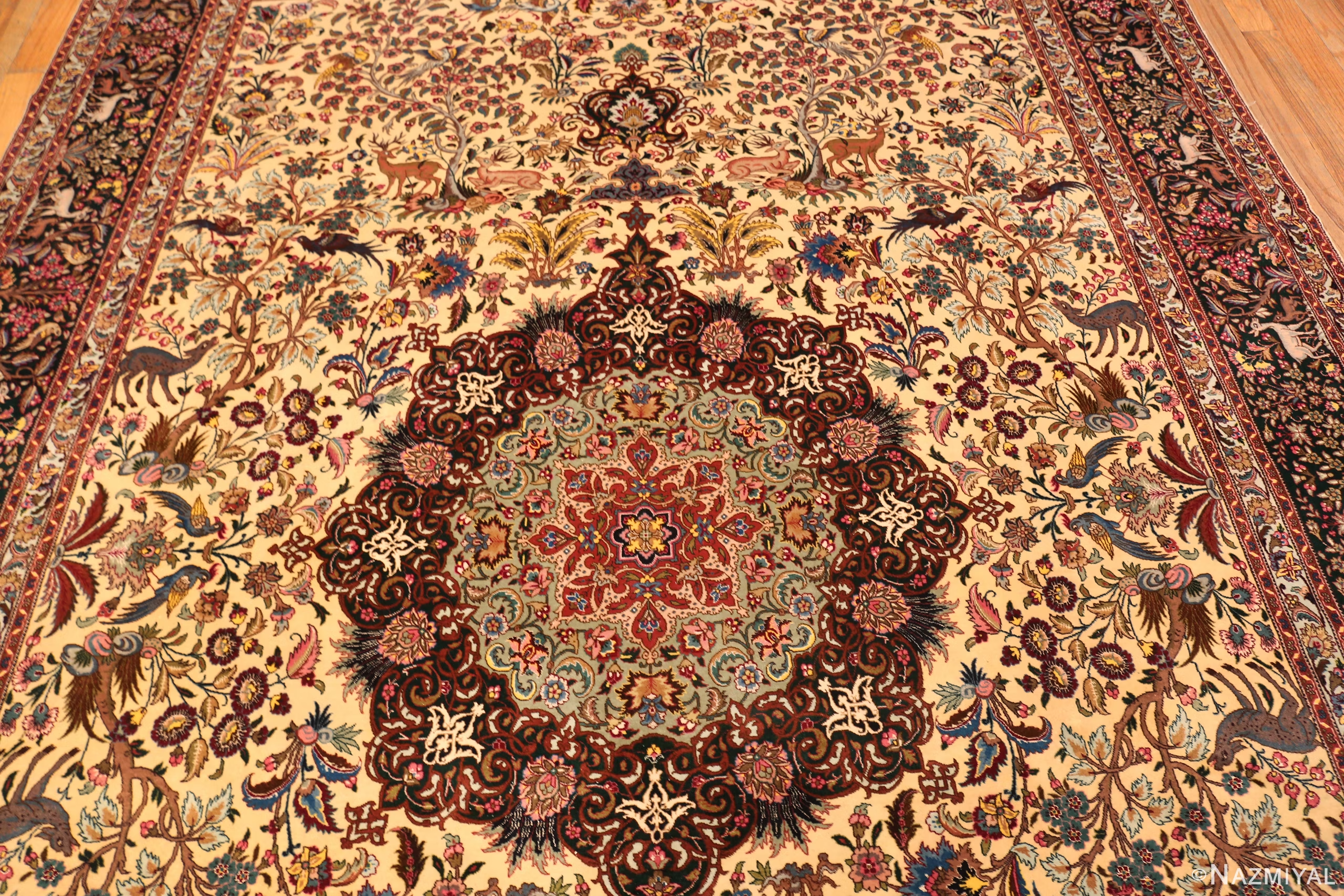
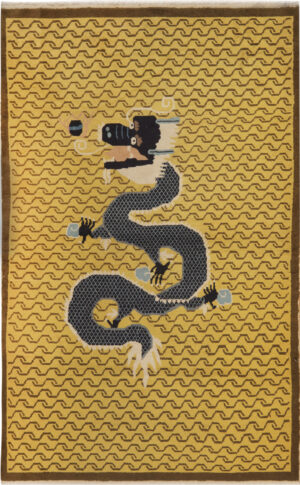
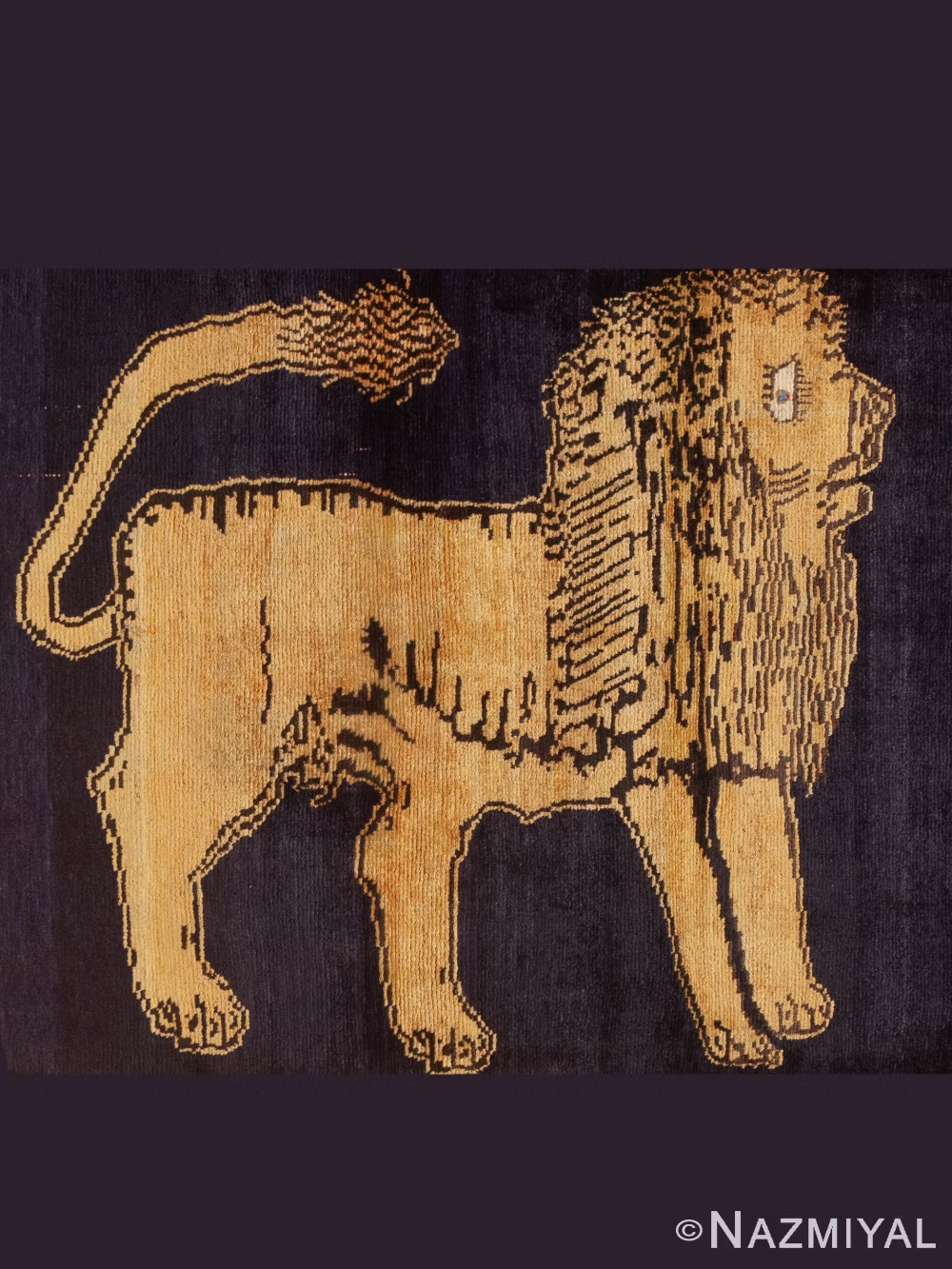
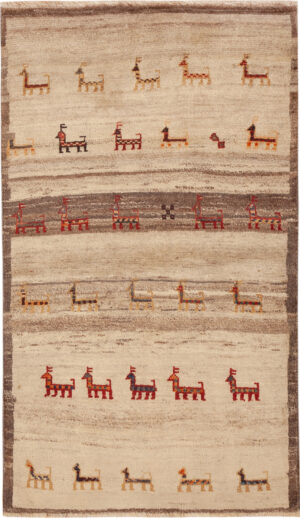
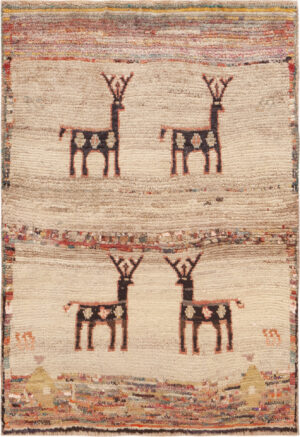
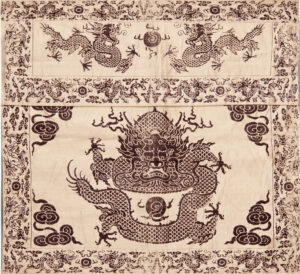
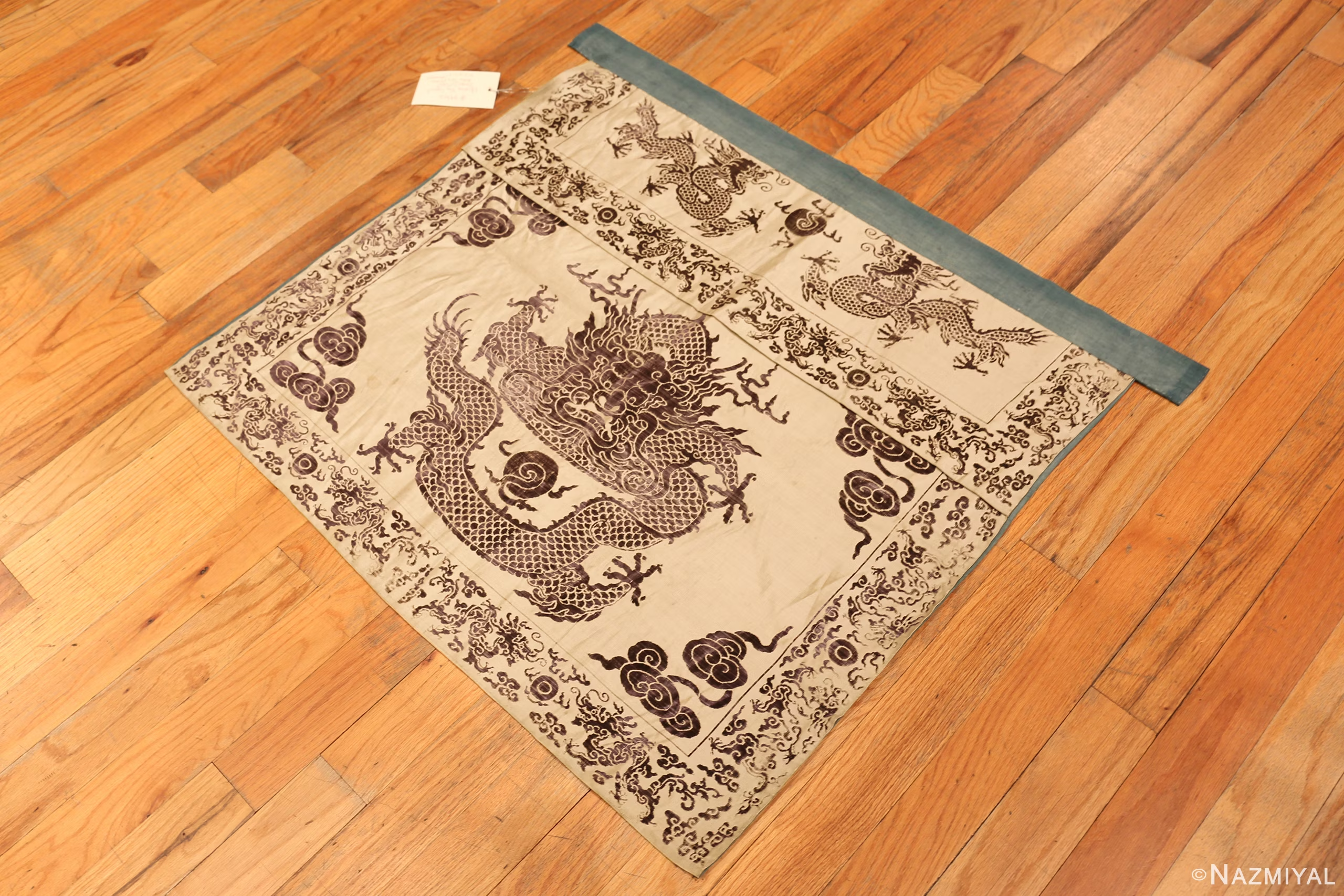
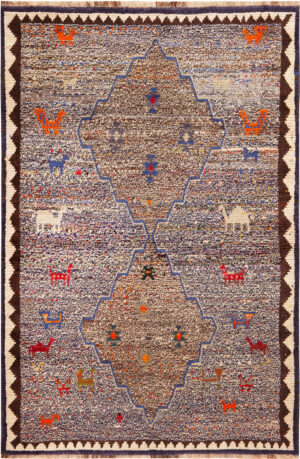
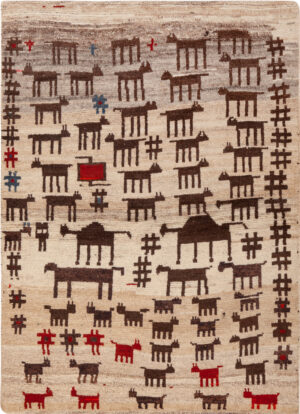
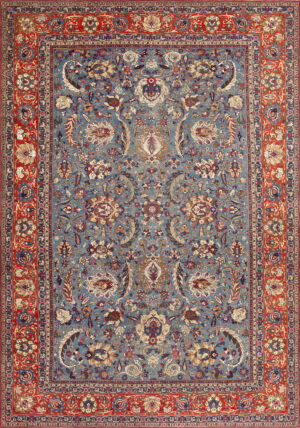
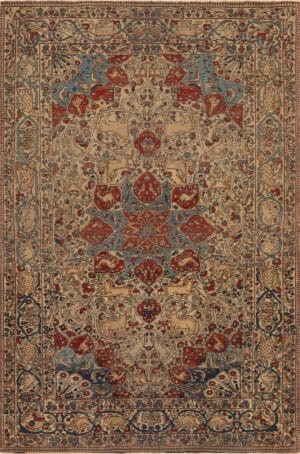
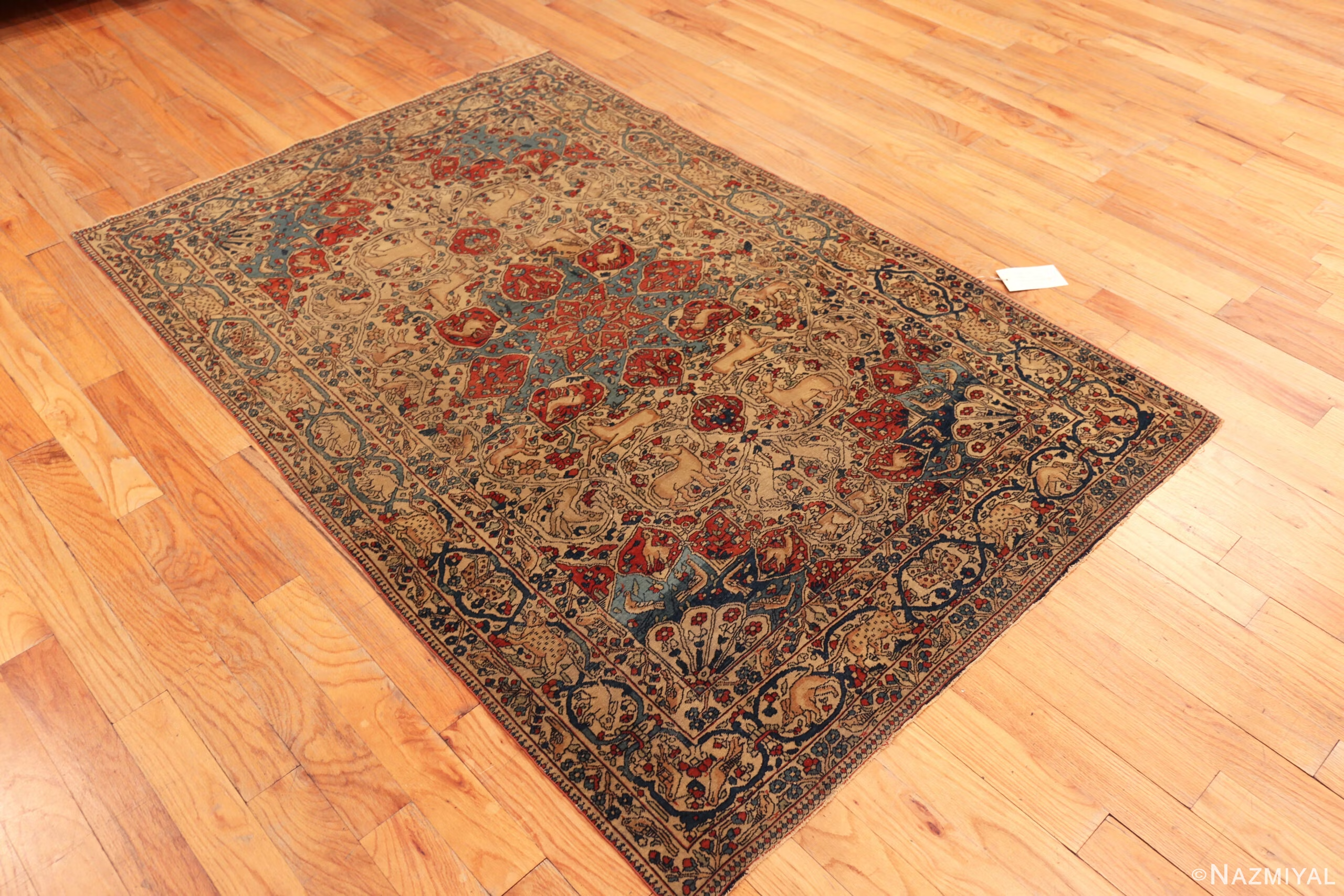
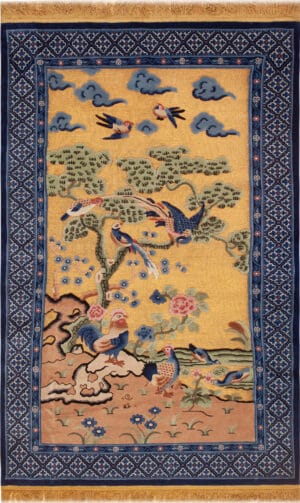
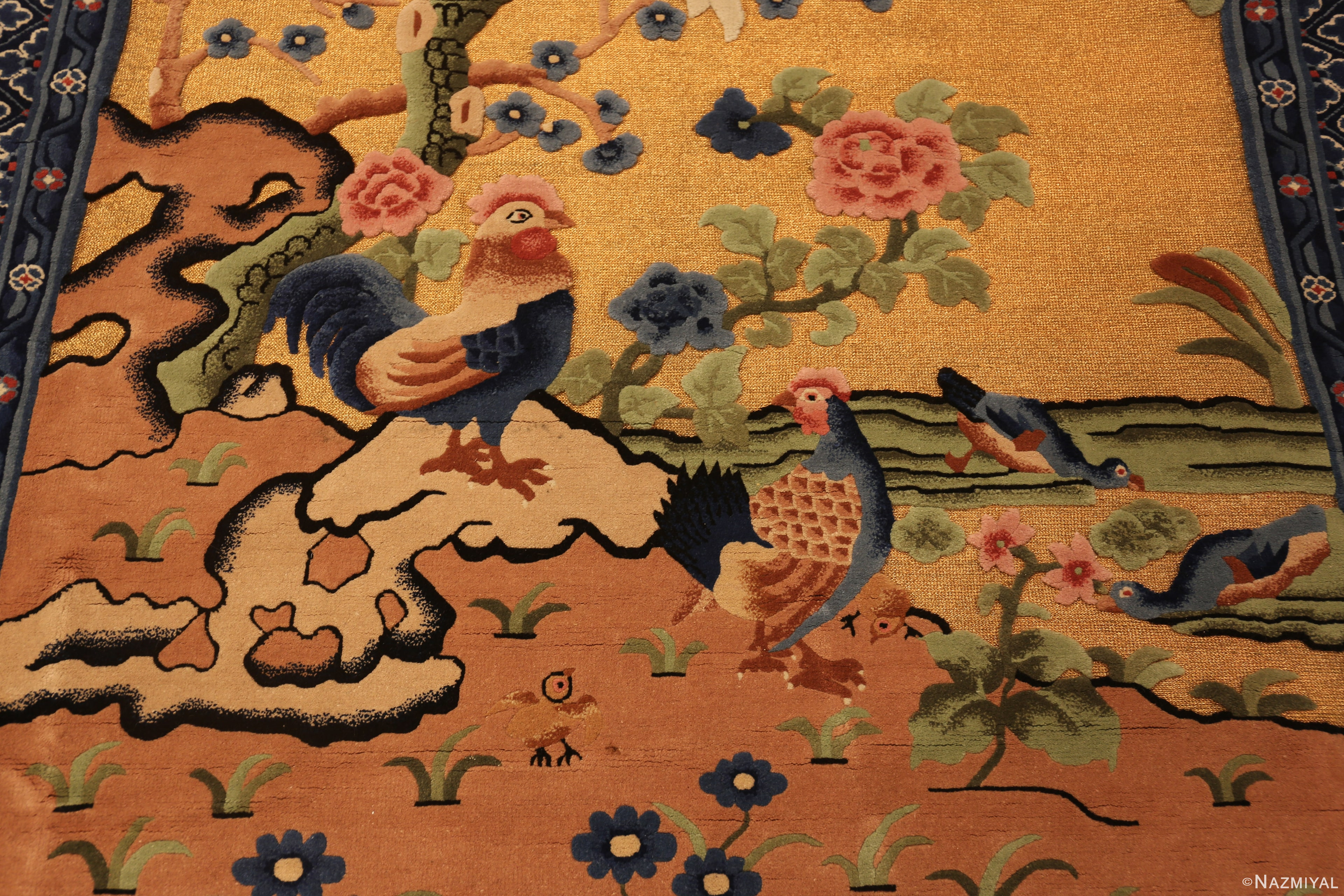
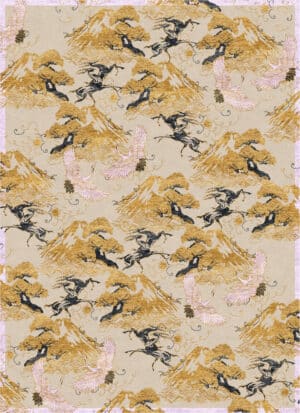
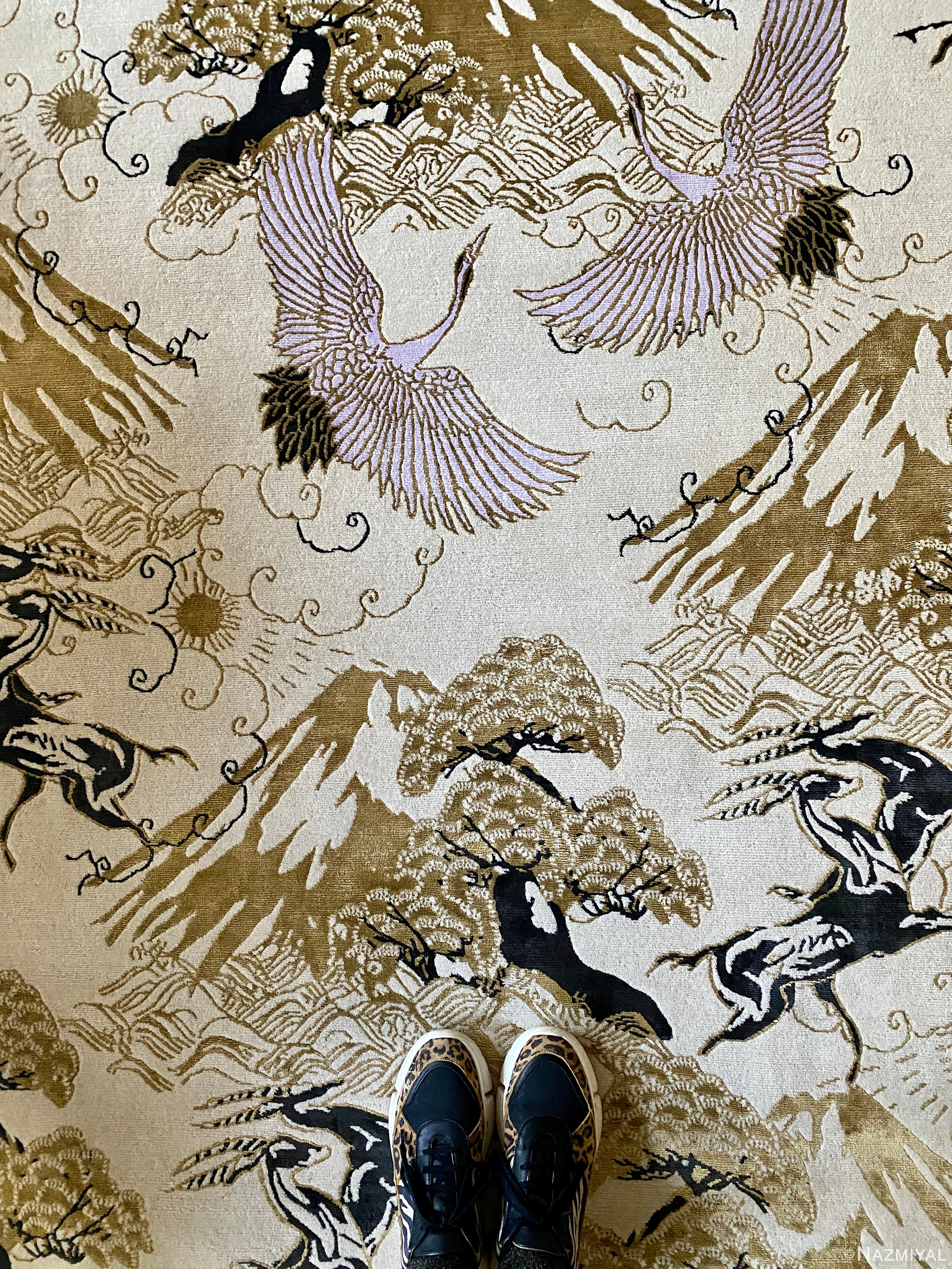
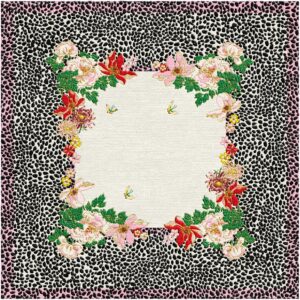
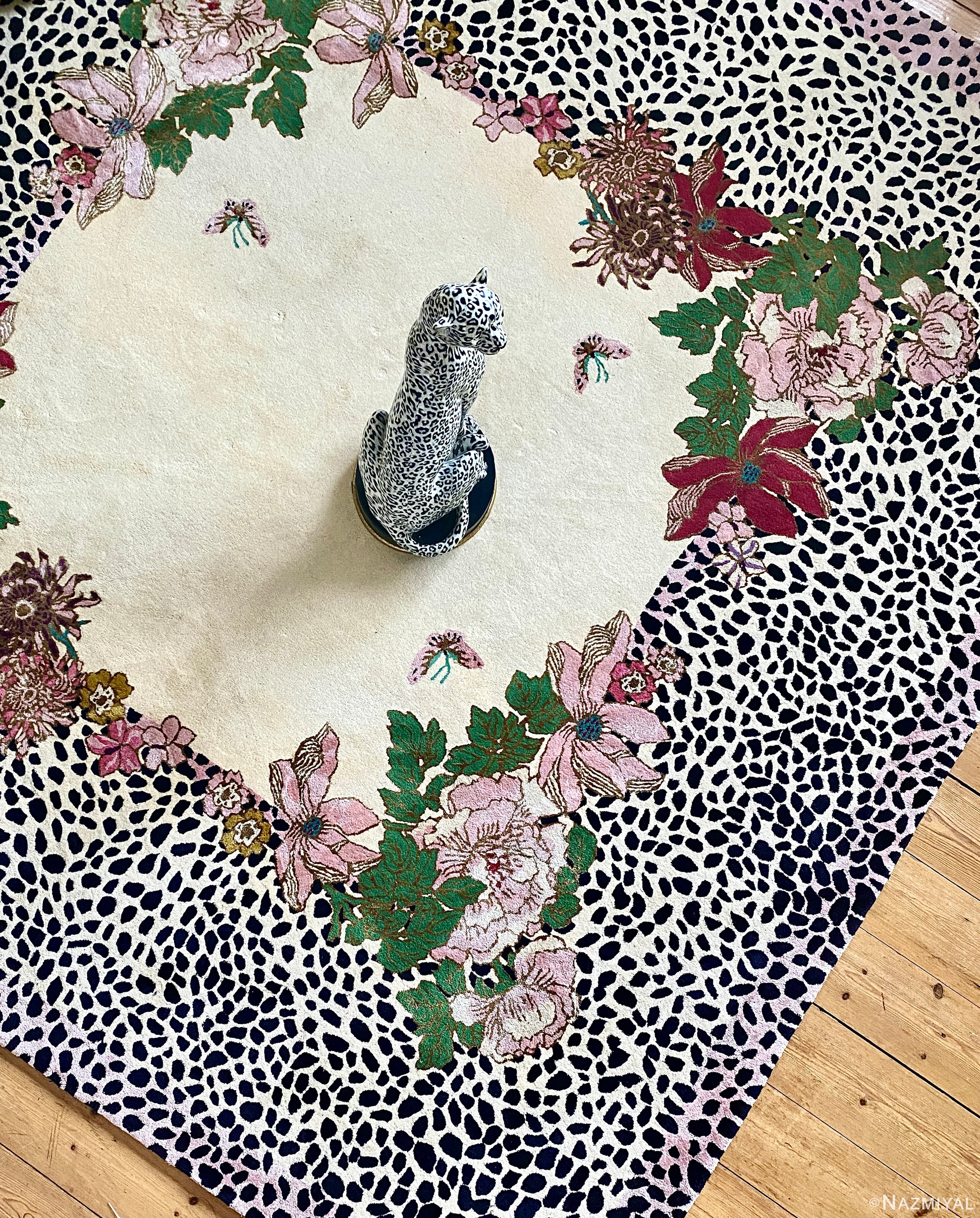
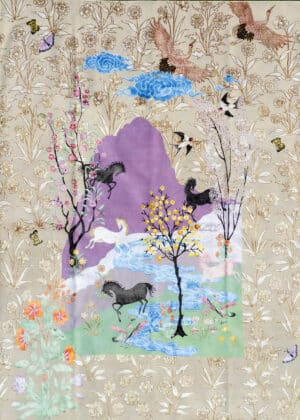
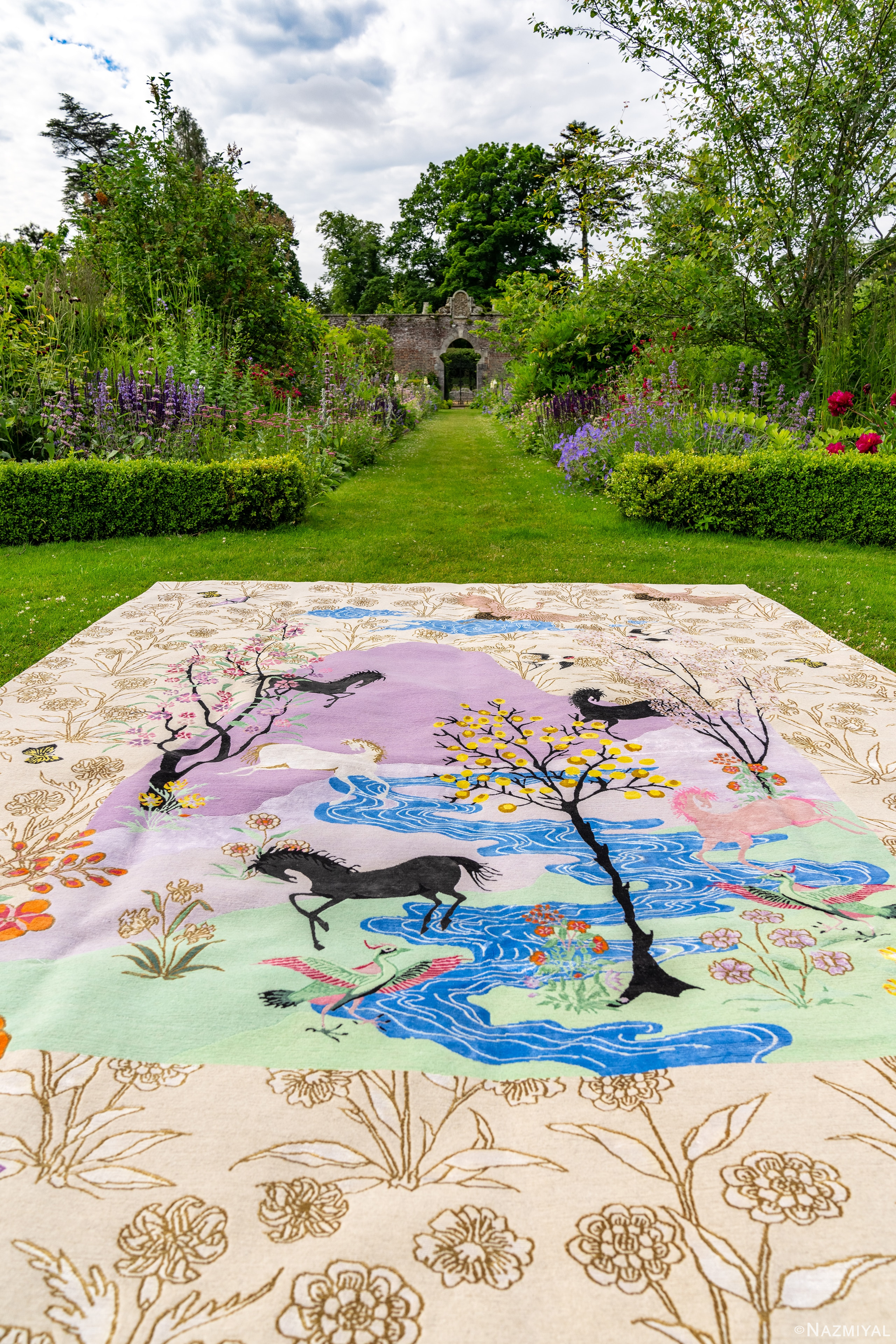
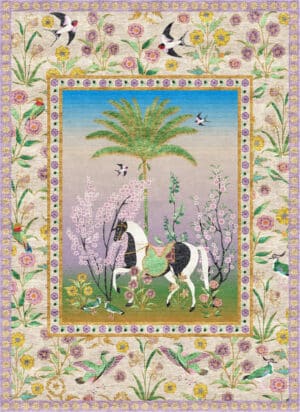
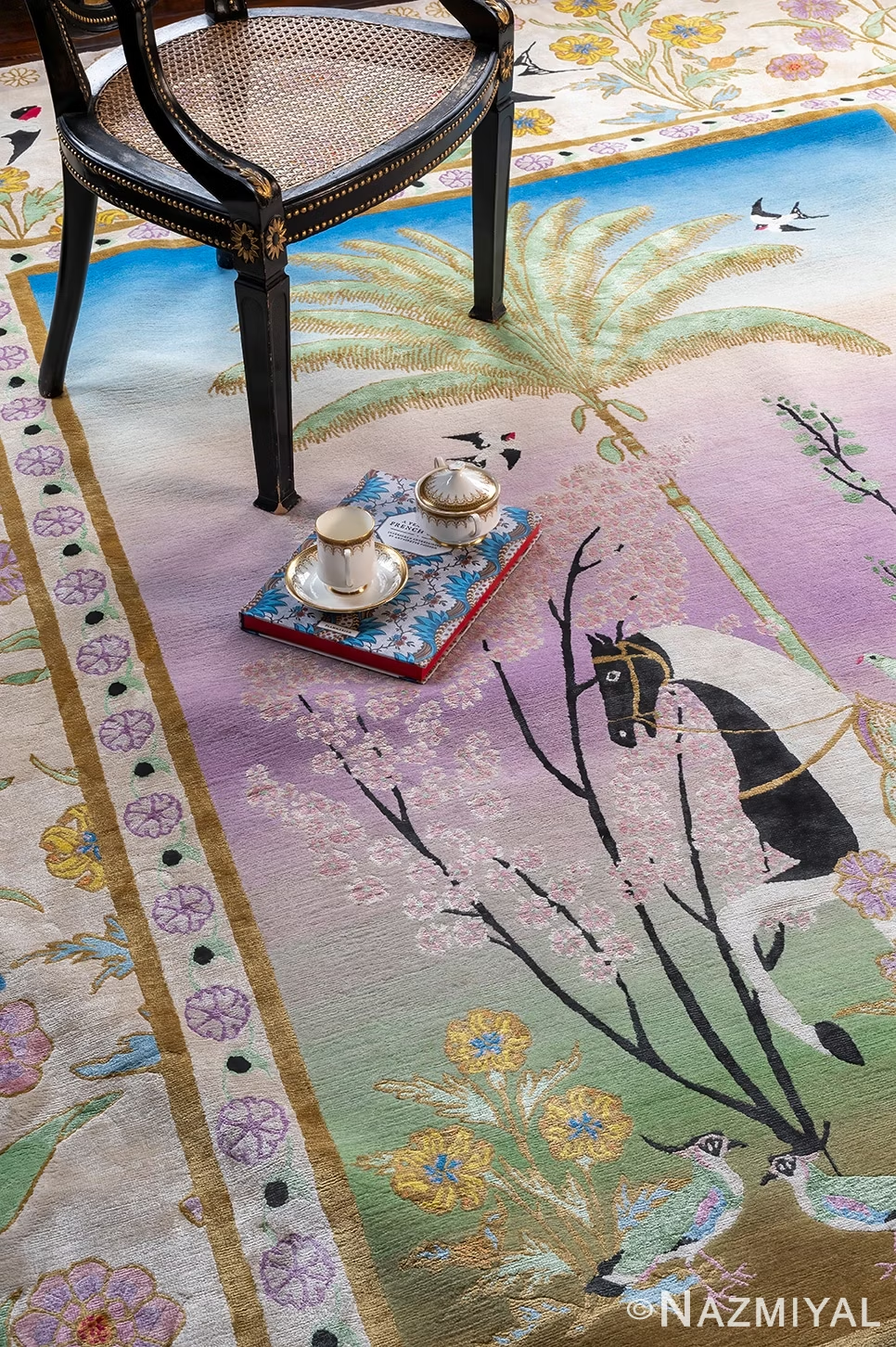
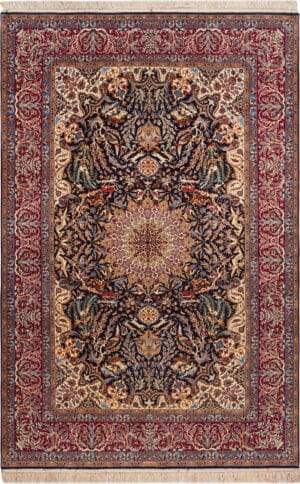
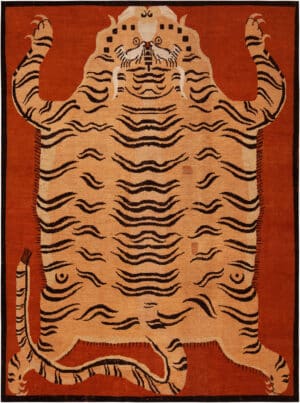
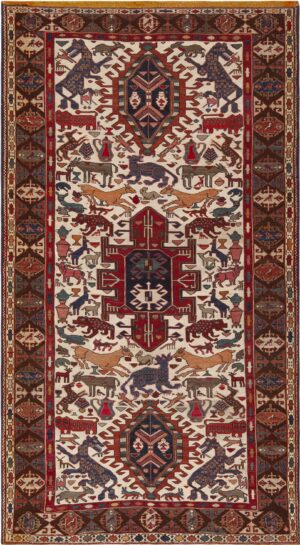
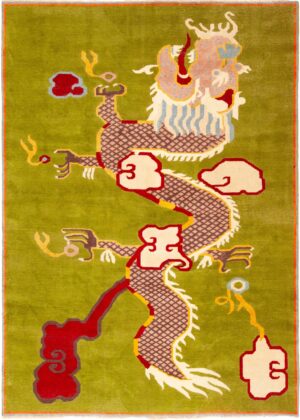
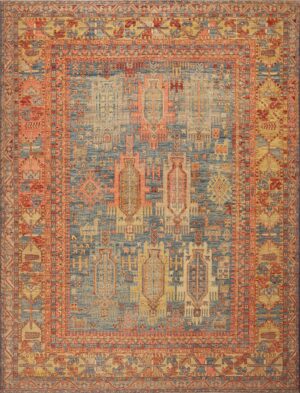
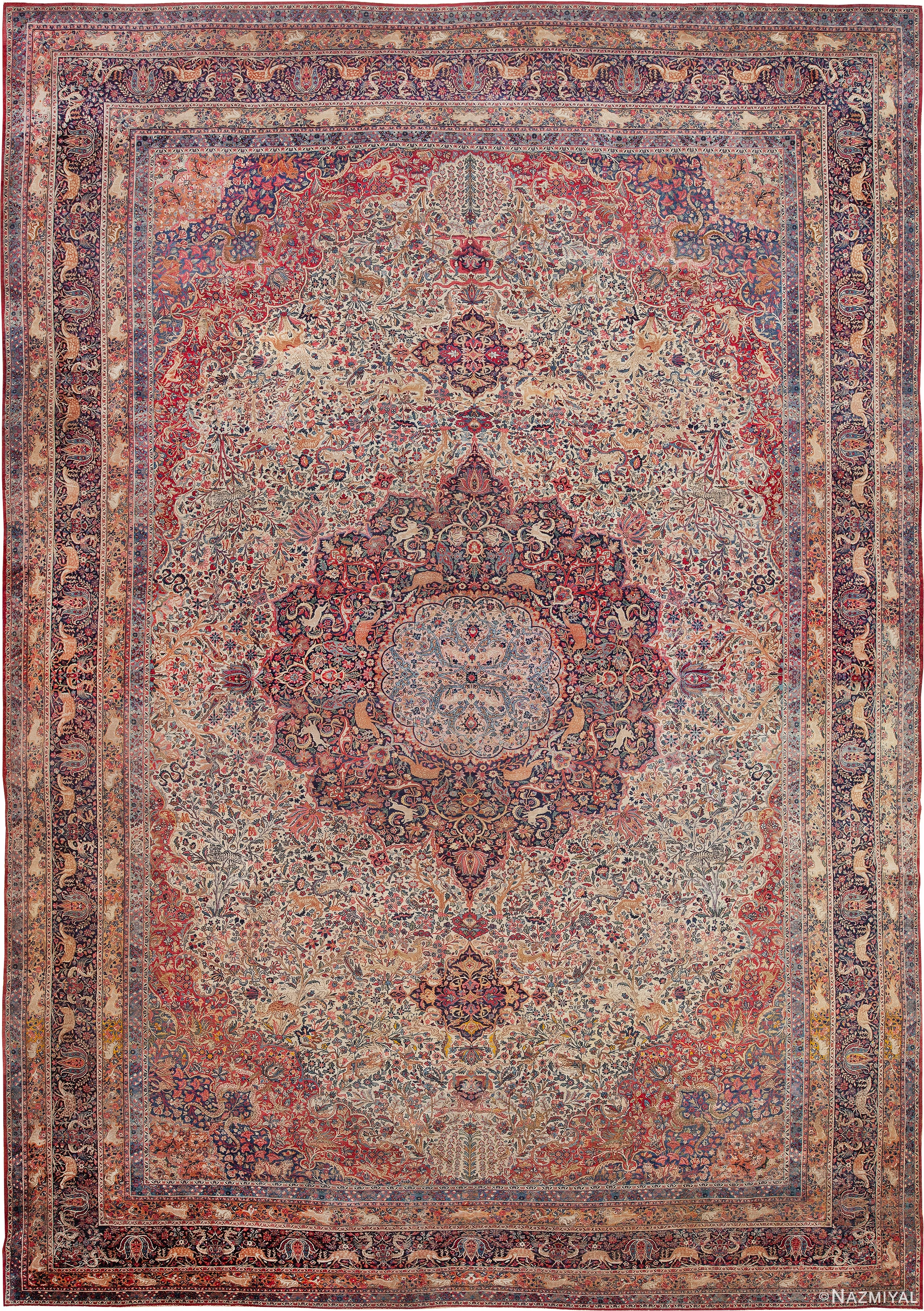
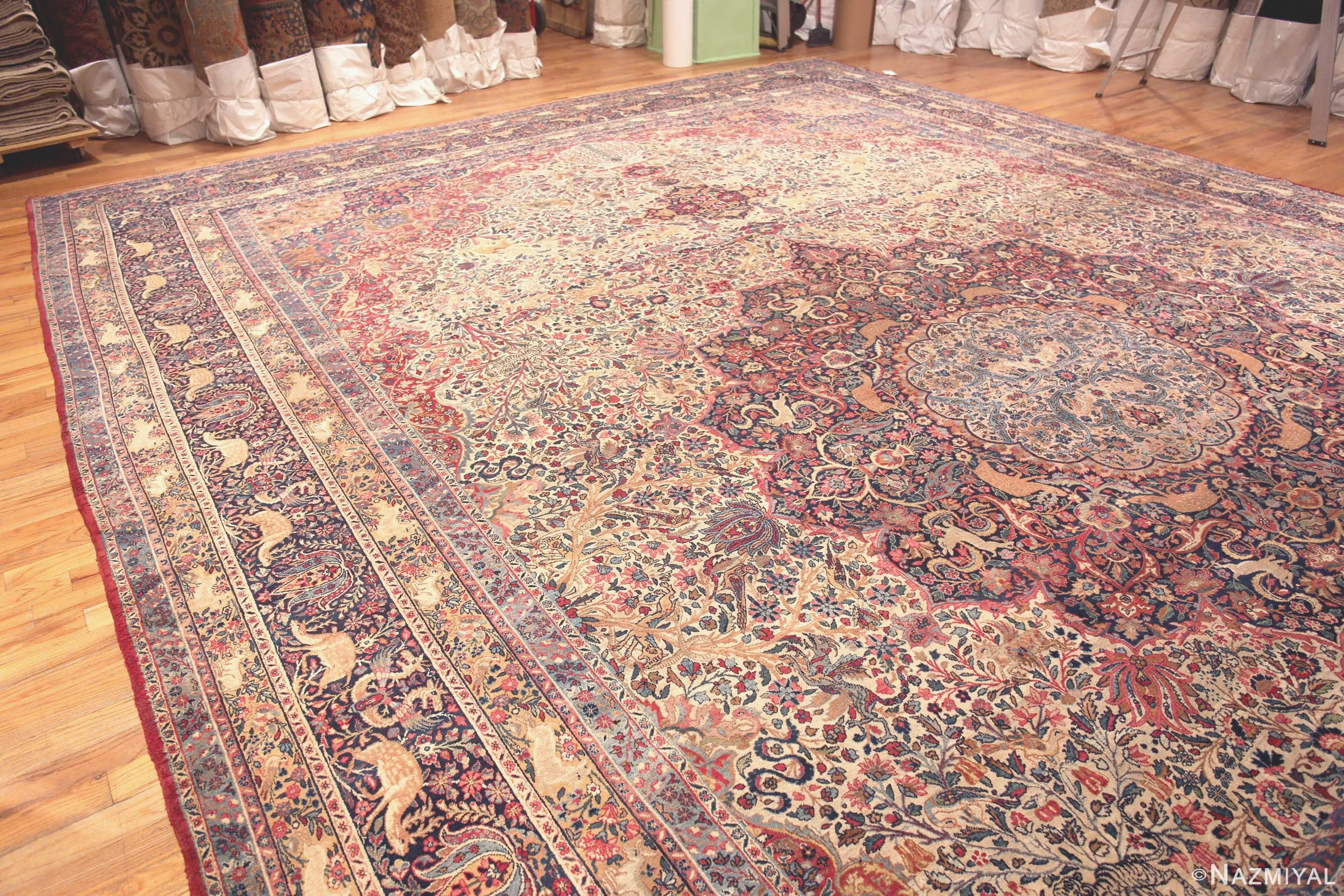
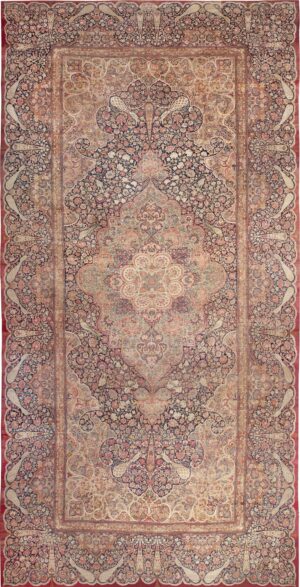
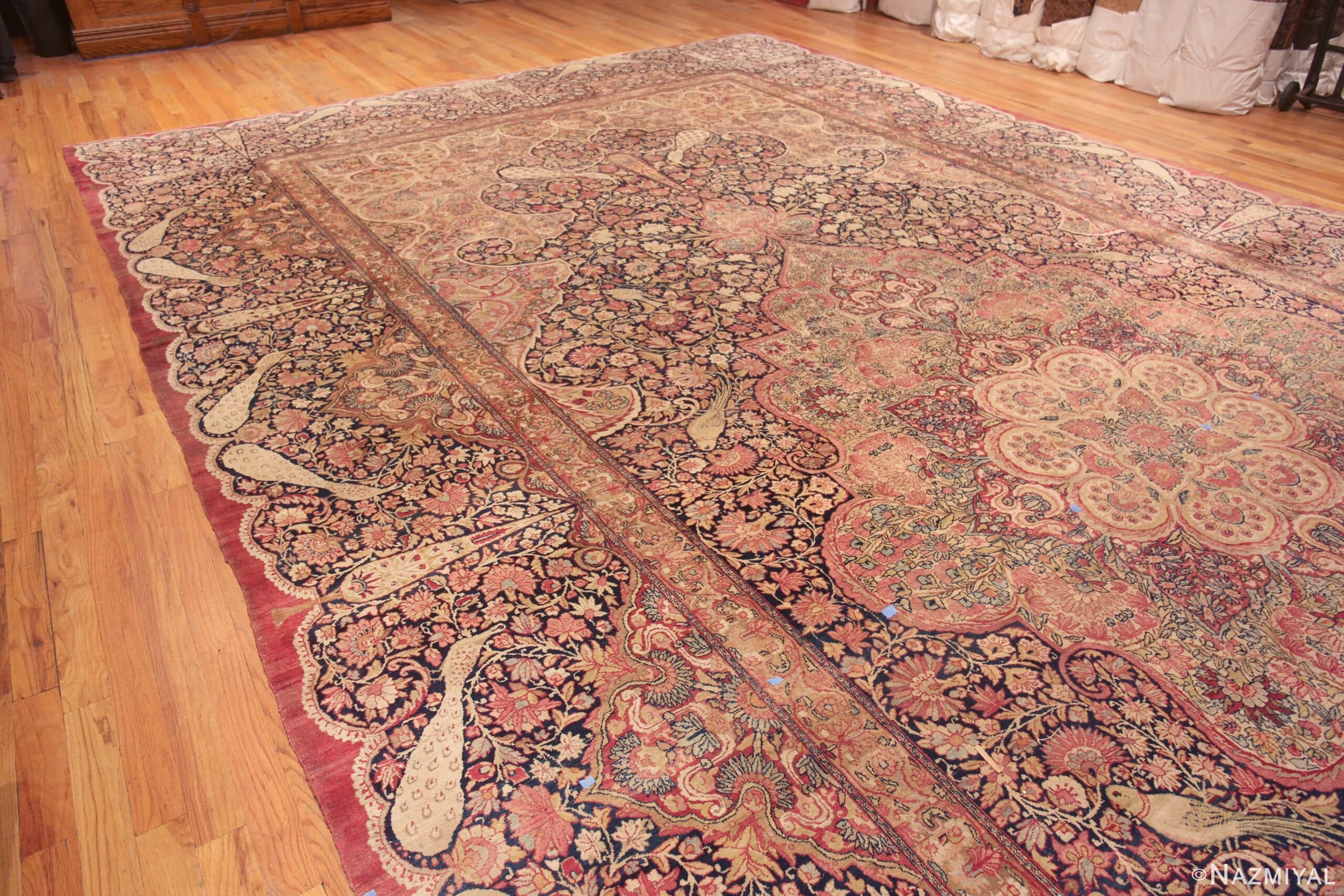
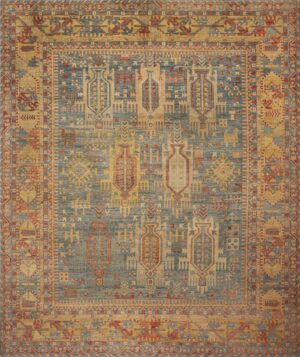
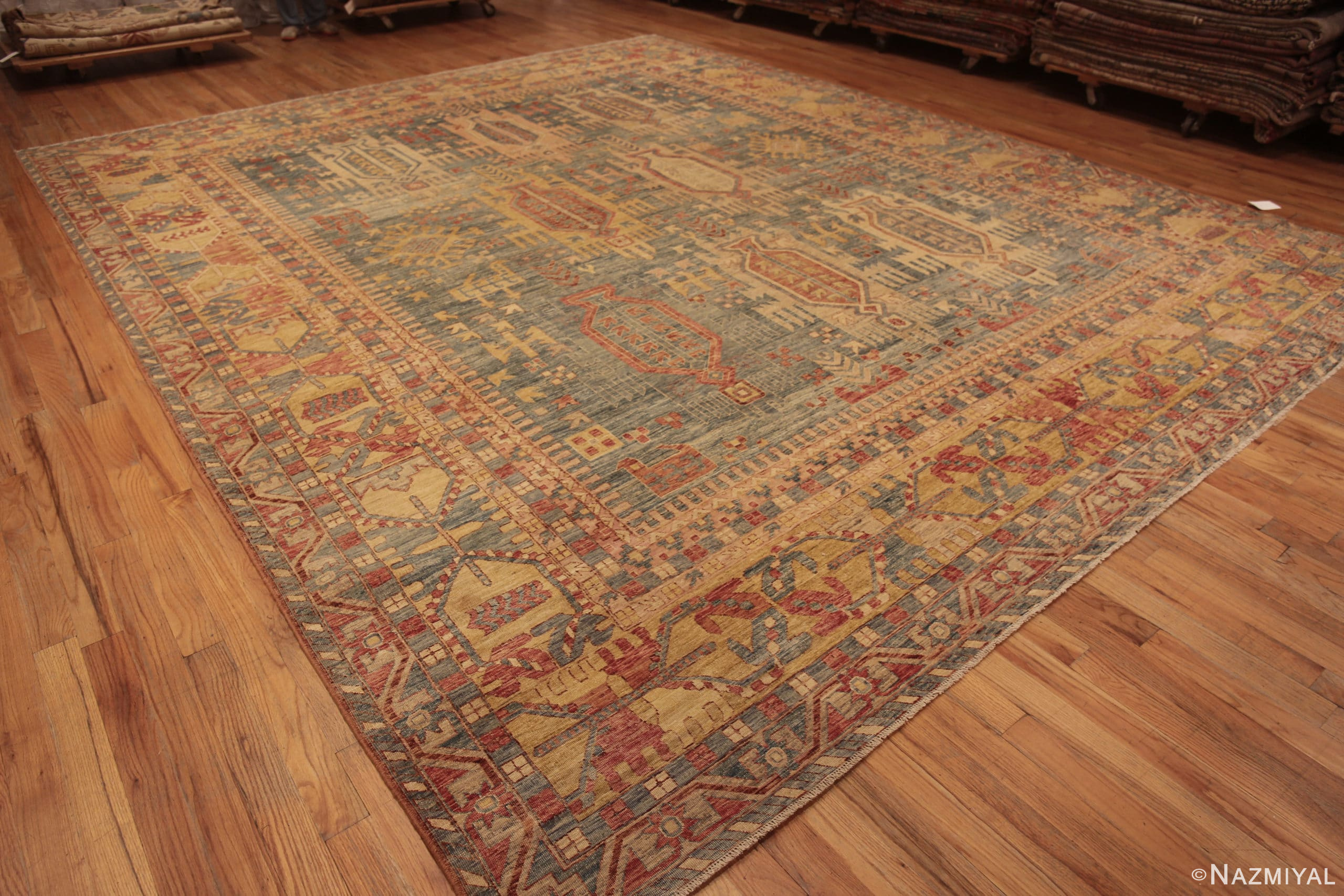
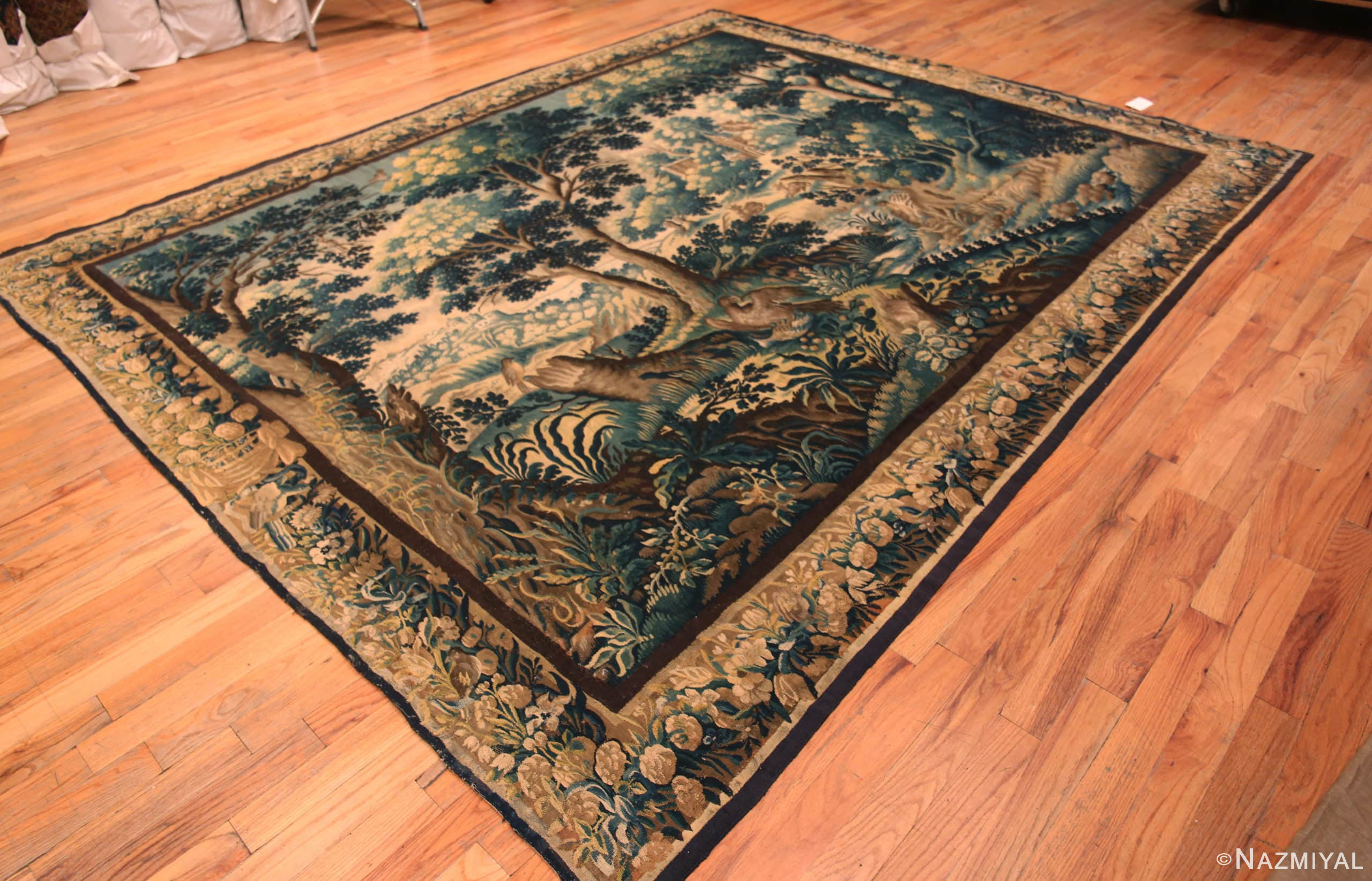
Inventory changes frequently. These featured pieces are examples of how animal imagery appears across different regions, styles, and “storytelling” approaches.
Motifs & Meaning
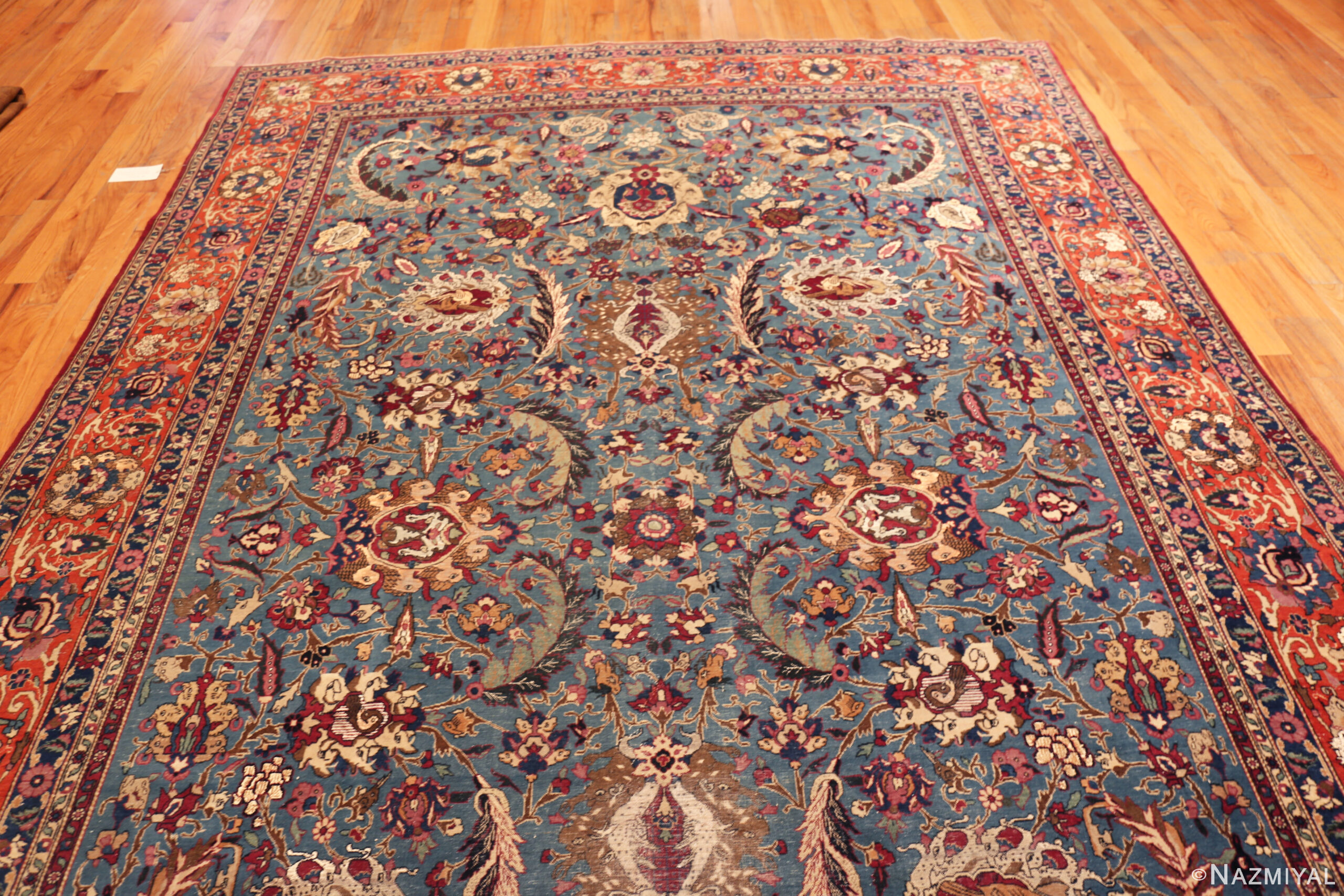
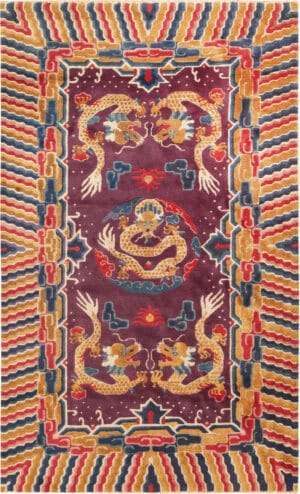
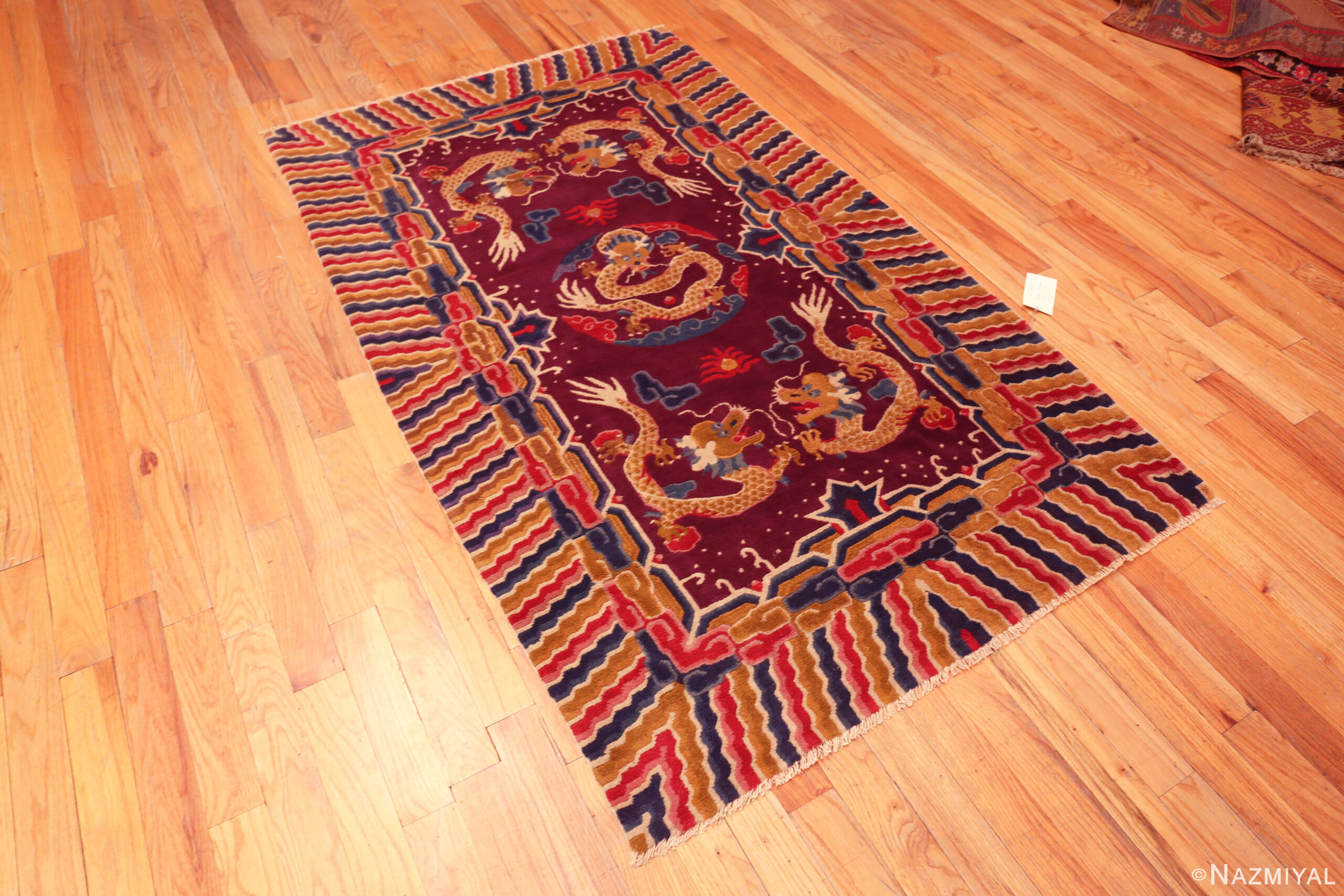
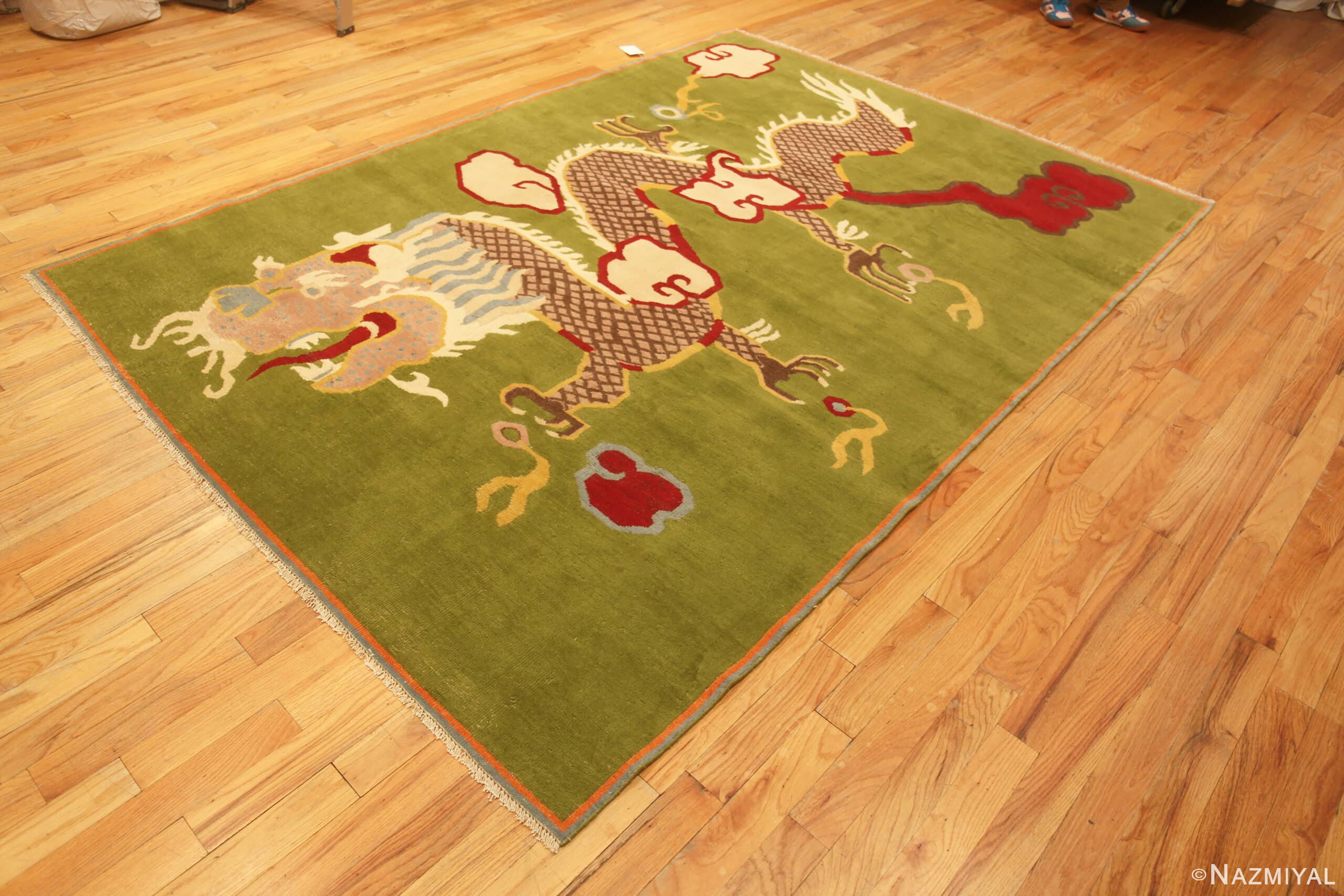
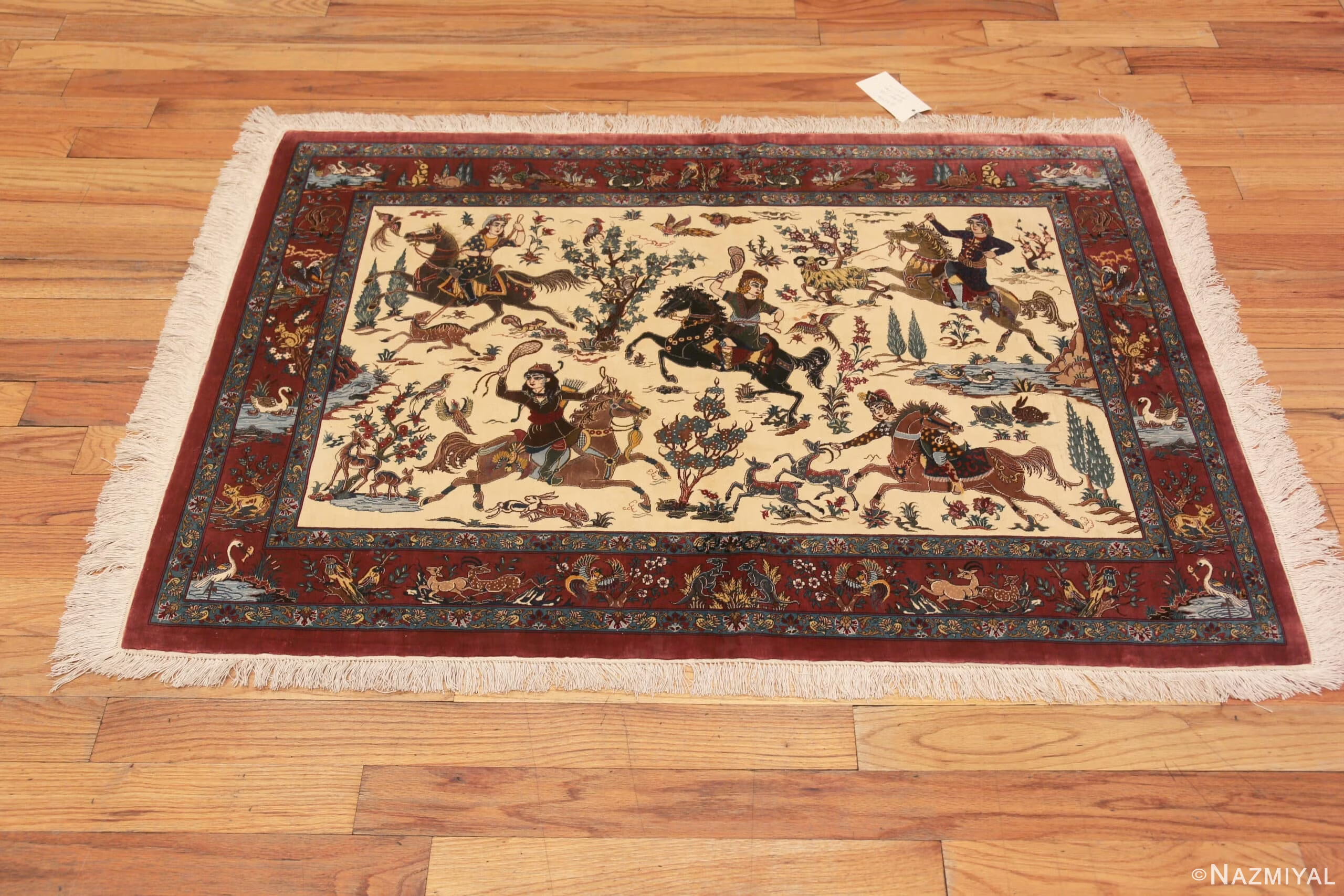
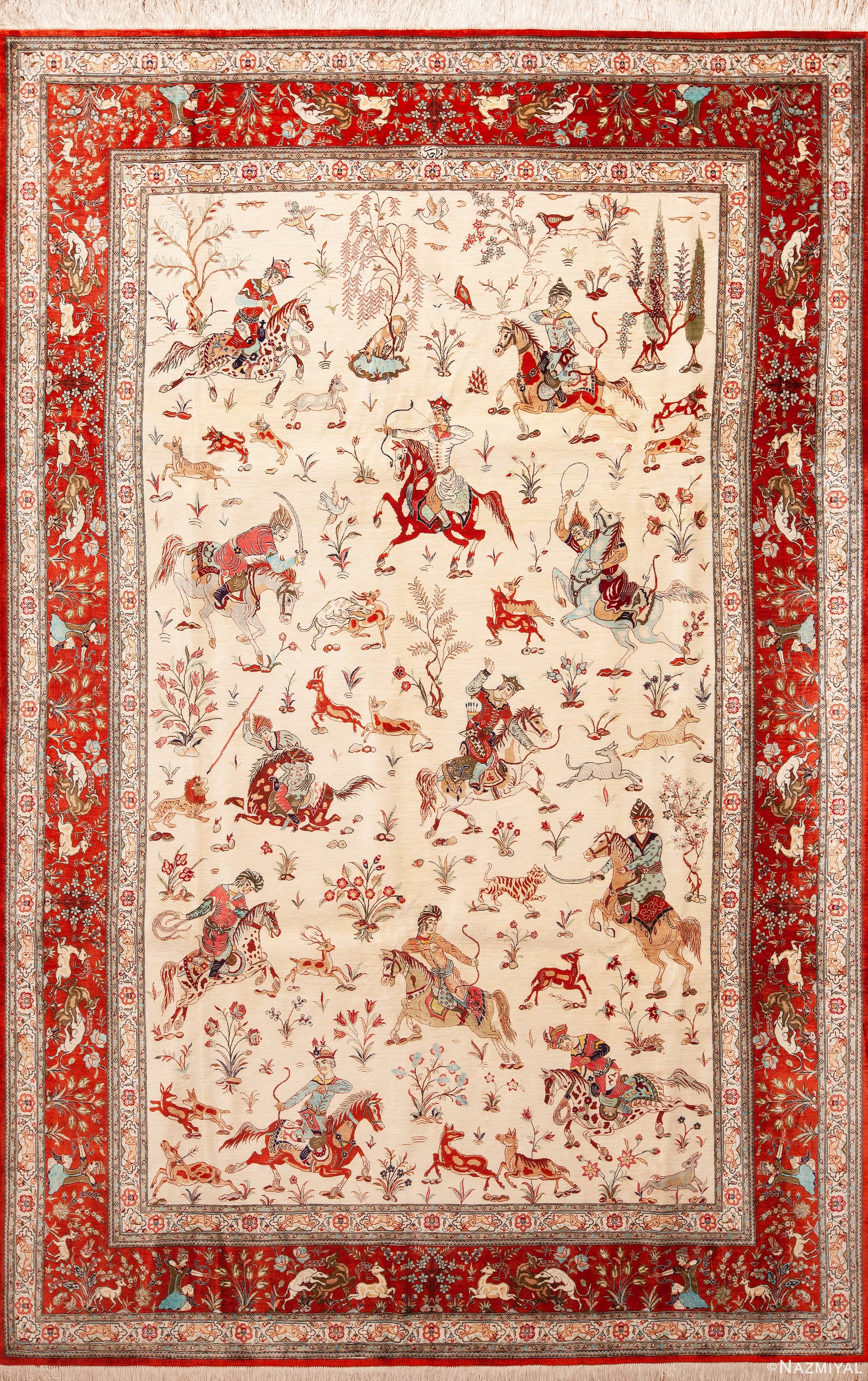
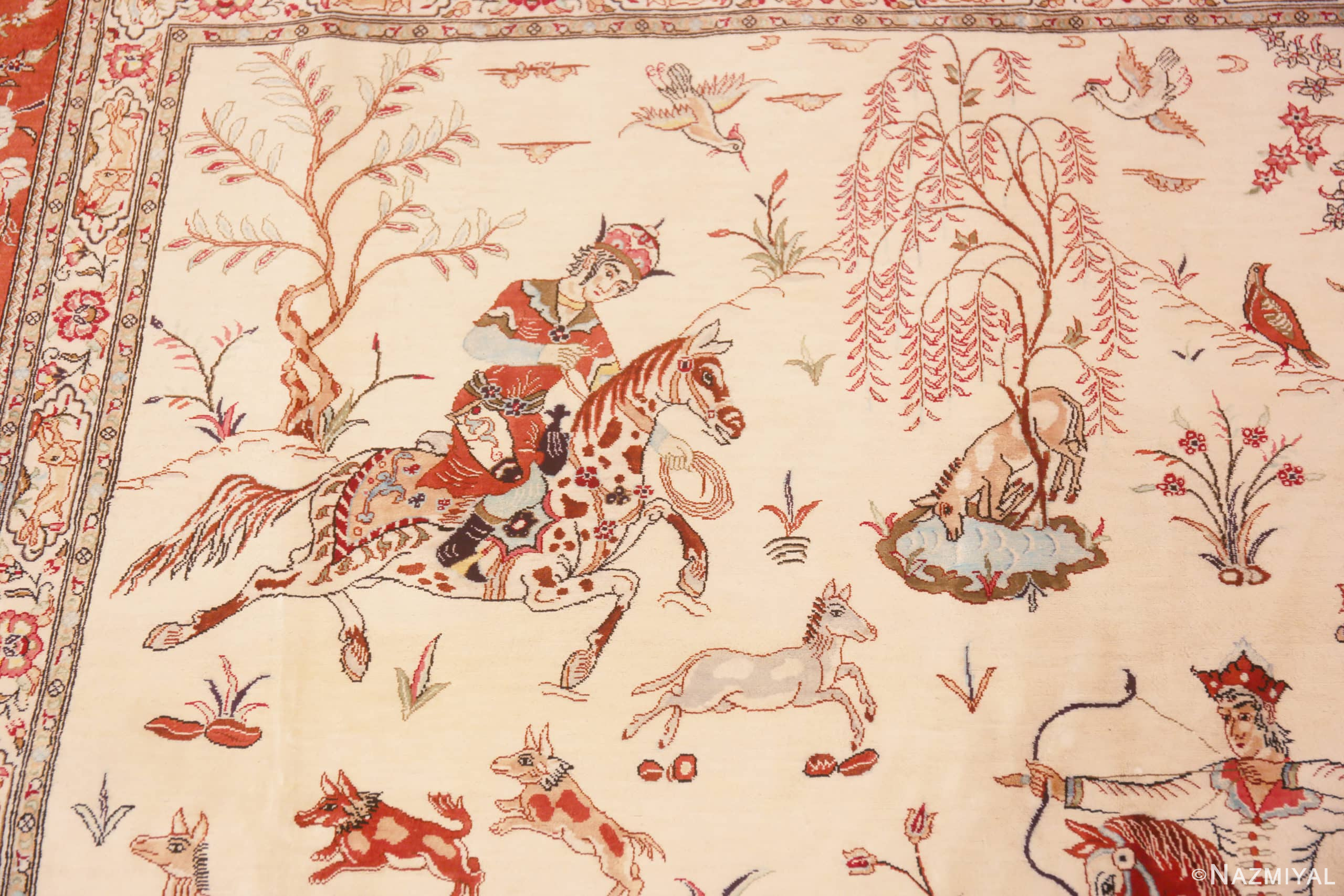
Animal imagery in rugs can be literal (a scene you “read”), symbolic (a sign meant to protect or empower), or mythic (a creature that lives in legend). In many Persian examples, animals appear within courtly narratives such as hunting scenes, where motion, victory, and landscape come together as a complete pictorial language. In East Asian traditions, dragons and other creatures often signal authority, protection, or auspicious energy—motifs that can feel both historic and surprisingly modern in a contemporary room.
Common animal themes collectors look for
- Hunting scenes: dynamic composition, storytelling, and elite “court” association
- Dragons and mythical beasts: protection, power, and iconography with global appeal
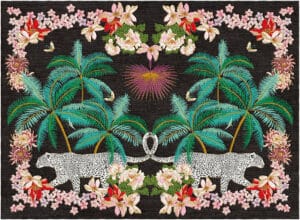
- Tigers and big cats: bold statement imagery; often used as a focal “hero” motif
- Birds, deer, fish: grace, prosperity, and nature symbolism across multiple regions
Identification & Construction
Animal rugs can be “pattern rugs” or “picture rugs”
Some animal rugs use creatures as repeating emblems within an allover field; others are fully pictorial—more like a painting rendered in wool or silk. In pictorial rugs, the most important “quality test” is legibility: can you read the animal forms cleanly at room distance without the composition feeling crowded or muddy?
Materials and durability considerations
Construction varies by region and era, but many collectible animal rugs are knotted-pile pieces made with wool and, in some cases, silk. Condition matters: check for stable edges, foundation integrity, and balanced wear—especially in areas where the imagery is most detailed.
Decorating & Placement
Let the motif act like art
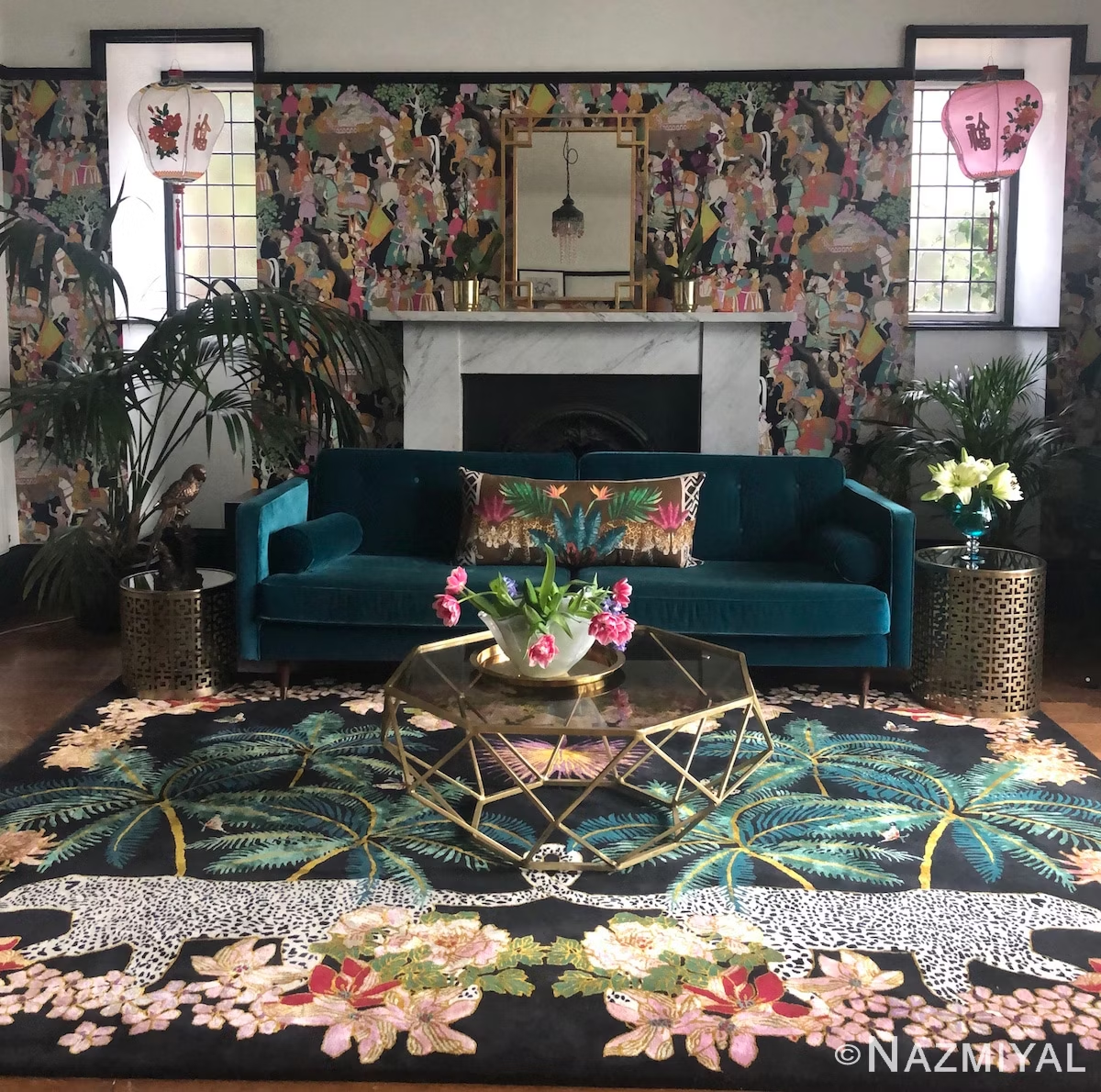
Animal imagery reads strongly. If the rug is pictorial, treat it like a painting: give it visual space and avoid competing patterns nearby. Consider calmer upholstery, simpler drapery, and a few accents that echo one or two rug colors.
Where animal rugs tend to shine
- Libraries & studies: hunting scenes and mythic motifs feel especially natural
- Living rooms: a hero-motif animal rug becomes an instant focal point
- Children’s rooms: choose friendly, graphic motifs and prioritize durability
- Walls: some pictorial rugs (especially silk examples) can be displayed like textiles
Animal Design Rugs vs Animal Print Rugs
These terms get mixed up. Here’s the practical difference buyers actually care about.
| Feature | Animal Design Rugs | Animal Print Rugs |
|---|
| What you see | Actual animals (or mythical creatures) depicted as motifs or scenes | Pattern mimicking animal skins (zebra stripes, leopard spots, etc.) |
| Why people buy | Symbolism, storytelling, cultural iconography, collectible artistry | Graphic impact, fashion-forward look, high-contrast styling |
| Best for | Classic interiors, studies, curated eclectic rooms, art-led spaces | Modern glam, bold minimalism, playful statement rooms |
Closest Cousins
Glossary
Hero motif: A single dominant figure (like a tiger or dragon) used as the focal point of the design.
Pictorial rug: A rug designed like an image or scene (storytelling composition), not just repeating pattern.
Symbolic motif: A design element chosen for meaning (protection, power, luck), not purely decoration.
Legibility: How clearly the image reads at distance—critical in animal and scene rugs.
For more definitions, see the rug glossary.
FAQ
Are animal design rugs always pictorial?
No. Some are fully pictorial (hunting scenes, landscapes), while others use animals as repeating motifs or symbolic emblems within a structured pattern.
Are animal motifs common in Persian rugs?
Yes—especially in specific categories like hunting scenes and certain courtly or narrative traditions. Many Persian examples combine animal imagery with lush vegetation and formal framing.
How do I choose between an animal motif rug and an animal print rug?
If you want symbolism or storytelling, choose an animal motif rug. If you want a fashion-forward graphic floor pattern, choose an animal print rug. The room’s style and how bold you want the floor to feel should decide it.
What should I look for when buying an animal rug?
Prioritize clear drawing (the animal forms should read cleanly), stable edges, foundation integrity, and honest condition. In pictorial rugs, legibility matters as much as knotting finesse.
Can animal rugs be used as wall art?
Many can—especially pictorial pieces and silk rugs where the imagery is extremely detailed. Display can also reduce wear while letting the design function like textile art.
The Three Pillars of the Nazmiyal Collection
- Curated, Museum-Minded Inventory: A selection built around rarity, design quality, and collectible integrity—not just decor trends.
- Authenticity & Transparency: Clear descriptions, responsible representation, and a process designed to help buyers shop with confidence.
- White-Glove Guidance: A real-world buying experience—measurement help, room planning support, and logistics that make acquisition easy.
Nazmiyal White-Glove Service
We make it easy to shop with confidence—whether you’re choosing a single statement piece or sourcing an entire room.
Nazmiyal Collection has been a trusted source for antique rugs and vintage carpets for over 45 years. Our NYC gallery curates one-of-a-kind pieces with an emphasis on authenticity, provenance, and lasting decorative value.
Need help? Call us at (212) 545-8029 or visit our New York City showroom to work with a rug expert.