When looking to purchase a new rug, it’s important to understand the inherent differences in textiles. Specifically in their production. There are many different ways to create a rug, different weaving techniques obviously, but the production method itself as well. While antique rugs are all guaranteed to be handmade, the industrial revolution introduced the power loom, and suddenly rugs could be mass produced via machine.
Spinning wool through a machine or by hand results in different textiles, from texture, color variation, and durability. There are a few things to look out for when trying to distinguish between the two. Once you know what to look for, it becomes easier to tell. But what are these differences? How does the textile production affect the rug? And why should I worry about whether my rug was made by hand or by machine?
Hand-Knotted Rugs
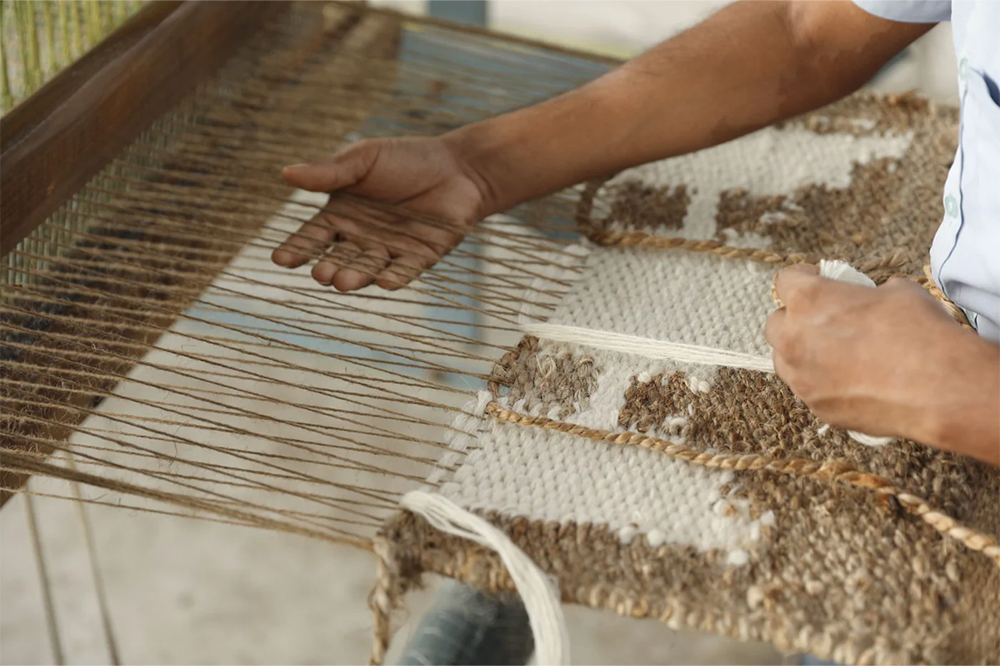
Hand knotting is the most traditional form of hand weaving. It’s been around since the Upper Paleolithic period. The earliest evidence of weaving are textile impressions found in Eurasia and dating back up to 30,000 years ago. There are many forms of fabric art, with weaving essentially boiling down to an intentional form of knot-making that results in a cohesive textile. But with something as culturally important and oftentimes as physically large and durable as carpets, a little ingenuity was needed. While hand-knotted rugs are made by hand, they are created with the help of a loom, a large contraption that helps keep threading in place.
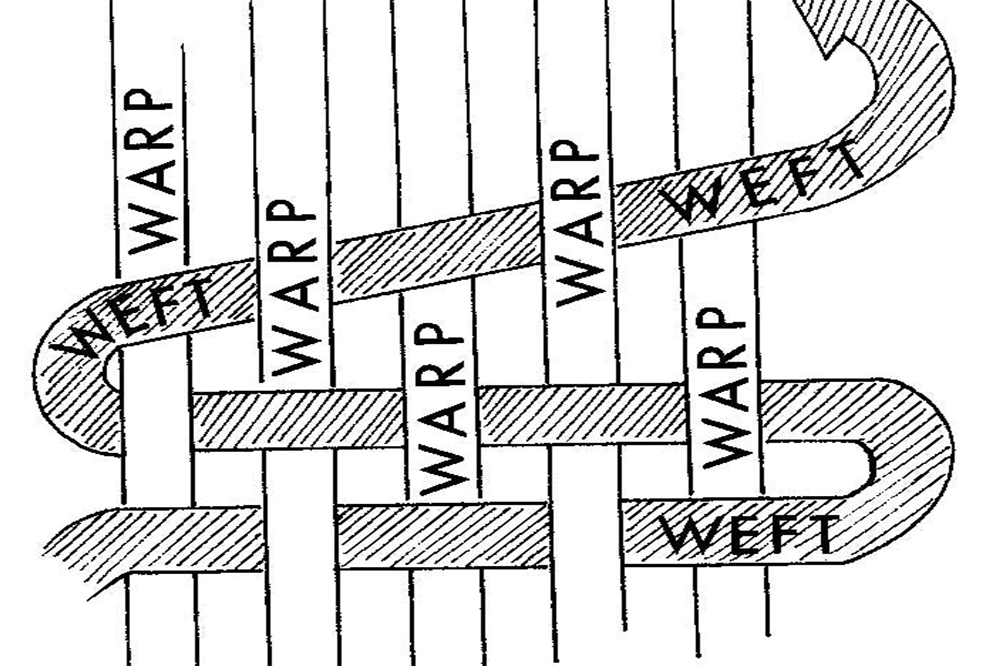
Rugs are made with a warp and weft pattern as a foundation. Both “warp” and “weft” refer to an orientation of thread that is interworked to create a grid. The warp threads are vertical, stretched and held taut by a loom. The weft is the thread that is interwoven horizontally through the warp, in an over-under alternating pattern. There are variations of how these warp/weft grids are made, which can give rugs different textured surfaces. The knot density has a huge impact on what the finished product looks like. Rugs with higher knot densities are guaranteed to have much more detail and a higher resolution final image.
Different Looms for Different Rugs
Depending on the kind of rug being made, the loom can vary. Some looms serve simply as large frames for the weaver. This is certainly the case for pile rugs. The weft threads are knotted individually, depending on the color pattern. They’re left to hang as long threads attached to the warp until eventually the weaver cuts them with a set of shear-like blades. The weaver ensures that the cut is even to the rest of the rug, determining the length and texture of the pile.
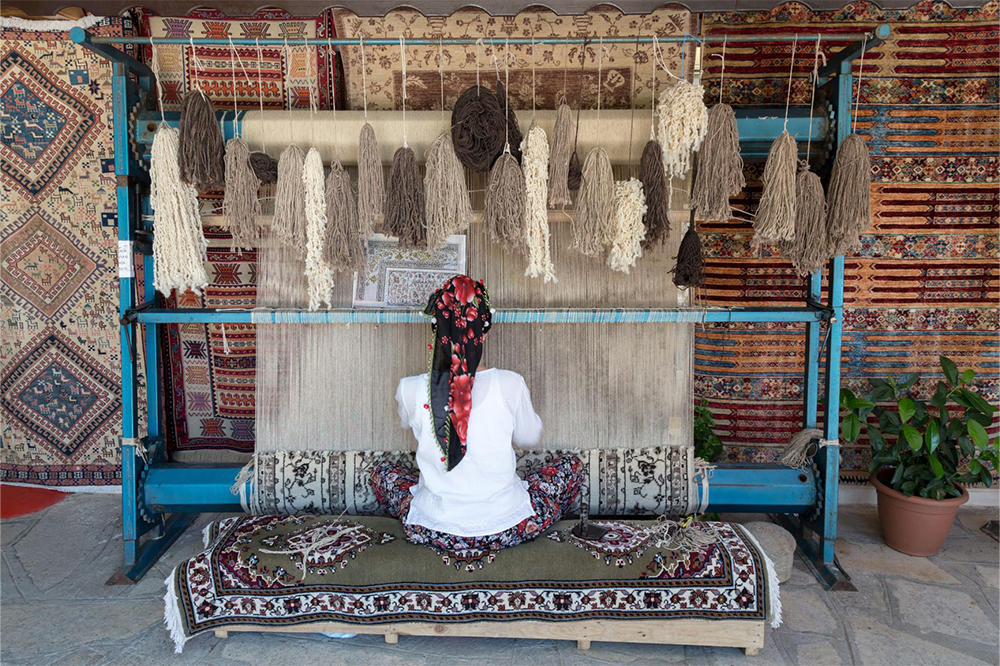
Other looms carry out the weaving of the warp/weft grid by having two frames at once. Each frame holds an alternating array of half the warp threads. All the weaver has to do is place the weft threads between the two frames. When the frames are brought together, the weft thread is trapped in the over-under weave, taking the burden of meticulously interlacing yarn off of the weaver. This kind of loom is used for flat-weaves.
The visual composition of a rug is usually predetermined, designed and planned out before the loom is even set up. This design is used as a sort of template that the weavers follow, especially if the desired final product is supposed to be symmetrical, geometric, or follow a strict pattern. Yarn is dyed to match the color scheme of the rug and then used accordingly. Textiles like rag rugs or more tribal and abstract designs don’t have to rely as heavily, if at all, on templates.

Hand-Tufted Rugs
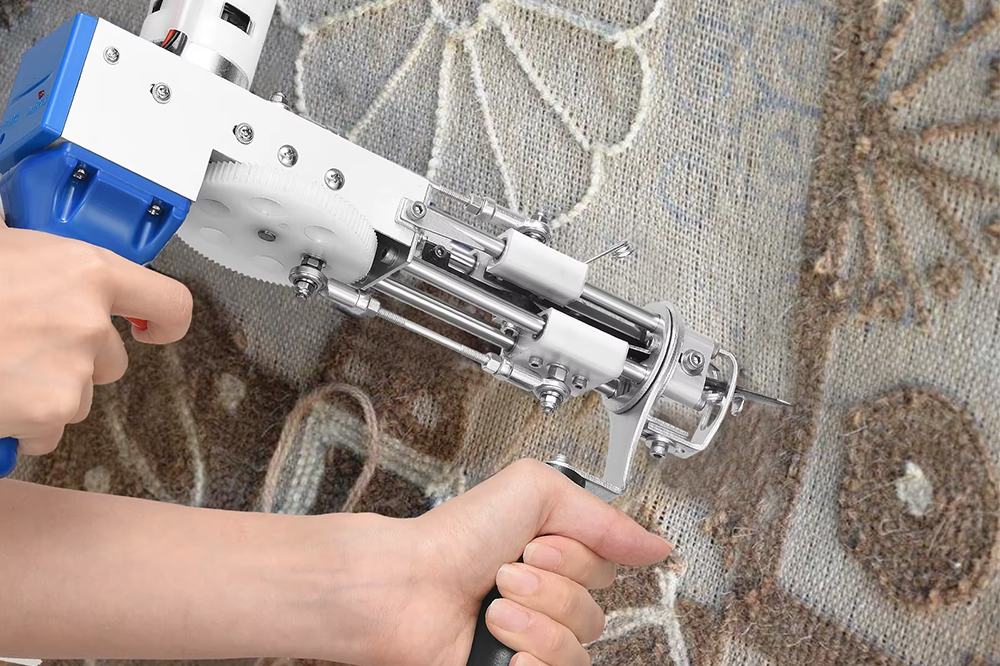
Tufting is an interesting form of weaving that is technically handmade, and certainly has been in history, but requires a tool. This tool has, with the rise of industrialization, become much more mechanized in a way that it never was.
Only pile rugs are made by tufting, as this technique is specifically employed to create a pile. It works by pushing threads of yarn through an already established foundational weave, giving the carpet a texture. In 1930, the tufting gun was invented. This is a mechanism that, while still hand held, punches the yarn through at much faster speeds than possible with just the human hand. It has transitioned hand-tufting as a strict hand-weaving method, to something that straddles the line between hand and machine made weaving.
Its industrialization doesn’t mean that tufting is a new technique though. In fact, it’s very much the opposite. While the tufting gun obviously didn’t exist, this weaving method has been around since ancient times. Sometimes called “punch needling”, the practice was done traditionally with a needle-like tool. Earlier societies utilized what they could find, repurposing things like long thorns or whittled animal bones to function as the “needle”.
The Culture of Hand-Weaving
Weaving was a dominating force in culture, as were most arts. It was a form of expression and personal craft that served both aesthetic and utilitarian purposes. Eventually, they became commercially successful, a hot commodity among traders. Quickly, rug making became an enterprising practice, spreading internationally.
Economy and Trade
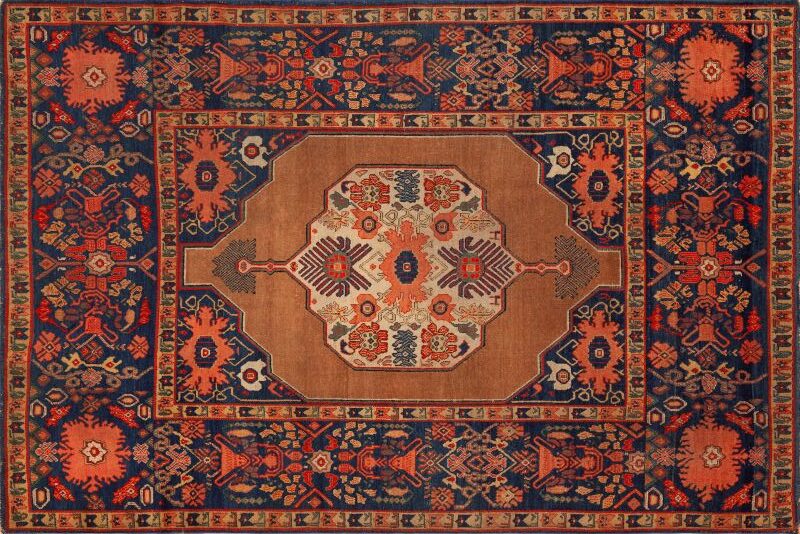
The Orient dominated the rug trade for the majority of textile history. Rugs from Persia, Turkey, China, and India were especially coveted by wealthy westerners in Europe and eventually the Americas. Rugs, as well as components in rug making, were a goldmine back then. Dyes and fabrics became some of the most important products exported. They were at the heart of several economies and traversed the Silk Road for centuries. There were points in time that certain fabrics and dyes were worth the same as gold, acceptable as payment in the place of money.
The Marker of Status
As we’ve already established, rug-making is a long and difficult process. This, combined with the cost of different natural materials and dyes, made rugs a symbol of status. They were exclusive only to those who could afford it and their decorative beauty was commissioned by different members of the aristocracy as well as for royal courts across the world.
In the Mughal Empire of India, rugs were functional in that they were meant to seat people of importance and members of the royal court. During the Baroque period in France, factories were set up specifically to manufacture rugs meant to adorn palaces. In Scandinavia, thrifty rag rugs became popular with the wealthy, meant to show that they had enough money to “waste” good fabric as a floor covering when poorer families had to keep and repurpose fabric into as many usable items as possible.
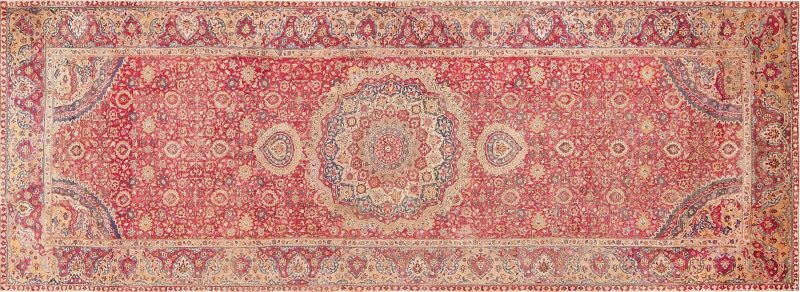
In Europe, Oriental rugs from Turkey and Persia became common artistic devices, utilized as symbols of affluence. Commissioned portraits would often have these rugs painted into backgrounds to reference the depicted family’s wealth. This became such a significant element of these portraits that certain motifs and designs found in carpets adopted the names of painters.
High-born ladies were educated in craft work and art. Activities like sewing, weaving, painting, or singing were considered part of a wealthy girl’s curriculum. Poorer families had to work, with even the women expected to contribute and labor. A family decked in beautiful clothing could mean that the women in the family didn’t have to work the land, as they had a wealthy patriarch providing for them. Instead, they could focus on crafty tasks during leisure time, something of a luxury back in the day.
Feminine Practices
There is a feminine touch to all textile arts, especially those handmade. Historically, women were the ones responsible for work having to do with textiles. This was in large part due to it being a “domestic” task, easy to perform alongside childcare. While commercially, weavers and those in professional guilds tended to be men, women kept textile crafts alive in the home.
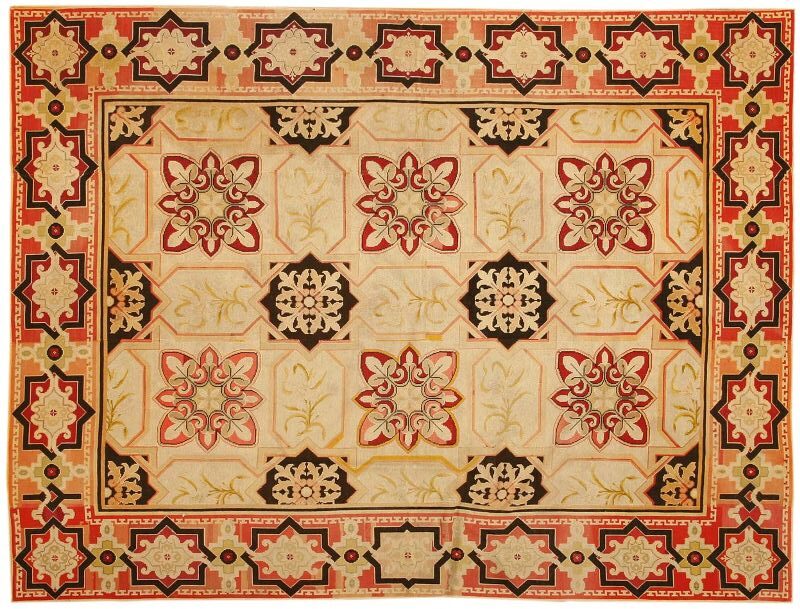
In many places, women were their family’s benefactors and providers. Embroidery, needlework, and weaving, were lucrative craft skills, especially in smaller towns. Spanish immigrant women settling in Portugal were the ones to save their families from poverty in the early 1500s in the town of Arraiolos. They brought with them memories of beautiful Spanish tiles, used as inspiration in their stunning needlepoint rug work.
While rugs, tapestries, and other textiles were very commercially successful, the practice of weaving still existed in regular homes. This was a cultural staple across every culture, separated by style but not by craft. Textiles like quilts have rich familial histories with heavy ties to femininity and a woman’s role within her community. African women carried their own traditions of weaving with them to the Americas when they were forcefully taken to the “New World”. These weave traditions were kept up through generations, and transformed into a didactic form of quilt-making that we still see today. Weavings like this hold stories of family and heritage and their importance is amplified by the fact they’re all handmade.
The Power Loom and Machine-Made Textiles
The idea of a power loom or a mechanized way of weaving has existed for a long time, though the technology hasn’t always been available. While early plans for an automatic loom have been around since the 1600s, it wasn’t until Edmund Cartwright, an English inventor in 1785 that they were realized. Cartwright is credited with the invention of a rudimentary steam-powered loom. While it wasn’t very commercially successful, it did pave the way for machine looms.
An American inventor, Erastus Brigham Bigelow, was the inventor of the power loom as we know it today. He was able to modify and refine Cartwright’s ideas into a working fully mechanized loom that successfully sped up textile manufacturing. This invention led to a dramatic commercial increase in rug production and factories during the industrial revolution.
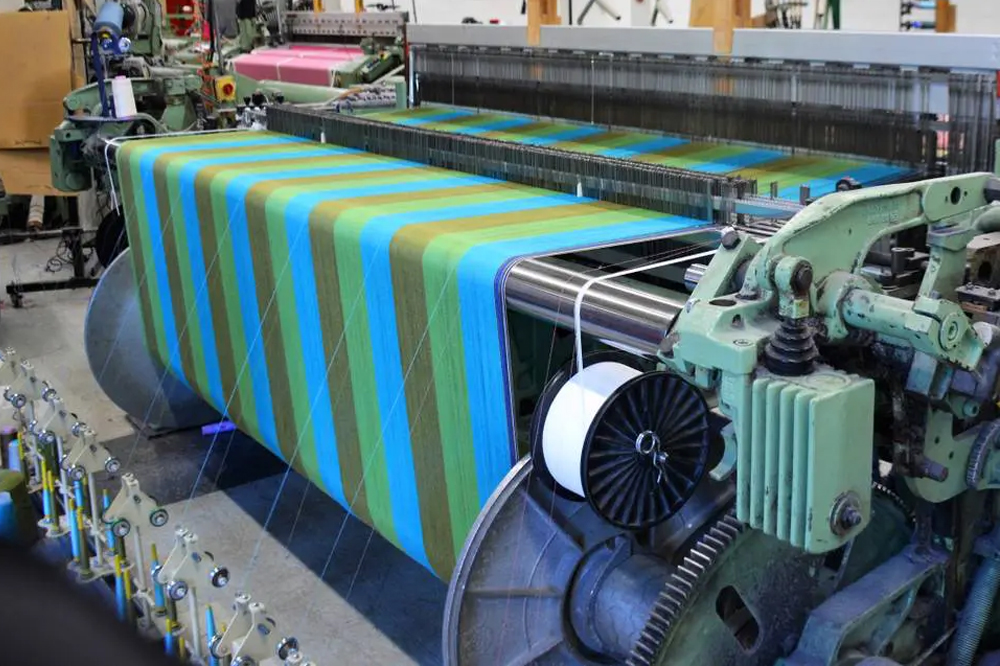
Today, power looms interlace warp and weft threads through a series of mechanisms like cameras, gears, levers, and pulleys. There is still some form of human interaction. Specially trained weavers operate textile mills, monitoring anywhere from 10-30 different looms at once.
Hand-Spun Wool vs Machine-Spun Wool
Every aspect of weaving is important to understand the difference between machine and handmade textiles. This includes the wool. While the wool itself may be a natural fiber, readying the material for weaving is another process in and of itself. Like the knotting, consistency is key to distinguishing if the wool was hand or machine-spun.
How Hand-Spinning Works
As its name suggests, wool is spun on either a spindle or a wheel, even by hand. When using a spindle, wool is carefully pulled from a cluster and attached to the spindle, which is then spun to twist the fibers together into a singular thread of yarn.
The process is similar with a wheel. It again begins with a cluster of wool, where a portion of fiber is fed into the mechanism by a person. This person determines the thickness of the yarn, as it depends on how much wool is portioned out at a time. The wool is spun on a large wheel controlled by a pedal, and then twisted to create a thread. This thread then winds around a bobbin as a finished yarn.
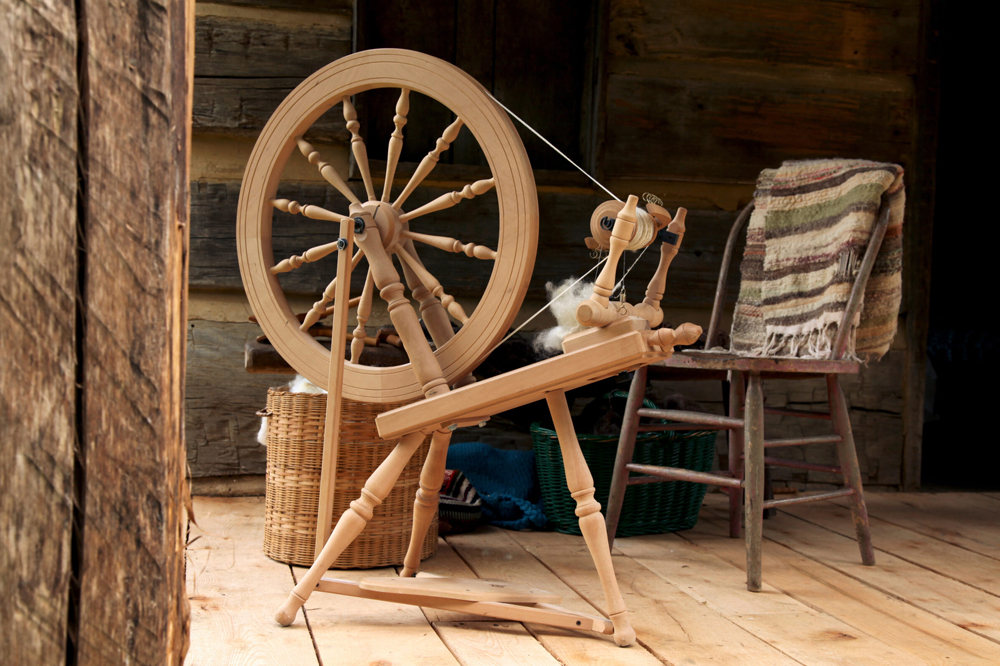
Spinning wheels are what is known as a “mechanical machine”. This refers to a contraption powered not by gas or electricity, but instead by a combination of mechanisms. In this case, the pedal, controlled by a person, and tension provided by the thread are the main driving factors behind the wheel’s movements.
The irregularities in hand-spun wool affect color absorption as well as texture, as its spin can fluctuate the thickness of the thread. Looser and tighter parts of the spin absorb dye in different ways, resulting in a lovely abrash effect. This means there are slight natural color variations that give textiles a charming character often lacking in machine made products.
How Machine Spinning Works
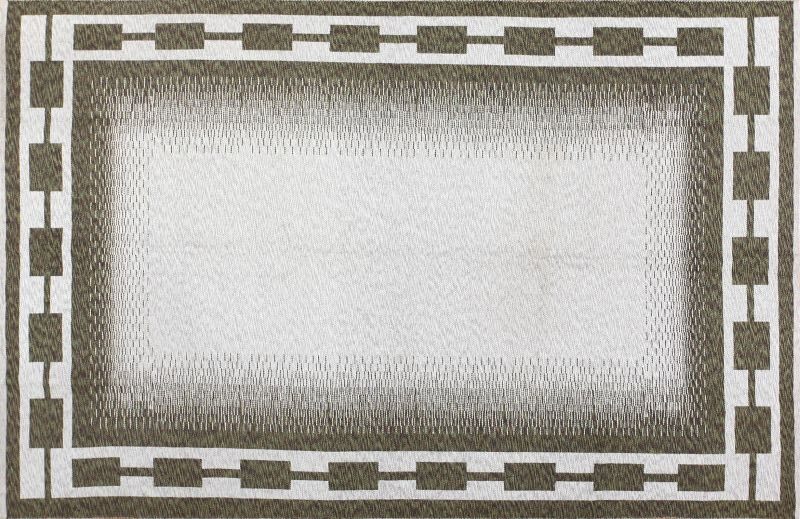
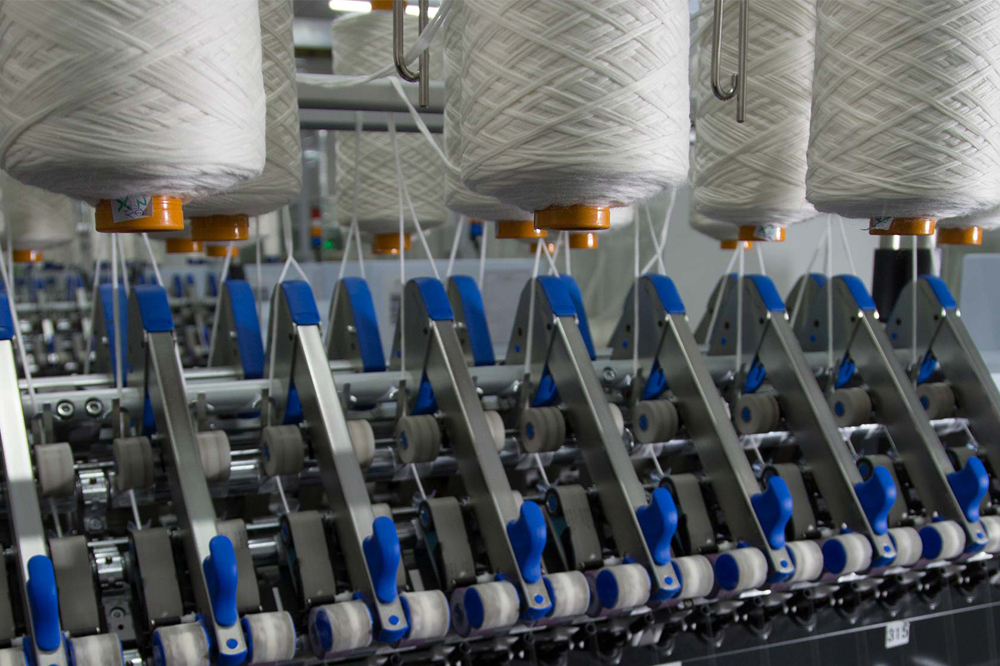
When yarn is made with an industrialized machine, the process is somewhat similar to the spinning wheel used in hand-spun wool, just on a much larger scale. The machines are powered so that there is minimal human interaction. The machine carding process ensures that each fiber is portioned out completely evenly. Large spinning machines twist the fibers into a yarn that is spooled onto a large-scale bobbin.
These kinds of industrial machines reside in large factories, where, depending on their size, can produce over 400 tons of yarn per day. The average spinning mill produces anywhere from 50-100 tons daily, making this form of spinning the obviously quicker and more convenient way. It does have its downsides though, and quantity is always prioritized over quality.
Machines don’t handle wool with the same amount of care that someone’s hand might. The processing of said wool is also a little too thorough, ridding the fibers of natural protective oils like “lanolin”. These oils are important to maintaining wool, and are responsible for the material’s beautiful sheen and resilience. The rough handling of machine-spun wool affects the durability of its resulting textile, as the wool itself is more likely to tear. A lower quality fabric is an unfortunately common feature of machine-made rugs.
Differentiating Between Hand-Stitched and Machine-Made
It can be difficult to tell apart machine from handmade rugs. Machine rugs made on power looms were created to perfect hand weaving, but only the most skilled weavers could create carpets sold in the international market. There are a few ways to identify whether or not a rug was made on a regular loom or a power loom.
Knotting Patterns
Perhaps the most common way to differentiate a handmade from machine rug is to check the knotting. If you flip a carpet over with its back facing up, its weaving history makes itself apparent in the construction of the rug. The back of a rug shows its knotting.
When looking at these gridded knots on the back of the rug, it becomes much easier to tell whether it was made by hand or via power loom. Rugs made with a machine look perfect – too perfect. The knots are perfectly spaced and all exactly the same size. They’re made with a precision only a machine possesses. While weavers who hand-make rugs are very skilled, they’re still human, and this level of exactness is impossible to achieve. The back knotting of handmade rugs have small imperfections throughout, giving the rug an authentic charm.
Always Check the Fringes
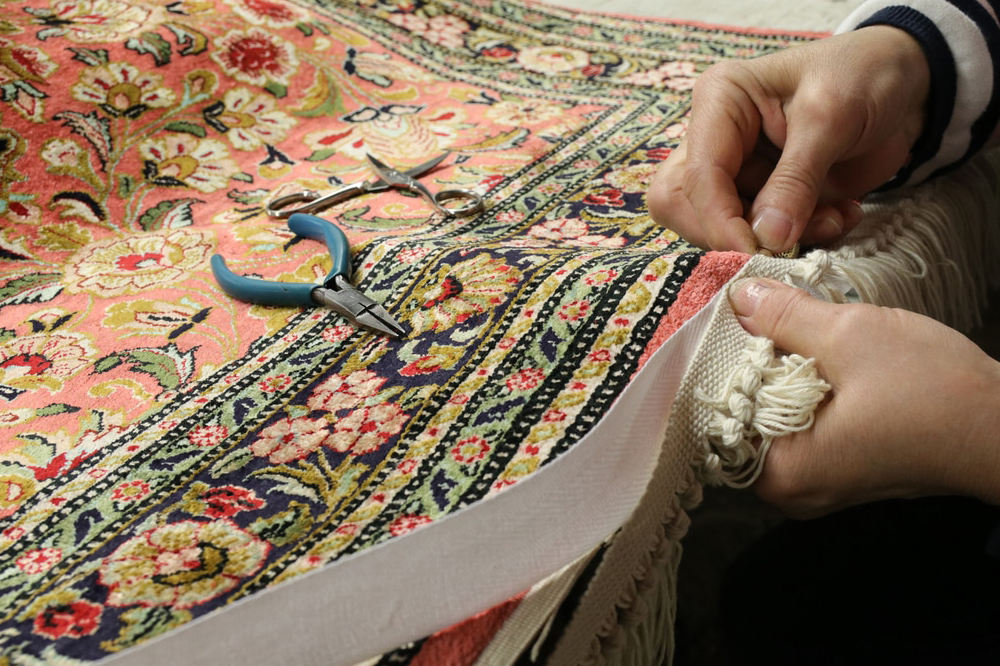
The fringe is the stringed edge of rugs, making up two of the four edges of the carpet. Understanding how the fringe is made is a crucial part of identifying whether a rug is machine made or not. Fringes only naturally occur through hand weaving. When a weaver is finished with their textile, they cut it out of the loom. This creates these stringed edges. Machine made carpets don’t have these naturally made fringes, as the precision of the power loom doesn’t allow for that possibility.
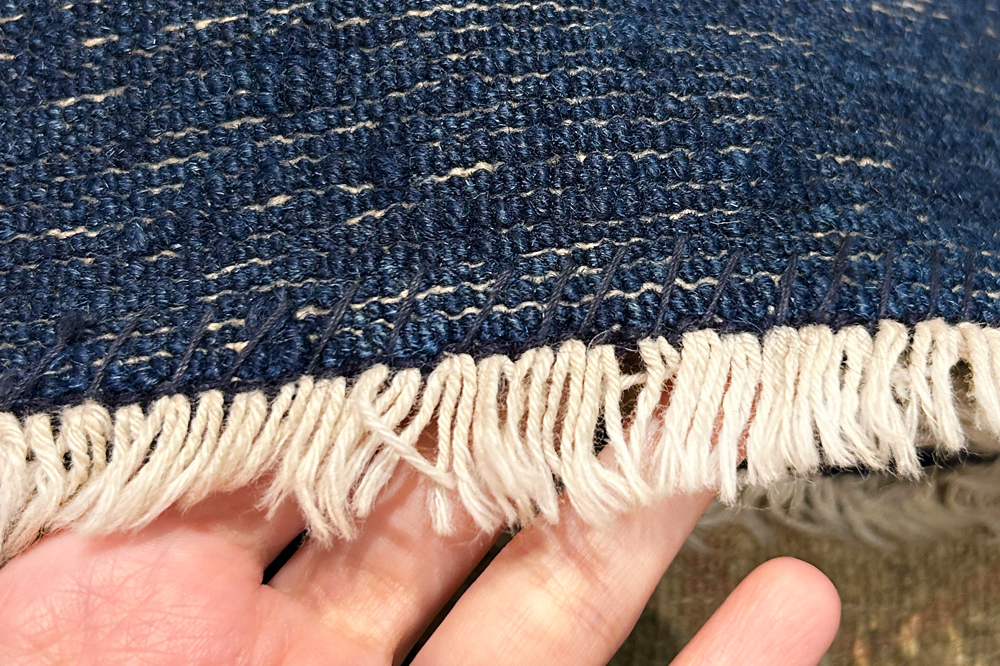
This doesn’t mean that machine made carpets never have string fringes. While many don’t, the appeal of a handmade rug has turned string fringes into an aesthetic. Because of this, string fringes do make appearances on machine made rugs, but they’re always there on purpose rather than happenstance. The power loom can’t create the fringe, and are instead identifiable by the way it’s attached, as it is always sewn on after the fact. This is as opposed to handmade carpets, where the fringe is woven into, and part of the textile.
A Difference in Price
Generally, handmade rugs tend to be pricier. Making a rug by hand ensures that it’s a one-of-a-kind production, even if it’s following the same design as another carpet. The natural imperfections in textiles made by hand give an authenticity that machine-made rugs lack. Handmade rugs also take a very long time to make, especially when taking the size into consideration. It could take several months or even years to complete a single carpet.
Factoring in time, effort, quality, and uniqueness, handmade rugs are priced higher than a mass produced machine-made rug.
Final Thoughts
There are a few different ways of making a rug, whether machine or handmade. These different production methods greatly impact the finished quality of the product. They’re easy to tell apart once you know what traits to look out for. This includes the wool itself, knotting, and fringes. Each of these affects the final pricing, something anyone seeking out a new rug should keep in mind. While machine-made rugs are far more common and accessible, their quality is not usually up to par when compared to handmade rugs.
- There are different ways of rug making
- Different ways of rug making result in different finished products
- There are traits that can give away whether a rug was made by hand or with a machine
- Wool, knotting, and fringes are all indicators of a rug’s construction
- The construction can affect quality and therefore price
- Machine-made rugs are more accessible but handmade rugs are higher quality
Frequently Asked Questions
Why are handmade rugs more valuable than machine-made rugs?
Handmade rugs are often higher in quality than machine-made rugs. The amount of time and effort put into weaving a rug by hand is also factored into the final pricing.
What do the terms “warp” and “weft” mean?
“Warp” and “weft” are both terms referring to the perpendicular threads used in weaving. The warp threads are vertical, while the weft threads are horizontal, and woven into the warp.
Does Nazmiyal sell machine-made rugs?
Yes, though most of our collection is entirely made up of hand-woven textiles. Browse through our collection of machine made rugs here.
What are the benefits of buying machine-made rugs?
While not as durable, machine-made rugs are guaranteed to have a sleek, even texture and coloring that is difficult for handmade textiles to achieve. Machine-made rugs are also far more accessible, and will most likely have the same design in a variety of sizes.
What are the benefits of buying handmade rugs?
Handmade rugs are of a higher quality, and often more durable than machine-made rugs. The human involvement of their production adds an authenticity and character in the structuring and coloring that machine-made rugs don’t have.