The Main Types and Styles of Moroccan Rugs
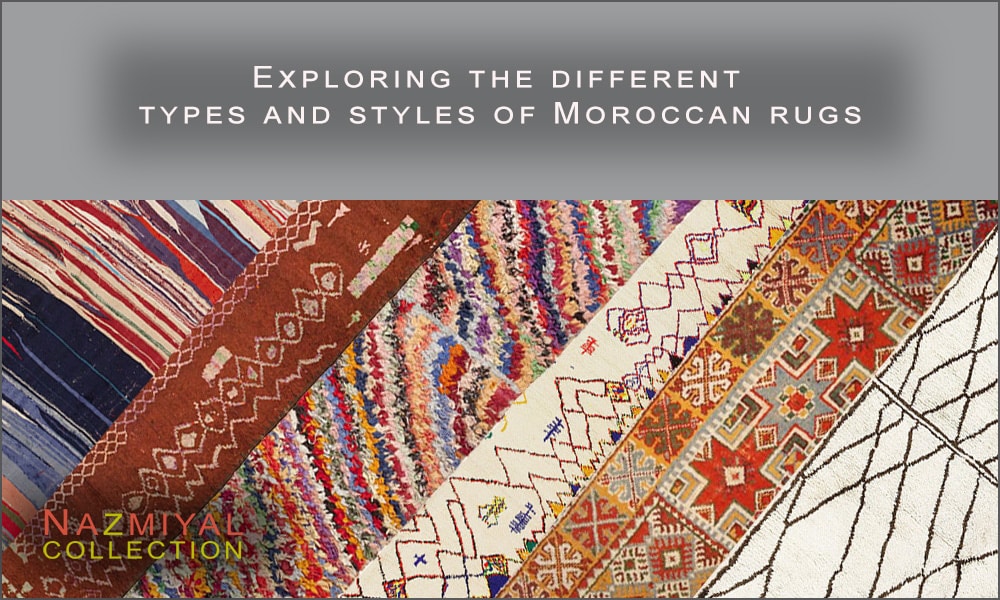
Moroccan rugs come in many regional and tribal styles, each with its own materials, pile height, color palette and design language. The best-known types of Moroccan rugs include Beni Ourain rugs, Azilal rugs, Boucherouite rugs, Moroccan kilim rugs, Rabat or R’Bati rugs, Taznakht rugs, Ourika Valley rugs, Zemmour rugs and Middle Atlas rugs. For collectors, designers and homeowners, the main difference between these Moroccan rug styles is not just appearance. Some are plush wool pile rugs with quiet geometric designs, while others are colorful, expressive, recycled-material rugs or flatwoven kilims with strong tribal and geometric patterns. Moroccan rug patterns can range from quiet black-and-ivory diamonds to colorful abstract forms, chevrons, lozenges, stripes and symbolic tribal motifs. This guide focuses first on four of the best-known Moroccan rug styles:
- Azilal rugs
- Moroccan Beni Ourain rugs
- Boucherouite rugs
- Moroccan kilim rugs
For visual examples, explore Nazmiyal’s Moroccan rugs, Moroccan Berber rugs, vintage rugs, antique rugs and Nazmiyal’s guide to rug patterns and carpet designs.
Vintage Moroccan Azilal Rugs
Azilal rugs are tribal rugs from the central Moroccan province of Azilal. Handwoven by Berber artisans, these rugs are related to the broader Berber weaving tradition and are often recognized for plush texture, expressive drawing and a more colorful palette than many classic Beni Ourain rugs. Azilal rugs typically incorporate geometric shapes, abstract linework and multiple colors of wool, making them a strong choice for interiors that need a Moroccan rug with more movement and visual energy.
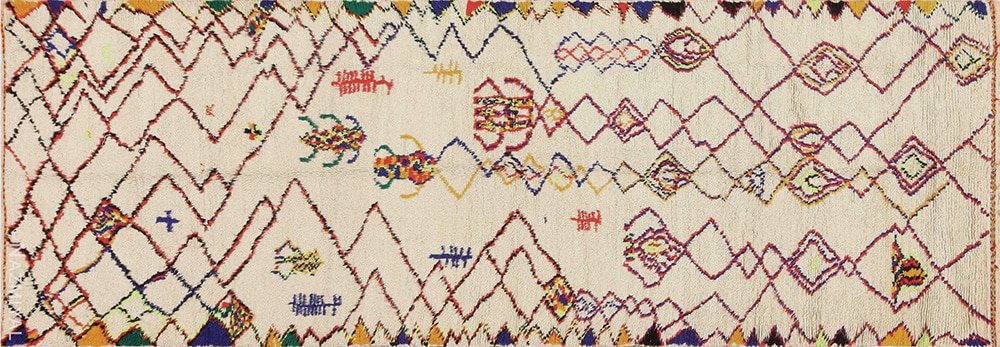
Azilal rugs are associated with the Azilal region in the Atlas Mountains of Morocco. Their designs are often bold, colorful, abstract and asymmetrical, with patterning that reflects the individual hand of the weaver rather than a strictly formal workshop design.
What Are the Characteristics of Moroccan Azilal Rugs?
Moroccan Azilal rugs, also known as Azilal carpets or Azilal Berber rugs, are traditional Moroccan rugs from the Azilal region in the Atlas Mountains. These rugs are valued for their expressive designs, vivid colors and handmade character. Here are some key characteristics of Moroccan Azilal rugs:
- Abstract and geometric designs: Azilal rugs are known for abstract and geometric patterns. These designs often feature irregular shapes, diamonds, zigzags and other geometric motifs. These rug symbols and motifs can be bold and asymmetrical, giving many Azilal rugs a distinctive artistic quality.
- Vibrant color palette: Unlike the neutral tones commonly associated with Beni Ourain rugs, Azilal rugs often incorporate a wider range of vibrant and contrasting colors, including reds, oranges, blues, purples and greens. The result is a lively Moroccan rug style with strong decorative presence.
- Handmade and artisanal construction: Azilal rugs are handmade using traditional weaving techniques. Their irregularities, color shifts and design variations are part of their handmade character.
- Wool and natural materials: Natural rug materials such as wool and cotton are often used in their construction, resulting in a tactile surface and comfortable underfoot feel.
- Medium pile: Azilal rugs often have a medium pile height, giving them softness while still allowing the pattern and colorwork to remain visible.
- Cultural significance: Azilal rugs hold cultural significance in Berber communities. The designs may incorporate symbols and motifs connected to daily life, landscape, protection, family or personal expression.
- Interior versatility: Azilal rugs can complement bohemian, eclectic, modern and contemporary interiors, especially where color, texture and handmade character are important to the room.
- Collectible character: Because Azilal rugs are handmade and highly expressive, collectors often value them for their individuality, visual spontaneity and connection to Moroccan weaving traditions.
When considering a Moroccan Azilal rug, look closely at the condition, wool quality, color palette, scale of pattern and how the rug’s texture will function in the room.
Vintage Moroccan Beni Ourain Rugs
Beni Ourain rugs are among the most widely recognized types of Moroccan rugs. They are associated with the Beni Ourain people of the Atlas Mountains and are known for minimalist geometric designs in neutral colors, usually black or brown patterning on a cream or ivory ground. These vintage shag rugs are often made from sheep’s wool and are valued for their soft, plush texture.
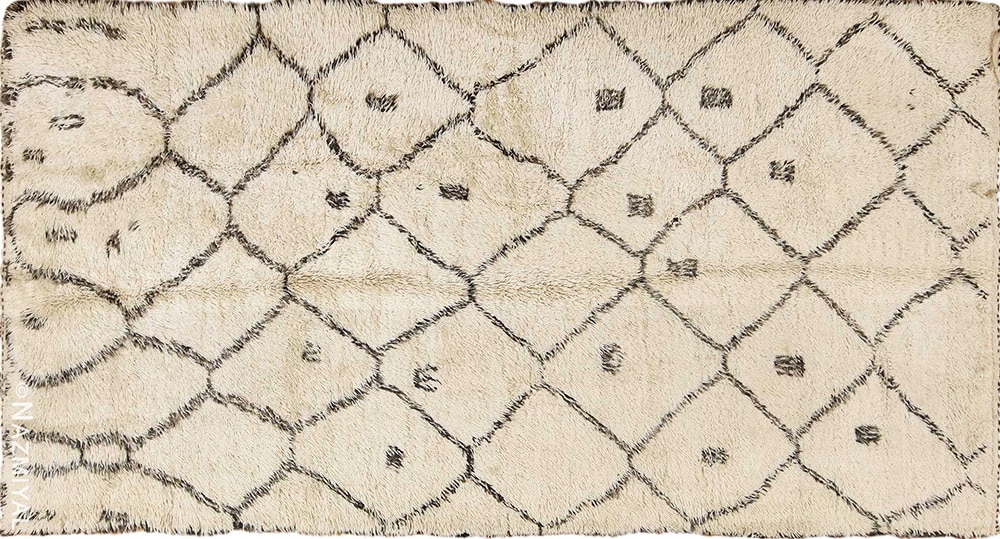
Beni Ourain rugs are traditionally made with sheep’s wool and are best known for cream or ivory fields with large lozenges, diamonds or other Berber-inspired geometric forms. Their restrained palette and graphic simplicity helped make them especially influential in modernist and contemporary interiors, where the contrast between plush wool texture and spare geometric design can feel both warm and architectural.
What Are the Characteristics of Beni Ourain Rugs?
Beni Ourain rugs are Moroccan rugs known for their minimalist appearance, plush wool pile and enduring decorative flexibility. Their appeal comes from the balance between tribal weaving character and clean modern design. Here are the key characteristics of Beni Ourain rugs:
- Minimalist geometric designs: Beni Ourain rugs typically feature simple abstract patterns, including lines, diamonds, lozenges and other geometric shapes. These designs are usually rendered in dark brown or black against a cream, ivory or white background.
- Neutral color palette: The most traditional Beni Ourain rugs use a restrained neutral palette, with shades of white, cream, ivory, brown and black. This gives them a versatile look that can work in many interior styles.
- Wool construction: Beni Ourain rugs are commonly made from sheep’s wool, which contributes to their warmth, softness and tactile depth.
- Plush texture: These Moroccan shag pile rugs are known for their thick, cozy surface. The pile can make them especially effective in bedrooms, sitting rooms and spaces where softness is part of the design goal.
- Tribal significance: Beni Ourain rugs are more than decorative floor coverings. Their motifs can carry cultural, regional and personal meaning within Berber weaving traditions.
- Individuality: Handmade Beni Ourain rugs often show small variations in drawing, proportion and pattern spacing. These details are part of the charm of authentic handmade work.
- Versatility: Beni Ourain rugs complement bohemian, Scandinavian, modern, minimalist and transitional interiors. Depending on size, condition and structure, some examples may also be displayed as textile art.
- Timeless appeal: Their understated color palette and geometric simplicity give Beni Ourain rugs a classic quality that is less dependent on short-lived decorating trends.
- Handmade craftsmanship: These handmade rugs are woven using traditional techniques, and their texture, design rhythm and finishing details should be evaluated carefully when choosing a piece.
When considering a Beni Ourain rug, pay attention to wool quality, pile height, age, condition, pattern scale and whether the rug’s neutral palette will support or soften the surrounding furniture.
Vintage Moroccan Boucherouite Rugs
Boucherouite Moroccan rugs are made from recycled textiles and mixed materials. These handmade Moroccan rugs are known for bright color, improvisational patterning and a lively surface that differs from more restrained wool pile rugs.
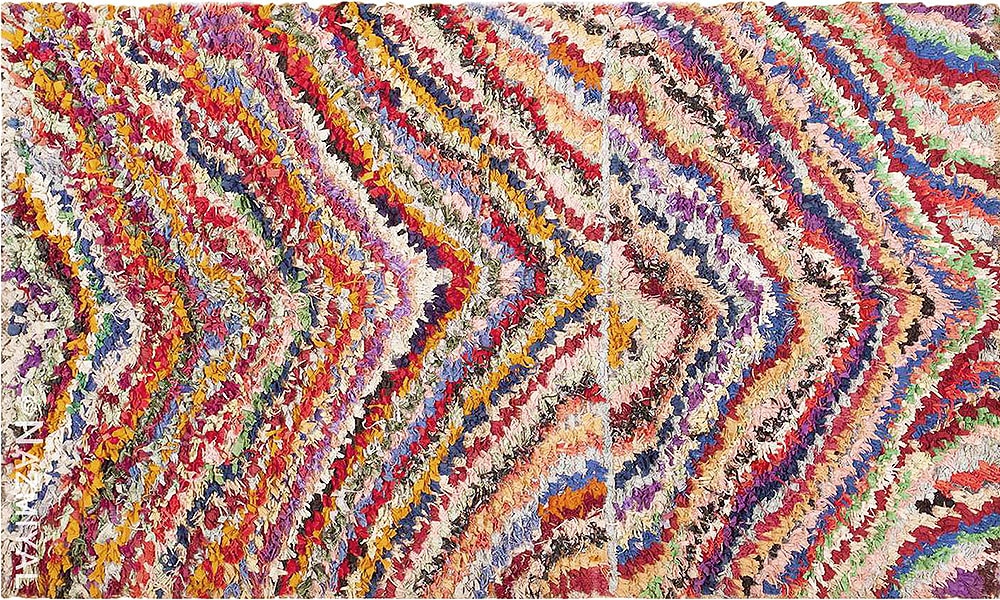
Boucherouite rugs, also known as rag rugs, are made from recycled materials such as old clothing, fabric scraps, synthetic fibers and other available textiles. They are known for vibrant colors, eclectic patterns and playful design language. Boucherouite rugs represent a resourceful and creative approach to Moroccan rug-making.
What Are the Characteristics of Moroccan Boucherouite Rugs?
Boucherouite rugs, also spelled Boucharouette or Boucherwit, are Moroccan rugs that differ from wool-focused Berber styles such as Beni Ourain and Azilal rugs. They are known for saturated color, mixed-material construction and expressive, often improvised designs. Here are some key characteristics and features of Boucherouite rugs:
- Recycled materials: One defining feature of Boucherouite rugs is their use of recycled materials. These may include old clothing, fabric scraps, nylon, plastic and discarded textiles. This resourceful construction gives the rugs their distinctive texture and color variation.
- Colorful and playful surfaces: Boucherouite rugs often feature bold color combinations, including pinks, oranges, blues, yellows and other bright tones. Their colorwork is usually more free-spirited than formal.
- Eclectic designs: The patterns on Boucherouite rugs can vary greatly from one piece to another. They may include geometric shapes, abstract rug motifs and asymmetrical arrangements.
- Texture and thickness: The mixture of materials can produce a textured surface with a medium to thick feel. Because materials vary, each rug should be assessed individually for softness, durability and intended placement.
- Decorative versatility: Boucherouite rugs can be used as floor coverings in appropriate spaces or displayed as decorative wall textiles where color and handmade character are central to the design.
- Cultural context: Boucherouite rugs have roots in Moroccan Berber weaving culture and developed partly from the practical reuse of available materials. Over time, they became a distinct and highly expressive form of Moroccan textile art.
- Artistic expression: Their improvised designs often reflect the weaver’s creativity, available materials and sense of color. This gives Boucherouite rugs a vivid, informal and highly personal character.
Boucherouite rugs are especially useful in interiors that call for color, texture and a less formal Moroccan rug style. Collectors and designers often appreciate them for their expressive surface and resourceful construction.
Vintage Moroccan Kilim Rugs
Although flatwoven kilims are often associated with Turkish, Persian, Romanian and other weaving traditions, Morocco also has its own kilim and flatweave rugs. These vintage Moroccan rugs are flat woven, so they appear thinner and less plush than pile rugs. Because they have no pile, Moroccan kilims can offer a lighter profile and a crisp graphic surface, but placement should still depend on age, condition, fiber, construction and exposure to moisture or direct sunlight. Moroccan kilims, with their strong designs and colors, can complement interiors ranging from Moroccan and bohemian to modern and California-inspired spaces.
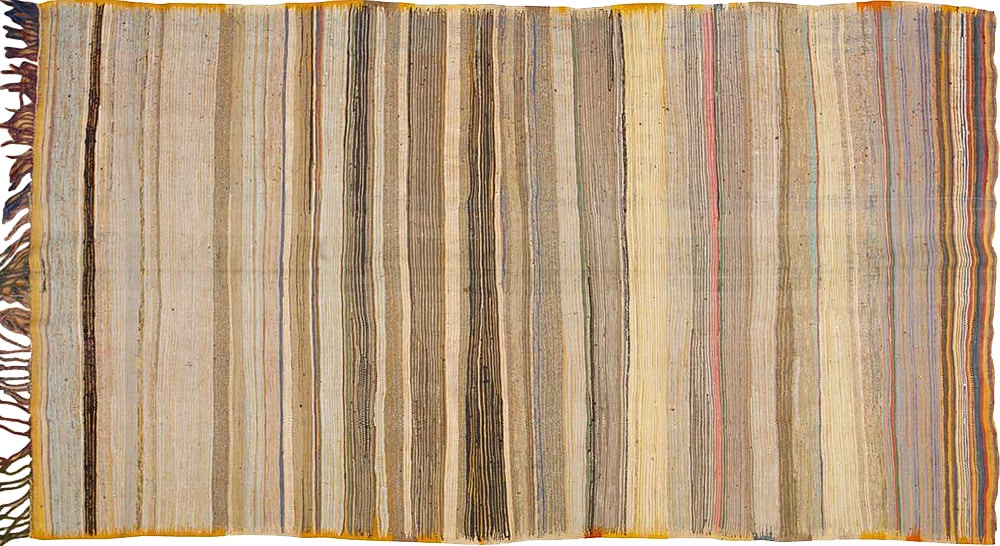
Moroccan kilim rugs are part of the broader family of flatwoven textiles with rug origins across North Africa, the Middle East and Central Asia. Within Morocco, kilims stand apart from plush pile rugs because of their flat surface, lighter structure and graphic designs. Here are some key characteristics of Moroccan kilim rugs:
- Flat-woven construction: Kilim rugs, including Moroccan kilims, are made using a flat-weave technique. Unlike hand-knotted pile rugs like Beni Ourain rugs, which have a thick surface, kilims have a flatter, more flexible structure.
- Geometric patterns: Moroccan kilim rugs often feature geometric patterns as their primary design element. These patterns can include diamonds, triangles, hexagons, bands and other angular forms.
- Color palette: The color palette of Moroccan kilims can be broad. While some Moroccan rugs use neutral or earthy tones, kilims may include reds, blues, greens, yellows and other saturated colors depending on region, age and weaving tradition.
- No pile: Kilim rugs do not have a raised pile like traditional pile rugs. Many are reversible or show a closely related structure on both sides, which contributes to their practical flexibility.
- Durability considerations: Kilim rugs are often valued for their flat-woven construction, but durability should be judged piece by piece. Age, fiber, condition, prior restoration and the amount of foot traffic all matter when choosing where to place a vintage or antique kilim.
- Cultural significance: Like other Moroccan rugs, flat woven kilim rugs have cultural significance in the region and may be used as floor coverings, wall hangings, seating mats or decorative textiles.
- Symbolism: Some kilim patterns may contain cultural or symbolic elements, such as protective motifs, tribal symbols or references to natural forms. These design symbols can vary depending on the tribe or region where the rug was woven.
- Versatility: Moroccan kilim rugs can complement bohemian, eclectic, urban modern and minimalist interiors. Depending on condition and scale, they may be used as floor coverings, wall hanging decorations or tapestries, or as decorative textile accents.
When considering a Moroccan kilim rug, look closely at the flat-weave construction, fiber quality, condition, color palette and geometric rug designs. A carefully chosen kilim can add color, structure and historic textile character without the depth of a plush pile rug.
Other Moroccan Rug Types and Regional Styles
Vintage Moroccan Rabat Rugs (R’Bati)
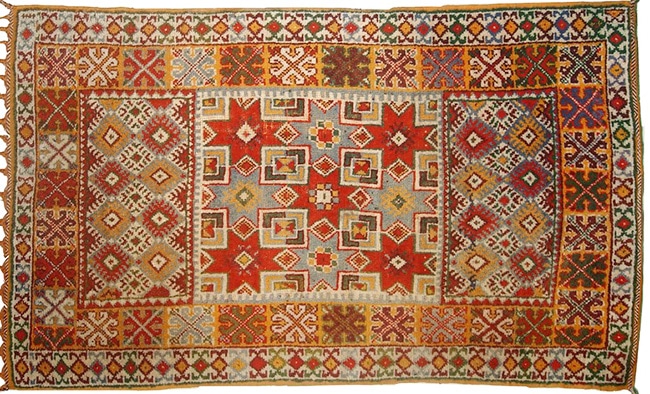
Rabat rugs, also called R’Bati rugs, are associated with Rabat, the capital of Morocco. They often feature bright reds and blues, with occasional greens or purples, and may include a central diamond or multi-diamond medallion framed by border designs.
Vintage Taznakht Rugs from Morocco
Taznakht rugs are associated with the Taznakht region in southern Morocco. They are known for intricate geometric patterns and often feature rich earthy colors such as red, orange and brown. Taznakht rugs are valued for their structure, decorative strength and connection to southern Moroccan weaving traditions.
Vintage Moroccan Ourika Valley Rugs
Ourika Valley rugs are associated with the Ourika Valley in the Atlas Mountains. They often feature bold abstract designs and vibrant colors. Some examples are smaller in scale, making them useful as decorative accents or collectible Moroccan textiles.
Northern Morocco Zemmour Rugs
Zemmour rugs are associated with the Zemmour tribe in northern Morocco. They are known for intricate diamond and lozenge-shaped patterns, often in red, blue and black on a lighter ground. Many examples are densely patterned and highly detailed.
Moroccan Middle Atlas Rugs
Middle Atlas rugs are crafted by Berber weavers in the Middle Atlas region of Morocco. They are characterized by geometric motifs, including diamonds, triangles and squares, often in earthy tones. These rugs are typically thick, warm and visually grounded.
Choosing Antique and Vintage Moroccan Rugs
The right Moroccan rug depends on texture, color, age, condition, size, fiber, pile height and design language. Plush Beni Ourain rugs may work best where softness and neutral geometry are important. Azilal rugs can bring more color and expressive drawing. Boucherouite rugs offer recycled-material creativity and a more informal surface, while Moroccan kilims provide a flatter, more graphic textile option. For antique and vintage Moroccan rugs, condition matters as much as style. Before choosing a rug, consider where it will be placed, how much foot traffic the room receives, whether the piece has old repairs or restoration, and whether the scale of the pattern supports the furniture layout. If you need a specific size, palette or Moroccan-inspired design, you can also explore our custom rug service.