A Practical Guide to Rug Symbols, Motifs, and What They Mean
If you’ve ever looked at a rug and wondered “What does that symbol mean?”—you’re asking the right question. In many weaving traditions, motifs aren’t just decoration; they’re identity, belief, status, and sometimes a weaver’s personal story—encoded in pattern.
Click the motifs on the grid below to learn about their meanings and histories:
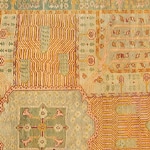
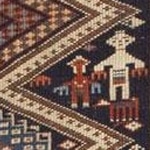
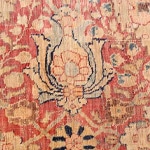
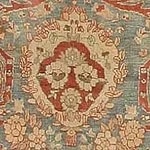
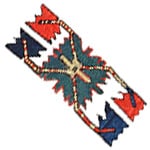
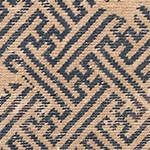
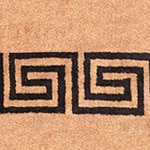
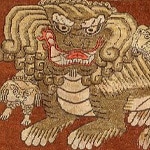
[/grid]
Rug motifs and symbols are the “visual language” woven into carpets—protective signs, botanical emblems, sacred geometry, calligraphy, animals, and narrative scenes that can reveal origin, tradition, and intent.
Use this page as the hub: pick a motif below, read the meaning, then explore real examples in the collection. Start at Nazmiyal and browse our Antique Rugs, Vintage Rugs, and Modern Rugs. For geography-first browsing, use Rug Origins. When the conversation turns specifically Persian, go deeper with Persian Rugs.
QUICK NAVIGATION
- Key Takeaways
- At-a-Glance Specs
- Popular Searches
- Motif Families
- Featured Motifs (Start Here)
- Click a Motif to Learn the Meaning
- Closest Cousins
- Related Guides
- Glossary Strip
- FAQ
- Nazmiyal White-Glove Service
- Nazmiyal Collection Link Map
Key Takeaways
- Meanings aren’t universal. The same shape can shift meaning across Persia, Anatolia, the Caucasus, Central Asia, and North Africa.
- Motifs often fall into families: protective, botanical, calligraphic, animal, geometric, and narrative.
- For decorating: busy room = calmer repeats, statement room = strong central grammar (medallions, bold symbols).
At-a-Glance Specs
- Best use: choose a motif → read meaning → click through for examples + deeper context
- Most common symbol families: protection • fertility/abundance • eternity • power/royalty • faith/law • tribal identity
- Fast visual tells: border script (Kufic) • repeating emblems (Guls) • boteh/herati repeats • “eye” protection marks
Popular Searches
Rug Patterns & Carpet Designs | Rug Glossary (A–Z) | Rug Making & Weaving | Rug Questions & Answers
Motif Families
Protective Symbols: Evil Eye • Lion with Sword • Tiger • Eight-Pointed Star • Swastika (historic symbol)
Botanical & Garden: Boteh • Cypress • Garden • Pomegranate • Vase • Golfarang
Calligraphy & Borders: Kufic • Greek Key
Animals & Myth: Chinese Dragons • Foo Dogs • Camels • Animal Pelts
Identity & Narrative: Gols (tribal emblems) • Geometric People • Hunting Scenes • Coats of Arms • Judaic Motifs
Cosmic / Balance: Sun Symbol • Yin-Yang • Cloud Band
Featured Motifs (Start Here)
If you only learn 6 motifs, start with these:
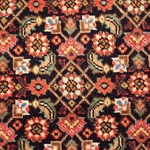
- Herati / Mahi / Fish (a foundational repeating system)
- Boteh (paisley — one of the most widespread motifs)
- Gul / Gol (tribal emblems + medallion language)
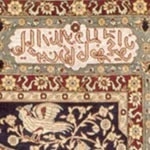
- Kufic (border “script” architecture)
- Cypress Tree (eternity / tree-of-life language)
- Evil Eye (protection symbolism)
Click a Motif to Learn the Meaning
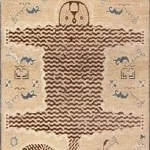
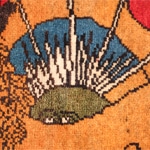
- Animal Pelts — power, protection, status
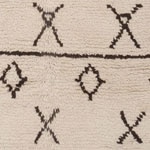
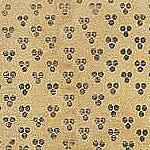
- Berber Tattoos — Amazigh symbols: fertility, protection, lineage
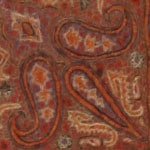
- Boteh Plants — paisley language: life-force, renewal, ornament
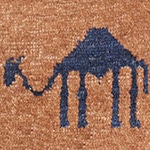
- Camels — blessings, travel, trade, livelihood
- Chintamani — wish-fulfilling gem motif; power/royalty
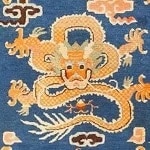
- Chinese Dragons — benevolent power; rain/water; imperial symbolism
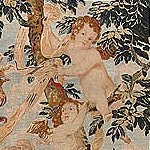
- Cupids — European allegory of love and leisure
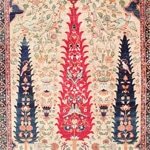
- Cypress Trees — eternity / the tree of life
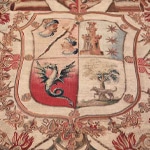
- Coats of Arms — heraldry; patronage; prestige identity
- Eight Pointed Stars — cosmic order; protection; geometry
- Evil Eye — protection against harm and envy
- Garden Designs — paradise gardens; abundance; order
- Geometric People — tribe, story, identity, protection
- Gols — emblem language; tribal “signatures”
- Golfarang — “foreign flower”; Persian floral taste and exchange
- Herati / Mahi / Fish — repeating rosette/fish-leaf system
- Hunting Scenes — narrative carpets; courtly power and life
- Islimi — scrolling arabesque/foliate language
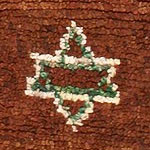
- Judaic Motifs — cultural identity, blessings, heritage
- Kufic — geometric calligraphic border language
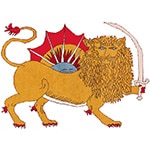
- Lion With Sword — strength, sovereignty, protection
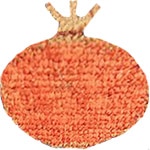
- Pomegranate Design — abundance, fertility, prosperity
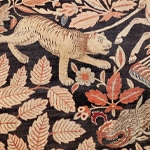
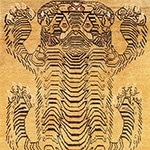
- Tiger Symbol — power/protection symbolism across regions
- Crab Design — stylized “crab” border/field vocabulary
- Swastika Design — ancient auspicious symbol in many traditions (historic context)
- Greek Key — meander pattern; continuity; architectural border
- Foo Dogs — guardian lions; protection
- Sun Symbol — light, life-force, cosmic order
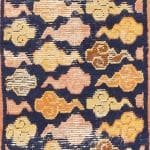
- Cloud Band Design — movement, heaven, auspicious continuity
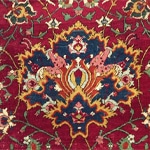
- Shah Abbas Design — classical Persian floral system
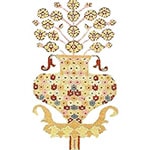
- Vase Design — abundance, growth, cultivated beauty
- Yin Yang Design Symbol — balance of opposites; harmony
Closest Cousins (Comparison Module)
Rug Motifs & Symbols vs Rug Patterns & Carpet Designs
Motifs are the “vocabulary.” Patterns are the “grammar” (how motifs are arranged across the field). Explore:
Rug Patterns & Carpet Designs.
Rug Motifs & Symbols vs Rug Glossary
Use the glossary when you want a fast definition; use this page when you want meaning + context. Explore:
Rug Glossary.
Related Guides
Antique Rugs | Persian Rugs | Moroccan Rugs | Turkish Rugs | Rug Origins
Glossary Strip (Mini)
Abrash • Boteh • Cartouche • Gul/Gol • Herati • Kufic • Medallion
Full A–Z: Rug Glossary
FAQs
Are rug symbol meanings always the same?
No. Meanings change by region, faith, and weaving culture—what’s protective in one tradition may be decorative in another.
What’s the difference between a motif and a pattern?
A motif is a single design element (like a boteh). A pattern is the overall composition (like allover boteh repeats, or a central-medallion layout).
Do motifs affect a rug’s value?
They can—especially when a motif is tied to rarity, provenance, or workshop tradition (and when the drawing is clear and the condition is strong).
What are the most common protective symbols in rugs?
“Eye” motifs, guardian animals, certain stars, and emblem repeats are among the most common protective categories across multiple weaving cultures.
How do I use motifs to decorate a room?
If the room is visually busy, choose calm repeats (allover Herati, small-scale repeats). If you want the rug to lead, choose bold symbols, medallions, or high-contrast emblem systems.
Nazmiyal White-Glove Service
We make it easy to shop with confidence—whether you’re choosing a single statement piece or curating a full room.
- Authenticity Guarantee
- 3-Day Return Policy
- Worldwide Shipping & International Home Approval
- Designer Trade Program
- White-Glove Delivery
Need help identifying a symbol—or choosing between two rugs? Contact us and we’ll guide you quickly and honestly.
Nazmiyal Collection Map
- Nazmiyal (Home)
- Antique Rugs
- Vintage Rugs
- Modern Rugs
- Rug Origins
- Persian Rugs
- Closest cousin: Rug Patterns & Carpet Designs
- Closest cousin: Rug Glossary (A–Z)
- Lateral: Rug Making & Weaving
- Lateral: Rug Questions & Answers
- Contact