Needlepoint is an ancient art form with a rich history that has recently made a remarkable resurgence. You’ve probably heard of the term “needlepoint” and you’ve almost definitely seen it in action. Whether it was your grandmother’s favorite pass time, or it’s popped up on your TikTok feed, this form of stitchwork has stood the test of time and is still practiced today.
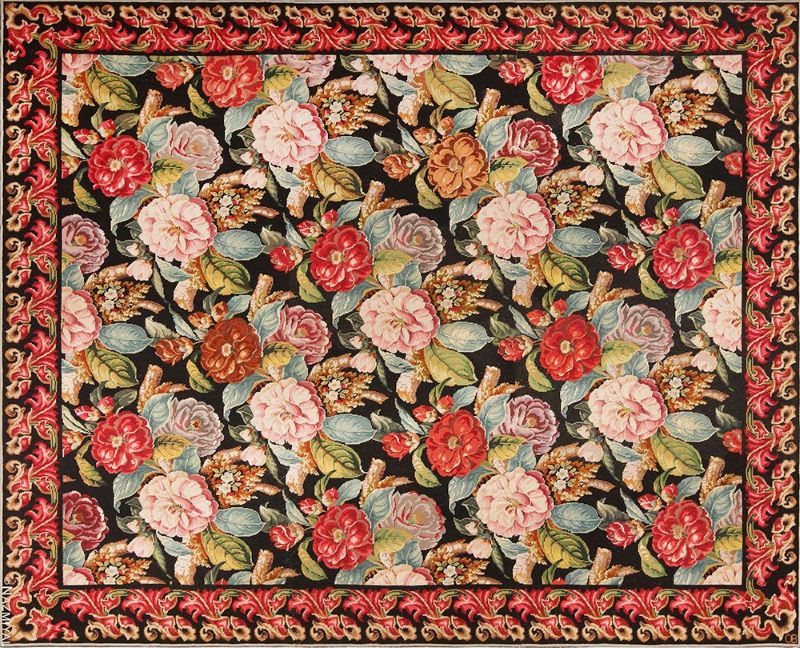
Though it has a very contemporary place in our lives, this stitching technique is ancient. It’s commonly associated with tapestries and embroidery but with time and technical development also became a popular form of rug-making. Its popularity stems from the high level of detail it manages to achieve and its surprising durability. But where did needlepoint first come from? How did this ancient technique evolve? How does it differ from other forms of hand stitching? And what is the reason behind its recent resurgence?
What Makes Needlepointing, Needlepointing?
Before we get into the historical importance of needlepointing, it’s important to understand what it is. Though it’s a form of hand weaving it’s unique in a couple of different ways. Firstly, it requires a tool. Unlike other hand woven textiles where all that’s needed is a loom, thread, and fingers, needlepointing requires a little more. As per its name, weaving via needlepoint requires a needle.
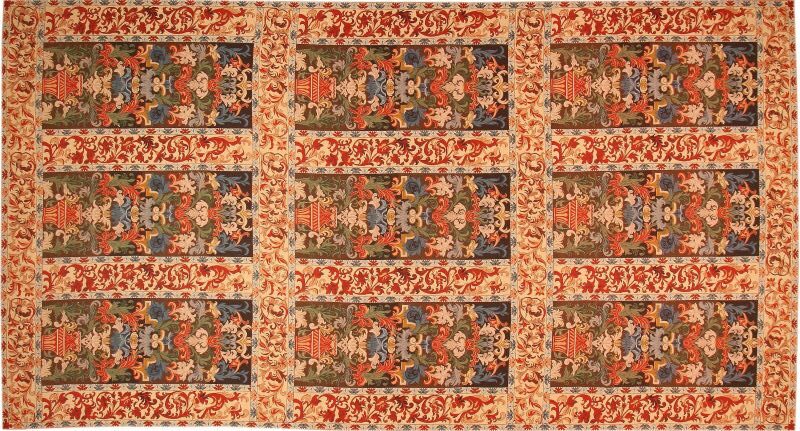
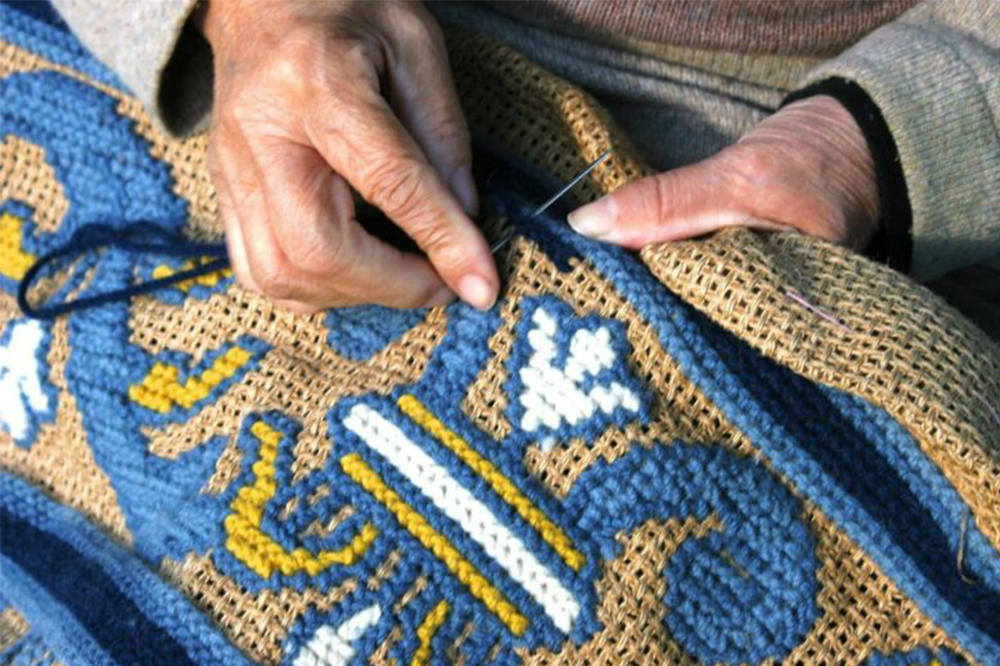
Despite the intricate and complex designs achieved through this form of weaving, it’s a pretty straight forward and simple stitching technique. It starts with a stiff canvas with a tight, even grid as the base. The final design is pre-planned on the canvas first, unless the desired result is an abstract one. Changes in thread color create differences in pattering, rather than a change in weave technique. Typically made with materials like cotton, linen, or, historically, jute, the canvas must be stiff and durable. Yarn is then threaded through the grid of this canvas using a needle to pull the thread through the surface and back into the next grid box, following the planned design.
Because there isn’t any kind of pile, these textiles are historically flat. With time, weavers have been able to develop new techniques, and through the ages we’ve seen variations in the way that needlepointing is executed. To add texture to an otherwise flat piece, weavers use different novelty threads, or thread multiple stitches in one grid-point, creating a raised element.
The Origins of Needlepointing
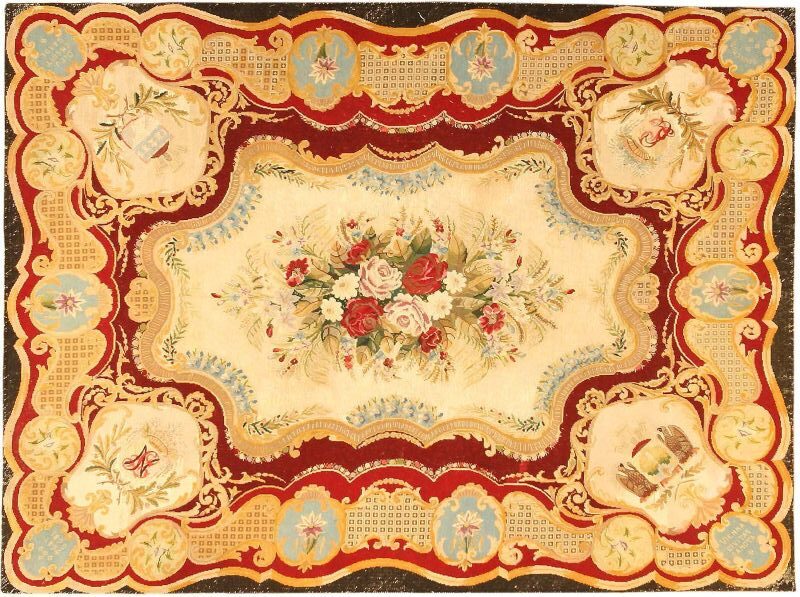
Needlepointing is an ancient tradition. Its origins date back to around 1500 BC found in tent stitches from Ancient Egypt. It was then known as “canvas work” up until the 1800s when the title “needlepointing” became popularized. It was an ideal method of textile construction for its durability as the stiff canvas base was well suited for practical items that suffered their fair amount of “wear and tear” such as shoes, or furniture. Over time the technique evolved from a sensible way to make a durable seam, into an art form. It led directly into tapestry weaving where a branching off occurred with the introduction of the loom. Though it began in Egypt, needlepoint is seen across a wide variety of cultures from all around the world, each with their own unique style.
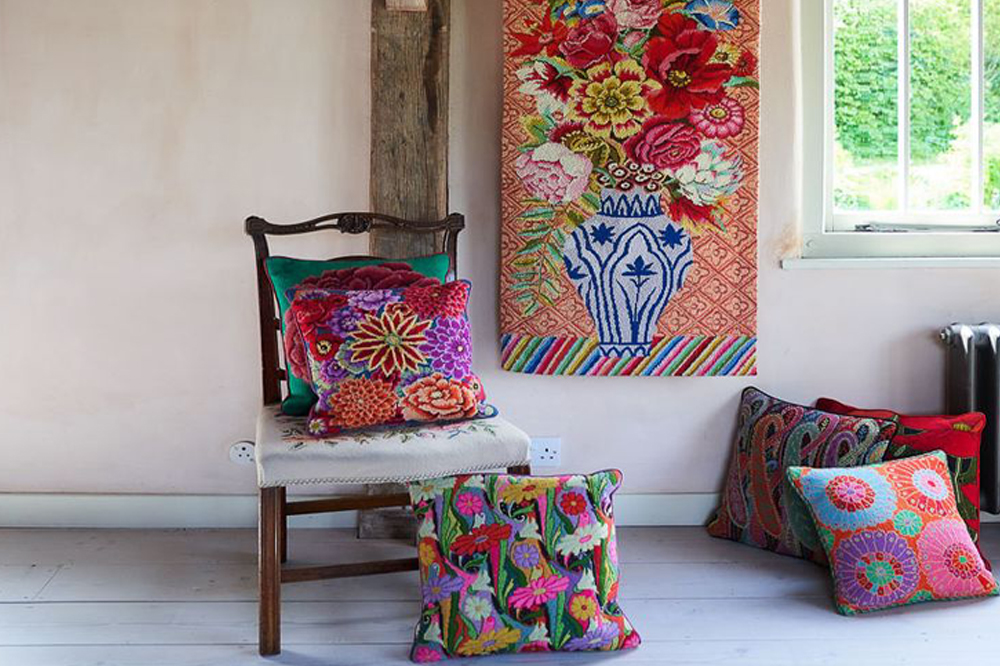
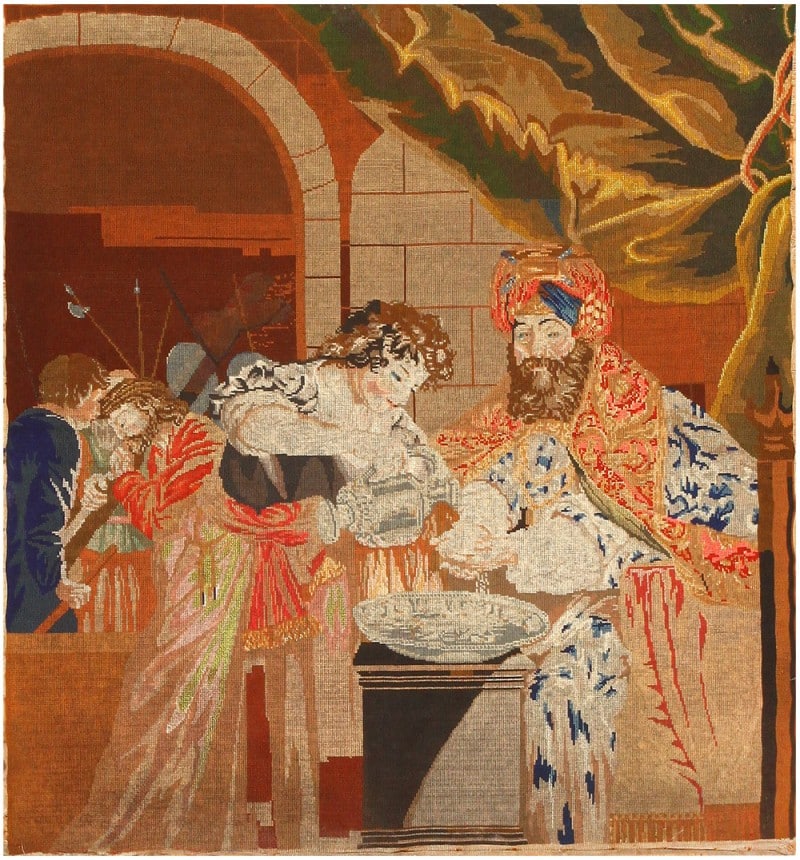
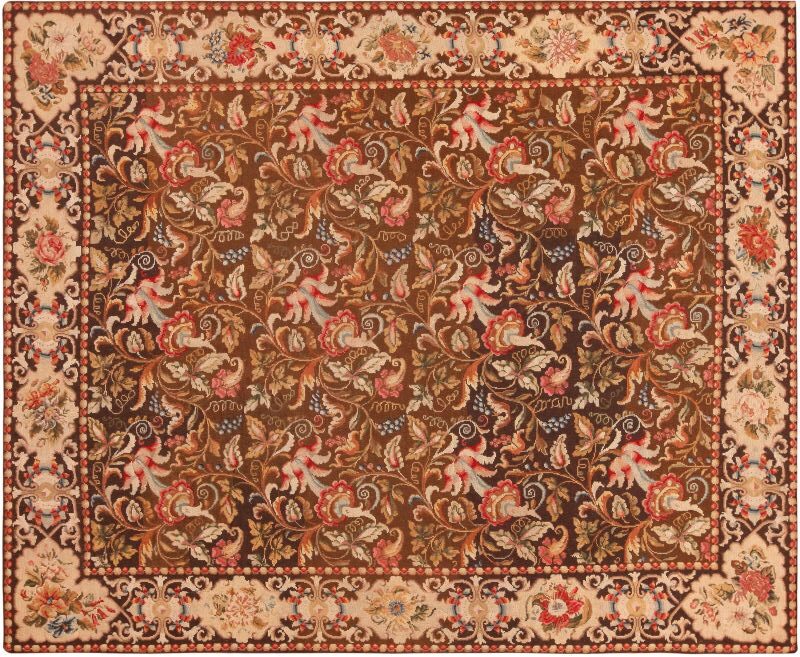
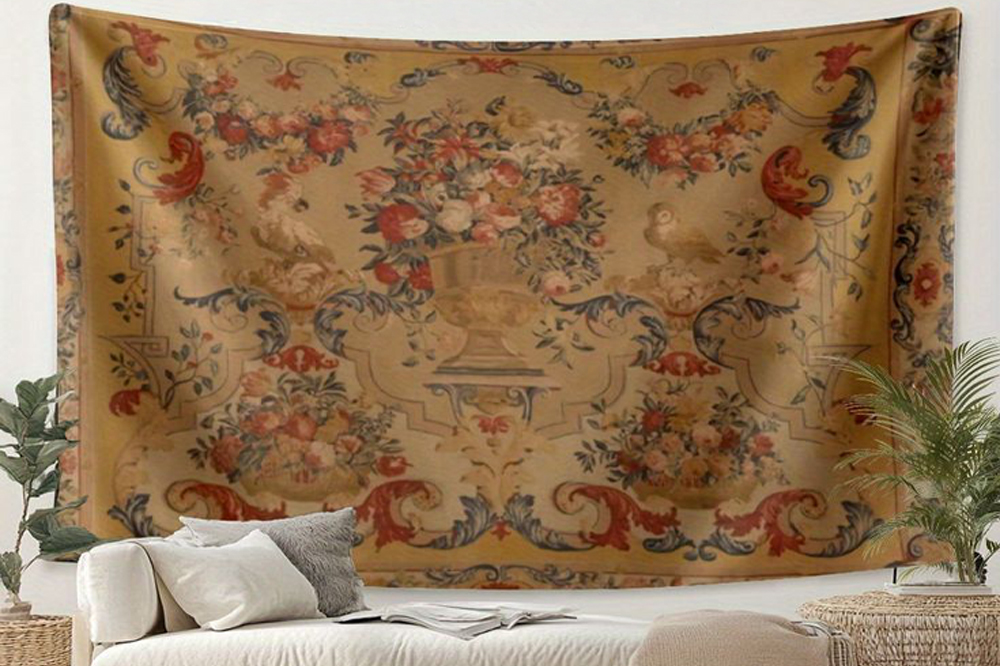
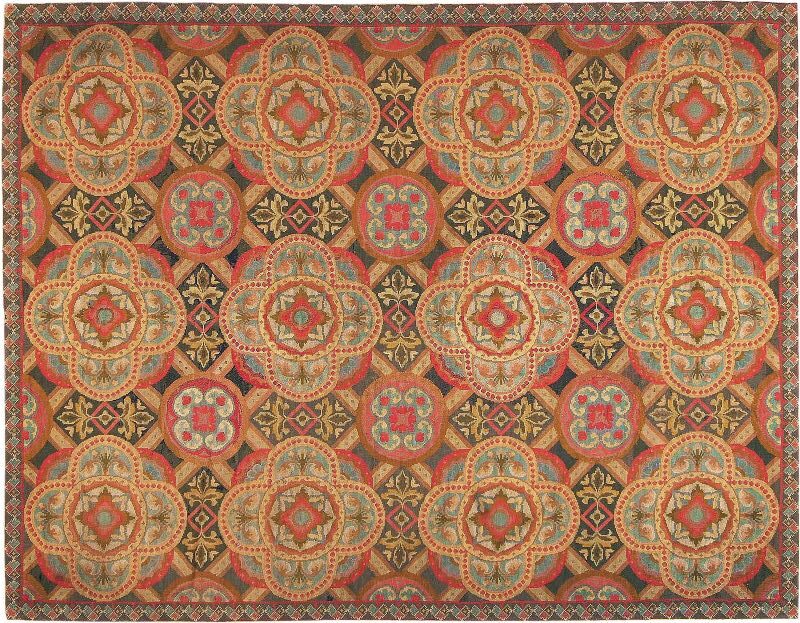
Given the extreme precision needed to properly execute a needlepoint design, weavers specializing in this art form needed a high level of skill. It was a form of stitching that made a great amount of detail and realism possible, and artists took advantage of that. Needlepoints were often made to mimic the painting styles of the time, with still life imagery, contemporary scenes, and landscapes as popular subject matters. They were sometimes meant to instead imitate geometric tiled pieces, as well as popular designs found in Persian carpets.
Needlepoint Evolution
The needlepointing production of rugs specifically, didn’t come around until the late Renaissance, where needlepointing was gaining steam as a way to furnish homes in a decorative fashion. European countries like France and Spain especially favored this type of weaving, and it reflected other facets of design, most commonly architectural and clothing.
Eventually it gained a reputation as a symbol of high social status, along with embroidery, as it was considered a “proper” occupation for ladies. While today, it’s quite simple to purchase a canvas with a predetermined and pre-painted design to follow, needlepointers back then were expected to create the picture on the canvas themselves. Before the mass production of these already patterned canvases, weavers used pattern books and magazines.
One of the most significant periods of needlepointing, however, was that of the Portuguese “needlewomen” of Arraiolos.
The Importance of Arraiolos Needlepoint Carpets
To understand the importance of Arraiolos in needlepointing, you must first understand the historical demographics of the Iberian peninsula. There was a significant population of Moors and Jewish people living in Spain during the 1400s in increasingly turbulent conditions due to religious persecution. With the formation of the Spanish Inquisition, the country was pushing for religious unity by converting its population entirely to Catholicism. It sought to weed out “heretics” or anyone who deviated from Catholic doctrine, with dire consequences to those caught. Under the reign of Queen Isabella in 1492, the Alhambra Decree was created, which ordered the expulsion of anyone who refused converting and sent them off on ships with no clear destinations.
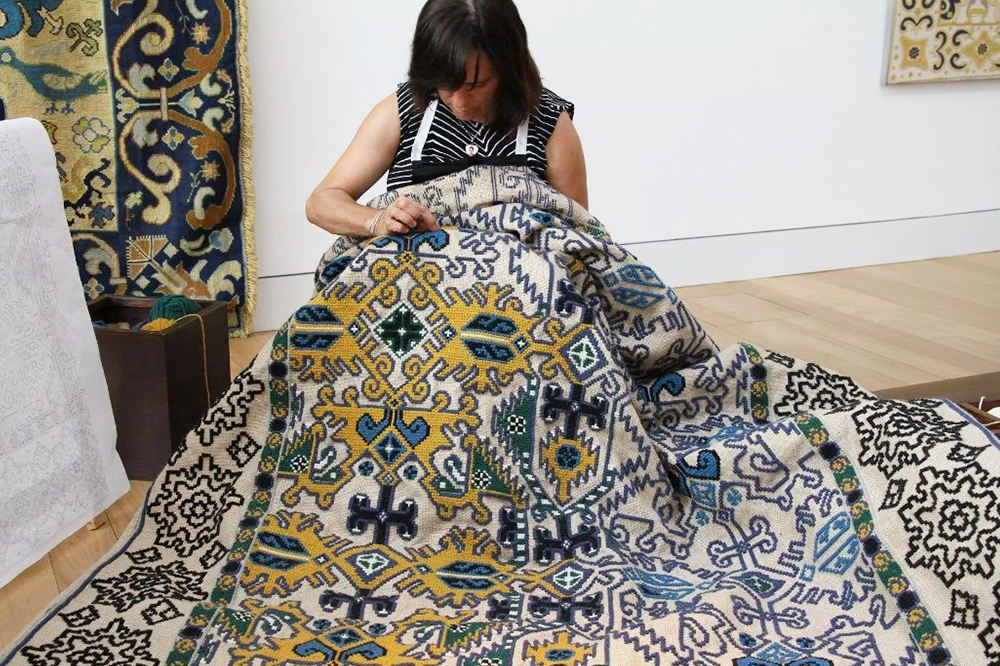
The consequence was a large migration of people who settled in the village of Arraiolos in Portugal. Forced to begin a life completely from scratch and with the little belongings they were able to grab, needlepointing became a reliable source of income for many of these families. They had very little resources to properly establish themselves, but the women were skilled weavers, and brought with them the memory of their Spanish homes. They created needlepoint carpets that echoed the beautiful designs found in Spanish tilework. Designs like those of the azulejo ceramic tiles sold well, providing much needed revenue for immigrant communities. Their stunning patterns quickly became a hot commodity in the European marketplace and became collector’s items and treasured heirlooms.
Keeping Tradition Alive
Today, Arraiolos carpets are highly sought after, not just for their aesthetic appeal, but for their rich history. This craft didn’t simply die out either. Instead, these carpets made their marks and cemented themselves as an important staple in Portuguese history. Women living in the Arraiolos village today still keep the tradition of weaving alive, following in the footsteps of their ancestors. With time, the design of Spanish mosaics that originally inspired the aesthetic of these carpets evolved into something entirely new. They utilize extensive color palettes and change to reflect the times, with other historic styles like those of the Victorian or Art Deco era. Its Spanish influence is not yet lost though.
The Mark of a Lady
Believe it or not, needlepoint holds an important place in women’s history. In fact, most textile art does. There was a turning point in time where working with fabric became a feminine role. Within this, certain kinds of fabric work were held in higher regard than others. This was certainly the case with needlepointing.
Needlework was not always a gendered activity. Both men and women held the title of professional embroiderers for a long period of time. The market for embroidered fabric in the Middle Ages dwindled significantly and caused a steady decline in the amount of professional female workers in the textile field. The Bubonic Plague unfortunately eliminated potential buyers, further pushing these women from their professions. The following emergence of the Renaissance introduced ideas about what art meant and who produced it were brought into question as well as discourse revolving around what separates men from women.
A burgeoning divide among the wealthier class about what constituted an appropriate education for women was brought on, delegating activities such as dance, music, and needlework to the feminine sphere where they fell down the artistic hierarchy from what was once considered a fine art, to merely a craft. This was partly due to the expectation of childcare that women have historically undergone. Tasked with something like clothing and fabrics was perfect for someone who had to keep a watchful eye on children. Attention between childcare and textiles was easy to divide with the repetitive nature of sewing. Interrupting and resuming the activity was easy, making it ideal for carrying out other childcare tasks simultaneously. Furthermore, the materials involved were relatively safe to have around children in ways that heavy labor tools or hunting equipment were not.
Needlepoint and Social Status
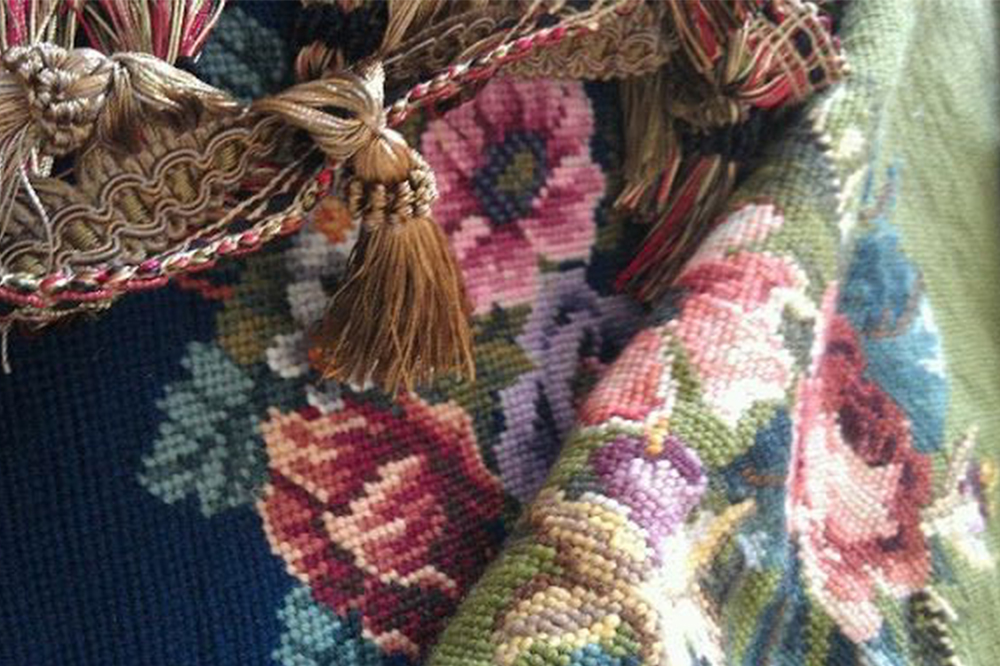
Embroidery as a feminine task went past just simply childcare though. While it was no longer regarded as a refined art, it was still expected to be beautiful, and a talented seamstress was the sign of a wealthy family. A well dressed family with finely decorated clothing was a marker of status. Not only did this mean the women of the community were well educated in the art of needlework, but this also meant that the man of the household could comfortably support his family, giving the women leisure time in which they would work on these textiles rather than having to help work the land or run a business, as was common in poorer families.
These textile works became important symbols of femininity, both as a form of artistic expression, but also as cultural markers. These needleworks reflected contemporary life and were a form of storytelling. Needlework historically documents important events. The didactic nature of this kind of work was rarely given its deserved credit, largely due to the feminine implications. Despite this, women remain important members of our communities, as storytellers, as designers, and as textile artists.
Needlepoint Makes its Comeback
You may have encountered the term “needlepoint” in recent years. An art that was once disregarded as something related to family heirlooms or your grandmother’s favorite activity, has been experiencing a resurgence, especially among younger generations. As many things in the last couple of years, COVID is to blame.
That’s right, the COVID-19 global pandemic of 2020 is largely responsible, as well as social media, and a growing importance being placed on art and traditional crafts. During the late 2010s, social media was a driving force for growing interest in several design niches, such as crochet and knitting. Needlepointing was among them, the younger generation familiar with it as a charming kind of craft that the older members of their family practiced. While knitting and crocheting were always at the forefront of these crafty trends, needlepoint saw a large spike in popularity during the pandemic.
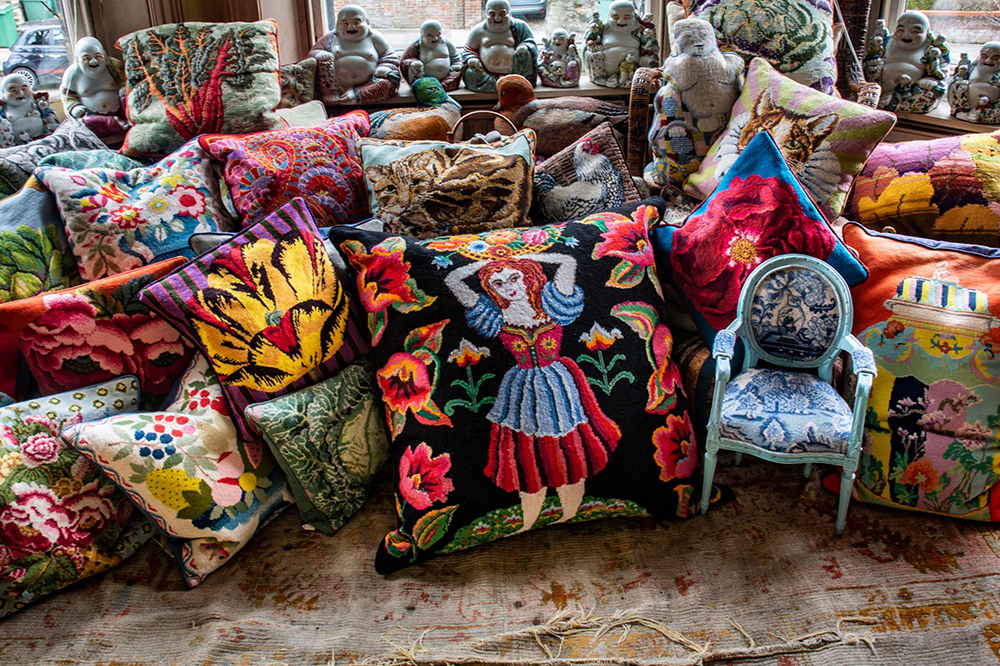
Lockdown inspired many people to take up alternative hobbies. These “pandemic hobbies” were a result of restricted access to the outdoors, growing anxieties around health, and a way to keep busy to avoid goin stir crazy. Things like baking, gardening, and crafting were suddenly trending. The only way to interact with others during this time was limited to the world of the internet. Apps like TikTok saw an influx of new users, all sharing their own interests and creations to millions and inspiring others to also take these activities up as well.
The Modern Attraction to Needlepoint
Users interested in needlepointing could share patterns they designed themselves. This opened up economic opportunities to sell them to those hoping to simply follow a design. Aesthetic appeal of what has been dubbed “grandmacore” on social media by the younger crowd was also a contributing factor. The repetitive action of needlepointing and attention to detail necessary for a successful finished product is a meditative and relaxing experience, one that was in high demand during unprecedented times. The needlework textiles served a purpose beyond the activity as well. They weren’t just beautiful, they were useful. They were pillowcases, coasters, and decorative clothing elements. The economic accessibility of weaving kits for amateur crafters encouraged more to join in. Post-pandemic, needlework has kept its momentum, as many of these young artists found community in their skill, establishing stitch clubs as popular ways to connect with others.
Final Thoughts
Ancient Egypt used needlepoint stitching for its durability in everyday objects like shoes and tents. It has since developed into a legitimate artform of textilework and can achieve highly detailed designs. Needlepoint rugs became popular during the Renaissance in Europe. They reached a significant peak with Jewish immigrant weavers that settled in Arraiolos, Portugal after being exiled from Spain. Needlepointing as a craft evolved into a symbol of status, especially among women in the 19th century. It has recently undergone yet another transformation, making a comeback in the last few years.
- Needlepointing is an ancient and traditional form of art
- It has a particularly rich history in the Portuguese village of Arraiolos
- Needlepointing was an important marker for wealth and femininity
- This craft saw a modern resurgence in popularity with younger generations due to the pandemic and social media
Frequently Asked Questions About the Art of Needlepoint
What kind of textiles are needlepointed?
Needlepointing is a stitching technique that applies to all sorts of textiles. Pillow cases, bed covering, clothing embellishments, tapestries, and carpets can all be created using needlepoint.
What kind of designs are common in needlepoint work?
Needlepoint is a very versatile stitching technique that is used for many different designs. Its small stitching allows for a high level of small and intricate detail, making a lot of pictorial designs popular. Needlepoint can achieve any design, though.
What materials are used in needlepointing?
Historically, jute or linen make up the stiff canvas base. Wool or cotton colored with vegetable dyes make up the detailing thread. Before the use of metal, ancient textile workers used cactus needles or whittled animal bones. Today, needlepoint kits are widely accessible with more synthetic materials.
Where can I find needlepoint rugs?
Trusted rug dealers are the best avenue in finding authentic needlepoint carpets. The Nazmiyal Collection offers an authentic selection of needlepoint work.