Updated February 27, 2026 • Reviewed By Jason Nazmiyal
Definition – Scandinavian interior design is a minimalist design aesthetic that originated in northern Europe. It’s characterized by simplistic forms, a light color palette, and a comfortable atmosphere.
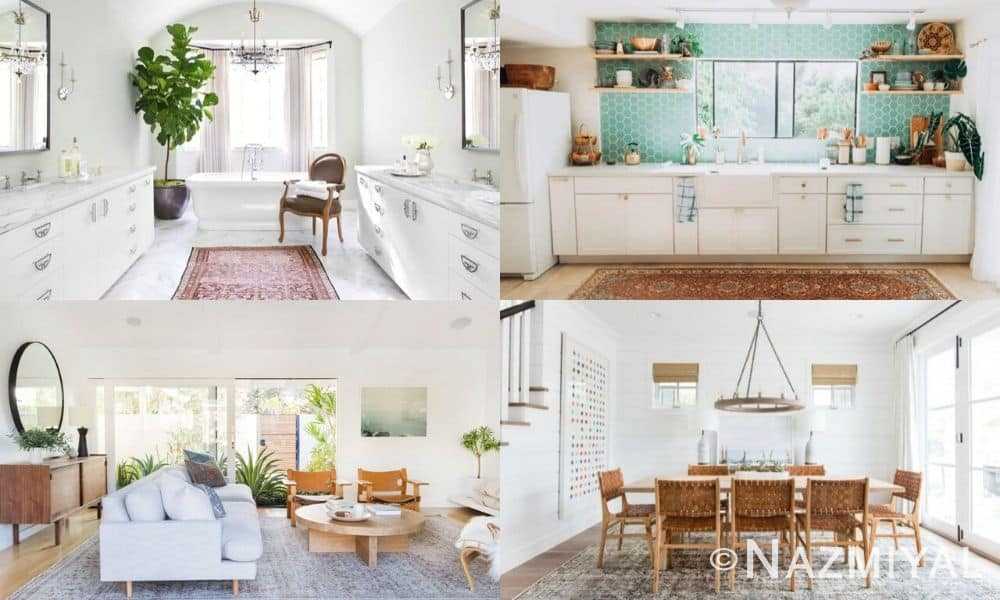
Which rugs look best in Scandi style interiors? Textured antique and vintage rugs with light palettes and clean patterning are the preferred furnishings. The soft coloring of Oushak rugs compliments the space well, as do the geometric patterns and smaller scale of tribal rugs. Kilims make for the perfect layering tool, adding a textured element to the room.
The Scandi Style
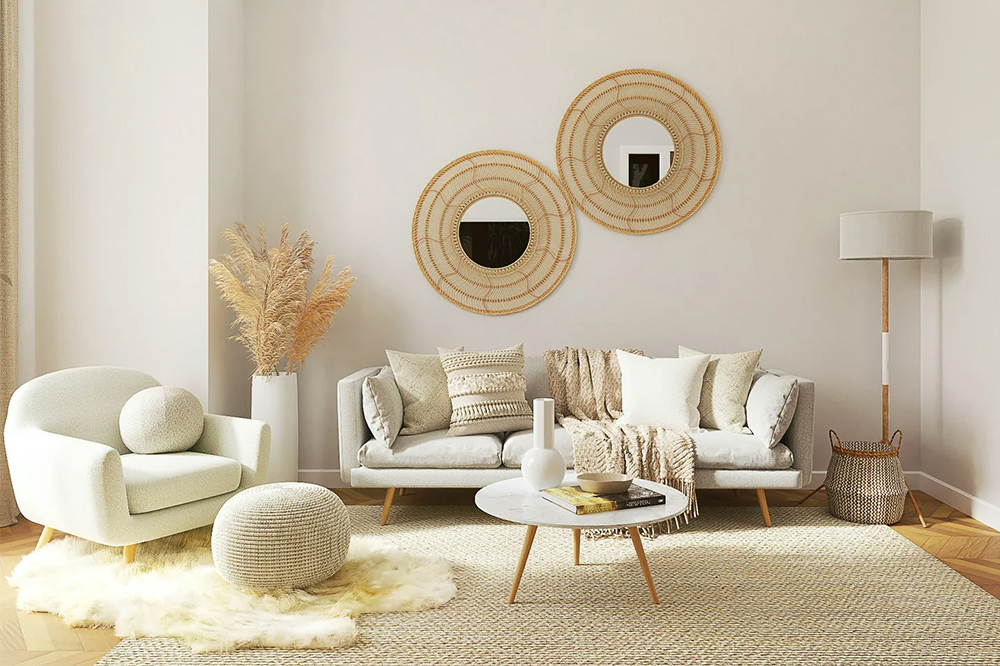
Scandinavian interiors are famous for light, calm rooms with white walls, natural wood, and clean furniture lines. What’s surprising about them, though, is that the best Scandi style interiors are rarely bare. Instead, they’re layered with texture, using a rug to anchor the room. That’s why designers keep pairing Scandinavian spaces with antique and vintage rugs. This is especially true for those with softer palettes and worn-in finishes, adding depth without any visual clutter.
Scandinavian vs Minimalism
Though Scandinavian styles are inherently minimalistic, Minimalism as a design style is different, and the two shouldn’t be conflated. The Minimalist aesthetic relies on strict functionality and clean lines. While this is a similar principle in Nordic-style design, it’s a far more forgiving aesthetic that values warmth and comfort as well.
Scandi Decor – Why it looks the way it does
Scandi Decor is a functional interior design style that came about in the mid-20th century in several countries. Sweden, Denmark, Norway, Iceland, and Finland all saw the rise of what is now an internationally popular aesthetic. It came about as a direct response to the exclusive opulence of styles like Art Nouveau or Art Deco. Both the Great Depression and WWII made a significant impact on the European continent, leaving its people without the means to afford to furnish their homes in the previous luxurious fashions. These unfortunate circumstances gave unique economic opportunities to common people who valued functionality over beauty. Once-luxury products became accessible to people of humble backgrounds and thus, Scandi Decor began its ascent in popularity.
While functionality plays a big role in the ethos of what it means to design a Scandinavian interior, the importance of its natural-world inspiration shouldn’t be overlooked. Large windows and natural lighting are crucial elements. Not only does this highlight key features of the interior, but light source was important during the dark Scandinavian winters. The limited Nordic daytime was also the reason behind the popularity of pale tones and white walls. This palette gives the space a fresh and bright feeling, even when in darkness. Modern Scandi Decor often incorporates plant-life as room accessories as well.
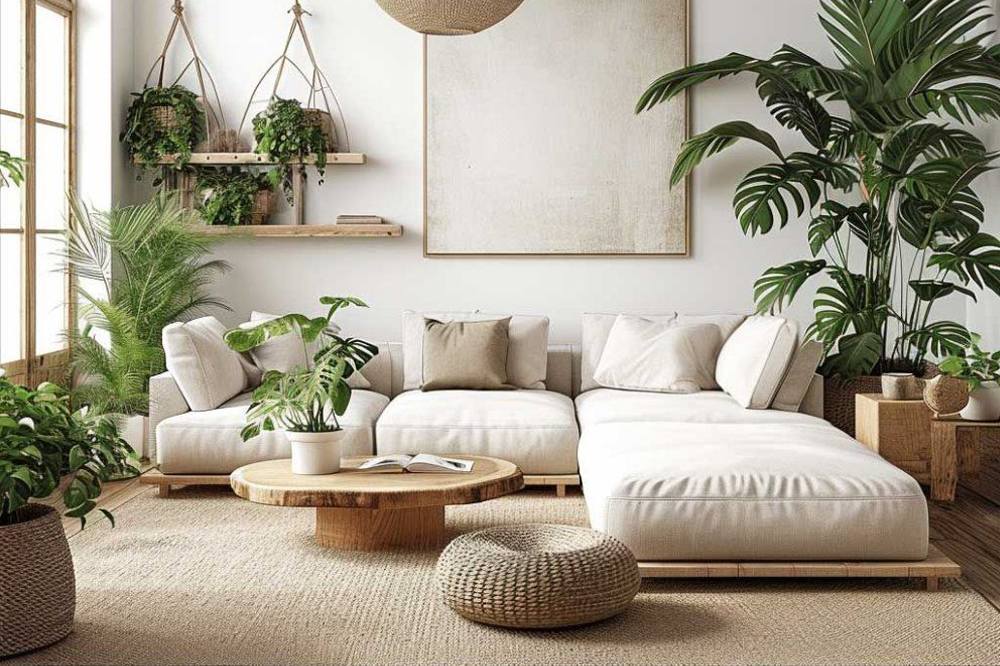
Muted colors and warm textiles allow for form and shape to take center stage. The softer palette creates the perfect environment for a gentle and soothing interior. This aesthetic is most successful when interspersed with bold and bright accent pieces. They add a unique character to the space, supported by the modest and fairly monochromatic base. Nordic-inspired interiors take on a “less is more” approach to avoid overwhelming the eye. Above all else, the Danish philosophy of Hygge is paramount, an aesthetic that seeks to project friendly comfort and coziness.
Minimalism – Similar but not the same
Minimalism is similar to Scandinavian design, but there are key differences. You could argue that actually, Scandinavian interior design was a byproduct of the Minimalist design movement. It originated in Eastern cultures such as Zen Buddhism and Taoism, which embraced simplicity and a “clean” harmony. Perhaps the largest influence for the Minimalist movement was German Bauhaus. Its core principle was “form follows function,” stating that an object’s design should be based on its intended function. The movement was dominated by clean lines, bold colors, and geometric shapes. It began as an architectural ideal, but it quickly permeated into other facets of creativity.
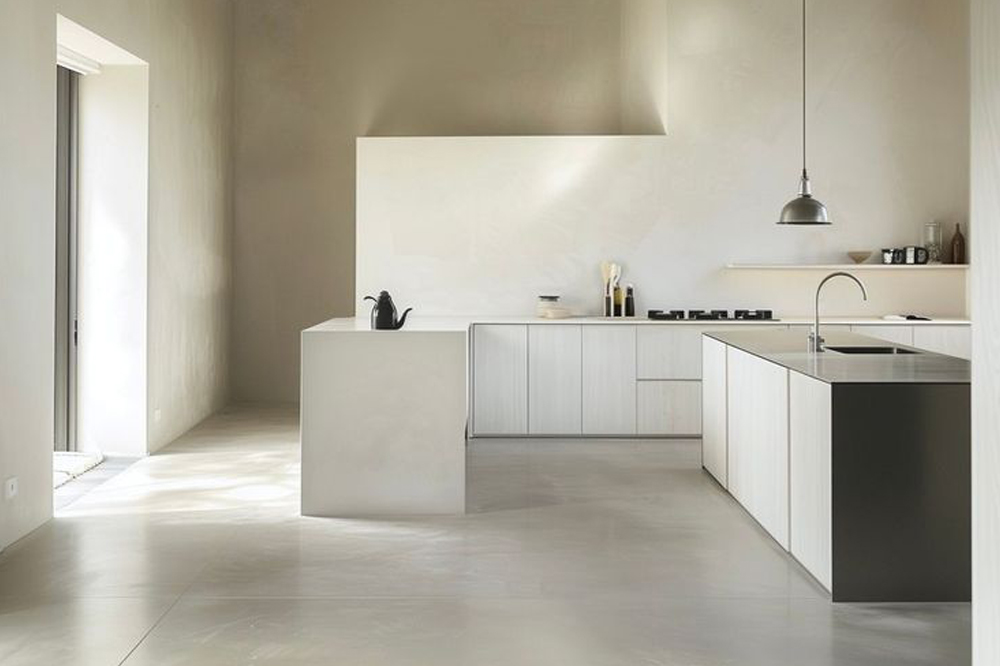
What we know today as the Minimalist movement didn’t come about until the mid-20th century and is still prevalent today. The biggest differences between Minimalism and Scandinavian design is flexibility. Minimalism is far stricter in its principles, made up of fewer objects, sharper editing, and less patterning. Scandinavian, on the other hand, allows warmth and softness, favoring wood, textiles, and cozy corners.
Why Scandinavian Rooms Need a Rug
The most common misconception about Scandinavian style interiors is thinking that minimalism equates to empty. What a minimalist aesthetic actually indicates is out-of-the-box thinking on shape and form, as well as sensory comfort. Think softness underfoot, sound absorption, and warmth. Layered texture is a dominant direction in recent design coverage for good reason. It makes clean rooms feel inviting and lived in.
With so many options, deciding on a rug to accessorize a space can be a daunting task. There are several different types of rugs that suit the minimalist aesthetic. Use the following as a general delineation of the best rug styles for a Scandinavian interior.
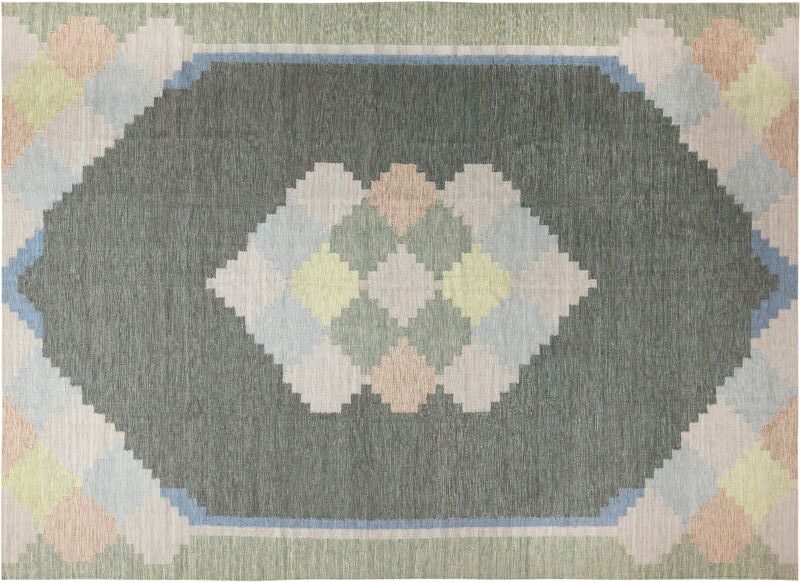
1. The Swedish Flatweave – The Obvious Choice
If you want the most natural fit, a Swedish flatweave is an easy choice. Given its conception came about in conjunction with Scandinavian interior design, their aesthetics pair together beautifully. They follow the same design style in terms of structure, geometry, and restraint. The flatwoven construction lends itself well to the bare-bones aesthetic, as does the often gridded patterning. Either vertical or diagonal, the repetition of squares is a popular compositional technique often paired with experimental color use. Taking on the Scandinavian philosophy of decoration and art, the coloring sticks to neutrals and cool tones emblematic of the natural Nordic world. Greens, blues, and purples, against ivory tones are a popular palette, as are folkloric pictorial scenes.
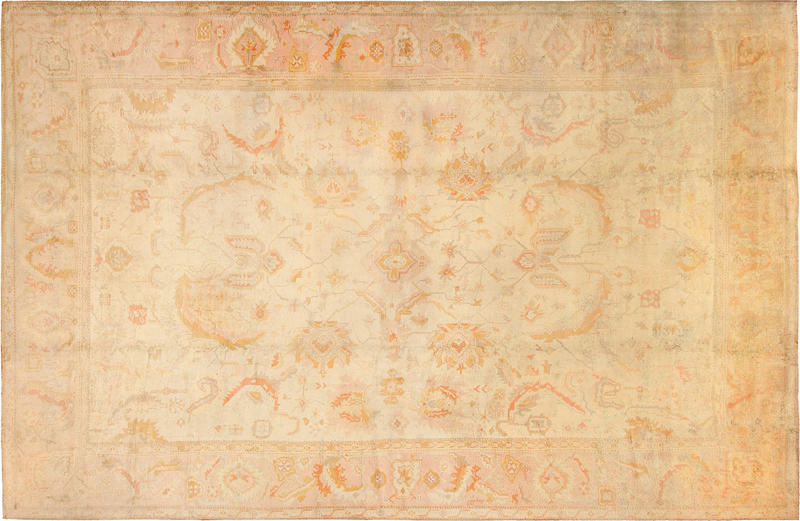
2. Faded Oushaks – The Designer Cheat Code
The beautiful Oushak rugs of old Anatolia make wonderful additions to Scandinavian interiors. Their color palettes err on the softer side, sticking to muted hues of beige, ivory, gold, terracotta red, and pale blue. Oushak field designs tend to feel airy, while still offering a good variety. Both medallion and allover compositions are common in Oushaks, making them highly adaptable rugs. Its geometric motifs speak to the Scandinavian aesthetic as well.
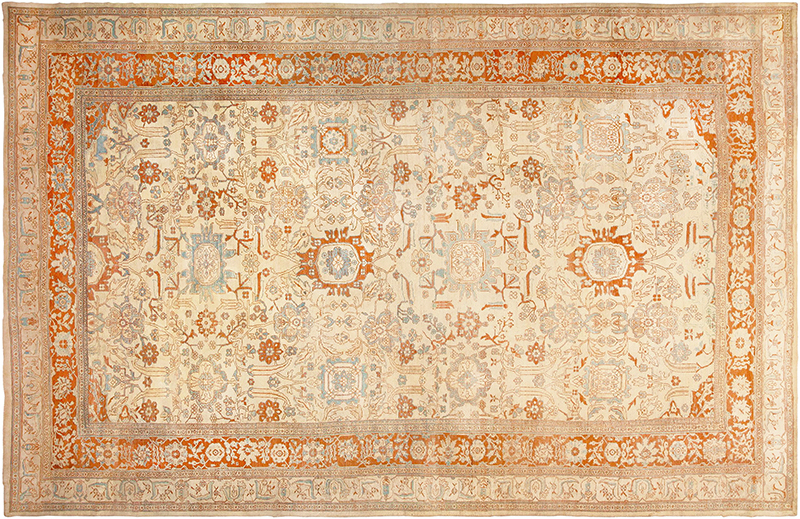
3. Neutral Sultanabads – For Larger Rooms
Sultanabad rugs work particularly well for open layouts, perhaps in living or dining rooms. A pale palette and an allover pattern on a larger-format rug works wonders in otherwise minimalist spaces. It works well to calm the room, as well as make the furniture feel connected and contained. This is an especially beneficial way to make a room meant to host guests feel communal.
4. Minimalist Friendly Tribal Rugs – Exceptions
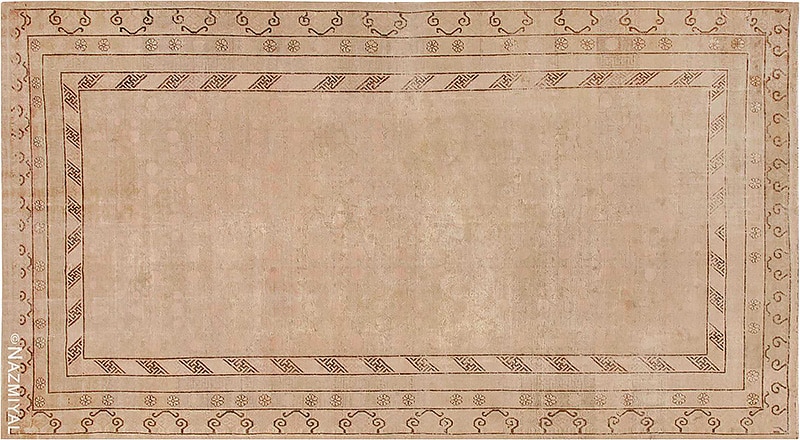
While not as a rule, occasionally a tribal rug makes for the perfect addition to a Scandinavian interior. The trick is finding the right one. Whether or not a tribal piece is right depends on the textile’s color and pattering, as well as the additional furnishing in the room. Small geometric motifs can work if the palette is controlled and the furniture is simple. The smaller sizing of tribal rugs can even work as accent pieces hung on the wall as tapestries instead.
Common Mistakes and How to Fix Them
There’s no hiding mistakes in Scandinavian-inspired interiors the way you can with maximalist aesthetics. Rugs especially are such an essential part of the room that you want to get it right when incorporating them. An ill-fitting rug or poor design choice can make or break a room. Make sure, when furnishing your space, you avoid the following:
- Too Small – Getting the sizing wrong is one of the easiest mistakes to make. Oftentimes, the necessary scale of a rug is underestimated. You never want your rug to look like it’s “floating” in the room, as it can make the interior look unfinished.
- Too High-Contrast – Though Scandinavian interiors leave room for some creative patterns and colors, keep in mind that calm simplicity is the goal. A rug that adds too much contrast to its surroundings can be distracting, interrupting the natural rhythm of the space.
- Too “New” – A rug that is too obviously modern can create an unpleasant starkness in an otherwise serene visual experience. Part of what makes antique and vintage pieces so coveted is their natural texture and quiet dynamism. A rug that seems too new can look quite flat.
Sizing Rules That Make Scandinavian Rooms Feel “Designed”
There are specific interior design rules for how to properly style a rug alongside your other furnishings. It’s dependent on the size of the room and its purpose. Use the following guidelines as a way to properly size a rug for your rooms.
- Living Room – Front legs of all the seating on the rug, or fully on, if possible.
- Bedroom – Rug should extend at least 18-24 inches beyond the bed sides.
- Dining Room – Add 24 inches beyond the table on all sides so the chairs stay on top of the rug.
Final Thoughts
The Scandinavian style is a clean, functional approach to interiors built around light, natural materials, and comfort. Though similar to Minimalism, it’s a far less strict aesthetic that values a warm simplicity. In these interiors, warmth comes from texture, not visual noise. Because of this, Scandinavian interiors pair really well with rugs. Swedish flatweaves, faded Oushaks, neutral Sultanabads, and in some cases, tribal rugs, all make great additions to a Scandinavian space. Avoid interior design mistakes like incorrect sizing and poor choice in pattern designs.
- Scandinavian interior design is different from Minimalism, though they share many similarities.
- Warmth and a relaxed simplicity are the key elements of Scandinavian design.
- There’s an emphasis on texture over patterns, making rugs the perfect room accessory.
- Swedish flatweaves, faded Oushaks, neutral Sultanabads, and tribal rugs all make great additions to Scandinavian rooms.
- Learn to properly size a rug to your space in relation to the rest of the room’s furniture.
Frequently Asked Questions
What rug color is the best for Scandinavian interiors?
Soft neutrals like ivory, sand, or oat, with muted accents work best.
Can you use Persian rugs in the Scandinavian style?
Yes, especially softer palettes and designs with less aggressive contrast. A controlled Persian rug adds comfort without visual clutter.
What’s the best rug texture for Scandinavian rooms?
Wool, because it adds warmth, texture, and durability.
Where can I find the best rug for a Scandinavian interior?
Trusted collectors are a great place to start. The Nazmiyal Collection is home to a variety of Antique Rugs, Vintage Rugs, and Modern Rugs, suited for any style of room.