Updated June 23, 2026 • Reviewed by Jason Nazmiyal
Rugs are primarily used as floor-coverings, as is their foremost intended purpose. But with the right textile, they can completely transform a room when hung on a wall instead.
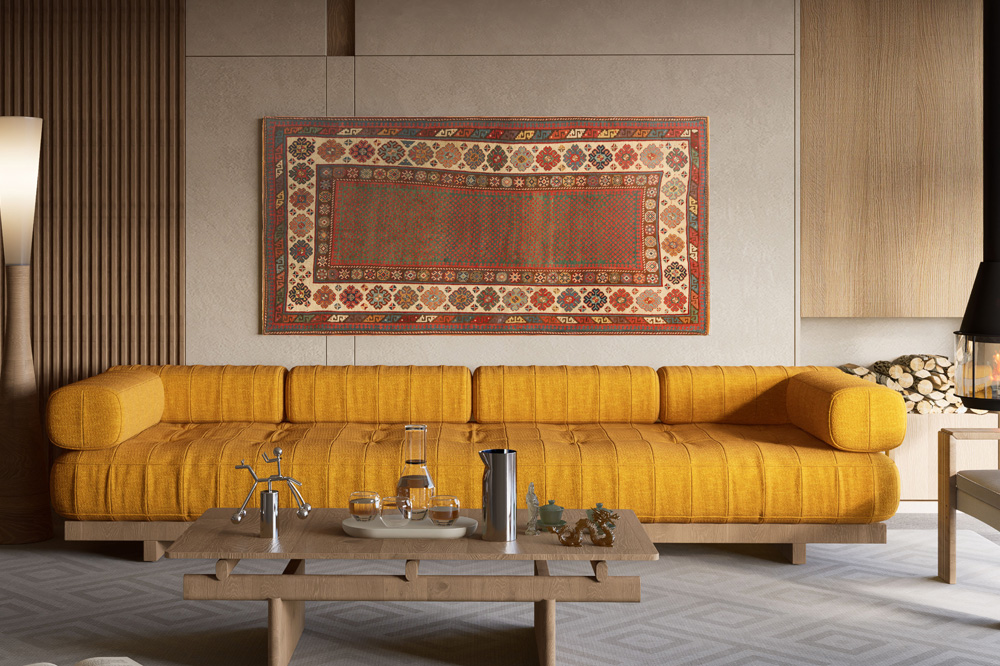
Depending on a rug’s size, weight, pile, and design, they can make great alternatives to paintings or posters. They add a sense of historical artistry to an interior along with an interesting visual texture, elevating the surrounding space.
Key Takeaways
- Rugs have had many uses, including wall hangings.
- Decorative wall textiles have a storied history as tapestries.
- Rugs suitable for wall display depends on size, weight, pile, and design.
- Tribal rugs tend to be smaller and more graphic, perfect as wall hangings.
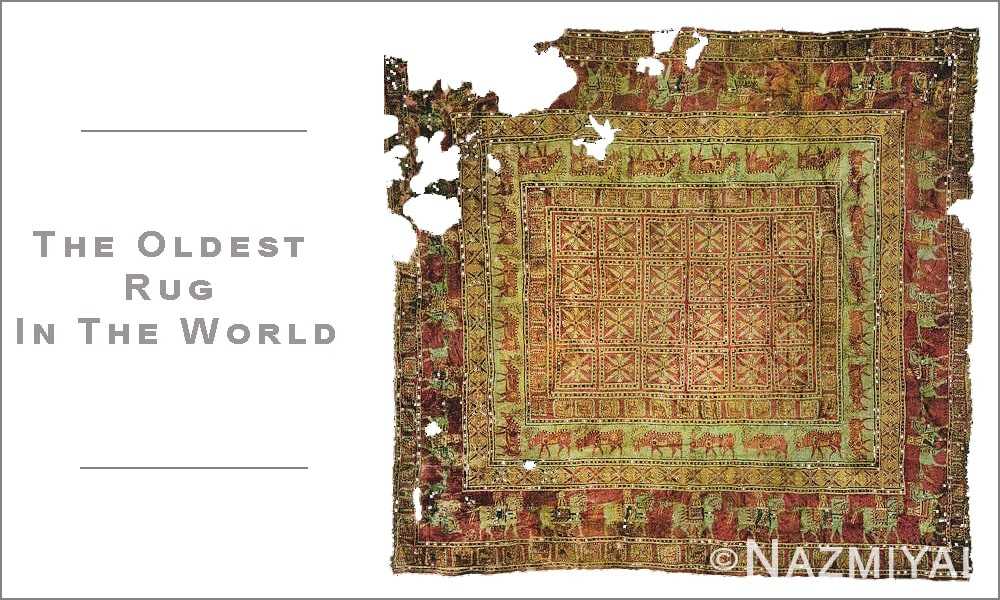
- Early antique rugs are hung more often than used as rugs to preserve quality.
At-a-Glance Specs
Style: Tribal; historically significant
Design: Cultural; graphic; strong design presence
Best rugs: Gabbehs; early productions; tapestries
Alternative Historic Uses for Rugs
Rugs have historically been more than just furnishing objects. In fact, their role as purely decorative floor coverings is a somewhat modern idea. For centuries, rugs served a real purpose. Embellishing designs were enhancing elements to make a utilitarian object attractive and symbolically significant.
Rugs served as makeshift floors for centuries when people lived in homes without solid ground. In many harsh, frigid climates, rugs were insulatory necessities. Productions such as Rya rugs with long, shaggy piles began as bedding, made to keep people warm through the winter. In many cultures, rugs were used as cultural heirlooms, passed down through generations and used in matrimonial or funerary ceremonies.
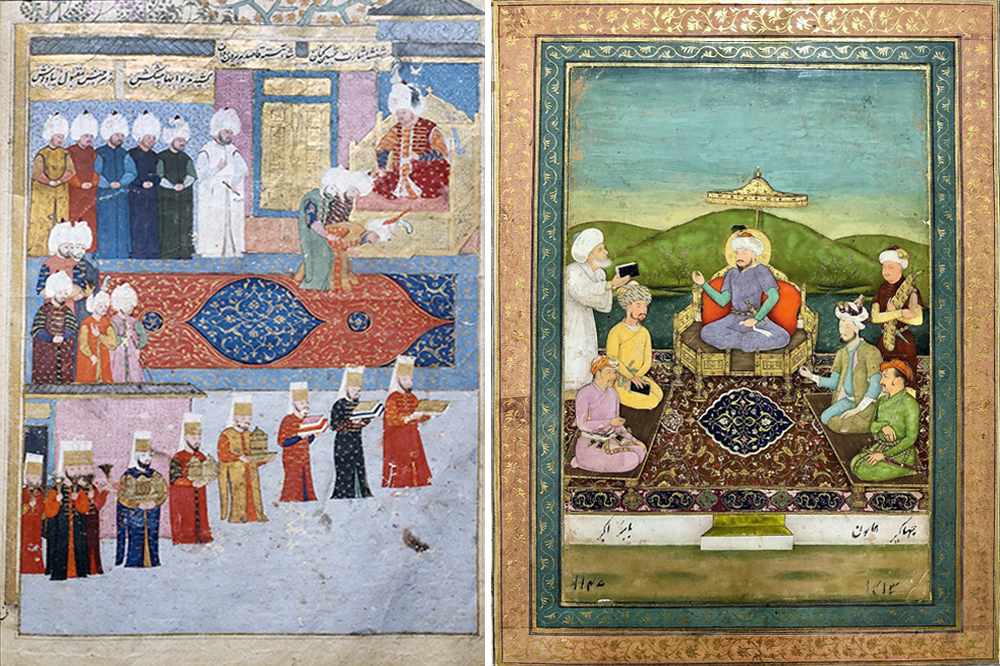
Societies with well-established hierarchies developed rug weaving cultures meant to symbolize status and wealth. Rugs became significant residing objects for royal courts, palaces, and noble homes. In certain regions they were specifically made as seating for members of authority and importance.
This is all to say that a rug serves many purposes. We aren’t the first to turn a floor covering on its side and make it a wall hanging, and we won’t be the last. It is a tried and true practice that has decorated interiors for centuries.
Rugs vs Tapestries
Rugs and tapestries have closely related histories, both being a historically prevalent form of textile art, though they served different purposes. While rugs were meant to be handled and used, either to be walked on, sat on, or as blanketing objects, tapestries were meant to be looked at far more than touched. Their purpose leaned toward decorative, meant to be hung on walls the way a painting would.
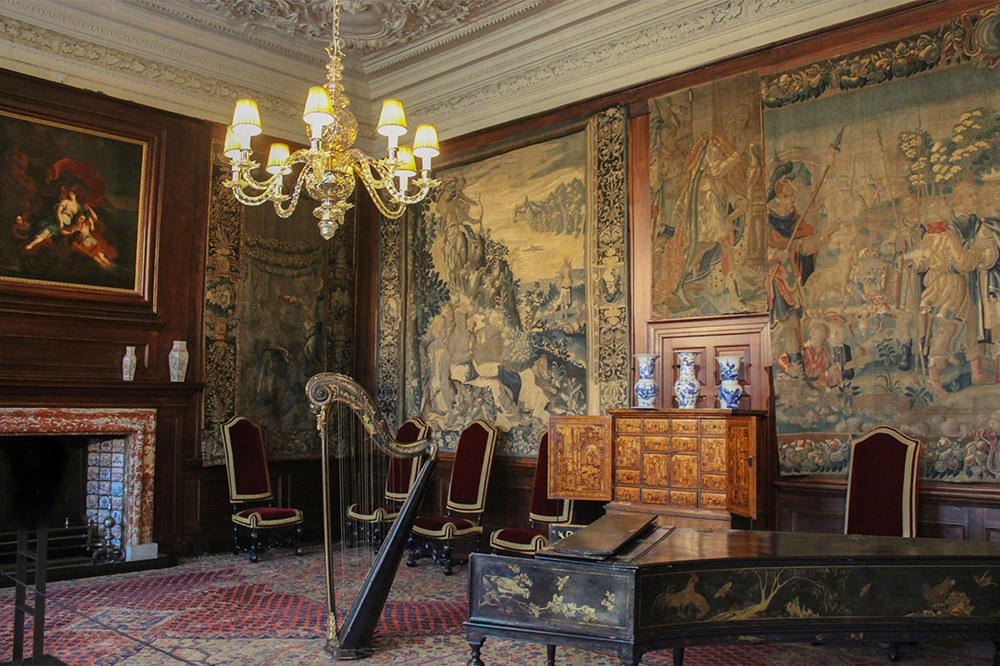
Tapestries weren’t purely embellishing devices, though. They were often didactic forms of artwork, illustrating histories and tales to the largely illiterate audience of the time. They were similarly insulatory tools, used to cover holes in walls and curtain windows for privacy. Europe especially developed a taste for tapestries, with the vast majority of surviving tapestries originating there.
There isn’t much necessarily stopping rugs from functioning as tapestries. Our ancestors have known this for centuries, choosing to sometimes display their rugs vertically. Now in the modern era, we are ironically starting to catch up to this notion. More and more interior designers and homeowners have begun rotating their rugs and fitting them to walls.
| RUGS AND CARPETS | WALL TAPESTRIES |
|---|---|
| Displayed on the floor | Displayed on a wall |
| Abstract compositions; reliant on patterns | Pictorial, scenic, and didactic designs |
| Can be piled or flatwoven | Only flatwoven |
| Made for durability and wear | Delicate; cannot withstand abrasion |
Modern Interior Design
Collectors, designers, and luxury connoisseurs alike have all pivoted into exploring rugs as wall art. It’s important to discern which rugs are capable of performing as such, though. Not every rug can be hung on a wall. Some are meant to function simply as rugs given their size, weight, pile, and design.
Small Decorative Rugs
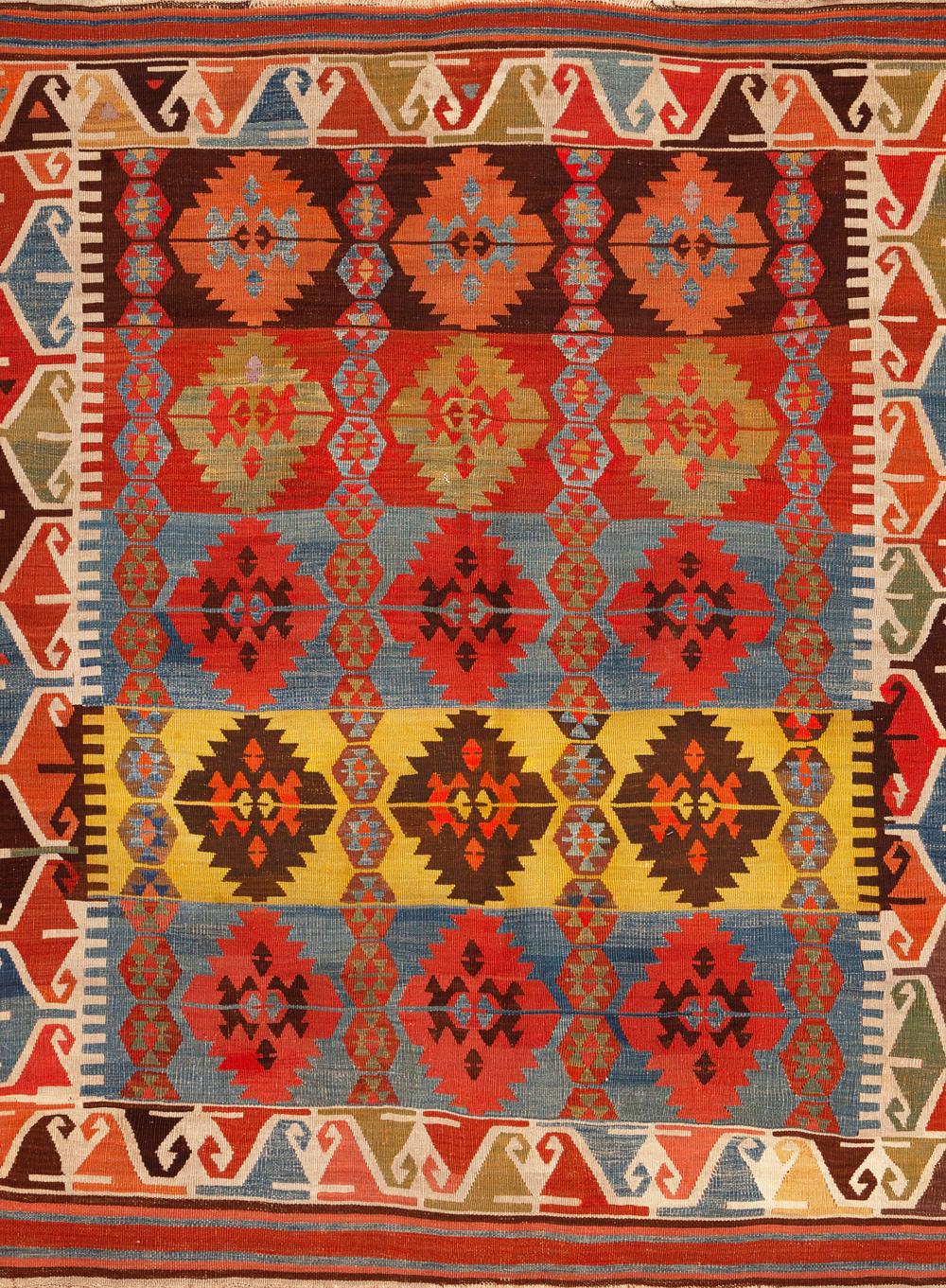
One of the biggest roadblocks to hanging a rug is weight. Though they are just made up of fabric, rugs can be surprisingly heavy. Elements like size and pile length are contributing factors to how much a piece weighs, and in turn, whether it can function as a wall-hanging or not. When looking to purchase a rug for the express purpose of displaying it on a wall, look for smaller, decorative rugs. A shorter pile height is preferable, not just in terms of weight, but a low textured surface ensures an easier time cleaning, as it will collect less dust and debris. Flatweaves and kilims are naturally a popular choice among designers, as their lack of pile makes them light, and their construction gives them a reversible and adaptive quality.
Gabbehs and Tribal Pieces
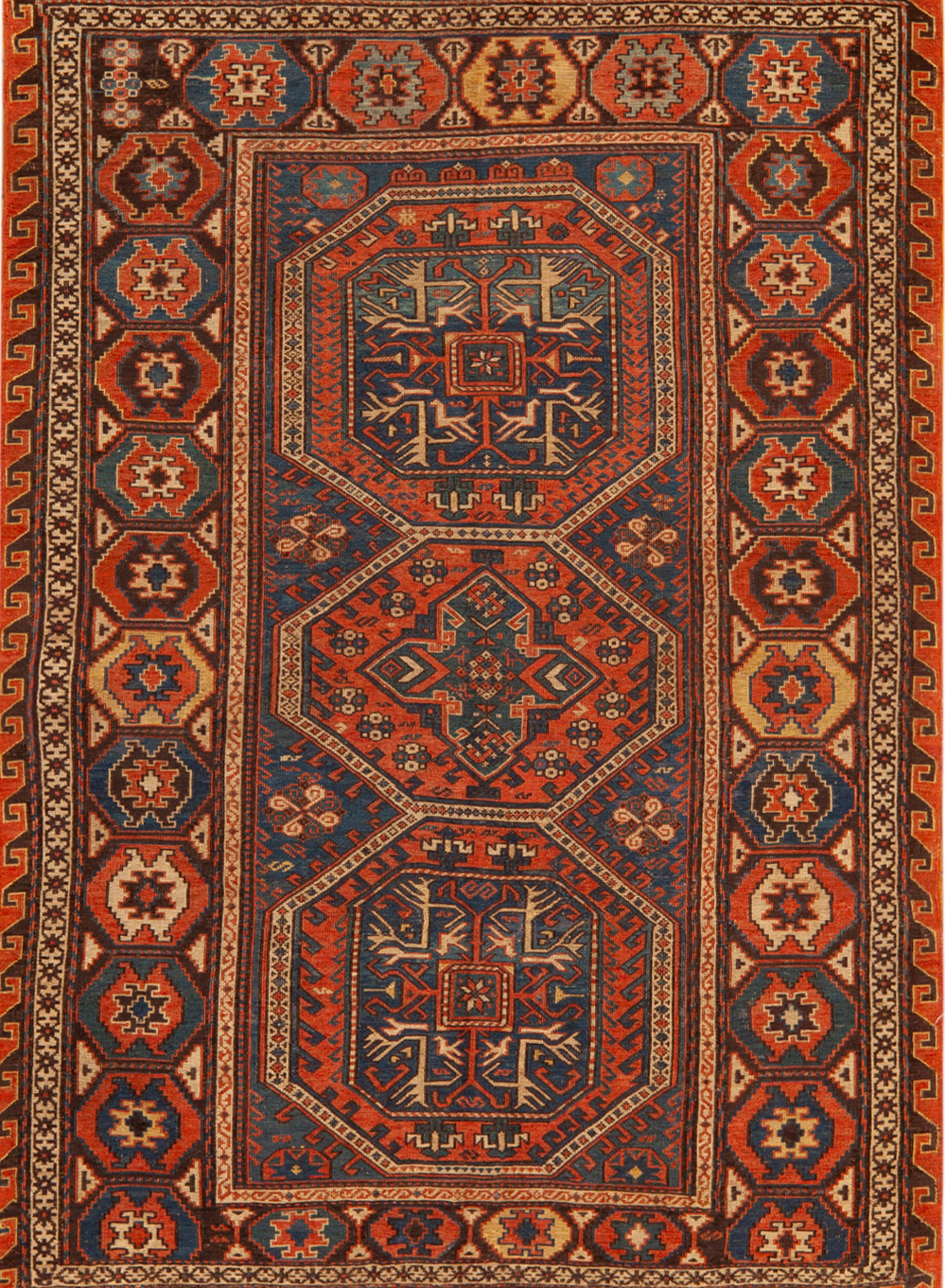
Tribal rugs are an excellent example of rugs perfect for hanging. They are small by nature, caused by the looms nomadic people used in their weaving practices. The spontaneous quality of their designs are an attractive feature of tribal rugs, relating them closely to fine artwork in a way that precisely planned workshop productions can’t.
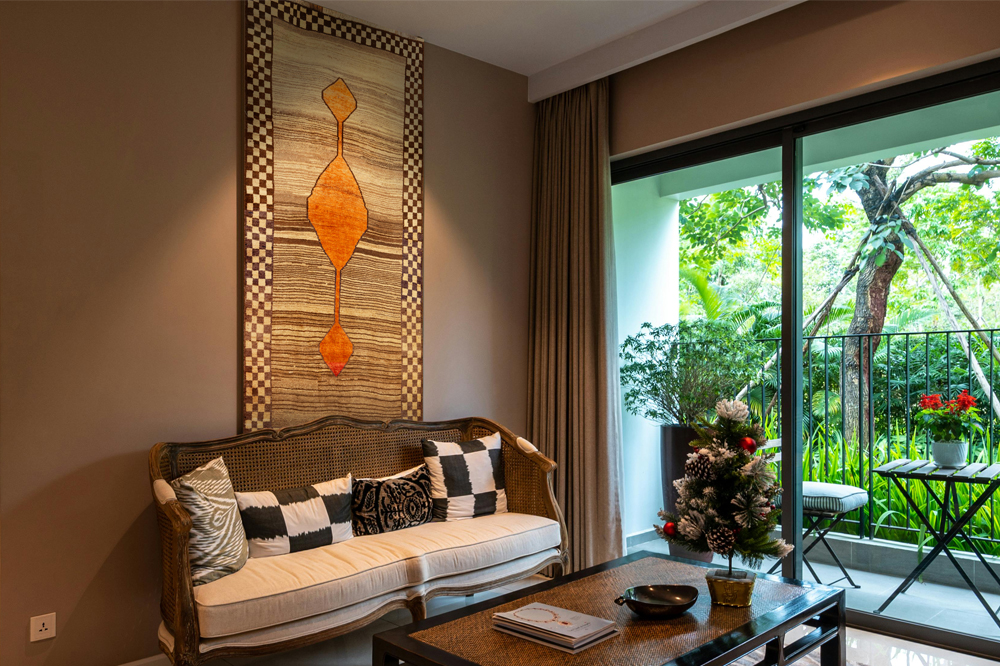
Gabbeh rugs, a tribal style of Persian rug, in particular possess a charming graphic quality completely unique from other weavings. Their use of color and geometric patterns along with a distinctly human touch make them perfect candidates for wall hangings.
Historically Significant Pieces
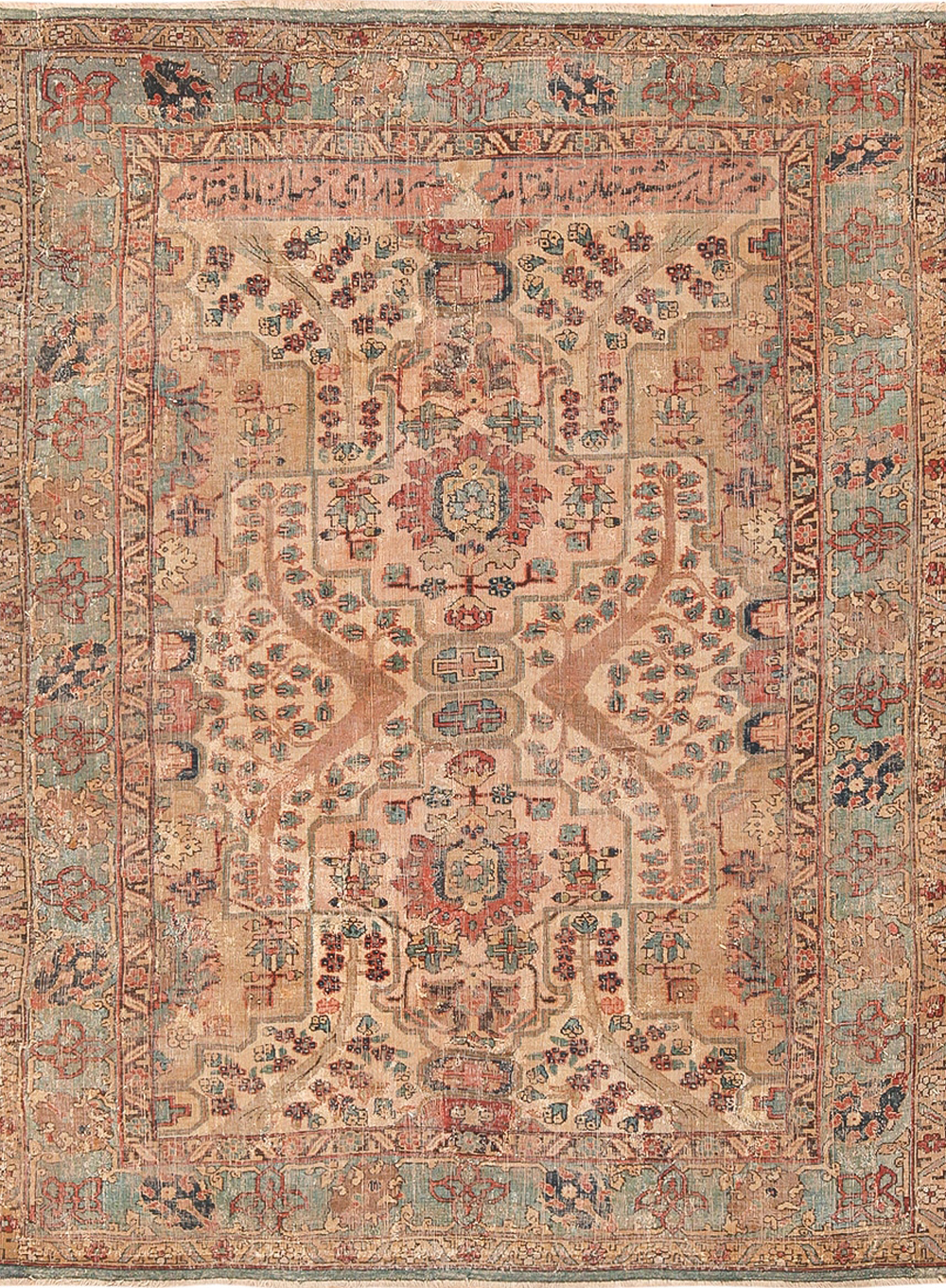
Many early productions are delicate, given their age and materials. They require display in low-traffic areas of the home and extreme vigilance as to its wear. But owning such historically significant pieces are less about having a new rug to walk on and more about owning a cultural work of art. It makes more sense to display them the same way you would a painting, properly honoring the textile while keeping it safe from any excessive or unnecessary wear.
Which Designs Work?
When looking for a rug to hang on your wall, the design is something you need to look out for. When a rug is displayed on a wall, it essentially becomes artwork in the same way a framed painting is. Worries about how the textile will physically interact with furniture is no longer a concern. Instead its patterning and design take center stage. Pieces hung on a wall are often a focal point for a room. Their purpose is to be admired. Be sure whichever rug makes it to your wall has a strong design presence, whether this is through color, pattern, or a mix of both. Abstract compositions as well as pictorial ones are always excellent choices.
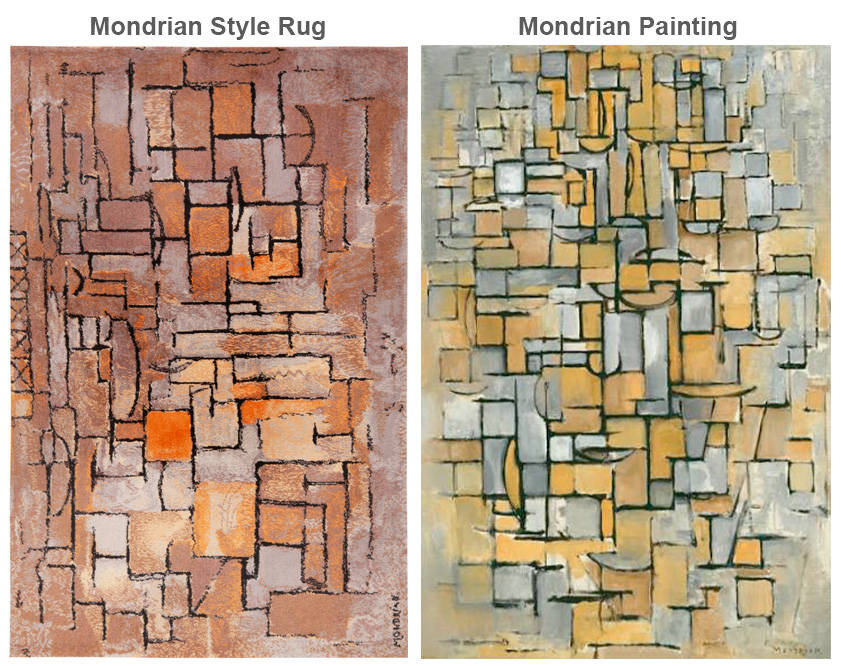
Vintage rugs are wonderful options, as many utilize an artistic quality that echoes the popular artwork of their era. Contemporary paintings of the time were often colorful and abstract, using non-objective forms as expressive devices. The painterly aspect of these compositions makes these artistic rugs ideal for display the same way a framed canvas is.
Featured Rugs
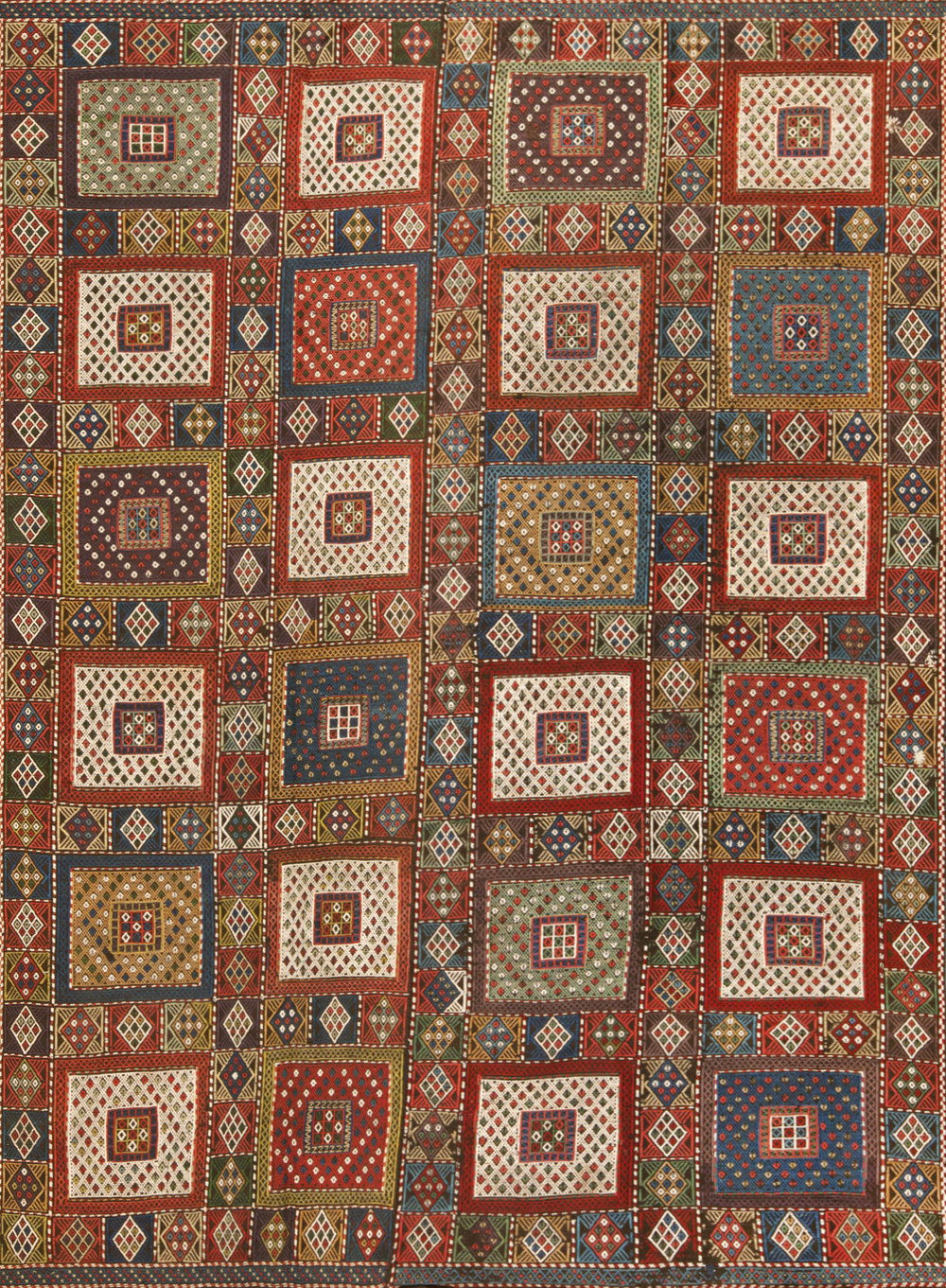
The Nazmiyal Collection is home to a large selection of beautiful decorative pieces perfect for displaying as wall art. Browse through our catalog and see which weaving works best for you and your desired interior.
Final Thoughts
Rugs are adaptable furnishing objects and have had many purposes since their conception. One of them is as decorative objects hung on walls like tapestries rather than as floor coverings. Though the two are quite similar, rugs are built to endure wear, often with pattern-forward designs. Tapestries, on the other hand, are more delicate, and usually display scenic images and figural shapes, used as didactic tools. To properly choose a rug for wall-hanging, you have to take into consideration the piece’s size, weight, pile, and design. Smaller tribal rugs such as Persian Gabbehs are excellent choices due to their smaller scale and graphic compositions. Early productions and historically significant pieces also make suitable options for wall displays, as it moves the weaving to an area where exposure to traffic and wear is much less likely.
Frequently Asked Questions
What makes a rug different from a tapestry?
Rugs are primarily floor coverings, can be woven with a pile, and are constructed as durable textiles.
Are there alternative uses for rugs than just floor-coverings?
Rugs were used as bedding, seating for important figures, status symbols, and insulatory tools.
How do you determine whether or not a rug will work as a wall hanging?
Whether a rug can be hung depends on size, weight, pile, and design. Heavier rugs with long piles are not ideal wall hangings.
Why are early antique rugs good choices for wall hangings?
Early rugs hold significant historical value and are more susceptible to wear. Hanging them on a wall prevents any damage by foot-traffic, as well as properly respects the piece’s historical and artistic merit.
Glossary
Abstract – non-objective or non-figural patterning style.
Early Rugs – an especially antique or historically significant rug predating the 1800s.
Gabbeh Rugs – tribal rugs originating in south-western Persia.
Kilim – flatwoven rugs with no pile.
Nomadic – a migratory way of life that many tribal people adhered to.
Pictorial – artistic scenic designs depicting figures or environments.
Pile – a rug’s raised surface formed by cut or looped yarn ends.
Rya Rugs – a shaggy Scandinavian rug made for warmth.