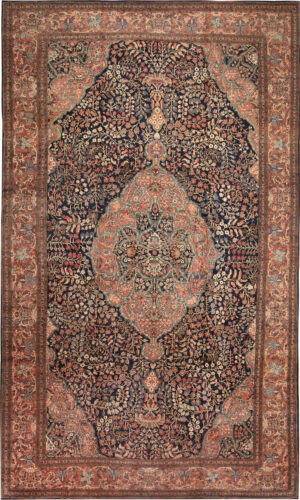
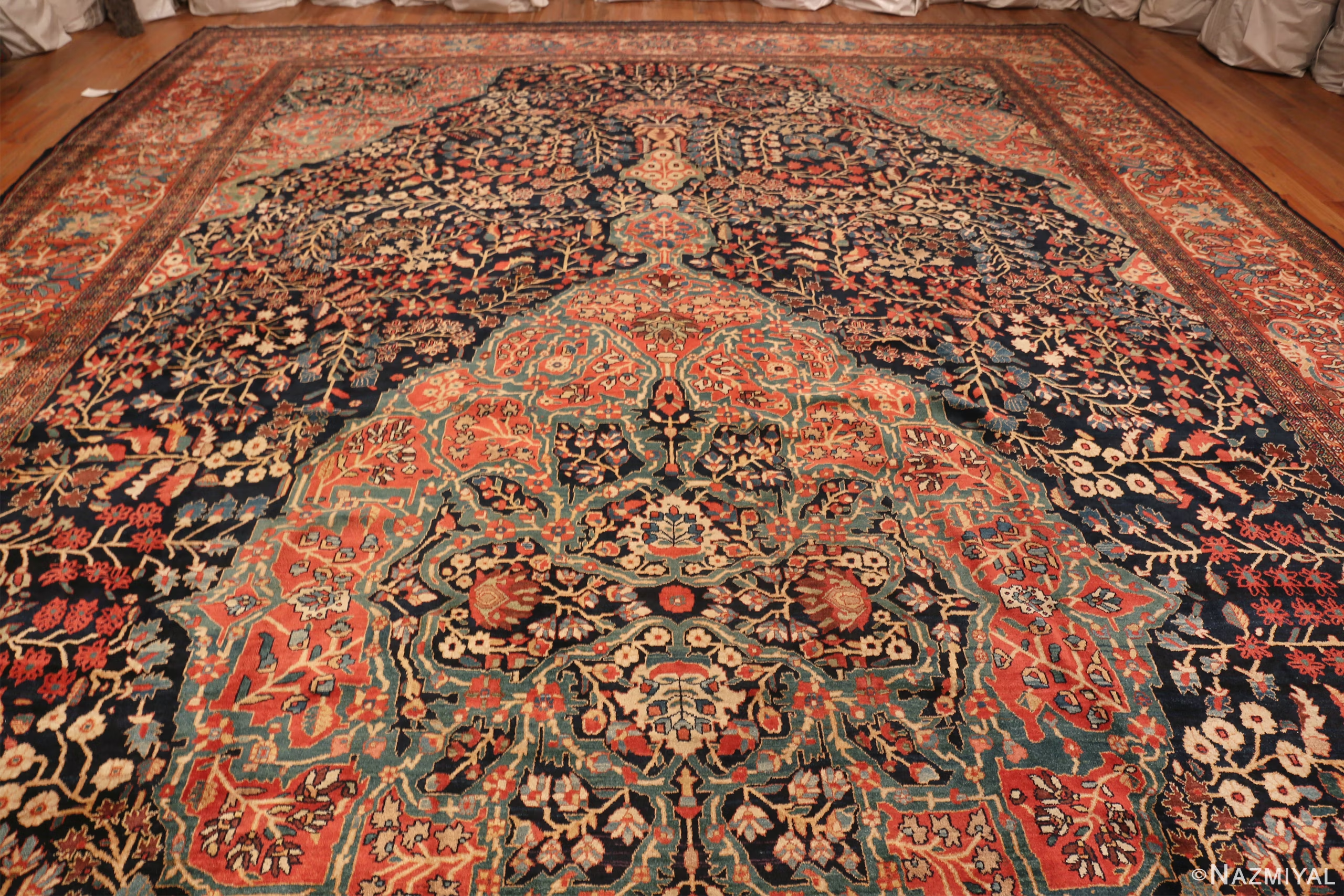
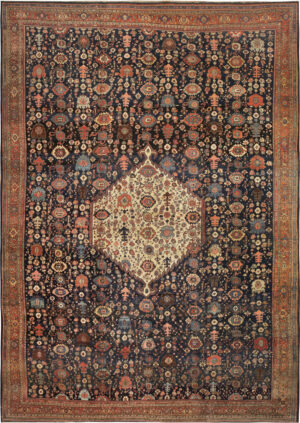
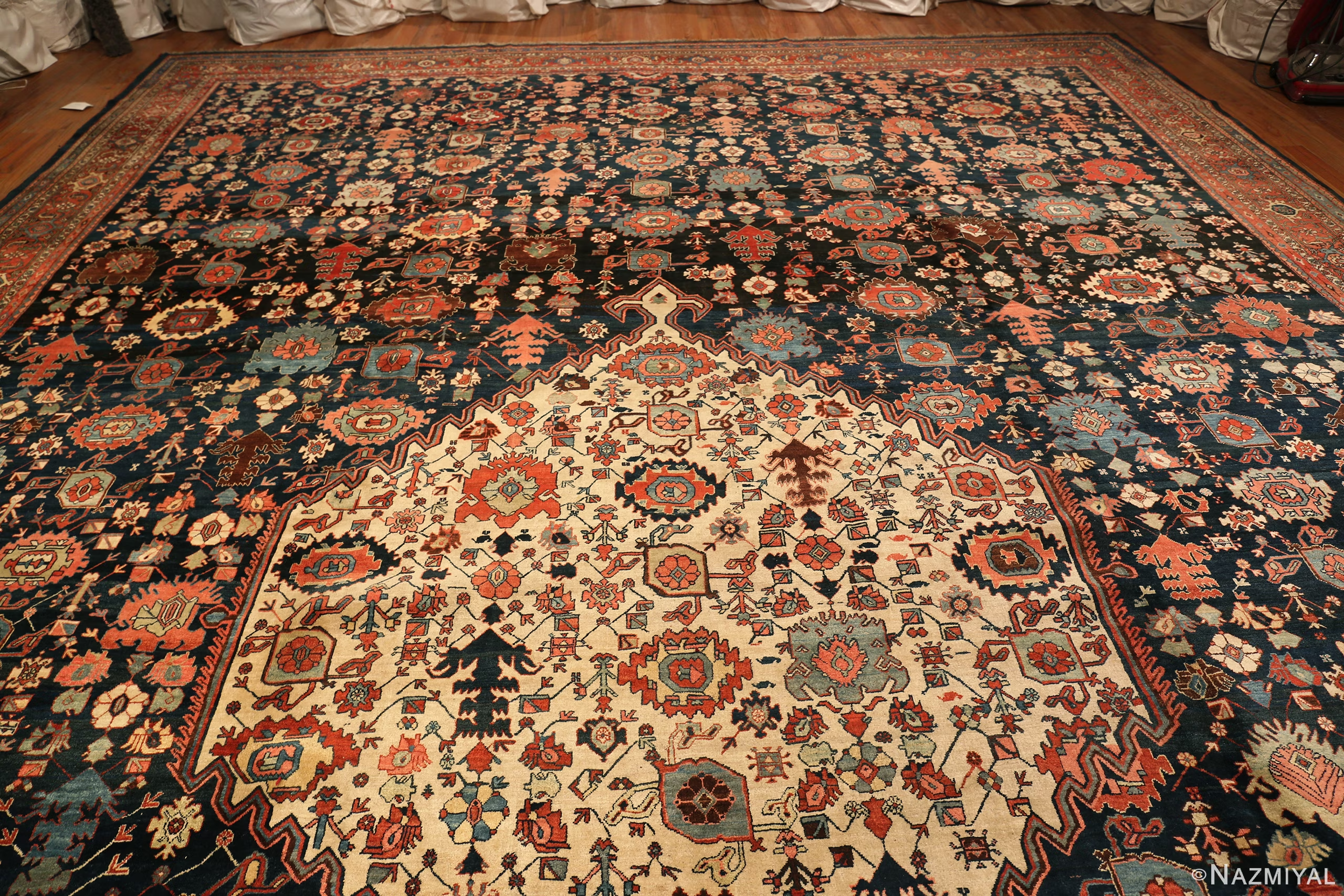
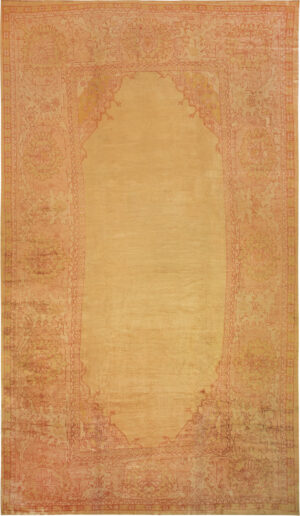
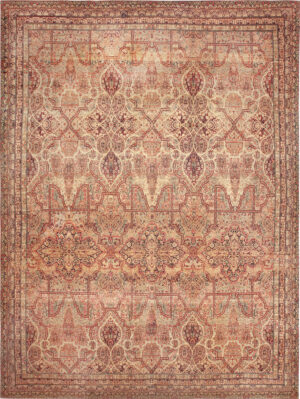
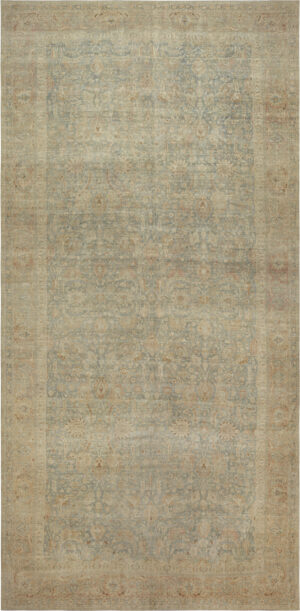
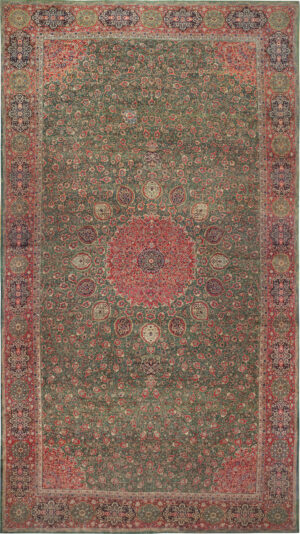
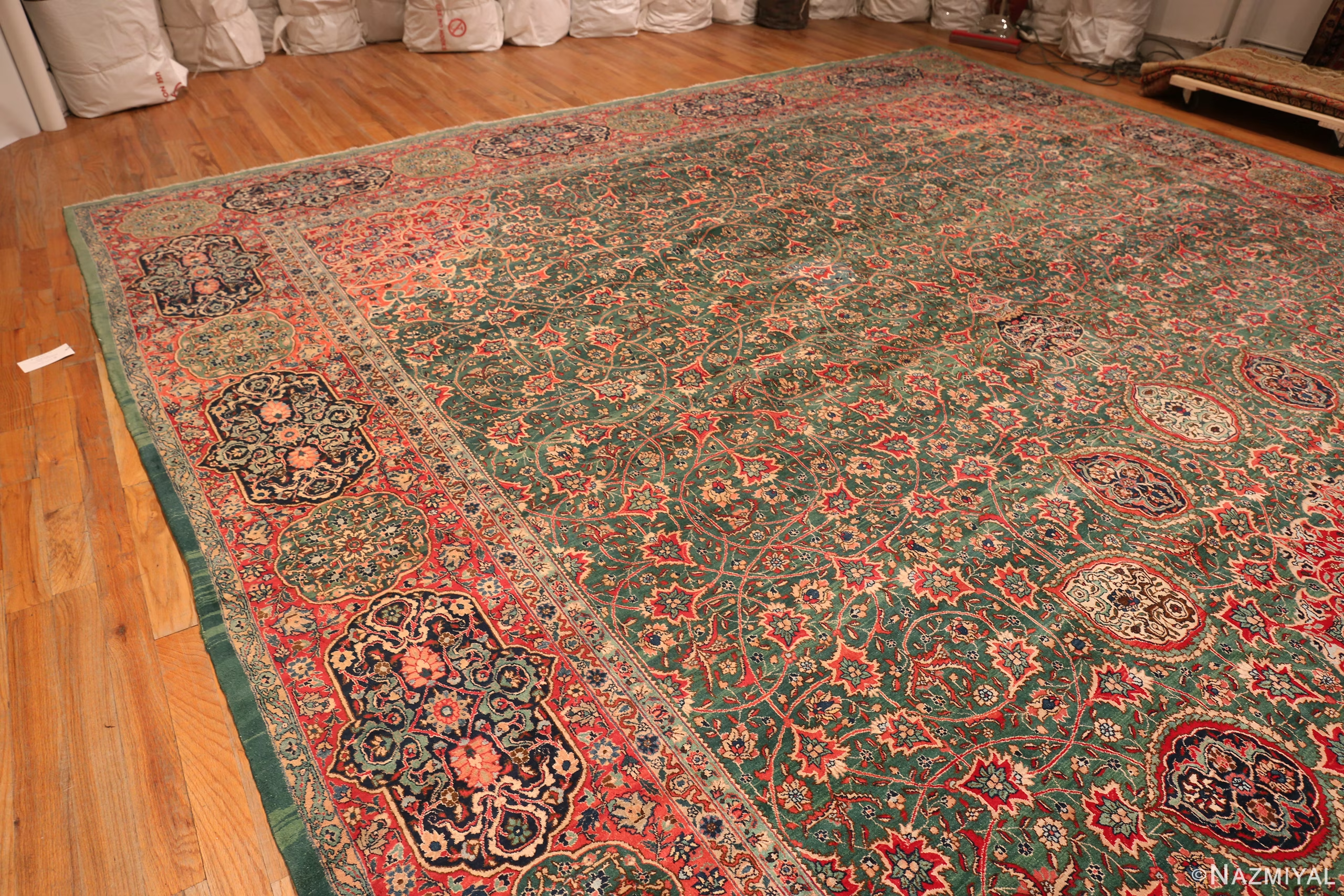
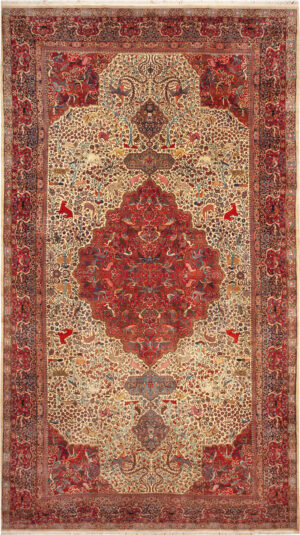
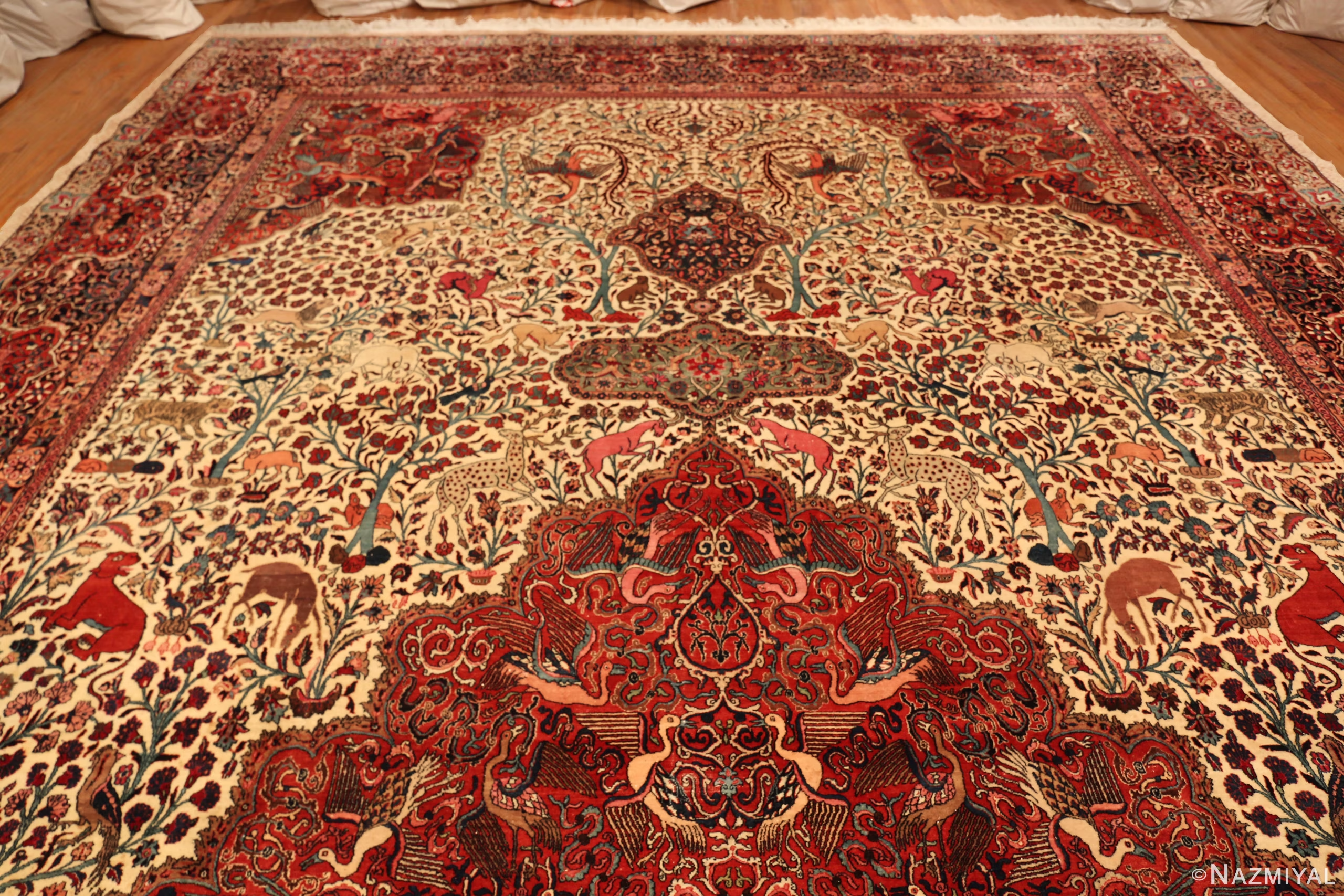
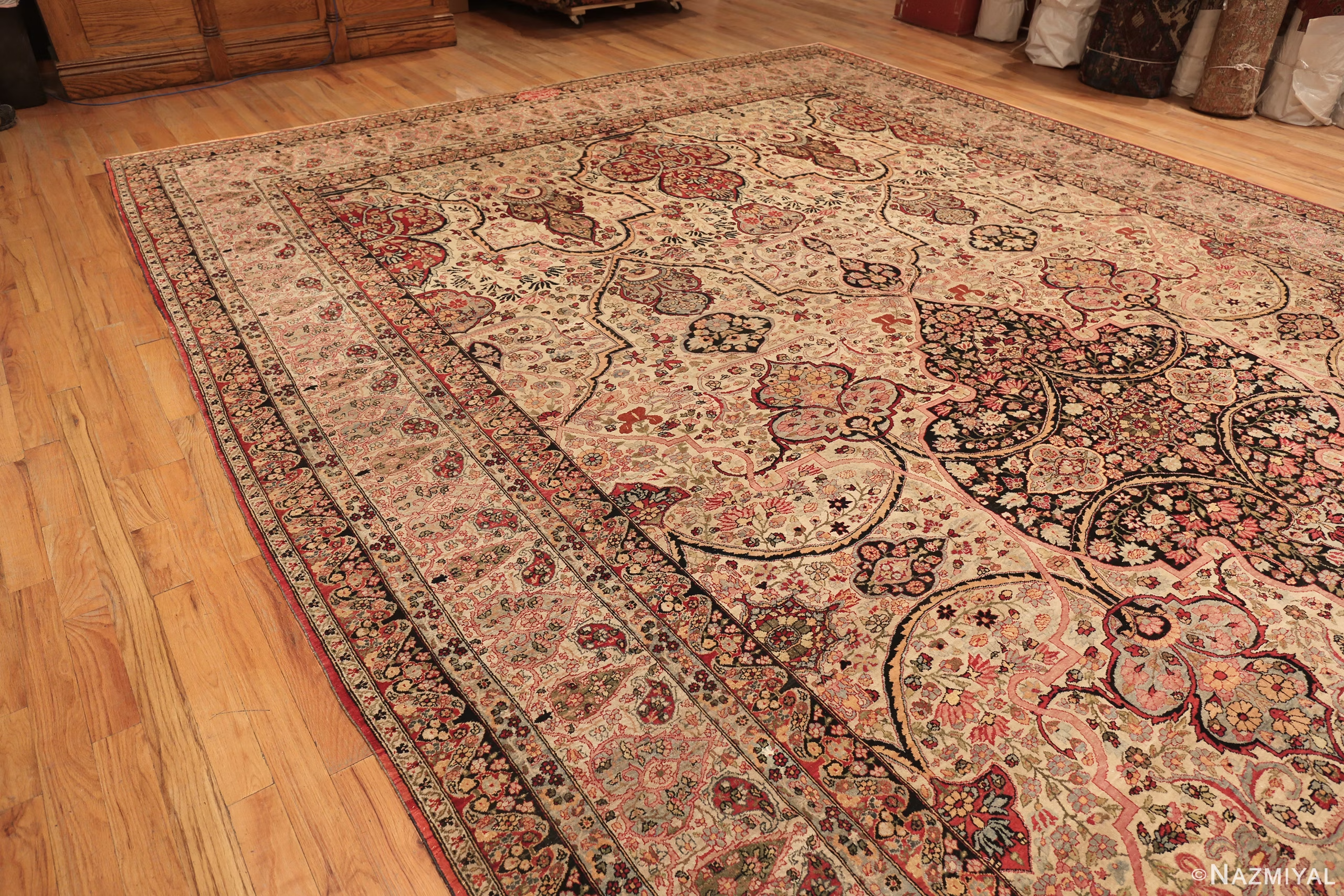
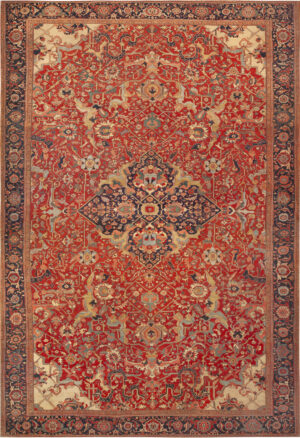
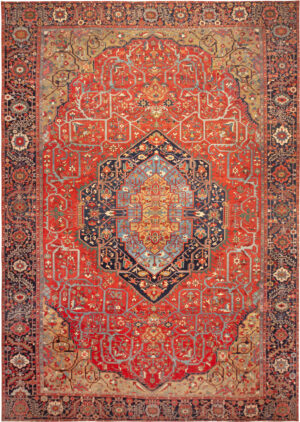
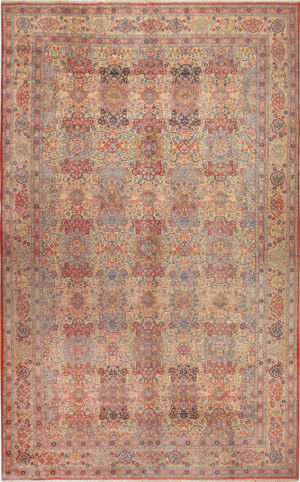
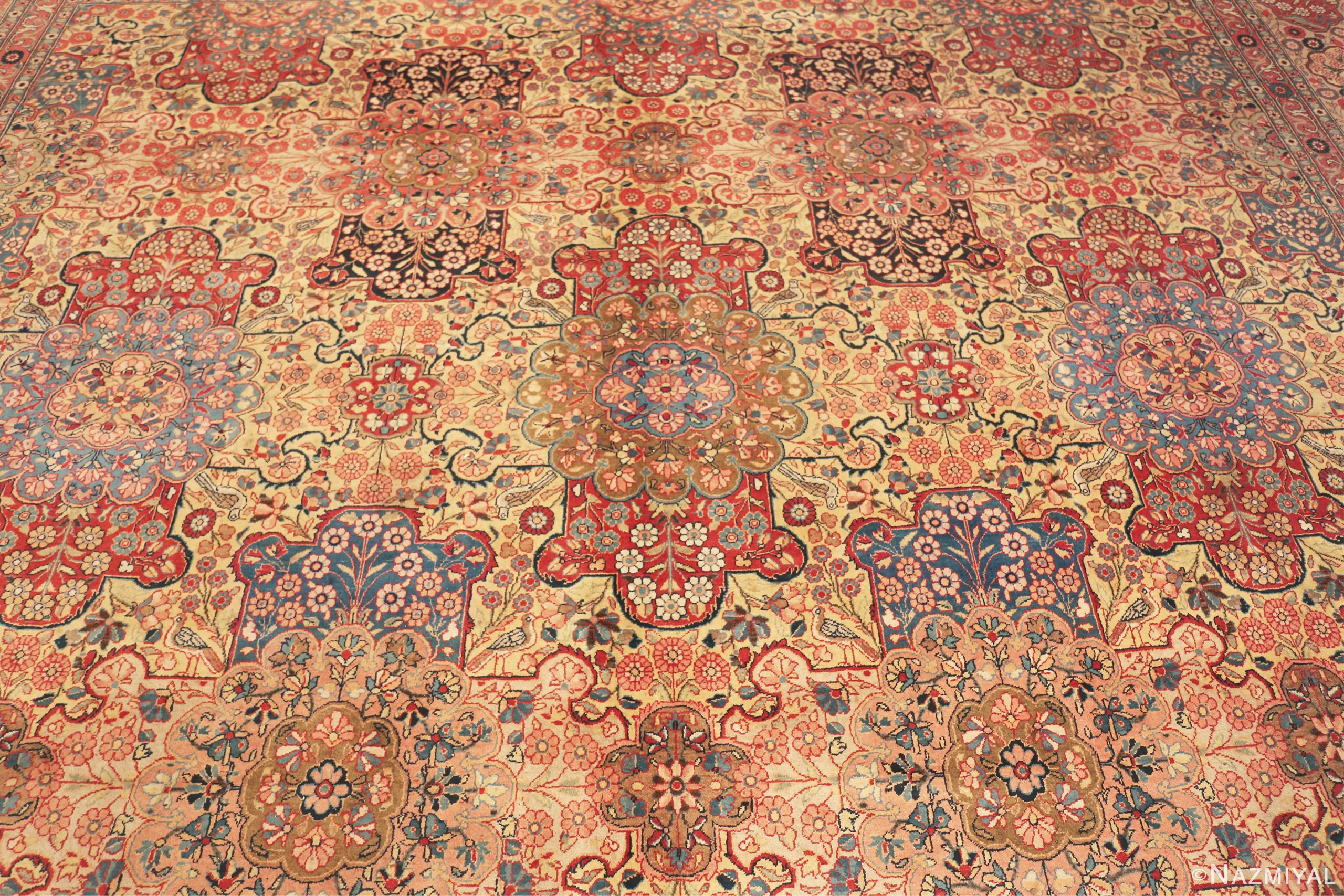
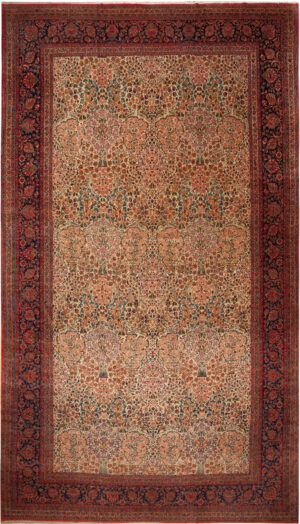
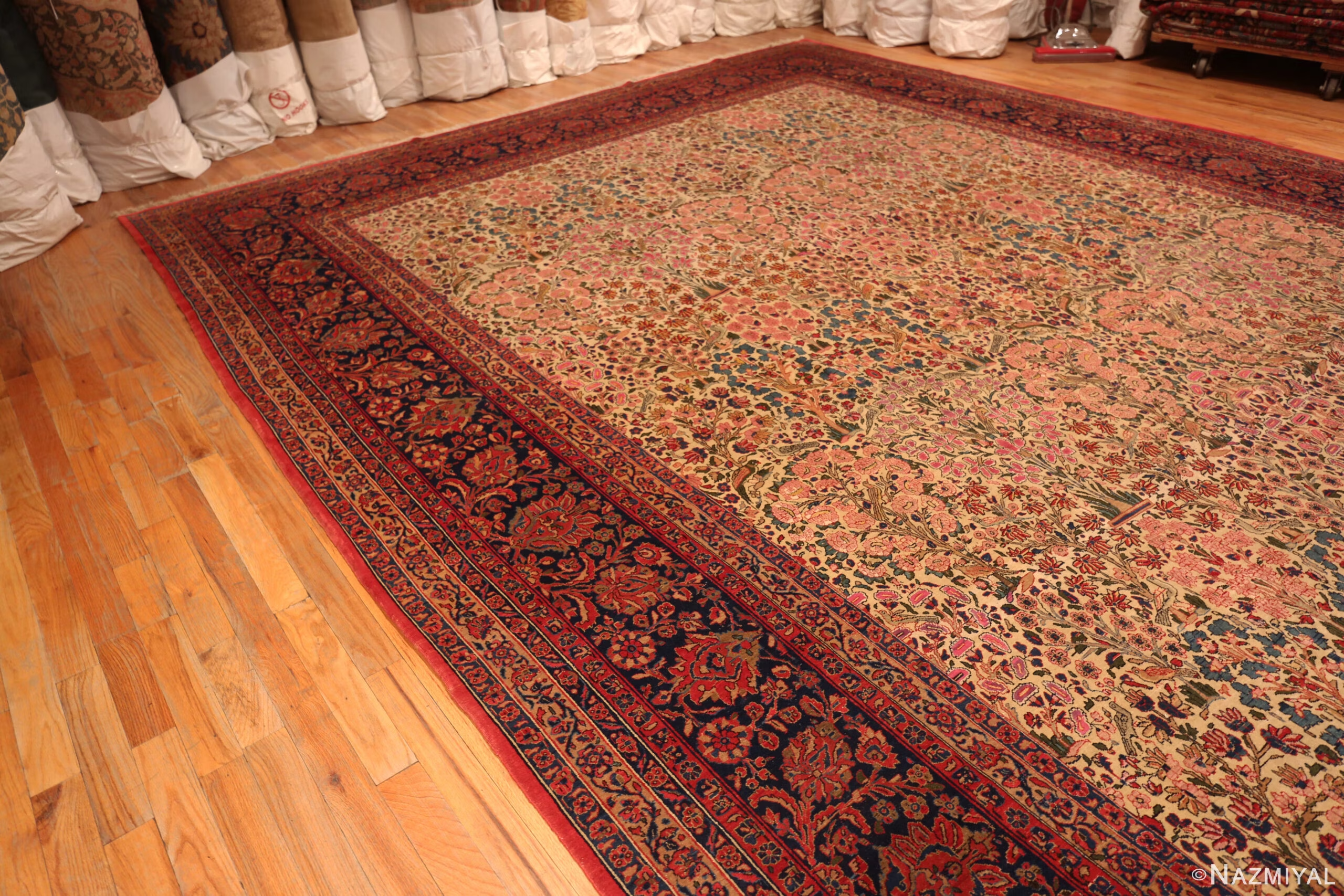
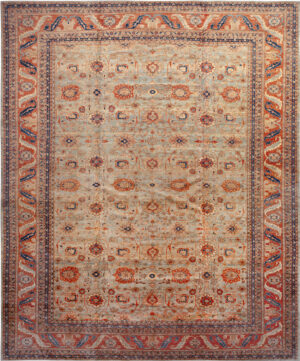
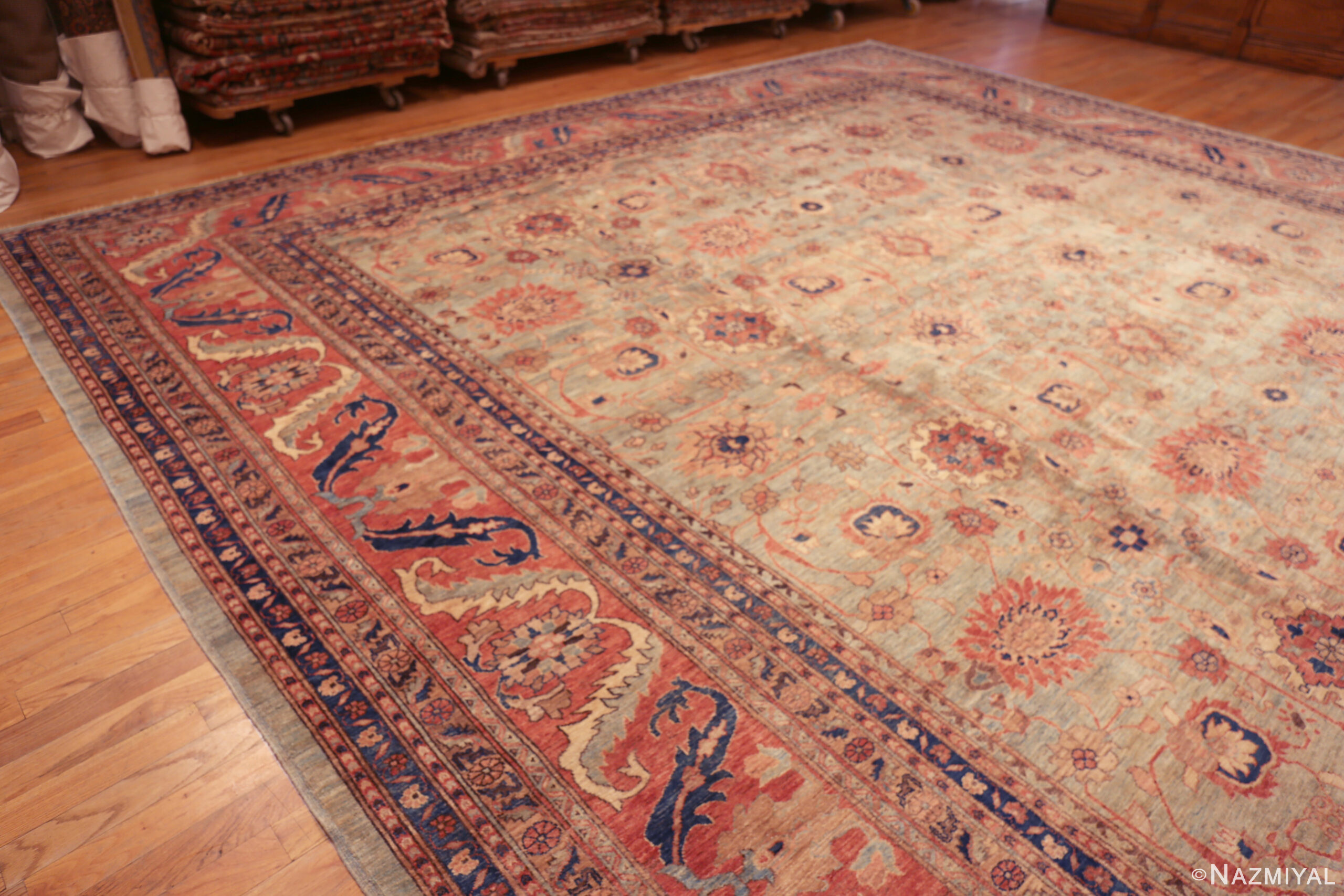
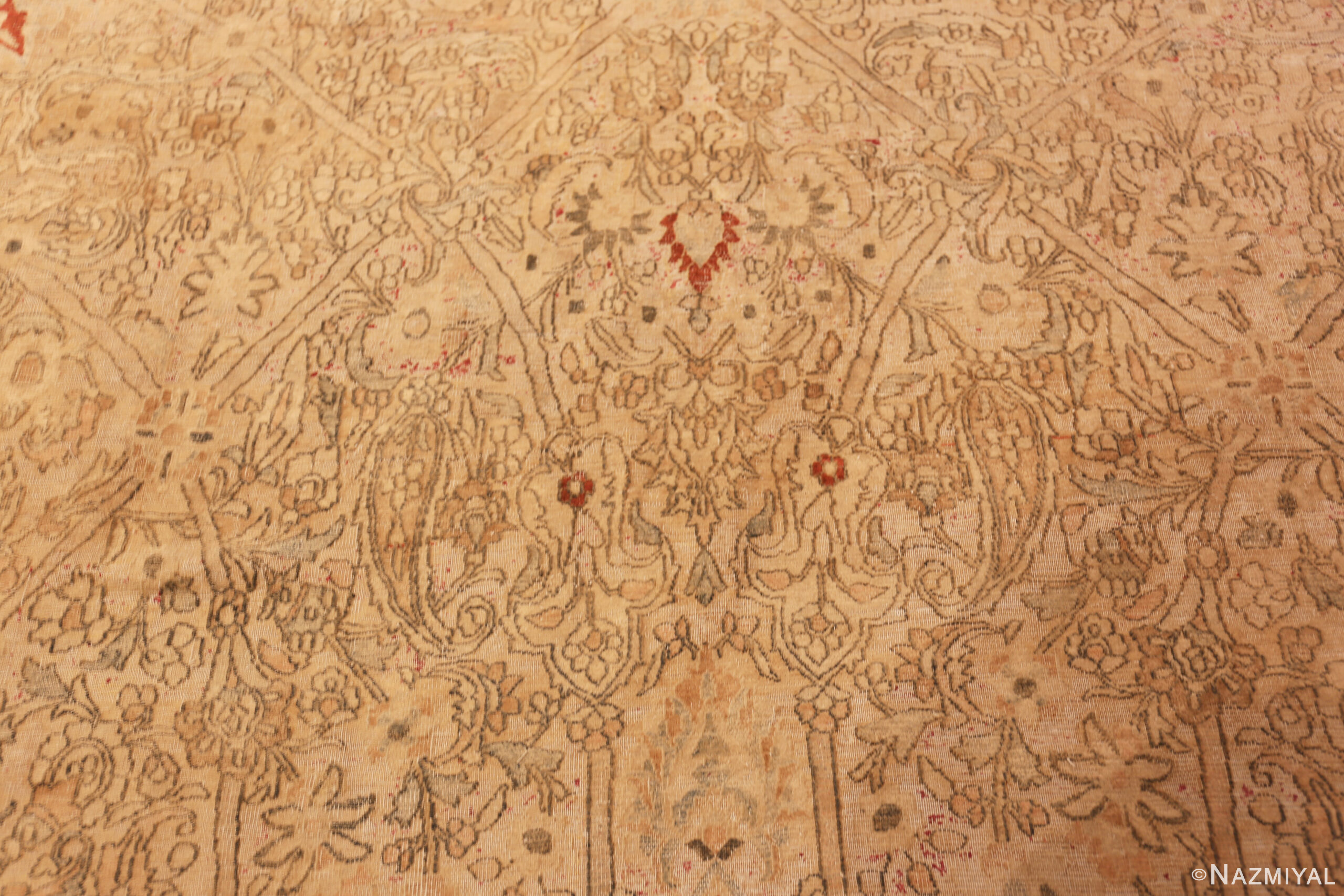
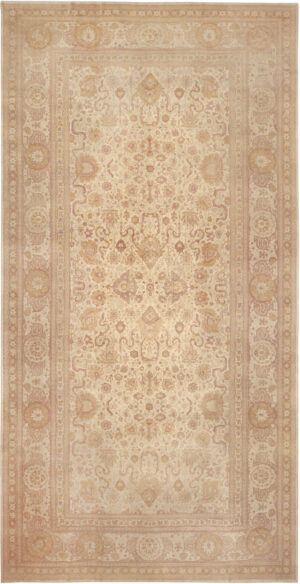
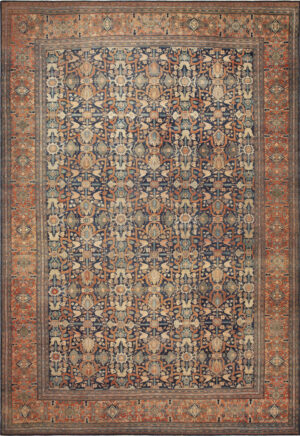
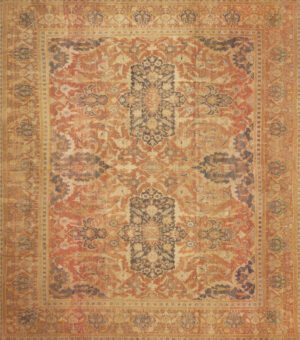
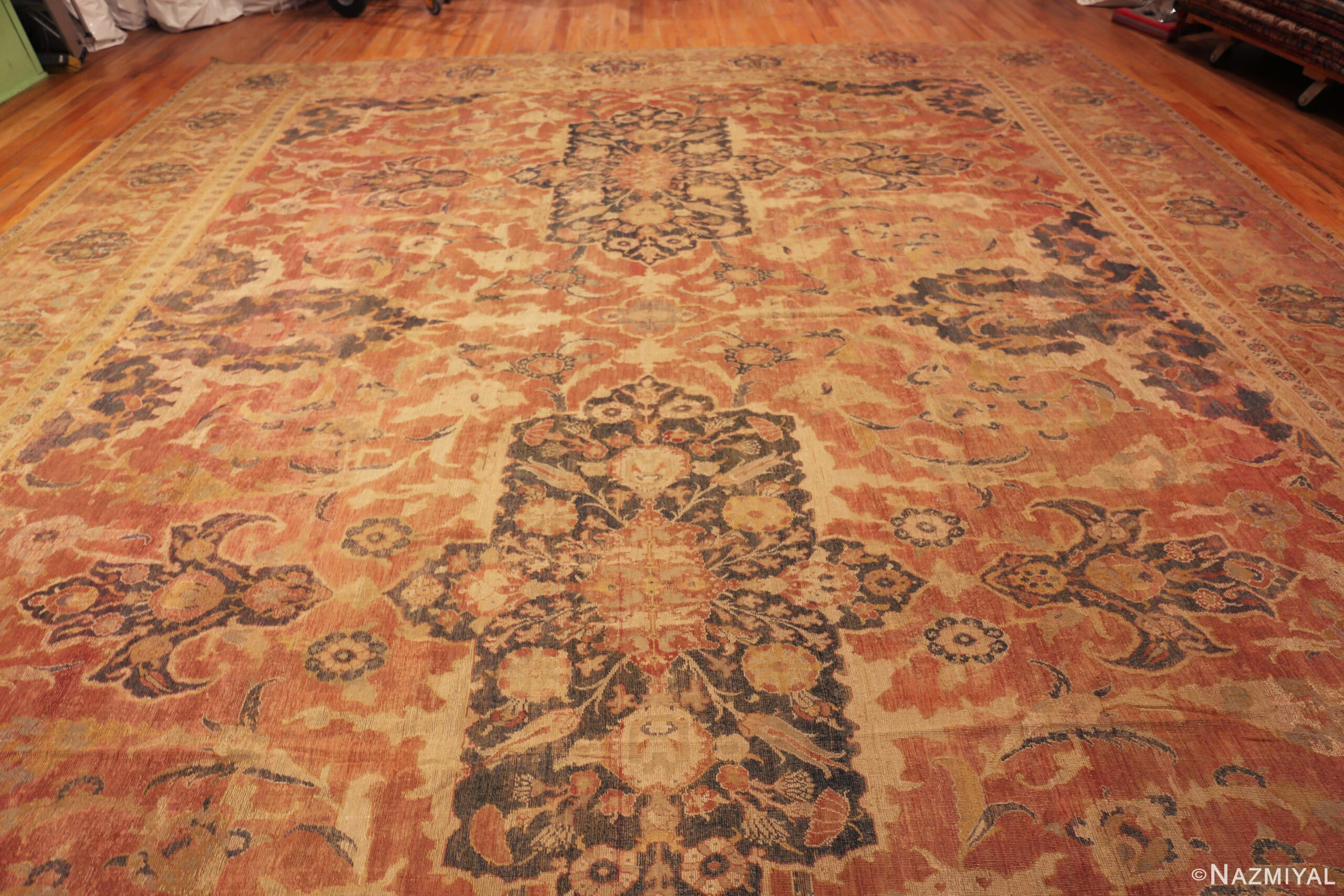
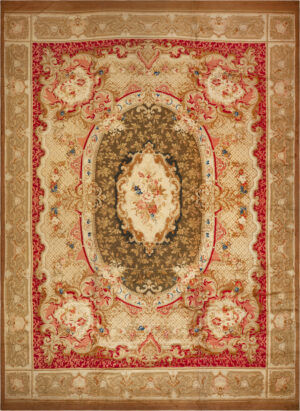
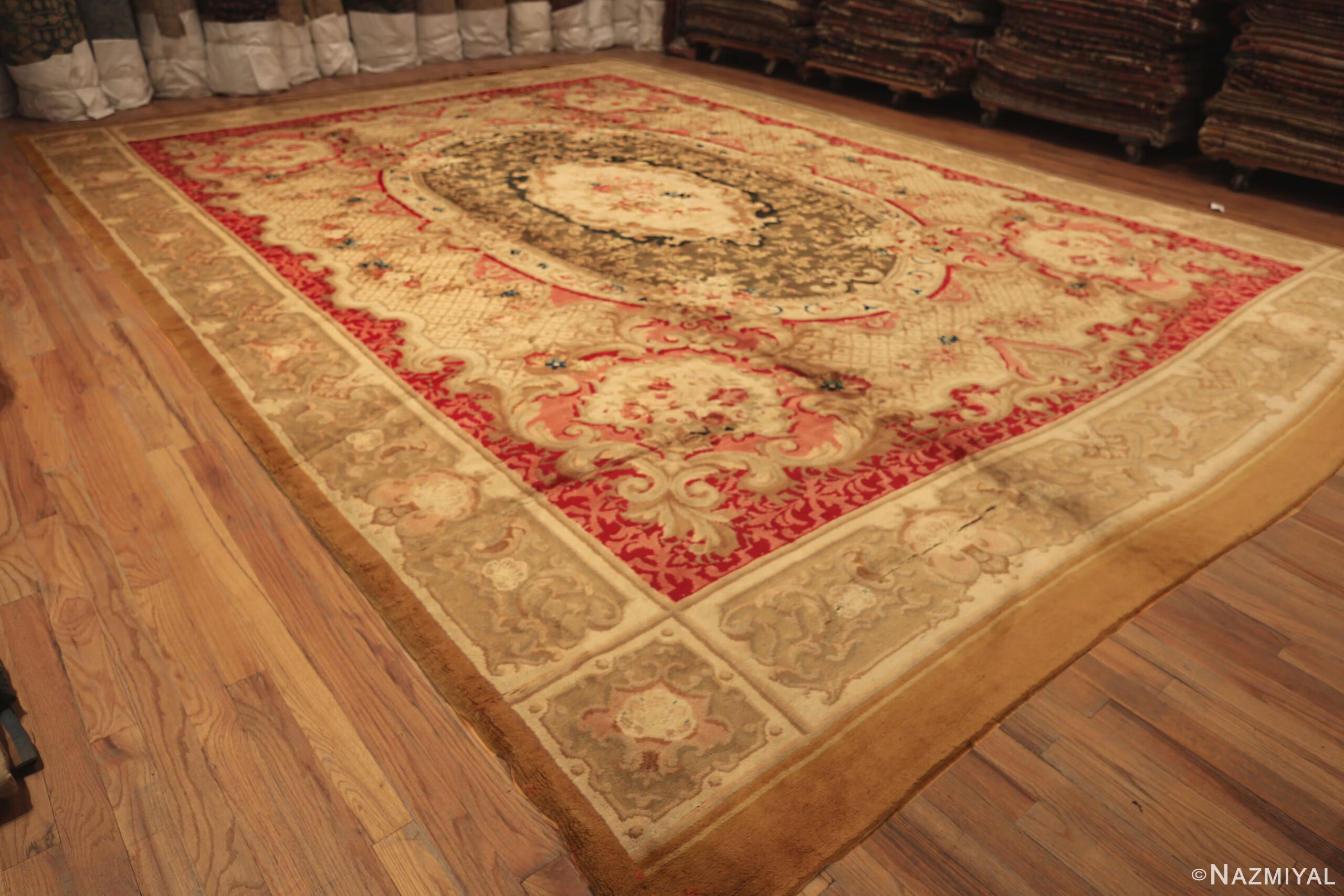
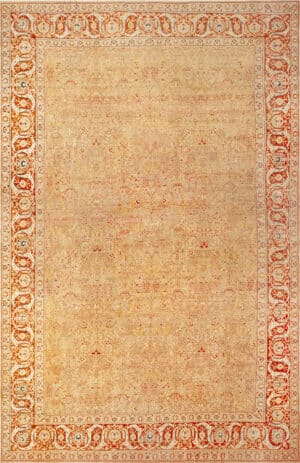
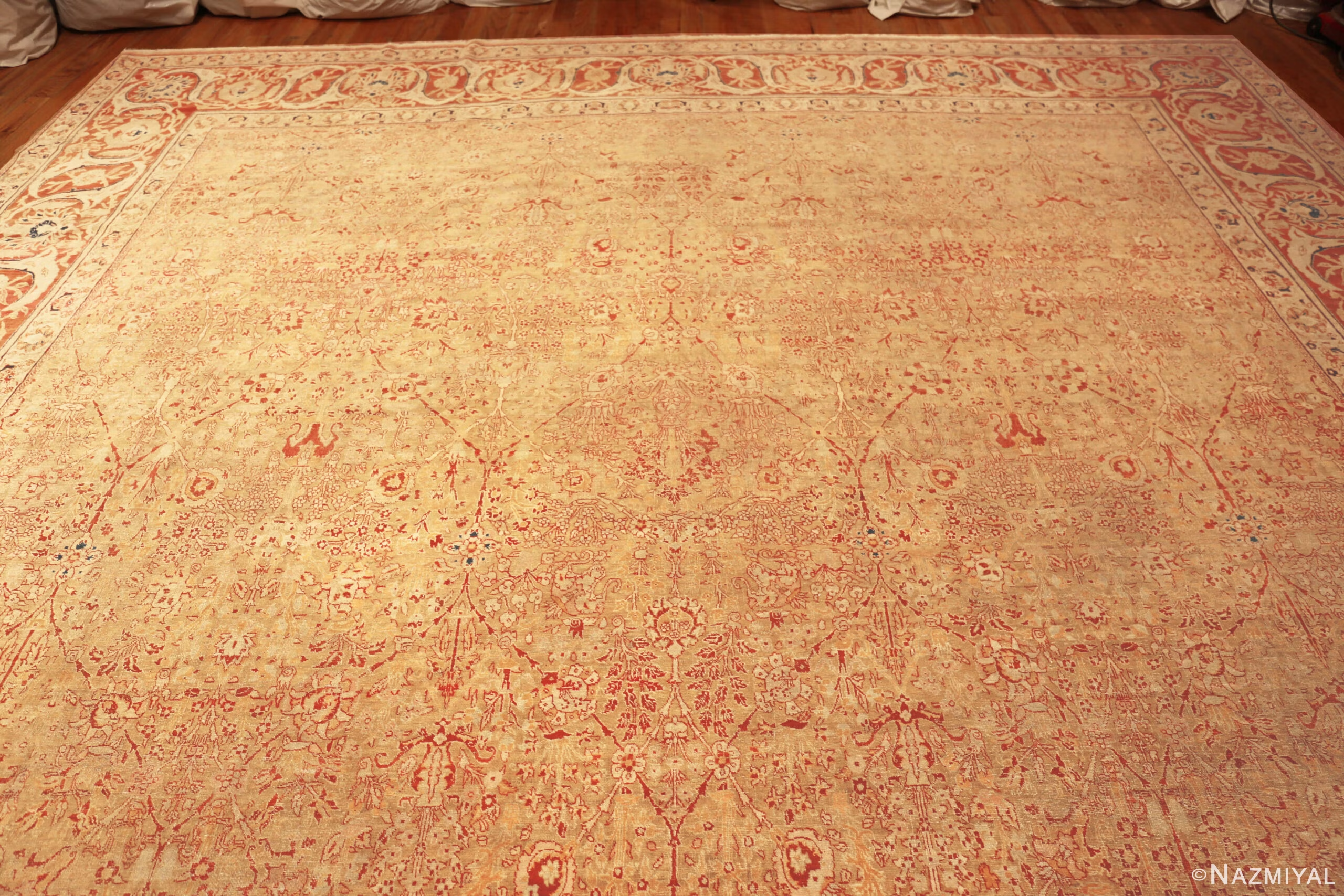
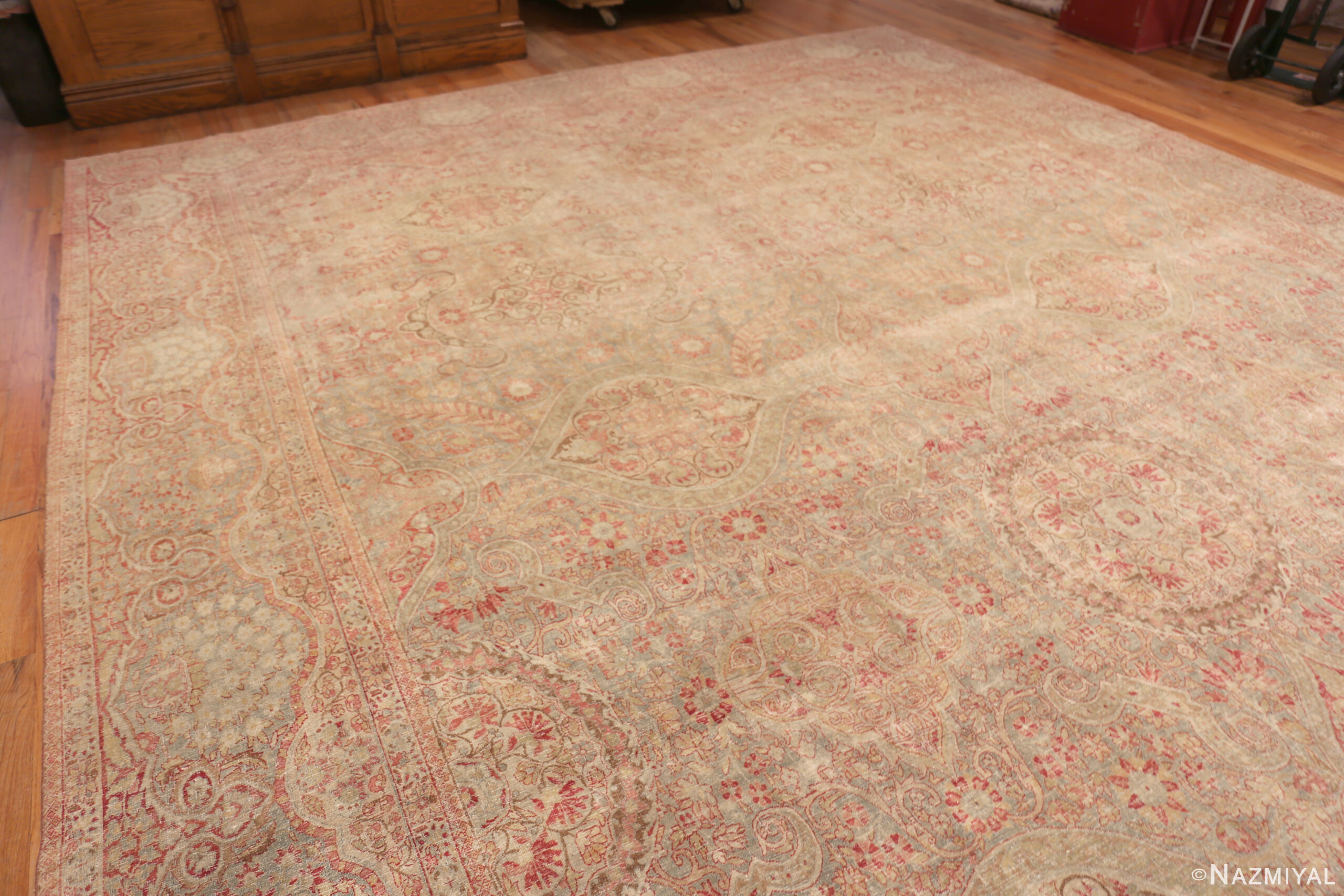
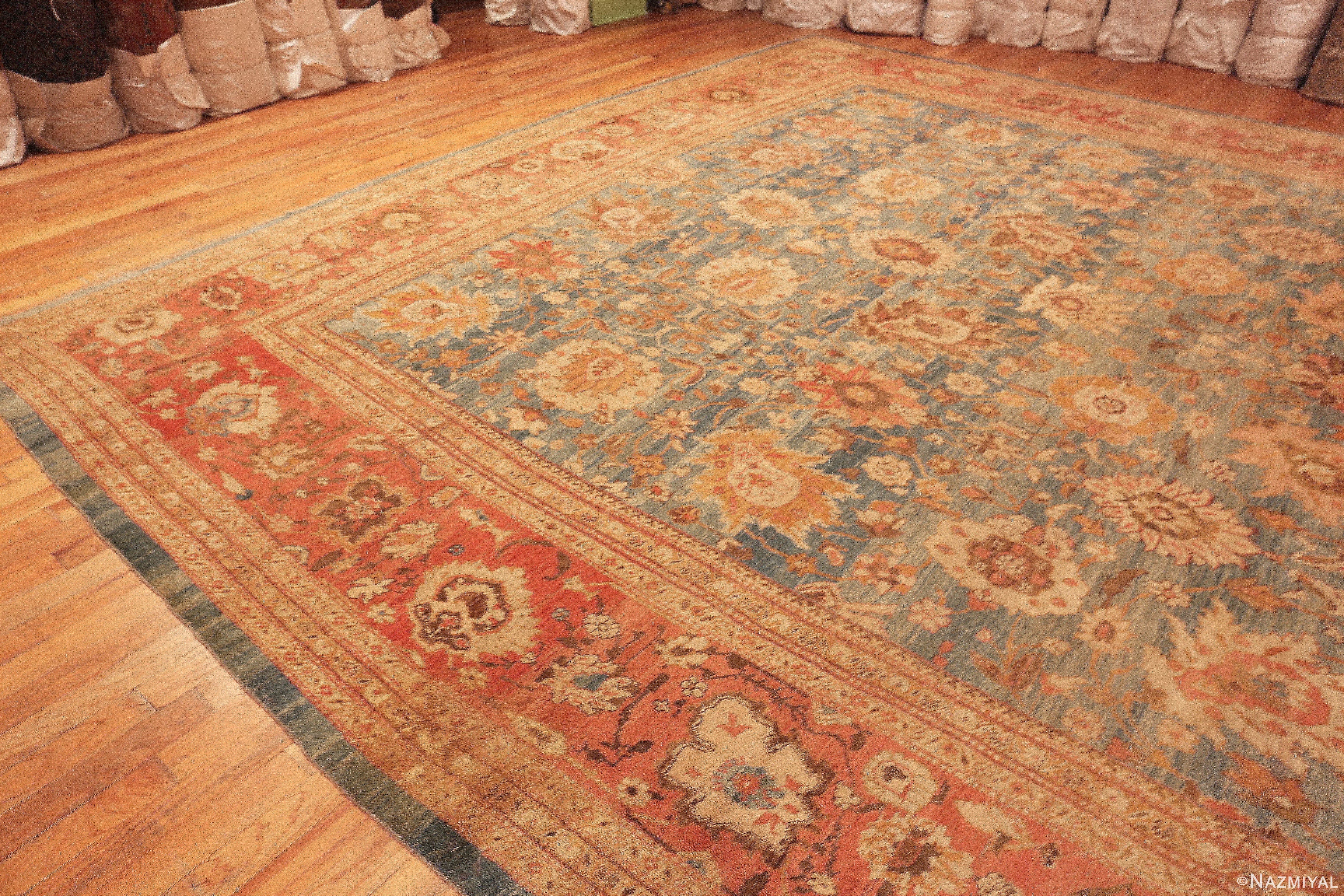
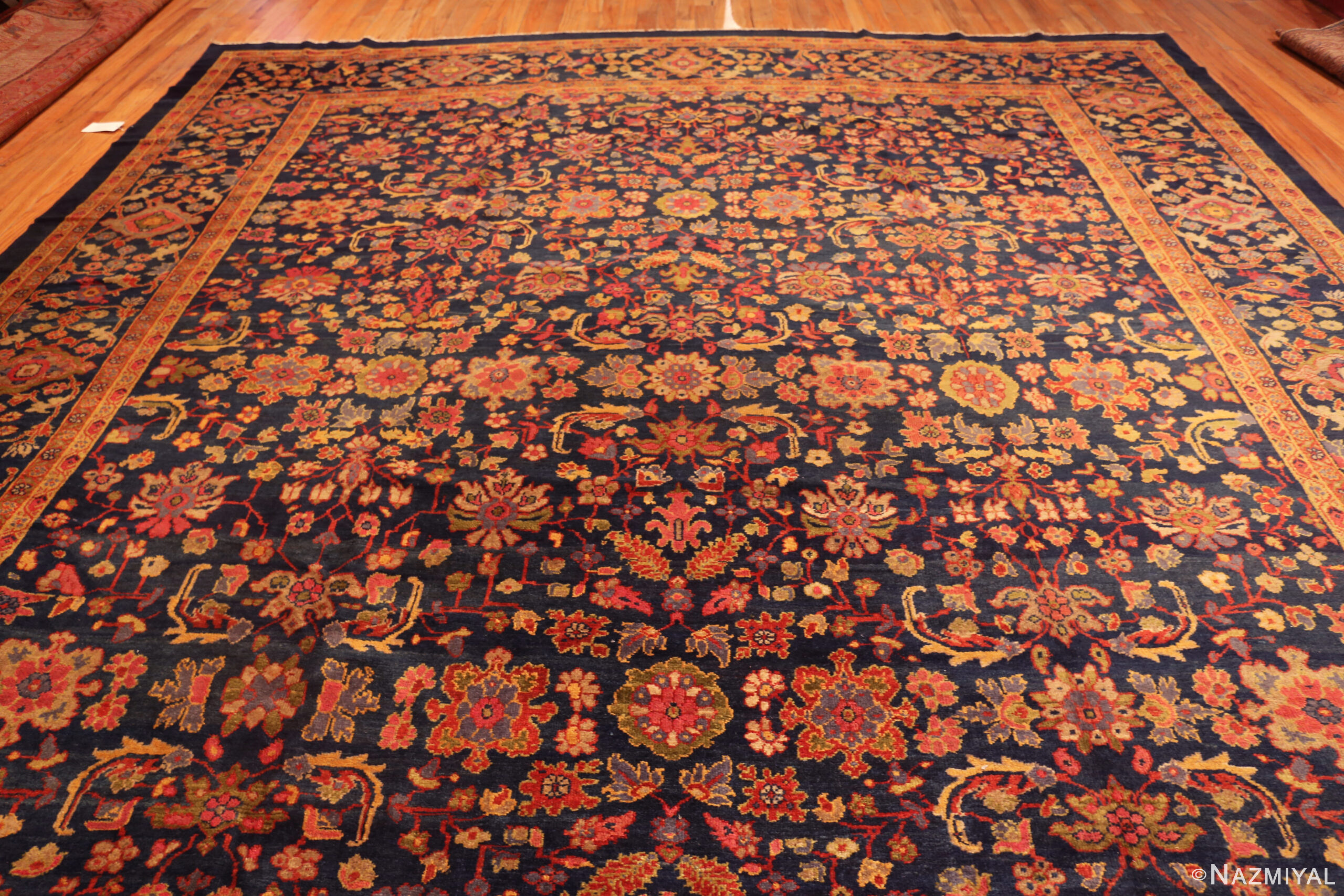
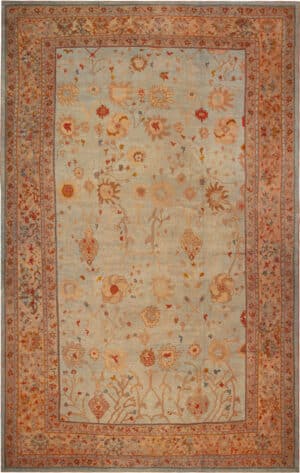
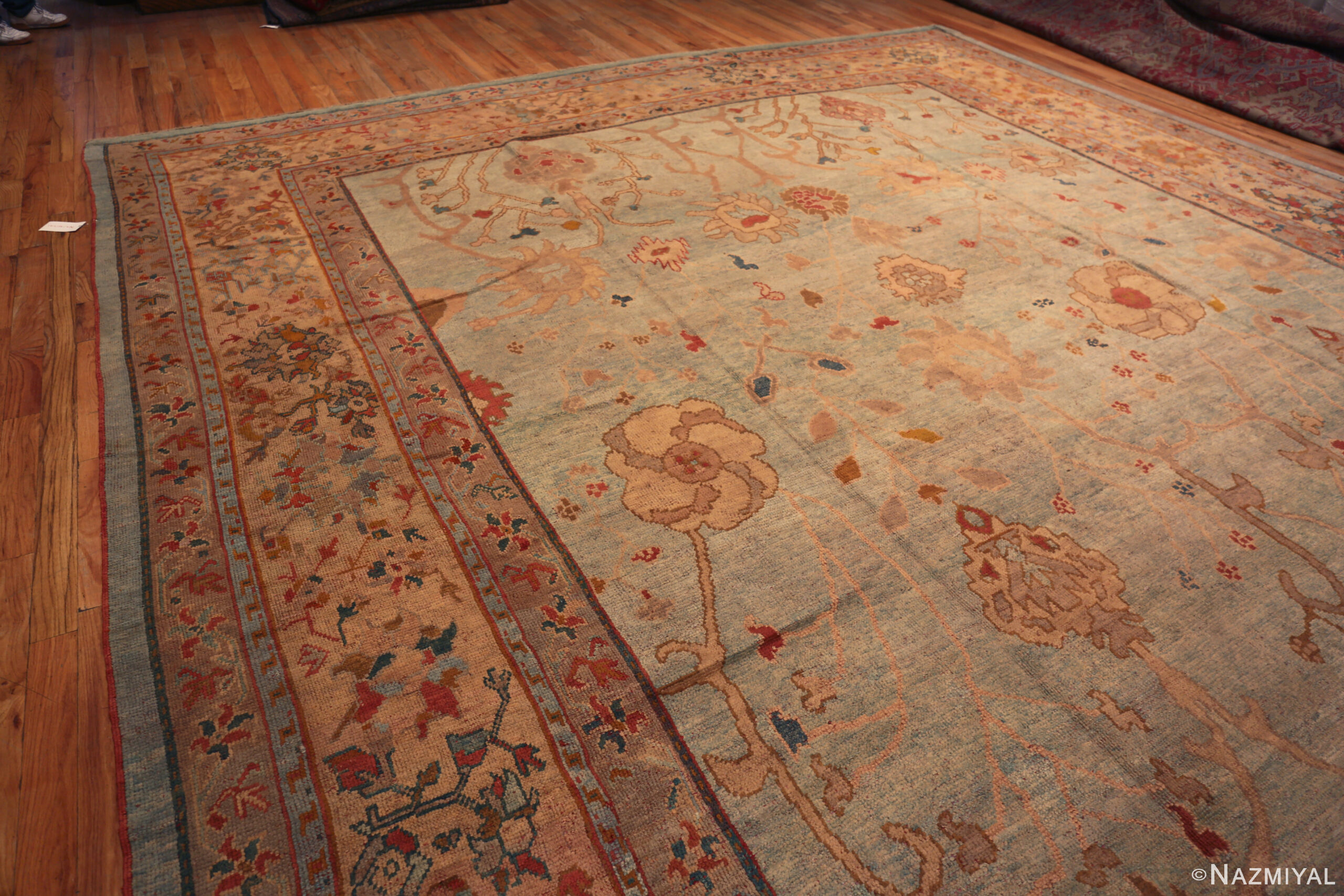
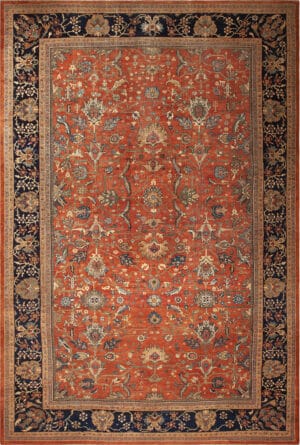
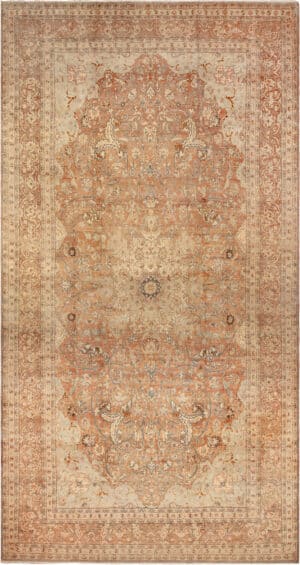
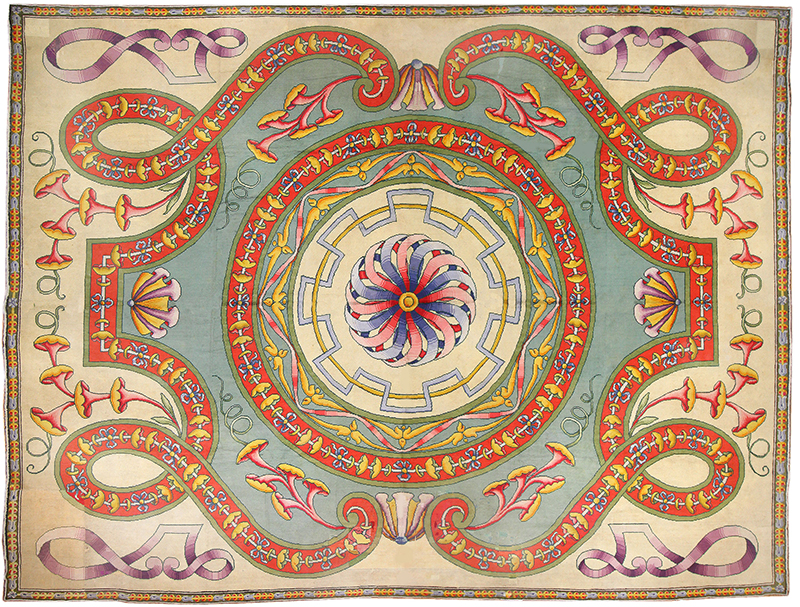
Palace-size rugs and Oversized rugs over 20 feet for grand rooms, lofts, and open-plan interiors.
Oversized rugs (palace-size carpets) are handwoven rugs measuring over 20 feet in length or width, made to unify expansive interiors with a single continuous surface.
Oversized rugs—often called palace-size carpets—are handwoven area rugs that measure over 20 feet in either length or width, designed to anchor grand rooms with one continuous field of pattern and color. They’re the cleanest solution for lofts, open-plan interiors, and long sightlines where a standard “large rug” still feels underscaled. Browse the oversized inventory below by exact dimensions, then use the guide to plan furniture placement, perimeter clearance, and delivery access before anything ships. If you’re close to the threshold, compare options with our Large Rugs category. Curated by Nazmiyal Collection in New York City.
Updated February 16, 2026 • Reviewed by Jason Nazmiyal
Expert Advisory (real guidance on size, placement, and value)
What Are Oversized Rugs?
Oversized rugs are extra-large area rugs that pass the point where most “large rug” assortments end. If you’ve tried to furnish a big room with a standard 8×10 or 9×12 and it felt floaty, you already know why: the architecture reads larger than the rug, so the furniture never feels grounded. On this page, oversized generally means over 20 feet in either length or width—a true palace-scale footprint designed to connect multiple zones in one continuous carpet.
For comparison, many large rugs live in the 15–20 foot range. Oversized rugs take you beyond that threshold so seating, dining, and circulation can sit on one unified surface.
Oversized Rugs vs Large Rugs
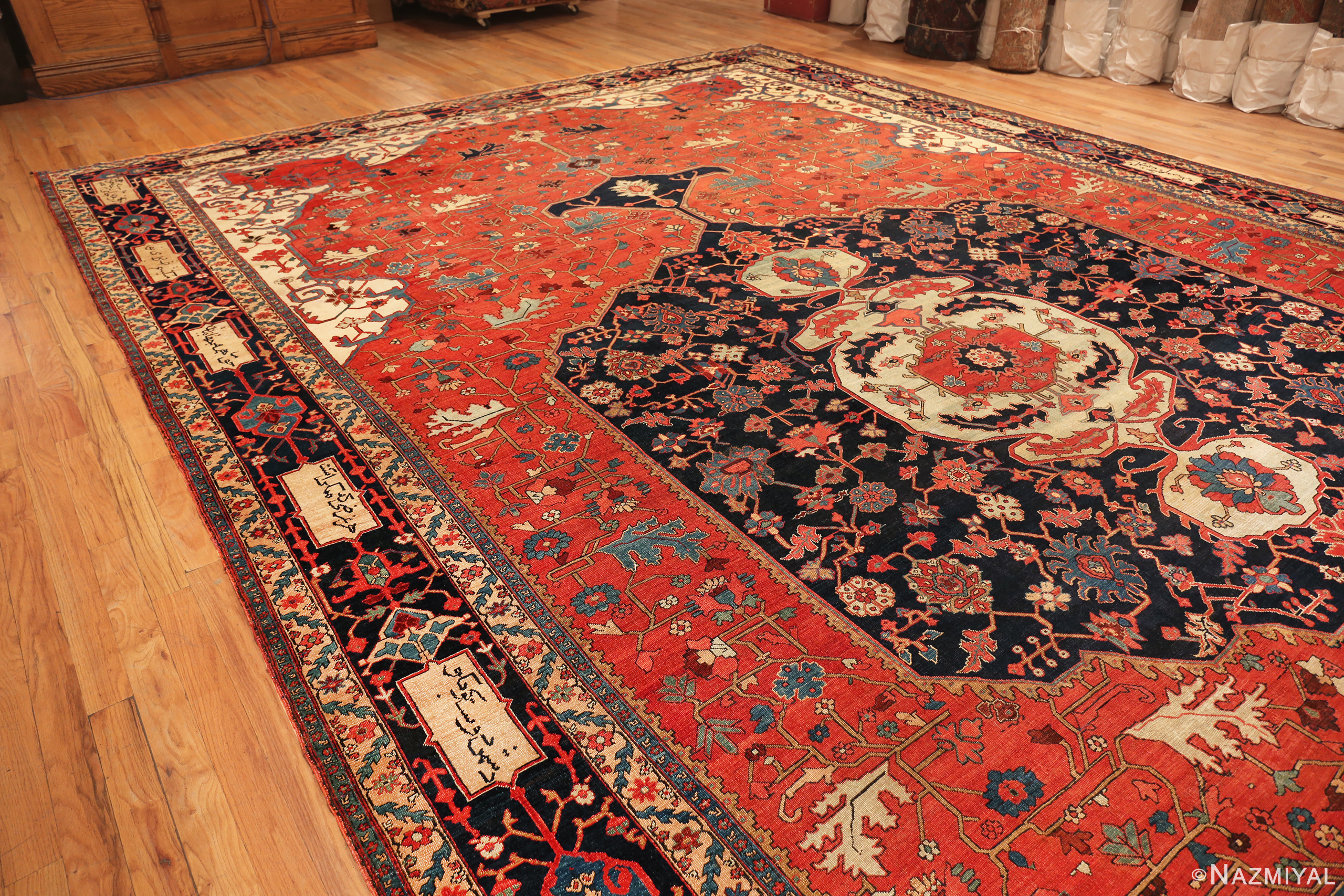
The difference is less about labels and more about how the room behaves. When the rug is underscaled, furniture looks disconnected. When the rug is properly scaled, the room reads intentional.
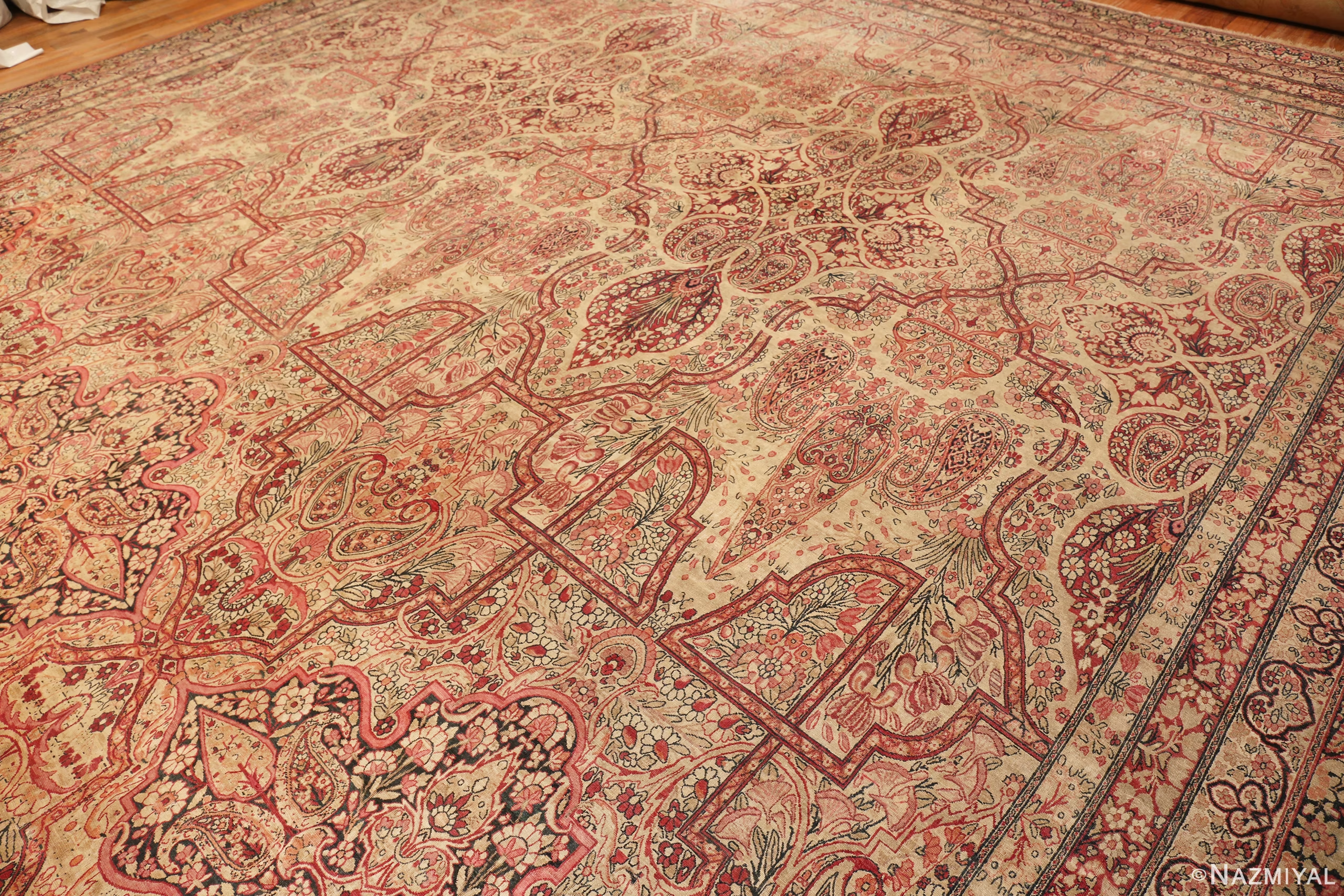
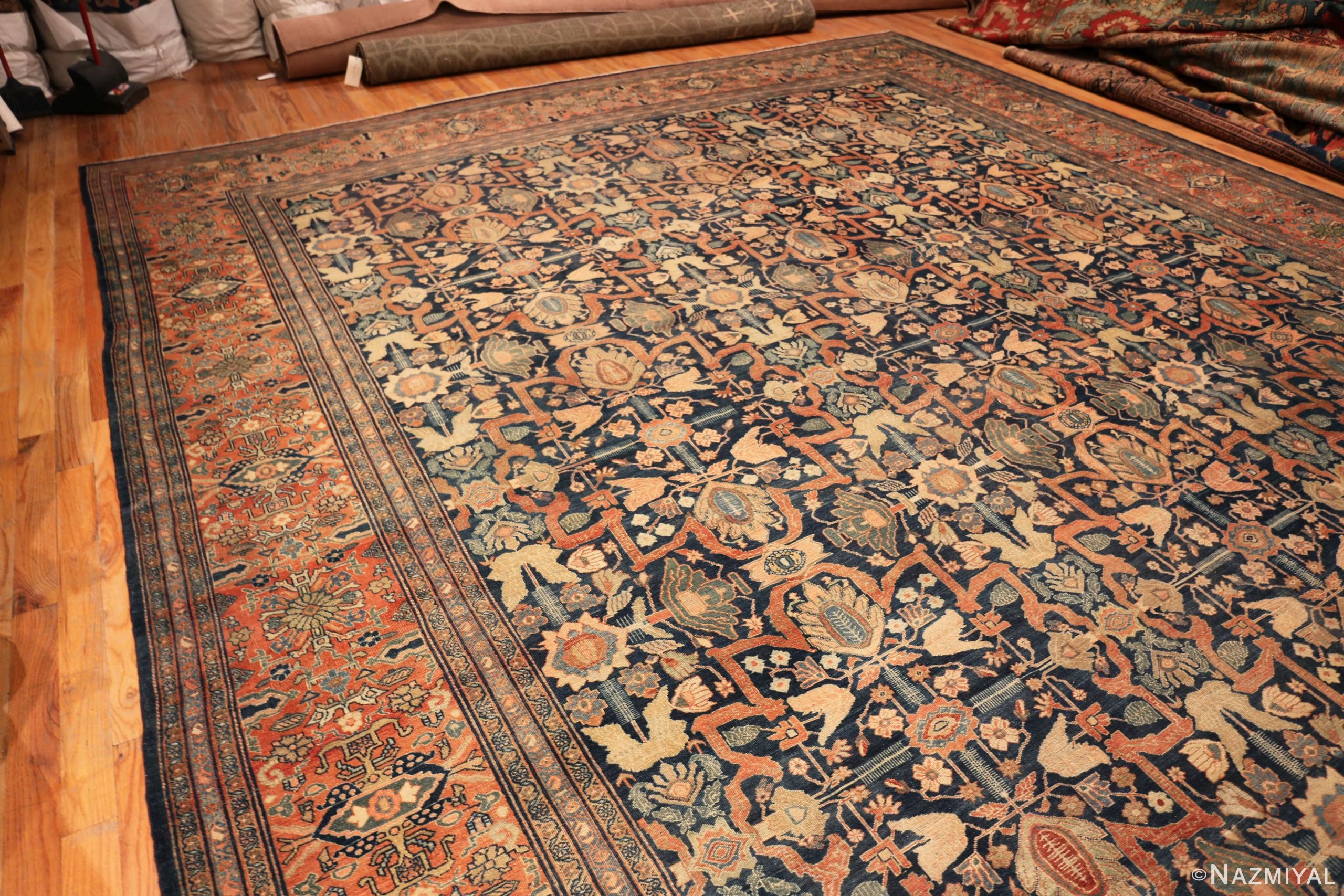
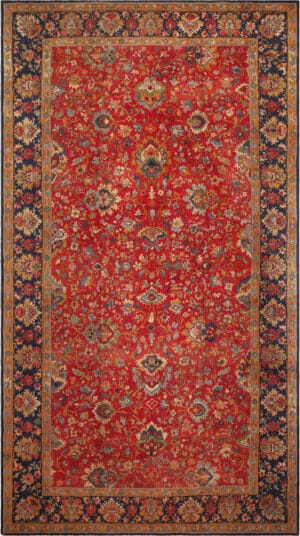
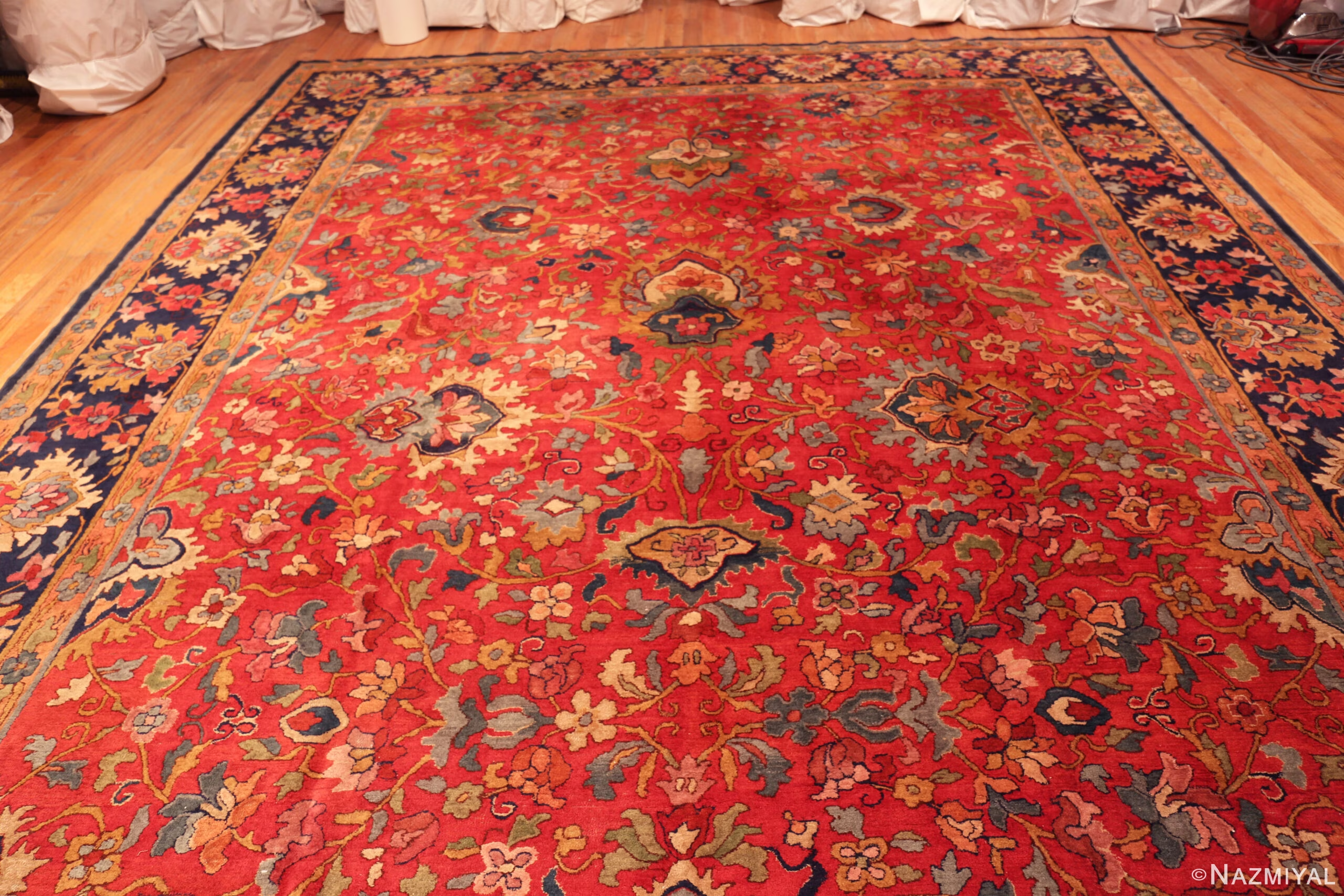
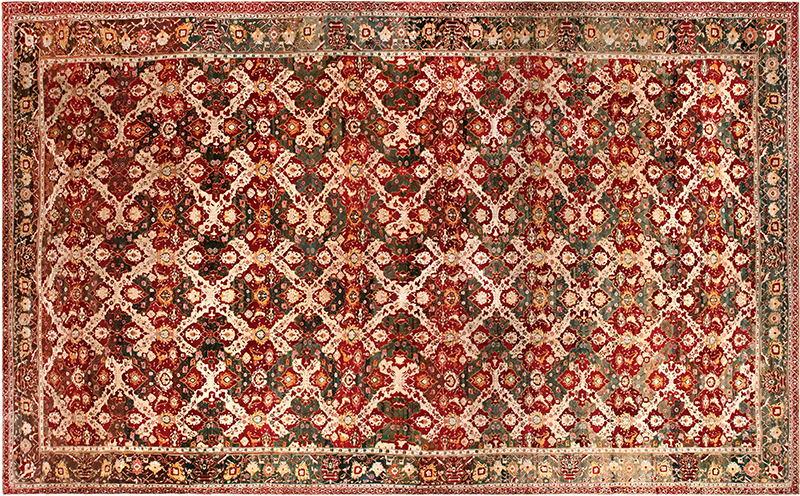
Rich Red Jewel Tone Oversized Antique Allover Design Indian Agra Rug — Nazmiyal Collection #72240
Feature
Large Rugs (15–20 ft)
Oversized Rugs (20+ ft)
Best for
Most large living rooms and dining rooms
Grand rooms, lofts, open-plan layouts, long sightlines
Furniture placement
Often front legs on (or all legs on in generous rooms)
Typically all legs on + clean perimeter of visible floor
Design behavior
Many patterns work well
Patterns must be planned to read calmly across a massive field
Logistics
Easier to ship, rotate, and handle
Requires delivery planning (elevator/stairs/turns) and staging space
If you’re debating the cutoff, revisit our Large Rugs category—then move up to oversized when you want one continuous rug to connect multiple zones.
Why Palace-Size Carpets Were Made
Historically, very large rugs were woven for architecture where the floor itself was part of the statement—palaces, estates, formal reception rooms, galleries, and grand civic interiors. In many traditions, the best oversized rugs weren’t simply “scaled up small rugs.” They were planned differently so they could be read from across the room: larger repeats, calmer fields, and borders sized to frame a massive surface without looking heavy.
That planning is why a great palace-size carpet can feel calm even when the pattern is complex: the scale is disciplined enough to support the room, not compete with it.
Best Types of Oversized Rugs (What Works at Scale)
Not every rug style behaves well at 20+ feet. The categories that consistently succeed tend to share one trait: the design remains legible and balanced across long sightlines.
Disciplined allover patterns: calm, repeatable structure that can span huge rooms without visual noise.
Spacious medallion compositions: strong center focus with enough breathing room in the field and corners.
Architectural geometry: bold, clear drawing that reads from across the room (especially in open-plan layouts).
Planned decorative florals: best when the repeats are scaled up so details don’t become clutter at distance.
How to Choose the Right Oversized Size
Oversized rugs succeed or fail on planning—not taste. Start with the layout you want, then confirm real-world constraints before checkout.
Decide how furniture will sit: all legs on is the cleanest, most finished look at this scale.
Leave a perimeter that makes sense: visible floor around the rug usually looks best in large rooms.
Measure delivery pinch points: elevator dimensions, stair turns, hallway widths, and doorway clearances.
Design planning: motifs scaled properly (not cramped), borders proportional to the field.
Material integrity: resilient pile and a foundation that stays straight and stable over distance.
Color harmony: big rugs expose palette decisions quickly—coherence matters.
Consistency across the field: uneven drawing or weak weaving becomes obvious at 20+ feet.
Condition Matters More at This Scale
In a palace-size rug, small issues can compound visually. Prioritize structural stability over surface perfection—especially when the rug will be used in high-traffic rooms.
Wear lanes: common from historic traffic patterns.
Ends and selvages: edges take stress in very large rugs.
Old folds and storage lines: confirm they’ve relaxed and the rug lies flat.
Restoration quality: good work disappears; poor work distracts.
Decorating With Oversized Rugs
Open-plan rooms
Use one oversized rug to connect multiple zones. The eye reads a single surface and the space feels calmer.
Dining rooms
Go larger than you think. Chairs should stay on the rug even when pulled out.
Lofts and high ceilings
A massive rug balances vertical volume and softens hard architectural materials (concrete, steel, glass).
Care, Pads, Rotation, and Cleaning
Use a quality pad: reduces abrasion and helps keep a very large rug stable.
Vacuum gently: steady, consistent cleaning is better than aggressive beater-bar vacuuming.
Rotate periodically: even a half turn helps distribute wear.
Clean professionally: oversized rugs are easiest to maintain with conservative, specialist care.
Buying & Delivery Notes
Oversized rugs aren’t difficult—but they do require a bit of planning so delivery and placement are smooth.
Confirm access: elevator size, stair width, tight turns, and building rules.
Plan staging: identify where the rug will be unrolled and positioned.
Coordinate the pad: plan for trim-to-fit padding before installation.
In dealer language, yes—”palace size” is a common way to describe oversized carpets made for very large rooms.
What size counts as an oversized rug?
As a practical benchmark, oversized rugs measure over 20 feet in either length or width.
What’s the difference between large rugs and oversized rugs?
Large rugs generally sit in the 15–20 foot range, while oversized rugs exceed 20 feet. Oversized rugs are best when you need one continuous surface to anchor a truly expansive layout.
Are oversized rugs usually custom-made?
Many antique oversized rugs were commissioned for specific rooms. Today, true oversized antiques still exist, and custom weaving can be useful when dimensions are unusual.
Should all furniture legs sit on an oversized rug?
If the room allows it, “all legs on” gives the cleanest, most finished look. In some layouts, “front legs on” works well—especially if you’re close to the ideal size.
Can oversized antique rugs be maintained easily?
Yes—use a pad, vacuum gently, rotate occasionally, and clean conservatively with specialists when needed.
Can oversized rugs be delivered and installed without issues?
Usually yes, but confirm building access and turning clearances in advance. Planning is the difference between easy delivery and expensive complications.
Nazmiyal White-Glove Service
We make it easy to shop with confidence—whether you’re choosing a single statement piece or curating a full room.
Nazmiyal Collection has been a trusted source for antique rugs and vintage carpets for over 45 years. Our NYC gallery curates one-of-a-kind pieces with an emphasis on authenticity, provenance, and lasting decorative value.
Need help? Call us at (212) 545-8029 or visit our New York City showroom to work with a rug expert.
             Posted on Google        Clay Pendergrast     Trustindex verifies that the original source of the review is Google. My wife and I are so pleased with the antique Uzbek Bokhara Rug purchased from the Nazmiyal Collection. Not only does the rug have a spectacular design, it also was very reasonably priced. The way it transforms our living room, reconciling the classic modern furniture with the 1913 Craftsman interior is remarkable.         Posted on Google        Terence Hayes     Trustindex verifies that the original source of the review is Google. I have purchased multiple rugs at multiple Nazmiyal auctions and I am extremely pleased with the quality, price, and experience.  Highly recommended!         Posted on Google        Victor Florintsev     Trustindex verifies that the original source of the review is Google. The only ones I'd ever buy rugs from. The best.         Posted on Google        Jeffrey NeumanB     Trustindex verifies that the original source of the review is Google. I bought two gorgeous Serapi rugs from Farhad at Nazmiyal Rugs!  Beautiful carpets, fair prices and great service.  Very happy customer.  Farhad (the sales person) was very patient and gave us great service.         Posted on Google        john haid     Trustindex verifies that the original source of the review is Google. Alen is a gentleman and an expert.  Really great to work with.         Posted on Google        Edward Yasuna     Trustindex verifies that the original source of the review is Google. I recently purchased a modern Kandinsky rug from Nazmiyal Auctions.  It was just as described, and the director (Farhad) of the auctions had it sent to me quickly and safely.  Payment was easy, the rug was reasonably priced, and I highly recommend Nazmiyal Auctions and Antique Rugs.  Quality merchandise and first-class service.         Posted on Google        Nicholas Carr     Trustindex verifies that the original source of the review is Google. Had a excellent experience buying a rug in Nazmiyal's 1/18/26 online auction.  First, prior to the auction, viewing a number of lots at the 32nd St showroom (I had prepared a list from the online catalog). The staff were great to work with: helpful, knowledgable, honest, and flexible.  Second, after placing an online bid and winning the desired item, arranging payment and pickup was simple and straightforward. Everything went seamlessly and the overall experience was educational and fun. Many thanks to Jason and his team.         Posted on Google        Andrea Gared     Trustindex verifies that the original source of the review is Google. Everyone at Naziyal is proffessional, especially Jason and Farhad.
They are knowledgeable, truthful, and true gentlemen. I have sold several rugs through them and will always go to them first, to buy or sell. The best in the business!
Frequently Asked Questions
In dealer language, yes. “Palace size” is a common term for oversized carpets made for very large rooms and long sightlines.
As a practical benchmark, oversized rugs measure over 20 feet in either length or width—large enough to unify grand rooms, lofts, and open-plan interiors with one continuous surface.
Large rugs generally fall in the 15–20 foot range, while oversized rugs exceed 20 feet. Oversized rugs are best when you want one continuous carpet to connect multiple zones (seating, dining, circulation) in a truly expansive layout.
Historically, very large rugs were woven for palaces, estates, formal reception rooms, and grand civic interiors—spaces where the floor was part of the architectural statement. Many were planned with larger repeats, calmer fields, and proportioned borders so the design reads clearly from across the room.
The best oversized rugs stay calm and legible across long sightlines. Disciplined allover patterns, spacious medallion compositions with breathing room, architectural geometry, and planned florals with properly scaled repeats tend to perform best at palace size.
Plan the layout first: decide how furniture will sit (all legs on is the cleanest look at this scale), leave a perimeter of visible floor that feels intentional, and measure delivery pinch points like elevators, stair turns, hallways, and doorways before purchase.
If the room allows it, “all legs on” creates the most finished, grounded look—especially in open-plan rooms. In some layouts, “front legs on” can still work well when you’re close to the ideal size.
Look for design planning (motifs scaled properly and borders proportional), a stable foundation and straight edges over distance, coherent color across the full field, and consistent weaving quality—because uneven drawing and weak structure become obvious at 20+ feet.
In a palace-size rug, small issues can compound visually. Pay special attention to wear lanes, ends and selvages, old folds or storage lines (and whether the rug lies flat), and the quality of any restoration—good work disappears, poor work distracts.
Yes. Use a quality pad to reduce abrasion and stabilize the rug, vacuum gently and consistently, rotate periodically to distribute wear, and clean conservatively with qualified specialists when needed.
Usually, yes—with planning. Confirm building access and turning clearances in advance (elevator size, stairs, tight turns, doorways), plan a staging area for unrolling, and coordinate a trim-to-fit pad before installation.
THE NAZMIYAL NEWSLETTER
Discover Your Next Favorite Rug
Get new arrivals, rug inspiration, educational blogs, and collection highlights delivered to your inbox.
By subscribing, you agree to receive marketing emails from Nazmiyal. Unsubscribe anytime. View our Privacy Policy.