Soft and lustrous, silk has a long history as a luxury fabric. Hailing from the Orient, silk has deep cultural ties dating back several millennia. A hallmark of the pre-industrial trade, silk was once as valuable as gold. Its impact was widespread, indirectly responsible for the intermingling of culture across the Asian continent and Mediterranean through the Silk Road.
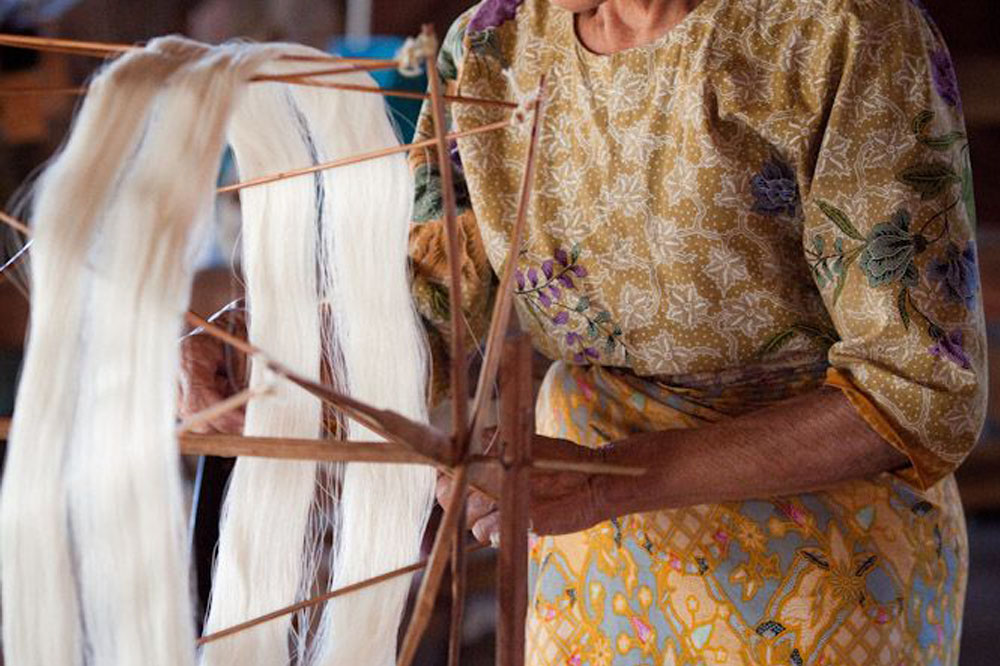
Today, it’s used for clothing, furniture, banners, tapestries, cosmetics, carpets, and so much more. But how is silk made? How far back does its history go? And why was it considered such a luxury item?
An Early History
China is credited with the invention of many staples of the every-day. It’s an ancient country, with an ancient history of innovation and development. Silk is no different, with its origins in the Neolithic Chinese Yangshao culture of the 4th millennium BCE. This was the period of time that saw the beginning of the Bronze Age, writing, and very early civilizations.
The Yangshao culture existed along the Yellow River in the Asian continent around 5000 BC-3000 BC. It was an early human society that developed from the agricultural Anau people of Central Asia and the Trypillians of South-West Europe. The earliest evidence of silk production dates back over 5,000 years, from the Henan Province in the form of a wrapping for an infant found in a burial site.
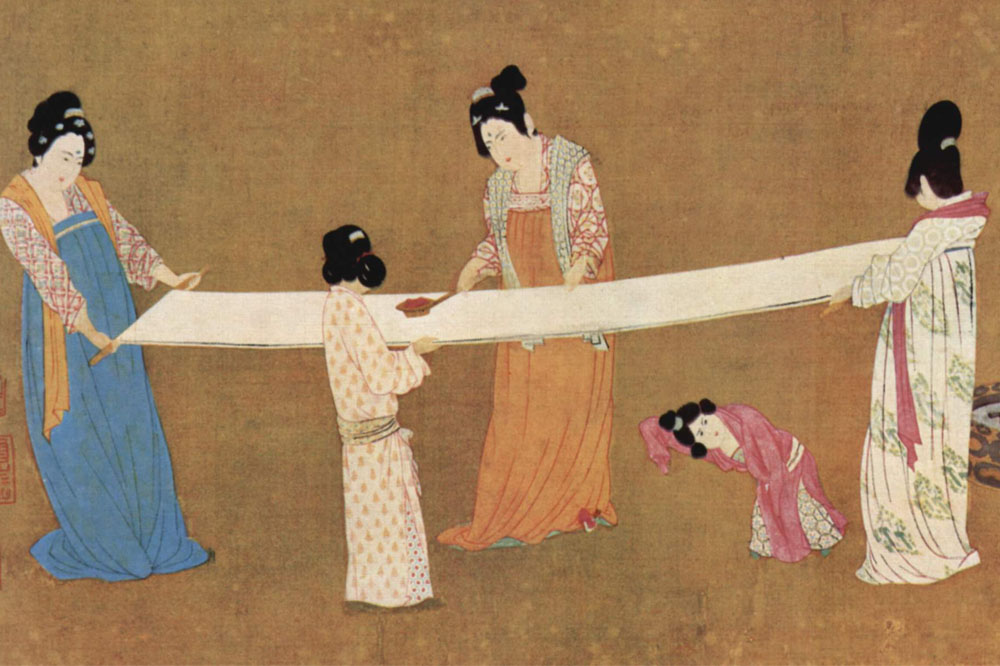
Silk boomed in popularity for several reasons, the most obvious being its material. Soft and sleek, with a lustrous quality, it was considered a luxury item. Besides that, though, silk was a light fabric able to withstand damp climates. It absorbed ink well, a perfect substitute for paper and used for writing.
The Silk Road
The Silk Road was a network of Asian trade routes that lasted between the 2nd Century BC all the way through to the 15th Century. It spanned about 4,000 miles (6,400 km) and was a large web of routes rather than a singular road, connecting all of Asia as well as Southern Europe. Few people traveled the whole expanse of the Silk Road. Instead, these exchanges made their way across the continent through a succession of middlemen.

It gets its title from the popular and lucrative trade of silk, though it was not the only product that traversed the Silk Road. From the West came gold, horses, camels, wine, and honey. From the East, paper, gunpowder, porcelain, tea, dyes, perfumes, and textiles. The spread of religion, philosophy, and scientific concepts were an inadvertent result of the Silk Road, ushering in a transformative period of cultural exchange as well. Evidence of the long distance silk trade can be dated back to as early as 1070 BC where archeologists found silk woven into the hair of an Egyptian mummy.
For a long time, China kept the production process of silk a secret in order to keep a monopoly on the most profitable merchandise of the time. This, however, did not last forever, and eventually knowledge of its manufacturing spread to other parts of the East. Japan and Korea were among the first to adopt silk production, closely followed by India. It expanded from there to Byzantium, Arabia, the Levant, and Italy.
The International Travel of Silk
India was a force to be reckoned with when it came to manufacturing silk. Currently the second largest producer of silk in the world, the existence of silk can be traced back to the Indus River Valley civilization of 2450 BC suggesting either a close trading relationship with China or their own method of sericulture. India became one of the main exporters of silk, using ocean trade to transport merchandise to the Mediterranean.
Italy in particular was a leading country in the production of silk in Medieval Europe. Though Rome imported much of its silk from India, eventually a large manufacturing facility was established in the city of Catanzaro in the 11th century. They were known for supplying the Vatican with their fabrics, as well as most of Europe.
Silkworms were introduced to the Western hemisphere in Oaxaca, Mexico through Spanish colonization in the 16th century. Years later, the interruption of the silk trade in Asia gave way to the North American innovation of nylon, a synthetic material invented to satisfy the demand for silk.
Sericulture: Silk Farming
Silk is made through a process called “sericulture” and is produced by insects. Though there are many species that can produce silk, the best silk comes from the mulberry silkworm, or the Bombyx mori. It is a silk moth that has undergone centuries of domestication for the sole purpose of producing this beautiful fabric.
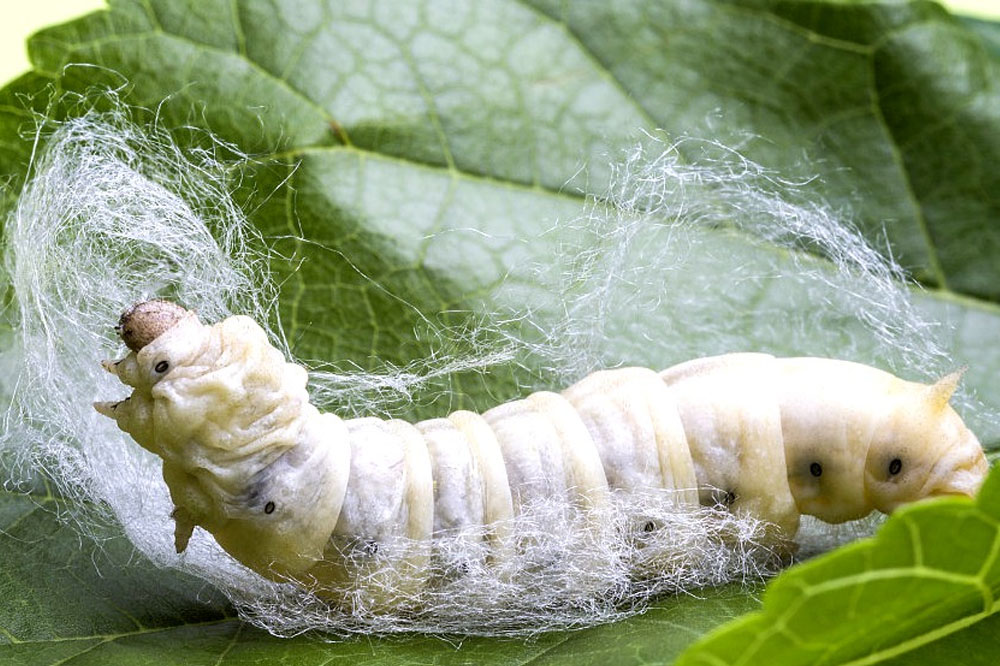
The process begins with caring for the silkworms. There are certain moths that are selected for breeding, each laying up to 500 eggs. The caterpillars live off of a strict diet of mulberry leaves where they eat as much as possible, growing quickly. Once they’ve gotten big enough, they begin the process of weaving their cocoon, preparing for their would-be metamorphosis.
Components and Separation
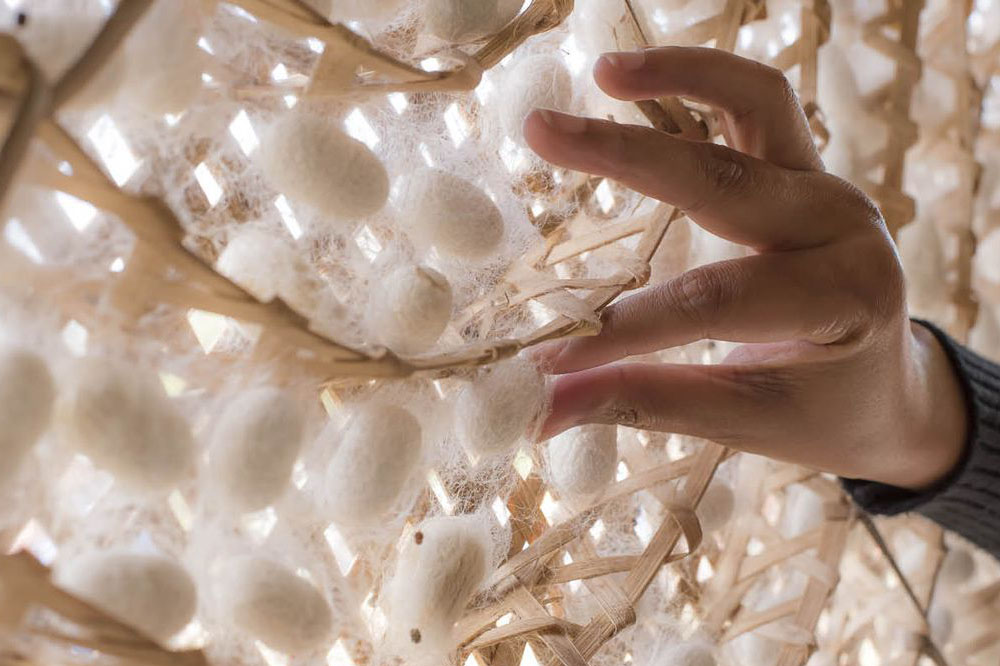
Their cocoons are made up of two components: fibroin and sericin, both secreted from their salivary glands. Fibroin is the protein fiber that silk is made of, as well as the structural center of the worms’ cocoon. Sericin serves as a glue-like coating that ensures the fibers stick together. While both are important to the integrity of the cocoon, make no mistake; fibroin is what silk farmers are after. It takes about 2,500 silkworms to create a single pound of silk, each one capable of producing almost a full kilometer’s worth of silk filament in a single cocoon.
But how can these two components be separated? The answer is heat. The sericin is removed through a process known as “degumming” where the pupas are put in hot water which frees the silk filaments. The cocoons are unspooled and divided into two categories: raw silk and fine silk. The fine silk is softer and more even, making up the interior of the cocoon. Raw silk on the other hand has a more coarse appearance and is the exterior of the cocoon. These filaments are cleaned of any unwanted imperfections or debris and then combined to form a thread in a throwing process.
The Legend of Empress Leizu
Because silk production dates back to such ancient times, there is no sure way of knowing how it began. There is, however, a popular legend as to how it all began. Put in writing by famed Chinese philosopher Confucius is the legend of the Silkworm Mother. Chinese empress Leizu, otherwise known as Xi Ling Shi and wife of the Yellow Emperor Huangdi, is said to have invented the practice of sericulture.
According to the story, she was enjoying a cup of hot tea under a mulberry tree when a silkworm pupa fell from the tree and into her drink. The heat of the tea caused the unspooling of the cocoon, and when she fished it out it unraveled into a beautiful silk fabric, giving her the idea to create something out of it. Her husband gifted her a mulberry grove where she then took to the care of silkworms, also credited with the invention of the silk reel, and the silk loom.
Rich in Silk
Its long production process and Eastern monopoly made silk an exclusive product that quickly became synonymous with wealth and status. Silk clothing dyed in bright colors and intricately embroidered embellishments was the marker of someone of importance, distinguishable from the plain silk or cotton garments of the lower class. Attendants of the royal courts and important officials were often seen dressed in fine silk. Taoist priests were another group that was often wrapped in silk robes, with ceremonial embroideries. Korea was particularly divided by social class. Lower classes and discriminated sects were, by law, not allowed to wear certain colors or fabrics, including silk.
Silk was held in such high regard that it had a purpose outside of its functional materiality, and was sometimes instead used as currency. Bolts of silk were used as payment alongside bronze coins, accepted by traders. People would pay their governments’ taxes in silk. Even armies would accept silk payments. Silk was so valuable, in fact, that it was often hoarded like gold.
Rugs and Carpets
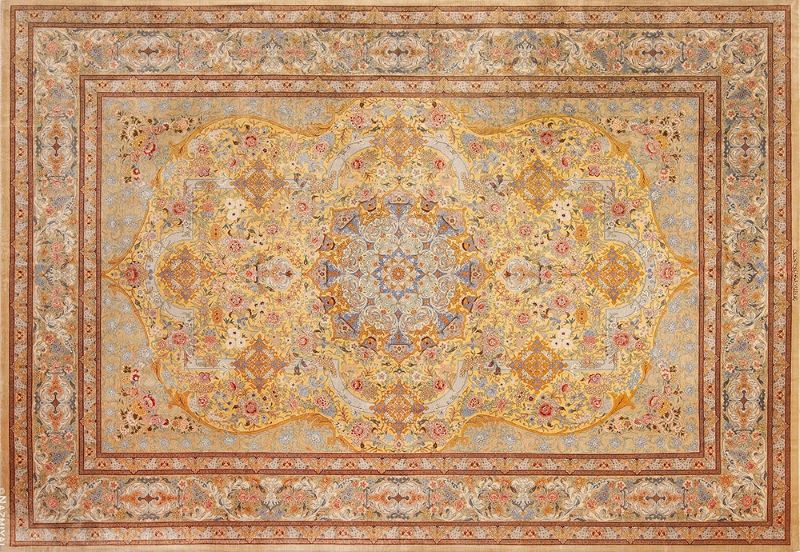
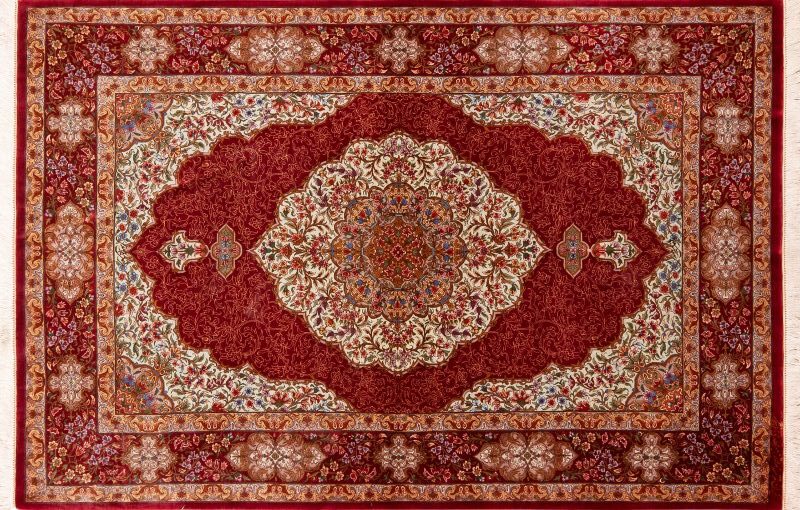
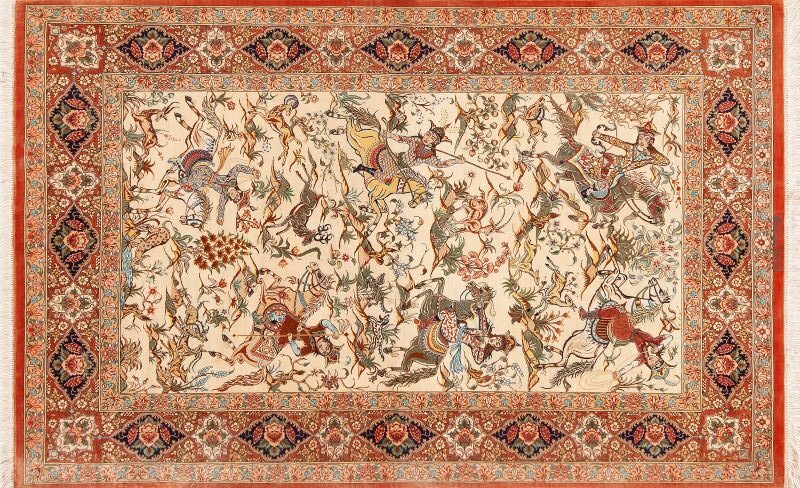
Silk rugs were a particularly popular item, especially when the Silk Road introduced the material to regions like Persia, where rug weaving was a well established practice. It was an ideal fabric because of its durability. It’s one of the strongest natural fibers, but it retains a beautiful glossy sheen that evokes an air of exquisite grace. Because silk threads are so thin, rugs constructed with silk are known for their high knot density. This allows weavers the freedom of creativity, as the high thread count can achieve intricate pattern-work that is otherwise difficult for materials like wool.
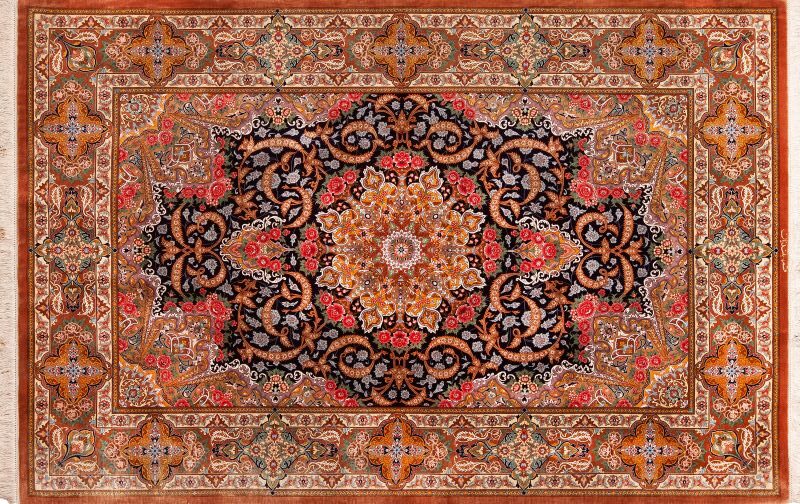
Oftentimes, silk was used ornamentally, mixed in with other more common materials to add a touch of luxury to the design of a rug. It was common to use a blend of metallic thread and silk in decorative pieces, as both materials possess a shiny quality that compliments the other well. The city of Isfahan, Persia in particular became a significant center for the production of these luxury rugs. Apart from the exclusivity of the silk material, only highly skilled craftsmen were able to produce carpets of this nature. Guilds of artisans that specialized in silk weaving were formed to produce pieces made for royalty.
These carpets were also unique in the sense that they rarely served a utilitarian purpose. They were meant to be admired, used as symbols of wealth and placed in areas where there is no heavy foot traffic. Silk rugs were created more as works of art than actual carpets.
Unconventional Silk and its Uses
Silk makes for a beautiful fabric for weaving clothing and textiles, but it has also been used in more unconventional ways. The Aztecs used a different insect native to the Western hemisphere for their silk. The larvae of the madrone butterfly, also known as the Eucheira socialis, would produce cocoons similar to those in China. This silk was not used for clothing, however. It was more paper-like and often made into small boxes, medical bandages, or bases for painting.
Spider silk is another kind of atypical silk. It’s quite difficult to harvest in large quantities the way you would with caterpillars. This means its uses are not usually based in fabric. Instead, spider silk is used for strictly utilitarian purposes. Its thinness and strength makes it ideal for products such as fishing lines. Durable yet flexible, it is being closely investigated for the production of parachutes, nets, and bulletproof clothing. Spider silk also has a long history in the medical field, used in ancient times as an astringent to stop bleeding. Currently, it’s being studied for its high potential in nerve and ligament repair.
Today, silk is used not just in clothing and accessories, but has found a popular niche in cosmetics. Its materiality is naturally hydrating, making it ideal for promoting moisturization. Because of this, it’s found in anti-aging creams that improve skin elasticity. It helps reduce frizz and breakage in hair and is a main component of different conditioners, as well as products like sleep bonnets, scarves, and hair ties.
Final Thoughts
Silk is an ancient material with a long history of exclusivity in a number of cultures. Its production is a long process that has been around for thousands of years. Coveted for its softness, durability, and lustrous nature, it was at the center of Eastern trade. Its desirability facilitated the spread of socio-political ideas, culture, and religion. Carpet weavers specializing in silk were rare and highly sought after, able to achieve intricate detail given the fine nature of the threads.
- Silk is a fiber with an ancient origin
- Sericulture is a long and delicate process that began in China
- Silk is at the center of the Silk Road trading system in Asia
- Carpet weavers had to be highly skilled to incorporate silk
Frequently Asked Questions
How is silk made?
Silk is made of a natural protein fiber composed of fibroin. It is produced by the salivary glands of silk moth larvae used to make protective cocoons while they undergo the metamorphosis stage of their life cycle.
What happens to the silkworms once their cocoons are harvested?
Silkworms unfortunately do not survive the heat used to unspool the cocoons. This domesticated species of insect has undergone centuries of selective breeding to create silk that even if they were to complete their transformation, they are not equipped to survive as moths in the wild.
How can you differentiate between real silk and synthetic materials?
There are a few ways to test the legitimacy of silk. The easiest is by touching it. If you rub real silk, it will warm up. Synthetic silk, on the other hand, is incapable of retaining heat.
What is silk used for?
Silk is used most commonly as a fabric for clothing, bedding, and accessories, though it is also used in cosmetics for skin and hair health.
What are the benefits of silk rugs?
Silk threads are so fine that high knot density is required in the making of a rug. This allows for a lot of intricate detail that would be otherwise difficult to achieve.