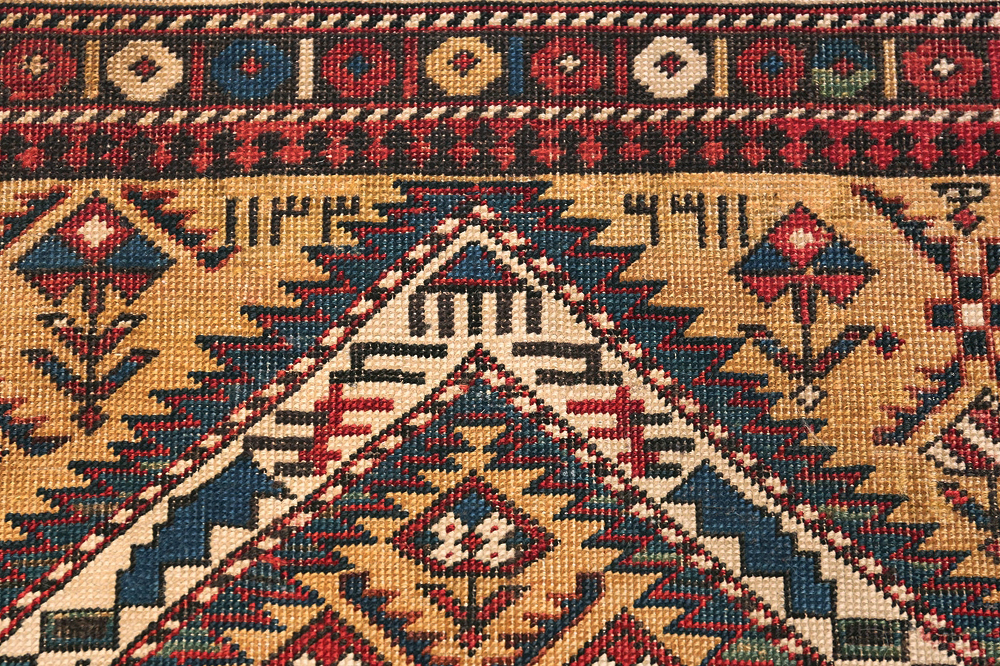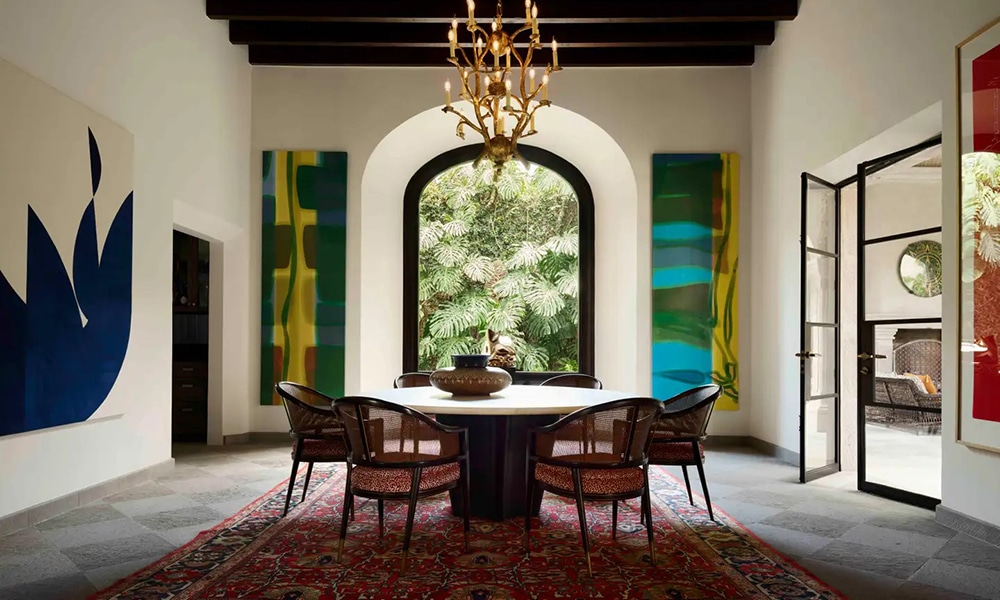
The Mughal Empire was a mammoth force in South Asia for centuries. Established in 1526 and ending in 1815, the Mughals controlled the majority of the Indian subcontinent. Though they themselves were Muslim, their population was largely Hindu, making for an interesting blend of culture and belief that gave birth to what we now know as Mughal Art.
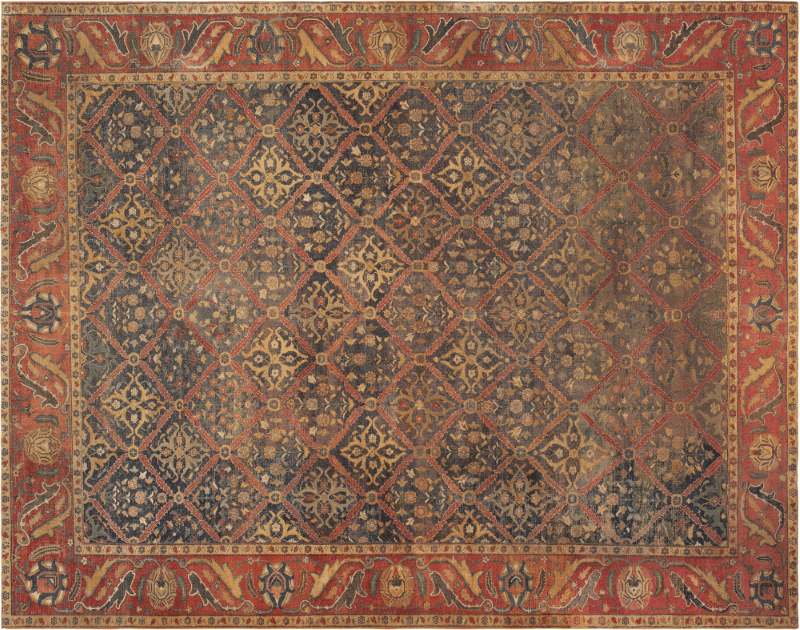
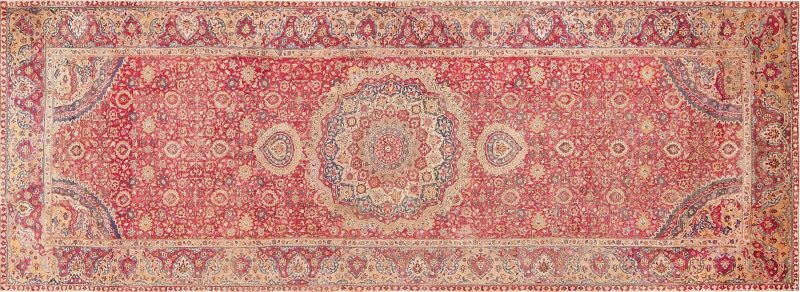
Their carpet-work is famous for its luxurious implications, taking its place as a crucial element in royal courts of the time. They were markers for wealth and status, reserved for only the most important figures of the time and commissioned to talented Persian artisans and weavers. Mughal rug designs have left a lasting impact on the world of textile artwork, synonymous with regal and imperial splendor.
The Mughal Empire: A Brief History
The Dynasty began with Zahir-ud-din Muhammad, nicknamed Babur, meaning “lion”. He was a Central Asian prince with a lineage tied back to the infamous conquerors Genghis Khan, and Timur. Successful in his invasion of what was then known as Hindustan, today’s Afghanistan, Pakistan, and India, Babur sought to establish a permanent empire. A fierce and long battle for control broke out between Babur’s forces and The Rajputs, a large existing group of Hindu warrior clans in northern and central India. Ultimately, Babur claimed victory, but the war had taken its toll and the Empire stood on a shaky foundation. The throne was passed on to his son, Humayun, though the empire’s fortifying expansion did not come until Babur’s grandson, Akbar.
Akbar the Great
Akbar came into power in 1556 under a regent at the age of 13. Known as “Akbar the Great”, he is considered one of the greatest emperors in Indian history. Leading a successful campaign to unify the numerous kingdoms of Hindustan, the Mughal Empire expanded gradually through a mix of strategies. Though he did launch military campaigns as well, Akbar understood that he needed support that would not be won through a purely offensive pursuit. He sought diplomatic solutions with a tolerance and respect for cultural and religious diversity that gained him favor among non-Muslim subjects. The economy flourished under his rule. His appreciation for art attracted artisans, craftsmen, poets, calligraphers, and academics alike. His courts became known as centers for arts and learning.
Mughal Art Under Akbar’s Reign
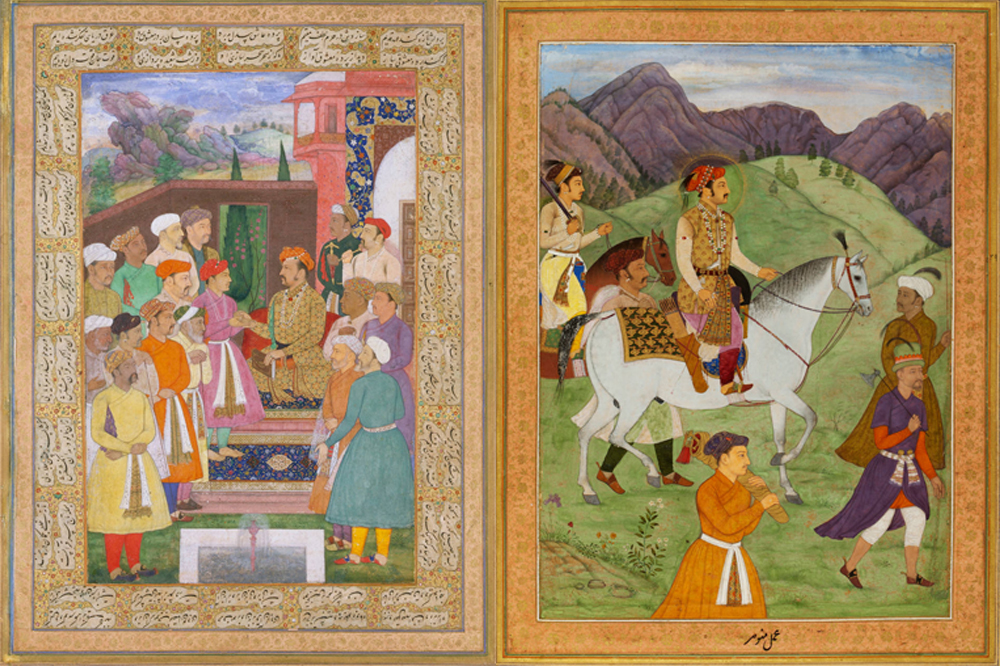
Mughal Art as a genre was properly established under Akbar’s reign, when he ordered his royal House of Books to produce an entirely new style of painting. The kind of art to come out of this was unique in the sense that it was almost entirely secular. It was made up of a mix of cultural art conventions. Vertical formatting, high viewpoints, and a carefully detailed ornamentation was adopted from Persian art. The naturalist depictions of animals came from Hindustani art. Eventually, the depth and composition of these artworks was further influenced by an external force of European Christian work.
The Purpose of this blend in work was to ensure a harmonious existence in the people despite rising tensions between the Hindu majority and Muslim minority. Many times, Mughal artwork would feature objective depictions of religious figures, meant to educate its viewers in the hopes of building tolerance, rather than to convert. Oftentimes, Mughal art is characterized by its themes depicting the contemporary life of the time with fantastical settings and backdrops.
Art Under Jahangir and Shah Jahan
Born Salim, but renamed Jahangir, meaning “World Seizer”, Jahangir was Akbar’s son. He inherited a rich and successful empire, as well as a similar passion for artwork. He was said to travel with a group of talented artisans and craftsmen wherever he went, eager to capture and immortalize moments the way you would with a camera. Capturing the likeness of subject matter began with Akbar but was perfected under Jahangir with naturalist depictions reaching unprecedented heights. Portraiture rose in popularity, as well as botanical and animal motifs. Once used as solely embellishing elements, they became central themes influenced by European Biblical scenes.
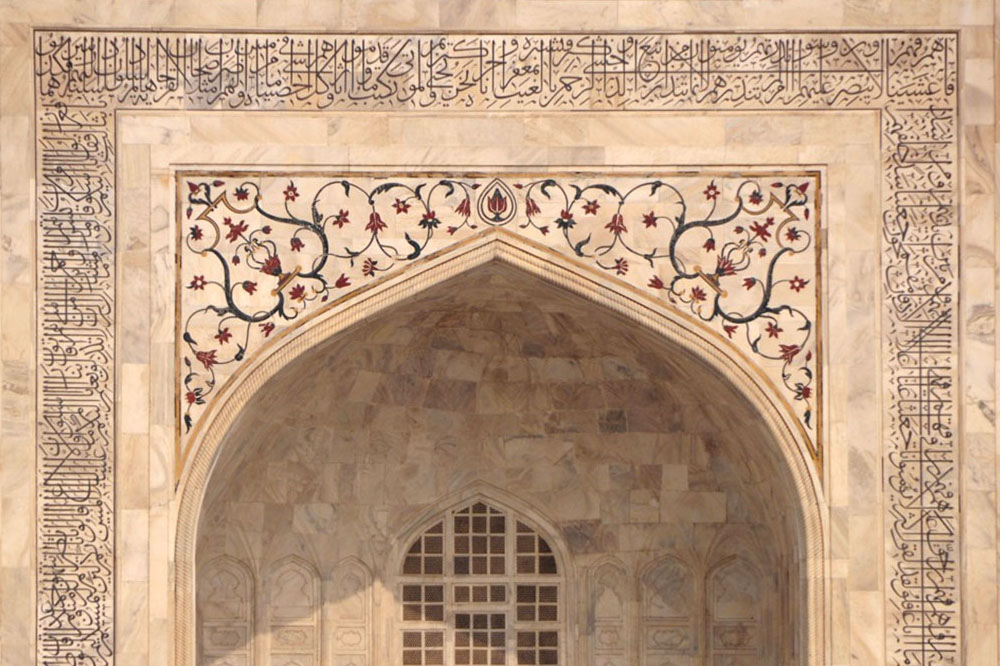
These design elements only grew during the time of Shah Jahan, Jahangir’s son. Famous for commissioning one of the seven wonders of the world, the Taj Mahal, Shah Jahan largely expanded the Mughal practice of rug making. Diplomatic and trade ties with Europe saw an influx of tapestries and paintings from the west. Mughal tapestries and prayer rugs of the time included a mix of realistic and stylized animal life highly reminiscent of scenes made in traditional medieval Italian tapestries. The realism in floral design reached its peak under Shah Jahan’s reign, incorporated even in the famous architecture of the time.
Safavid Persian Influence
The Safavids had a clear influence on the artwork and rug-work coming out of the Mughal age of art. This is traced back to the Mughal’s origins. More specifically, Humayun, Babur’s son. Babur’s death came at an untimely moment. The empire was not fully secured and its shaky foundation suffered when Humayun succeeded the throne. He was driven out by a man named Sher Shah Suri who took advantage of Humayun’s political and military inexperience. While he founded the Sur empire, Humayun fled to Iran with a small band of loyal followers.
Nearly two decades later, he returned to launch a successful attack on Delhi, this time with support from the Iranian Shah and Safavid troops. With him came a substantial group of Persian noblemen, subsequently ushering in massive forces of Persian influences in the Mughal cultural sphere. Art, architecture, language, and literature, were all massively impacted by Persian conventions when the Mughal empire was reestablished.
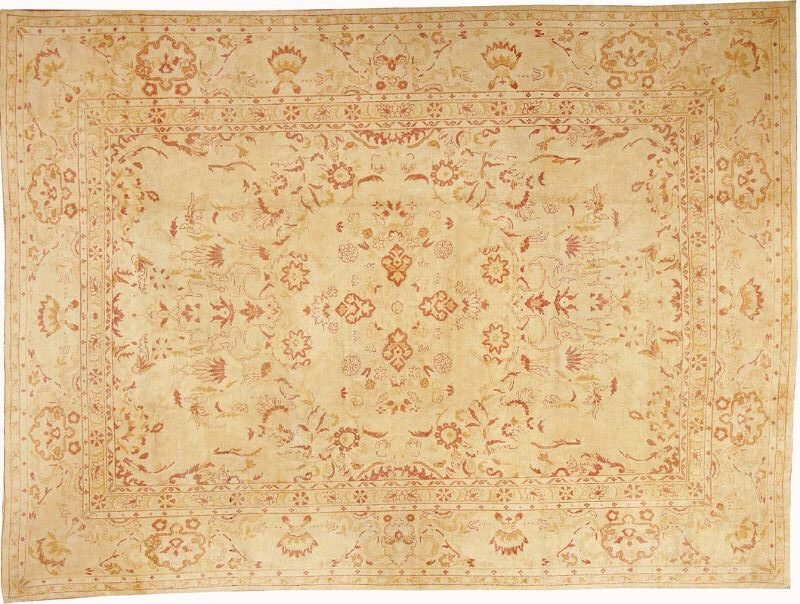
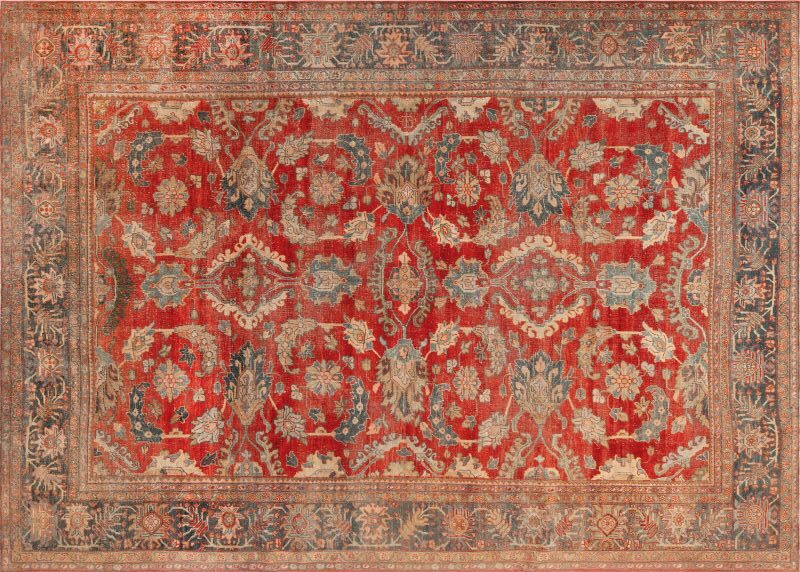
Moreover, Persian rugmakers were seen as the best of the best in their artform. The Mughals cared greatly for art, and the early Mughals placed particular importance on Persian artisans that were brought in for the sole purpose of creating beautiful works of textile and scripted art. Because of this, intricate geometric designs in borders framing large medallion compositions are common in early Mughal work.
Fit For a King: Carpets in the Royal Court
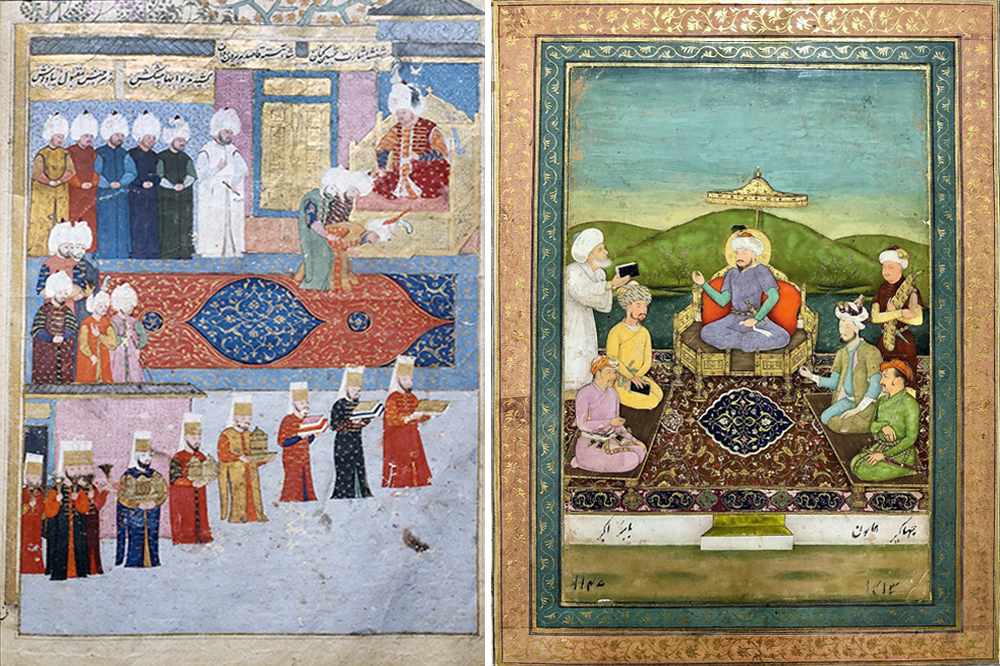
Unlike what we now know carpets to be today, the Mughal ones were not meant to be walked on. These were regarded as important works of art, marked by their presence in a royal court. While beautiful, they were not merely accessories or floor coverings. They operated, instead, as something akin to furniture. Their purpose beyond beauty was as a seat of honor intended for people of great importance in the royal court.
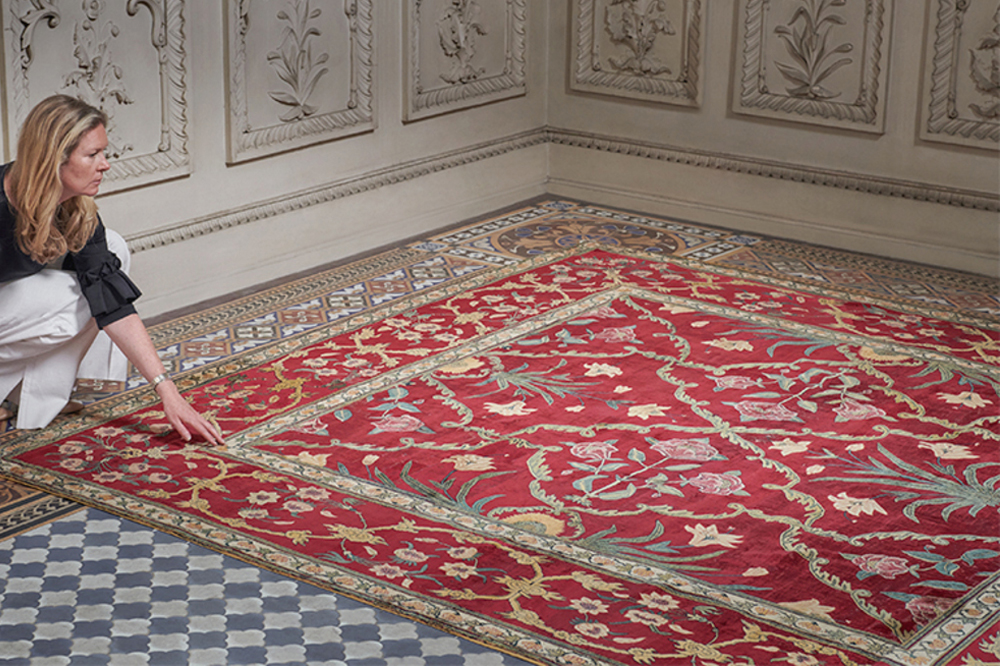
The rug’s designs and craftsmanship indicated the owner’s high financial status. Their symbolic importance was widely recognized and they were oftentimes presented as impressive gifts for rulers. Sometimes, they’d be hung on the wall as a tapestry, displayed like you would a painting in a frame. The popular illustrated manuscripts of the time are a wonderful reference to this as they include many royal scenes in which these stunning carpets are seen in the background.
The Essence of a Mughal Carpet
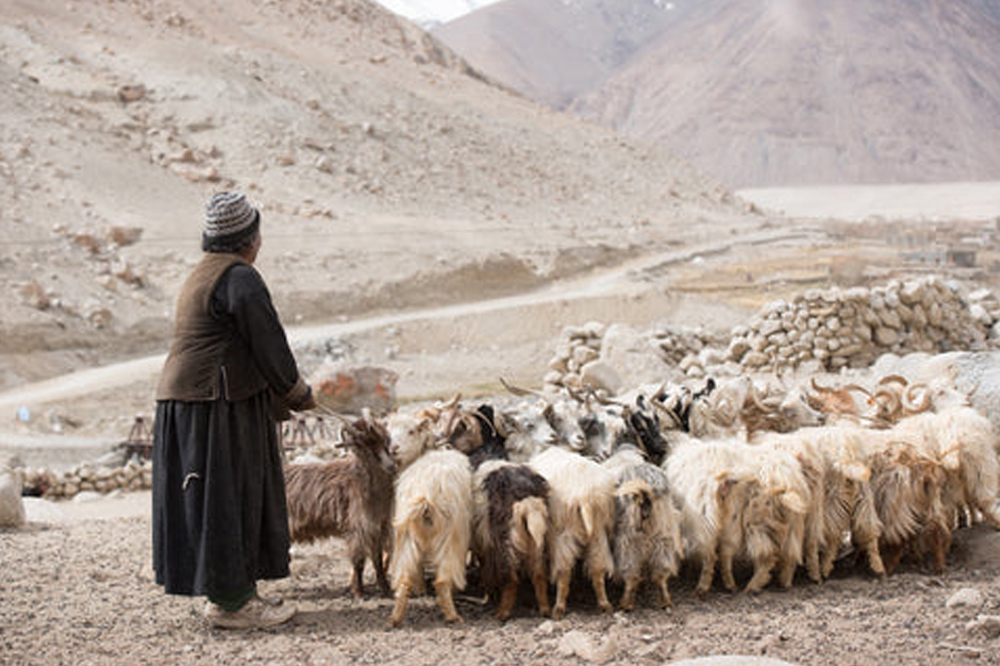
Mughal rugs were unique in their construction. They were crafted using a blend of silk and wool, specifically, pashmina. Responsible for some of the finest handcrafted textiles, pashmina is sourced from the undercoat of the Himalayan mountain goat, a fiber about one sixth the width of a single human hair. The lustrous imported wool and exquisite silk made for very expensive commissions that only emperors could afford. Rich shades of red were achieved through the kerriidae, or lac insects. Strong greens and yellows were common palettes as well.
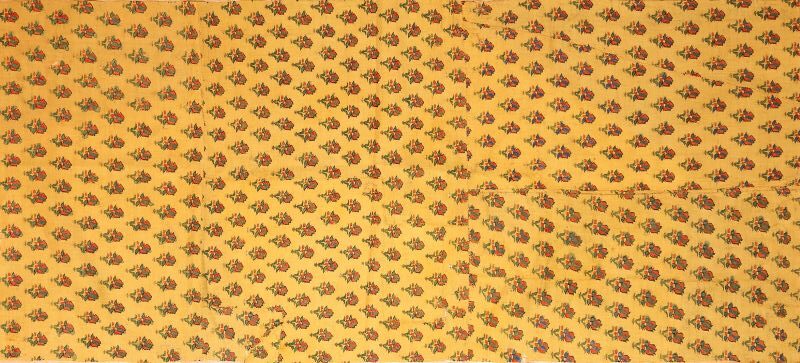
The “paradise garden” was a popular theme, and many Mughal rug designs sought to emulate it using intricate floral embellishments. Prayer rugs feature these botanical designs beneath depictions of mihrabs. Arabesques, intricate vines, and millefleur designs highlighted this fascination with the lush natural world. Indian animal wildlife was also incorporated to recreate the vibrant reality of life. Many of these patterns directly parallel the equally important staple of illuminated manuscripts of the time.
These designs were also unique in their sense of composition. Because they were depicting natural scenes, there was a significant theme of asymmetry among these rugs that decorative pieces of other regions actively avoided.
Final Thoughts
The naturalist aspect of Mughal Artwork, and especially Mughal carpet-work, left a lasting impact on the art of design. A radical deviation from the traditional stylization of the time, Mughal work reached impressive levels of realism. This was largely in part due to the emperor’s heretical lines’ commitment to curiosity for the natural world.
The impressive construction of these pieces included some of the finest materials ever seen in textile-work with beautifully intricate designs. The quality of this work was a definitive marker of wealth, as only the obscenely rich could afford such luxuries. This made them a staple of the royal courts, where they served as seating for honored guests and nobility.

Frequently Asked Questions
How long did the Mughal Empire last?
The Mughal Empire was a strong and lasting power in the Indian subcontinent, lasting over 300 years. It was founded in the year 1526 by Babur and didn’t disband until the year 1857. The Mughal era of art, though significant, was a shorter period of time. It lasted across three generations of emperors, beginning with Akbar in 1580 and ending with his grandson Shah Jahan around 1650.
What were important cultural influences in Mughal artwork?
A staple of Mughal work was its vast mix of influences. Largely inspired by Persian Safavid conventions of artwork, Mughal art was also influenced by the large population of Hindus in the Empire. Once trade with Europe was established, Jesuit missionaries, and later Dutch and British traders, were responsible for the introduction of Western scenes and Biblical compositional elements.
How were carpets significant in the Mughal Empire?
Carpets were seen as luxurious works of art, both decorative and functional. They were signs of great wealth, used as wall tapestries as well as seating for people of importance in royal courts.
What were common design elements and motifs in Mughal rugs?
Its early Persian influences make medallion compositions and geometric design borders popular designs. Naturalist pictorial elements of realistic animal and botanical motifs are the largest staple of Mughal rug-work, though.