Popular Searches
Judaica rugs | Islamic prayer rugs | Pictorial rugs | Tapestries | Antique textiles | Silk & metallic threading | Carpet dyes | Rug size guide
Quick Navigation
Key Takeaways
- This category spans rugs and religious textiles—from pictorial carpets to tapestries and ceremonial works—united by sacred symbolism and narrative imagery.
- Many examples show unusually high artistry (fine drawing, complex color, special materials), reflecting commission-level intent rather than everyday production.
- Collectability is driven by subject + craftsmanship + condition + provenance; the most compelling pieces read like art on a wall or as a statement floor textile.
At-a-Glance Specs
- What you’ll see: sacred narratives • devotional symbols • inscriptions • ceremonial formats • pictorial scenes
- Common formats: knotted rugs • pictorial carpets • wall hangings • tapestries • embroidered or woven religious textiles
- Materials: wool • silk • occasional metallic-thread accents • specialty foundation and lining on some textiles
- Color behavior: saturated storytelling palettes • iconographic contrasts • occasional jewel-like highlights
- Best placements: libraries • studies • foyers • dining rooms • gallery corridors • feature walls (for tapestries)
- What to look for: legible imagery • balanced composition • stable structure/edges • honest wear • careful restoration
Symbolism, Story, and Craft
Religious carpets and textiles are designed to communicate meaning—not just pattern. Depending on the tradition and purpose, you may see narrative scenes, architectural motifs, symbolic objects, or sacred text. What makes the best examples so compelling is the combination of artistic ambition and technical execution: fine drawing, deliberate color choices, and materials selected to elevate the object beyond the ordinary.
Connecting to the Divine Through Art
Many religious works were made for patrons or settings that demanded exceptional results—sometimes with dye work reserved for higher-status commissions, or with special materials such as silk and metallic thread. Whether the piece was intended for a ceremonial moment or as a devotional object, the goal was often to transform space and experience through imagery, symbolism, and craftsmanship.
Materials and Techniques to Know
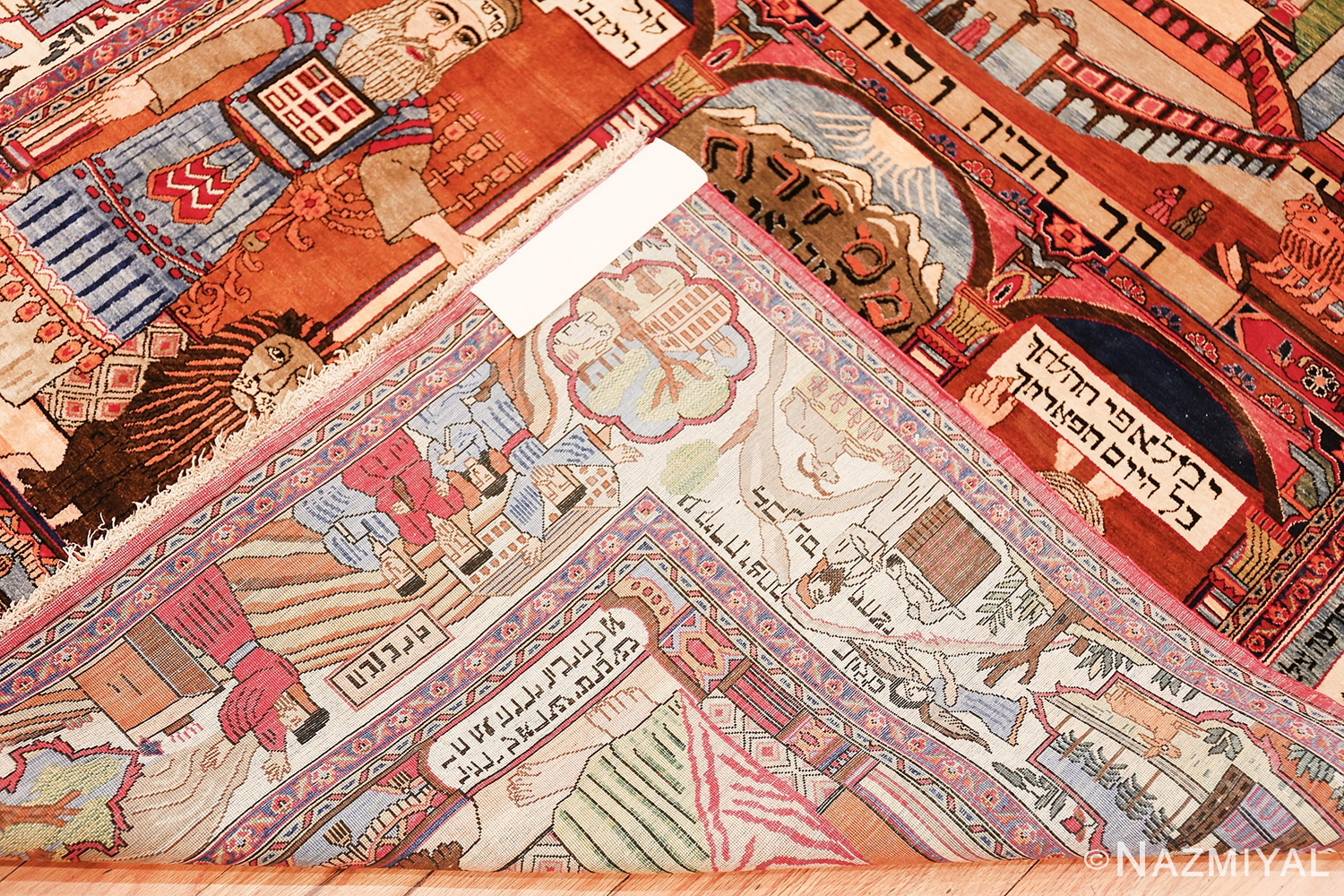
- Knotted pile rugs: depth, shading, and textile “painting” effects; look for clarity of faces/figures and clean outlines.
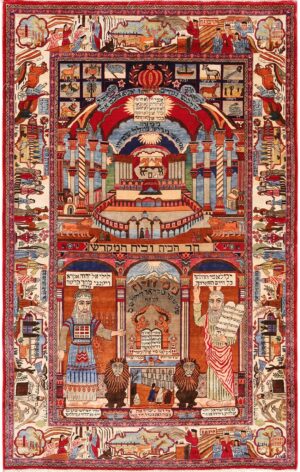
- Pictorial weaving: narrative design meant to read like a tableau—compare with pictorial rugs for broader context.
- Tapestry and wall works: often lined and intended for display; condition and backing matter—see the tapestry collection.
- Embroidery and ceremonial textiles: stitched or woven iconography; verify stability and conservation details—browse antique textiles.
- Dye and luster: older pieces often show nuanced color behavior; learn more about natural and synthetic dye history.
Collecting Biblical Rugs and Religious Textiles
Collectors often respond to these pieces the way they respond to paintings: subject and composition first, then the quality of execution and the condition that allows the story to remain legible.
- Subject + iconography: a clear narrative or symbol set (and a composition that reads from normal viewing distance).
- Material signals: fine wool, silk passages, or metallic accents can indicate higher ambition.
- Inscriptions and details: script, borders, and secondary motifs often carry meaning—evaluate clarity and balance.
- Condition: prioritize structural stability; ask about conservation if the piece is a wall textile or an early tapestry.
Featured Biblical & Religious Pieces (Nazmiyal Collection)
A quick “Featured 3” that shows the range of this category: an early monumental biblical tapestry, a narrative Judaica wall work, and a rare Bezalel art-school rug with explicit religious symbolism.
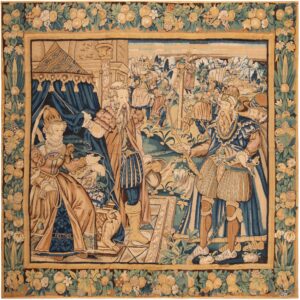
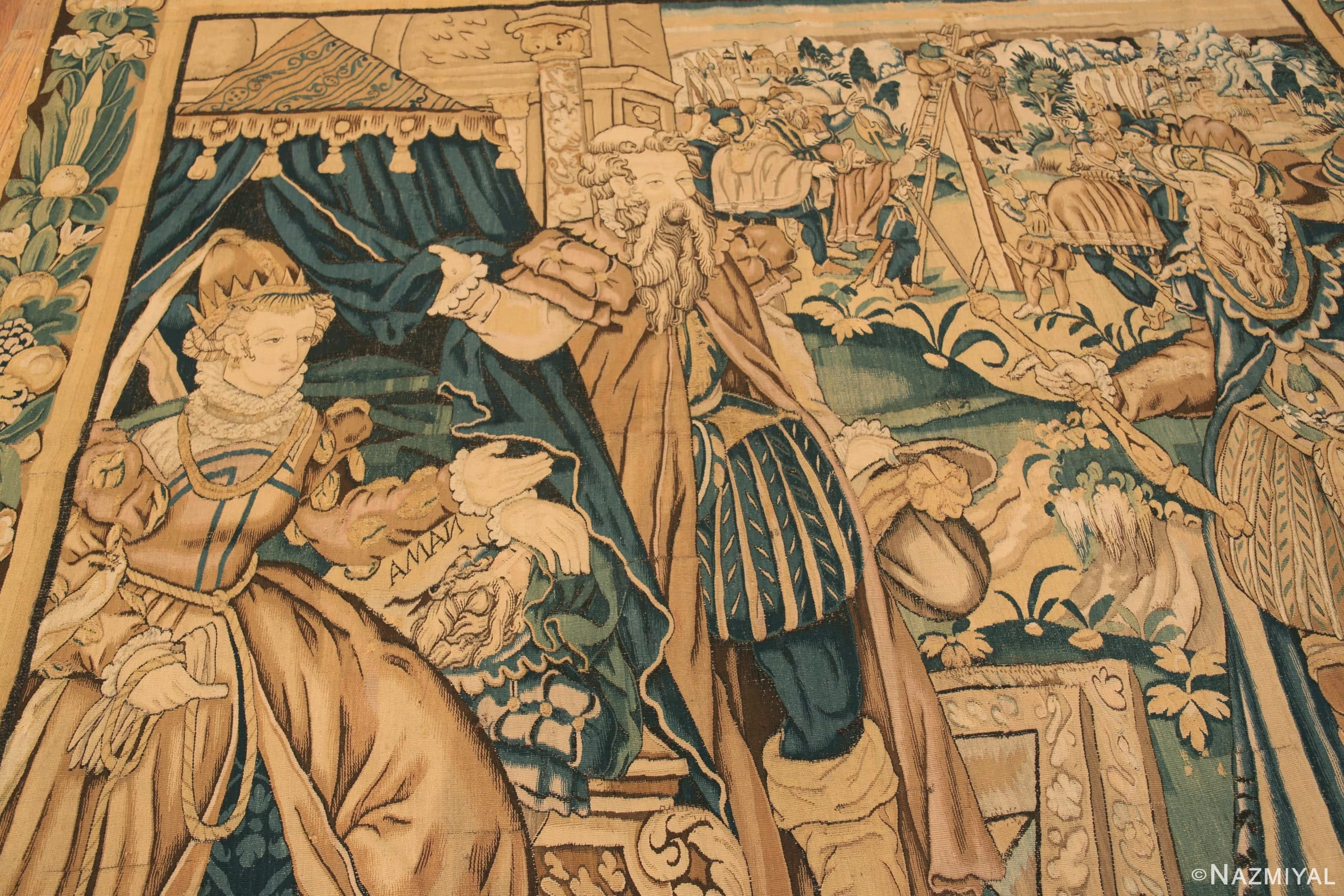
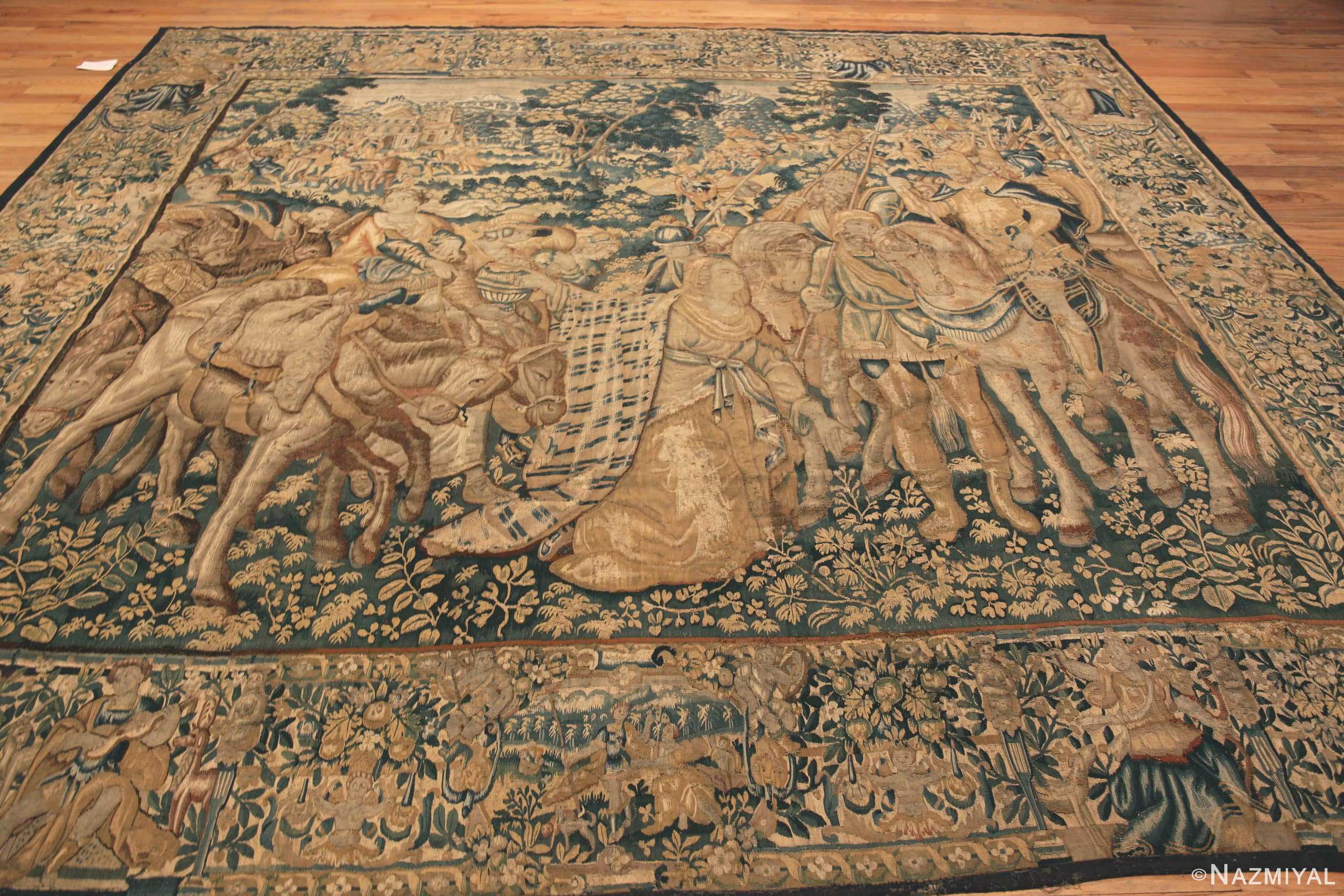
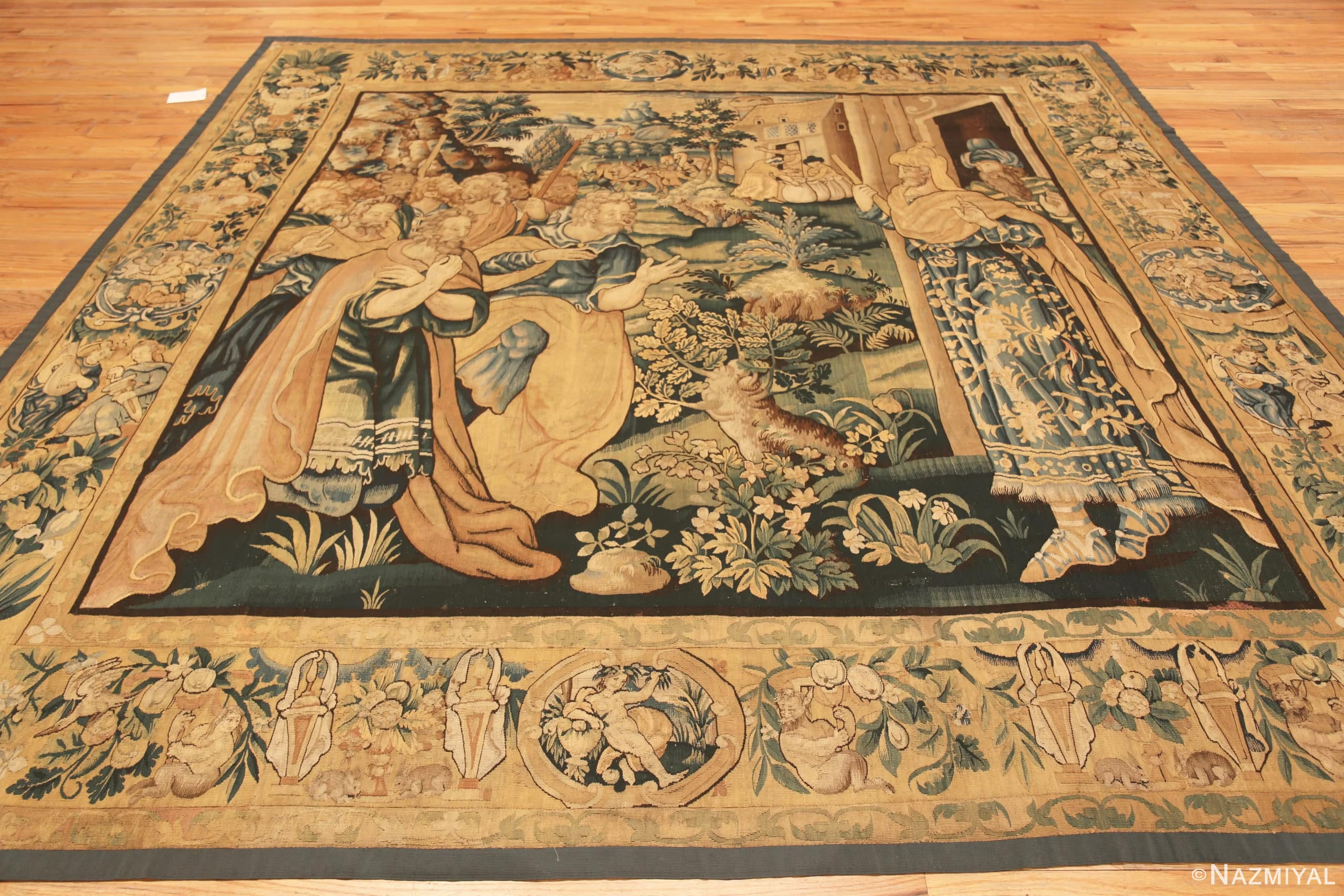
Monumental Biblical Tapestry
Antique 16th Century Biblical King Solomon And Queen Of Sheba Flemish Tapestry 72007 — large-scale storytelling and period craftsmanship with strong collector presence.
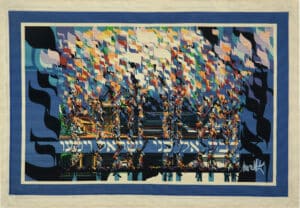
Narrative Judaica Wall Work
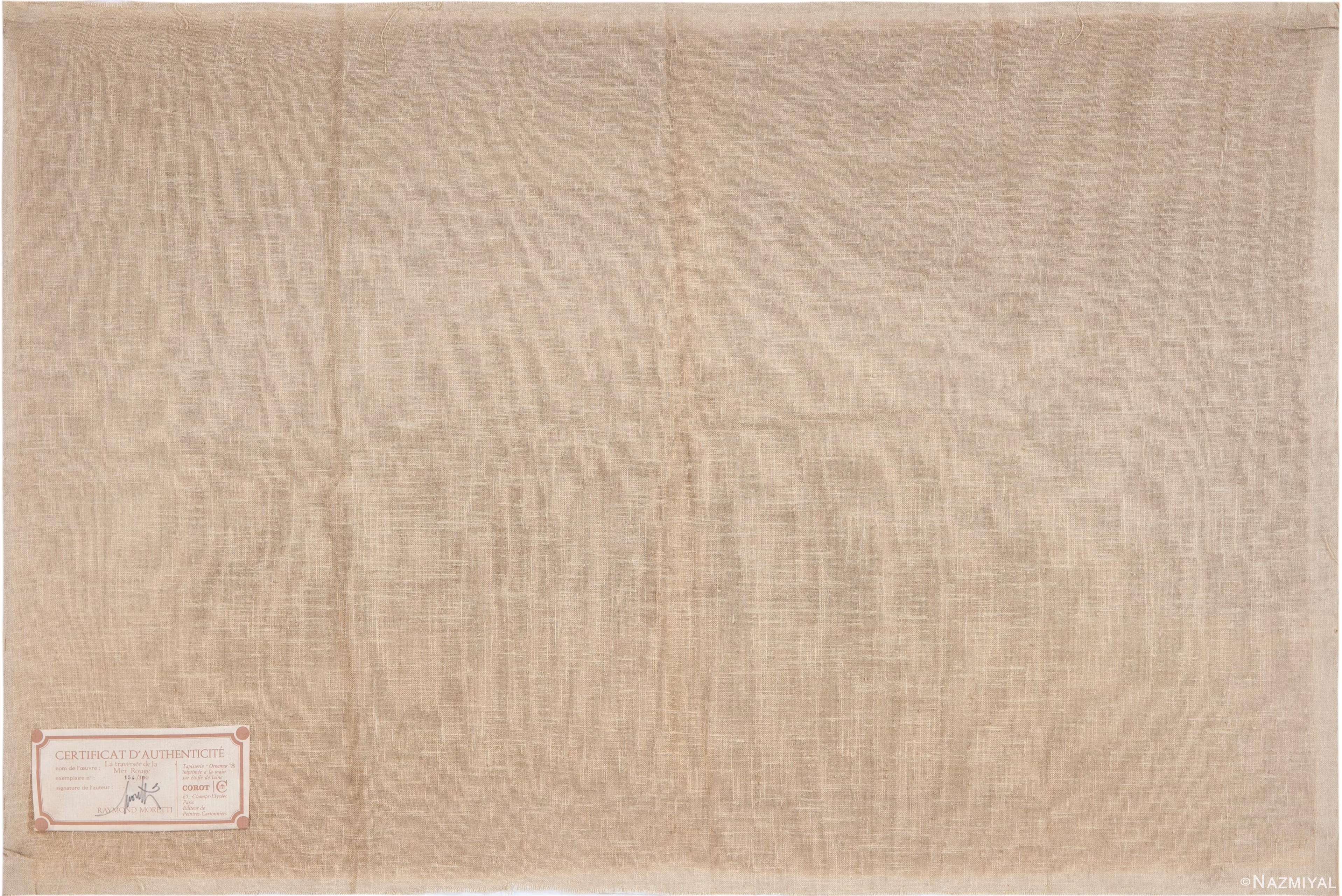
Vintage French Judaica “Crossing the Red Sea” Tapestry by Raymond Moretti 73145 — a vivid scene-driven textile for display.
Rare Bezalel Art-School Rug
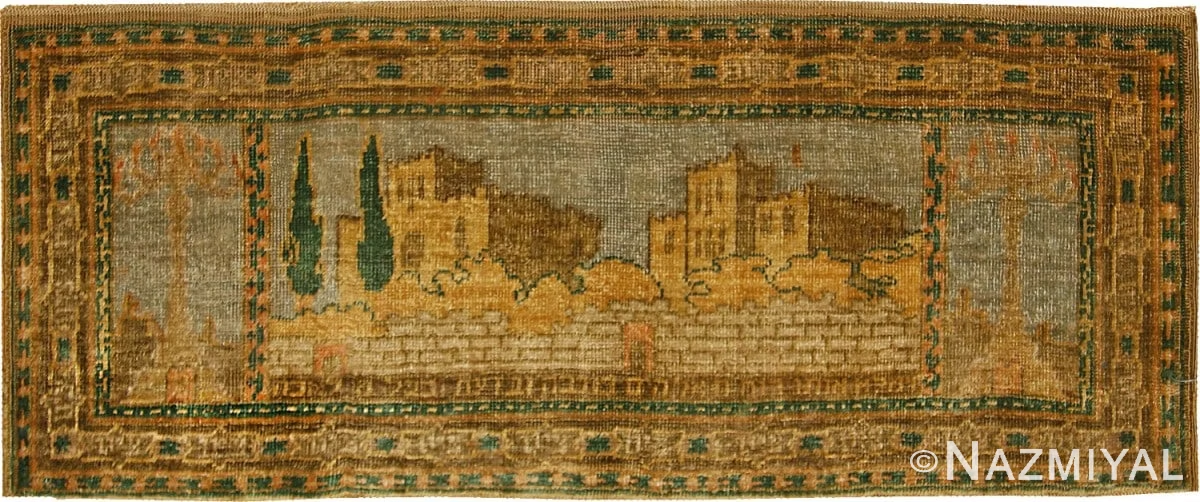
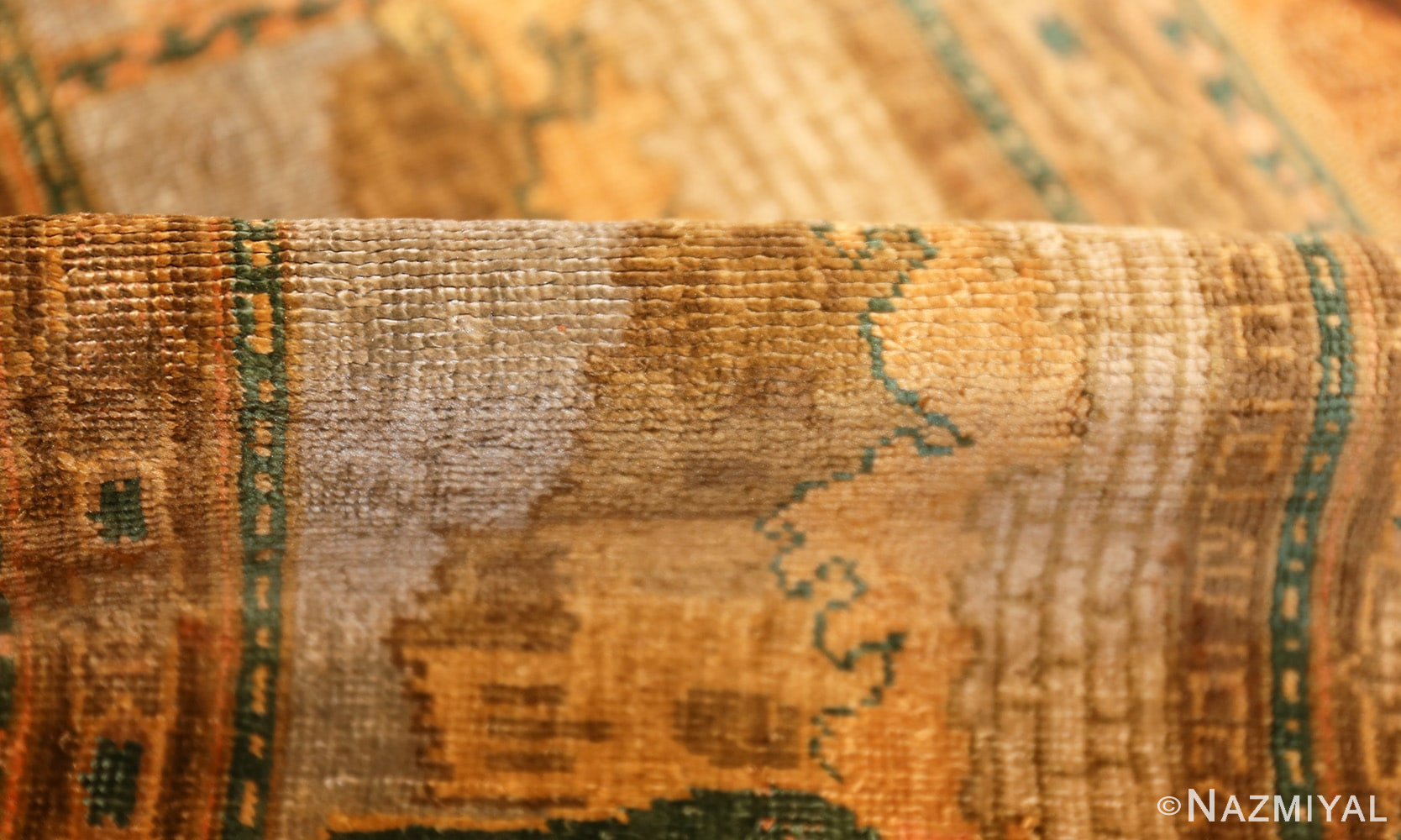
Antique Silk Bezalel Rug from Jerusalem Israel 46984 — an exceptional silk example with menorah imagery and a biblical inscription reference.
Need help choosing the right format (wall vs floor) or comparing symbolism across traditions? Contact Nazmiyal.
Decorating and Placement Guidance
- Walls & libraries: tapestries and narrative textiles read like art; scale matters more than “rug size.”
- Floors & studies: pictorial rugs can anchor a room like a painting—use a pad and avoid heavy rolling chair wear.
- Entry and gallery corridors: narrative works create instant focal points and conversation starters.
- Planning size: use the rug size guide before purchase, especially for statement placements.
If you’re comparing by era and decorating style, cross-shop antique rugs, vintage rugs, and modern rugs to match the room’s tone.
Closest Cousin: Biblical & Religious Rugs vs Judaica Rugs
Both categories can feature sacred narratives and symbolic imagery, but Judaica rugs are specifically tied to Jewish themes, inscriptions, and iconography (often with explicit cultural identifiers). Biblical and religious textiles, by contrast, can span multiple traditions and formats—from tapestries to pictorial carpets—united by devotional subject matter.
For scene-driven, tableau-style imagery beyond explicitly religious subject matter, compare with pictorial rugs.
Explore More
Browse by geography in our Rug Origins (Countries & Cities) hub. For a broader cross-tradition comparison (including pictorial and inscribed works), explore Persian rugs.
Glossary
Pictorial rug: a carpet designed to read like an image or scene rather than an abstract pattern.
Tapestry: a woven wall textile (often pictorial) intended for display; sometimes used as a floor textile depending on construction and condition.
Iconography: a system of symbols and images that communicate a tradition’s stories, values, and beliefs.
Provenance: the documented history of a piece’s ownership, origin, or attribution.
Full A–Z: Rug Glossary
FAQ
Are biblical and religious rugs always meant for the floor?
No. Many are wall textiles (especially tapestries), while others are knotted rugs or pictorial carpets that can be used on the floor depending on condition and placement.
What makes religious textiles more collectible?
Collectors typically prioritize subject matter, clarity of imagery, craftsmanship (materials and execution), rarity, and condition—especially structural stability for older works.
Do religious rugs exist across different faith traditions?
Yes. Religious rugs and textiles can reflect different devotional contexts and iconography. For example, compare Judaica rugs with Islamic prayer rugs.
How should I care for an older tapestry or ceremonial textile?
Avoid harsh cleaning and direct sun, support the textile properly if displayed, and consult a specialist for conservation—especially for early tapestries and fragile materials.
How do I choose the right size and placement?
Start with your intended use (wall vs floor), then confirm scale with the rug size guide. For wall works, consider viewing distance and furniture sightlines.
Nazmiyal White-Glove Service
Nazmiyal Collection has been a trusted source for antique rugs and vintage carpets for over 45 years. Our NYC gallery curates one-of-a-kind pieces with an emphasis on authenticity, provenance, and lasting decorative value.
Need help? Call us at (212) 545-8029 or visit our New York City showroom to work with a rug expert.