Aubusson and Savonnerie textiles are both French styles of weaving, each with unique histories. Aubusson rugs have an older history, starting around the 14th century but gaining in popularity over time until reaching their peak during the Savonnerie’s time. They follow similar design movements in their subject matter and design elements, though differ greatly in construction.
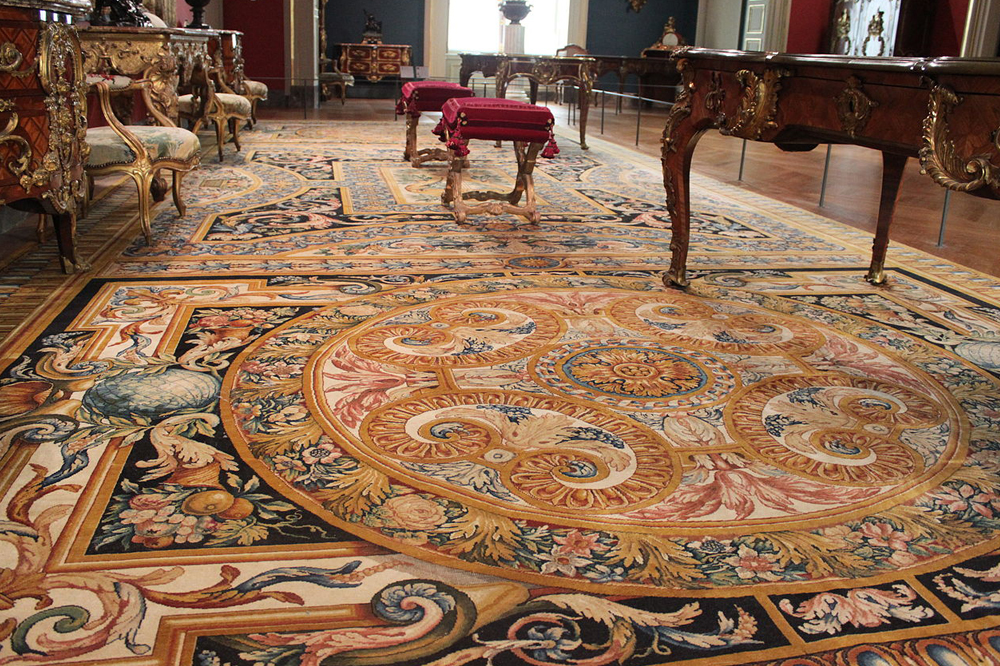
Both Aubussons and Savonneries are similarly beautiful, with an emphasis on luxury and opulence. Lush color palettes and botanical elements are common characteristics of both. They make for great collectors items and add a historical authenticity to vintage interiors. What are their similarities? What are their differences? And why were they both so popular among royalty?
Savonnerie Carpets
Unlike Aubusson textiles, Savonnerie styles are not named after their region. Their history is much darker. The name comes from the French word for “soap”, or savon, as these rugs were originally manufactured in an abandoned Parisian soap factory. Savonnerie carpetwork became a practice in the 17th century under Henri IV who wanted to revive French luxury arts, which had suffered during violent clashes between Catholics and Protestants. These carpets were intended for royal use only and early productions were referred to as “Louis XIII carpets” after their boy-king.
An Ugly Beginning
At the time, Middle Eastern rugs were highly coveted luxury items, popular amongst the noble class in Europe. Importing these rugs was an expensive and time consuming process though, and Europeans wanted a way to produce these designs themselves. In the 1600s, a man named Pierre Dupont returned to France claiming to have learned the art of Turkish weaving. This caught the attention of the French royal family, who provided him with a workshop in the Louvre to create hand-knotted rugs. By 1627, Dupont was given an additional workspace: an abandoned soap factory called the Hospice de la Savonnerie at Chaillot, where Savonnerie rugs were first developed.
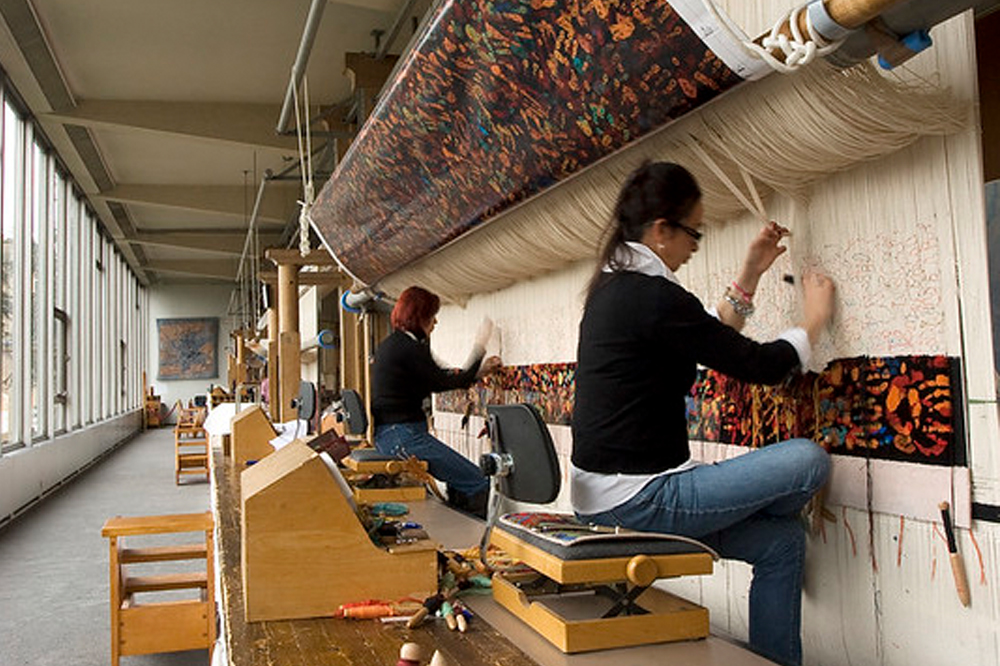
The process of hand-knotting carpets was difficult, labor intensive work, but the high demands of the French elite had to be met. This meant plenty of hands were necessary to manufacture these rugs. Their solution to this was to appoint orphans between the approximate ages of 10-12 to work weaving apprenticeships in these factories. The conditions were horrific with many children running away, while others unfortunately died from exertion. Despite how awful the factories were, the rugs produced were of very high quality, meant for the royal court and symbolizing wealth and power.
Design Elements
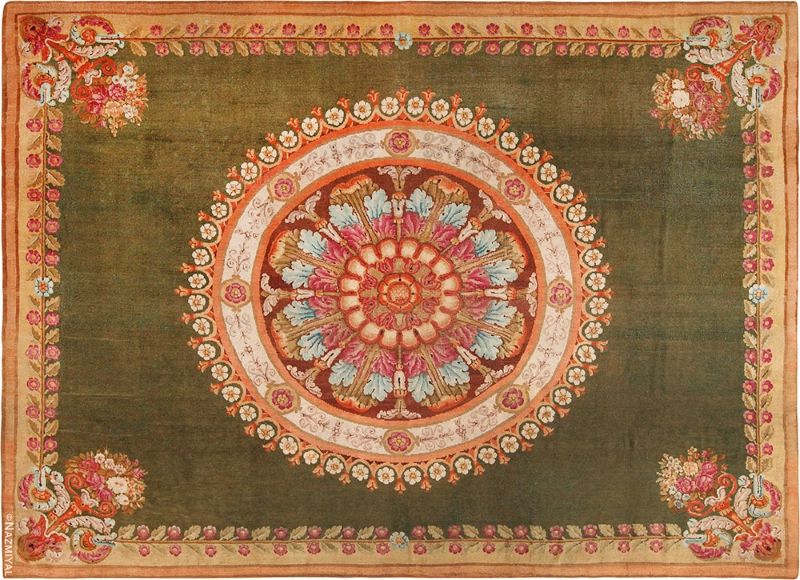
Savonnerie carpets were pile rugs. This meant the rugs had a soft, textured surface of raised fibers, giving them a plush and luxurious appearance. Pile rugs were often utilitarian as well as decorative, able to provide warmth and comfort in colder climates that value insulatory qualities. These rugs are not as versatile as other textiles. The pile makes them dense and heavy, perfect for floor coverings but not always ideal as wall hangings.
Savonnerie carpets were recognizable through their Persian influence adopted into the French artistic conventions of the time. Multiple layers of borders, overwhelming floral bouquet motifs, and framed medallions all rendered in vibrant colors made up the main characteristics of these rugs. Wreaths, architectural details, and scrollwork were also popular Savonnerie motifs. Because these carpets were meant for royalty, they were meant to convey the monarchy’s opulence and wealth, with symbolic elements like cornucopias representing abundance. These textiles were in production for enough time to see subtle transformations in art and design style.
Aubusson Textiles
Location, Location, Location
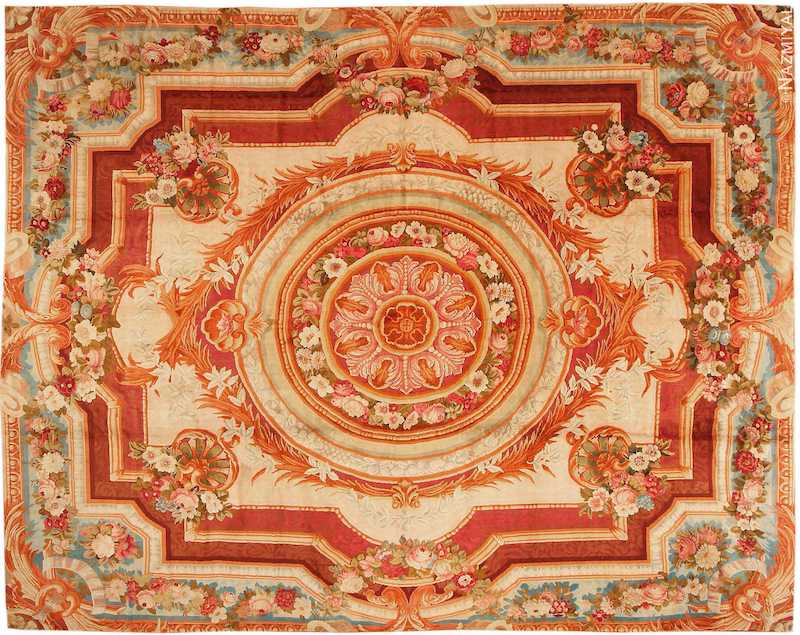
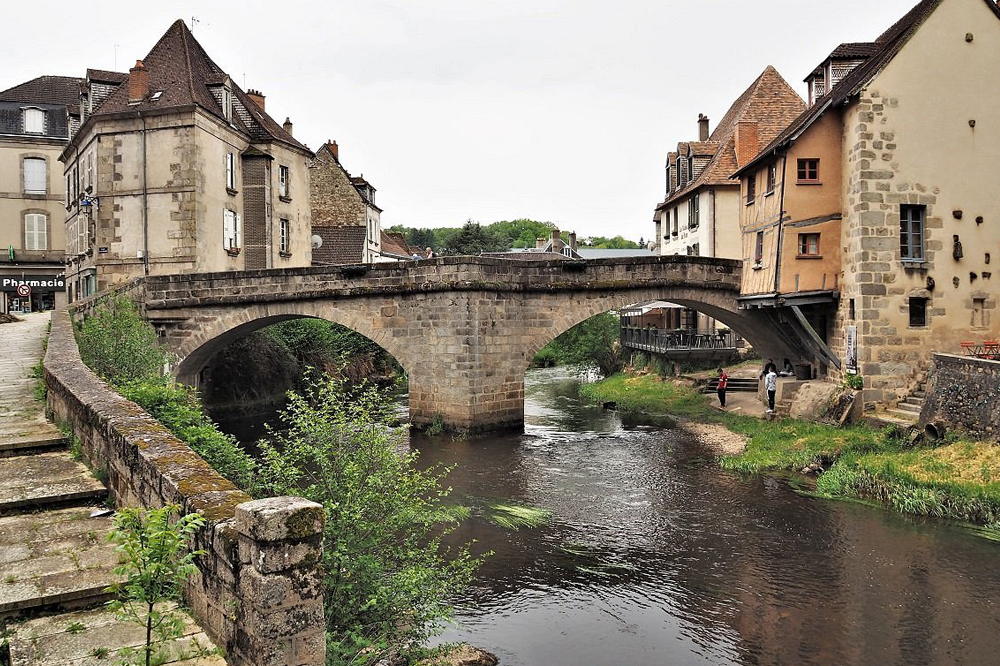
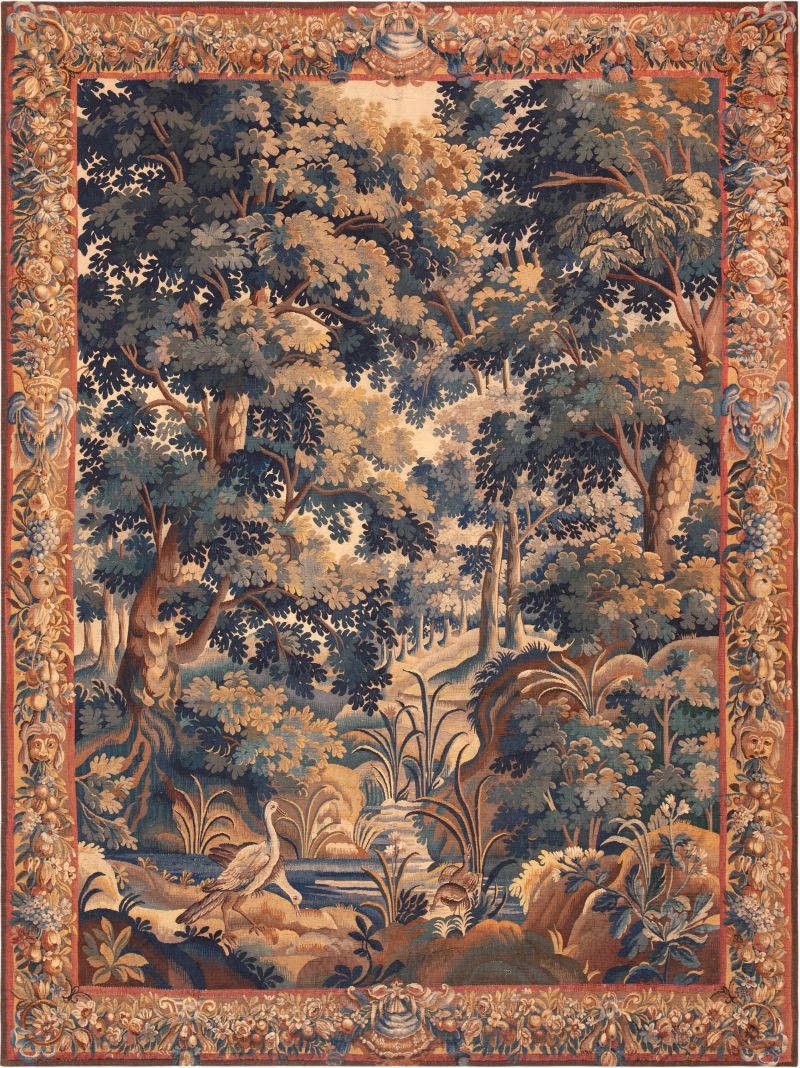
While we’re discussing a textile style, the name “Aubusson” is actually a reference to a commune in the Creuse region of Central France. It was a French center for textile art, producing beautiful tapestries for royalty. Weavers responsible for the Aubusson textiles date back to the 14th century, though they are not as formally recognized until the 17th century when they gained considerable popularity among the European elite.
This particular textile community was made up of Flemish weavers who had fled Belgium due to religious persecution and landed in France. Aubusson was an ideal settlement for craftsmen whose trade was textiles. This was in large part due to the proximity of the Creuse River and its particularly acidic waters which were perfect for degreasing wool and setting fabric dye.
While today we think of these pieces as luxury items, that wasn’t always the case. These weaves were originally made as public commerce, open for anyone who could afford it. Their growing popularity led to the opening of several workshops, making Aubusson a market town amongst an otherwise rural area. During the 1700s, Aubusson craftwork had gained royal attention where the textiles became more and more exclusive. The Palace of Versailles was famously decorated with Aubusson textiles, some of which still remain on display there today.
Aubusson Craftsmanship
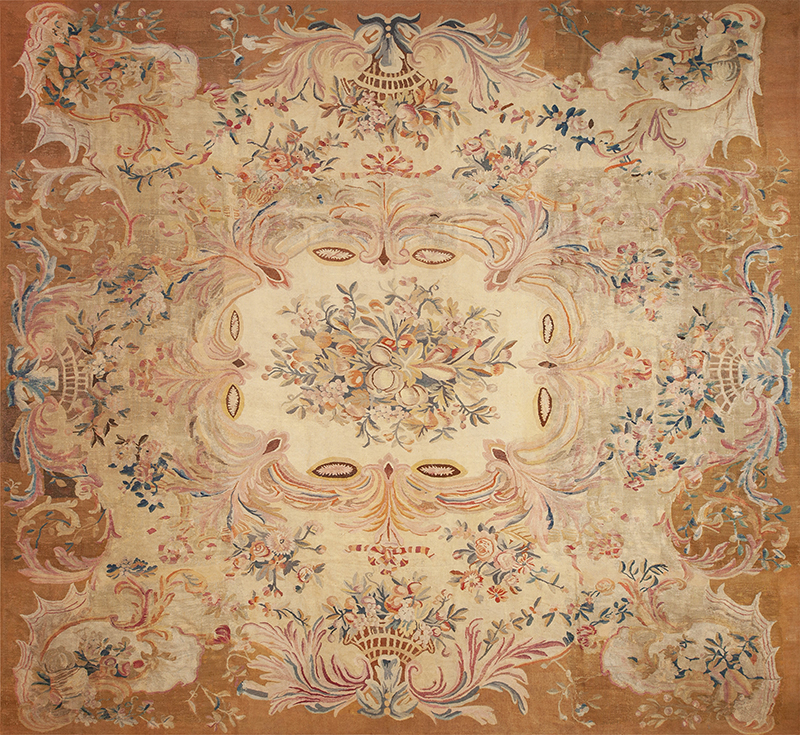
The early Aubusson tapestries held close resemblance to Oushak medallion pieces as well as Turkish rugs that were popular at the time. Their distinct style didn’t develop until the Renaissance, when artisans adapted to the latest trends in art. The Italian Renaissance was famous for its naturalist approach to landscapes, depicting their environments realistically with plenty of detail. The Aubusson tapestries were no different. The subject matter shifted from decorative embellishments to full natural scenes and landscapes. By the mid-1600s, they were imitating the popular designs of Savonnerie carpets.
The process of creating an Aubusson tapestry is different from other textiles. The painterly quality to their images is achieved through having the intended final image painted onto paper first. It’s then cut into pieces and reassembled into a template. Having the design on paper first made it so that weavers could achieve the same level of depth perception as paintings. They were usually made with wool, though silk was often woven into the textile in accents to add a touch of luxury to the piece.
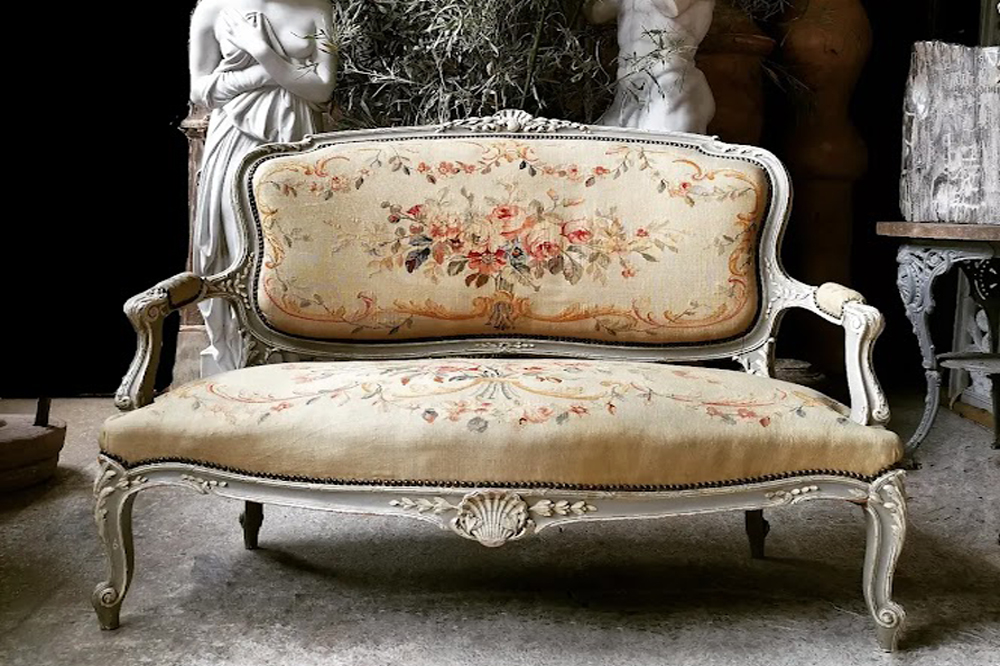
While Aubusson became famous for its tapestries, these weavers were not limited only to wall hangings. Rug work and furniture upholstery was also made in the Aubusson style, decorating interiors in all sorts of ways. Aubusson rugs are unique from other carpet styles in Europe at the time, in that they were almost exclusively flat weaves. This meant there was no pile or textured surface to the rugs and their designs relied entirely on the interlacing threadwork. This was most likely inspired by the “kilim” style of rug weaving, with roots in the ancient societies of Persia and Anatolia. Kilim rugs are much thinner than pile rugs, a practical construction method for warm climates, as well as ideal decorative pieces rather than utilitarian ones.
Design Similarities
Though the Aubusson style of textilework is older, it follows a similar pattern as Savonnerie textiles. Both followed the trends of their time, highly influenced by Middle Eastern designs but eventually settling into European Renaissance conventions. The Renaissance began in the 14th century and ended in the 17th century, seeing the rise and evolution of different eras of artwork and culture. In total, there were around five art movements during this time: Mannerism, Baroque, Rococo, Neoclassical, and Romantic. Three of these were prevalent influences for French textilework.
Baroque
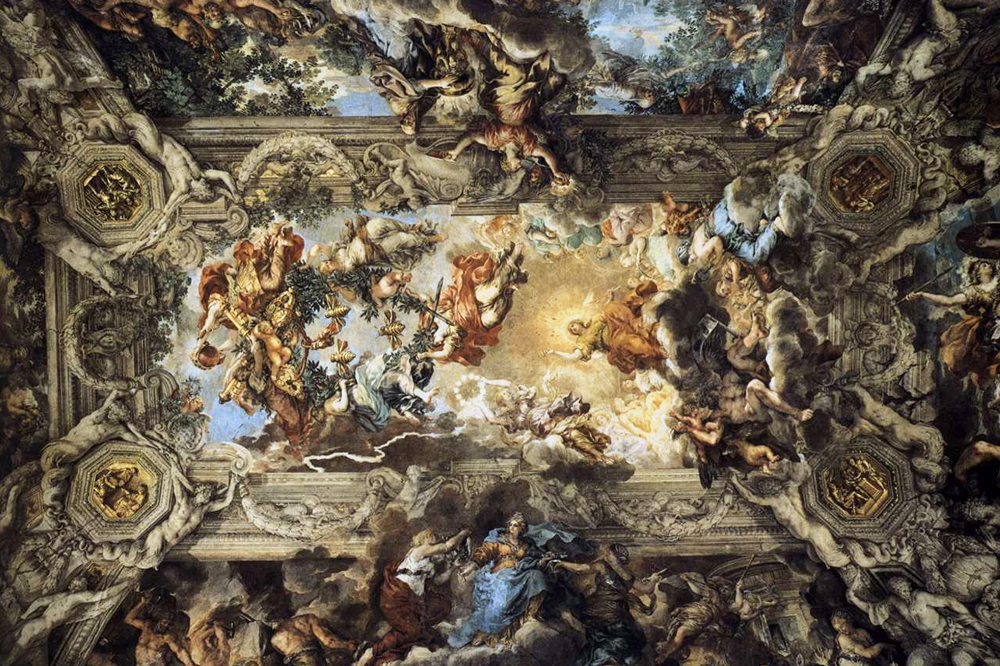
The Baroque Era lasted from the early 1600s through to the 1750s. It was a Catholic reactionary period of art, meant to counter the simplistic styles of Protestant conventions. Baroque art in particular was characterized by busy and dynamic compositions. Meant to evoke a sense of awe, Baroque art utilized deep colors and dramatic scenes to express grandeur. Painters like Caravaggio and Diego Velazquez perfected the use of darks in a technique known as chiaroscuro to achieve strong contrast popular in Baroque artwork. In architecture, the Baroque style is characterized by gold filigree and white statues framing religious scenes.
Rococo
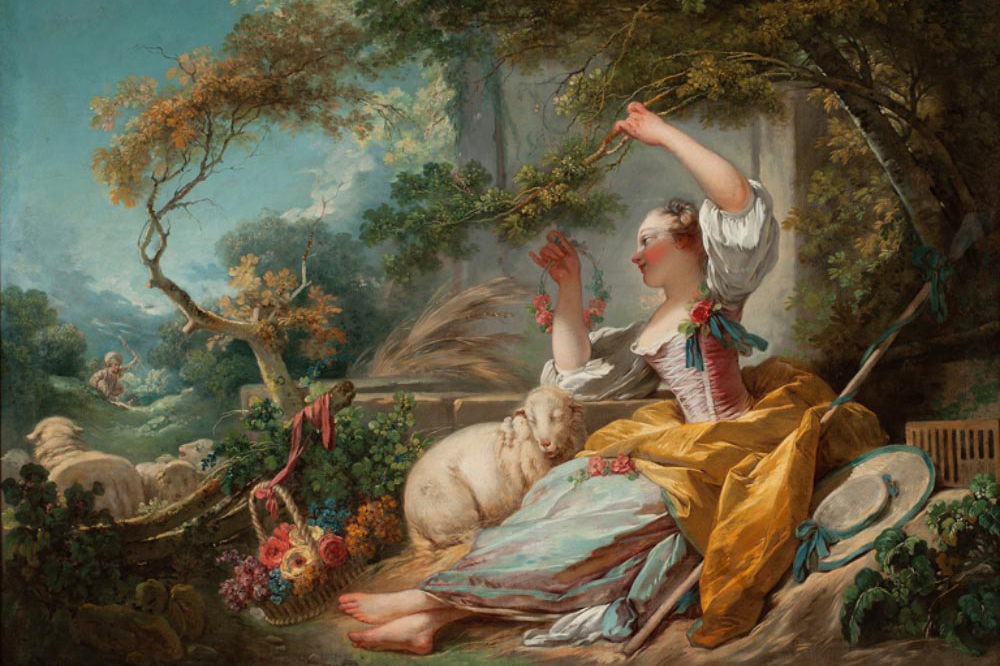
The Rococo style of art was one that branched off from Baroque, sometimes even referred to as Late Baroque. It keeps the dramatic and ornamental elements of Baroque with busy compositions and dynamic scenes. Its main difference comes from the color use and subject matter. Rococo is much lighter than Baroque, favoring pastels and decorative floral features. This style of painting was one that was often commissioned by members of the aristocracy, depicting the frivolous lives of the rich rather than religious scenes. The subject matter leaned more towards playful storytelling, with leisure scenes or mythological themes.
Neoclassical
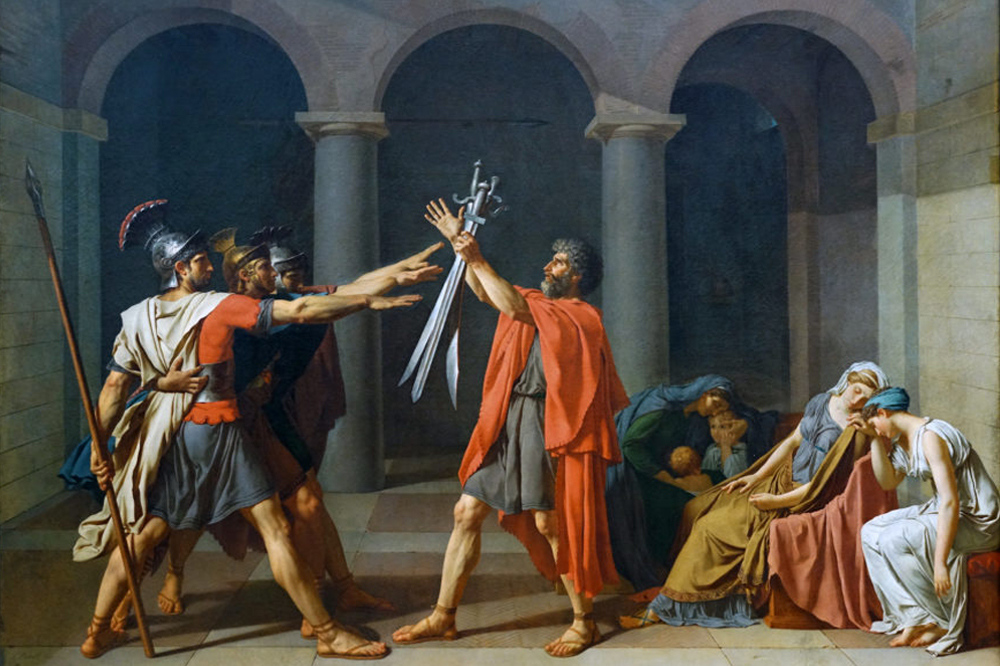
Neoclassical art was a revival of classic styles from ancient Greece and Rome, and was a response to the indulgent style of Baroque and Rococo. It was popular in the 1760s to the 1840s and was heavily influenced by the Age of Enlightenment. It sought to emphasize harmony and discipline, with classic subject matter, strict lines, and a serious color palette. These depictions were usually ones of some sort of moral lesson, the complete antithesis of the superficial, and oftentimes vulgar, themes of Rococo.
Designing Interiors Around French Textiles
Antique French textiles are unique in their rarity. These were textiles reserved for aristocrats and during the French Revolution of 1789, many originals were lost and destroyed. The elegant designs and historical significance of Savonnerie and Aubussons make them popular today, especially among collectors and history buffs.
These textiles make perfect accessories for classic interiors and furniture pieces. Their softer color palettes and beautiful embellishments compliment airy rooms with vintage aesthetics well. Aubussons specifically are excellent as textile works of art, adaptable in their use as either floor coverings or wall hangings.
Final Thoughts
While Savonnerie and Aubusson textiles both come from similar periods of time in France, each have distinct characteristics and histories. Savonneries were pile carpets produced around Paris, commissioned for the royal family. Aubusson textiles on the other hand, were flatweaves produced in the Aubusson commune in Central France. They were originally tapestries, over time expanding into rug making. Both followed artistic trends of the time, specifically those of the Baroque, Rococo, and Neoclassical eras.
- Savonneries and Aubussons are both from France
- Savonneries: pile carpets made for royals
- Aubussons: general commerce flatweaves
- Savonneries and Aubussons both had elements from Baroque, Rococo, and Neoclassical art
Frequently Asked Questions
What is the main difference between Savonnerie and Aubusson textiles?
The biggest distinction between the two is their texture, or lack thereof. Aubusson textiles are flatweaves, while Savonneries have a pile.
Are Aubusson and Savonnerie textiles rugs?
While Savonnerie textiles are always rugs, Aubusson textiles are often also tapestries or embroideries.
Which came first, Aubusson or Savonnerie?
Savonnerie rugs predate Aubusson textiles as an established craft, though Aubusson textiles have far older roots.
Where can I find authentic Savonnerie and Aubusson textiles?
The best place to find authentic textiles would be through a collector. The Nazmiyal Collection offers an assortment of authentic Savonnerie and Aubusson textilework.