Quick Navigation
Key Takeaways
- Greek embroidery textiles are prized for regional folk motifs and a refined, interior-friendly sense of ornament.
- Because these are textiles (not pile rugs), condition and stability are evaluated differently—look for secure edges, intact stitching, and honest wear.
- They are highly versatile: display as wall hangings, drape over furniture, or use as tabletop layers for a collected, Mediterranean feel.
At-a-Glance Specs
- Origin focus: Greece (including island traditions)
- Construction: embroidered textiles • woven grounds with stitched ornament (piece-dependent)
- Common materials: linen or cotton foundations • wool embroidery • occasional silk accents
- Typical motifs: florals • birds/animals • geometric bands • framed borders • folk symbols
- Best uses: wall hanging • table runner/cover • draped accent • layered decorative textile
- What to look for: crisp drawing • stable edges • cohesive palette • readable pattern rhythm • honest age with strong structure
Popular Searches
Antique textiles & embroideries | Textile art | Tapestry | Ottoman embroideries | Suzani textiles
Featured Greek Textiles from the Collection
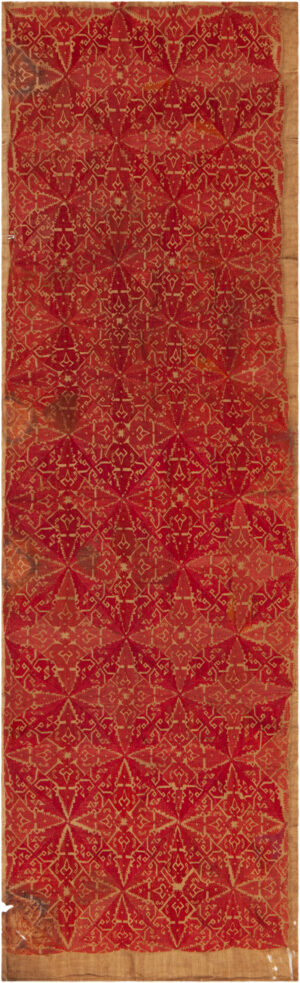
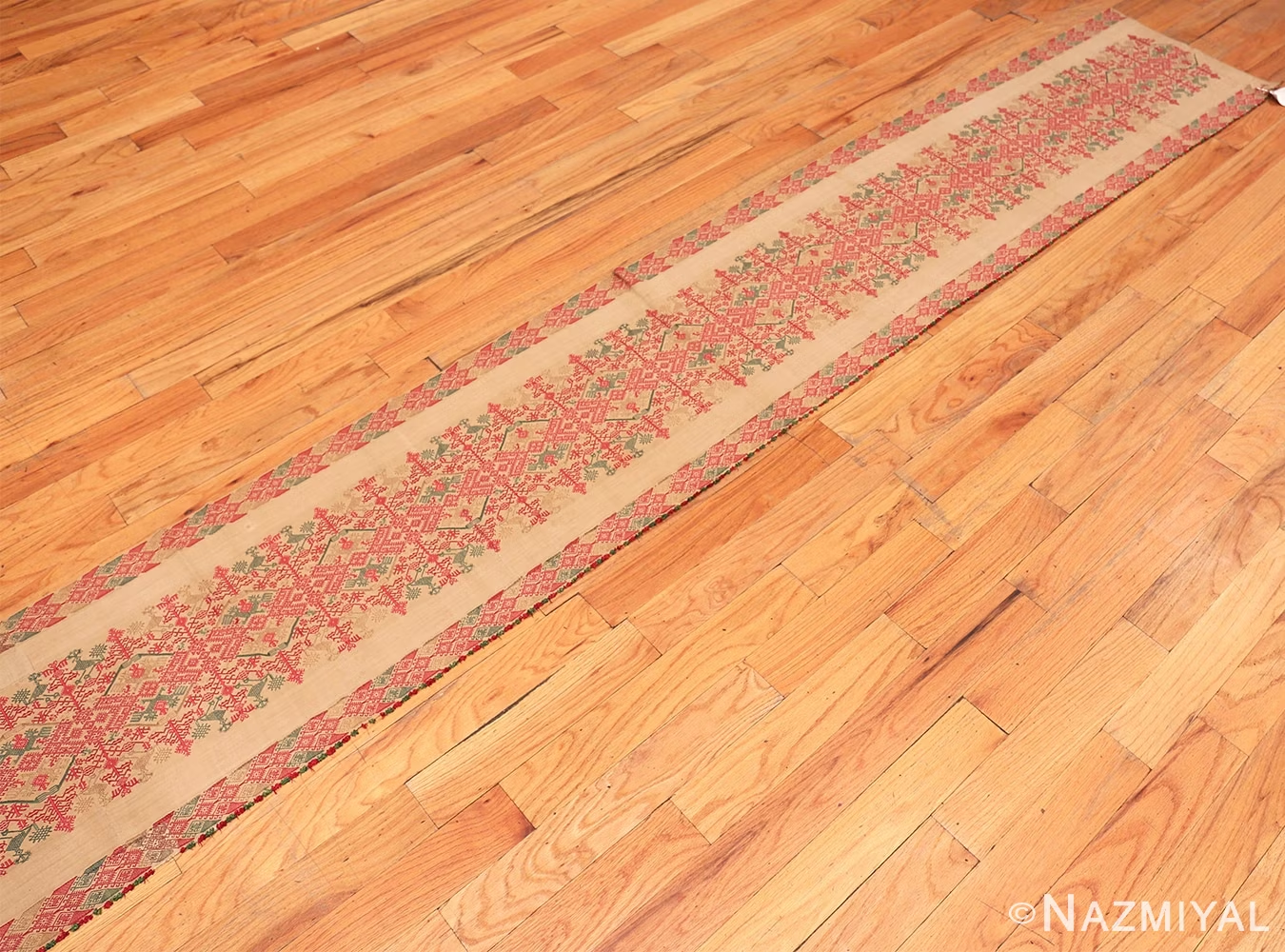
Inventory changes frequently. These featured pieces are examples of Greek embroidery textiles with strong decorative presence and collectible character.
History & Aesthetic Notes
Greek embroidery textiles are admired for a visual balance that feels both ornamental and restrained: clear borders, rhythmic repeats, and motifs that often feel folk-derived rather than courtly. Many pieces show a blend of influences—regional island craft, Byzantine-era decorative memory, and wider Mediterranean exchange—resulting in textiles that sit comfortably in classic, eclectic, and even modern rooms.
Collectors often value how these textiles “read” on a wall or table: the drawing remains legible at a distance, and the palette tends to feel warm and livable. If you are building a broader textile-focused collection, browse our textile art hub for adjacent pieces across regions.
Identification & Techniques
What defines Greek embroidery textiles?
Rather than knotted pile, these works rely on stitched ornament and textile structure—foundation cloth (often linen or cotton) with wool-forward embroidery that creates the pattern. Look for confident motif placement, consistent stitch behavior, and a border logic that frames the field in a composed way.
Condition signals to prioritize
Because these are textiles, evaluate them like art objects: edge stability, secure joins, intact stitching, and an overall “tightness” that indicates the piece can be displayed safely. Honest age is expected, but avoid pieces where structural weakness overwhelms the design.
Decorating & Display
Wall hanging placement (gallery-style)
Greek textiles can be framed, mounted, or displayed as a hanging to bring pattern to a room without adding floor-level visual weight. They work especially well in stair landings, hall moments, and above consoles where the design can be appreciated at eye level.
Tabletop and furniture layering
Use Greek embroidery textiles as runners, table covers, or draped accents over benches and settees. Keep surrounding surfaces calmer so the pattern reads as intentional—wood, stone, and natural neutrals tend to complement these pieces beautifully.
Pairing with rugs
If you’re using both rugs and textiles in the same room, let one element lead: either choose a quieter rug and make the textile the focal accent, or pair the textile with a more restrained rug palette. For collectors building layered rooms, browsing antique rugs alongside textiles can create a deeply collected look.
Greek Textiles vs Ottoman Embroidery Textiles
If you love Mediterranean needlework and want a close cousin category with a different decorative emphasis, explore Ottoman embroidery textiles.
| Feature | Greek Textiles | Ottoman Embroidery Textiles |
|---|
| Design mood | Folk clarity, rhythmic borders, restrained ornament with strong graphic readability | Often richer ornament and decorative flourish, with broader imperial-era design vocabulary |
| Best for | Collected Mediterranean interiors, wall moments, and tabletop layering with calm surroundings | Statement textile accents, decorative layering, and rooms that support more ornate detail |
| Shopping mindset | Prioritize stitch integrity, stable edges, and motif clarity | Prioritize condition honesty, decorative richness, and overall structural stability |
Closest Cousins
Glossary
Embroidery textile: A decorative textile where the pattern is formed by stitching (often wool or silk) on a cloth foundation.
Foundation cloth: The base textile (often linen or cotton) that supports the embroidery.
Motif clarity: How cleanly shapes and outlines resolve, especially at curves and color transitions.
Border logic: The framing system that organizes a textile’s field and creates a “finished” composition.
For more definitions, see the rug glossary.
FAQ
Are Greek textiles the same as rugs?
No. Greek textiles in this category are typically embroidered or woven works without knotted pile. They are often used as wall hangings, table layers, or decorative drapes rather than primary floor rugs.
What makes antique Greek embroidery textiles collectible?
Collectors value regional character, confident drawing, cohesive palettes, and the quality of the handwork. Strong composition plus stable condition tends to signal long-term desirability.
How should I display Greek textiles at home?
They can be framed or mounted for wall display, used as a table cover or runner, or draped over furniture. Choose calmer surrounding materials so the textile reads as intentional and curated.
What condition issues should I watch for?
Focus on structural stability: secure edges, intact stitching, and a foundation that feels sound. Honest age is normal, but the textile should still hold together confidently for your intended use.
Do Greek textiles pair well with Persian rugs?
Yes—many collectors enjoy pairing classical Persian rugs with textile art accents. The key is balance: let either the rug or the textile lead, and keep the other element more restrained so the room feels cohesive.
The Three Pillars of the Nazmiyal Collection
- Curated, museum-caliber objects: A focus on distinctive design, quality, and collectible character across rugs, textiles, and decorative works.
- Expert guidance: Clear, buyer-friendly support to help you evaluate style, condition, scale, and placement with confidence.
- Service that reduces friction: From sourcing to delivery, we help make acquiring special pieces feel straightforward and secure.
Nazmiyal White-Glove Service
We make it easy to shop with confidence—whether you’re choosing a single statement piece or curating a full room.
Nazmiyal Collection has been a trusted source for antique rugs and vintage carpets for over 45 years. Our NYC gallery curates one-of-a-kind pieces with an emphasis on authenticity, provenance, and lasting decorative value.
Need help? Call us at (212) 545-8029 or visit our New York City showroom to work with a rug expert.