Agra rugs are hand-knotted Indian workshop carpets—often room-size to oversized—recognized for Persian-influenced Mughal floral drawing, strong structure, and composed, architectural presence in interiors.
These rugs are antique Indian workshop carpets associated with North India and Mughal-era decorative taste—known for large-scale botanical drawing, disciplined structure, and room-size presence. Browse Agra carpets for sale, learn how specialists identify authentic examples, and see what drives value in today’s market. If you’re building an India-focused shortlist, start with our Indian rugs hub—then return here for the Agra tradition’s signature scale and calm, decorator-friendly palettes.
Updated February 13, 2026 • Reviewed by Jason Nazmiyal
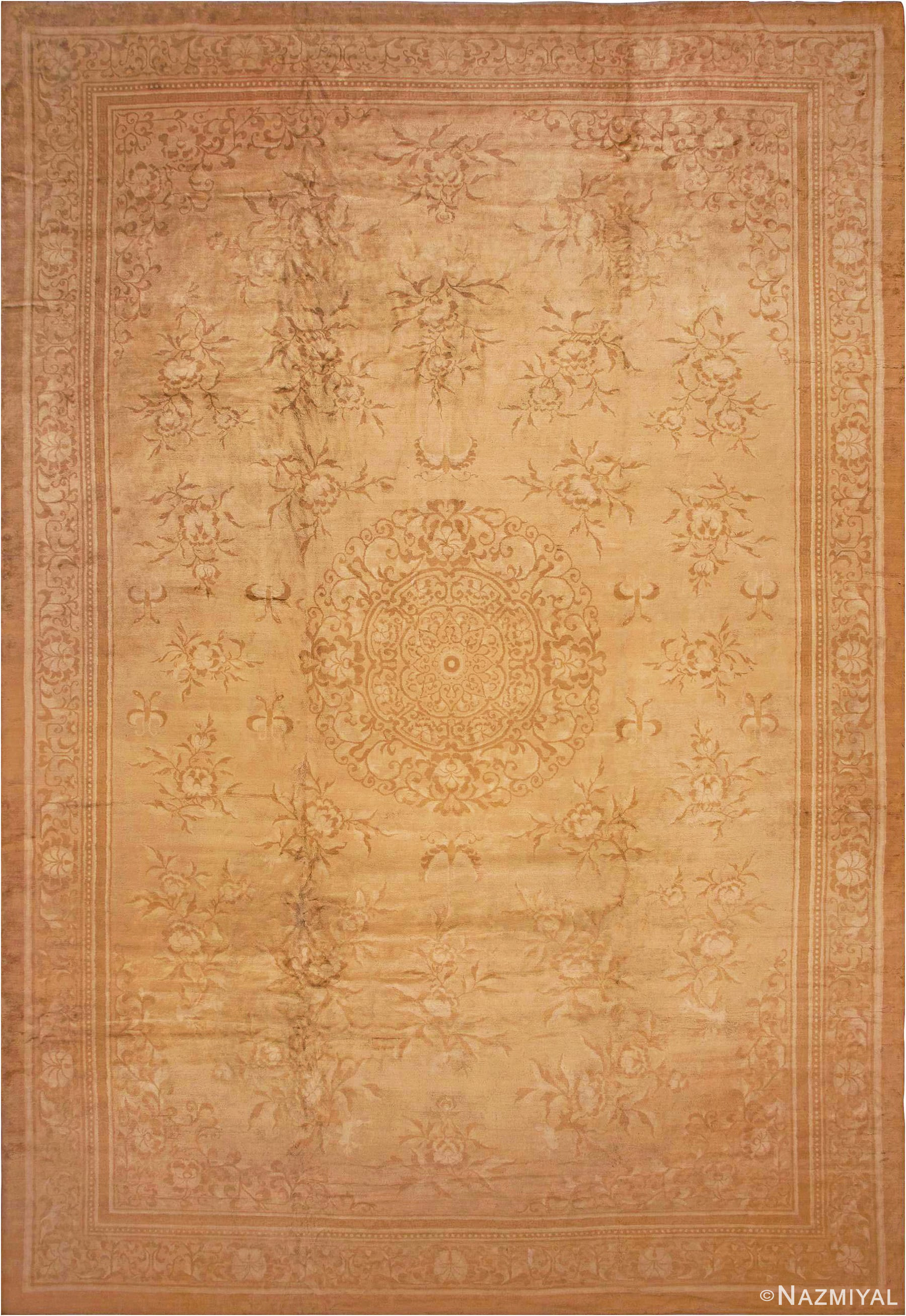
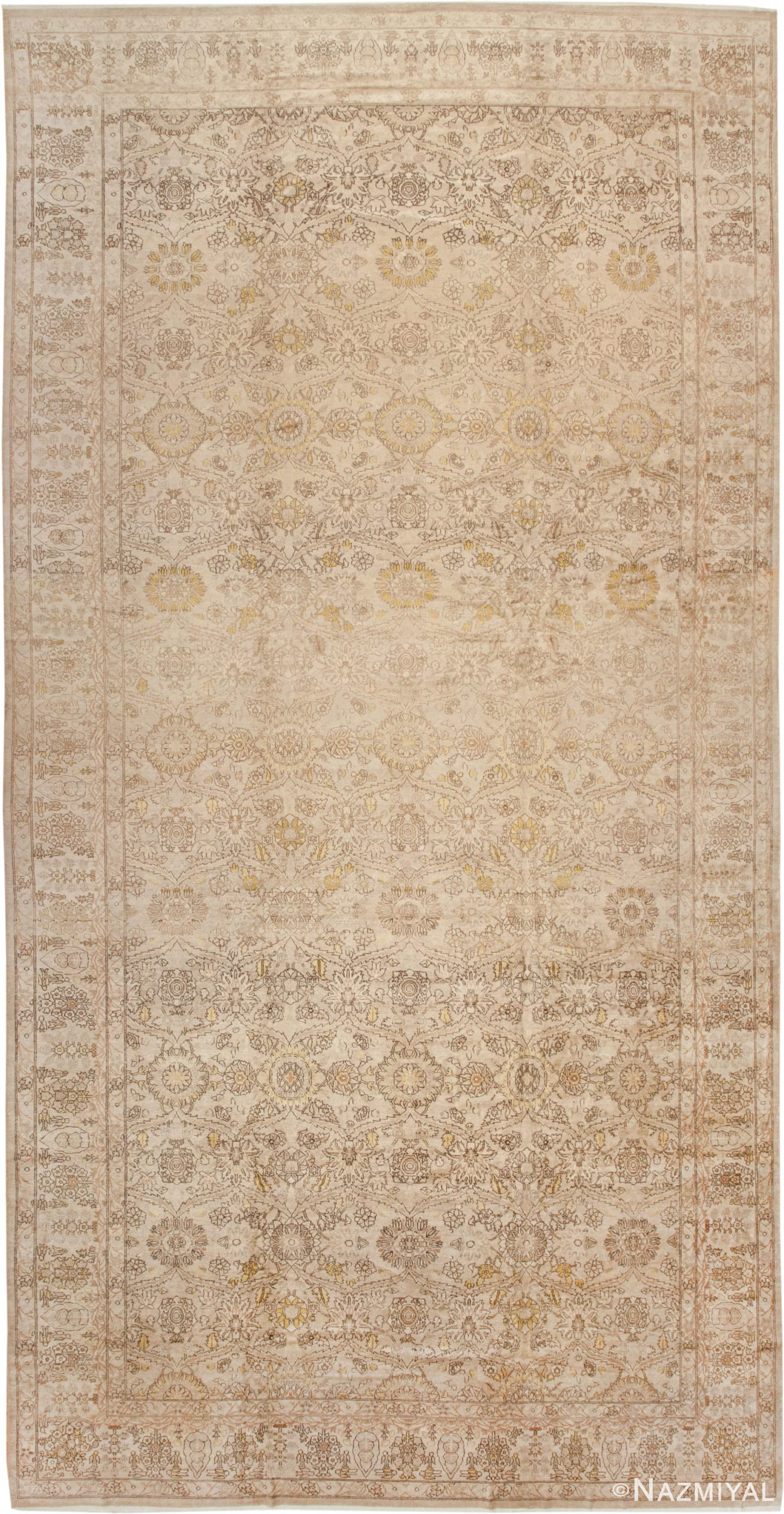
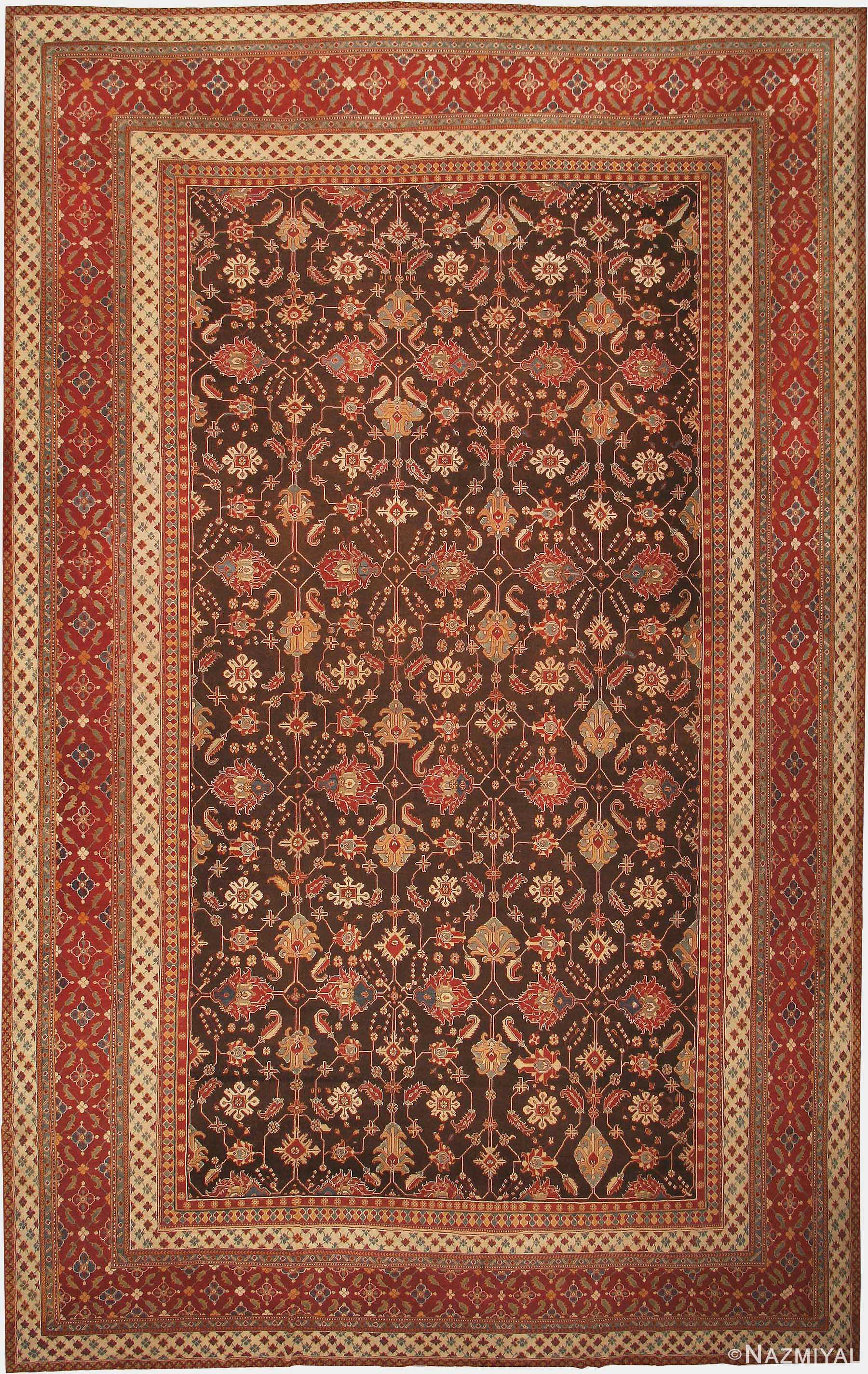
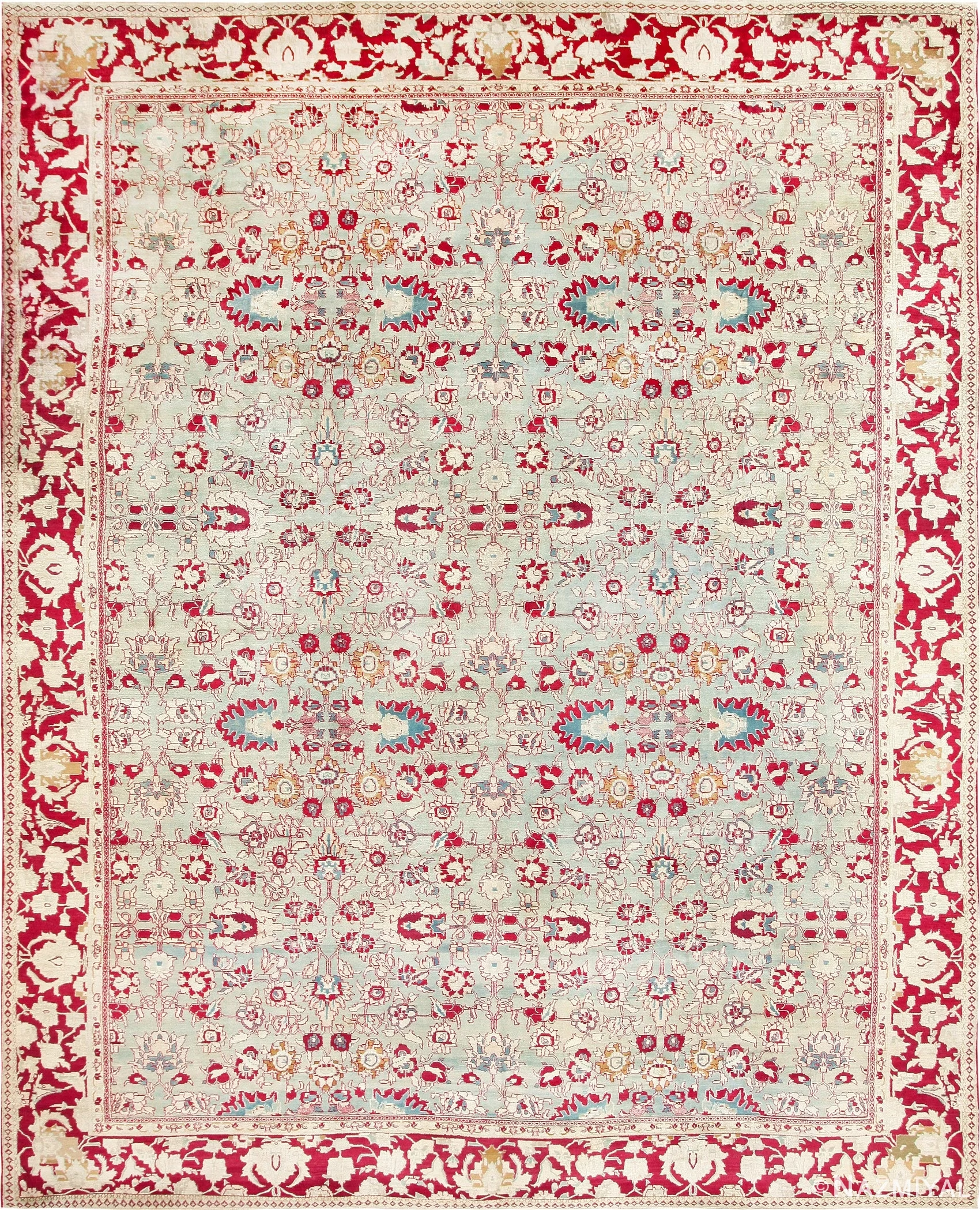
Featured pieces change as one-of-a-kind rugs sell, but these examples show the range of scale, palette, and drawing collectors and designers look for in strong Agra carpets:
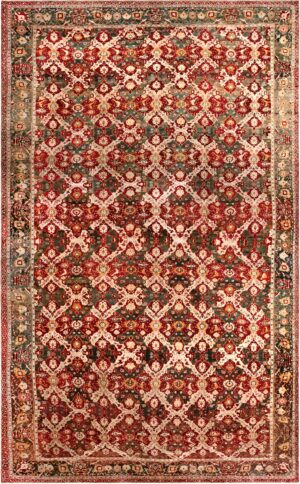
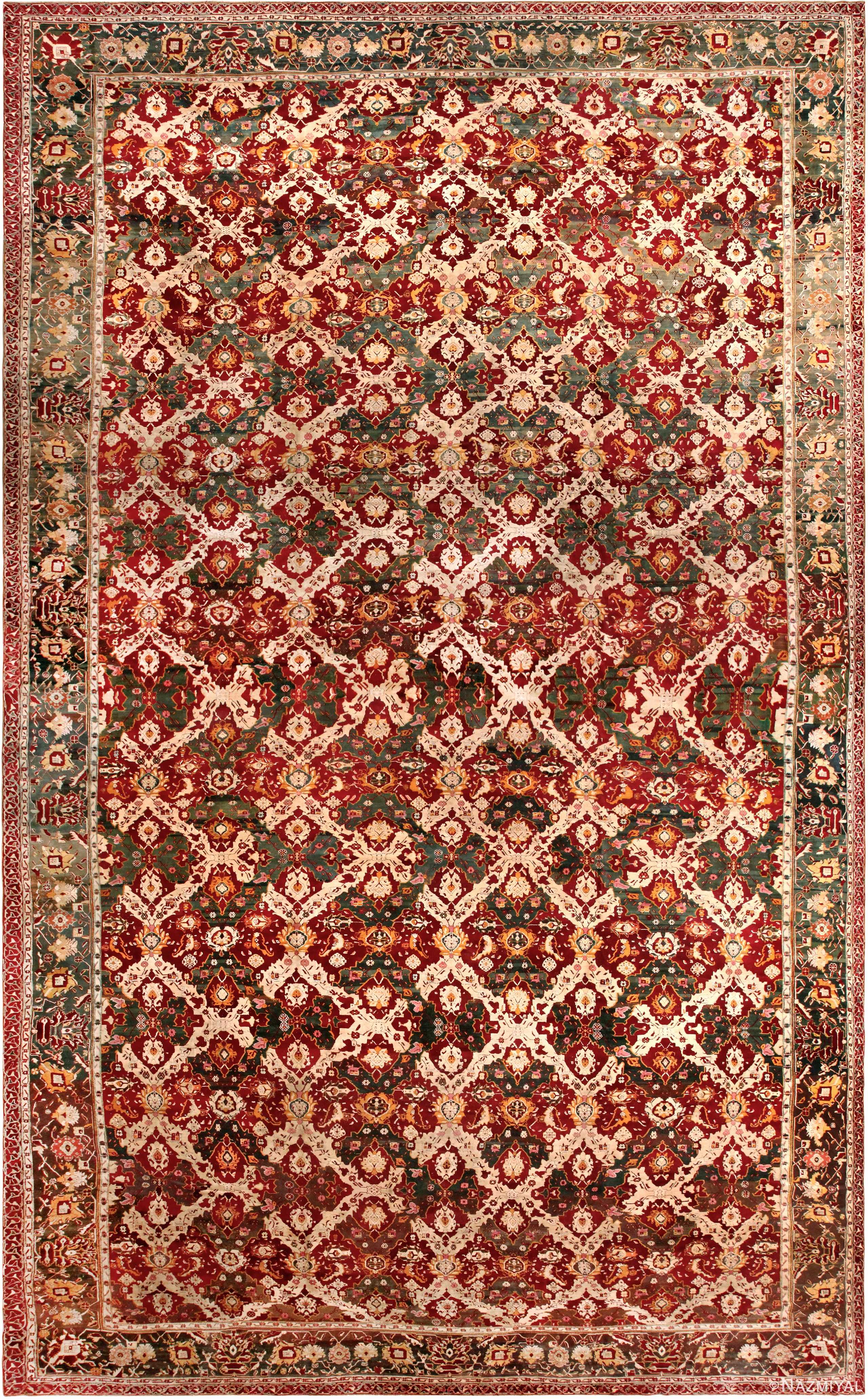
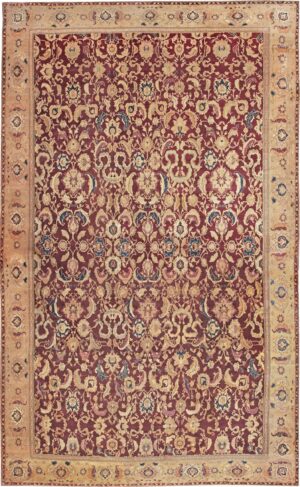
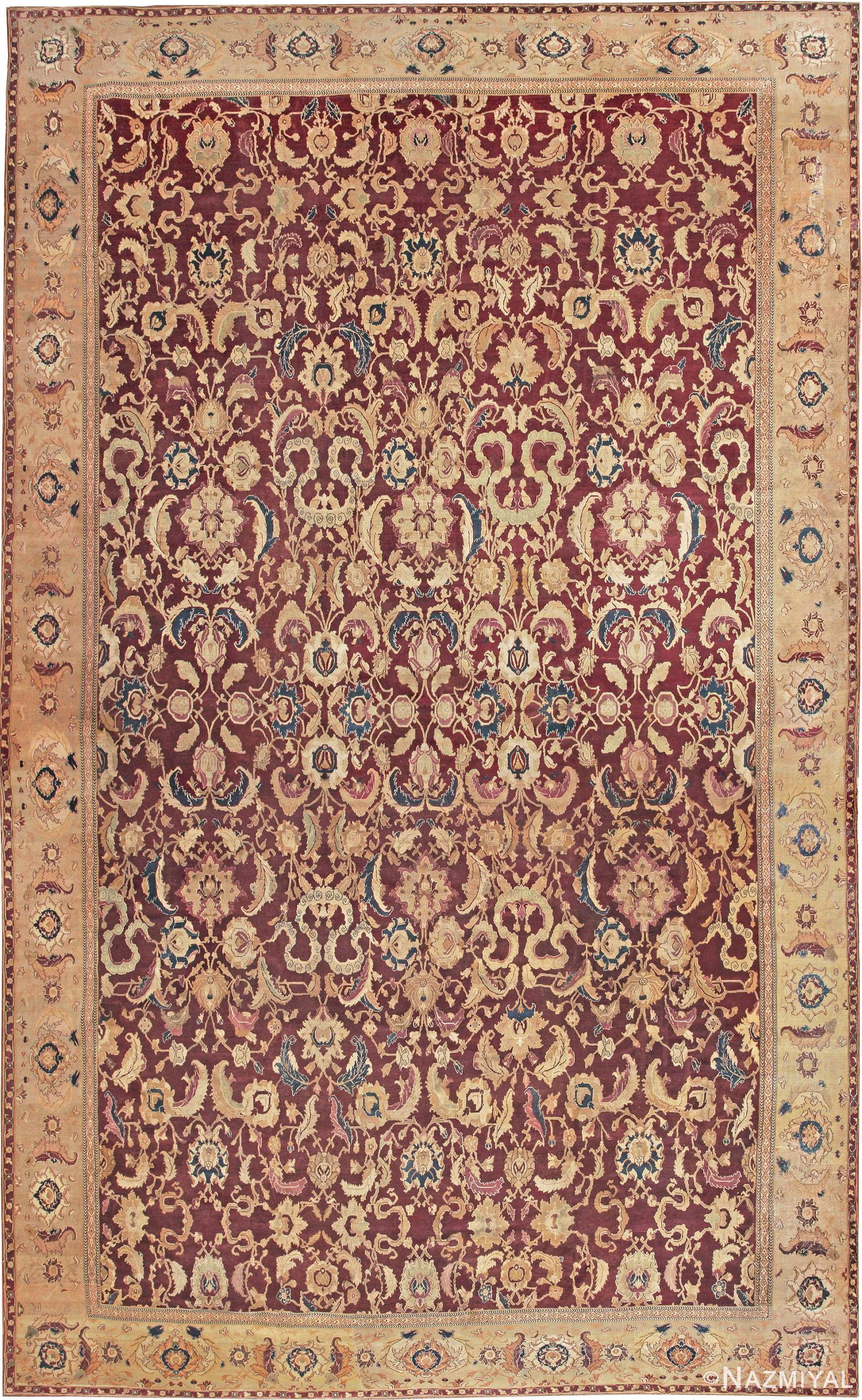
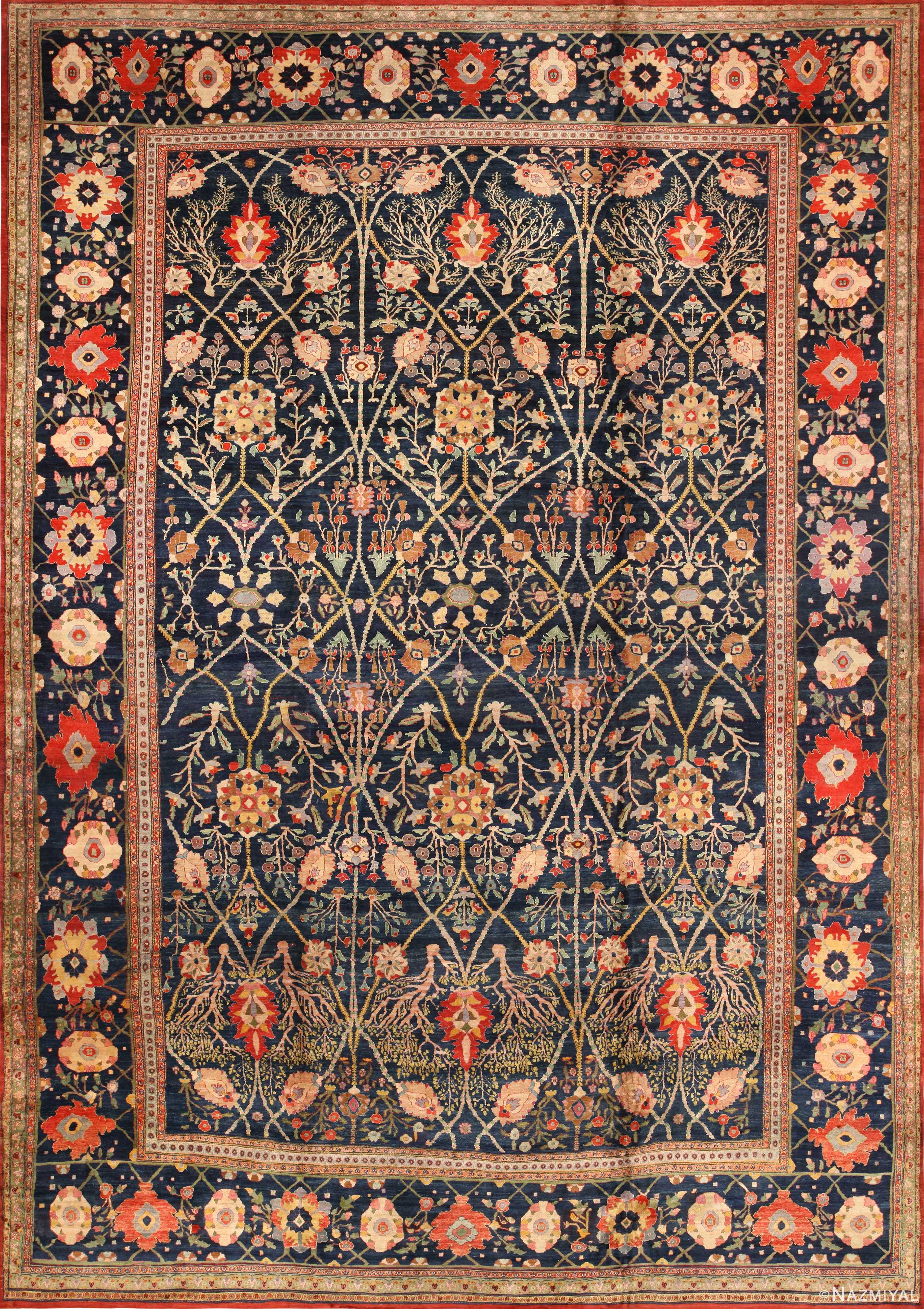
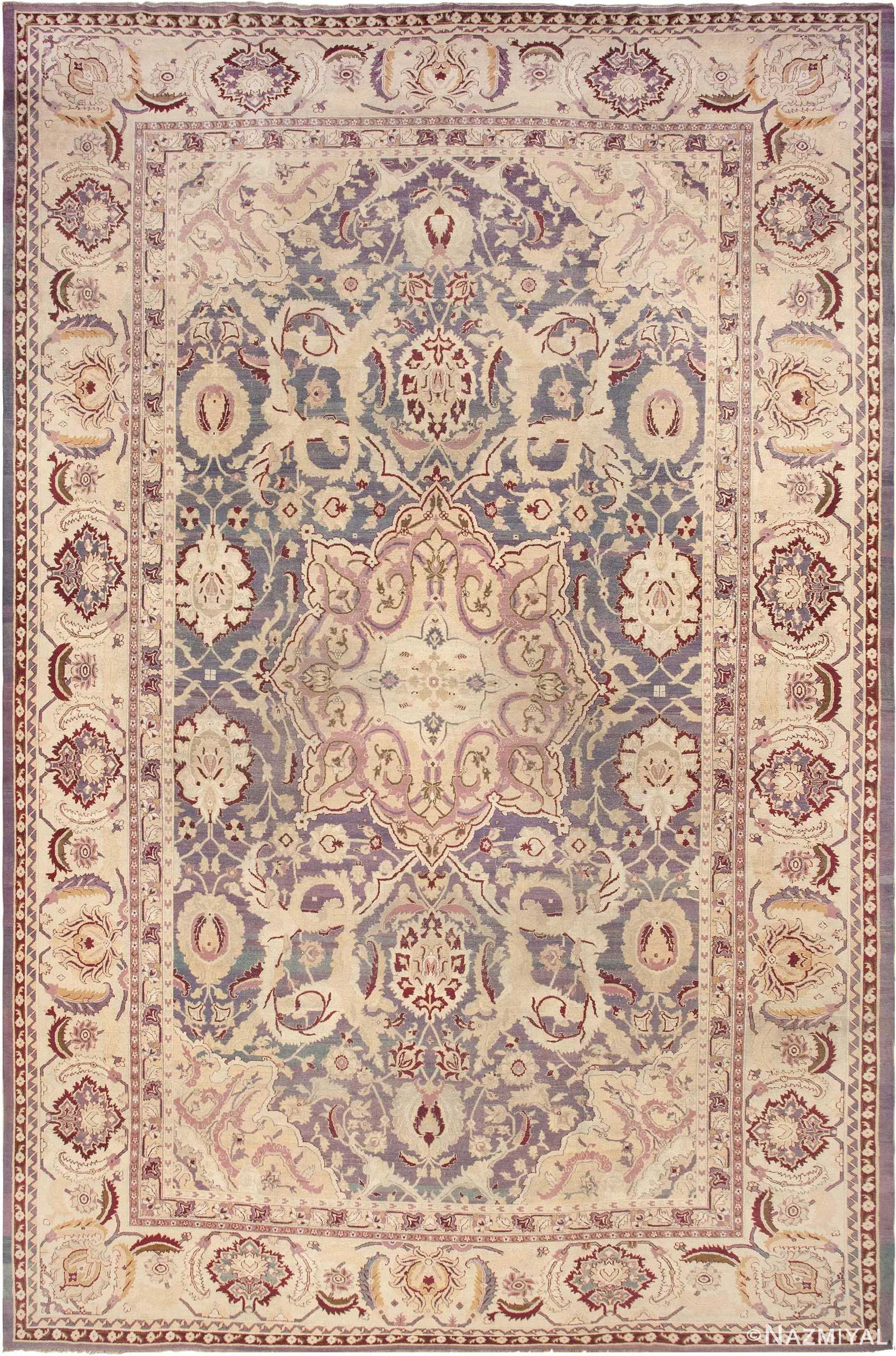
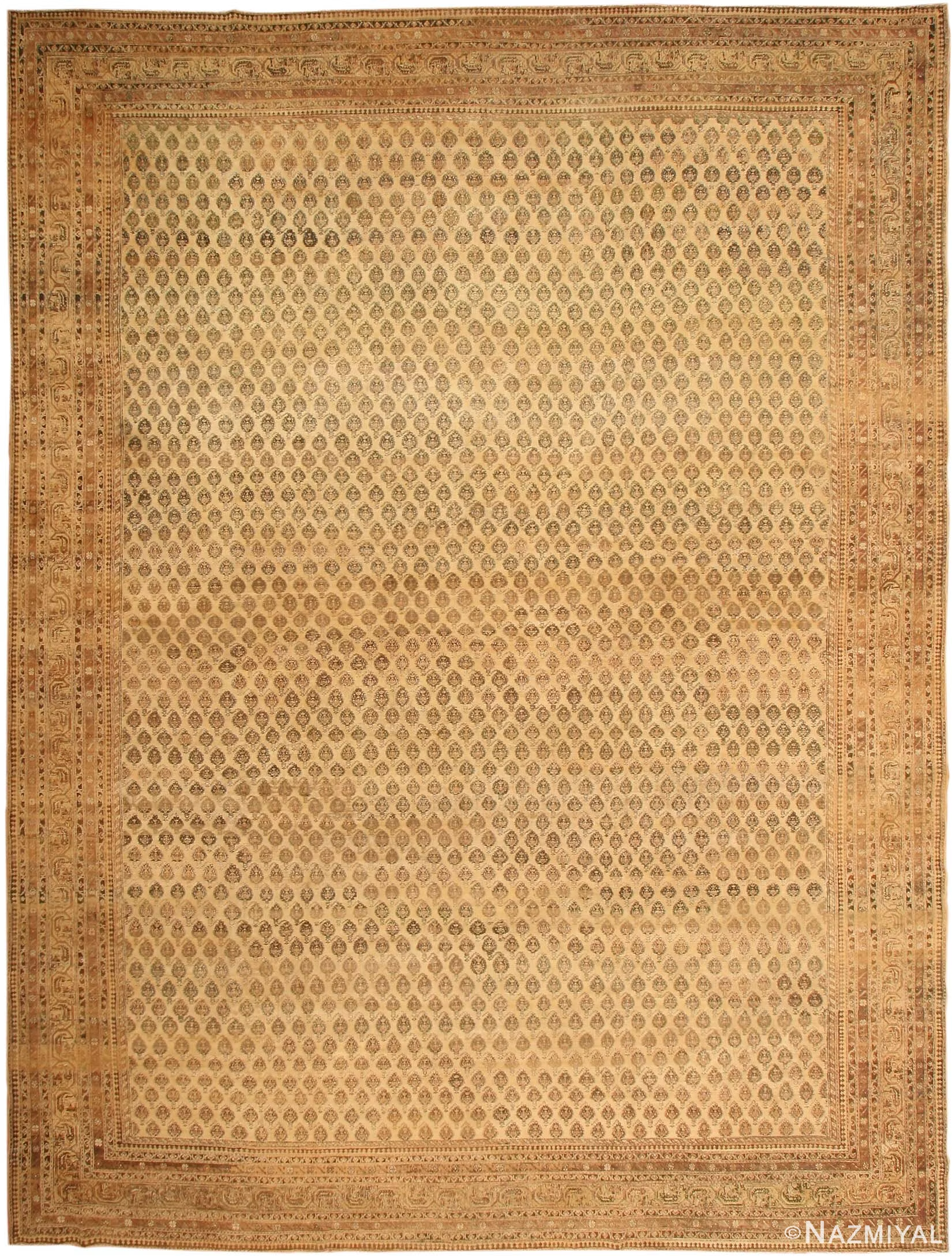
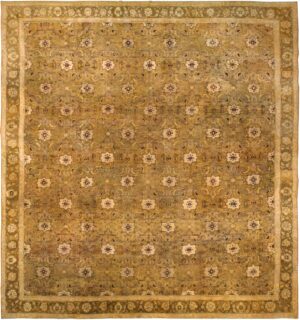
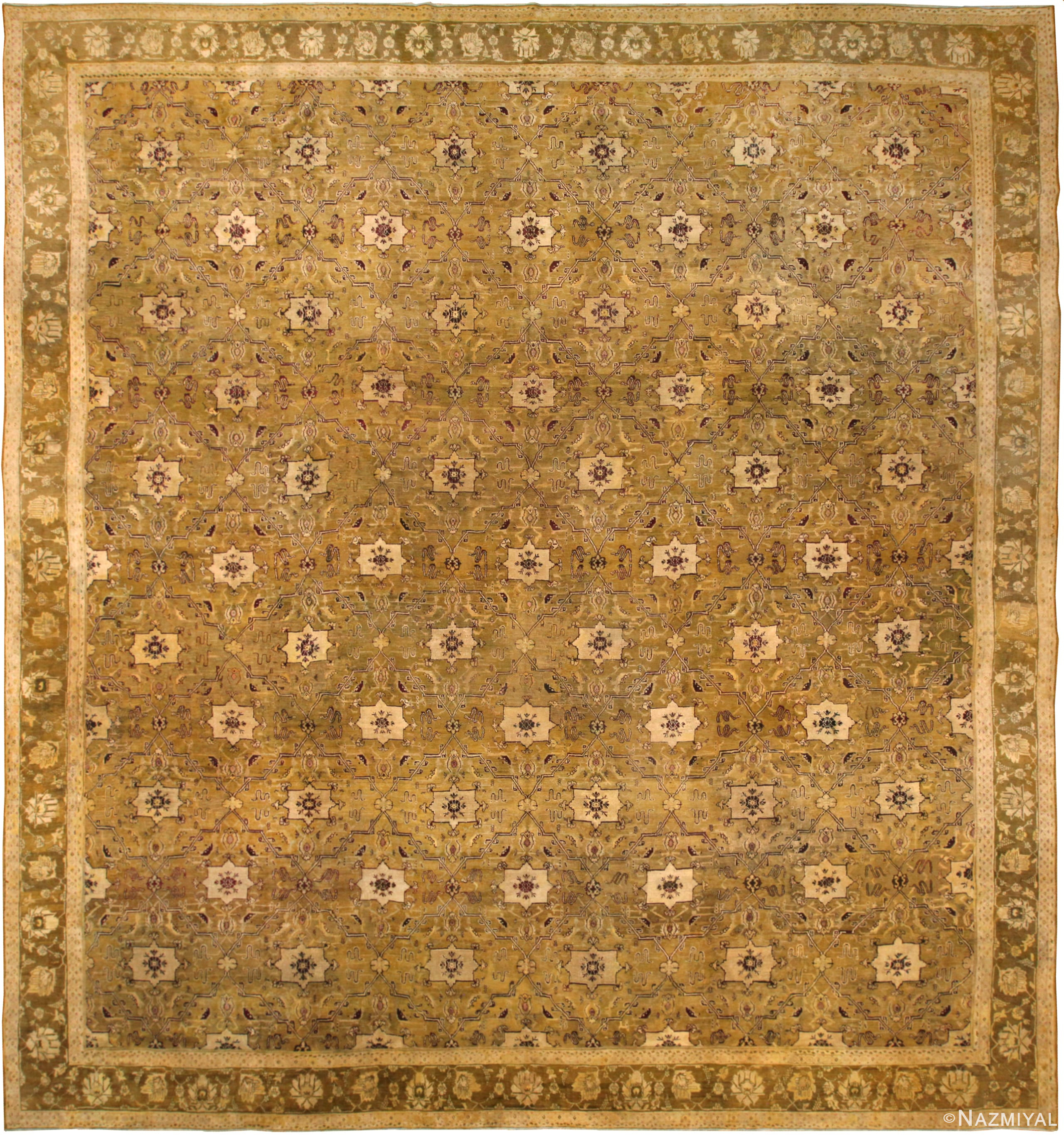
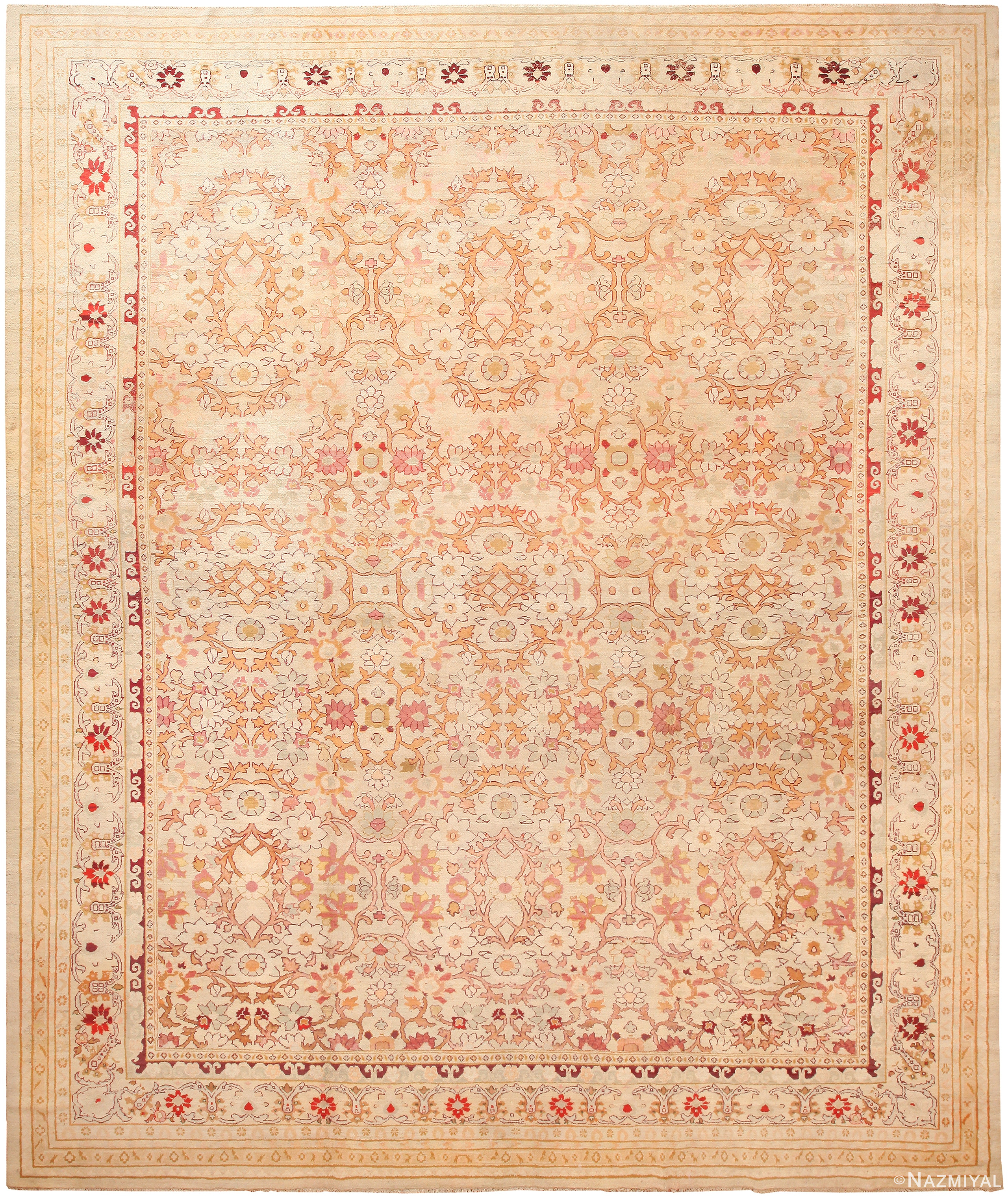
Agra Carpet #50110: Extra large, decorative neutral field, botanical clarity at scale
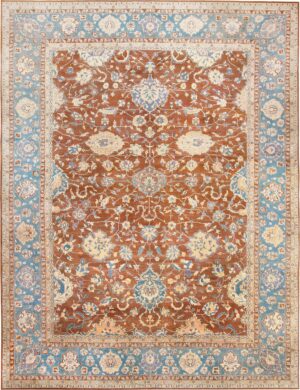
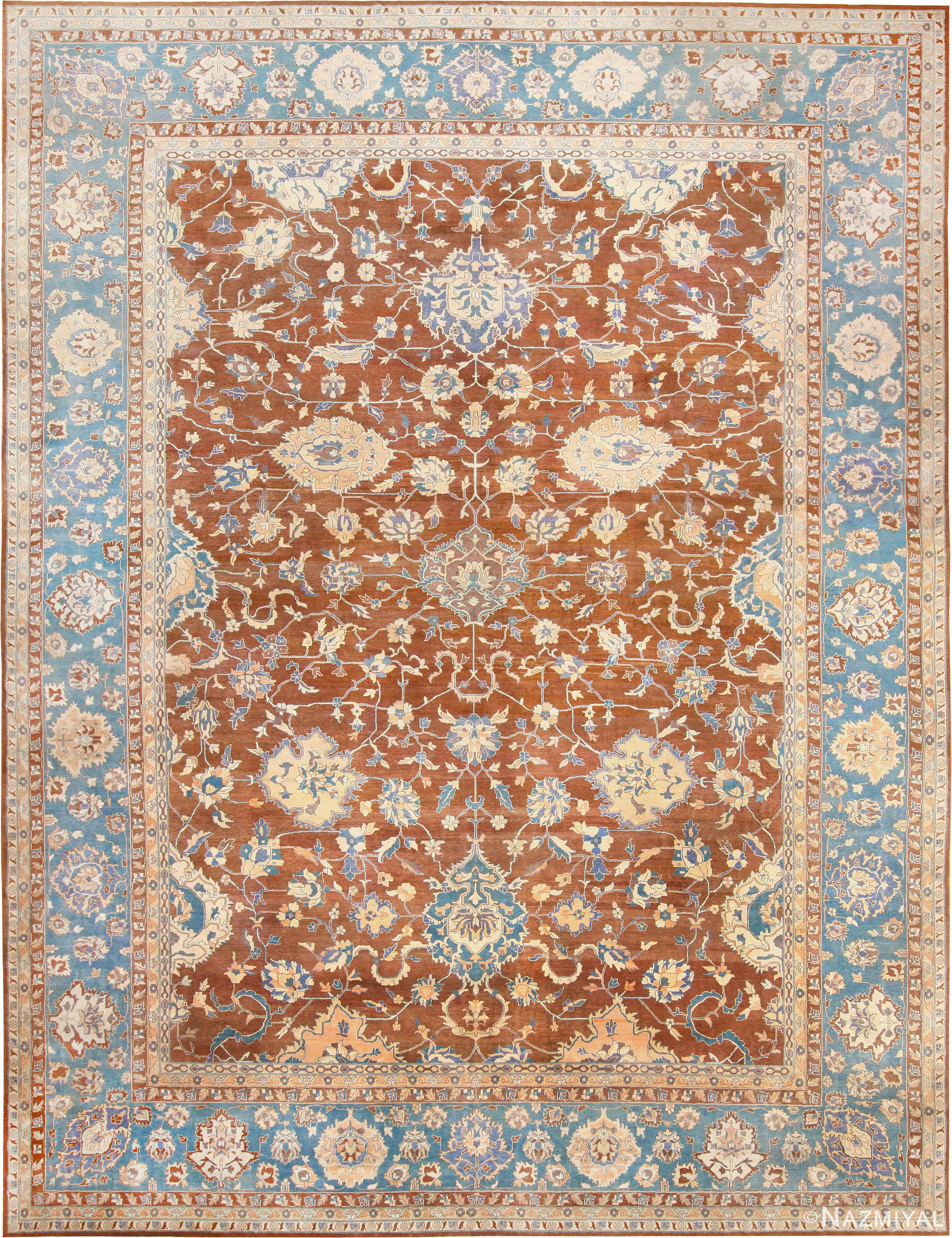
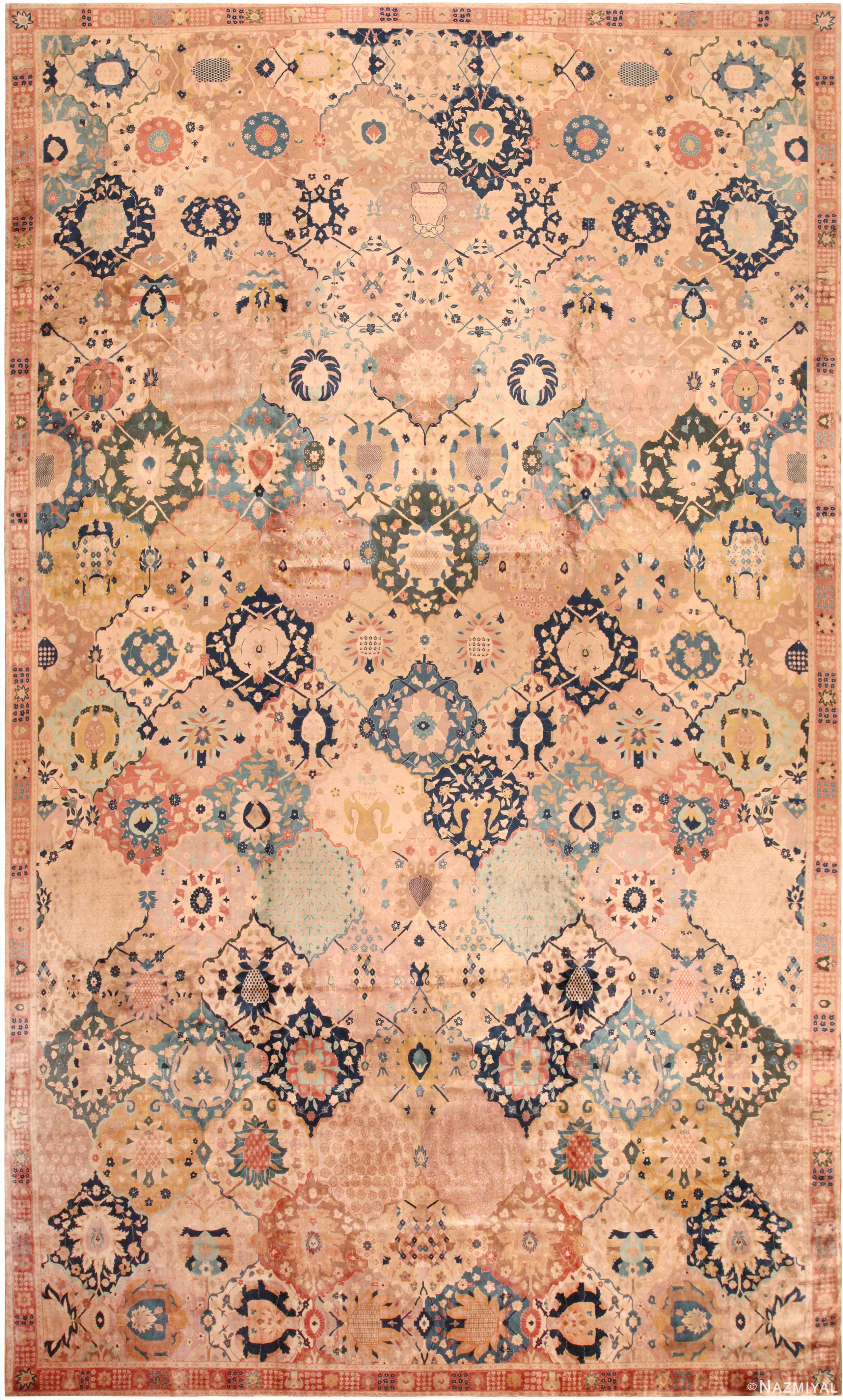
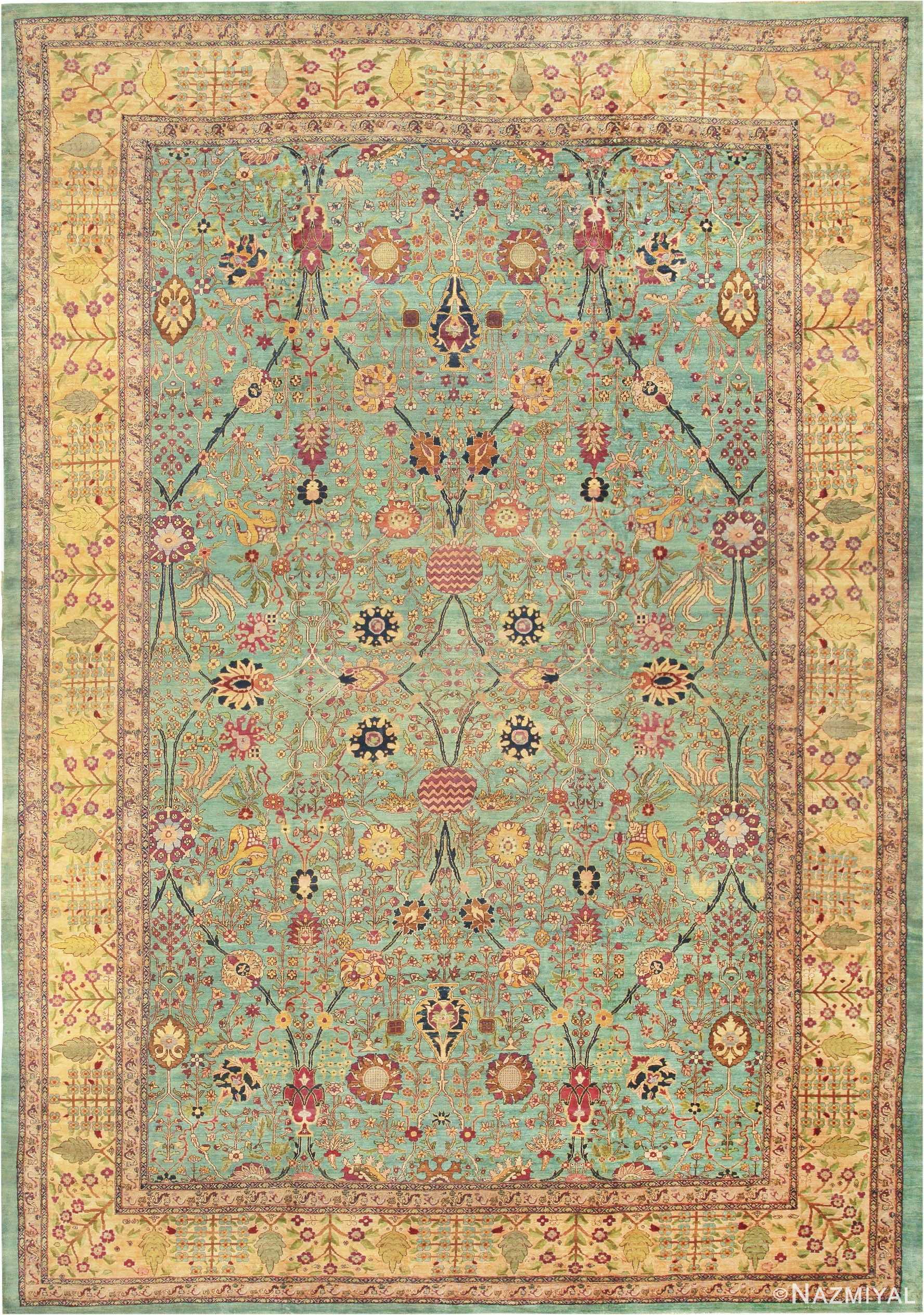
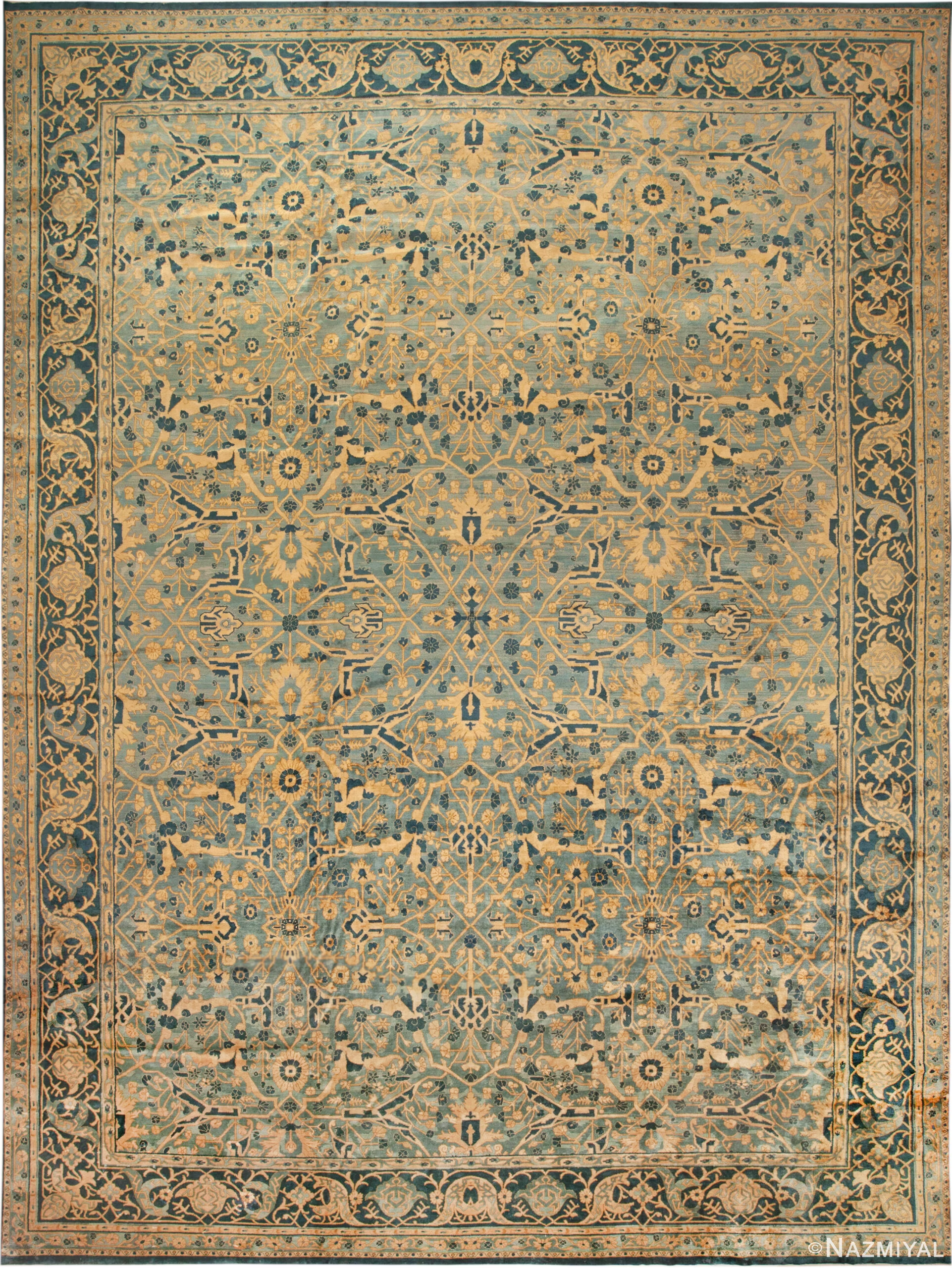
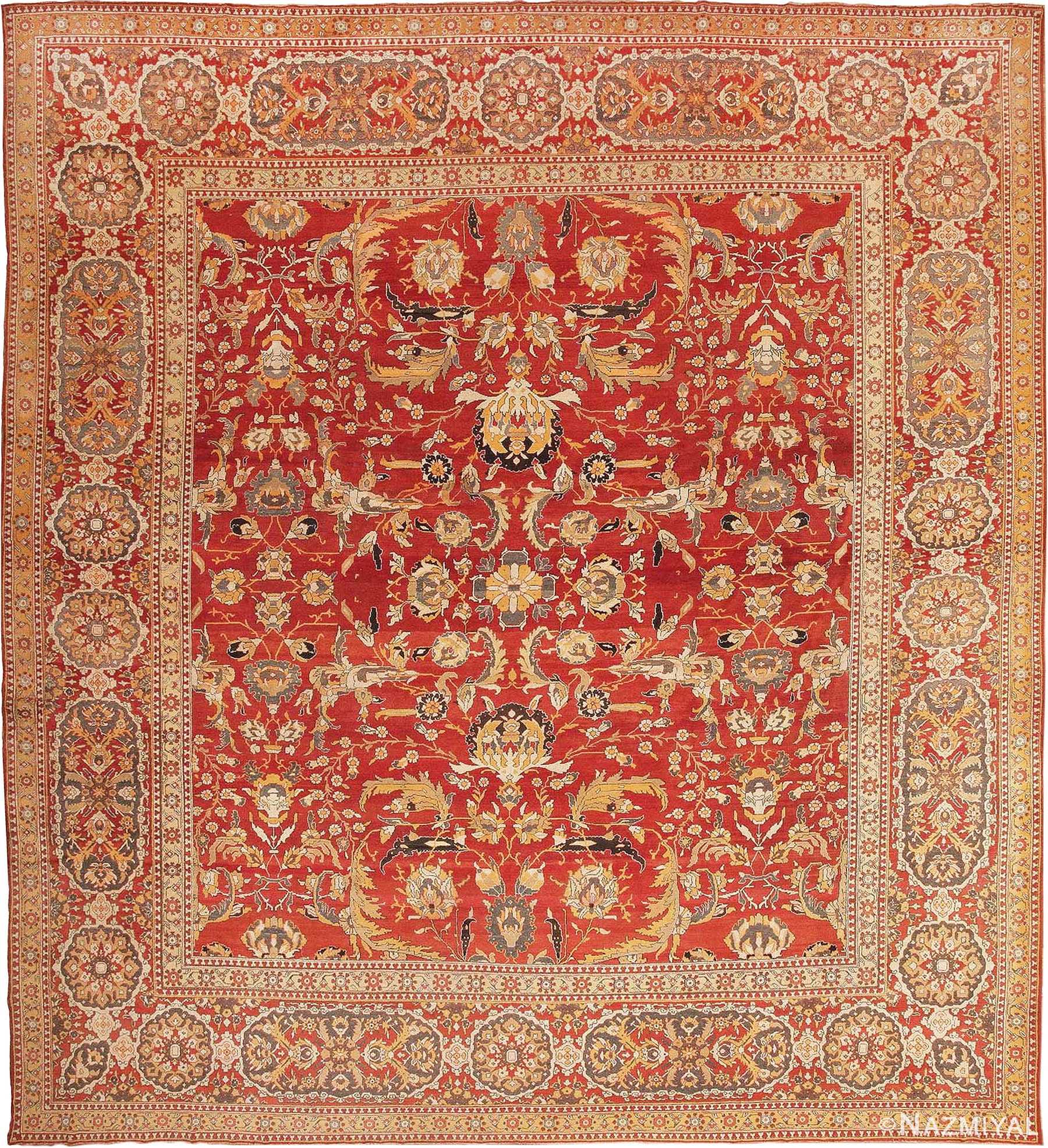
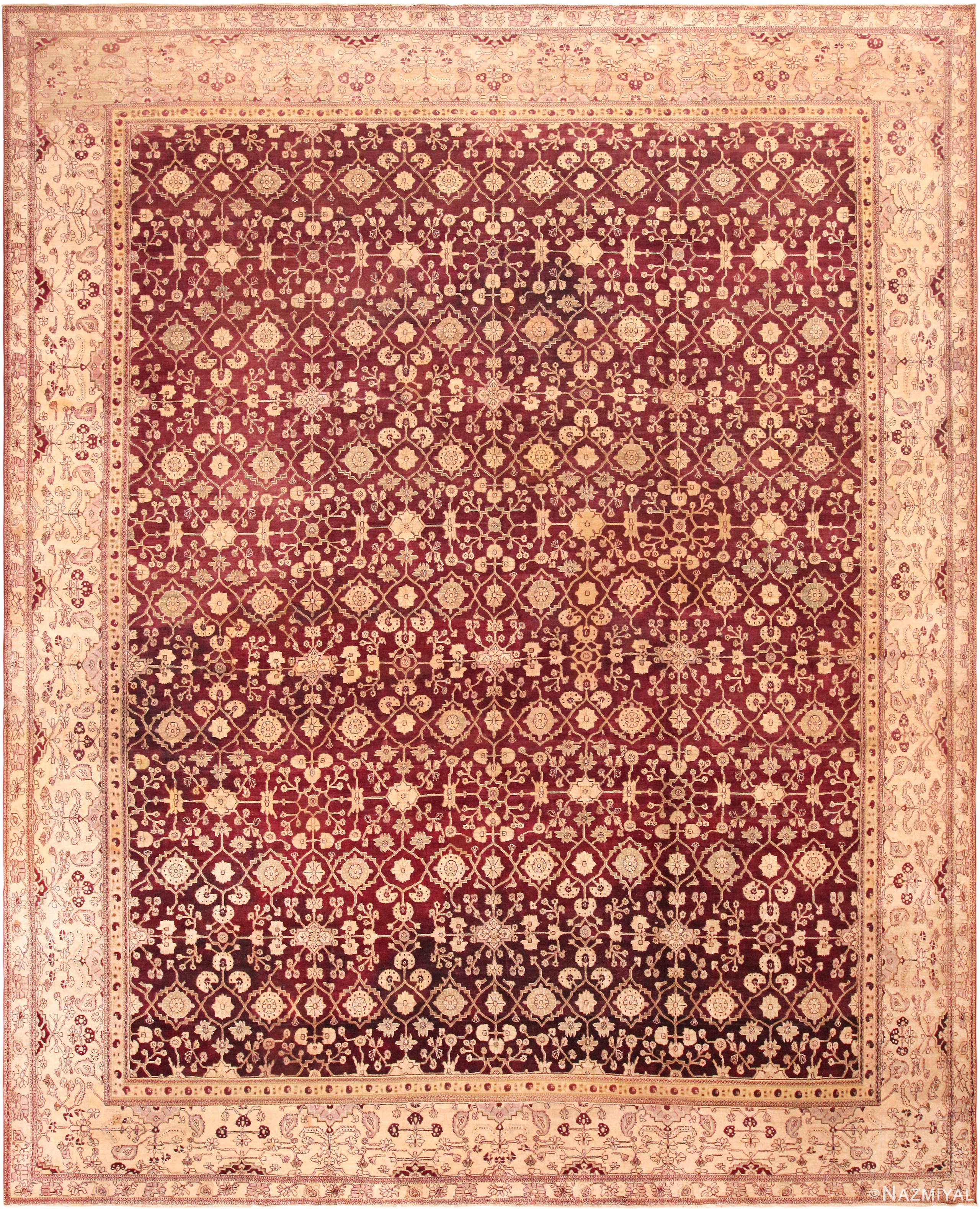
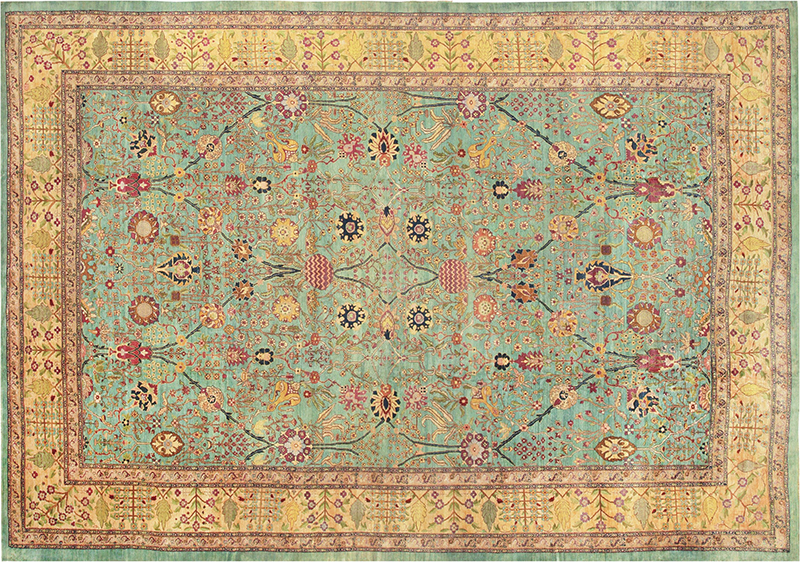
Agra Rug #40317: Seafoam palette example, elegant floral drawing and soft tonal depth
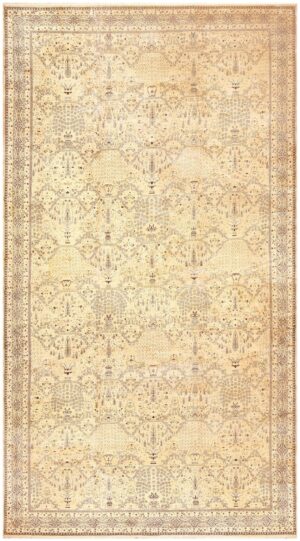
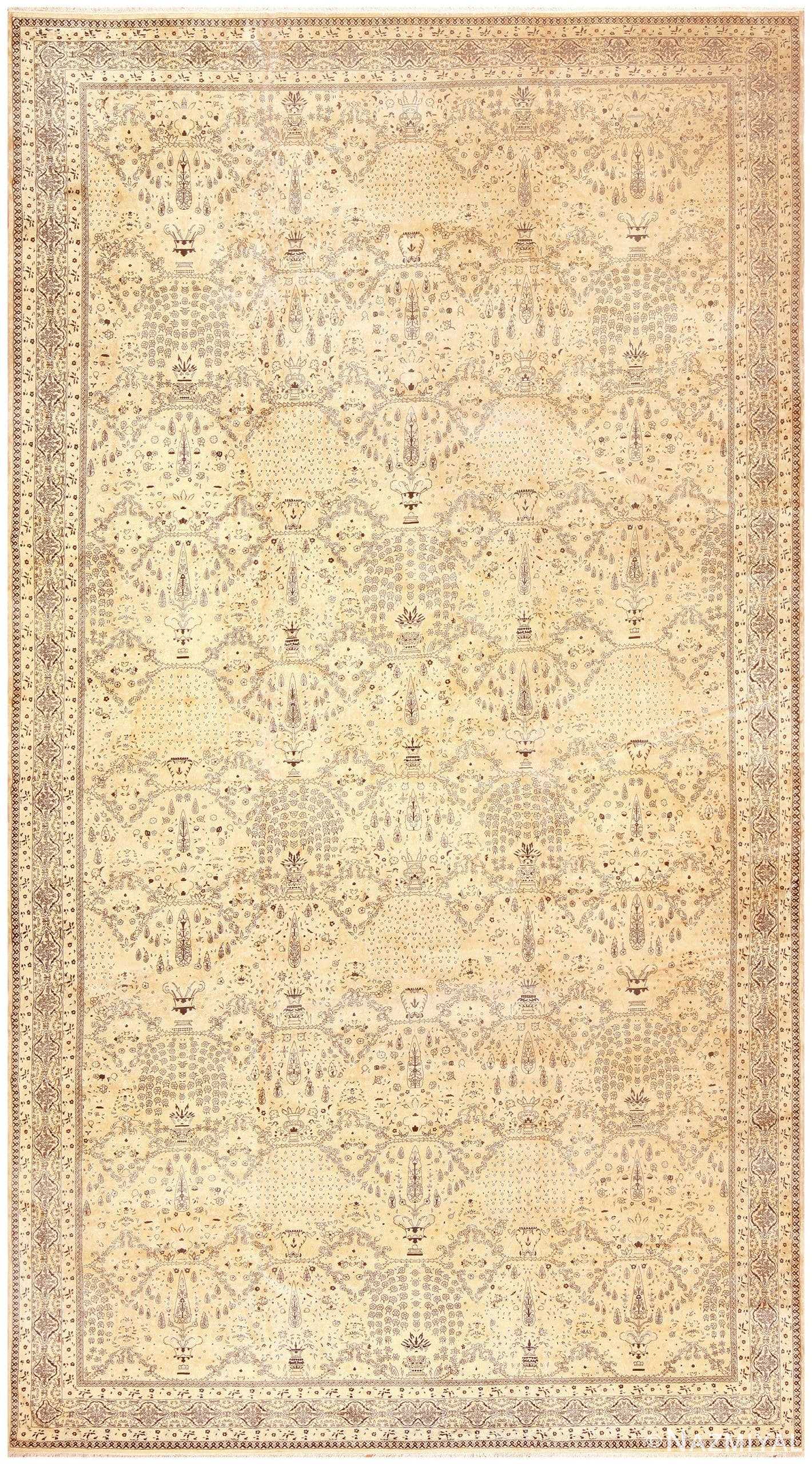
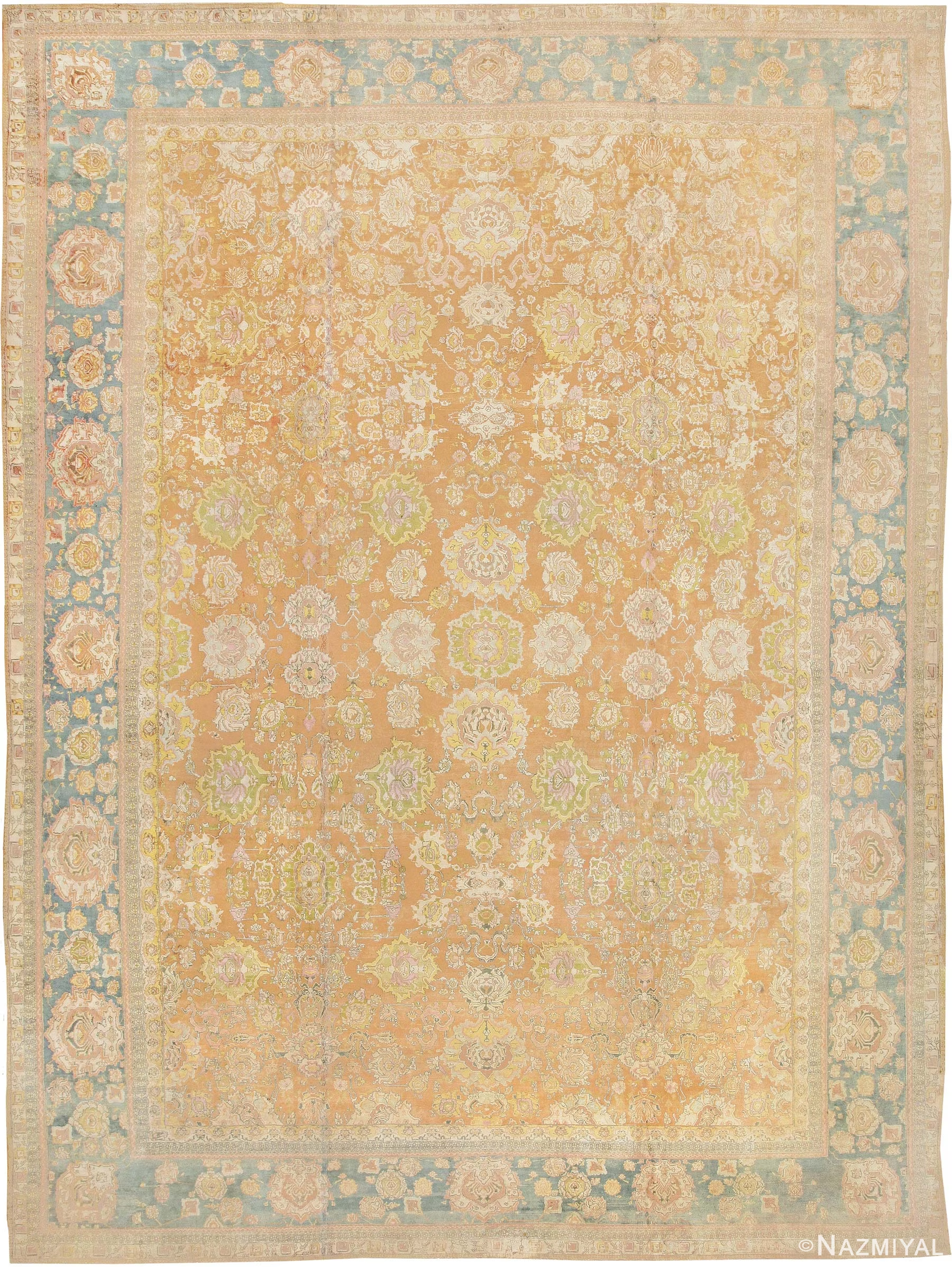
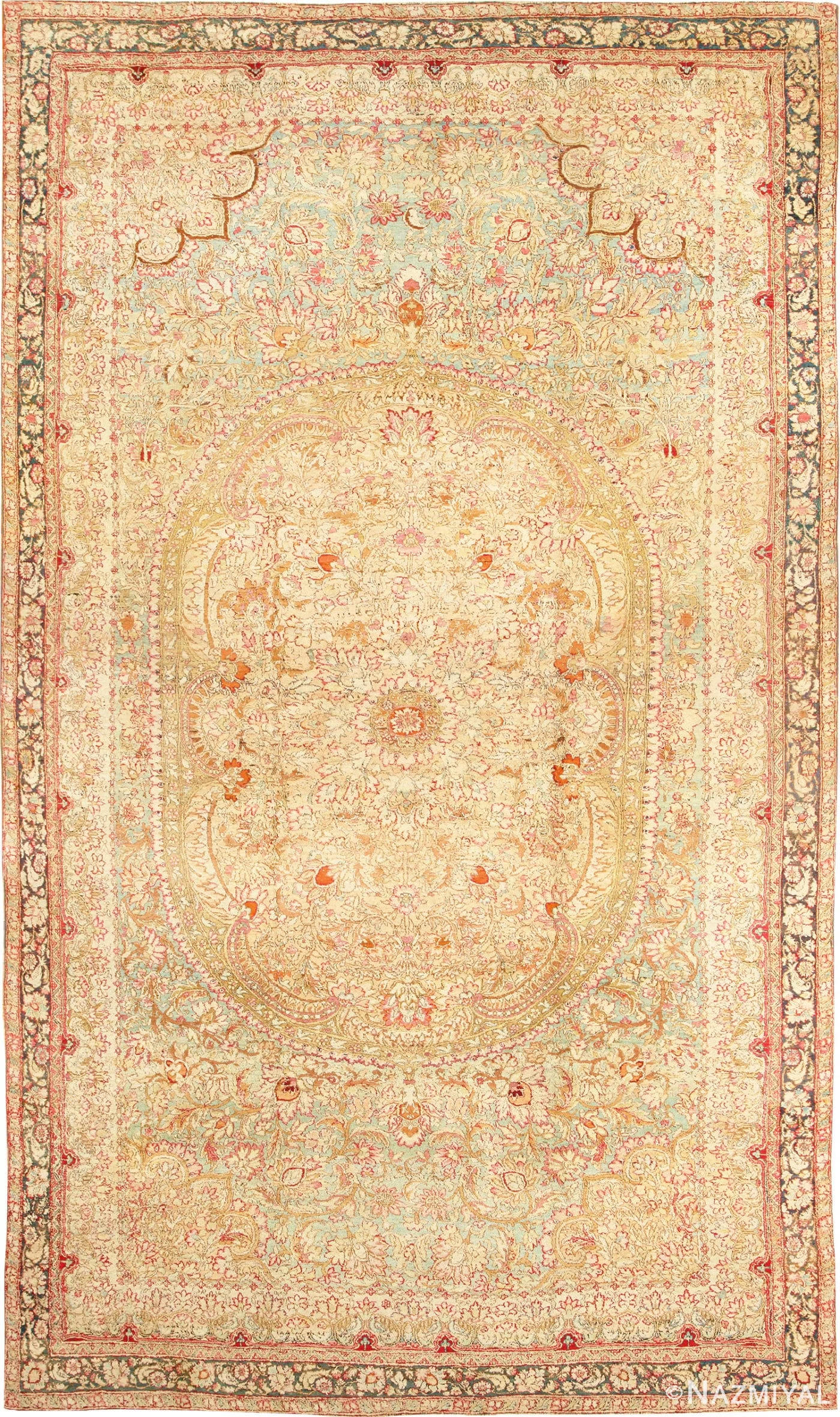
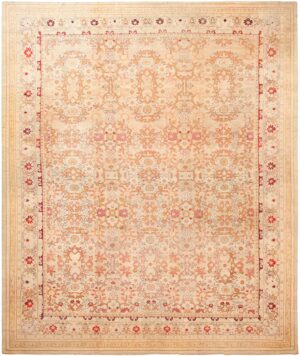
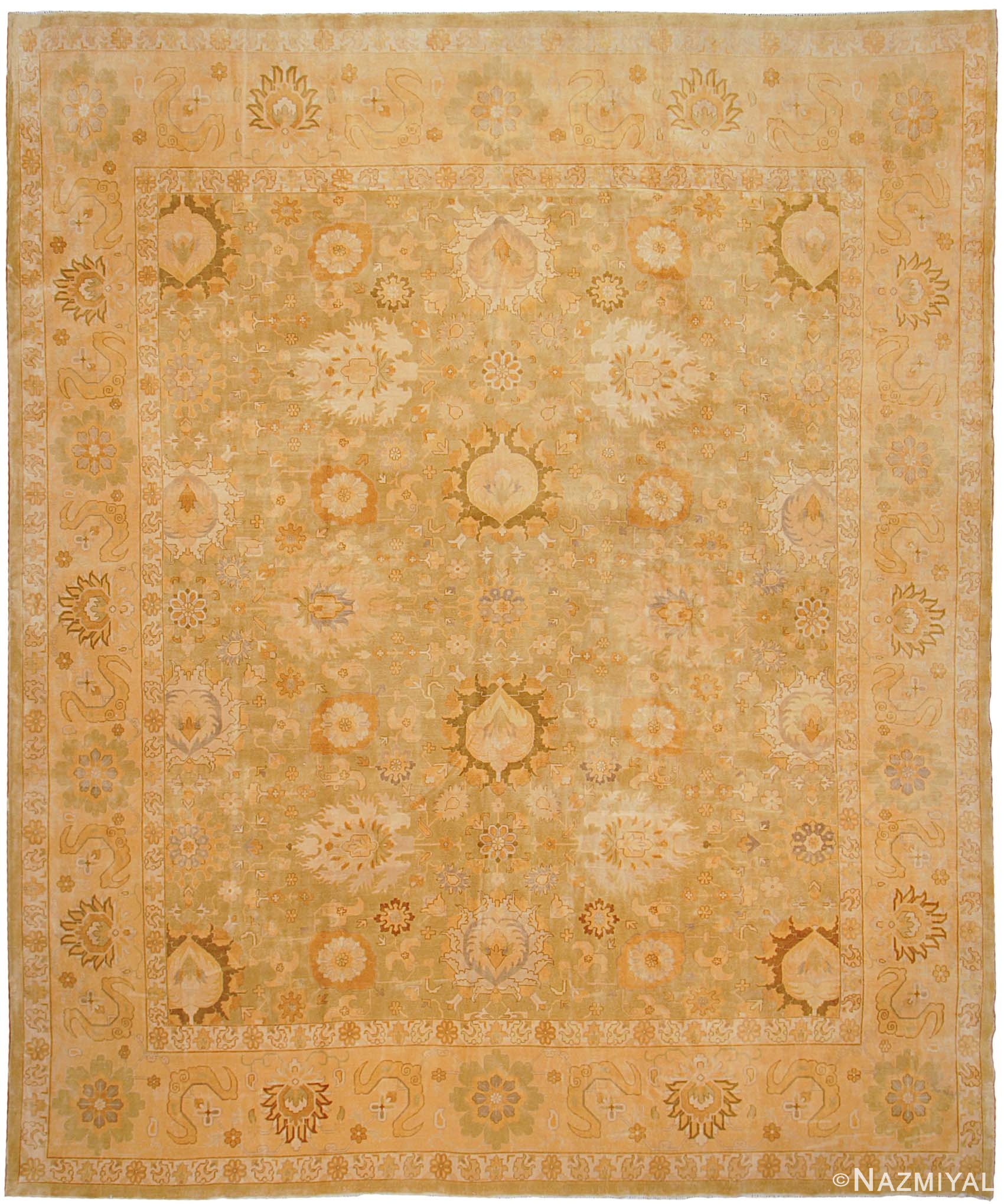
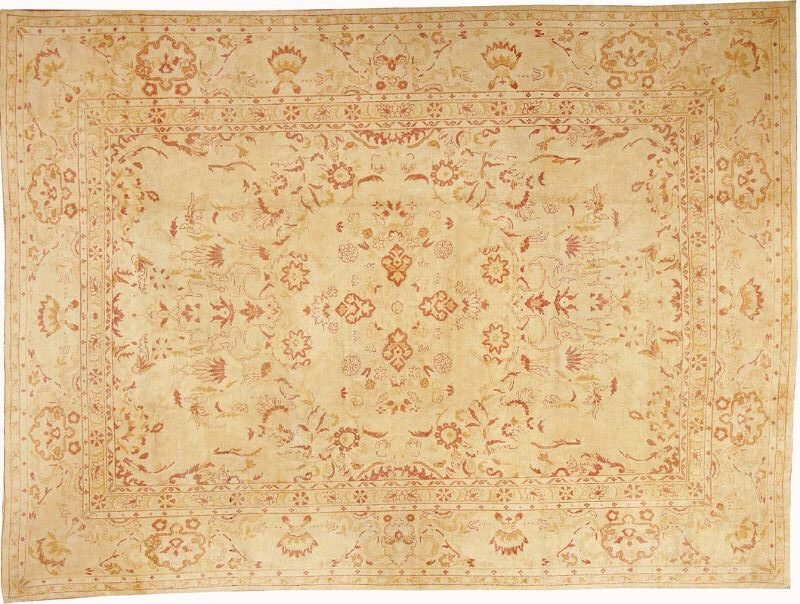
Agra Rug #43210: Light floral room-size example with soft wool pile and balanced composition
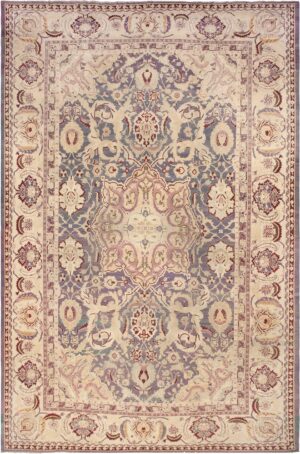
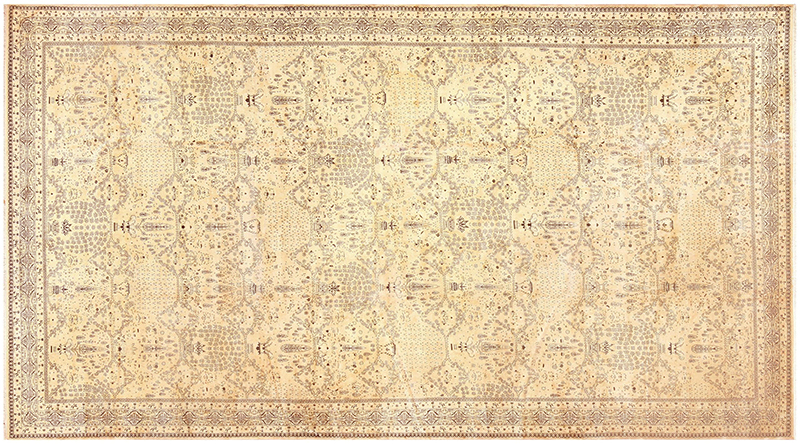
Extra Large and Decorative Neutral Antique Indian Agra Carpet — Nazmiyal Collection #50110
What Are Agra Rugs?
Agra rugs are hand-knotted Indian carpets tied to a North Indian workshop tradition and a Persian-influenced Mughal decorative vocabulary. In the trade, you’ll also see “Agra carpets,” “Indian Agra rugs,” and “Mughal/Moghul-style carpets” (older spellings like Moghul usually refer to the same court-era influence).
Collectors prize strong Agra carpets because they often combine:
Architectural scale (excellent for larger rooms),
Botanical drawing that reads clearly from a distance,
Workshop structure that holds up under real use when well-made.
Agra rugs sit within the broader world of antique rugs and are commonly collected alongside other Indian workshop traditions such as Mughal rugs and Amritsar rugs.
Where Do Agra Rugs Come From?
Agra rugs are associated with North India’s historic weaving ecosystem, where court taste, workshop discipline, and later export-era demand intersected. In practical market usage, “Agra” often describes a recognizable style family and workshop output more than a perfectly bounded “city-only” label.
Production contexts commonly include:
Workshop carpets made for grand interior settings (room-size through oversized),
Design vocabulary shaped by Persianate and Mughal aesthetics (curvilinear florals, palmettes, vines),
Later production borrowing “Agra” drawing for export markets.
Authenticity Note: Read This Before You Buy
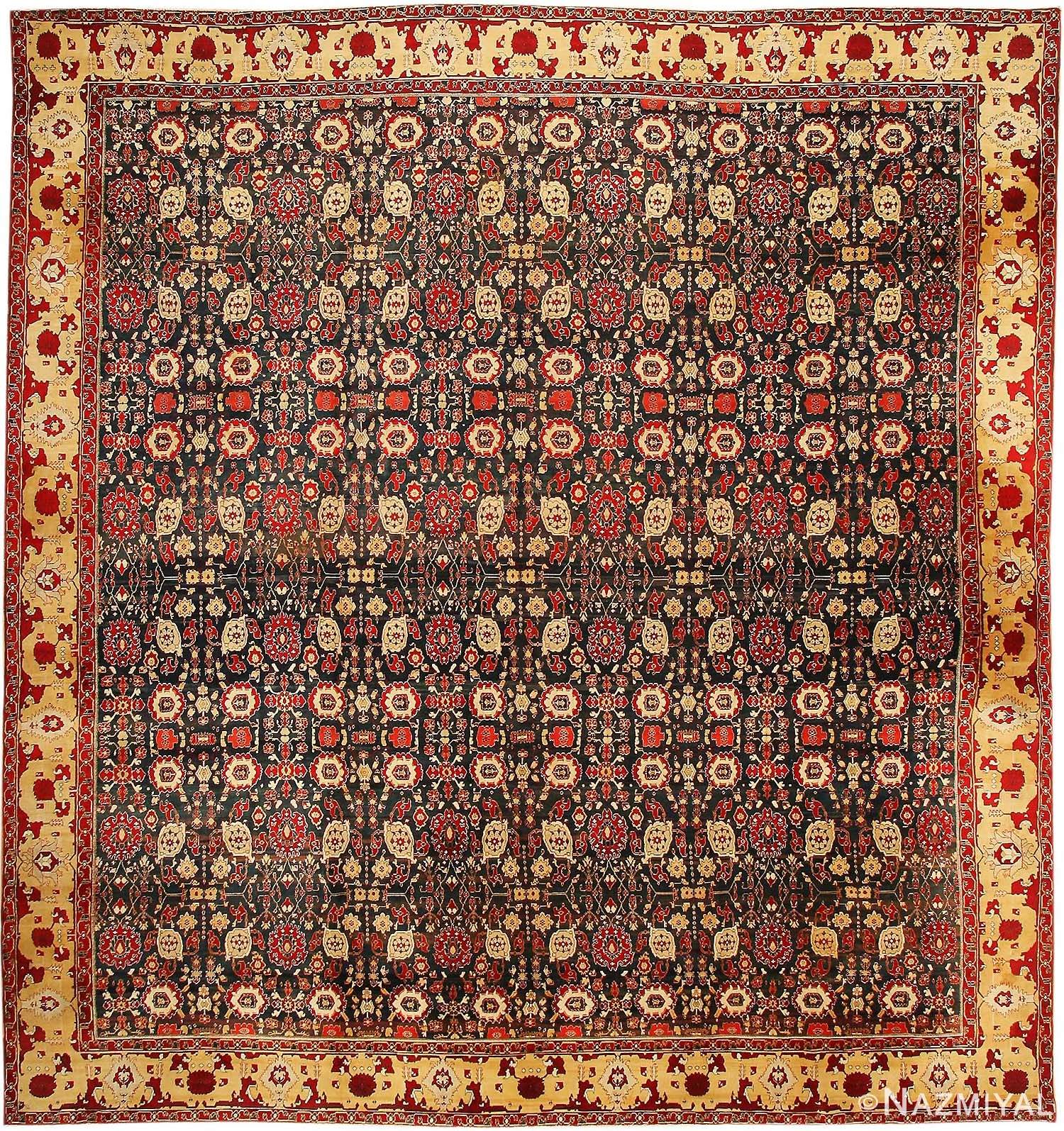
Large Seafoam Color Antique Indian Agra Rug — Nazmiyal Collection #40317
“Agra rug” is sometimes used loosely to refer to Indian carpets that share a floral, Persian-influenced look. As demand has grown, many rugs described as “Agra” may be later decorative interpretations, woven elsewhere, or made for export with simplified pattern language.
Labels alone are unreliable. Authentic evaluation should be based on structure, materials, dye behavior, age indicators, and credible sourcing—not naming alone.
How to Identify an Authentic Agra Rug
Use a combined approach: construction first, then materials, then design behavior:
Structure: hand-knotted construction with coherent workshop planning and stable foundations
Materials: wool handle and foundation strength appropriate to the period
Dye behavior: older pieces often show layered color, tonal shift, and depth
Design grammar: large-scale botanical drawing that stays “resolved” across the field
Age indicators: honest wear patterns and softened pile without foundation failure
Finishing: ends/selvages that feel consistent and intentional, not improvised
If a rug looks “Agra” but the structure feels weak, overly uniform, or cosmetically new, treat it as a later decorative rug rather than an older workshop carpet.
Agra Rugs Compared to Related Indian Carpets
Agra rugs are frequently compared to other Indian carpets that appear in Western interiors. Here’s a practical way to think about the differences:
Flatwoven rhythm, different texture and structural logic
Casual layering, crisp geometry, and low-profile practicality
Light Color Floral Room Size Antique Soft Wool Pile Indian Agra Rug — Nazmiyal Collection #43210
Why Agra Rugs Are Valuable
Antique Agra rugs are valued for:
Decorative authority at room scale,
Disciplined workshop composition,
Historic design vocabulary rooted in court-era aesthetics,
Scarcity in strong condition at larger sizes.
Are Agra Rugs a Good Investment?
Well-chosen antique Agra rugs can hold long-term demand when they show:
Credible age and workshop character,
Strong foundation integrity,
Balanced drawing at scale,
Condition that remains serviceable without major rebuilding.
As with all antique rugs, “investment” should be approached as buying quality + rarity + condition—not chasing hype. If you want formal valuation support, see rug appraisals & antique carpet valuations.
What Drives Value in Antique Agra Rugs
Age & weaving period (antique vs early vintage vs later production)
Scale (room-size and oversized often command stronger demand)
Materials (wool handle, fiber strength, foundation stability)
Construction (knotting, tension, edges/ends integrity)
Design clarity (botanical drawing that reads well across the field)
Color behavior (layering, tonal shift, natural-looking depth)
Condition (structure first; cosmetics second)
Provenance / sourcing credibility
Agra Rug Design Families: Collector and Designer Guide
Allover Floral & Botanical Agra Carpets
Continuous botanical drawing—ideal when you want coverage without a hard central focal point.
Medallion & Corner Agra Carpets
More formal composition—strong for symmetrical architecture and traditional rooms.
Lattice & Garden-Grid Influenced Agra Carpets
Compartmental layouts that feel architectural—excellent in large open-plan interiors.
Persian-Influenced Agra Carpets
Persianate drawing grammar (palmettes, vines, curvilinear systems) with Indian scale—great for bridging Indian and Persian rugs in one interior story.
Oversized & Palace-Scale Agra Carpets
Where drawing discipline matters most—best when structure is strong and design stays coherent across size.
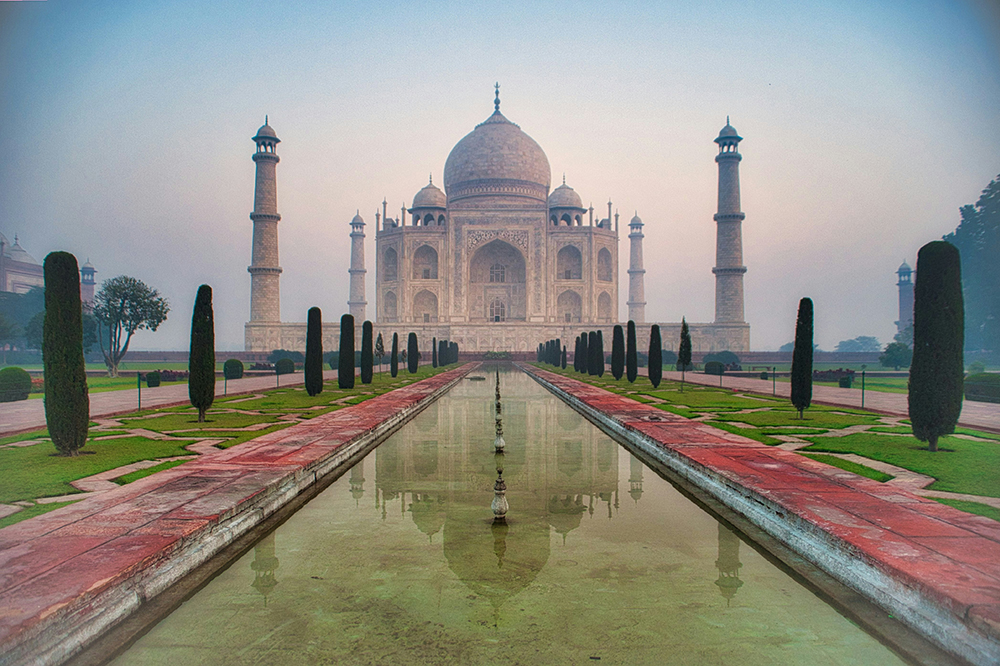
Taj Mahal, Agra, India | Unsplashed – Photo: Lucio Patone
Agra Rugs in Interior Design
Agra rugs excel when you want a room to feel composed and substantial:
In modern rooms, they soften sharp architectural lines while maintaining order.
In traditional rooms, symmetry and proportion are reinforced.
In eclectic rooms, they unify mixed periods with a calm, structured foundation.
Pro tip: Start with size and drawing scale, then choose color. Agra rugs succeed or fail on proportion.
In the trade, “antique” commonly refers to rugs produced before the mid-20th century, but proper evaluation depends on structure, materials, and age indicators—not the label alone.
Are Agra rugs always Mughal?
Many Agra carpets reflect Mughal-era influences, but “Agra” in the market often refers to a style family and workshop tradition—some pieces are later interpretations.
Do Agra rugs use natural dyes?
Many older examples show natural dye behavior (depth, tonal shift). Later production may include synthetic dyes; assessment depends on the period and materials.
Can Agra rugs be professionally restored?
Yes—when restoration is done by specialists who understand antique structures and use appropriate conservation materials and methods.
Nazmiyal White-Glove Service
We make it easy to shop with confidence—whether you’re choosing a single statement piece or curating a full room.
Nazmiyal Collection has been a trusted source for antique rugs and vintage carpets for over 45 years. Our NYC gallery curates one-of-a-kind pieces with an emphasis on authenticity, provenance, and lasting decorative value.
Need help? Call us at (212) 545-8029 or visit our New York City showroom to work with a rug expert.
             Posted on Google        Victor Florintsev     Trustindex verifies that the original source of the review is Google. The only ones I'd ever buy rugs from. The best.         Posted on Google        Jeffrey NeumanB     Trustindex verifies that the original source of the review is Google. I bought two gorgeous Serapi rugs from Farhad at Nazmiyal Rugs!  Beautiful carpets, fair prices and great service.  Very happy customer.  Farhad (the sales person) was very patient and gave us great service.         Posted on Google        john haid     Trustindex verifies that the original source of the review is Google. Alen is a gentleman and an expert.  Really great to work with.         Posted on Google        Edward Yasuna     Trustindex verifies that the original source of the review is Google. I recently purchased a modern Kandinsky rug from Nazmiyal Auctions.  It was just as described, and the director (Farhad) of the auctions had it sent to me quickly and safely.  Payment was easy, the rug was reasonably priced, and I highly recommend Nazmiyal Auctions and Antique Rugs.  Quality merchandise and first-class service.         Posted on Google        Nicholas Carr     Trustindex verifies that the original source of the review is Google. Had a excellent experience buying a rug in Nazmiyal's 1/18/26 online auction.  First, prior to the auction, viewing a number of lots at the 32nd St showroom (I had prepared a list from the online catalog). The staff were great to work with: helpful, knowledgable, honest, and flexible.  Second, after placing an online bid and winning the desired item, arranging payment and pickup was simple and straightforward. Everything went seamlessly and the overall experience was educational and fun. Many thanks to Jason and his team.         Posted on Google        Andrea Gared     Trustindex verifies that the original source of the review is Google. Everyone at Naziyal is proffessional, especially Jason and Farhad.
They are knowledgeable, truthful, and true gentlemen. I have sold several rugs through them and will always go to them first, to buy or sell. The best in the business!         Posted on Google        Lori Silverberg     Trustindex verifies that the original source of the review is Google.          Posted on Google        Jesse Zilberman     Trustindex verifies that the original source of the review is Google. Excellent customer service! Alen was very helpful over the phone and email. The rug we acquired was stunning, and photos do not do it justice. I would definitely work with Alen and team again!         Posted on Google        Rachel Paul     Trustindex verifies that the original source of the review is Google. Jason was incredibly kind and helpful! I work for a small museum that had some rugs we had no information on. Jason responded to us quickly and gave us the information we needed for free! Incredible service, we are super thankful for his help!

 Size: 18 ft 2 in x 30 ft 10 in (5.54 m x 9.4 m)
 Size: 16 ft x 29 ft 6 in (4.88 m x 8.99 m)
 Size: 20 ft 8 in x 26 ft 8 in (6.3 m x 8.13 m)
 Size: 4 ft 6 in x 26 ft 6 in (1.37 m x 8.08 m)
 Size: 16 ft 10 in x 25 ft 6 in (5.13 m x 7.77 m)
 Size: 14 ft 9 in x 24 ft 6 in (4.5 m x 7.47 m)
 Size: 15 ft 10 in x 24 ft (4.83 m x 7.32 m)
 Size: 11 ft 8 in x 23 ft 8 in (3.56 m x 7.21 m)
 Size: 15 ft 2 in x 23 ft 8 in (4.62 m x 7.21 m)
 Size: 15 ft 10 in x 23 ft (4.83 m x 7.01 m)
 Size: 15 ft 10 in x 22 ft (4.83 m x 6.71 m)
 Size: 14 ft x 20 ft 10 in (4.27 m x 6.35 m)
 Size: 16 ft 7 in x 20 ft 10 in (5.05 m x 6.35 m)
 Size: 14 ft 10 in x 19 ft 9 in (4.52 m x 6.02 m)
 Size: 14 ft 5 in x 19 ft 2 in (4.39 m x 5.84 m)
 Size: 18 ft x 19 ft 1 in (5.49 m x 5.82 m)
 Size: 10 ft 8 in x 18 ft 3 in (3.25 m x 5.56 m)
 Size: 17 ft 3 in x 18 ft 2 in (5.26 m x 5.54 m)
 Size: 15 ft 7 in x 17 ft 10 in (4.75 m x 5.44 m)
 Size: 14 ft 7 in x 17 ft 7 in (4.44 m x 5.36 m)
 Size: 13 ft 8 in x 16 ft 4 in (4.17 m x 4.98 m)