It cannot be understated just how important the authentication of a rug is when looking to expand your collection. Those looking to buy textile arts as culturally rich as rugs, should learn the basics of how to read a rug’s provenance.
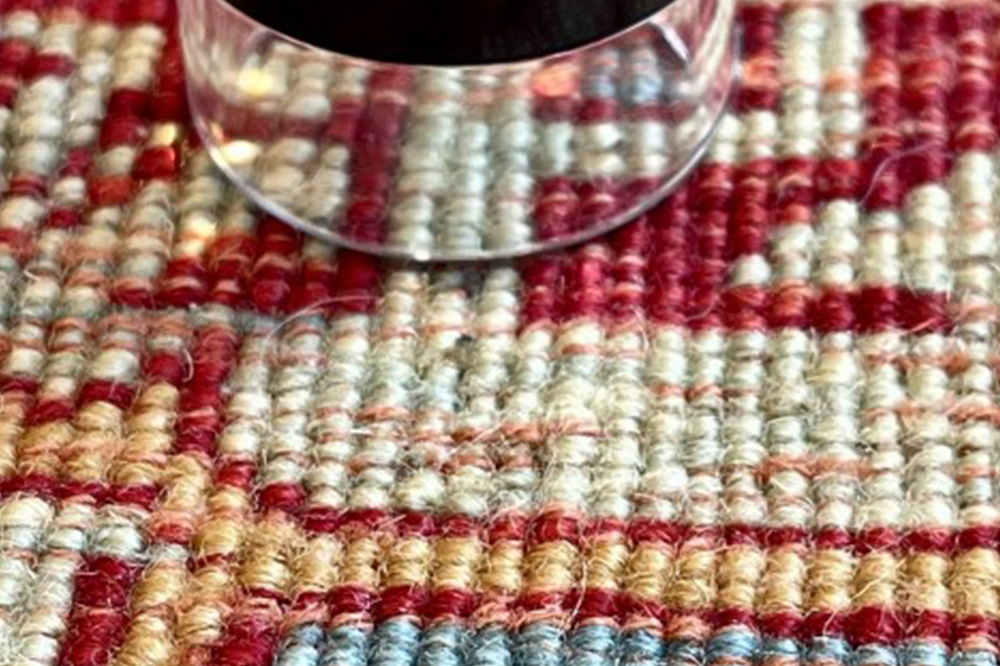
Antique rugs are popular aesthetic pieces for current homes, so much so that modern productions often seek to mimic older styles. Through either historical motifs, or a purposeful distressing to make a rug look worn, authentication has become tricky. So how do you tell? And what traits are dead giveaways?
What is a Provenance and What to Look Out For
A rug provenance is a documented history detailing a piece’s origin, maker, cultural context, and a record of ownership. The provenance is particularly important when dealing with antique pieces, serving as proof of authenticity. Each of these factors influence both the value and significance of a rug. The provenance is a key determining factor when pricing antique carpets.
Antique rugs are unique in the sense that even workshop pieces mass-manufactured were handmade, and therefore one-of-a-kind. There are several characteristics that anyone looking to verify a rug’s status should pay close attention to. A rug’s construction gives away a lot. Things like knot-count, dye type, and fringes are key tells for age, quality, and regional origin. When additionally looking at a rug’s general composition or specific design motifs, you can further determine its origins.
Knotting
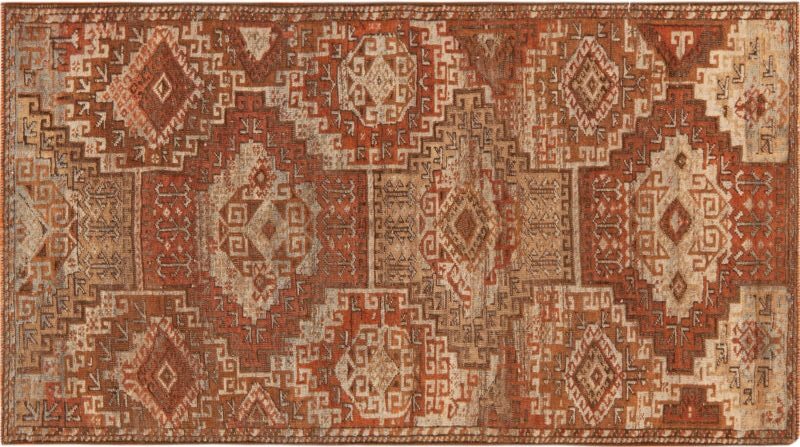
The knots of a rug seem like a fairly inconsequential feature of a textile, simply a foundational element to the construction. In reality, knotting can tell us a lot, both about quality and origin.
The first thing to note is the knot density of a piece. Measured in knots per square inch (KPSI), the knot density determines how tightly woven a rug is. This is a direct indicator for carpet durability and level of detail. Higher quality rugs always have a higher knot density, requiring a higher skill level of craftsmanship. It also allows for a much higher level of detail in the artistic design of a piece. Think of each knot as a pixel and the carpet as an image made up of pixels. The more pixels in one image, the sharper the details.
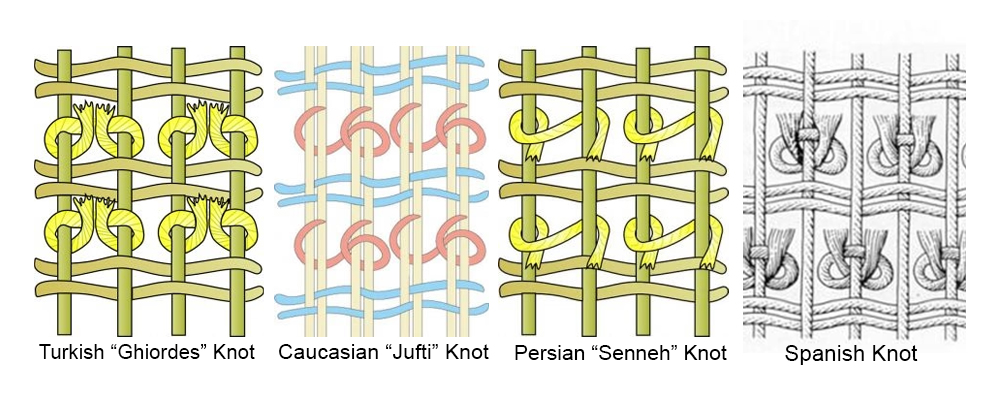
Knotting doesn’t just indicate quality though. It actually serves as a reliable indicator for regional origin and cultural context. There are different techniques for rug knots, some specific to certain peoples and areas. The Ghiordes knot, otherwise known as a Turkish knot, are symmetrical double knots common in Anatolian productions. Persian Senneh knots, on the other hand, are asymmetrical single knots pulled through each warp thread in an over-under technique. The Caucasian Jufti knots can be either symmetrical or asymmetrical, wrapping around pairs of warp threads rather than single ones. Spanish knots skip every other warp thread, creating a symmetrical grid.
To examine a rug’s knot-type and density, flip the rug and examine its foundation, counting the KPSI. For flatweaves, or kilims, the knotting is apparent from both its surface and its back. Apart from design quality, a higher knot count always guarantees a more durable textile.
Fringes
The fringe is a common rug feature, lining two of the four carpet ends in tassels. Today, the fringe is often an aesthetic choice for carpet designs, but originally fringes were just happenstance. Appearing more often in pile rugs than flatweaves, fringes are the leftover warp threads from where a finished rug was cut out of its loom.
When industrialization hit the carpet market, fringes became a tell for handmade rugs, as machine-made productions had no need for a fringe. Over time, though, the appeal of a fringe was tied directly to the appeal of a handmade antique. This meant that modern rug productions began adding fringes to their rugs, trying to mimic the look of a hand-stitched textile. The mere presence of a fringe was once a sure indication of a rug’s construction history. This is unfortunately no longer the case, and we must instead examine a rug’s edges a little closer.
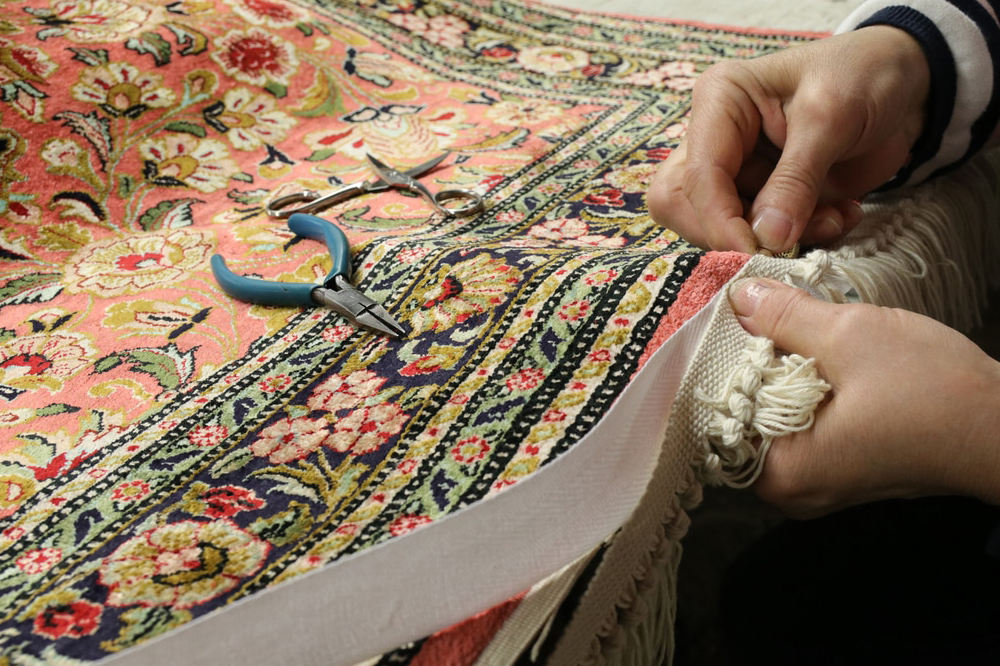
True handmade rugs include fringes as an extension of the rug itself. They’re woven directly into the rug, as they make up the ends of the rug’s skeletal warp foundation. In machine-made, modern rugs, the fringes are added after the rug is already complete. This means the edges aren’t an interwoven feature, instead sewn on as an afterthought.
Handmade rugs, though technically imperfect, are considered much more valuable than machine-made productions. This is due to the amount of time, effort, and uniqueness put into a handmade piece. Checking the fringe to verify a rug’s construction is an essential step in reading a rug’s provenance.
Dye Types
There are two different dye types when it comes to fabrics: natural, and synthetic. As expected, antique rugs and most vintage rugs use natural dyes, as synthetic ones had not yet been invented. Natural dyes are made from plants, animals, and minerals, often painstakingly extracted and once some of the most expensive products in global trade. Synthetic dyes, on the other hand, were only invented in the mid-19th century by chemist William Henry Perkin. Both kinds of dyes behave, age, and appear differently on fiber, and it’s important to distinguish them.
Natural Dyes
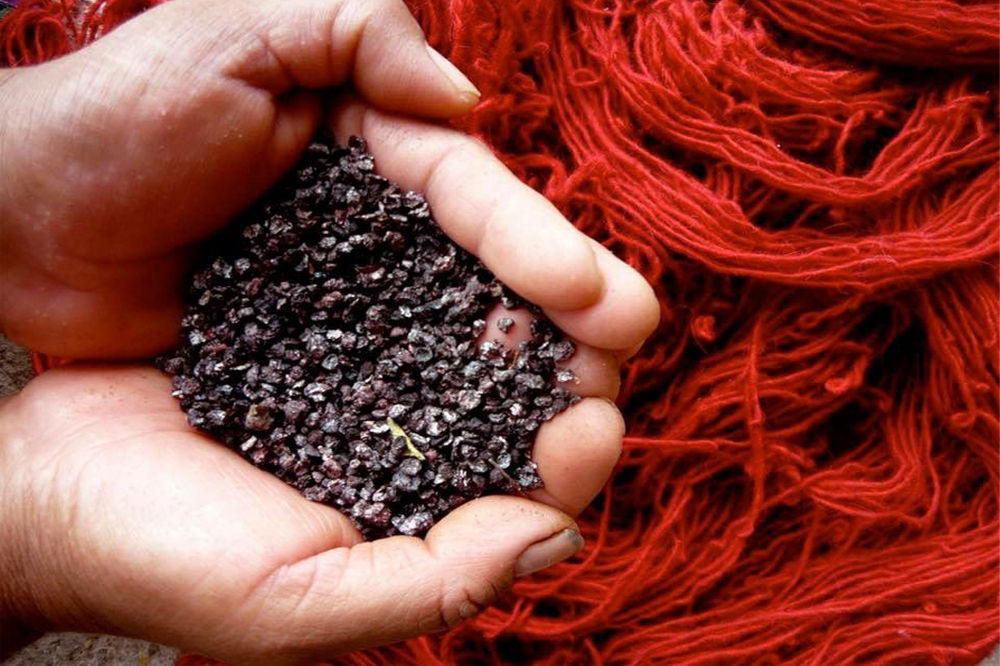
Natural plant dyes were extracted by boiling certain vegetables, roots, flowers, seeds, and barks. Fibers were then submerged into the resulting solution where they’d absorb pigment. Finally, a binding agent known as mordant was added to seal the color. Protein based dyes were another popular form of natural pigmentation, extracted from animal life instead of plants. This was most often in the form of powdered insects.
Though both animal and plant-based dyes were used interchangeably, each was better suited to their respective fibers. This is to say, animal-dyes are better suited to protein based fibers such as wool, silk, and leather. Conversely, plant-based dyes are better for cellulose based fibers, like cotton, linen, and hemp.
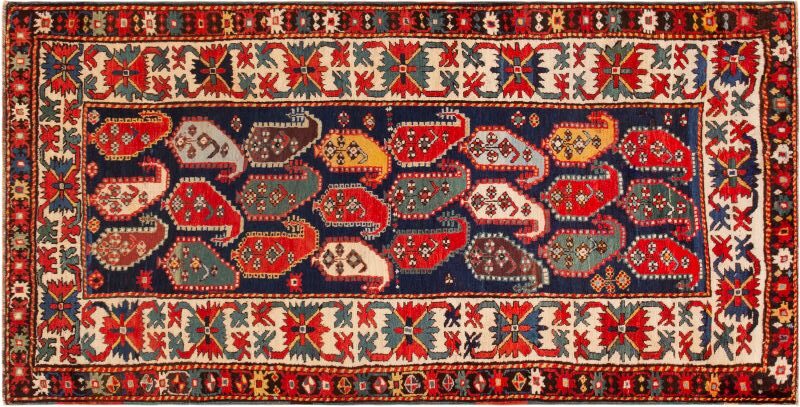
Natural dyes are easy to spot, especially in antique productions. Rugs made with natural dyes are often more muted than those made with synthetic dyes, giving them a calming appearance. Their organic compositions allow them to age gracefully, developing what’s known as a “patina”. A rug’s patina forms over decades, when the combination of natural fibers and dyes begin to wear. It creates an elegant and soft sort of glow on a rug, a testament to the textile’s survival through the ages. Rugs with synthetic dyes and fibers don’t develop this distinctive quality, making it a tell-tale sign of an authentic antique.
Synthetic Dyes
Synthetic dyes made their first appearance in 1856 in the form of mauveine, a rich purple hue. It was created accidentally by 18-year-old chemist William Henry Perkin who was experimenting with aniline and quinine. The result was a sludge that left a vibrant purple stain on silk fabric. His discovery marked the rise of major chemical companies in Germany, as well as further experimentation with aniline dyes.
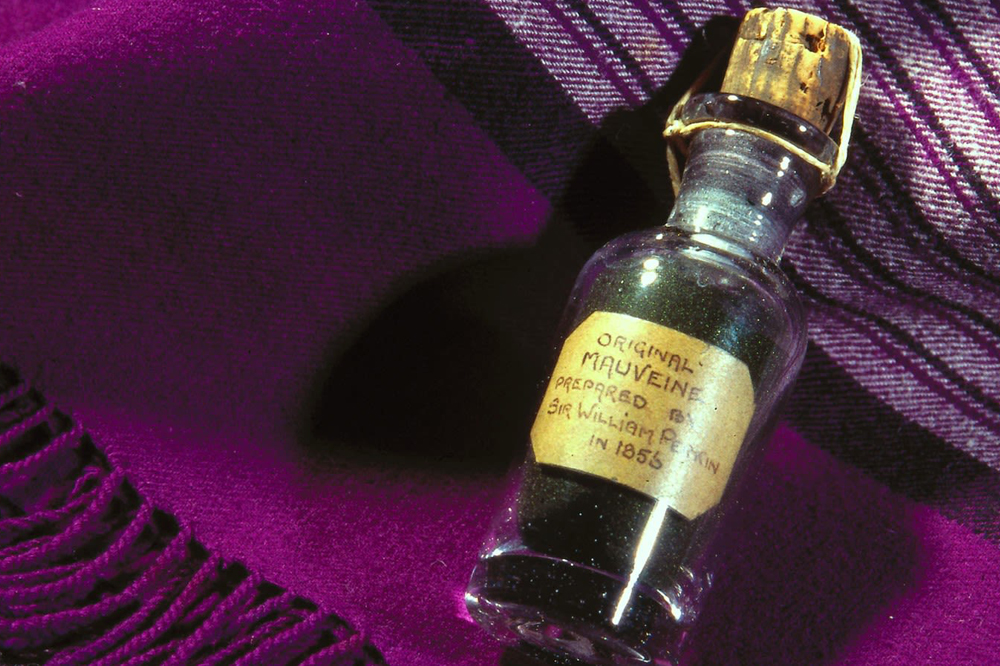
These dyes quickly became a popular form of coloring fabric, especially with the rise of industrialization. Rug production became a massive industry, with even colored palettes and steam powered looms. Rugs which were once exclusive to the wealthy class that could afford them were suddenly accessible to everyone. The market became oversaturated however, and once again, handmade productions were back to being highly sought after decorative items.
Just like naturally dyed rugs, those with synthetic dyes have their own tells. The most evident being the vibrancy and the uniformity of its colors. Synthetic dyes tend to be brighter and far more vibrant than natural dyes. While once a favorable feature, these colors don’t tend to age very well, fading into grayed, muddied tones. The color distribution in machine-made, synthetically dyed fibers is another giveaway. If a rug’s palette is too perfect, too even, it’s missing the genuine quality of a human touch.
Look For Imperfections
Even the most skilled weavers in the world are still human, incapable of producing a fully uniform rug. There are irregularities in design, knot patterns, and coloring, making each piece a complete original. This isn’t the case with machine-made textiles. In fact, the appeal of a machine-made piece is its precision. This is also one of its giveaways.
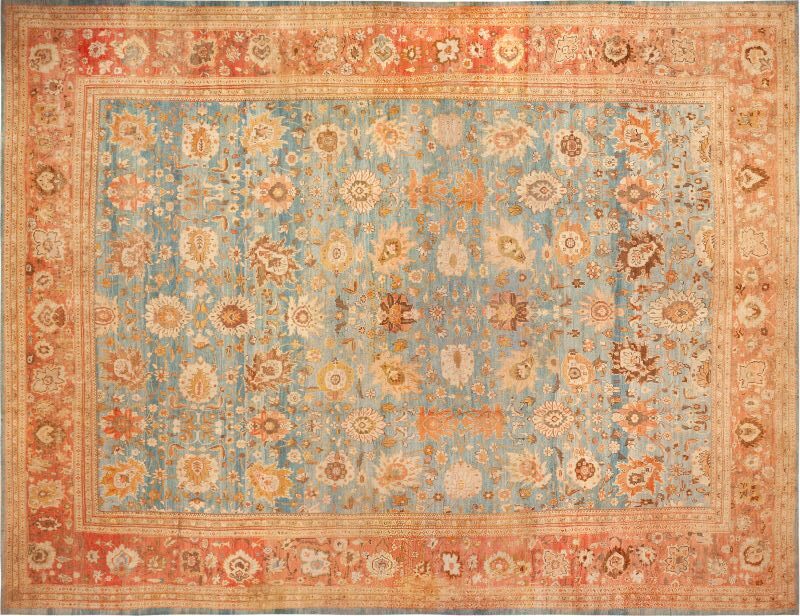
If the knot-grid foundation of a rug is too clean, too uniform, it’s most likely a machine-made piece. Circling back to how even a rug’s coloring is, a rug that is too even in its dye is also likely not made by hand. Look for signs of an abrash color distribution. Abrash refers to slight, naturally occurring color variations in hand-dyed fibers. While technically imperfect, it creates a beautiful effect that almost certainly indicates a piece’s authenticity.
Don’t Be Afraid to Touch!
A great way to examine a rug is to feel it for yourself, especially if you’re looking for signs of aging. New rugs tend to be stiff, while well worn ones are softer and pliable. If the rug has a pile, expect an antique to have an uneven surface, evidence of decades-worth of foot traffic.
Make sure to check the backside as well. If it’s a true antique piece, the back will be smoother, and less textured than a newer production. This is also due to a long history of foot traffic and furniture sitting, with gravity as the main perpetrator.
Regional and Cultural Motifs
Perhaps the most obvious indicator for authenticity is a rug’s design. There are different motifs and symbols that originated from specific areas of the world. Being able to match a design to its place of origin is a very good way of determining where a rug was made. Take this with a grain of salt though, as the popularity of certain rugs throughout history greatly influenced design. Certain motifs were popularized in the market, inspiring designs of rugs made in completely different areas.
The modern concept of borders and the nomadic nature of many ancient cultures makes pinning an origin down a little tricky. Here are some of the more identifiable patterns:
- Gol – a floral motif common in weavings from the Persian empire and modern-day Iran, Turkmenistan, and Iraq.
- Eight Pointed Star – often seen in religious work, the motif is cross-cultural, seen in weavings from Islamic and Christian peoples.
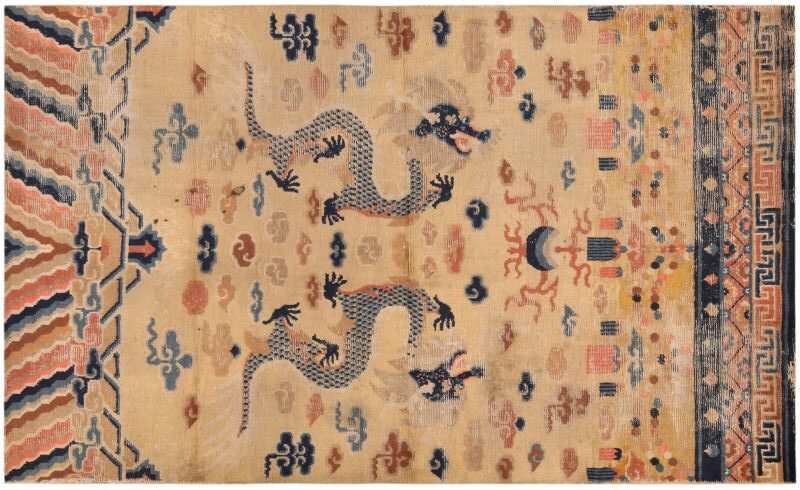
- Cloud Band – a repetitive cloud-like symbol common in East Asian weavings.
- Mihrab – an architectural niche depicted at the top of Islamic prayer rugs, meant to guide users during prayer.
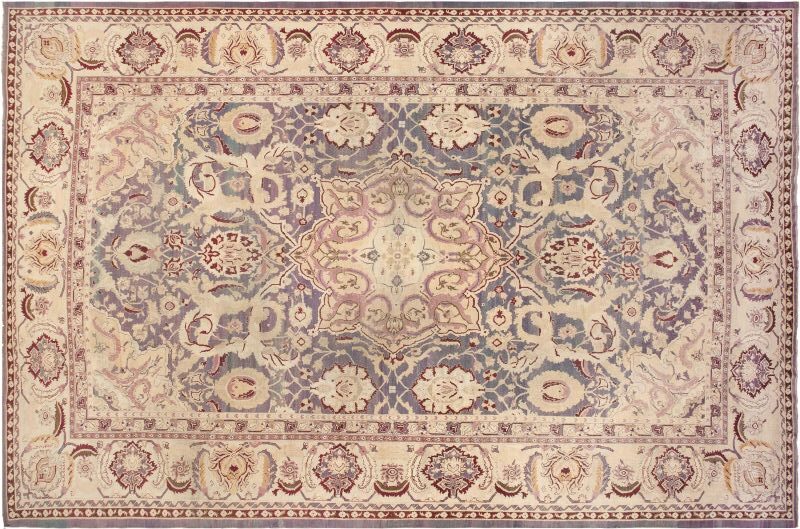
- Palmette – a botanical decorative motif popular in royal court carpets and Indian weavings.
If You’re Lucky…
There are times when you can track the lineage of a rug. Many collectors keep a documented record of a rug’s provenance. This can include photographs, notes of physical attributes, receipts, and appraisal documents. With particularly important pieces, a record of ownership is kept. If the rug is acquired from a reliable source, like a notable collector, the chances are you’re dealing with the real thing.
Because of trade regulations, many more recently made rugs come with a tag detailing their origins.
Final Thoughts
Being able to read a rug’s provenance is an incredibly important skill for those looking to expand their collection. This is especially true when dealing with antique pieces, whose histories can be difficult to trace. Knowing the difference in regional knots and designs, as well as being able to tell whether fibers are naturally or synthetically dyed, can greatly impact whether or not a rug is a good investment. Each of these factors greatly influence the value of a rug.
- The ability to read a rug’s provenance is very important.
- It’s difficult to trace an antique rug’s history.
- It’s good to know the difference between regional styles and techniques.
- You should be able to tell whether natural or synthetic dyes were used.
- A rug’s provenance is essential to determining the textile’s value.
Frequently Asked Question
Why is a rug provenance important?
A rug provenance keeps a record of a rug’s history, including material, country of origin, and approximate age. It’s particularly important for verifying antique productions.
What aspects of a rug should be examined for authentication?
Check the materials, dye-types, knot density and style, fringes, design motifs, and color distribution. It’s always a plus if a rug has a record of ownership.
How does the knotting of a rug help determine a piece’s context?
There are different region specific knot styles that can help place a rug’s origin, either culturally or geographically. The knot density is a determining factor in a rug’s durability and quality as well.
What is the visual difference between natural and synthetic dye?
Natural dyes are far more muted than synthetic ones, and age gracefully, developing a patina.