
Best Ways to Hang a Tapestry or Rug on a Wall
The best way to hang a tapestry or rug on a wall depends on the textile’s weight, condition, size and construction. Lightweight tapestries can often be hung with a rod, sleeve, clips or pins. Heavier rugs and antique textiles usually need stronger support, such as a sewn sleeve, Velcro attached to a support board, a mounted frame or a secure clip system.
For valuable, fragile, antique or heavy pieces, avoid methods that place all the stress on a few points. A good hanging method should distribute the weight evenly, keep the textile level, and avoid tearing, stretching or staining the fabric over time. For decorative inspiration, browse Nazmiyal’s collection of antique and vintage wall tapestries.
What Is a Tapestry?
A tapestry is a textile fabric that is typically adorned with a scenic or pictorial design. The artistic designs are woven using colorful threads or embroidered onto a backing such as linen.
Why Do People Hang Tapestries on Their Walls?
The imagery and decorations depicted in a tapestry can beautify a room’s interior design. Depending on where you use them throughout your home, a wall tapestry can also muffle sound that penetrates a room.
Do People Really Hang Rugs on Their Walls?
Yes, people do hang actual rugs on walls. While rugs are often designed for use on floors, smaller rugs, flatweaves, antique textiles and decorative rugs can also be displayed as wall hangings in interior design. The practice appears in many textile traditions and can also work beautifully in modern interiors.
Why Do People Hang Rugs on Their Walls?
For most people, hanging rugs on walls can serve multiple purposes. Depending on the rug style, a wall-hung rug can add texture, color and pattern to a room. This can transform the space and create visual interest.
Rugs and carpets can also provide insulation and sound-softening qualities when used on walls, helping to dampen noise and improve the acoustics in a room.
In certain cultural contexts, hanging rugs on walls is a traditional practice. For example, in some Middle Eastern and Central Asian cultures, tapestries and rugs are used to adorn the walls of homes and create a cozy and decorative atmosphere. These rugs often have intricate designs and are considered valuable pieces of art.
Choose the Right Hanging Method for Your Textile
Different textiles require different hanging methods. A lightweight tapestry may only need a rod or clips, while a heavy rug or antique textile may need more even support across the top edge. The goal is to display the piece securely without placing unnecessary strain on the fabric, foundation or edges.
| Hanging method | Best for | Use caution when |
|---|---|---|
| Rod or sewn sleeve | Tapestries or rugs with a rod pocket, sleeve or strong upper edge | The textile is heavy or the wall hardware is not rated for the weight |
| Velcro and support board | Large, uneven, curved or heavier textiles that need distributed support | The textile is fragile, valuable or should not have anything sewn to it without expert review |
| Mounted frame or stretcher | Textiles that should display more like framed artwork | The frame traps moisture or presses glass directly against the textile |
| Pushpins or nails | Very small, lightweight and inexpensive fabric pieces | The textile is antique, heavy, silk, fragile, valuable or finely woven |
| Rug or tapestry clips | Rugs and tapestries that need even support across the top edge | The clips are spaced too far apart or the textile is allowed to drop suddenly under its own weight |
Before You Hang: Check Weight, Condition and Wall Type
Before choosing a hanging method, check the textile’s weight, fiber, weave, age and condition. A newer lightweight tapestry can usually tolerate simpler hardware. An older rug, antique tapestry, silk textile or finely woven piece may need a more careful approach because gravity can stretch the foundation or stress the edges over time.
You should also check the wall itself. Drywall, masonry, plaster and wood may require different anchors, screws or brackets. For heavy pieces, do not rely on adhesive strips alone. Use hardware that is rated for the weight, distribute the load evenly, and ask for help when lifting a large rug or tapestry into place.
How to Hang a Tapestry or Rug Using a Rod
If your tapestry already has a rod pocket, you can hang the piece using a rod and finials. The rod pocket will usually be sewn to the back or top of the piece. This technique is similar to what you would do when hanging a curtain or drapes. It is a straightforward method that does not take much time when the textile and hardware are suitable for it.
Simply add and secure brackets to the wall, so you can place the tapestry once it is hung. When using brackets, remember that your tapestry will end up hanging a small distance from the wall. How far it hangs will depend on the type of brackets you use. If you would prefer that your tapestry hang flush against the wall, you will need to choose a different method.
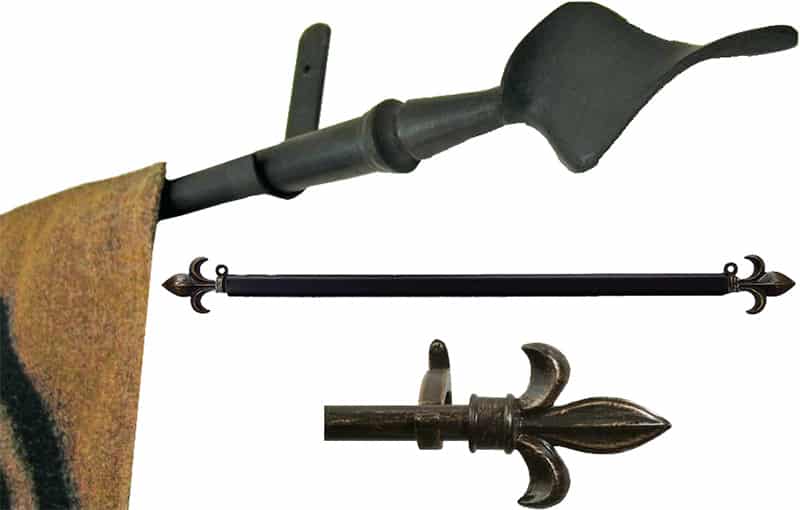
To ensure the proper look and feel of your home, choose your brackets, rods and finials with your room’s interior decor in mind. When shopping for finials and rods, it may help to bring a photo of the tapestry and the room you wish to decorate. This should help you visualize the style you want to create. You can use rods that are specifically made for hanging tapestries. If you prefer something simpler, you can also use curtain rods to hang your rug or tapestry. Whatever you use, make sure the pocket and rod fit properly in diameter, weight, width and length. You should also make sure the rods and brackets can withstand the weight of the piece.
Some tapestry hanging rods between ½ and ¾ inches in diameter are designed for lighter pieces, but you should always follow the hardware’s stated weight rating. The rod should also be long enough to display the decorative finials beyond the tapestry’s edge. When entering a room, the eye will usually notice the finials more than the brackets. The brackets should extend about ½ inch from the wall.
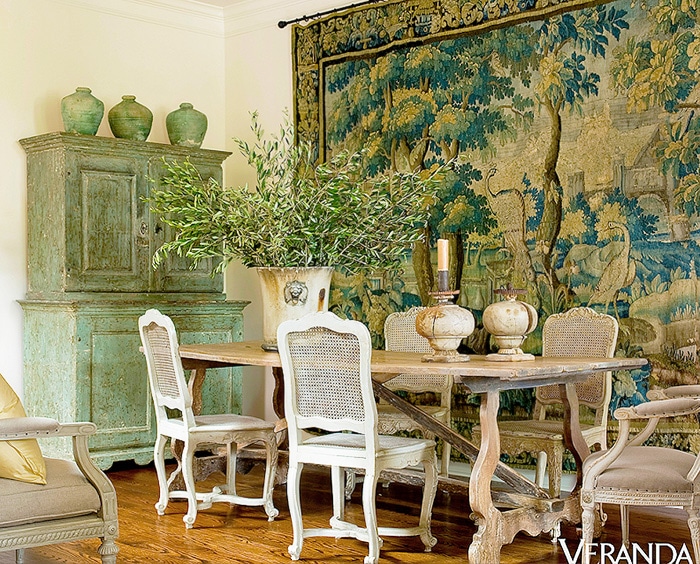
Find a special place for the tapestry in your room and try to hang the tapestry or rug at eye level. If your walls are expansive or you have chosen to hang the piece over a chair or sofa, you may want the tapestry hung higher up. This will ensure that none of the tapestry’s design is obscured by the furniture.
Prepping your tapestry for hanging:
If the tapestry was folded for a while, it may have wrinkles or creases before hanging. For a newer, sturdy textile, test a small area on the back first and use the lowest possible heat setting. If needed, place a clean, dye-free towel or sheet over the front before applying heat.
Do not iron antique, silk, metallic-thread, fragile, dye-unstable or high-value textiles without expert guidance. Heat, steam and pressure can damage fibers, flatten texture, affect dyes or create permanent marks. When in doubt, ask a qualified textile or rug specialist before attempting to press the piece yourself.
How to Hang a Tapestry or Rug Using Rods and Brackets If It Is Not Heavy
If the tapestry is on the lighter side in weight, you can usually hang it with properly selected wall hardware. A ruler or tape measure should be used to hang the tapestry accurately and keep it level. Make sure the drilled holes are the same distance from the ceiling on either side, assuming your ceiling is level.
Once the holes are drilled, attach the brackets. Take note of your specific type of wall to determine if a drywall, masonry or wood screw is the best option for the job. When the brackets are in place, the rod can be threaded through the tapestry pocket in the back or top. Place the finials at the end of the rod, tighten them, and set the tapestry and rod onto the brackets.
After you have checked to make sure everything is in place and mounted safely, you are ready to sit back and enjoy your decorative piece of artwork.
How to Sew a Fabric Pocket to the Tapestry for Your Rod
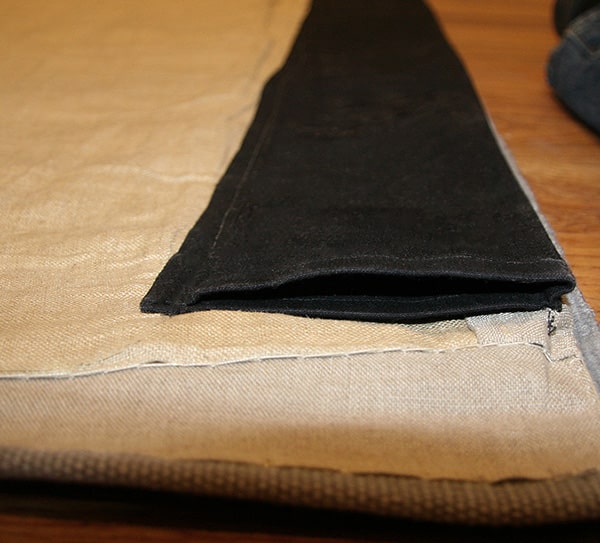
If your tapestry does not have a pocket for your rod, you can sew one on if the textile is sturdy enough for stitching. You will need heavy-duty cotton thread and stitches that are strong enough to hold the tapestry in place. Sew a strip of fabric to the back of the tapestry’s edge with a thread that is similar in color to the most dominant color in your tapestry. This will help the threads blend with the other hues.
The sewn edge should stand up in the middle, so the rod can fit into the pocket straight and with the right amount of space once inserted. If the top edge of the strip is not sewn evenly, your tapestry will hang crooked on the wall.
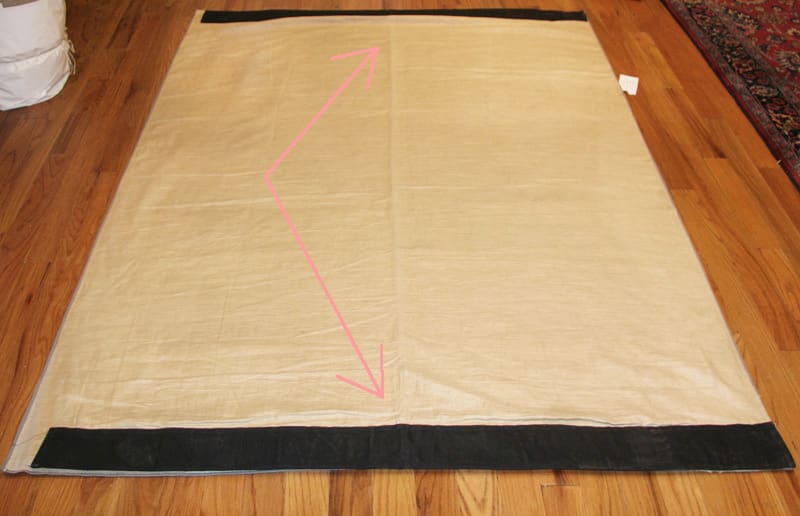
Test the fabric pocket as you go along to ensure the rod fits properly. You can use a normal rod or baseboard to hang your tapestry using the methods discussed above.
If you want to hide the hanging mechanism, you can use a rod that is shorter than the width of the tapestry. If you use a shorter rod, it should be hung using two screws that are secured to the wall at the rod’s ends. If done correctly, the hanging brackets, rod and finials should be invisible when looking at the front of your hanging tapestry.
Please note: You may want to sew pockets for rods at both the top and bottom of your tapestry. The top rod will be used for the actual hanging, while the bottom rod can add more weight and help the tapestry hang straight down.
How to Hang a Tapestry or Rug Using Velcro
If you are unsure of the location where you wish to hang your tapestry, or if you may want to change its placement periodically, Velcro can be a good alternative to rods. This method conforms well and can also work when hanging tapestries on a curved wall. A Velcro support system is also common in conservation-style textile display because it can distribute stress more evenly than a few isolated hanging points.
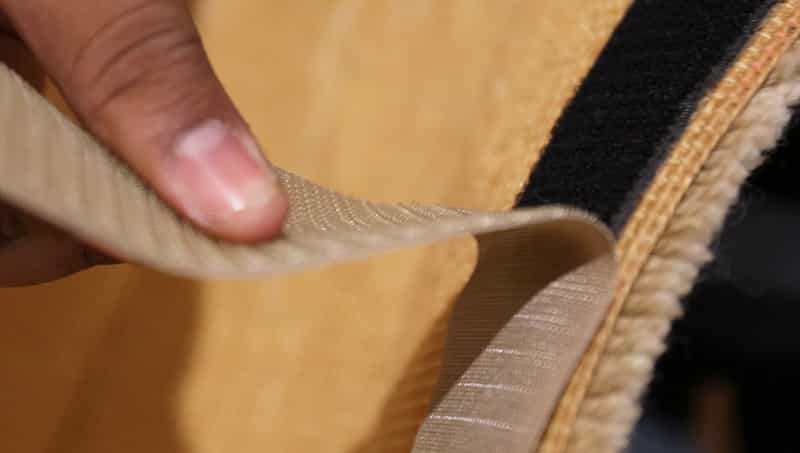
How to Hang a Tapestry Using Velcro
First, choose a strip of Velcro that is a little smaller than the tapestry’s width. You will need to use both sides of the Velcro to ensure it attaches correctly.
Velcro comes in a variety of widths. For pieces that are heavier and longer, you should choose wider pieces of Velcro. Wider strips are better for supporting a larger tapestry, but very fragile or weak textiles should be reviewed before anything is sewn to them.
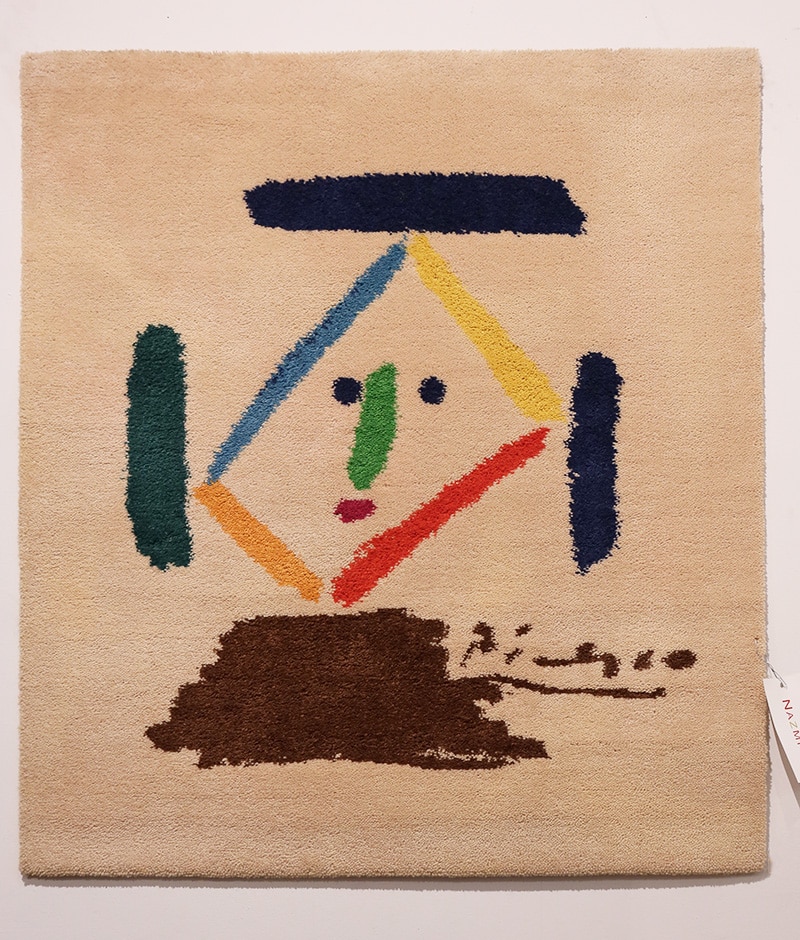
The fuzzy and softer side of the Velcro should be sewn directly onto the back of the tapestry. Cotton buttonhole thread is generally recommended because it is strong and durable.
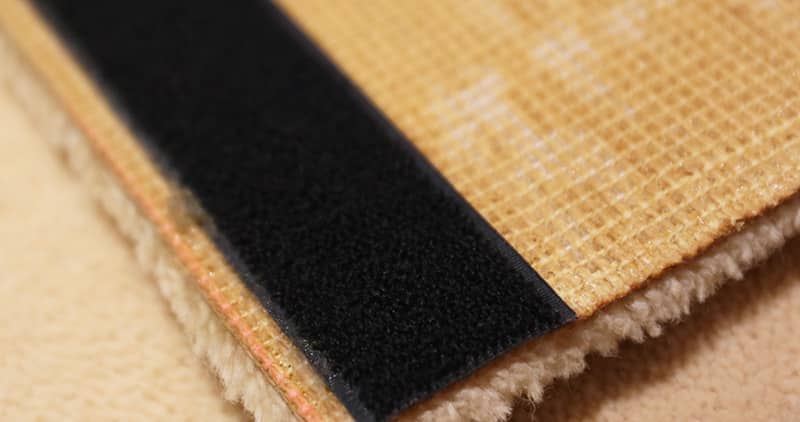
As you sew the Velcro to the back of the tapestry, make sure to include two warp threads. This helps ensure the stitches are strong and the tapestry will be secure when hung. The color of the thread should also be a shade similar to a dominant color in the design of your tapestry. This allows the threaded stitches to blend with the other hues.
Next, drill holes at the ends of a piece of wood or baseboard. These holes will be used to fasten the wood to the wall. Make sure the wood is smaller than the tapestry’s width. When drilling holes, they should be the same distance from the center of the board. You can use a tape measure or ruler to keep things consistent.
Then, attach the stiff side of the Velcro to the piece of baseboard or wood. This can be done using wood staples. When doing this, make sure the Velcro does not cover the drilled holes.
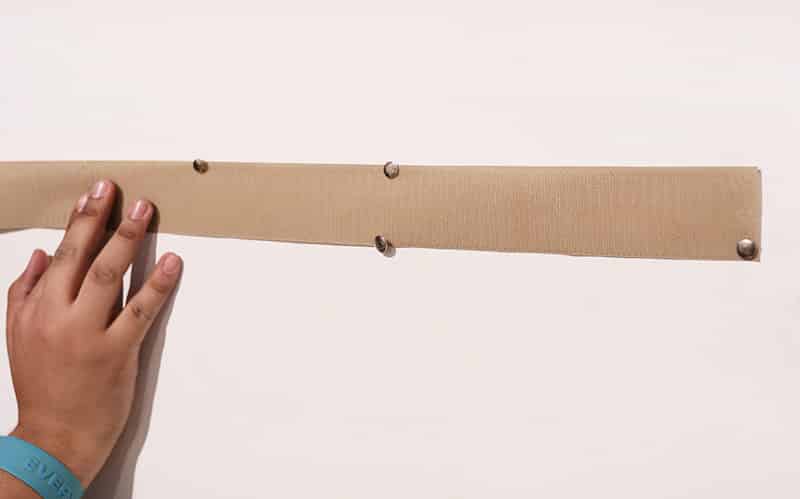
You will need to fasten the board to the wall first. When doing so, make sure the board is straight, level and strongly fastened to the wall.
When level, use the Velcro to secure your tapestry to the board. Slowly press the Velcro on the tapestry against the piece that is attached to the board. Secure the pieces together while working out any lumps or bumps. If measured correctly, your tapestry should be hung level.
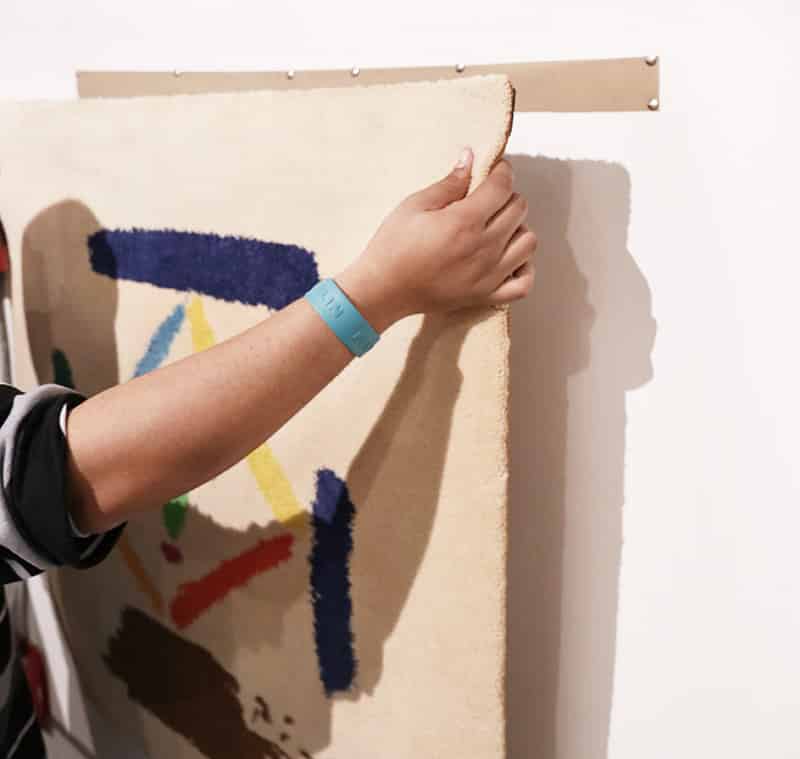
You may want to sew the Velcro to both the top and bottom of the piece you would like to hang. This gives you the option of stretching it gently to help remove folds.
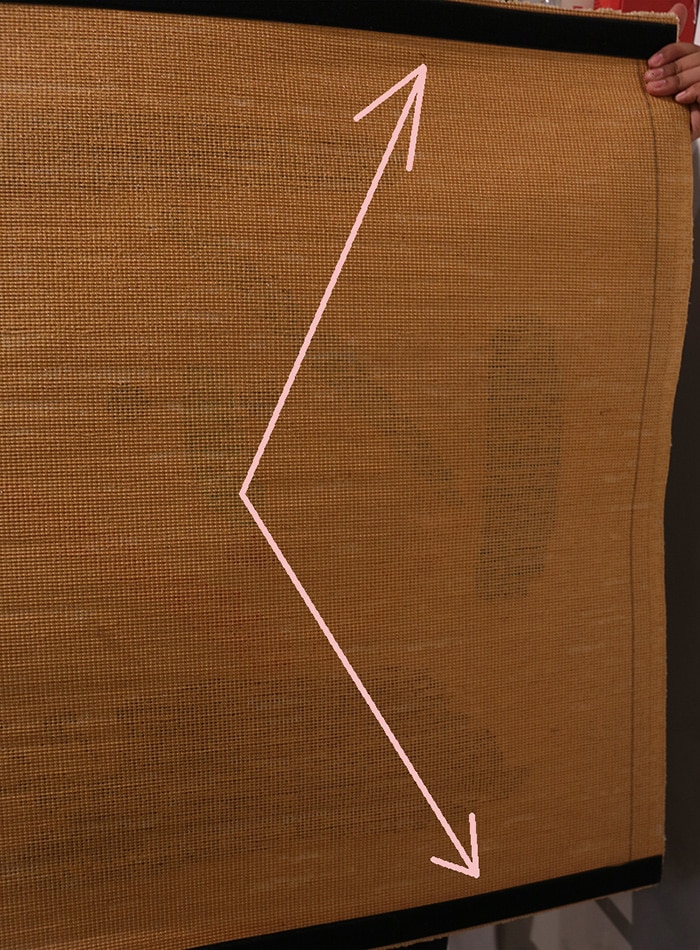
Please note: If the wall you are hanging the tapestry on is curved, you may need to secure the Velcro to the wall directly without using a board. This helps ensure the hung tapestry follows the same curvature as the wall.
As you can see in the images, Nazmiyal sometimes attaches Velcro directly to the wall. Some double-sided Velcro has an adhesive side that can stick directly to the wall. For heavy, valuable or antique textiles, do not rely on adhesive alone. Secure the system with appropriate nails, pins, screws or other hardware so it can withstand the weight.
How to Mount Your Rug or Tapestry on Stretchers to Hang Like a Painting
You can provide a rigid backdrop to your decorative tapestry by mounting it on stretchers. This method involves taking a heavy fabric or canvas and stretching it over a frame. Next, you fasten the tapestry to the stretched material. This method of mounting can also add a unique border to your decorative wall design.
Design a wood frame by cutting thin pieces of wood in your desired width and length to match the tapestry. You can either screw or glue the pieces of the frame together. If you want more stability, you may want to try corner brackets. A cut piece of painted plywood can be an ideal background for the frame.
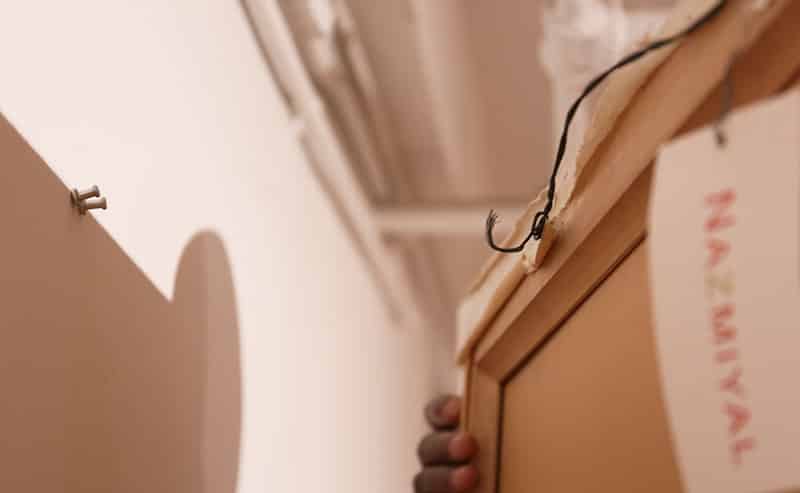
The wood frame should be wider on each side of the tapestry by at least an inch. You can use your own judgment based on your preferences and have as wide or narrow of a framing border as you wish to see. If you are working with a heavy tapestry, use a heavier framing material.
Stretch the canvas or other heavy material over the frame. Make sure the fabric extends a minimum of 1 1/2 inches in length on both sides. This will ensure that the material is easier to fold over the edges. You can then staple the backing fabric in place and onto the frame using wood staples.
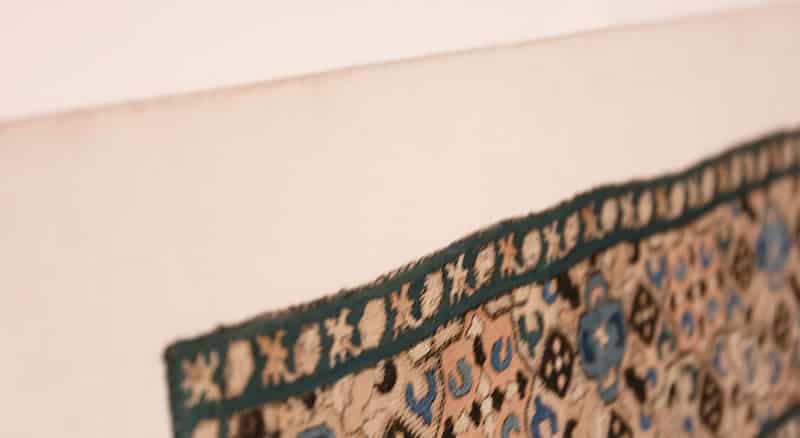
If you are looking for something lightweight, silk can make an excellent border. However, you will need to stretch it over a canvas or another sturdy material. This provides the support under the canvas and allows you to achieve the desired look for your tapestry. Soft cotton flannel can also be used in the middle and in between.
You will need durable cotton thread to stitch your decorative tapestry onto the material. Stagger the stitches when securing the tapestry to the backing material. The stitching should cross two warp threads with every stitch.
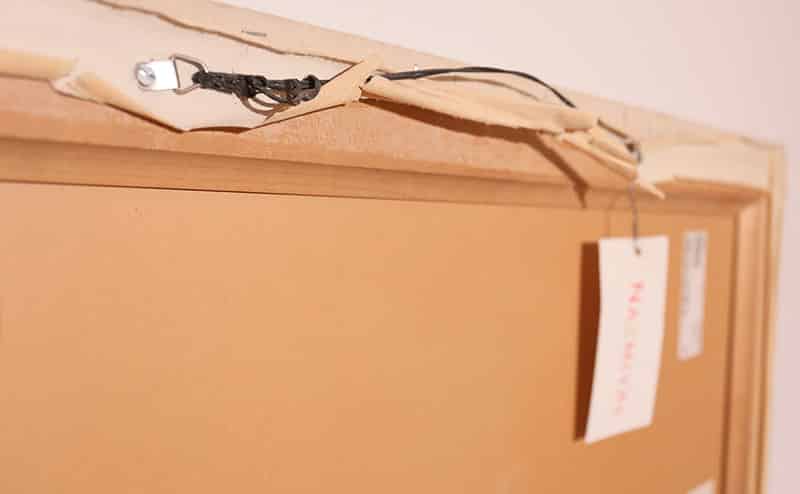
To ensure that your thread matches and you cannot see the stitches, choose a thread color that will blend with the other hues in your tapestry. Make a practice stitch to ensure the stitches are not visible from far away.
You can support the bulk and size of your tapestry by sewing along each edge as well as any other areas of the tapestry that need support.
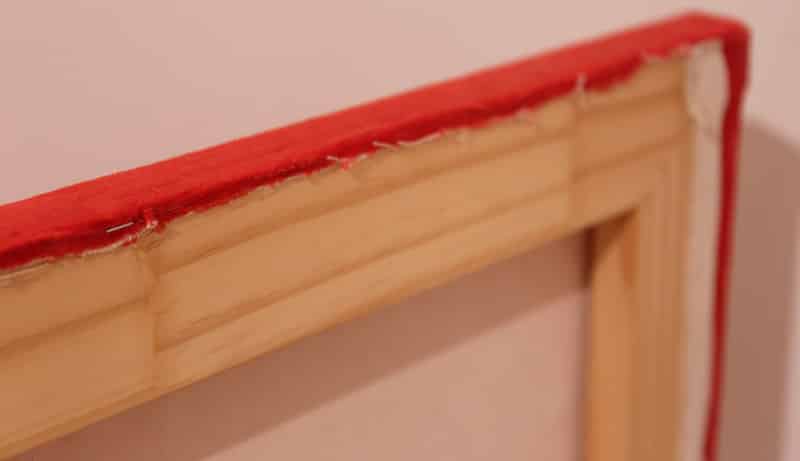
You may also want to blend both the Velcro and frame methods by fastening Velcro to both the frame and tapestry. If you wish to change the location of your tapestry and rotate the walls where you display it, you can undo the Velcro and easily change the placement.
You can also use a store-bought frame for your tapestry if you do not want to make your own. Take a photo of the tapestry when searching for the ideal frame. You should also ensure that there is enough room for both the canvas and tapestry inside the frame.
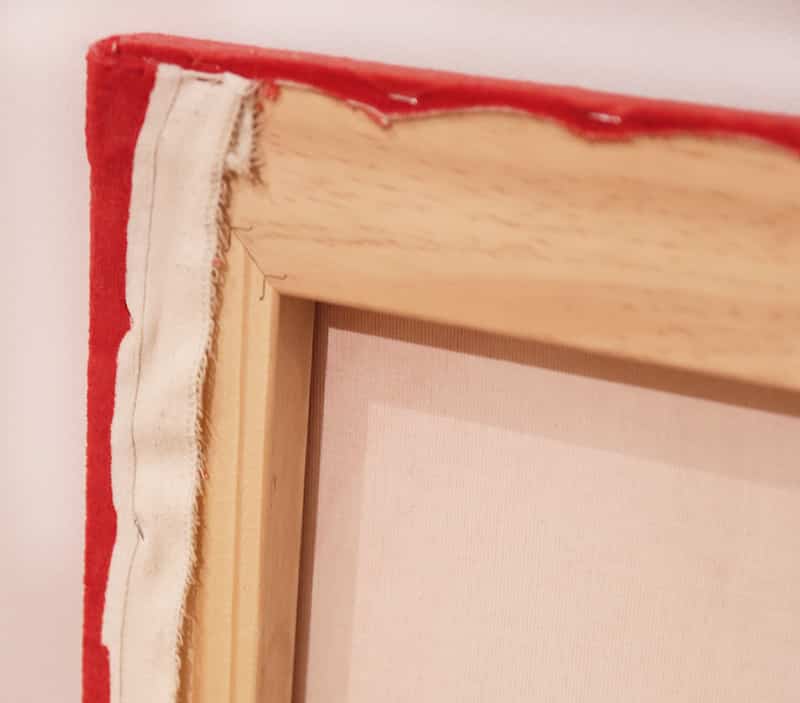
The glass or shatterproof plastic covering should never make contact with the tapestry because it could cause moisture buildup. When museums display delicate artifacts and tapestries, they often use a shadow box frame for added protection. You can help prevent moisture buildup inside the frame by ensuring that air can circulate properly.
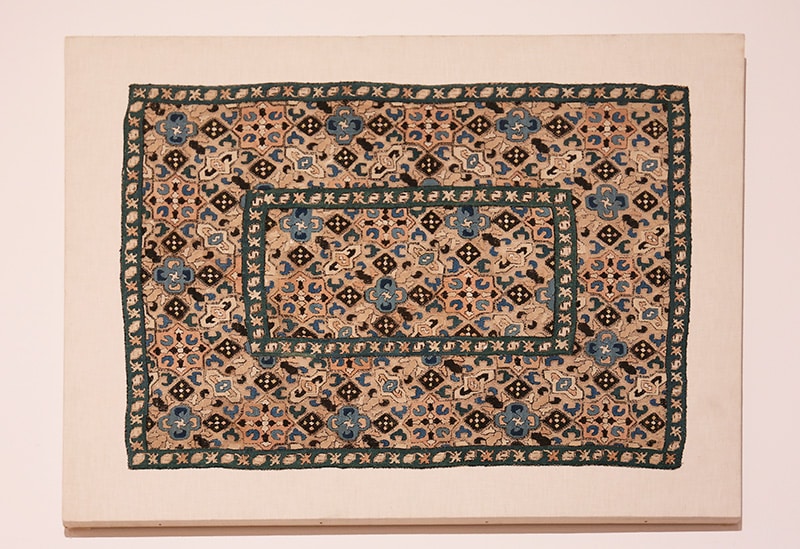
When you are ready to hang the frame, you can use similar methods to those used for hanging a framed painting:
- Locate the studs using a stud finder.
- Place the two screws partially into the wall in a suitable spot for the frame.
- Rest the frame’s edges on the screws and hang.
- Use a level to ensure that your tapestry and frame are straight.
You will find an assortment of hardware made specifically for hanging framed pictures. If your tapestry and frame are on the heavy side, use sturdier hardware to ensure the frame does not fall or break.
How to Hang a Lightweight Rug or Tapestry Using Pushpins or Nails
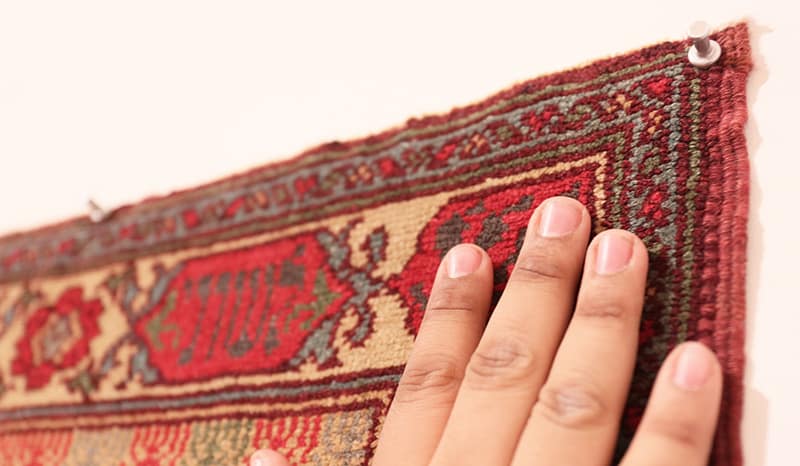
You should hang a tapestry using pushpins or nails only if it is a very small, lightweight and inexpensive piece. Do not use this method for antique, valuable, fragile, silk, heavy or finely woven textiles.
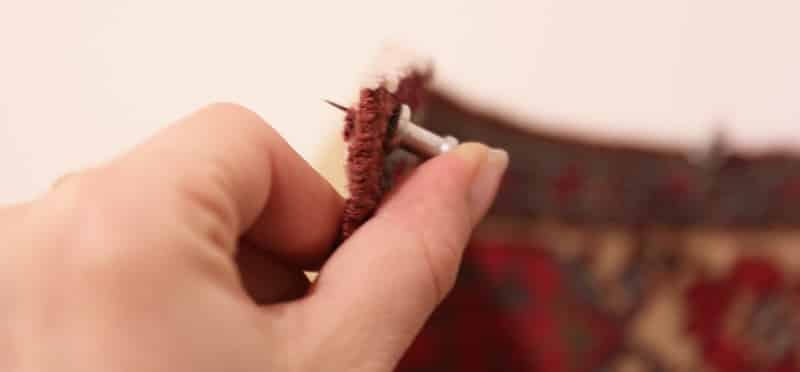
For smaller pieces, you might only need to use one pin or nail in each corner and maybe one in the center to ensure that the top edge is straight.
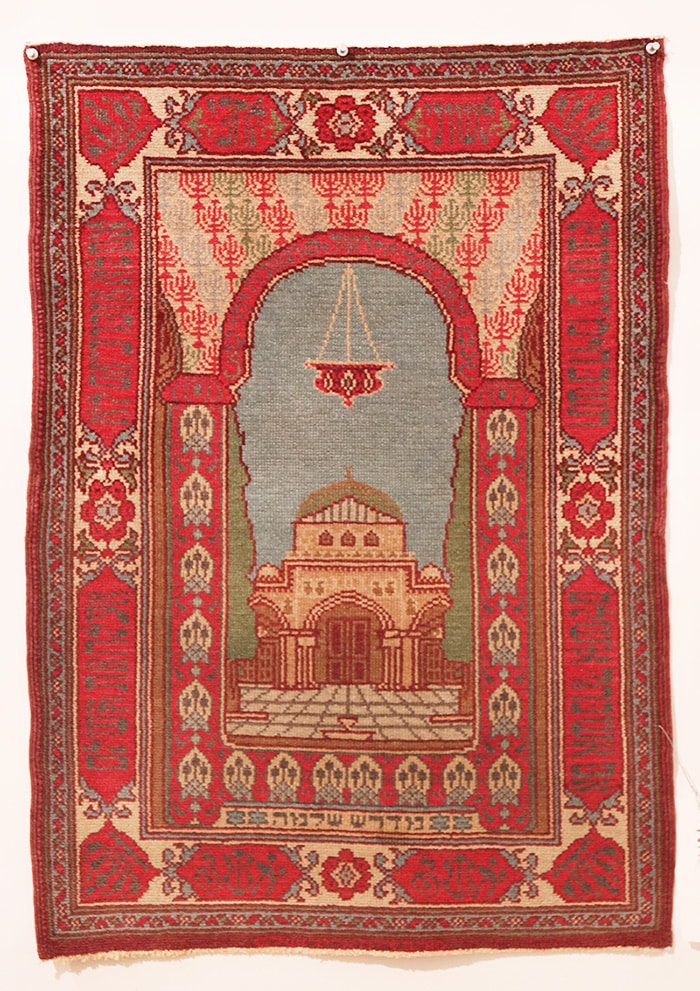
(Antique Judaica Pictorial Temple of Solomon Israeli Marbediah Rug)
If you have a larger tapestry, you may need to use a pin or nail every 10 to 12 inches. This will help keep the piece straight and distribute the weight more evenly.
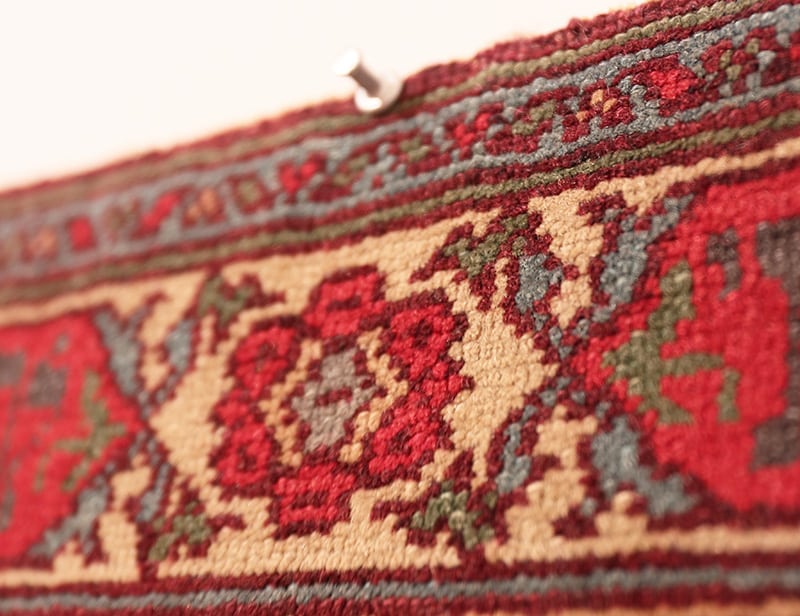
Using too few pins or spacing them too far apart can put too much pressure on a small number of points, which can result in tears or rips. Err on the side of caution when using this method.
How to Hang Tapestries and Rugs Using Clips
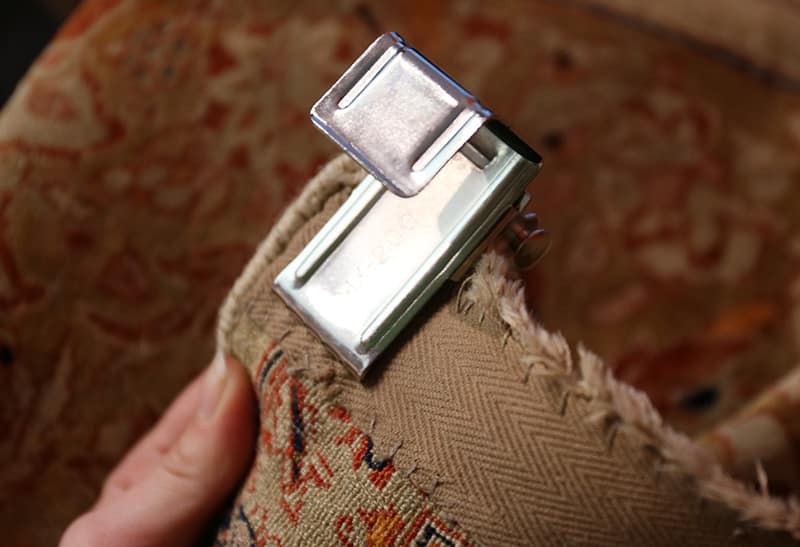
If you walk into many rug showrooms, you will notice that carpets and rugs are often displayed on the wall using rug hanging clips. For this method, you will need to do a bit of prep work. The first thing you want to do is select the exact location where the rug or tapestry will be hung.
Once you know exactly where you want to display your tapestry, the first thing you need to do is drill a piece of wood directly onto the wall. Make sure the wood is a bit wider than the tapestry or rug.
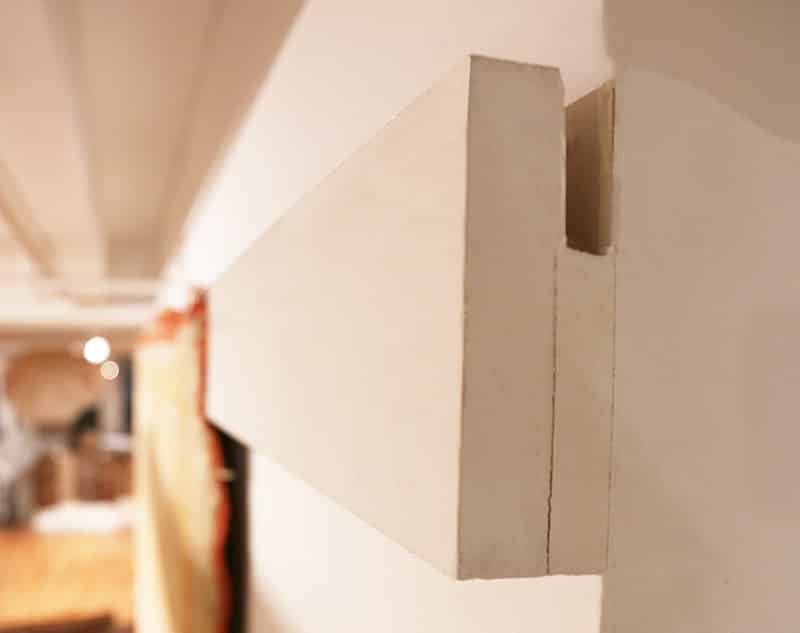
Next, drill another piece of wood, this time a bit thicker, to the first one that is already attached to the wall. The second piece of plywood should extend about one inch above the first one.
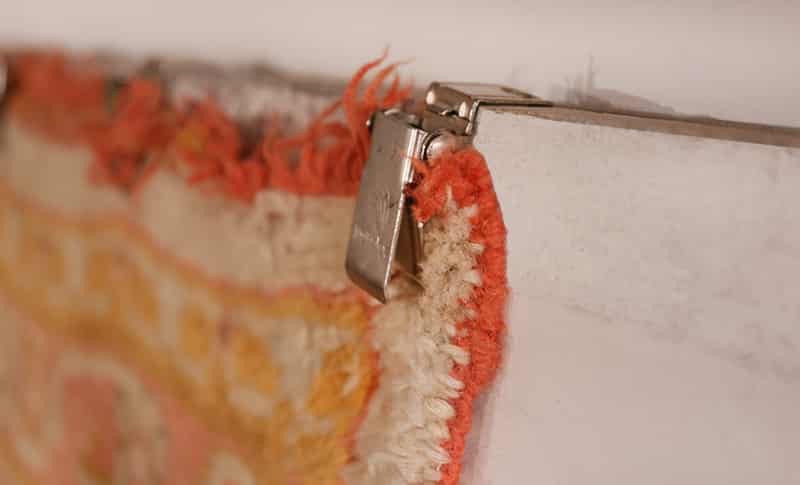
This newly created step between the two pieces of wood is where you will hang the clips, so it needs to be just slightly deeper than the clip itself.
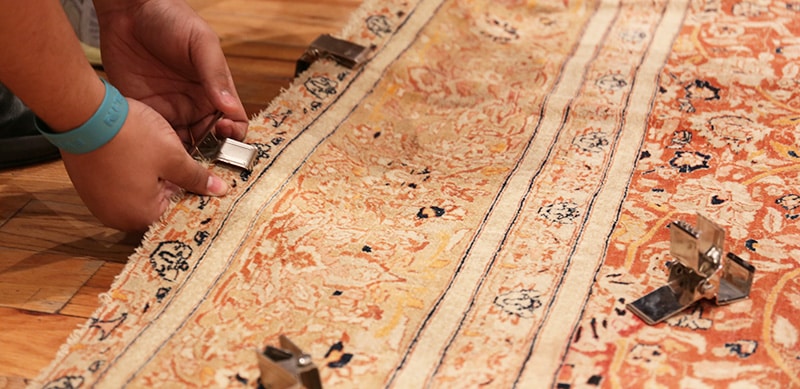
Next, attach the clips to the tapestry or rug. Space them evenly, just as you would if you were using pushpins, at about 10 inches apart. Use more clips for heavier pieces and fewer clips for smaller and lighter ones.
Once the clips are in place, you will need to hang the clips on the wood. You may need another person to help, as handling heavier and larger tapestries or rugs can be difficult.
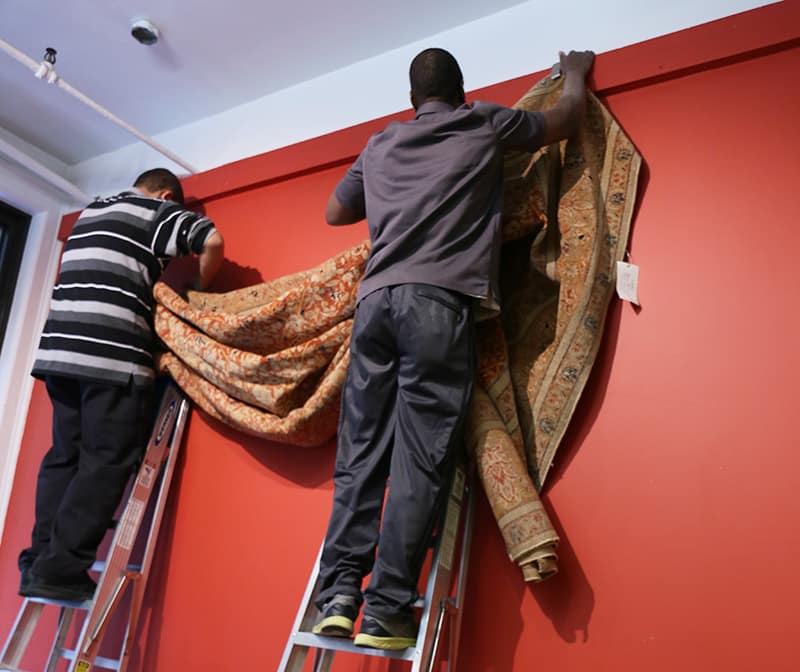
Once the clips are in place, slowly let the tapestry unfurl. Do not drop it suddenly, as this may cause damage. Lastly, make sure the clips keep the piece taut and straight. That will give you the nicest visual impact.
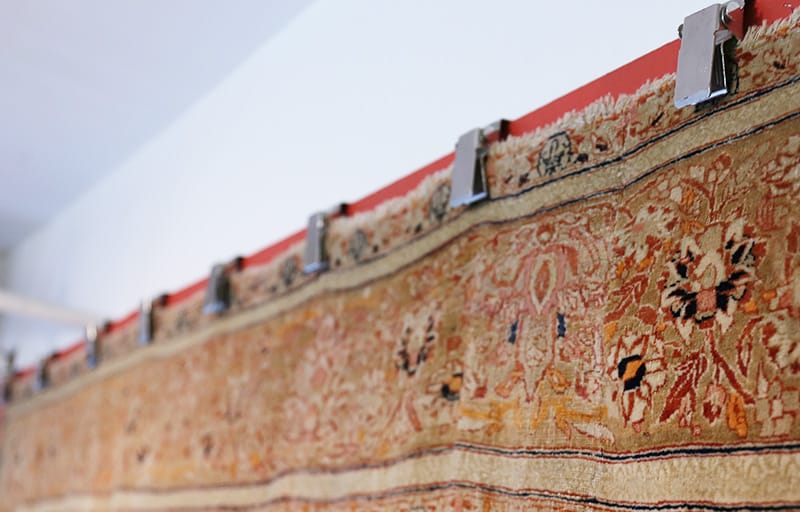
(Antique Persian Tabriz Rug by Haji Jalili #47574 Sold)
Antique Rugs and Tapestries as Wall Art
Hanging a rug or tapestry can turn a woven textile into a strong decorative focal point, especially in rooms where color, pattern, texture and acoustic softness matter. Smaller antique rugs, pictorial rugs, flatweaves and historic tapestries can work beautifully as wall art when they are supported correctly and protected from unnecessary stress.
Nazmiyal’s collection of antique rugs and textile art and fiber arts shows how woven pieces can be displayed decoratively while still being treated as collectible textiles.