Flat Weave Rug Construction and Characteristics
A flat weave rug is a pileless textile made by interlacing vertical warp threads with horizontal weft threads on a loom. Unlike a hand-knotted pile rug, it does not have an upright knotted pile. This generally gives a flat weave rug a thinner, lighter and lower-profile surface.
Flat weave is a broad category rather than one specific rug style. It includes kilims, dhurries, jajims, Soumaks, Scandinavian flatweaves and tapestry-woven rugs such as Aubusson and Bessarabian examples. Some flat weave rugs are reversible, while others use techniques that produce a distinct front and back.
Wool is common in traditional flat weave rugs, although cotton, silk, goat hair and other fibers may also be used. The materials, density and weaving technique affect how a rug feels, wears and functions in an interior. Nazmiyal’s collection of antique and vintage kilim rugs includes examples from several regional weaving traditions.
The Main Flat-Weaving Techniques
All woven rugs begin with a set of lengthwise warp threads held under tension on a rug loom. Horizontal weft threads pass across the warps to build the textile. In a flat weave rug, the visible surface and design are created without rows of knots forming an upright pile.
Different flat-weaving methods control which threads appear most prominently on the surface and how changes in color are formed. Kilims, dhurries, jajims and Soumaks are therefore related as pileless textiles, but they should not be treated as interchangeable terms.
Kilim or Slit-Tapestry Weave
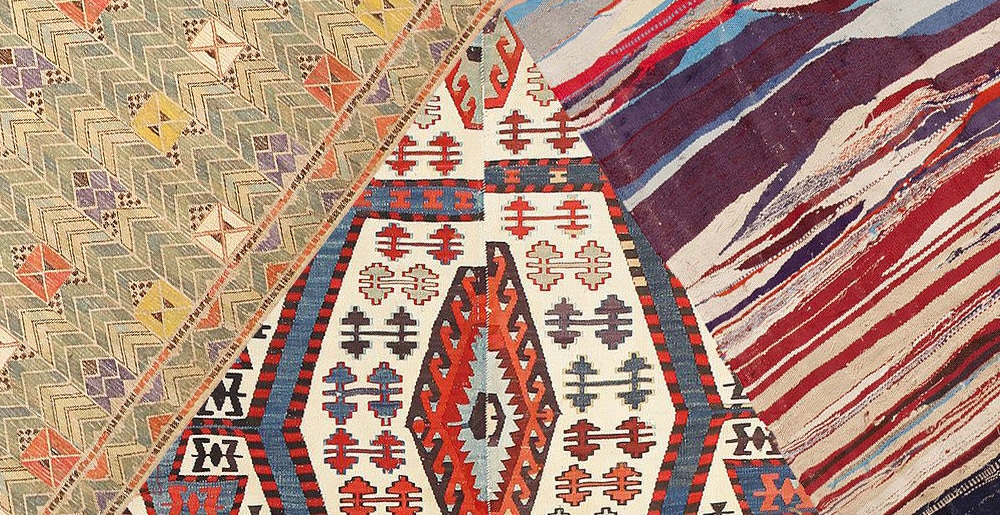
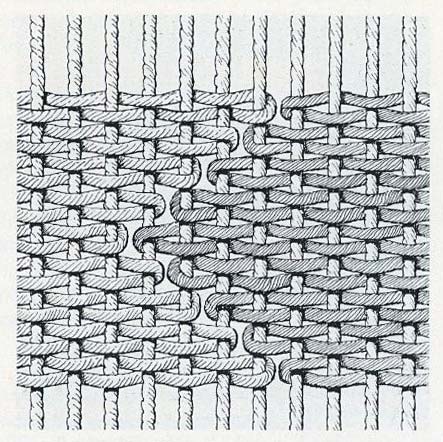
Many kilims use a weft-faced tapestry technique in which tightly packed colored wefts cover the warps. When adjoining areas of color turn back around separate warp threads, small vertical openings known as slits may appear. This technique is especially well suited to clear geometric forms and sharply defined changes in color.
Kilims are often relatively lightweight and may be reversible, although their exact construction varies by region, period and intended use. The term “kilim” identifies a broad textile tradition rather than one completely uniform structure.
Dhurrie Weave
Dhurrie rugs are Indian flatweaves traditionally made from cotton, wool or combinations of fibers. Their designs range from simple stripes and geometric patterns to more elaborate floral and room-size compositions.
Jajim Weave
Persian jajims are often warp-faced textiles in which closely set warp threads dominate the visible surface. Some jajims were woven as relatively narrow panels that were later joined together to create a larger textile. Stripes, repeated geometric forms and subtle changes in color are common features.
Soumak Weave
Soumak uses supplementary weft threads that wrap around the warps in repeated configurations. This creates a more textured and substantial surface than many slit-tapestry kilims and generally produces a distinct front and back. Antique Caucasian Soumak rugs are often recognized for their strongly articulated geometric designs and cable-like surface texture.
Flat Weave Rugs vs. Hand-Knotted Pile Rugs
The main difference between a flat weave rug and a hand-knotted pile rug is the presence of pile. A pile rug is built by tying knots around the warps and cutting or shaping the yarn ends to create a raised surface. A flat weave rug creates its surface primarily through the relationship between the warp and weft threads.
Because they lack an upright pile, flat weave rugs are generally thinner and easier to move or fold. Their low profile can work well beneath furniture or in rooms where door clearance is limited. A pile rug usually offers more cushioning and depth, although durability in either category depends on the fibers, density, technique, condition and amount of use.
Flat weave rugs should not automatically be considered less durable than pile rugs. A tightly woven wool flatweave in good condition may withstand regular use, while a delicate antique example may require a more protected setting. The age and condition of the individual rug matter as much as its broad construction category.
Main Types and Regional Traditions of Flat Weave Rugs
Flat-weaving traditions developed across many regions, and different communities used local materials, techniques, formats and design vocabularies. The categories below describe several important traditions, but they do not represent every type of flatwoven rug.
Turkish and Persian Kilims
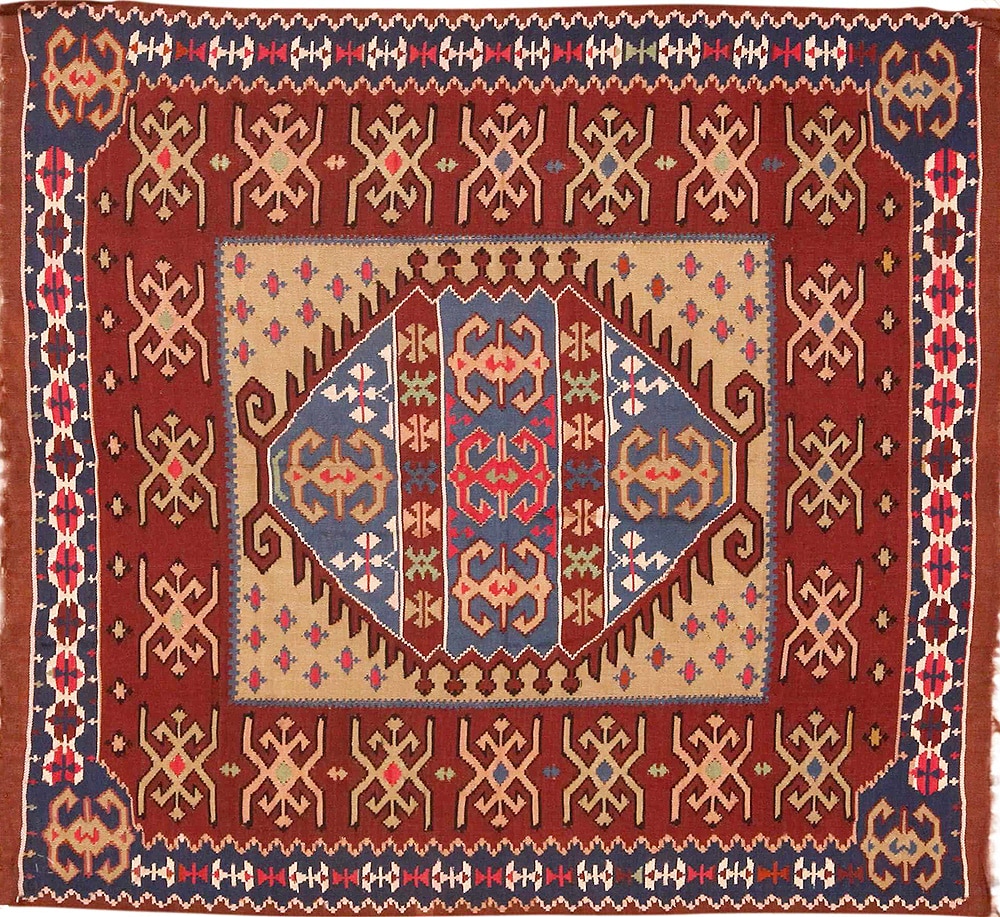
Turkish and Persian kilims include a wide range of village, tribal, workshop and domestic textiles. Many use geometric designs created through slit-tapestry construction, while others combine several weaving or decorative techniques within the same rug.
Flatwoven Persian rugs range from striped jajims to finely composed kilims with geometric, floral or figurative designs. Examples from Mazandaran may feature abstract bands, blocks of color and compositions that can appear strikingly modern despite their traditional origins.
Indian Dhurrie Rugs
Indian dhurries range from small household textiles to large room-size rugs. Cotton examples can feel crisp and lightweight, while wool dhurries may have a denser and more substantial surface. Their designs include stripes, diamonds, repeated geometric forms, floral patterns and compositions created for both traditional and contemporary interiors.
Scandinavian Flatweaves
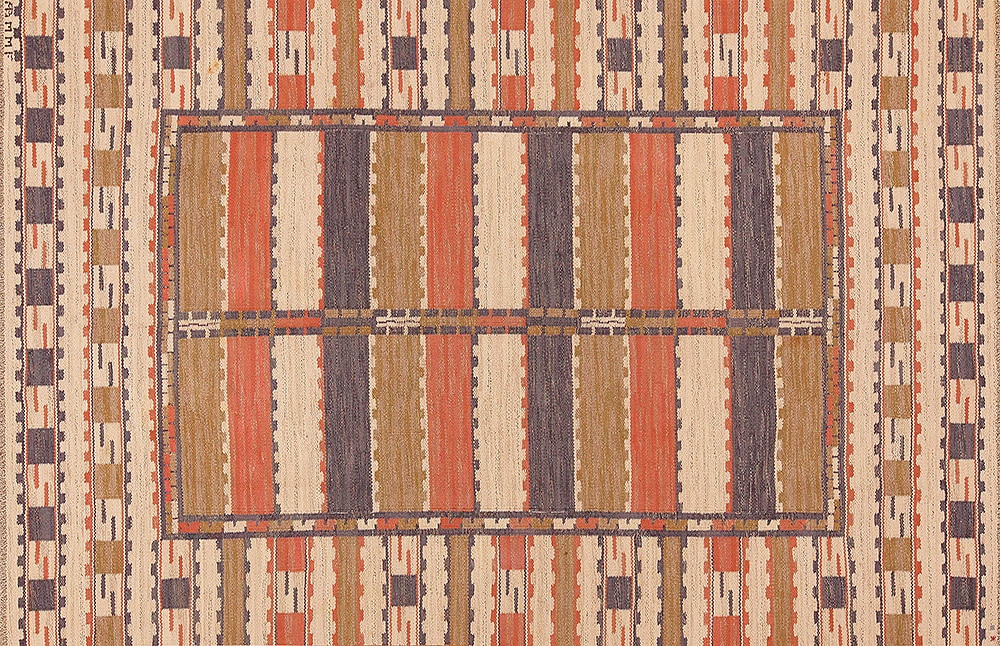
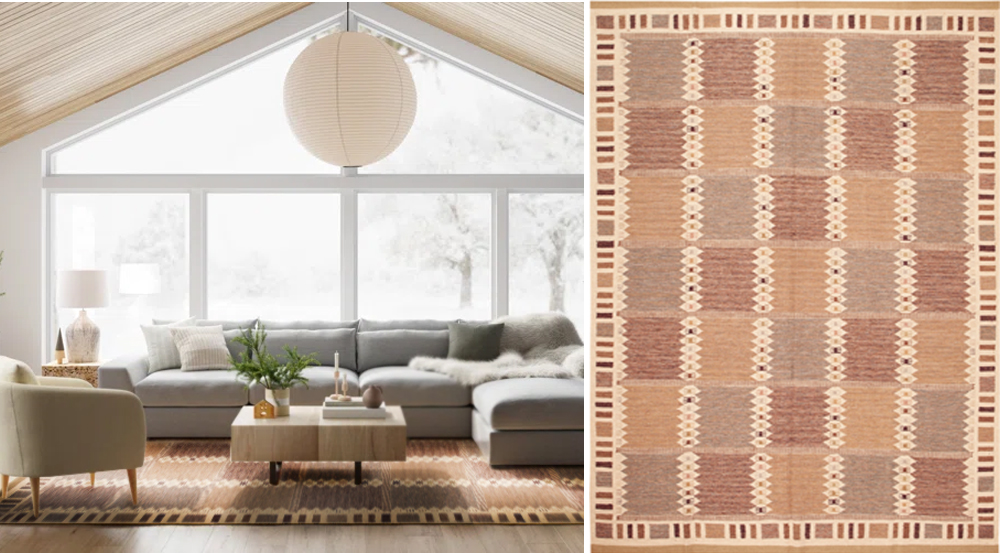
Scandinavian flatweaves are known for the way they combine woven texture with controlled geometry and carefully balanced color. Swedish rollakan rugs may use interlocking tapestry techniques to create a firm surface with clean transitions between areas of color.
Twentieth-century designers brought increased recognition to Scandinavian textile design. Nazmiyal’s collection of vintage Scandinavian rugs includes works associated with designers such as Marta Maas Fjetterstrom, whose designs helped establish flatwoven rugs as important works of modern decorative art.
Bessarabian and Aubusson Flatweaves
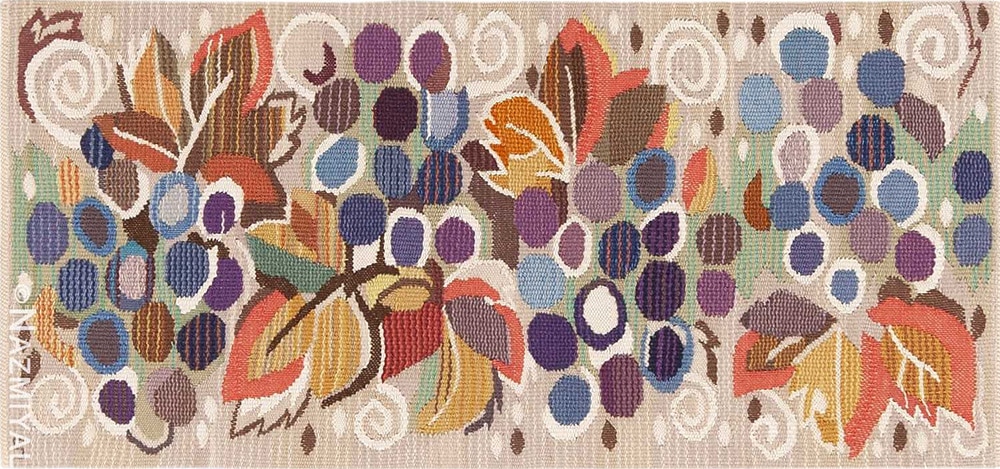
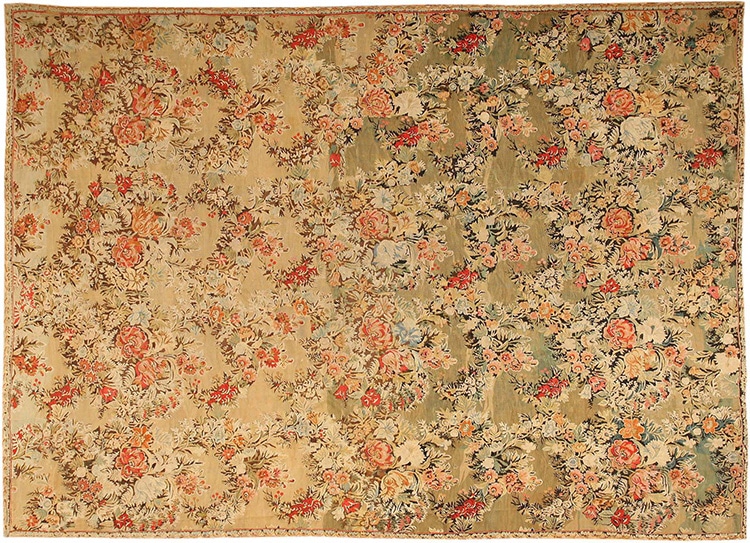
European flatweaves include Bessarabian kilims and French Aubusson rugs. Bessarabian examples frequently feature floral, foliate or neoclassical designs interpreted through a tapestry-woven structure. Explore Nazmiyal’s collection of antique Bessarabian kilim rugs.
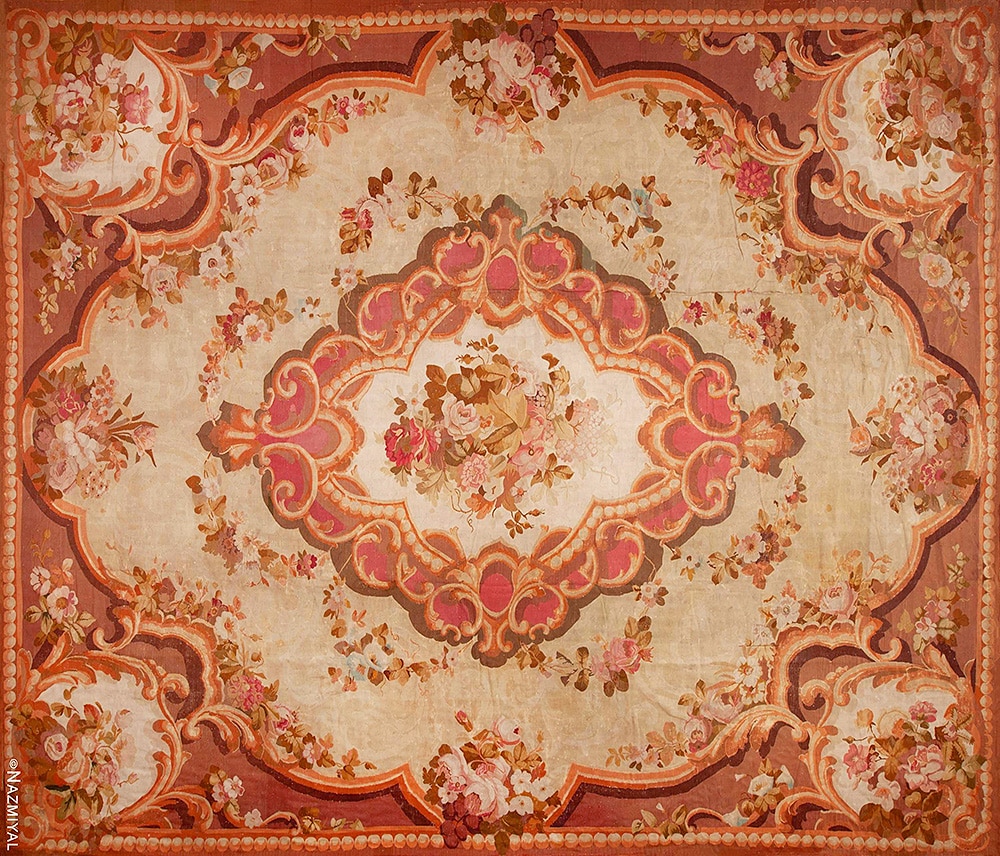
French Aubusson rugs use tapestry-weaving methods to create flowing floral arrangements, architectural borders, medallions and other designs associated with European decorative arts. Their curved forms and softly modeled compositions differ visually from the more angular designs often associated with slit-tapestry kilims.
Moroccan Flatweaves
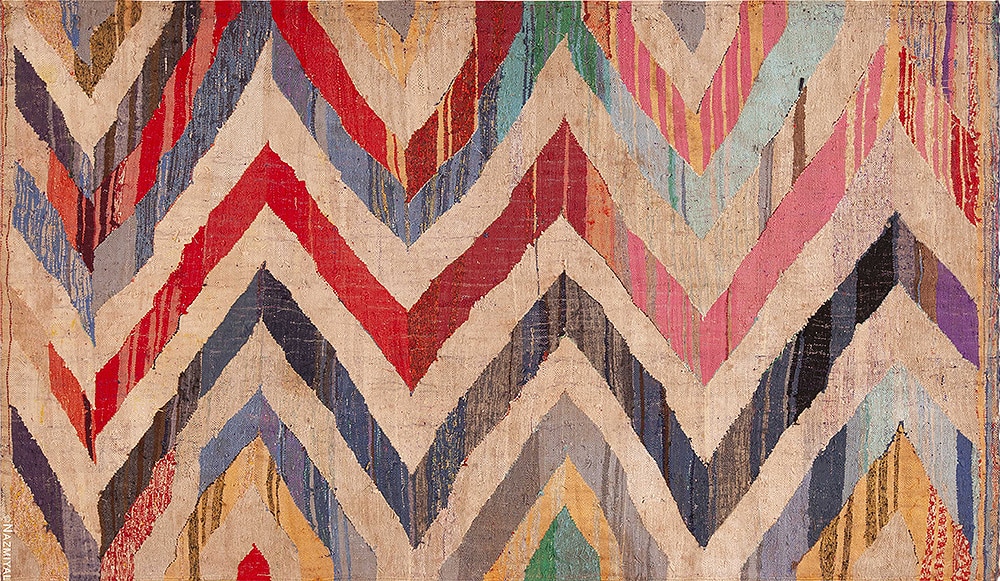
Moroccan weaving includes both pile rugs and flatwoven textiles. Flatweaves from different regions may use stripes, diamonds, zigzags, bold blocks of color or more restrained natural tones. Their construction, palette and motifs vary according to the weaving community and the materials available rather than conforming to one single Moroccan style. Explore Nazmiyal’s collection of vintage Moroccan rugs.
Motifs and Cultural Context in Flat Weave Rugs
Flat weave designs can reflect regional weaving traditions, available fibers and dyes, household use and the individual choices of the weaver. Geometric forms, plants, animals, protective devices and objects from daily life appear in many weaving traditions, but their meanings are not universal.
Some motifs are conventionally associated with ideas such as protection, water, fertility, family life or the natural environment. Interpretations may vary by region, village, period and source. A motif should not be used by itself to determine a rug’s origin, age or provenance. Structure, materials, color, condition and comparison with documented examples are equally important.
Learn more about the broader language and interpretation of rug symbols and design motifs.
Where Do Flat Weave Rugs Work Best?
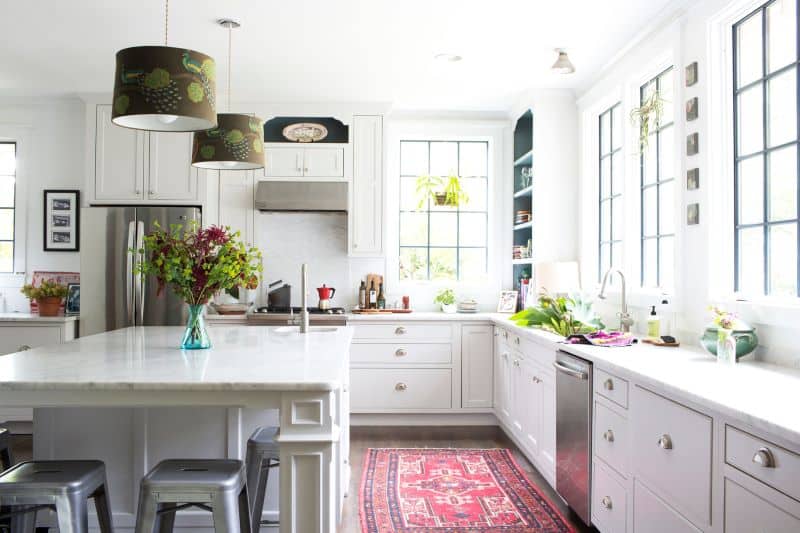
The low profile of a flat weave rug can make it practical beneath dining furniture, in kitchens, entrances and other spaces where doors or furniture require clearance. A flat weave runner rug can work well in a narrow kitchen or hallway, while a larger example can anchor a dining room, living room or bedroom.
Because thinner rugs may shift, bunch or wrinkle more easily than heavier pile rugs, a suitable rug pad is usually important. The pad should be compatible with the flooring underneath and should not contain materials that may stain or react with the floor finish.
Placement should also reflect the age, condition, fiber and construction of the individual rug. A sturdy modern flatweave may be appropriate for frequent use, while a delicate antique example may be better suited to a lower-traffic room or displayed as textile art.
Explore Antique, Vintage and Modern Flat Weave Rugs
Flat weave rugs range from antique Turkish and Persian kilims to Indian dhurries, Caucasian Soumaks, Persian jajims, Scandinavian textiles, Moroccan weavings and European tapestry-woven rugs. Their low profile makes the structure of the weave, relationships between colors and individual decisions of the weaver especially visible.
Explore Nazmiyal’s kilim rugs and related regional collections, or inquire about creating custom flat weave rugs for a specific interior, palette or scale.