Popular Searches:
Antique Rugs | Vintage Rugs | Modern Rugs | Persian Rugs | Kilim Rugs | Caucasian Rugs | Rug Origins
Quick Navigation
Key Takeaways
- Soumak is a technique: it’s defined by weft-wrapping (not knotted pile), so structure matters more than any label.
- Texture without height: Soumaks stay low-profile like flatweaves, but feel more dimensional than a standard tapestry-woven kilim.
- Value follows fundamentals: clarity of design, strong color, solid edges/ends, and intact back structure are key to long-term desirability.
At-a-Glance Specs
- Construction: flatwoven with weft-wrapped patterning (textured face).
- Common regions: Caucasus and surrounding weaving cultures; also seen across tribal traditions tied to Persia/Iran.
- Materials: often wool; silk appears in some examples; foundations may include wool or cotton depending on the weaving.
- Look & feel: crisp geometry, tactile surface, and a flexible textile “handle” compared to thick pile rugs.
- Condition focus: edges/ends, areas of folding stress, and the integrity of the back (weft floats/technical signature).
What Are Soumak Rugs?
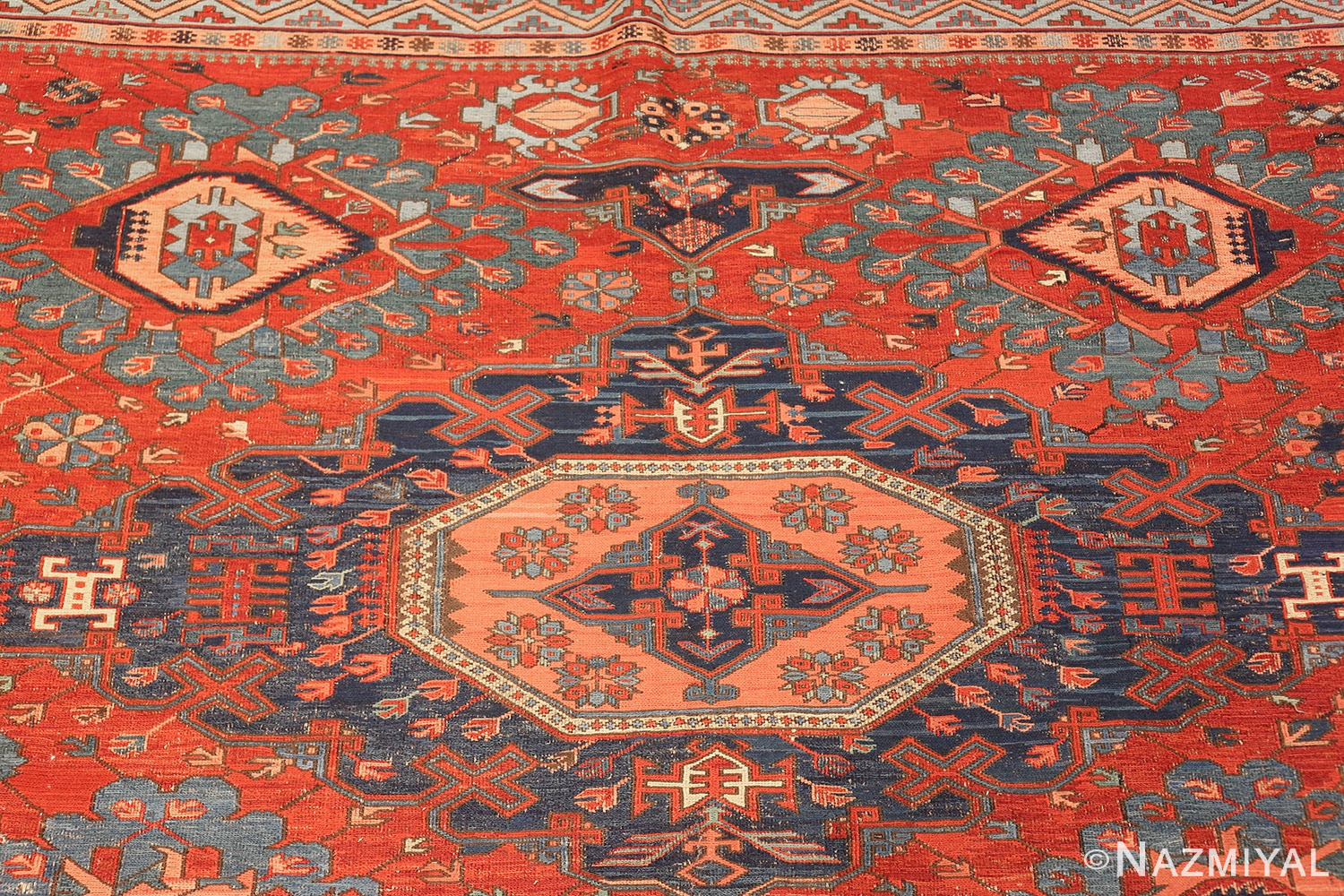
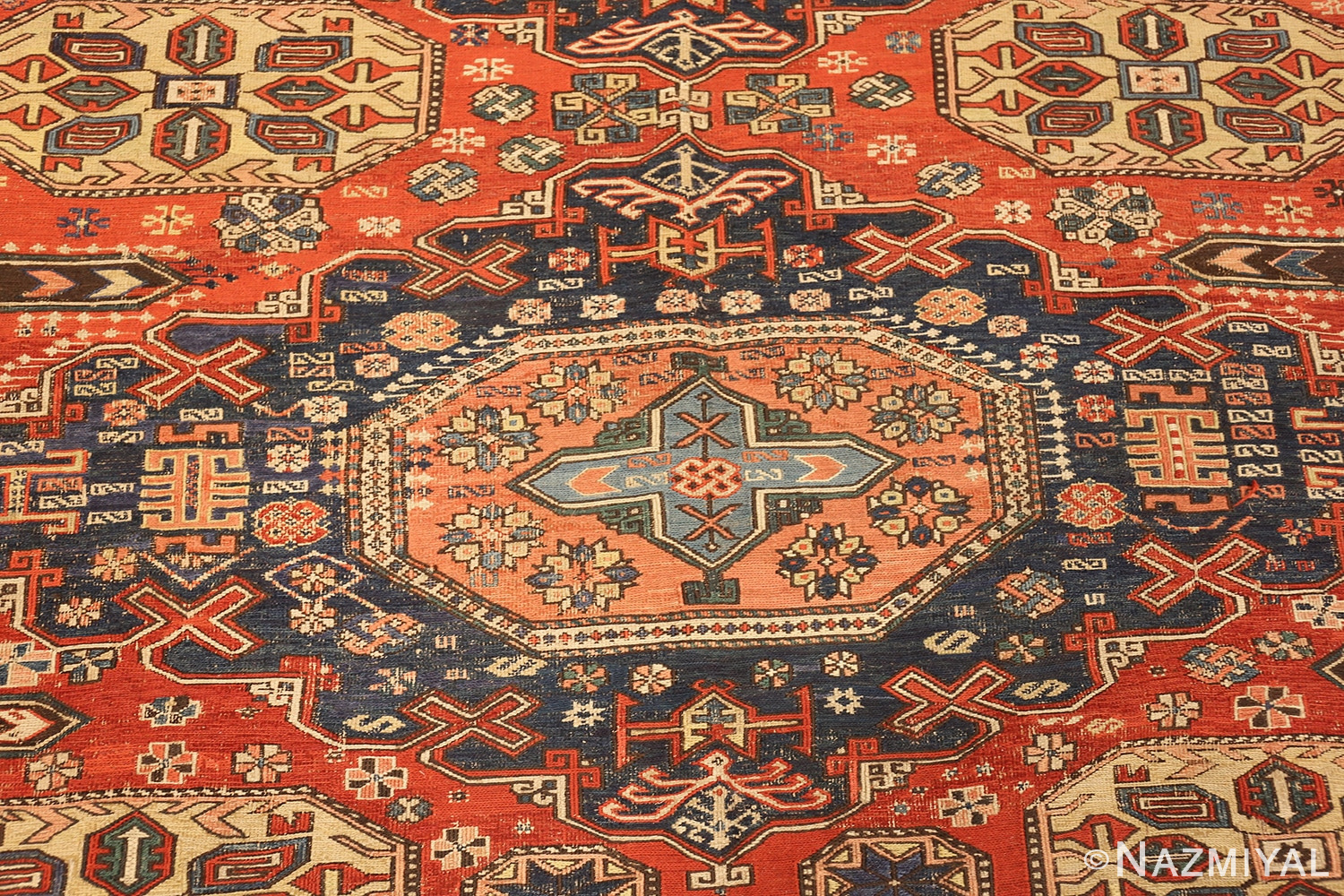
Soumak rugs are flatwoven textiles in which colored wefts are wrapped around warps to create pattern. This produces a surface with subtle relief—often described as corded or embroidered—while remaining low-profile on the floor.
- A slightly raised, textured face with strong pattern clarity
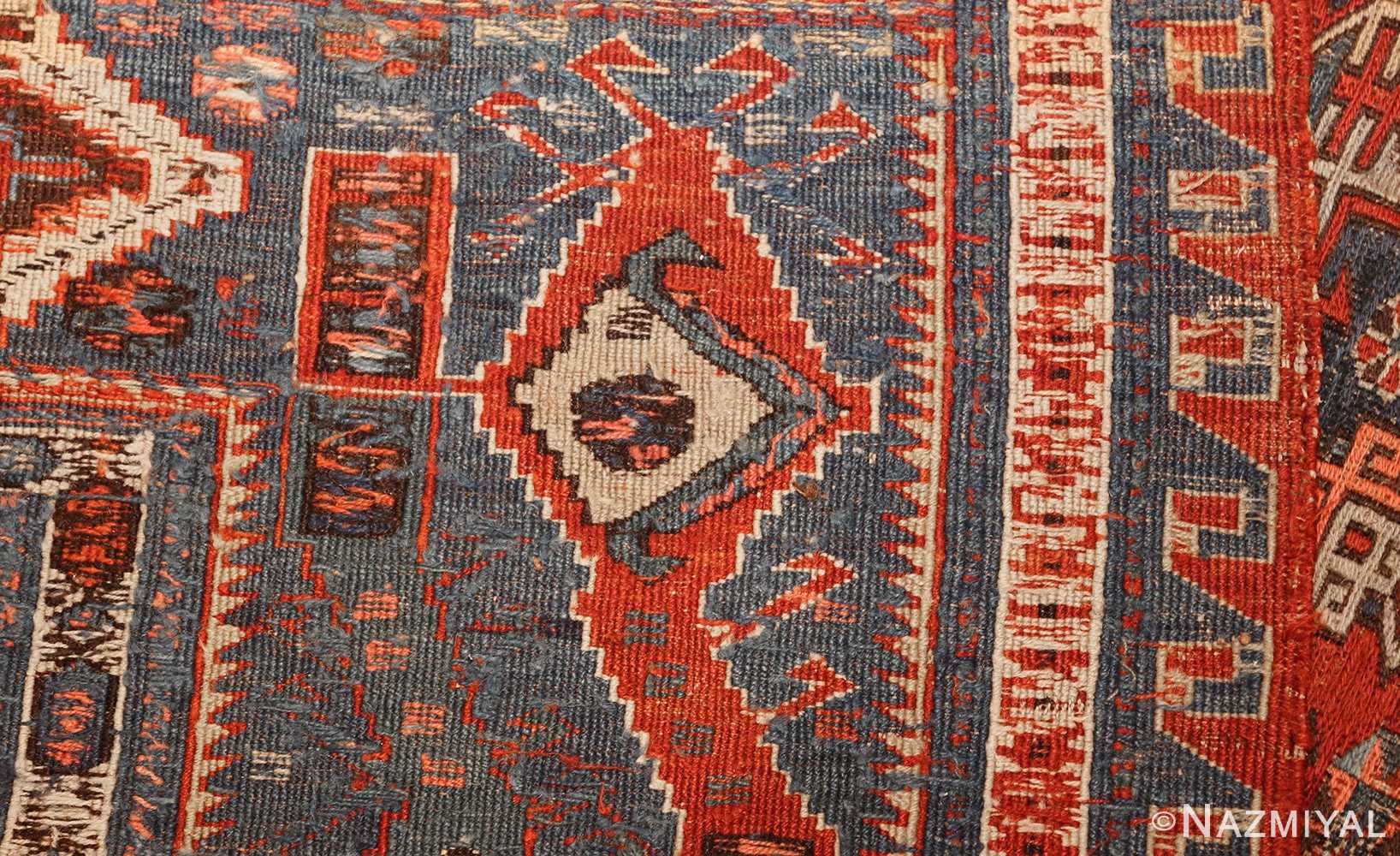
- A back that may show floating threads (a technical signature of the weave)
- A textile-like feel that sits “between” the flatness of kilims and the thickness of knotted pile
Soumak is best understood as a technique, not a single origin or design school. That’s why construction truth and execution quality matter more than any one market label.
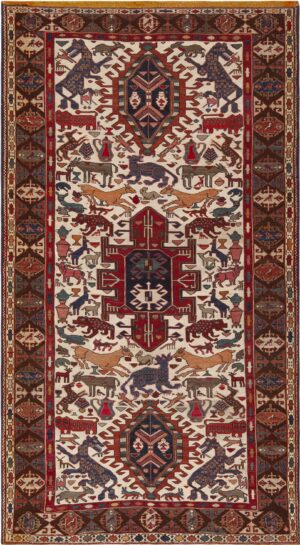
Featured Soumak Rugs from the Nazmiyal Collection

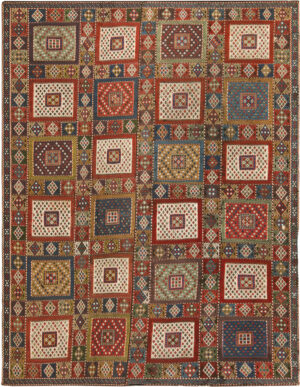
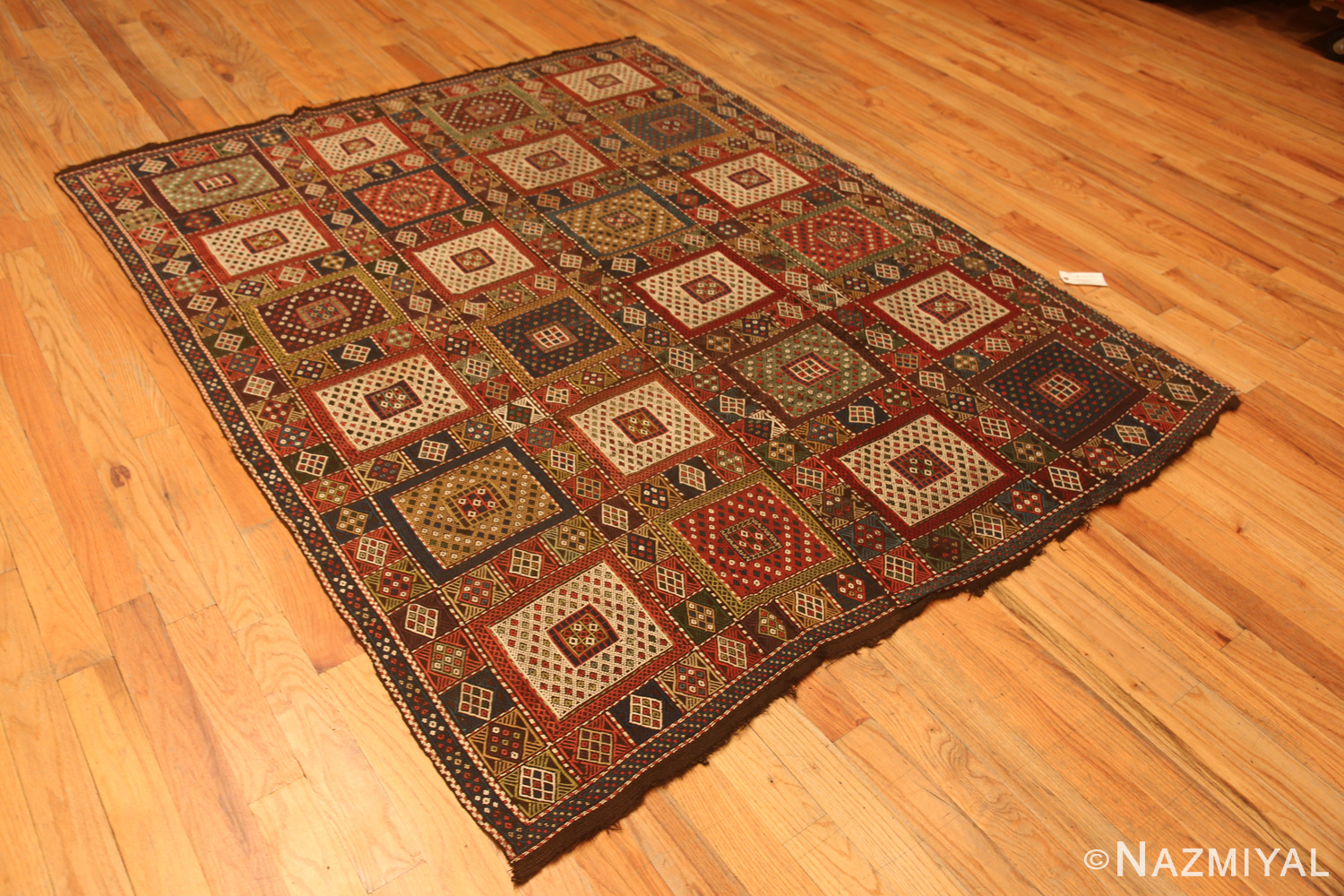
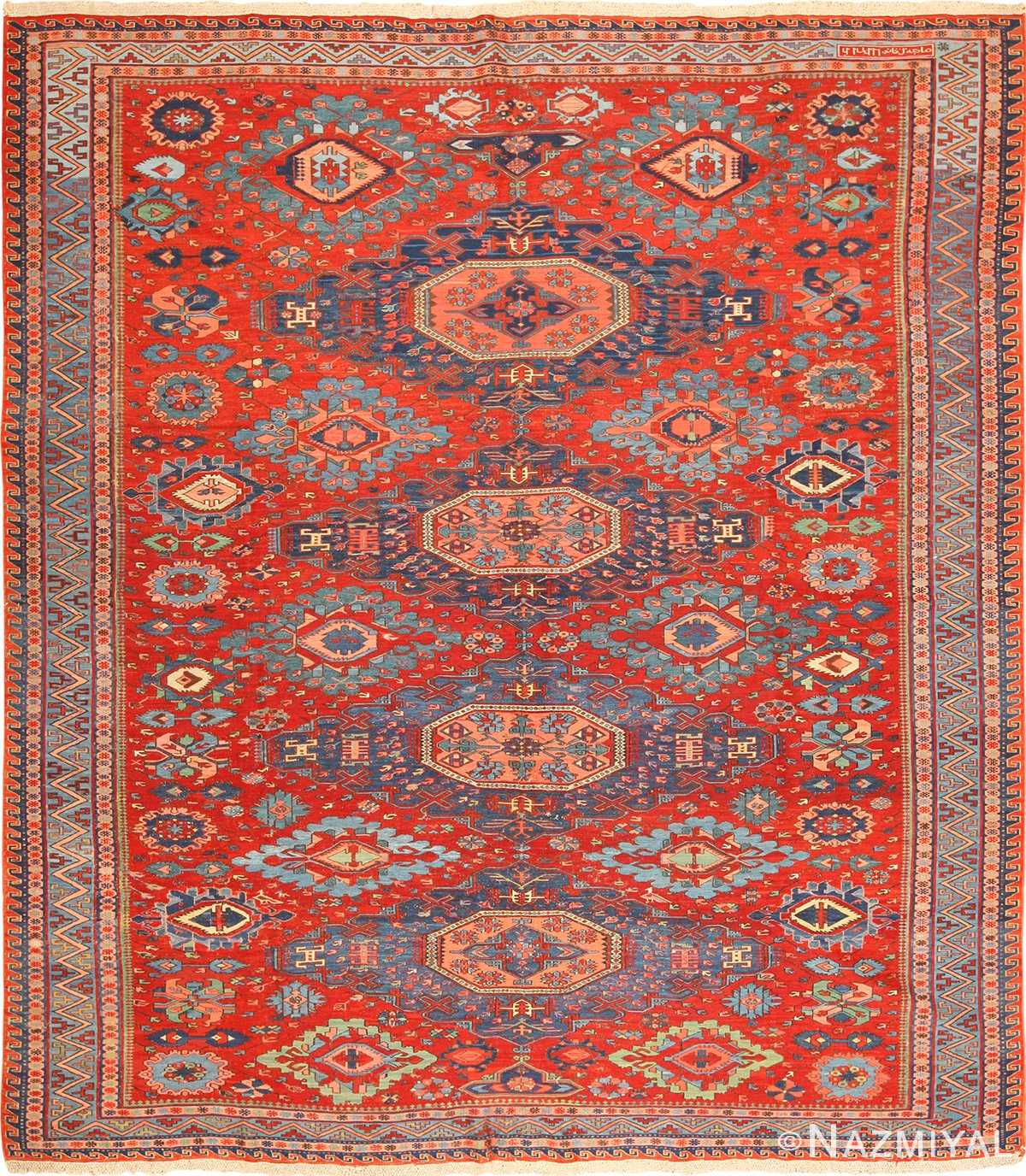
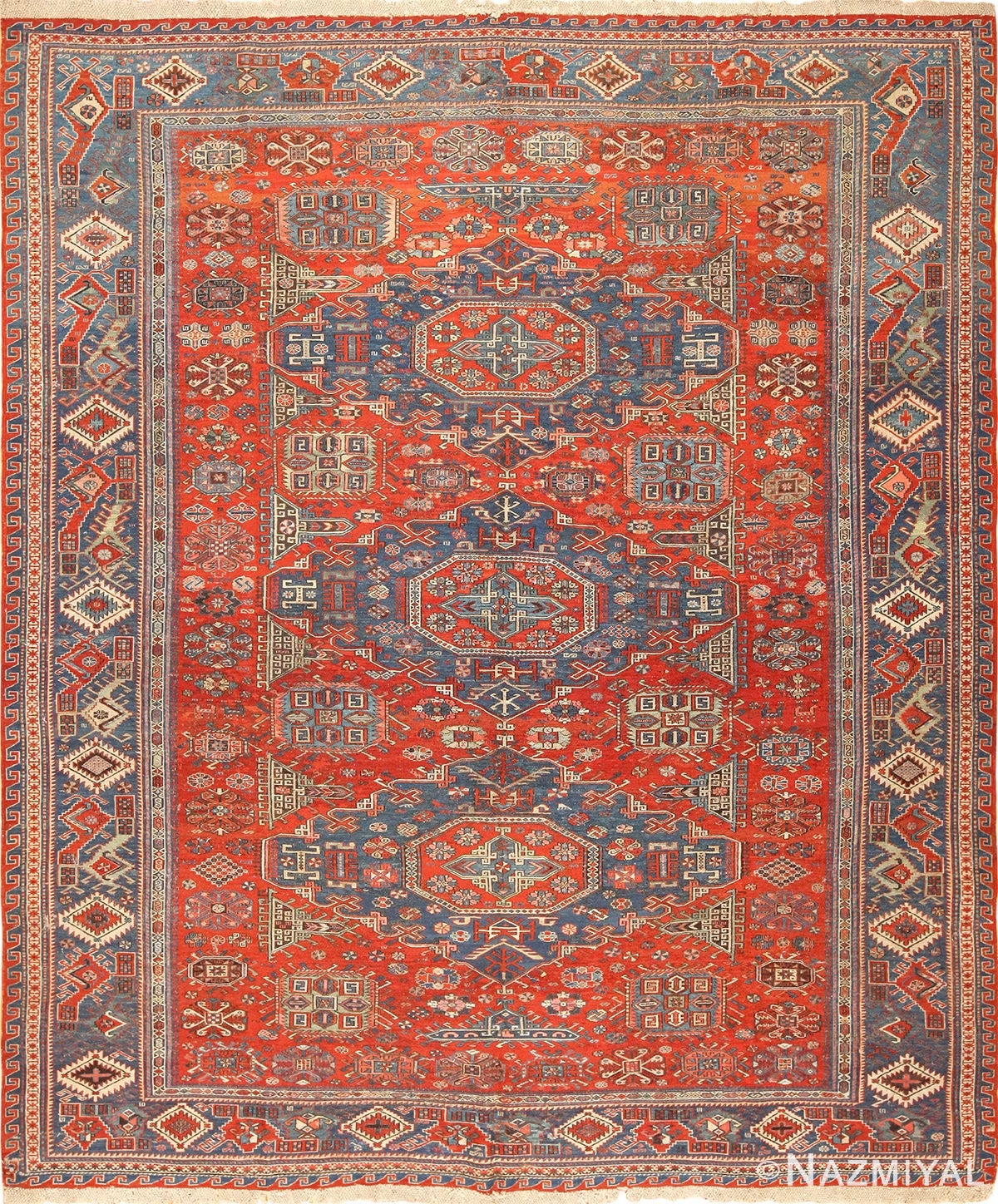
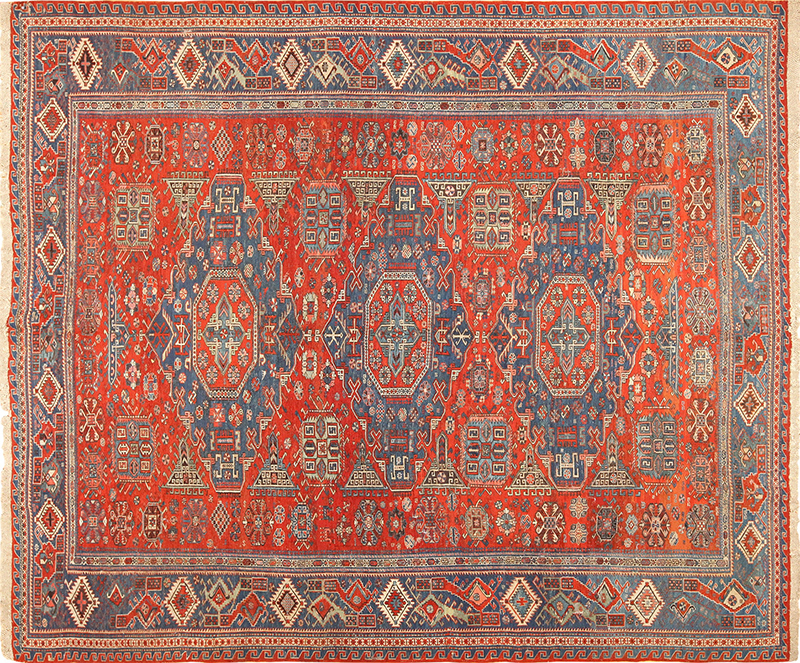
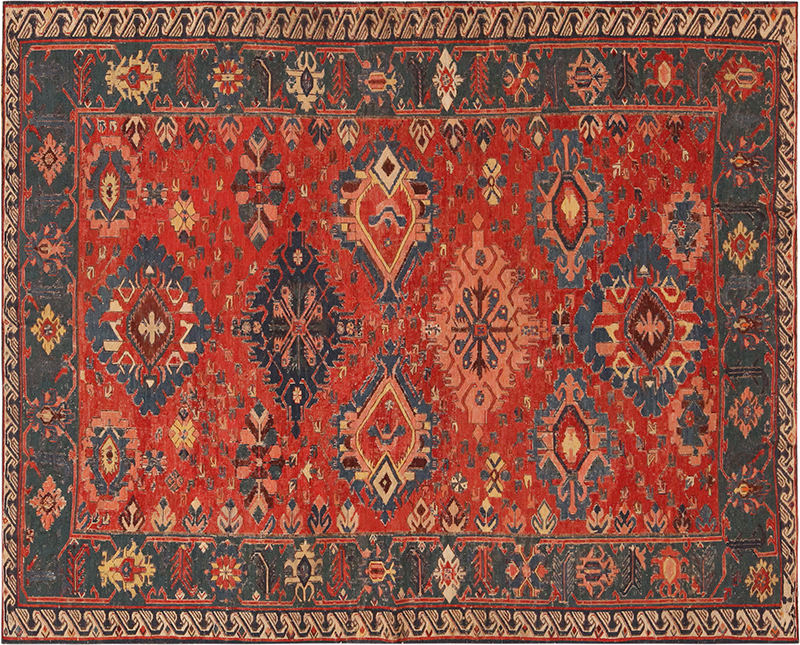
Antique Caucasian Soumak Rug #49342
- Circa: 1900
- Size: 8 ft 3 in x 9 ft 7 in
- Why it stands out: room-size scale, bold tribal geometry, and the classic Soumak texture.

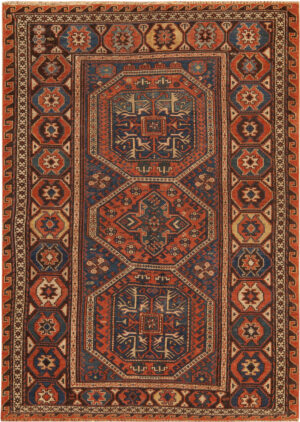
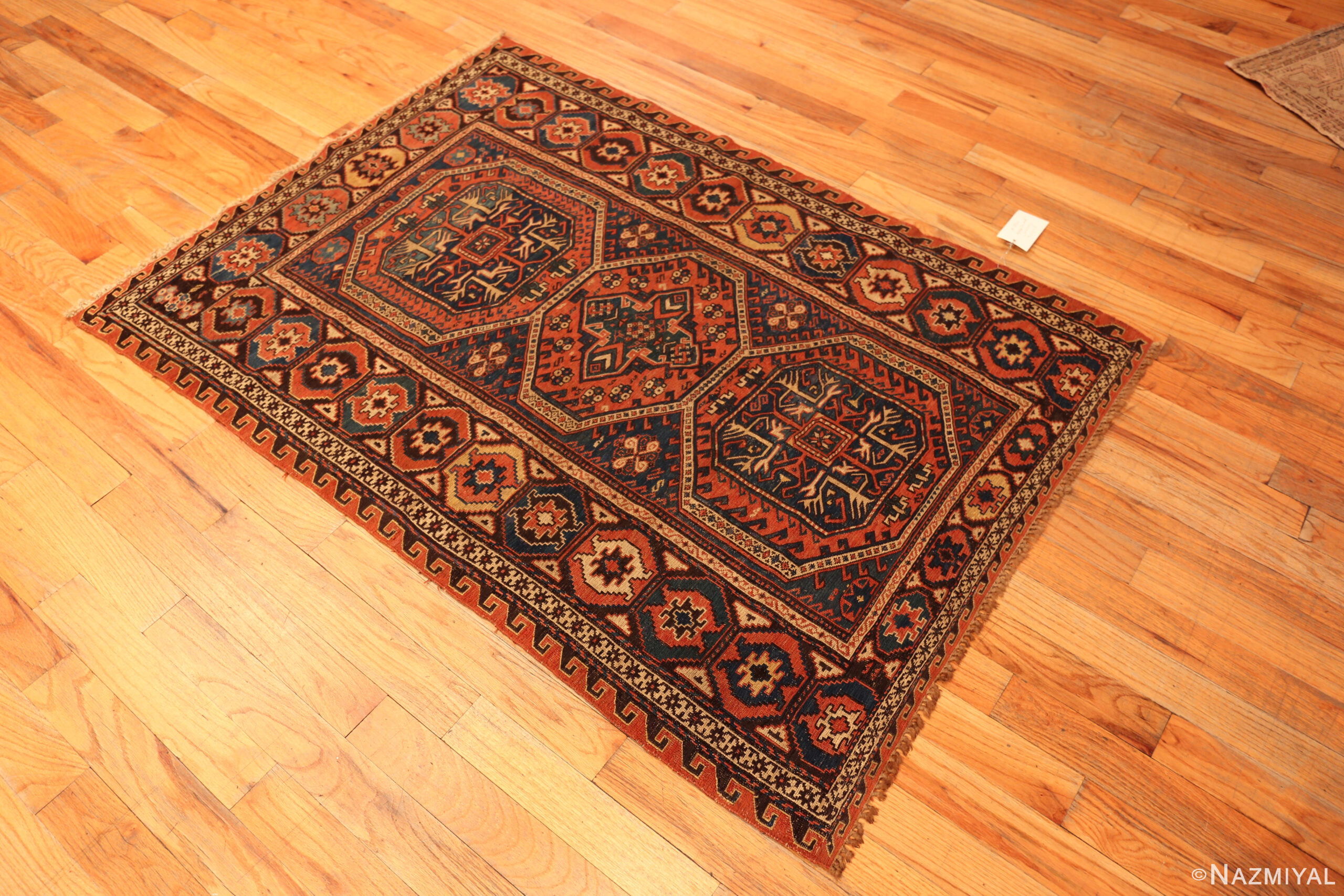
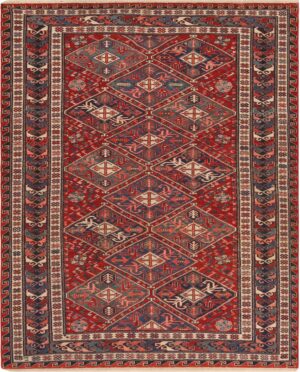
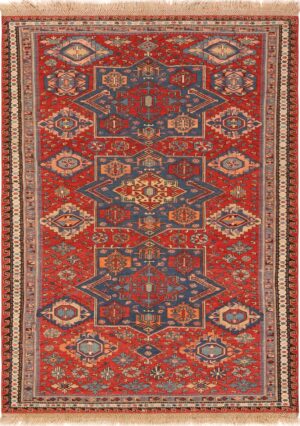
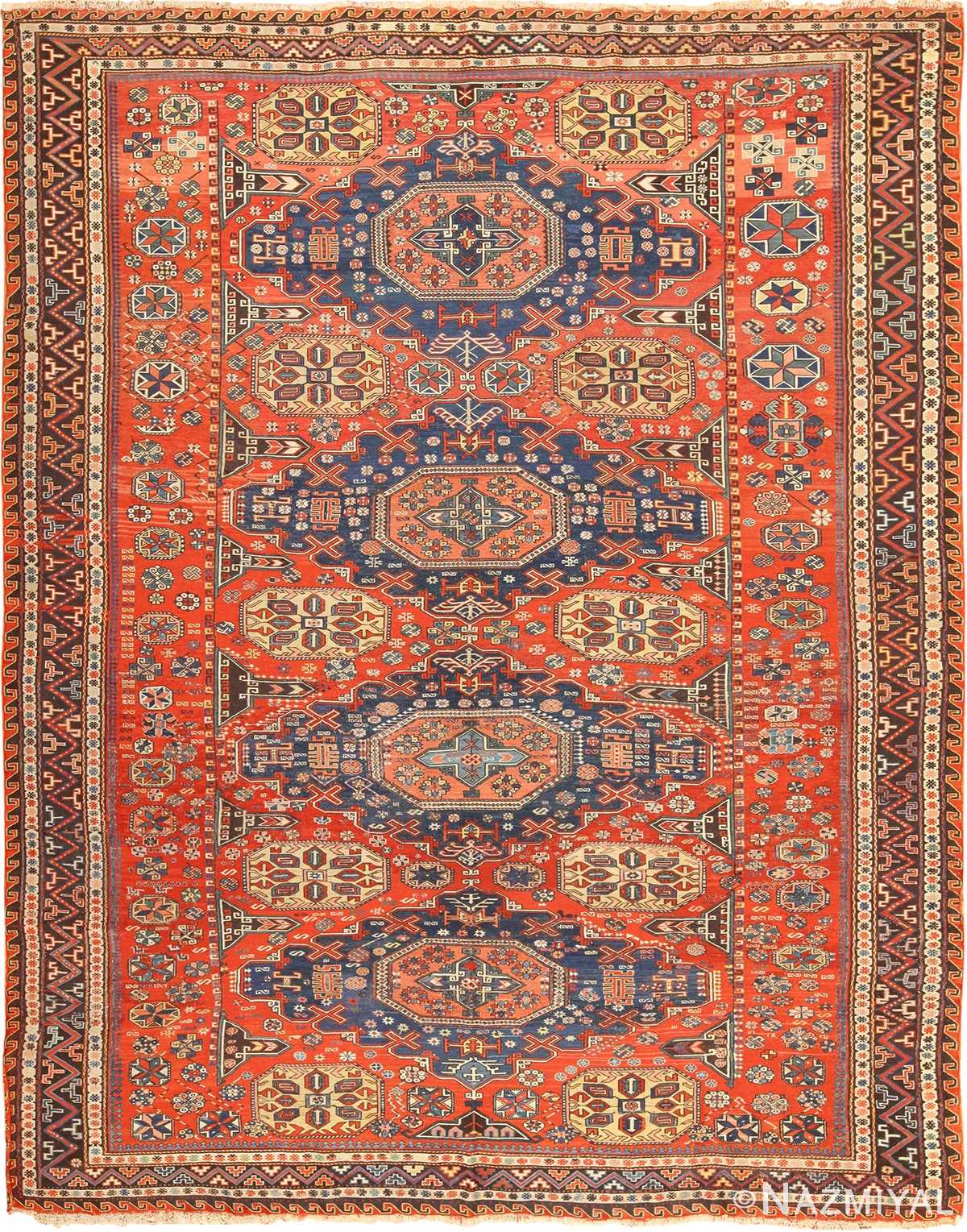
Antique Caucasian Soumak Rug #71969
- Circa: 1900
- Size: 5 ft x 6 ft
- Why it stands out: compact, highly usable size with strong color and tribal motif language.

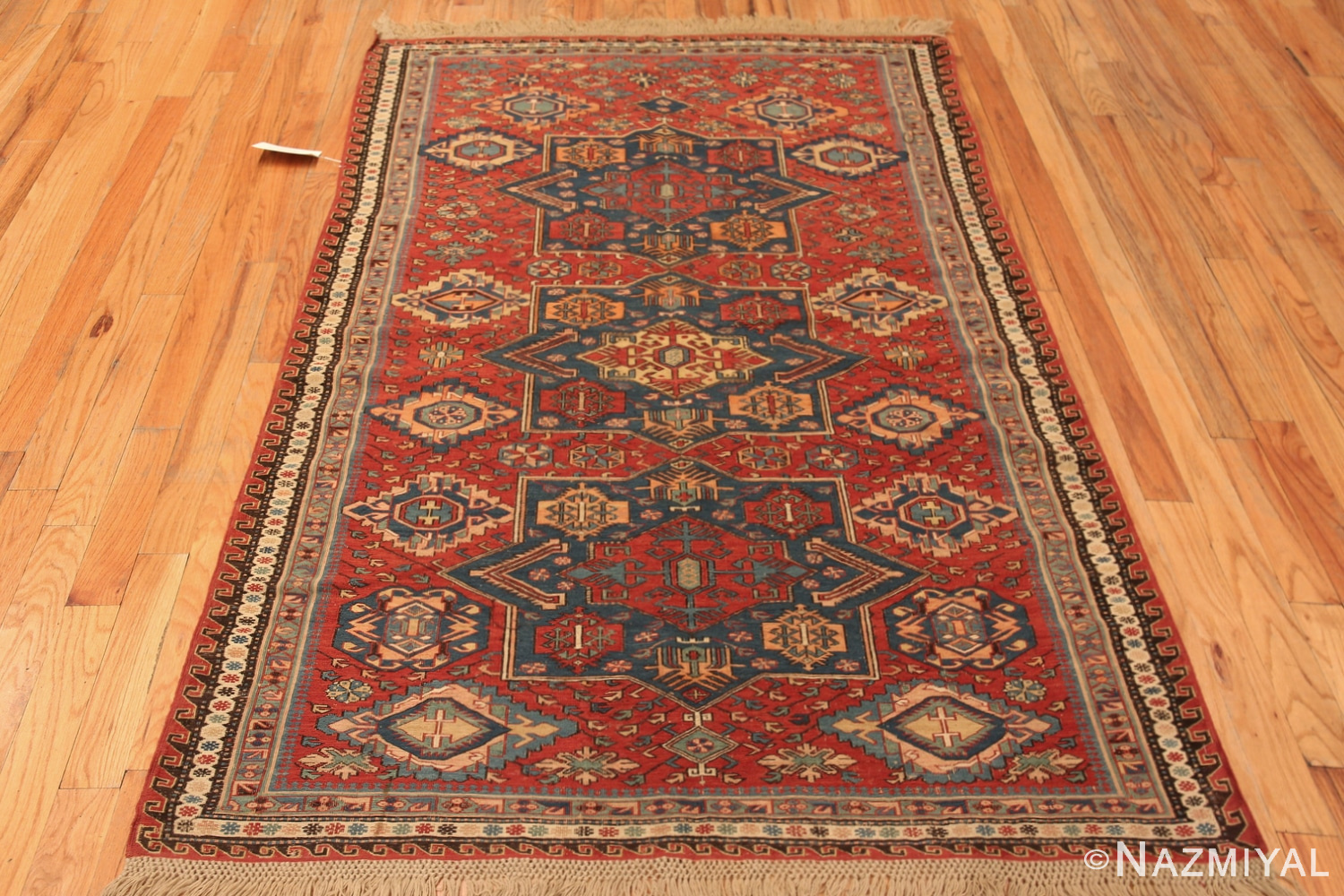
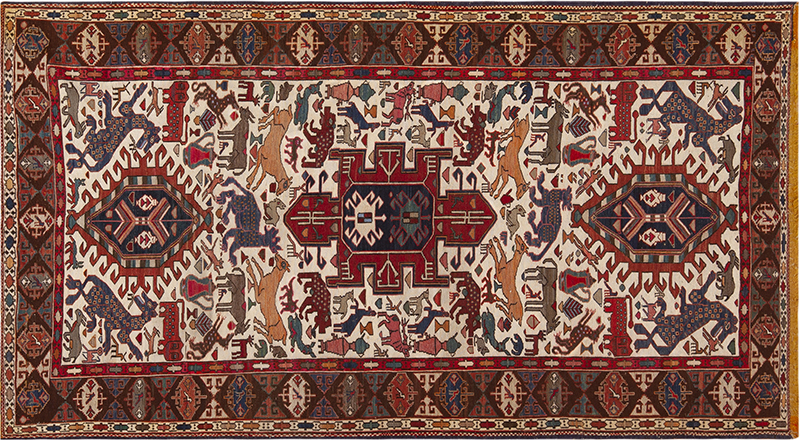
Vintage Silk Caucasian Soumak Rug #72465
- Circa: Vintage (20th century)
- Size: 3 ft 8 in x 6 ft 4 in
- Why it stands out: silk construction with animal and geometric motifs that read beautifully in modern interiors.
Where Do Soumak Rugs Come From?
Soumak weaving is closely associated with the Caucasus, but the technique is also found across neighboring weaving cultures. When assessing origin, prioritize structure, motif language, palette tendencies, and finishing details over a single label.
- Caucasus: powerful geometry and bold, emblematic motifs
- Persia/Iran: the technique appears across tribal flatweave traditions connected to Persian rugs and related textile families
- Wider context: explore by region via Rug Origins
How Soumak Rugs Are Made (Weft-Wrapping Technique)
Soumak weaves are created by wrapping colored weft threads around warp threads to form pattern. Unlike tapestry weave (common in kilims), the wrapped wefts create a distinctive surface texture and a technical signature on the back.
- Textural relief that adds dimensionality to geometric drawing
- Strong pattern clarity with a tactile surface
- A construction that can be durable when tightly and consistently executed
Soumak vs. Kilim vs. Knotted Pile Rugs
If you’re comparing flatweaves, start here. Soumak and kilim are often discussed together, but they are not the same structure. For a deeper look at flatwoven rugs, explore our Kilim rugs.
| Type | How it’s made | Feel / profile | Common shopping note |
|---|
| Soumak | Weft-wrapped patterning around warps | Low profile with a textured face | Confirm technique by structure and back signature |
| Kilim | Weft-faced tapestry weave | Flatter; often more reversible | Design reads “graphic” and textile-like |
| Knotted pile | Knots create pile | Thicker and more cushioned | Wear patterns show in pile; check knot integrity |
How to Identify an Authentic Soumak
Use construction truth + materials + age evidence. Labels can be inconsistent in the market, so verify what you can see and feel.
- Face texture: raised/corded patterning rather than a perfectly flat tapestry surface
- Back signature: floating threads or a distinct wrapped-weft look (varies by weave and finishing)
- Finishing: edges and ends consistent with traditional handwork (not overly uniform or machine-like)
- Materials: wool is common; silk appears in some pieces; foundation may include cotton depending on the example
- Condition: inspect edges/ends first, then fold lines and any areas of concentrated wear
Common Designs & Motifs
Soumak design language is often geometric and emblematic, built for clarity and rhythm. The best examples balance pattern density with “breathing room,” so motifs read cleanly at distance.
- Diamonds and lozenges
- Hooked motifs, latch hooks, and stepped outlines
- Medallion frameworks
- Repeating border systems with guard borders
Materials & Dyes
Soumak rugs most commonly use wool, with dye character varying by period and region. Earlier examples frequently show richer tonal variation, while some later pieces may include more uniform color.
- Dye character: depth, tonal complexity, and harmony across the design
- Material quality: fiber resilience and how the wool/silk takes color
- Execution: tight, consistent wrapping that preserves pattern edges
Why Soumak Rugs Are Valued
- Distinctive tactile texture in a low-profile format
- Graphic geometry with dimensionality (surface relief)
- Decorative flexibility in both classic and contemporary rooms
- Collectibility in earlier examples with strong color and composition
Are Soumak Rugs a Good Investment?
High-quality antique and vintage Soumak rugs can remain resilient in the market when fundamentals align. Selection matters more than the name.
- Authentic weave technique and credible attribution
- Strong design and proportion (clean drawing; good spacing)
- Usable size and functional condition
- Structural stability—edges/ends and back-thread integrity
What Drives Value in Antique & Vintage Soumak Rugs
- Age and weaving period
- Origin indicators (motif language, palette tendencies, finishing)
- Technique quality (tightness, consistency, pattern clarity)
- Design strength and spacing
- Palette harmony and tonal depth
- Size and usability
- Condition (edges, ends, surface texture, back structure, repairs)
- Provenance and confidence in sourcing
Soumak Rugs in Interior Design
Soumak rugs excel when you want texture and structure without a thick pile. They work especially well in dining rooms (chair-friendly profile), living rooms (graphic anchor), and bedrooms (layered comfort).
- Pair Soumaks with curated vintage rugs for layered, collected depth.
- Use Soumak geometry to sharpen spaces furnished with modern rugs and contemporary pieces.
- Choose scale first, then decide how dense you want the pattern to feel in your room.
Related sizing resources:
Care, Cleaning & Repair
Because Soumak rugs have a textured face and technique-specific back structure, care should be specialist-led—especially for antique and older vintage pieces.
- Rotate periodically to distribute wear evenly.
- Use a proper rug pad to prevent shifting and reduce stress at edges and ends.
- Avoid prolonged direct sunlight to help preserve dyes.
- Vacuum gently; avoid aggressive brush rollers that can catch texture and edges.
- Prioritize conservative repairs that stabilize edges/ends first.
Soumak Rug Services
Glossary: Quick Soumak Terms
- Warp: the lengthwise foundation threads held under tension on the loom.
- Weft: the crosswise threads that build structure and (in Soumak) create wrapped patterning.
- Weft-wrapping: pattern method where wefts wrap around warps, forming a textured face and a technical back signature.
For more definitions used by collectors and designers, see the Rug Glossary.
Frequently Asked Questions
Is Soumak the same as a kilim?
No. Kilims are tapestry-woven flatweaves; Soumak uses a weft-wrapping technique that creates a more textured, corded surface.
Why do Soumak rugs feel more textured than other flatweaves?
Because the design is built by wrapping colored wefts around warps, creating subtle relief on the face.
Are Soumak rugs reversible?
Many are not truly reversible because the back often shows weft floats or a technique-specific structure, even if the pattern reads from both sides.
What should I check first when buying an antique Soumak?
Edges and ends, then fold lines and any areas where the back structure looks weakened. Structure is the foundation of long-term value.
Can Soumak rugs be repaired?
Yes. Repairs should be completed by specialists familiar with weft-wrapped textiles, focusing on structural stability and conservative restoration.
Nazmiyal White-Glove Service
Link Map
Uplinks
Lateral Links (Closest Cousins)
Downlinks (Featured Rugs)
Downlinks (Services & Trust)
Reference Links
Nazmiyal Collection has been a trusted source for antique rugs and vintage carpets for over 45 years. Our NYC gallery curates one-of-a-kind pieces with an emphasis on authenticity, provenance, and lasting decorative value.
Need help? Call us at (212) 545-8029 or visit our New York City showroom to work with a rug expert.