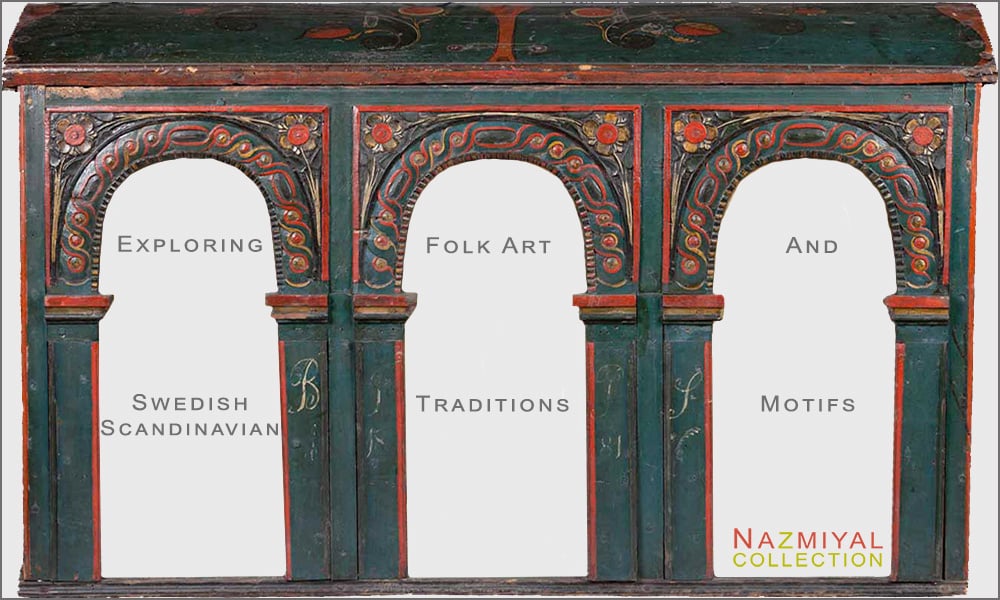
Swedish and Scandinavian Folk Art Traditions, Patterns and Motifs
Swedish and Scandinavian folk art refers to the regional decorative traditions of Sweden, Norway, Denmark, Finland and the broader Nordic world. These traditions often use flowers, birds, animals, geometric patterns, painted furniture, carved wood, paper cutting, textiles and storytelling motifs. In Sweden, folk art is especially associated with Dala painting, kurbits designs, Dala horses and colorful rural decorative arts.
Folk art gives insight into local culture, belief, craft and everyday life. Many Scandinavian folk traditions developed with strong regional identities, shaped by local materials, rural households, religious life, seasonal work and storytelling. Rather than fading into the background, these motifs continued to influence Scandinavian interiors, textiles and modern design.
Because many of these patterns appear in woven and textile forms, Scandinavian folk art also connects naturally to rugs. Readers interested in the textile side of this tradition can explore Nazmiyal’s Scandinavian rugs, rugs from Scandinavia, Swedish rugs and folk art rugs.
What is Scandinavian folk art called?
Scandinavian folk art is often referred to by different names, depending on the country, region and craft. Some terms describe painting styles, while others describe textile traditions, carved objects or decorative techniques.
Common terms include:
- Rosemaling (Norwegian): A decorative Norwegian painting tradition known for flowing scrollwork, stylized flowers and bright color.
- Dalmålning or Dala painting (Swedish): A Swedish decorative painting tradition from the Dalarna region of Sweden, often associated with painted furniture, wall decoration, regional costumes and storytelling scenes.
- Kurbits (Swedish): A decorative Swedish folk art style associated with Dalarna, known for fantasy flowers, curling vines and bright ornamental forms.
- Aleklippa (Swedish): A Swedish term associated with decorative paper cutting and intricate cut-paper designs.
- Rya (Scandinavian): A long-pile Scandinavian textile tradition that later became important in Swedish and Nordic rug design.
These names vary by region and medium. A Norwegian rosemaling panel, a Swedish Dala horse, a kurbits painting and a Scandinavian textile may all feel related, but each belongs to a more specific local craft tradition.
History Of Folk Art From Scandinavia
The history of folk art from Scandinavia can be traced back to the Viking period, when seafaring communities from the region traveled, traded, raided and left behind highly distinctive forms of visual culture. Viking ships were among their most important possessions, used for both war and trade. Excavated Viking ships and surviving carved objects show rich decoration with interwoven animals, mythical beasts and flowing ornamental forms.
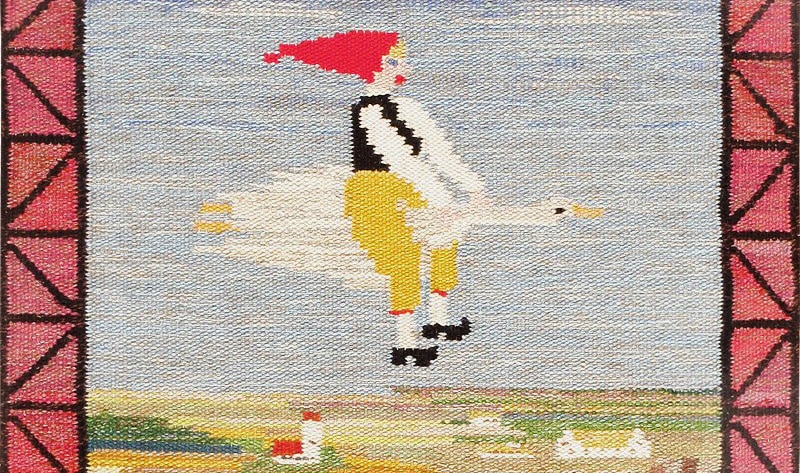
Folk art from Scandinavia also draws heavily from fables and allegories. As an example, the vintage carpet above, on the left, shows the story of Nils Holgersson, a folk tale about a badly behaved boy who is cursed by a Tomte, or Swedish elf, and is shrunken to only inches tall.
After climbing on the back of a domestic goose on his family farm, the goose flies away and joins a pack of wild geese, and Nils and the white goose go on a series of adventures.
What are the main forms of traditional Scandinavian folk art?
Traditional Scandinavian folk art encompasses various forms of artistic expression.
Here are some of the main forms commonly found in Scandinavian folk art:
- Woodcarving: Woodcarving is a prominent craft in Scandinavian folk art. Skilled artisans create intricate carvings on wooden objects such as furniture, utensils, religious items and architectural elements.
- Decorative Painting: Decorative painting plays a significant role in Scandinavian folk art. Techniques like rosemaling, dalmålning and kurbits involve painting intricate designs, floral motifs and geometric patterns on different surfaces such as furniture, woodenware and household items.
- Textile Arts: Fiber / textile arts have a long tradition in Scandinavian folk art. Embroidery textiles, weaving and tapestry work are common techniques used to create intricate designs and patterns on clothing, area rugs, wall hangings and other textiles.
- Paper Cutting: Paper cutting, known as aleklippa in Swedish, involves intricately cutting patterns and designs into paper or thin materials. These delicate cuttings are often used for decorative purposes, such as window ornaments or framed artwork.
- Metalwork: Metalwork, including blacksmithing and silversmithing, is another important aspect of Scandinavian folk art. Metal artisans create decorative objects, jewelry and utensils using techniques such as filigree, repoussé and engraving.
- Pottery and Ceramics: Pottery and ceramics are part of Scandinavian folk art as well. Artisans create functional and decorative items like bowls, vases and tiles, often featuring regional motifs and traditional designs.
- Folk Costumes: Traditional folk costumes, also known as folkdräkt in Swedish or bunad in Norwegian, are an integral part of Scandinavian folk art. These costumes, with their distinctive regional styles and intricate embroidery, represent the cultural heritage and identity of different regions.
- Folk Instruments: Folk instruments like the fiddle, nyckelharpa and Hardanger fiddle have cultural significance and are often adorned with decorative carvings or paintings in Scandinavian folk art.
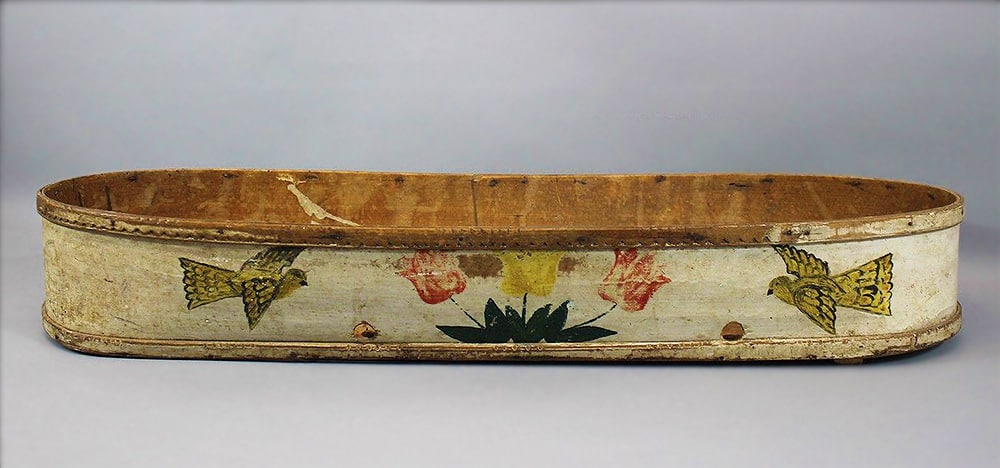
These forms of traditional Scandinavian folk art showcase the creativity, craftsmanship and cultural expressions of the region’s rich artistic heritage.
Common elements of Scandinavian / Swedish folk art
Scandinavian folk art is known for its distinctive and rich visual style.
While there are variations across different regions and time periods, here are some common elements found in Scandinavian folk art:
- Floral and Plant Motifs: Flowers, leaves and vines are frequently depicted in Scandinavian folk art. These motifs often feature stylized and symmetrical designs, with an emphasis on natural forms.
- Geometric Patterns: Geometric shapes, such as triangles, diamonds and swirls, are commonly used in Scandinavian folk art. These patterns are often intricately woven together to create visually appealing and balanced compositions.
- Roosters and Birds: Roosters and other birds are popular motifs in Scandinavian folk art. These symbols are associated with good luck, fertility and protection in Nordic traditions.
- Dala Horses: The Dala horse is a traditional wooden toy originating from Sweden. It has become an iconic symbol of Scandinavian folk art. These horses are typically painted in bright colors with intricate designs.
- Trolls and Mythical Creatures: Scandinavian folklore is filled with mythical creatures like trolls, gnomes and elves. These fantastical beings often make appearances in folk art, adding a touch of whimsy and storytelling.
- Folk Costumes and Traditional Clothing: Traditional clothing styles, including regional folk costumes, are often depicted in Scandinavian folk art. These costumes showcase the cultural heritage and historical attire of the region.
- Nordic Symbols: Certain symbols, such as the Viking ship, runes and ancient Norse symbols, may be incorporated into Scandinavian folk art, reflecting the region’s Viking heritage and mythology.
- Rosemaling: Rosemaling is a decorative painting style commonly associated with Norway. It features vibrant colors, intricate floral designs and scrollwork. Rosemaling can be found on various objects like wooden furniture, utensils and even buildings.
- Woodcarvings: Woodcarving is a prevalent craft in Scandinavian folk art. Intricate woodcarvings are used to decorate furniture, utensils, religious objects and architectural elements. They often feature intricate patterns and motifs.
- Bold Colors: Scandinavian folk art is characterized by the use of bold and vibrant colors. Reds, blues, yellows and greens are commonly seen, adding liveliness and visual impact to the artwork.
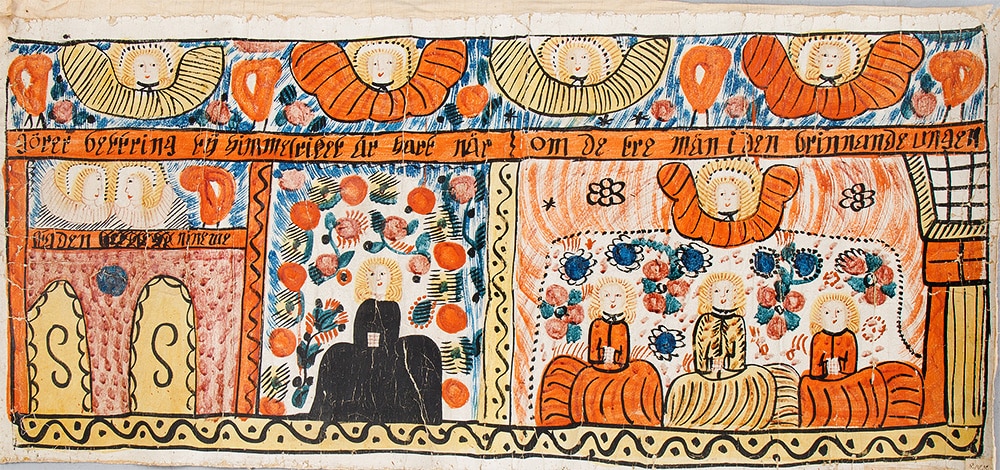
These are general elements, and the specific motifs and styles can vary across different regions within Scandinavia and across different historical periods.
Christianity Makes Its Way To Scandinavia
Even after Christianity spread through Scandinavia, older animal forms, mythical beasts and vine-like ornament continued to appear in regional decorative traditions. A fine example of this visual overlap is the decoration carved on the wooden doors of the Stave Church in Urnes, Norway.
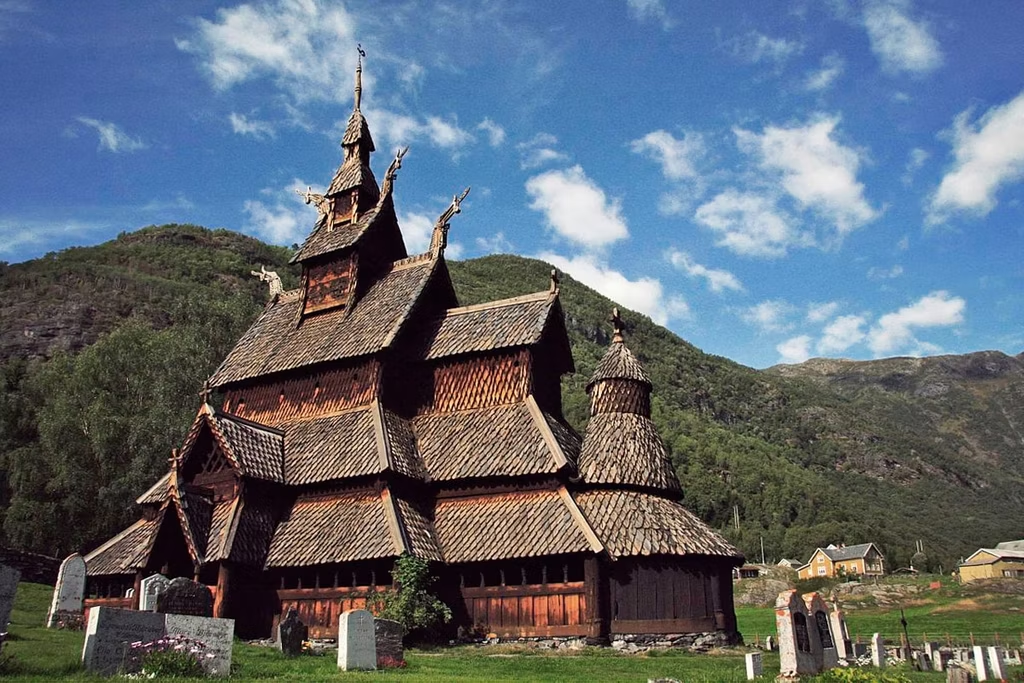
In the following centuries, Christian imagery became more common, but many Scandinavian decorative traditions continued to preserve older regional motifs. This blend of Christian, local and earlier Nordic visual language is one reason Scandinavian folk art has such a layered and recognizable character.
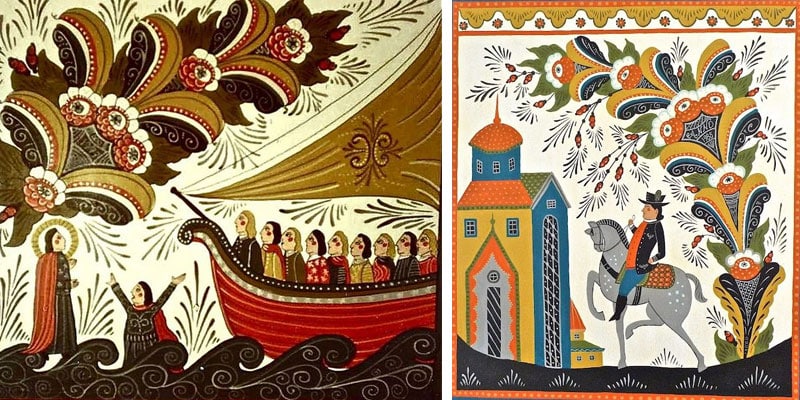
Peaceful Depictions Of Scandinavian Folk Art in The Post Viking Era
During the Middle Ages and the post-Viking era, Scandinavian folk art increasingly reflected domestic life, agriculture, regional dress and local storytelling. Flowers, birds, human figures and household symbols became especially common in painted, carved and woven objects.
These motifs were deeply tied to legends, stories and fables in Scandinavian culture. Because of its unique combination of beauty and simplicity, this style continues to be popular today.
Folk art’s purpose is to reflect culture and beliefs, but also to decorate the ordinary objects of daily life and bring pleasure to everyday tasks. For this reason, these motifs are commonly found on household items such as doors and windows, traditional water jars and buckets, board games, weather-vanes, clocks and textiles.
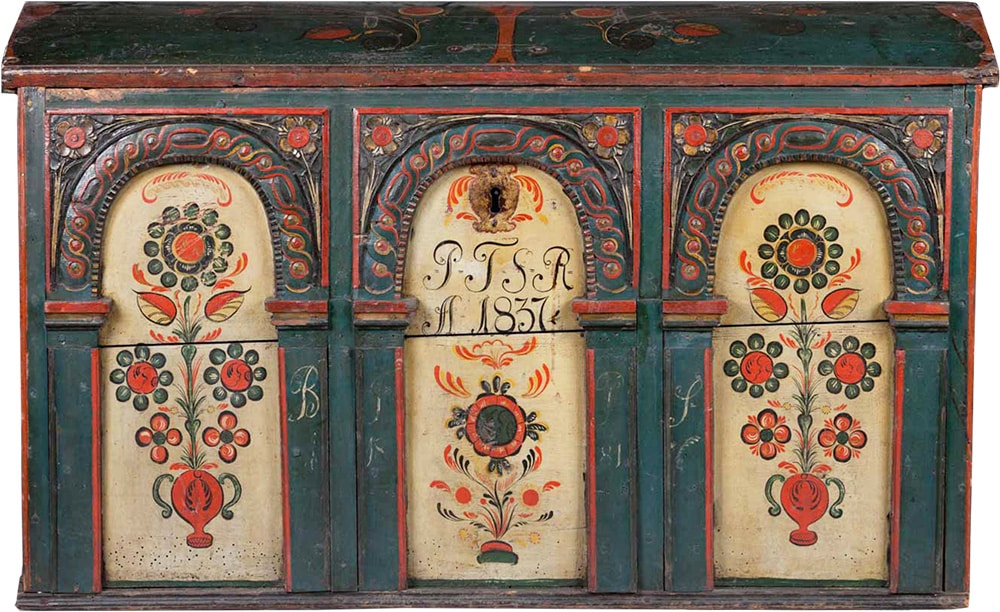
They are instantly recognizable as folk art because of their simplified designs and recognizable forms. Folk art and motifs are common features in carpets, Rya rugs and other rugs from Scandinavia. Many Scandinavian rugs use repeated geometric shapes, stylized flowers, animals, borders and symbolic patterns. These motifs often feel simpler and more architectural when translated into woven form, especially in Swedish flatweaves, Scandinavian kilims and vintage rya rugs.
This is where the folk art tradition becomes especially relevant to interiors. A Scandinavian rug can carry the color, rhythm and handmade character of Nordic folk design without making a room feel overly decorative. For more context, you may also want to review Nazmiyal’s guide to Vintage Shag Pile Swedish Rya Rug History or the guide to Scandi Home Decor And Scandinavian Interior Design.
The above information about Swedish and Scandinavian folk art traditions and motifs was published by Nazmiyal Antique Rugs.