Few works of art carry the weight of history underfoot like the great carpets of Persia. Among them, the Heriz Serapi rugs stand apart, admired not only for their beauty but for the centuries of cultural memory woven into their wool. These rugs emerged from the rugged mountains of northwestern Persia, a region where village life, trade, and artistry merged to produce textiles that spoke both of survival and of sophistication. Their origins are not simply local stories; they are part of a broader narrative of Persia’s role as a crossroads of civilizations, where design traditions were shaped by geography, commerce, and human creativity.
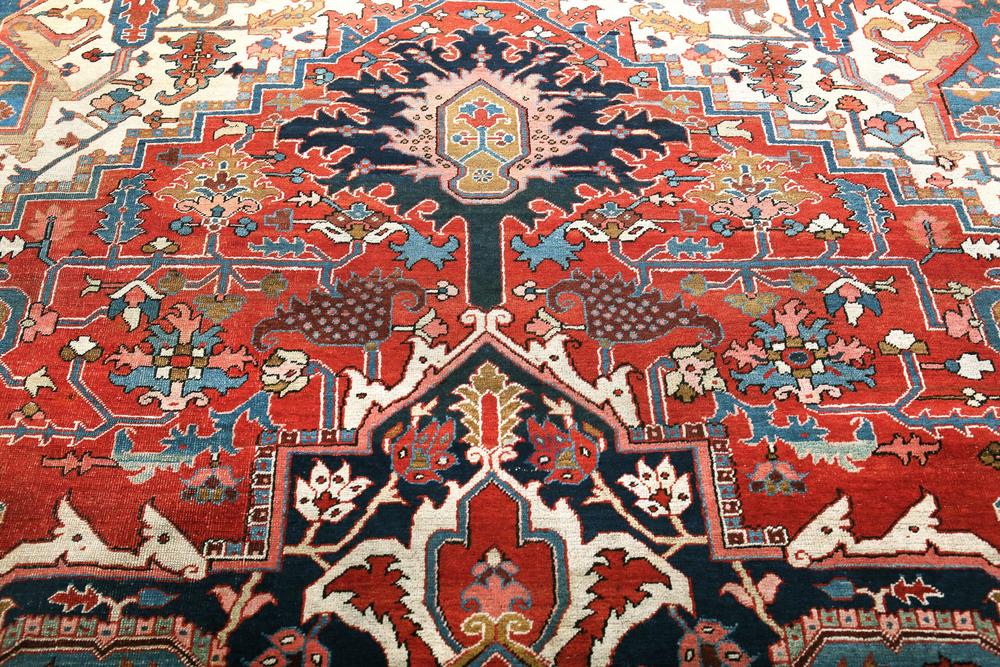
What makes these carpets remarkable is not only their striking patterns and bold colors, but also their resilience. Passed down through generations, they have lived in homes, palaces, and collections, each knot holding the trace of the weaver’s hand. Their designs may seem geometric, yet within each line lies the mark of individuality—small irregularities that make them authentic, human, and alive.
But how do these rugs differ from one another—Serapi, Heriz, Bakshaish? Why are they as loved by interior designers as they are by collectors? And what makes them a centerpiece of refined living even today?
History and Origins
The story of Heriz Serapi rugs begins in the mountains of northwestern Persia, not far from the ancient city of Tabriz. This region, long known as a center of trade and culture, gave rise to a weaving tradition that balanced village craft with cosmopolitan influence. By the mid-19th century, Serapi rugs had become recognized as a distinct group within the larger family of Heriz weavings, admired for their clarity of design and striking use of color.
The weavers themselves were not trained artists in the modern sense but members of families who carried their craft through generations. Their knowledge of dyes, patterns, and loom work was inherited, refined, and adapted to the demands of local markets and international buyers. Unlike mass-produced carpets of later eras, these were objects of cultural expression, their motifs echoing both tribal heritage and the artistic vocabulary of Persian art.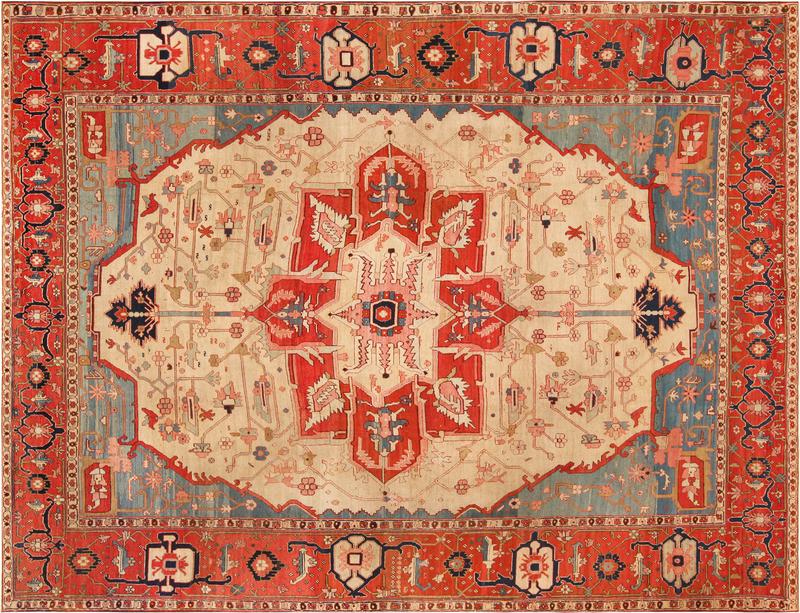
Geography also played its role. The wool from sheep raised in the high altitudes of Heriz was exceptionally strong, its quality shaped by the mineral-rich waters of the region. This unique foundation allowed the rugs not only to endure but also to carry bold, large-scale designs that could define entire interiors.
Durability and Everyday Use
One of the defining qualities of Heriz and Serapi rugs is their remarkable durability. These rugs were not woven merely as decoration; they were made to be lived with, walked on, and passed down. In the villages of the Heriz region, carpets had to withstand the practical demands of daily life while also serving as expressions of culture and pride. This balance between function and artistry is what gives them a reputation for strength unmatched by many other Persian weavings.
The secret lies in both the wool and the construction. The sheep of the Heriz highlands produced a wool that was naturally tough and resilient. The mineral-rich water of the region, often cited by scholars and collectors alike, contributed to a fiber that was dense, lustrous, and resistant to wear. When spun and knotted into rugs, this wool provided a foundation that could absorb years of use without losing its integrity. Many antique Heriz and Serapi rugs still retain their clarity of design after more than a century, a testament to the quality of the materials and the skill of the weavers.
The structure of these rugs is equally important. Their knotting is firm, and their foundations are reinforced by strong cotton warps and wefts. Unlike finer city carpets that sometimes sacrificed strength for delicacy, Heriz weavings maintained a robust quality that allowed them to serve households for generations. This explains why they are so often recommended for high-traffic areas such as entryways, dining rooms, and living spaces. A Heriz or Serapi rug does not wilt under use; it thrives in it.
Durability, however, does not come at the expense of beauty. The ability of these rugs to marry strength with elegance is precisely what makes them appealing today. They are rugs that can take the weight of daily life while still commanding admiration as works of art.
The Art of Design
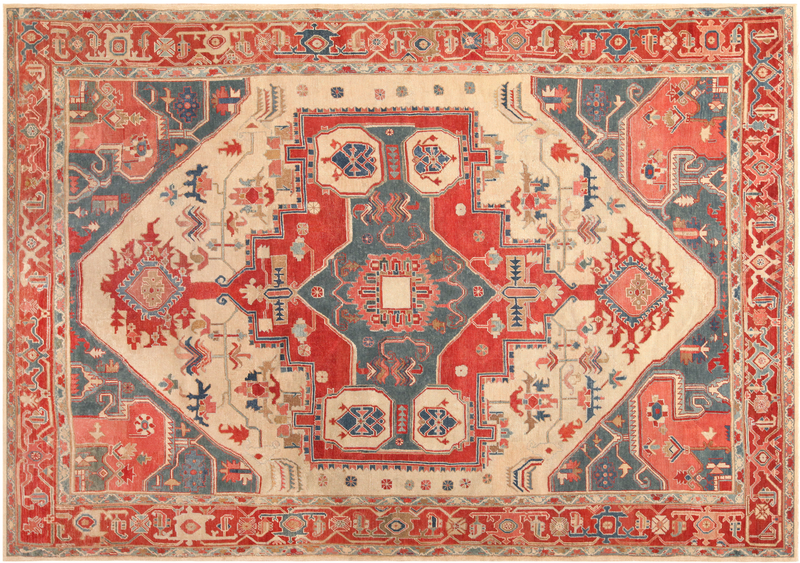
Heriz Serapi rugs carry with them a design language that reflects both their tribal roots and the influence of town weaving traditions. They are often described as geometric, yet they do not follow the rigid precision of city carpets woven on finely calibrated looms. Instead, the patterns reveal the hand of the weaver, where bold medallions, angular leaves, and branching vines emerge with a sense of rhythm that is powerful but never mechanical.
It is in these subtle irregularities that their authenticity shines. A line may bend slightly, a motif may vary in size, or a border may not perfectly align. Far from being flaws, these details are what connect the rug to its maker. Each knot tells us that this was woven by human hands, not machines, and the individuality of those hands has been preserved for us to see and feel. Collectors and scholars often speak of this as the “soul” of tribal and village weaving—the living character that distinguishes an authentic Serapi or Heriz rug from a factory-made carpet.
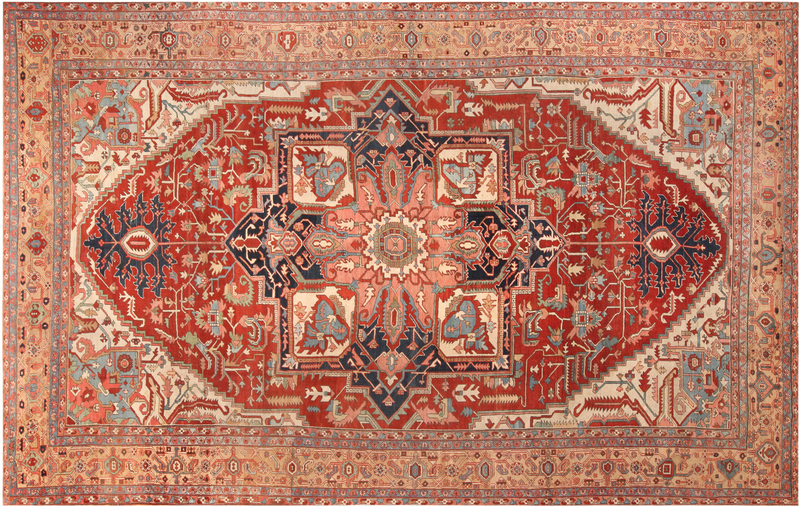
At the same time, the weavers drew upon a shared visual vocabulary. The central medallion is a hallmark, often dramatic in scale, surrounded by angular corner motifs that anchor the field. Layers of stylized blossoms, palmettes, and serrated leaves fill the surrounding spaces, creating a visual energy that commands attention while maintaining balance. This interplay between order and freedom is what makes Heriz Serapi rugs so compelling. They stand at the meeting point between tradition and individuality, between the discipline of town weaving and the spontaneity of tribal art.
The result is a design aesthetic that feels both structured and organic, formal yet personal. It is this tension—between geometry and imperfection—that has captivated those who live with these rugs for generations.
Comparing Serapi, Heriz, and Bakshaish Rugs
Serapi: Refined Elegance
Serapi rugs are the most distinguished of the group. They are known for their spacious layouts, crisp lines, and balanced medallion designs. The drawing feels more controlled than other Heriz-region rugs, yet it never loses warmth. Serapi carpets often reveal a sense of refinement that made them desirable for wealthy buyers in the 19th century.
Heriz: Bold and Striking
Heriz rugs, the broader category, carry powerful geometric patterns. Their medallions are larger, and their motifs stand out with strong contrasts. Compared to Serapi, Heriz rugs are heavier in appearance, with thicker outlines and more saturated colors. These qualities give them a commanding presence that suits large rooms and entryways.
Bakshaish: Rustic and Expressive
Bakshaish rugs are the most rustic branch of this tradition. Their patterns are freer, less concerned with symmetry, and often more experimental. Large-scale motifs may dominate the field, and the spacing between designs feels more relaxed. These carpets echo the spirit of tribal weaving, making them especially appealing to collectors who value originality.
The Shared Heritage
Though different in style, Serapi, Heriz, and Bakshaish rugs share the same regional roots. They were woven with the same durable wool and dyed with the same natural sources. The differences we see today reflect the range of artistic expression within a single community. Together, they form one of the most admired families of Persian rugs.
Colors and Abrash
The Signature Palette
Heriz and Serapi rugs are celebrated for their bold and confident use of color. Deep reds, warm ivory tones, and shades of indigo dominate the palette. These colors were not chosen at random. They reflect the natural dyes available in the region and the taste of the local communities. Over time, the palette became a recognizable hallmark of Heriz weaving.
The Role of Natural Dyes
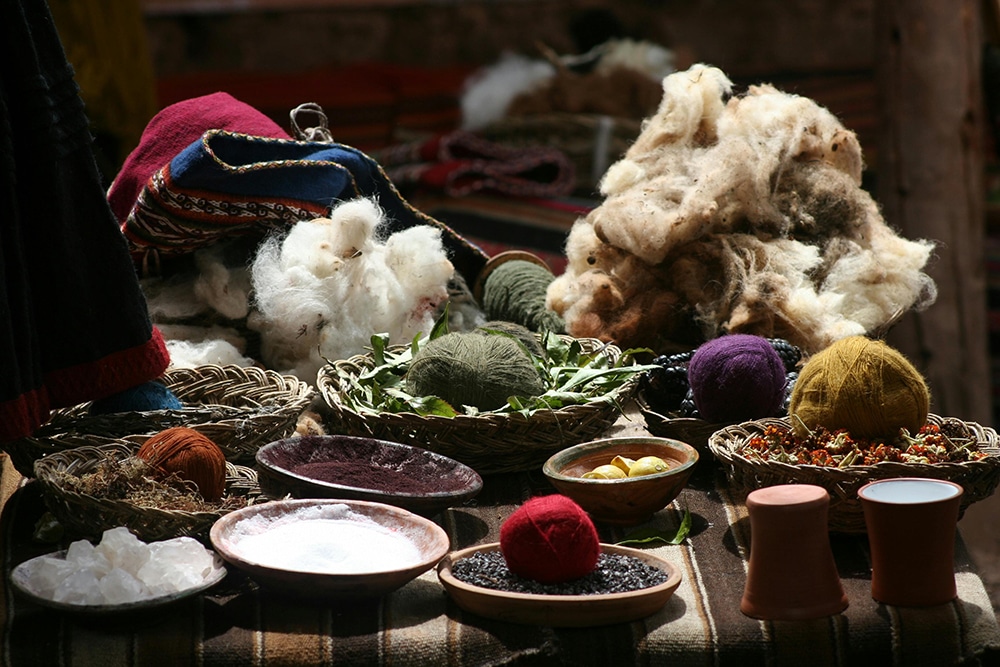
Weavers used plant roots, leaves, and minerals to create their dyes. Madder root produced reds, indigo plants created blues, and walnut husks brought browns. These natural sources gave each rug a depth of tone that synthetic dyes often cannot match. The colors feel alive, shifting slightly as light moves across the surface of the carpet.
Abrash: Beauty in Variation
One of the most admired features of Heriz Serapi rugs is Abrash, the variation in color that appears when different dye lots are used. These shifts occur naturally because no two batches of dye are ever identical. A weaver might start a rug in the spring and continue the work months later. Seasonal changes meant new plants, different water quality, and new batches of dye. As a result, the colors would vary, even within the same field of a rug.
Instead of hiding these changes, the weavers embraced them. Abrash gives the surface of a rug movement and depth, creating subtle bands or layers of tone. It shows that the piece was made by human hands, in harmony with nature and time. For collectors and scholars, Abrash is not a flaw but a mark of authenticity. It connects the rug directly to the rhythm of village life and the seasons of the land.
How Color Shapes Design
The combination of strong outlines and rich hues gives these rugs a unique power. Their palettes provide contrast without overwhelming the eye. Designers and collectors alike value the way these colors anchor a room, making the rugs not just decorative pieces but defining elements of an interior.
Silk Heriz Rugs: Rare and Luxurious
While most Heriz and Serapi rugs are woven with durable wool, there exists a rare group made with silk. These silk Heriz rugs are far less common, often produced in limited numbers for wealthy patrons or special commissions. Their fine weave and luminous surface set them apart, giving the designs an added level of clarity and brilliance.
Silk not only changes the appearance of the rug but also transforms its texture. The pile feels smooth and delicate, creating a sheen that shifts as light touches the surface. Because of the labor required and the cost of materials, silk Heriz rugs are considered luxury pieces. Collectors seek them not only for their rarity but also for the elegance they bring to interiors.
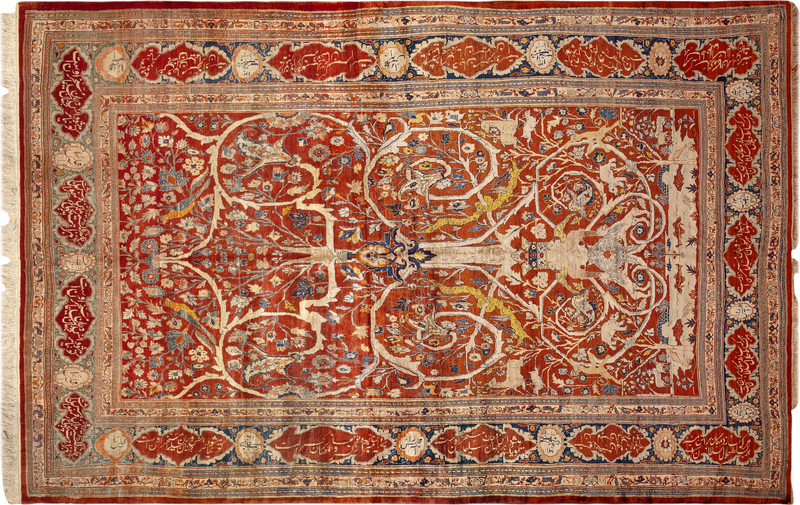
Though unusual, these silk examples remind us of the versatility of the Heriz weaving tradition. From the sturdy woolen carpets designed for everyday use to the refined silk pieces treasured as art, the range of this weaving culture is extraordinary.
Why Collectors and Designers Treasure Them
A Statement in Luxury Interiors
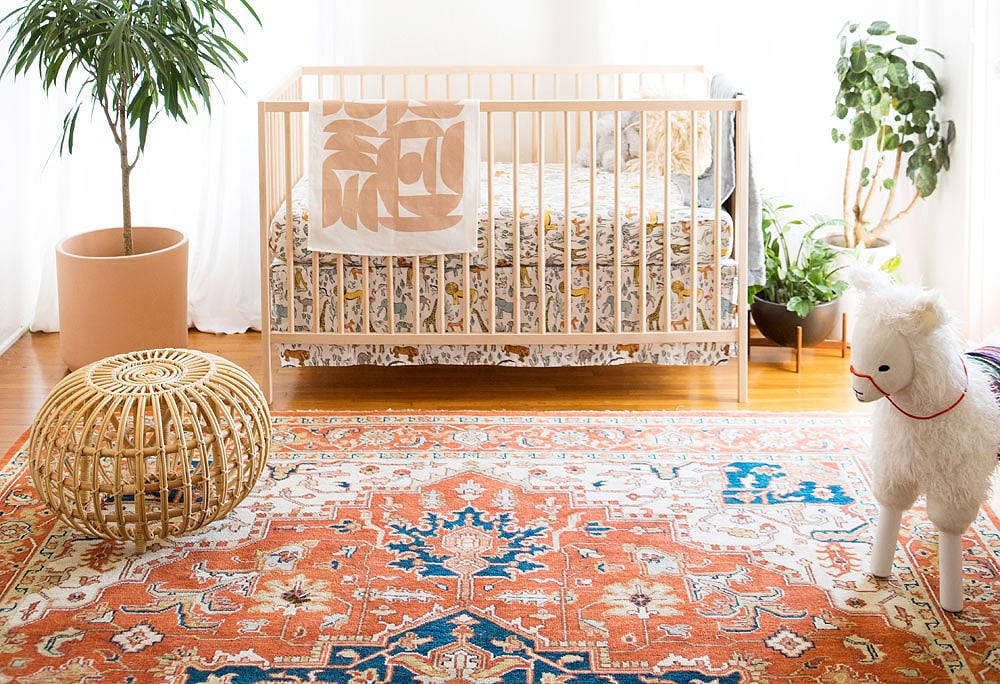
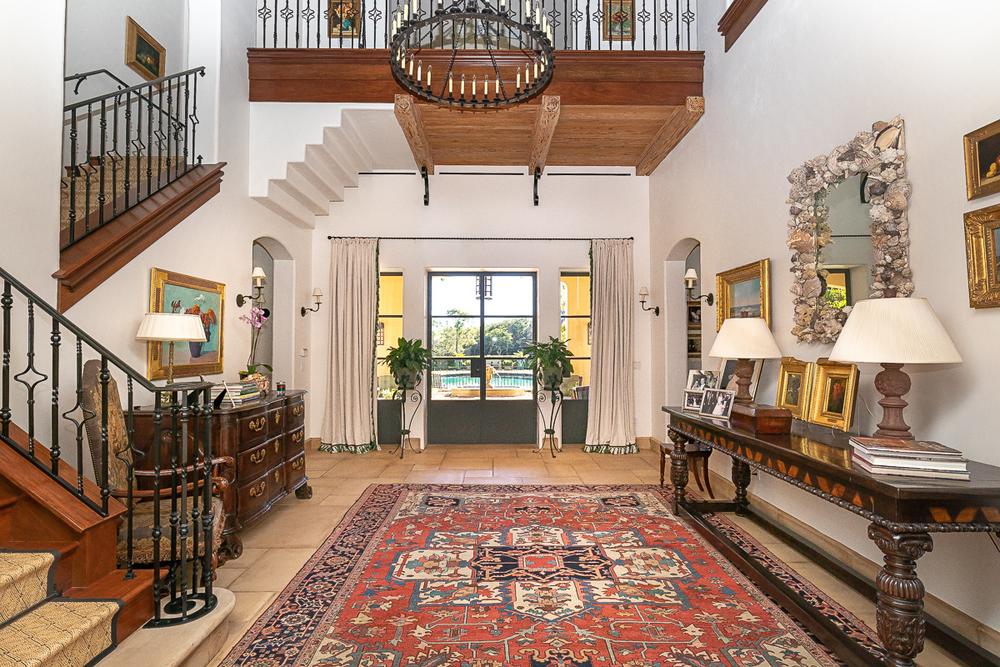
Designers turn to Heriz and Serapi rugs when they need a piece that commands attention. The bold medallions, strong outlines, and rich colors provide a natural focal point in a room. Unlike many decorative elements that fade into the background, these rugs define the space around them. In grand living rooms or modern lofts, they bring warmth, structure, and a sense of history.
Versatility Across Styles
One reason designers love these rugs is their adaptability. The geometric strength works well in contemporary settings, while the rich palette enhances more traditional interiors. A Serapi rug can lie beneath sleek furniture without looking out of place. A Heriz carpet can ground a classical room with equal success. Their ability to bridge design eras makes them especially appealing in luxury projects.
Collectors and Cultural Value
Collectors see more than decoration. They value these rugs as cultural artifacts. Each piece tells the story of a village, a family, and a tradition carried over centuries. Authentic examples from the 19th and early 20th centuries are increasingly rare, which adds to their desirability. The durability of the wool means many of these rugs have survived, but true early Serapi pieces remain scarce and highly sought after.
Investment and Legacy
Beyond beauty, collectors appreciate their staying power. A well-preserved Heriz or Serapi carpet not only retains value but can increase over time. These pieces have already endured generations of use, and they continue to offer both function and artistry. Owning such a rug means holding a link between the past and the present, between craftsmanship and enduring design.
Practical Integration in Modern Spaces
Balancing Function and Beauty
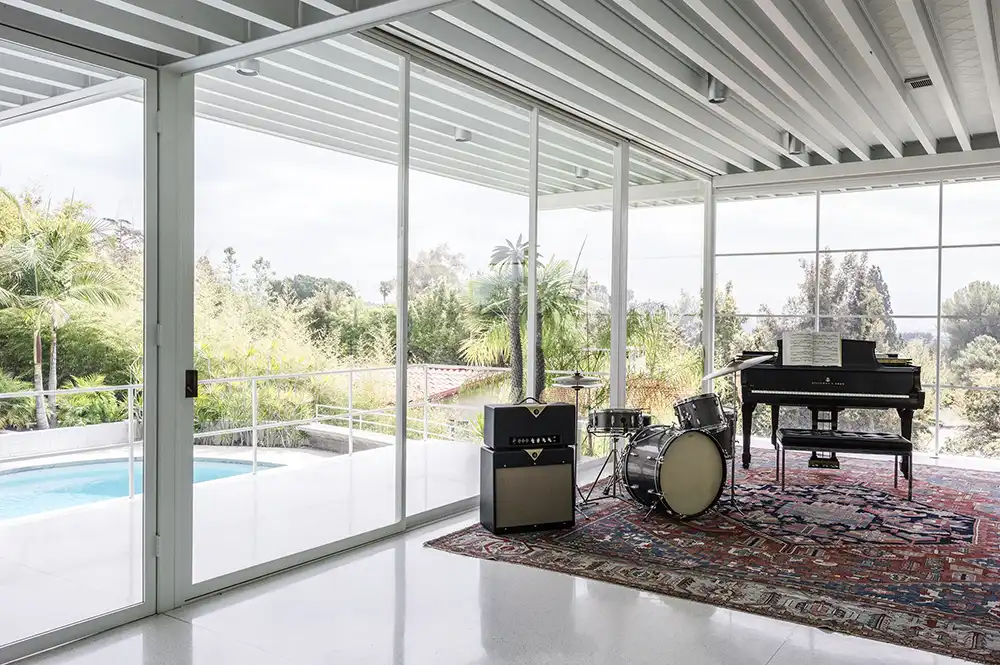
Heriz and Serapi rugs are not only admired in museums or private collections. They are practical pieces that continue to serve in modern homes. Their durability allows them to sit comfortably in busy spaces like family rooms, dining areas, and hallways. Unlike fragile textiles that require careful handling, these rugs invite daily use while still holding their beauty.
Design Flexibility
The bold medallions and rich colors can anchor a room in many different ways. In a contemporary setting, the angular patterns add structure to open floor plans. In a more traditional interior, the warm reds and indigos enhance the richness of wood, stone, and classic furnishings. Designers often place these rugs in modern lofts, pairing them with steel and glass, where the contrast between old and new creates striking results.
Creating Atmosphere
Heriz and Serapi rugs also bring a sense of depth to interiors. Their abrash tones soften bright spaces, while their strong outlines add clarity to more eclectic rooms. A single rug can define an entire seating area or create flow in larger open spaces. Because of their size and presence, they do more than decorate—they shape the mood of a room.
Living with History
Choosing a Heriz or Serapi rug is more than a design decision. It is an invitation to live with a piece of history. The rug carries with it the spirit of its makers, the traditions of a community, and the resilience of natural materials. In modern spaces, this heritage becomes part of daily life, offering both practicality and cultural richness.
The Nazmiyal Collection Difference
A Curated Selection
At Nazmiyal Collection, we take pride in offering one of the most comprehensive selections of antique Heriz, Serapi, and Bakshaish rugs available today. Each piece is chosen with care, not only for its condition but also for its historical and artistic value. Our collection reflects decades of scholarship, expertise, and passion for these extraordinary weavings.
Commitment to Authenticity
Every rug we present has been carefully evaluated by experts who understand both its cultural background and its technical qualities. Authenticity is never compromised. We believe that collectors and designers deserve pieces that carry true heritage, not imitations. This is why we continue to be a trusted source for museums, private collectors, and leading interior designers.
Pieces for Collectors and Designers
Our rugs are not only historic works of art; they are also pieces that integrate beautifully into living spaces. Designers turn to us for carpets that can transform rooms, while collectors come to us for rare examples that complete their collections. Whether it is a bold Serapi with crisp medallions or a rustic Bakshaish with expressive charm, our selection offers something exceptional for every taste.
An Invitation to Explore
We believe that experiencing these rugs in person reveals their true character—the richness of the colors, the depth of the textures, and the power of the designs. We welcome clients to explore the collection and discover why Heriz Serapi rugs remain among the most important and luxurious carpets ever woven. At Nazmiyal, each rug is more than an object; it is a piece of history waiting for its next chapter.
A Legacy That Endures
Heriz and Serapi rugs hold a rare place in the world of antique carpets. They are both works of art and objects of daily life, carrying within them the strength of their materials, the vision of their weavers, and the stories of the communities that created them. From mountain villages to modern penthouses, they continue to inspire admiration and respect.
Their power lies in the balance they strike: strong enough to endure generations of use, yet refined enough to anchor the most luxurious interiors. The variations in color, the bold medallions, and the subtle irregularities remind us that these pieces were made by hand, with patience and artistry, across seasons and lifetimes. To live with a Heriz or Serapi rug is to live with history underfoot, in a form that still feels vibrant today.
At Nazmiyal Collection, we are honored to preserve and share these masterpieces. Each rug is more than a decorative object; it is a bridge between past and present, tradition and innovation. For those who seek beauty with depth and authenticity, Heriz and Serapi rugs remain an unmatched choice.