Both Agra and Amritsar rugs make up distinct weavings from India. Each are known for intricate ornamental embellishments fit for royal courts but hold differing original influences.
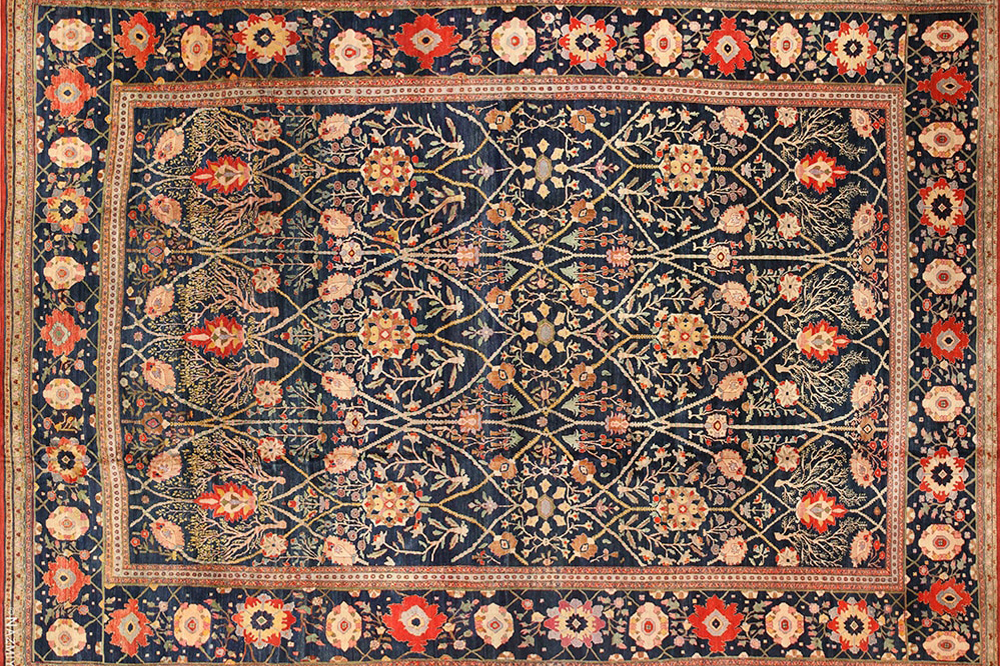
Agra and Amritsar rugs are considered some of the finest antique textiles. Their designs are famously beautiful, with durable constructions able to withstand decades of wear. But what makes them different? When did they originate? And how do these designs hold up today?
Ties to the Mughal Empire
Unsurprisingly, both Agra and Amritsar rugs have ties to the 16th century Mughal Empire. Or, more specifically, Amritsar rugs have ties to Agra rugs and Agra rugs have ties to the Mughal Empire.
The Mughal Empire came to be in 1526 and was a dominating power in the Indian subcontinent for centuries. Though the Mughals were Muslim, they presided over an overwhelmingly Hindu population. They had both interest and respect for other cultures and rather than forcing a conversion to their own beliefs, instead they took a far more diplomatic approach. To keep the peace, instead the Mughals decided on a cultural upheaval, where both Hindu and Islamic conventions were reflected. The blending of design and culture resulted in an interesting era of artwork. This is especially true with the Mughal’s significant Persian influence.
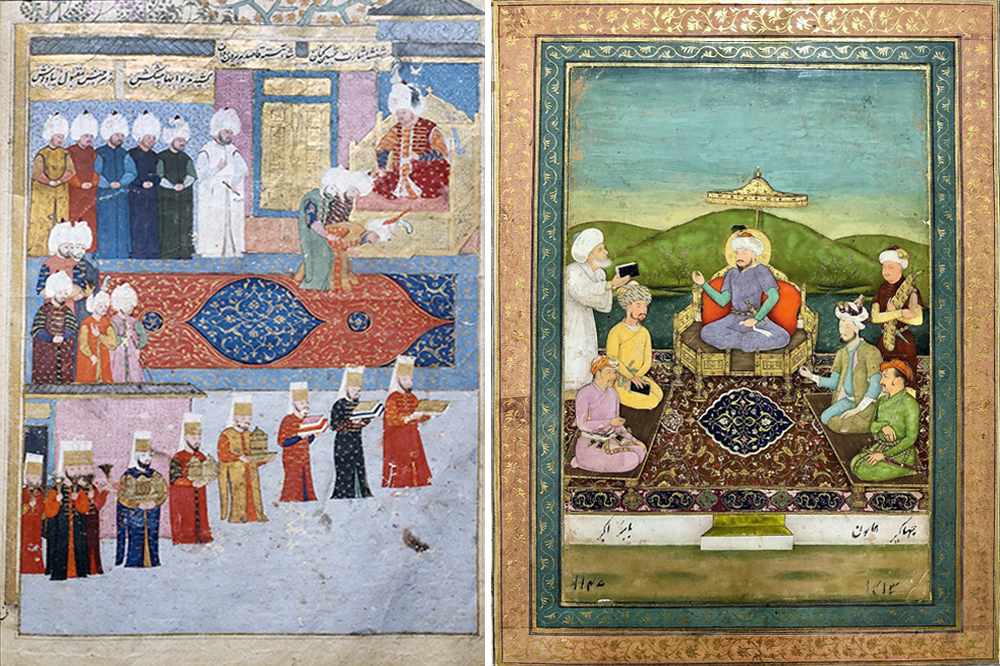
Carpets in particular were a luxurious Mughal product, meant for the royal courts. They differed from other rugs of the same period in their functionality. While most rugs are floor coverings meant to be walked on, that wasn’t the case here. Instead, Mughal rugs were seen as important works of art that functioned instead as furniture. They were intended as a seat of honor for important authority figures.
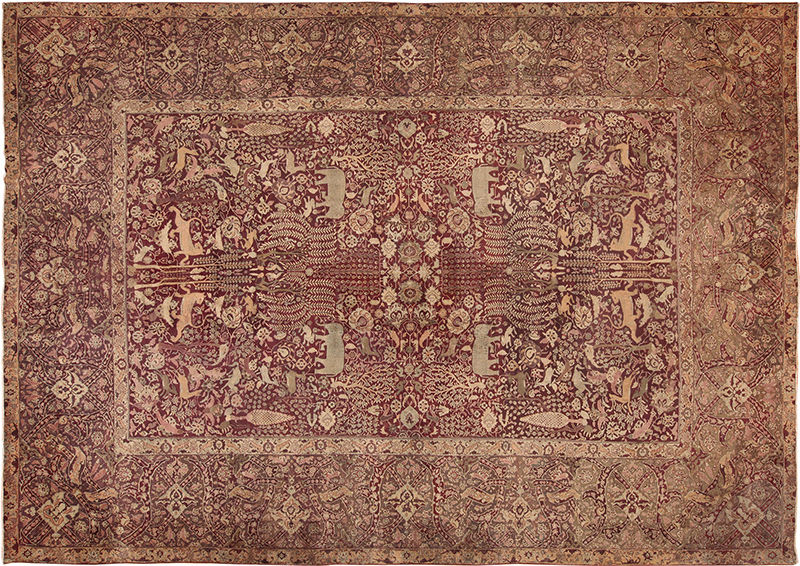
Common design themes seen in rugs and artwork made during the Mughal Empire was the “paradise garden.” Botanical features like arabesques, intricate vines, and millefleur designs were commonly depicted.
Agra Carpets
When a rug is described as an “Agra” weave, it’s a geographic reference as well as a contextual one. Agra is a city in India located along the Yamuna river bank. It was the first capital of the Mughal Empire, and is most famous as the home of the Taj Mahal.
The “Agra” rug became an established design about a century after the establishment of the Mughals. Carpet-work was already a traditional practice, especially with the Safavid Persian influence of the Mughal Empire. Court carpet design was in full swing, and Agra rugs were a progression of that.
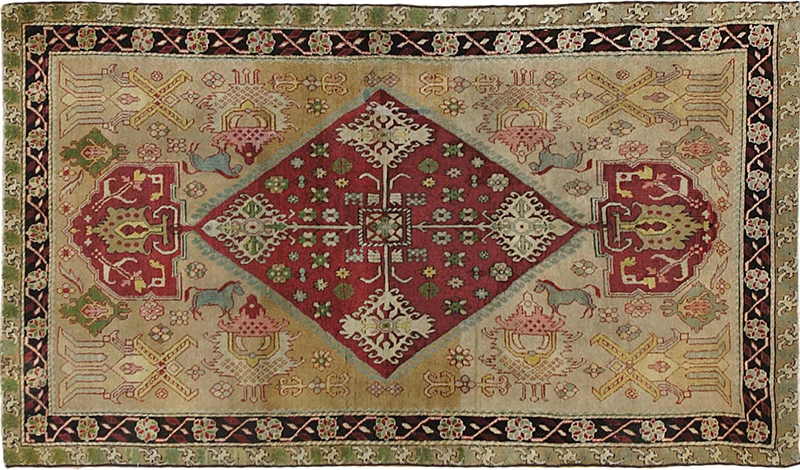
Agra rugs are considered a dense weave with a complex construction. Often a combination of materials are employed to create one of these stunning carpets. This is most commonly in the form of a wool pile infused with cotton and silk threads in asymmetrical knots. They’re incredibly durable, with up to 2,000 KPSI, ensuring both a sturdy foundation and a highly detailed composition.
Agra rugs are predictably influenced by the pictorial and botanical nature of Mughal artwork. This meant plenty of lush foliage, vine patterns, and figures like birds, elements, and even people, were often subject-matter. Despite the vibrant nature of the designs, Agra rugs had more muted color palettes, reflecting traditional arts of the region. Soft yellows, beiges, greens, and burgundies were popularly featured.
Amritsar Rugs
Like the Agra rugs, Amritsar rugs are named for their geographic manufacturing origin. Amritsar is a large city in the Punjab state of India, and home to the largest Sikh gurdwara known as the “Golden Temple.”
Amritsar rugs as a recognized style of Oriental weaving came some time after Agra rugs emerged. In fact, they weren’t popularized until the 19th century, and while that’s certainly nothing to scoff at, they’re a newer weaving as far as antiques go. While the aesthetics of Agra rugs were dictated by historical and cultural context, Amritsar aesthetics developed through trade.
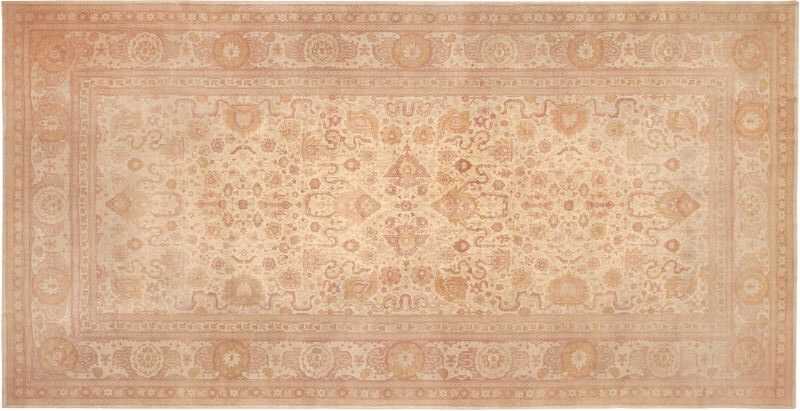
Their designs blend the more traditional elements of South Asian artwork with a distinctly European twist. The rug trade was a highly profitable market and therefore held a lot of sway in determining trends and aesthetics. By this point in time, the western world had a significant customer base, including both Europe and the United States. “Exotic” art was in fashion in western cultural hubs like London due to the British colonization of India. While the exoticism of the designs in foreign artwork was part of the appeal, consumers still preferred familiar forms. So, to keep up with the demand, Amritsar weavings slowly adjusted their designs to fit European sensibilities.
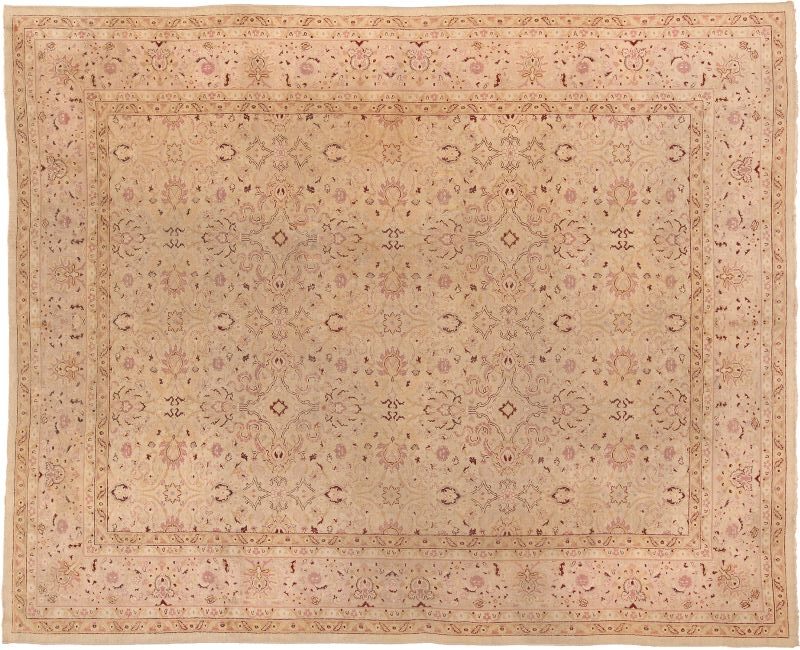
The rug trade played a large role in determining the construction of Amritsar rugs as well as their designs. They were considered luxury goods, sold to wealthy western families and so weavers made sure to use only the highest quality wool and cotton foundations. The knotting employed a double weft technique to ensure a durable structure. As far as designs go, Amritsar carpets held a variety of patterns and palettes, though curvy floral motifs were perhaps the most common.
Final Thoughts
Agra and Amritsar rugs are both considered highly collectable fine weavings from India. Agra rugs are the older of the two, with an aesthetic and practice tracing back to the Mughal Empire during the 1600s. Their rugs showcased an interesting cultural blend of work inspired by Persian conventions as well as local indigenous ones. Agra rugs are durable weaves with complex designs that reflect the natural world. Amritsar rugs, on the other hand, are a fairly newer style among antiques, established in the 19th century. They were influenced by European aesthetics as “exotic” art had become popular among wealthy western consumers.
- Agra and Amritsar rugs are both from India
- The Mughal Empire was influential to Agra rugs in the 1600s
- Agra rugs have durable foundations and natural pictorial designs
- Amritsar rugs became a distinct style in the 19th century
- European aesthetics and the rug trade influenced Amritsar designs
Frequently Asked Questions
Where are “Agra” rugs from?
Agra rugs are from the city of Agra located in northern India.
Where are “Amritsar” rugs from?
Amritsar rugs are from the Punjab region of northern India.
Why does a high knot count impact Agra designs?
A higher knot count ensures a durable foundation and a more detailed design.
How did western ideals shape Amritsar aesthetics?
“Exotic” aesthetics rose in popularity in Europe, resulting in an influx of business from the west. Weavers in Amritsar shifted their designs accordingly.
Are Agra and Amritsar rugs collectible?
Yes, both are highly collectible. Their durable weaves make it so they can withstand decades of wear. Their luxurious nature ensured the use of high quality materials.