Antique rugs are investments and serious purchases, and should be treated as such. This means you should closely assess and question each descriptor provided, so that you can comfortably make the most informed choice. A rug auction catalog is a compressed “identity card” for a rug. It’s up to you to translate its shorthand into real world facts about authenticity, condition, and value.
What an Auction Catalog Tells You and What it Doesn’t
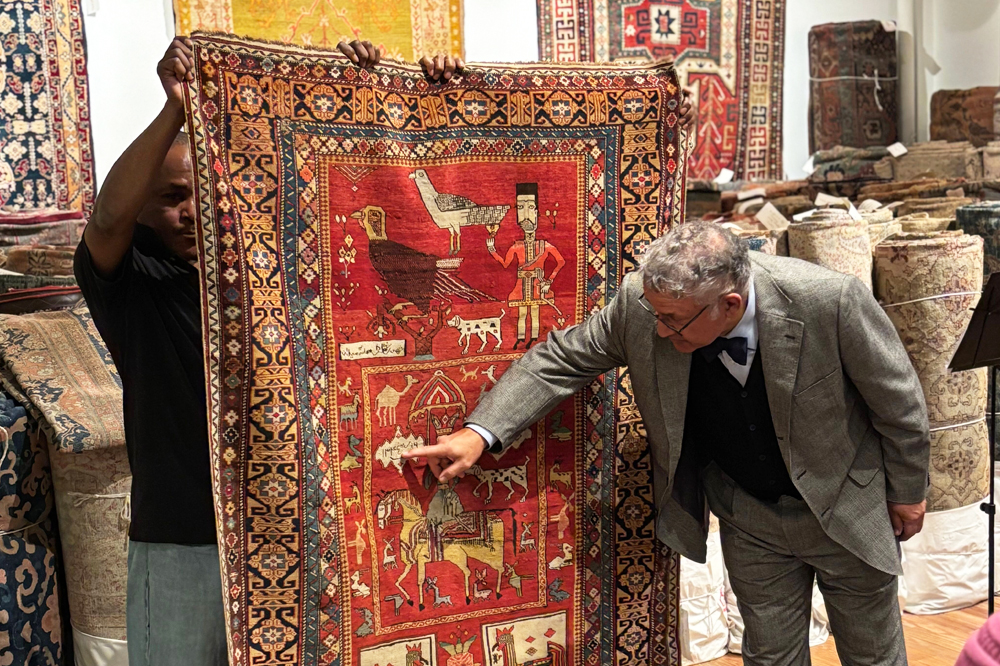
A catalog is great at giving you the very basics of identification. This includes origin, approximate age, materials, size, and a short condition note. However, oftentimes it doesn’t include its full story. Factors like repair history, repair quality, dye behavior, and subtle structural issues are sometimes missing. This is all to say: treat an auction catalog as a starting point, but not the finish line.
If you’re looking to see what qualifies as a true antique, start here.
The Lot Description Decoder
Reading a rug catalog can be intimidating, but it’s an important step before committing to a big purchase. Use this guide on how to read a typical lot description line-by-line.
Origin and Type
Step one focuses on pinpointing the origin of a textile, often using composite regional terms. It’s important to note the amount of subgroups within one “origin.” For example, a Persian rug may not just be Persian, instead labeled as “Persian Kashan.” A Turkish rug might be labeled “Turkish Oushak.” The specificity helps to better contextualize a piece, and while the label changes rug-to-rug, the order is always the same: origin followed by type. Both are important identifiers.
- Origin – informs the tradition and baseline expectations such as materials, palette, and structure.
- Type – varies in precision and must be carefully assessed. If the label is broad, ask “what makes you call it that?”
For more information on regional terms, explore the Rug Glossary.
Period and Age
While the origin label localizes a piece, the period places it within a timeframe. Understanding the when is arguably of equal importance to the where. Different time periods see the rise and fall of trends in design and material, especially when taking globalization and trade into account. With items such as antique rugs, specific creation dates are hard to come by. Hand-made textile productions on a large scale took months, or sometimes years to complete. Instead, approximations are made, focusing on centuries and trying to get as close to the production year as possible. Labels like “Late 19th century” or “circa 1900” are common.
- Circa – approximate
- 20th Century – when faced with a label as broad as this, ask where they’d place it within the century and why.
If age is central to value, cross-check with structure and dye behavior or get an expert opinion.
Materials
Understanding the materials used in weaving is important to determining how fine a piece is. Antique textiles are all made of natural fibers, but there wasn’t just one type of natural fiber available back then. In fact, there was a wide variety of options that ancient weavers could choose from. Not all fibers were easy to come by, though. Regional difference, utility, and the size of the commission behind the weave were all deciding factors in which material was used. The most common material is wool, popular for its warmth, durability, and lustrous sheen. Silk was considered a finer material often used for detailing in rugs. Sometimes different materials were used in tandem, making up one textile. For example, a rug may be labeled “wool pile on cotton foundation” or “silk highlights.”
- “Silk” can mean silk pile, silk foundation, or silk accents. Clarify which.
- Materials matter, but how they’re spun and used matters more.
Size
The size of an antique rug was determined by environment and circumstance, making scale a contextualizing detail. Smaller rugs are often nomadic tribal productions, scaled down due to the size and portable nature of their looms. Oversized rugs were usually commissioned by the wealthy, made to fit palace spaces and royal courts. Prayer rugs are sized according to their use, meant as personal items. Make sure to confirm whether measurements provided include the rug fringe or not.
Condition
While catalogs often compress a rug’s condition into a single sentence, that isn’t enough. Always ask for a full condition report along with photos to fully assess the scope of the rug’s quality.
Pay Attention to Condition Language
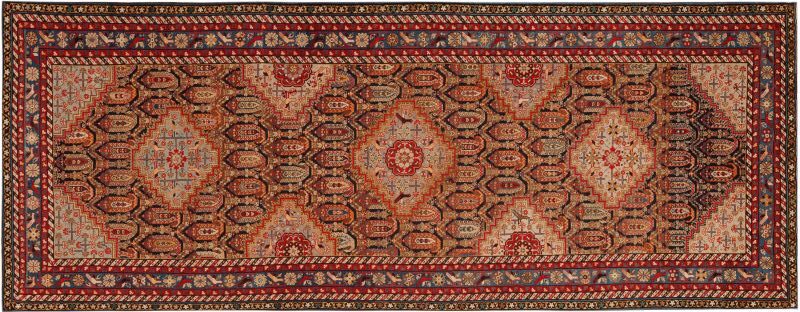
Catalogs are meant to be quick and concise. While this is efficient and ideal for quick assessments, be sure to follow up when seriously considering pieces. Ensure an accurate account of a rug’s condition by looking closer at the following phrases.
“Good condition for age”
Translation: “There are issues but we think they’re acceptable.” Ask: What issues, exactly? Where? How extensive?
“Areas of wear”
Use of the term “wear” can mean anywhere between gentle surface wear to full pile loss down to foundation. Ask: Is the foundation exposed anywhere? Any weak areas?
“Minor repairs” or “Old repairs”
This can range from expert conservation to messy patchwork. Ask: Are Repairs visible from the front? Are they structural or cosmetic? Any repiling?
“Rewoven ends” or “Secured sides”
This is common and sometimes necessary, so it isn’t alarming to see. The question is the quality of the re-weaving or secured sides. Ask: Are the ends/sides the original length? Any reduction?
If you’re unsure, request help. Rug Appraisal Services can be used as a reality-check before you commit. It’s better to be unsure and ask than to be unsure and make a mistake in committing.
Provenance, Attributions, and What Actually Counts
When looking to purchase an antique or expand a collection, always check the provenance. A rug’s provenance is an amalgamation of credibility, made up of collected documentation and records.
A rug provenance includes:
- Receipts
- Old appraisals
- Old labels
- Collection history
- Descriptions
For a more in depth explanation on rug provenance and how to read one, take a look at Reading a Rug Provenance.
Estimate, Reserve, and Buyer’s Premium (The Real Math)
When looking to buy, keep in mind the estimated price won’t be the full amount you spend. Take a beat, itemize expenses, and do the math. If applicable, remember to take into account factors such as shipping costs, insurance, and tax. If you’re acquiring a rug through an auction, take the hammer price and buyer’s premium into account. Be sure to clarify if there’s a reserve, additional fees for credit card payments, and if there’s a return policy you should know about.
For a safer buying experience outside of the auction format, review our Nazmiyal Purchase Policy.
Pre-Bid Checklist
Copy this into your notes before you bid:
Full front photo (straight-on, not angled)
Full back photo (in focus)
Corner close-ups (all four)
Side/selvedge close-ups (both long sides)
End/fringe close-ups (both ends)
Any damage close-ups (tears, holes, stains, wear)
Confirm measurements (and whether the fringe is included)
Condition report: list every repair and its location
Confirm materials (pile vs foundation)
Confirm return terms (most auctions: limited or none)
Calculate buyer’s premium + shipping before bidding
Why Trust Nazmiyal
The Nazmiyal approach is built on three foundational pillars that guide every decision, from acquisition to expertise to client trust: deep scholarly knowledge developed through decades of hands-on experience, rigorous standards of authenticity and transparent valuation, and a globally curated collection shaped by historical depth, cultural understanding, and market insight.
Frequently Asked Questions
Do I need a condition report if the catalog says “good condition”?
Yes. “Good condition” can still include repairs, wear, or reductions. The condition report tells you what’s actually there.
What matters more, age or condition?
Both. Age supports rarity and historical interest; condition affects longevity, display, and resale. The right balance depends on your goal.
Is a high estimate a guarantee of quality?
No. Estimates are guidance, not certification. Always verify condition and authenticity.