
Persian Rugs
Discover The Distinctive Beauty Of Antique & Vintage Rugs From Persia
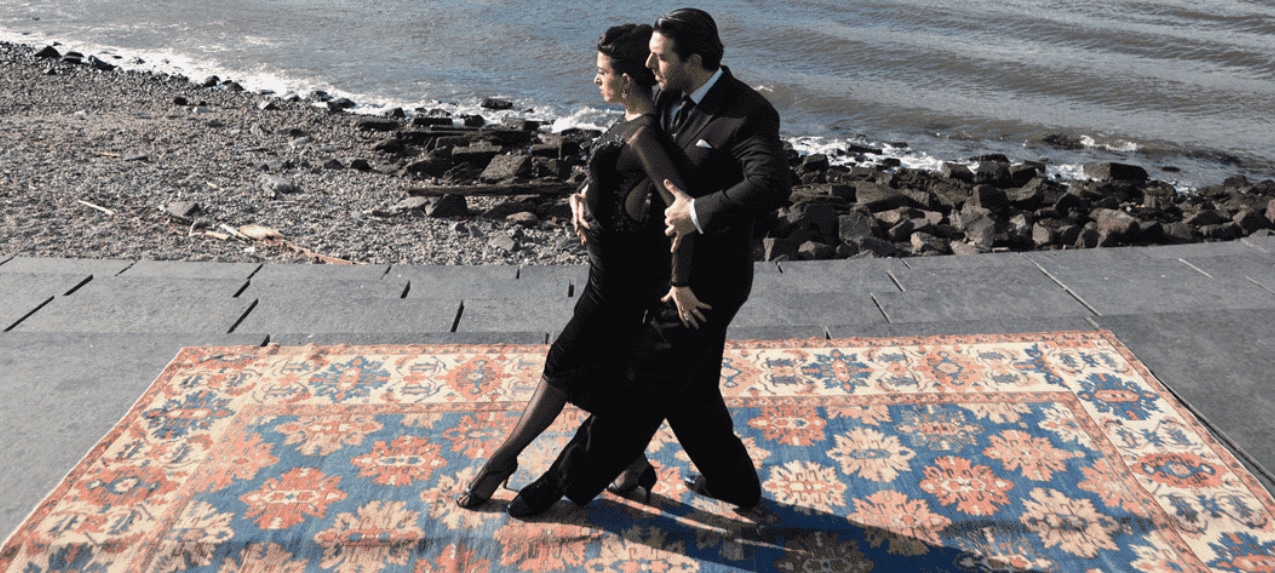
Shop our beautiful collection of fine antique and vintage Persian area rugs:
-
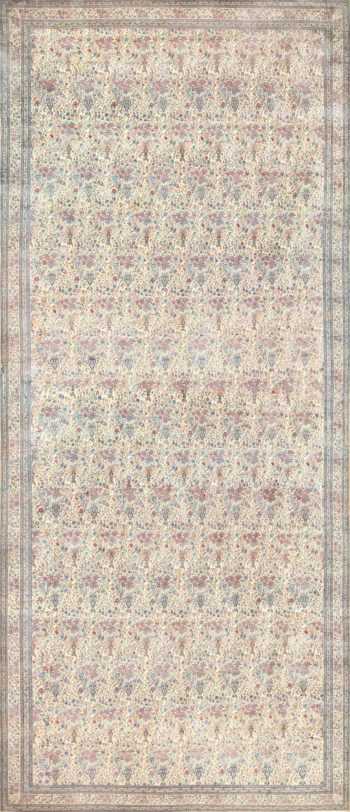

Fine Ivory Floral Palace Oversized Antique Allover Oriental Persian Kerman Rug 48370
$140,000.00Size: 19 ft 7 in x 41 ft (5.97 m x 12.5 m) -
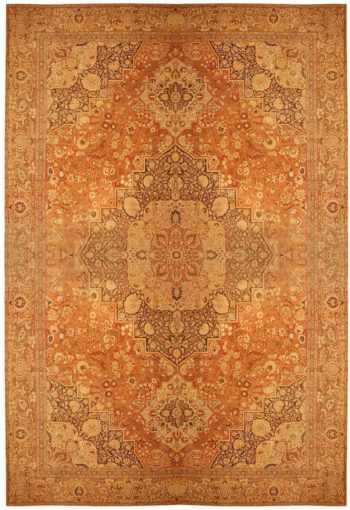

Oversized Antique Persian Tabriz Haji Jalili Carpet 41353
Size: 21 ft 2 in x 32 ft 3 in (6.45 m x 9.83 m) -
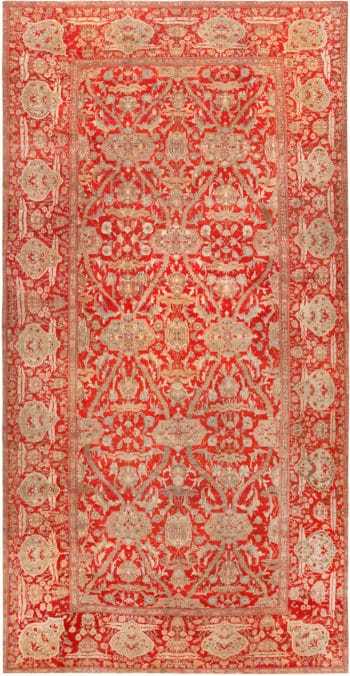

Impressive Oversized Antique Persian Ziegler Sultanabad Rug 72255
$185,000.00Size: 16 ft 3 in x 32 ft (4.95 m x 9.75 m) -
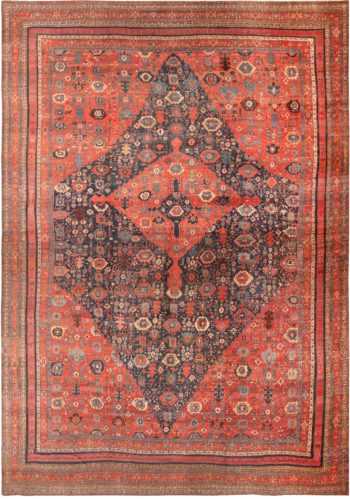

Durable Rustic Palace Size Antique Tribal Persian Bidjar Rug 71773
$145,000.00Size: 19 ft 5 in x 31 ft 3 in (5.92 m x 9.52 m) -
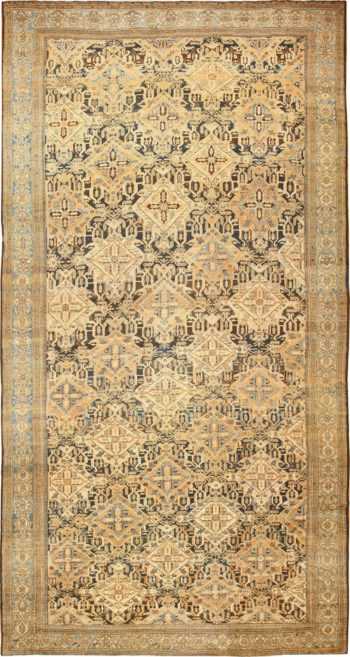

Tribal Antique Oversized Persian Bakhtiari Geometric Rug 48042
$96,000.00Size: 15 ft x 30 ft (4.57 m x 9.14 m) -
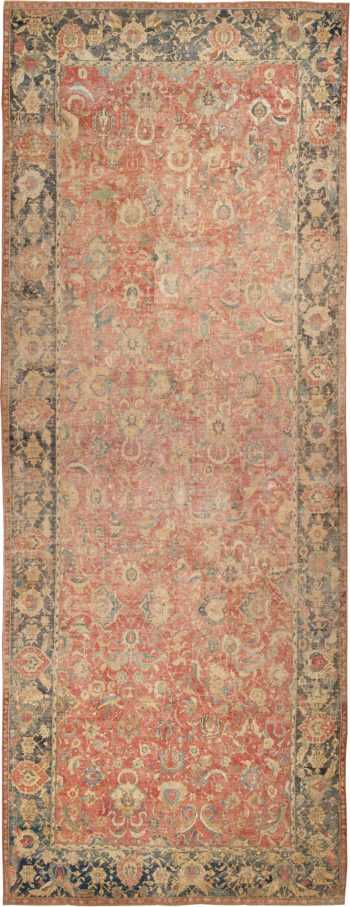

Oversized Antique 17th Century Persian Esfahan Oriental Rug 44143
$285,000.00Size: 11 ft 4 in x 30 ft (3.45 m x 9.14 m) -
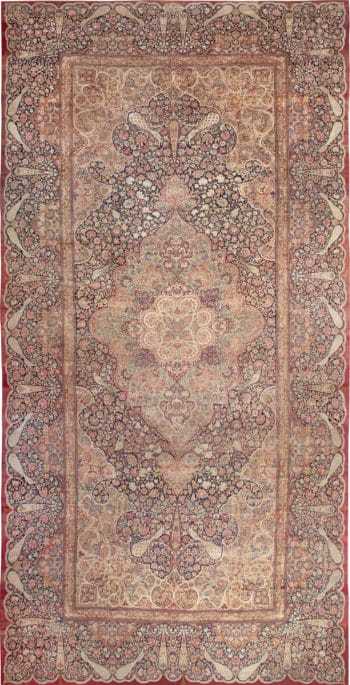

Fine Oversized Floral Animal Design Antique Persian Kerman Rug 72499
$88,000.00Size: 14 ft 3 in x 29 ft 8 in (4.34 m x 9.04 m) -
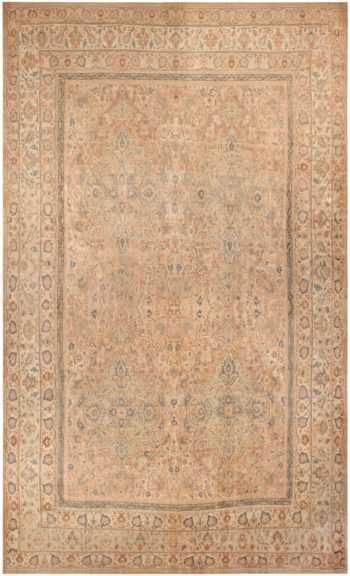

Beautiful Oversized Fine Decorative Antique Casual Elegant Persian Khorassan Rug 71956
$148,000.00Size: 18 ft 1 in x 29 ft 1 in (5.51 m x 8.86 m) -
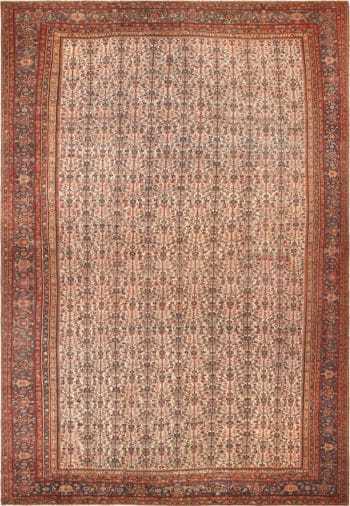

Ivory Background Allover Design Oversized Antique Persian Farahan Rug 72238
$45,000.00Size: 18 ft x 28 ft 10 in (5.49 m x 8.79 m) -
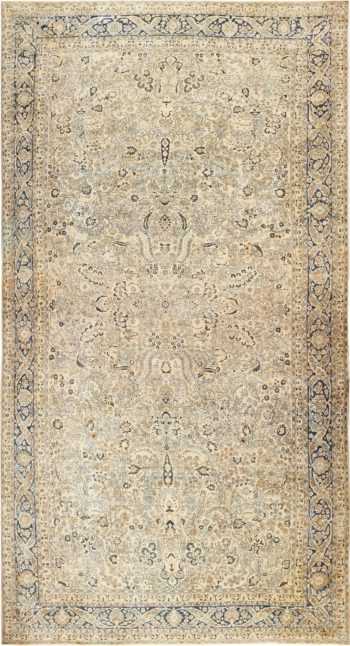

Decorative Antique Oversized Persian Khorassan Rug 48825
$89,000.00Size: 14 ft 4 in x 28 ft (4.37 m x 8.53 m) -
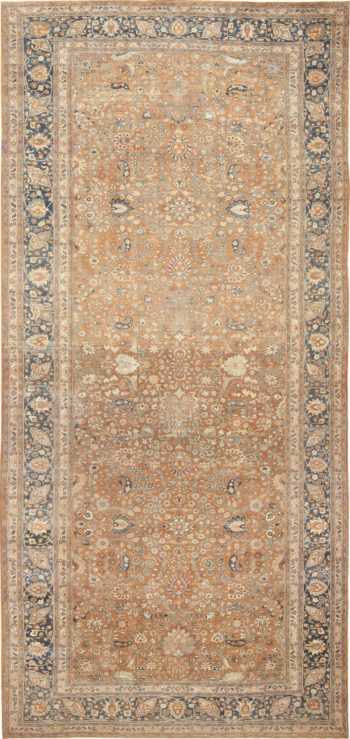

Large Oversize Antique Persian Khorassan Carpet 47032
$96,000.00Size: 12 ft x 28 ft (3.66 m x 8.53 m) -
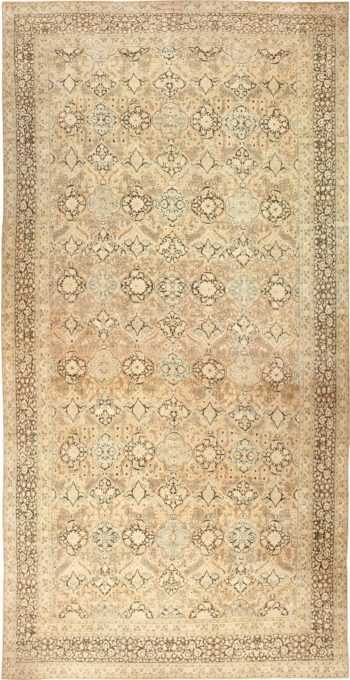

Large Oversized Antique Decorative Brown Earth Tone Fine Floral Persian Khorassan Rug 48922
$88,000.00Size: 13 ft 4 in x 27 ft 4 in (4.06 m x 8.33 m) -
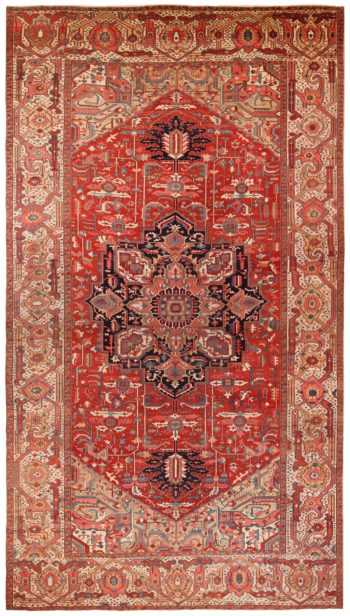

Oversized Antique Persian Heriz Serapi Rug 70433
$175,000.00Size: 15 ft 4 in x 26 ft 8 in (4.67 m x 8.13 m) -
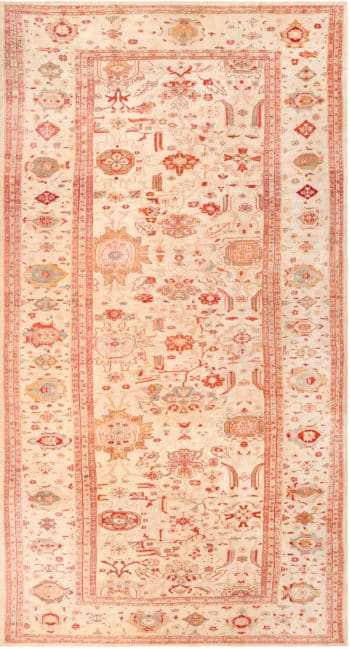

Oversized Luxurious Ivory Antique Persian Ziegler Sultanabad Rug 72353
$265,000.00Size: 14 ft x 26 ft (4.27 m x 7.92 m) -
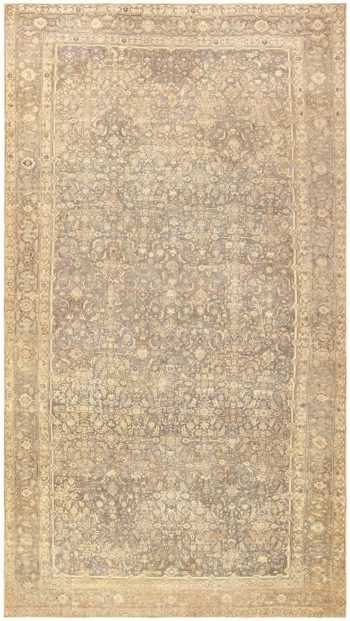

Soft Grey Antique Decorative Herati Design Oversized Persian Malayer Carpet 46139
$88,000.00Size: 13 ft 6 in x 25 ft 9 in (4.11 m x 7.85 m) -
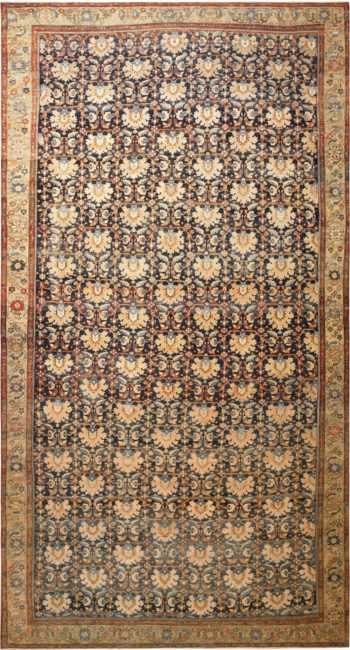

Large Scale Tribal Oversized Blue Antique Persian Malayer Rug 71133
$135,000.00Size: 13 ft 9 in x 25 ft 7 in (4.19 m x 7.8 m) -
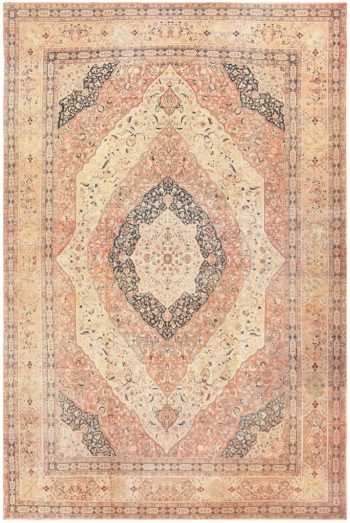

Floral Fine Antique Oversized Persian Medallion Tabriz Haji Jalili Carpet 50262
$165,000.00Size: 16 ft x 25 ft 4 in (4.88 m x 7.72 m) -
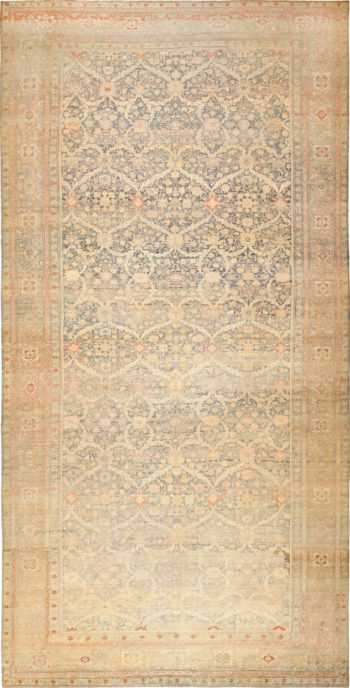

Oversized Pale Blue Allover Design Antique Persian Sultanabad Abrash Rug 49076
$88,000.00Size: 13 ft x 25 ft (3.96 m x 7.62 m) -
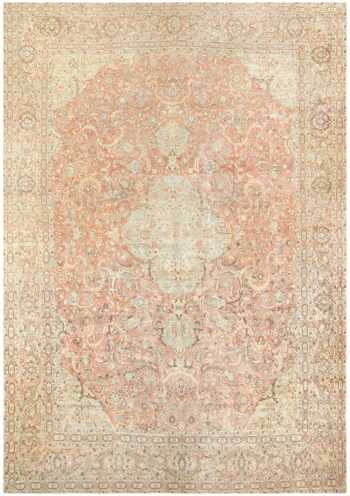

Fine Floral Palace Size Antique Persian Tabriz Medallion Carpet 50111
$96,000.00Size: 18 ft x 25 ft (5.49 m x 7.62 m) -
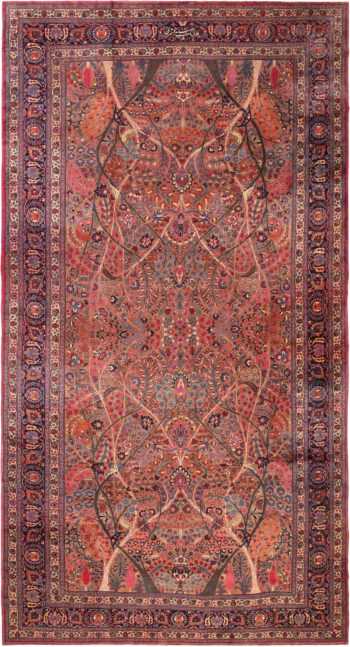

Fine Floral Tree Of Life Oversized Antique Persian Vase Design Khorassan Garden Rug 71842
$88,000.00Size: 12 ft 10 in x 24 ft 9 in (3.91 m x 7.54 m) -
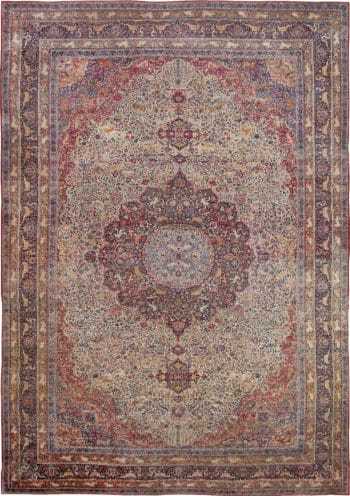
Fine Floral Animal Design Antique Oversized Persian Tabriz Rug 72518
$89,000.00Size: 17 ft x 24 ft 7 in (5.18 m x 7.49 m) -
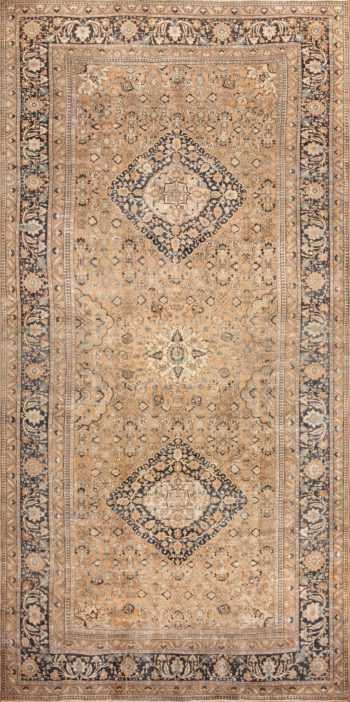

Decorative Brown Earth Tone Large Oversized Allover Antique Elegant Persian Khorassan Rug 50664
$65,000.00Size: 12 ft 4 in x 24 ft 6 in (3.76 m x 7.47 m) -
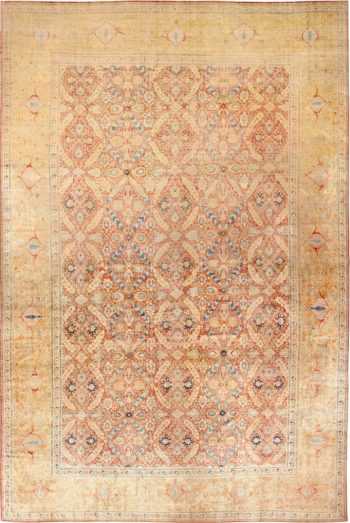
Oversized Antique Persian Silk Tabriz Haji Jalili Rug 48981
$320,000.00Size: 15 ft 8 in x 24 ft 6 in (4.78 m x 7.47 m) -
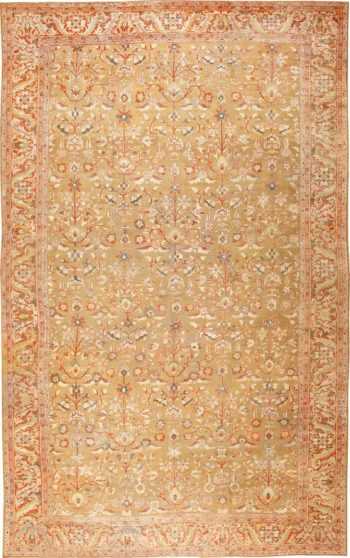

Large Casual Oversized Green Antique Persian Sultanabad Rug 48944
$82,000.00Size: 15 ft x 24 ft 6 in (4.57 m x 7.47 m)
Welcome To The World Of Persian Rugs
Entering the world of genuine Persian rugs is a unique journey. Exploring this world reveals hidden histories and ancient traditions passed down for thousands of years and transported across cultures. In the antique Persian rug world, the mundane becomes the mysterious: flowers and geometric figures are imbued with deep symbolism, and colors and shape carry deep meaning.
What Are Antique Persian Rugs?
The term “Persian Rugs” refers to those rugs that were made in modern day Iran. For a Persian rug to be classified as “antique” it would need to be at least 80 years old.
Are Persian and Iranian Rugs The Same Thing?
Yes, when talking about rugs, the terms “Iranian” and “Persian” are practically interchangeable.
What is the difference between a Persian rug and an Oriental rug?
In rugs, the term “Oriental” refers to the location where the rug was woven, in this case it means Asia. So, in a nutshell, all the rugs woven in what is the modern day country of Iran are also Oriental rugs. That said, not all Oriental rugs are Persian as many were woven in other places outside of Persia.
Why do people shop for Persian rugs specifically?
People often choose to shop for Persian rugs for several reasons, including:
- Artistic and Craftsmanship Value: Persian carpets are renowned for their intricate designs, high-quality craftsmanship, and artistic value. The rich history and cultural significance of Persian rug-making contribute to their appeal.
- Unique Designs and Patterns: The carpets from Persia come in a wide variety of unique designs and patterns that reflect the cultural and regional diversity of Iran. Each rug may tell a story and showcase the artistic traditions of the area in which it was made.
- Quality Materials: Rugs women in Persia are often made from high-quality materials such as silk, wool, or a combination of both. The use of natural materials and traditional weaving techniques contributes to their durability and longevity.
- Investment Value: Some people see Iranian carpets as an investment due to their potential to appreciate in value over time. Antique or especially rare and fine Persian area rugs, in particular, can become valuable collectors’ items.
- Cultural and Historical Significance: The rugs from Persia are a symbol of Persian culture and history. They may be chosen by individuals who appreciate and want to celebrate the rich heritage and traditions associated with these rugs.
- Luxurious Aesthetics: The luxurious and elegant appearance of Persian rugs can enhance the aesthetic appeal of a space. Many people choose these rugs as a statement piece to add a touch of opulence to their homes or offices.
- Traditional and Timeless Appeal: The area rugs from Persia have a timeless quality that transcends trends. They are often chosen for their classic and traditional appeal, making them suitable for various interior design styles.
- Handmade and Authentic: An “authentic Persian rug” is handmade, and the craftsmanship involved is highly valued. The labor-intensive process of weaving each rug by hand adds to their authenticity and charm.
It’s important to note that the reasons for choosing area rugs from Persia can vary among individuals, and personal preferences, cultural appreciation, and aesthetic tastes play a significant role in the decision to purchase these rug.
Who buys Persian rugs?
Persian rugs are purchased by a diverse range of individuals and entities.
Here are some categories of buyers who are commonly interested in acquiring Persian rugs:
- Art and Antique Collectors: Individuals with an interest in art and antiques often appreciate Persian carpets for their historical significance, craftsmanship, and unique designs. Antique Persian rugs, in particular, can be sought after by collectors.
- Interior Designers: Professional interior designers often recommend and incorporate rugs from Persia into their designs. The versatility of these area rugs in terms of design, color, and size makes them suitable for a wide range of interior styles.
- Homeowners and Decorators: Individuals who appreciate luxury, elegance, and classic design may choose Persian carpets to enhance the aesthetics of their homes. These magnificent area rugs can serve as focal points in living spaces and contribute to a sense of warmth and sophistication.
- Investors: Some buyers view Persian carpets as investments. Antique or rare Persian rugs, in particular, may appreciate in value over time, making them attractive to those looking for tangible assets.
- Connoisseurs of Handcrafted Items: The craftsmanship involved in making and weaving the rugs from Persia is a significant draw for those who appreciate handmade, artisanal products. The attention to detail and traditional weaving techniques contribute to the appeal for connoisseurs.
- Luxury Homeowners and Collectors: Carpets from Persia are often associated with luxury and opulence. Individuals who seek to create a luxurious ambiance in their homes or private collections may opt for Iranian area rugs.
- Cultural Enthusiasts: People with an interest in Persian culture and history may purchase Persian carpets and rugs as a way to connect with the cultural heritage of Iran. The designs and motifs on the rugs often carry cultural and symbolic meanings.
- Hotels and Businesses: Upscale hotels, resorts, and businesses with a focus on creating a sophisticated atmosphere may invest in Persian made area rugs to enhance their interior decor. These rugs can contribute to a sense of luxury and provide a unique ambiance.
It’s important to note that the reasons for buying Persian rugs can vary widely among individuals and entities. While some buyers may be drawn to the cultural and historical aspects of the rugs, others may prioritize the aesthetic and investment value. The global popularity of Persian art level rugs ensures a diverse market with a broad range of buyers.
Do Persian rugs go out of style?
Persian rugs are often considered timeless and classical, making them less prone to going out of style compared to some contemporary trends.
Here are a few reasons why Persian rugs tend to maintain their appeal over time:
- Classic Designs: The older Iranian rugs typically feature classic and traditional designs that have been passed down through generations. These timeless patterns, often inspired by historical and cultural motifs, contribute to their enduring popularity.
- Cultural Significance: Persian carpets carry cultural significance and are deeply rooted in the history and traditions of the regions where they are produced. This cultural connection adds a level of authenticity that transcends changing design trends.
- Handcrafted Quality: Authentic Persian carpets are handmade using traditional weaving techniques. The craftsmanship and attention to detail involved in their production contribute to their enduring quality. Handmade items often have a lasting appeal that machine-made products may lack.
- Natural Materials: The area rugs woven in Persia are often crafted from high-quality natural materials such as wool or silk. The use of these materials not only enhances the durability of the rugs but also aligns with the preference for sustainable and eco-friendly choices, which is a consideration that can withstand changing design trends.
- Collectible Value: Certain Persian carpets, especially antique or rare pieces, can have collectible value. This perception of value can make them desirable across generations and contribute to their continued popularity.
While Persian rugs may not go out of style in the same way as some contemporary design trends, individual preferences can vary. Some people may prefer more modern or minimalistic styles, and their choices may influence the overall perception of what is currently fashionable.
However, rugs that originated in modern day Iran often find a place in diverse interior design styles and continue to be sought after for their beauty, craftsmanship, and cultural significance.
Why are Persian rugs so iconic?
Persian rugs are considered iconic for several reasons, encompassing their rich history, cultural significance, intricate craftsmanship, and aesthetic appeal.
Here are key factors contributing to the iconic status of Persian rugs:
- Historical Heritage: These area rugs have a long and storied history dating back thousands of years. The art of rug-making in Persia (modern-day Iran) has been passed down through generations, creating a deep historical connection and making these rugs representative of a rich cultural heritage.
- Cultural Symbolism: The Iranian rugs often feature intricate designs and patterns that carry cultural and symbolic meanings. These motifs may represent aspects of nature, mythology, or historical events, adding layers of significance to the rugs.
- Craftsmanship: Authentic Persian carpets are handwoven by skilled artisans using traditional techniques. The level of craftsmanship involved in creating each rug is considered an art form. The meticulous process contributes to the uniqueness and quality of each piece.
- Variety of Designs: Persian carpets come in a wide variety of designs and patterns, reflecting the diversity of regions within Iran. From geometric patterns to floral motifs, the versatility in design allows individuals to find rugs that suit their personal preferences and complement different interior styles.
- Quality Materials: Persian carpets are often made from high-quality materials such as wool, silk, or a combination of both. The use of natural fibers enhances the durability, texture, and sheen of the rugs.
- Timelessness: The classic and timeless designs of these beautiful rugs make them adaptable to various design trends. Unlike some contemporary styles that may go in and out of fashion, Persian rugs have a enduring aesthetic that transcends time.
- Global Appreciation: Persian carpets have gained international acclaim and are sought after by collectors, interior designers, and individuals around the world. This global appreciation has contributed to their iconic status as a symbol of luxury and sophistication.
- Investment Value: Some facinating carpets from Persia, especially antique or rare pieces, are considered valuable investments. The potential for these rugs to appreciate in value over time adds to their allure and contributes to their iconic status.
In summary, the iconic status of Persian rugs is rooted in their historical significance, cultural symbolism, exceptional craftsmanship, and timeless beauty. These factors collectively make these specific area rugs not just floor coverings but also pieces of art that resonate with people across different cultures and generations.
What Are Some Of The Patterns and Designs That We Can Expect To See In Persian Rugs?
According to ancient traditions and beliefs, geometric figures and symbolic motifs protect the Persian rug’s owner from evil and misfortune. In the case of tribal Persian rug designs, such as geometric animals, people, and everyday objects, antique hand made Persian rugs are a classic example of art imitating life and life imitating art, as the design-rich repertoire of Persian rug weavers continues to inspire artists and designers the world over.
With innumerable Persian designs and traditions developed and maintained by weavers in any one city or cultural group, limitless permutations are possible when regional designs and minute variations in techniques and materials are melded together. The antique Oriental rugs that were woven prior to the 1920’s, from Persia, represent an unfathomable range of rug patterns and styles with an enormous breadth of influence from semi-nomadic tribes to imperial weaving traditions established by the Safavid and Mughal empires.
The international trade of traditional Oriental carpets and area rugs from Persia established thousands of years ago has resulted in a fascinating interchange of designs between East and West. Although antique rugs are one-of-a-kind works of art and luxury design pieces that make a house feel like a comfortable home, each Persian carpet also contains its own story. Each Persian rug completes the intricate history of all rugs woven before and since.
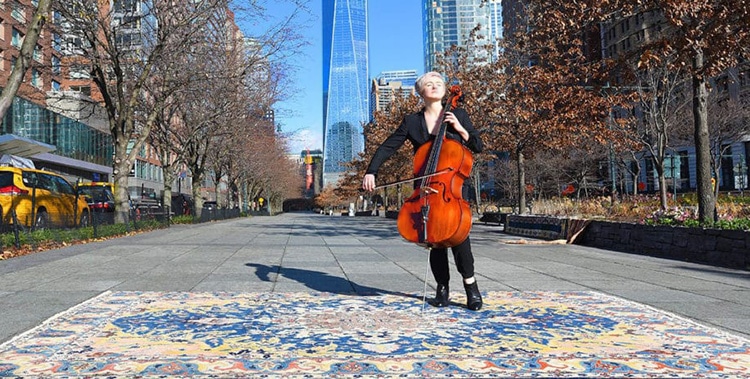
Discover The Beauty of Persian Rugs
Decorating Your Home With Persian Rugs
In terms of universal decorative appeal, authentic Persian rugs, as far as their visual impact in home design, are unbeatable. These remarkable show rugs and carpets have a timeless, classical elegance that’s right at home in Western interiors. For centuries, these magnificent hand woven rugs with their elaborate patterns have been the gold standard in traditional rug design. The handsome colors, lush botanical figures and tasteful embellishments are carefully balanced according to long-standing rules.
Designs featured in antique rugs made in Iran are prized for their flawless proportions, effortless fluidity and timeless style. Ancient geometric principles that dictate form, proportion and the angles of spiraling curves are followed strictly without seeming stiff, rigid or uninspired. Even today, antique and vintage Persian carpets are prized for their durability, sumptuous textures and strong colors, but the lavish botanical designs and perfectly proportioned patterns are the true secret behind their eternal popularity and ageless elegance.
How were the Persian carpets made?
The construction of Persian rugs varies based on the city, region or village where they were woven. The “traditional” Persian carpet is tied with a single looping knot, known as Persian or Senneh knot. The vertical strand of thread in a Persian carpet has one loop.
This use of a single knot is essential in establishing the identity of the place where the rug was made and can sometimes help in identifying the artisans who made it. When comparing carpets, the way to identify the knot used is to splay open the pile by bending the rug against itself and looking at the base of the knot.
When did the carpet production in Persia begin?
Among the carpet producing regions of the Middle East, none is as varied and extensive in its output as Persia. It is possible that fragments of 9th century pile carpets discovered at Fostat near Cairo were imported from what is today the country of Iran. There is evidence that carpet weaving in Iran really began during the Mongol or Ilkhanids period c. 1300, as well as for the subsequent Timurid period up through the late 15th century.
Major centers of production took place (and some still are) in the cities of Tabriz, Kerman, and Isfahan. That said, there is no firm historical documentation for attributing carpets to the last site during the early years of rug production.
However, the “golden area” of Persian carpet weaving really began after 1500 with the foundation of the Safavid dynasty by Shah Ismail. During the 16th and 17th centuries, Persia produced many of the great masterpiece carpets that are still in existence today.
During these periods Persian carpets were exported all over the world, from Japan to Western Europe. It is perhaps as significant that the lavish carpets captured, as booty, from the Ottoman Turks, after the Battle of Vienna in 1683, consisted primarily of Persian rugs… even though the Turks were themselves major producers of hand knotted pile carpets.
What would be considered the peak of the Persian carpet production?
The carpet production in Persia peaked during the late 19th century. By this time, these carpets had become virtually synonymous with the concept of the “Oriental rug”. During this time, the Persian rug weavers recaptured much of the range and quality of their predecessors. This holds true for both the older weaving centers like Tabriz and Kerman, as well as in many new areas of production like Sultanabad or Kashan. Since that time, Persian carpets have been made in an almost dizzying array of styles from the finest urban productions to the boldest village and nomadic pieces.
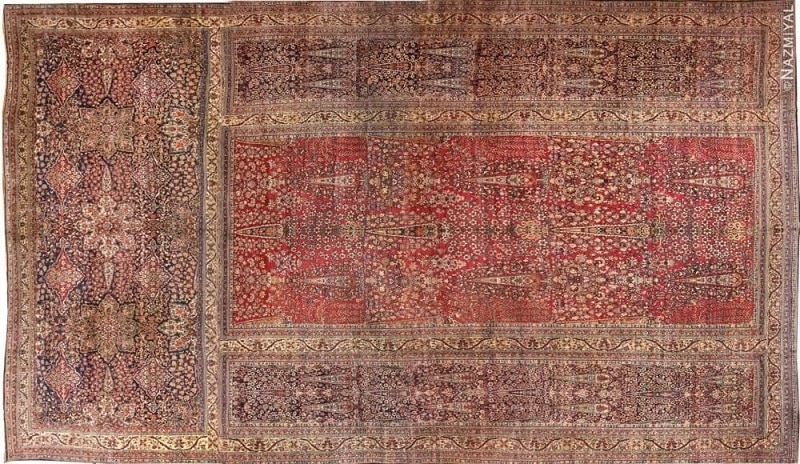
Oversized Antique Persian Kerman Carpet
How did the rugs from Persia make it to other countries and the rest of the world?
Following the Silk Road, the rugs from Persia also made their way west to Europe. In Spain, the Islamic insurgence brought rug weaving traditions from Northern Africa and Morocco to Southern Europe through the Mediterranean trade routes. They transported rugs from the Caucasus and Transylvanian Balkans to the Renaissance painters and Italy’s upper class.
In the Caucasus, the bottleneck of rug weaving traditions intensified as displaced ethnic groups from Romania, Armenia, Azerbaijan and Russia shared cross-cultural designs that were transported north to Eastern Europe. With various points of entry, including longstanding Viking trade routes, through the harsh Arctic Sea, these carpets as well as the actual weaving techniques thrived throughout Europe, Scandinavia and Great Britain.
What is considered the most famous carpet from Persia?
As many authorities believe, the most famous Persian carpets came from Tabriz and are referred to as the twin Ardabil carpets. These carpets are in the permanent collections of the Victoria & Albert Museum and the Los Angeles Country Museum.
What are some of the best styles and types of Persian carpets?
Beginning in the second half of the 19th century, an importer of merino wool conceived the notion of re-launching the rug making industry. The greatest Ustadan (weaver) Mohtashem, is responsible for these finely woven carpets made in both wool and / or silk. There are three main styles of Persian rugs:
- Mohtashem Kashan rugs are characteristically known for their purple or less often ruby red silk bindings used for the selvages and pretty much all were woven using blue wefts. These are the most highly regarded of all the Kashan weavings.
- Kerman carpets, have a unique structure called the ‘vase technique’. The earliest examples, especially the vase carpets, have been escalating in value and interest at an unbelievable rate.
- Garden design carpets, (ornamented with formal gardens and water channel) and ogival lattice carpets are examples of this technique. Designs of fantastic complexity were executed.
The Major Persian Carpet Making Regions
Persian carpet weaving, in modern day Iran, has long been known for its exquisitely beautiful and sumptuous handmade carpets. Carpet weaving in Persian is so deeply ingrained in the culture and traditions of this ancient land that Iranian rug weavers have elevated it into an art form using a wonderful mix of colors and patterns.
Although Persian carpet weaving take place made all over Iran today, the major Persian rug weaving centers include Tabriz, Heriz, Kerman, Sarouk and Sultanabad.
Rugs Woven In Tabriz:
Tabriz is a city with a long and colorful history. Once the capital of a succession of khanates, including the Safavid Iranian Empire; it is now the capital of East Azerbaijan Province of Iran. To carpet and rug lovers, its significance lies in the fact that it is one of the oldest rug weaving centers in the Middle East. While the period between the 12th and the 16th century is considered the golden age of rug weaving in Tabriz, the city is still an important center for rug weaving and a huge variety of antique carpets and rugs are made here.
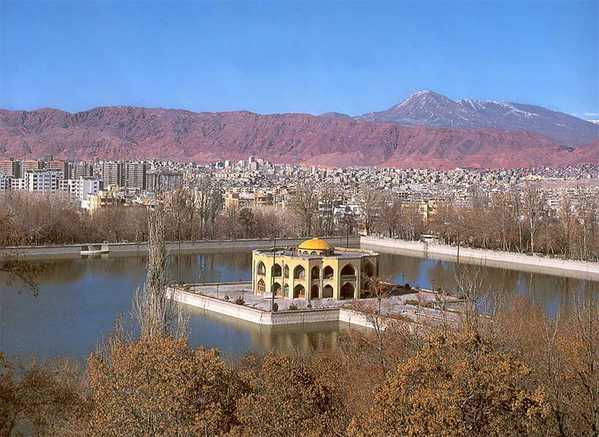
Tabriz Region in Iran
Click here to view Nazmiyal’s Collection of antique Tabriz Carpets
Rugs Woven In Heriz:
Heriz is a city in the East Azerbaijan Province of Iran, situated not very far from the city of Tabriz. This small city is well known for rugs and carpets made of tough and durable wool of the finest quality. The wool’s toughness is attributed to the fact that the city sits on a major deposit of copper on the slope of Mount Sabalan. Traces of copper found in the drinking water of the area makes the local sheep’s wool tougher than wool found in other areas. Because they are so tough and mostly come in larger rug sizes, Heriz rugs are suitable for dining rooms and hallways.

Mount Sabalan, near Heriz.
Click here to view Nazmiyal’s Collection of antique Persian Heriz Serapi and Bakshaish Carpets
Rugs Woven In Kerman:
Kerman, once the capital of Iran and currently the capital of the Kerman Province of Iran, is the largest and the most important city in southeastern Iran. Boasting a long and colorful history, the city is home to many historic mosques and Zoroastrian fire temples. The city has been a major center for high quality carpets for several centuries. Among antique carpets, Kerman carpets are considered to be among the finest. They are highly prized by collectors for their beautiful designs, broad pallet, use of natural fibers and dyes, impressive tensile strength and abrasion resistance, and expert color combination.
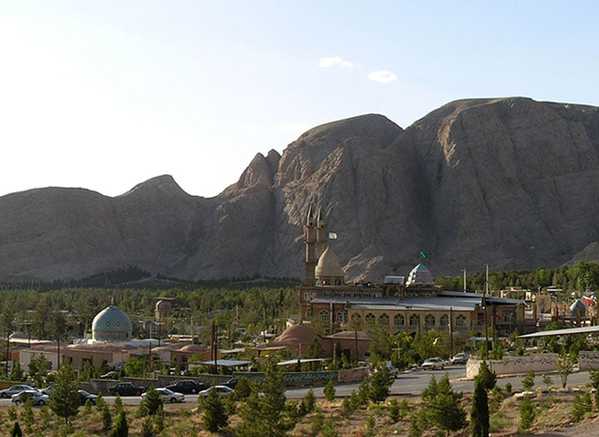
Kerman Region in Iran
Click here to view Nazmiyal’s Collection of antique Kerman Carpets
Rugs Woven in Sarouk:
Sarouk, also spelled as Sarouk or Saruq, is a town in Markazi Province in northwestern Iran. The town and the nearby city of Arak, along with the surrounding rural areas (together known as the Arak weaving district), are famous for the Sarouk carpets, which are made of tough and durable high quality wool.
Sarouk rugs are considered among the finest in the world. American customers of the 20th century were so enamored by the curvilinear and floral design of these rugs that America has its own version of Sarouk rugs. Today, the finest Sarouk rugs come from a small town called Ghiassabad.
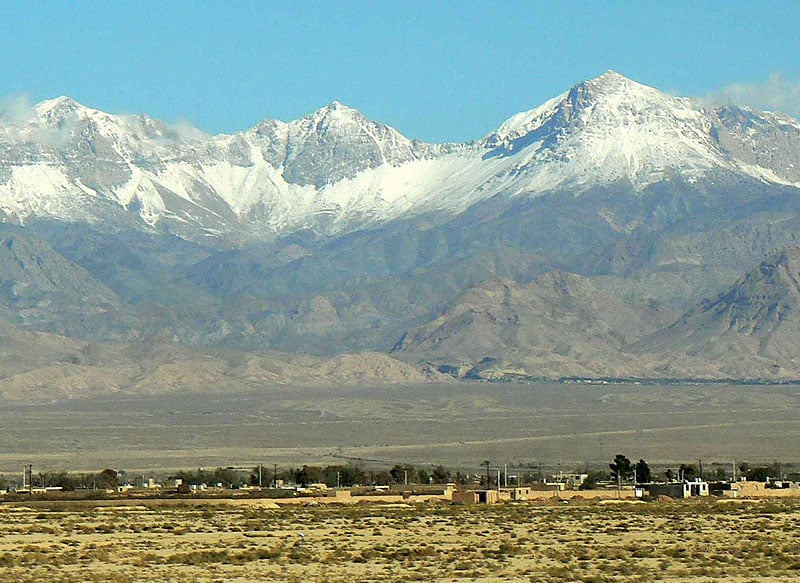
Arak Region in Iran, near Sarouk
Click here to view Nazmiyal’s Collection of Antique Sarouk Carpets
Whether you choose one of the formal designs of the carpet weaving centers, or a more rustic, tribal rug depends on the look and feel that you want for the room. Be sure to browse around and see our fine selection of both city and village produced rugs for your next design inspiration.
Are all Persian rug designs essentially the same or do they vary?
Overall, Persian rugs are among the most diverse and beautifully designed of all antique Oriental rugs. The rich story of the cultural and historical background of of these iconic area rugs is one of the most interesting in all of art history. There is a Persian carpet out there for anyone who seeks one. That quest is sure to be an exciting and edifying experience.
Another less known but interesting fact is the story of the 16th century Shah, named Humayan. During his 10 year exile, he happened upon two artists. When he returned to India and regained power, he directed weavers to translate the painters’ style into rugs.
These rugs can still be found today. Their unique beauty and inherent history is a paradigm example of what makes antique Oriental rugs so valuable.
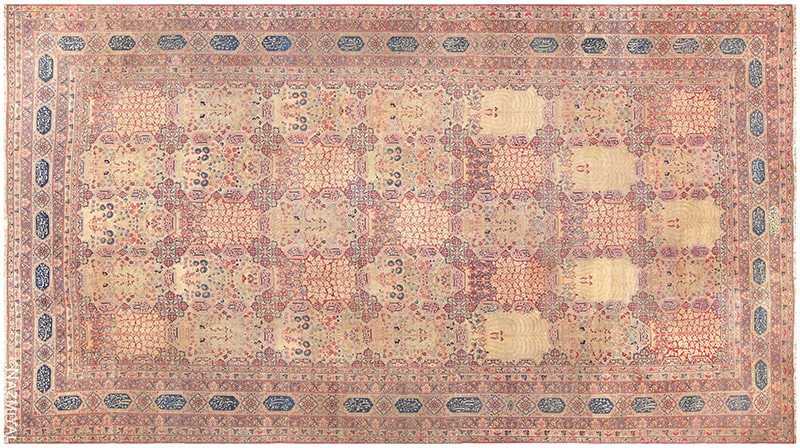
Antique Persian Kerman Carpet
What makes antique Persian Rugs so valuable?
The number of antique Persian rugs will only decrease over time. This is one of the reasons why they are of such great value. While today there may be a lot of rugs available on the market, very few are considered by the trade to be “good examples”.
What Type Of Persian Rug Is The Most Expensive?
The best examples of carpets woven in Persia will always be the most “valuable”. Today we are in the midst of an escalating interest in these works of art. This is why the best and earliest examples have been consistently selling for, what would be considered, only a few years ago, unfathomable amounts, with the most expensive Persian rug selling for $34,000,000 (You can read more about this rug here: most expensive rug sold at auction).
Why have the designs in Persian carpets changed over time?
As Western influence expanded across the Middle East throughout the 20th century, primary cultures began to lose their self defining attributes (since they began weaving based on the current market trends and demands).
People’s abilities to sustain traditional crafting techniques faded and original motifs were slowly lost. The divide between antique carpets and all those that follow shows, over time, that the quality of these pieces diminished on all levels.
Are the older rugs from Persia considered works of Art?
There are few avenues in the art world that offer as much rich cultural and historical context as those found in the antique rugs from Persia. The rugs that were woven in Persia were literally woven with the aesthetic and cultural ideals of an entire people, and perhaps most importantly, rug-making was the art form that the people of Persia took more seriously than any other.
The Persian people took much pride in the textile art they created. Thus, it is in the antique carpets from Persia that we find the very finest and the most important examples of Persian textile art in general. To know these these iconic area rugs is to know a people and a culture in a way that is rare in the art world. These area rugs are regarded as one of the highest levels of artistic sophistication accomplished by humankind. As such, designers, artists and rug collectors covet these masterpieces.
Today, Iranian carpets, both modern and antique, have found an ever expanding home within the art world. Jason Nazmiyal, says, “These rugs seem to me, to focus most effectively on the convergence of color, texture and design in perfect balance and harmony.”
There is no doubt that Persian rugs are among the most beautiful and enduring artistic creation ever crafted. The beauty and complexity of Persian carpets that are antique, is timeless, inspiring, exciting and edifying. Like the feeling of intimacy that one experiences when one sees the brush strokes in a painter’s finest work, so too does one feel a connection to the master rug-makers of Persia when one sees up close the meticulous weaves of a gorgeous rug. Persian carpets and rugs are a great treasure of humanity, and to know them as such is to know the limitless nature of fine art.
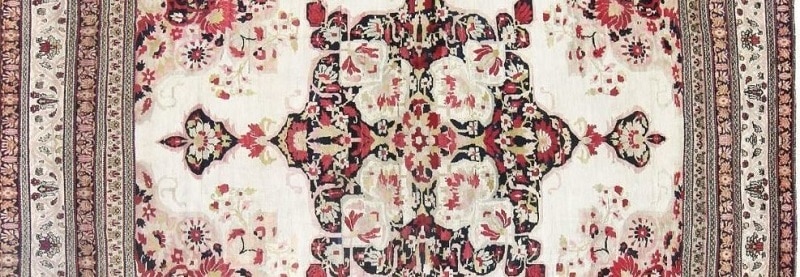
19th Century Persian Kerman Rug
Would Persian Master Weavers Sign Their Carpets?
Sadly, most rugs, even those woven by master weavers, were not signed. A master weaver’s signature and method can help in determining where the carpet was made. It can also assist with what style the carpet exhibits, and naturally, who the weaver was. Urban cities have traditionally facilitated Persian rug weaving as a commercial industry.
Any manufacturer’s production would have been greatly influenced by the market demands of the time. At the helms of such production companies were the master rug-weavers.
These individuals were the ones who chose the colors and organized the weavers. These master weavers designed with a personal identity that superseded group identity. Therefore, in such instances, the vernacular craft gave way to conscious visual art form. Today these masterworks can be found in museum collections such as The Metropolitan Museum. They can also be found in the inventories of fine antique carpet galleries.
Are Persian Rugs a Good Investment?
In addition to being beautiful works of art, the best examples of Persian carpets have been collected throughout history. They are also collectible today by individuals as investments. Historically, the rugs from Persia have been referred to as ‘Iranian stocks and shares’. Iranian market places are full of underground vaults where businessmen keep their precious pieces. Persian carpets of museum quality would be considered on par with the investment potential of a master painting.
That said, they are relatively less expensive and can serve a more practical use. Today, Persian carpets still remain a viable commodity.
*Note: Relative to market demand, unless damaged, the best Persian rugs will not, for the most part, depreciate in value; therefore making them valuable investments. Prices will reflect and fluctuate with market demands.
What do the names that dealers use for Persian carpets mean?
With the introduction of varying cultures’ commodities and art (in all its varying forms) at the market place, came the inevitable copying and constant modifications of designs and motifs.
A rug’s design, in and of itself, does not necessarily identify where it was made. Nor does it tell us who the people who authored it were. In general, Antique rugs from Persia receive their names from either:
- The tribes or people that wove them. Example: Kurdish rugs are those rugs that were woven by Kurdish people. Since they were mostly nomadic, they are not assigned a specific city or region.
- The region (city, district, town, villages) in which they were crafted. Example: Tabriz rugs are those rugs that were woven in the Persian city of Tabriz.
- In rare instances, the weaver’s name will be given to a specific production. Example: Ziegler rugs are Persian area rugs that were designed and manufactured by Ziegler & Co.
However, there are exceptions to this general rule, as is the case with Serapi Rugs. In this case, the term Serapi refers to the older and “better” rugs that were made in the city of Heriz.
What dyes were used to make rugs in Persia?
The rug color dyes used when weaving Persian rugs were generally natural. This served to create lustrous, animated works with great depth of field. The recipes used to dye the fibers were commonly comprised of berries, insects, minerals and seeds. The combinations were unique to each tribe, city and/or region. The weaving techniques they employed as well as the dye recipes were guarded as precious tribal secrets.
As a side note, the first chemical dyes were introduced to the rug markets during the mid 1800’s. Therefore, it is not uncommon to see such dyes in late 19th century rugs.
Are the Persian rugs woven as a family business?
Design styles were passed down through long lineages of craftsmen within a tribe or group. Family members wove alongside one another. Weaving first for the household then for the market. For the common designer, individual identity was not important. What was important, was to accurately execute the traditional style. Thereby ascribing the signature patterns and motifs of the “tribe” to each carpet.
How long does it take to weave a Persian Rug?
Typically, a single carpet could take months and even years to create. The actual time depends on the size and quality of the carpet. The finer the carpet, the more KPSI (knots per square inch) it has and therefore the longer it takes to create. This is often times why many people would work side by side on the same carpet. All of this partakes in the deep appeal and timeless quality of antique Persian carpets!
What are the different Persian rug knotting techniques?
Knot types used in Persian rugs most often include:
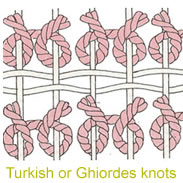
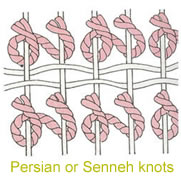
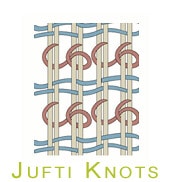
The two most commonly used knots in Persian weaving are the Turkish (used in the Caucasus, some Turkish and Kurdish areas of Iran, Turkey and East Turkmenistan) and Persian knots (Turkey, Pakistan, Egypt, China and India).
- The Turkish knot is made by passing between two neighboring warps, looping under one, wrapped around both, then pulled through the center. Both ends will come out between the two warps.
- The Persian knot is commonly used when weaving finer rugs. Simply because it is generally a much smaller than its counterparts. Wrapping around one warp, then passing behind the neighboring warp so that it divides the two ends of yarn, makes the knot.
- Double Knotted: The second knot sits in front of the first knot. With the double knot technique, the second knot is not visible from the back.
It is important to note that if a rug is machine made (including hand tufted), it is not a genuine antique Persian rug!
Do the designs and patterns of Persian rugs have meaning?
The older Persian carpets will mainly feature abstract renderings of geometric and / or floral shapes. This is a result of the fact that many of the Persian people are Muslim and Islam does not allow living beings to be duplicated through imagery and art.
But what may seem like random shapes and abstract designs, are, for the most part, anything but! These rug patterns and designs have been passed on from one generation to another and many of these motifs have pretty profound meanings (such as lucky charms, wishes and messages).
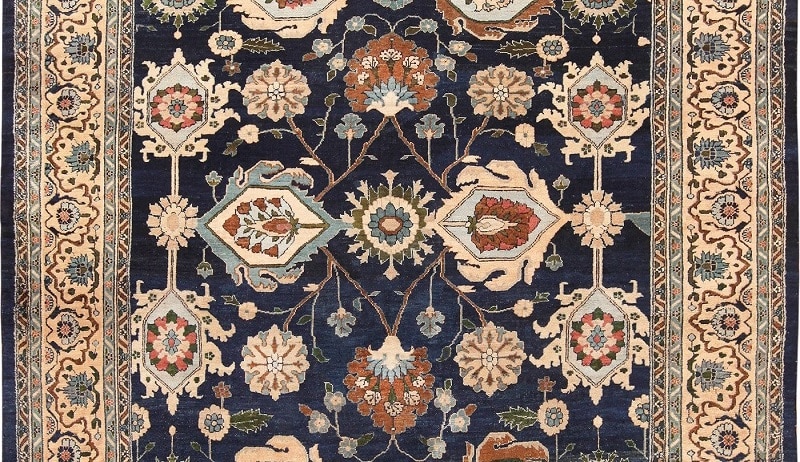
Large Blue Antique Persian Malayer Rug
Who is the best dealer that has handmade Persian rugs for sale?
Naturally, we believe that Nazmiyal is the best dealer for Persian rugs. That said, we urge you to do your due diligence. However, the more antique rug galleries people visit, the more educated they become and we believe that an educated consumer is the best buyer.
Early Tribal Persian Rug Weaving
Rug weaving as an art began in Persian, now Iran, approximately 2,500 years ago. They were originally woven by nomadic tribes as protection from the cold and wet environment. Eventually, they began to develop into traditional patterns and became a work of art that was also utilitarian.
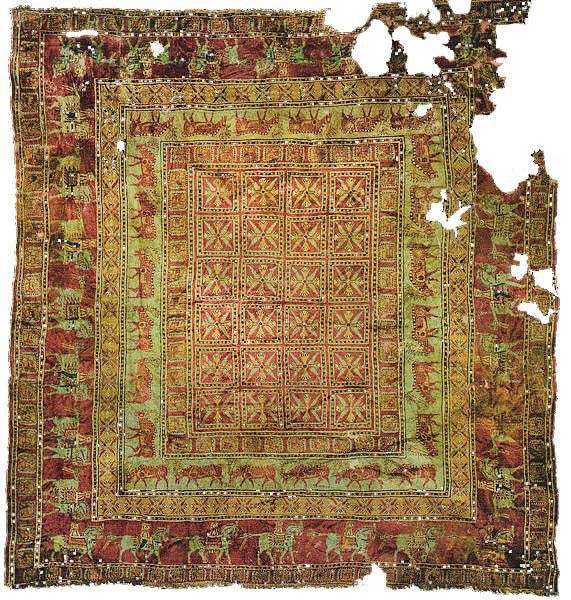
Image Of The Pile Pazyryk Rug – The Oldest Rug In The World
The development of carpet weaving as the art that it is today was the work of several great leaders in Persian Oriental rug history. Cyrus the Great was struck by the beauty of the Oriental rugs being produced in Babylon when he conquered it in 539 BC. The oldest carpet in the world today was unearthed in an archaeological find in the Pazyryk valley and dates to 5 BC.
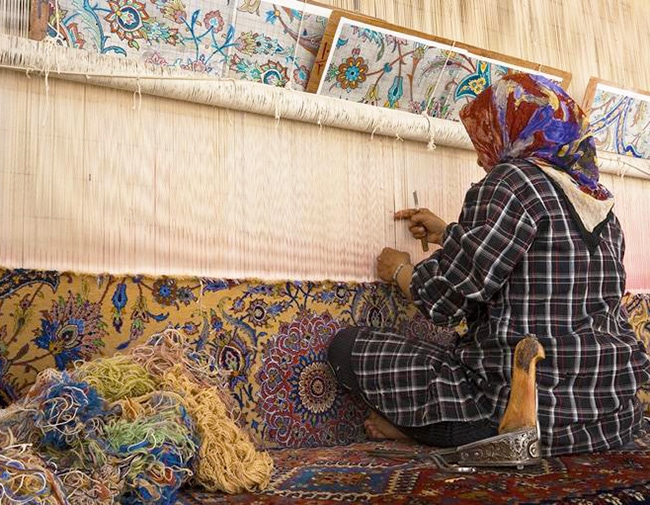
Iranian Woman Following carpet Design Cartoon While Weaving Persian Rugs
Meet the Master Persian Rug Weavers of the Late 19th Century Persian Rug Revival
The artistry of Persian carpets makes them a special addition to any interior design. The beautiful colors and patterns are steeped in traditions. The origins of these traditions have been lost in time. For the most part, the artists and creators of these master artworks are unknown. The hands that spun the wool and silk, dyed the threads, and hand tied every single knot have faded into obscurity. We know the quality of the rug by its color, pattern, the number of knots and the type of knot used. We can pin the rug to a certain region, tribe, or at locale by its style, but the names and faces associated with these works have been lost. Yet, there are a few masters whose names we do know, and these carpets hold a special place as world treasures.
Master Persian rug weavers such as Ziegler Sultanabad, Mohtashem, Haji Jalili, and Aboul Ghasem Kermani produced masterpieces that find their way into exquisite collections and museums around the world. A rug designed by one of these Master weavers is a rare and highly-prized addition to any collection. They stand out in their quality and design in a way that is mesmerizing, touches the viewer and connects them to the sublime.
Introduction to Weaving Persian Rugs and Other Carpets
From the earliest times Persia has been famed as a major center of Oriental rugs and carpet weaving. The ultimate origins of the woven carpet remain a subject of debate, but all the evidence points to Persia as the cradle of ancient rug production from the earliest times. Indeed, Persia has been a fountain of oriental art and culture not only in antiquity, but down through the centuries. By Islamic times, Persia had established the standards of architecture design, miniature painting, and textile production emulated by the rest of the Middle East.
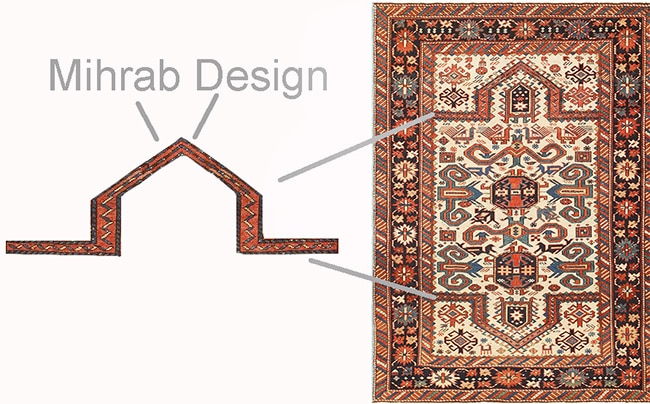
Mihrab Design In Islamic Muslim Antique Prayer Rugs
In the Safavid period beginning around 1500, when we finally have a substantial body of surviving carpets, it becomes ever clearer that Persia constituted the heartland of Islamic rug production, providing inspiration for the rug weaver in the neighboring regions of Turkey and India from the 16th century on.
And since the great revival of Oriental rug weaving in the later nineteenth century Persia has continued to maintain this central role right down to the present time. No other oriental rug producing region can offer the range and quality of design, the superior wool and dyes, or the highly refined weaving techniques that still distinguish Persian rugs as the finest work of its kind.
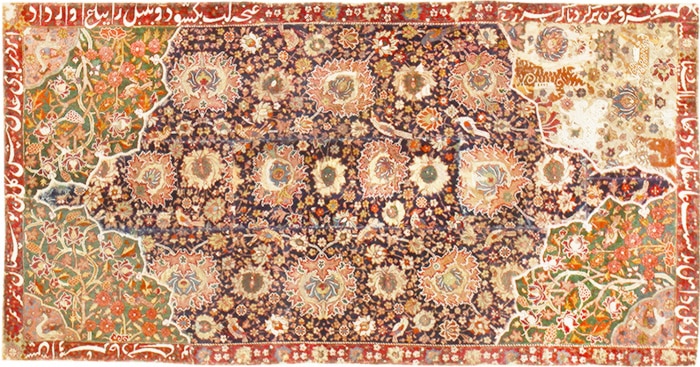
Antique 16th Century Persian Salting Safavid Rug
Nazmiyal NYC is the Global Leader for Persian Carpets
Many times we associate Persian rugs with magic carpet rides thanks to the likes of Disney blockbuster hits such as, Aladdin, Aladdin 2: Return of Jafar and Aladdin 3: The King of Thieves. Fortunately, you don’t have to search far and wide to find one of these magical treasures. Though it is not a guarantee that every Persian rug will make you an aviation specialist, it is a guarantee that one of these remarkable finds will bring your home true richness of historical quality.
The Nazmiyal Collection has been a global leader in the antique carpet trade for the latter part of the century and into the new millennium. As such, the rugs offered are hand-picked to ensure the utmost quality and textiles enriched with history and tradition.
Similar to our posts on Sultanabad rugs or Tabriz carpets, the Persian rug is a rare find of a gem to the home accent world. Yet, differs in its earlier historical relevance, making Persian carpets one of the most sought after textile in the rug industry. When one sees one of these rugs, there is a a journey into the majestic world of ancient civilizations over 2,500 years ago.
Persian area rugs are essential statement pieces for the true antique aficionado and connoisseur of crafty finds. These treasures from the Orient are full of geometric shapes, floral designs, and bold color palettes that will best suit your home’s needs in order to create a den of true beauty and antique rug history.
Whether you’re hanging a Persian rug as a decorative focal point on the wall or laying one down to enrich the ground in which you walk, these antique diamond finds will have you creating your own Middle Eastern getaway that your guests will truly be jealous of.
Nazmiyal is your clear choice Persian carpets
If you’re in the market for a rug, Nazmiyal Gallery is the best place to start. We have a vast collection of diverse Persian carpets and antique Oriental rugs in different sizes and styles, and you can look through this amazing collection of the Rugs and Carpets right here online. It’s a convenient way for you to find the next centerpiece to your room or a new addition to your collection.
In addition to displaying our extensive inventory of Persian carpets, our website also contains useful information regarding these works of art for people who are new to this market. At Nazmiyal , we want all of our customers to feel like they are making a truly informed decision when it comes to purchasing Oriental rugs.
You’ll find a lot of information on our site regarding the history of oriental rugs, maintenance guidelines and considerations to make when purchasing Persian carpets.
If you would like to talk with one of the experts at Nazmiyal, please feel free to give us a call at 877 784 3463. They’ll be able to guide you through our vast inventory of Persian carpets and help you find the type of piece you’re looking for. If you prefer, you can also contact us with your request by filling out the online form on the Contact Us page. We’ll promptly respond to your email with the information you’re looking for.
Click The Articles Below To Learn More About Persian Rugs
Pictures and Photo Gallery of Vintage and Antique Persian Rugs | Meaning and Significance Of Different Colors In Persian Rugs | Semi Antique vs Antique Persian Rugs | Antique Garden of Paradise Persian Carpet | Tragic Persian Love Story: Shirin and Khosrow | Nizami Tragic Persian Love Story: Layla and Majnun | Interior Decorating With Persian and Oriental Antique Rugs | The Handcrafted Persian Area Rug | The Complete History and Timeline of Persian Rugs | What’s So Special About Persian Rugs? | Buy Silk Persian Rugs