Understanding Persian Rugs: Origins, Craft & Cultural Significance
Persian rugs (Iranian carpets) are the world’s most widely recognized hand-knotted rugs, ranging from refined workshop masterpieces to bold village and tribal weavings. Entering this world reveals hidden histories and ancient traditions, designs passed down for thousands of years, carried across cultures and continents. Flowers and geometric figures carry deep symbolism; colors and shapes convey meaning that has endured for centuries.
Antique and early vintage Persian rugs remain the benchmark for collectors, designers, and institutions, valued for their structure, artistic coherence, and enduring relevance. Nazmiyal Collection has handled, sourced, and authenticated Persian rugs for more than four decades, with an authenticity-first approach to buying, appraisals, cleaning, and restoration. On this page you will learn how to identify authentic antique Persian rugs, what drives value, and how key types like Tabriz, Kashan, Kerman, Heriz, and Serapi differ in structure and design.
Browse our full collection of antique rugs spanning Persian and all other origins.
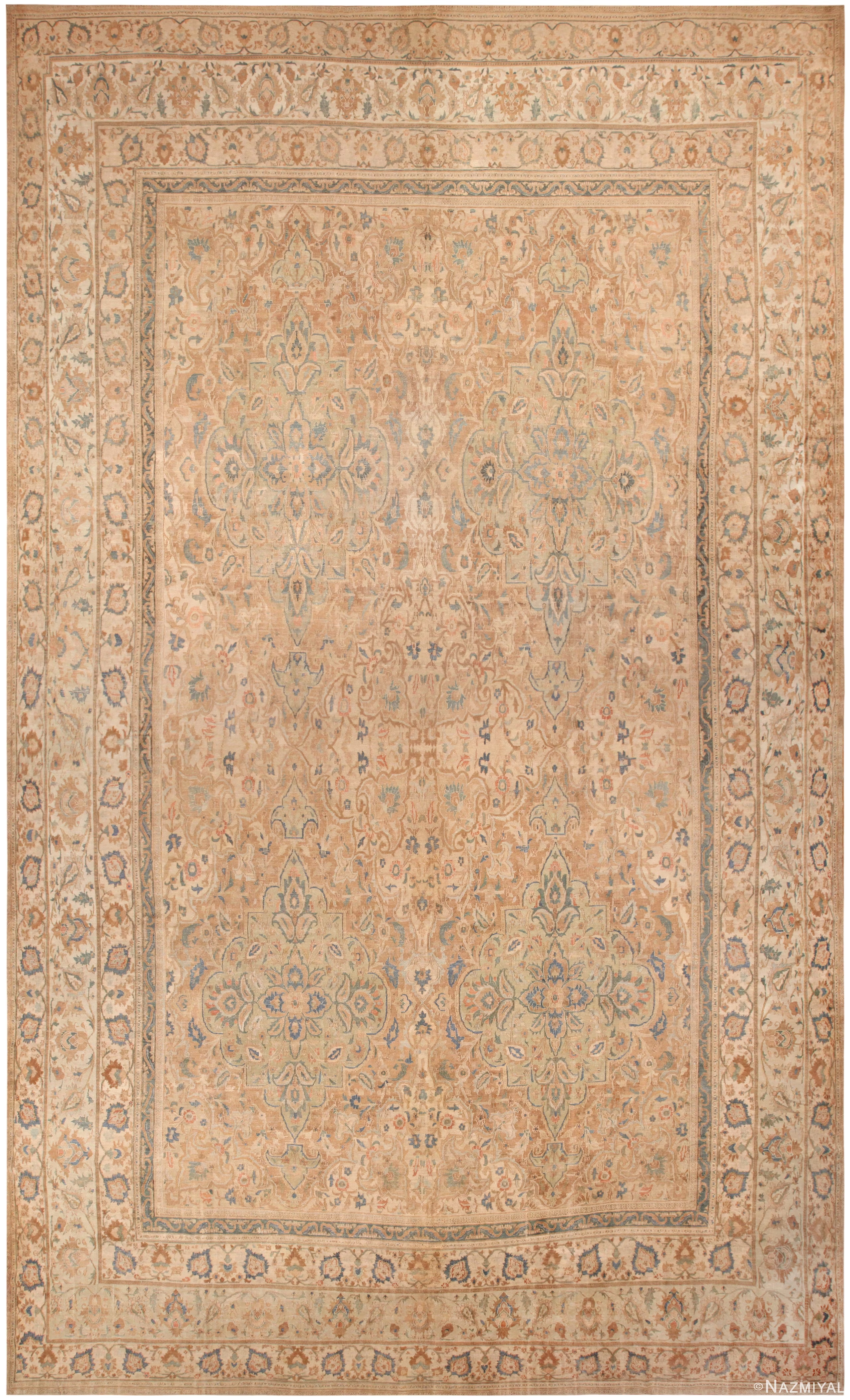
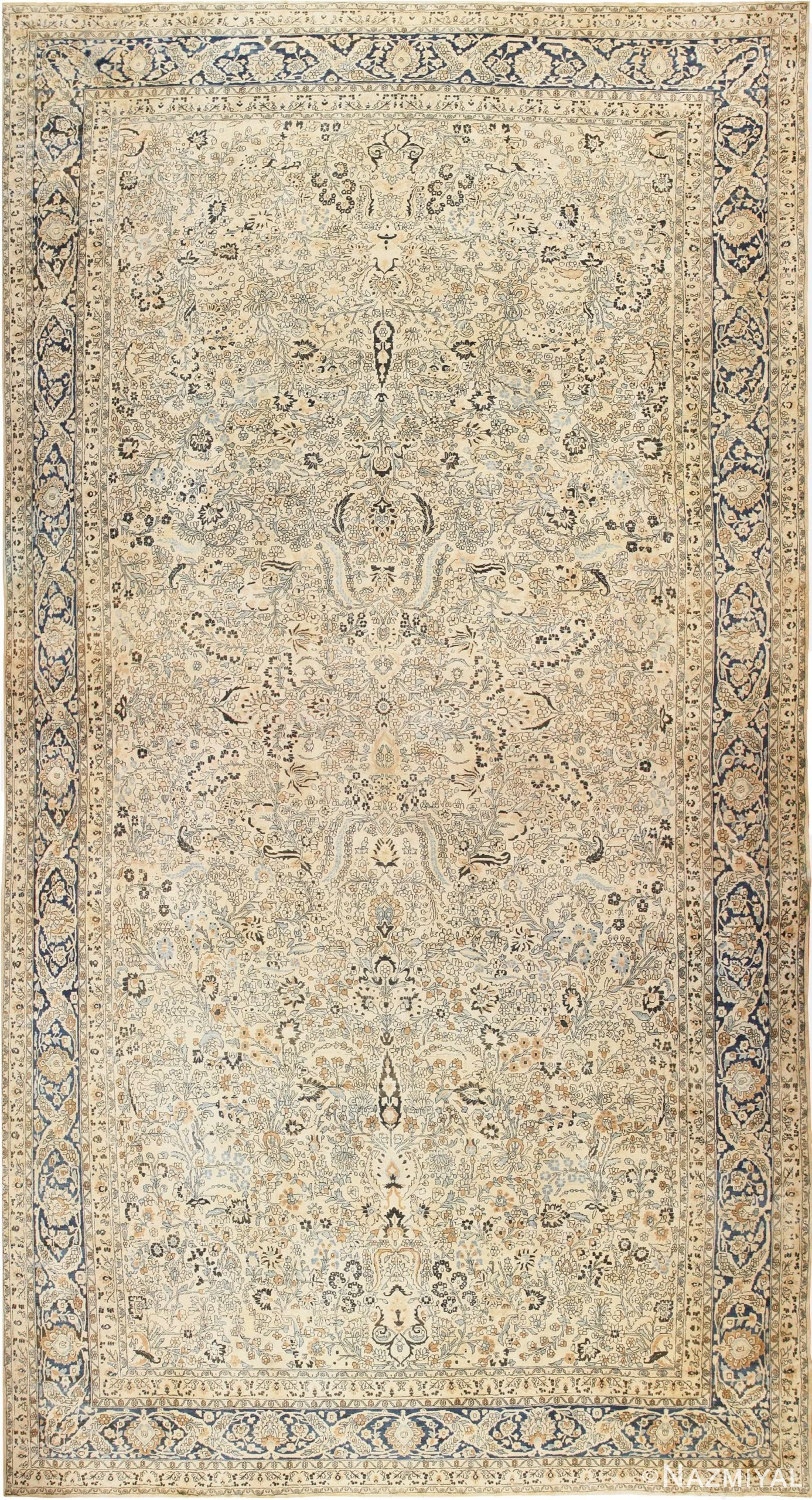
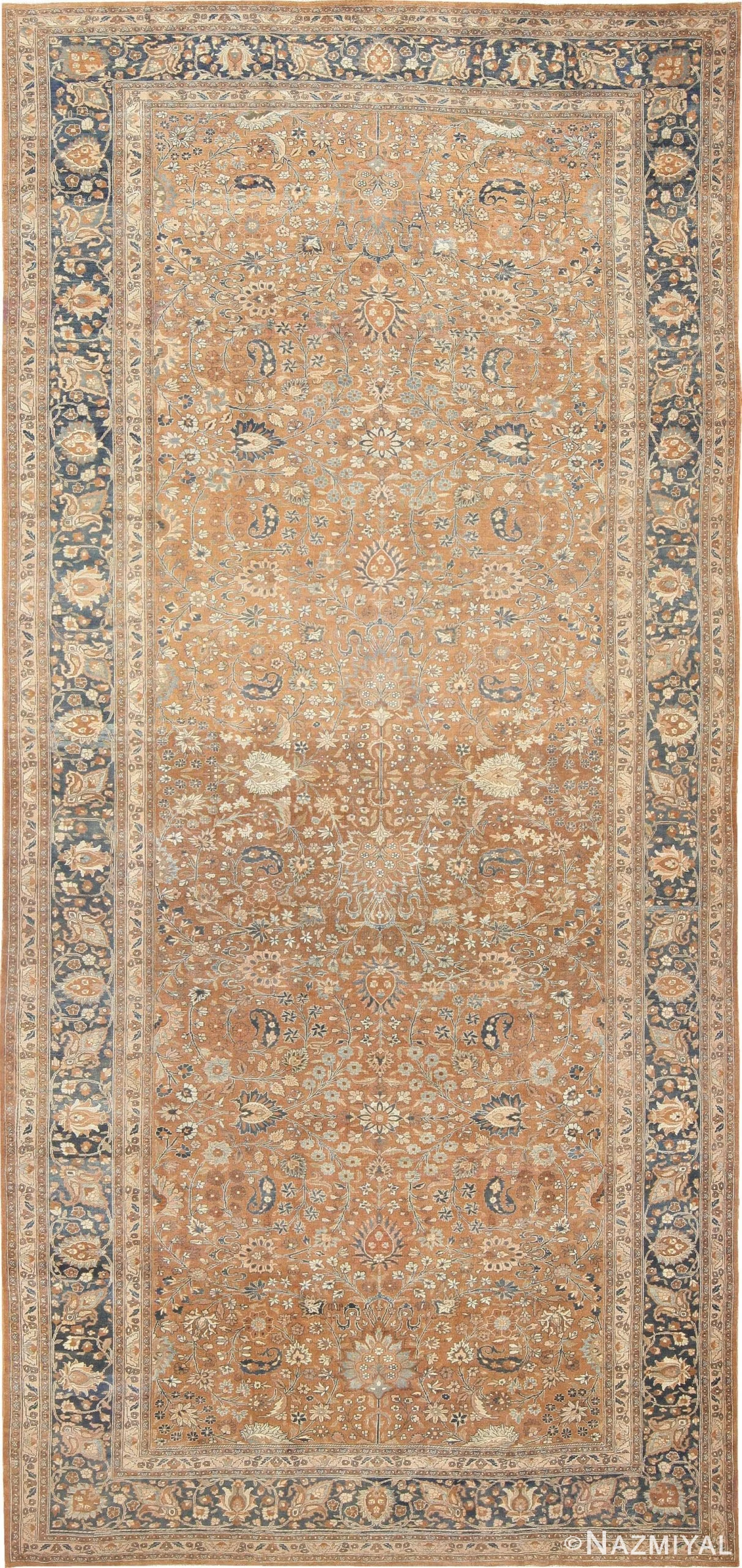
Persian rugs are hand-knotted carpets and flatweaves woven in Iran using techniques refined over many centuries. These rugs developed within a sophisticated system of court workshops, urban ateliers, village production, and nomadic tribal weaving, each contributing distinct design languages and construction methods.
Unlike industrial or export-driven carpets, Persian rugs evolved organically. Design, materials, and structure developed together through long-standing traditions rather than short-term market demand. The terms Persian rugs, Persian carpets, and Iranian rugs all refer to this same historic weaving tradition when used correctly. The antique Oriental rugs woven prior to the 1920s from Persia represent an unfathomable range of patterns and styles, from semi-nomadic tribal traditions to the imperial weaving workshops established by the Safavid and Mughal empires.
As Jason Nazmiyal notes: “The range within Persian rugs is wider than most buyers realize. A 17th-century Isfahan and a late 19th-century Heriz are as different as any two things in the art world, same tradition, completely different character. That breadth is what makes collecting Persian rugs endlessly interesting.”
Where Do Persian Rugs Come From?
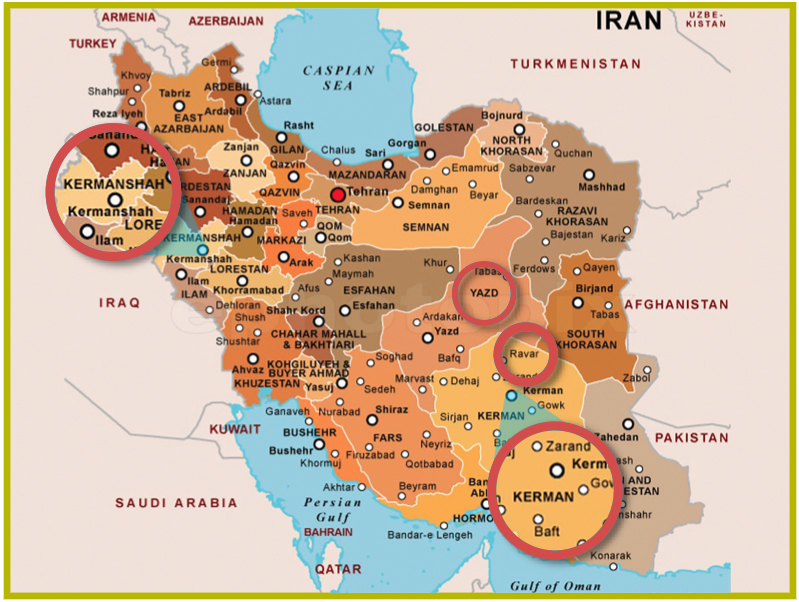
Persian rugs originate from weaving centers across Iran, including major cities, villages, and tribal regions. Geography, patronage, and cultural continuity shaped regional identities that remain identifiable today. In Persia, the largest carpet-producing centers that flourished were in Tabriz (1500–1550), Herat (1525–1650), Kashan (1525–1650), and Kerman (1600–1650). Production contexts include:
Workshop cities emphasizing precision, drawing, and refinement
Village centers producing bold, durable rugs with strong geometry
Tribal regions focused on portability, symbolism, and personal expression
The History of Persian Carpet Weaving
Persia, modern-day Iran, was an ancient and powerful empire stretching from Africa to India. Evidence suggests carpet weaving began during the Mongol or Ilkhanid period around 1300, with major production centers in Tabriz, Kerman, and Isfahan. The craft reached its artistic pinnacle during the Safavid Dynasty (1501–1736), when the ruling class actively encouraged weaving alongside painting and calligraphy. During the 16th and 17th centuries, Persia produced many of the great masterpiece carpets still in existence today, exported from Japan to Western Europe, and even captured as war prizes by the Ottoman Turks after the Battle of Vienna in 1683.
By the late 19th century, Persian carpet production reached another peak. Weaving centers like Tabriz, Kerman, and newer areas like Sultanabad and Kashan recaptured the range and quality of their predecessors. This period, the Persian Rug Revival, produced the antique examples that dominate museum collections and serious private collections today.
The international trade of traditional carpets established thousands of years ago resulted in a fascinating interchange of designs between East and West. Following the Silk Road, rugs from Persia made their way to Europe through the Mediterranean trade routes, through the Caucasus, and eventually across the Atlantic to the United States, where they first captivated wealthy American collectors in the 1870s and were showcased at the 1893 Chicago World’s Fair. Read the complete history of Persian rugs and carpets →
Authenticity: How to Identify a Genuine Persian Rug
Because the term “Persian rug” is widely used in marketing, many rugs labeled as Persian today are produced outside Iran or are modern reproductions inspired by Persian designs. Authentic Persian rugs must be evaluated by structure, materials, dye behavior, age indicators, and credible sourcing, not by labels or surface appearance alone. Key indicators of authenticity include:
Hand-knotted construction consistent with known Persian structures (visible on the reverse side)
Wool or silk quality appropriate to the region and period
Integrated fringe that is an extension of the warp threads, not sewn on separately
Design systems aligned with established Persian regional traditions
Natural dye behavior showing tonal variation and depth rather than flat, uniform color
Age indicators such as softened pile, honest wear, and natural patina
Strong foundation integrity, even when surface wear is present
It is important to note: if a rug is machine-made or hand-tufted, it is not a genuine antique Persian rug, regardless of how it is marketed.
Types of Persian Rugs
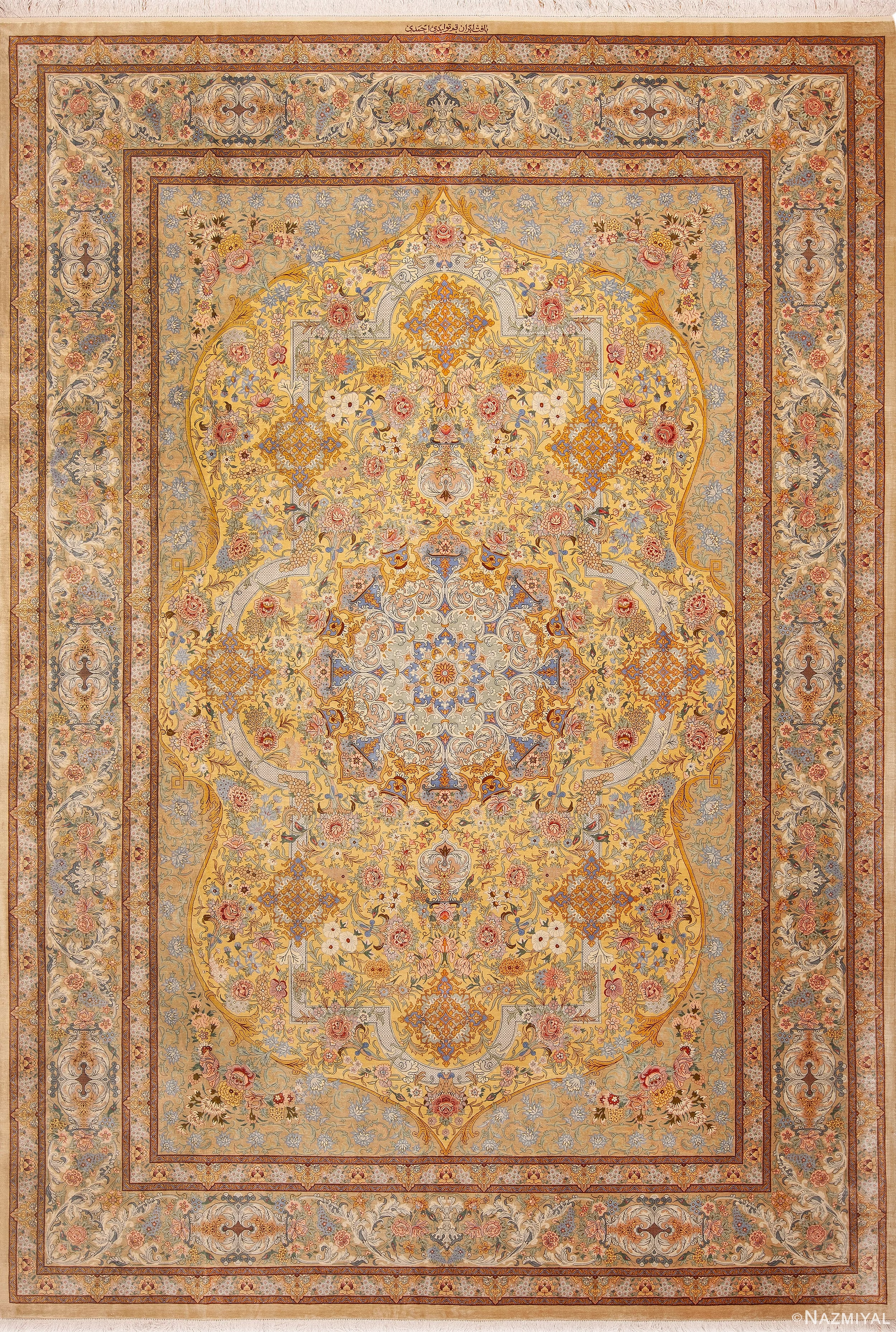
Persian rugs are traditionally identified by their place of origin, with each weaving center in Iran developing distinct design systems, materials, and structural techniques. Broadly, they divide into two traditions: city workshop rugs, planned in advance through detailed design cartoons with fine materials and high knot counts; and tribal and village rugs, woven from memory with bolder geometry and more durable construction.
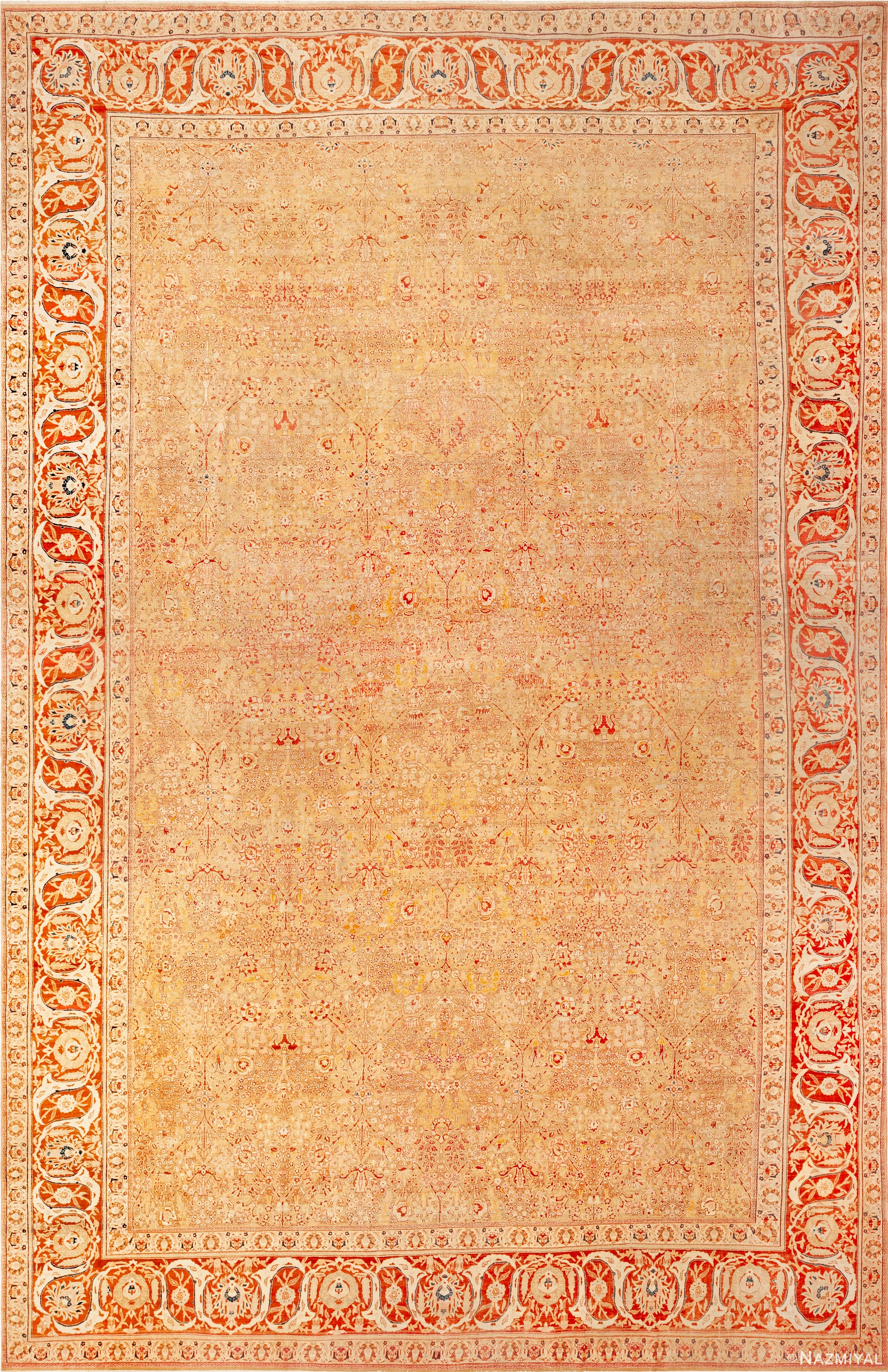
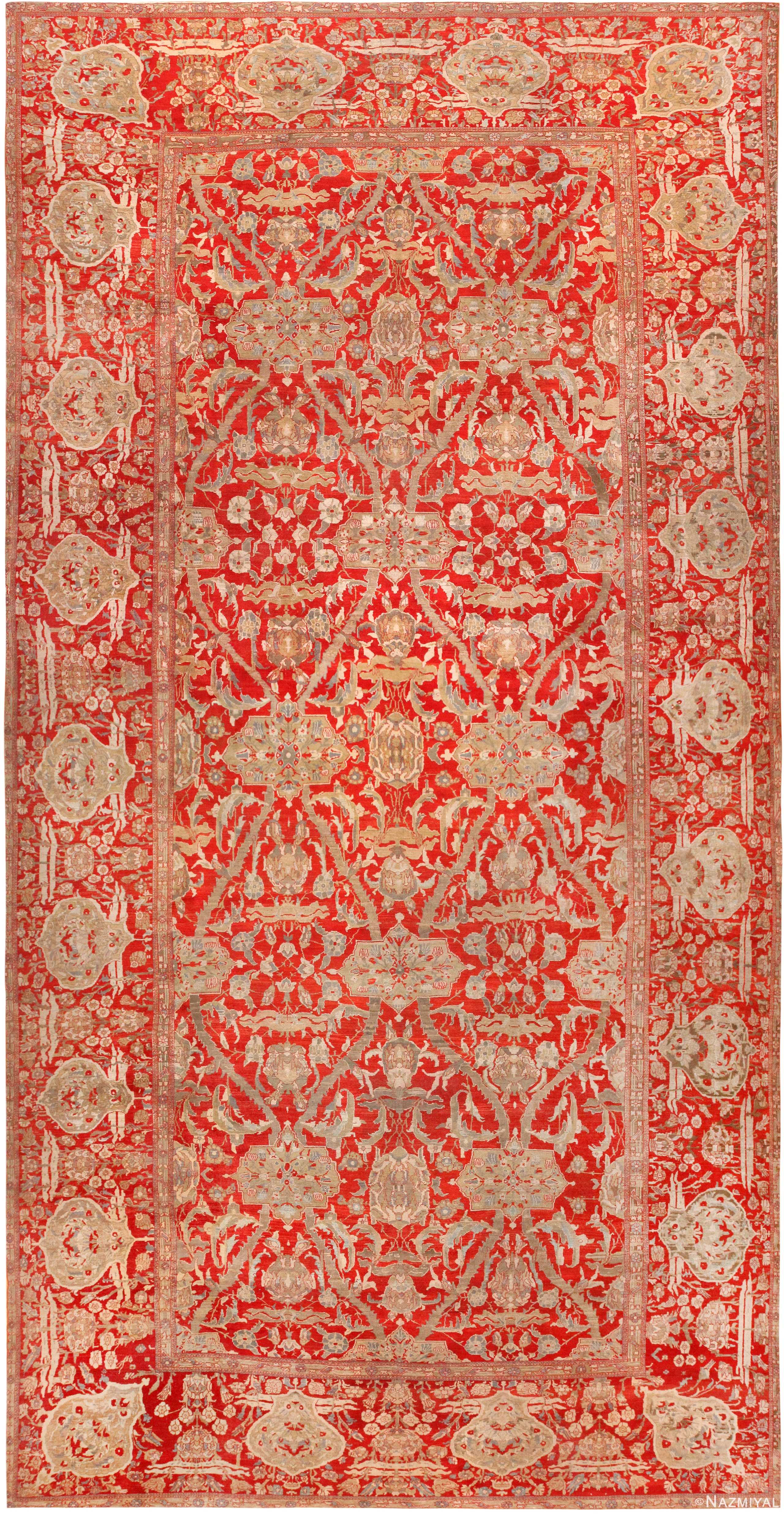
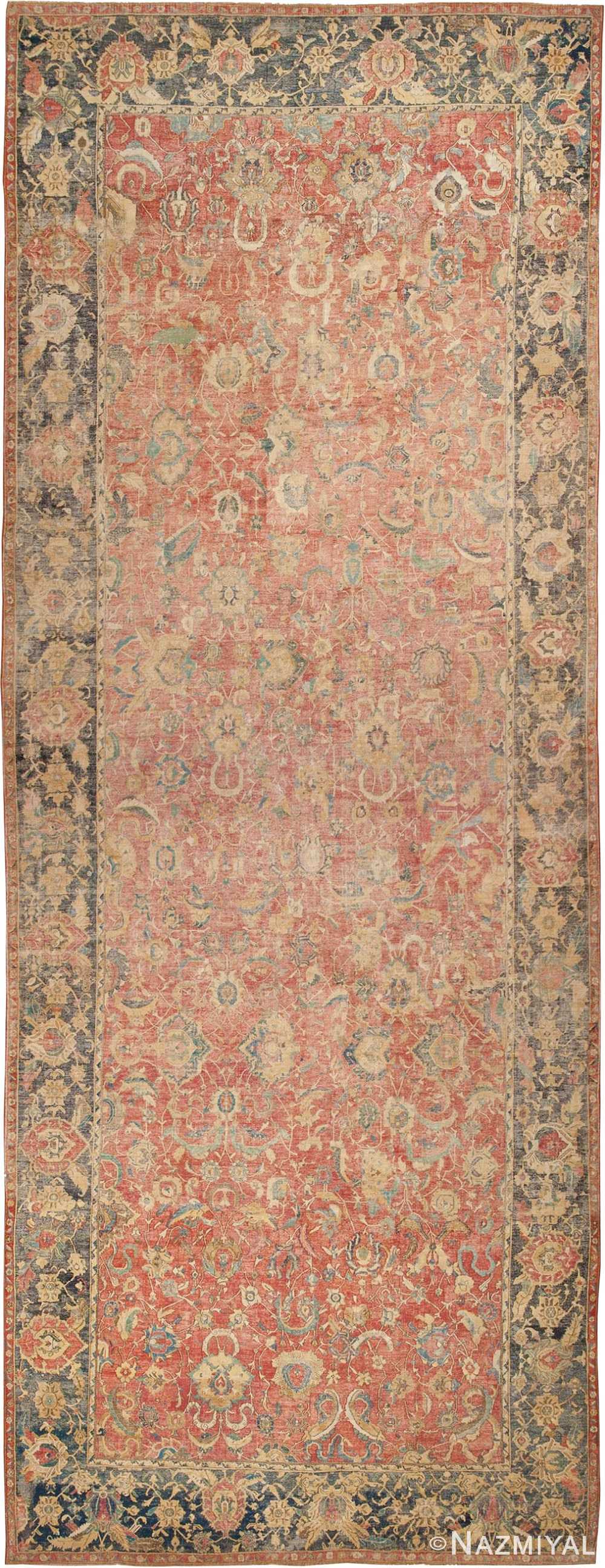
Tabriz Rugs, Highly refined workshop carpets known for technical precision, complex drawing, and wide stylistic range. Many older Tabriz carpets feature a central medallion over a field of scrolling vine ornaments.
Isfahan Rugs, Court-style rugs distinguished by elegant composition, symmetrical knotting, and exceptional craftsmanship. Considered among the finest Persian rugs ever produced.
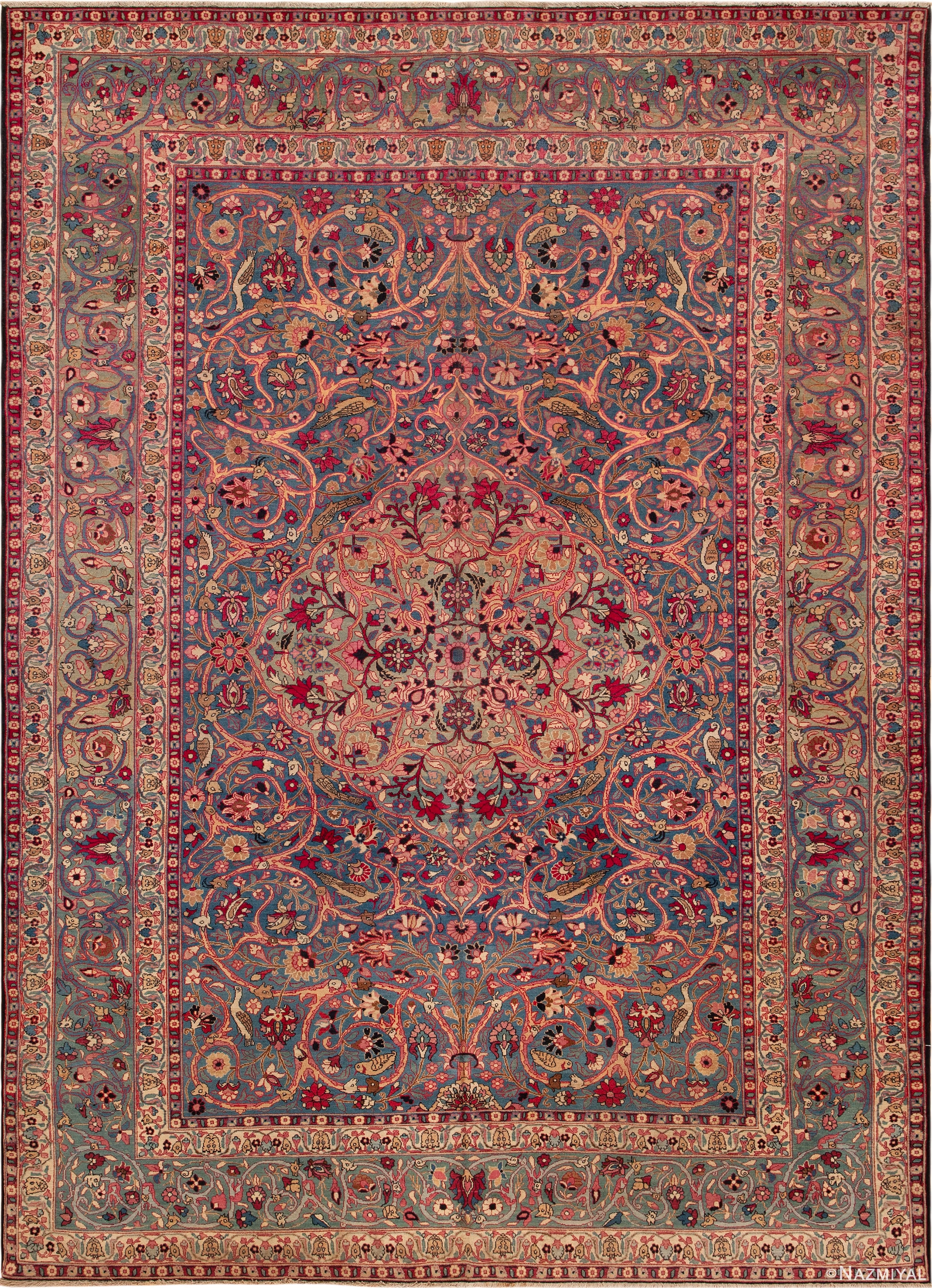
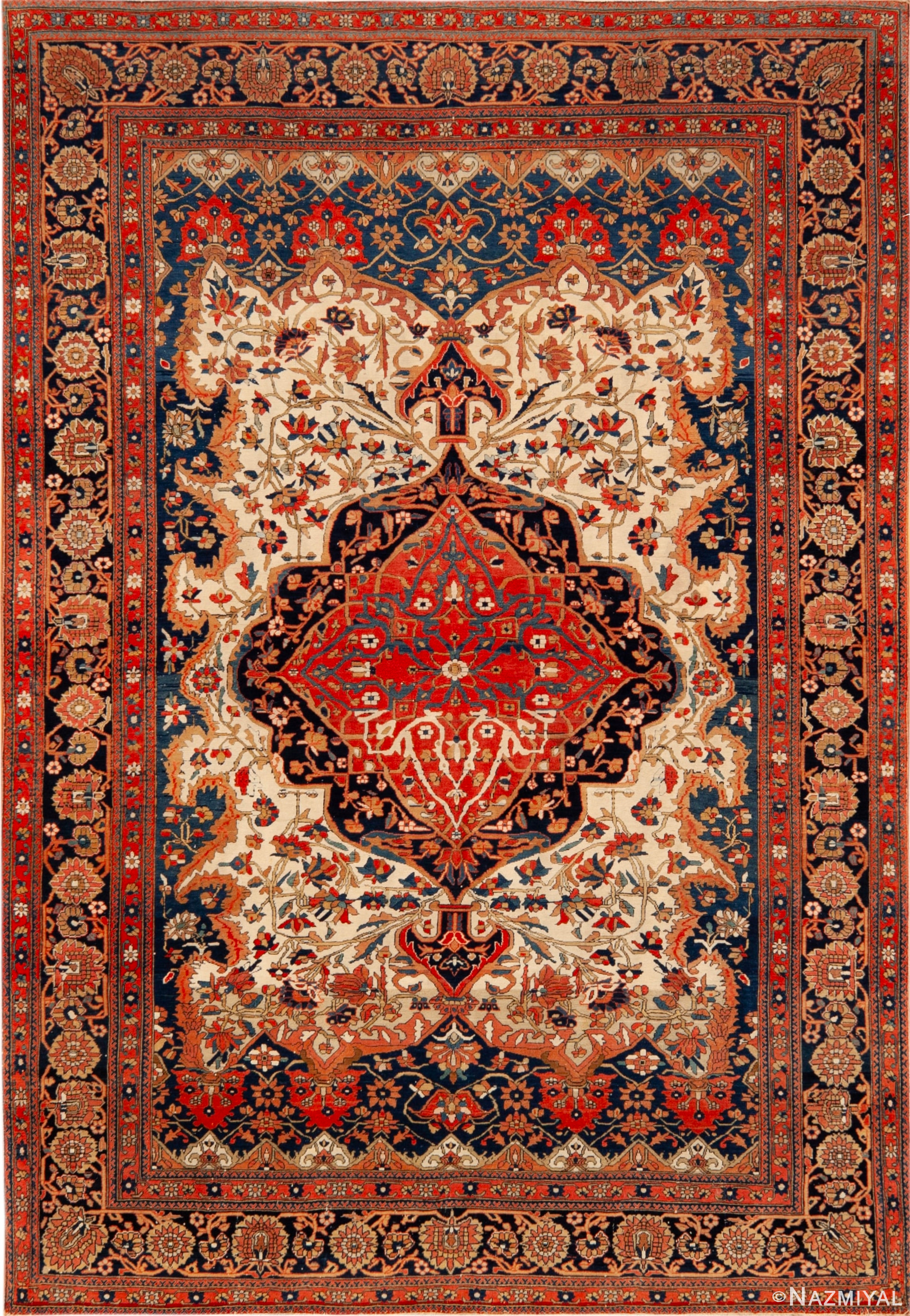
Kashan Rugs, Classic Persian rugs celebrated for harmonious medallion designs and rich color palettes in deep reds and navy blues.
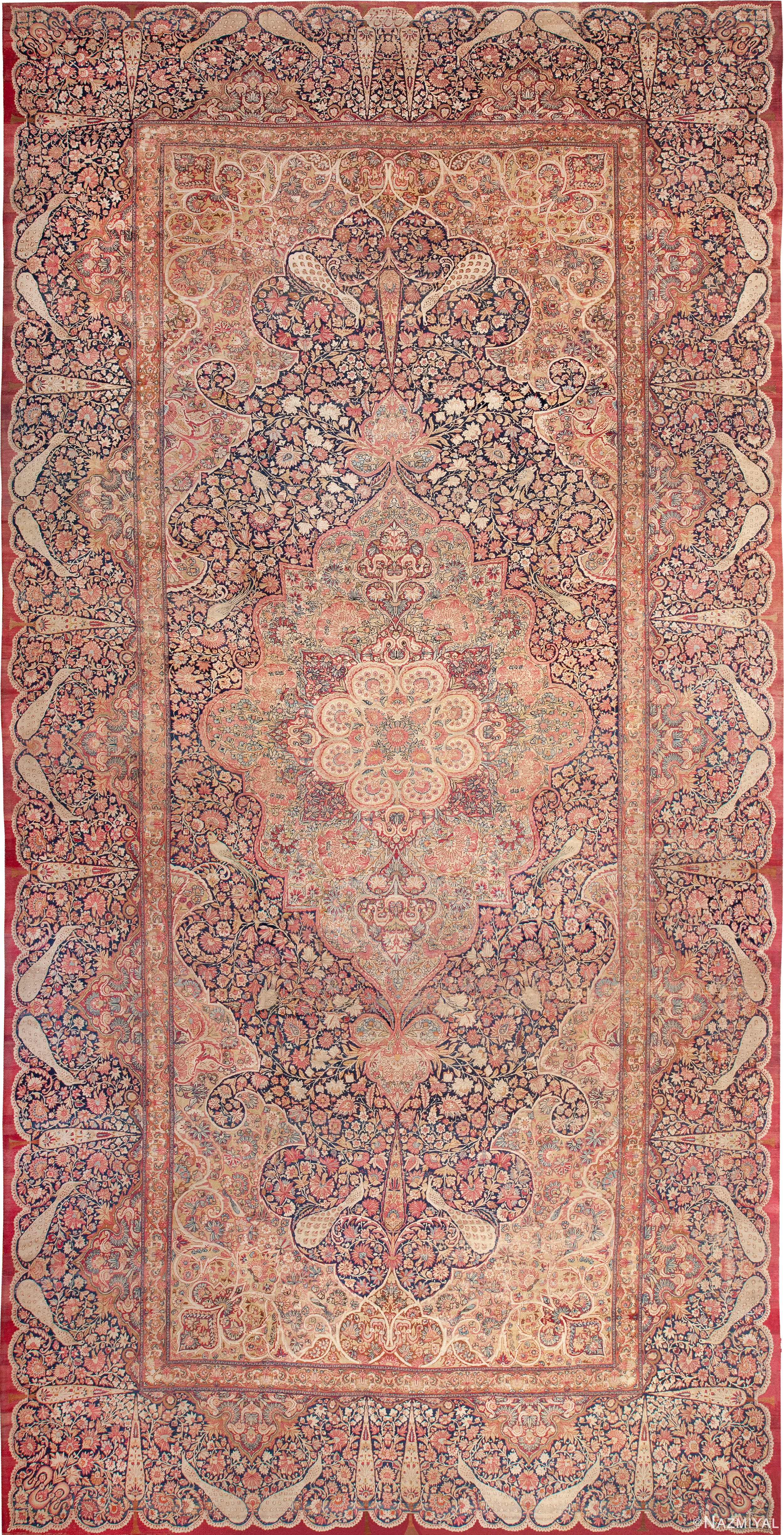
Kerman Rugs, Historically significant carpets with curvilinear, pictorial, and floral traditions, including the renowned vase technique.
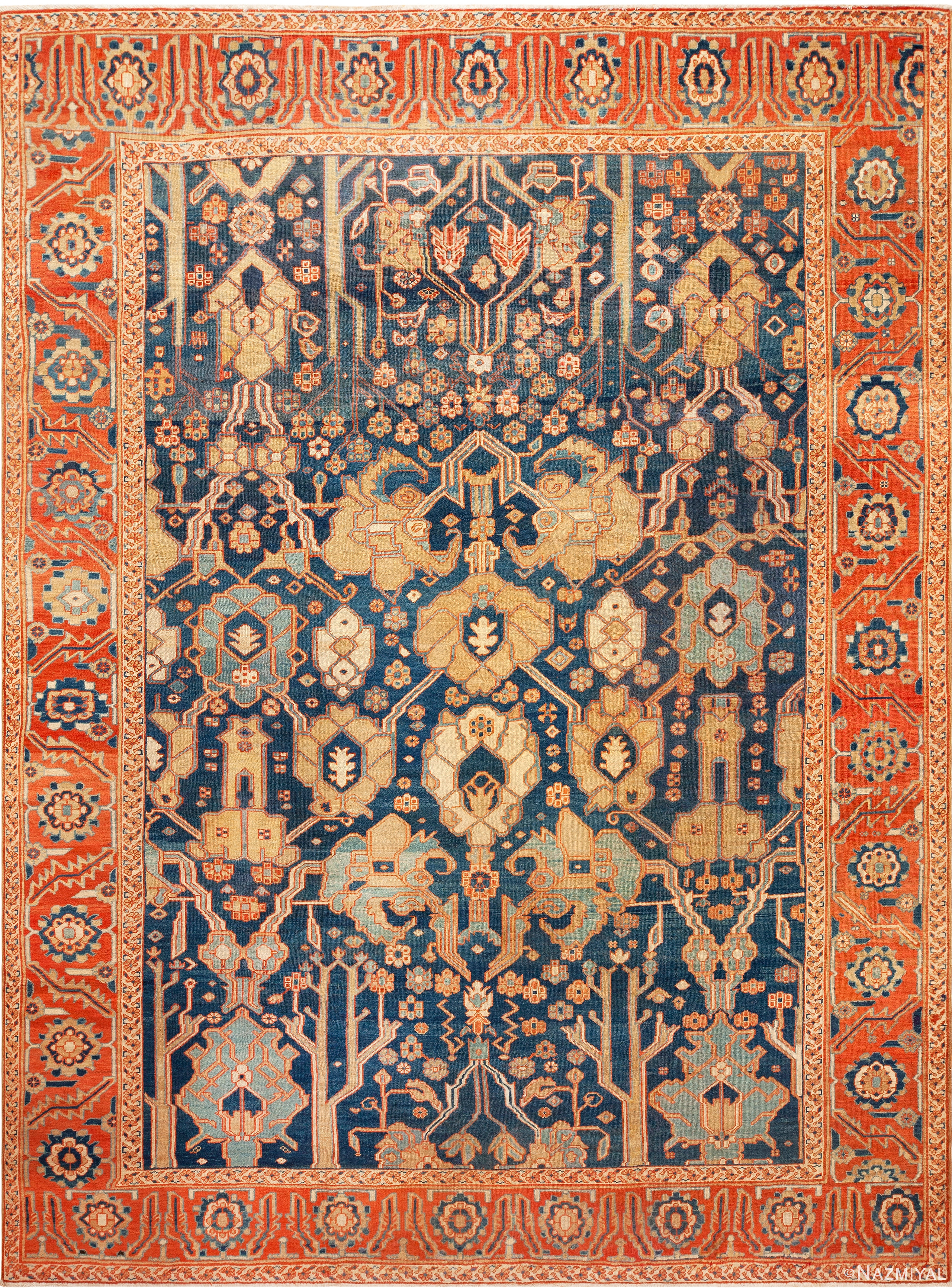
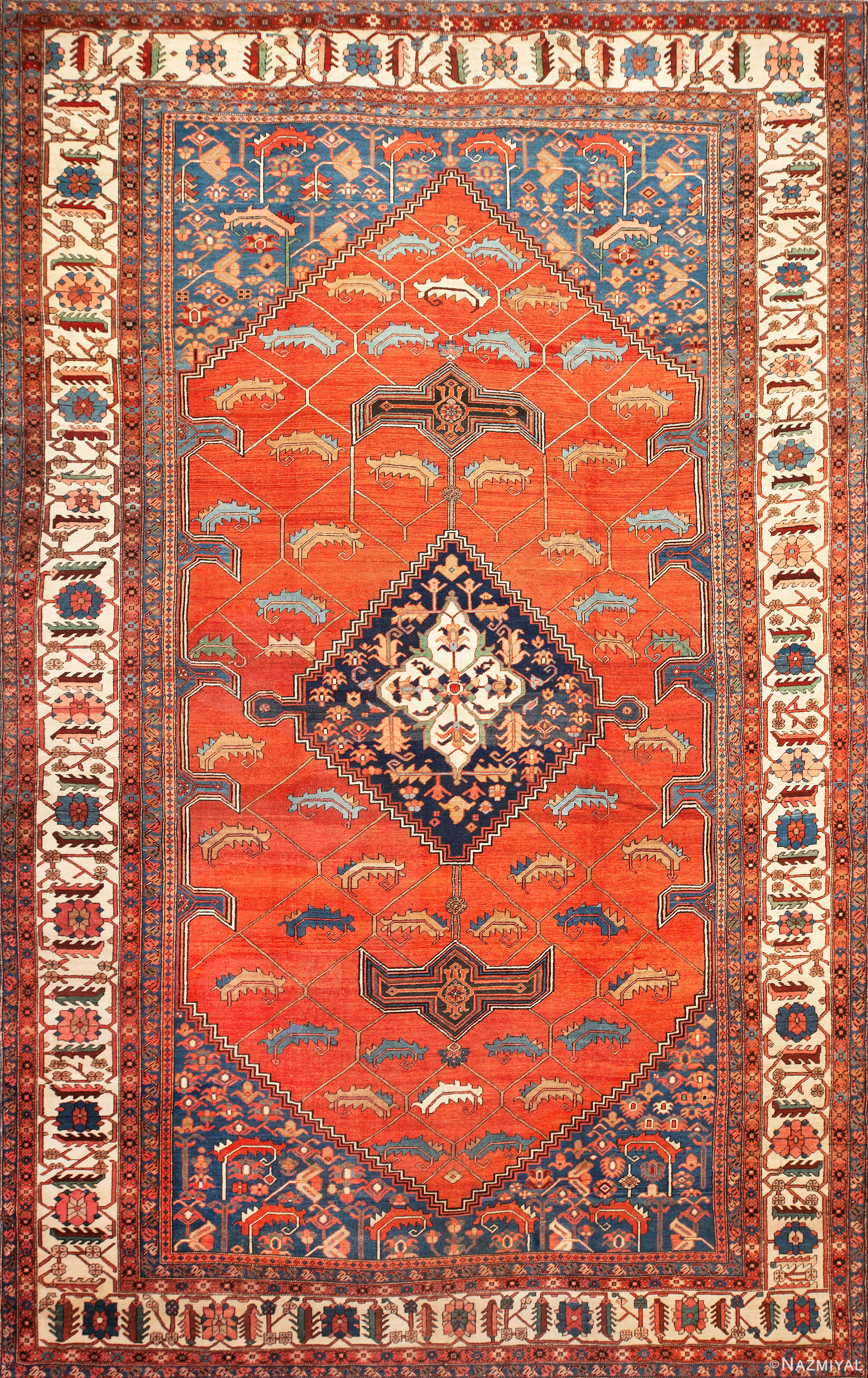
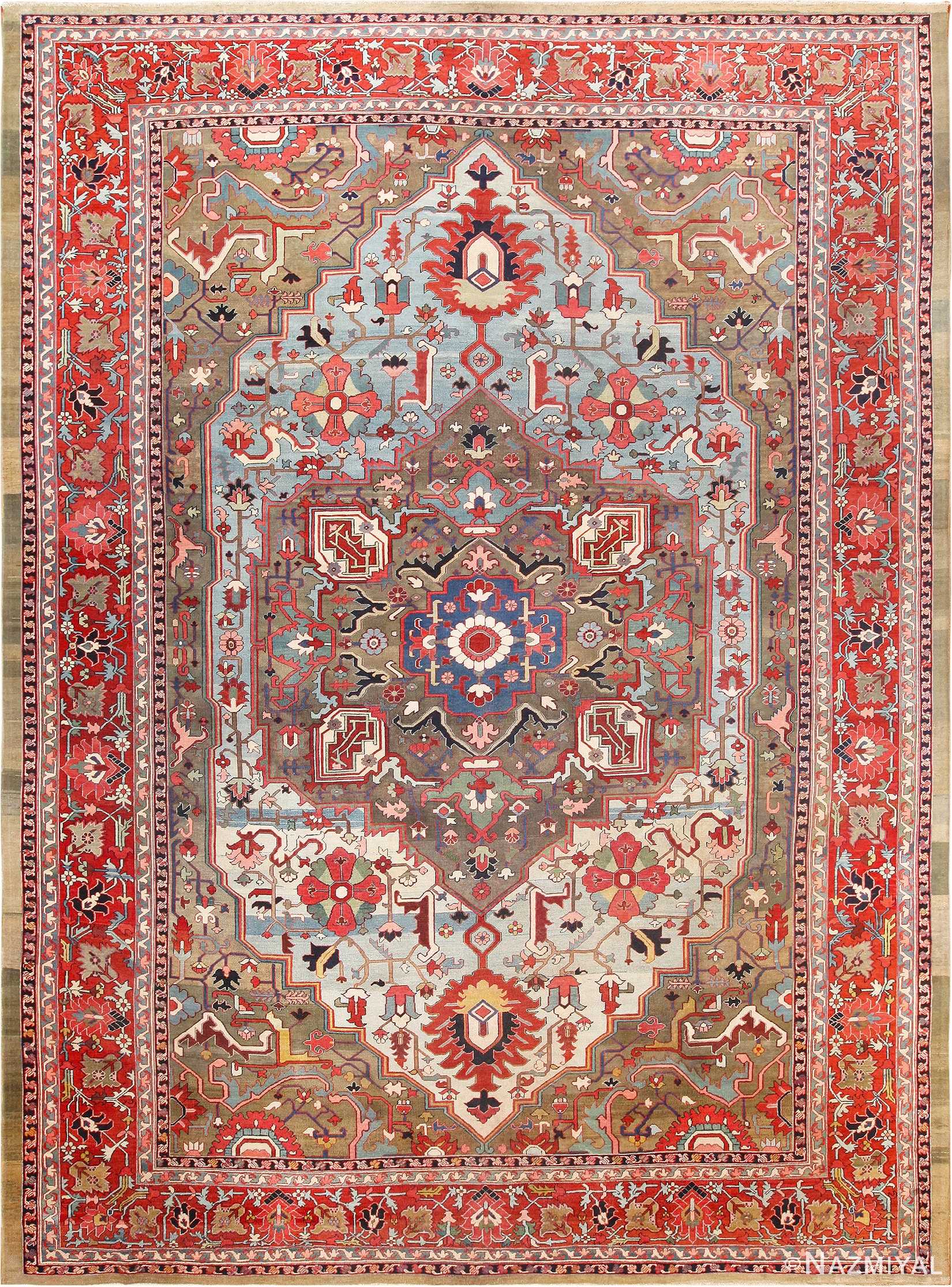
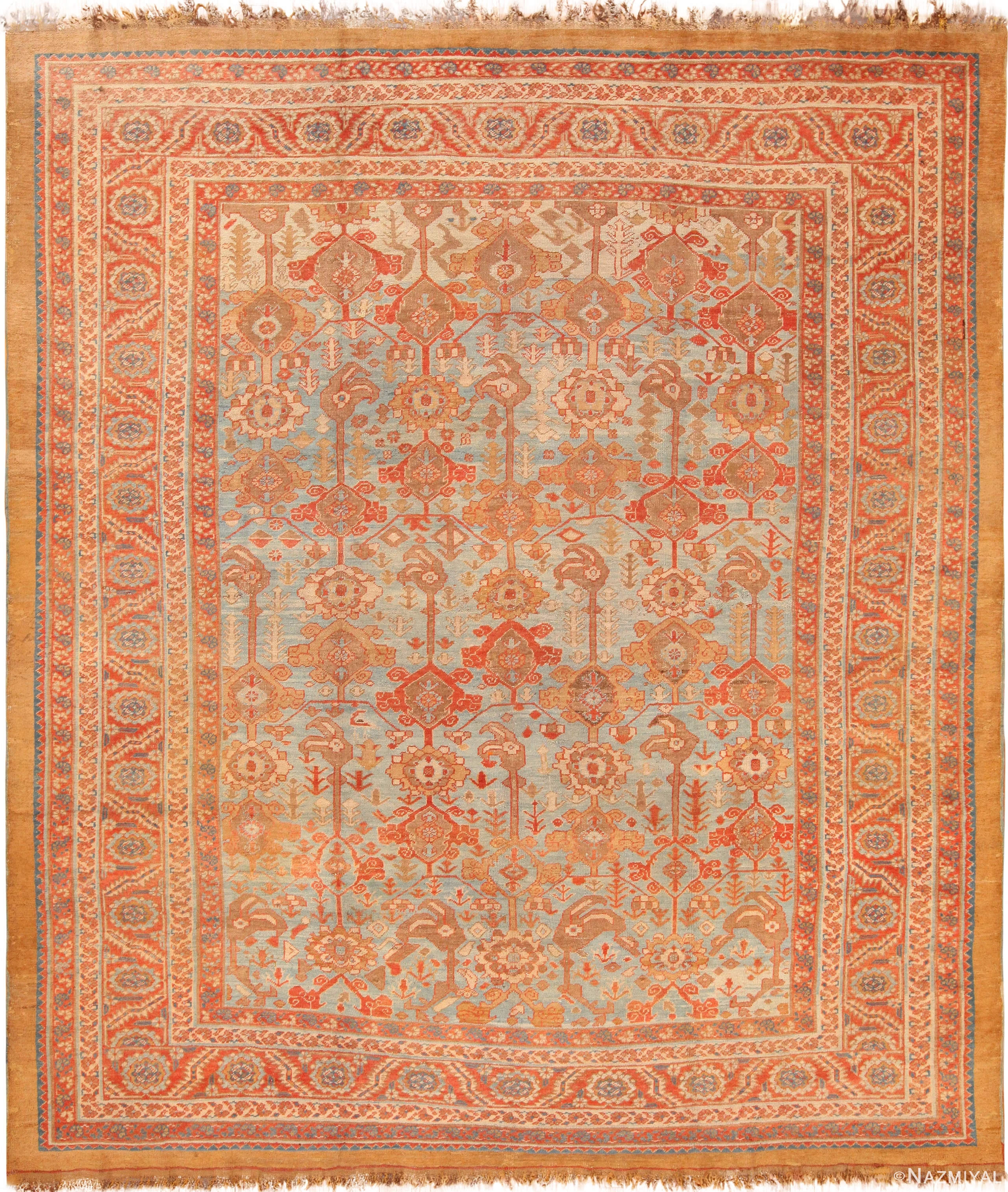
Heriz Rugs, Bold village rugs from northwest Iran, prized for large-scale angular geometry and exceptional durability. Made with thick wool in earthy reds, rusts, and blues.
Serapi Rugs, Earlier, finer Heriz-area rugs valued for spacious drawing, softer palettes, and architectural presence. Highly sought by collectors.
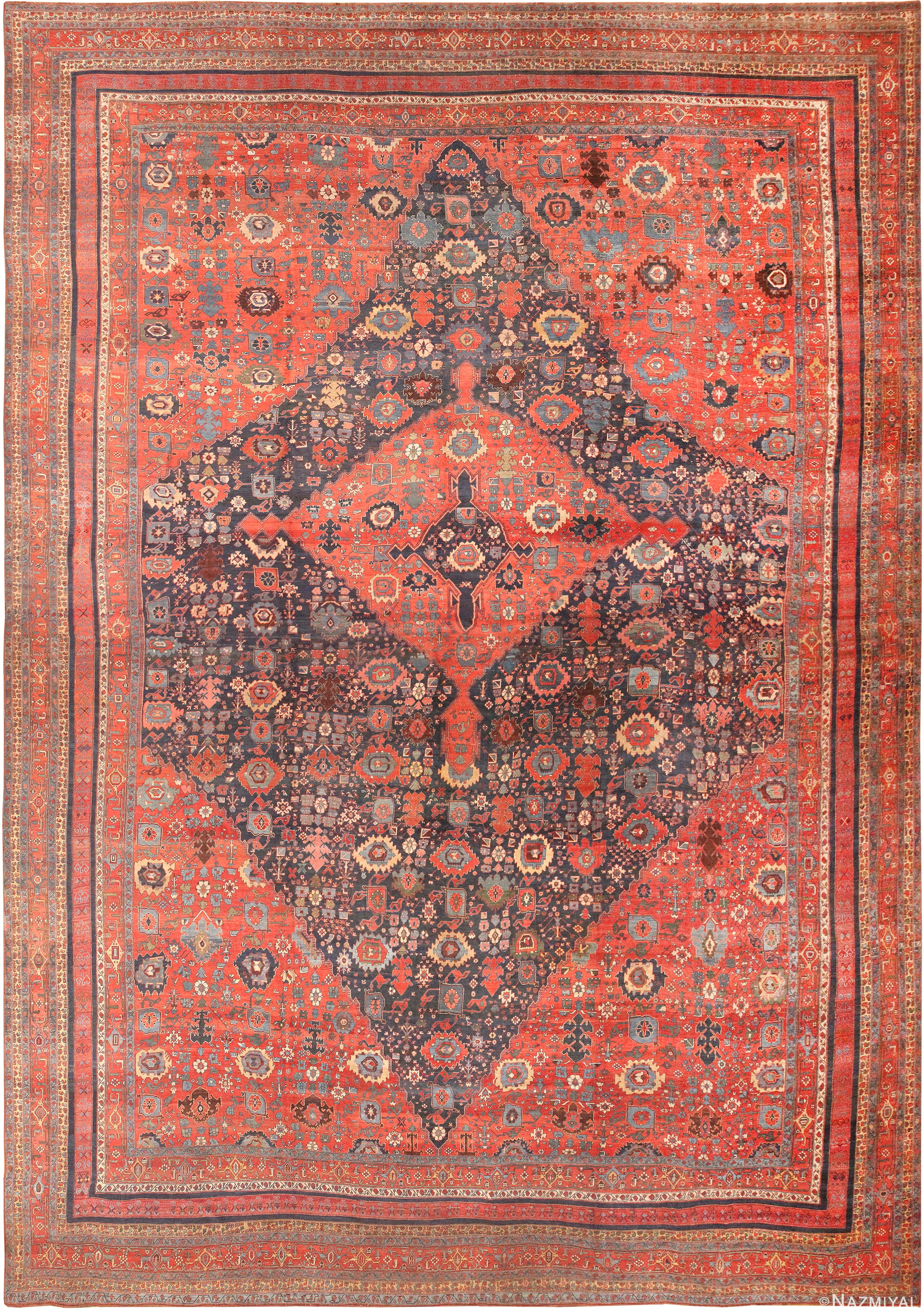
Bidjar Rugs, Dense, tightly woven rugs often referred to as the “iron rugs of Persia” for their extraordinary durability.
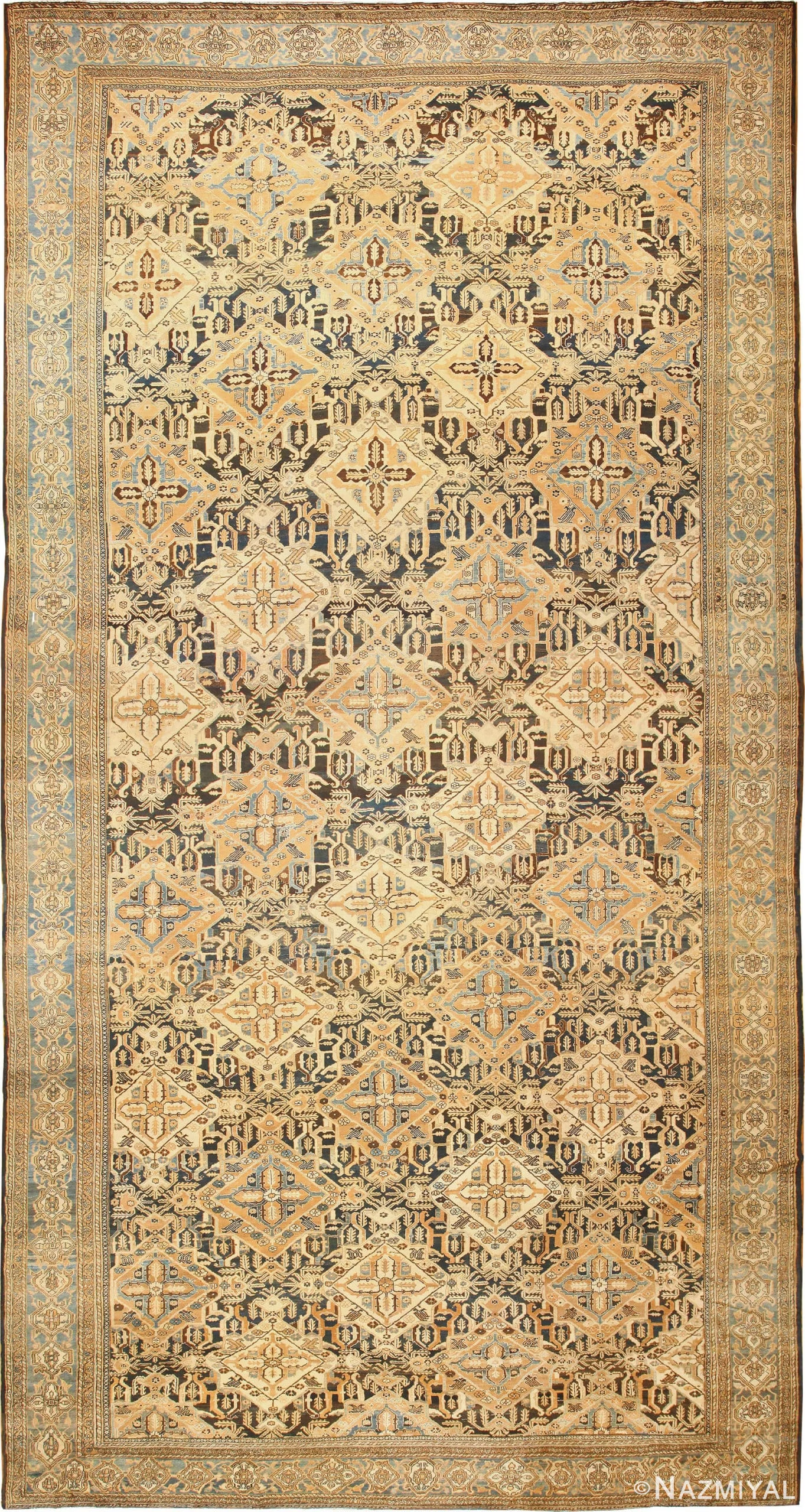
Bakshaish Rugs, Village rugs admired for early geometric expression, often with camel or blue fields and a playful yet sturdy character.
Gabbeh Rugs, Thick-pile tribal rugs emphasizing simplicity, material presence, and personal expression.
Qashqai Rugs, Nomadic rugs woven by semi-nomadic tribes in southern Iran, characterized by rhythmic patterning, symbolism, and rich color.
Bakhtiari Rugs, Tribal and village rugs often featuring structured garden compositions with strong colors.
Malayer Rugs, Village rugs known for dense patterning and varied local interpretation.
Senneh Rugs (Sanandaj), Fine Kurdish rugs recognized for tight structure and refined drawing.
Mashad Rugs, Large-scale workshop carpets produced for expansive architectural interiors.
The Famous Master Weavers of Persian Rugs
Sadly, most Persian rugs, even those woven by master craftsmen, were never signed. For the most part, the creators of these works remain unknown, their names lost to history. We can trace a rug to a region or tribe, but the individual faces behind these treasures have faded into obscurity. Yet a handful of master weavers emerged from the late 19th-century Persian Rug Revival whose names became synonymous with excellence.
Mohtashem of Kashan crafted rugs with intricate floral motifs and deep reds, characteristically identified by their purple or ruby-red silk selvage bindings and blue wefts. These are the most highly regarded of all Kashan weavings. Haji Jalili of Tabriz revolutionized Persian rug palettes with soft ivories and blues, creating high-knot-density carpets that collectors prize above almost all others. Ziegler of Sultanabad produced bold designs from the Arak region that blend tribal flair with refined elegance, now found in major museum collections worldwide. Today, a rug attributed to one of these masters is among the rarest and most valuable finds in the antique rug market.
The Most Famous Persian Rugs in the World
The most celebrated Persian rugs are the twin Ardabil carpets, woven in Tabriz in the 16th century during the height of the Safavid Dynasty. These extraordinary works, among the largest and most technically accomplished rugs ever made, now reside in the permanent collections of the Victoria & Albert Museum in London and the Los Angeles County Museum of Art. Their existence is a testament to what Persian weaving achieved at its absolute peak.
Knotting Techniques in Persian Rugs
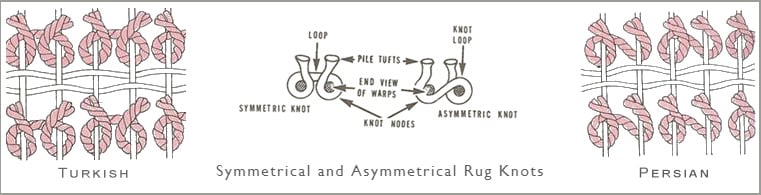
Authentic Persian rugs are hand-knotted using two primary systems. The symmetrical knot (Turkish or Ghiordes knot) loops yarn evenly around two warp threads, producing a strong and durable structure commonly found in village and tribal rugs such as Heriz and Bakhtiari. The asymmetrical knot (Persian or Senneh knot) wraps around one warp thread, allowing greater design precision and finer detail, essential in city rugs like Isfahan, Kashan, and Nain where knot counts can exceed 300 per square inch.
Knot density varies widely by region and purpose. A coarse Heriz might have 30 knots per square inch; a fine silk Nain can exceed 400. This variation is not a sign of quality difference, it reflects the intended design. Knotting technique is one of the most reliable indicators of a rug’s origin, age, and authenticity.
Rug Knots Explained
Materials and Natural Dyes
Traditional Persian rugs are woven using wool, silk, and cotton. Wool, often hand-spun from native Iranian sheep breeds, provides resilience, warmth, and the ability to absorb natural dyes deeply. Silk allows for fine detail and luminosity, used in city rugs from Nain, Qom, and Isfahan where knot counts demand the finest possible fiber. Cotton commonly forms the structural foundation, providing stability particularly in larger workshop rugs.
Natural dyes, derived from plants, insects, and minerals, are one of the defining characteristics of antique Persian rugs. Madder root produces the deep reds of Kashan and Heriz. Indigo yields the blues of Tabriz and Isfahan. Saffron creates golden yellows; walnut shells produce earthy browns. The recipes were guarded as tribal and workshop secrets, unique to each region. Natural dyes age gradually, producing tonal variation and patina rather than flat fading, and this dye behavior remains one of the most reliable indicators of authenticity and age in Persian rugs.
Persian Rugs Compared to Other Rug Traditions
Persian rugs are distinguished by formal design grammar and structural discipline, particularly in city and workshop traditions where weaving followed established artistic and technical systems. Balanced composition, proportional planning, repeatable pattern frameworks, and refined border structures are fundamental to Persian design, typically planned in advance through design cartoons or inherited pattern systems, reinforcing consistency across generations.
By contrast, many Anatolian and Caucasian traditions emphasize improvisation and spontaneous pattern development directly on the loom. This distinction between planned and improvised design is one of the key differences that separates Persian workshop rugs from other Oriental traditions, though Persian tribal rugs, like Qashqai or Bakhtiari, share more in common with their Caucasian counterparts in their free-form spontaneity.
Why Persian Rugs Are Valuable
Persian rugs hold value because of their cultural continuity, technical skill, and historical influence. Many antique examples represent weaving traditions that no longer exist in their original form, the combination of hand-spun fibers, natural dyes, regional design systems, and master-weaver knowledge that produced the great 19th-century pieces cannot be replicated today. As a result, these rugs function as cultural artifacts rather than repeatable decorative goods.
The number of genuine antique Persian rugs will only decrease over time. While the market currently has a wide range of pieces available, very few are considered by the trade to be truly exceptional examples. As time passes and the finest pieces pass into permanent museum and private collections, the rarity of the best examples increases. The record price for a Persian rug sold at auction currently stands at $34 million, a figure that would have seemed unfathomable two decades ago.
Historically, the finest Persian rugs have been referred to as “Iranian stocks and shares.” Iranian marketplace culture has long treated the best examples as stores of value, kept in underground vaults by businessmen alongside gold and property. Persian carpets of museum quality are considered on par with the investment potential of a master painting, with the added practical advantage that they can be used and enjoyed in a home.
Are Persian Rugs a Good Investment?
Well-chosen antique and early vintage Persian rugs continue to show long-term demand when authenticity, structure, and design quality align. Collectors should approach Persian rugs as cultural assets first, any financial appreciation is a secondary benefit. Informed evaluation matters far more than following trend. The best examples, those with strong provenance, intact structure, natural dyes, and clear regional identity, have shown consistent value appreciation over decades.
Persian Rugs vs. Iranian Rugs
The term “Persian rug” refers to rugs woven according to Iran’s historic weaving traditions, hand-knotted, regionally identified, and produced within the cultural and craft systems that evolved over centuries in Persia. “Iranian rug” is a broader term that includes all rugs produced in modern Iran, including contemporary or machine-made examples that may not follow historical methods. All Persian rugs are Iranian, but not all Iranian rugs qualify as Persian in the traditional sense. For buyers, this distinction matters: a Persian rug guarantees a connection to Iran’s weaving heritage, while an Iranian rug is simply a geographic designation.
Persian Rugs Vs. Iranian Rugs
Persian Rugs in Interior Design
In terms of universal decorative appeal, authentic Persian rugs are unbeatable. These remarkable carpets have a timeless, classical elegance that is equally at home in Western interiors, from Midtown Manhattan apartments to Los Angeles penthouses to London townhouses. The lavish botanical designs, perfectly proportioned patterns, and carefully balanced colors are the true secret behind their eternal popularity. Many of the most respected names in interior design, Thomas Jayne, Alexa Hampton, Cullman & Kravis, Michael S. Smith, have turned to Nazmiyal’s Persian rug collection for the finishing element that no reproduction can replicate.
Persian rugs provide structure, balance, and visual authority across traditional, modern, and eclectic interiors alike. Scale and proportion matter more than trend-driven color: a large Serapi or Sultanabad anchors a room in a way that few other objects can achieve. For high-traffic spaces, a Heriz or Bidjar offers legendary durability alongside strong design presence. For formal rooms, an Isfahan or Kashan brings the refined elegance of the Safavid court into a contemporary setting.
Persian Rug Services at Nazmiyal
Persian Rug Cleaning, Specialized cleaning for Persian wool, silk, and natural dyes.
Persian Rug Appraisals, Professional valuation for insurance, estate, and private sale purposes.
Sell a Persian Rug, Confidential private sales and auction placement for single pieces or collections.
Frequently Asked Questions About Persian Rugs
What period of Persian rugs does Nazmiyal specialize in? Nazmiyal focuses primarily on antique and early vintage Persian rugs, pieces woven before the 1920s that represent the peak of Persian weaving traditions. Our collection spans tribal pieces from the Qashqai and Bakhtiari, village rugs from the Heriz and Serapi regions, and formal city workshop rugs from Tabriz, Kashan, Isfahan, and Kerman.
What defines an antique Persian rug? An antique Persian rug is typically identified through its weaving technique, materials, natural dyes, and wear patterns rather than age alone. Most examples in serious collections date to the late 19th or early 20th century. Authenticity is determined by structure and craftsmanship, not a fixed calendar date.
How do I buy a Persian rug remotely from Nazmiyal? Nazmiyal has sold Persian rugs to collectors worldwide for decades. We provide detailed condition reports, accurate measurements, and high-resolution photography for every piece. Our specialists are available to answer questions and guide your selection whether you are in New York or anywhere in the world. Contact us directly to start the process.
What price range should I expect for antique Persian rugs at Nazmiyal? The range is genuinely wide, from accessible decorative village rugs to rare master-weaver pieces of museum quality. Price depends on age, origin, condition, design quality, and rarity. Our team is happy to discuss budget and help identify the best piece within your range.
How does condition affect the value of an antique Persian rug? Honest wear and gentle patina are natural and desirable in antique Persian rugs, they confirm age and authenticity. What matters most is whether the underlying structure remains sound: flat and flexible pile, stable foundation, and consistent wear across the field. Heavy restoration or structural damage reduce value significantly. At Nazmiyal, condition is documented transparently on every piece.
Do Persian rugs always use natural dyes? Older antique examples typically use natural dyes, while later production from the late 19th century onward may include early synthetic dyes depending on period and origin. Natural dyes age into a complex patina; synthetic dyes tend to fade more harshly. Our specialists can identify dye type on any piece in our collection.
Are Persian rugs durable enough for everyday use? Yes. Persian rugs were designed for long-term household use and often last generations. Village and tribal rugs, Heriz, Bidjar, Bakhtiari, Qashqai, are particularly durable and suited to high-traffic areas. Finer city rugs in silk or high-knot-count wool are better suited to lower-traffic settings or display.
Can Persian rugs be professionally restored? Yes, when restoration is performed by specialists familiar with Persian materials and construction. Nazmiyal offers conservation-grade restoration that respects the original structure and materials of each piece. Contact us for an assessment.
Nazmiyal Collection has handled, studied, and authenticated Persian rugs from Iran for more than four decades. Browse our full collection above or contact our specialists directly.
Trustindex verifies that the original source of the review is Google.
The only ones I'd ever buy rugs from. The best.
Posted on Google
Jeffrey NeumanB
Trustindex verifies that the original source of the review is Google.
I bought two gorgeous Serapi rugs from Farhad at Nazmiyal Rugs! Beautiful carpets, fair prices and great service. Very happy customer. Farhad (the sales person) was very patient and gave us great service.
Posted on Google
john haid
Trustindex verifies that the original source of the review is Google.
Alen is a gentleman and an expert. Really great to work with.
Posted on Google
Edward Yasuna
Trustindex verifies that the original source of the review is Google.
I recently purchased a modern Kandinsky rug from Nazmiyal Auctions. It was just as described, and the director (Farhad) of the auctions had it sent to me quickly and safely. Payment was easy, the rug was reasonably priced, and I highly recommend Nazmiyal Auctions and Antique Rugs. Quality merchandise and first-class service.
Posted on Google
Nicholas Carr
Trustindex verifies that the original source of the review is Google.
Had a excellent experience buying a rug in Nazmiyal's 1/18/26 online auction. First, prior to the auction, viewing a number of lots at the 32nd St showroom (I had prepared a list from the online catalog). The staff were great to work with: helpful, knowledgable, honest, and flexible. Second, after placing an online bid and winning the desired item, arranging payment and pickup was simple and straightforward. Everything went seamlessly and the overall experience was educational and fun. Many thanks to Jason and his team.
Posted on Google
Andrea Gared
Trustindex verifies that the original source of the review is Google.
Everyone at Naziyal is proffessional, especially Jason and Farhad.
They are knowledgeable, truthful, and true gentlemen. I have sold several rugs through them and will always go to them first, to buy or sell. The best in the business!
Posted on Google
Lori Silverberg
Trustindex verifies that the original source of the review is Google.
Posted on Google
Jesse Zilberman
Trustindex verifies that the original source of the review is Google.
Excellent customer service! Alen was very helpful over the phone and email. The rug we acquired was stunning, and photos do not do it justice. I would definitely work with Alen and team again!
Posted on Google
Rachel Paul
Trustindex verifies that the original source of the review is Google.
Jason was incredibly kind and helpful! I work for a small museum that had some rugs we had no information on. Jason responded to us quickly and gave us the information we needed for free! Incredible service, we are super thankful for his help!

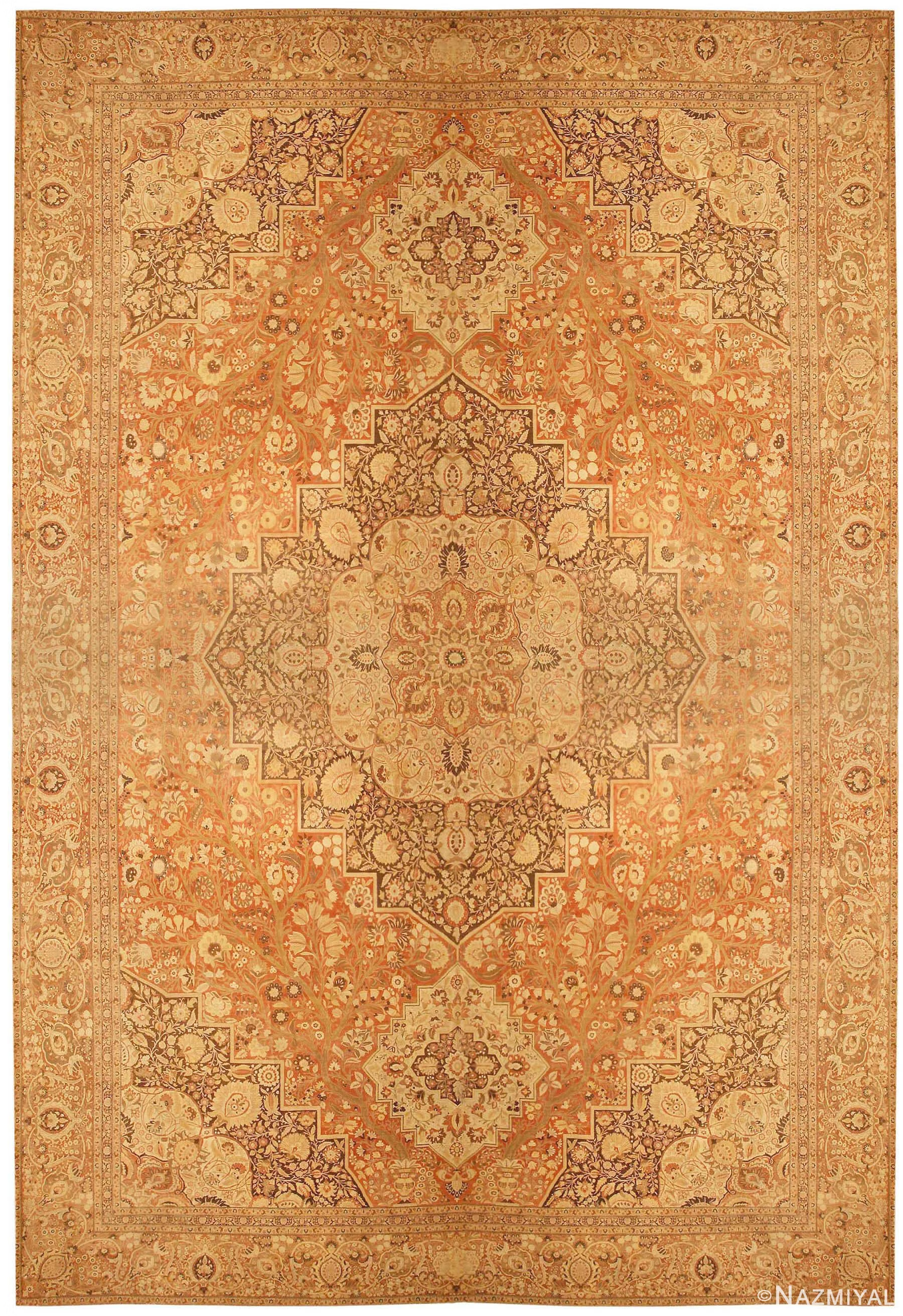
 Luxury Antique Oversized Persian Tabriz Rug with Sophisticated Floral Pattern and Coral Border 73648Size: 13 ft 7 in x 21 ft 7 in (4.14 m x 6.58 m)
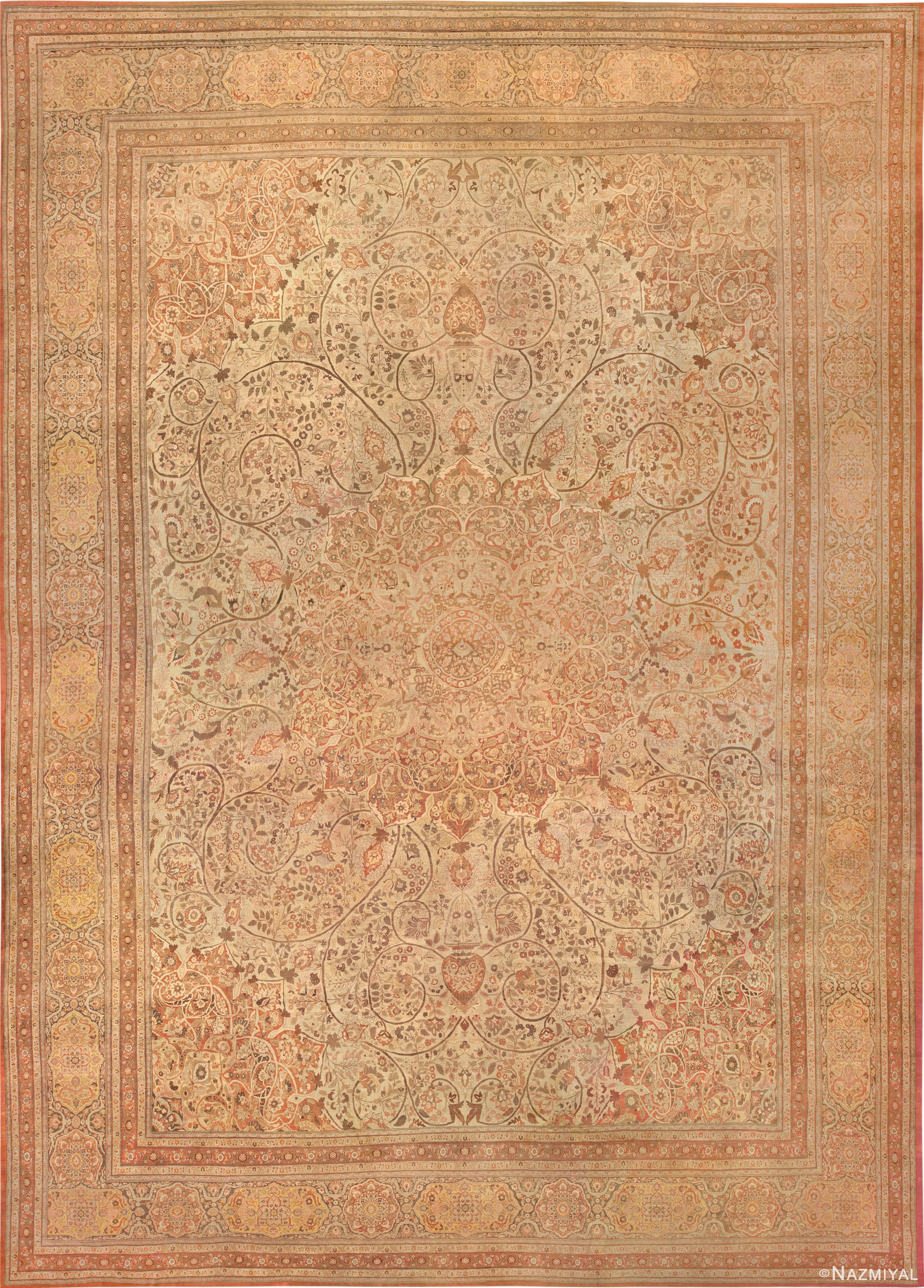
 Size: 11 ft 7 in x 15 ft 3 in (3.53 m x 4.65 m)
 Size: 8 ft 3 in x 11 ft 9 in (2.51 m x 3.58 m)
 Size: 6 ft 8 in x 10 ft 2 in (2.03 m x 3.1 m)
 Size: 11 ft 10 in x 18 ft (3.61 m x 5.49 m)
 Size: 11 ft 2 in x 13 ft (3.4 m x 3.96 m)
 Size: 7 ft 2 in x 9 ft 9 in (2.18 m x 2.97 m)
 Size: 4 ft 4 in x 6 ft 4 in (1.32 m x 1.93 m)
 Size: 11 ft 8 in x 18 ft 10 in (3.56 m x 5.74 m)
 Size: 10 ft 9 in x 12 ft 10 in (3.28 m x 3.91 m)
 Size: 9 ft 10 in x 14 ft 10 in (3 m x 4.52 m)
 Size: 19 ft 7 in x 41 ft (5.97 m x 12.5 m)
 Size: 21 ft 2 in x 32 ft 3 in (6.45 m x 9.83 m)
 Size: 22 ft 5 in x 32 ft (6.83 m x 9.75 m)
 Size: 19 ft 5 in x 31 ft 3 in (5.92 m x 9.52 m)
 Size: 15 ft x 30 ft (4.57 m x 9.14 m)
 Size: 11 ft 4 in x 30 ft (3.45 m x 9.14 m)
 Size: 14 ft 3 in x 29 ft 8 in (4.34 m x 9.04 m)
 Size: 18 ft 1 in x 29 ft 1 in (5.51 m x 8.86 m)
 Size: 14 ft 4 in x 28 ft (4.37 m x 8.53 m)
 Size: 12 ft x 28 ft (3.66 m x 8.53 m)