Best Rug Materials for Hardwood Floors
For most rooms with hardwood floors, a well-made rug made from wool is often a strong all-around choice. Wool is durable, comfortable underfoot and available in both pile and flat-woven constructions. The rug should be colorfast, while its backing or pad should be smooth, breathable, non-staining and appropriate for the finish on the floor.
The best choice also depends on how the room is used. A lower-pile or flat-woven rug can work well beneath dining furniture, while a thicker pile may add warmth and softness in a bedroom or sitting room. In entrances and other high-traffic areas, prioritize durable construction and a rug pad that keeps the rug stable without trapping moisture or scratching the floor.
Beyond material, consider the rug’s size, construction, color and relationship to the wood. A good rug should protect the floor, suit the room’s traffic level and complement the wood rather than hide it completely.
What Rugs and Rug Pads Are Safe for Hardwood Floors?
The rug fiber alone does not determine whether a rug is safe for hardwood flooring. Its backing or pad should be breathable, non-staining, colorfast and non-abrasive. Avoid applying rug tape or another adhesive directly to the floor unless the flooring manufacturer specifically approves it.
Do not assume that every rubber, latex, PVC, jute, natural-fiber or synthetic backing is safe for every hardwood finish. Flooring manufacturers provide different care and warranty instructions, so check the guidance for your specific floor before selecting a rug pad.
Use a pad designed for hardwood floors, vacuum or sweep beneath the rug regularly and rotate the rug occasionally so that exposed wood ages more evenly in sunlight. Clean spills promptly and make sure that both the rug and floor are completely dry before returning the rug to place.
Nazmiyal’s rug specialists can help evaluate a rug’s construction, size and placement, but the flooring manufacturer should remain the final authority on which pad materials are approved for its finish.
How to Choose a Rug Style for Hardwood Floors
The best rug style is the one that supports the room’s palette, scale and level of formality. Hardwood can act as a neutral backdrop, so a rug may echo the floor’s warm or cool undertones or create a deliberate contrast. The three room views below show how Persian, Scandinavian and Bessarabian rugs can produce very different effects over the same hardwood floor.
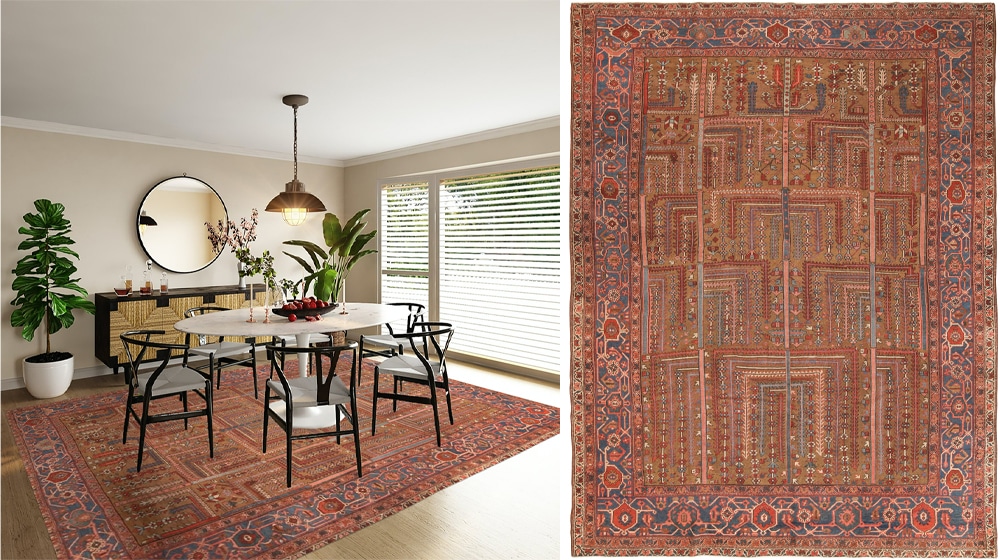
This antique Persian rug features a distinctive interpretation of the traditional Tree of Life rug design. Its earth tones, defined border and rich reds and browns give the room a traditional, layered character while drawing attention to the warmth of the hardwood floor.
View the Tree Of Life Design Antique Persian Bakshaish Rug.
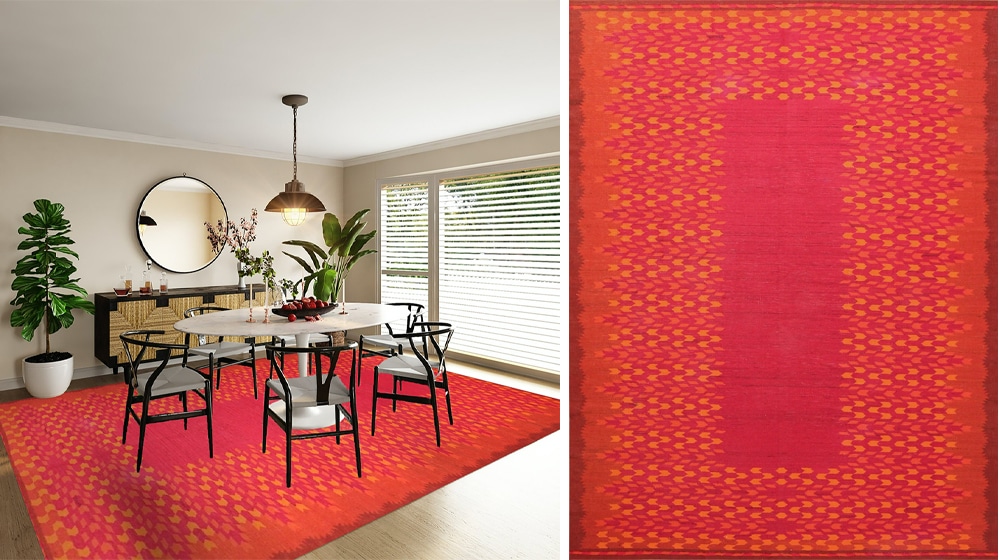
This vintage Scandinavian rug uses a restrained geometric pattern and saturated reds to give the room depth and movement. Its flat-woven construction and repeating design create a more modern effect while echoing the linear pattern of the hardwood floor.
View the Large Size Vintage Scandinavian Rug.
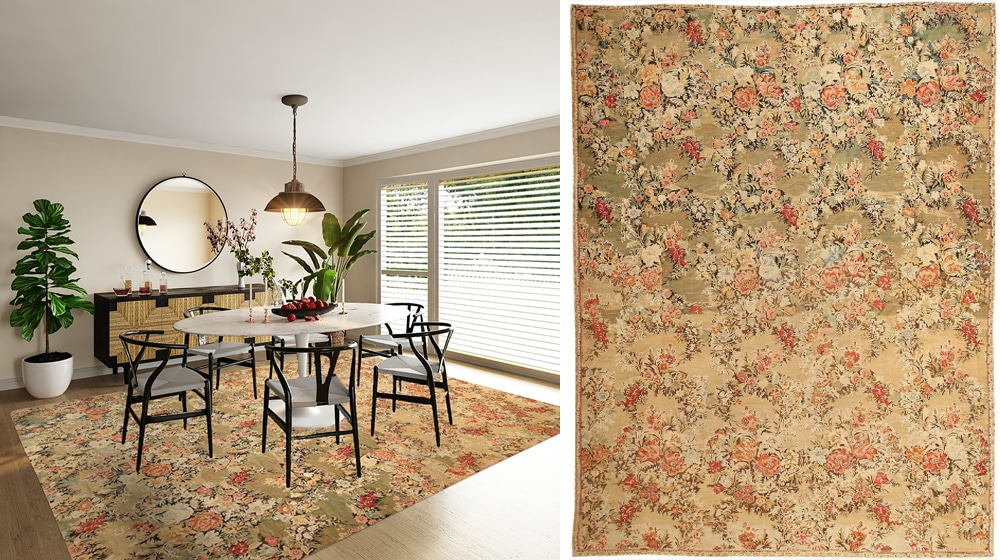
This antique Romanian Bessarabian kilim gives the room a softer, more romantic character. Its floral design and muted palette contrast gently with the hardwood without obscuring the floor’s natural warmth. The European court-inspired floral language associated with many Bessarabian rugs also reflects influences from historic French rugs and interiors.
View the Antique Bessarabian Flat Weave Kilim Rug.
What Kind of Rug Should I Use on a Hardwood Floor Based on Practicality?
Hardwood floors provide a versatile backdrop for showcasing the details of a well-designed rug. A rug can also add cushioning, visual warmth and textural interest while helping protect frequently used portions of the floor.
Rugs can be especially useful in heavy-use areas such as kitchens, entrances and seating areas. Choosing durable rugs for high-traffic areas with strong materials and well-executed construction can help protect the floor beneath them. More delicate rugs are generally better placed in rooms with less foot traffic or in areas where furniture and walking patterns place less stress on the pile.
How Big Should a Rug Be on a Hardwood Floor?
In general, use the largest rug that fits the space comfortably while leaving enough hardwood visible to frame it. For more detailed room-by-room measurements, consult Nazmiyal’s rug size chart and guide.
- Fill the Room: If you choose large rugs to tie together the entire room, leave a visible border of hardwood around the rug. The appropriate border will depend on the dimensions and proportions of the room.
- Define a Space: If you plan to place and position the rug beneath a seating area, make sure it is large enough for at least the front legs of the main furniture to rest on it. Choosing a rug that is too small is a common mistake, so beginning with a larger size can create a more cohesive arrangement.
- Layer Rugs: If you fall in love with a rug that is too small for the space, layering can provide a practical solution. Place the smaller rug in the center of a larger rug, or overlap multiple rugs to add more visual interest to the room. For more guidance, read Nazmiyal’s article about layering rugs in interior design.
Antique Rug Examples for Hardwood Floors
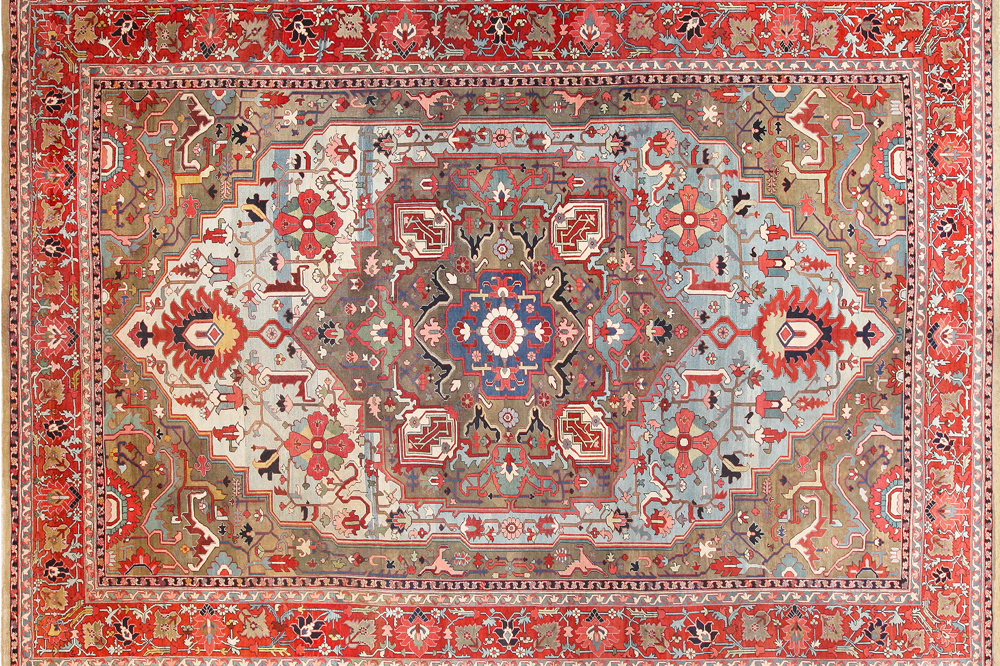
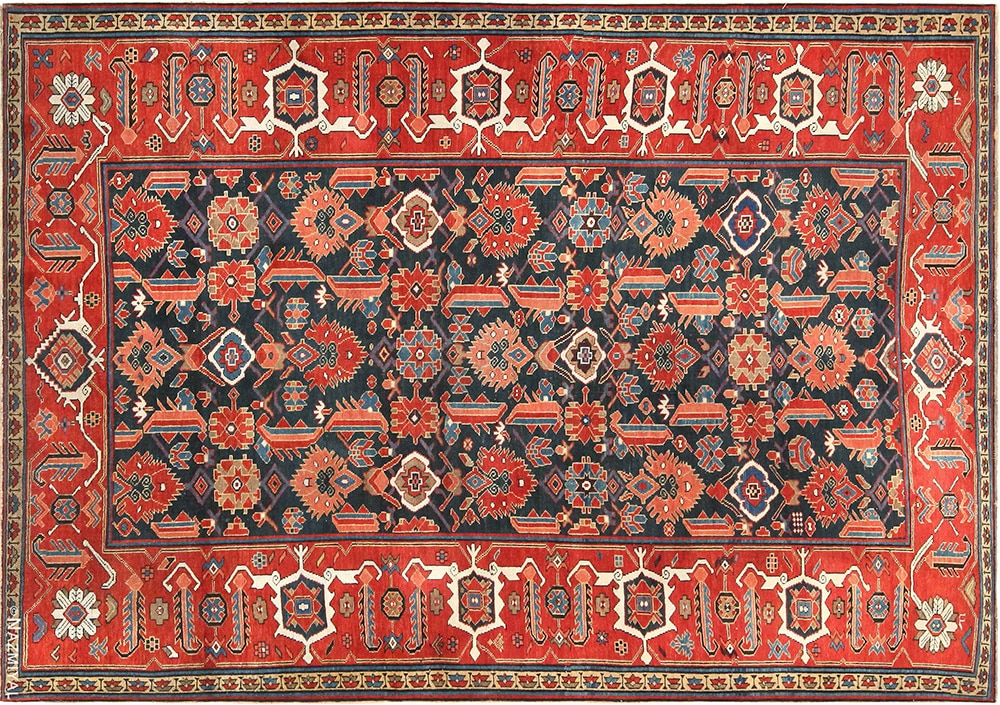
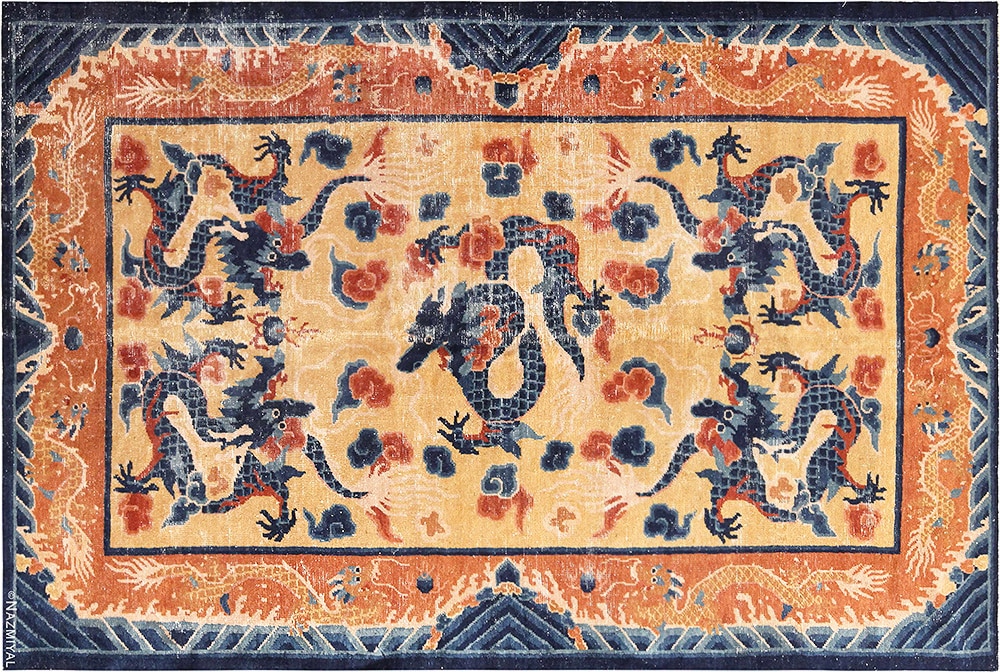
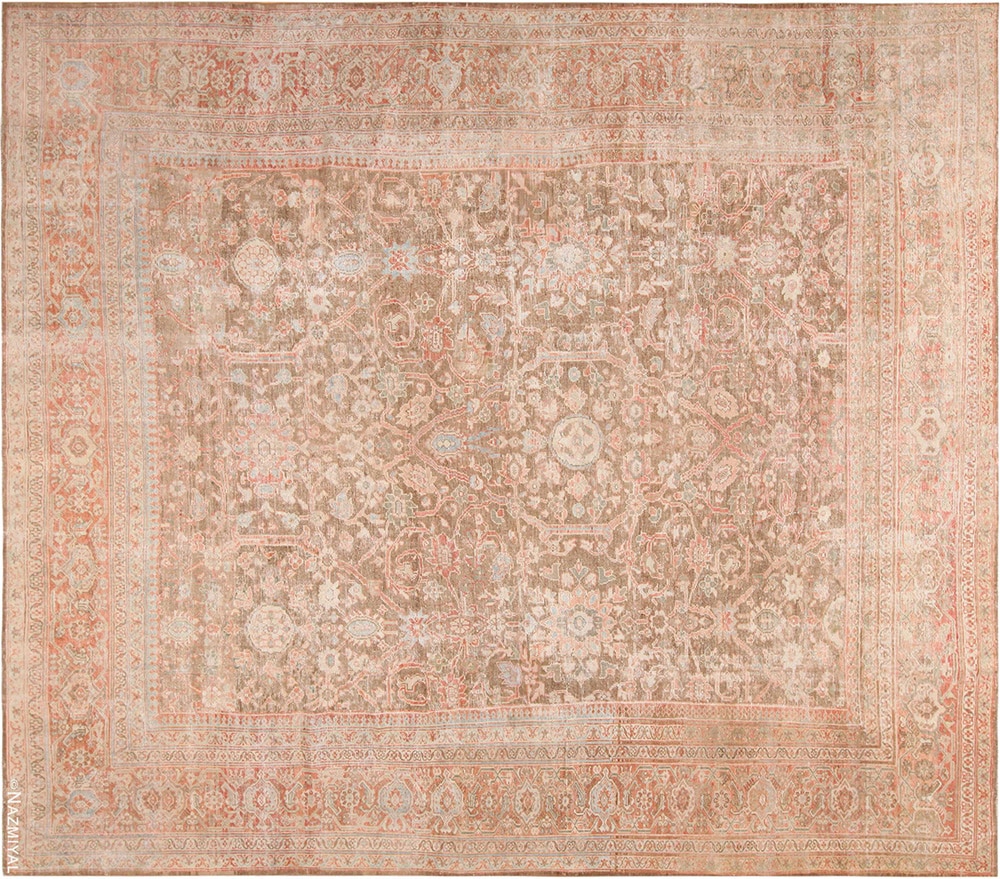
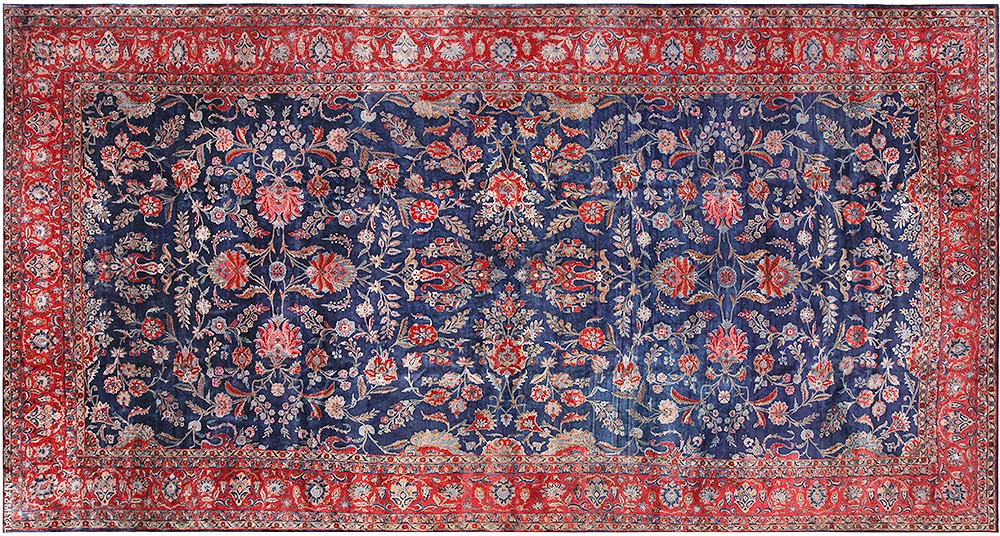
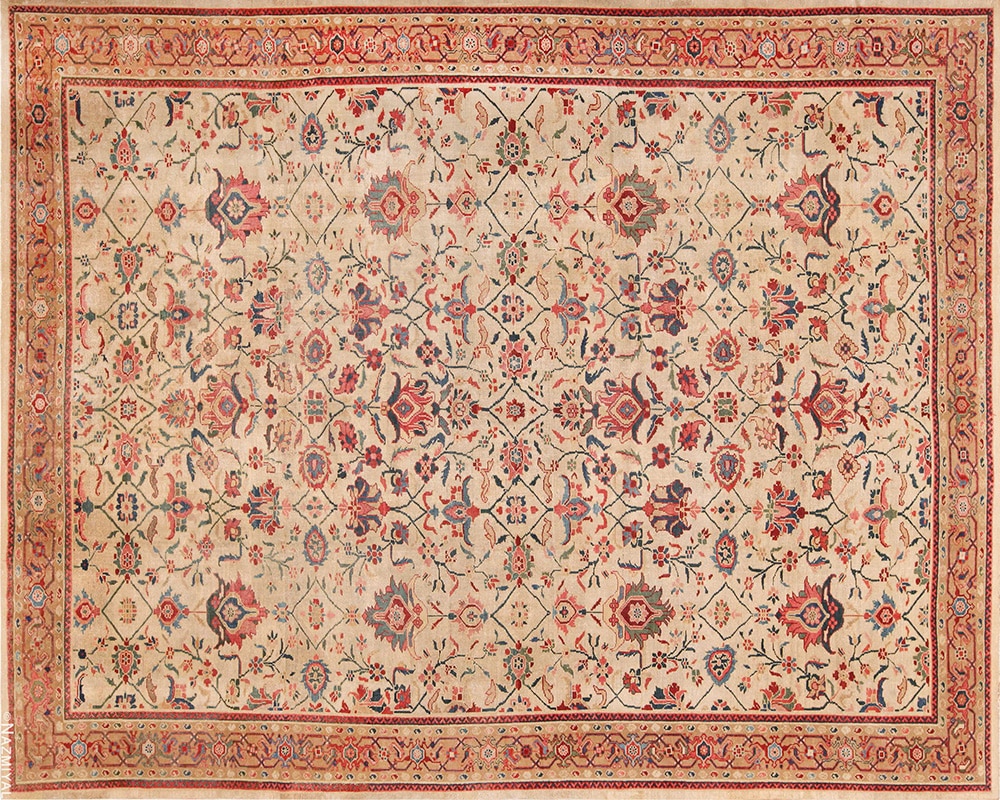
The following examples show how different colors, scales and weaving traditions can work over hardwood floors. Individual rugs may no longer be available, but the images remain useful design references.
Explore Rugs for Hardwood Floors
The right rug for a hardwood floor should suit the room’s scale, traffic level and design while resting on a pad approved for the floor’s finish. Explore Nazmiyal’s antique rugs, vintage rugs and modern rugs to compare different materials, constructions and styles.