It’s still early in the new year but we’re already seeing significant shifts in popular rug trends. Below is a detailing of what to expect in the rest of 2026.
5 Shifts in 2026 Rug Trends
1. Texture Replaces “Pattern Drama”
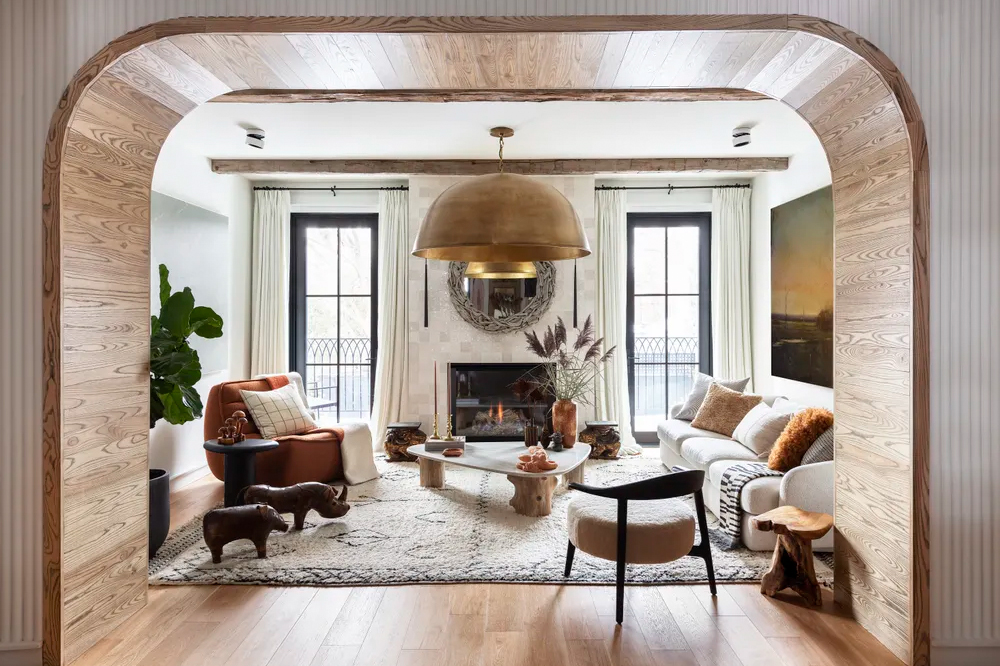
Don’t worry, people still love patterns, and designers have no plan to abandon it. However there is a shift in what designers build off of. Rather than patterning, surface texture is being used as the basis for an interior. Elements such as visible weave, subtle abrash, softer pile, or hand-knotted finishes are becoming more and more favorable. Anything that doesn’t read as flat. This means a rug can feel rich, taking up visual space in a room without busy or full patterning.
2. Calm Neutrals Get Undertones
Unlike previous years, in 2026, “neutral” is no longer referring to the once popular white-on-white aesthetic. Instead, neutrals lean more towards a relaxed aesthetic, borrowing a more nature-based color palette. Warm tones akin to those of sand, oat, stone, or mushroom, are replacing stark whites.
For rugs, this is where an aged palette shines. Antique and vintage rugs often carry color in layers giving textiles a unique life, rather than one flat note.
3. Curved Rooms are Everywhere, and Rugs Have to Cooperate
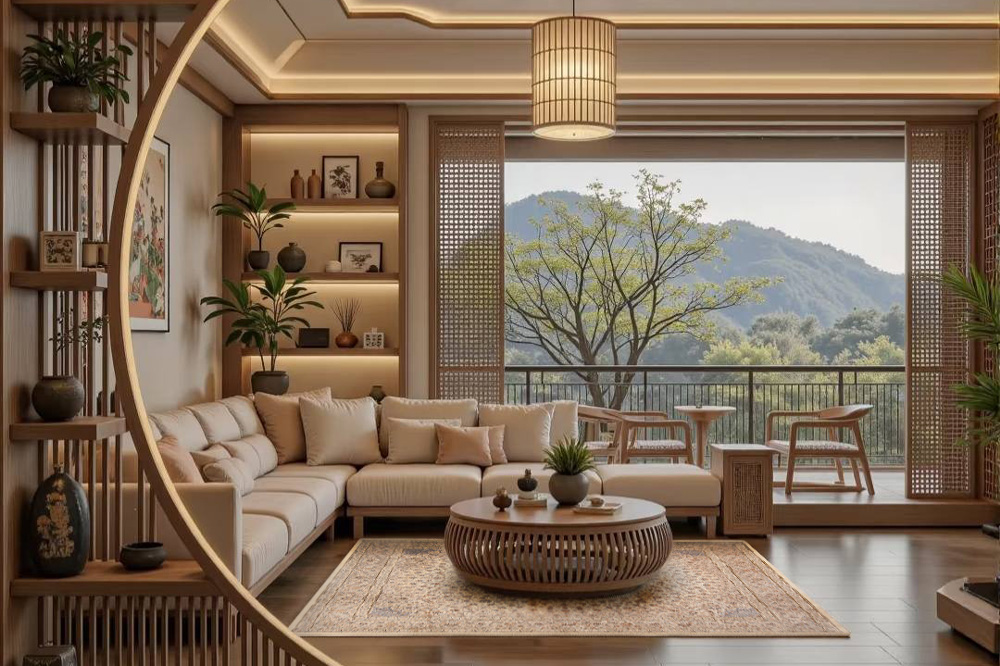
The rise of curved seating and rounded architecture changes how the floor reads. A rug now has to do more than fit a space. It must also either echo the geometry of a room or anchor it. Rounded rugs fit the curved geometry of these interiors and generous rectangular rugs can contain conversation areas.
4. Collected Beats Curated
While many strive for a beautifully decorated home, we shouldn’t forget that at its core, a home is to live in. There needs to be some sort of balance so that a living space doesn’t end up looking instead like a museum. In 2026, homes are moving away from perfect sets. Desirable rooms feel lived-in, personal, and assembled over time.
This is exactly the lane where older rugs naturally excel, carrying long cultural histories with a uniquely human touch.
5. Layering Becomes a Real Design Tool
Layering rugs has been an interior design trick for a while now, but what once felt gimmick-y has taken on a new life. Instead of pure aesthetics, layered rugs in 2026 are about controlling feel. They can add softness, create zones, and help reduce visual noise.
When done right, it looks intentional. Done wrong, layering rugs looks indecisive and messy. Below, learn the formula for how to properly layer your textiles.
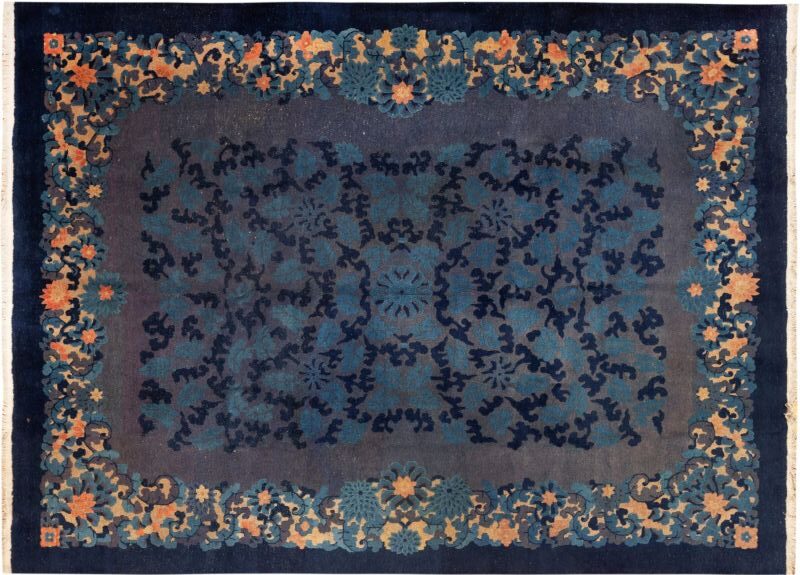
Layered Rugs 2026: The Simple Formula That Works
Layering rugs naturally involves several components. It’s important to understand that within a singular composition, each layer has its own job to make the complete vision one that works harmoniously, both within the space and with the other layers. Factors such as pattern, scale, color, and texture, are all something to think about when layering.
Here’s the formula we use when we’re advertising clients who want the look without the mess.
The 2-Layer System
- Base layer (quiet + large) – a flat, grounding rug that sets the footprint of the room.
- Top layer (character + smaller) – the statement piece placed where you actually live. Usually this means the sofa area, coffee table zone, or bedside landing. The top layer is often a vintage or antique piece.
What Makes it Feel “2026” and Uncluttered
- Keep the base simple – low pattern or solid texture so the top rug reads clearly.
- Repeat one color – pull a single tone from the top rug into pillows, art, or upholstery.
- Use the right pad – slipping is what makes layering look wrong. Stability makes it look designed.
- Choose contrast in texture, not chaos in pattern – flatweave + pile is a classic pairing.
If you want a clean, graphic base layer, start with Kilim Rugs. Flatwoven pieces that sit close to the floor layer beautifully. For sizing rules, before buying anything use the Rug Size Guide.
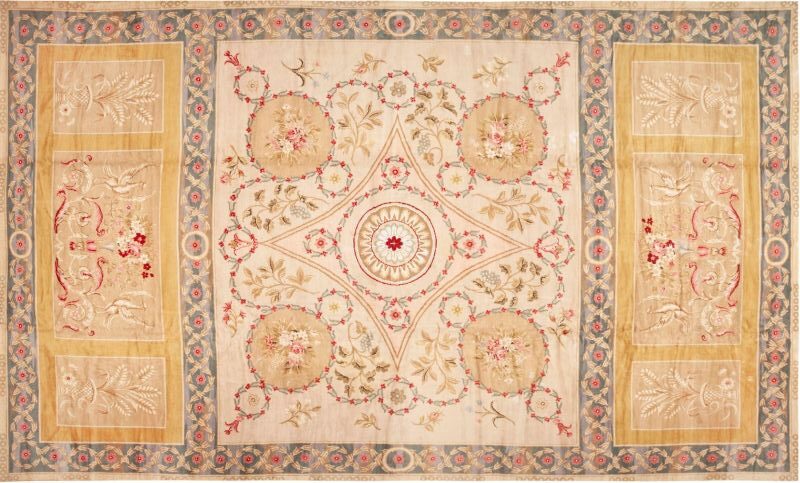
Curved Rooms: Rug Shapes and Layout Rules
While curved sofas and rounded chairs soften a room, they also expose when a rug is undersized or awkwardly placed. Here are the two layouts that consistently work.
Option A: Round and Oval Rugs
- Works best when the whole plan is curved
- Great for – most living rooms, open-plan spaces, mixed furniture (curved + straight)
- Rule – at minimum, front legs of all main seating should be on the rug. Ideally the entire seating group is contained.
For curved rooms that still need easy decorating, a classic move is a softly drawn, open-pattern rug. This makes the room less busy, providing breathing room. That’s why decorative antique and vintage Oushak rugs keep showing up in designer projects.
Calmer Neutrals That Don’t Look Flat
As previously mentioned, the new “neutral” is about evoking comfort and softness. Layered earthy tones offer an organic feel opposite to the prior stark interiors.
How to Choose a Neutral Rug That Still has Depth
- Look for color variation – abrash and gentle striation add dynamism to a space without the need for loud patterning.
- Choose lower contrast – it calms the room and supports art, upholstery, and wood tones.
- Go for designs with space – allover patterns and open fields read more modern in 2026.
- Let texture do the heavy lifting – a subtle design with a great surface beats a busy design with no soul.
If your home leans modern but you still want warmth and character, this is where Vintage Rugs often outperform brand-new “neutral” rugs. Their color already has nuance built through decades. If you want to compare across all ages quickly, browse by palette in our Rugs by Color hub.
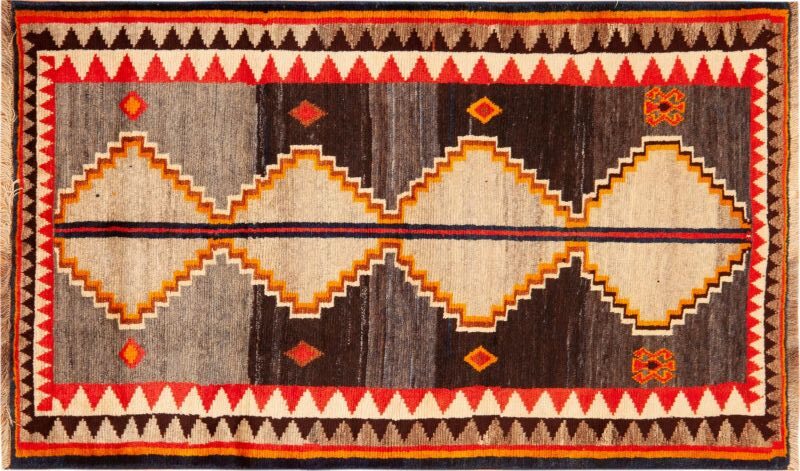
Why Antique and Vintage Rugs are Perfect for the 2026 Look
A lot of 2026’s new look is, ironically, a return to what collectors have valued for a long time. That is to say, authentic materials, tangible handwork, and palettes that feel settled.
Antique Rugs Deliver 2026’s Priorities Naturally
- Texture is real, not manufactured – hand-knotted surfaces age with dignity, and the weave has presence.
- Color has layers – older palettes often soften in a way designers try to imitate today.
- Irregularity reads as “collected” – small variations are a feature, not a defect, when the rug is authentic.
- Design language is deeper – classic motifs and layouts were refined over generations.
If you’re starting from scratch, begin with the age category that fits your intent:
- Antique Rugs – for heritage pieces 80+ years old.
- Vintage Rugs – for a relaxed, 20th century “design-first” approach.
- Persian Rugs – a good orientation point for broader context beyond one region.
Shopping internationally? Our team works with clients worldwide, and the fastest way to browse by market is our Worldwide Rug Experts hub.
Antique and Vintage Rugs vs New “Trend Rugs” – The Practical Difference
Both aged rugs and trendy rugs have their merits. It all depends on the space and the occupant. Compare them and see which fits your personal needs best.
Antique and Vintage Rugs
- Best for – texture, depth, collected feel, nuanced color
- Where they shine – layered rooms, calm neutrals with character, statement pieces that don’t scream
- What to check – structure, corners, ends, prior repairs, accurate condition notes
New “Trend Rugs”
- Best for – quick refreshes, exact sizing, very specific contemporary palettes
- Where they shine – tight deadlines, matching a very controlled design specifications
- Watch-outs – flat color, generic texture, and pattern that dates fast
If your priority is an interior that feels personal rather than staged, antique and vintage pieces are the better choice. If your priority is a precise specification and a narrow palette, explore Modern Rugs for contemporary options.
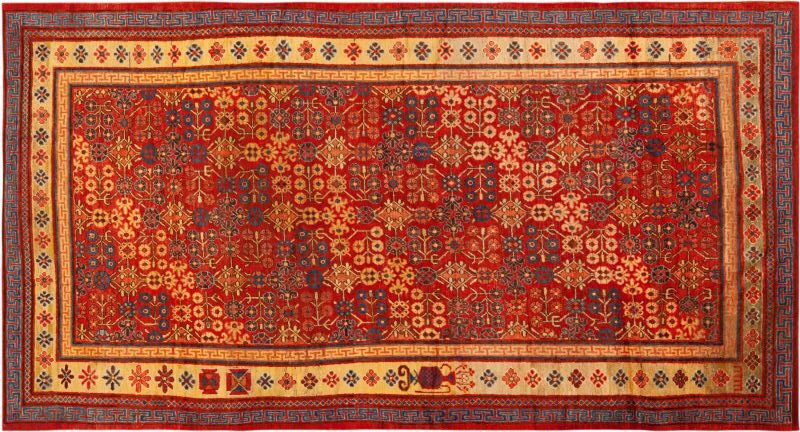
Why Trust Nazmiyal
The Nazmiyal approach is built on three foundational pillars that guide every decision, from acquisition to expertise to client trust: deep scholarly knowledge developed through decades of hands-on experience, rigorous standards of authenticity and transparent valuation, and a globally curated collection shaped by historical depth, cultural understanding, and market insight.
Frequently Asked Questions
Are layered rugs still in style in 2026?
Yes. In fact, layering is one of the clearest rug trends of 2026. It looks best when it follows a base-and-top system and steers clear of patterns that are too busy.
What rug works best with a curved sofa?
If the whole room’s plan is curved, a round or oval shaped rug looks fantastic. In rooms with mixed orientations, a generously sized rectangle that contains the seating group looks cleaner.
What rug colors are trending in 2026?
Earthy tones are the favorable color palette for 2026. Warm neutrals like sand, oat, and mushroom accompanied by gentle accents of clay/rust, olive, and soft blues keep rooms from feeling flat.
Do antique rugs work in modern interiors?
Antique rugs often work surprisingly well in modern interiors. This is especially true when the palette is relaxed and the design is given breathing room. Texture and nuance are exactly what many modern spaces lack.
What’s the biggest rug mistake people are making in 2026?
People tend to buy rugs that are too small for the space they’re occupying. A rug should anchor the furniture. When it’s undersized, the whole room feels disconnected.
Where should I start browsing at Nazmiyal?
Start with Antique Rugs or Vintage Rugs. Then narrow down your selection by size and palette.