
Looms are foundational to rug weaving, but there are many different kinds. Perhaps the biggest distinguishing feature between looms is whether it’s a horizontal or vertical one. The orientation of the contraption may not seem important, but in actuality it greatly impacts the making of a textile.
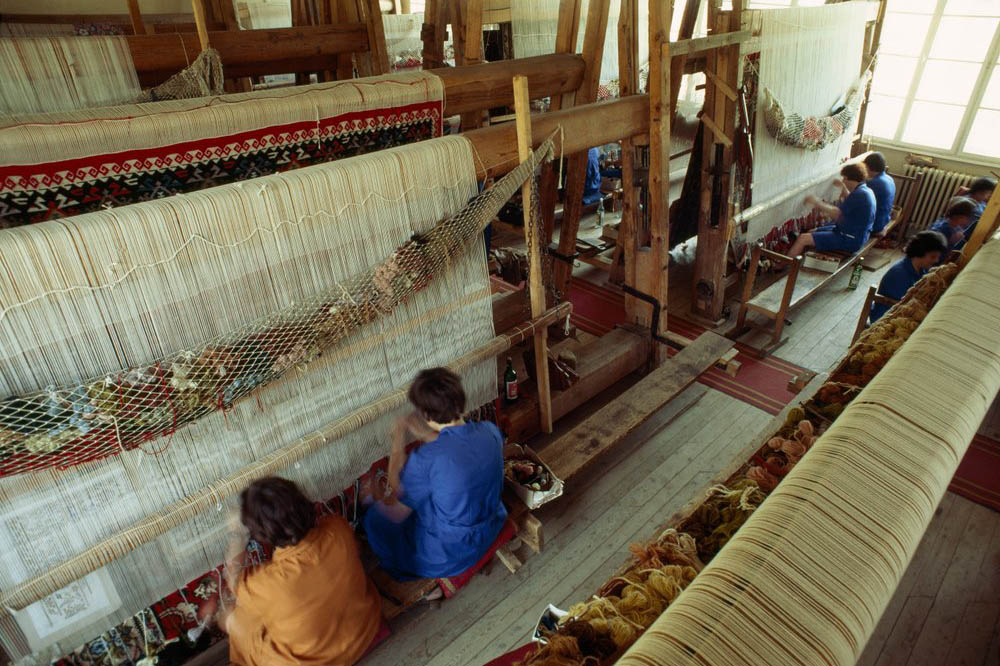
Learning the differences between a horizontal and vertical loom can help contextualize a rug. But how exactly does the loom change the weave?
What is a Loom?
The loom is a mechanism used by weavers to create rugs, tapestries, and other textiles. To understand its functionality, first you must understand how weaving itself works. Rugs, along with other woven textiles, are made up of a warp and weft foundational pattern. Both these terms refer to the orientation of the threads that make up the weave. Warp threads are vertical and held in place by a loom. The weft threads are worked between the warp threads in a perpendicular fashion, creating a grid. There are various techniques for knotting the warp and weft threads depending on cultural and geographical contexts.
The loom itself is a wooden frame which can vary in size. Traditional looms are simply structures that help weavers with their process. During the industrial revolution, the steam powered loom was invented, introducing a mechanized version. Aside from these powered and weaver-less looms, there are several different kinds. The two most often used for rug weaving, however, are the vertical, and horizontal loom.
Vertical-Looms
As the name suggests, vertical looms stand upright. The vertical loom predates the horizontal one, though the invention of both is ancient, tracing back to the Neolithic period. They vary greatly in size, with the framing determining the overall scale of the final rug. If a weaver wanted to make a textile larger than the provided loom, they’d weave two separate rugs to then attach together after the fact.
How it Works
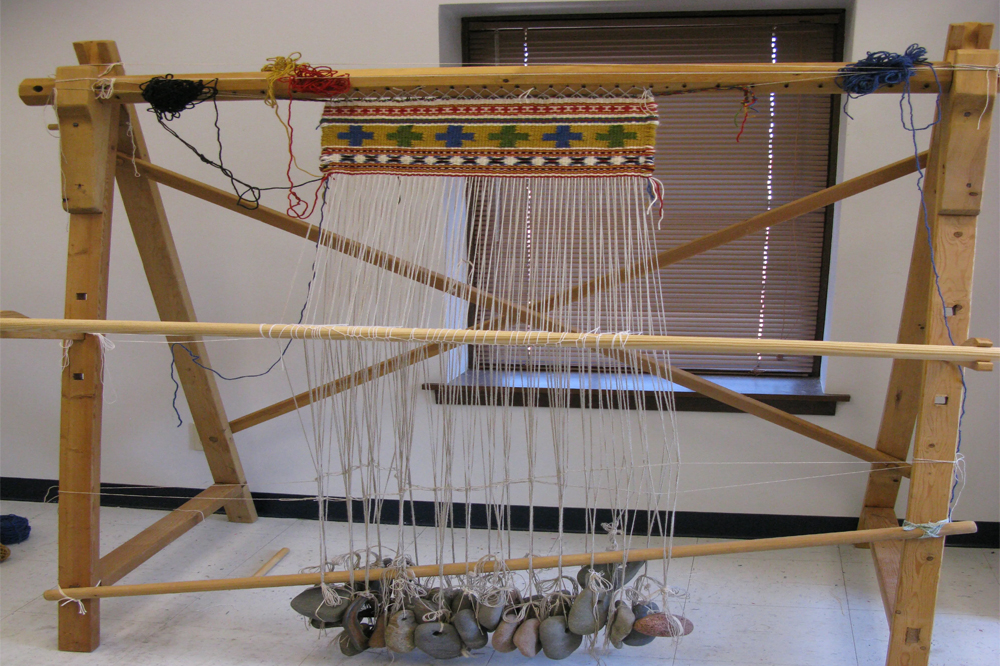
The structure of a vertical loom is fairly simple and straightforward. Traditionally made from wood, the frame is configured as a square with the warp threads attached to the top. The warp threads are pulled taut, either attached to a bottom framing beam or weighed down by heavy stones. Tension created by either the weight or a bottom beam ensures a tightly woven foundation.
Through the middle of the loom is another wooden beam, parallel to the top horizontal warp beam. This middle beam is called the “heddle bar” which acts as a tool that separates alternating warp threads. The space made by the heddle bar significantly speeds up the weaving process, as weavers don’t have to worry about individually hand-separating threads to interweave the weft.
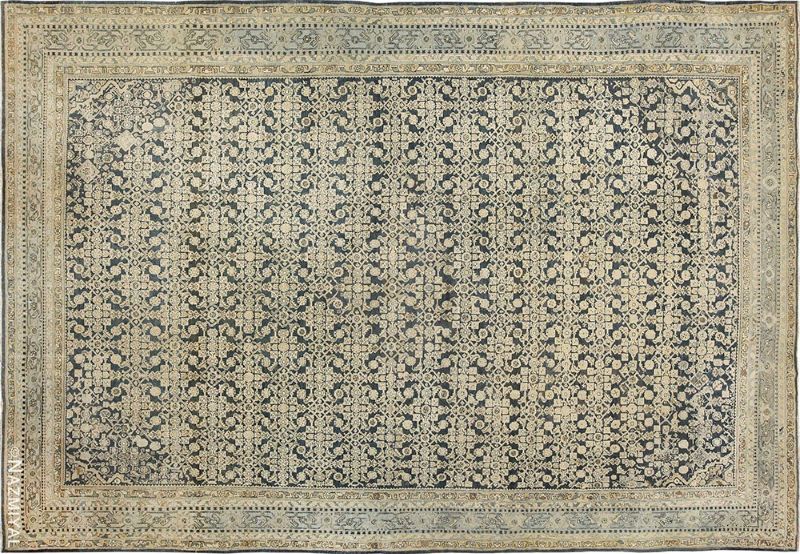
The actual knotting is done by hand, with regional differences and aesthetics affecting the final design. Once the carpet is finished, it’s cut out of the loom, unintentionally creating a fringe. Vertical looms are ideal for creating pile rugs. The piles are made by shearing down excess weft threading to the desired pile length.
How it Affects the Weave
The most important factor to vertical looms when contextualizing weaves is their portability. They could be moved around as well as disassembled and reassembled. This feature made the vertical loom a staple of nomadic tribal cultures. The consequence of this is that sizing is limited.
Horizontal-Looms
Though not as old as the vertical looms, horizontal looms still possess an ancient history dating back to both Neolithic Egypt as well as ancient China. Its invention was revolutionary in textile production, as it allowed weavers to produce complex pieces with far more ease. Eventually the vertical loom spread to other parts of the world, making its European debut by the 10th century AD.
How it Works
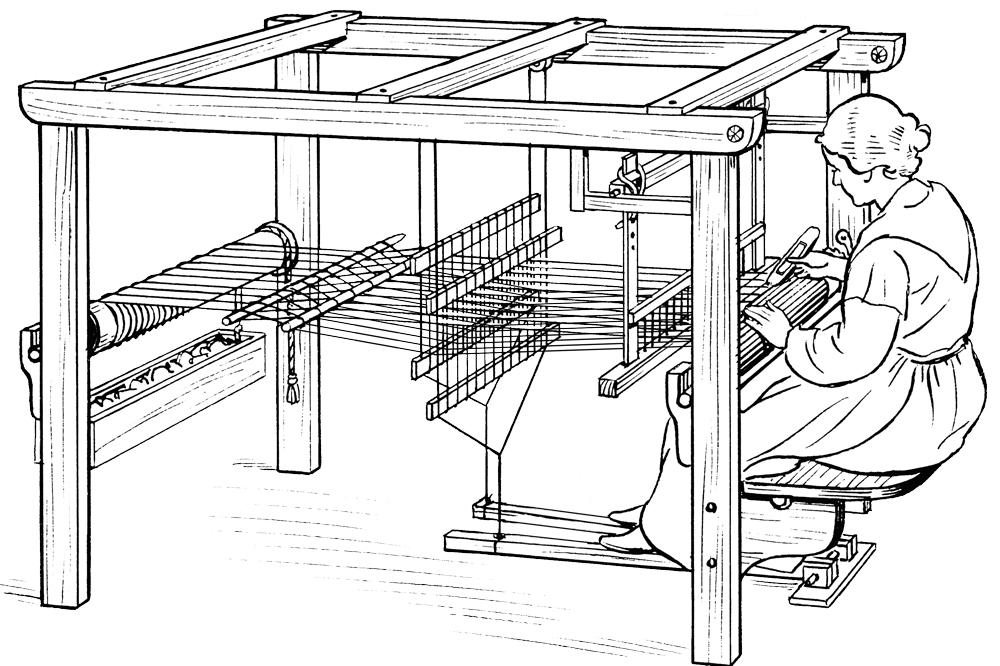
Horizontal looms are a little more complex than the vertical ones, though the basics are pretty similar. Like vertical looms, these also stretch warp threads tightly across a frame, making the interweaving of the weft easier.
With a horizontal loom, the planning and set-up is the most important step. How the threads are set up determines what the final product will look like. In more advanced looms there are multiple heddles, each attached to a different pedal. Heddles are controlled according to the desired patterning, creating different spacing of warp strings for the weft to pass through.
How it Affects the Weave
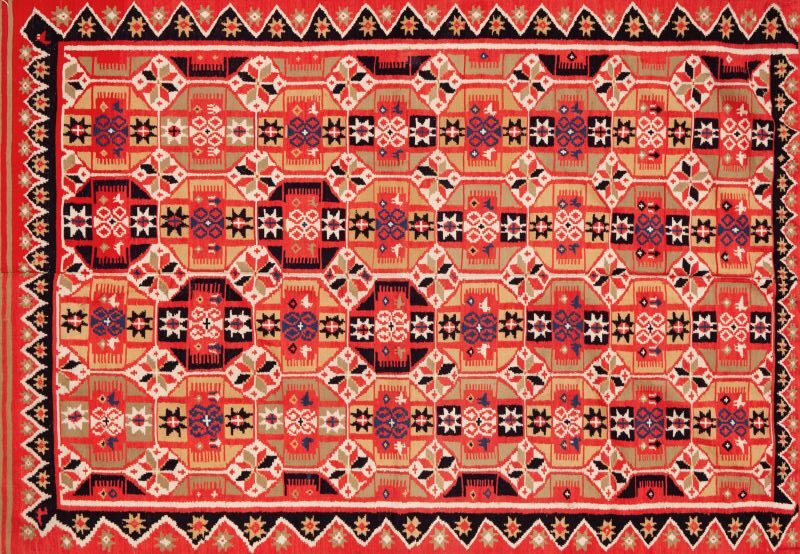
There are a few factors that weaving with a horizontal loom affects. Sizing, and surface are the two most impacted elements. While vertical looms confine weavings to the size of the frame, a horizontal loom’s size only affects the textile width. Length, however, is entirely up to the weaver.
While vertical looms are perfect for producing pile rugs, horizontal loom mechanics are better suited for kilims, or flatweaves. Though a piled surface is technically achievable, it makes horizontal weaving a difficult and tedious process, defeating its purpose.
Geography and Class: Advantages and Disadvantages
Though both types of loom were conceptualized early on, there formed an interesting geographical divide between where each was preferred. While in Turkey, both were fairly common, they otherwise spread outwards in opposite directions.
The surrounding environment of different cultures played a big role in deciding which loom was best for weaving. For example, the arid climate of countries like Egypt were perfect for the stationary nature of horizontal looms. Weavers could sit out in the sun and work without worrying about elemental factors ruining the textile or interfering with their process.
This was not the case in other locations where humidity, rain, or snow was common. Instead, weavers in places like Europe were forced to work exclusively indoors, bringing up the issue of space. Not all weavers worked in factories, and most were not wealthy. Weaving back then was a domestic task expected of women from ordinary households and most families didn’t possess the space to store a horizontal loom. This made the vertical looms more advantageous, as they could be propped up against a wall, taking up minimal space while maintaining weaving as an indoor activity.
Knowing this, we can deduce that vertical looms were a much more common personal tool. On the other hand, horizontal looms in cooler northern climates mostly existed in workshops where they could be fully stationary.
Personal Weaving vs Mass Manufacturing
One of the biggest “tells” for contextualizing rugs are their sizes. Tribal productions from villages were almost always of a smaller size than those from urban workshops. Though the common conception of factory productions is directly related to industrialization, weaving workshops developed far prior to the steam loom. As previously stated, the origins of weaving came from nomadic cultures, before the agricultural revolution. Once people began settling and establishing static living arrangements, the urbanization of land and societies began.
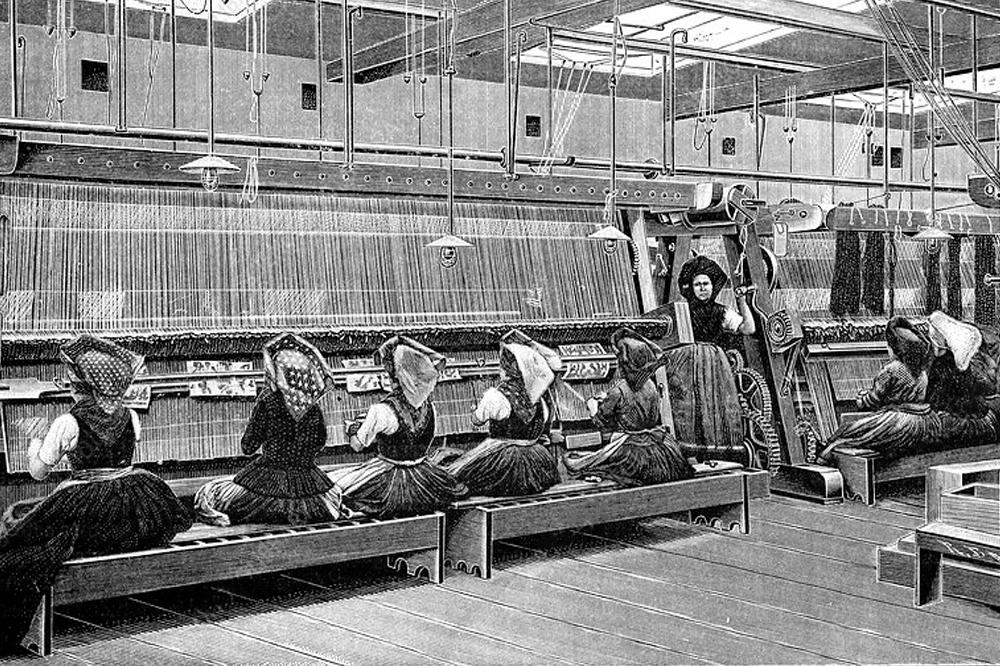
Monarchs and political powers situated themselves as important locations, drawing more and more people and creating urban hubs. They attracted merchants, traders, and artisans alike, promising opportunity and better lives. With the addition of global trade, rugs and rug manufacturing became an economic exploit rather than just a cultural one. This saw the beginning of pre-industrial weaving workshops, or what today we may refer to as “factories.” Major carpet producing centers were located in these cities, both for the trade benefits and the societal infrastructure that allowed for so many workers.
In these workshops, weavers used both vertical and horizontal looms in accordance with the kind of rug they wanted to produce. Pile rugs were undeniably the more popular construction among the global market, usually made with vertical looms. This, paired with their ability to consolidate space made these kinds of looms common in Persian and Turkish workshops. Workshop vertical looms differed from the traditional ones in size. They tended to be much bigger, able to produce large-scale carpets without being limited by the need for portability.
Village Weaves and Urban Productions
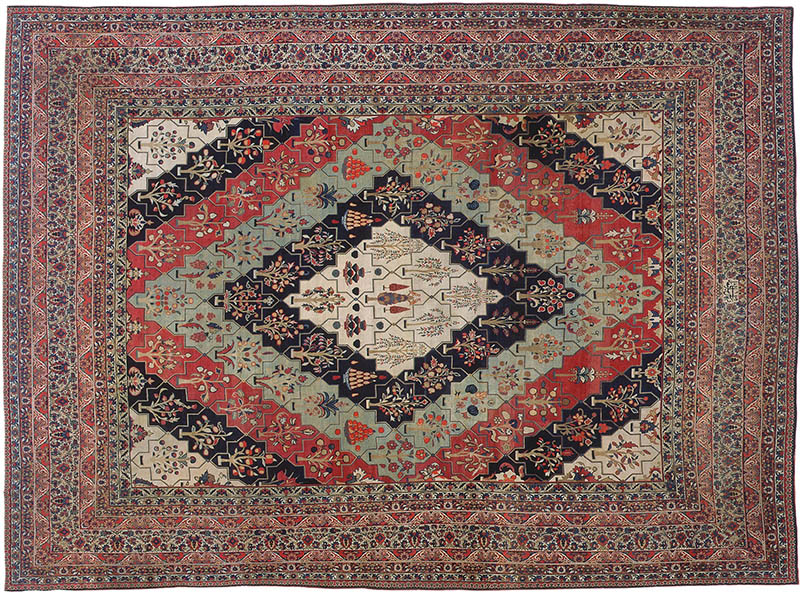
Carpets made for royal courts, or commissioned by international patrons were all urban productions. Often large or oversized, these rugs were made as opulent displays of wealth and status. They were meant to adorn royal courts and palace spaces, and for weavings as large and fine as these, large swaths of artisans were employed.
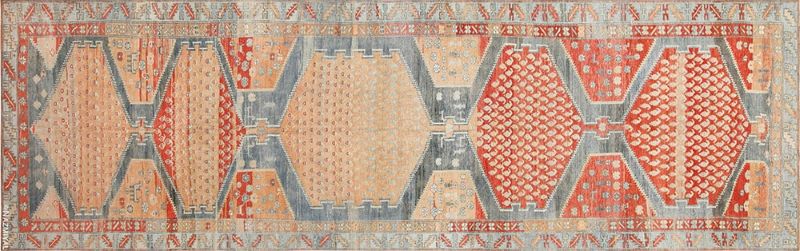
On the other hand, village and tribal rugs are much more understated. This isn’t to say their aesthetic is any less valuable, but their designs are much more rudimentary. Village weavers were more often than not, creating pieces for themselves or other members of their community. Designs were created spontaneously, without the use of pre-planned drawing. They weren’t meant for palaces and were created on portable vertical looms, making them smaller as well as more practical.
Final Thoughts
Both vertical and horizontal looms are important to understanding the context of weaving, each affecting the process in different ways. Benefits of working with vertical looms are their portability, often built for easy disassembly and reassembly. While this impacted the scale of the rugs produced, it was an ideal method for nomadic weavers or those with little storage space. On the other hand, horizontal looms are a far more stationary tool, able to produce larger textiles. Horizontal looms were, more often than not, workshop staples rather than personal items and were popular in the mass manufacturing of rugs for trade. When developing a weaving culture, there was a split both in location and economic class regarding which loom was more popular.
- Vertical and horizontal looms are ancient tools used in weaving.
- Vertical looms are portable and modular, limiting rug sizing but perfect for nomadic weavers.
- Horizontal Looms are stationary and can produce larger rugs.
- Geography and socioeconomic class play a role in which loom weavers use.
Frequently Asked Questions
What is the biggest difference between horizontal and vertical weaving?
The biggest difference is the orientation of the machine. One stands upright while the other is used parallel to the ground.
Which were the advantages to using a vertical loom?
Portability and consolidation were the biggest advantages. The vertical frame was easy to move around and assemble. It was also better for creating pile rugs.
What were the advantages to using a horizontal loom?
The size of the weaving was the biggest difference. There were no limitations to how long a rug could be. They were also better suited for kilims, especially with complex patterns.