Updated June 1, 2026 • Reviewed by Jason Nazmiyal
Spain finds itself in an interesting position in the world of rug and textile trade. Historically, reigning powers in Spain underwent immense change which influenced every aspect of their society. Evidence of the substantial cultural shift can be seen in weaving techniques and antique Spanish rug designs. Rug-making as an established Spanish tradition was also highly influential to other regions of the world.
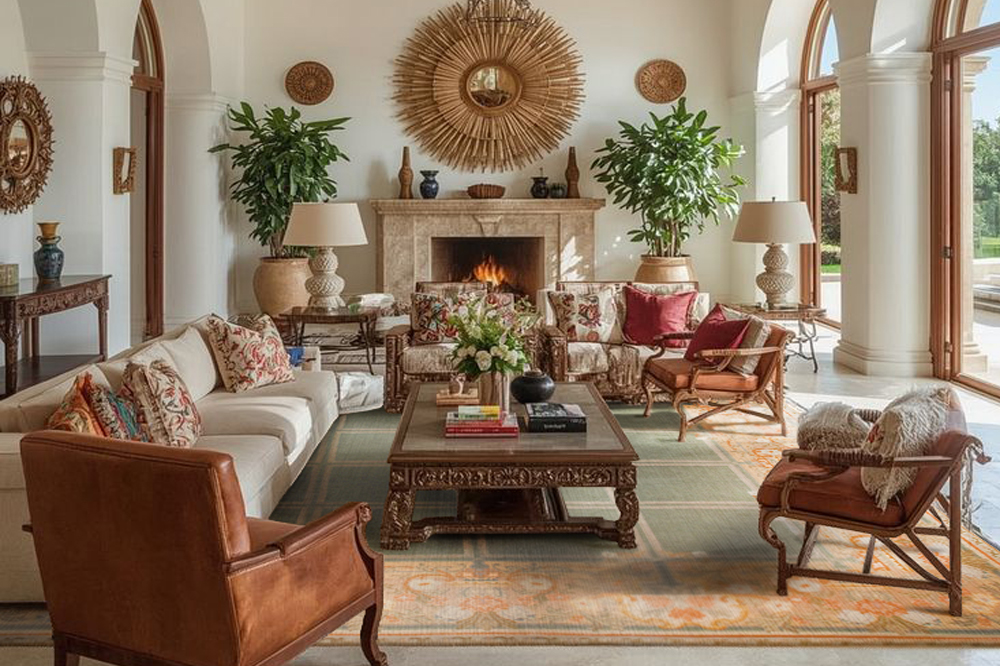
Today, Spanish carpets are highly coveted works of textile art. Their styles range from colorful and decorative, to refined and collectible. These rugs manage to perfectly blend the classic European styles with Mediterranean and Islamic influences, resulting in a completely new look.
Key Takeaways
- Spain has a rich history of rug production and was influential in rug design
- Past Moorish rule and eventual Catholic rule of Spain created a diverse design style in traditional rug-making
- Spanish rugs showcase a blend of both Mediterranean and Middle Eastern characteristics
- Today’s Spanish rug market exhibits a diverse taste in preferred rug styles
At-a-Glance Specs
Style: European; Oriental
Colors: Warm tones; terracotta, ivory, indigo
Best rugs: Spanish; Persian; Moroccan; French
Spanish Rug History
Spanish rug-making traditions are among some of the oldest in Europe, dating back to as early as the 8th century. The Moors’ reign lasted 8 centuries in which demographics from different backgrounds coexisted. There was a sharing of traditions and ideals, making Spain a historic melting pot. Eventually, the Moors were pushed out by rising Catholic powers, bringing about another massive cultural shift. New design conventions were introduced, new weaving styles, and a more classically European composition.
Moorish Rule and Traditional Oriental Styles
The Moors were a North African Islamic population that ruled over the Iberian Peninsula for several centuries. They first came into power in 711, reigning over Spain and Portugal until 1492. Moorish rule in Spain proved fruitful to the country, introducing advanced medicinal practices, mathematics, sciences, and philosophy. The legacy of the Moors is still seen in Spanish culture today, having been highly influential in art, architecture, language, and the overall cultural zeitgeist.
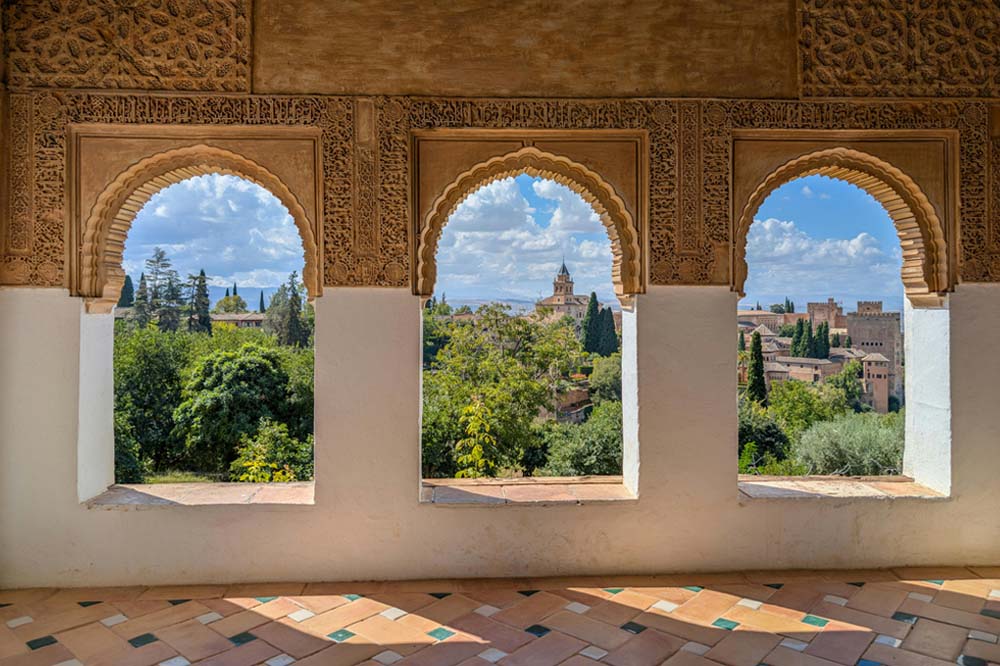
The introduction of rug weaving in Spain cemented the country as an economic powerhouse. It was the only region in medieval Europe producing pile rugs. With rising demands, weaving workshops began appearing all over Spain. Cities like Seville, Granada, Almería, and Málaga became centers for rug-making, supplying wealthy buyers from all over Europe. The city of Murcia specifically was widely recognized as the weaving center of Spain, responsible for trending styles.
Evidence of the Moors’ impact can be found today in Spain’s antique rugs. There are clear connections between early Spanish rug designs and rugs originating in North Africa or regions with large Muslim populations. Geometric motifs, religious inscriptions, and allover patterns with deep background colors are similar to designs found in antique Turkish productions.
Catholic Rule and Classic European Designs
In 1492 there was a major upheaval in governing powers in Spain. Northern Christian kingdoms began pushing south, resulting in the eviction of the Moors. Apart from the obvious substantial change in population, Spanish culture shifted greatly to accommodate the new norm. Reflected in artwork of the time, pieces caught during the transitional era of power showcase an interesting blend of both Christian conventions and Islamic ones.
Rug designs became more traditionally “European” when the Church permanently settled. This meant lush floral patterns and arabesques as well as architectural geometries with Renaissance conventions. Folk motifs from previous cultures survived, though, and Moorish influence was never completely erased.
Spanish Weaving Influences
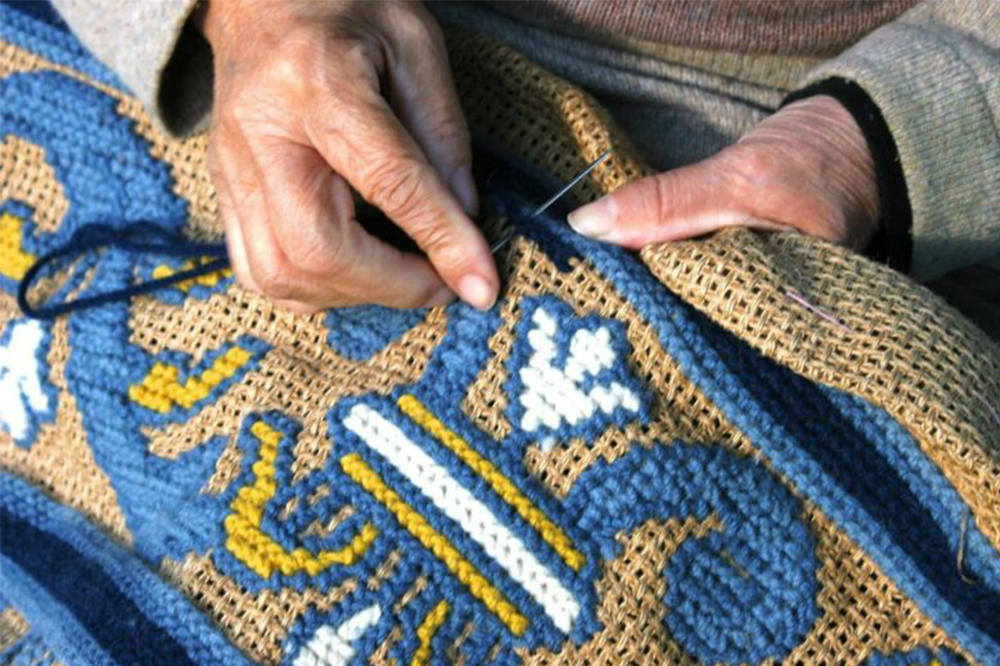
Catholic rule in Spain also meant that Spanish cultural influences became far-reaching, found in weavings from non-Spanish regions. One of the most impactful examples is the needlepoint work found in the historic town of Arraiolos, Portugal.
Fleeing religious persecution, many people emigrated, settling in Portugal. The women of these immigrant families put their weaving skills to use to ensure their family’s survival in a new country, creating beautiful needlework pieces to sell. Their Spanish roots gave their work a unique flavor, drawing inspiration from the tile mosaics of their original homes. Today, Arraiolos is renowned for their textiles.
Spain was also largely influential in the greater rug-weaving world for their introduction of cochineal red. Cochineal red is a natural dye extracted from an insect native to the Americas, one that the indigenous Aztec and Mayan people had been using for centuries. During the 16th century, Spanish colonization introduced the insect and its pigment to the Old World. The cochineal dye is important in that the pigment it produces is much stronger than the kermes insect dye previously used. Once cochineal insect dye hit the market, it completely overtook previous red dye types.
Iberian Characteristics
Spanish rugs differ from other antique European styles such as those from France or England because of the country’s status as a cultural melting pot. The co-existence of Christian, Jewish, Berber, and Muslim-Arab peoples under Moorish rule created a cultural exchange that became a diverse influence in the artwork of the time. Their rug designs tend to be a conglomeration of different design conventions, making them completely unique.
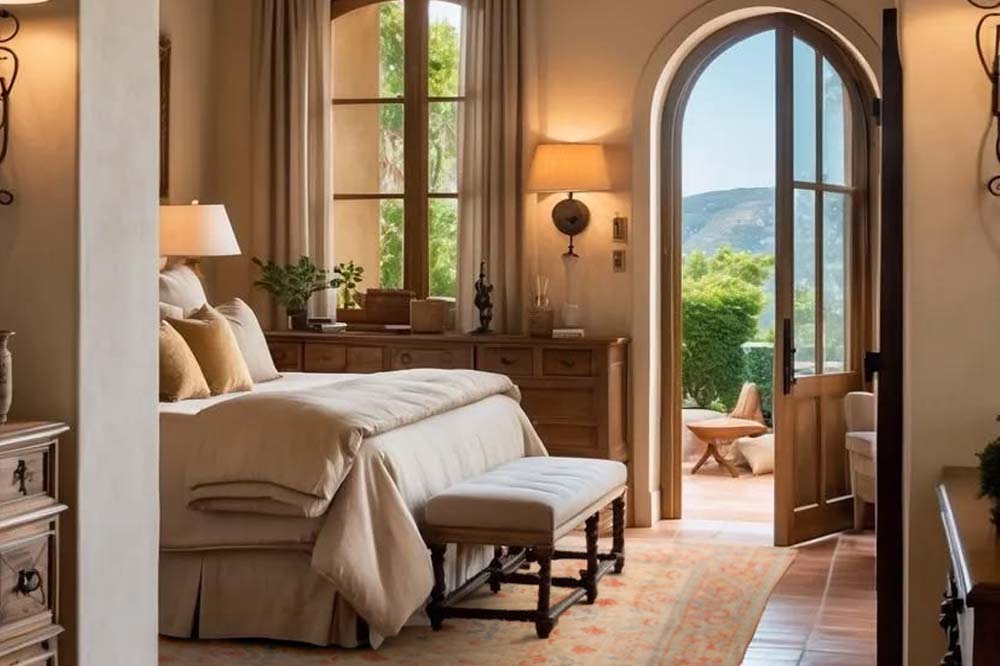
Color is one of the main components that makes an antique Spanish rug stand out. They were made to adorn Iberian rooms and their palettes complement Spain’s Mediterranean environment and interiors. Warm tones of terracotta, gold, and soft ivories accompanied by green and blue accents make up most field patterns. Designs take on a painterly quality, playful and stylized in a way the formal courtly pieces made in France are not.
Spanish rugs are also distinct in their fundamental construction. A single-warp knotting technique was employed in the making of these pieces commonly referred to as the “Spanish knot.”
Cuenca and Alcaraz Rugs
Both Cuenca and Alcaraz were important historic weaving centers in Spain. They each have their distinct styles of pattern design.
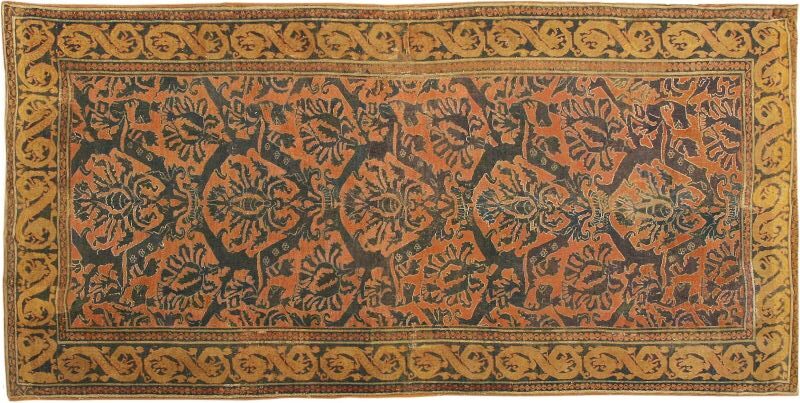
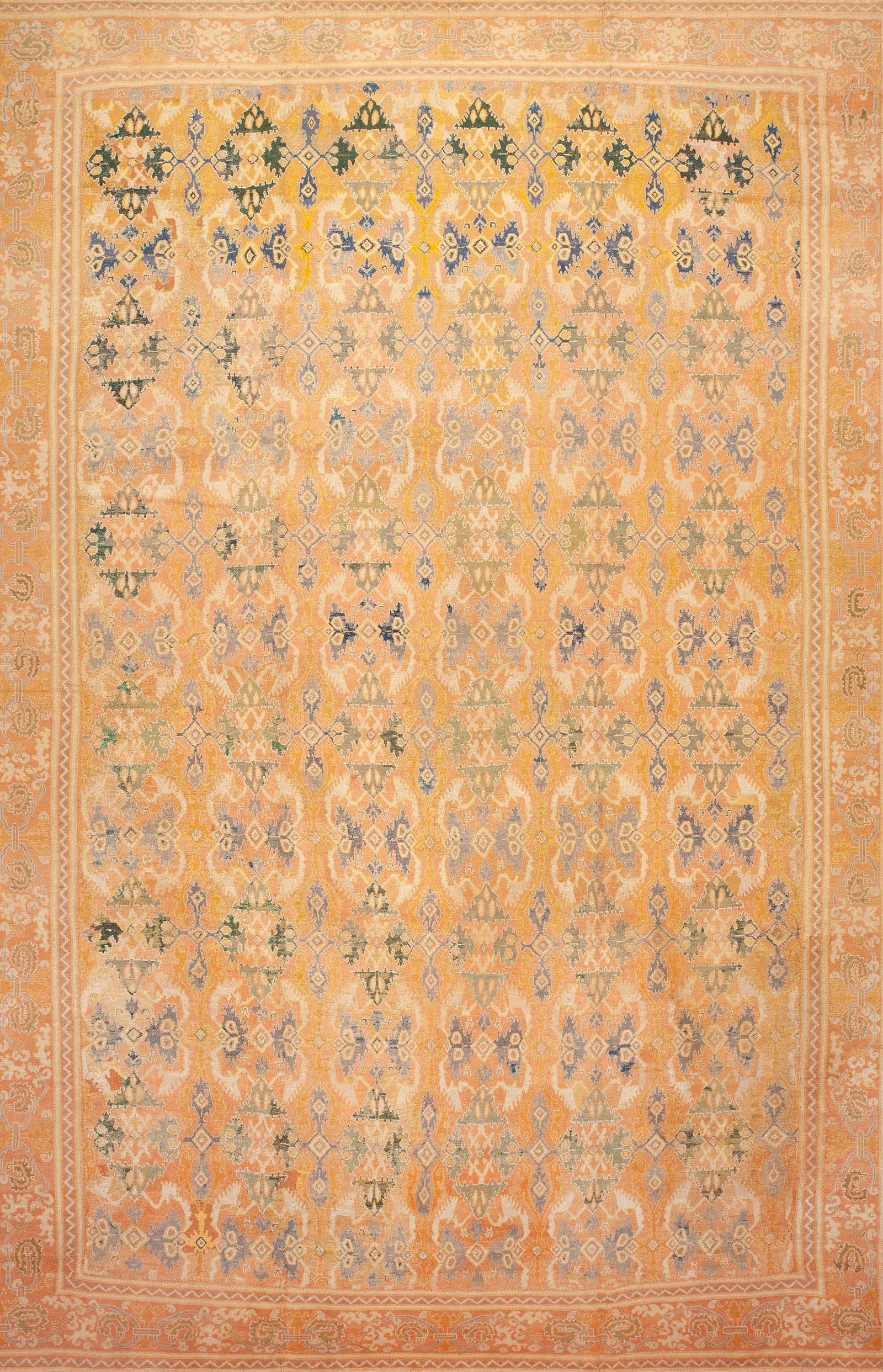
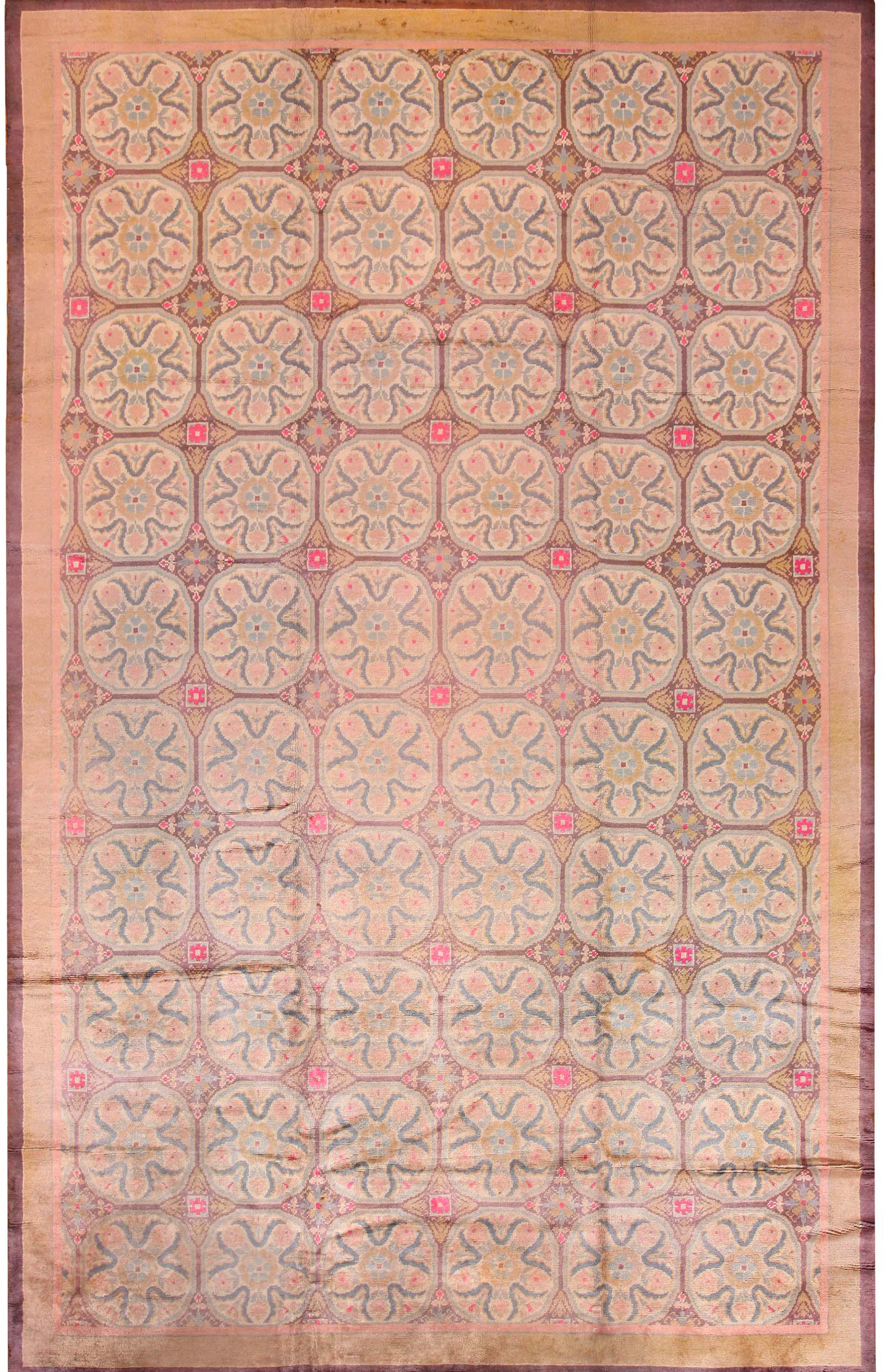
Rugs originating in the town of Cuenca are the quintessential ideal of what an Iberian rug looks like. They utilize classic structuring to create adaptable decorative works of art with balanced spacing and earthy tones. Alcaraz rugs, on the other hand, employ golds, greens, indigos, and ivories in their palettes. Their overall compositions are more restrained and architectural, with a larger Renaissance influence in the ornamental qualities.
Both styles of rug have their audience. Cuenca productions benefit from their decorative flexibility, attractive to interior designers. Alcaraz rugs appeal more to collectors for their scarcity and strong historical identity.
The Modern Spanish Taste
Modern Spanish tastes are as diverse as Spain’s own rug designs. Informed by their Mediterranean environment, Spanish designers and collectors look toward warm palettes that reflect their sunny surroundings. A relaxed yet elegant look is always a winning style, with minimalist neutral bases supporting terracotta and olive palettes. Layered styles with organic wool textures that create a bohemian look are also popular.
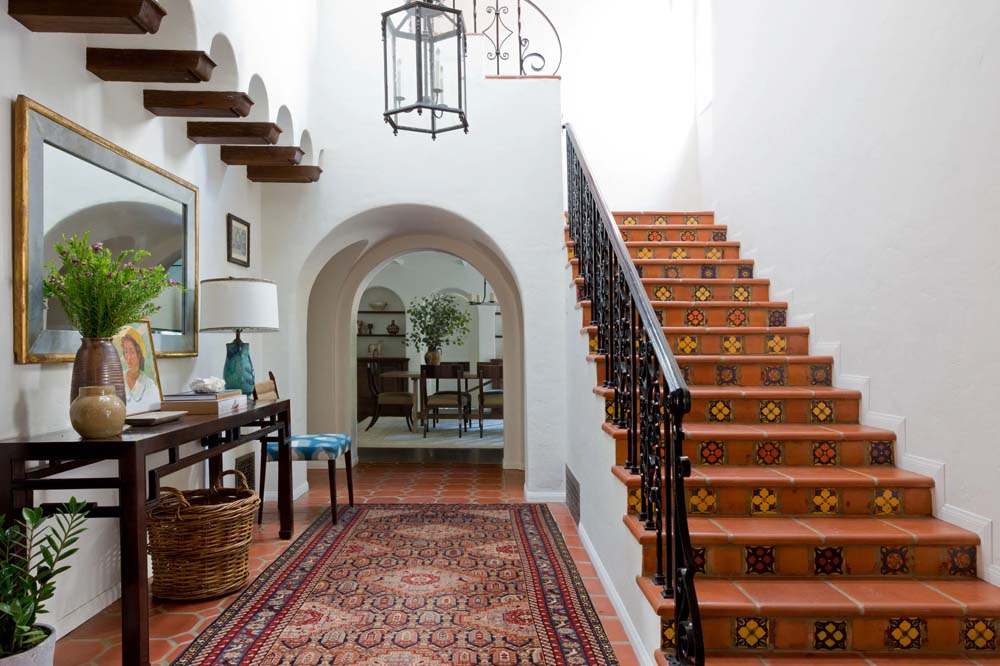
Above all else, Spanish interiors are looking for rugs that make the space look personal and collected rather than overly-curated and staged.
Non-Spanish Rugs in Demand for Spanish Homes
- Persian rugs and Turkish rugs have both found their way into modern Spanish homes. Oriental rugs had a spike in popularity throughout Europe, including Spain, in past centuries through foreign trade. Today, they furnish fine interiors with rich histories. Religious and cultural influences seen in these rug designs complement traditional Spanish architectures and tilework well.
- Moroccan style rugs and other North African traditional designs pair well with the bohemian quality of many Spanish interiors. Their colorful and spontaneous designs create a dynamic quality that livens up otherwise static homes. Culturally, these productions also speak to Spain’s diverse cultural history as well as add an authentic and collected feeling to the space.
- Scandinavian rugs speak to a contemporary minimalist trend that left a lasting impact on the Western world. Modern Spanish homes implement many minimalist interior architecture designs which pair wonderfully with Scandinavian pieces. Serene pastels accompanied by clean geometric patterning make these vintage styles perfect furnishings.
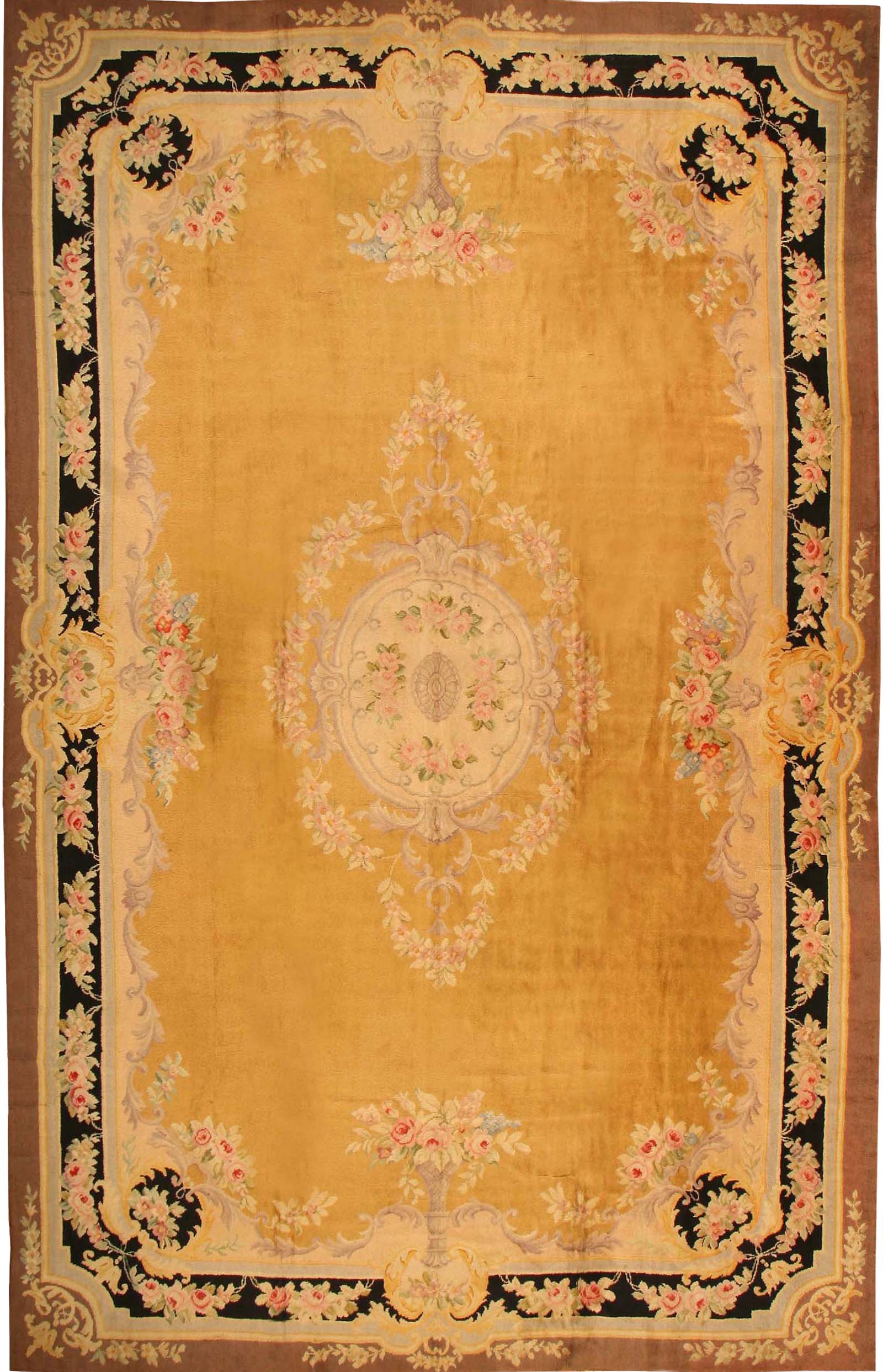
- French rugs and other European productions are well suited to more traditional European style homes found in Spain. Designs dictated by Renaissance conventions and grand rooms with the space to house courtly productions are perfect for the refined floral designs found in French pieces.
Featured Rugs
The Nazmiyal Collection is home to an array of authentic Spanish antique rugs. Browse through our inventory of Cuenca, Alcaraz, and Iberian carpets and find one right for you.
Final Thoughts
Spain’s reigning powers throughout history were largely influential in the rug and artistic work that came out of the country. Both Moorish and Catholic rule impacted the design styles of rug-making, blending North African, Islamic, and Catholic-European conventions. Spain was also responsible for introducing the larger textile world to the cochineal insect and its natural red dye, something that became culturally and materially important in many regions across the globe. Today, the decorative rugs from the town of Cuenca are highly sought after for their beauty and versatility. Similarly, collectors interested in coveting the rare look toward the early rugs of Alcaraz. Spanish buyers interested in antique rugs have a diverse taste that has been shaped by centuries of cultural co-mingling, looking toward rugs from all over the world. Persian, Turkish, Moroccan, Scandinavian, and French pieces have all found their place among modern Spanish interiors.
Frequently Asked Questions
What are antique Spanish rug characteristics?
Antique Spanish rugs mix warm and earthy Iberian color palettes with cross-cultural design patterns that incorporate both Oriental and European styles.
How do Cuenca and Alcaraz rugs differ?
Cuenca rugs are more decorative, typically utilizing earthy tones. Conversely, Alcaraz rugs have more Renaissance influence, a broader color palette, and are much rarer.
Did Spain’s Moorish rule affect the rug-making traditions of the time?
Yes. Moorish rule brought about an interesting blend of religious and cultural conventions evident in the art and textiles of the time.
Are Spanish buyers interested in antique Persian rugs?
Yes, there is a significant demand for Persian rugs from Spanish buyers. While Oriental rugs were historically popular throughout Europe for some time, today’s Spanish market similarly covets finely made productions for historical homes.