
Craftsman Style House Definition and Key Features
A Craftsman style house, also known as an American Craftsman or Arts and Crafts style home, is an architectural design known for low-pitched roofs, wide eaves, front porches, natural materials, and handcrafted details. This style emerged in the late 19th and early 20th centuries as a response to the elaborate and ornate house architecture of the Victorian era, emphasizing simplicity, functionality, and visible handcraftsmanship.
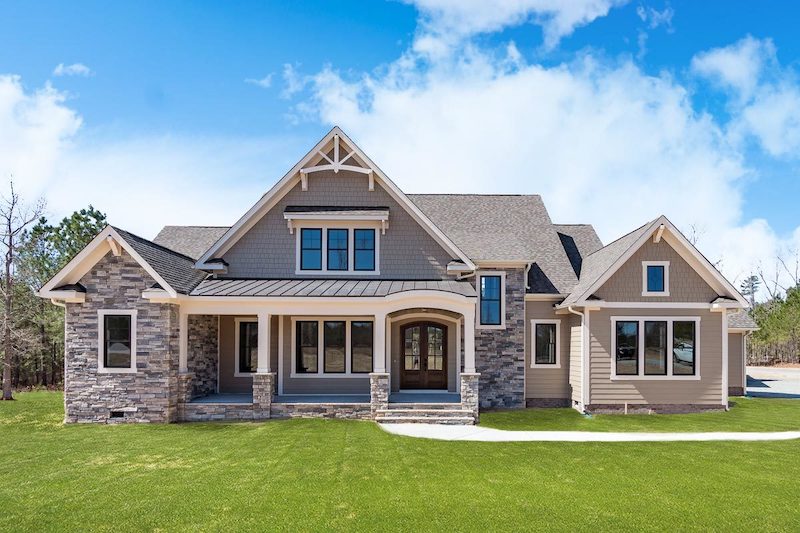
Craftsman style houses are characterized by their low-pitched, gabled roofs with wide overhanging eaves supported by decorative brackets. The roofs often feature exposed rafters. The exteriors are typically clad in natural materials such as wood siding, stone, or brick. The houses often have front porches with tapered columns or pedestals, and sometimes include a low stone wall or railings.
One of the key features of Craftsman style houses is their emphasis on handcrafted details and natural materials. This is evident in the use of woodworking elements such as exposed beams, built-in cabinetry, and decorative trim. Interiors often feature open floor plans, large fireplaces, and an abundance of windows to bring in natural light.
Craftsman style houses also promote a connection to nature. They often incorporate elements such as large windows, skylights, and covered outdoor spaces that blur the line between indoor and outdoor living. The interior color schemes are typically earthy and subdued, with an emphasis on natural wood tones.

What Does a Craftsman House Look Like?
A Craftsman house can be recognized by its horizontal shape, low roofline, broad eaves, visible woodwork and inviting front porch. Many Craftsman homes feature natural exterior materials such as wood, brick, stone or stucco.
Common Craftsman house features include:
- Low-pitched gabled roofs
- Wide overhanging eaves
- Exposed rafters or decorative brackets
- Covered front porches with heavy columns
- Natural wood, stone, brick or stucco
- Interior woodwork, fireplaces and window seats
- Earthy, warm and natural color palettes
How Did Craftsman Homes Get Their Name?
Craftsman homes got their name from the popular magazine “The Craftsman,” which was published by Gustav Stickley, a prominent figure in the Arts and Crafts movement. Stickley, along with other influential designers, writers, and architects, promoted the Craftsman style as a response to the ornate and mass-produced designs of the Victorian era.
In the early 20th century, Stickley’s magazine played a crucial role in popularizing the Craftsman style and spreading its ideas. “The Craftsman” magazine featured articles on architecture, interior design, and various aspects of the Arts and Crafts movement. It showcased Craftsman-style homes designed by Stickley and other architects, as well as provided plans and instructions for building and furnishing Craftsman-inspired houses.
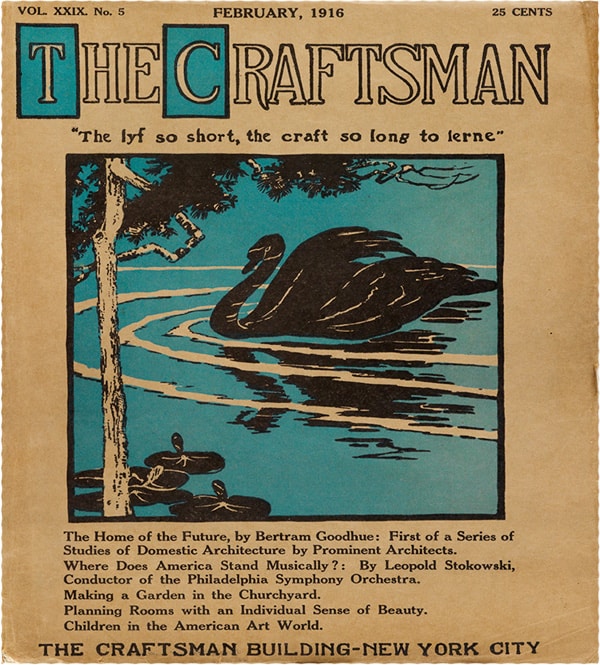
The magazine emphasized the idea of craftsmanship, highlighting the value of handcrafted elements and promoting a return to simplicity, honesty, and quality in design. Stickley believed that well-crafted homes and furnishings could improve the lives of ordinary people, and he sought to create a movement that celebrated skilled craftsmanship and the handmade.
As the popularity of the Craftsman style grew, the term “Craftsman” became synonymous with this architectural design. The name “Craftsman” was widely used to describe the style, reflecting its association with the principles and ideals advocated by Gustav Stickley and other proponents of the Arts and Crafts movement. Over time, the term “Craftsman” became established as a recognized architectural style that continues to be used today to describe homes built in this distinctive design.
Origins of the American Craftsman House
The Craftsman house style was inspired by the American arts and crafts movement in the very late 19th century. The arts and crafts style could be seen in interior design, architecture, and other decorative arts. Its popularity in southern California gave it the nickname “California Bungalow.” As indicated above, the style was perpetuated across the rest of the United States mostly by furniture maker Gustav Stickley, creator of The Craftsman magazine.
Prolific architect brothers, Charles and Henry Greene, adopted the style and are largely responsible for spreading its popularity across California. They were inspired by the British arts and crafts movement, as well as Oriental wood architecture.
Key Characteristics of Craftsman Architecture
Craftsman style, whether in architecture or otherwise, encourages the use of local materials. This is common in the arts and crafts inspired styles. They use simple forms, a stark contrast to the gothic revival, Victorian, and other elaborate home styles that were popular at the time.
A Craftsman house will have a low pitched gabled roof with long eaves. In line with the arts and crafts style, wooden beams and rafters will often be left exposed. Under the long eaves there will typically be a big front porch lined by heavy, large columns. Materials include wood, as well as stucco or stone for decorative elements. Typically, one will see dormers and double-hung windows.

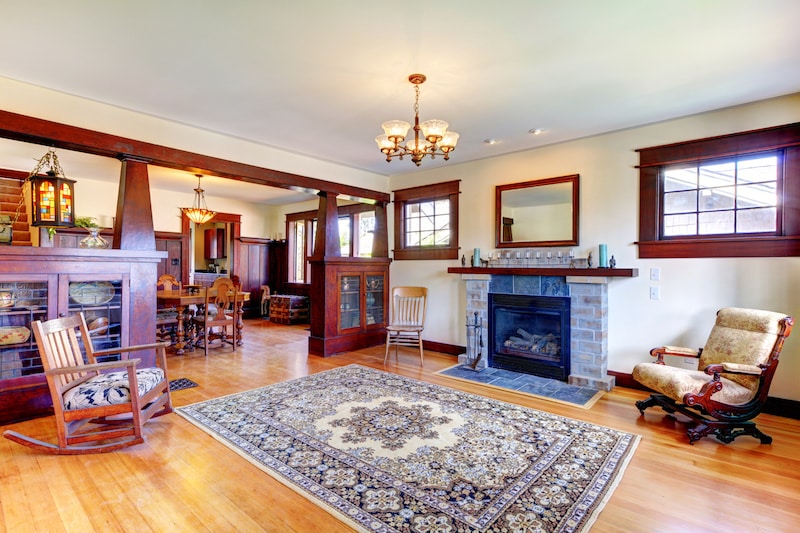
The interior of the home, like the outside, will typically have lots of exposed woodwork that adds to the house’s charm. The layout is simple and often open plan. Craftsman houses will have elements built in to the walls, such as shelving and nooks and window seats. Typically there will be a large fireplace as the centerpiece of the living space. Like the outside of the home, there will be an abundance of natural materials, usually in earth tone colors.
While these homes originally were only one or one and a half stories, they have evolved to fit the larger forms of modern American houses. Craftsman style homes remain widely appreciated for their practicality, natural materials, and exterior craftsmanship.
Shop All Arts and Crafts Rugs | Shop All American Rugs | Shop All Antique Rugs | Shop All Wool Rugs
What Antique Rugs Work Best in a Craftsman Style House?
When it comes to selecting antique rugs for an American Craftsman house, it’s important to consider the overall design principles of the style, which emphasize simplicity, craftsmanship, and natural elements. Naturally, this quintessential American architecture style would work best with Arts and Crafts rugs, American rugs, wool rugs, geometric rugs, Persian rugs, Oriental rugs and earth tone rugs that resonate with the home’s design.
Antique rug styles that work well in American Craftsman interiors include:
- Wool Rugs: Wool rugs are a great choice for Craftsman homes as they provide a warm and cozy feel. Look for rugs made of high-quality wool with rich textures and earthy colors. Hand-knotted or handmade rugs can also add a touch of craftsmanship that aligns with the Craftsman aesthetic.
- Persian and Oriental Rugs: Persian rugs or Oriental rugs in general can bring a sense of elegance and timeless beauty to a Craftsman home. Look for rug styles with intricate patterns and deep colors that complement the earthy tones often found in Craftsman interiors. Choose rugs that feature a well-balanced design with a focus on craftsmanship.
- Geometric Rugs: Craftsman style often incorporates geometric patterns, and incorporating rugs with geometric designs can enhance the overall home decor aesthetic. You want to look for geometric rugs with simple yet bold geometric patterns, such as squares, rectangles, or diamonds. These can add visual interest and complement the clean lines of the architecture.
- Earth-tone Antique Rugs: Antique rugs woven with natural materials and earth tone colors can bring an organic and textured element to Craftsman interiors. These rugs often have a more casual and relaxed feel, which can work well in spaces like living rooms or bedrooms. They also complement the emphasis on natural materials and earthy tones in Craftsman design.
- Arts and Crafts Rugs: Consider Arts and Crafts rugs, which influenced the Craftsman style. The William Morris rugs or the iconic Charles Francis Annesley Voysey rugs, often feature botanical motifs, stylized designs, or artful details that reflect the craftsmanship and artistic elements of the era.
When choosing an antique rug for a Craftsman house, it’s essential to consider the size, color palette, and overall design scheme of the space. Its emphasis on natural materials and craftsmanship makes it highly compatible with antique, Arts and Crafts, wool, and earth tone rugs.
Browse Antique Arts and Crafts Rugs From Nazmiyal Collection
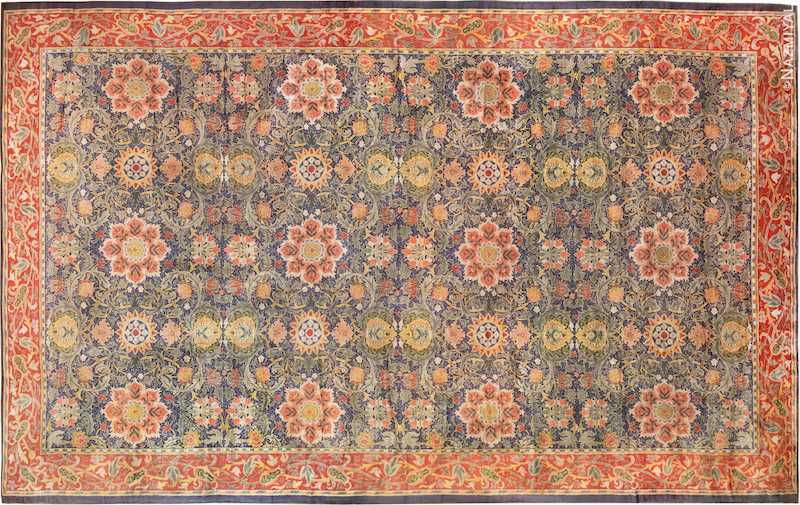
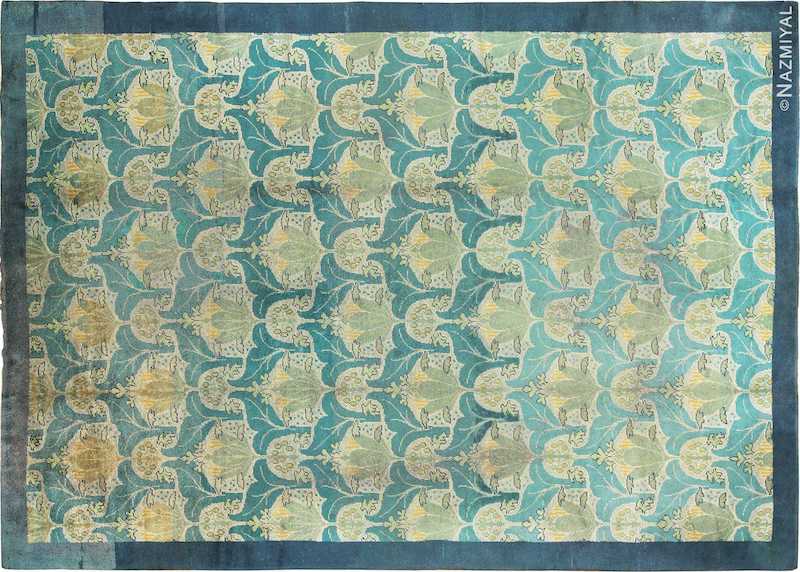
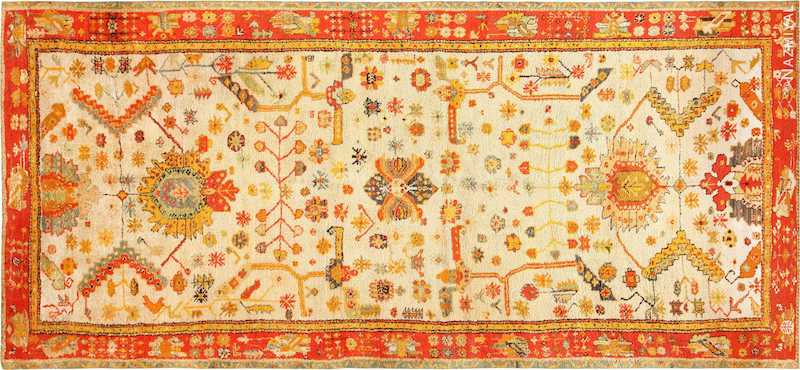
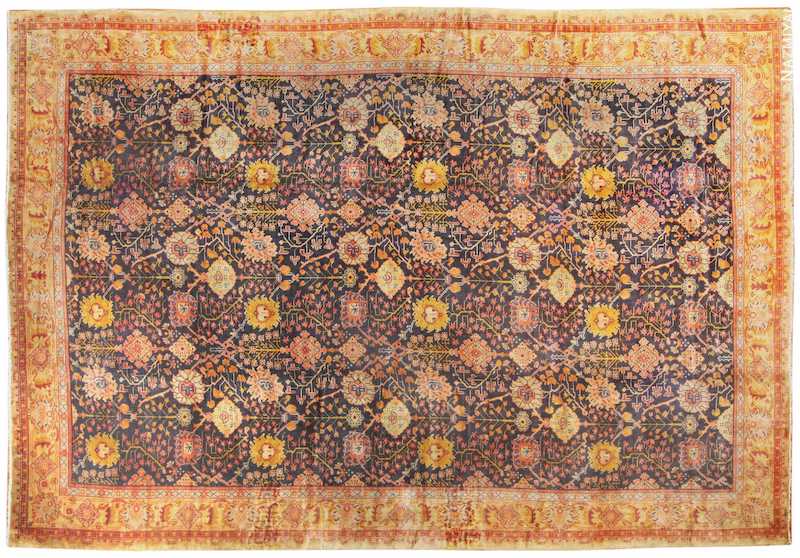
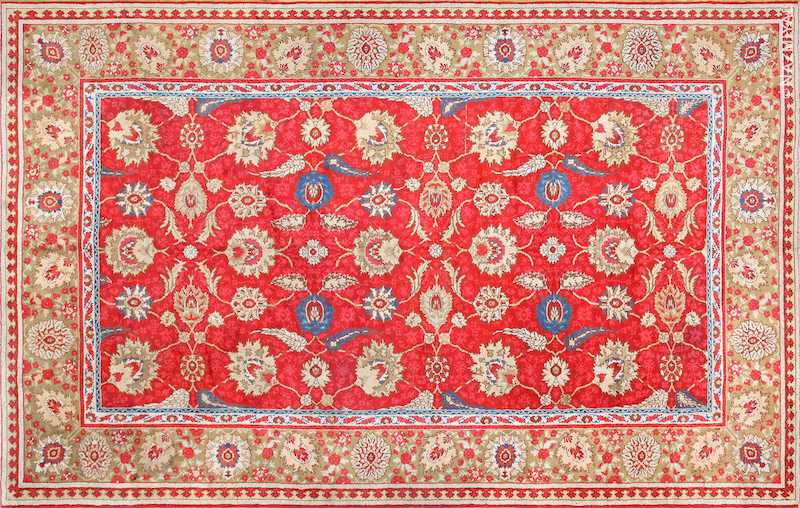
Find Antique Rugs for an American Craftsman House
For an American Craftsman style House, the best antique rug choice not only weighs craftsmanship, pattern, color, and material, but harmonizes with its interior and exterior design. Explore our custom rug service if you need a specific size, palette or design direction for a Craftsman style home.