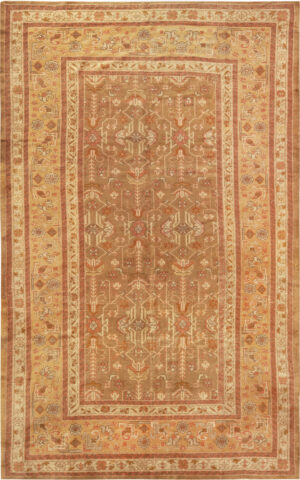
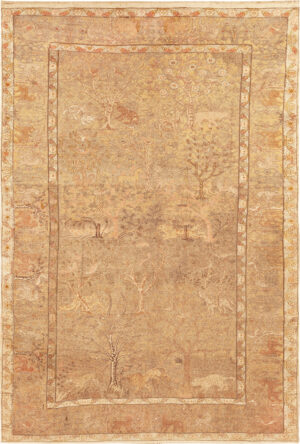
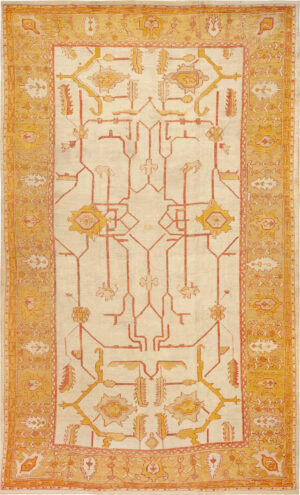
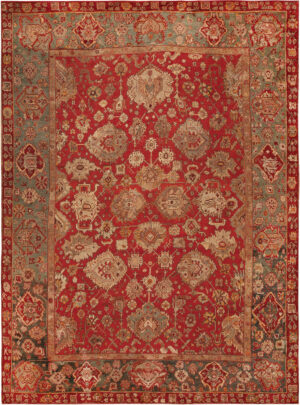
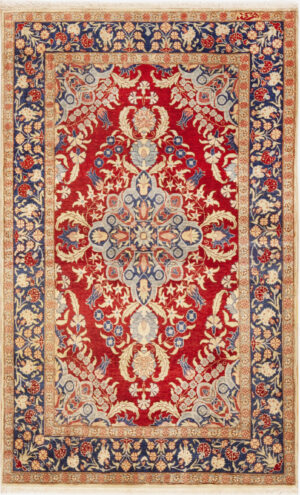
Turkish rugs — often called Anatolian rugs — represent one of the oldest and most influential weaving traditions in the world. The earliest surviving pile carpets come from Anatolia: the Seljuk-era rugs preserved in the mosques of Konya and Beyşehir date to the 13th century, predating most surviving Persian examples by several hundred years. It was largely through Turkish and Central Asian peoples that the knotted pile carpet entered the Islamic world and eventually reached Europe, where Anatolian rugs appear in Renaissance paintings centuries before Persian rugs became widely traded in the West.
At Nazmiyal, we curate Turkish rugs across the full spectrum: room-sized Oushaks with luminous palettes, finely woven Hereke pieces, bold village rugs from Anatolia, and flatwoven Turkish kilims with graphic geometry. Every piece is evaluated by specialists and presented with honest condition reporting so buyers can purchase with confidence.
If you’re comparing eras, start with our broader Antique Rugs and Vintage Rugs hubs. For today’s clean-lined interiors, explore Modern Rugs. For a classic point of reference, our Persian Rugs hub pairs perfectly with Turkish.
Browse the collection below and use filters to narrow by size, color, and style. If you’re deciding between two rugs, request additional photos and a condition report so you know exactly what you’re buying.
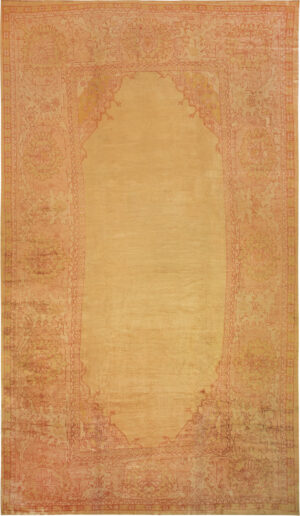
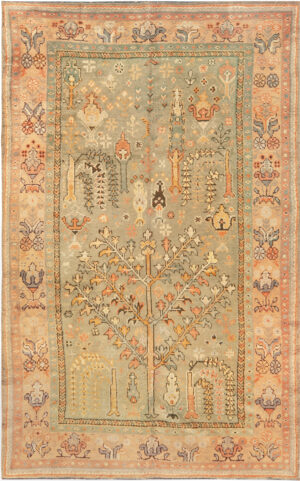
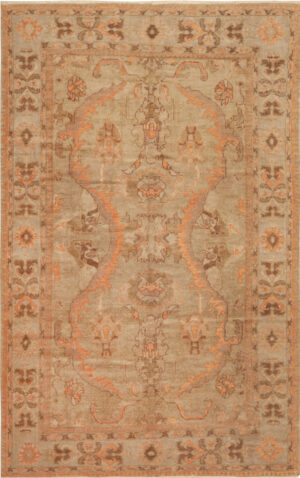
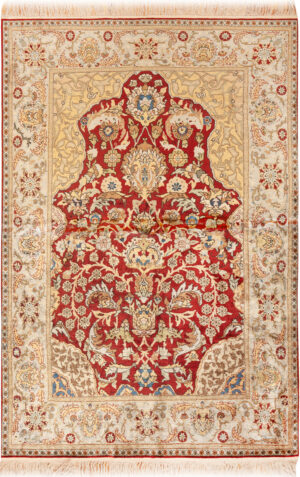
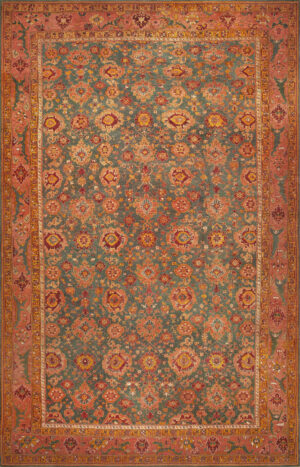
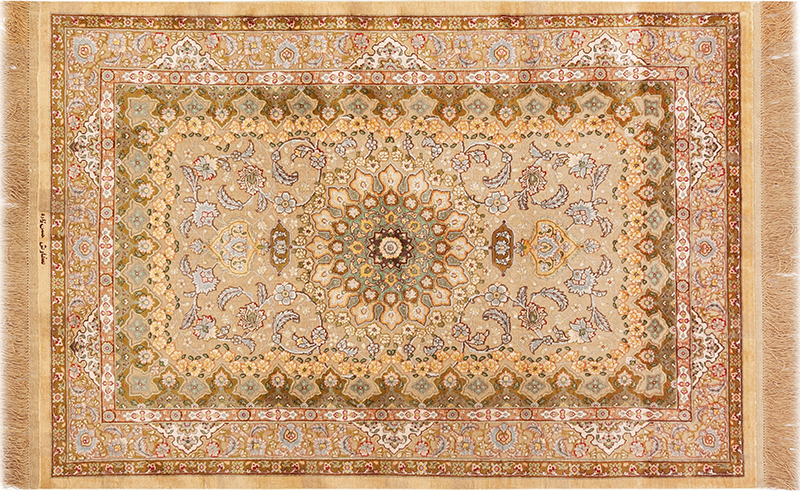
Silk Vintage Turkish Hereke Signed Rug Nazmiyal Collection #73141
What Are Turkish Rugs?
A Turkish rug is a handwoven carpet or flatweave made in Turkey — historically the Anatolian peninsula — where village, workshop, and court traditions developed over more than seven centuries into a wide range of distinct visual languages. Turkish rugs are among the most historically significant textiles in the world: the earliest documented pile carpets come from Anatolia, and it was Turkish and Central Asian weavers who first brought knotted carpet technology into the Islamic world and eventually into Europe.
Today, Turkish rugs are prized by collectors and interior designers for qualities that are distinct from the Persian tradition:
Readable pattern scale: works beautifully in modern rooms without overwhelming the space
Inviting palettes: often softer, warmer, and more decorative — especially in Oushak
Structural directness: village rugs in particular have a bold, confident graphic energy that pairs exceptionally well with contemporary furniture
Material character: high-lanolin Anatolian wool develops a distinctive warmth and sheen over time that is immediately recognizable to experienced collectors
As Rodolfo, Nazmiyal’s senior specialist with 45 years of hands-on experience, notes: “Interior designers have always understood something about Oushak rugs that takes collectors longer to learn — they don’t compete with a room, they complete it. The scale, the softened palette, the way the light moves across the wool. There is nothing quite like it in the rug world.”
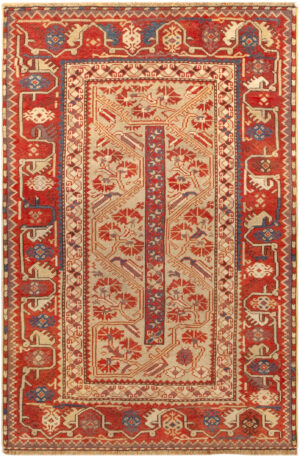
Turkey’s weaving geography is broad — from the western Aegean coast where Oushak developed its distinctive palace-scale decorative tradition, to the central Anatolian plateau where village weavers in Konya and Bergama produced rugs with bold geometric directness, to the imperial workshops of Hereke near Istanbul where the Ottoman court commissioned the finest silk carpets in the world.
Hereke (near Istanbul) — imperial workshop quality, often silk, extremely fine
Anatolian village traditions — Konya, Bergama, Sivas — bold geometry, strong wool, direct graphic character
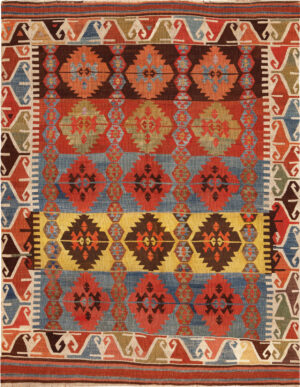
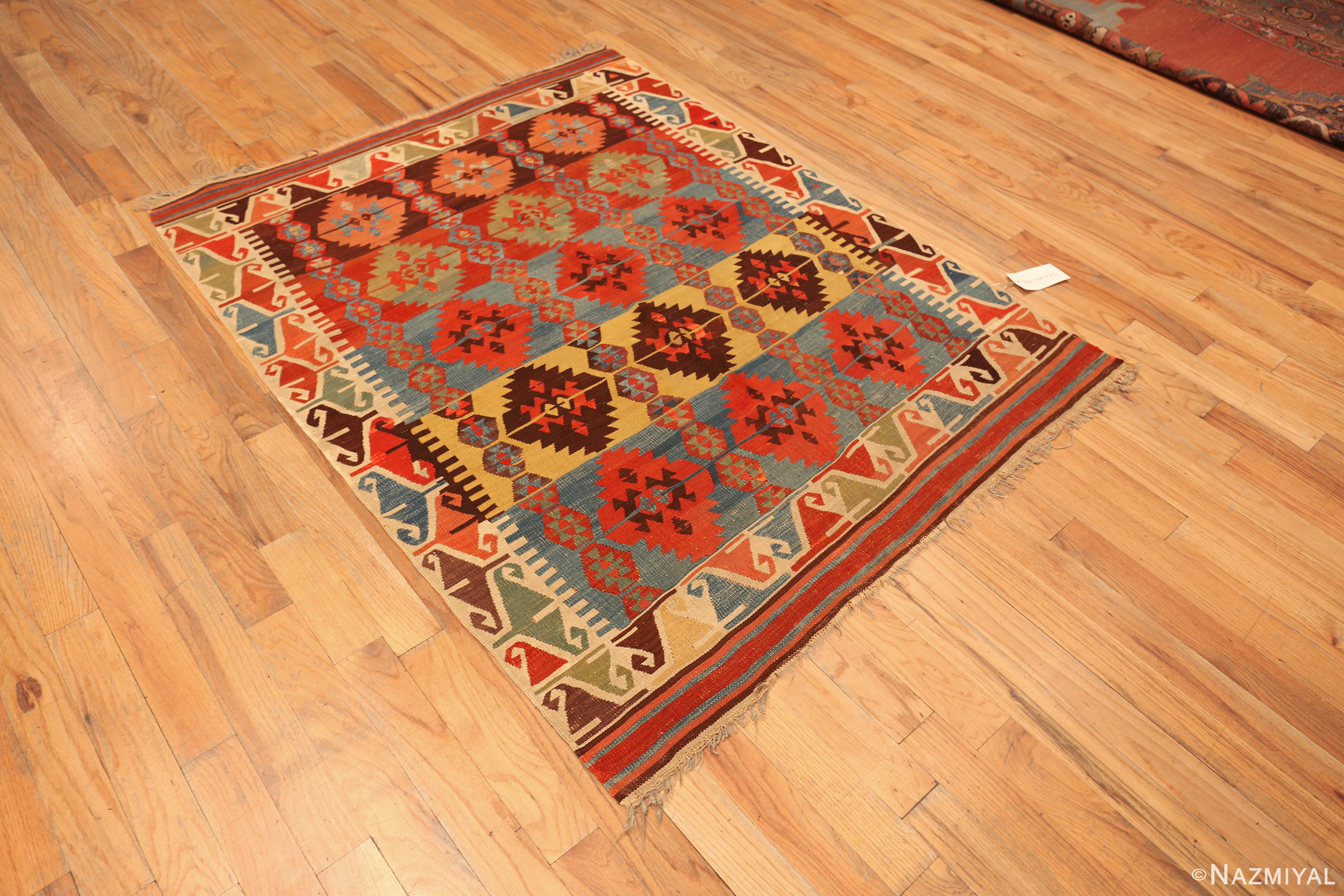
Kilims — flatwoven throughout Anatolia, geometric and versatile
If you want a wider origin comparison across the site, use our Worldwide hub to explore Turkey alongside Persia, the Caucasus, India, China, Scandinavia, and more.
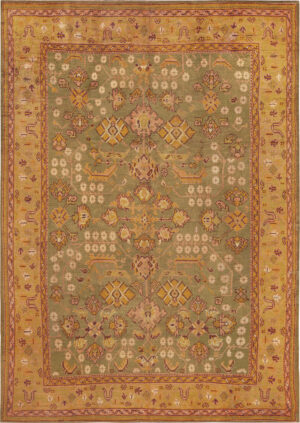
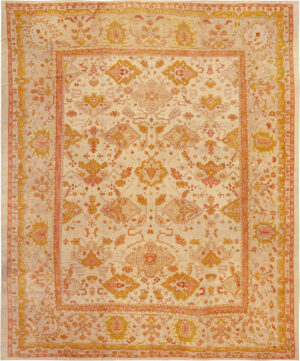
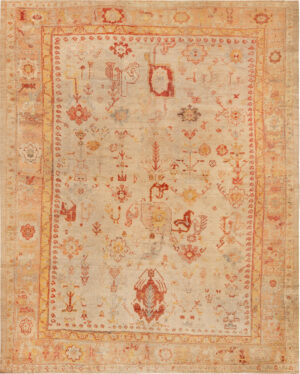
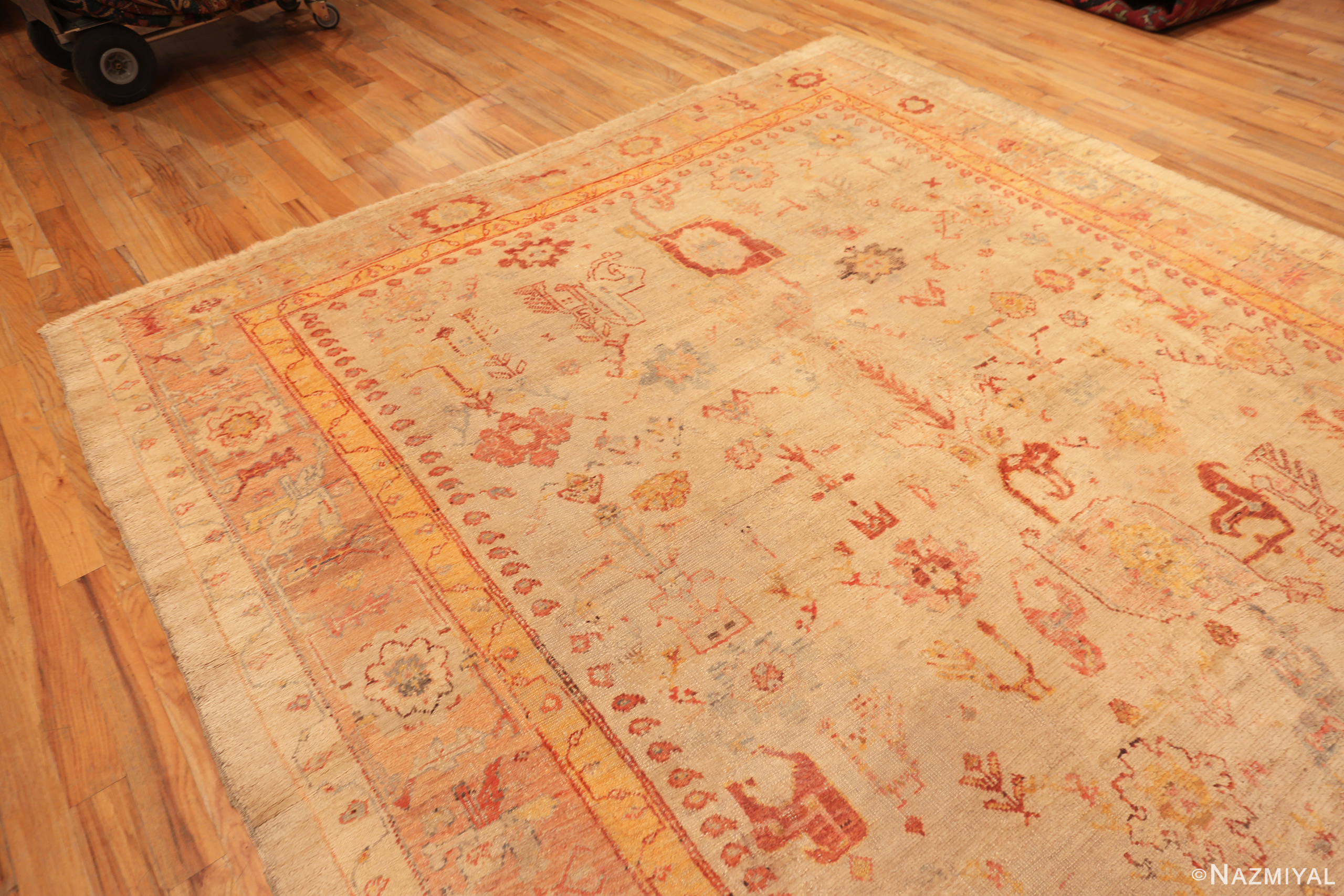
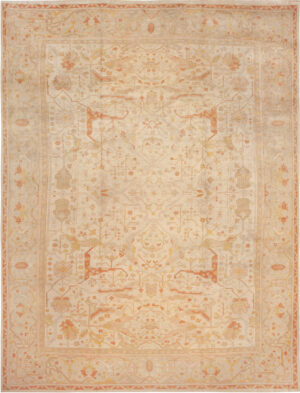
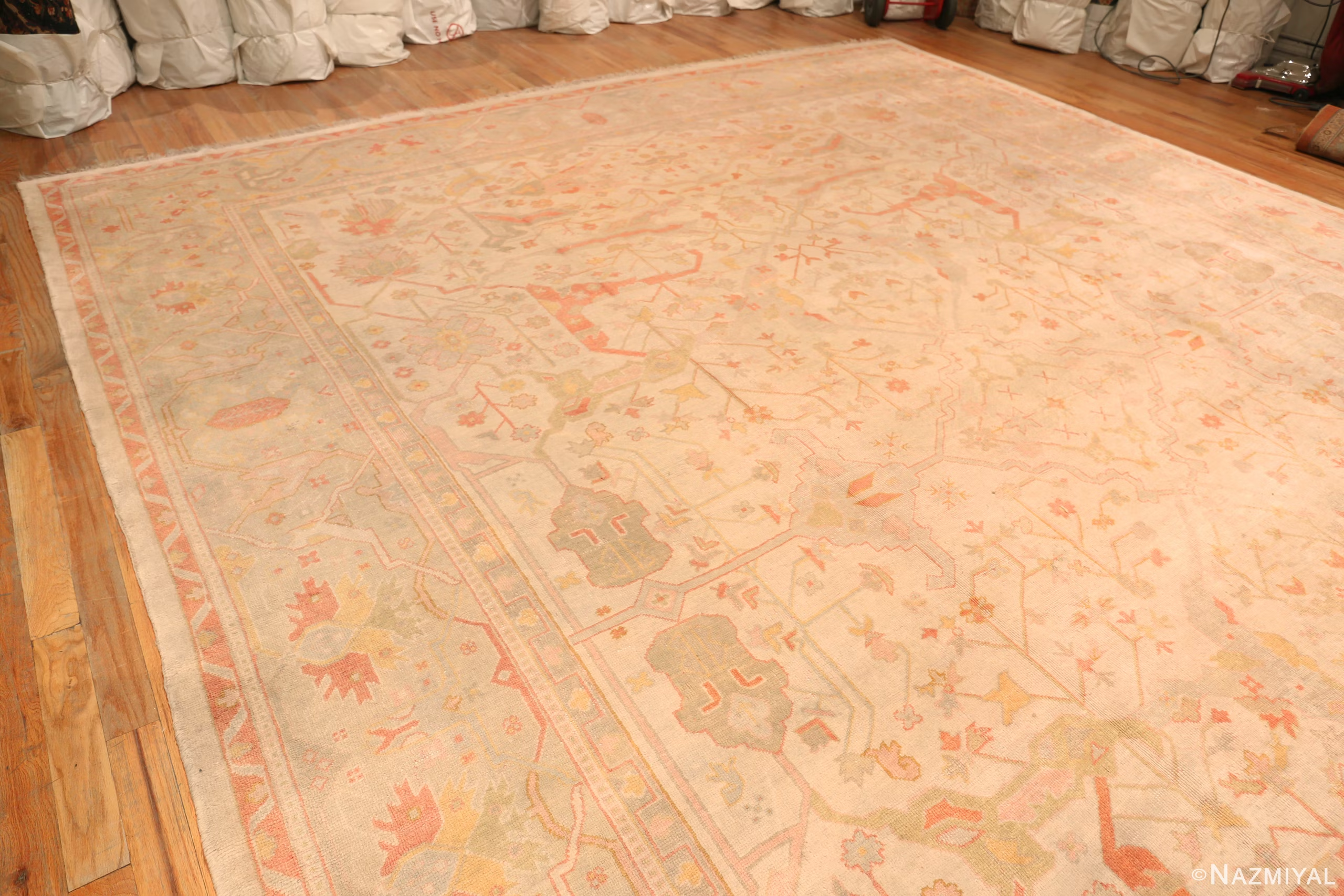
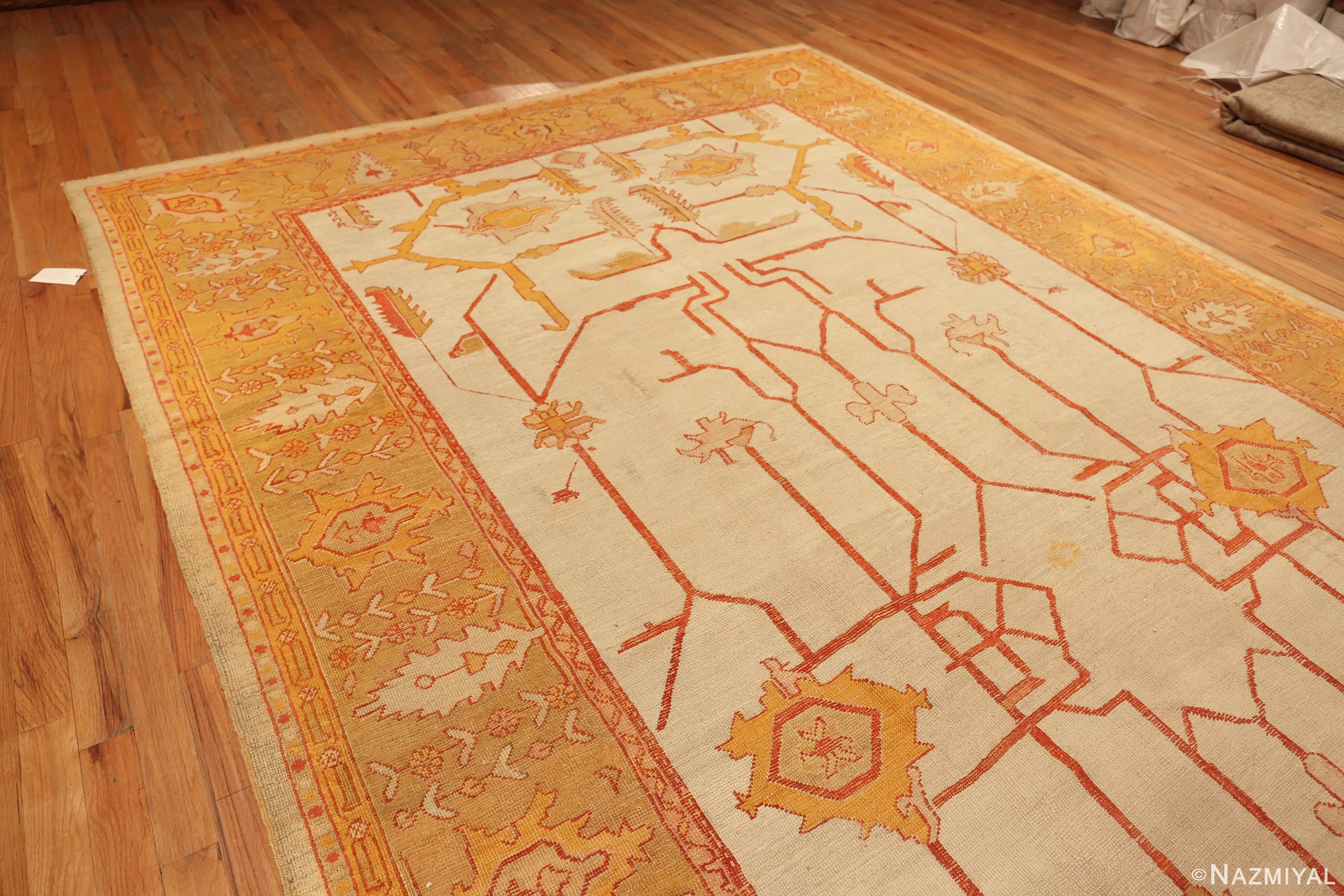
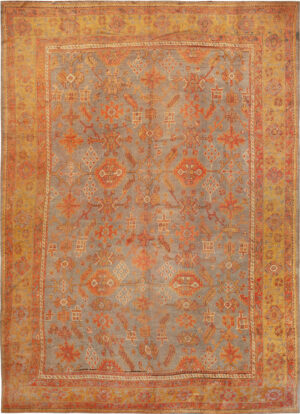
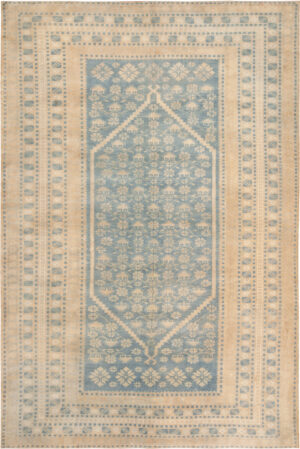
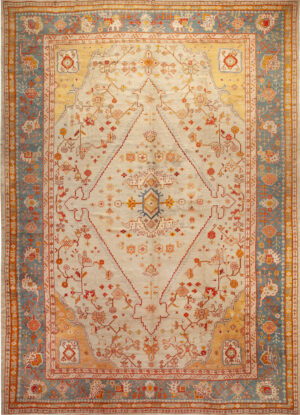
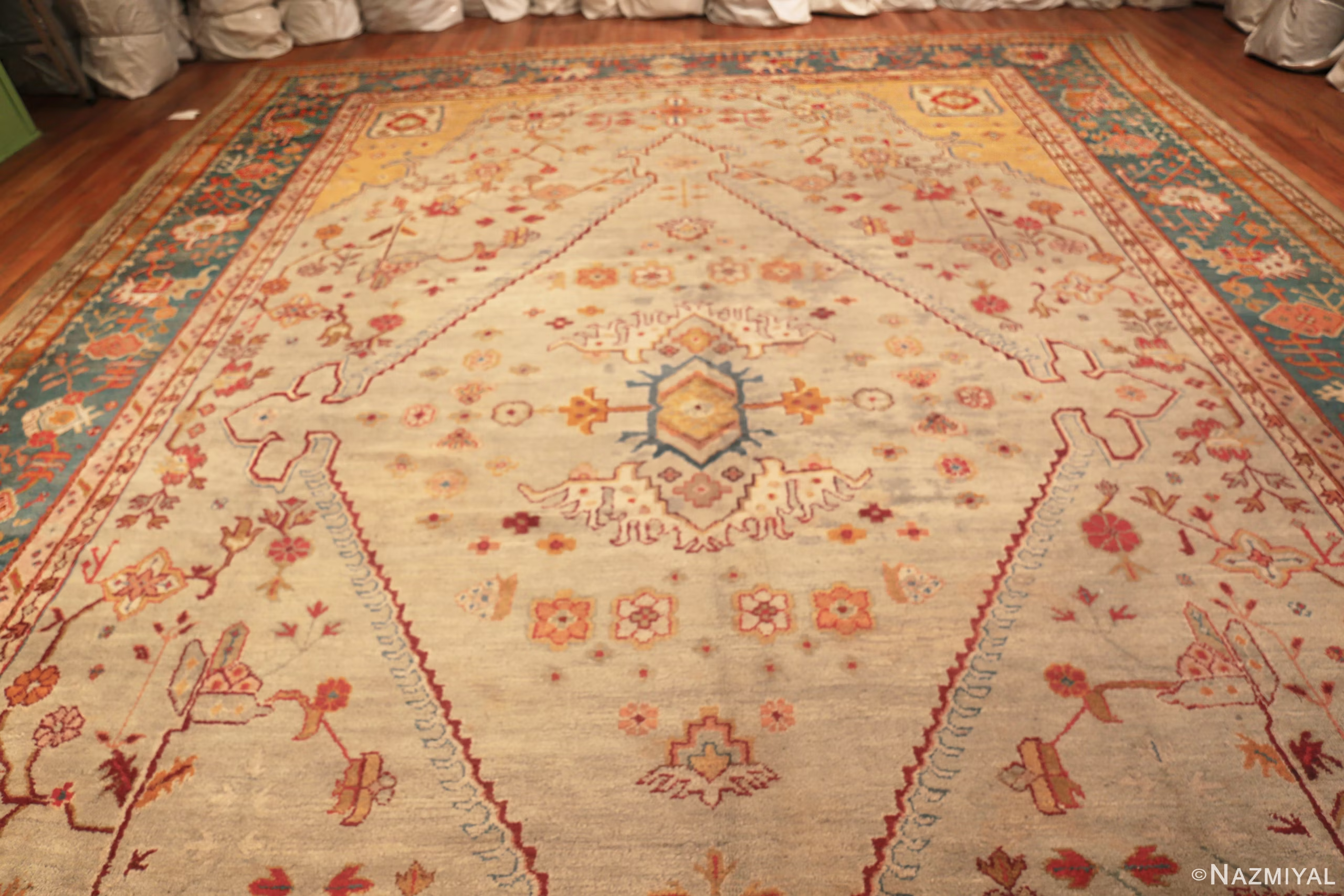
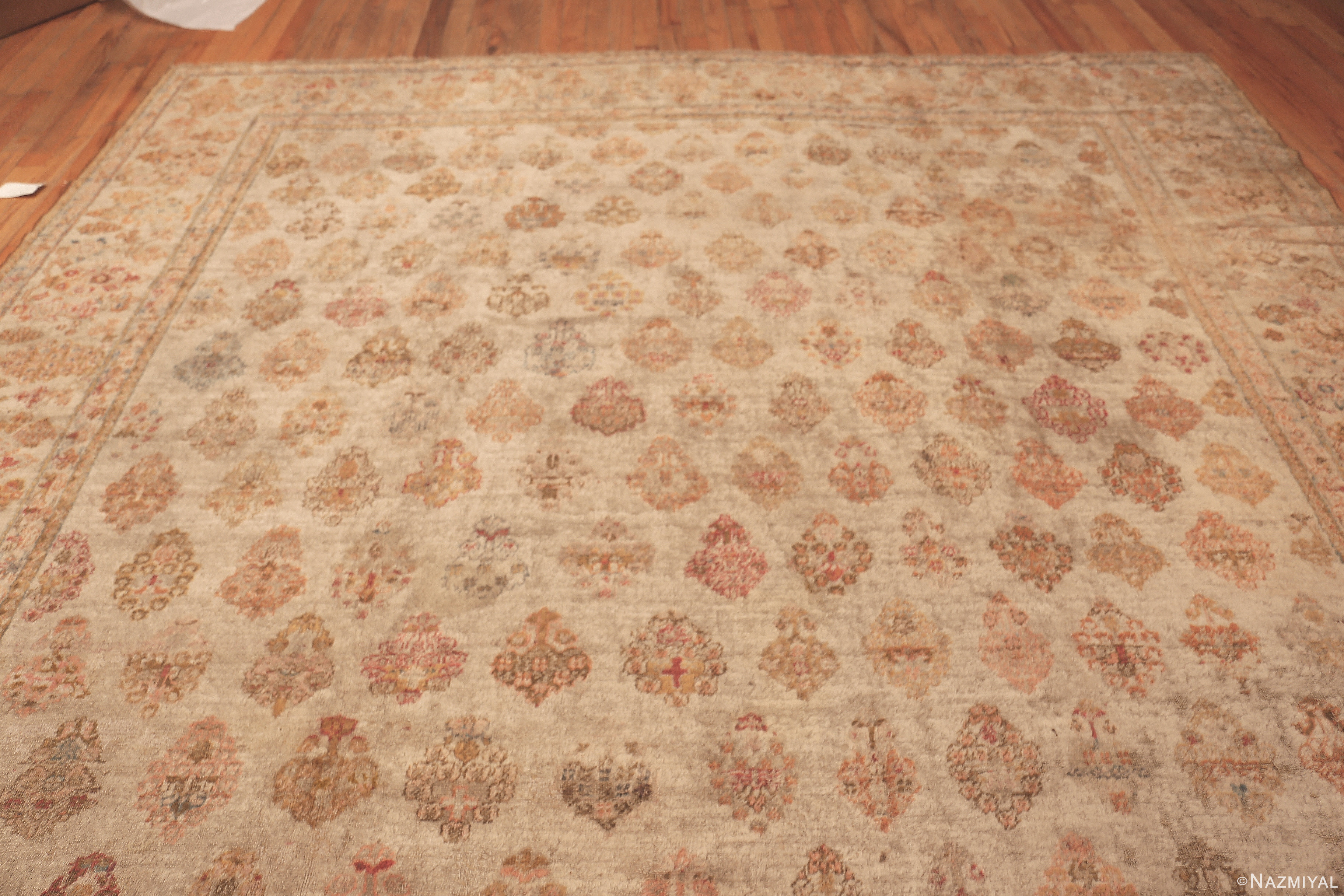
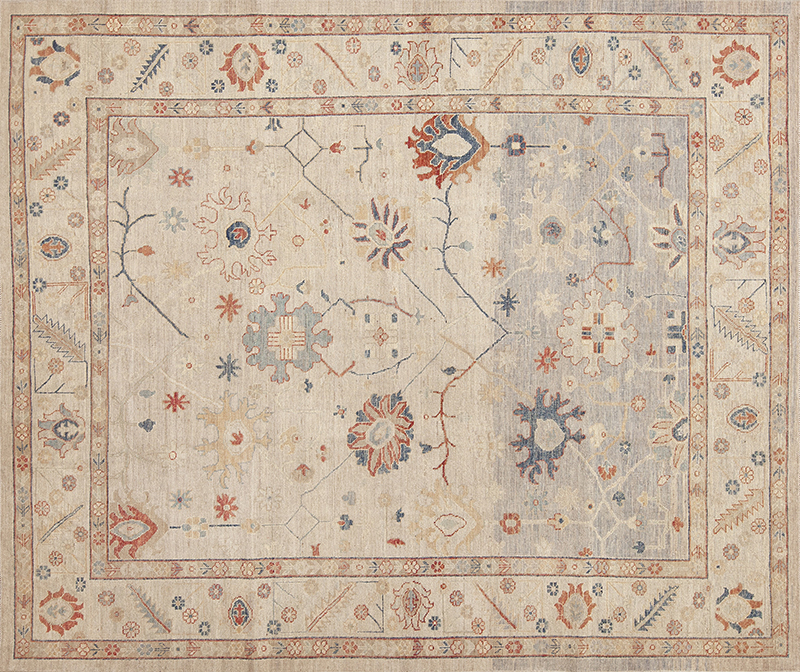
Ivory Pale Blue Casual Large Scale Allover Modern Turkish Oushak Rug Nazmiyal Collection #11380
Types of Turkish Rugs
Oushak Rugs (Uşak)
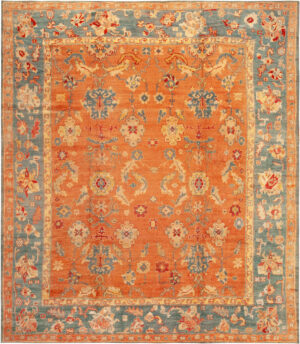
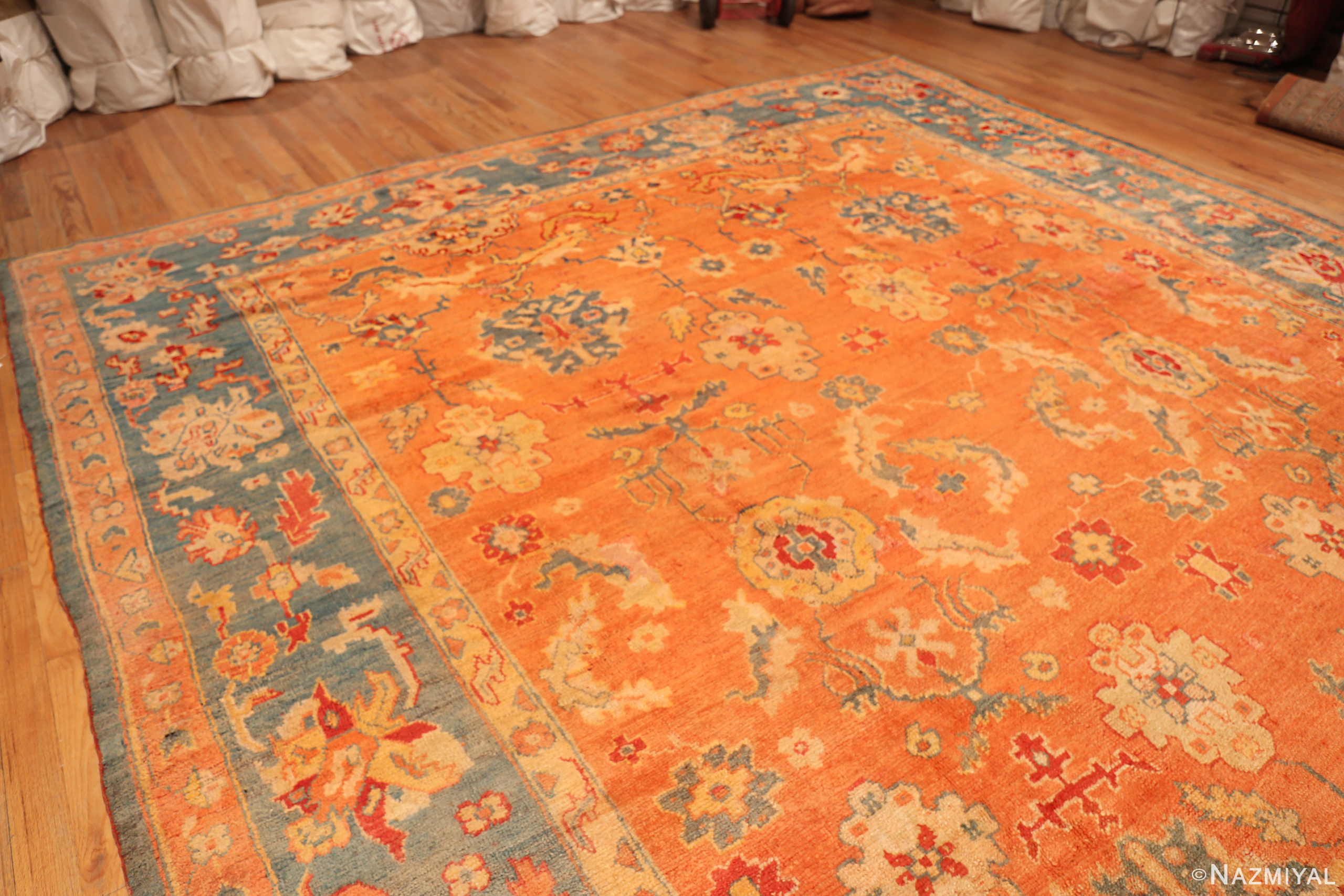
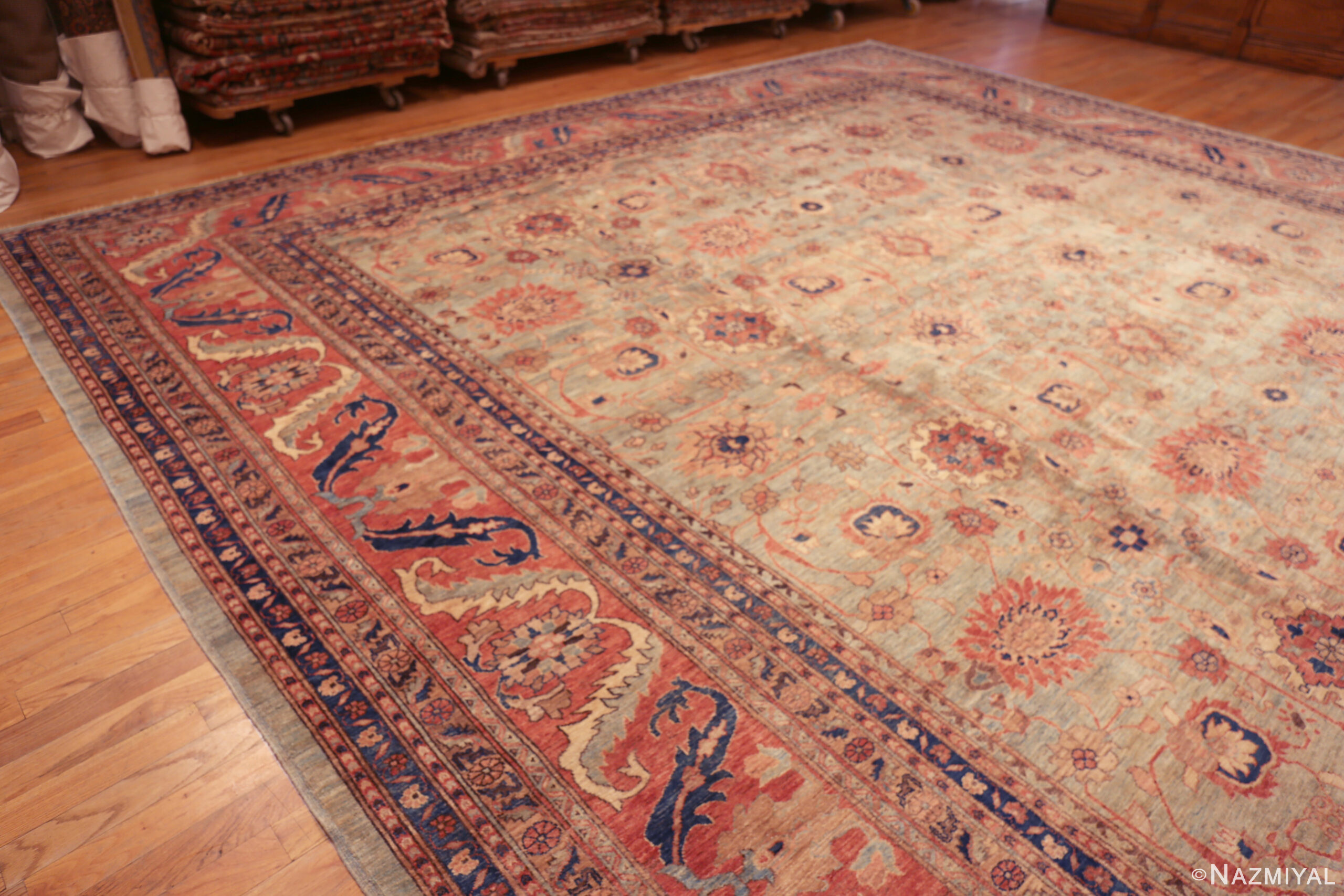
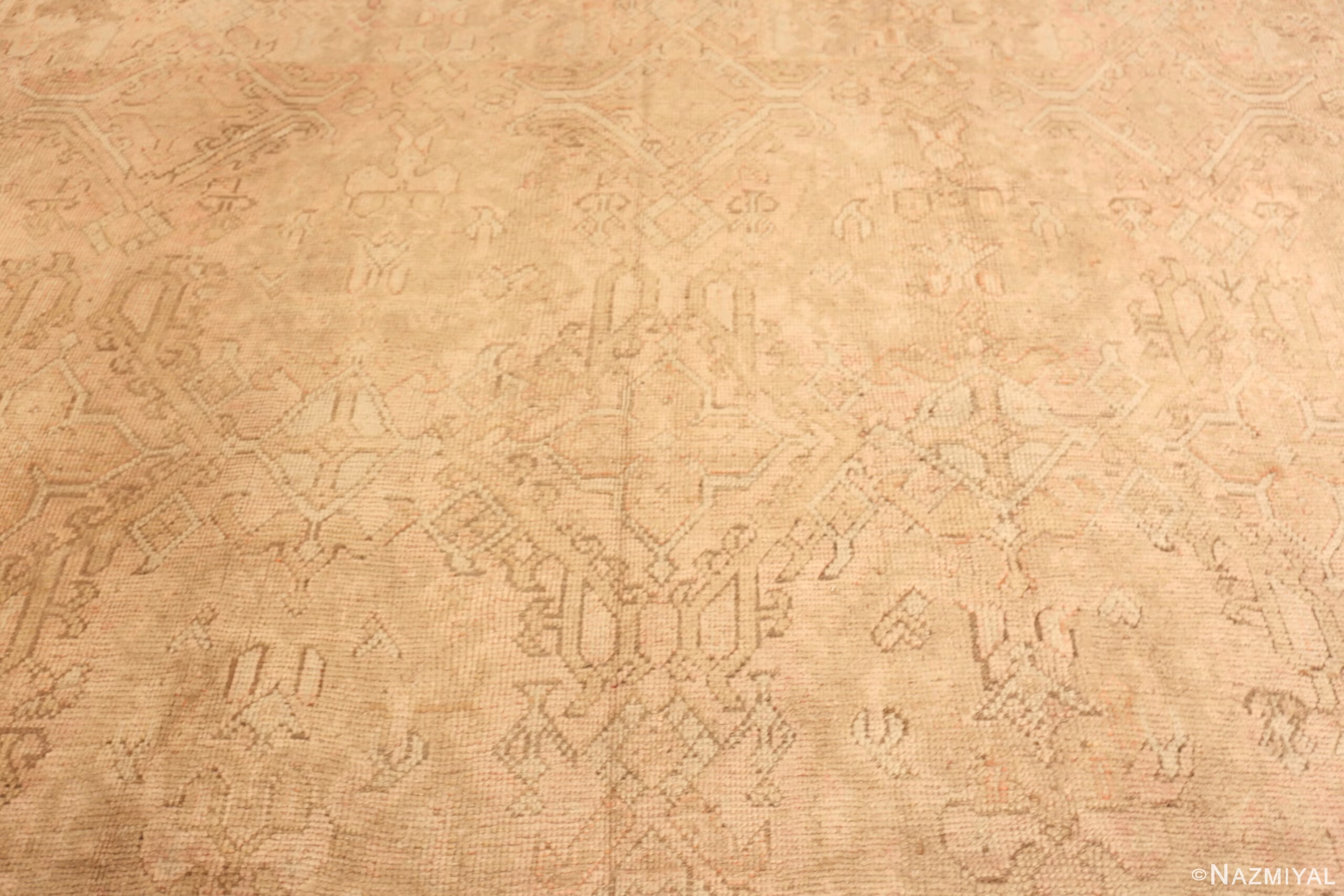
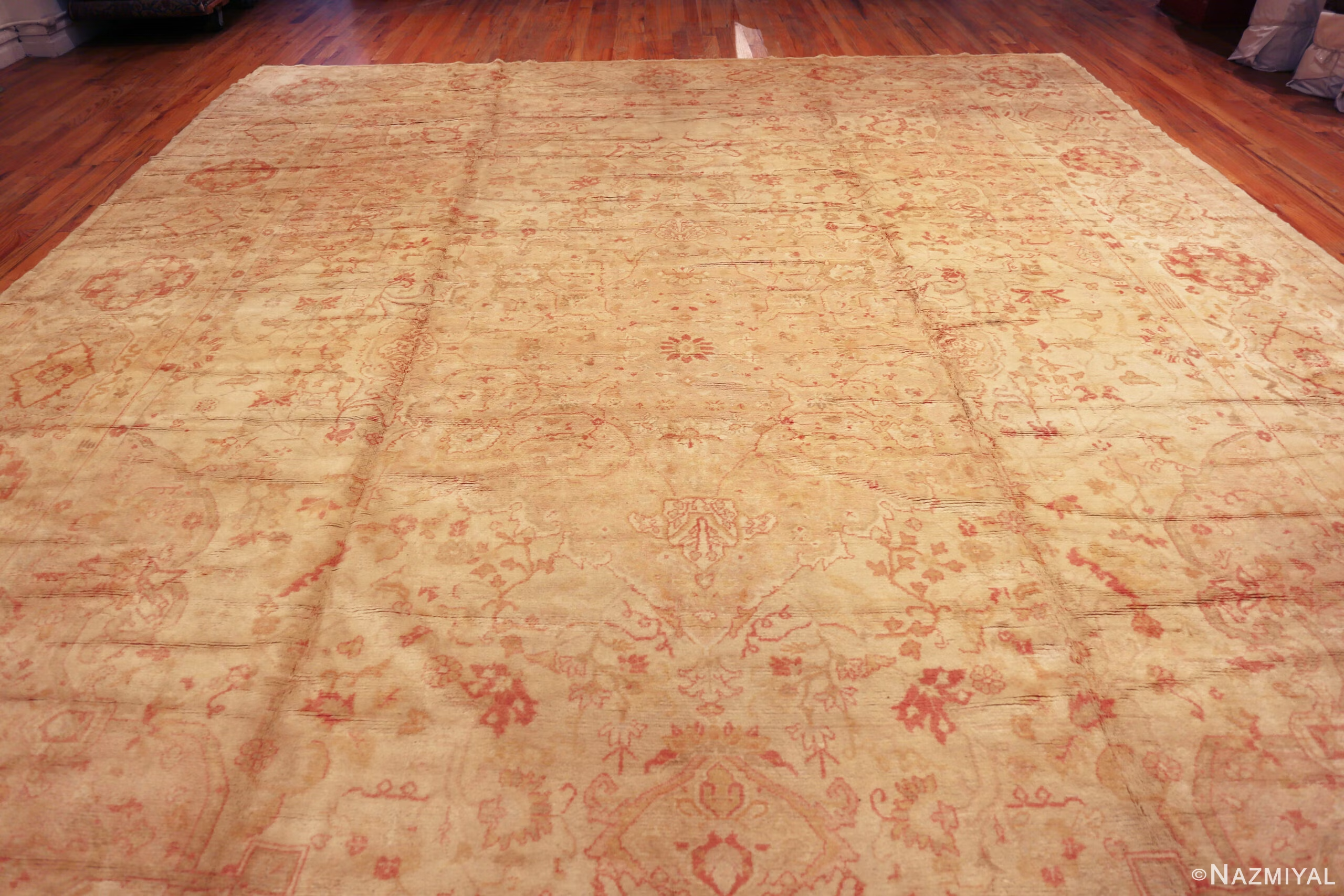
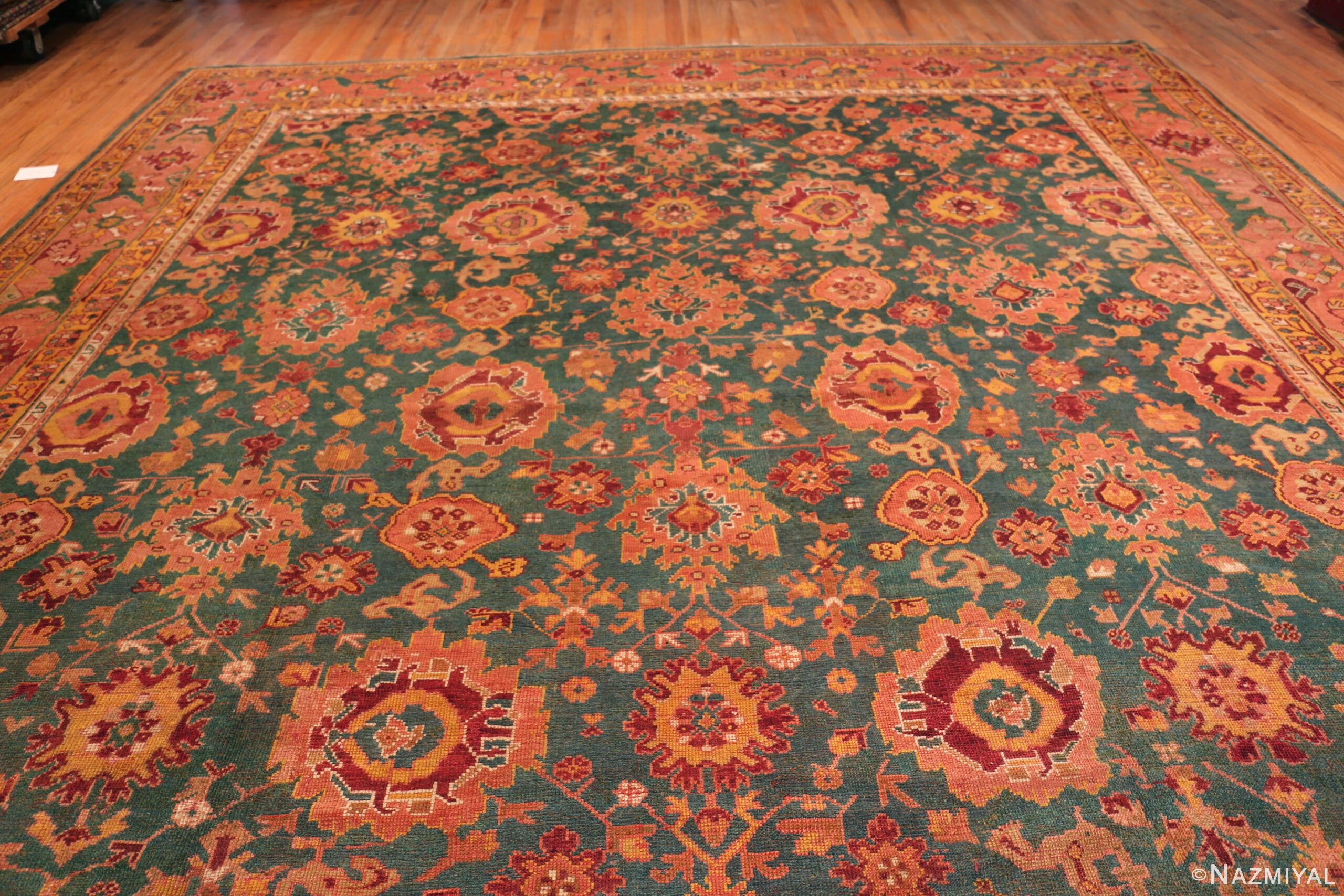
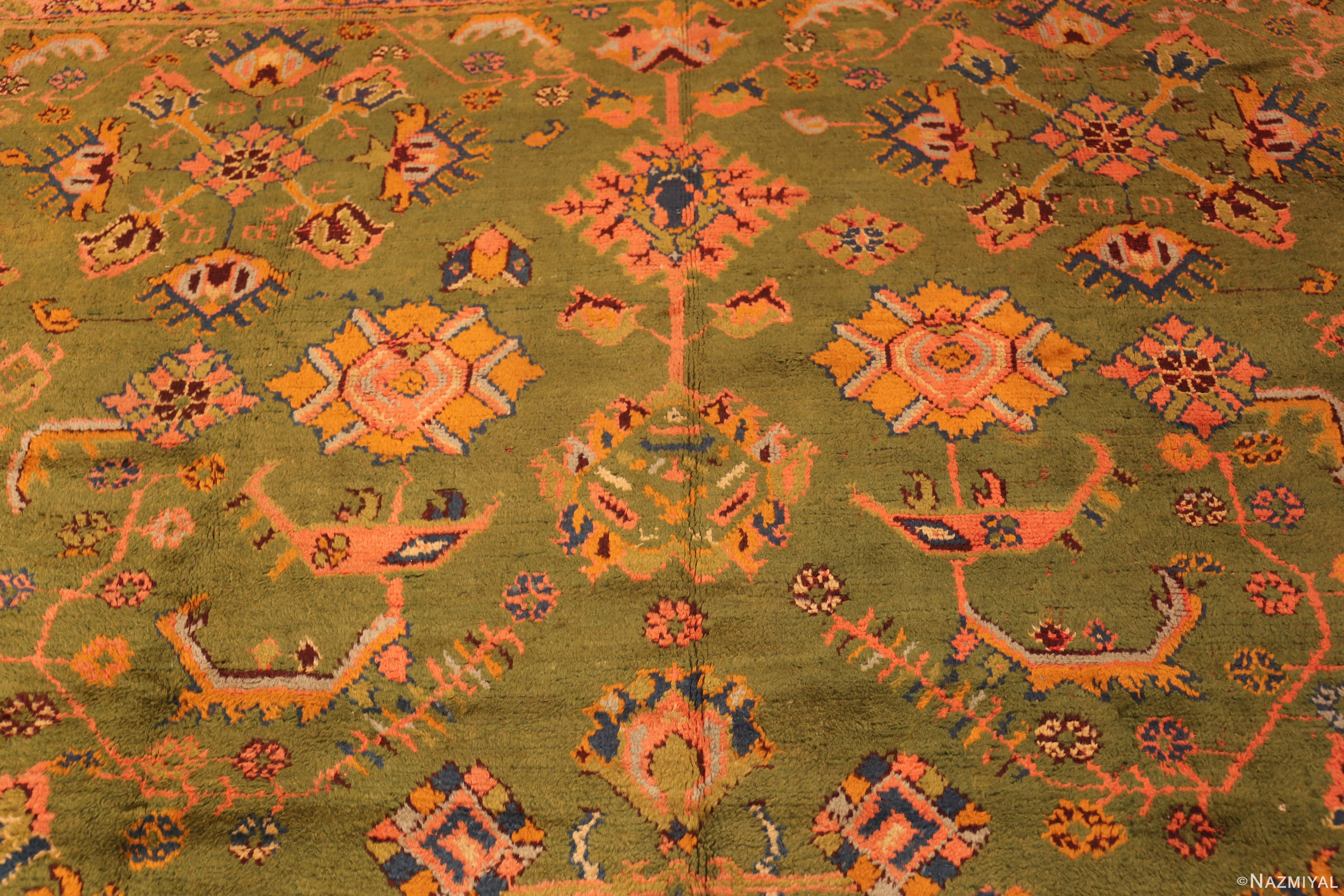
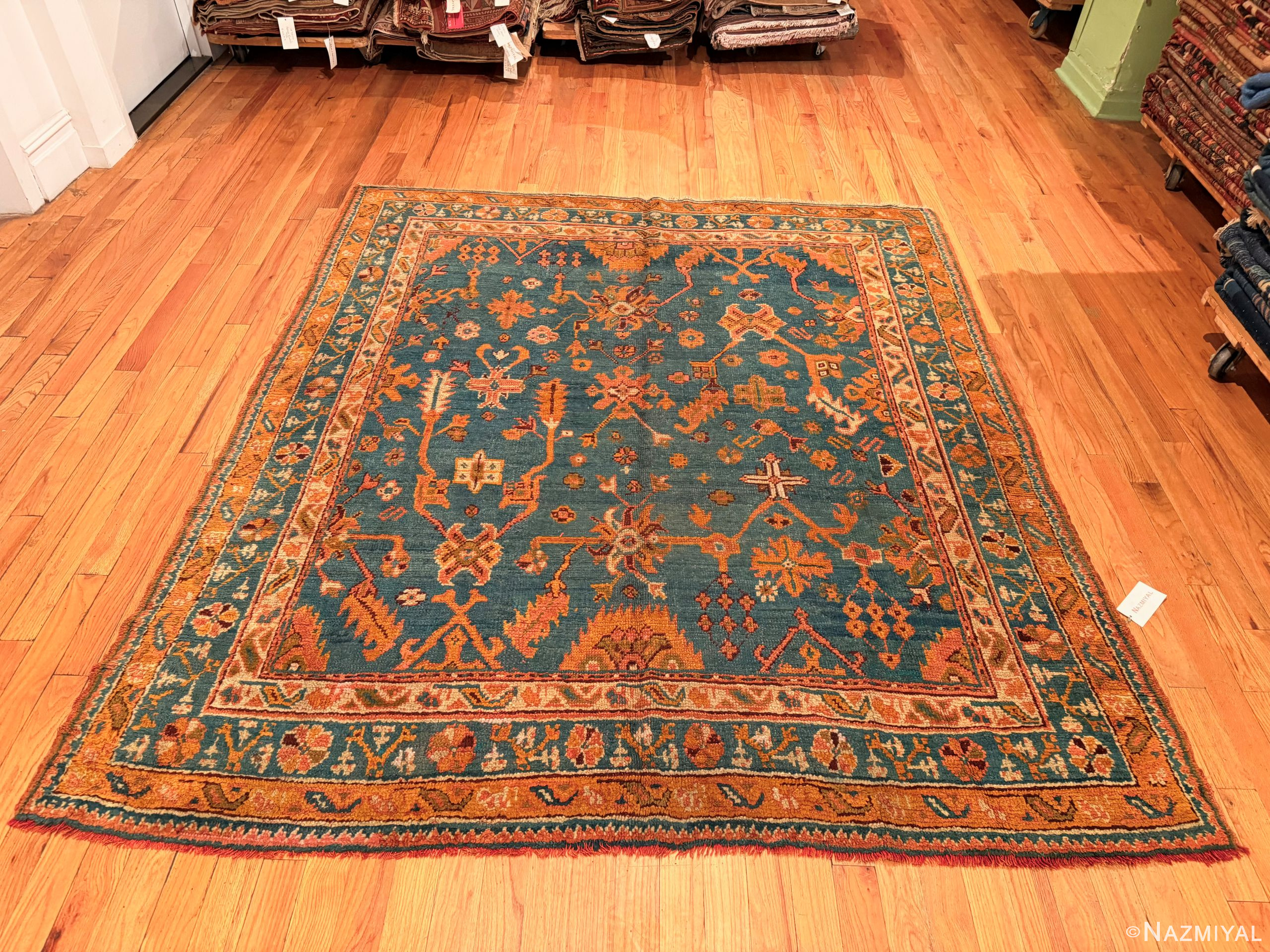
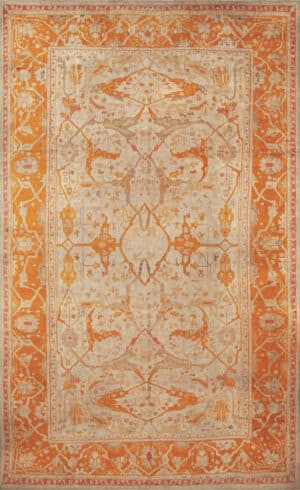
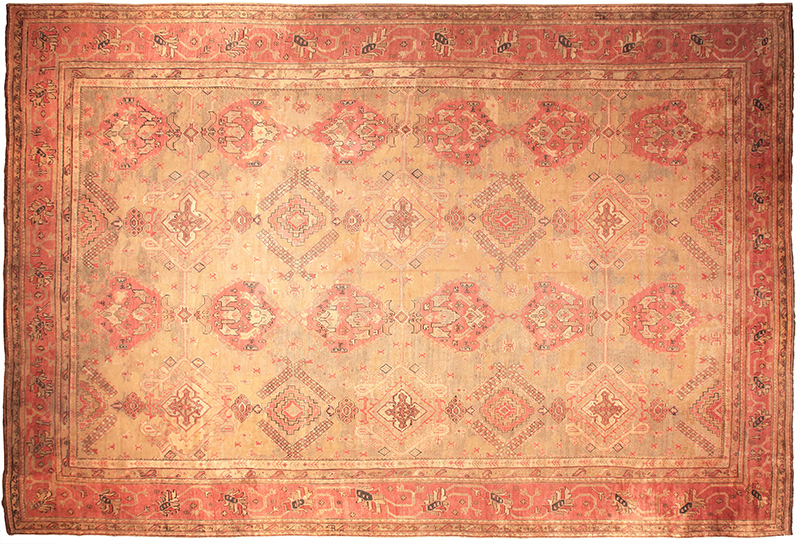
Oushaks are famous for large-scale motifs, spacious compositions, and a luminous, often pastel-leaning palette that feels effortless in interiors.
Hereke is known for luxury-level weaving, often with silk (and sometimes metallic thread), and refined curvilinear designs that can feel almost jewel-like in person.
Village rugs from Anatolia tend to be bold, grounded, and graphic—strong geometry, confident color, and an honest “handmade” energy that looks incredible with contemporary furniture.
Kilim rugs are flatwoven (no pile), known for crisp geometry, bright-to-earthy color stories, and versatility—especially in dining rooms, studios, and layered spaces.
Most Turkish rugs are woven in wool, with cotton foundations common in many formats. Hereke rugs may be silk (and sometimes incorporate metallic thread), and kilims are flatwoven textiles rather than pile carpets.
Pile rugs: thicker feel, softer underfoot, more “carpet-like”
Flatweaves: low profile, easy placement, excellent for dining rooms and layering
How to Choose the Right Turkish Rug
Start with the room’s job
Living room: Oushak is a go-to for calm, decorative anchoring at room scale.
Dining room: kilims and flatter weaves often make life easier for chairs.
Bedroom: a wool pile Turkish rug adds warmth without feeling too formal.
Hallway: bolder village patterns and kilim geometry can make a corridor feel intentional.
Choose your “quiet” and your “statement”
If you want decorative calm, start with Oushak.
If you want structure and punch, explore village rugs and kilims.
If you want fine detail and luxury, look at Hereke.
Use color the Scandinavian way (even in a Turkish rug)
Pull one quiet tone into your upholstery, let the rug carry the pattern, and keep the rest of the room edited.
Turkish Rugs vs Persian Rugs
Both traditions are world-class—your choice is about feel and scale.
Turkish rugs tend to offer:
Larger-scale motifs and more open compositions (especially Oushak)
A decorative softness that works easily in modern homes
Strong geometry in many village rugs and kilims
Persian rugs often emphasize:
Denser ornamentation and finer drawing in many city/workshop rugs
A wider range of classical floral vocabulary and medallion systems
Huge diversity across regions and tribal/city formats
If you’re comparing side-by-side, cross-check the classics in our Persian Rugs hub.
The history of Turkish rugs is as complex as it is ancient. Anatolia has been one of the most important rug-producing regions in the world for at least seven centuries, and the documentary evidence — both physical and pictorial — is richer for Turkish rugs than for almost any other tradition.
The oldest surviving pile carpets come from Anatolia. The Seljuk carpets discovered in the mosques of Konya and Beyşehir date to the 13th century and represent the earliest known examples of the knotted pile carpet tradition. These geometric masterpieces — bold, architecturally scaled, and woven with confident directness — established the visual vocabulary that would influence rug weaving across the Islamic world for centuries.
During the Ottoman Empire’s peak in the 15th and 16th centuries, Turkish rug production reached extraordinary heights. The imperial workshops at Hereke, established to supply the Ottoman court, produced some of the finest carpets ever made — silk pile rugs of exceptional technical refinement commissioned for palace interiors and diplomatic gifts. Meanwhile, the workshops of Oushak in western Turkey were producing large-format decorative rugs that appeared in royal inventories across Europe and are depicted in paintings by Holbein, Lotto, and Memling — the same painters whose names became associated with specific rug types they depicted.
By the late 19th century, Western demand for Turkish rugs surged alongside interest in Persian weaving. The Oushak tradition in particular found a massive market among American and European collectors seeking large, room-anchoring carpets with warm palettes and bold design presence. Many of the finest antique Oushak rugs now in American private and institutional collections entered the market during this period.
Explore More
Want to compare Turkish weaving with rugs from other origins? Use our Worldwide hub to browse by country and city—helpful when you’re building a whole-home palette across regions.
Whether you’re local or international, our team will help you choose the right scale, confirm condition details, and coordinate delivery so your rug arrives ready for real life.
For decades, clients have relied on Nazmiyal for guidance on identifying, valuing, and collecting Turkish rugs—especially decorative Oushaks, fine Hereke pieces, and Anatolian village weavings.
             Posted on Google        Clay Pendergrast     Trustindex verifies that the original source of the review is Google. My wife and I are so pleased with the antique Uzbek Bokhara Rug purchased from the Nazmiyal Collection. Not only does the rug have a spectacular design, it also was very reasonably priced. The way it transforms our living room, reconciling the classic modern furniture with the 1913 Craftsman interior is remarkable.         Posted on Google        Terence Hayes     Trustindex verifies that the original source of the review is Google. I have purchased multiple rugs at multiple Nazmiyal auctions and I am extremely pleased with the quality, price, and experience.  Highly recommended!         Posted on Google        Victor Florintsev     Trustindex verifies that the original source of the review is Google. The only ones I'd ever buy rugs from. The best.         Posted on Google        Jeffrey NeumanB     Trustindex verifies that the original source of the review is Google. I bought two gorgeous Serapi rugs from Farhad at Nazmiyal Rugs!  Beautiful carpets, fair prices and great service.  Very happy customer.  Farhad (the sales person) was very patient and gave us great service.         Posted on Google        john haid     Trustindex verifies that the original source of the review is Google. Alen is a gentleman and an expert.  Really great to work with.         Posted on Google        Edward Yasuna     Trustindex verifies that the original source of the review is Google. I recently purchased a modern Kandinsky rug from Nazmiyal Auctions.  It was just as described, and the director (Farhad) of the auctions had it sent to me quickly and safely.  Payment was easy, the rug was reasonably priced, and I highly recommend Nazmiyal Auctions and Antique Rugs.  Quality merchandise and first-class service.         Posted on Google        Nicholas Carr     Trustindex verifies that the original source of the review is Google. Had a excellent experience buying a rug in Nazmiyal's 1/18/26 online auction.  First, prior to the auction, viewing a number of lots at the 32nd St showroom (I had prepared a list from the online catalog). The staff were great to work with: helpful, knowledgable, honest, and flexible.  Second, after placing an online bid and winning the desired item, arranging payment and pickup was simple and straightforward. Everything went seamlessly and the overall experience was educational and fun. Many thanks to Jason and his team.         Posted on Google        Andrea Gared     Trustindex verifies that the original source of the review is Google. Everyone at Naziyal is proffessional, especially Jason and Farhad.
They are knowledgeable, truthful, and true gentlemen. I have sold several rugs through them and will always go to them first, to buy or sell. The best in the business!
Frequently Asked Questions
Often, yes. Anatolian refers to the historical peninsula where Turkey is located and where most Turkish weaving traditions developed. The terms are frequently used interchangeably in the trade, though Anatolian sometimes implies an older or more specifically regional attribution.
Oushak rugs come from western Turkey and are known for large-scale, open compositions with luminous, often pastel palettes — exceptionally decorating-friendly and among the most sought-after antique Turkish rugs by interior designers. Hereke rugs come from the imperial workshops near Istanbul and represent the opposite end of the spectrum: extremely fine knotting, often in silk, with refined curvilinear designs that approach the detail of the finest Persian city rugs.
Turkish rugs are among the oldest documented pile carpets in existence. The Seljuk-era geometric carpets from the mosques of Konya date to the 13th century — predating most surviving Persian examples. It was largely through Turkish and Central Asian peoples that the knotted pile carpet entered the Islamic world and eventually reached Europe, where Anatolian rugs appear in Renaissance paintings by Holbein, Lotto, and Memling centuries before Persian rugs became widely traded in the West.
Exceptionally well — particularly Oushak rugs. Their large-scale motifs, warm palettes, and open compositions integrate naturally with contemporary furniture without the formality that some Persian city rugs can impose. Village-style Anatolian rugs also work well in modern rooms for their bold geometry and direct graphic energy.
Value in antique Turkish rugs comes from the weaving center (Oushak vs Hereke vs village), design clarity and composition, wool quality and how it has aged, color harmony, size, and structural condition. Age matters but condition matters more — a well-preserved 19th-century Oushak in full pile is significantly more valuable than an earlier example with heavy restoration.
Village rugs from Anatolia — Konya, Bergama, and related traditions — are among the most durable antique rugs made anywhere. Their thick, high-lanolin wool pile and robust construction were designed for household use under demanding conditions. Antique Oushaks with good pile are also surprisingly durable for their scale. Hereke silk pieces should be kept in lower-traffic settings.
Yes. Nazmiyal has sold Turkish rugs to collectors and designers worldwide for decades. We provide detailed condition reports, precise measurements, and high-resolution photography for every piece. Our 3-day return policy applies to international purchases. Contact our team to begin.