How to Tell How Old Your Rug Is
One of the most frequently asked questions we get is, “how old is my rug?” Estimating your rug’s age requires studying its back, pile, foundation, dyes, weave, design, wear, repairs, and provenance. Understanding all of these traits in unity will allow you to distinguish between a newer rug, a vintage rug, and an antique rug.
The age of a rug is important in determining the value of a rug. One of the most difficult skills to acquire for a passionate rug collector would be determining how old a specific rug might be.
Older antique rugs might show some evidence of wear. The rug pile may be low or worn away exposing foundation, but relatively modern rugs can get worn quickly, and very old rugs can sometimes survive in good condition if they have been in the possession of thoughtful owners. The back of the rug offers a better opportunity to estimate age.
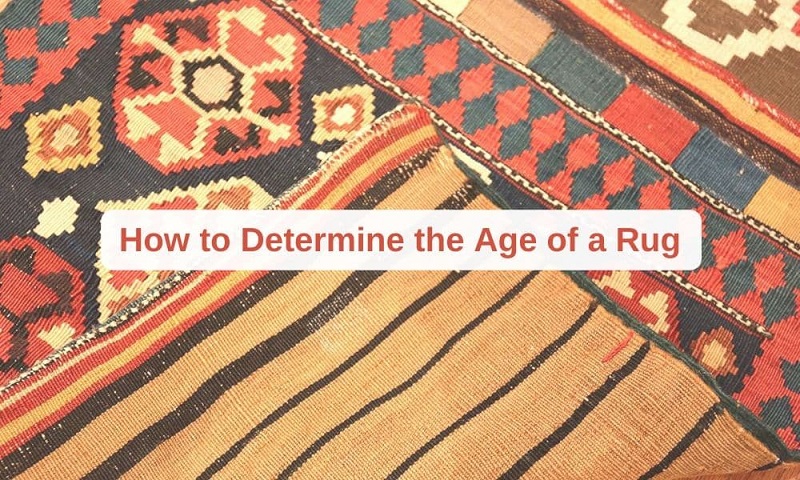
Newer modern rugs will feel fuzzy on the back since their yarns still possess their fibrous surface. As a rug ages, even if walked on carefully, the underside will become polished or abraded through pressure and friction, diminishing the fuzzy or hairy texture.
Very old rugs will feel gritty, sandy, or even smooth on the back. A fine rug that looks tightly woven, but that still feels somewhat floppy or supple, is probably old, since even tightly woven rugs become supple with time.
Color or rug dye quality can also help determine how old a rug is. If a rug has pale colors, fold it to spread the pile open. This will reveal if the color is the same all the way down into the pile to the rug foundation. If the colors get darker the further down the pile you go, the dye has probably faded on exposure to light and is probably synthetic. Such carpet dyes became more common from the late nineteenth century on. If a rug has considerable amounts of faded dye it is an indication that rug may have been made after the 19th century.
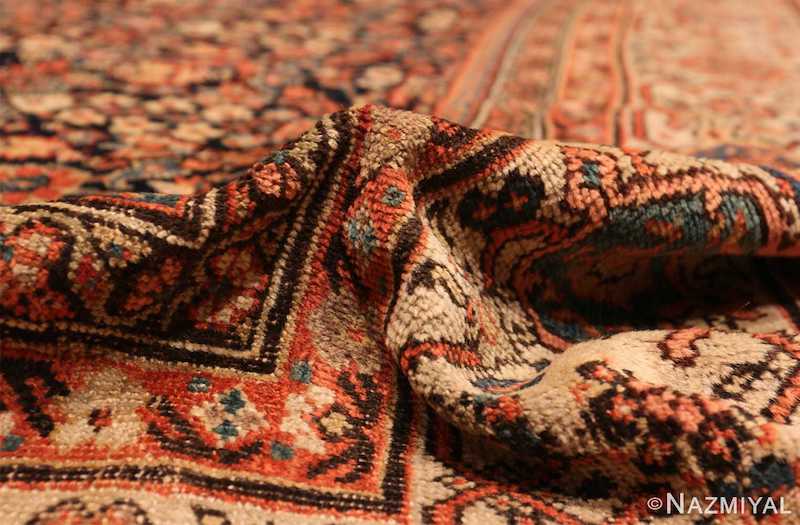
On the other hand, rugs with color that is completely uniform, lacking abrash or variegation in color, are made with later, light-fast synthetic dyes post-dating the 1920’s. In the case of nomadic and many village rugs, a cotton rug foundation will also indicate a relatively later date. This is due to the fact that after about 1930, the new availability of inexpensive machine spun cotton largely eliminated the use of wool warps and wefts.
These are some general characteristics of older rugs that are due to wear. However, they still do not give you a definitive way to estimate the age. Using these characteristics, you can get an idea if the rug is new or old, but how do you estimate the age beyond that? How do you tell a mid century vintage rug from a true antique? There are several techniques.
Rug Style Can Help Narrow the Date
Once you have used the general guidelines above to determine if the carpet is antique, style is an excellent way to tell the age of an antique carpet. In many cases, knowing the style of the carpet can help you tell the age of it. For instance, you know that if the pattern is a Ziegler Mahal, then it could not have been produced earlier or later than a certain date (since Ziegler produced rugs during a specific point in time).
The patterns of rugs from certain times and places are easy to distinguish. For instance, the Lotto carpets point to the late Renaissance. You can easily determine some of the styles by consulting a design encyclopedia. However, this can be tricky because modern manufacturers often reproduce these more ancient designs. This is why you must look at characteristics such as wear and color.
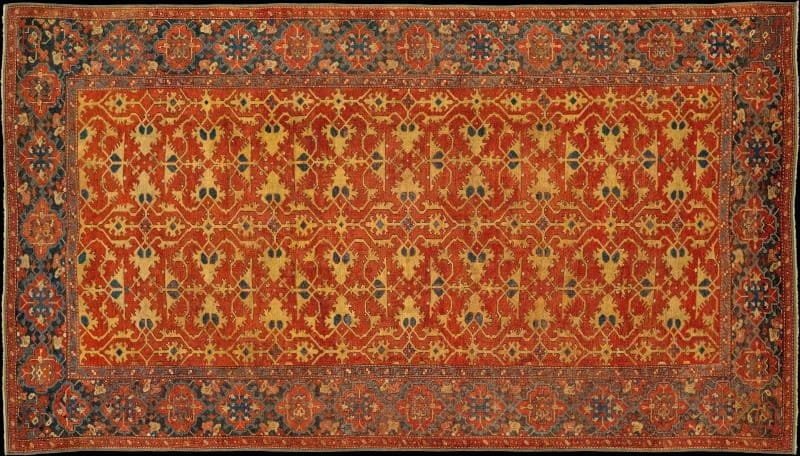
The Designs Of Rugs Changed Over The Years
Every rug weaving locale has its own evolution. Everything from the dyes that were used, to the materials to the actual design have seen changes over time. One of the most noticeable changes can be seen on the antique Northwest Persian rugs -mainly three specific rug types – antique Persian Heriz, Serapi and Bakshaish rugs.
Below we will show you how the patterns of these specific antique Persian rugs have evolved over time from:
The more tribal and open designs of the: antique Persian Bakshaish rugs (usually referring to the rugs woven around the 1870’s and earlier):
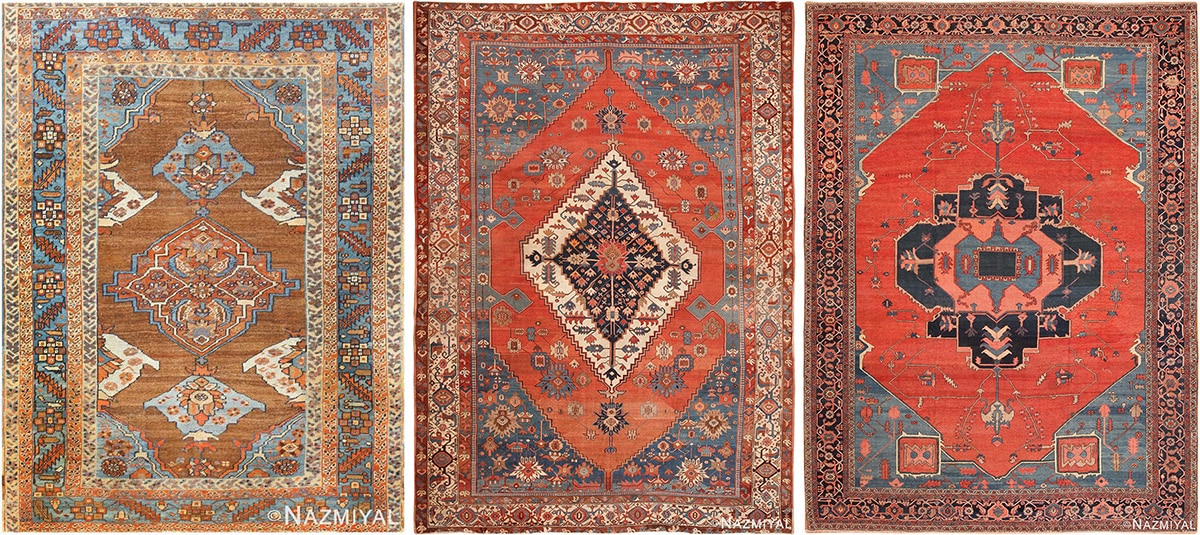
To the more structured but still quite open patterns of the antique Persian Serapi rugs (which were woven from the late 19th century to the turn of the 20th century):
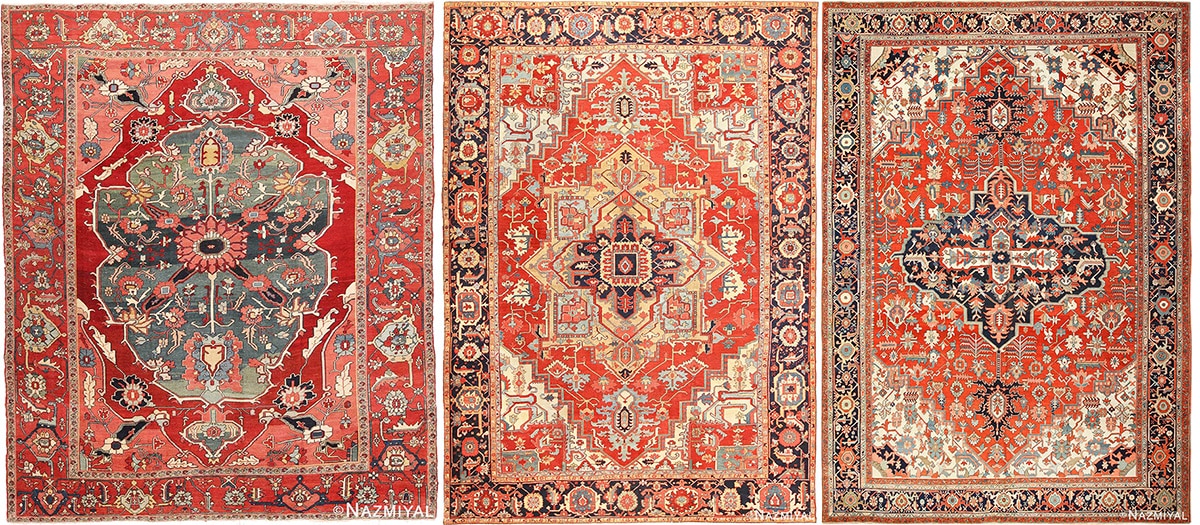
to the busier and younger antique Persian Heriz rugs (usually talking about the rugs woven after the 1910’s).
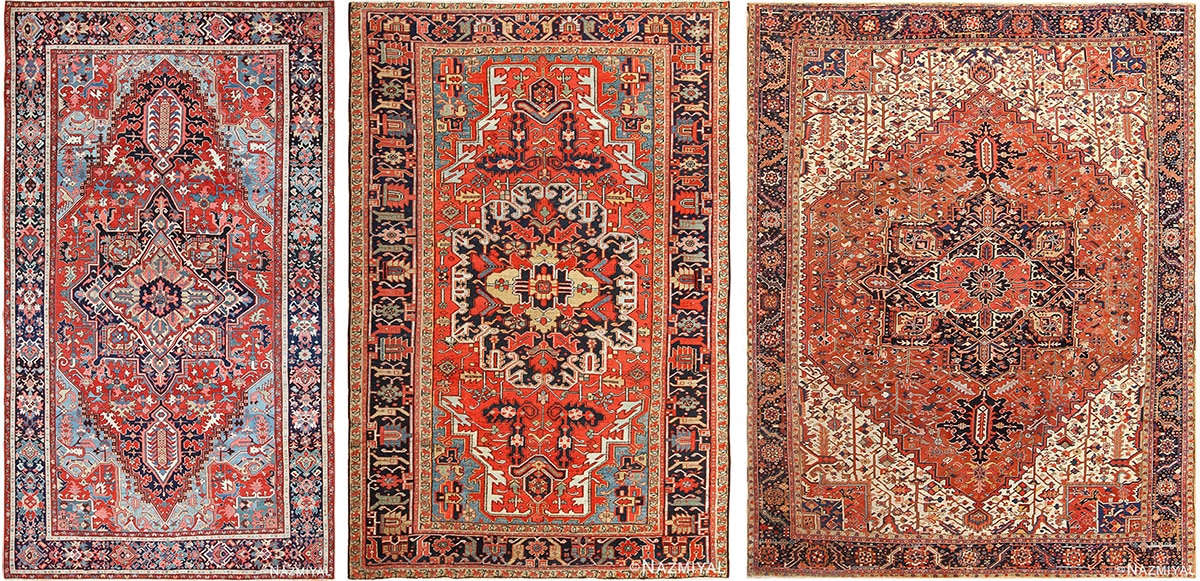
If you look at the above images, you can see the progression quite clearly. You will also notice that the colors and dyes changed over the years. Even the texture and construction are a bit different with every update to the production. So paying attention to the design is a great way of determining how old a rug is.
Wear and Damage Can Offer Age Clues
A skilled professional will be able to repair a carpet. Even those rugs that have been damaged or worn in a way that might be difficult to spot on the pile side of the carpet. However, if you look at the back of the carpet, the repair will often be obvious.
Although there are some exceptions, it is wise to be suspicious of any carpet that shows absolutely no signs of wear, oxidation or restoration as being a modern reproduction. It is not a good way to date a carpet because storage, how much traffic they have had across them and other aspects like climate or location can all affect the rate at which a carpet ages. But hopefully, you will at least be able to spot an obvious forgery this way.
Knots Per Square Inch Can Support Rug Dating
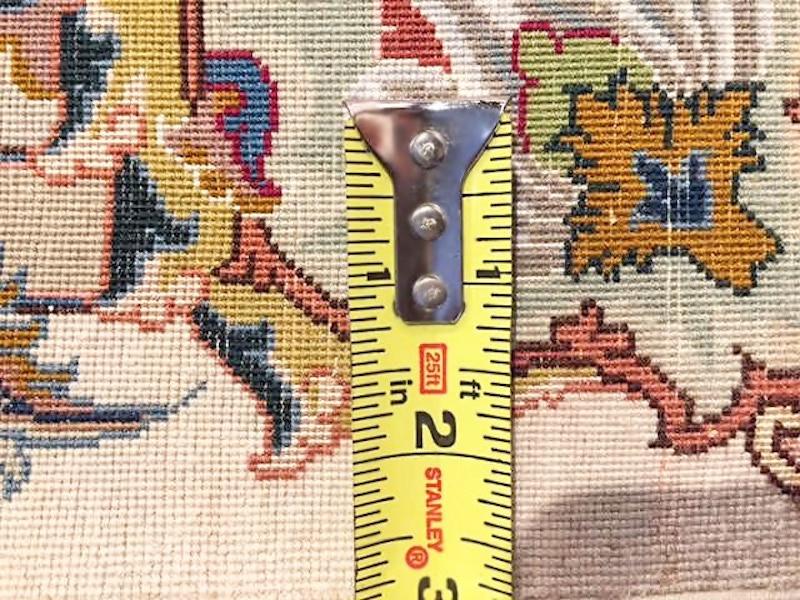
Another way to date a rug is to turn it over. Count the number of horizontal and vertical rows in one inch of weaving. Multiply these numbers together, and this will give you the knots per square inch, or KPSI. Certain regions and time periods had characteristic KPSI. Many modern carpets have a higher KPSI than antiques from the 18th and 19th centuries. However, there are some antique silk rugs that can go quite high.
How Rug Colors and Carpet Dyes Changed With Time
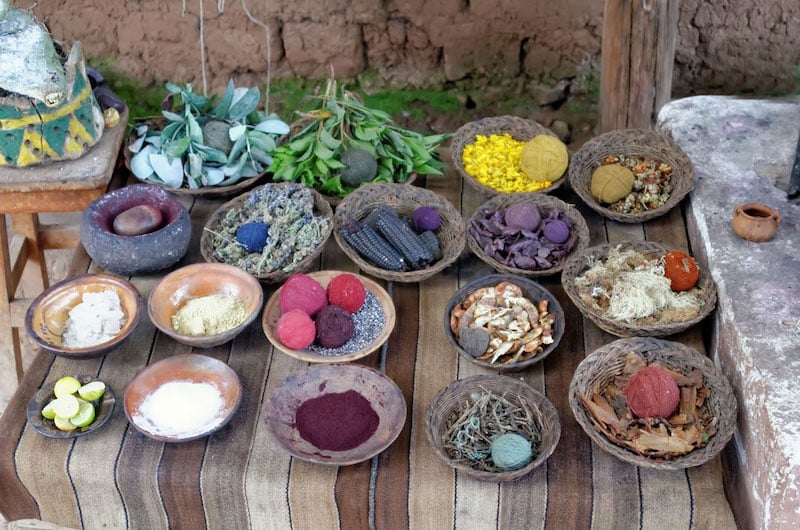
Prior to around 1863, carpets were dyed using only natural vegetable dyes. These dyes tend to naturally fade with age, exposure to sunlight, and exposure to chemicals. Although you can find a wide range of colors in rugs using natural dyes, they are generally mellower than chemical dyes.
However, many manufacturers are now bleaching and treating their carpets to give them an aged appearance. But this is easy to spot. Separate the pile and look at it with a magnifying glass. If the color is worn naturally, there will be a gentle transition in color from the top to the base. However, if it has been bleached, there will be a sharp band of color in the middle of the fiber.
Learning To Tell How Old A Rug Is
In the article above we tried to give you pointers for figuring out how old your rugs are. But it is important to take all of what we wrote with a grain of salt. The reason is that dating rugs is not an exact science and sadly, most pieces were not dated when they were made. So you would need to see a lot of rugs, of a specific type, to start to be able to tell how old one rug is vs another.
If you have questions about a specific rug, would like to know how old it is or maybe you would like to sell it, please visit our: Sell Your Rugs Page
This rug blog in our Rug Q&A’s series about figuring out how old a rug might be was published by Nazmiyal Antique Rug Gallery In Manhattan NYC