Antique Chinese Carpets with Imperial Motifs, Peking Refinement, and Art Deco Simplicity
Chinese rugs are prized for balanced composition, symbolic motifs, and a refined use of negative space that reads calm in a room. This page covers the most common Chinese rug types—traditional workshop pieces, Peking and Ningxia styles, and collectible Art Deco-era designs—plus practical guidance on identifying quality, choosing the right size, and decorating with confidence. For a broader look at where these weavings fit within global rug-making traditions, explore our Rug Origins hub. Shop with peace of mind through Nazmiyal in New York City, with museum-vetted curation and worldwide shipping support.
Chinese rugs are hand-knotted carpets from China known for symbolic motifs, disciplined palettes, and compositions that emphasize balance and negative space.
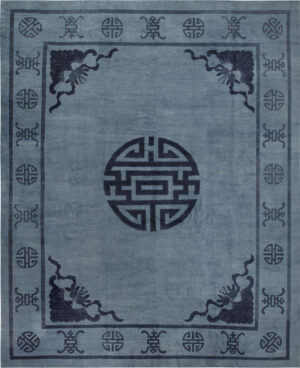
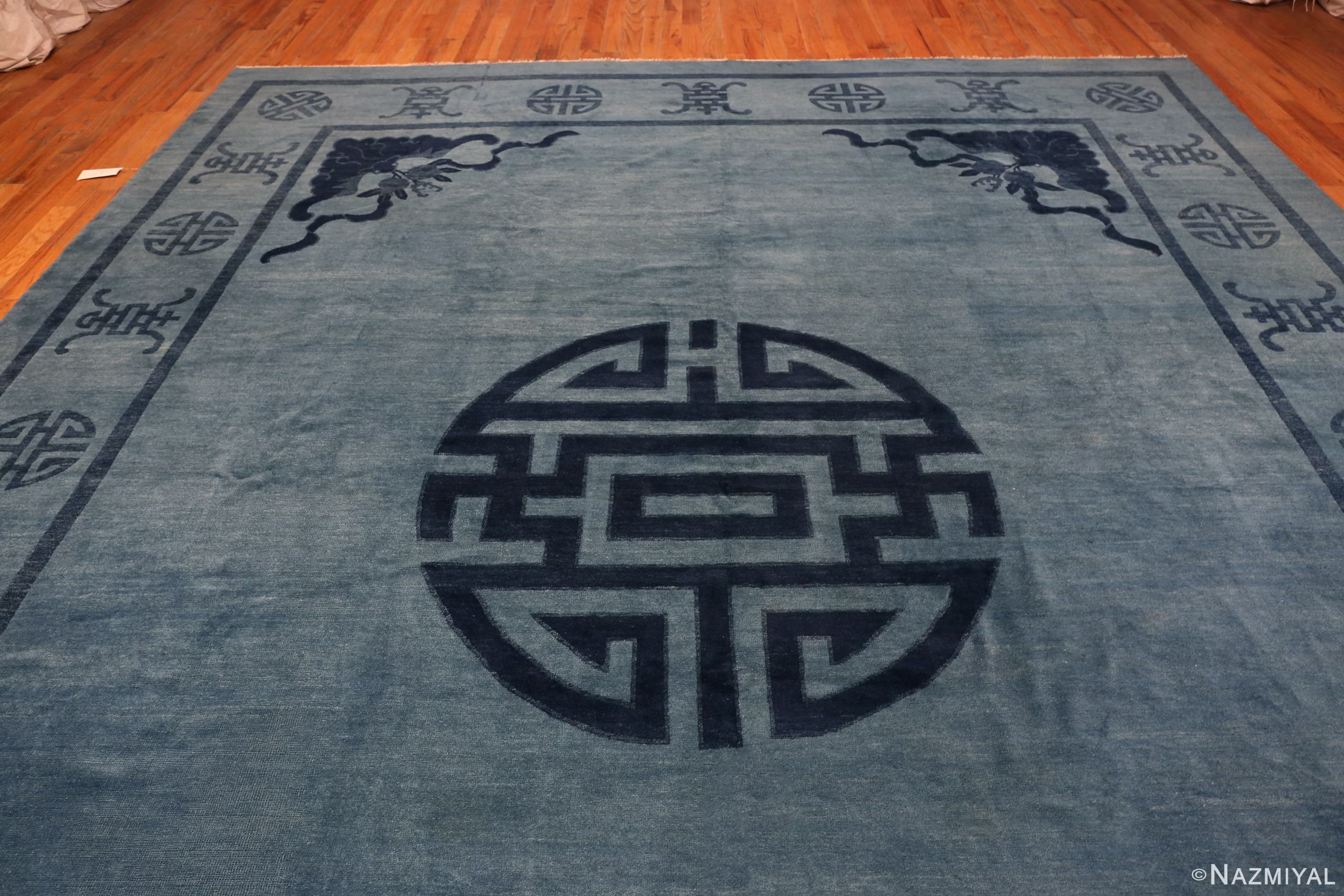
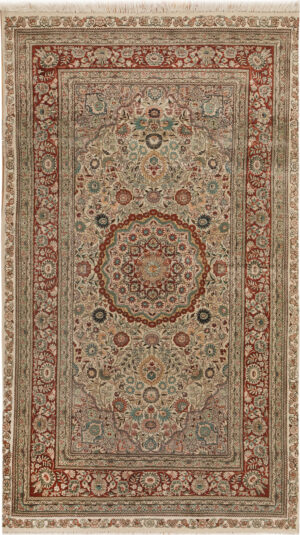
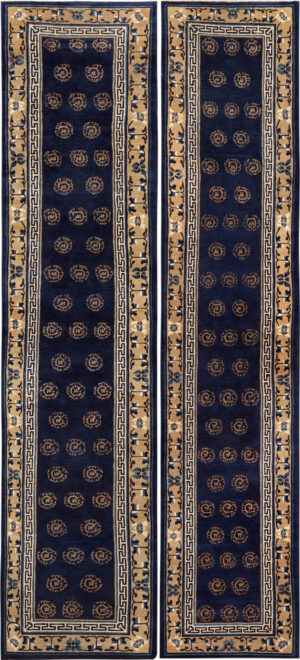
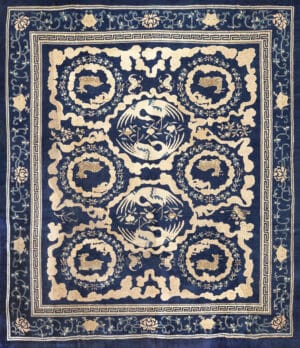
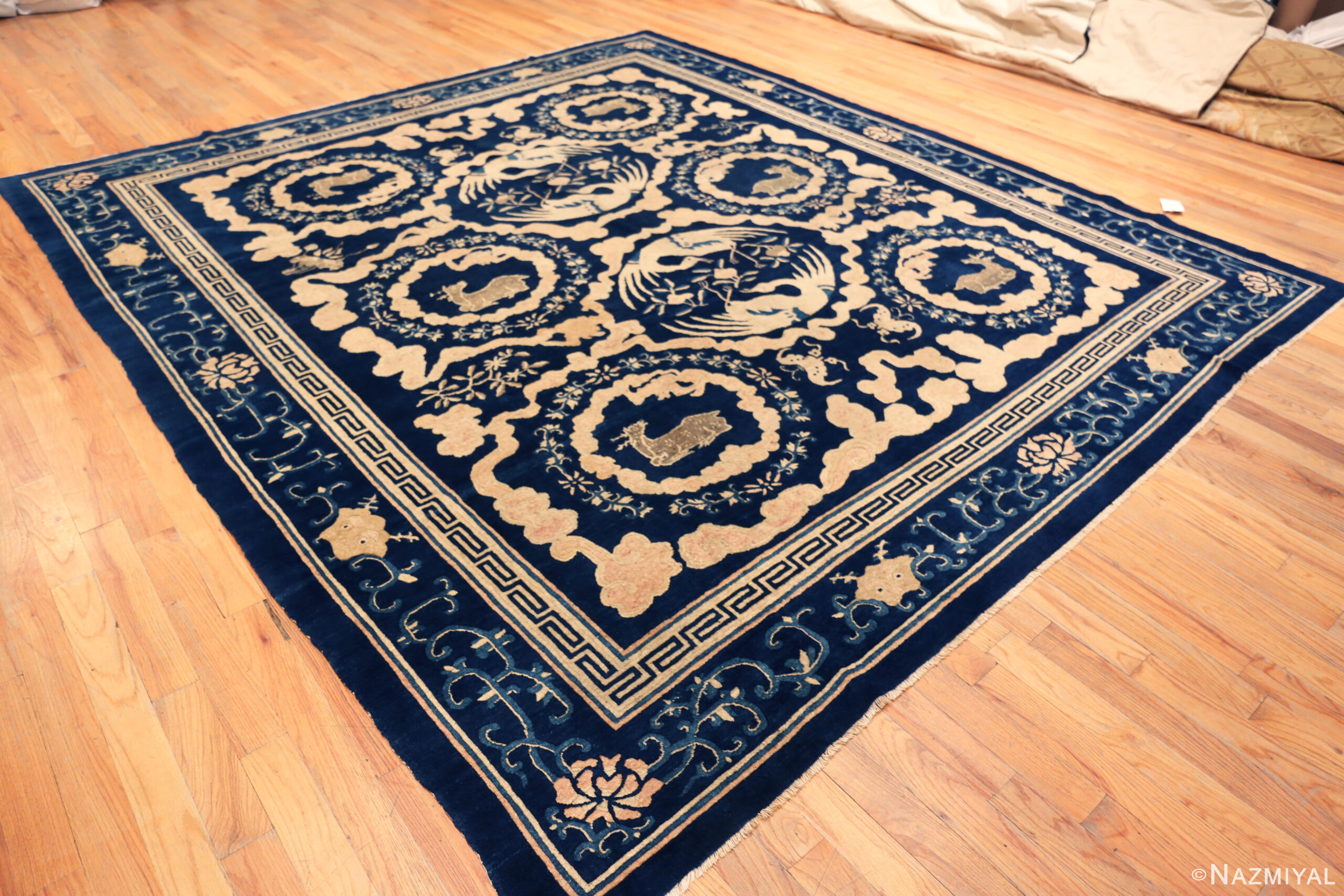
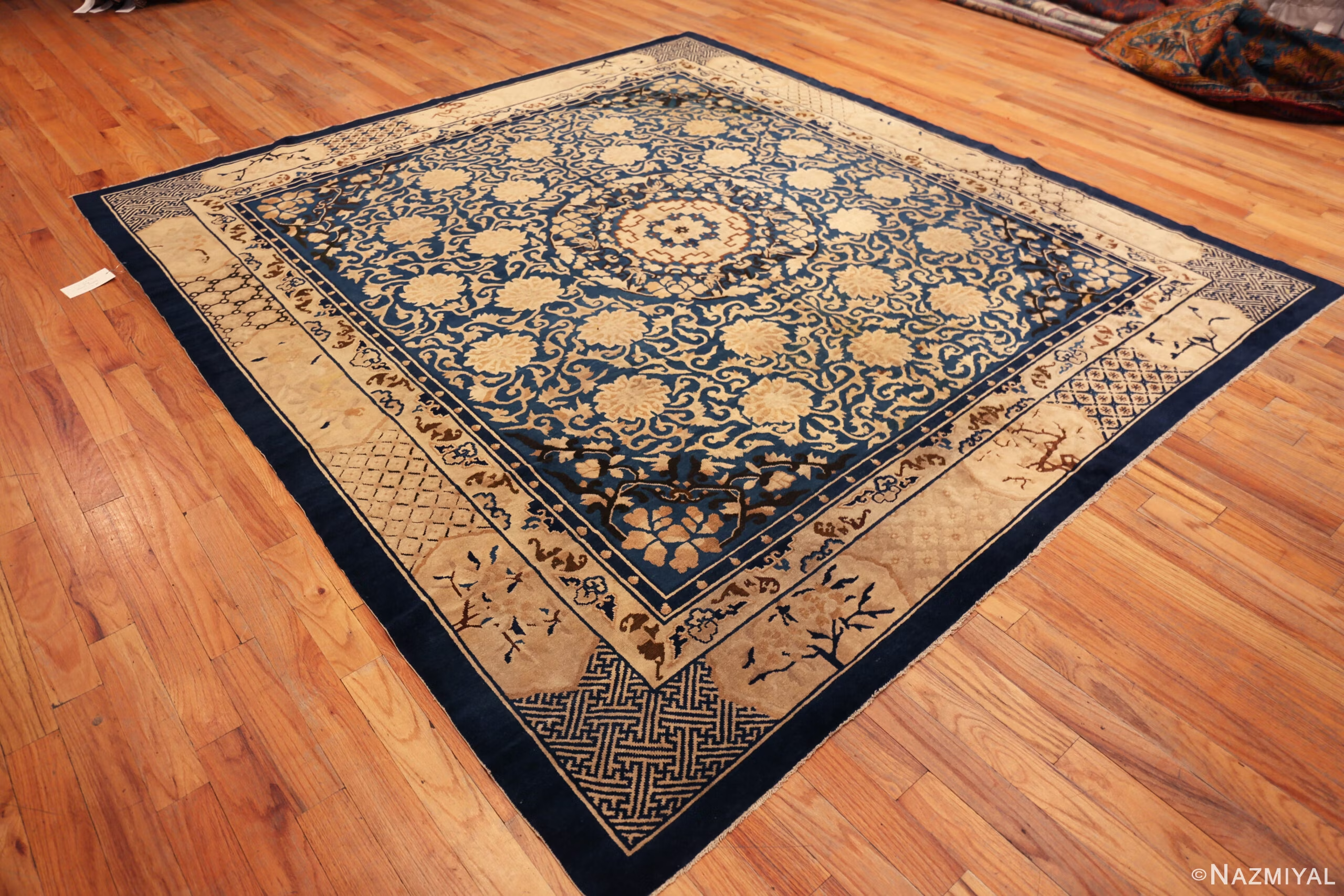
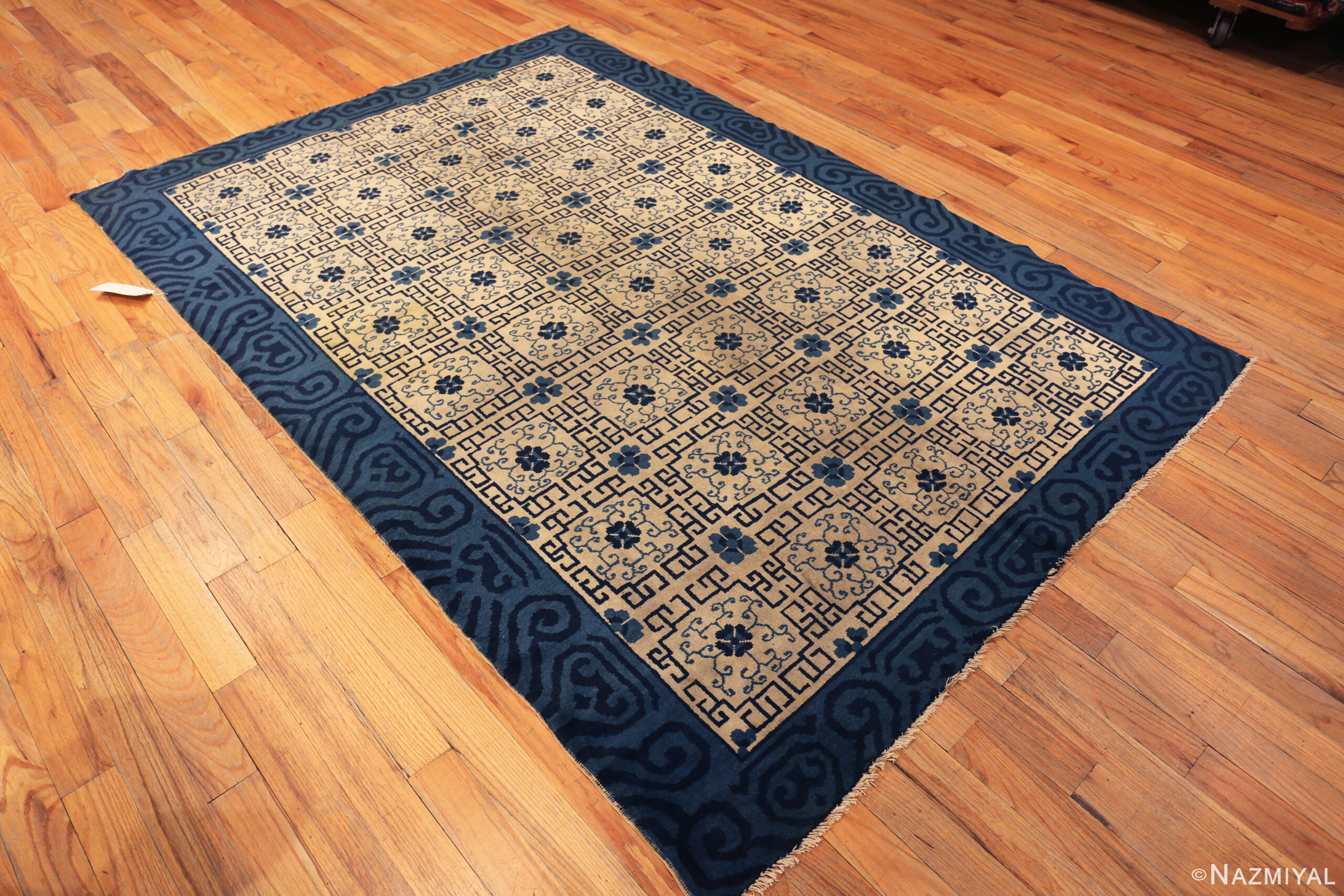
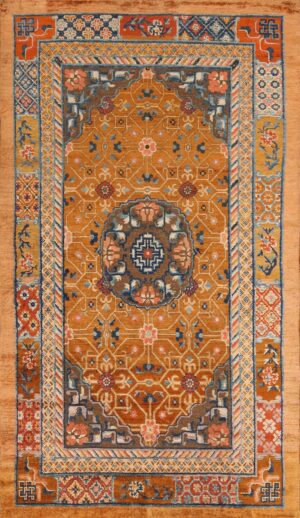
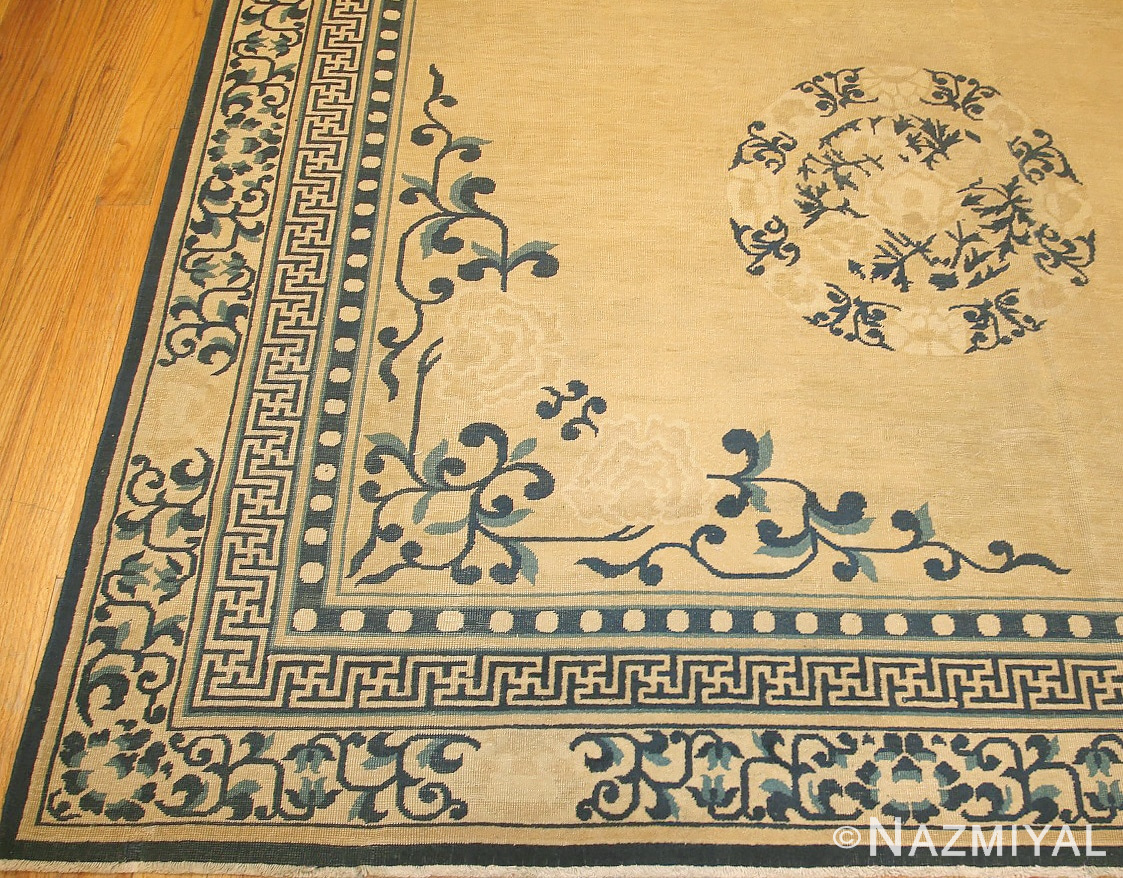
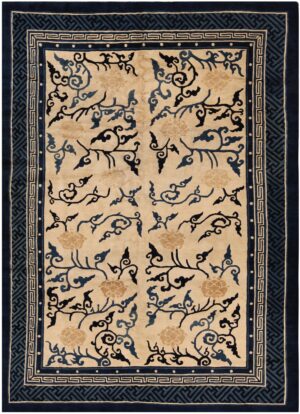
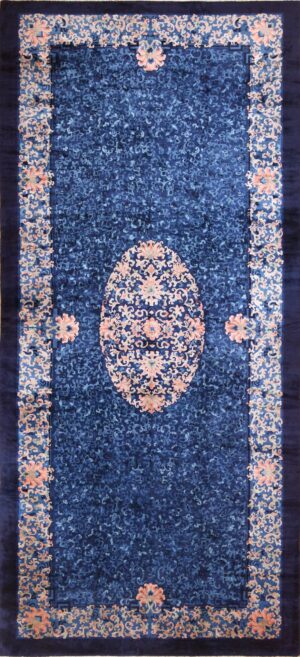
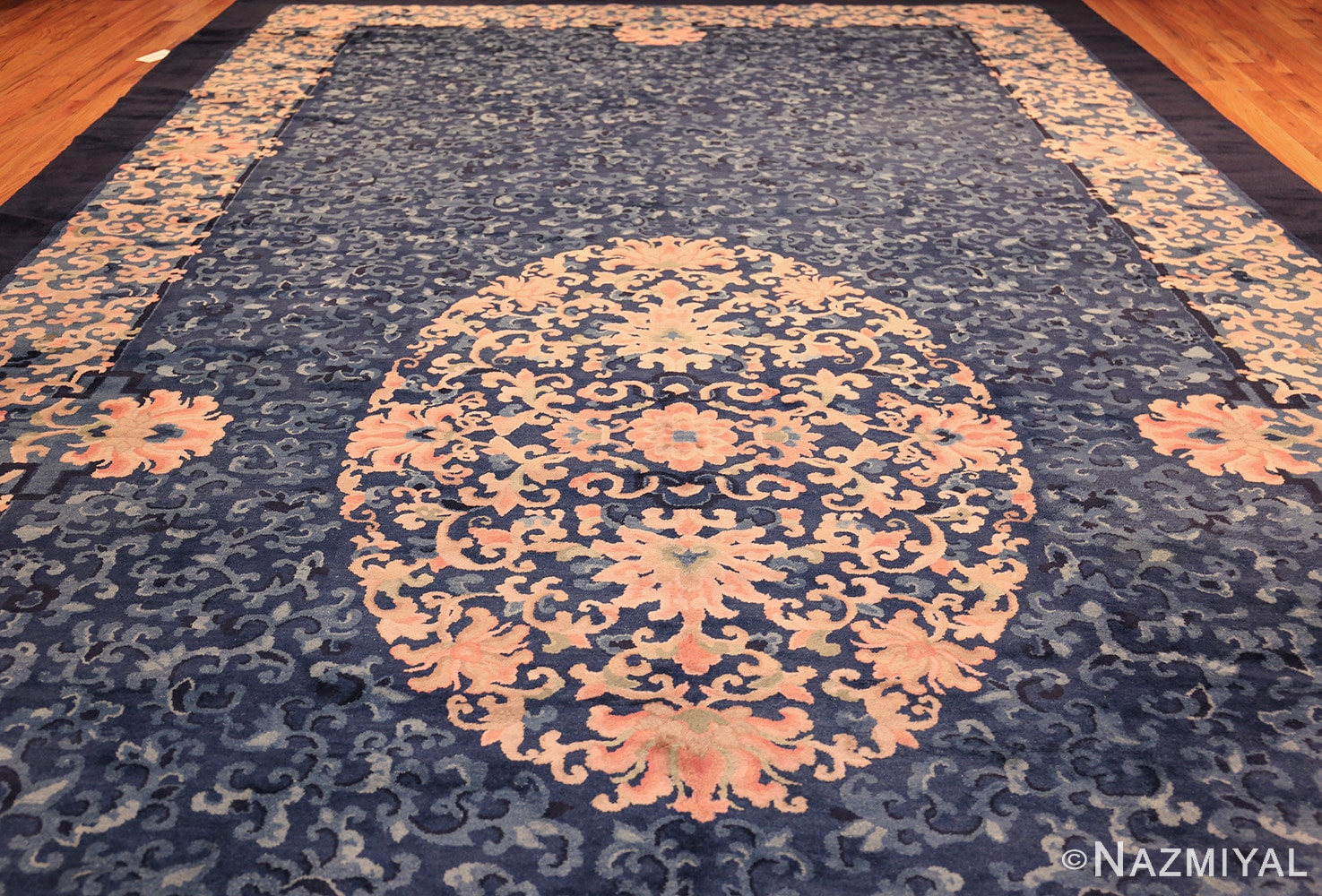
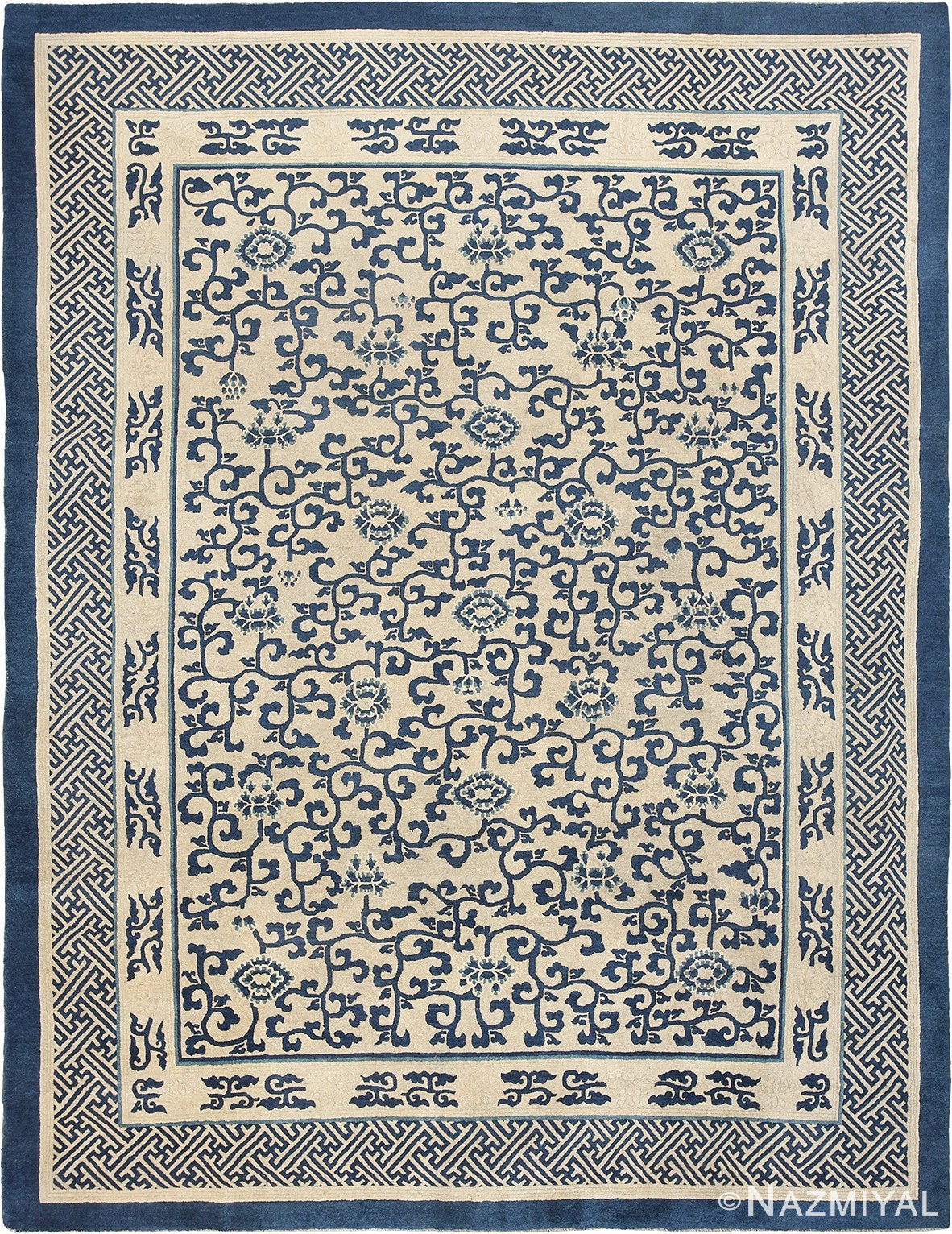
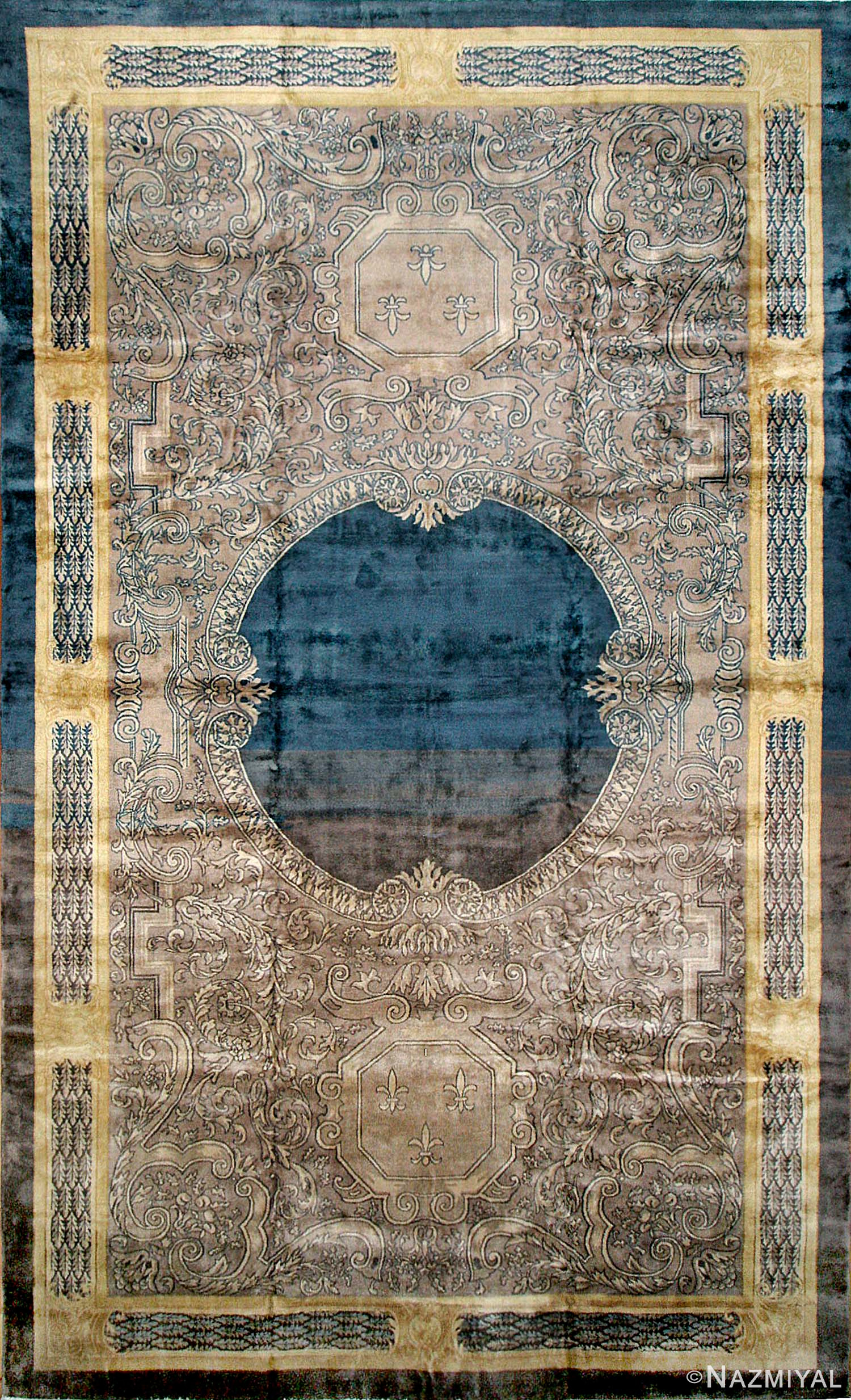
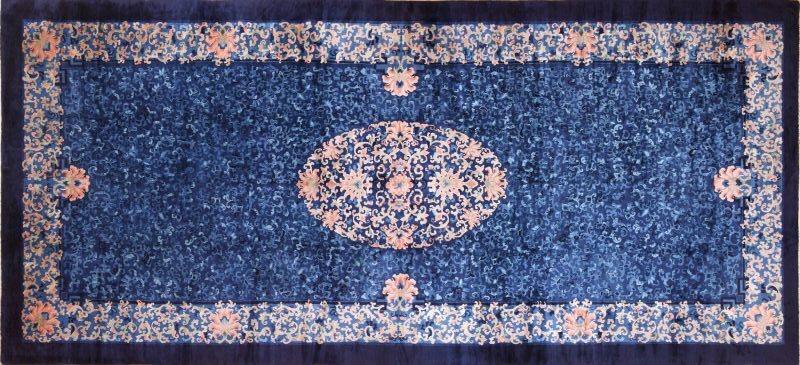
Blue Floral Oversized Antique Medallion Design Chinese Rug by Nazmiyal Collection #49240
Key Takeaways
Many Chinese rugs feel “quiet” in a room thanks to intentional spacing, controlled ornament, and strong composition.
Common groupings include Peking (refined, decorative classicism), Ningxia (structured traditional motifs), and Chinese Art Deco (open fields with modern proportions).
Look for clear drawing, stable foundations, and honest condition—those factors matter more than trend-driven color alone.
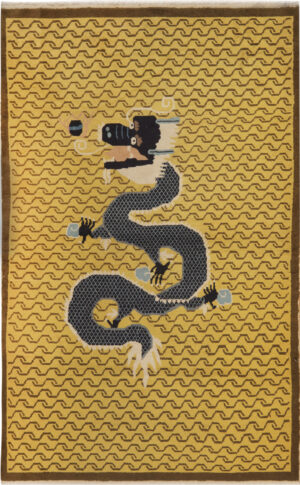
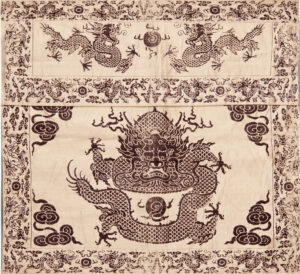
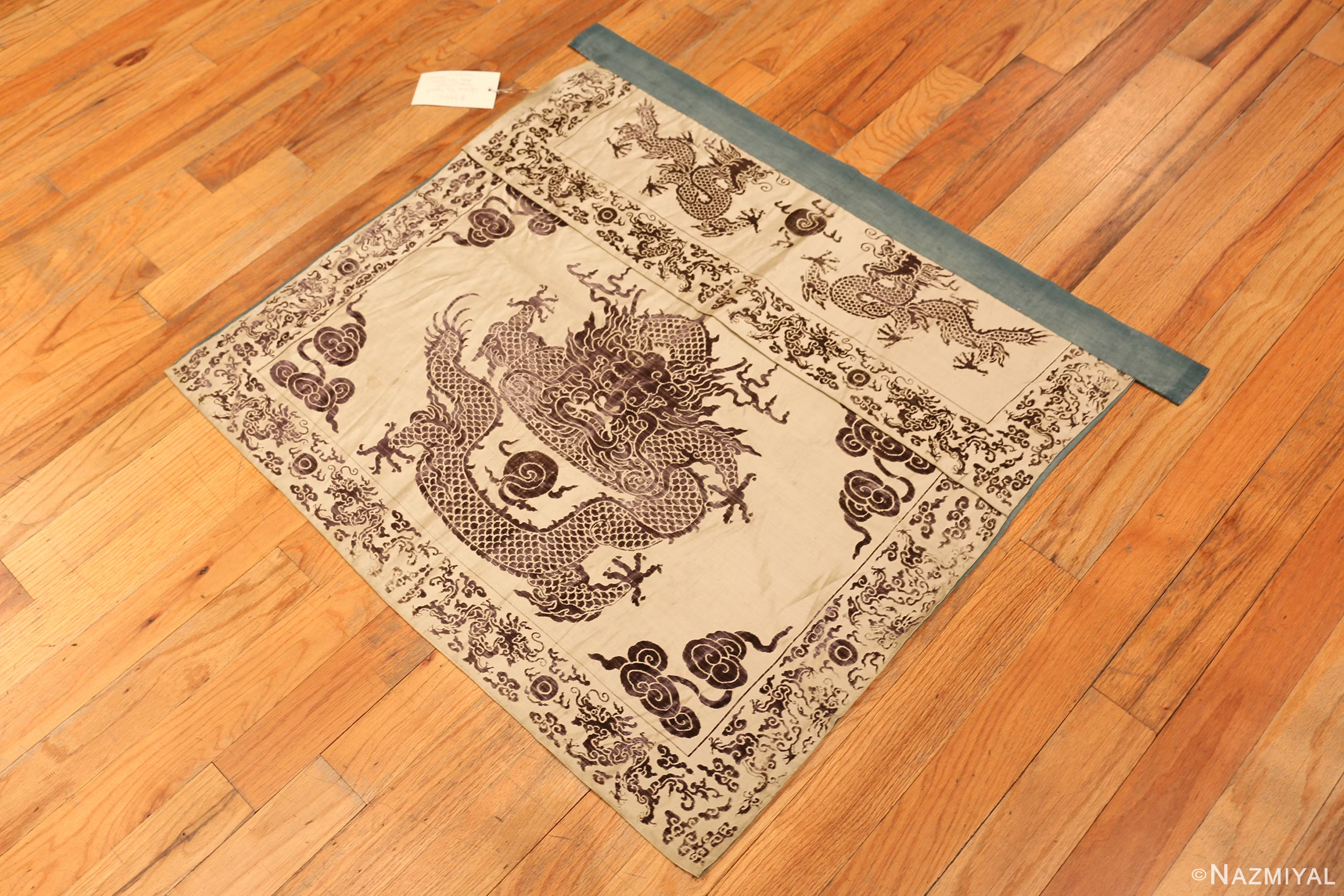
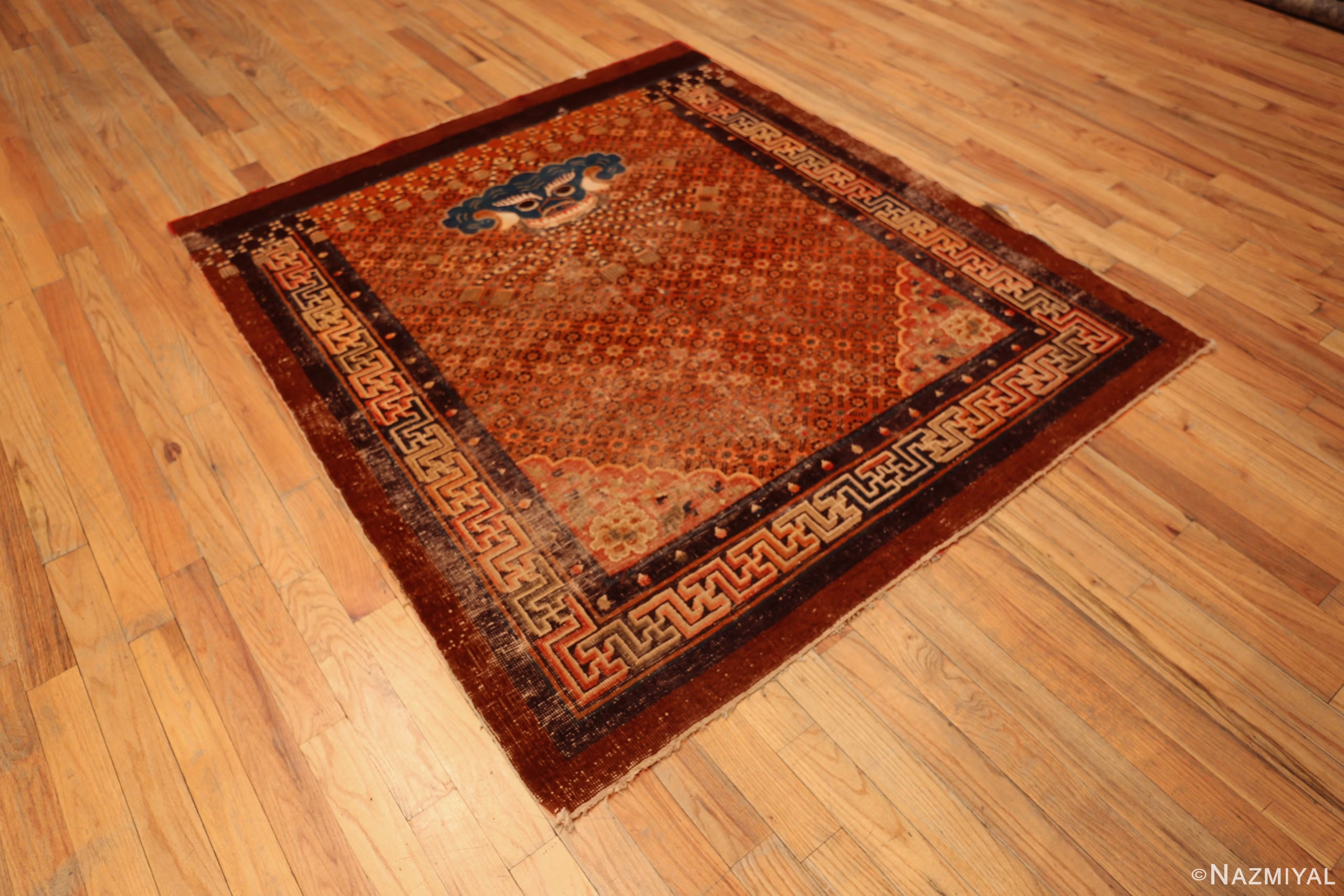
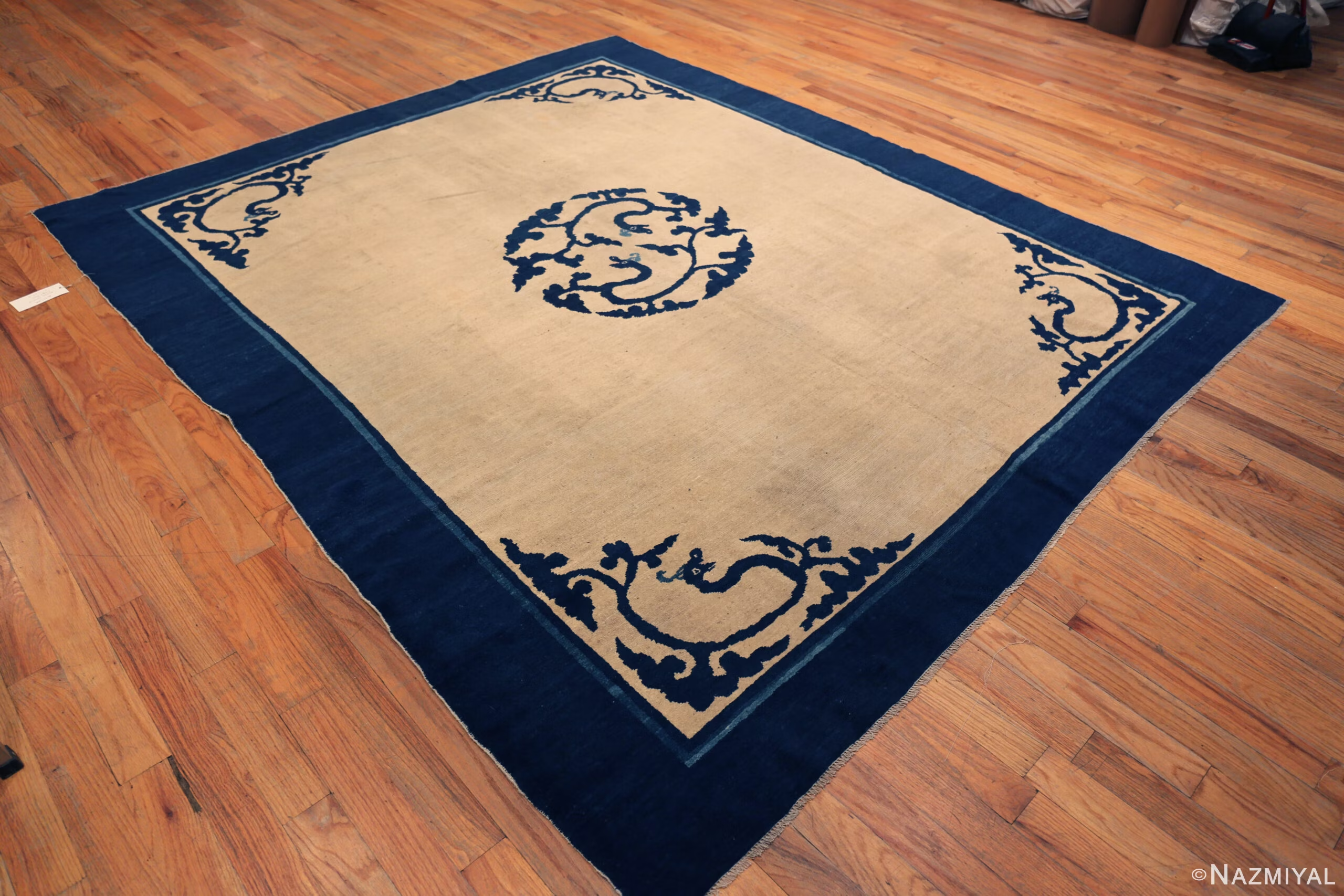
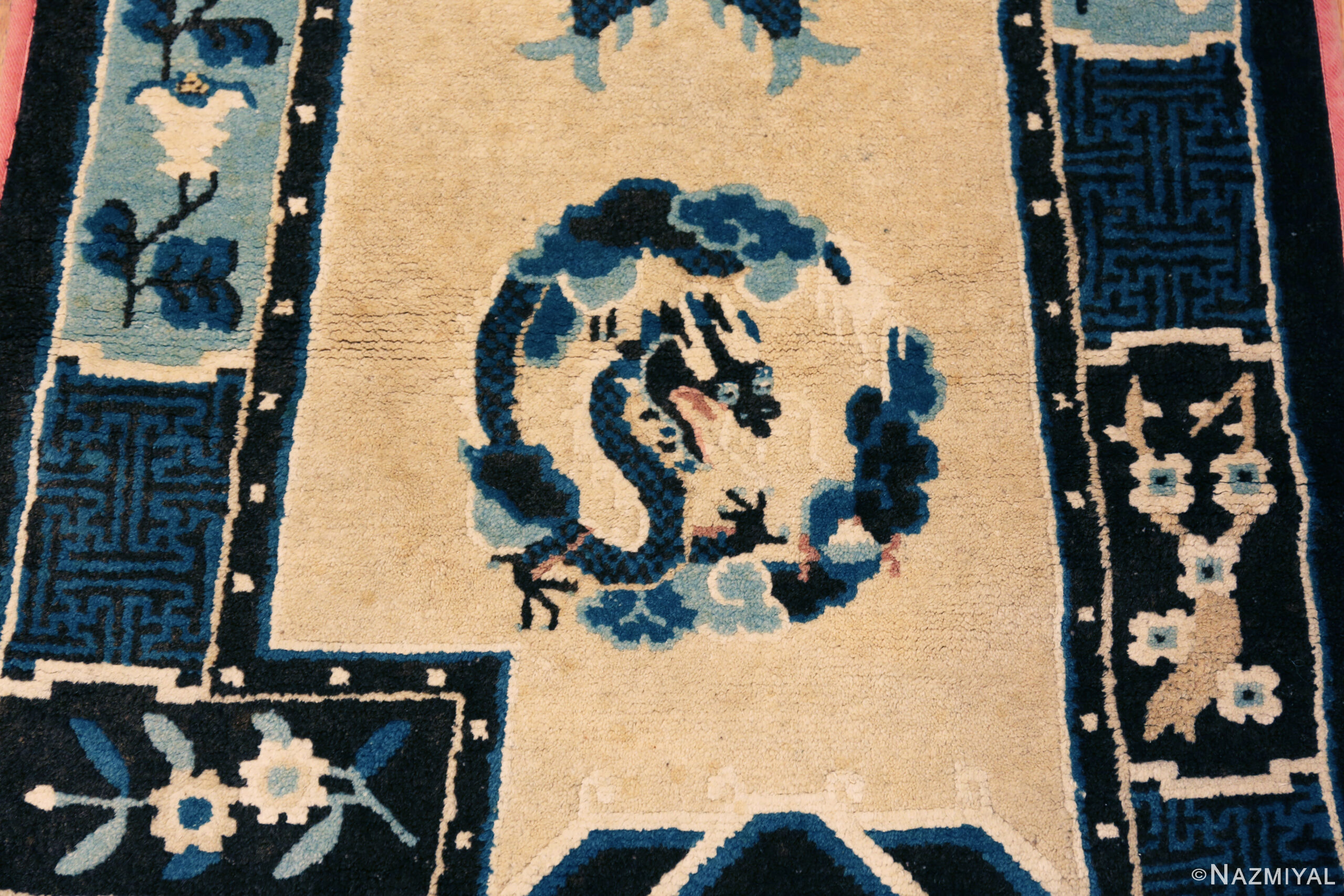
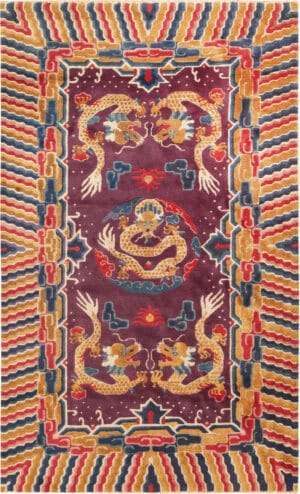
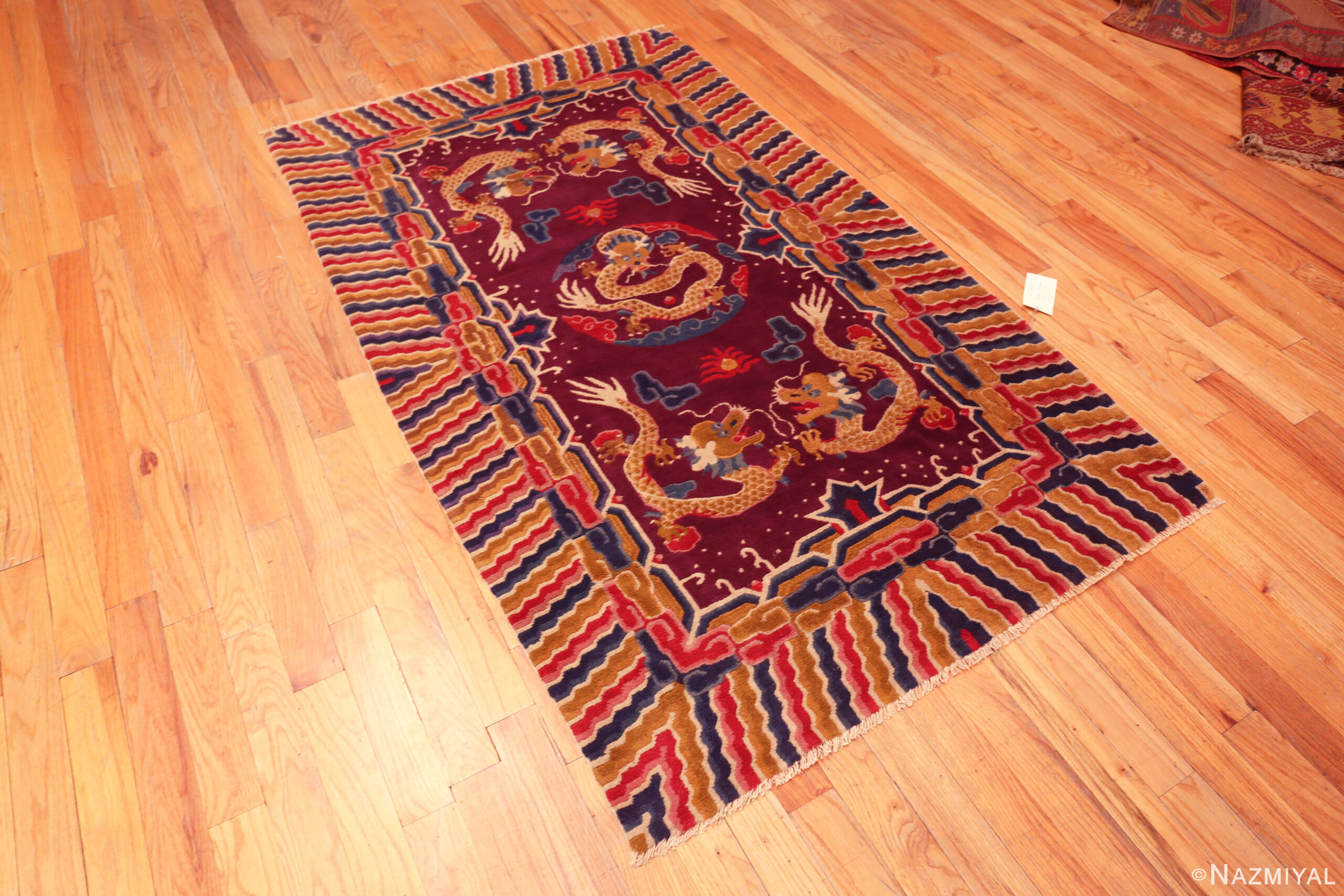
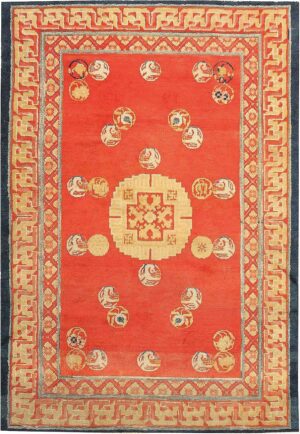
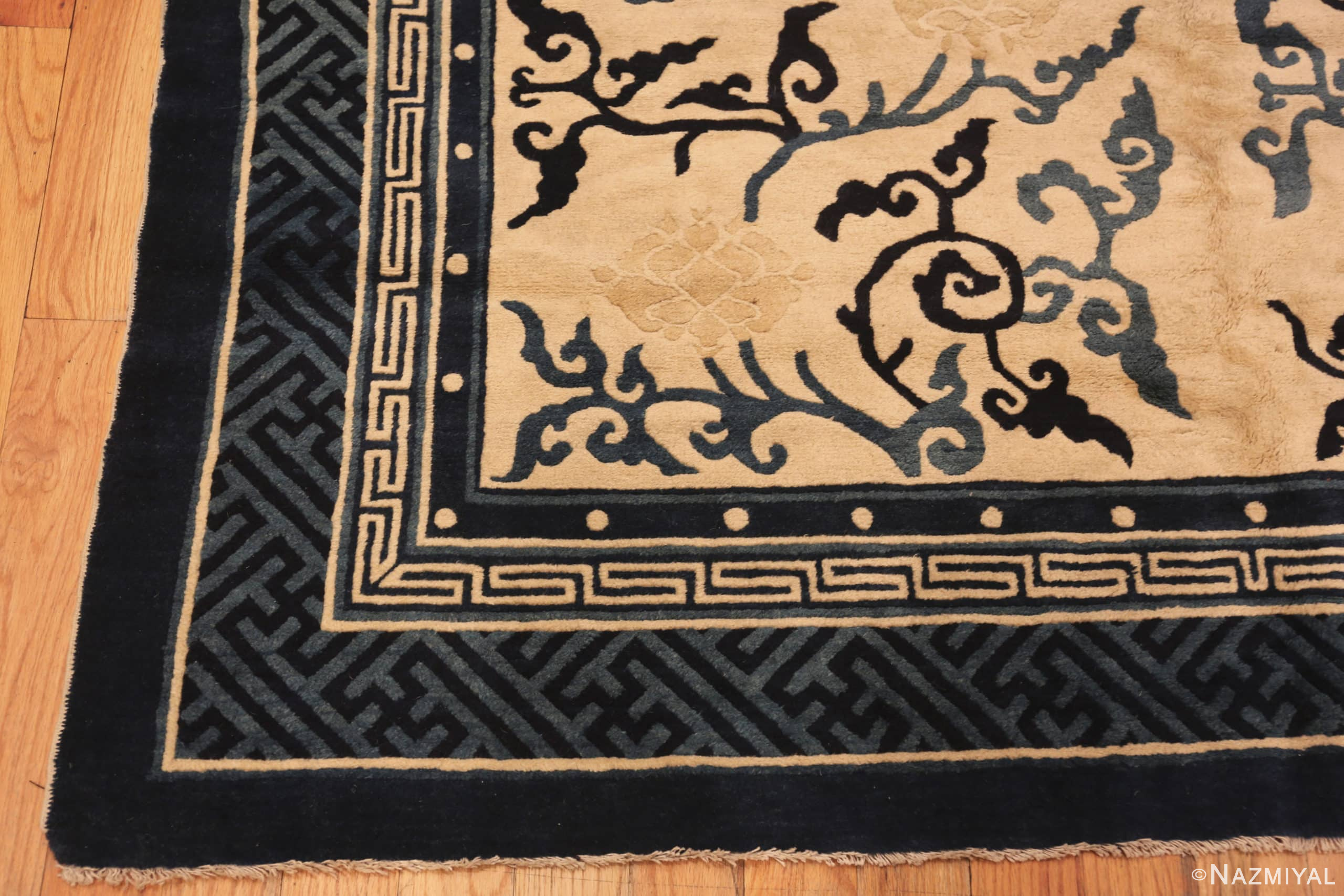
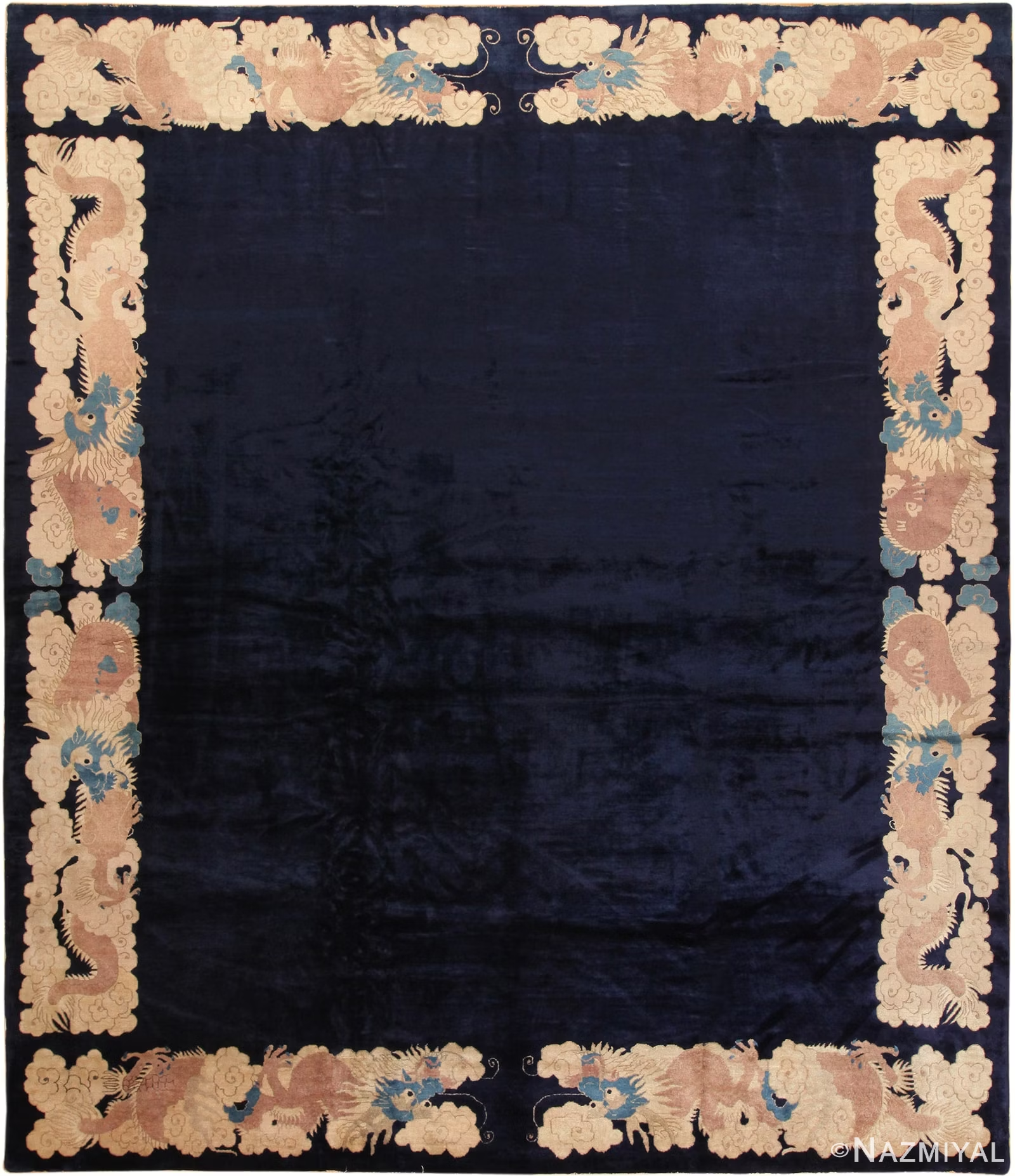
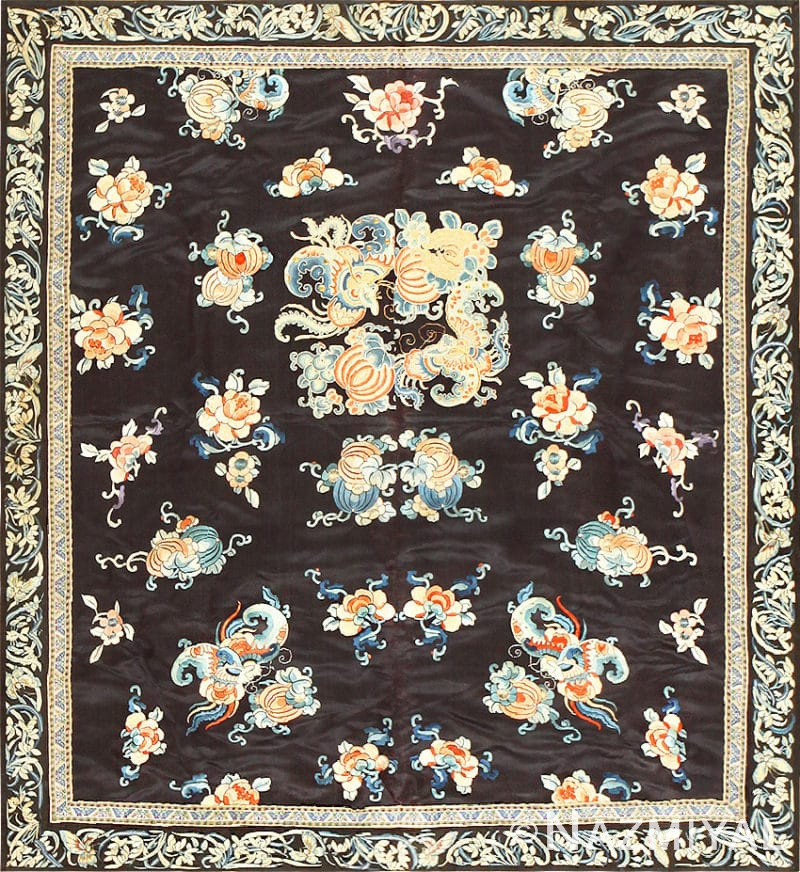
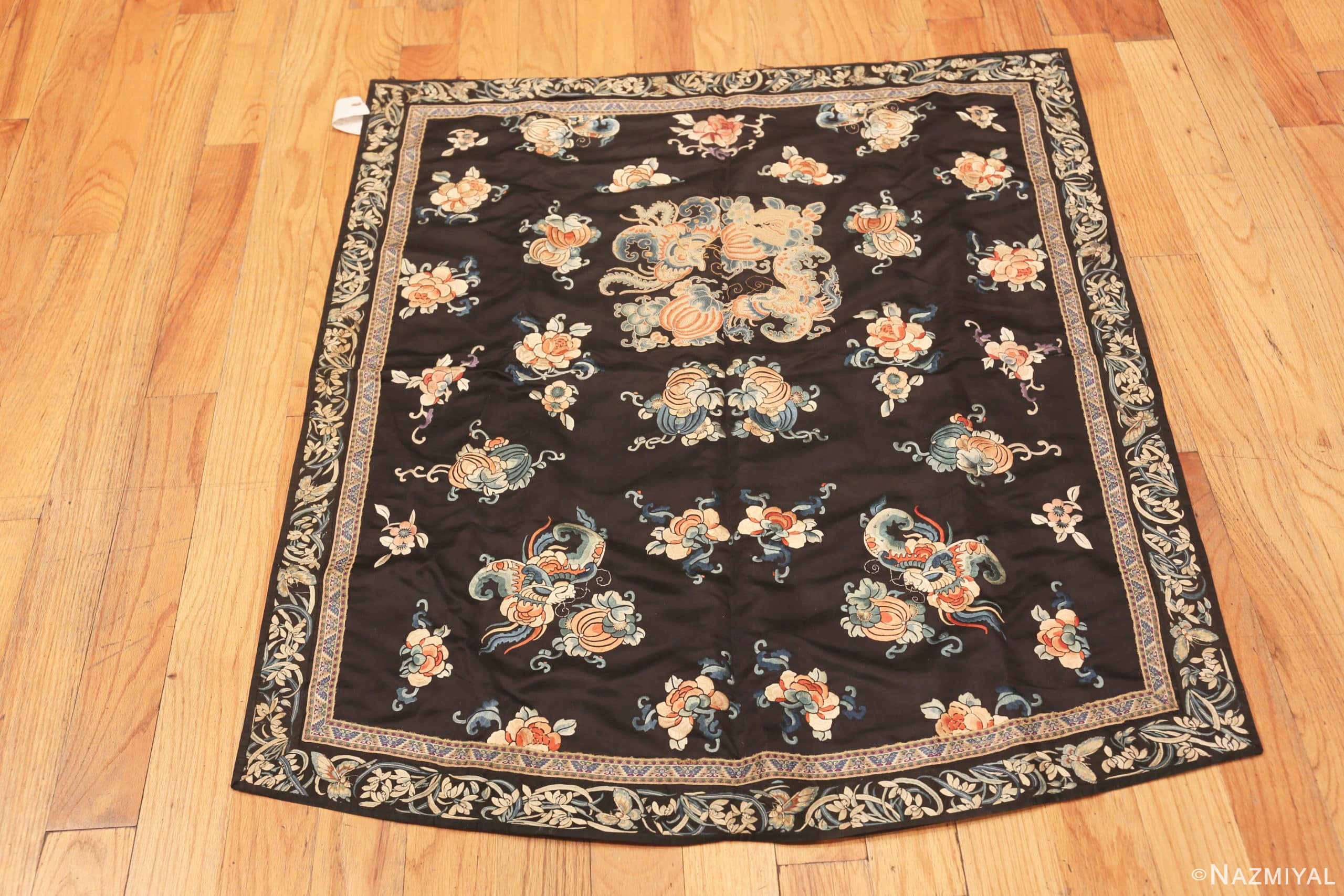
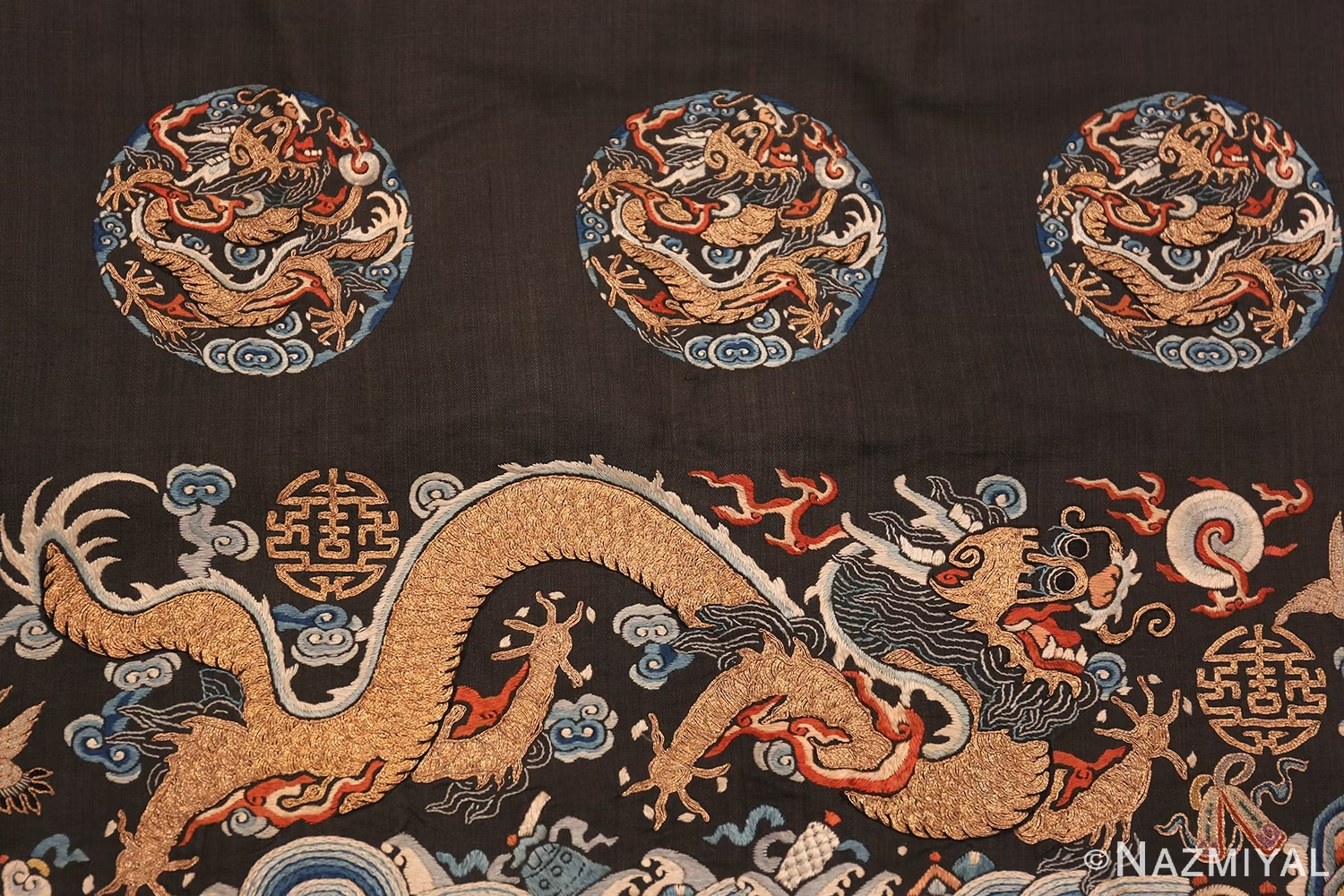
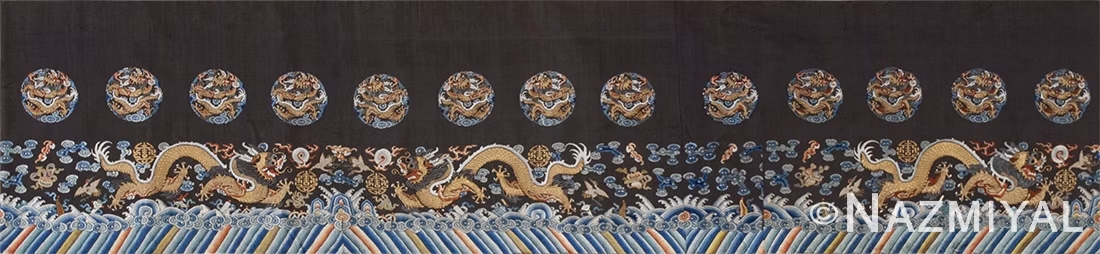
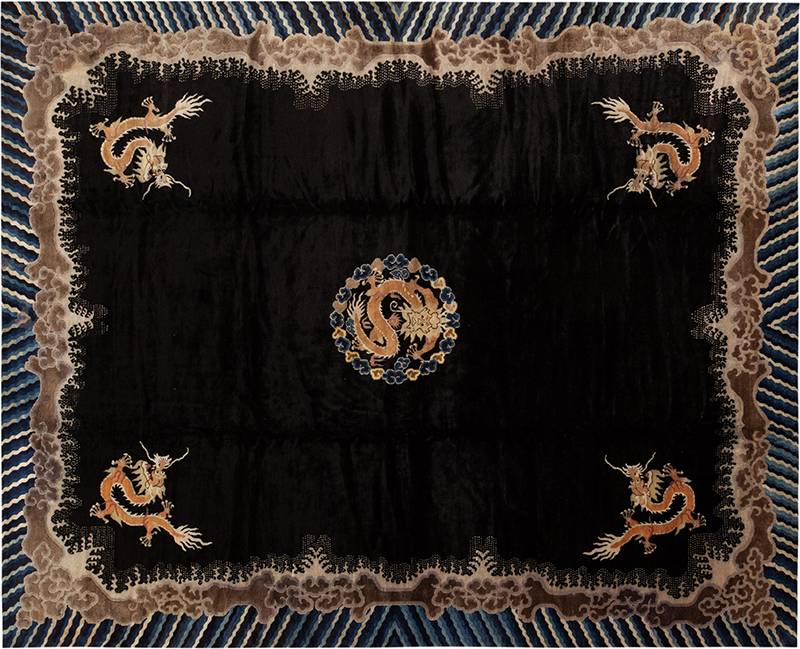
Antique Chinese Black and Gold Peking Dragon Motif Rug Nazmiyal Collection #73914
At-a-Glance Specs
Origin: China (varied workshop traditions and regional types)
Common eras: 1800s to early–mid 1900s (type-dependent)
Look: symbolic motifs • balanced ornament • negative space
Palette: indigo and blue • saffron and gold • soft neutrals • occasional black accents
Best rooms: living rooms • libraries • bedrooms • dining rooms • composed hallways
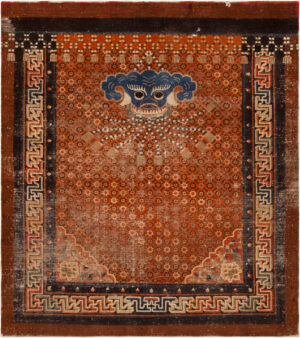
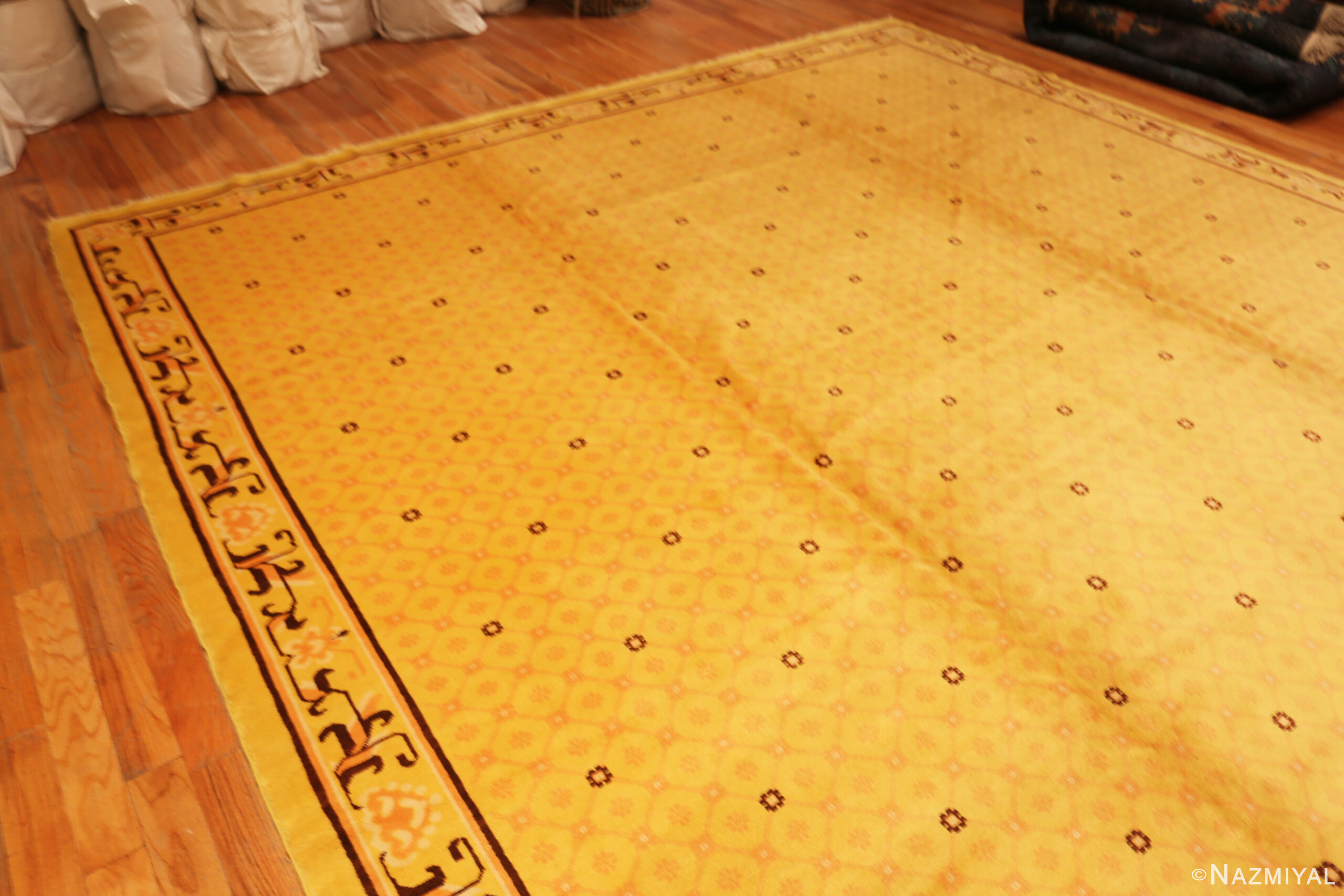
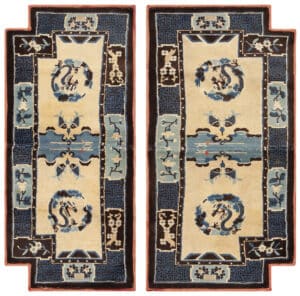
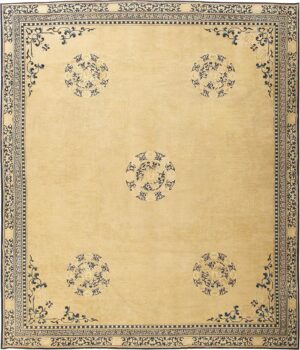
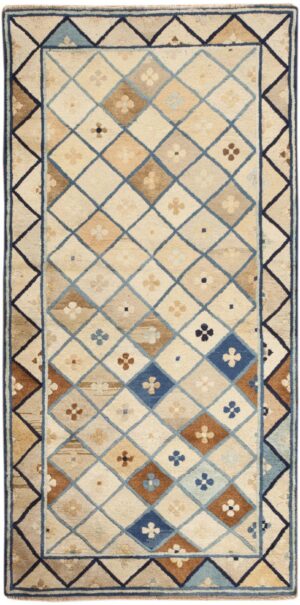
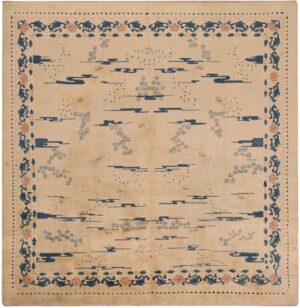
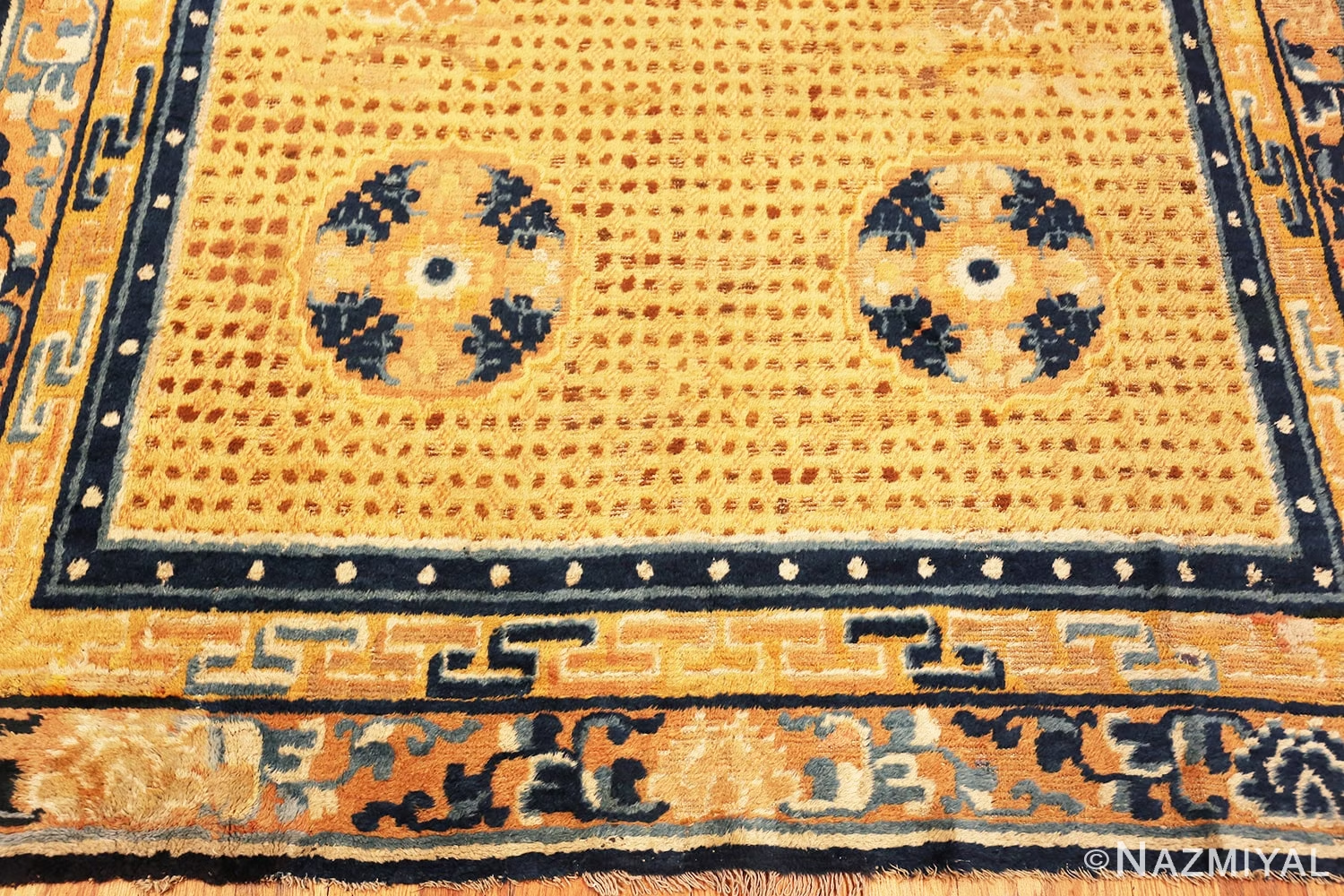
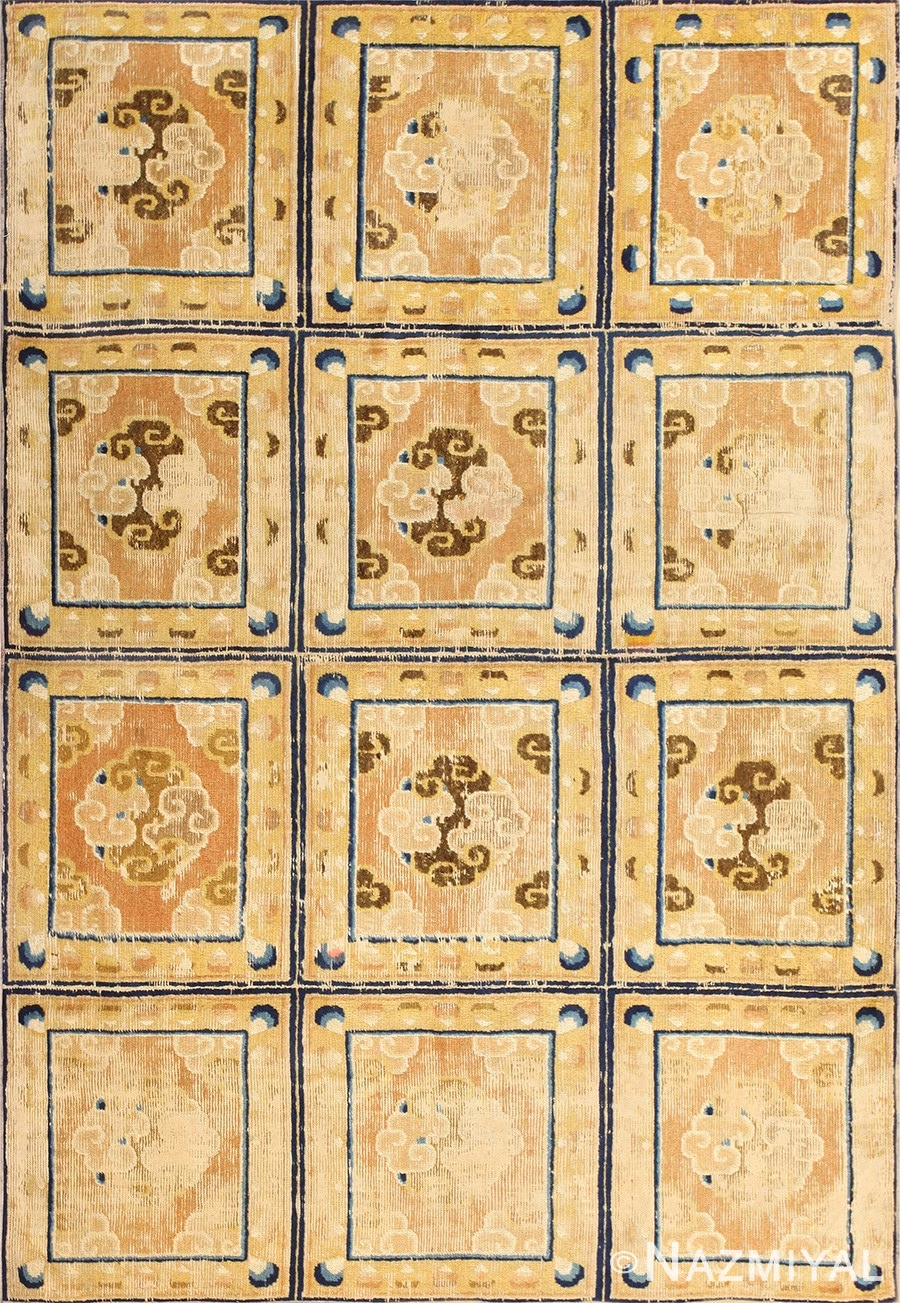
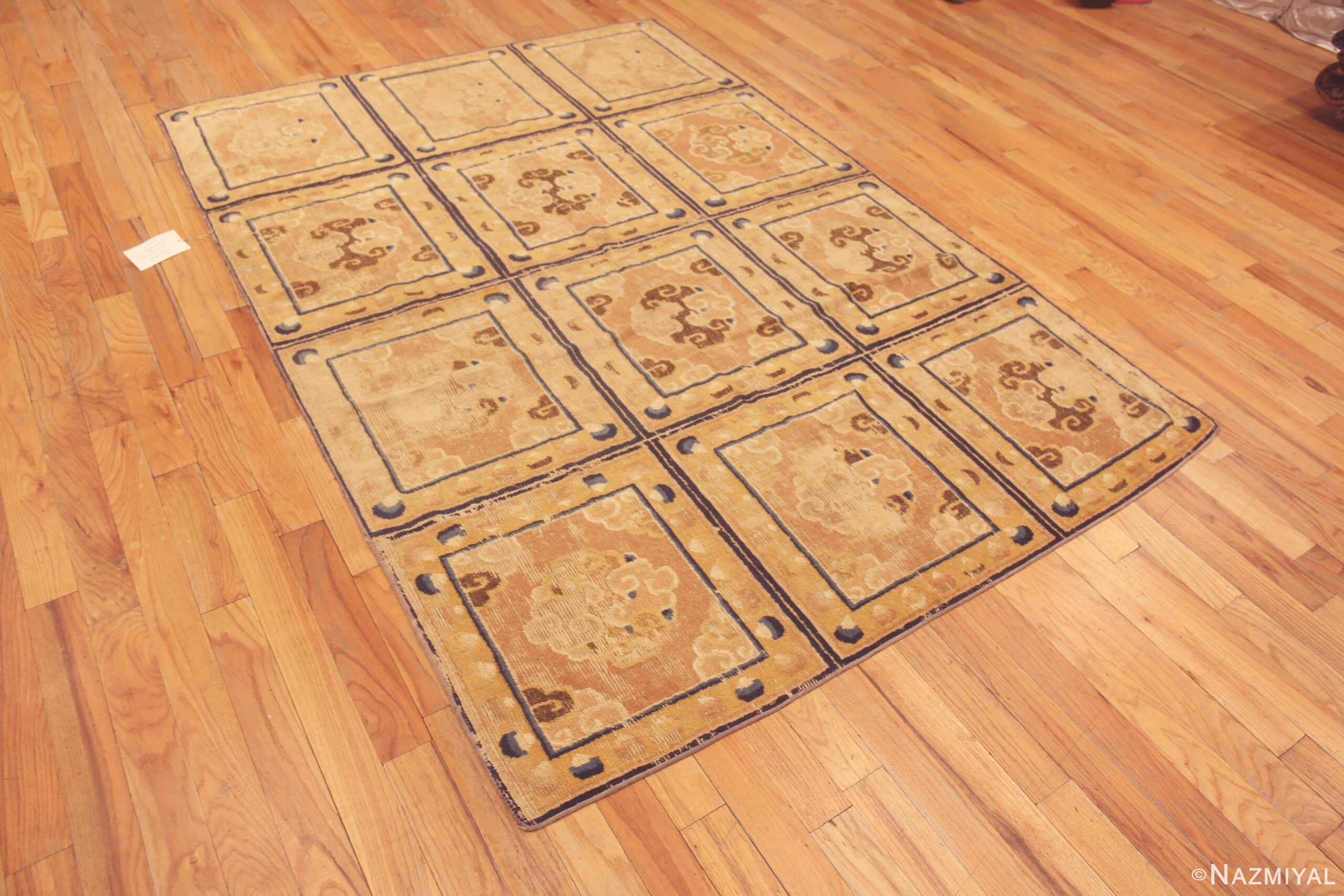
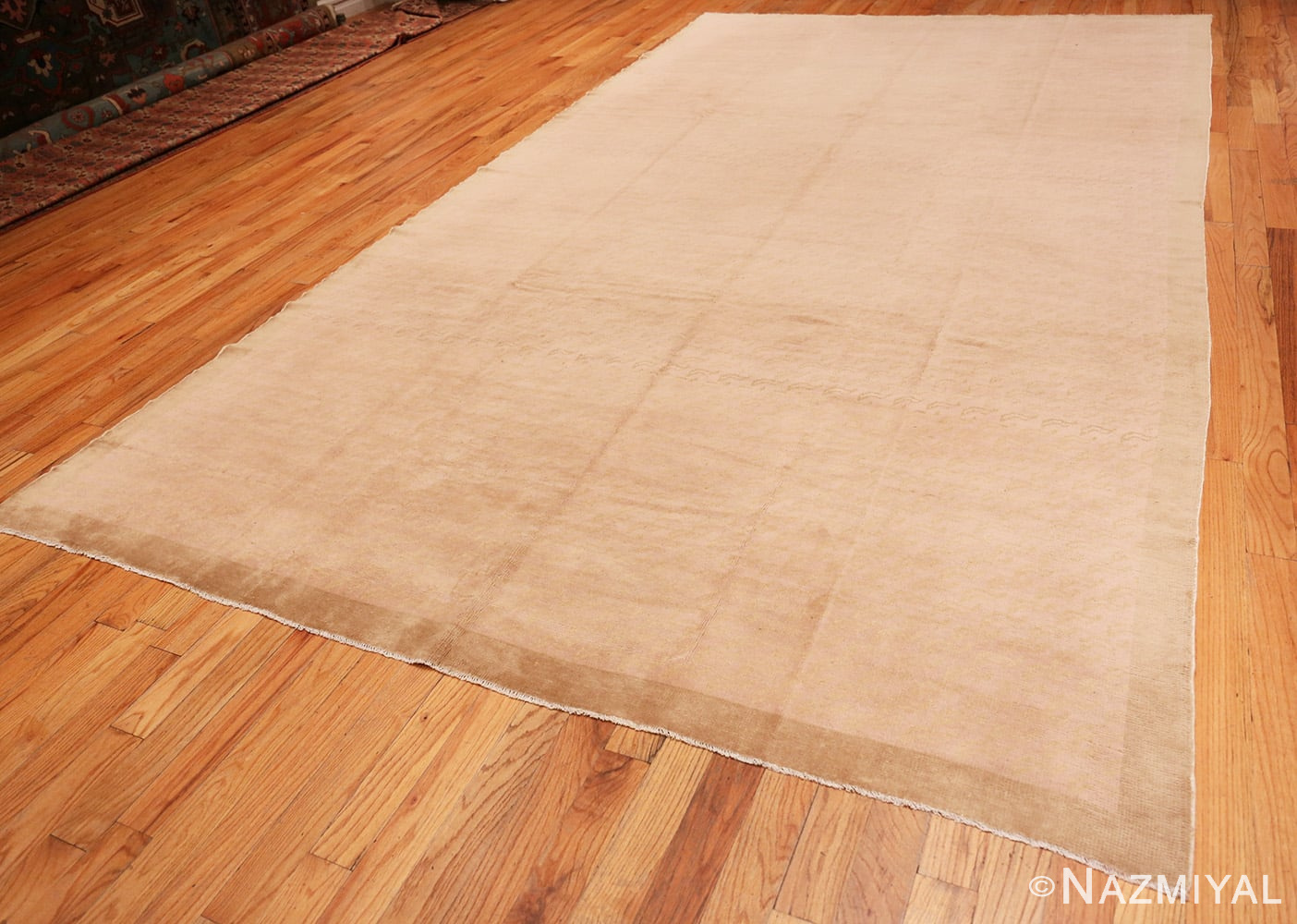
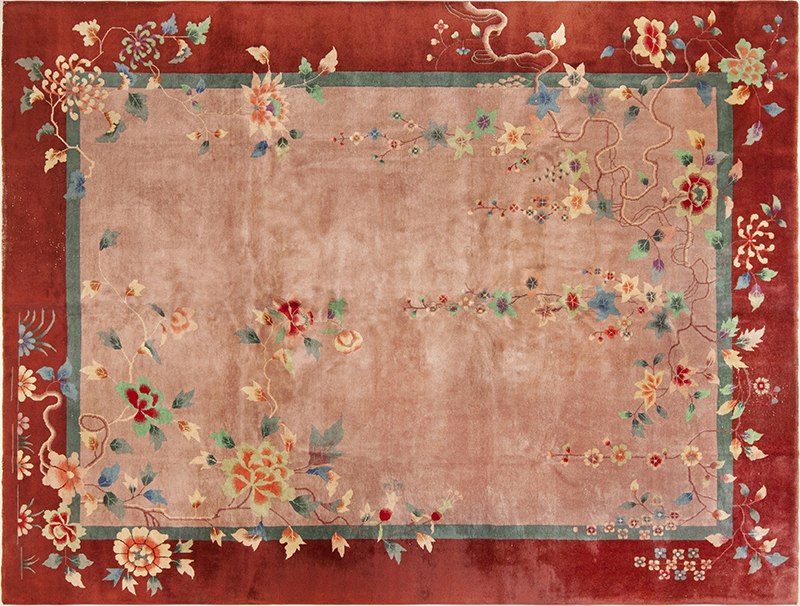
Antique Chinese Art Deco Rug Nazmiyal Collection #72892
Curated quality: museum-minded selection with an emphasis on authenticity and design integrity.
Transparent guidance: clear communication around condition, materials, and what you’re buying.
Logistics made easy: support for designers and collectors, including worldwide delivery coordination.
What Makes a Chinese Rug Different?
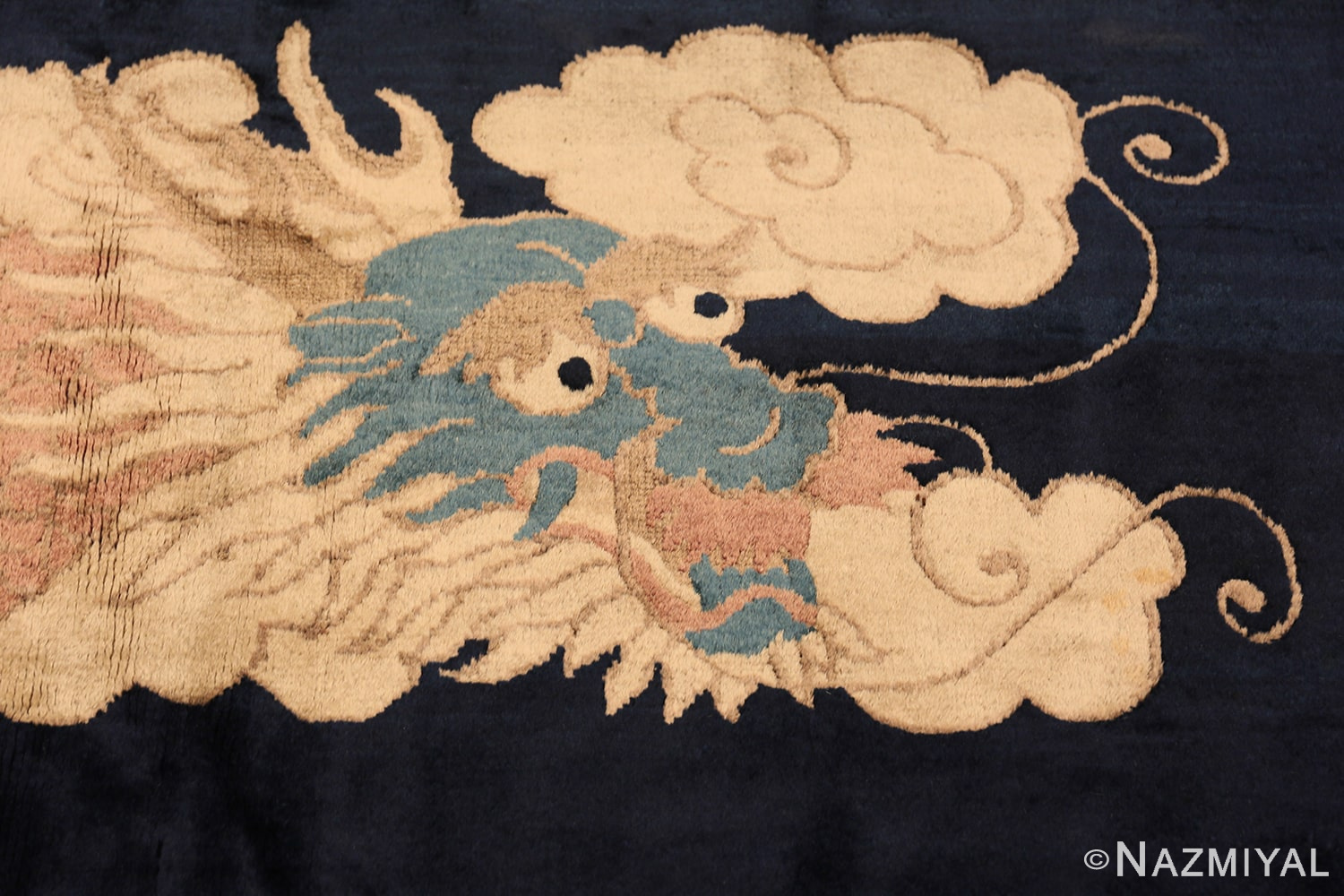
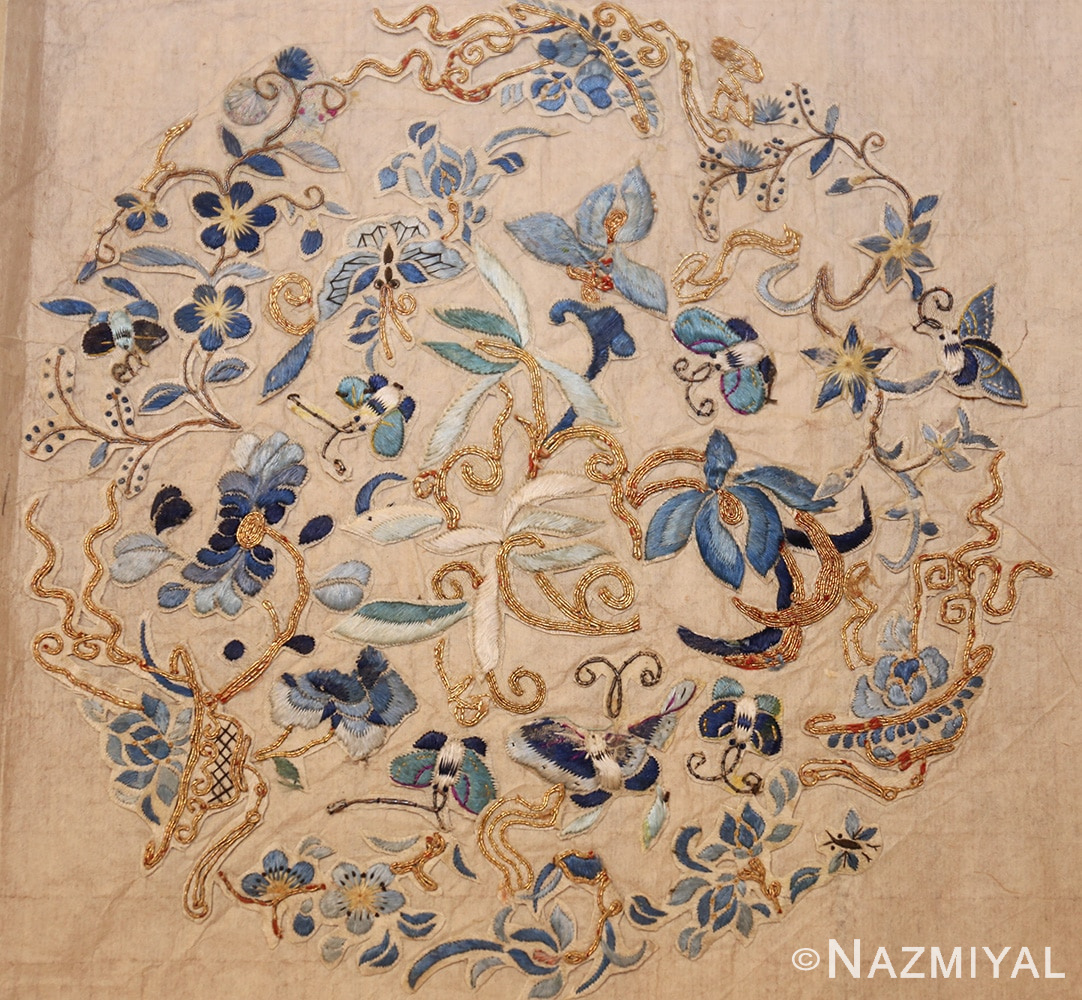
Chinese rugs often stand apart through composition. Even when motifs are elaborate, the best examples feel measured—ornament is placed with intent, and open space is treated as part of the design rather than “empty.” Common visual cues include cloud bands, lotus and peonies, key-fret borders, and auspicious figures such as dragons, cranes, deer, or the longevity “Shou” symbol. Many rugs also use strong outlining and crisp shapes that read clearly from across a room, which is one reason decorators return to Chinese weavings again and again.
Materials & Construction
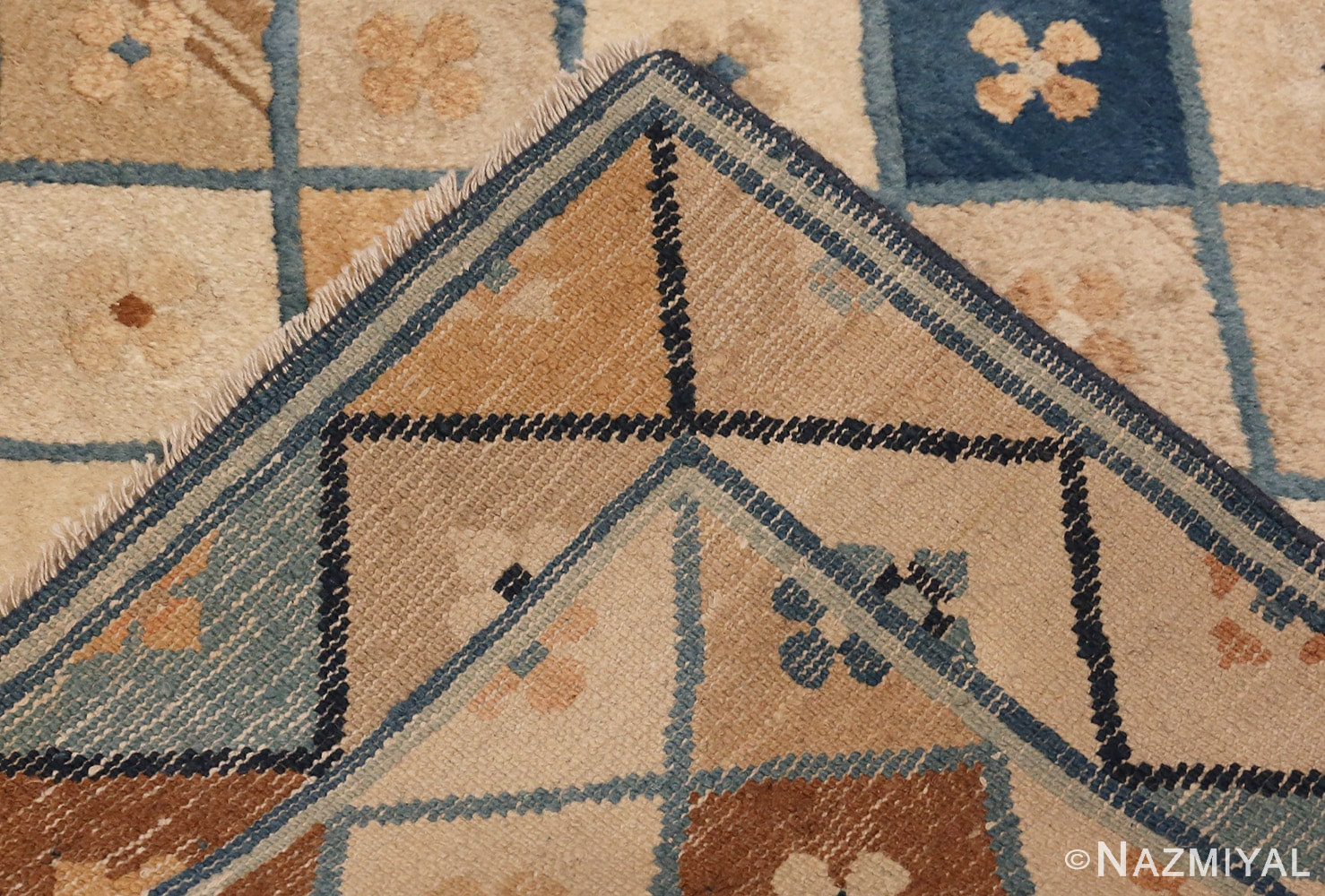
Most antique Chinese rugs are hand-knotted with wool pile on a foundation that may include cotton; some examples incorporate silk as accents or as a full-pile material depending on the type and intended use. Construction details vary by style (Peking, Ningxia, Kansu, Art Deco-era Chinese), but a strong sign of quality is how confidently the design resolves: clean curves, stable borders, and consistent knotting that supports the drawing rather than fighting it. Because dye behavior can differ from other weaving regions, professional evaluation is especially helpful when assessing age, restoration, and long-term care.
Decorating with Chinese Rugs
Chinese rugs excel when you want a composed foundation that doesn’t overwhelm furniture and art. Start with placement: large rooms benefit from a room-size or oversized rug that sits under primary seating, while dining rooms need enough coverage so chairs stay on-pile when pulled out. For styling, Chinese rugs layer beautifully with antique rugs in classic interiors, pair naturally with vintage rugs in transitional spaces, and can look remarkably current alongside modern rugs and clean-lined upholstery thanks to their negative space and disciplined palettes.
Value & Collecting
Collectability in Chinese rugs typically comes down to the intersection of type (Peking, Ningxia, Kansu, Art Deco-era Chinese), design clarity, palette discipline, and condition. Strong examples feel intentional from across the room, with motifs that read cleanly and colors that have matured gracefully. If you’re comparing traditions, use the Persian rugs hub as a useful counterpoint: many Persian designs emphasize dense patterning, while many Chinese rugs emphasize spacing and symbolic restraint.
Related Rugs
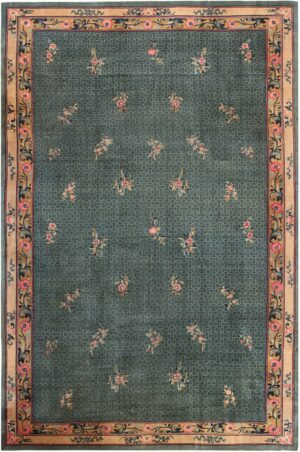
If you love the Chinese aesthetic but want a more overt early-20th-century “interior-designed” look, your closest cousin is Chinese Art Deco rugs.
Yes. Many Chinese rugs use negative space and controlled ornament, which lets them sit comfortably in modern rooms without visual noise.
What’s the difference between Peking and Ningxia rugs?
In broad terms, Peking rugs often read more decorative and “interior,” while Ningxia rugs tend to feel more traditional and structured—though individual pieces vary.
Are Chinese Art Deco rugs considered antique?
Many are early-20th-century weavings; depending on exact weaving date, examples can fall into vintage-to-antique ranges.
Do Chinese rugs use silk?
Some do (either as highlights or full pile), but many classic Chinese rugs are primarily wool pile with a sturdy foundation.
How should I choose the right size for a Chinese rug?
Start with furniture placement and walking lanes first. Use a size plan for living and dining rooms so the rug supports how the room is used (not just how it looks).
Nazmiyal White-Glove Service
We make it easy to shop with confidence—whether you’re choosing a single statement piece or curating a full room.
Trustindex verifies that the original source of the review is Google.
My wife and I are so pleased with the antique Uzbek Bokhara Rug purchased from the Nazmiyal Collection. Not only does the rug have a spectacular design, it also was very reasonably priced. The way it transforms our living room, reconciling the classic modern furniture with the 1913 Craftsman interior is remarkable.
Posted on Google
Terence Hayes
Trustindex verifies that the original source of the review is Google.
I have purchased multiple rugs at multiple Nazmiyal auctions and I am extremely pleased with the quality, price, and experience. Highly recommended!
Posted on Google
Victor Florintsev
Trustindex verifies that the original source of the review is Google.
The only ones I'd ever buy rugs from. The best.
Posted on Google
Jeffrey NeumanB
Trustindex verifies that the original source of the review is Google.
I bought two gorgeous Serapi rugs from Farhad at Nazmiyal Rugs! Beautiful carpets, fair prices and great service. Very happy customer. Farhad (the sales person) was very patient and gave us great service.
Posted on Google
john haid
Trustindex verifies that the original source of the review is Google.
Alen is a gentleman and an expert. Really great to work with.
Posted on Google
Edward Yasuna
Trustindex verifies that the original source of the review is Google.
I recently purchased a modern Kandinsky rug from Nazmiyal Auctions. It was just as described, and the director (Farhad) of the auctions had it sent to me quickly and safely. Payment was easy, the rug was reasonably priced, and I highly recommend Nazmiyal Auctions and Antique Rugs. Quality merchandise and first-class service.
Posted on Google
Nicholas Carr
Trustindex verifies that the original source of the review is Google.
Had a excellent experience buying a rug in Nazmiyal's 1/18/26 online auction. First, prior to the auction, viewing a number of lots at the 32nd St showroom (I had prepared a list from the online catalog). The staff were great to work with: helpful, knowledgable, honest, and flexible. Second, after placing an online bid and winning the desired item, arranging payment and pickup was simple and straightforward. Everything went seamlessly and the overall experience was educational and fun. Many thanks to Jason and his team.
Posted on Google
Andrea Gared
Trustindex verifies that the original source of the review is Google.
Everyone at Naziyal is proffessional, especially Jason and Farhad.
They are knowledgeable, truthful, and true gentlemen. I have sold several rugs through them and will always go to them first, to buy or sell. The best in the business!
Frequently Asked Questions
Antique Chinese rugs are known for their soft wool, harmonious palettes, and symbolic motifs drawn from Chinese art and philosophy. They often feature medallions, cloud bands, dragons, floral patterns, and balanced compositions unique to East Asian design traditions.
Collectors appreciate Chinese rugs for their cultural symbolism, distinctive aesthetics, and excellent wool quality. Designers value their serene palettes, elegant motifs, and ability to complement both minimalist and traditional interiors.
Identification involves noting soft wool, muted tones like celadon, ivory, and navy, and motifs such as dragons, lotus flowers, fretwork, or cloud patterns. Chinese rugs often have a thicker, velvety pile and a symmetrical, balanced design layout.
Yes. Chinese rugs were woven with high-quality wool and solid construction, giving them excellent durability. They perform well in living rooms, bedrooms, and serene interior settings where their peaceful patterns can be appreciated.
Value depends on age, design quality, symbolism, and condition. Rugs with rare imperial motifs, balanced compositions, and rich natural dyes are especially sought after by collectors and decorators.
THE NAZMIYAL NEWSLETTER
Discover Your Next Favorite Rug
Get new arrivals, rug inspiration, educational blogs, and collection highlights delivered to your inbox.
By subscribing, you agree to receive marketing emails from Nazmiyal. Unsubscribe anytime. View our Privacy Policy.