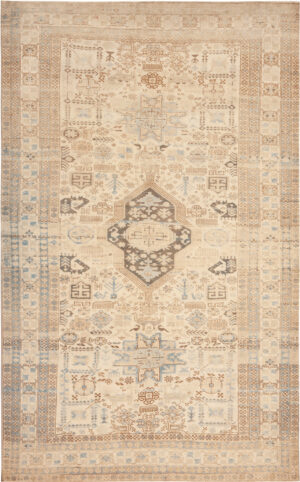
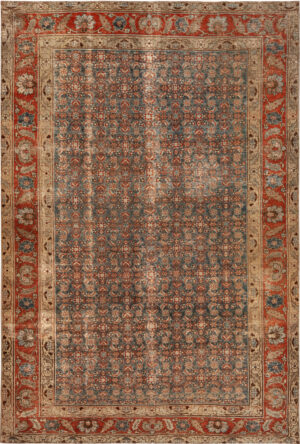
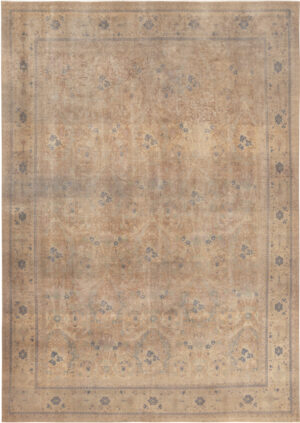
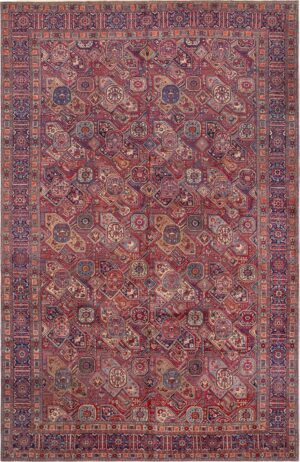
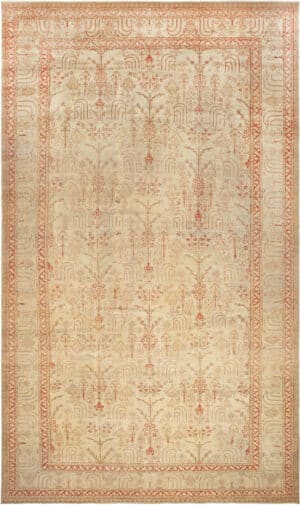
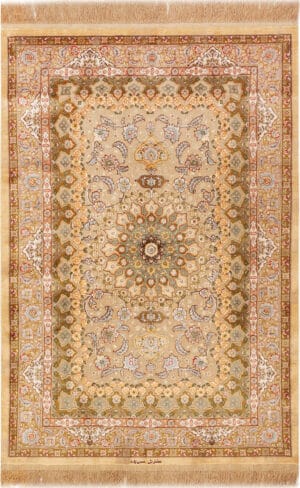
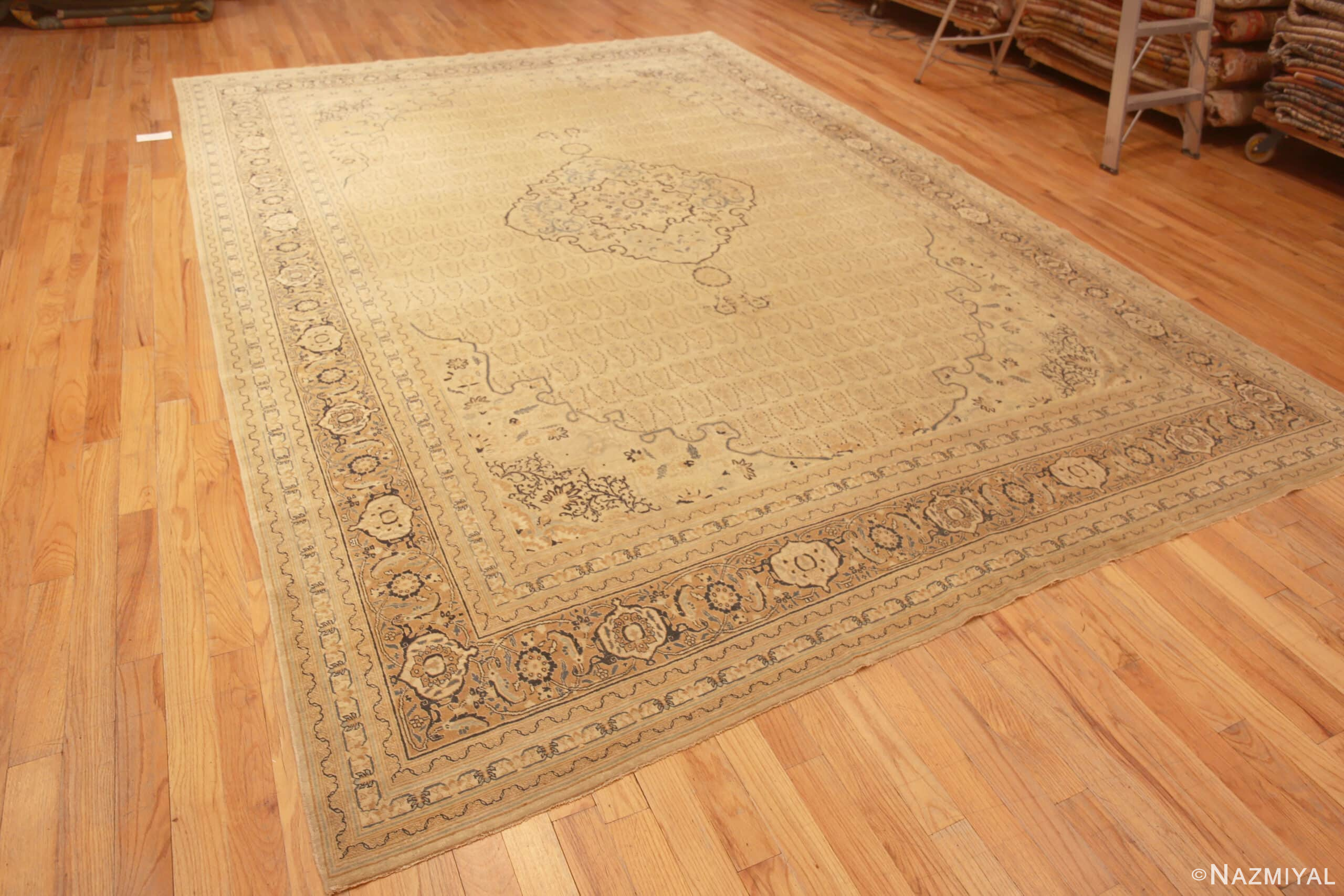
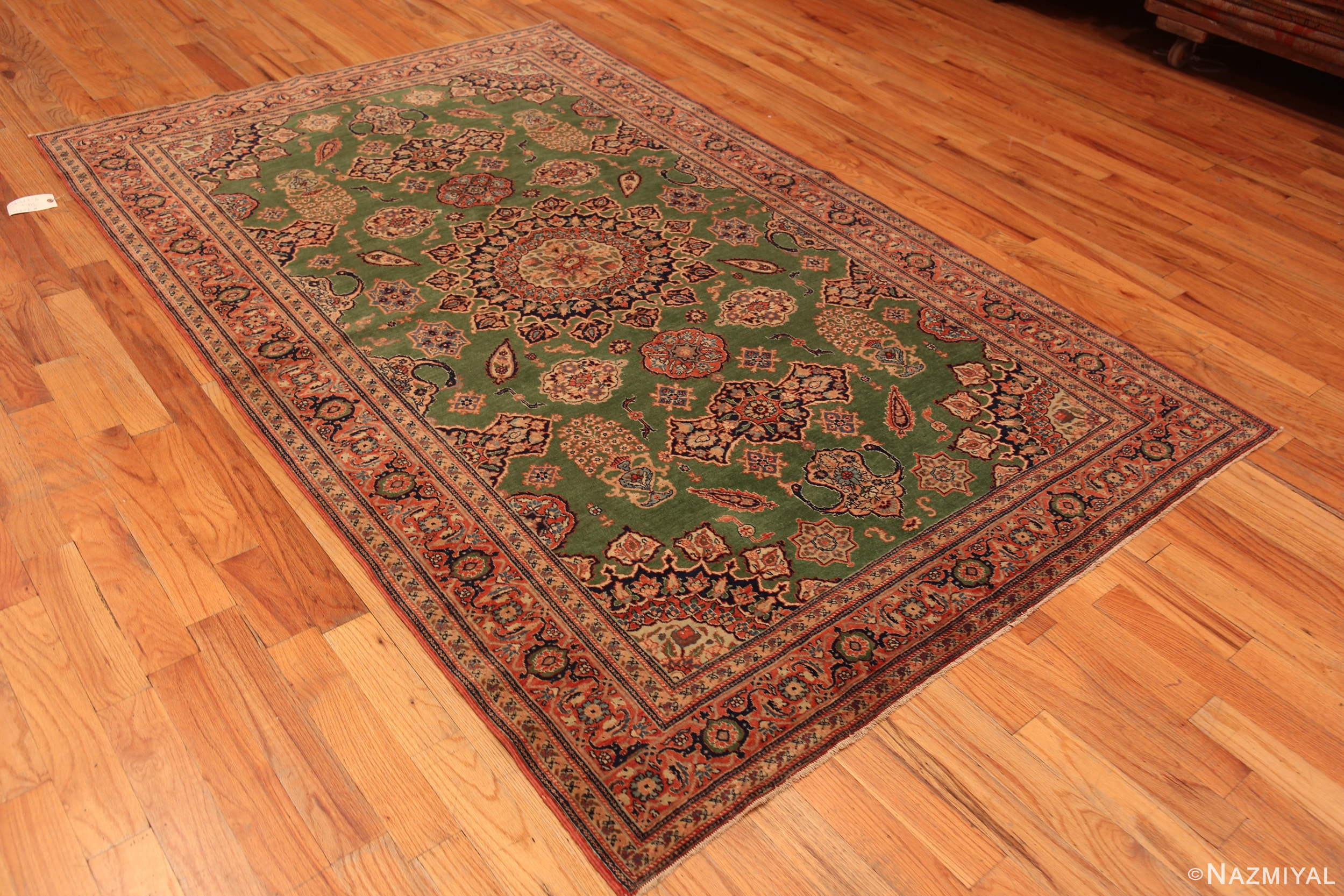
Explore: Tabriz Rug History • Tabriz Rug Designs • Tabriz vs Heriz Rugs • What a Tabriz Rug Is Worth
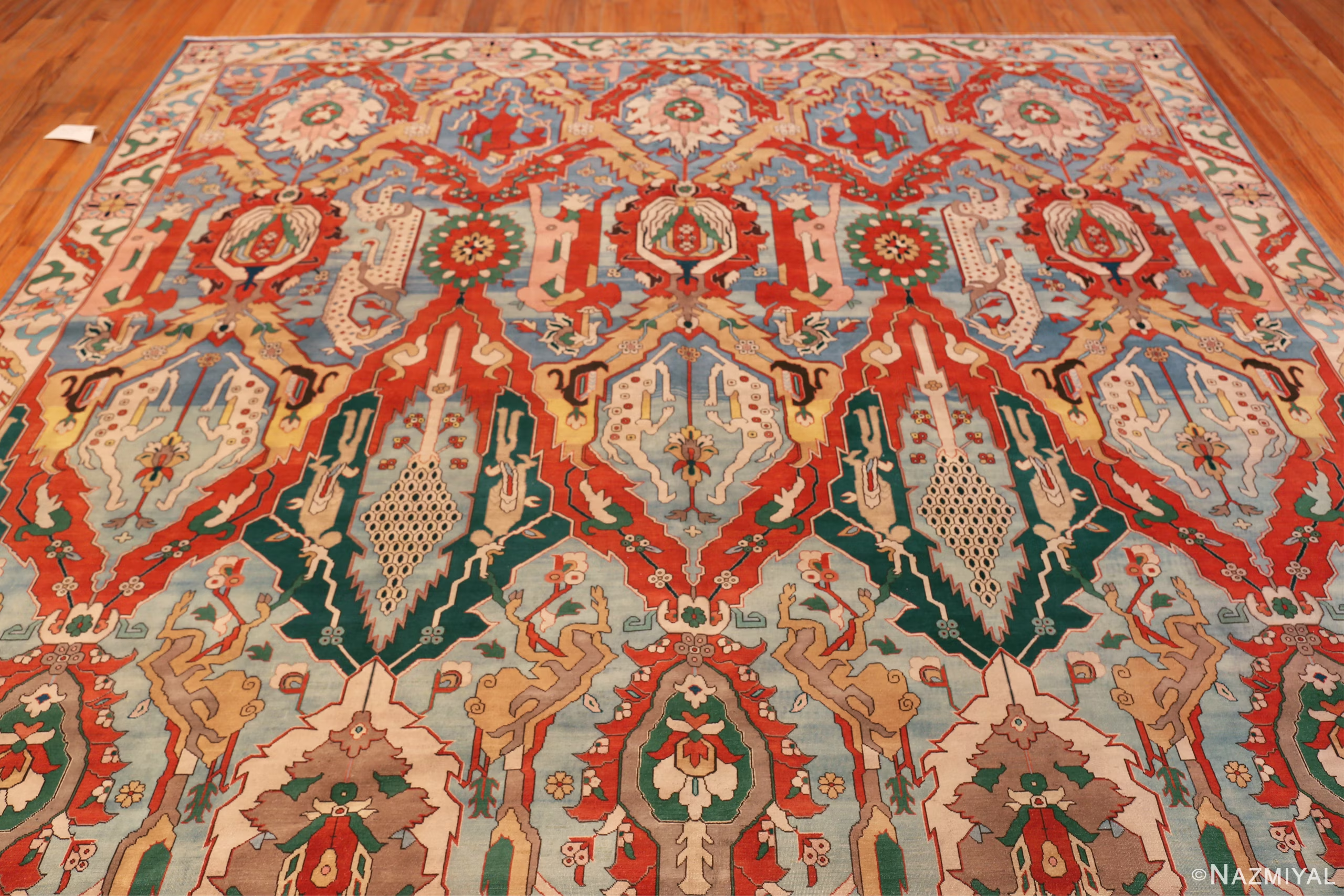
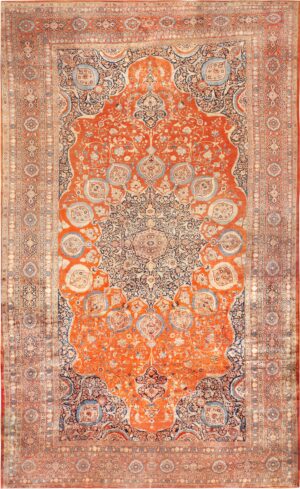
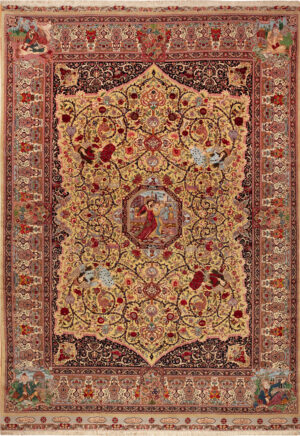
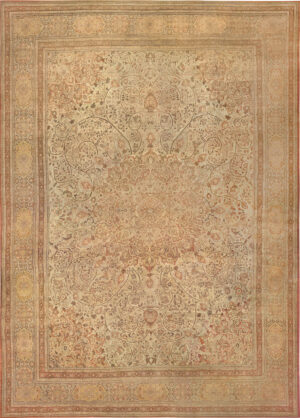
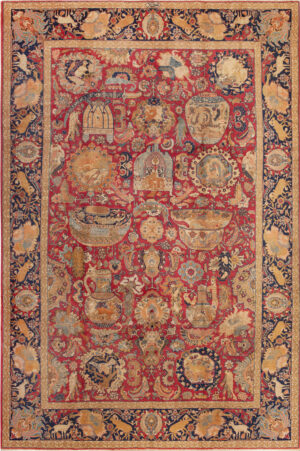
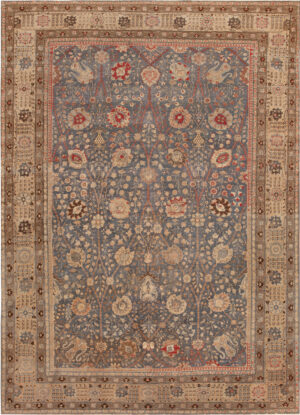
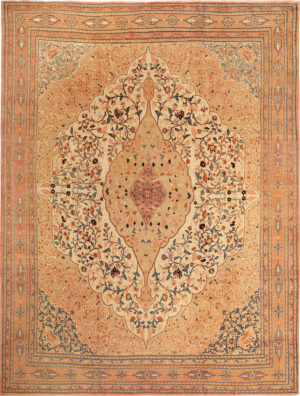
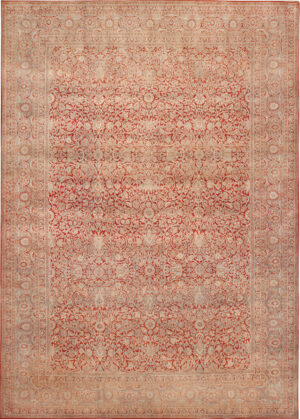
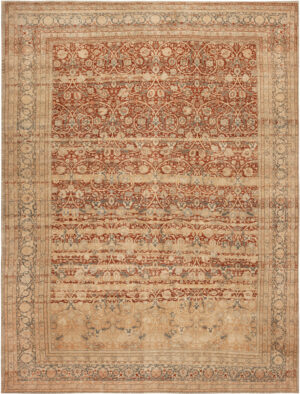
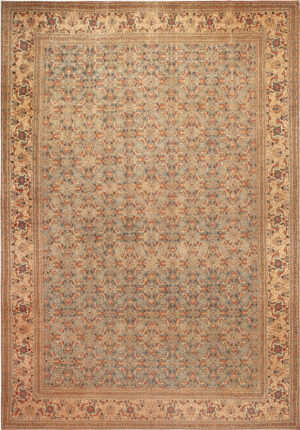
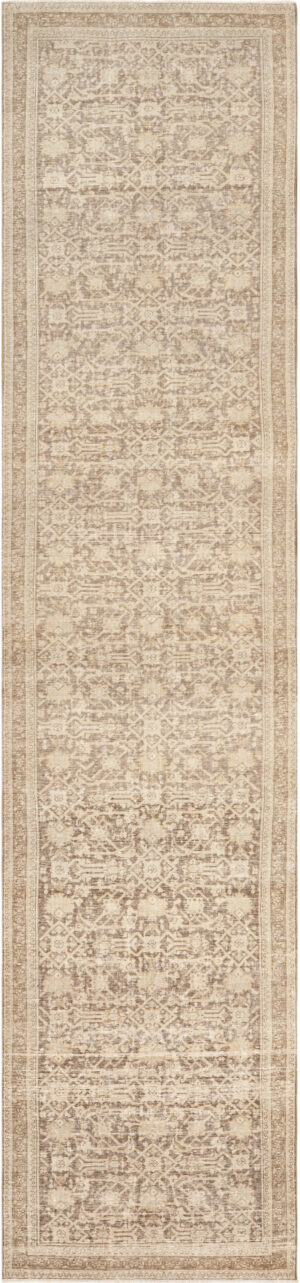
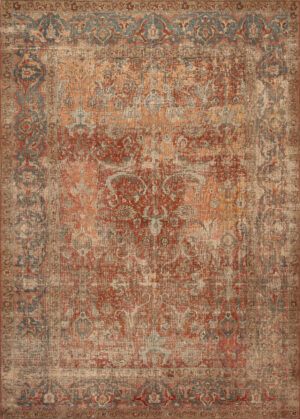
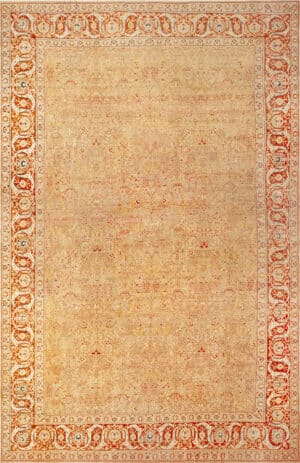
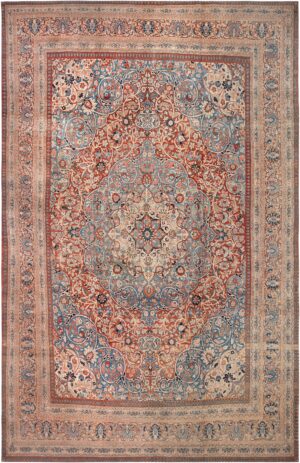
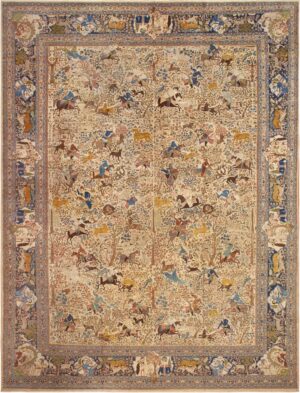
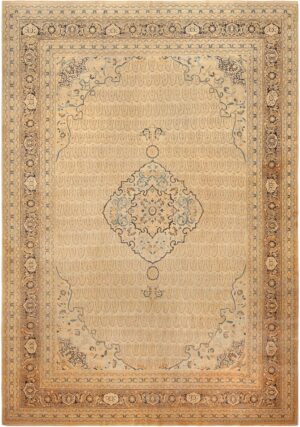
Featured Tabriz Rugs From the Nazmiyal Collection
Tabriz Rugs History: Where Do They Come From?
Tabriz is a city in northwest Iran, specifically in the province of East Azerbaijan. The city was an important point that linked Persia to Anatolia and Europe, ultimately influencing the established weaving culture to become more commercial and varied.
Tabriz served as an early capital during the Safavid dynasty. This era introduced a shift toward courtly designs, giving many Tabriz rugs a distinctly architectural and formal look. In the later 19th century there was a revived interest in Tabriz rugs leading to the modern-day survival of many of these weavings.
For broader regional context on how weaving families relate across countries, cities and traditions, start at our Rug Origins hub, then return to Tabriz once you know the voice you are after.
Common Tabriz Rug Designs
While these rugs are referred to as “Tabriz,” they are named after the city they originated in. Tabriz is not a type of pattern, and in fact, many differing styles can be found under the umbrella of Tabriz rugs. You will also see them catalogued as Tabriz oriental rugs; “oriental rug” is the older trade term for the whole hand-knotted family rather than a separate type.
Mahi (Herati) Designs
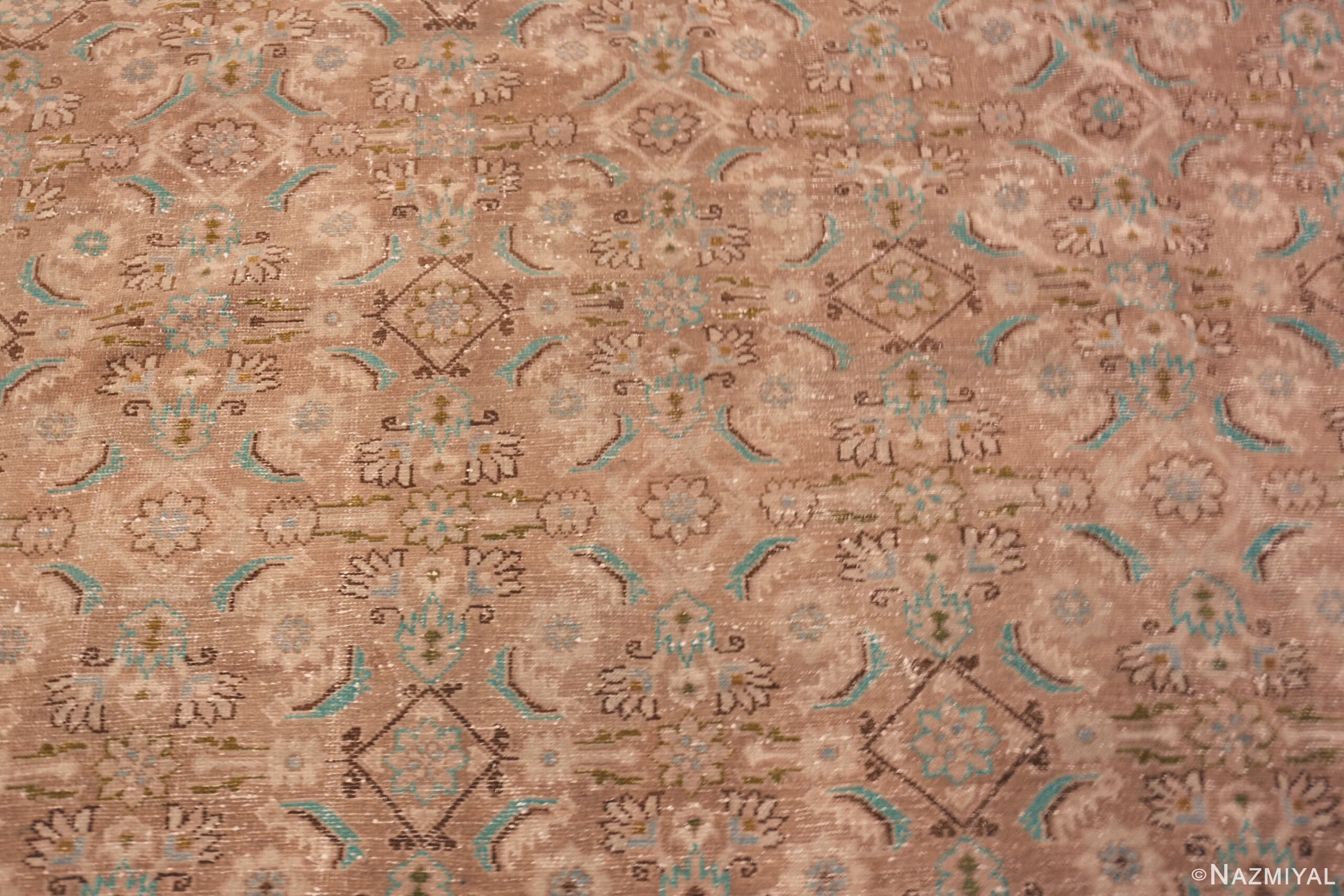
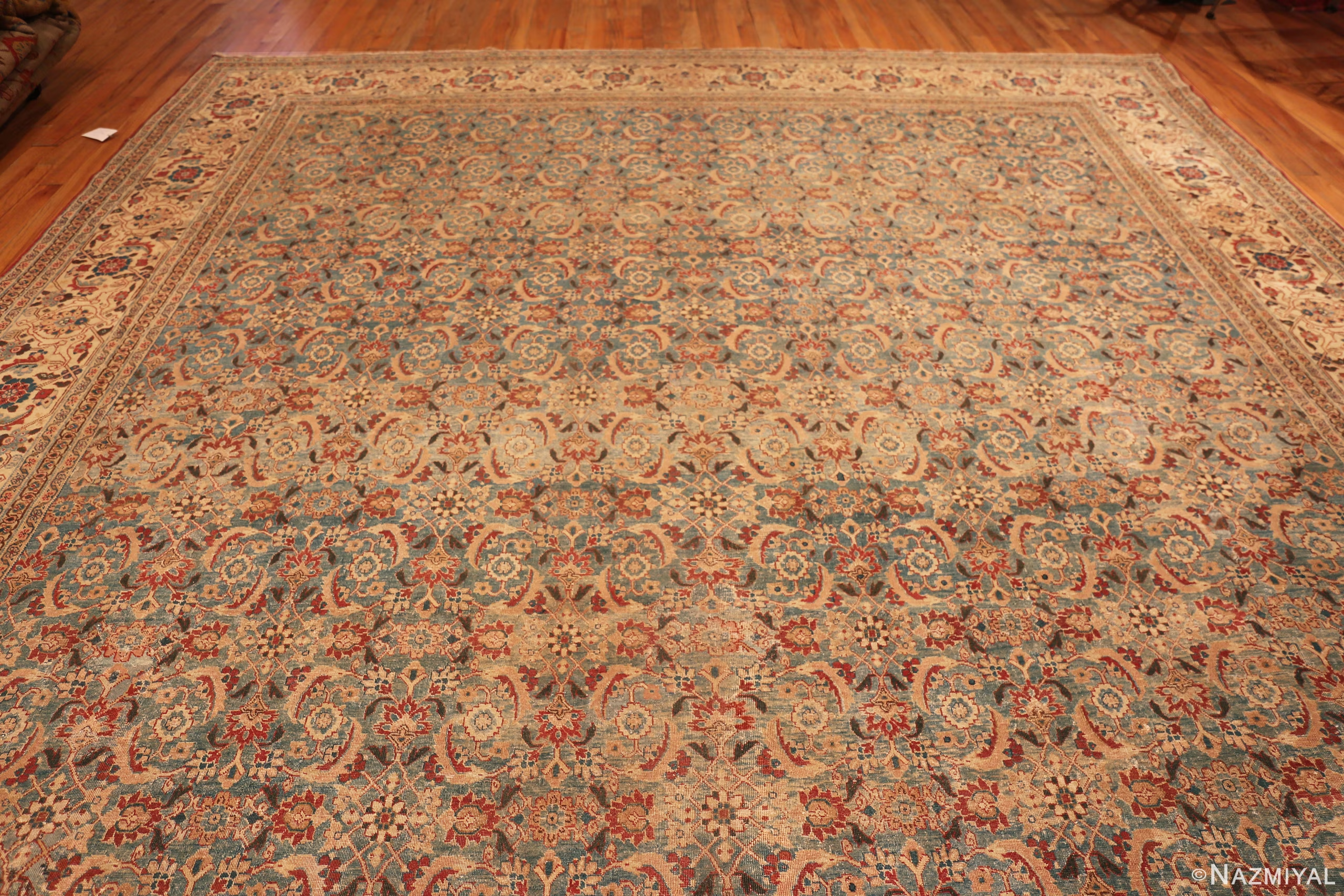
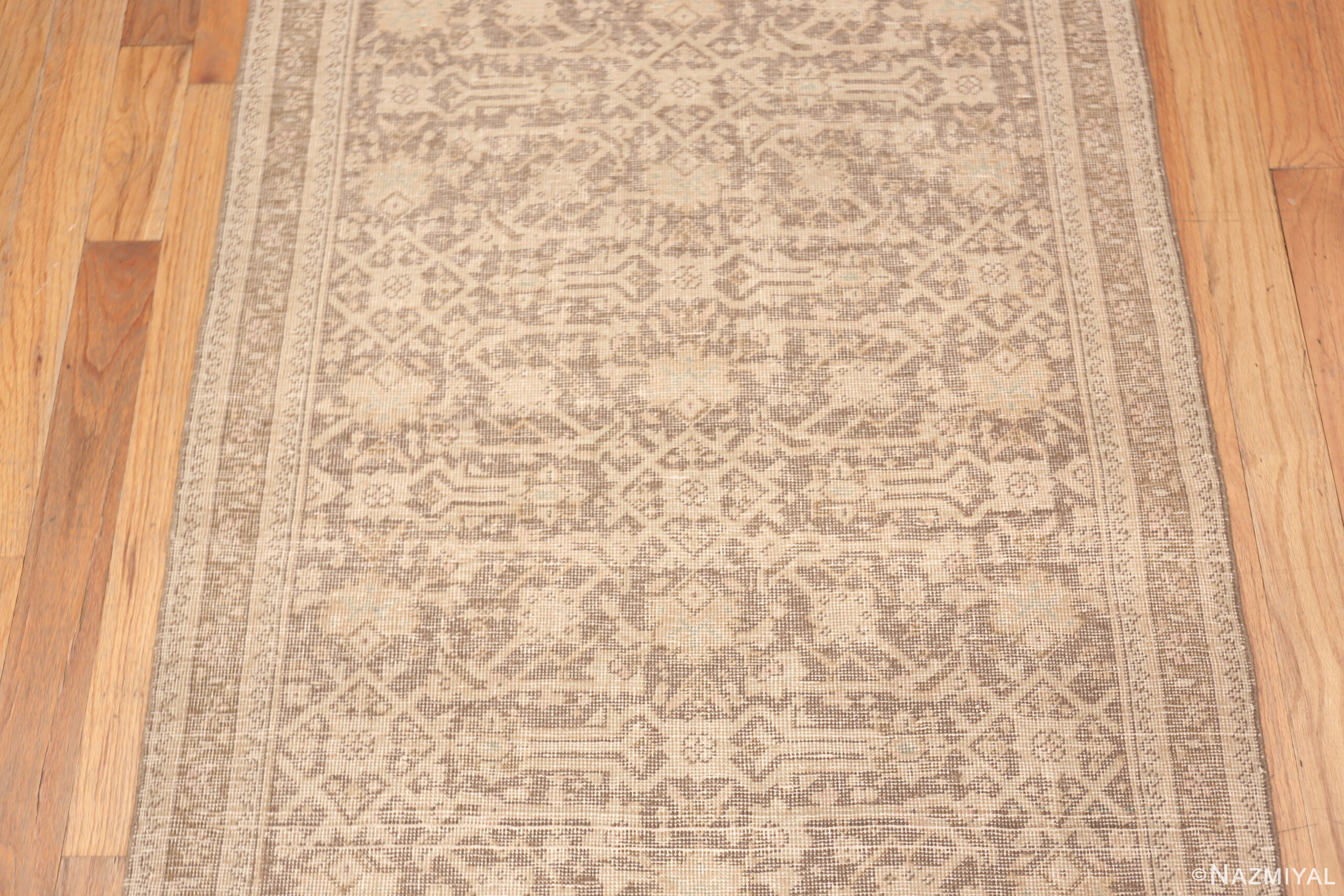
Rugs with Mahi, or Herati, patterns are commonly known as fish design rugs. Their name is in reference to the fish-like resemblance of a repeating motif featuring a rosette inside a diamond framed by curling leaves. Mahi is Persian for fish; Herati points to the city of Herat, generally associated with the historical origin of the pattern. It is one of the most recognizable patterns found in Tabriz rugs. Browse our Mahi and Herati fish design rugs.
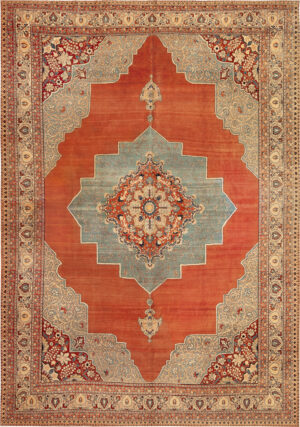
Medallion Designs
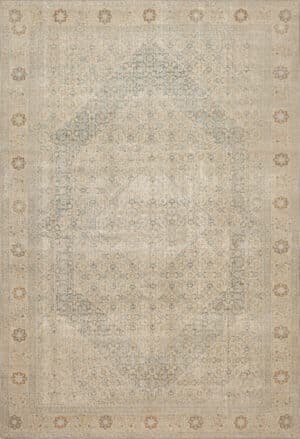
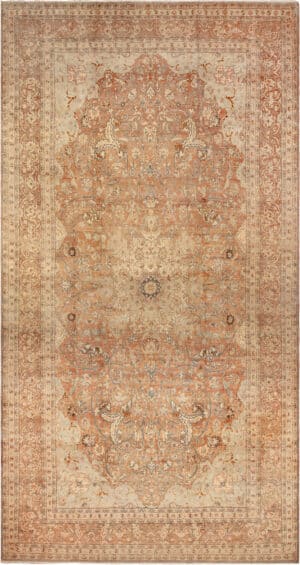
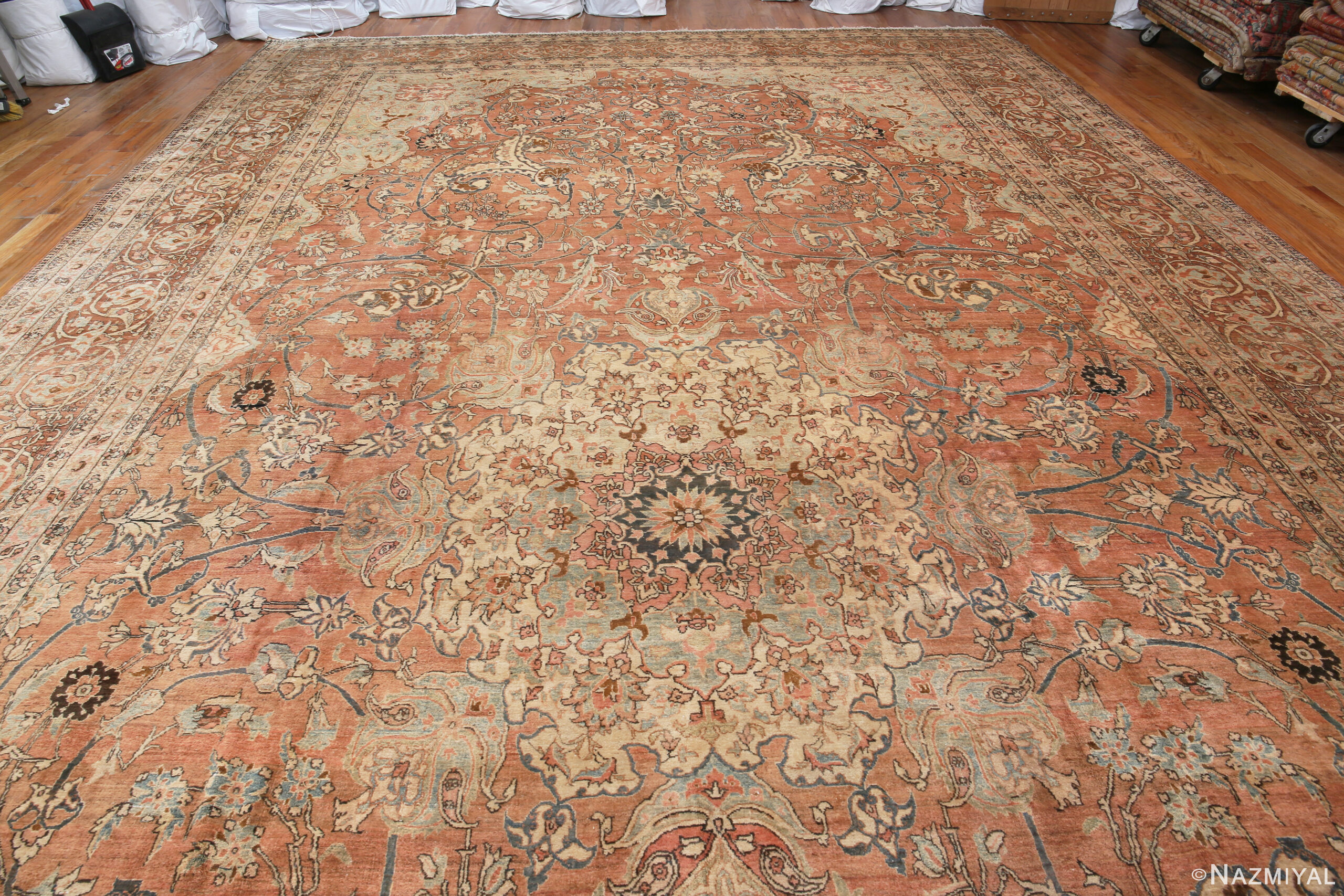
Medallion rugs have some of the most common compositions in the world. They are found across cultures and are not specific to Tabriz, though they certainly make up a substantial portion of Tabriz rugs. The defining feature of a medallion rug is a central focal motif with surrounding ornamental elements. See our central medallion rugs.
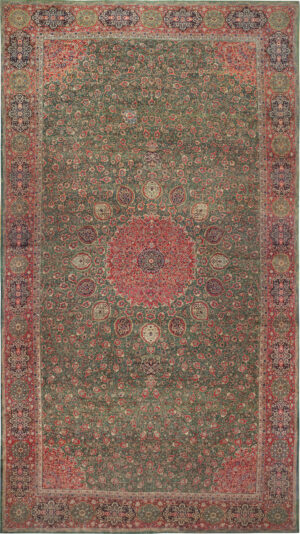
Ardabil-Style Designs
A radiating sunburst medallion with pendant lamps, drawn in the lineage of the great shrine carpets. Our #50615 above is an Ardabil-design Tabriz.
Garden and Vase Designs
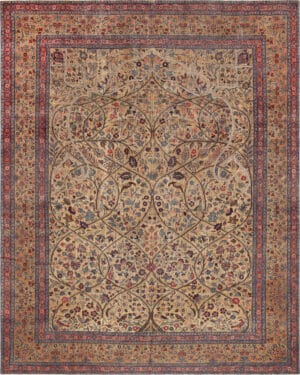
Despite what the name suggests, garden design rugs do not necessarily depict literal gardens. Instead their motifs are organized in garden plan compositions, featuring compartmented decorative elements.
Rugs with vase designs feature one or more vases overflowing with florals that make up the majority of the weaving’s field. They are highly decorative textiles and an iconic Persian design.
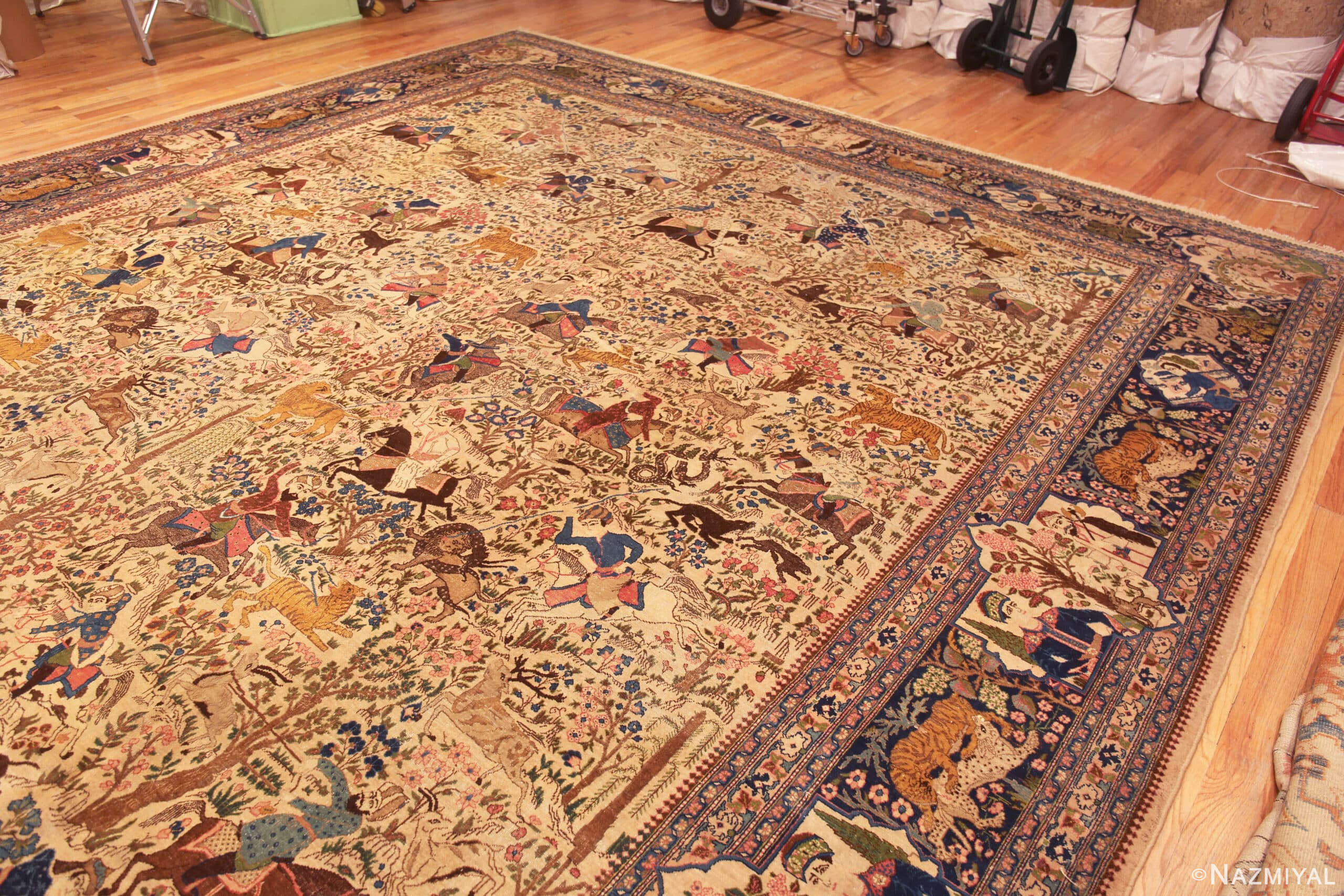
Pictorial and Hunting Scenes
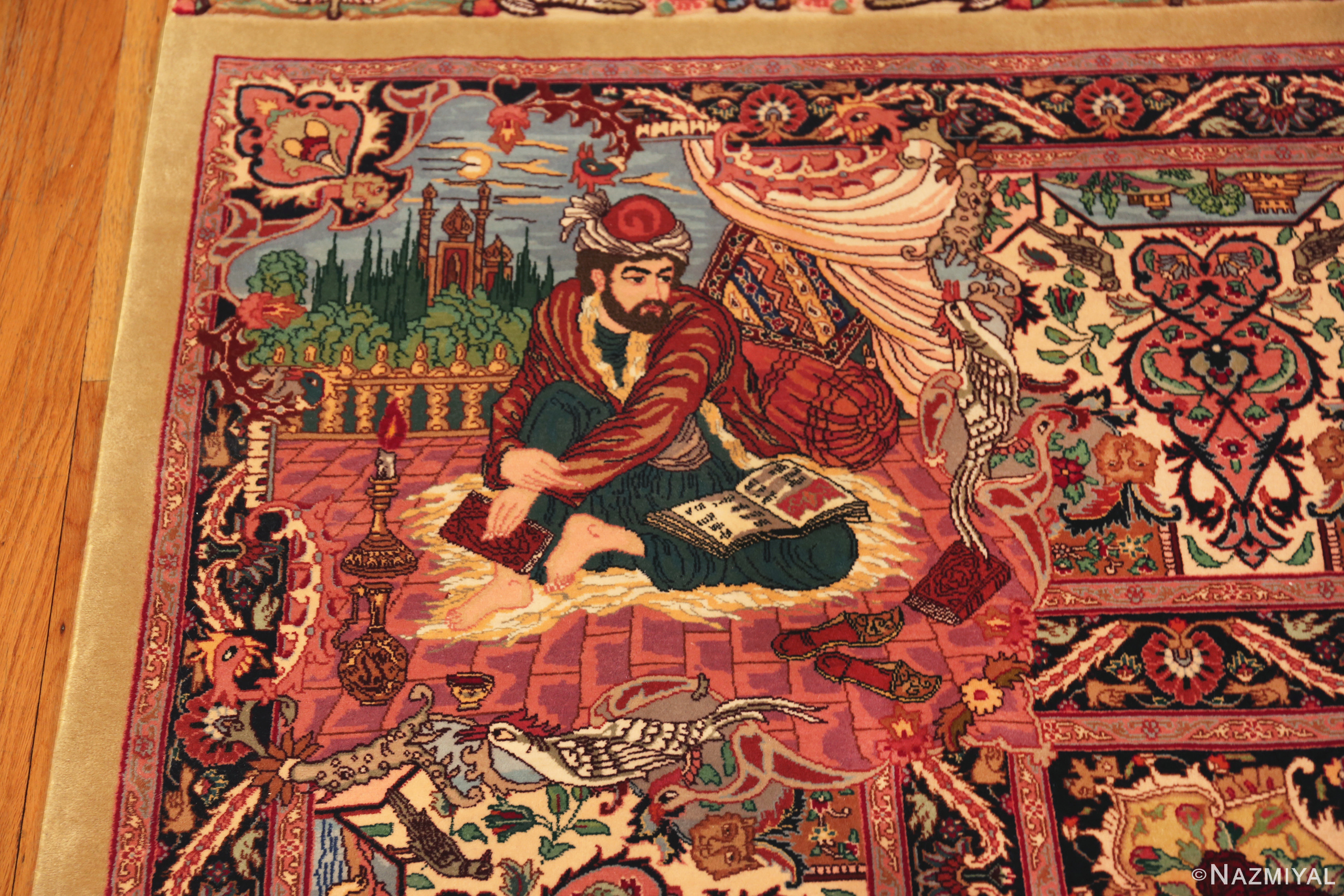
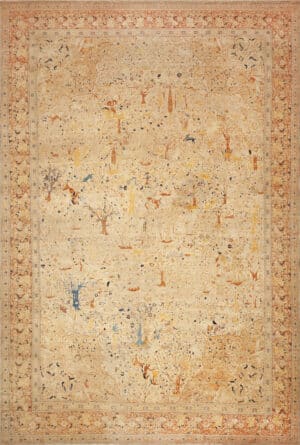
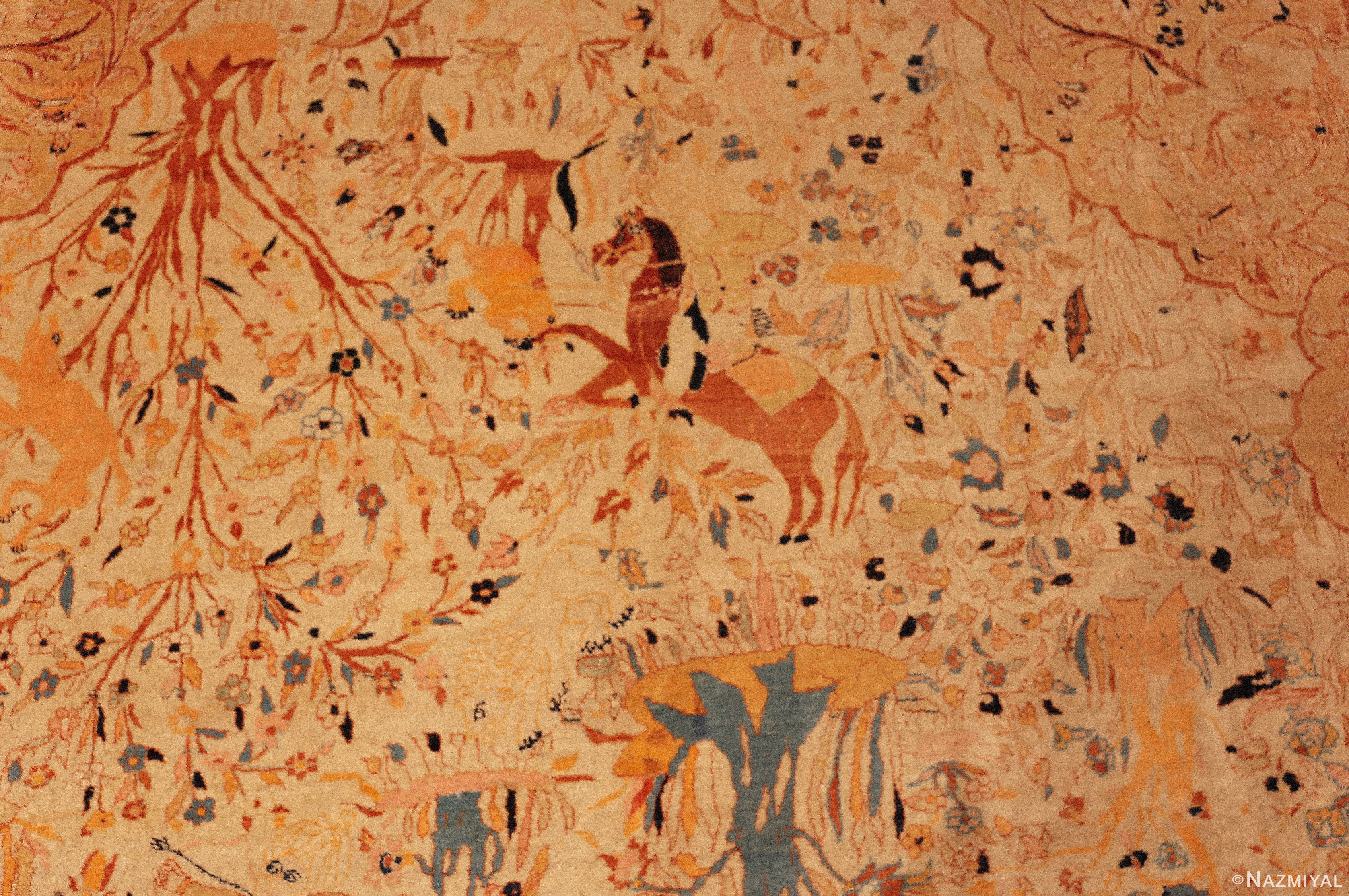
These rugs depict clearly recognizable imagery, often representing stories or documenting events. Animal and human figures are common in pictorial rugs, as are architectural compositions. These rugs require a finely-knotted construction to ensure the level of detail necessary for a crisp drawing.
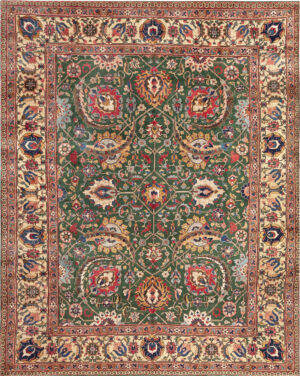
Allover Designs
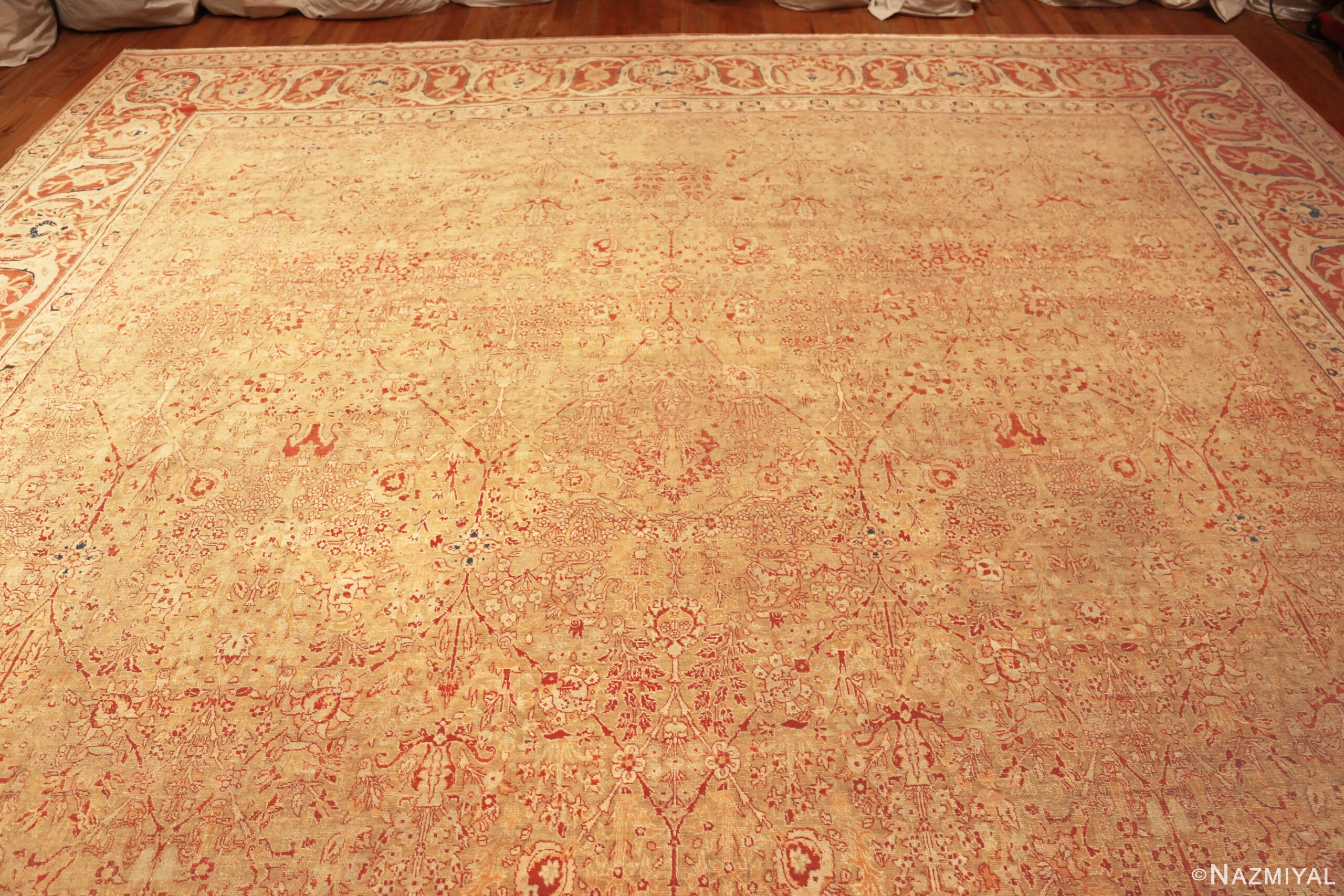
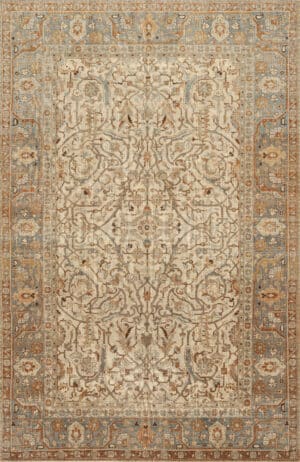
Allover rugs are the opposing composition to medallion rugs. While medallion designs feature a central focal point and a symmetrical field, allover rugs have repetitive motifs across the rug’s surface with no dominant center. They can be either symmetrical or asymmetrical, often utilizing floral elements as embellishing characteristics. See our allover designs and floral rugs.
Silk Tabriz Rugs
Silk may be used for the entire pile or as highlights within a wool rug, creating sheen and finer detail. Silk alone does not determine age, quality or value. See our silk rugs.
Haji Jalili
Haji Jalili rugs are named after the celebrated Tabriz workshop, known for producing finely crafted weavings. These rugs are characterized by intricate designs, rich color palettes, and high-quality materials. Attribution should be based on the entire rug, not on color alone. See our Haji Jalili Tabriz rugs.
Identifying an Authentic Tabriz Rug
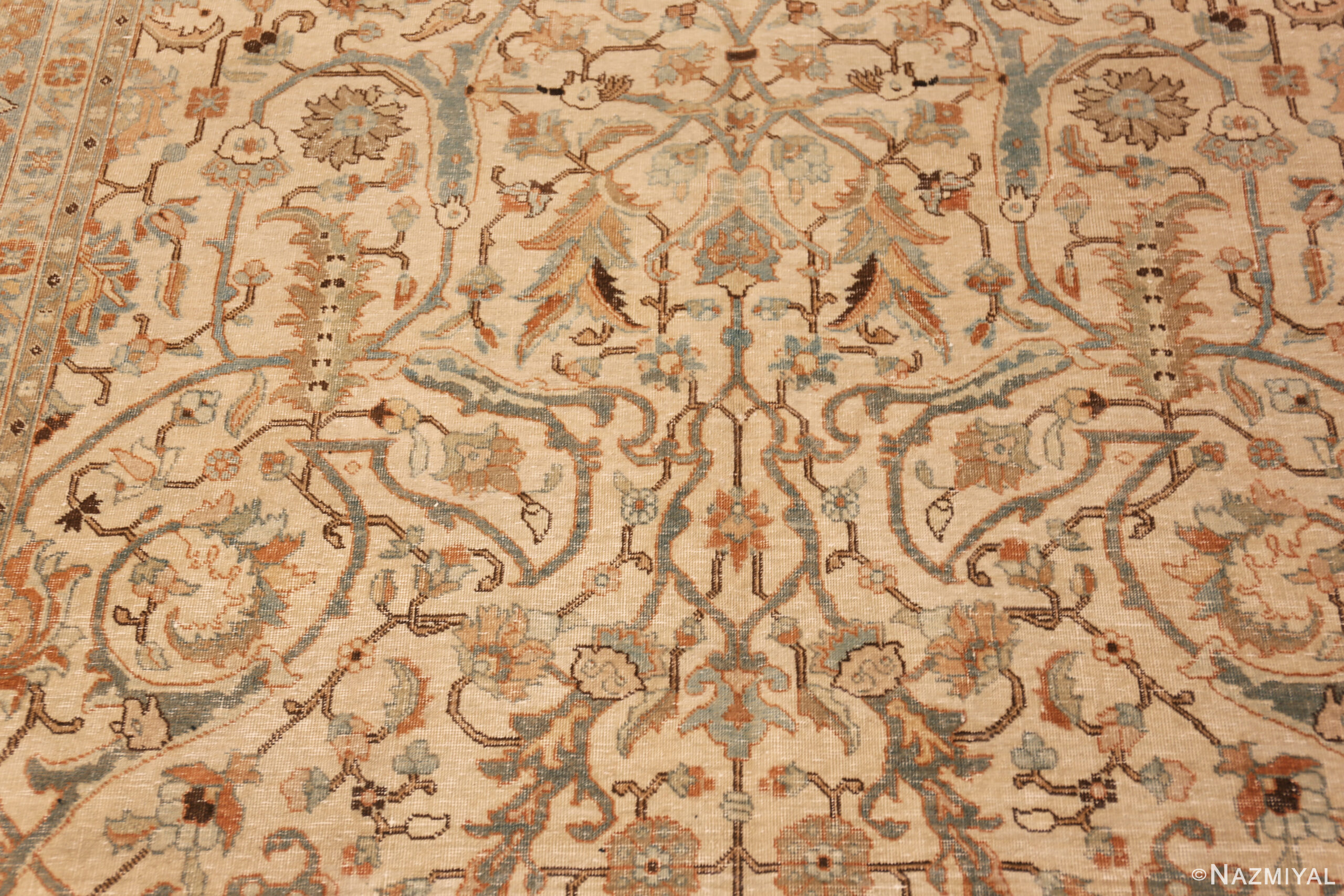
Because Tabriz rugs contain such a variety of designs, successfully identifying one relies mostly on its structural elements. A combination of disciplined construction and crisp design logic usually points to a Tabriz design. No single feature proves Tabriz origin on its own.
Keep an eye out for the following characteristics:
- Symmetrical knot construction — also called the Turkish or Ghiordes knot — is common in Tabriz weaving
- Fine to very fine knot density, traditionally expressed in raj
- Wool or silk pile, often on cotton foundations
- Balanced curves with controlled geometry
- Clean borders
- Structural consistency end to end
- A signature or inscription cartouche woven into the outer border (not all Tabriz rugs have this but it is a good indicator)
- Tonal depth due to the age of natural dyes used rather than flat color
A signature alone is not proof of origin. It must be evaluated in the context of the entire rug.
It is worth noting that imitation designs usually sold as Indo-Tabriz woven elsewhere are common and can be difficult to distinguish at first glance. They may be attractive and well made, but they should be represented and valued according to their actual origin. Always take a closer look at a rug’s construction.
Understanding Raj
Most rug traditions are discussed in knots per square inch. Tabriz has its own convention: raj, the number of knots counted across roughly seven centimetres of the rug’s width, read from the back. The grades most often quoted are 40, 50, 60 and 70 raj. A higher raj count permits finer detail, but raj alone does not determine quality or value, and conversions from raj into knots per square inch vary between dealers. Our guide to rug knots and KPSI explains the knot types and density bands in more detail, and our rug glossary covers the wider terminology collectors and dealers use.
Sizes and Scale
Tabriz rugs are unique in their variety of scale. Rugs made in Tabriz workshops were often built to fill grand rooms. This means there are a substantial number of surviving large-scale Tabriz rugs, as well as more traditional room-size rugs and runners. Our holdings run deep at the top end, well past the formats most collections stop at.
See our rug size guide for more information on how to properly size a rug to your desired interior, or speak with a specialist and we will work from your floor plan.
Tabriz Rugs vs Heriz Rugs
Both Tabriz and Heriz rugs originate in northwest Iran, but their visual styles differ. Tabriz rugs are made up of refined detail and complex patterning achieved through a finely knotted construction. Heriz rugs tend to be much bolder in their aesthetic, with a graphic quality that serves as a successful focal point or anchor in a space.
| Feature | Tabriz | Heriz |
|---|
| Drawing | Refined, workshop-precise linework; crisp curves | Bold, architectural geometry; strong graphic shapes |
| Fineness | Graded in raj; often fine to very fine | Typically coarser, by design. Scale carries the pattern |
| Design range | Very broad: Mahi, medallion, allover, garden, pictorial, silk | Narrower but iconic: powerful medallions and angular fields |
| Room feel | Formal, planned, and legible at distance | Monumental, anchoring, and visually assertive |
| Best when you want | Detail, clarity, and composed elegance | Bold geometry and a strong focal foundation |
Whether a Tabriz or a Heriz rug works better in an interior depends on how you want the rug to service the room. Choose a Tabriz rug when looking to curate a formal and refined look. Choose Heriz to complete a room with a strong accent piece. For another classic Persian workshop comparison, see our Kashan rugs.
What a Tabriz Rug Is Worth
Determining the value of a Tabriz carpet is dependent on a combination of factors. Two weavings of the same size and age may be priced completely differently based on the quality of material, construction, color, design, and condition. The name Tabriz establishes a category, not a fixed price.
Decorative vintage Tabriz rugs may begin in the several-thousand-dollar range. Exceptional antique, silk, Haji Jalili, palace-size or historically important examples may command substantial five-figure or, in rare cases, six-figure prices.
The value of a Tabriz rug depends on age, raj and knot density, quality of drawing, wool and silk, dyes and color, condition, restoration, size and scale, workshop attribution, and provenance. Condition is often misunderstood: a very finely knotted rug with serious structural damage may be worth less than a slightly coarser example with excellent drawing, beautiful color and strong original structure.
For collectors and others interested in the historical and design value of an antique Tabriz rug, they are valued for the artistic mastery evident in their visual impact. The workshop standards in place when many of today’s surviving Tabriz rugs were made ensured lasting quality in material and construction.
For an opinion on the value of your own rug, see our rug appraisals and antique carpet valuations page. If you are considering selling, our sell your rug page explains how we evaluate and purchase.
Tabriz Rugs in Decoration
Tabriz rugs represent a very classic style of furnishing. They have clear compositions, well proportioned designs, and patterns that manage to be both beautiful and readable from afar as well as up close. To successfully incorporate a Tabriz rug into an interior, begin by first choosing your desired scale. Then narrow down your options by composition and color.
To compare the look across eras and budgets, start by browsing our Antique Rugs, Vintage Rugs, and Modern Rugs collections, or shop by color.
Tabriz Rugs at Our New York Gallery
Nazmiyal is a New York gallery. Our collection of antique Tabriz rugs can be viewed by appointment at our Manhattan gallery, where designers, collectors, and private clients have sourced rugs since 1980. If you are looking for high-end vintage rugs in New York, you can see selected pieces in person before deciding. Clients outside New York are supported with specialist guidance, worldwide shipping and international home approval, and our authenticity standards.
We also buy Tabriz rugs and offer guidance on cleaning, repair and restoration, and rug appraisals. Designers working on residential, hospitality, or collector interiors can also ask about our interior designers trade program.
Why Buy Your Tabriz Rug from Nazmiyal?
Since 1980, Nazmiyal has hand-selected vintage, antique, and decorative rugs for our New York gallery. Every piece is vetted by our own specialists. We are committed to helping clients choose the perfect rug for their homes with professional guidance for collectors, interior designers, and first-time buyers.
Clients work with us for authenticated rugs, specialist advice, accurate measurements, detailed photography, condition guidance, our 3-day return policy, white-glove delivery, and the ability to view selected pieces by appointment in New York. Our goal is to help you find a Tabriz rug that is authentic, beautiful, usable, and right for the room.