A condition report is a structured way to separate normal age-appropriate wear from structural problems and value-changing repairs. For first time buyers and seasoned collectors alike, reading a condition report for an antique piece can be intimidating. Use this guide to better understand what qualities to look out for and question, as well as what you should be asking your seller.
The Only Rule: Structure First
Part of dealing in antiques is understanding that the pieces will never be perfect, and that’s part of the point. Rugs are functional objects as much as they are decorative and aesthetic accessories. It’s inevitable that one created decades or even centuries ago has no evidence of wear or restoration. In fact, it’s expected. What you need to avoid is buying a rug with hidden structural weakness or sloppy restoration regardless of how it photographs.
Wear vs Damage vs Corrosion
There are different facets to understanding the condition of antique and vintage pieces. Subsequently, they can be broken down into three different categories, all similar but with key distinctions.
- Wear – Surface thinning from foot traffic. If the foundation is strong, wear is acceptable.
- Damage – Tears, holes, missing sections, splitting, dry rot, or active moth issues.
- Corrosion – A specific kind of wear in which certain dark dyes weaken wool over time. It can look like “low areas” that keep getting lower.
The Condition Report Checklist in Order
Use this guide to ensure a better understanding of what to look out for in a condition report.
- Full Frontal View
- Is the pile height consistent or are there “valleys”?
- Any obvious stains, bleaching, or dye run?
- Any design interruptions that suggest patching?
- Full Back View
- The back tells the truth. This step is non-negotiable
- Any wavy foundation (could signal past water issues or tension problems)?
- Are there areas where knots look newer or different (repairs/patches)?
- Any cracking, brittleness, or powdery foundation (dry rot warning)?
- All Four Corners
- Corners are stress points
- Any corner splits?
- Any corner rebuilt or patched?
- Are corners symmetrical? Otherwise odd corners can indicate reduction or repair.
- Sides/Selvedges
- Are sides original and intact?
- Any overcasting that looks fresh or too thick?
- Any areas where the side cord is missing or the edge is rolling?
- Ends/Fringes
- The fringe is not decorative, it’s part of the structure
- Are the ends the original length or shortened?
- Any rewoven ends? If so, how much of the end(s) are rewoven and how visible is it?
- Are the fringes sewn on as modern add-ons or are they extensions of the foundation?
- Field vs Border
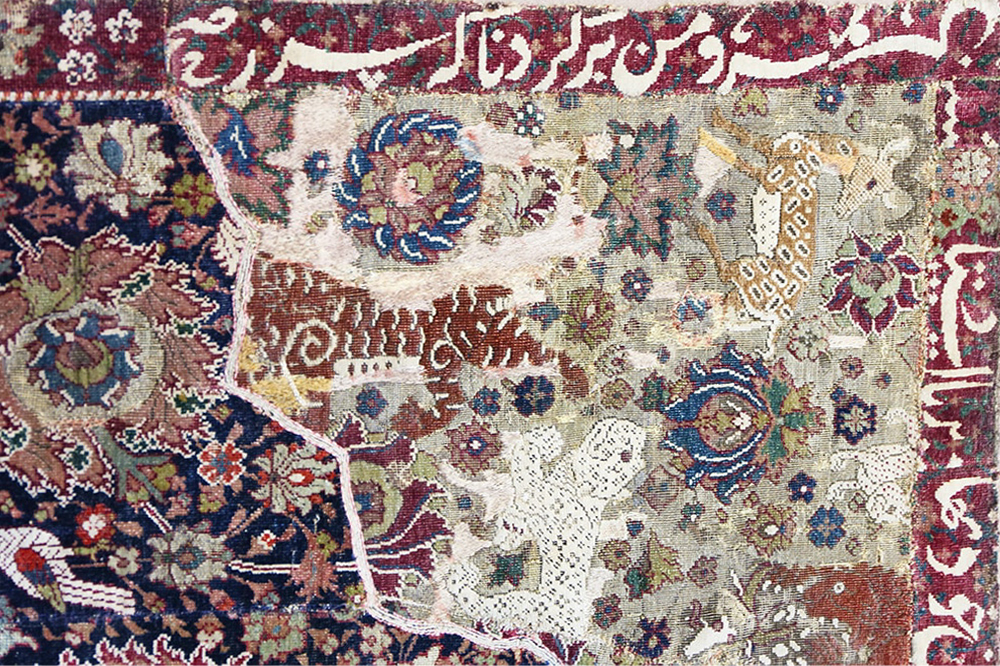
- Wear in the field is common; wear concentrated in a border is harder to blend visually.
- Look for distortions in the frame like border width changes. This can signal stretching or long-term tension.
- Odor + Environment
- Smoke smell, pet odor, or mustiness can be difficult to remove completely.
- Ask if the rug has been stored in a basement, attic, or near plants/water sources.
Repairs and Restoration: The Questions that Matter
As previously stated, repairs are expected, but bad repairs are unacceptable. Here are some questions to ask sellers regarding repairs and their quality.
- What repairs exist? Where are they specifically? How large are they?
- Are repairs structural (stabilizing) or cosmetic (hiding)?
- Is there any re-piling? If yes, how extensive?
- Are repairs visible from the front, particularly in normal light?
- Were dyes matched properly, or do repairs “float” in color?
Keep in mind, not all rugs require repair! If you’re on the fence about whether it’s the right option for your situation, see: Should You Repair Antique Rugs?
Green, Yellow, and Red Flags
Use this guide as a quick reference when deciding on whether or not to invest in a piece.
Green Flags – Usually Fine
- Even, honest wear with a stable foundation
- Secured sides/ends done neatly
- Small old repairs that don’t distort design
Yellow Flags – Double Check and Verify
- Noticeable corrosion in dark areas
- Rewoven ends (ask: how much?)
- Moderate wear in high-traffic lanes
- “Good condition for age” with no details
Red Flags – Consult an Expert Before Buying
- Dry rot/brittle foundation
- Active moth damage
- Large patched areas or multiple mismatched repairs
- Water damage, dye bleed, or strong musty odor
- Structural tears that run into the foundation
When a purchase hinges on condition, consider a professional check: Rug Appraisal Services
Why Trust Nazmiyal
The Nazmiyal approach is built on three foundational pillars that guide every decision, from acquisition to expertise to client trust: deep scholarly knowledge developed through decades of hands-on experience, rigorous standards of authenticity and transparent valuation, and a globally curated collection shaped by historical depth, cultural understanding, and market insight.
Frequently Asked Questions
Is “some wear” a dealbreaker for an antique rug?
No. Many antiques show honest wear. The key is whether the structure is stable and the wear matches your intended use.
Are rewoven ends always bad?
Not always. Reweaving can be necessary. What matters instead is how much was rewoven and how well it was done.
What’s the single most important photo?
A full, in-focus photo of the back plus close-ups of sides, ends, and corners.