Shop Antique Sultanabad Rugs and Persian Mahal Carpets
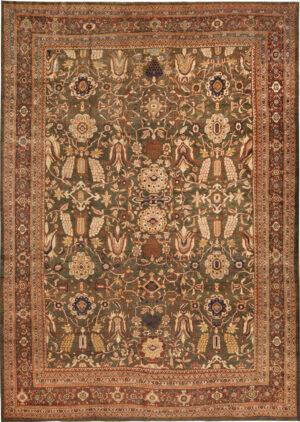
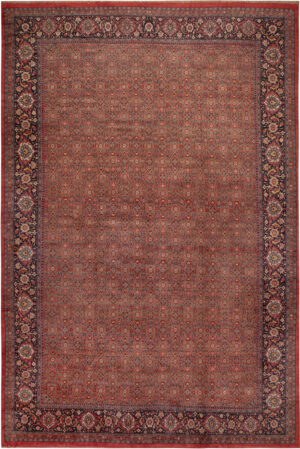
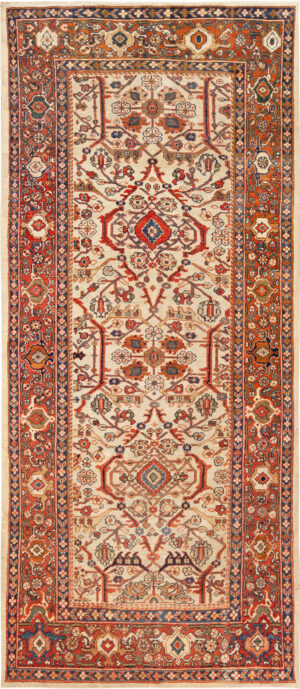
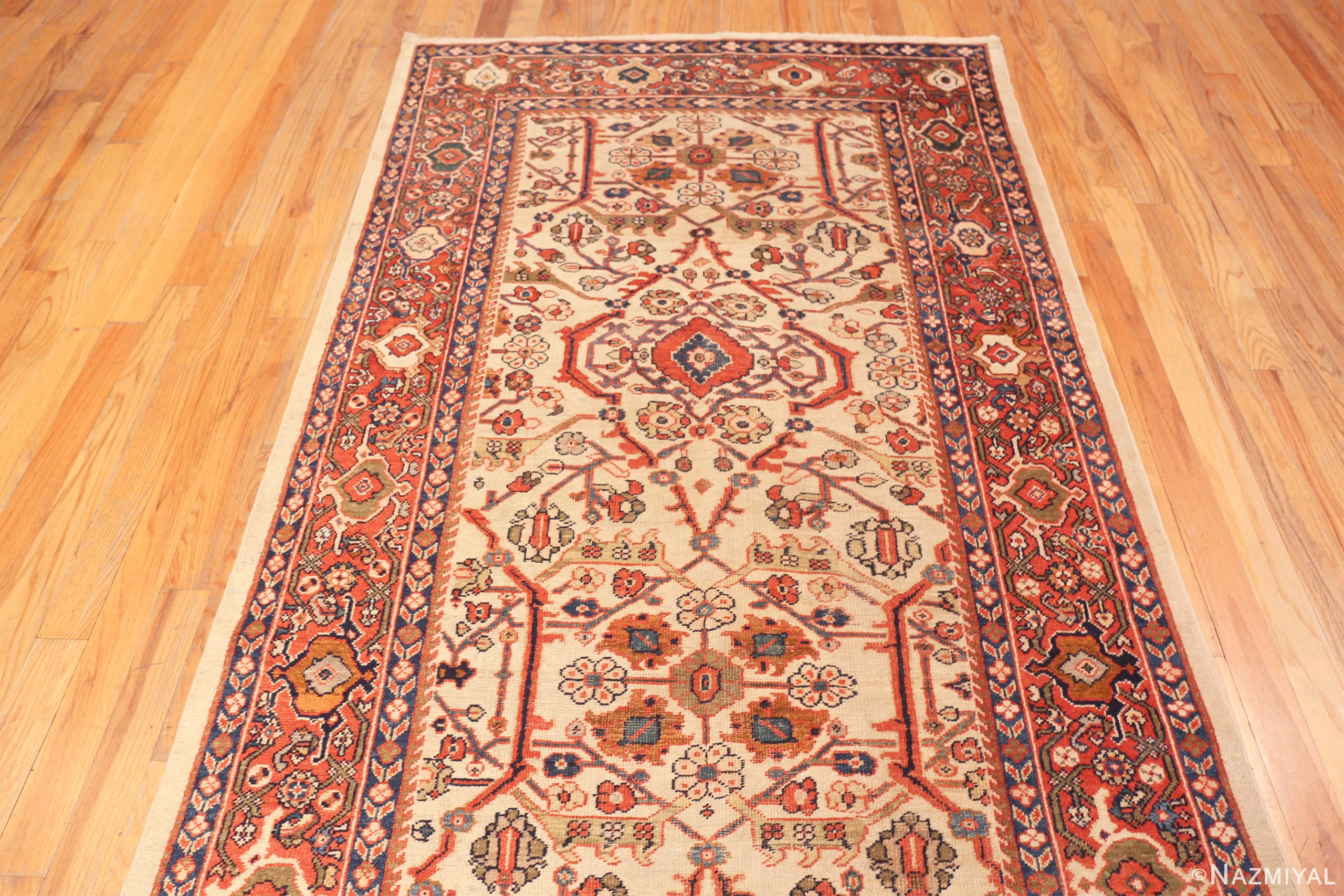
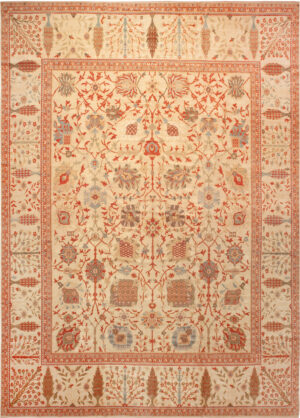
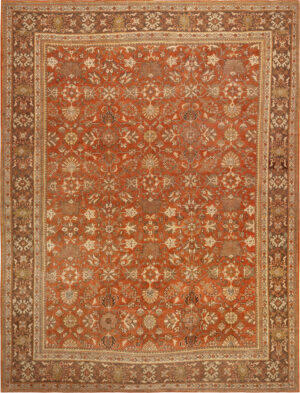
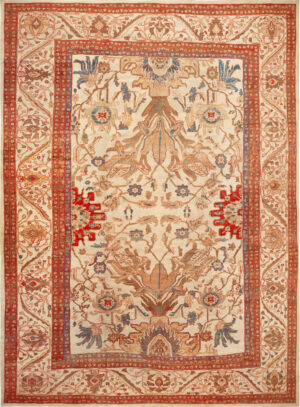
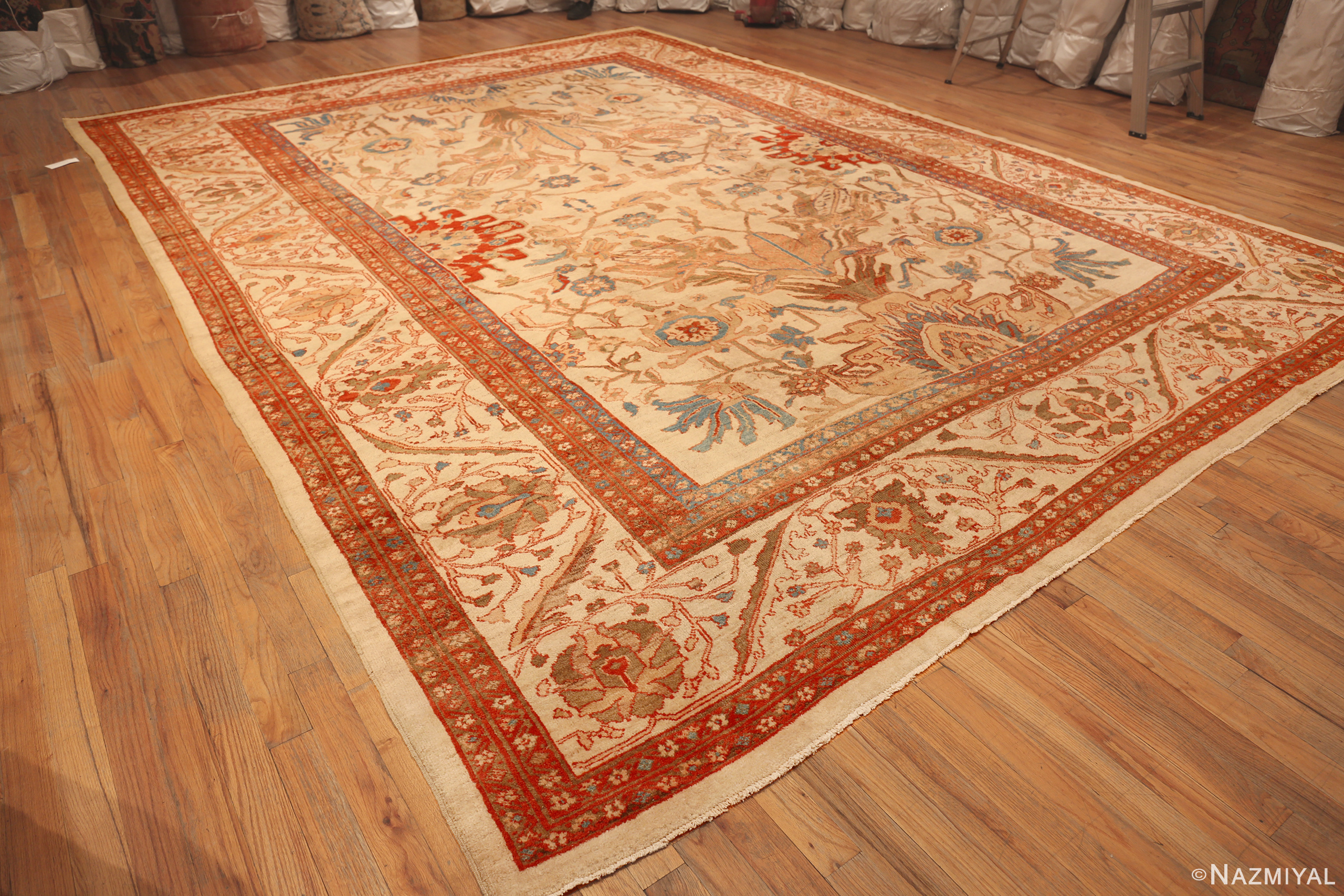
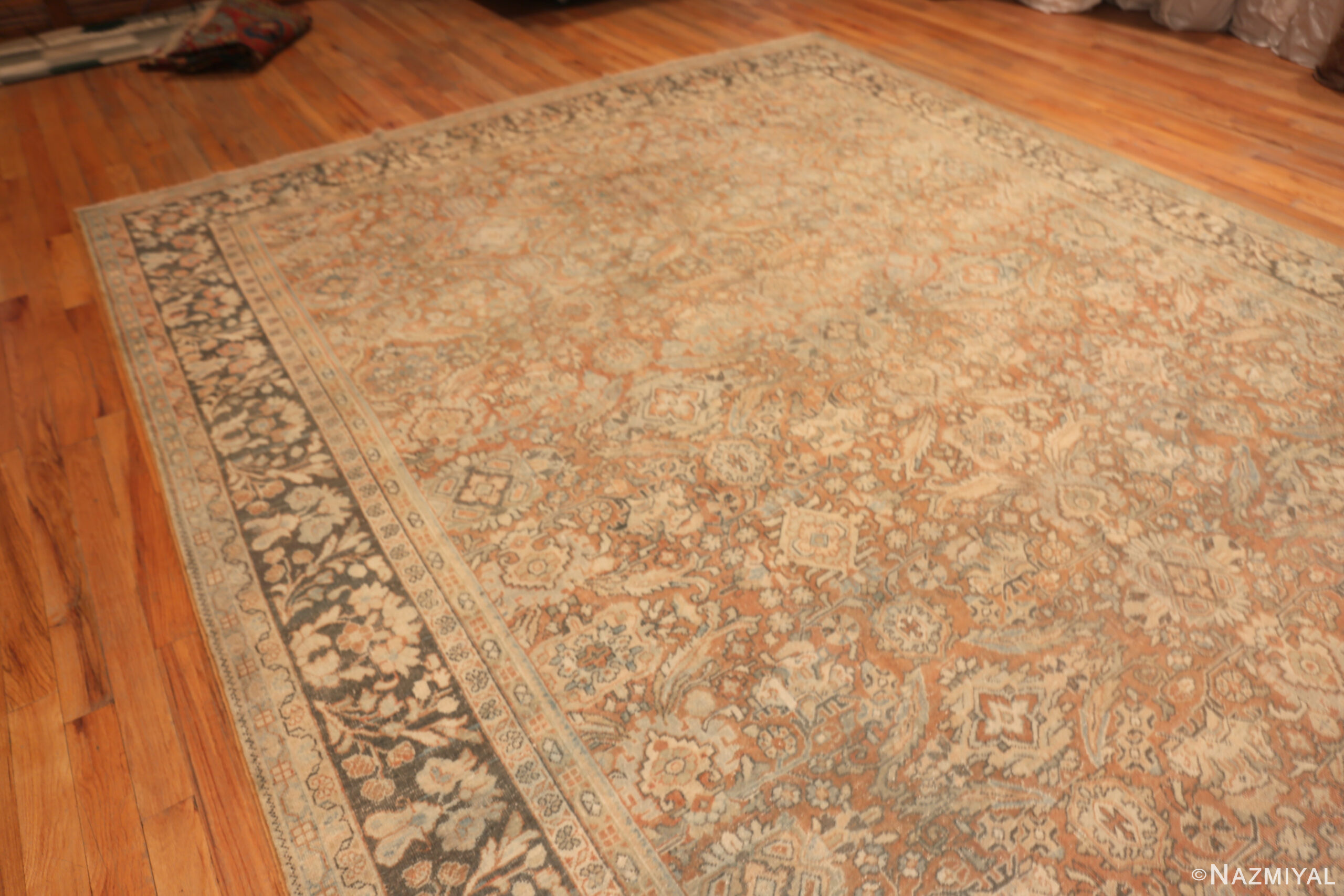
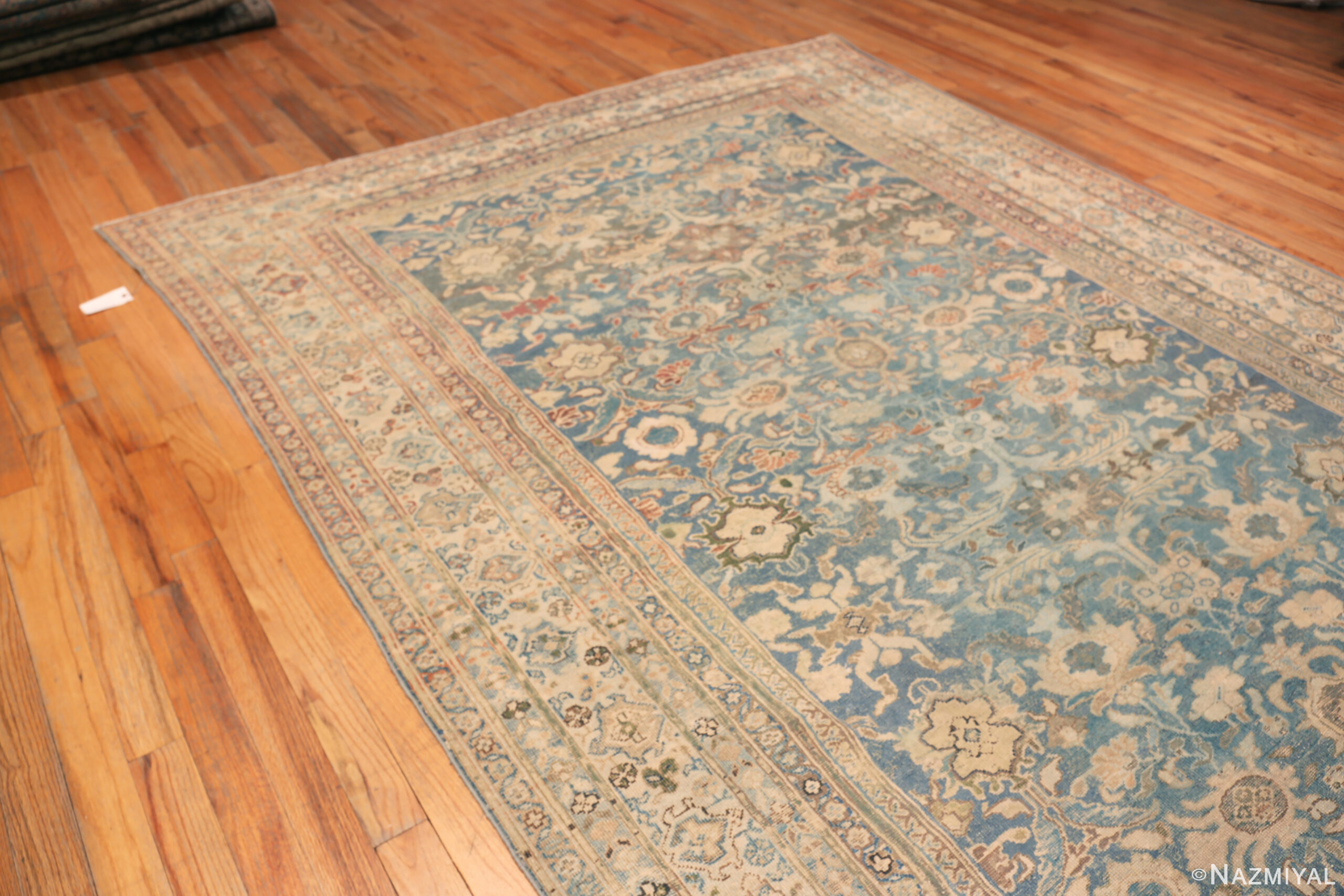
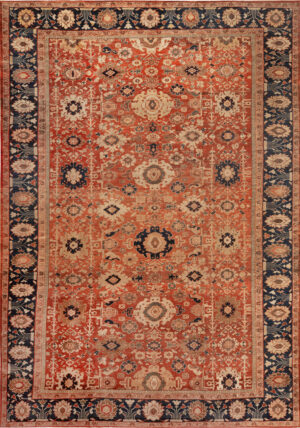
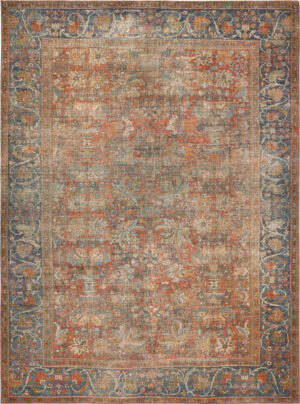
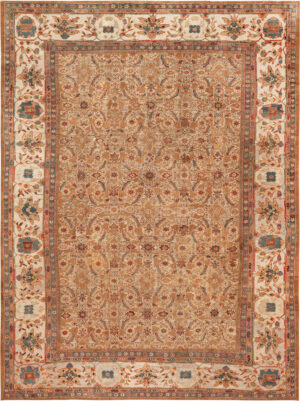
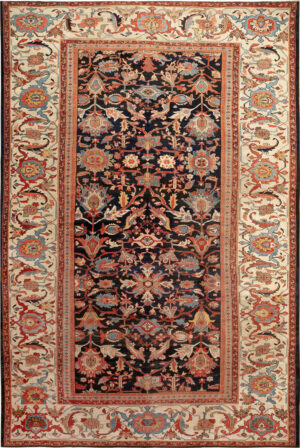
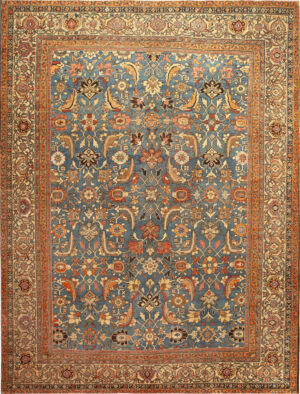
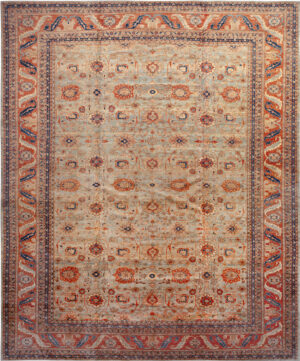
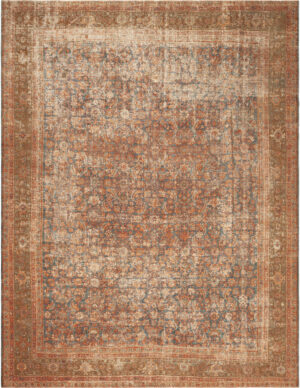
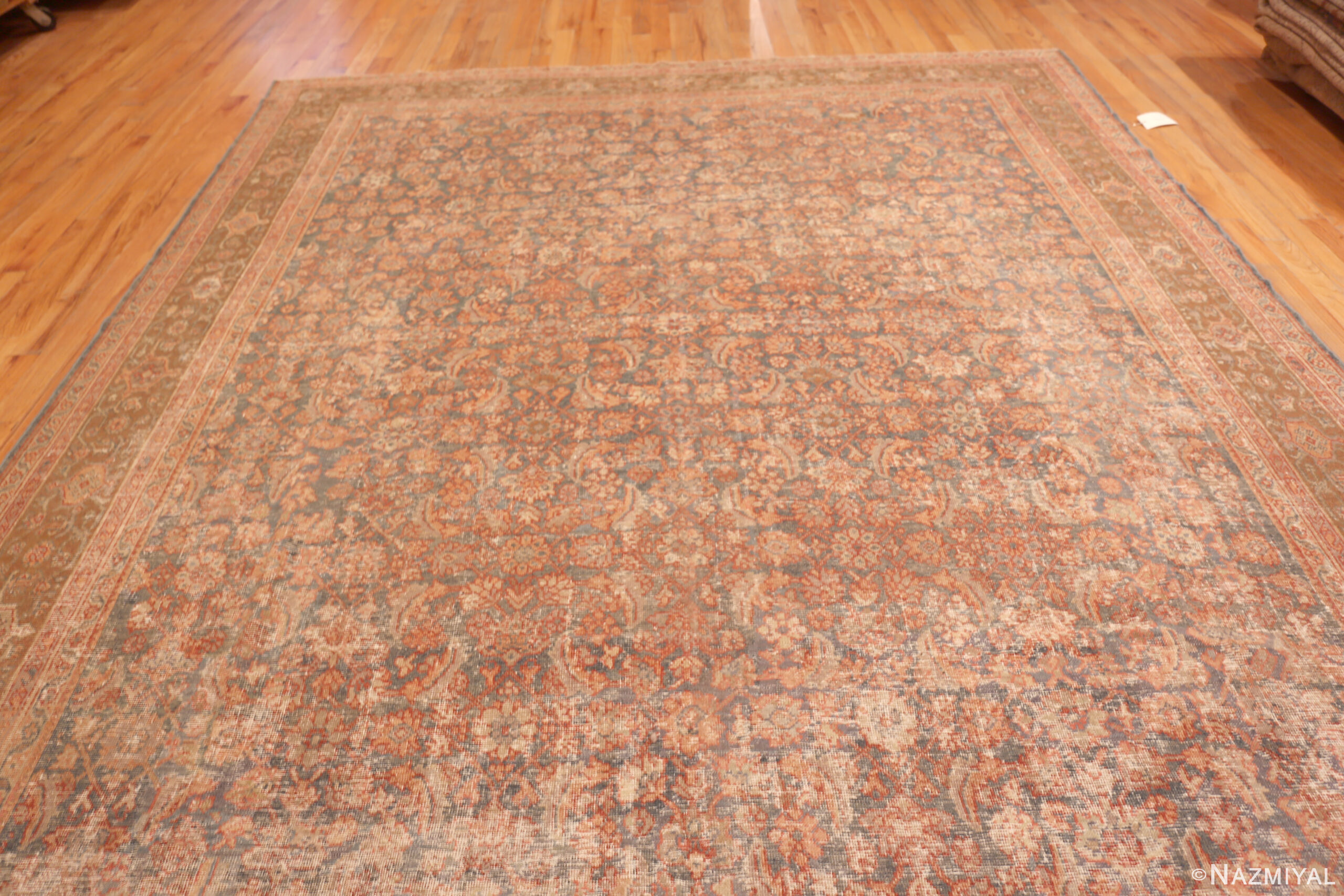
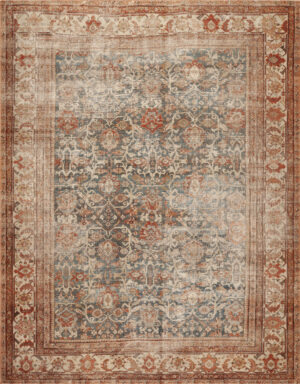
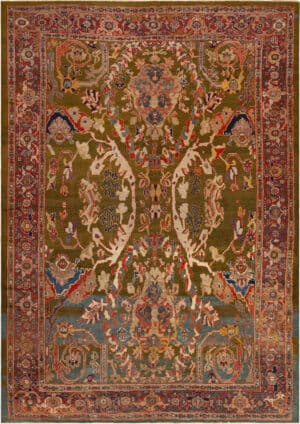
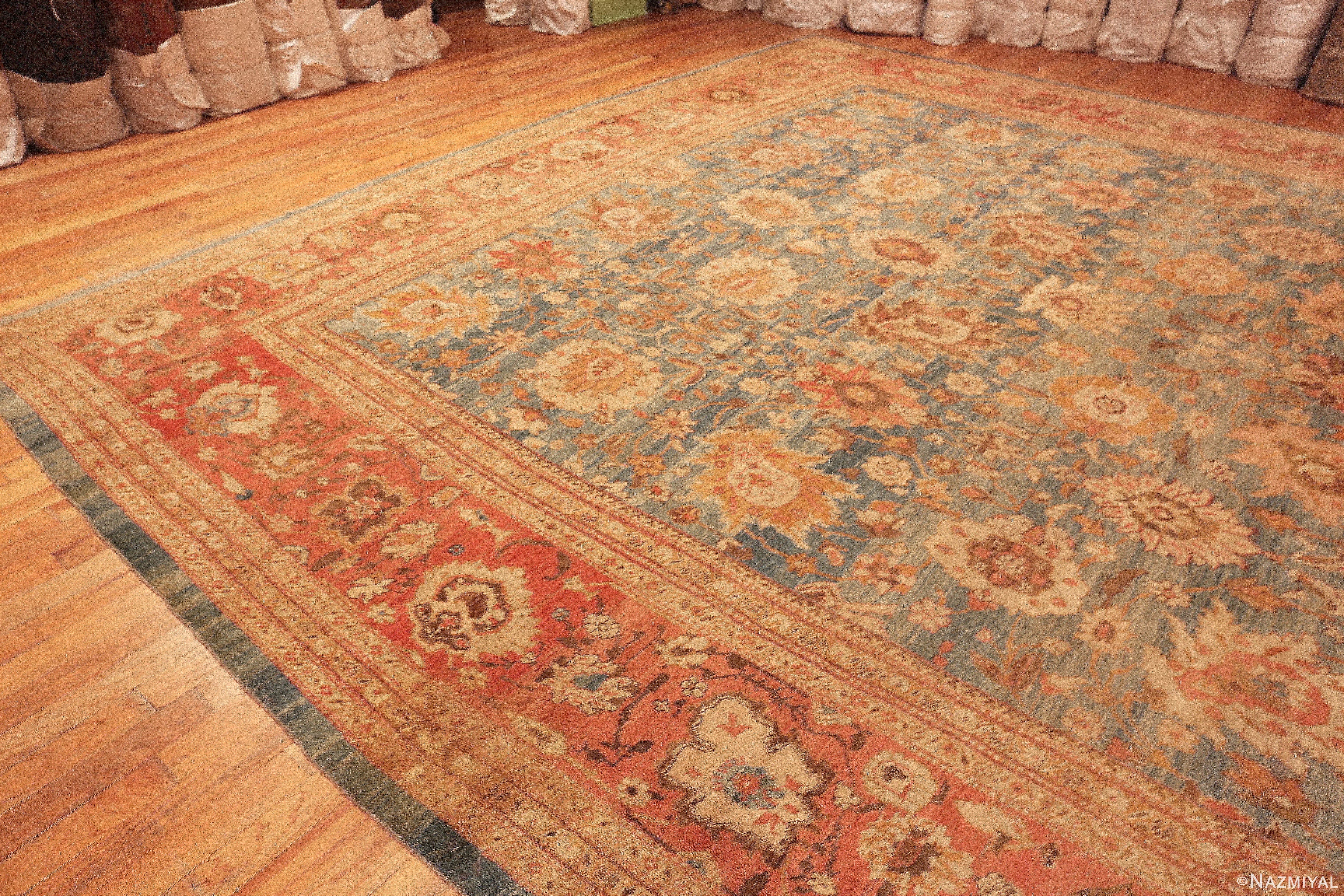
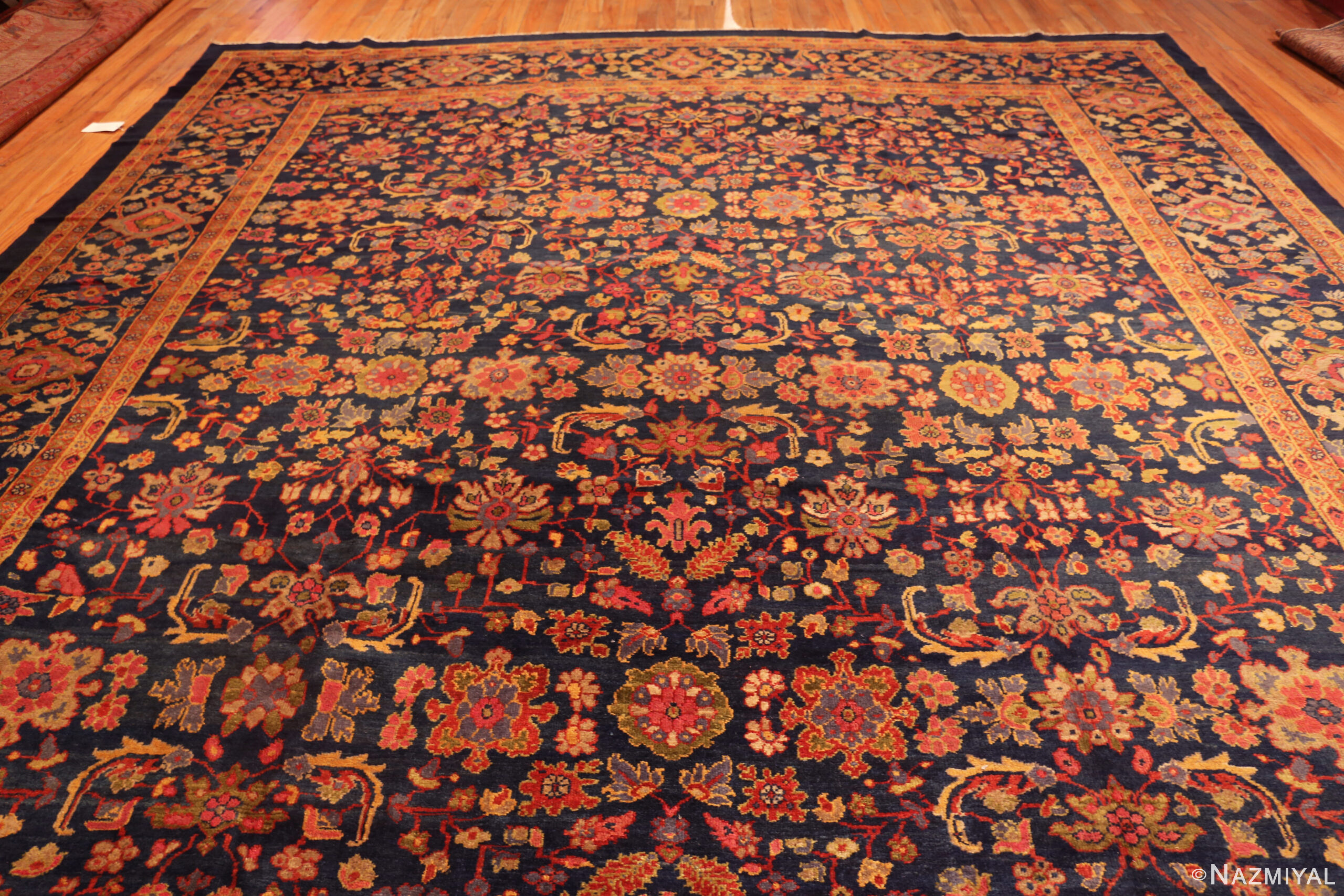
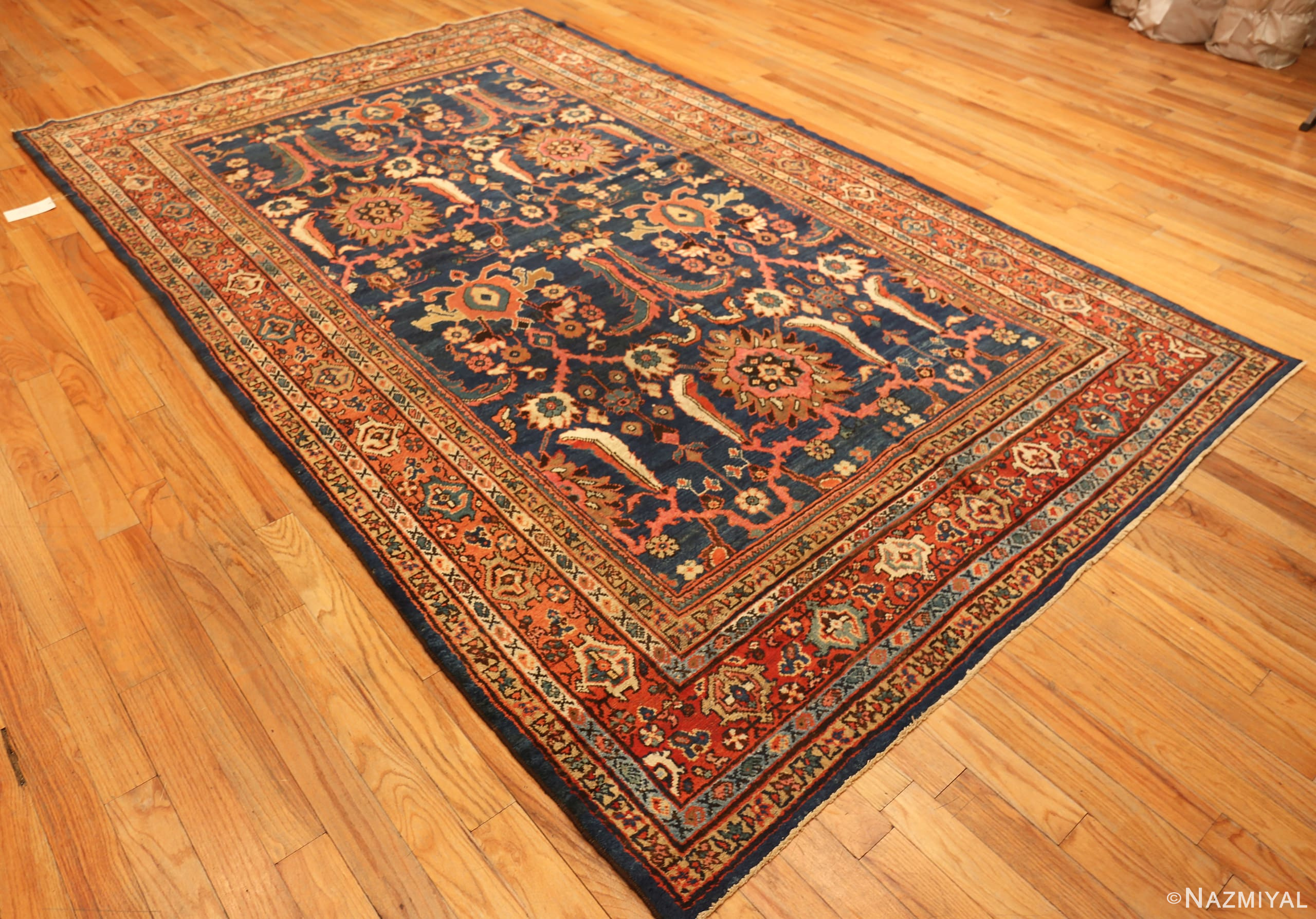
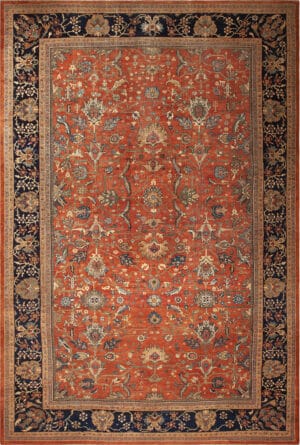
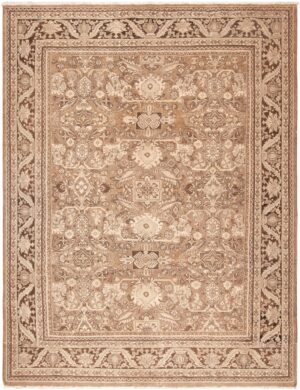
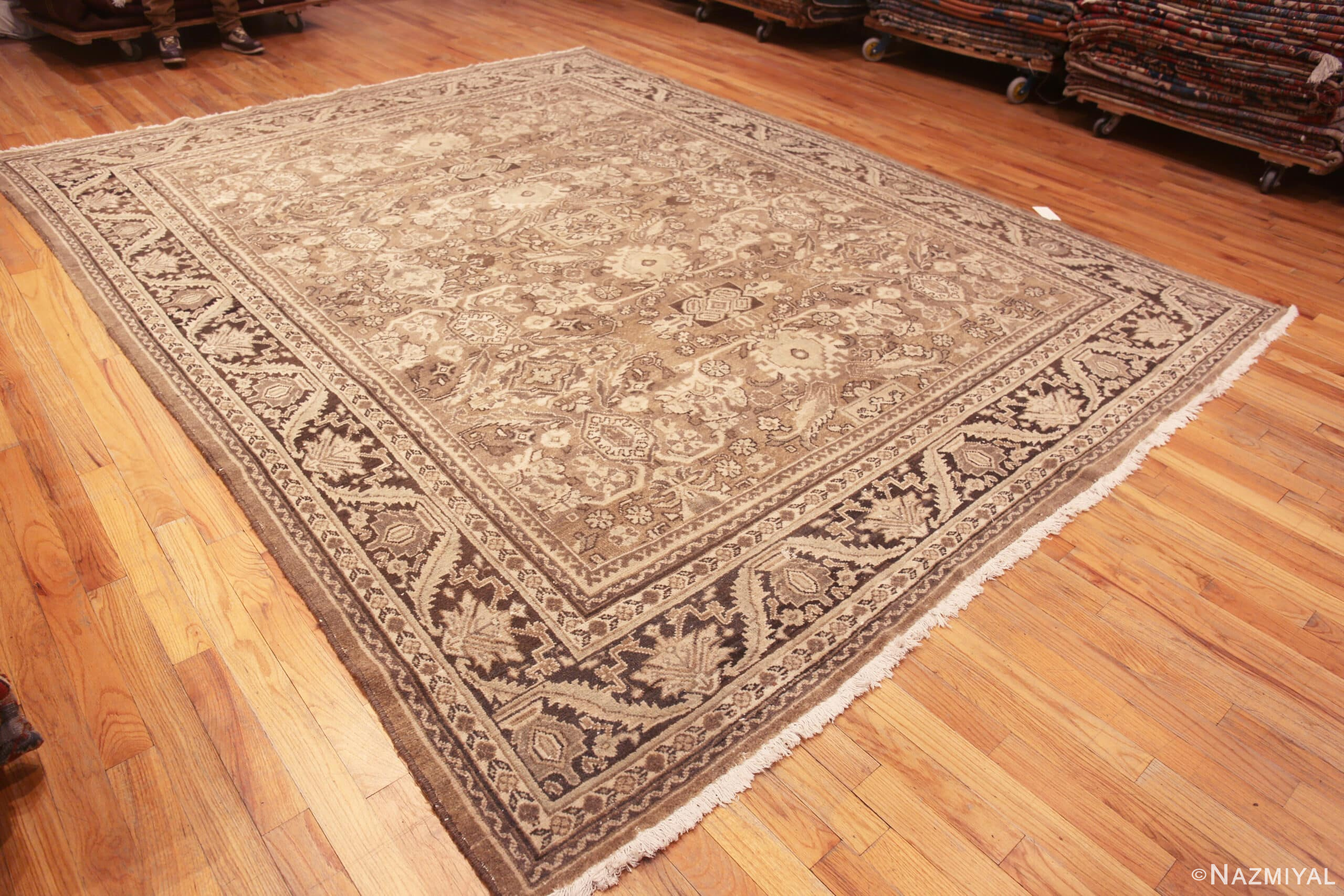
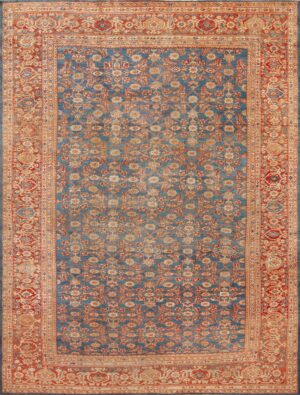
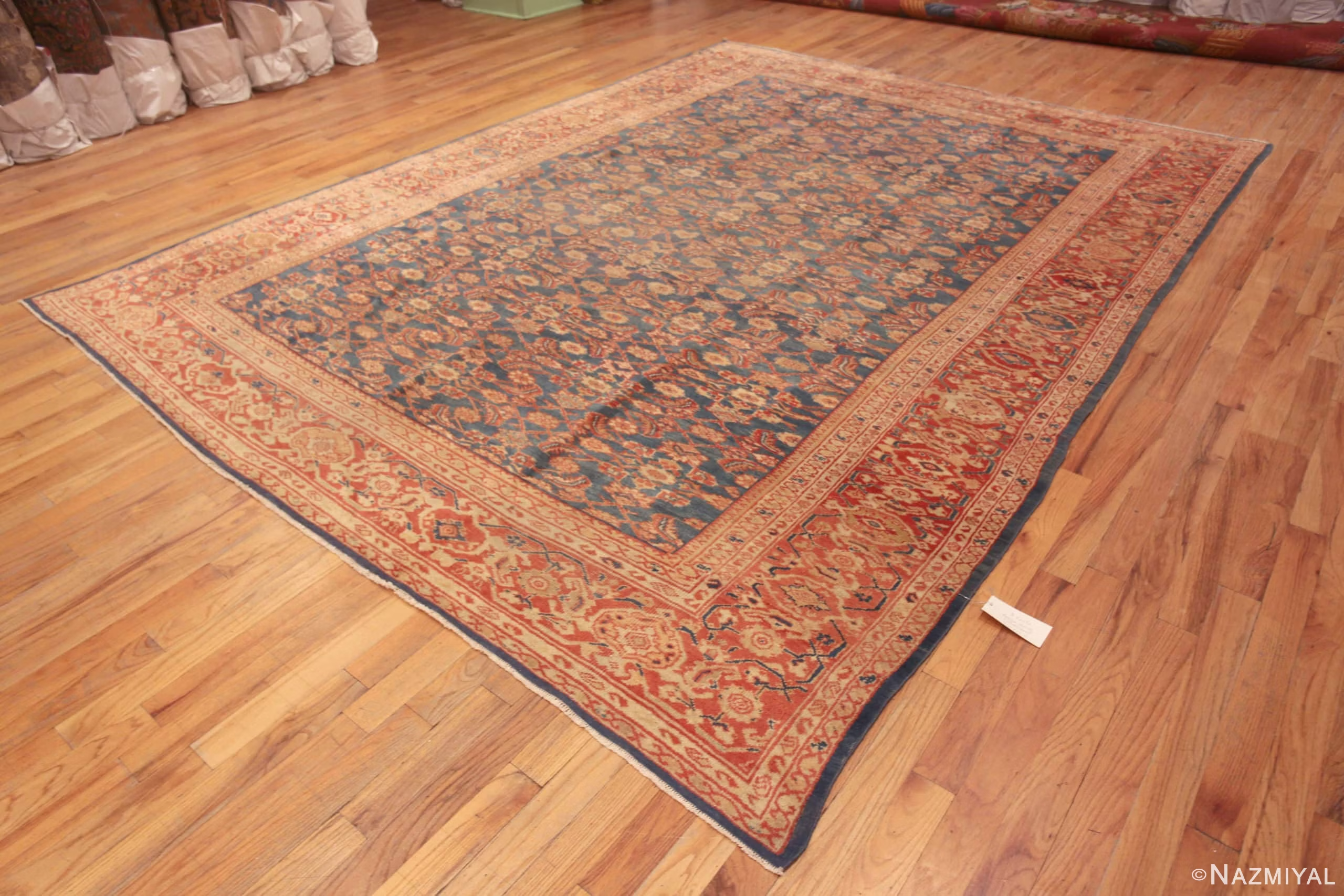
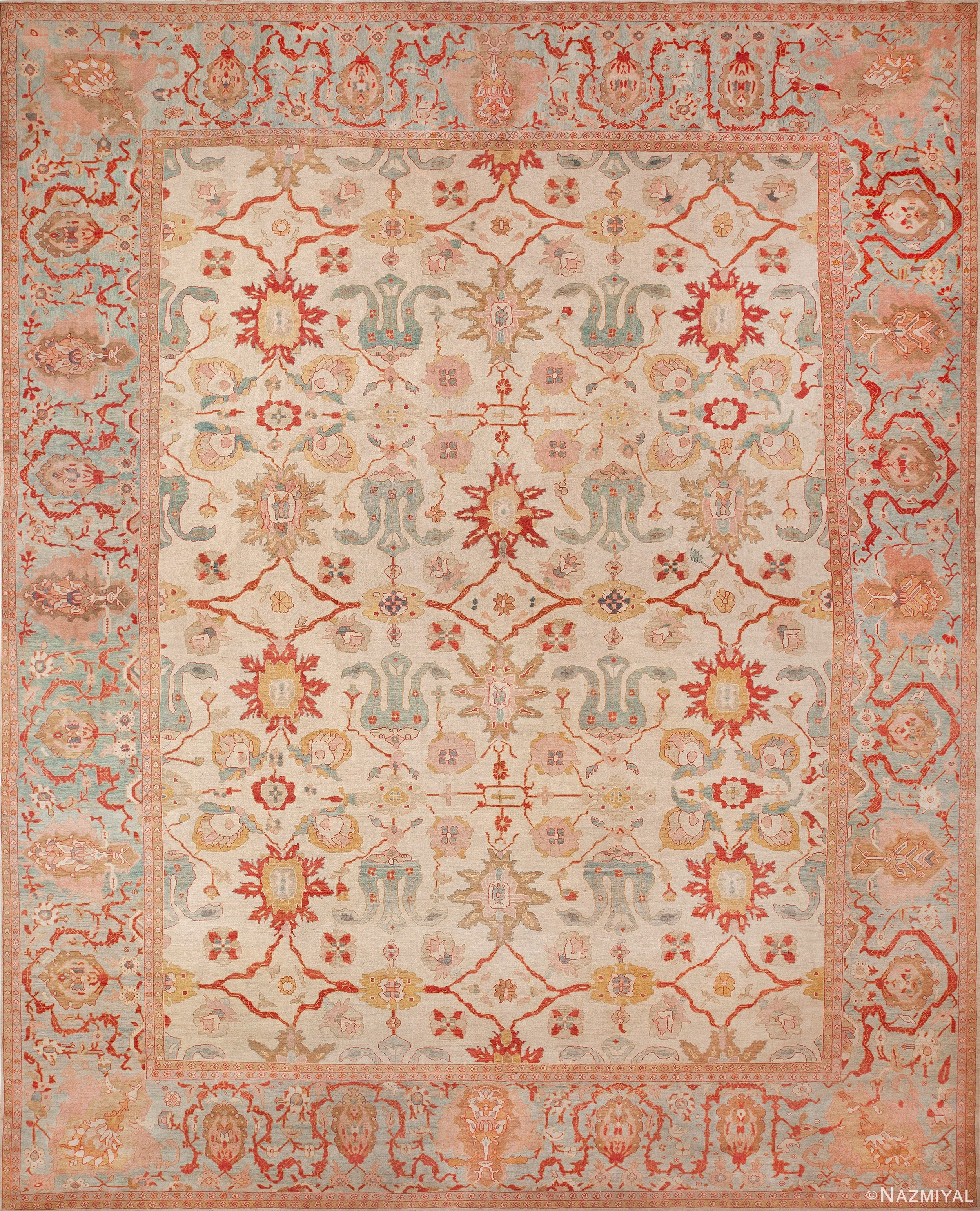
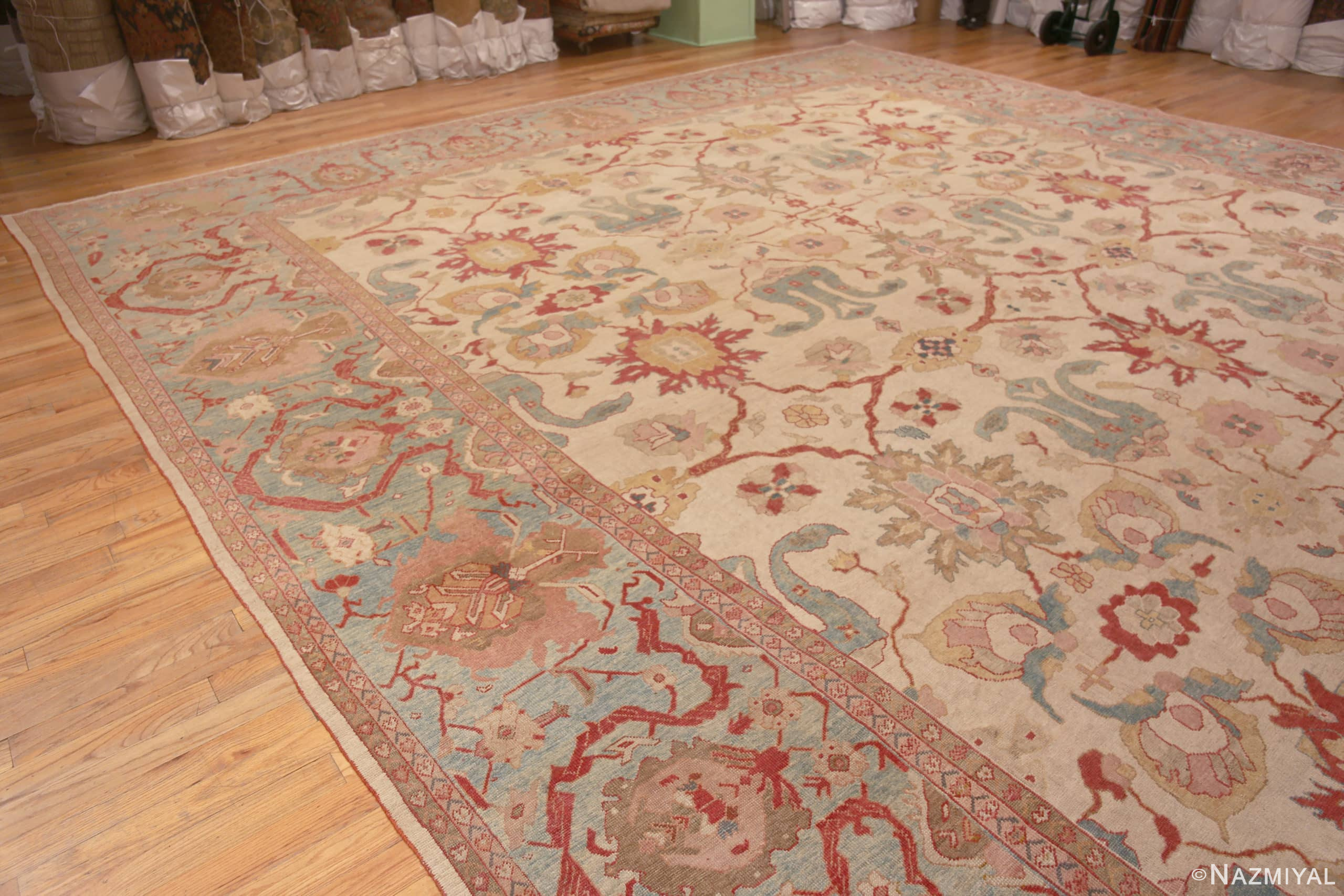
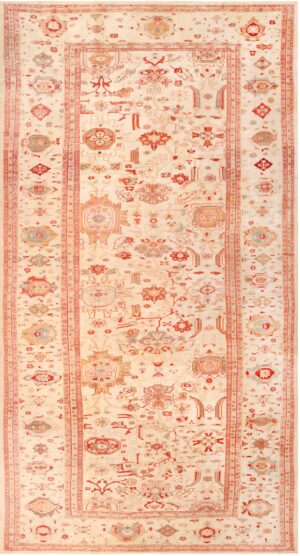
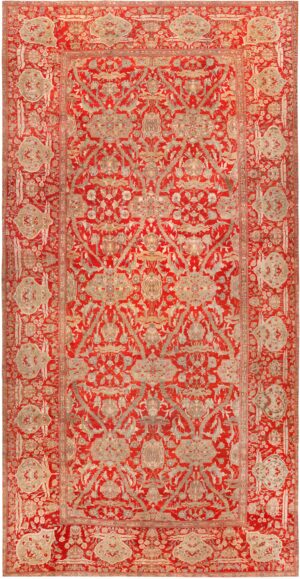
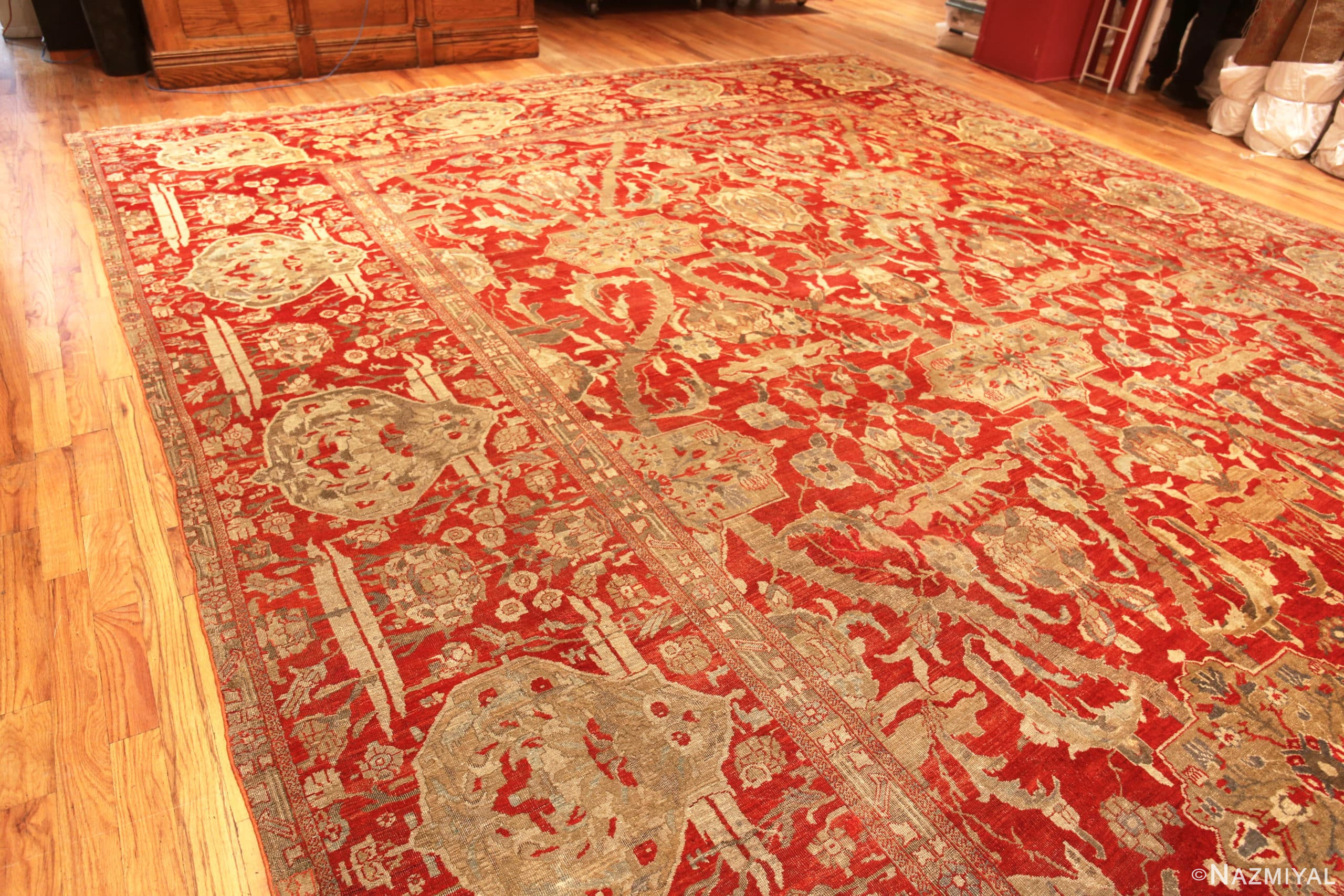
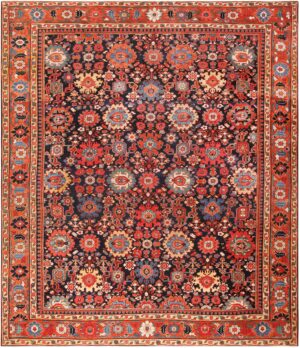
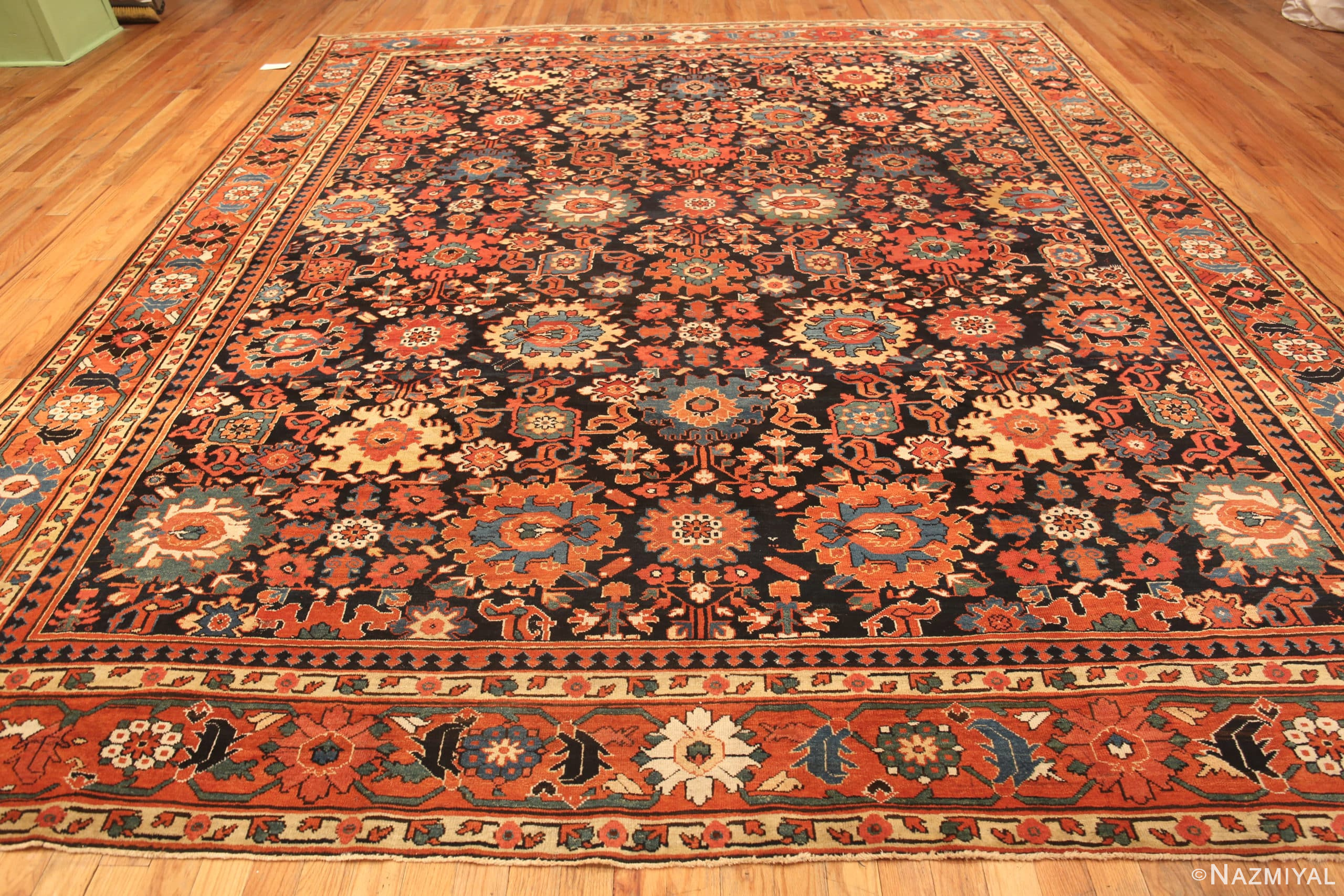
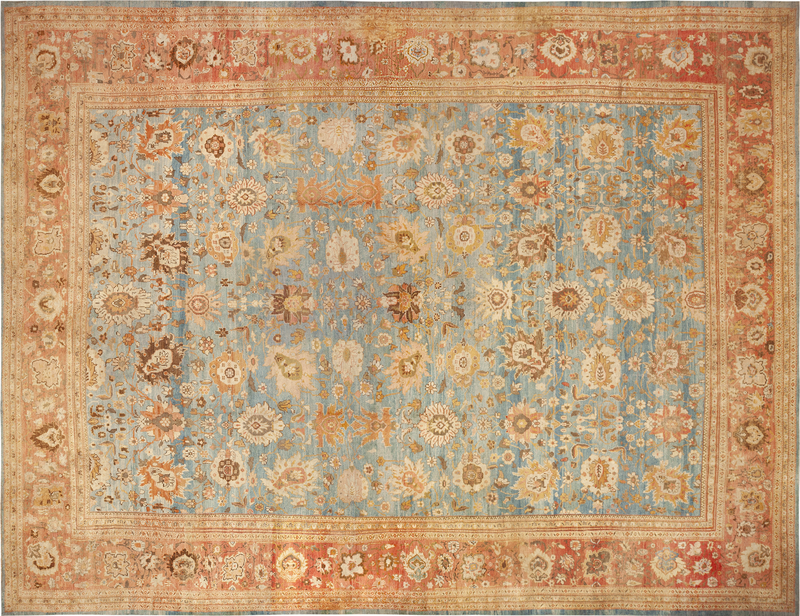
Browse one-of-a-kind Sultanabad rugs from Nazmiyal‘s New York gallery: antique Persian room-size and oversized carpets from the Arak region, known for open allover designs at palace scale. The name is also transliterated Soltanabad or Soltan Abad. The collection covers the whole Arak family — Sultanabad, closely related Mahal rugs and Ziegler Sultanabad pieces. Each carpet is priced individually rather than by the square foot.
Sultanabad rugs are hand-knotted Persian carpets woven in the Arak region of west-central Iran. They take their name from the historic name of the city now called Arak, and you will also see the name transliterated Soltanabad or Soltan Abad. The district’s weaving was once largely local, and from the 1870s onward it was reorganised around international export. That commercial shift changed the design style of the area: carpets were produced for a Western audience, mixing foreign expectations with traditional drawing.
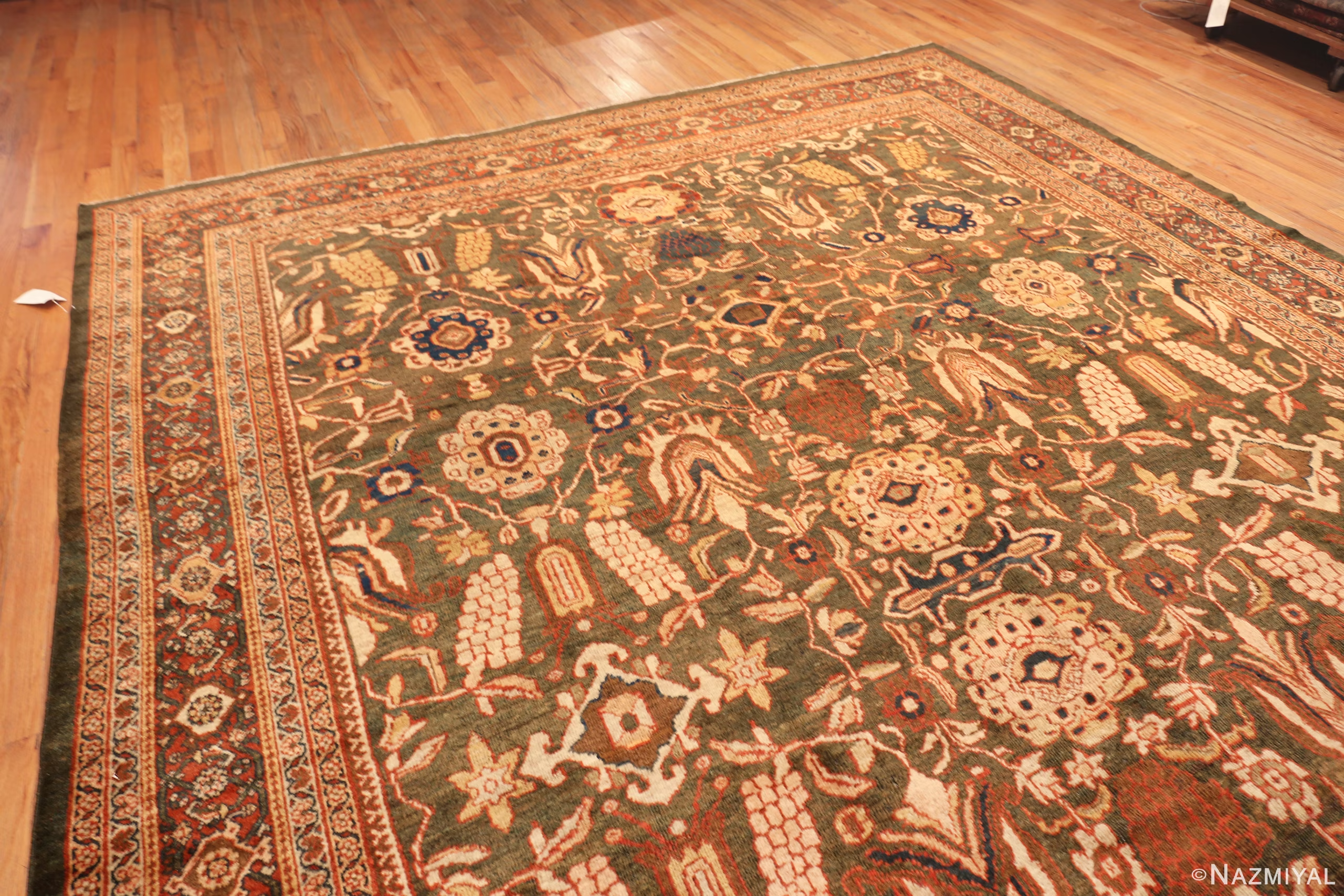
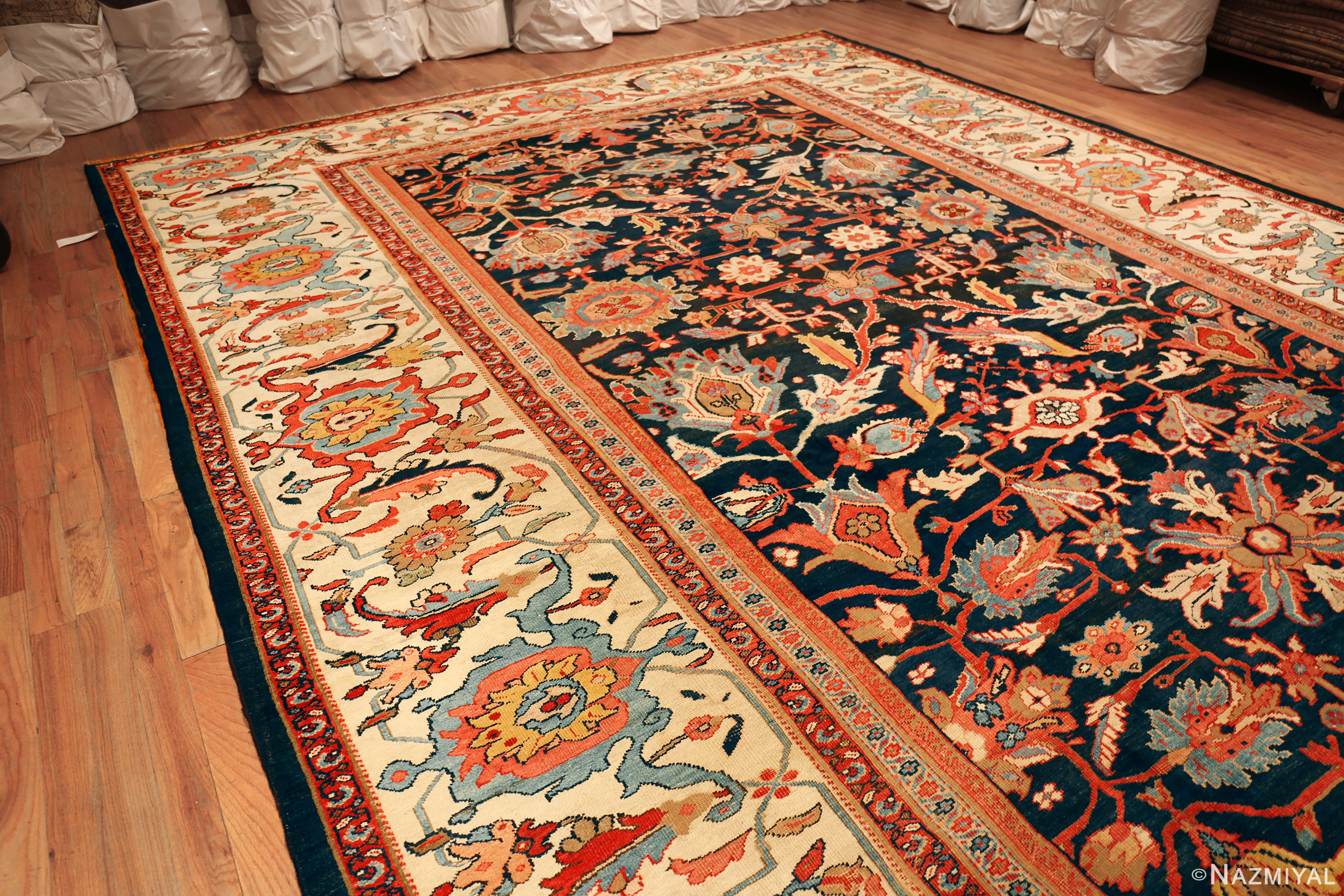
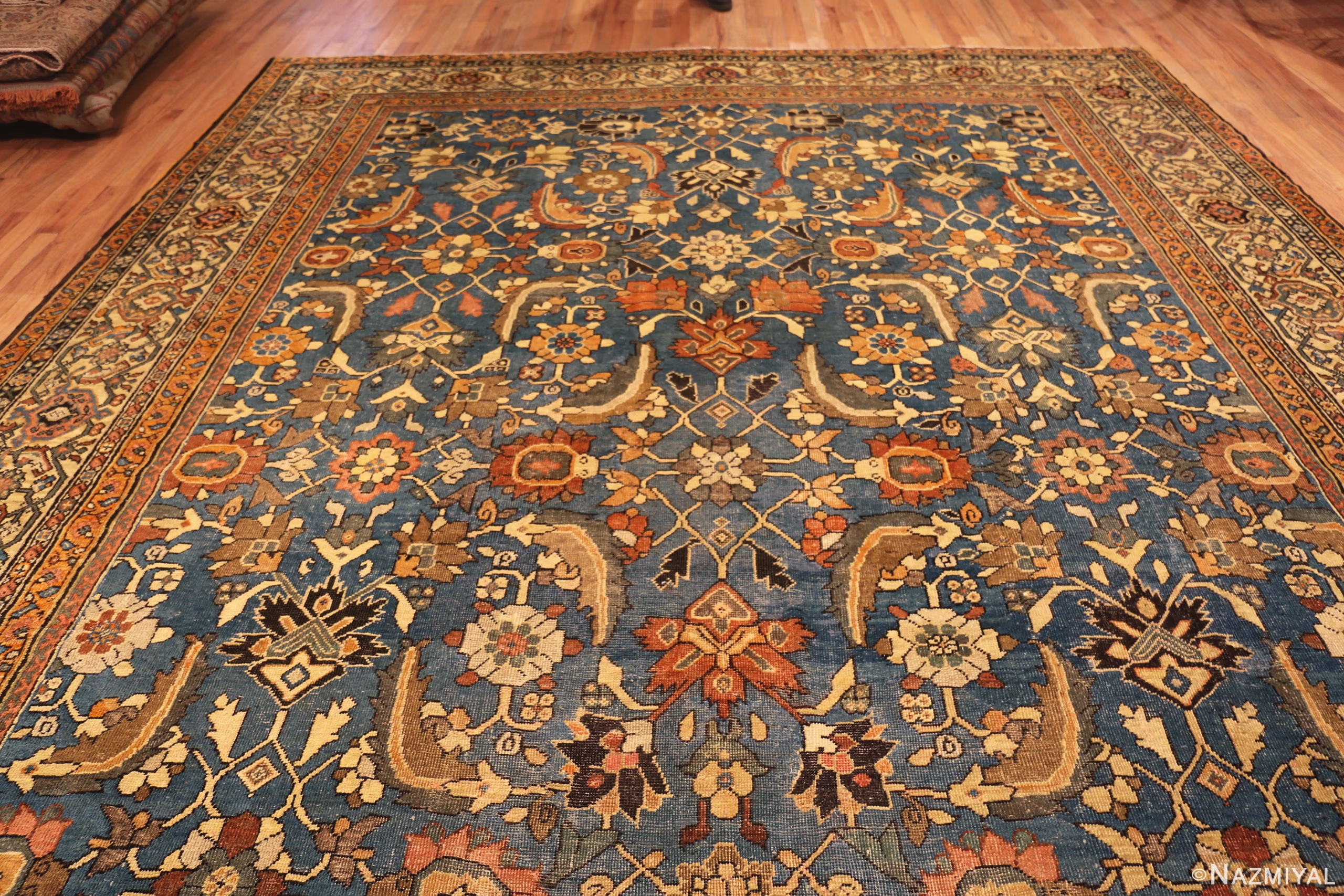
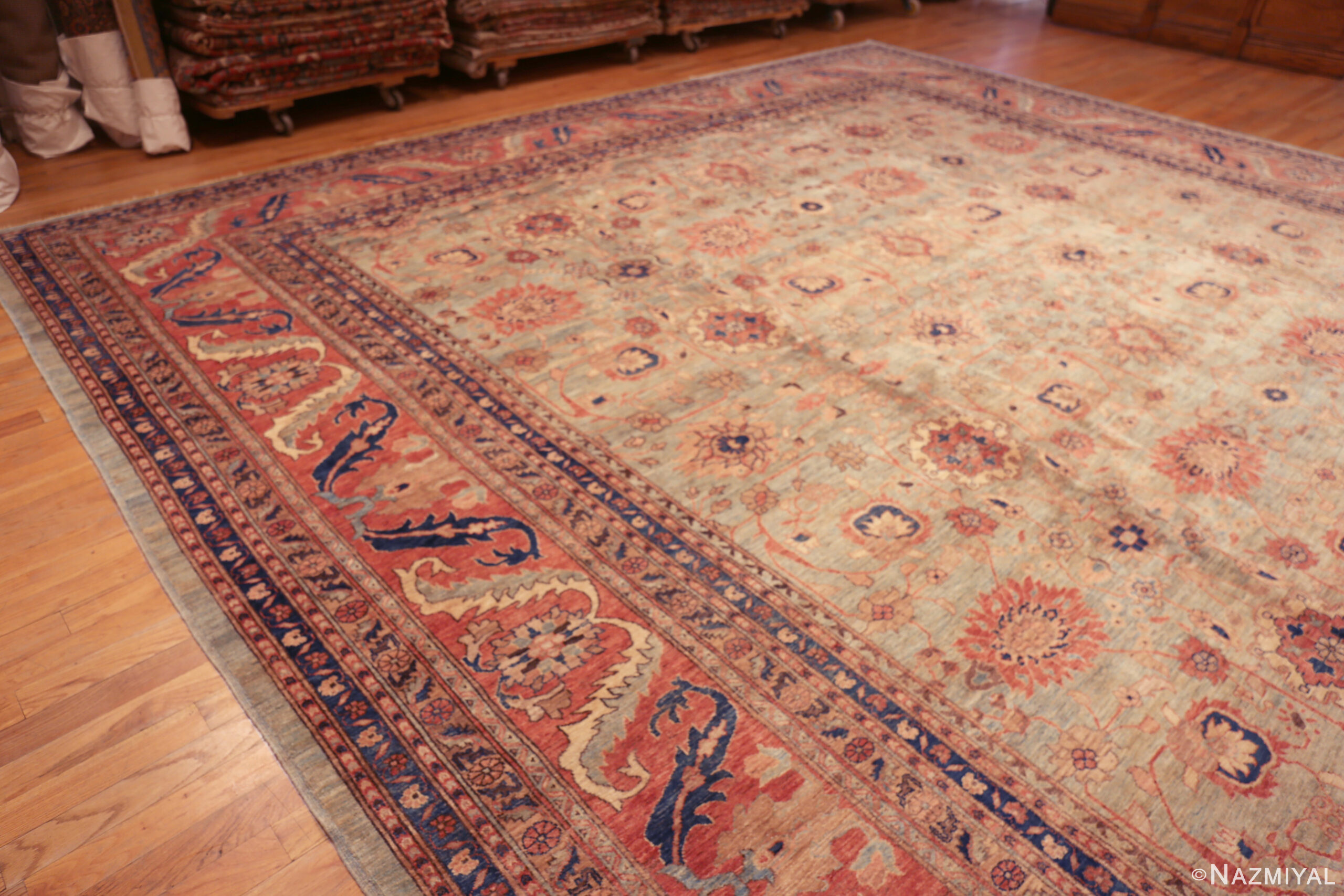
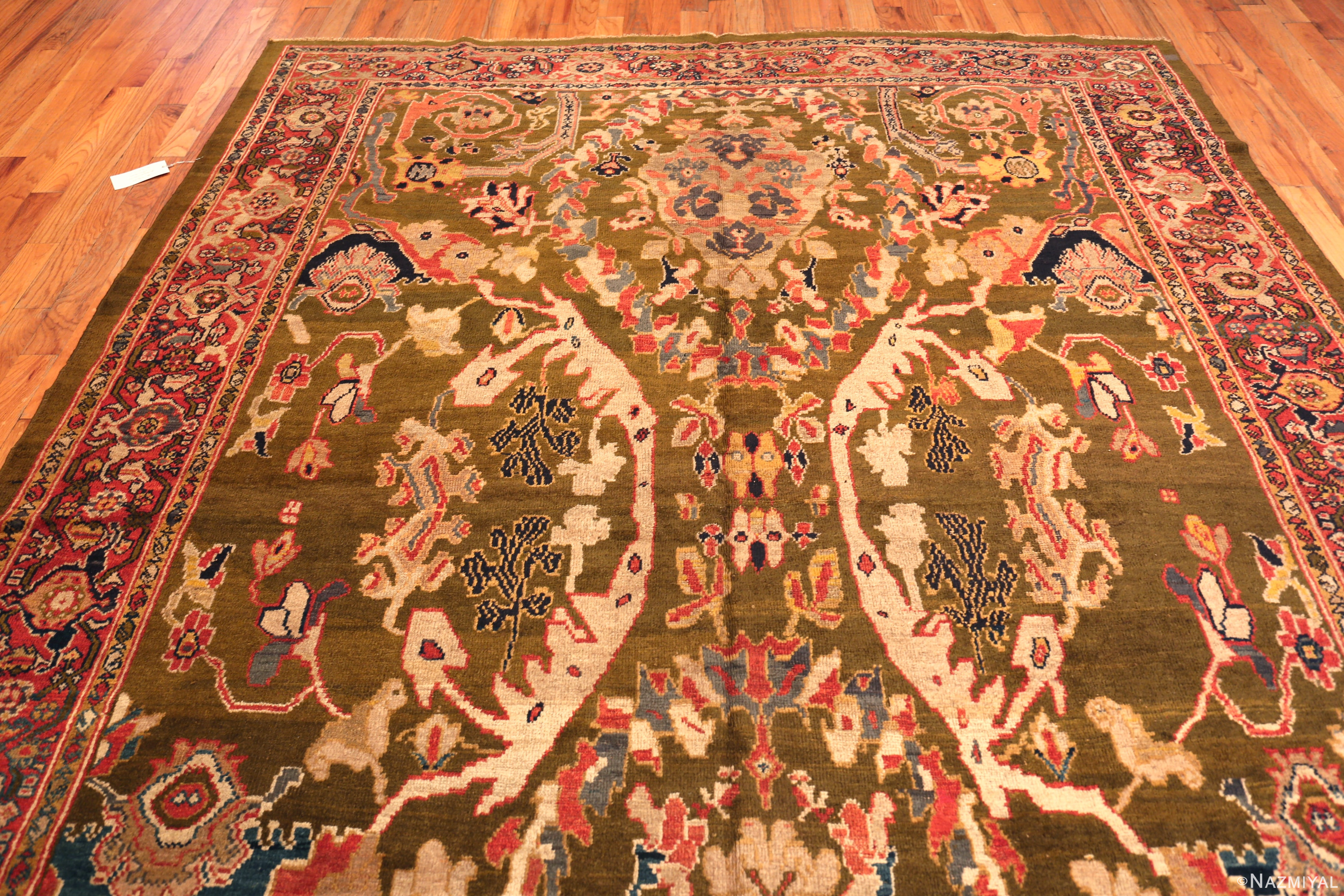
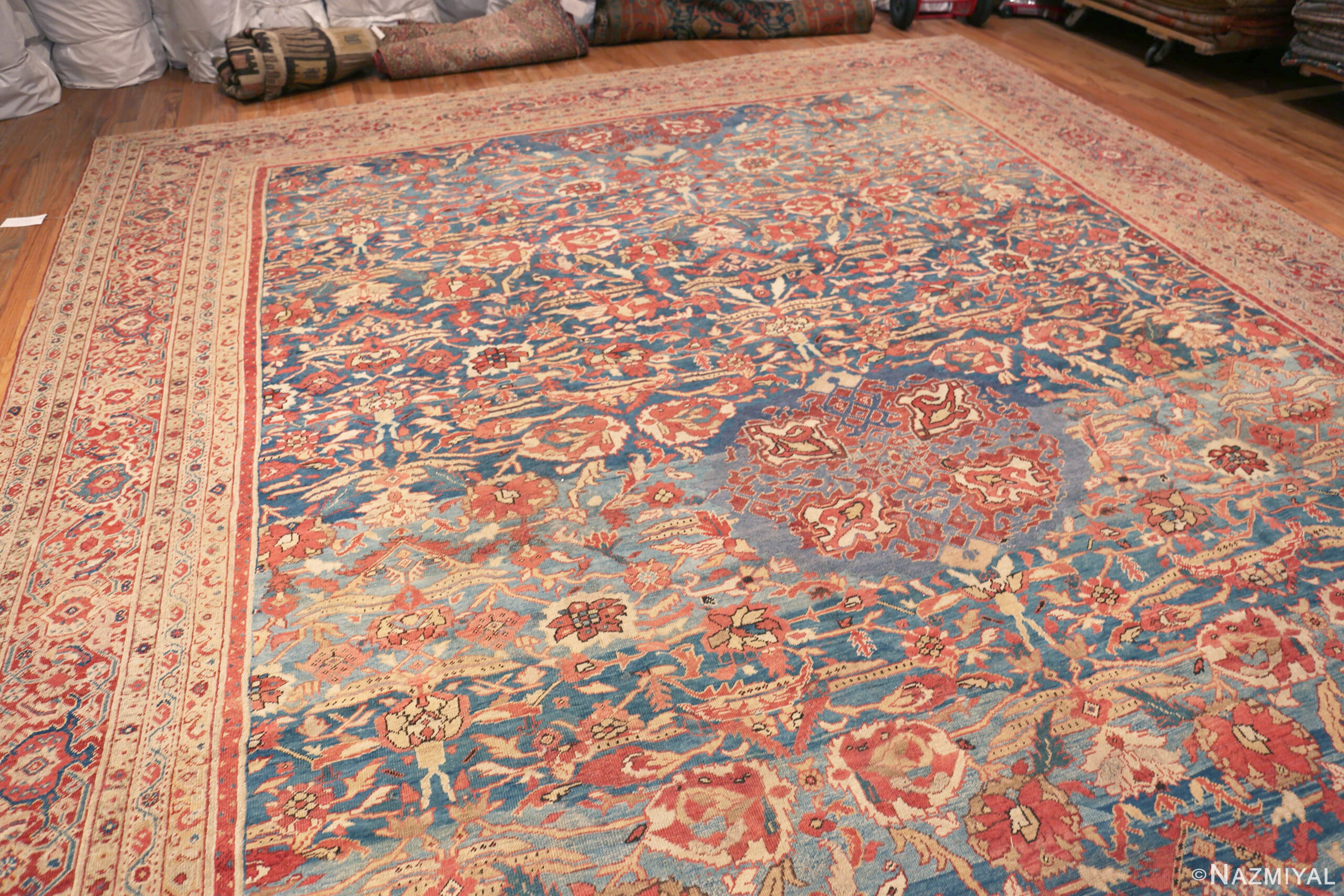
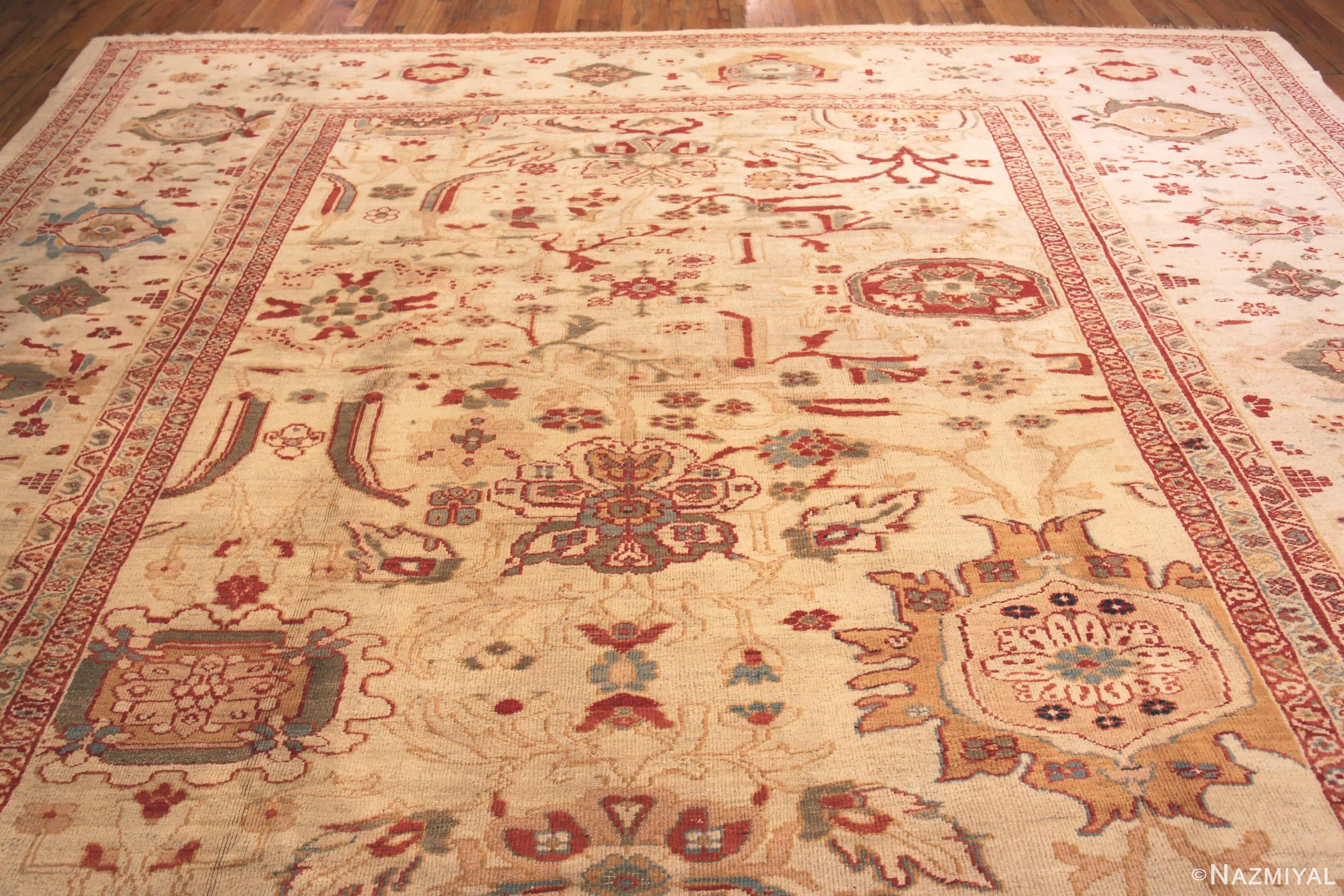
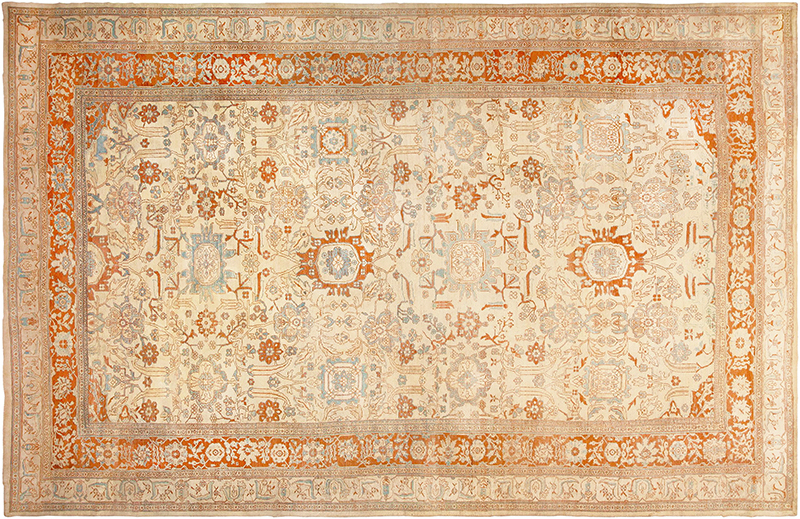
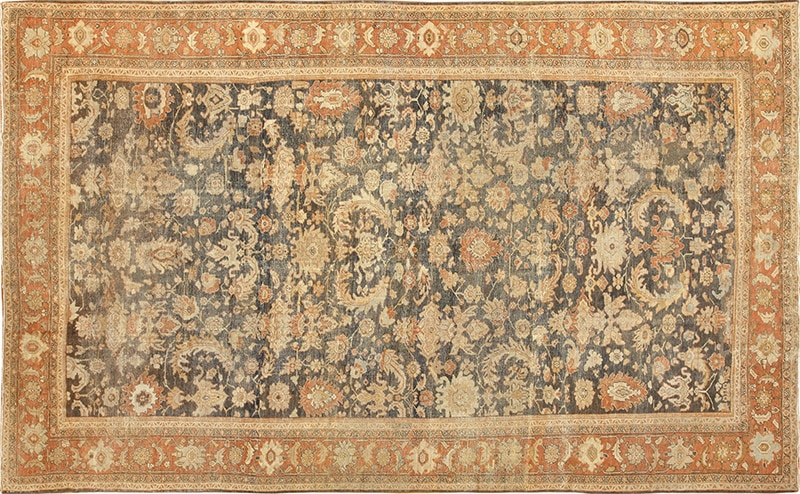
Sultanabad rugs are best known for their scale, woven to fill grand rooms and resulting in impressively sized pieces. Their palettes skew warm, and their large allover patterns are prized for legibility — the drawing organises a floor without demanding attention, and it reads correctly from across a room rather than only up close.
Ziegler Sultanabads and Western Influence
The growing popularity of Persian rugs abroad led to the establishment of Ziegler & Co. in 1883, a carpet manufacturing and export company based in Manchester that opened an operation at Sultanabad specifically to serve the Western market.
Traditional Sultanabad designs were adapted to appeal to European and American buyers, and proportions were sized for Victorian and Edwardian rooms — motifs drawn larger, fields opened up, palettes softened away from the saturated reds and indigos of the classical tradition. That intersection is largely why Sultanabads suit modern interiors so well: they were designed for Western rooms from the start. Because Ziegler describes a commissioning arrangement rather than a village, the same pieces are catalogued as both Ziegler Sultanabads and Ziegler Mahals. See the dedicated Ziegler Sultanabad rugs collection.
Sultanabad or Mahal? What the Two Names Mean
Sultanabad and Mahal rugs are often confused for one another, and for good reason: both come from the same Arak-region looms and share the same design vocabulary. The difference is grade, not geography.
Sultanabad attaches to the finer and generally earlier export-era pieces — better wool, tighter and more consistent knotting, more confident drawing.
Mahal is used more broadly for the commercial grades from the same district: sound, decorative, room-size carpets, with more variation in wool quality and drawing from piece to piece.
Ziegler Mahal and Ziegler Sultanabad both refer to production associated with the Ziegler export programme.
The boundary is a trade convention rather than a rule, and dealers apply it inconsistently — the same carpet can honestly be catalogued either way. Practically: judge the rug in front of you on wool, weave and drawing, and treat the label as a description of quality rather than a place of origin. Everything we hold from this district, under either name, sits in this collection.
Sultanabad Design Styles
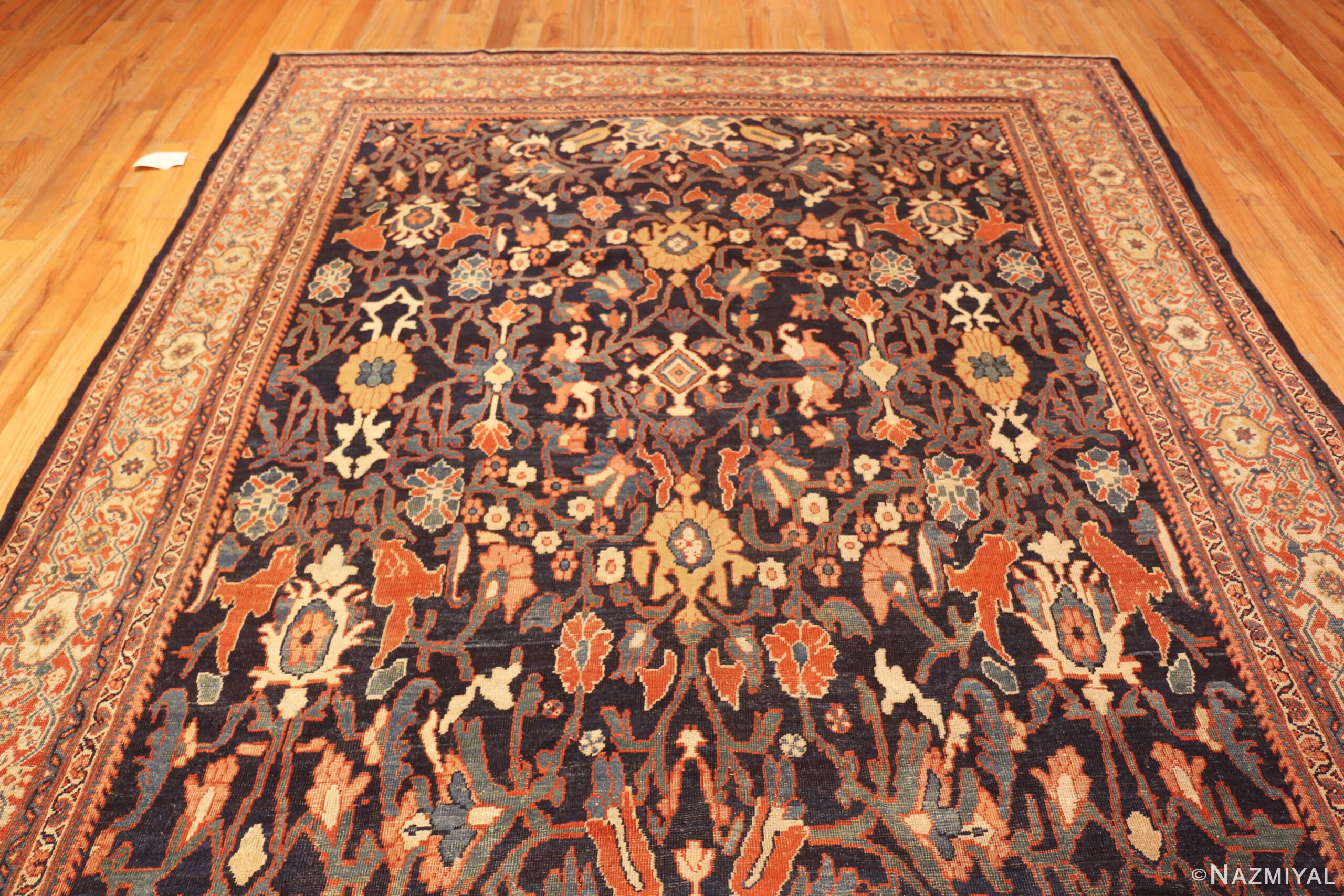
Sultanabad rugs are, for the most part, allover compositions. Medallion layouts are not unheard of, but they are the minority. Within that, a handful of pattern systems recur:
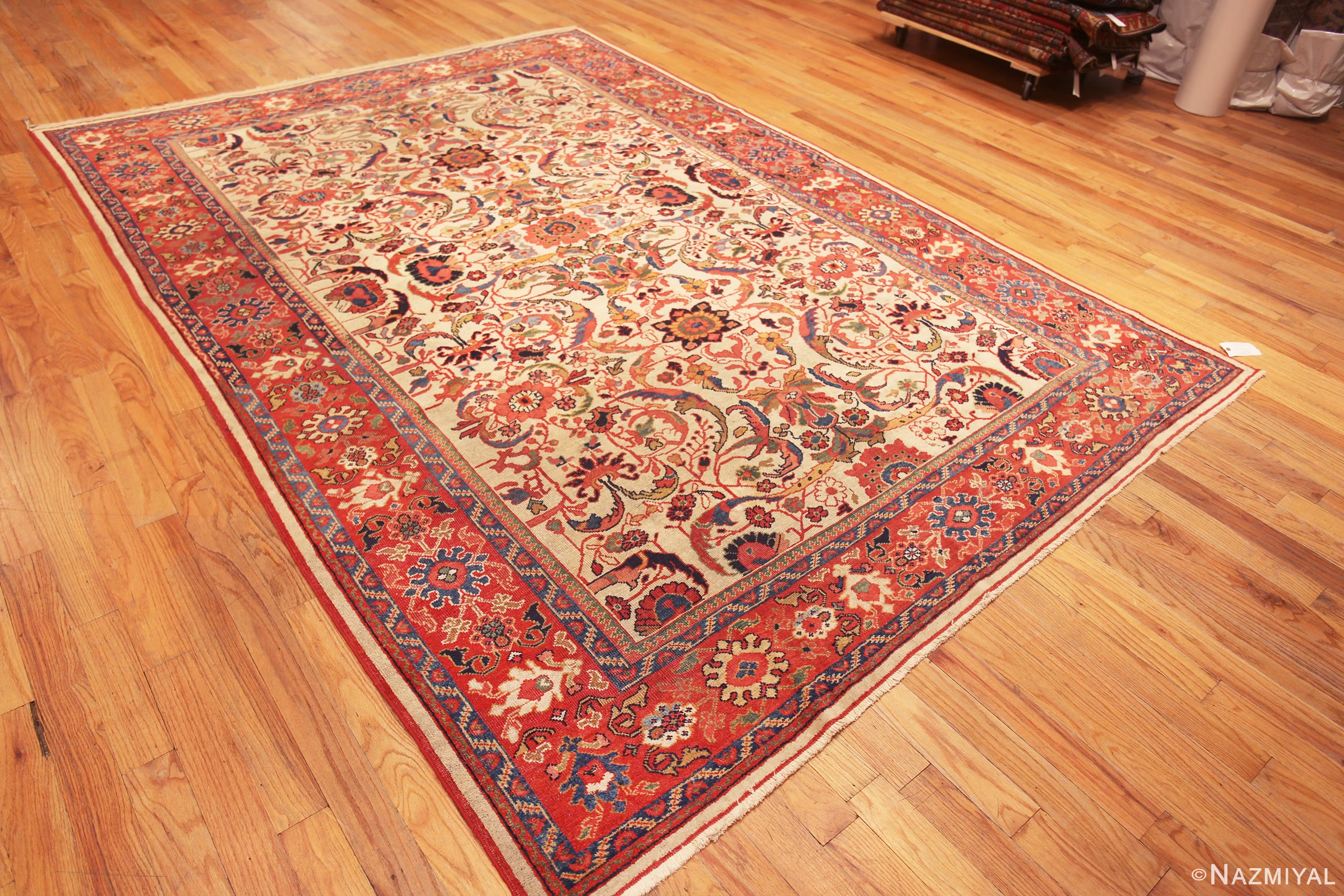
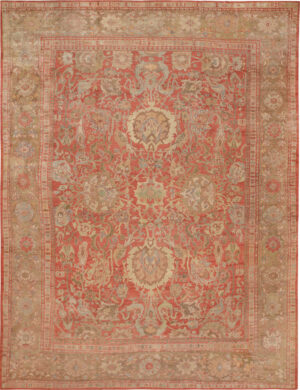
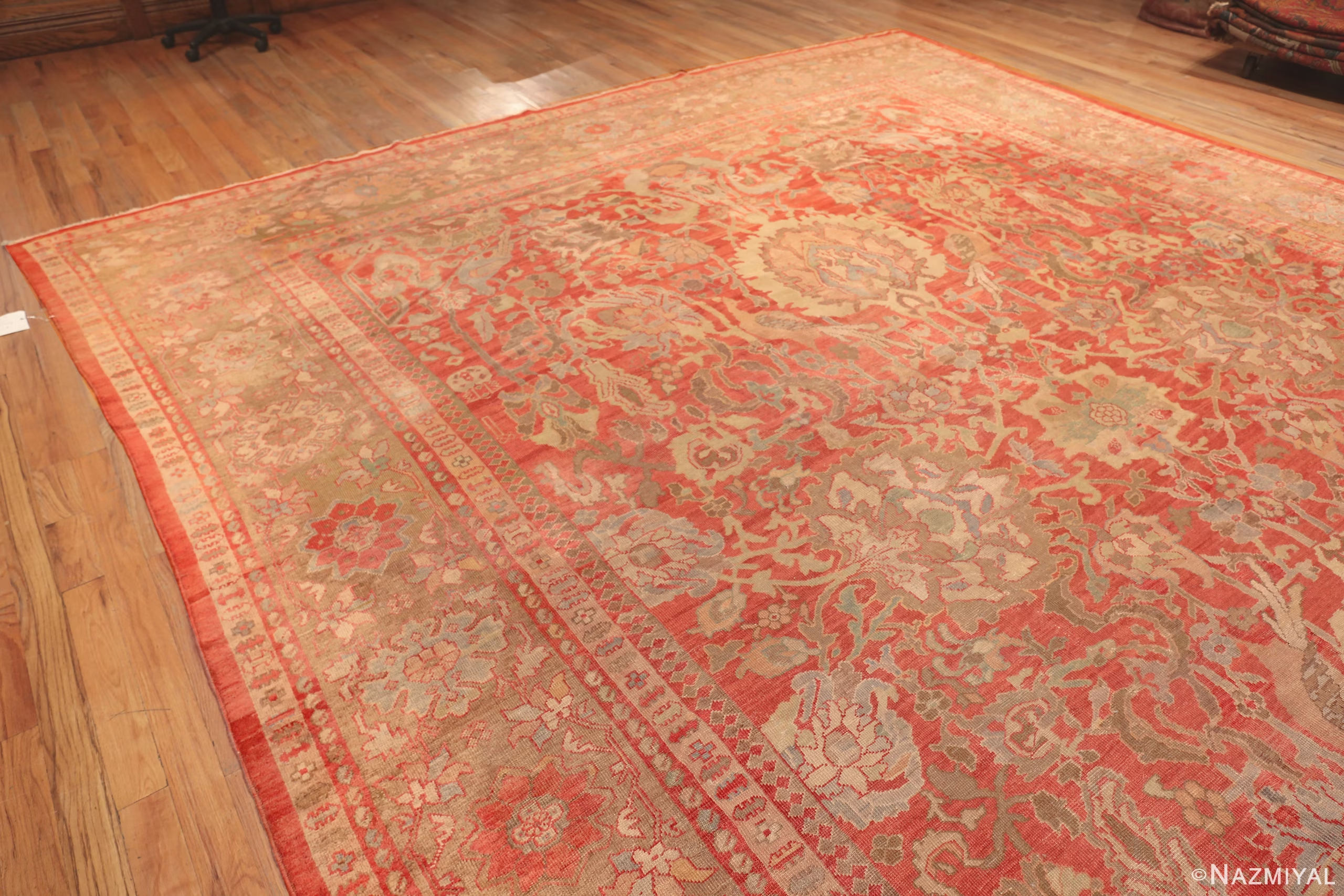
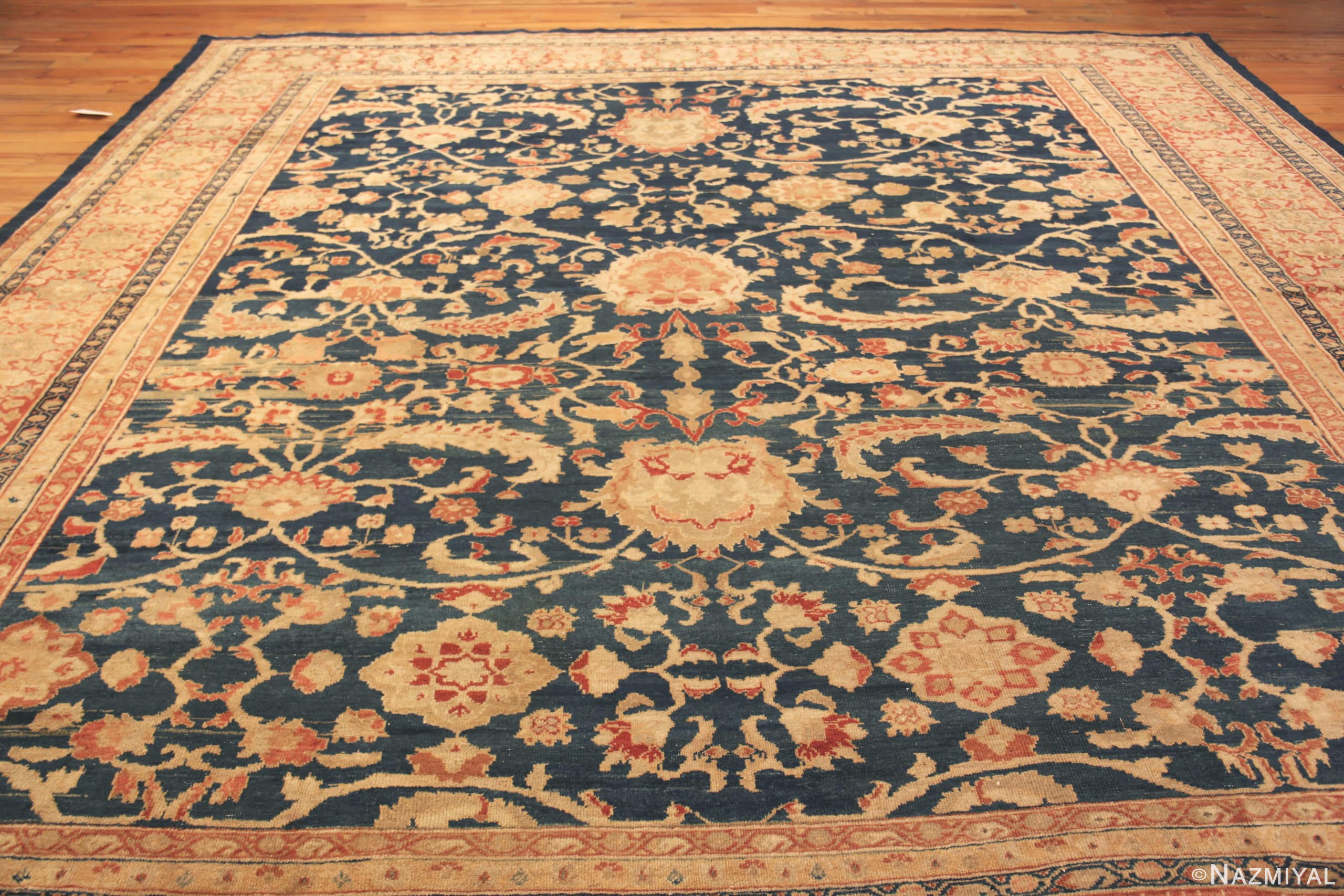
Palmette and vine scroll — the category signature: broad flowering forms linked by curving stems across the whole field.
Herati — a repeating diamond framed by curling leaves, drawn here at a larger and looser scale than in finer city weaving.
Mina Khani — a repeating lattice of circular flowerheads, calm and highly regular.
Central medallion — a formal centred layout, useful under a dining table or in a symmetrical room.
Colour Palette
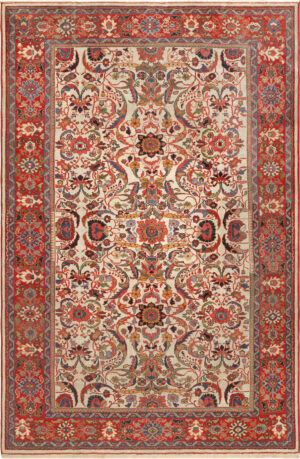
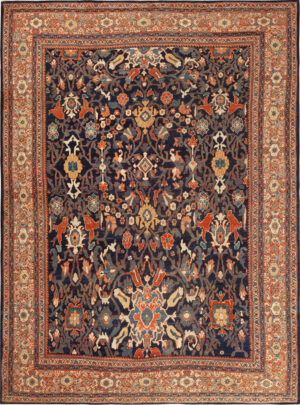
Sultanabad rugs favour a warm palette of madder red and rust, with soft green or indigo appearing occasionally. The most sought-after pieces are those with ivory grounds: the contrast between a light neutral and darker, vibrant drawing produces crisp, legible designs, and good ivory-ground examples are scarce.
Scale and Proportion
The looms these carpets were made on were set up for export furnishing, so the surviving population skews large. Room-size carpets in the 9 by 12 to 10 by 14 range are the common format, and genuinely oversized pieces of 14 feet and up are well represented — small Sultanabads exist but are unusual, and scatter sizes are rare. The scale affects the drawing too: motifs are scaled up to keep the composition proportionate.
If you are shopping by dimension, start with 9×12 rugs, then move up through large rugs and palace-size carpets. Proportion decides whether a Sultanabad works: the drawing is scaled for a big field, and a piece that is under-scaled for its room never quite settles.
How to Judge an Antique Sultanabad
Sultanabad-style rugs are woven new today in several countries, so telling an authentic antique from a modern interpretation matters when you are buying or selling. It is not settled by any single test — a verdict comes from weighing several factors together. Every piece in our collection is vetted by our own specialists, and each one we sell can be documented with a certificate of authenticity.
Construction
Knot character, the back of the weaving, the selvedges, and fringe that continues from the warp rather than being sewn on. This distinguishes a hand-knotted carpet from a machine-made or tufted one and narrows the weaving tradition. Arak-region carpets typically show wool pile on a cotton foundation with relatively open warp spacing, which gives them their characteristic drape.
Materials
Wool handle and strength, and how the pile has worn. Good Arak wool stays lustrous and resilient even after age; brittle or over-processed wool is a warning. Fibre identification beyond the obvious is a laboratory question rather than a showroom one.
Origin and Attribution
Where a carpet was woven is inferred from structure together with design vocabulary, palette and dye character. It is comparative, probabilistic specialist work, and it is never settled by a knot count or a label alone.
Age
Wear pattern, patina, dye behaviour and structural conventions give an estimated range rather than a date. Layered colour with genuine tonal movement — including abrash, the natural variation between hand-dyed yarn batches — generally reads older than flat, uniform saturation. Some export-era Arak carpets used early synthetic dyes that have shifted with time, and orange-leaning reds are the usual tell, so colour deserves its own look. A rug that carries the Sultanabad vocabulary but feels uniform, chemically bright and cosmetically new is a later decorative interpretation rather than an antique regional carpet.
What Drives Value
Value is not driven by any single feature. Every Sultanabad is different, and these are weighed together:
Drawing quality — the single biggest variable. Confident, well-spaced drawing that holds together across a large field separates a great Sultanabad from an ordinary one.
Scale — oversized and palace-scale carpets in sound condition are scarce, and the rarity holds demand.
Ground colour — ivory grounds command a premium; strong greens and unusual greys are also sought.
Colour behaviour — depth, natural variation and balanced contrast, rather than flat saturation.
Foundation integrity — condition is judged structure first, cosmetics second. A sound foundation with even low pile beats a plush rug with a failing structure.
Ends and selvedges — original, or competently restored; improvised repairs disguised as finishing are a discount.
Period — antique export-era weaving against later production.
Provenance — where it applies, a credible history and reputable handling.
“People buy a Sultanabad for the size and then live with the drawing. The field on a carpet this large is mostly open, so what you are really judging is spacing — whether the weaver let the palmettes breathe or just filled the space she had. Stand at the far end of the room before you look at anything up close, then go and see how the border turns its corners. That is where a big carpet tells you whether it was drawn or only woven.”
Because Sultanabads tend to be large, they need a space that can accommodate them properly — they should not overwhelm the room, and they do their best work as substantial, quiet features in interiors with a restrained order.
Despite their size and ornamentation they are surprisingly versatile. In traditional rooms their conventions support symmetry and proportion; in modern rooms they soften hard architecture while keeping order; in layered, collected interiors the right Sultanabad unifies mixed periods with a calm, structured floor. Choose size and drawing scale first, then colour. Designers working on client projects can register for our trade program.
Since 1980, Nazmiyal has hand-selected antique, vintage and decorative rugs from our New York gallery at 31 East 32nd Street, where designers, collectors and private clients view pieces by appointment. Every rug is vetted by our own specialists, and we help clients choose by scale, condition, room use, drawing character and budget, with guidance for collectors, interior designers and first-time buyers.
Clients work with us for authenticated rugs, specialist advice, accurate measurements, detailed photography, condition guidance, white-glove delivery and a three-day return policy. Shipping within the USA is free. International orders ship worldwide and are quoted individually. To see a Sultanabad in person or ask which pieces suit your room, call (212) 545-8029 or contact a specialist.
             Posted on Google        Clay Pendergrast     Trustindex verifies that the original source of the review is Google. My wife and I are so pleased with the antique Uzbek Bokhara Rug purchased from the Nazmiyal Collection. Not only does the rug have a spectacular design, it also was very reasonably priced. The way it transforms our living room, reconciling the classic modern furniture with the 1913 Craftsman interior is remarkable.         Posted on Google        Terence Hayes     Trustindex verifies that the original source of the review is Google. I have purchased multiple rugs at multiple Nazmiyal auctions and I am extremely pleased with the quality, price, and experience.  Highly recommended!         Posted on Google        Victor Florintsev     Trustindex verifies that the original source of the review is Google. The only ones I'd ever buy rugs from. The best.         Posted on Google        Jeffrey NeumanB     Trustindex verifies that the original source of the review is Google. I bought two gorgeous Serapi rugs from Farhad at Nazmiyal Rugs!  Beautiful carpets, fair prices and great service.  Very happy customer.  Farhad (the sales person) was very patient and gave us great service.         Posted on Google        john haid     Trustindex verifies that the original source of the review is Google. Alen is a gentleman and an expert.  Really great to work with.         Posted on Google        Edward Yasuna     Trustindex verifies that the original source of the review is Google. I recently purchased a modern Kandinsky rug from Nazmiyal Auctions.  It was just as described, and the director (Farhad) of the auctions had it sent to me quickly and safely.  Payment was easy, the rug was reasonably priced, and I highly recommend Nazmiyal Auctions and Antique Rugs.  Quality merchandise and first-class service.         Posted on Google        Nicholas Carr     Trustindex verifies that the original source of the review is Google. Had a excellent experience buying a rug in Nazmiyal's 1/18/26 online auction.  First, prior to the auction, viewing a number of lots at the 32nd St showroom (I had prepared a list from the online catalog). The staff were great to work with: helpful, knowledgable, honest, and flexible.  Second, after placing an online bid and winning the desired item, arranging payment and pickup was simple and straightforward. Everything went seamlessly and the overall experience was educational and fun. Many thanks to Jason and his team.         Posted on Google        Andrea Gared     Trustindex verifies that the original source of the review is Google. Everyone at Naziyal is proffessional, especially Jason and Farhad.
They are knowledgeable, truthful, and true gentlemen. I have sold several rugs through them and will always go to them first, to buy or sell. The best in the business!
Frequently Asked Questions
Sultanabad is the historic name of the city now known as Arak, in west-central Iran. The name is also transliterated Soltanabad or Soltan Abad, and it refers both to the town's workshops and to the surrounding weaving district.
They come from the same Arak-region looms and share a design vocabulary, so the difference is grade rather than geography. Sultanabad attaches to the finer and generally earlier export-era pieces, while Mahal is used more broadly for the commercial grades from the same district. The boundary is a trade convention rather than a rule, and dealers apply it inconsistently.
A carpet associated with the export operation Ziegler and Co. established at Sultanabad in 1883, which adapted classical Persian designs to larger scale and softer palettes for European and American interiors. Because Ziegler describes a commissioning arrangement rather than a village, the same pieces are sometimes catalogued as Ziegler Mahals.
Mostly large. Room-size carpets around 9 by 12 to 10 by 14 feet are the common format, and oversized pieces of 14 feet and up are well represented because the looms were set up for export furnishing. Small Sultanabads exist but are unusual, and scatter sizes are rare.
Age is estimated from wear pattern, patina, dye character and structural conventions, and it gives a range rather than a date. Layered colour with genuine tonal movement generally reads older than flat, uniform saturation. Because Sultanabad-style rugs are still woven today, a specialist assessment is worth having before you buy.
Yes, when the work is done by specialists who understand antique Persian structures and use appropriate conservation materials. Ends, selvedge and foundation repairs are routine on carpets of this age and do not by themselves reduce value when done well.
THE NAZMIYAL NEWSLETTER
Discover Your Next Favorite Rug
Get new arrivals, rug inspiration, educational blogs, and collection highlights delivered to your inbox.
By subscribing, you agree to receive marketing emails from Nazmiyal. Unsubscribe anytime. View our Privacy Policy.