What Changed? Industrial Expansion
Rapidly developing industrial innovations throughout the 19th and 20th century were a predictably influential force for the development of now-vintage rugs produced in Europe. The transition to steam-mechanics and later to electronic and digital mechanics, impacted the rug industry in far more than just production methods.
Mass production is an obvious byproduct of industrialization, with the widespread adoption of the power loom allowing for faster rug-making. But the effect on sentiments behind collecting and owning rugs was a less-thought-of consequence.
Carpets were always seen as status symbols meant for higher society, the wealthy, and those of importance. In antiquity, fabric was nowhere near as readily available as it is today. It was expensive to by and time-consuming to make, therefore treated as valuable and precious, especially to those with little means.
Industrialization changed everything. Fabric and textiles became far easier, quicker, and cheaper to make. The change in accessibility led to the adoption of rugs in homes that previously could only dream of affording them. The artistic nature of weaving to a hit for a time, with the value of rugs declining. This effect was eventually reversed when value then shifted from having a rug at all to having a hand-made traditional carpet. Rugs took their place once more as luxury items when recognized for the integrity brought about by human design and the centuries of crafting tradition behind a weaving.
Export, Transportation, and Materials
There is no downplaying just how much industrial advancements changed everything. Obviously, factories and power looms led to mass production, but the impact of steam, and eventually electrical power impacted far more than just the act of weaving a textile. The entire process, from start to finish, became fast and efficient.
Steps crucial to the rug business made more efficient through industrialization:
- Harvesting and processing fibers such as wool, cotton, or silk into weavable thread.
- Outsourcing materials like foreign-made fabrics or natural dyes.
- International phone calls and communication for planning, managing, buying, and selling.
- Shipping product, both domestically and internationally.
Patterns During the Digital Age
The 20th century saw the development of increasingly complex textile design. This was in part due to the sophistication of devices with which to weave, like mechanized looms and tufting tools. Hand weavers of the time followed a similar trajectory in their designs, though. The credit goes to digital advancements that allowed for the development of far mor precise drawings and patterns for craftsmen to follow when weaving.
Post-World War II European Decorative Aesthetics
The end of the second World War ushered in shifting attitudes, especially in Europe, which took the brunt of the war’s devastation. Despite the horrors of the war, there was an optimism that developed once it was over, which spilled into the creative facets of every-day society.
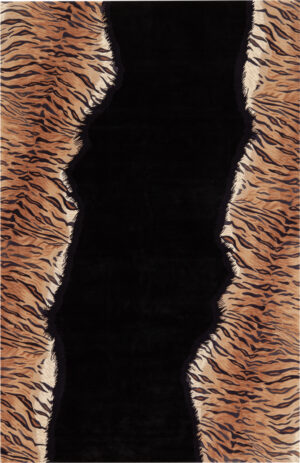
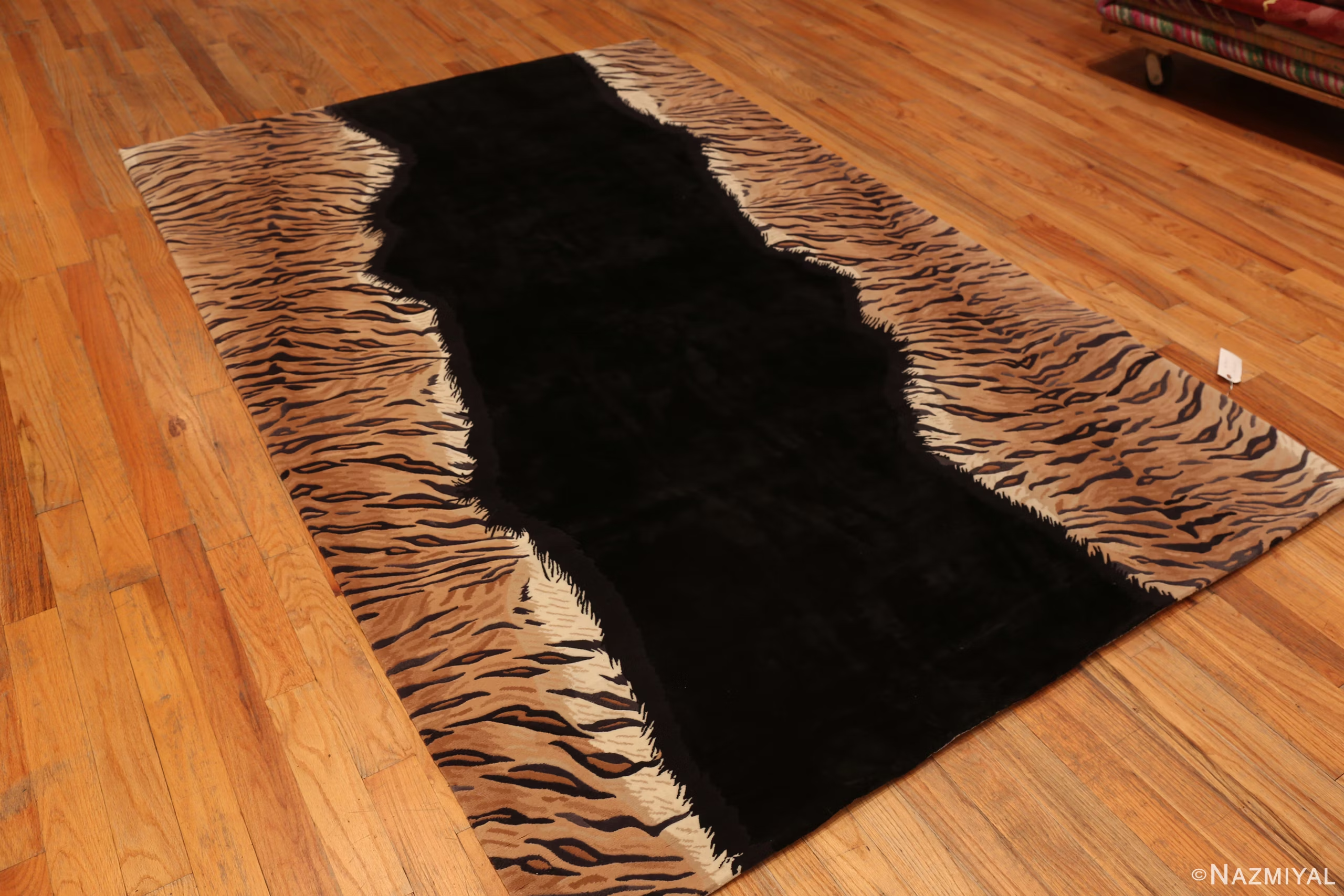
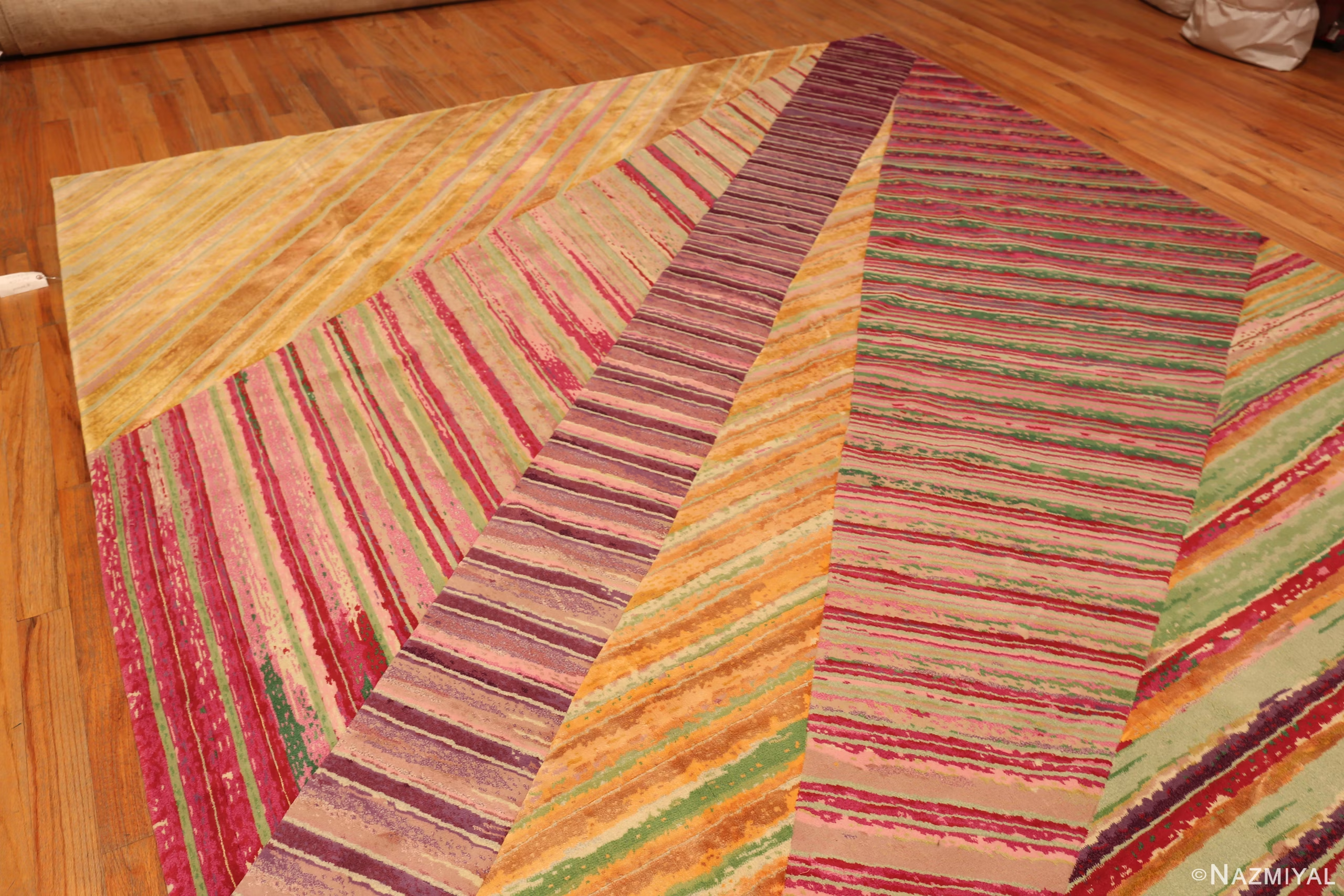
Style became considerably more experimental, breaking away from the rigidity of classic conventions. Shapes and forms skewed further away from the twisting, organic forms found in preceding naturalist styles like Art Nouveau. Instead, a progressive and geometric aesthetic rose in popularity.
A direct reflection of the radical and unconventional fine art genres of the time, many European rugs implemented a bolder application and arrangement of color. Abstracted and non-objective compositions took the place of stylized naturalistic motifs.
Suburban Development
Suburban development following the second World War was an outcome of the necessary restoration of infrastructure. The destruction of European land left behind by the war, led to and opportunity to completely restructure society. This was paired with the economic boom of a returning workforce brought about the expansion of what was previously a small middle-class.
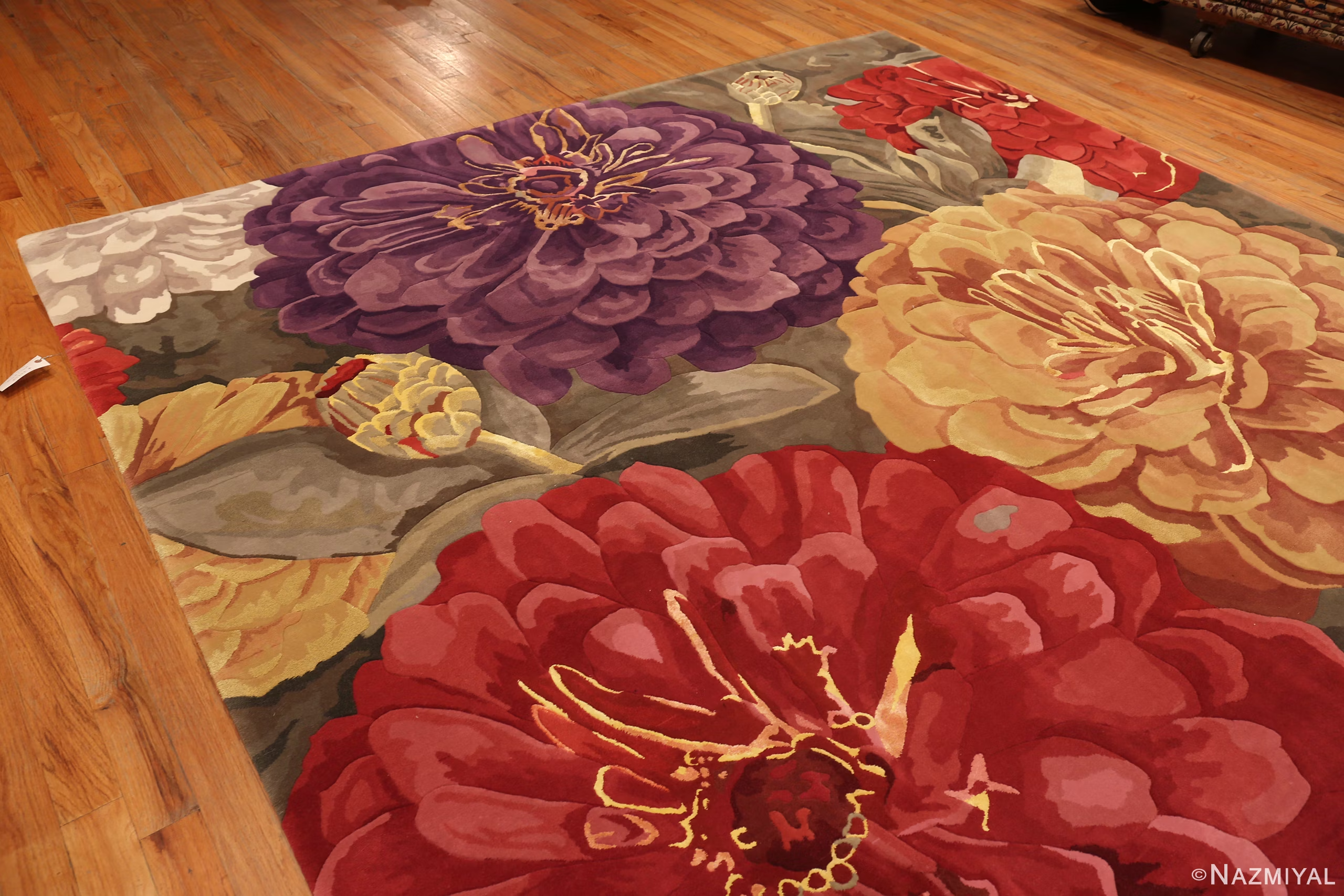
Newfound money in the pockets of homeowners gave way to a renewed interest in decorative furnishings. Rugs lost much of their utilitarian appeal, instead shifting fully into ornamentation. They were often treated the same way one would treat a framed painting. The expressive contemporary artists of the 20th century saw their own works recreated in textiles in the form of art rugs.
Common Styles
Vintage European-made rugs are incredibly varied. This is due to globalized commerce and the capital incentive for maximum appeal. A diverse consumer base calls for a diverse product, especially when dealing in something as highly individual as aesthetics. European weaving centers broadened their designs, following trends, borrowing from classics, and creating something completely new.
Geometric Designs
Thanks to artistic European-born movements like Bauhaus, Cubism, and Art Deco, there came about a noticeable change in rug patterns and compositions. Much of it had to do with the evolving interior design and architectural stylings. The contemporary rugs of the time were meant to fit a newer aesthetic.
Gone were the organic forms of the past. Instead, progressive angular shapes adhering to a clean, sharp geometry took their place. This was mainly due to the progressive ideals of post-war optimism. A “form follows function” design philosophy took center stage, in which an object’s structure is a direct reflection of its utility. It gave rise to Minimalism as we know it today, and was a leading aspect in the development of the French Art Deco style.
Classic European Styles
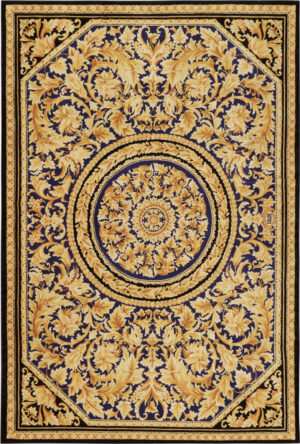
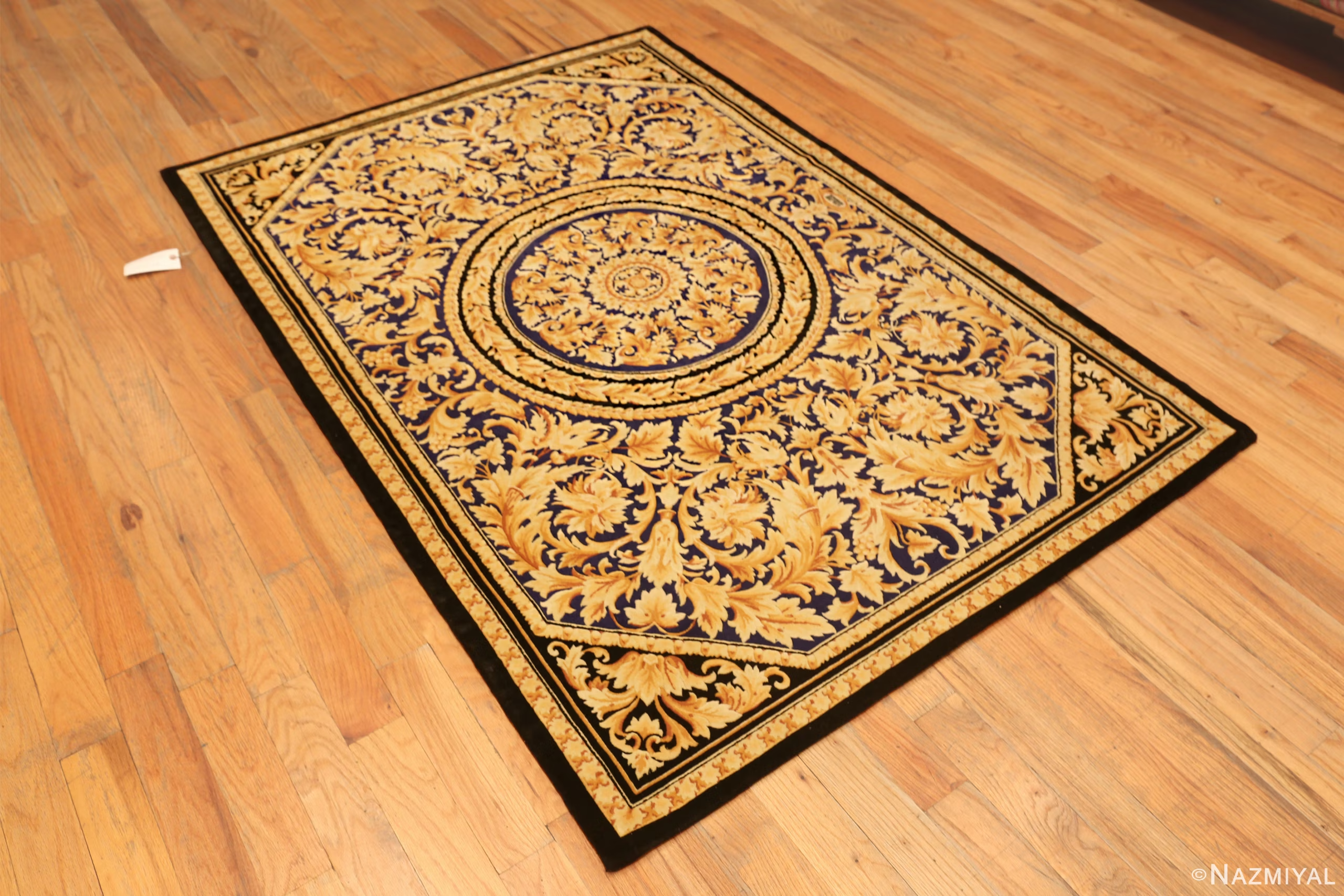
The classic European styles of textile and fine artwork were not completely lost to the new age. Past design conventions were often used as inspiration for contemporary pieces, using staple ornamental elements from past eras of Baroque or Neoclassical art. French florals found in antique Aubusson or Savonnerie textiles made their way into 20th century productions, finding their new-age niche. These were often mixed with dramatic and architectural forms, manifested in shades of opulent gold, ivory, or pastels.
Contemporary sensibilities allowed for this resurgence of classic styles to blend with the creative boom, leading to completely unique designs free of the strict restrictions past artists adhered to.
Classic Non-European Styles
Traditional carpet designs have a long history of popularity in Europe, despite not originating there. Classic Persian and Turkish styles were imported into the West for their beauty. Many were meant to adorn the private homes of the wealthy, or as grand ornamental furnishes for palaces. There was a point in which the appearance of a foreign carpet style in a painting meant the patron was a person of status.
Resolutely, the popularity of these foreign-made rugs greatly influenced the style of European productions. Local weaving centers were set up in different European cities, often sponsored by the royal court. The textiles produced borrowed from their Persian and Turkish counterparts, both in design and in weaving method. The outcome was a unique blend of classic European styles and the traditional heritage of the larger rug world.
This trend of aesthetic fusion has been a persistent factor in the commercial success of rug dealing, even today. Vintage European rugs were far from the exception. Many leaned into traditional compositions, with intricate central medallions in particularly high demand. The actual construction of these weavings were also unique in that many employed a material blend of silk and wool. Silk, once a rare luxury, was far more accessible to artisans and weavers, with advancements in transportation technology and the expansion of the sericulture industry.
Vintage Scandinavian Styles
Vintage Scandinavian rugs are unique in their compositions and designs. Often made as flatweaves, they are possibly the style that differs most from the dramatic architectural ornamentations found in classic Western European compositions or traditional Persian ones. Instead, they feature light, muted palettes, gridded designs, and a repetitive geometry.
This is in large part due to Swedish weaver and textile designer Märta Måås-Fjetterström. She was responsible for a revival of traditional design specific to Scandinavia, mixing it with the aesthetics of the new era. The designs sought to balance the natural beauty of the Swedish landscape with the rigid complexities of then-modern design. These rugs follow a Nordic decorative ideal, meant to complement minimalist interiors and calm the space around them.
Nazmiyal White-Glove Service