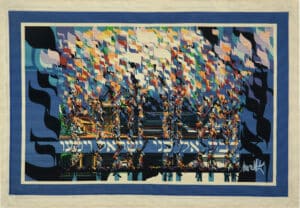
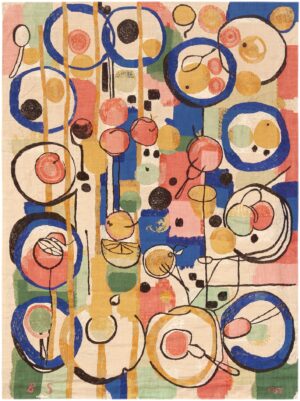
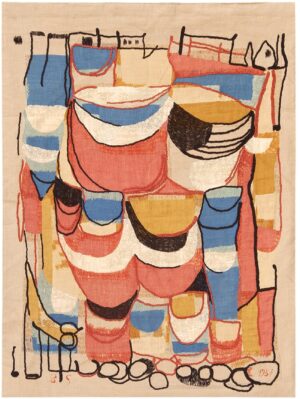
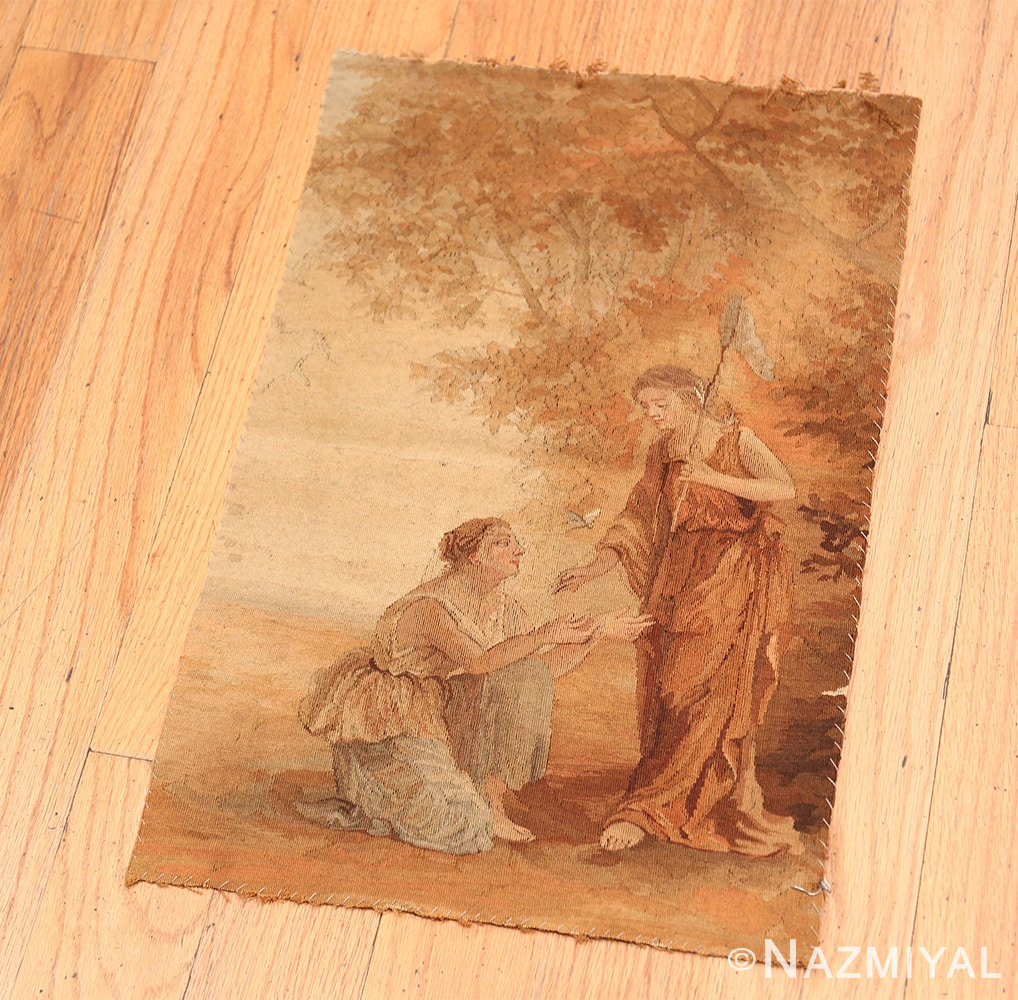
Tapestries have always lived in the serious lane: commissioned, collected, passed down, preserved. A great tapestry functions like a painting—except it brings texture, warmth, and architectural scale that flat art can’t. If you’re building a layered interior with real material presence, tapestries can change a room in one move. For underfoot collecting, start with our Antique Rugs hub; for broader collecting across eras, browse Vintage Rugs and Modern Rugs. Explore curated wall pieces at Nazmiyal.
A tapestry is a woven pictorial textile designed for wall display—essentially a “woven painting” that adds narrative, color, and texture to a room.
Tapestries have always lived in the serious lane: commissioned, collected, passed down, preserved. A great tapestry functions like a painting—except it brings texture, warmth, and architectural scale that flat art can’t. If you’re building a layered interior with real material presence, tapestries can change a room in one move. For underfoot collecting, start with our Antique Rugs hub; for broader collecting across eras, browse Vintage Rugs and Modern Rugs. Explore curated wall pieces at Nazmiyal.
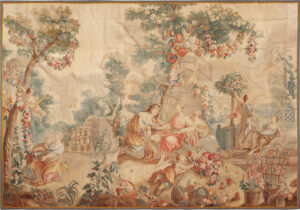
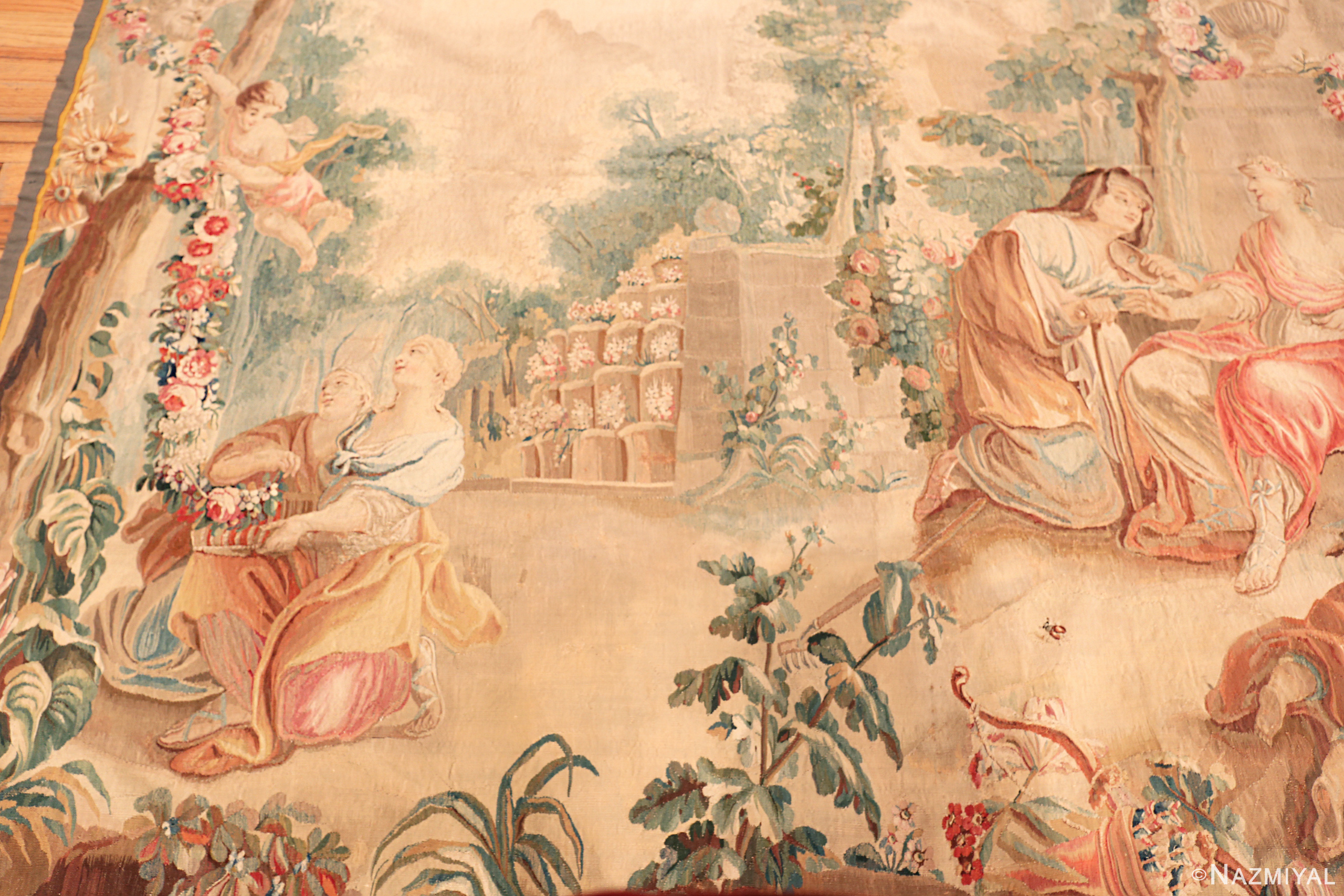
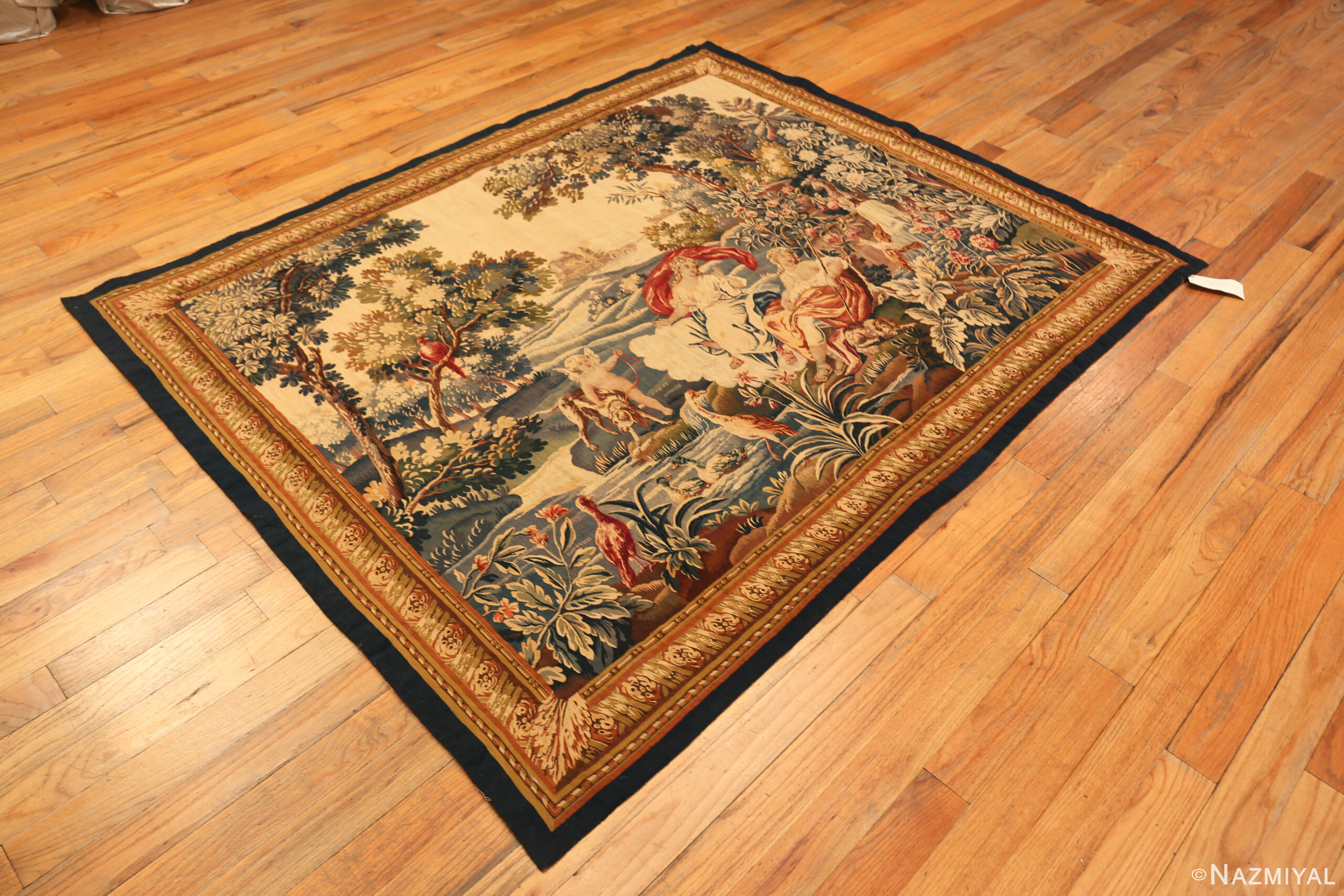
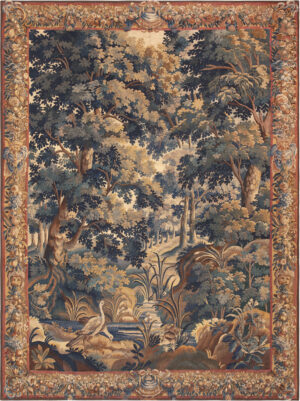
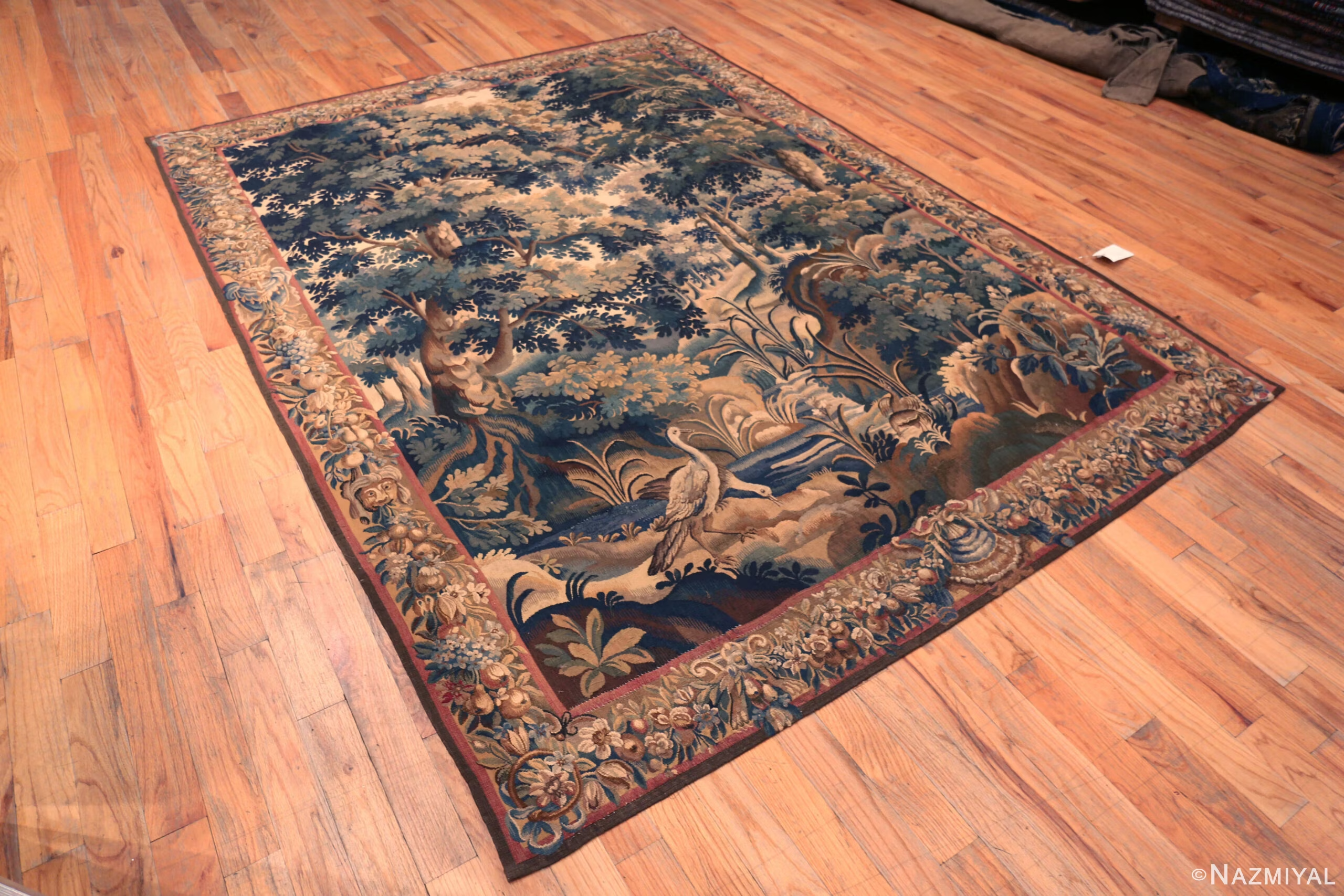
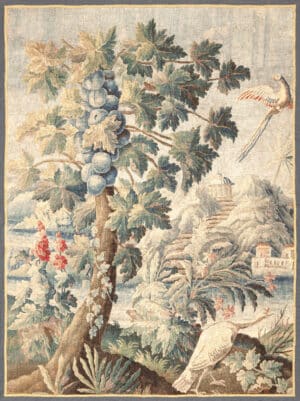
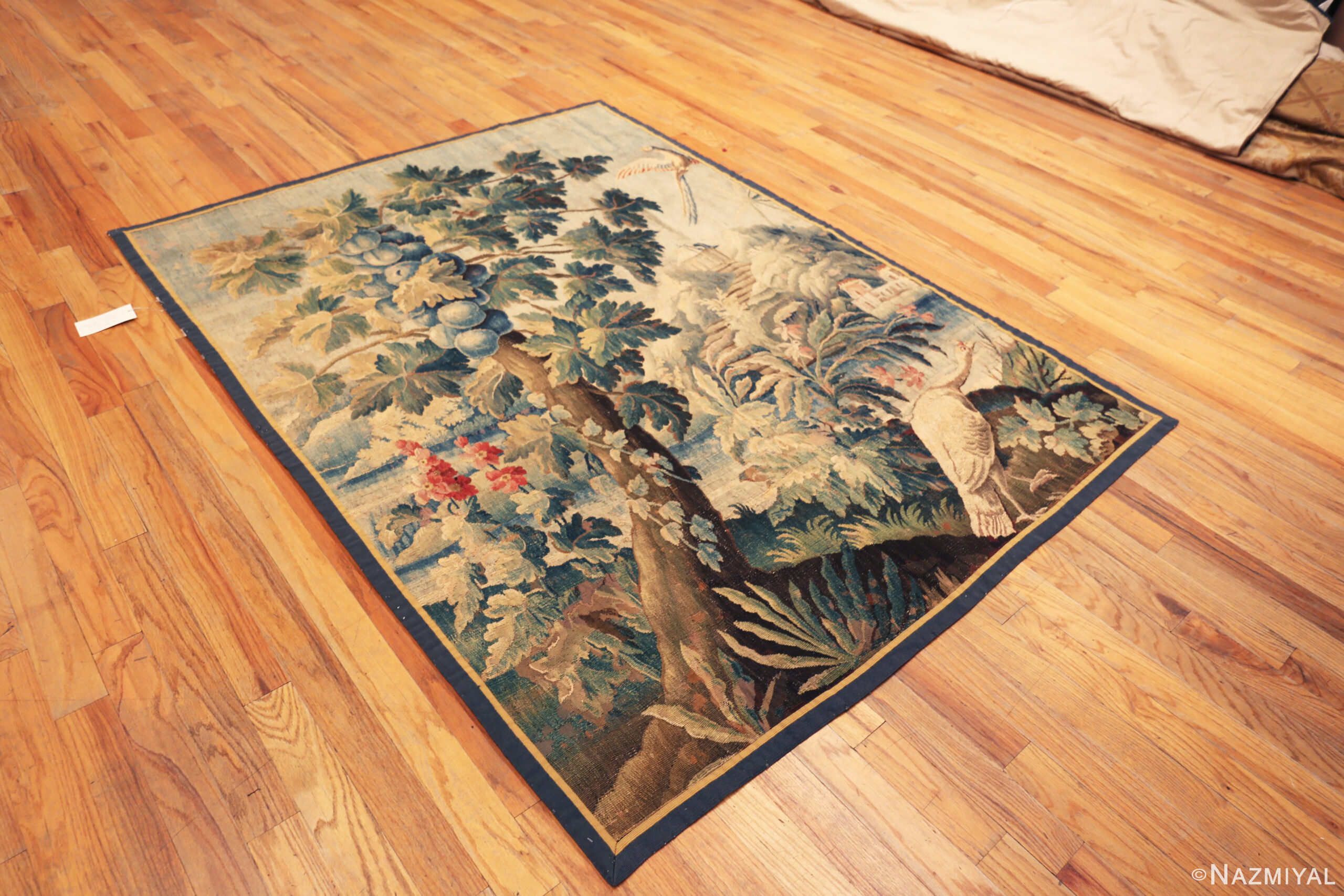
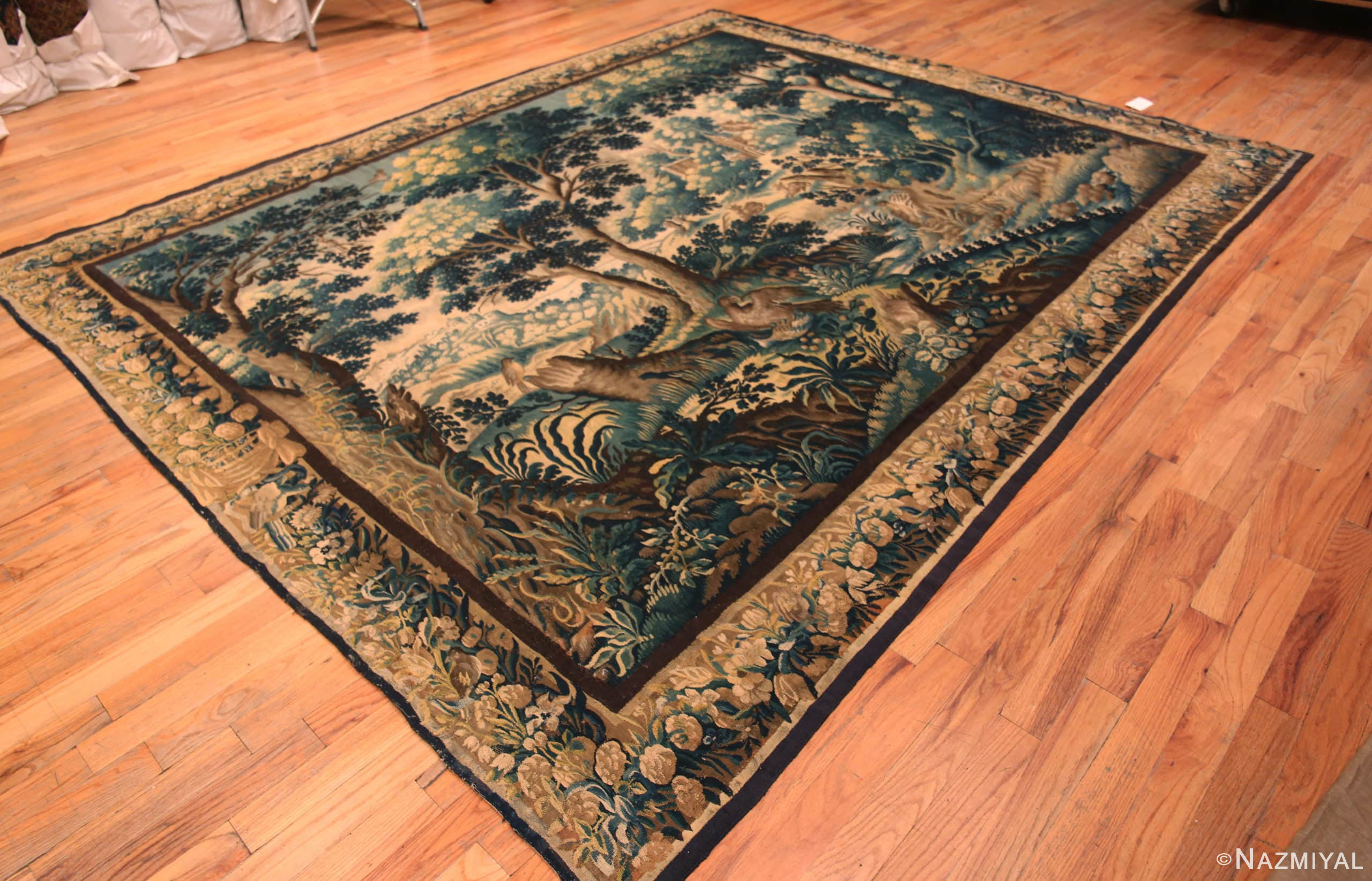
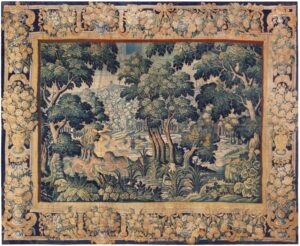
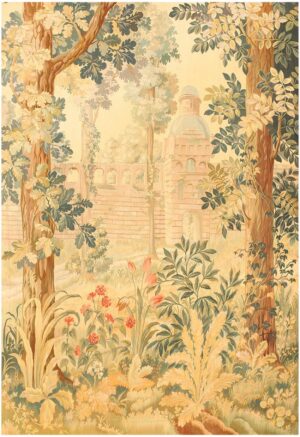
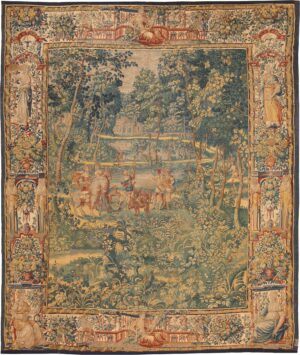
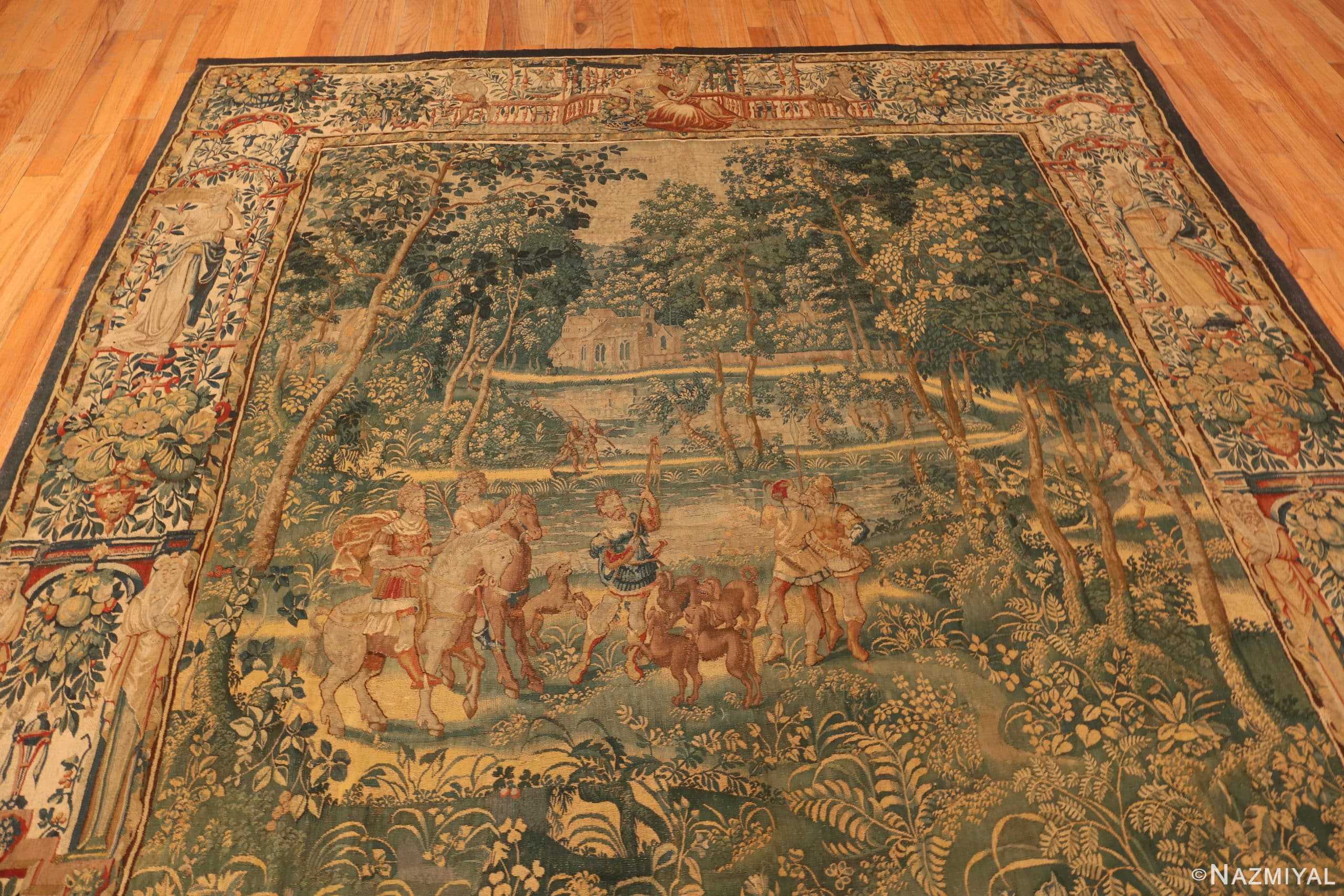
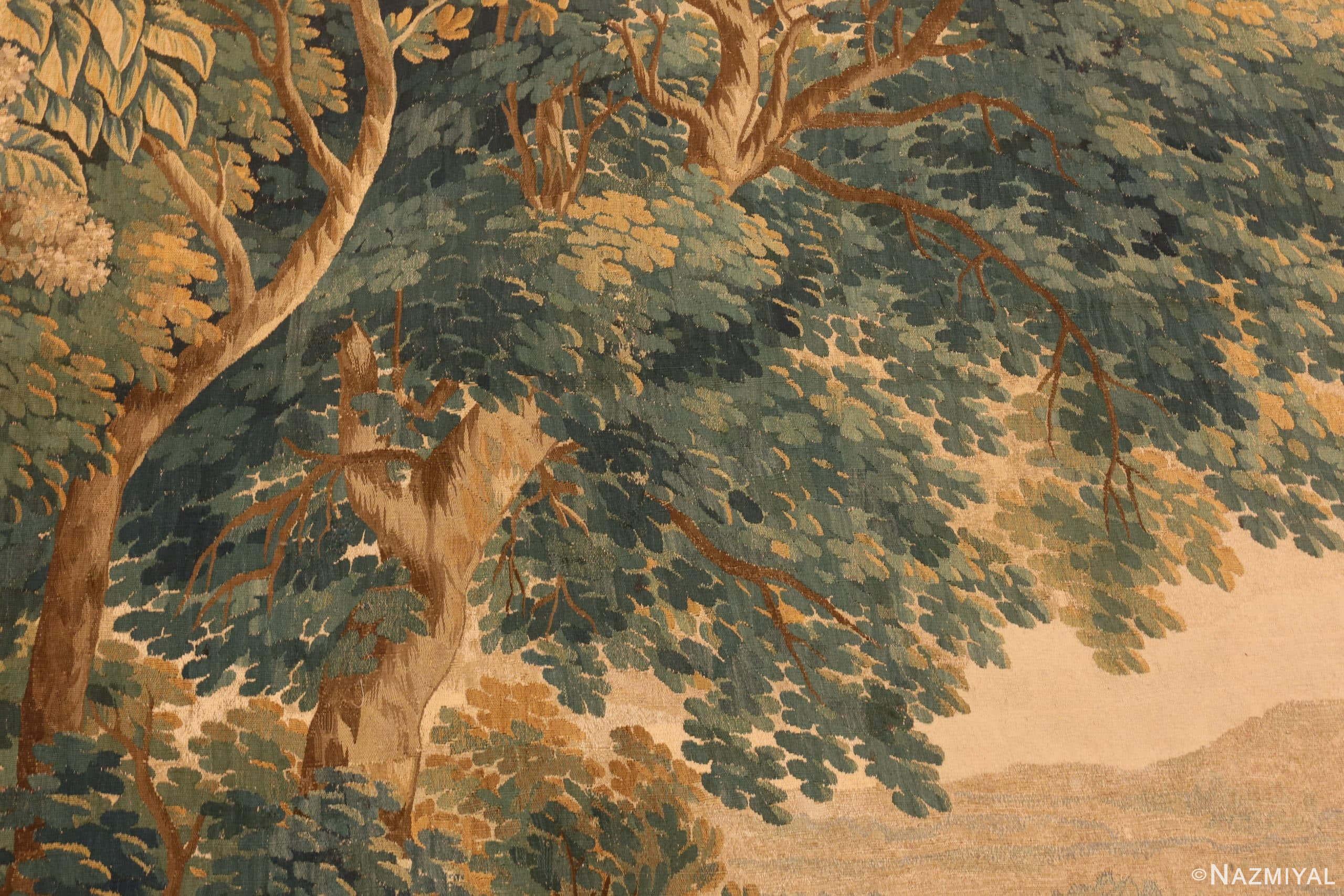
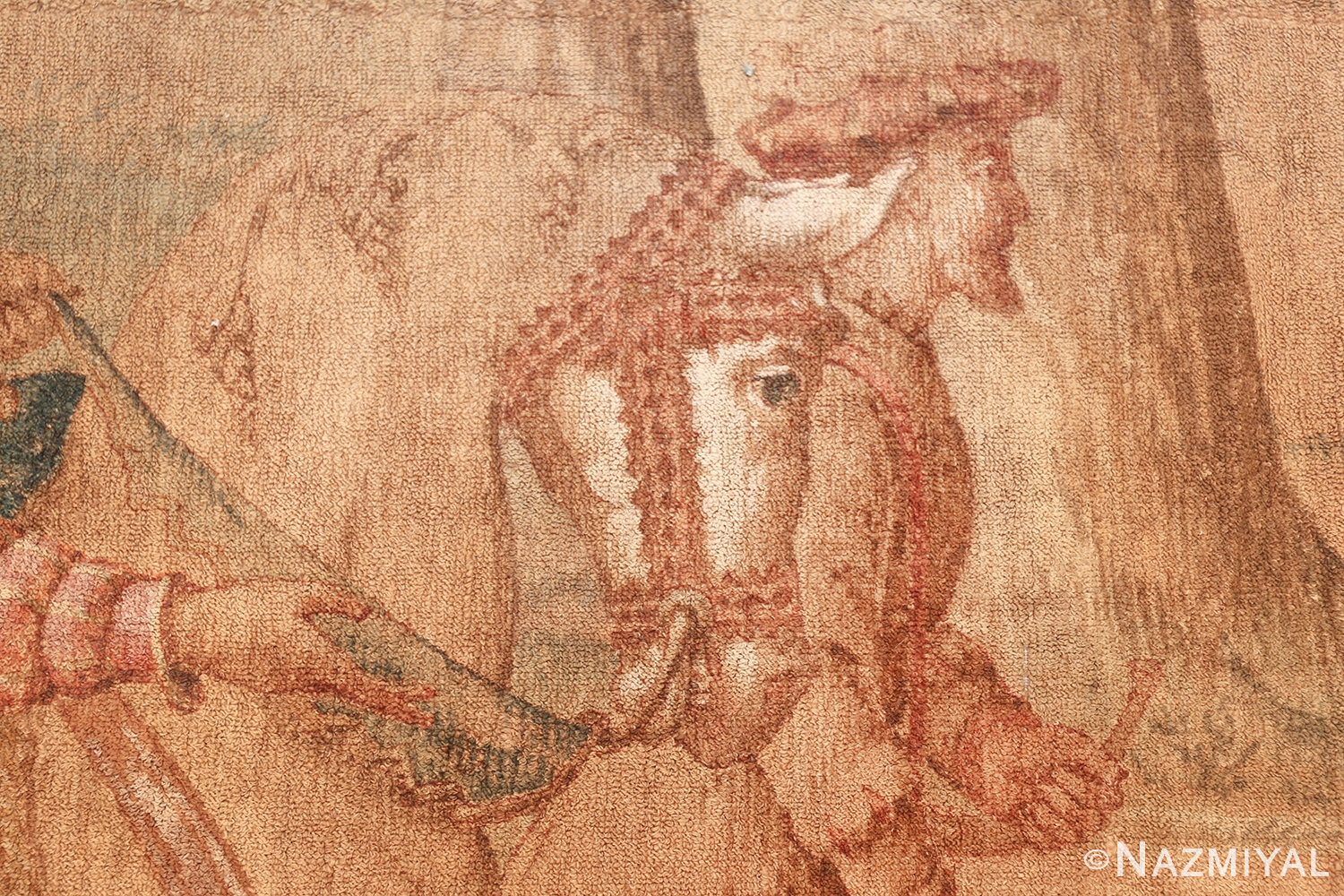
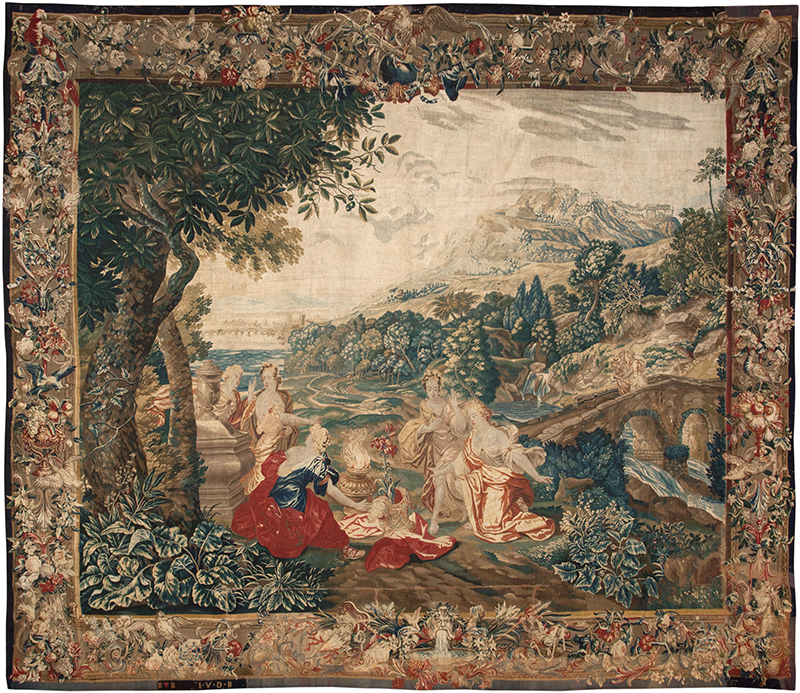
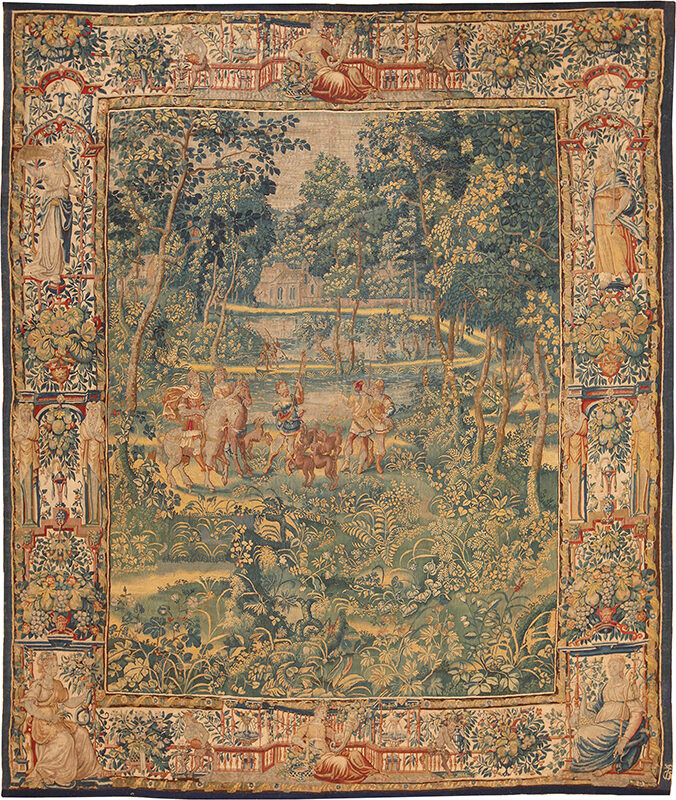
Refined 17th Century Wool and Silk Antique French Hunting Scene Verdure Tapestry Nazmiyal Collection #70856
Why tapestries still feel powerful in modern homes
A good tapestry doesn’t “match the room.” It changes the room.
It brings three things designers always chase:
Instant depth (because it’s woven, not printed)
Human irregularity (the subtle movement that only handmade work has)
Scale you can’t fake (one piece can anchor an entire wall)
And unlike a lot of décor that’s trend-driven, tapestries have always lived in the serious lane: commissioned, collected, passed down, preserved.
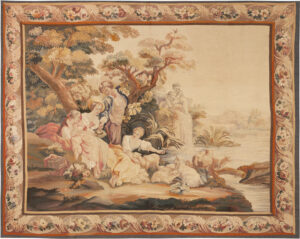
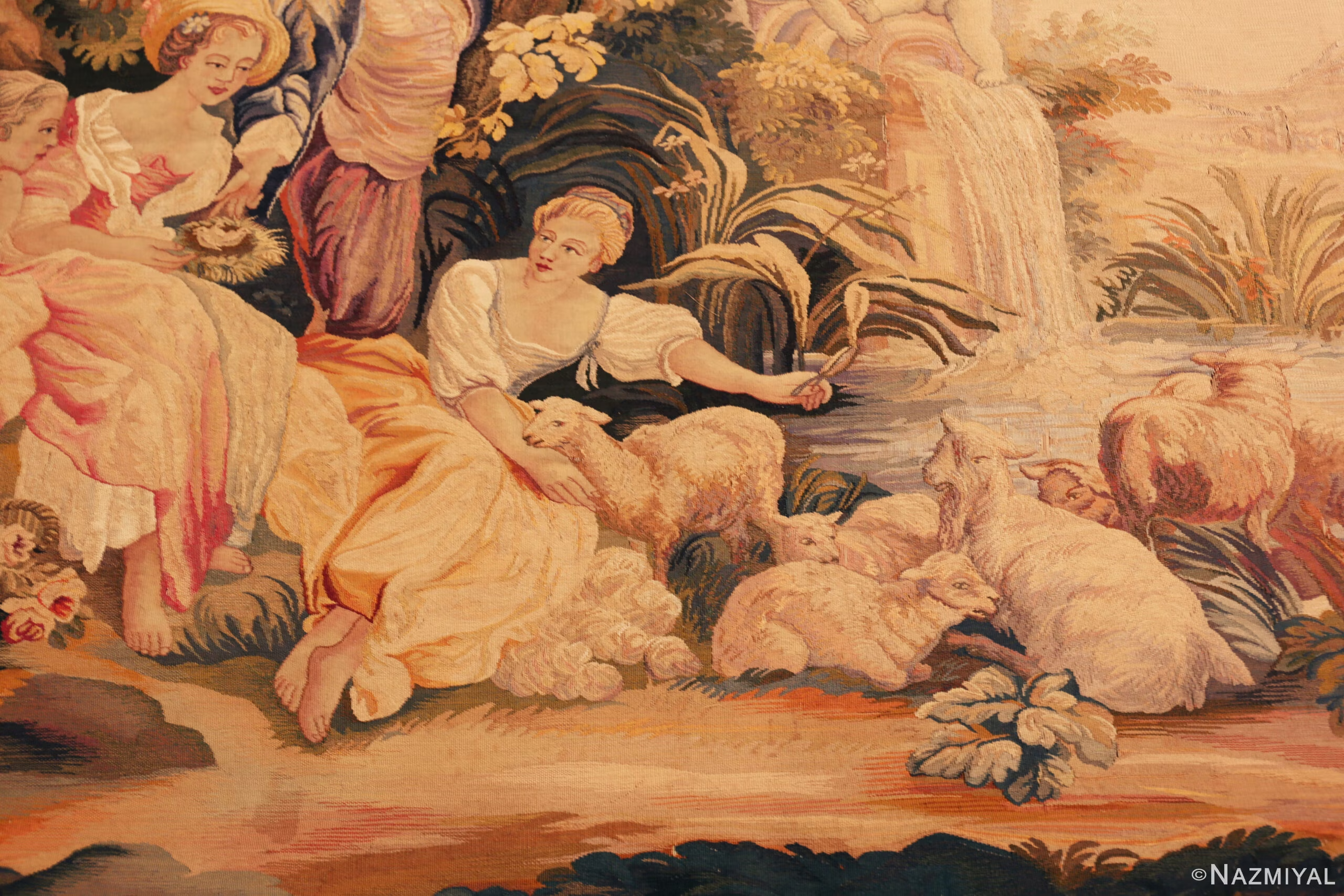
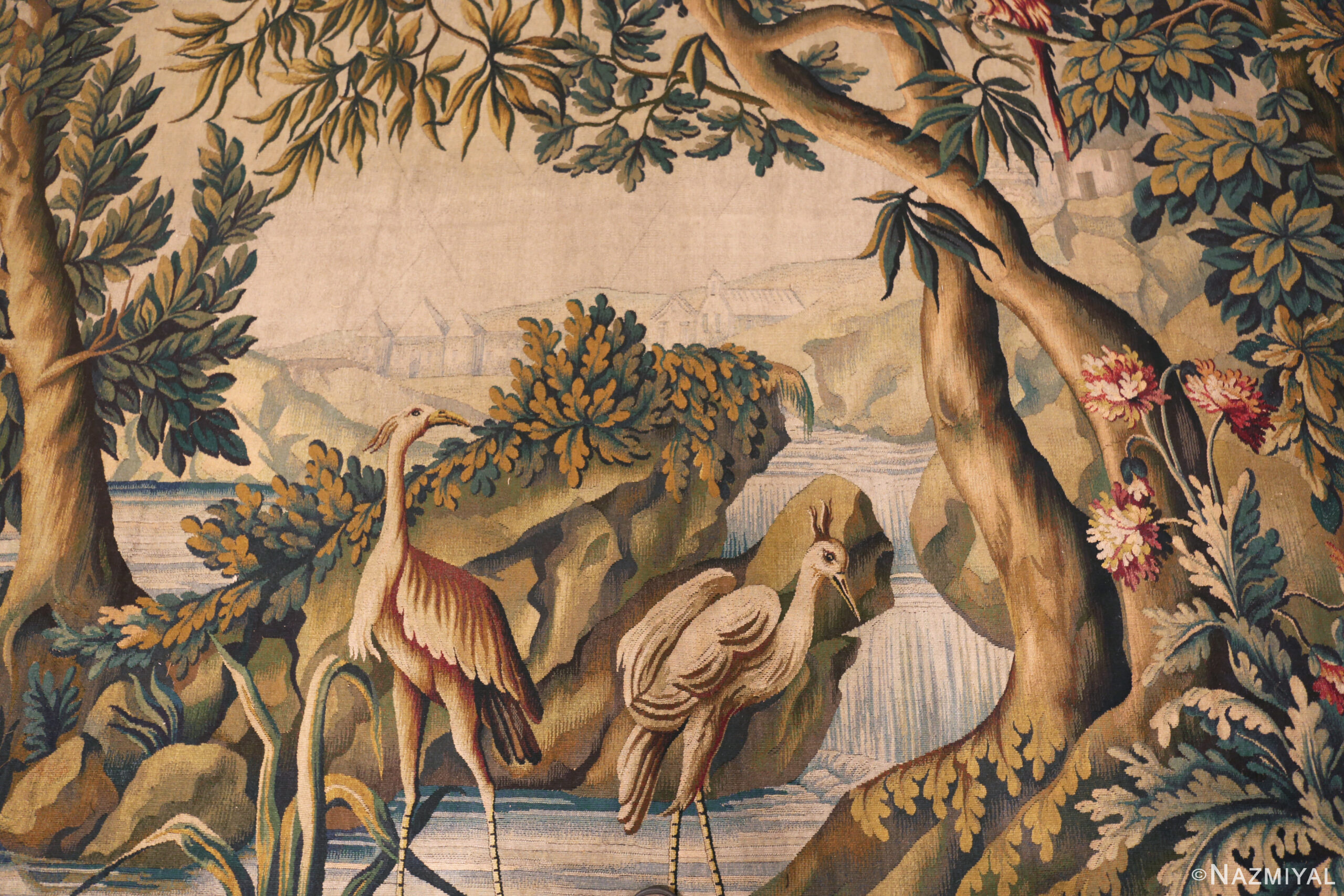
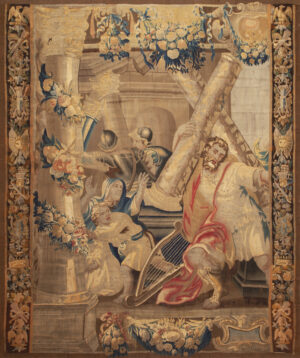
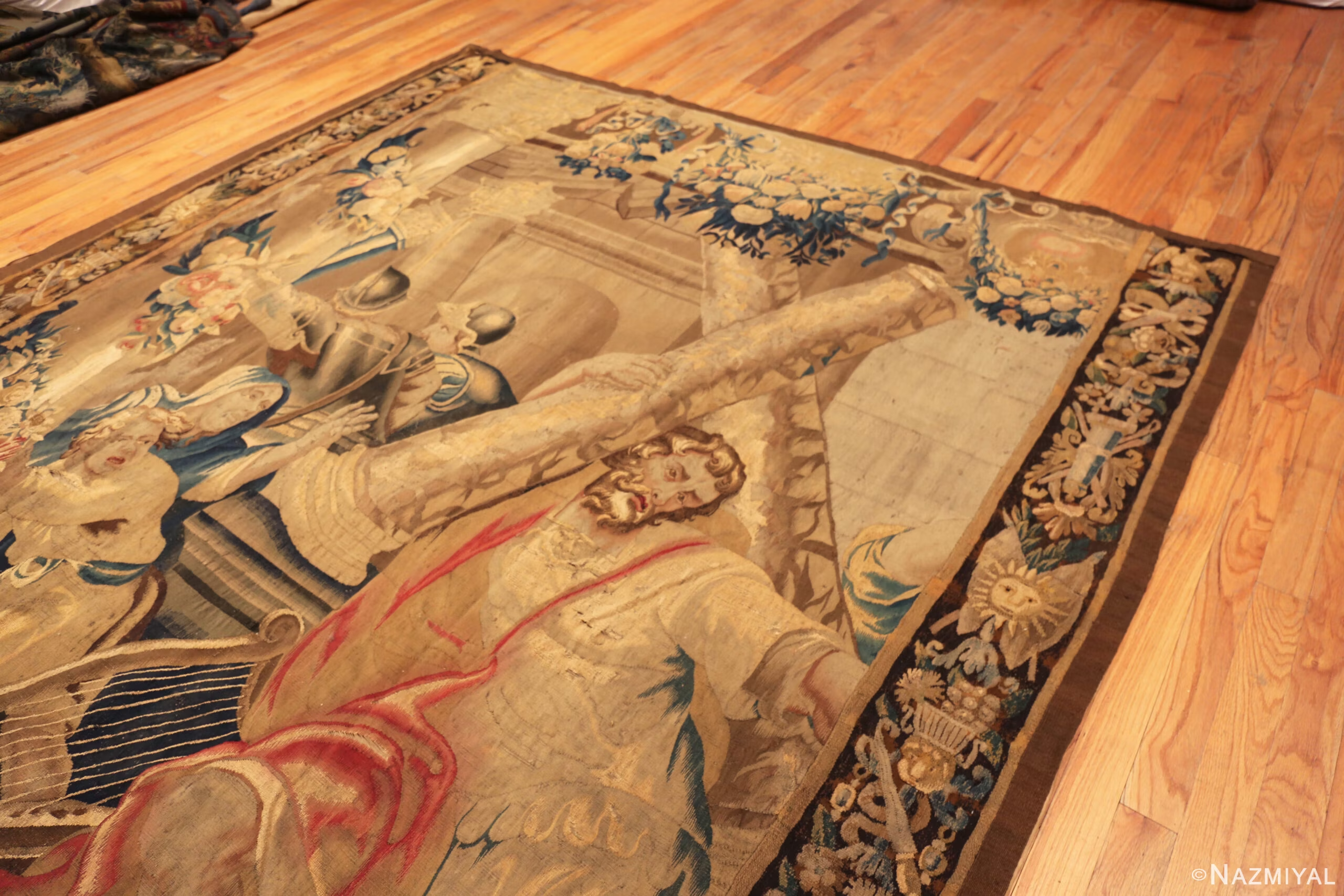
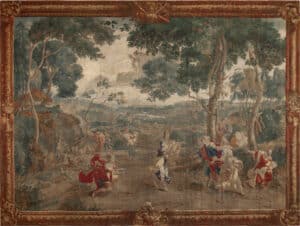
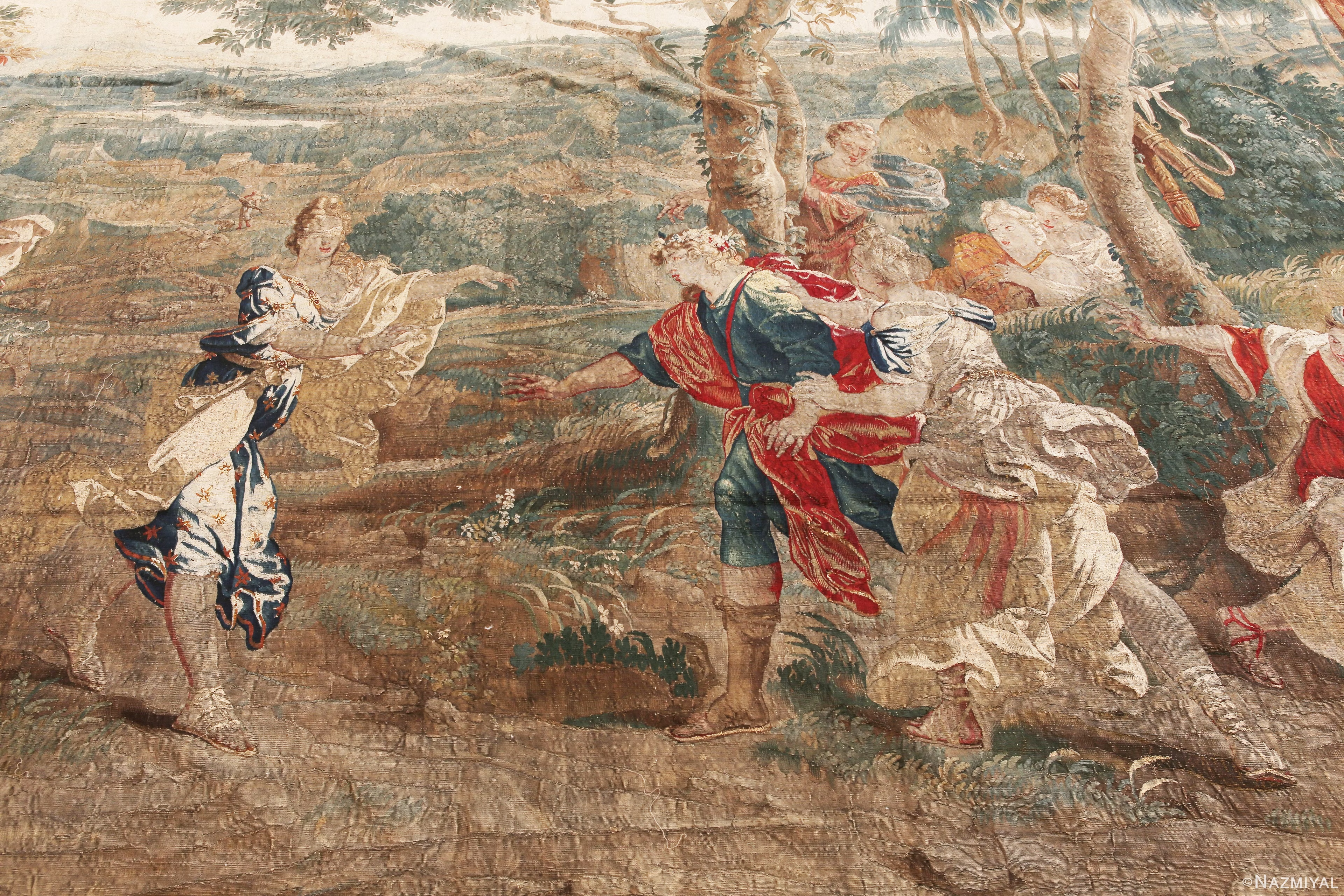
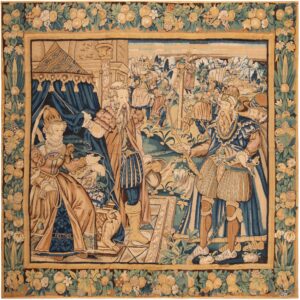
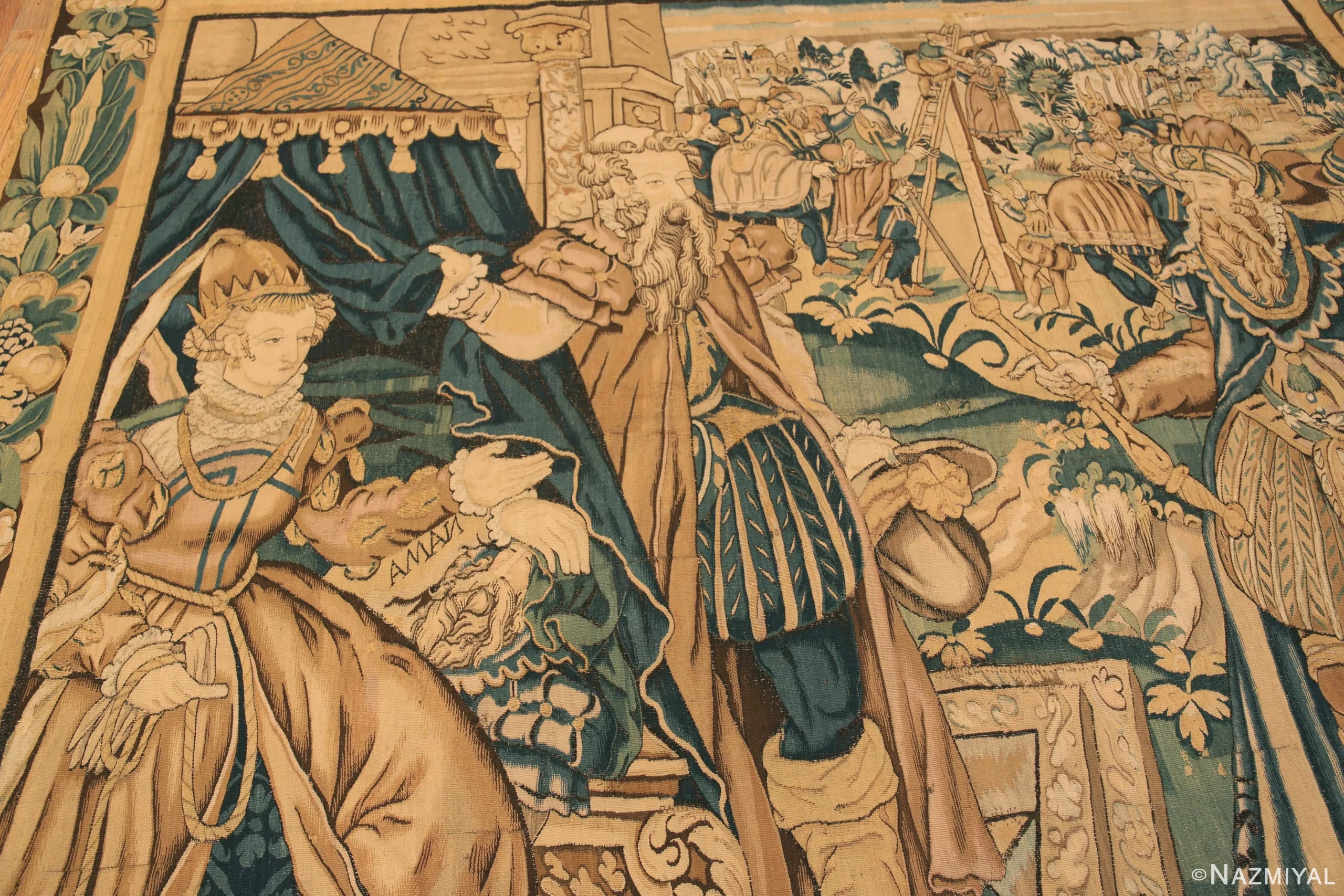
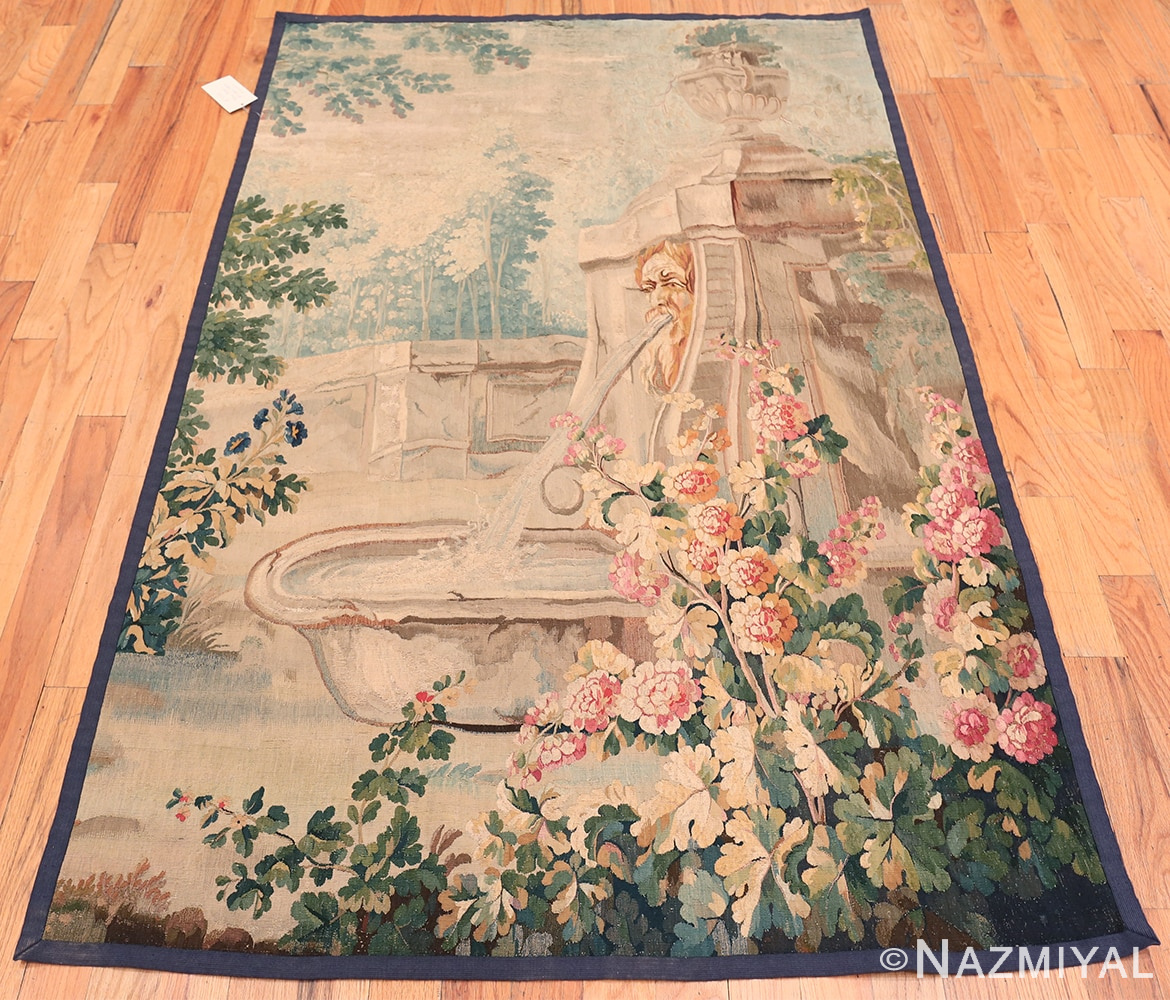
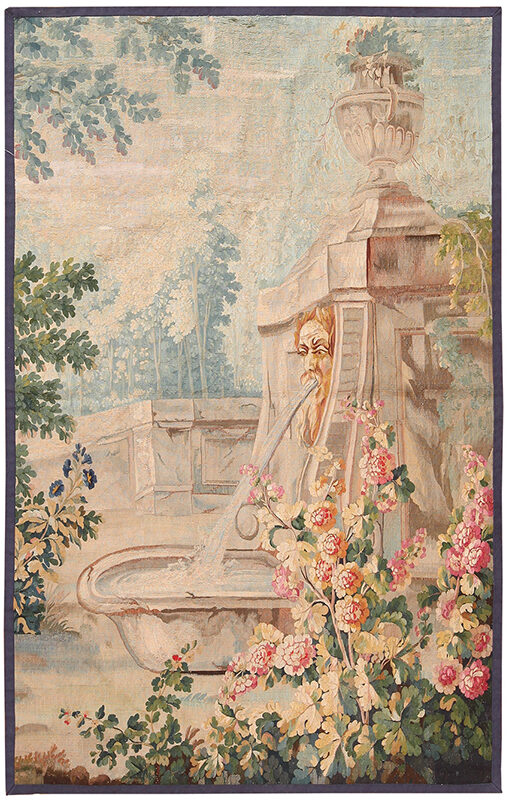
18th Century Antique French Beauvais Tapestry Nazmiyal Collection #70734
What makes an antique tapestry different from “decorative textile”
This is the part people feel, even if they can’t explain it:
Drawing has weight (figures, landscapes, architecture—built thread by thread)
Color behaves differently (old palettes age into a softer, more believable range)
Surface has texture (a tapestry catches light the way a painted canvas can’t)
If you love narrative textiles, you’ll also enjoy browsing our Antique Textiles & Embroideries collection—and if your taste leans more “underfoot” than “on the wall,” start with our Antique Rugs hub. For collectors who love historic design language, there’s also a natural bridge into Persian Rugs.
How to choose a tapestry like a collector
1) Start with the subject
Some tapestries are pure atmosphere (verdure gardens, animals, woodland scenes). Others are statement pieces (mythology, biblical scenes, courtly or historic narratives). Choose the story you’ll still want to live with five years from now.
2) Let scale do the heavy lifting
A tapestry should feel intentional, not “floated.”
Large walls: go bold—tapestries were made for architectural scale.
Smaller rooms: a strong mid-size piece reads like framed artwork, but richer.
3) Condition: be realistic, be strict
Old tapestries can show honest wear. That’s not automatically a problem—unstable wear is the problem.
Look for:
secure edges
stable structure (no active splitting)
repairs that conserve, not “redesign”
a proper backing/lining when appropriate
4) Light is the silent enemy
If you’re hanging in a sun-drenched space, plan like a museum: filtered light, thoughtful placement, and occasional rotation.
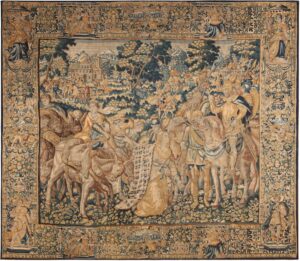
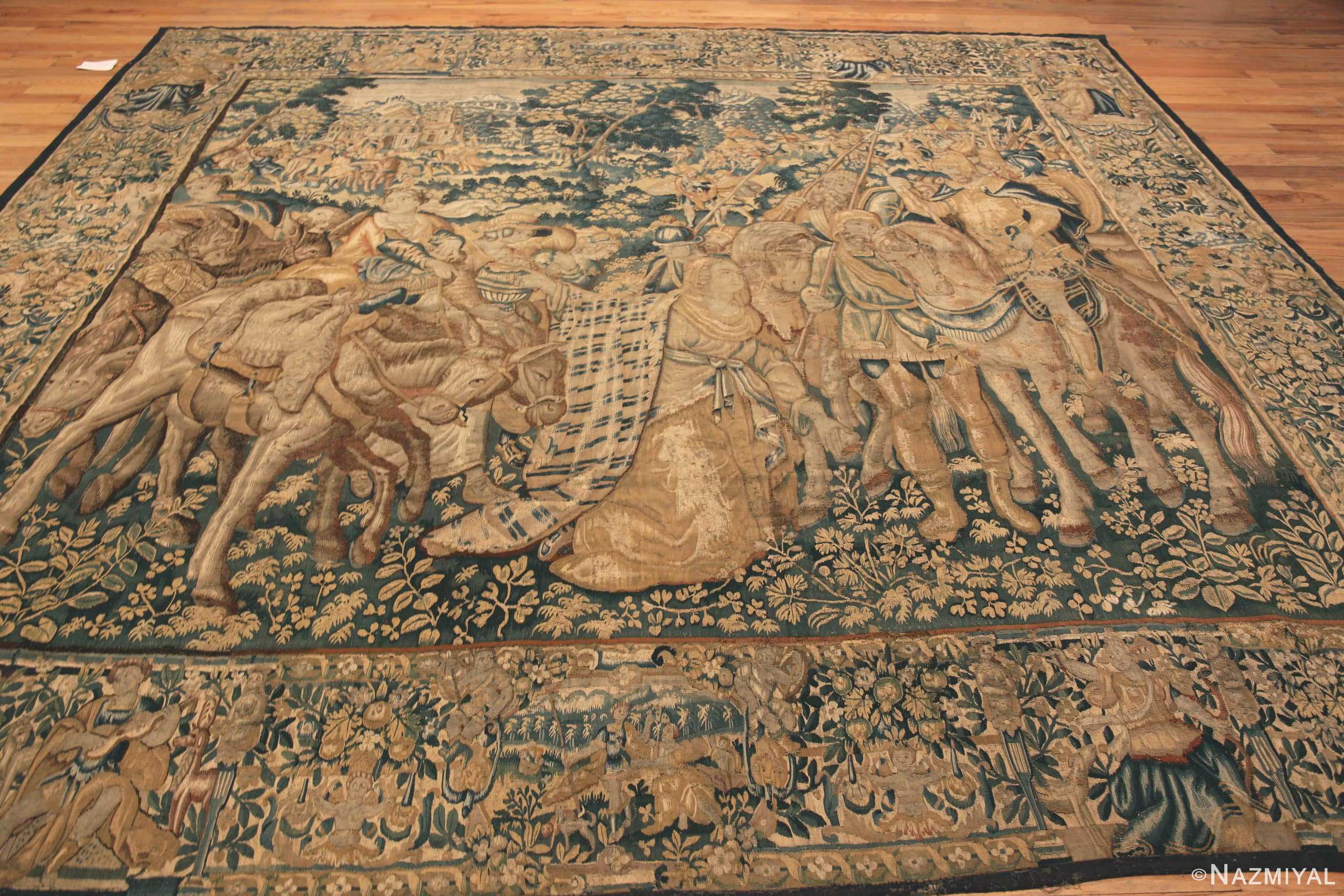
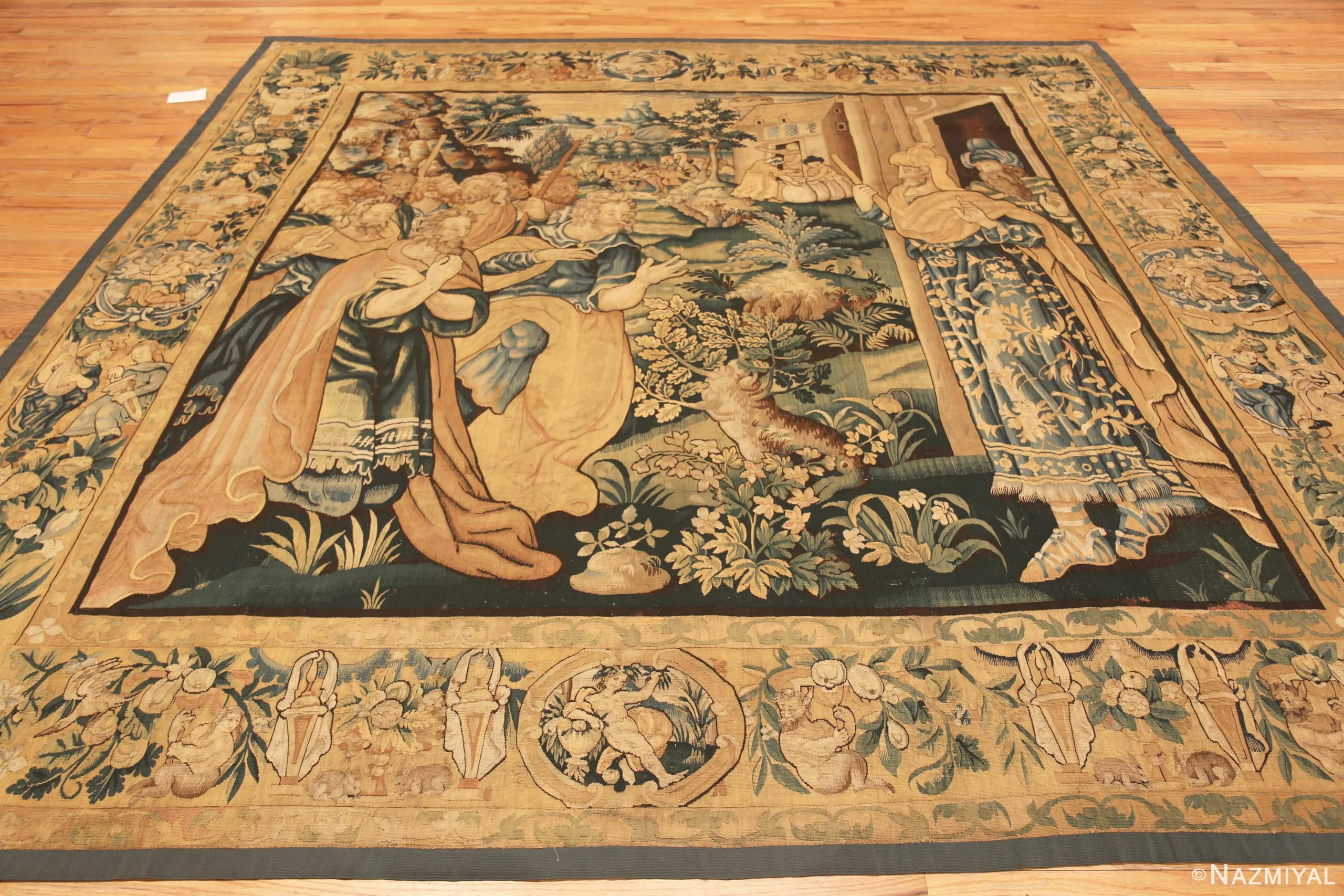
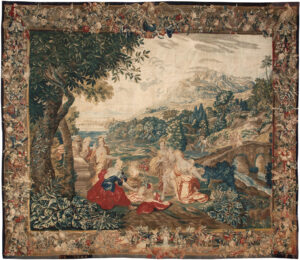
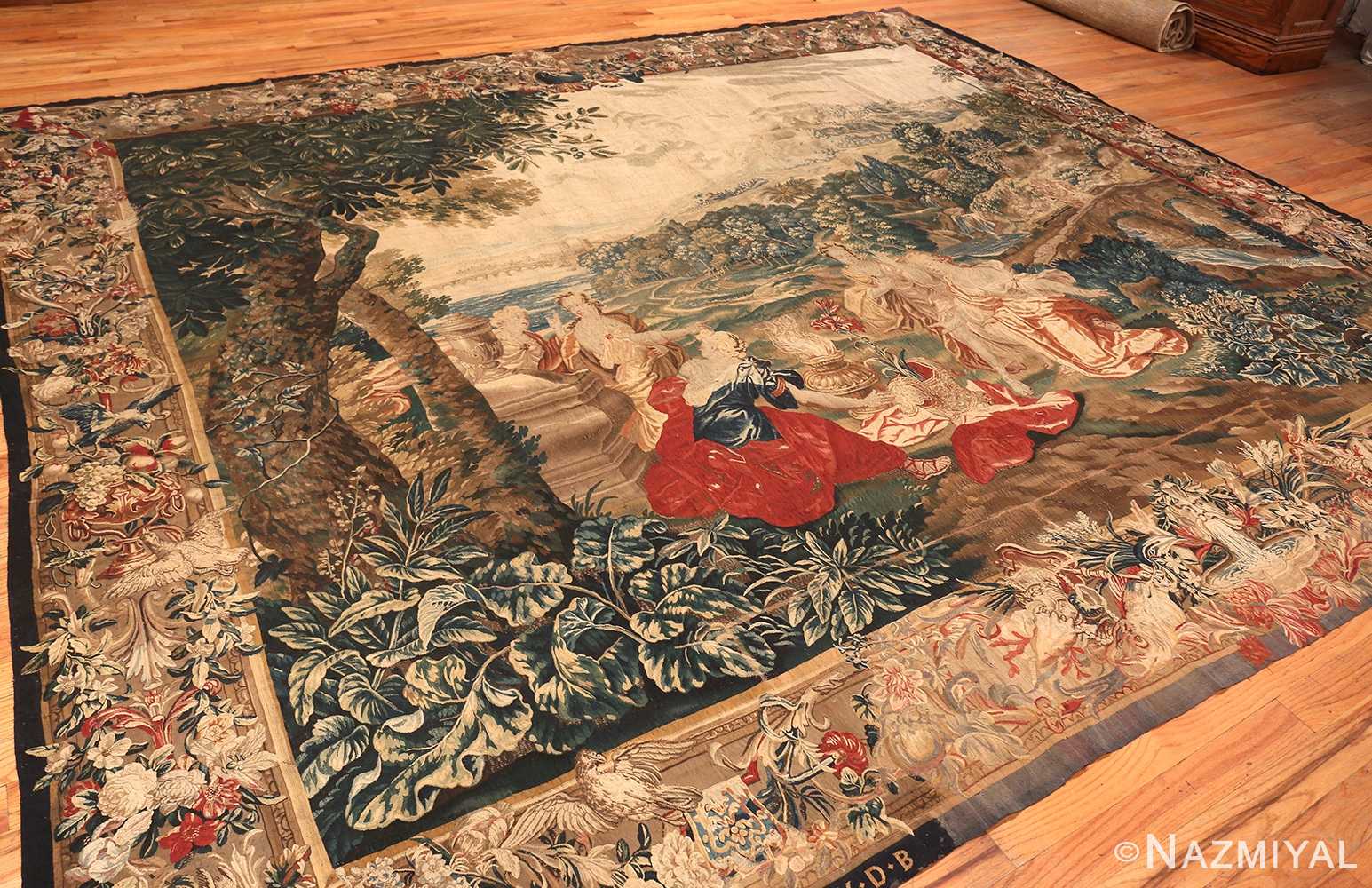
Rare Antique 17th Century Flemish Tapestry — Nazmiyal #45666 Link:Flemish Tapestry #45666 Suggested ALT: Antique Flemish Tapestry, 17th century, 11 ft 8 in x 13 ft 7 in — Nazmiyal #45666
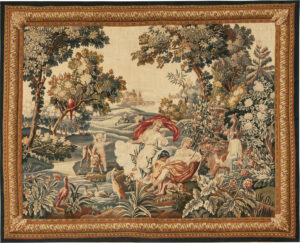
Refined 17th Century French Hunting Scene Verdure Tapestry — Nazmiyal #70856 Link:French Verdure Tapestry #70856 Suggested ALT: Antique French Verdure Tapestry, 17th century, 8 ft 7 in x 10 ft 3 in — Nazmiyal #70856
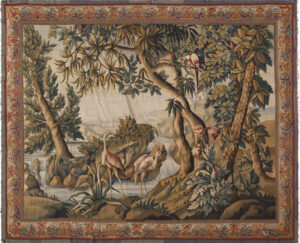
18th Century Antique French Beauvais Tapestry — Nazmiyal #70734 Link:French Beauvais Tapestry #70734 Suggested ALT: Antique French Beauvais Tapestry, 18th century, 4 ft 4 in x 6 ft 9 in — Nazmiyal #70734
Related Rugs
Tapestries vs. Antique Textiles & Embroideries
Tapestries are typically pictorial, wall-scale “woven paintings.” Textiles & embroideries include a wider world—ceremonial pieces, embroideries, costume textiles, decorative panels—often more varied in technique and intended use. Explore Antique Textiles & Embroideries.
Tapestries vs. Savonnerie Carpets
Tapestries are made to be seen on the wall—story, scene, atmosphere. Savonnerie is made for the floor—court-level French pile carpets designed for rooms and furnishings, not vertical display. Explore Savonnerie Carpets.
A tapestry is a woven textile designed to depict an image—often a scene, landscape, figures, or ornament—most commonly intended for wall display.
Are antique tapestries considered collectible art?
Yes. Important tapestries are collected as textile art—many museum collections include them because of their craftsmanship, rarity, and historical value.
Can I hang a tapestry in a modern home without it feeling “old”?
Absolutely. The key is scale and placement. A great tapestry reads like a large-format artwork and can make a modern room feel more layered and personal.
What’s the biggest mistake people make with tapestries?
Hanging in direct sunlight, or hanging without proper support. Light and gravity do slow damage—good mounting prevents that.
Can tapestries be used on the floor?
Some people do, but most antique tapestries weren’t made for foot traffic. If your goal is a floor piece, you’ll usually be happier with a true carpet (like Savonnerie or other European rugs).
Unmatched Inventory Depth — One of the world’s broadest selections across antique rugs, tapestries, and historic textiles. Rigorous Authenticity Standards — Expert-vetted pieces, accurately represented. Expert Advisory — Real guidance on placement, condition, and long-term value.
Trustindex verifies that the original source of the review is Google.
My wife and I are so pleased with the antique Uzbek Bokhara Rug purchased from the Nazmiyal Collection. Not only does the rug have a spectacular design, it also was very reasonably priced. The way it transforms our living room, reconciling the classic modern furniture with the 1913 Craftsman interior is remarkable.
Posted on Google
Terence Hayes
Trustindex verifies that the original source of the review is Google.
I have purchased multiple rugs at multiple Nazmiyal auctions and I am extremely pleased with the quality, price, and experience. Highly recommended!
Posted on Google
Victor Florintsev
Trustindex verifies that the original source of the review is Google.
The only ones I'd ever buy rugs from. The best.
Posted on Google
Jeffrey NeumanB
Trustindex verifies that the original source of the review is Google.
I bought two gorgeous Serapi rugs from Farhad at Nazmiyal Rugs! Beautiful carpets, fair prices and great service. Very happy customer. Farhad (the sales person) was very patient and gave us great service.
Posted on Google
john haid
Trustindex verifies that the original source of the review is Google.
Alen is a gentleman and an expert. Really great to work with.
Posted on Google
Edward Yasuna
Trustindex verifies that the original source of the review is Google.
I recently purchased a modern Kandinsky rug from Nazmiyal Auctions. It was just as described, and the director (Farhad) of the auctions had it sent to me quickly and safely. Payment was easy, the rug was reasonably priced, and I highly recommend Nazmiyal Auctions and Antique Rugs. Quality merchandise and first-class service.
Posted on Google
Nicholas Carr
Trustindex verifies that the original source of the review is Google.
Had a excellent experience buying a rug in Nazmiyal's 1/18/26 online auction. First, prior to the auction, viewing a number of lots at the 32nd St showroom (I had prepared a list from the online catalog). The staff were great to work with: helpful, knowledgable, honest, and flexible. Second, after placing an online bid and winning the desired item, arranging payment and pickup was simple and straightforward. Everything went seamlessly and the overall experience was educational and fun. Many thanks to Jason and his team.
Posted on Google
Andrea Gared
Trustindex verifies that the original source of the review is Google.
Everyone at Naziyal is proffessional, especially Jason and Farhad.
They are knowledgeable, truthful, and true gentlemen. I have sold several rugs through them and will always go to them first, to buy or sell. The best in the business!
Frequently Asked Questions
A wall hanging tapestry, simply put, is a textile specifically designed and woven to portray an artistic scene with the intent of hanging it on a wall. Antique tapestries, those that were woven over 100 years ago, are highly sought after collectible items with examples displayed prominently in many museums around the world.rnrnWhile some wall tapestries can date to the biblical era, most of the great examples known today are from the medieval or Renaissance periods of history. Nobility and wealthy patrons commissioned tapestries depicting scenes or images of importance. These weavings served as a large-scale mobile art piece which would have been displayed on the wall of a castle or home and was easily transportable from home to home.rnrnMany of the surviving antique tapestries depict religious and / or historic events. For example, a king might have commissioned one with a scene depicting a great victory in battle. As the king moved to his various palaces or castles, the tapestry could be moved along with him as well.rnrnAnother example could be a religious weavings, commissioned by a religious institution and some would only be displayed at the church or cathedral during certain religious events. Other wall tapestries might display images of a family and those would usually depict the family’s coats of arms.rnrnAntique tapestries vary in size, and range from items that would cover a single wall of a small room to major works that are massive in size. Some antique wall hanging tapestry rugs are actually sets or a series of works on a common theme.rnrnWeavers used the natural materials available at the time. Wool, cotton, silk and linen threads were dyed to the desired colors before weaving. Some tapestries also included gold and silver thread accents. Sadly enough, in the past, there were owners who destroyed some of these tapestries to recover the precious metals leaving fewer examples of this breathtaking form of the art.rnrnA tapestry is largely thought of as a European form of textile art. Most of the major countries of Europe did produce these pieces with a highly developed art forms evident in Germany, Spain, Belgium, France and more. Tapestry weavers continue to produce works of textile art till this very day so not every example is an antique.rnrnAntique Tapestries are perhaps the most venerable and highly prized medium of textile art. They have been woven almost from the beginning of weaving itself, and already in ancient times, this technique was adapted to pictorial compositions as well as ornamental designs. Antique Tapestries or ‘Woven paintings’ of this kind were known to the court arts of Egypt, the ancient Near East, and the Greeks and Romans as well. It was this ancient tradition that was passed down through the Middle Ages into the Renaissance and Baroque periods in Europe, where pictorial tapestry rugs became a medium of painting in its own right utilizing designs by all the great ‘Old Masters’. Nazmiyal is proud to offer a distinguished collection of such European antique tapestries whose historic importance or value is equal to their beauty and elegance as great works of art.
A tapestry is a woven fabric that was created with the intent to hang on the wall as a work of textile art. While in ancient times, the Romans as well as the Greeks created tapestries as artworks for the wall, some ancient cultures, like the ancient Egyptian and Incas also wove tapestries with the intent of being used as burial shrouds.
The earliest known tapestry was woven in linen and dates back to 1483 and 1411 BCE Egypt. found When excavating the the tomb of Thutmose IV, three woven linen tapestry fragments were discovered in relatively good condition due the dry deserts climate in Egypt. Two tapestry fragments depict Egyptian pharaohs while the third fragment features hieroglyphs.
Early tapestries, from the Middle Ages, to the Gobelin tapestries of the 17th century, all the way up until the late 19th century, were made with thick warps and corresponding thick weft threads. These tapestries were often made heavy for a functional purpose: to be hung on chilly stone walls to keep out drafts and keep warmth inside. However, in the 20th century, silk started gaining more popularity, as opposed to other tapestry materials like wool. These thin tapestries are extremely fine and can have as many as 60 warp threads per inch.rnrnThe first known tapestry weaving was done in linen by the ancient Egyptians, as far back as 1483 BCE. However, it is impossible to identify for sure either when or where the first tapestries were made, as physical evidence is extremely rare and even then, worn and fragmented. There is scattered documentation of tapestry weaving throughout the very early years of history. Some of this includes in literature. The Odyssey describes a tapestry woven by Penelope that unraveled each night she waited for Odysseus. The Metamorphoses discuss tapestry looms used by Minerva and Arachne. These ancient literary descriptions give us some clue into what tapestry weaving may have been like during those times.
There are many different ways a tapestry can be woven. The tapestry may be woven on either a vertical or horizontal loom. The vertical looms, naturally, had bars at the top and the bottom, with the warp threads held vertically between these bars. This vertical loom is also referred to as a “high warp” loom. The horizontal looms, conversely, has warp threads stretched horizontally between two table-height poles. These poles are connected to a treadle, which is a contraption that the weaver can step on to depress either the odd-numbered or even-numbered warps, allowing the bobbin to easily pull the weft threads through. The horizontal loom is also referred to as a “low-warp” loom.rnInteresting to note is that with both types of looms, the weaver works from the back of the tapestry. This means that with the vertical loom, the weaver can simply walk to the other side of the loom to look at the front, but with the horizontal loom, the weaver must pick up the loom and turn it over to be able to see the front of the tapestry. The horizontal loom is more commonly used, although the iconic Gobelin manufactory worked with vertical looms. Both types of loom allow for several weavers to work on them at once.rnAnother element of tapestry weaving is the cartoon. The cartoon is a colored drawing done by a painter on a canvas the actual size that the tapestry would be. This was a reference for how the tapestry should look. Cartoons usually weren’t just used once, but many times and often by different weavers. When using a vertical loom, the cartoon is hung either beside or behind the weaver. Conversely, when a horizontal loom is being used, the cartoon is simply placed under the warp threads so it is easy for the weaver to follow.
Antique tapestry rugs are examples of textile art that were created at least 100 years ago.
The best known tapestries are associated with the Renaissance and later Medieval periods. In those times, wealthy people and royalty commissioned artists to capture events and scenes of religious and biblical topics that were important to them.
A King might commission a tapestry to show the scenes of a battle he may have won and would then display the piece in his castle. Many religious institutions may have commissioned antique tapestry rugs to be hung in a cathedral or church during specific religious events. In those times, a wealthy family may have also commission an antique tapestry to depict the family’s coat of arms.
Tapestries vary in the size and don’t have a “standard” or “typical size“. Some examples can be large enough to cover just a small wall, while others may be massive works of art. Other tapestries may consist of a series of many pieces all based on a common theme.
Tapestry rugs were woven using many different materials. Cotton, wool, linen and silk threads were the natural materials available to weavers who created their pieces. They would dye threads of these fabrics prior to weaving them. In addition, some weavers included accents of silver and / or gold threads in their designs. Unfortunately, few of these gold and silver accented tapestries remain today because some were destroyed to recover the precious metal threads.
Tapestry rugs will depict a varied and wide range of designs and patterns. Some examples will feature artistic scenes that range from battles in action, hunting scenes, landscapes, biblical scenes and also various aspects of daily life. Others may depict pastoral and romantic scenes while others may feature events and people of historical significance.
Yes. For the most part, Tapestry rugs are considered collectors works of art. Many pieces are displayed in and part of museums determinant collections.
Many people will buy tapestry rugs to used as decorative pieces for their homes. Many can bee seen in old castles of European royalty. More often than not, they are mounted on walls as artwork, and may even be used as upholstery.
Usually, antique tapestries are not created to be spread on the floor to be walked on. That said, we have seen people use them as area rugs or floor coverings and it is not as uncommon as one would think.
Woven in Sweden during the Viking age, the oldest tapestry in the world is the Overhogdal tapestry. This piece dates to about the 800 – 1100 AD. It is actually not one but a series of antique textiles / fragments that can be seen in a room that was designed especially for them in Jamtli. Other pieces can be seen in the Jamtland regional museum and Harjedalen in Ostersund, Sweden.
The most recognizable would probably be the antique Flemish tapestries that were woven in Belgium. That said, others were woven in many different places in the world. Many beautiful and iconic tapestry rugs were woven in countries such as France, Italy and China among others.
The unicorn tapestries (also refereed to as the Hunt of the Unicorn tapestries) are a series of seven pieces that were woven in metallic threads, silk and wool between the years 1495 and 1505. Perhaps some of the most recognizable antique tapestries in the world, they have been sparking much debate among scholars and art historians. Questions such as the identity of artists who designed them, the particular order in which they were meant to be hung and even the meaning behind the visual images remain. While highly debated, in 1942, James J. Rorimer suggested that the unicorn tapestries may have been commissioned to celebrate the 6 December 1491 marriage of Anne of Brittany’s marriage to the King of France – Louis XII.
Newsflash — tapestries are trending! It’s been some 40 years since tapestries have been a trending item. Now, they’re reaching new horizons. This is a true comeback story of an old and sometimes under-appreciated art form that’s receiving a major makeover and a huge popularity boost.rnTrendsetters in Paris welcomed the tapestry craze in 2013 by hosting an important and forward-thinking exhibition focusing on modern examples with an urban flavor. The Pompidou Center’s “Decorum” collection was the largest textile exhibit ever displayed at the Musee d’Art Moderne.rnrnIt included everything from Picasso carpets to modern tapestries depicting plush sneakers, a furry bathrobe and a supersized Welsh corgi. Smaller galleries in Germany, Italy and China are currently enjoying this “Neo Craft” movement that has brought new artists into the spotlight.rnrnAround the world, traditional neoclassical and baroque tapestries in the style of Aubusson, the Savonnerie and Flanders are experiencing a revival. The famous “Lady and the Unicorn” series recently toured Japan and has brought renewed interest in an art form that was once considered superior to painting. Neoclassical and antique Flemish tapestries like the one spotted in the hit drama Downtown Abbey are popping up on the runway.rnrnWall tapestry fashions from Dolce & Gabbana, Anthropologie and shoemaker Jeffrey Campbell artfully blend neoclassical designs with Bohemian variations reminiscent of Bessarabian blossoms, colorful Karabagh bouquets and the high-contrast flowers found in Russian lacquer-ware. This melding of couture and folk art is making its way from elite fashion houses to mainstream brands and home interiors.
Although created as floor covering, smaller area rugs also make excellent wall hangings or furniture coverings. A good antique with an effective design worthy of sustained attention will work much like a painting when hung on the wall.rnThis is why many people choose to display their rugs as wall hangings. Prayer rugs with architectural niche compositions are especially effective on the wall, where they function like windows, so as to expand or open up the space of the room. Supple antique rugs are wonderful as “throws” on a sofa or chair, and they make lovely bedspreads or tablecloths.rnIndeed, when Oriental rugs were first imported to Europe they were considered too precious to be walked on, but were used instead as tablecloths.rnrnAs an example, the leather couch for the patients in Sigmund Freud’s famous office in Vienna was covered by his prized Qasghai rug. Many people throughout the years have been using rugs as wall hangings and view them as prized textile art pieces.rnrnWhile rugs might be considered to be “pricey”, they are nowhere near the price points that paintings are. For a fraction of the price that a great master painting might cost, people could acquire textiles and rugs that have the same, if not more, of an artistic impact. View our Consumer Guide to Buying Oriental Rugs to learn more.
THE NAZMIYAL NEWSLETTER
Discover Your Next Favorite Rug
Get new arrivals, rug inspiration, educational blogs, and collection highlights delivered to your inbox.
By subscribing, you agree to receive marketing emails from Nazmiyal. Unsubscribe anytime. View our Privacy Policy.