Moroccan Rugs, Vintage, and Tribal Moroccan Carpets
Beni Ourain, Berber, and Mid-Century Moroccan Design
Morocco is one of the most important rug-producing countries in the world — not because of palace workshops or imperial court traditions, but because of the opposite: the deeply personal, tribal, and domestic weaving traditions of the Amazigh (Berber) peoples who have inhabited the Atlas Mountains, the Saharan regions, and the Atlantic coast for millennia. Moroccan rugs are not made to a pattern or a formula. They are made by hand, by individual weavers, carrying the visual language of their community.
Jason Nazmiyal has traveled extensively throughout Morocco sourcing pieces for the collection. As he recalls: “We’ve traveled through the Atlas Mountains searching for the best examples we could find — often buying one rug at a time. While there are plenty of bad Moroccan rugs out there, when you have been purchasing these pieces as long as we have, you definitely develop a deeper appreciation for the better examples when you are lucky enough to find them.”
At Nazmiyal, we curate rugs from Morocco with an eye for genuine quality — strong design, honest materials, and authentic tribal character. For a style-focused guide to Moroccan rug types and how to use them in interiors, visit our Moroccan Rugs page. For broader exploration by origin, use our Worldwide hub.
Reviewed by Jason Nazmiyal — Founder, Nazmiyal Collection, 44 years in the antique rug trade.
Morocco’s rug-producing regions are as diverse as its landscape. The major weaving traditions are concentrated in three geographic zones — each producing textiles with a distinct visual character shaped by local terrain, tribal community, and available materials:
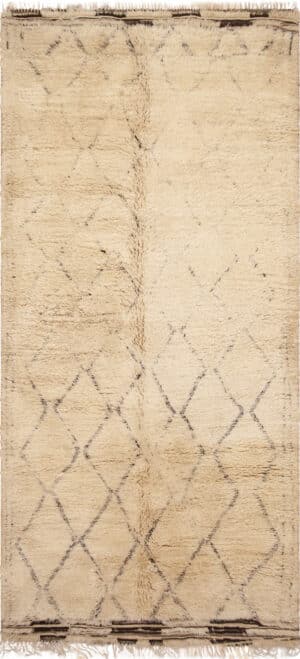
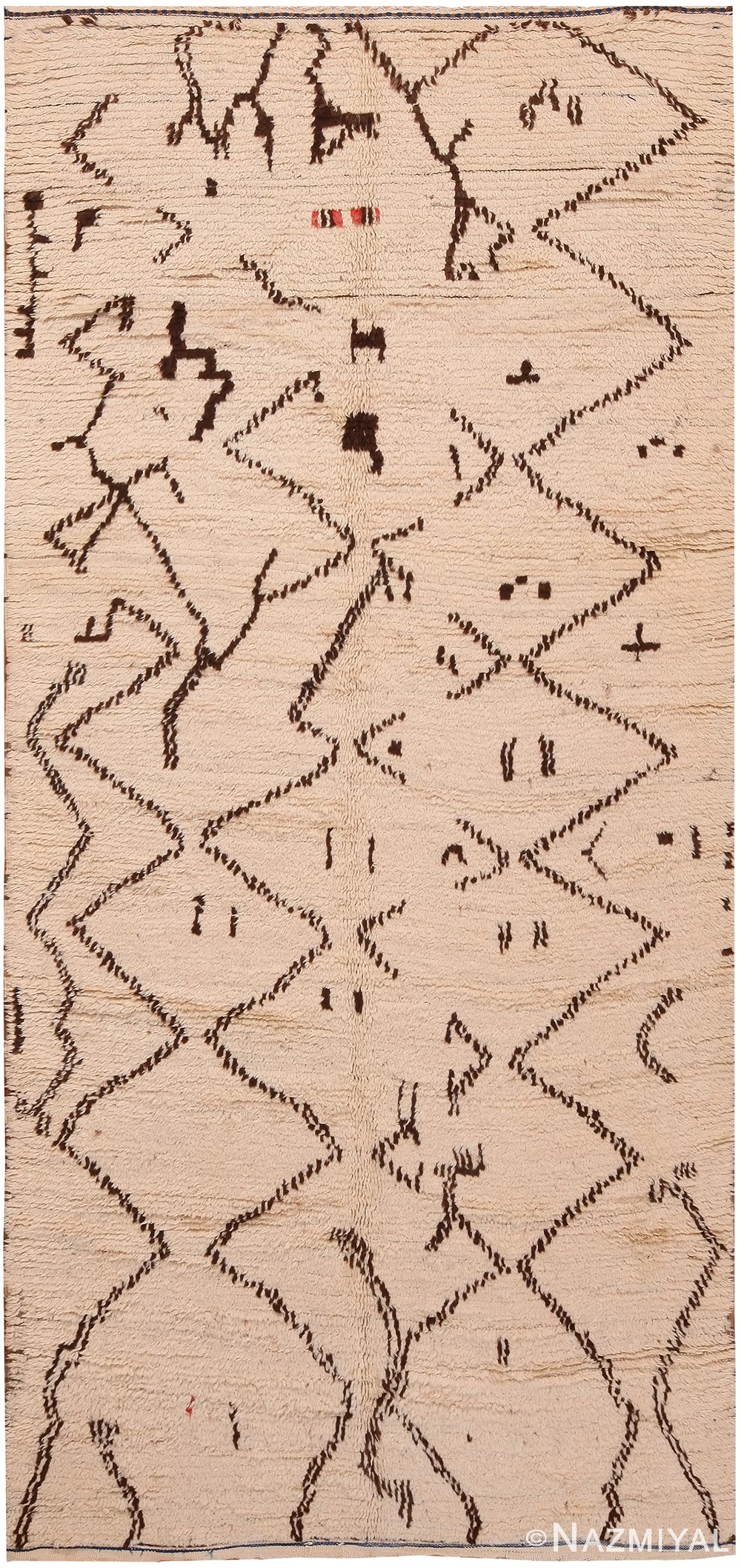
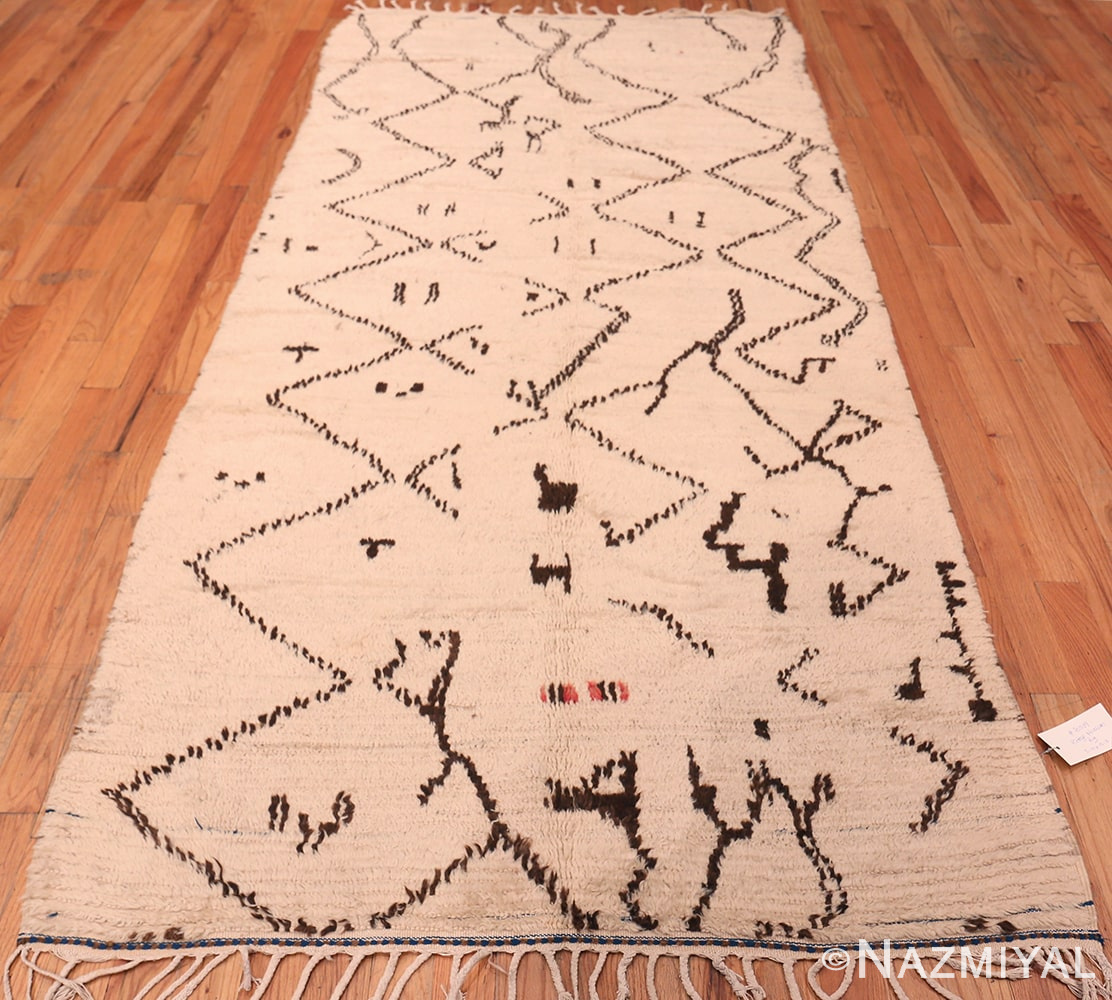
The Middle Atlas Mountains — home to the Beni Ourain confederation of tribes, whose ivory-and-dark geometric pile rugs became the defining image of Moroccan weaving in the Western design world. The high-altitude sheep of this region produce high-lanolin wool that gives Beni Ourain rugs their characteristic plush texture and warmth.
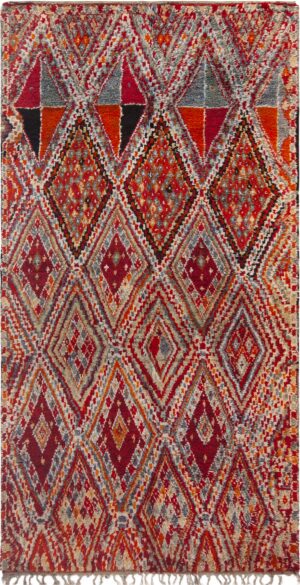
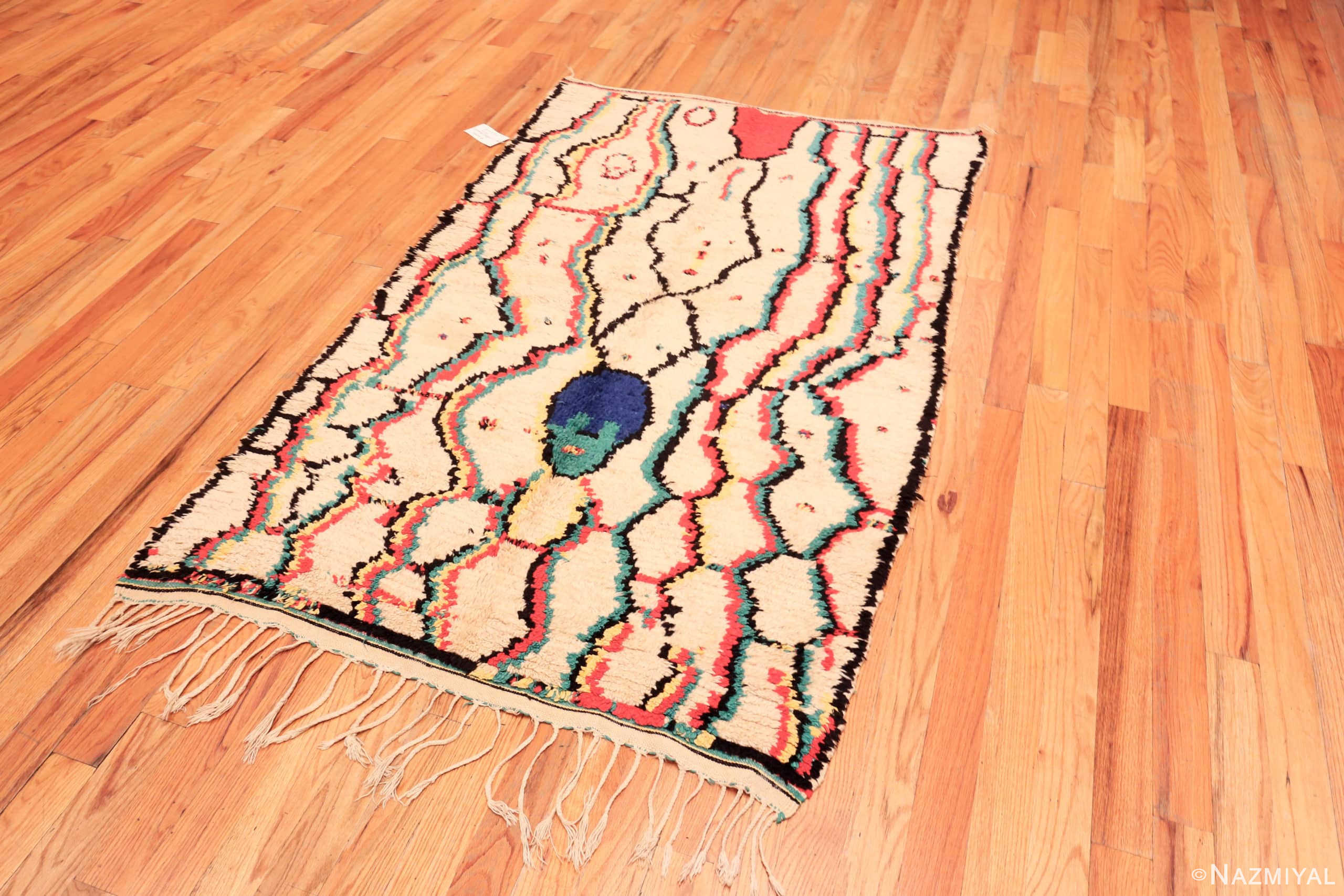
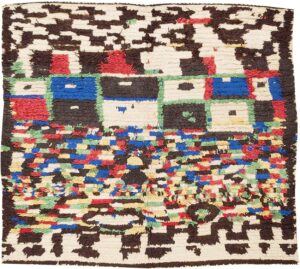
The High Atlas Mountains — home to the Azilal and Beni Mguild tribes, who produce more colorful, expressive pieces with playful geometry and vibrant palette. High Atlas rugs tend to be bolder and more personal than the restrained Beni Ourain aesthetic.
The Atlantic coast and urban centers — including Fez, Rabat, and Marrakech — where more structured flatwoven kilims and workshop-influenced pieces were produced. These rugs show more contact with Middle Eastern design conventions while retaining distinctly Moroccan visual character.
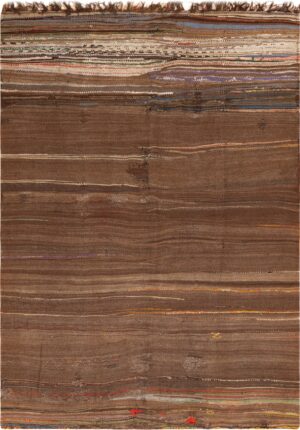
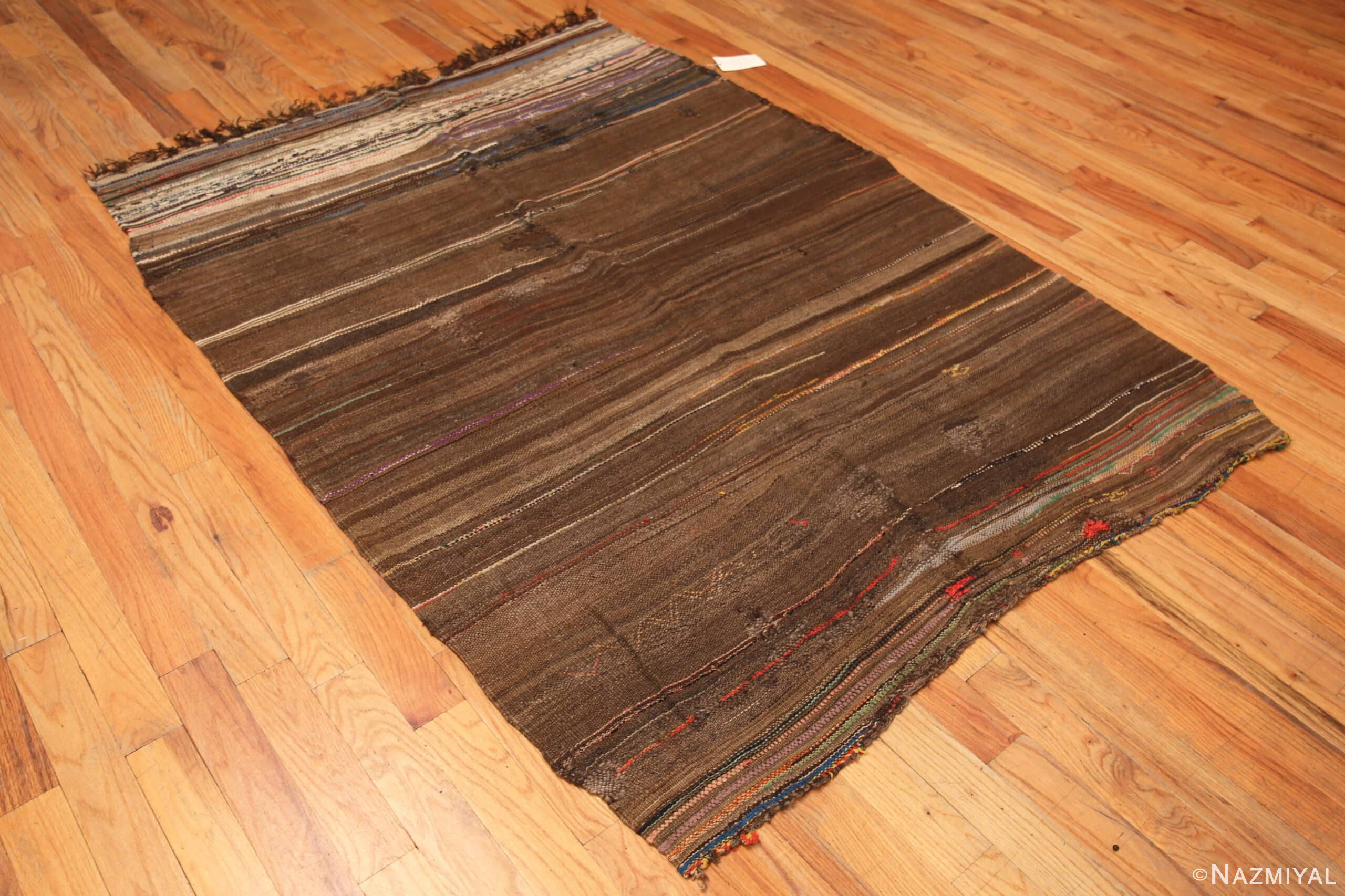
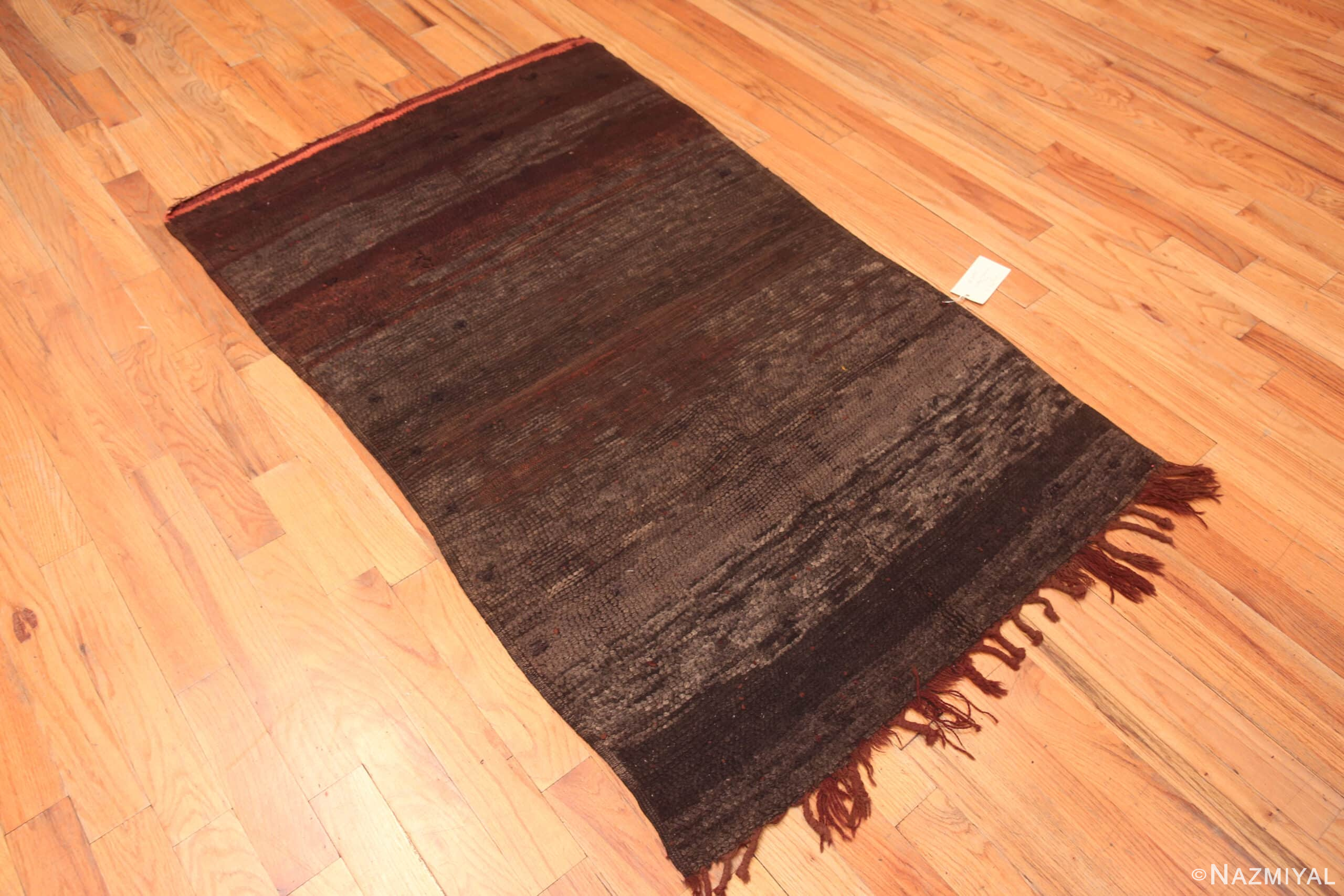
The Saharan south — where nomadic communities produced rugs with a rawer, more primitive aesthetic — simpler forms, earthier palettes, and a directness that reflects the harsh landscape.
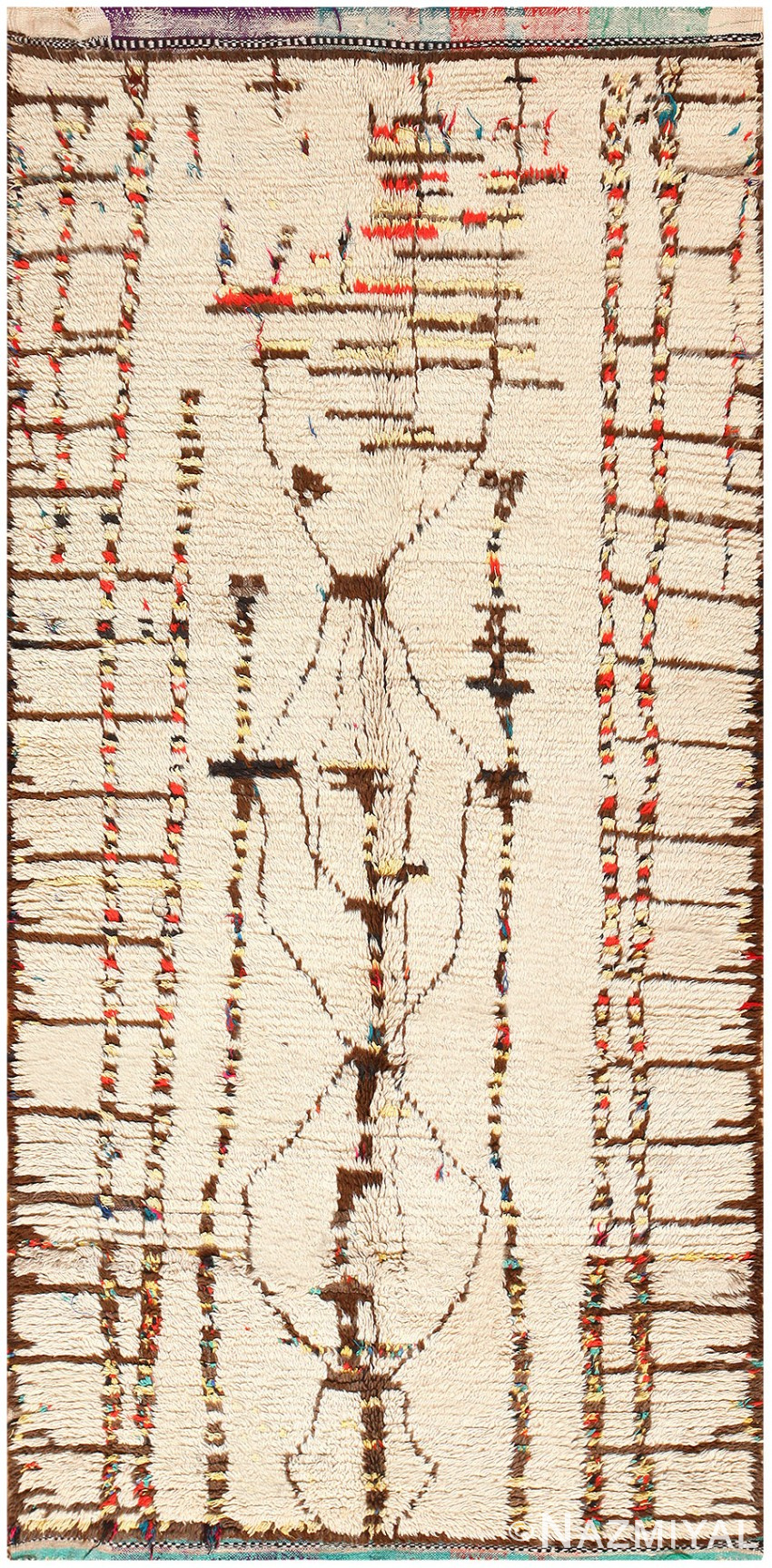
The most internationally recognized Moroccan rug type — ivory or cream pile with dark geometric motifs, typically lozenges or diamond lattice forms. Woven by the Beni Ourain confederation of some seventeen Berber tribes in Morocco’s Middle Atlas. The minimalist aesthetic and plush high-lanolin wool made these rugs iconic in modernist interiors from the mid-20th century onward.
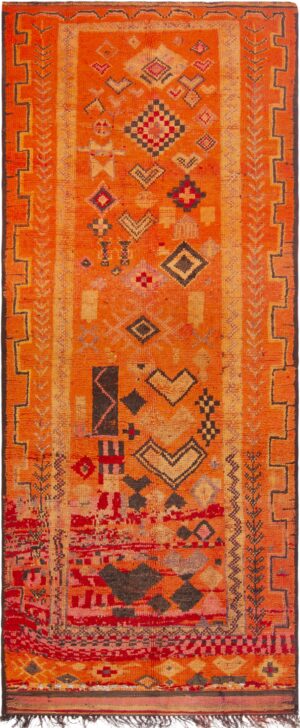
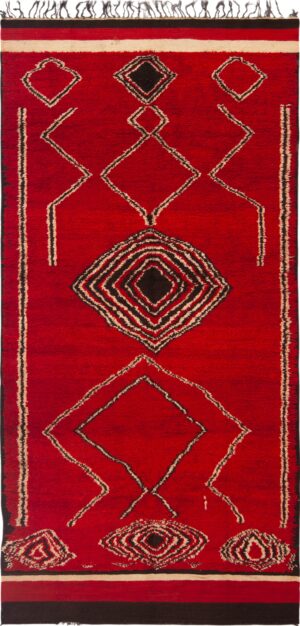
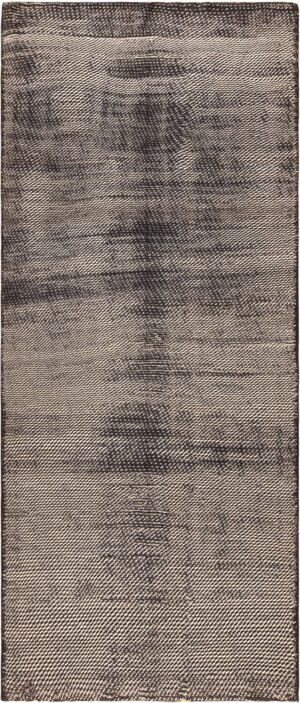
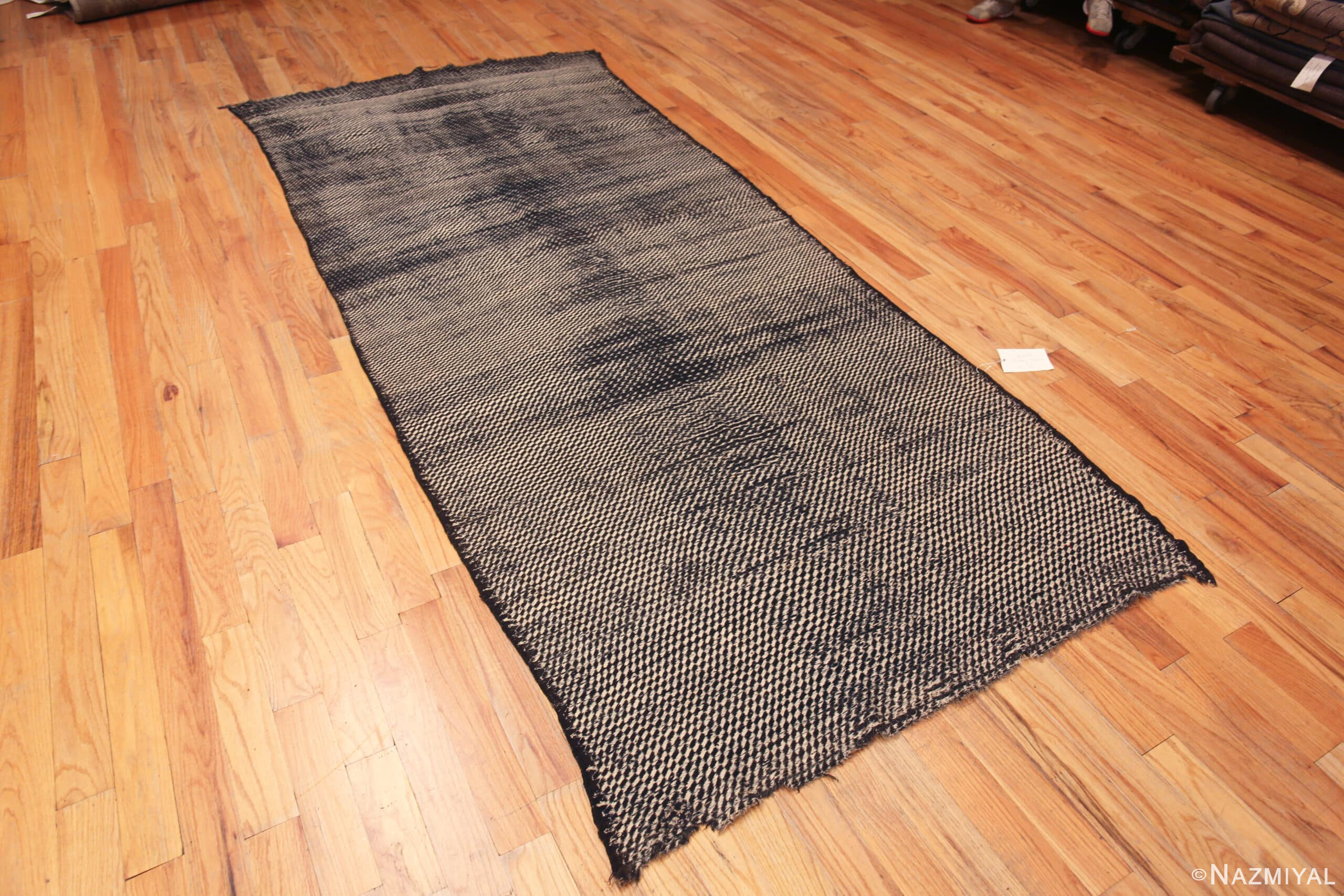
A broader category encompassing many regional Amazigh weaving traditions across Morocco — often symbolic, boldly composed, and rich with texture and hand-drawn energy. Berber rugs reflect the visual vocabulary of specific tribal communities rather than a single unified style.
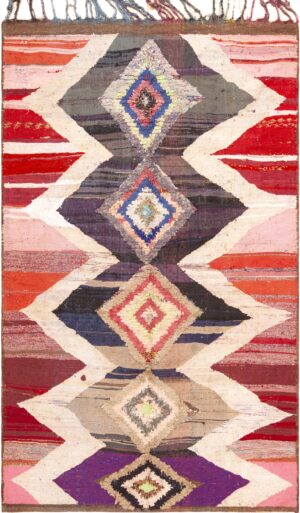
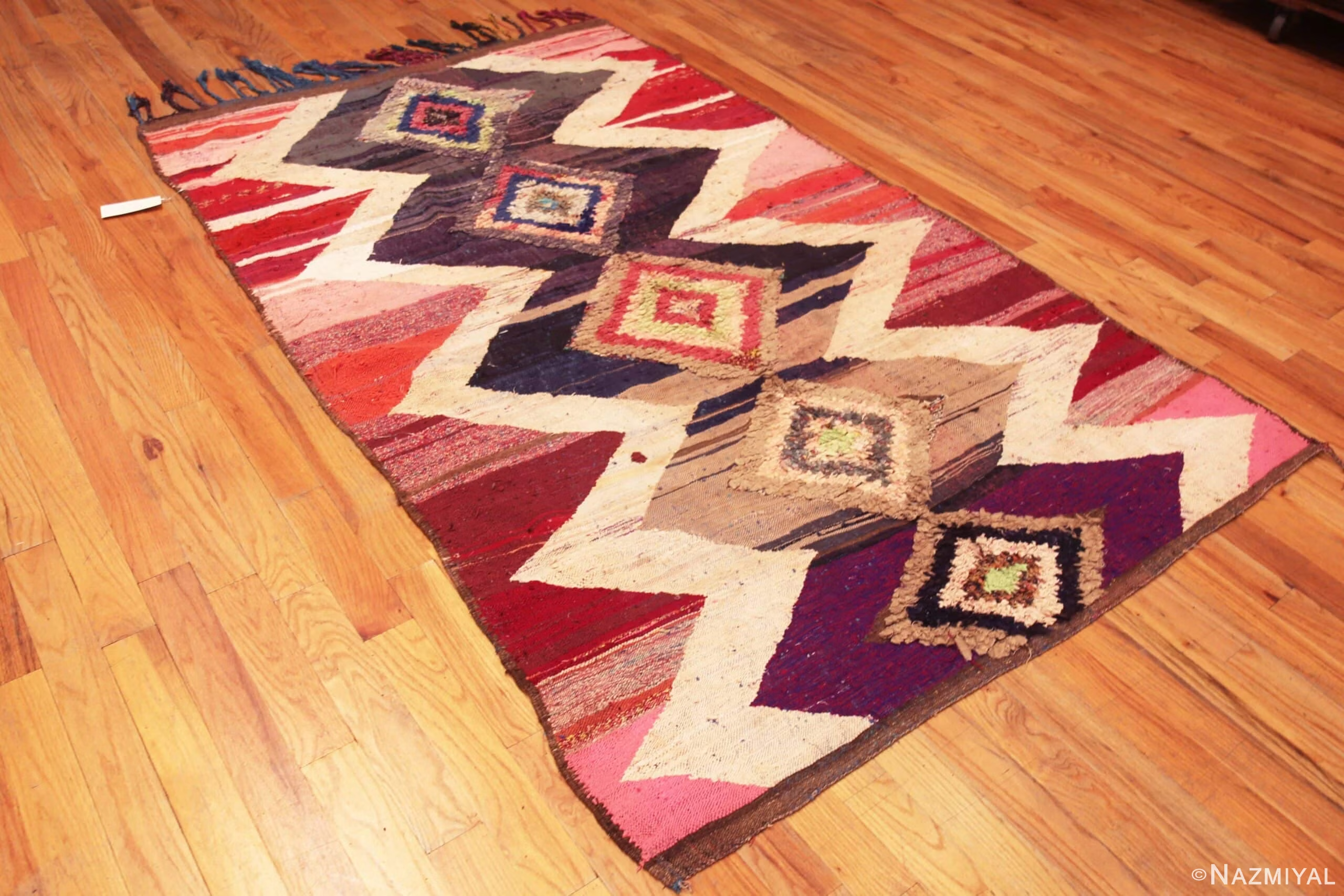
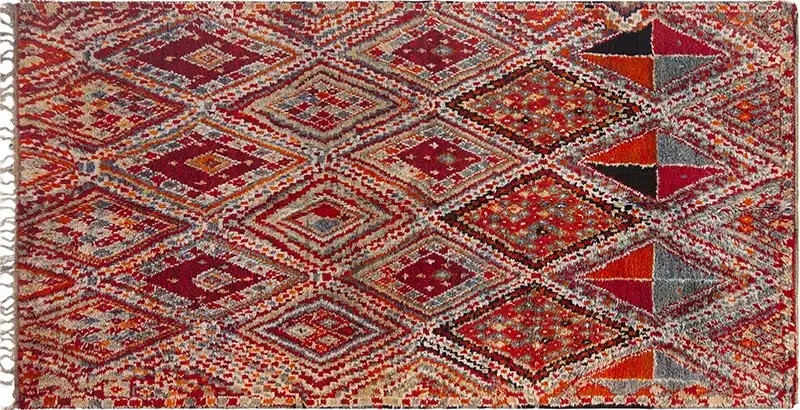
From the High Atlas province, typically more vibrant and expressive than Beni Ourain, with color and abstraction that feels closer to contemporary art. Great when you want the rug to be the statement piece of the room.
Boucherouite Rugs
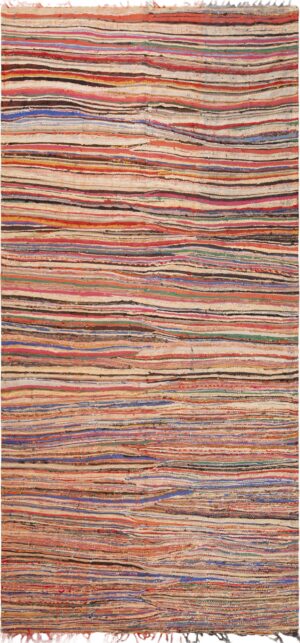
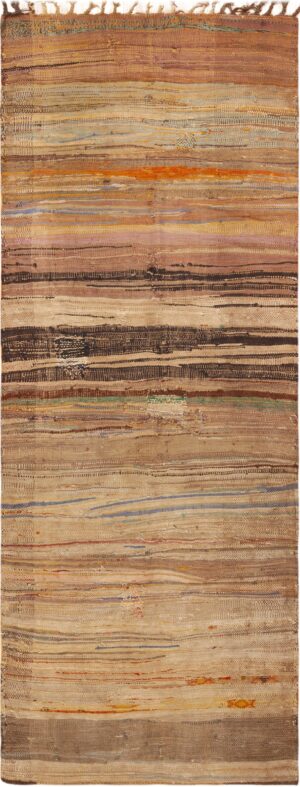
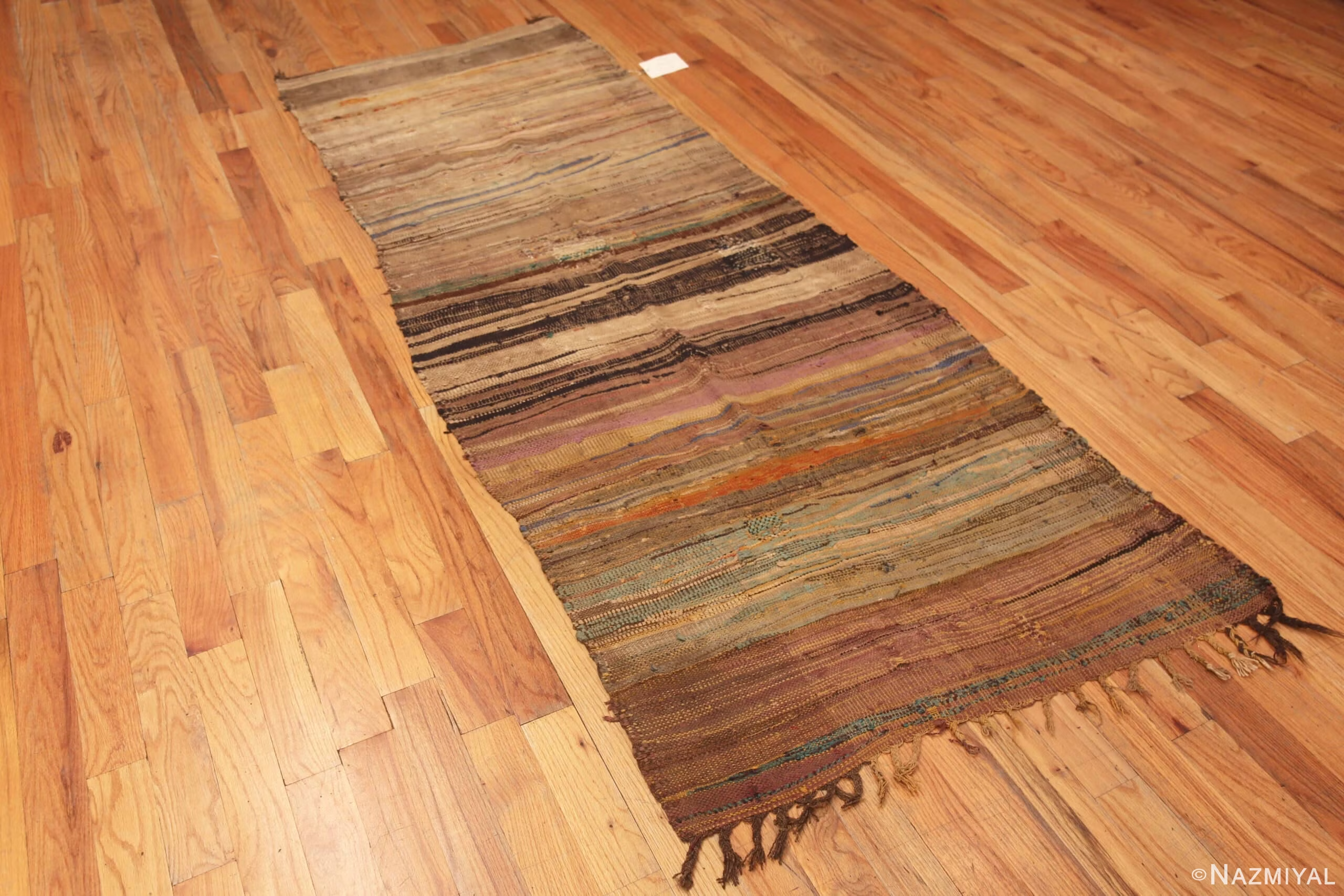
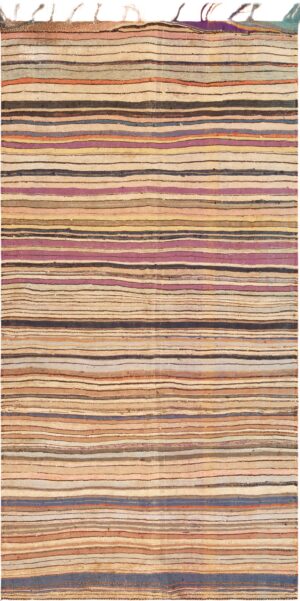
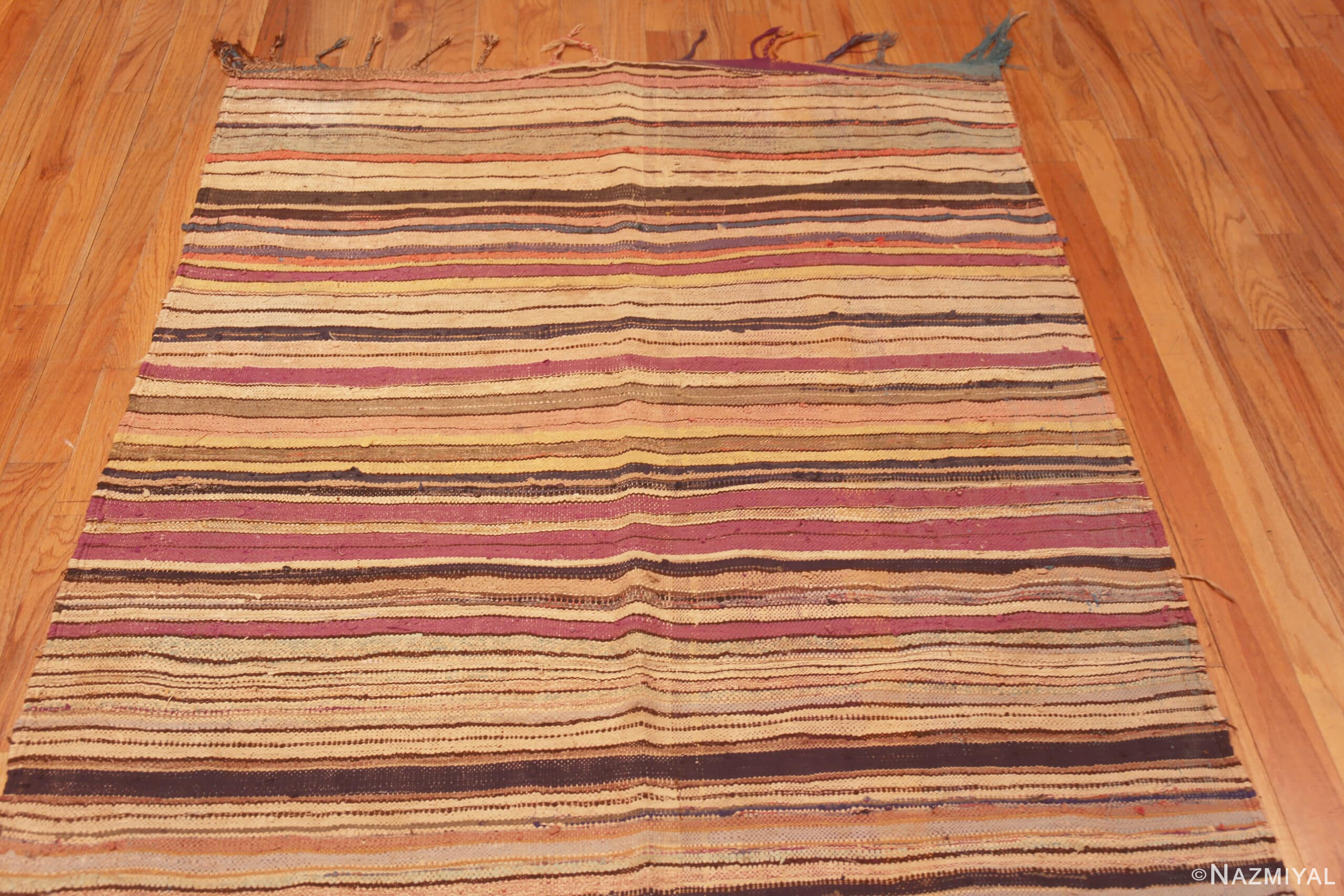
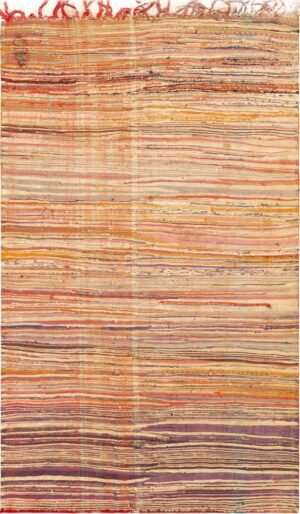
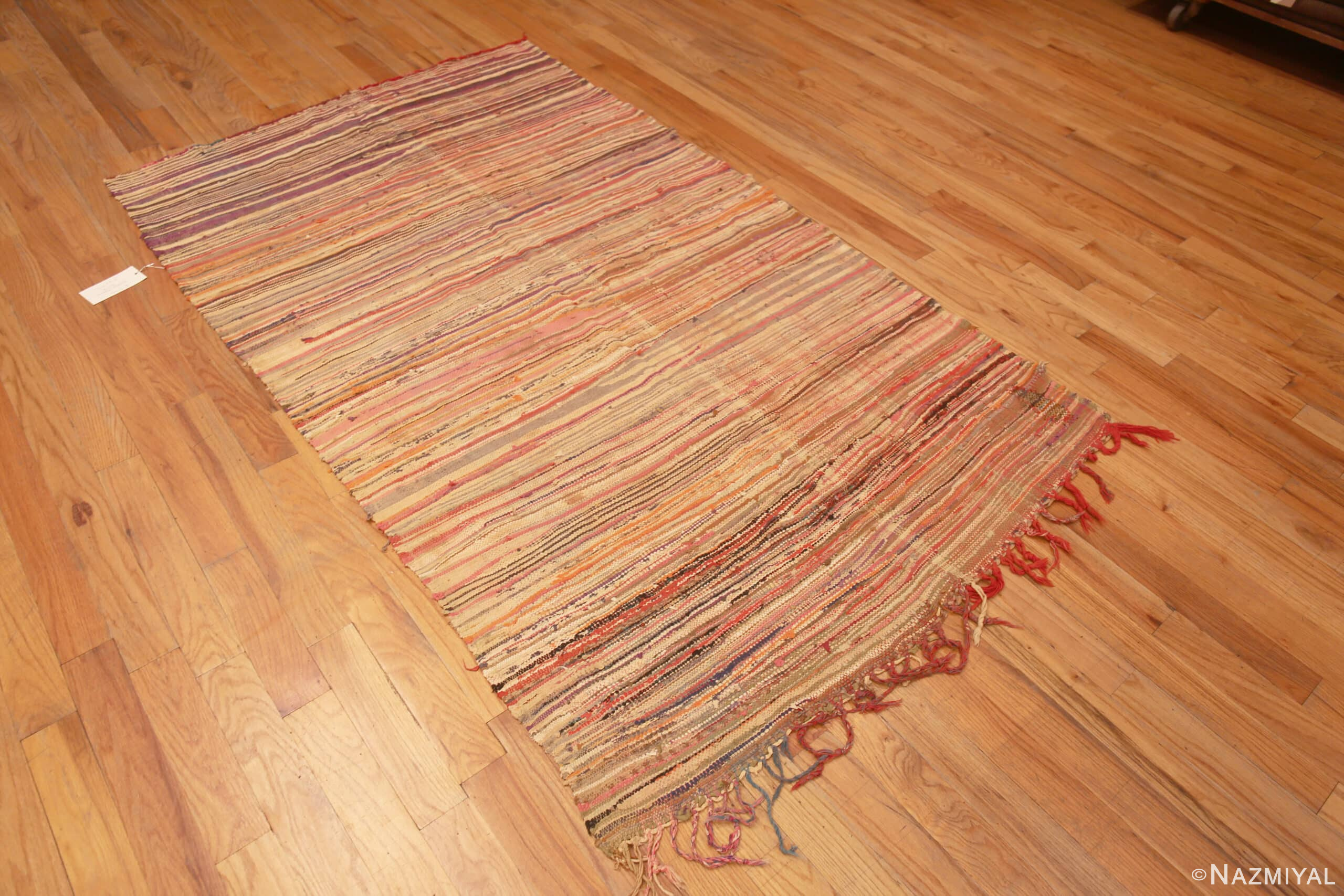
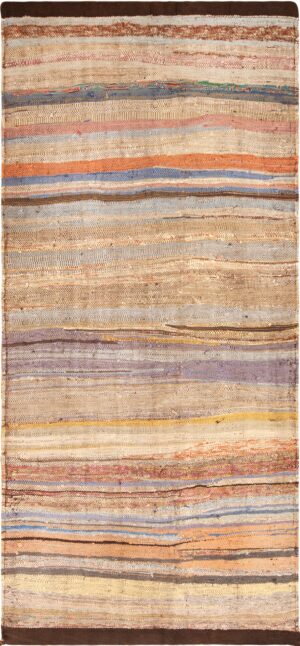
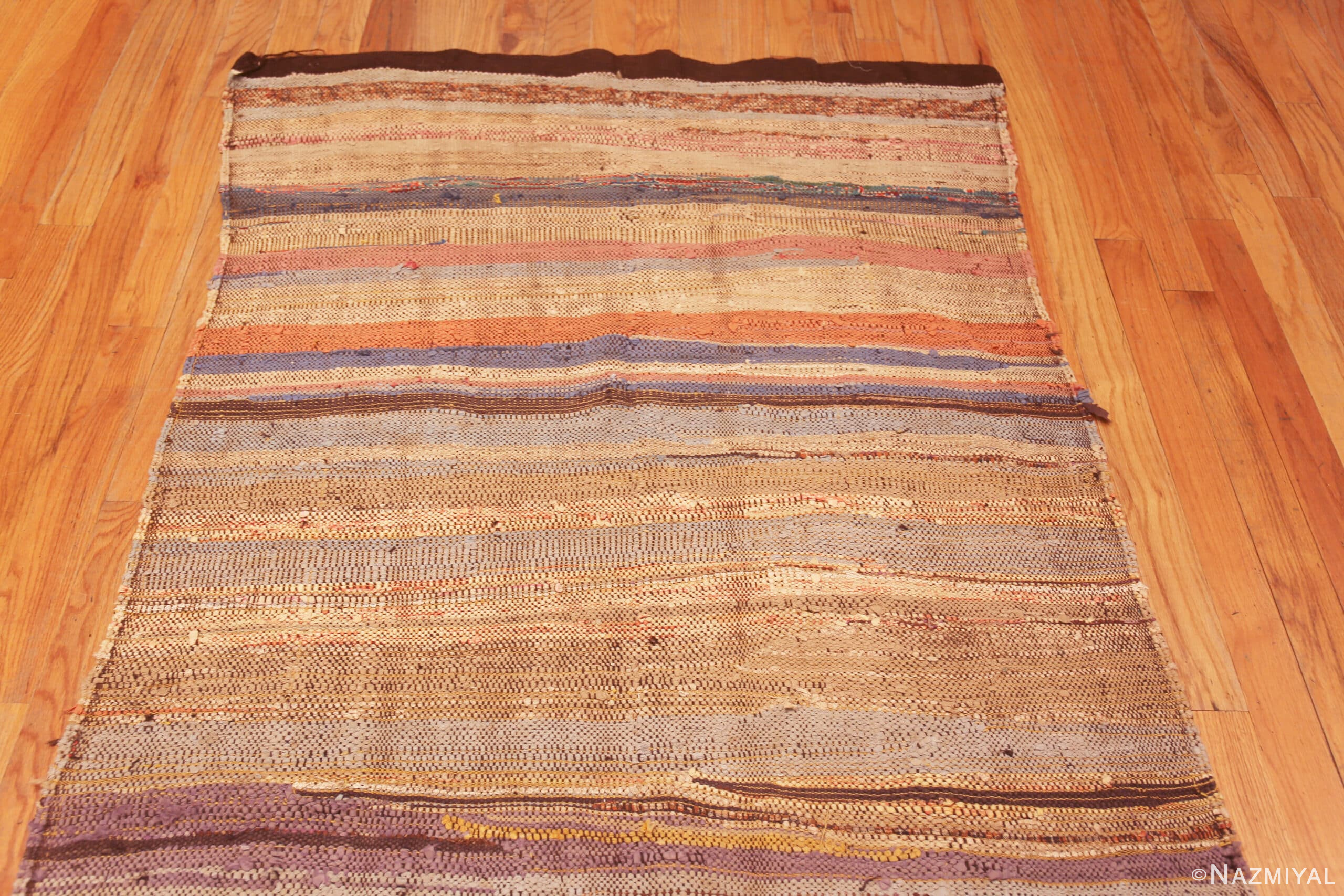
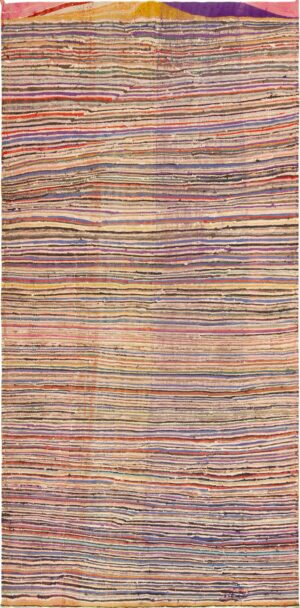
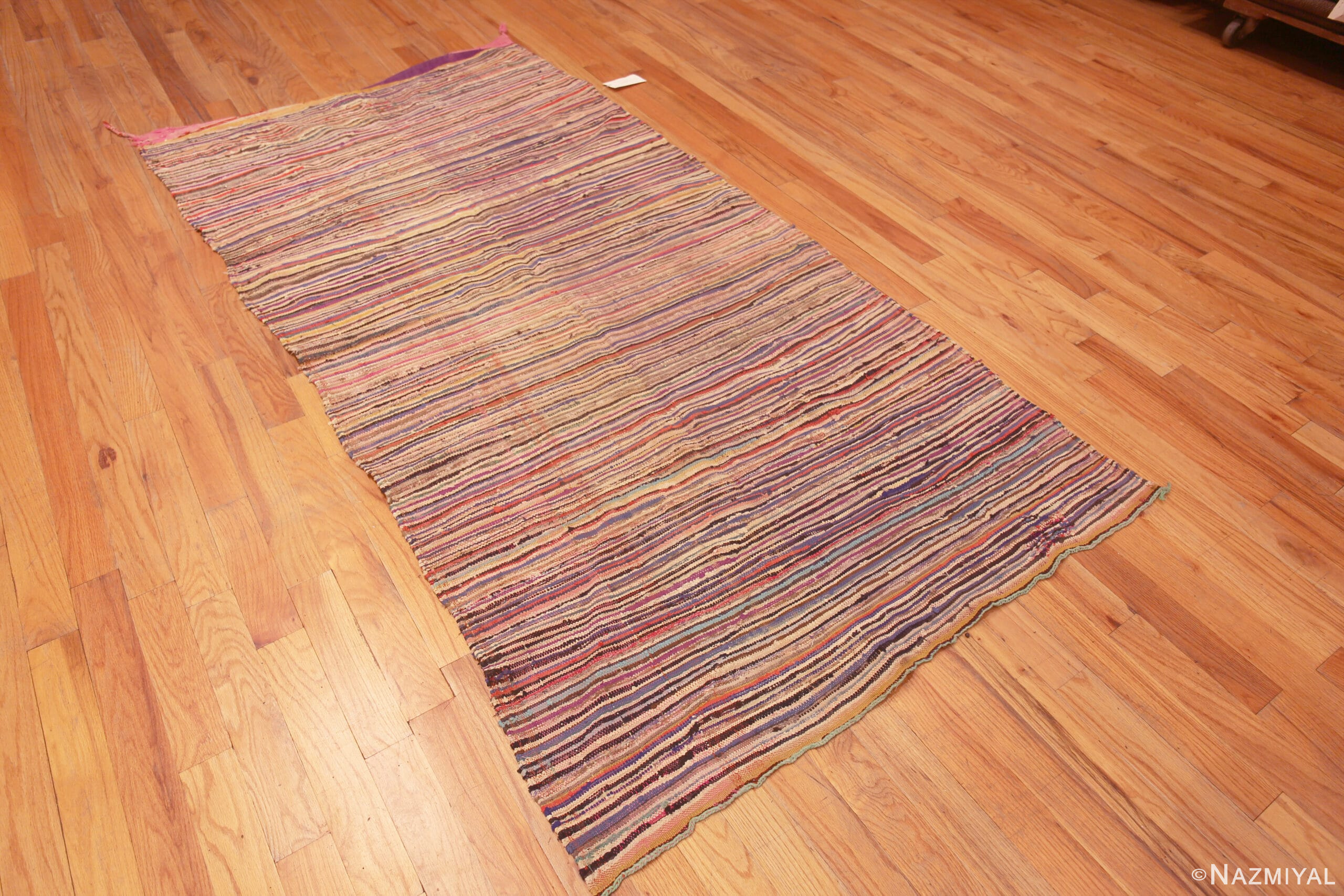
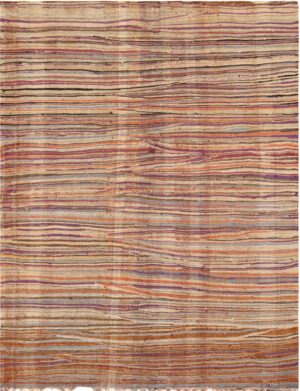
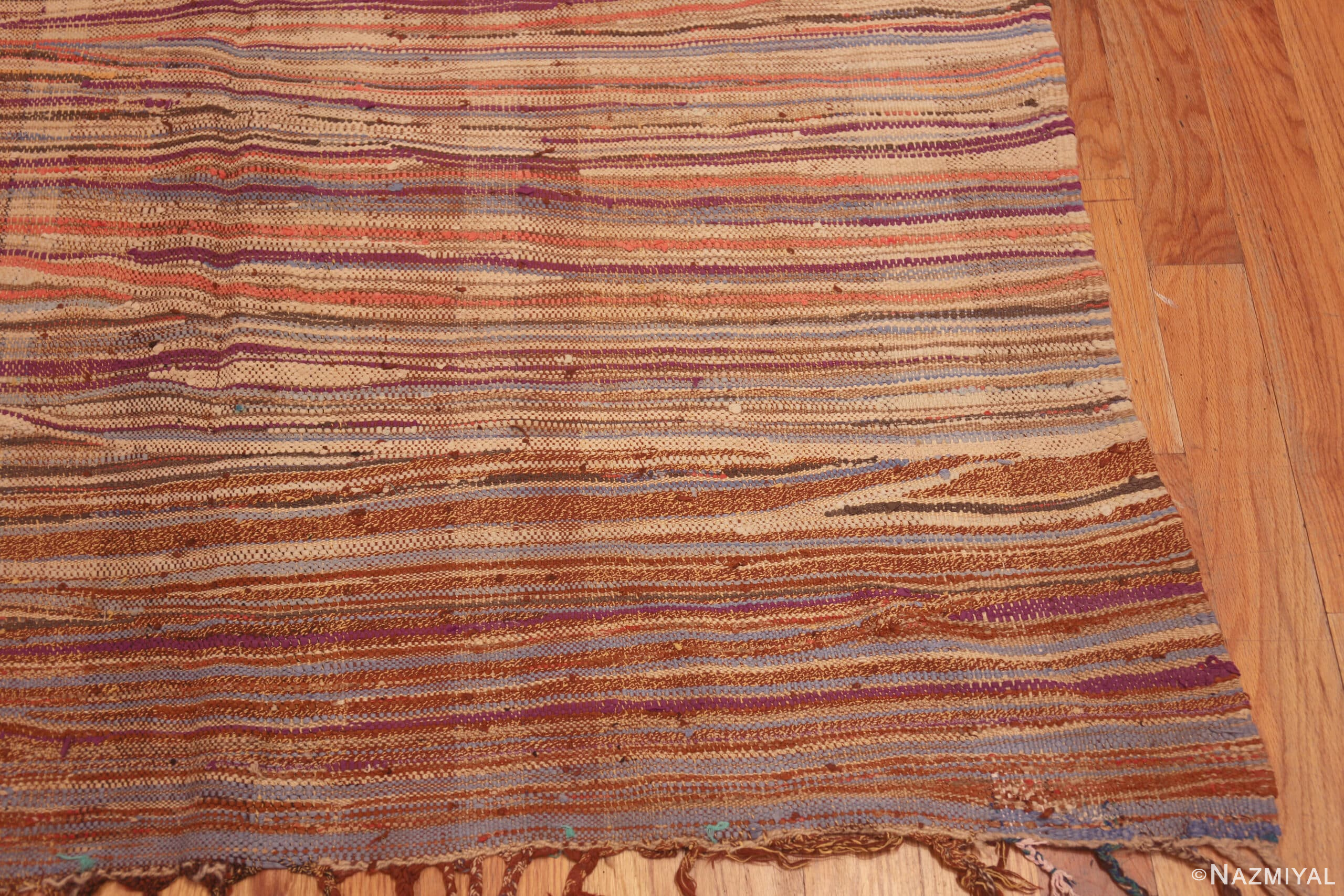
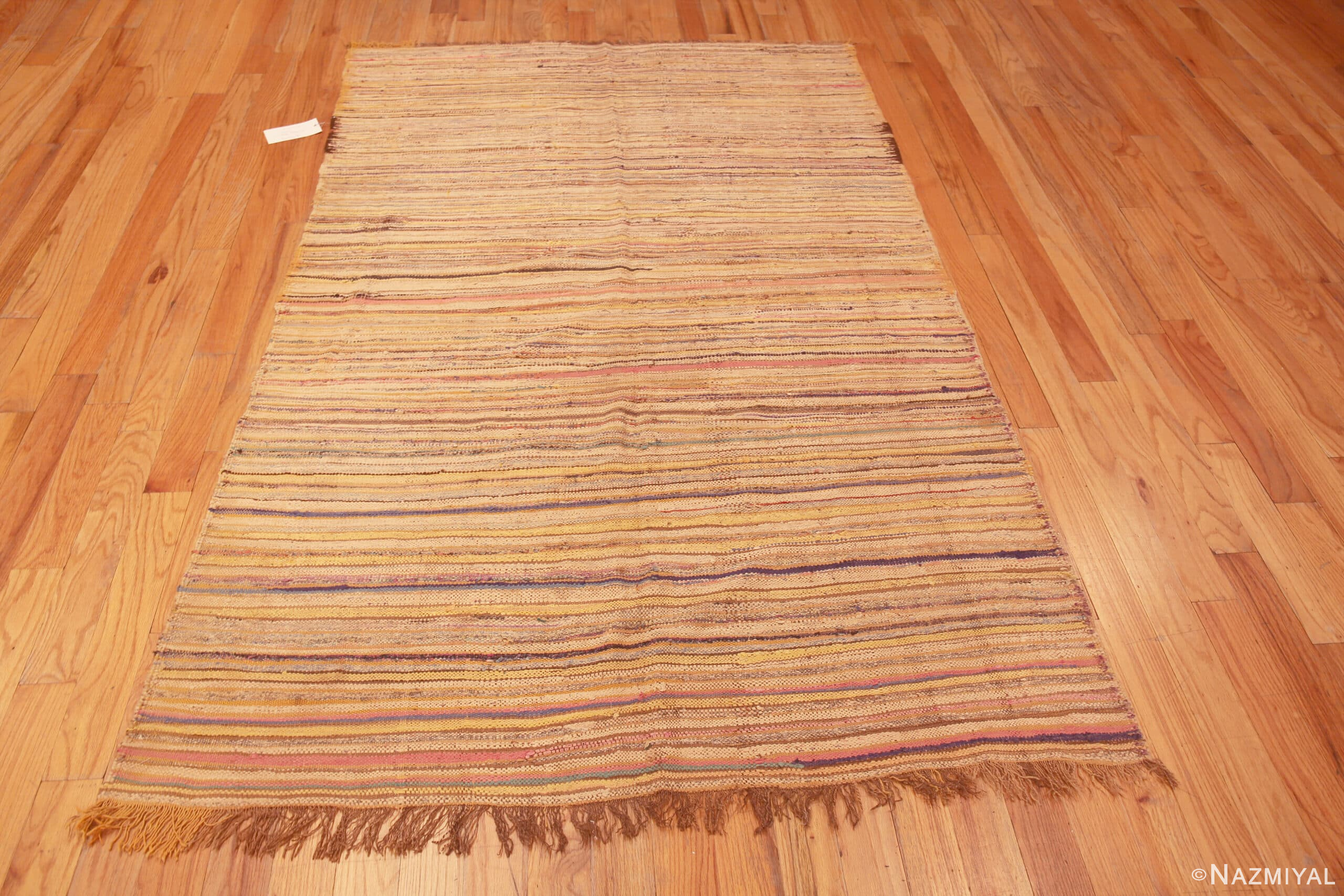
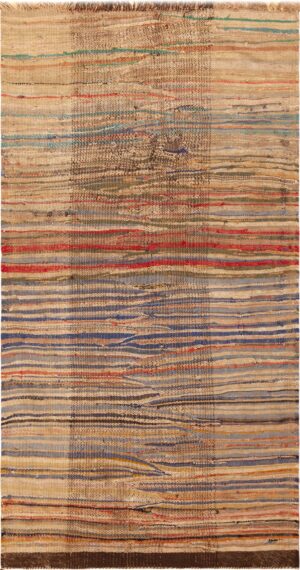
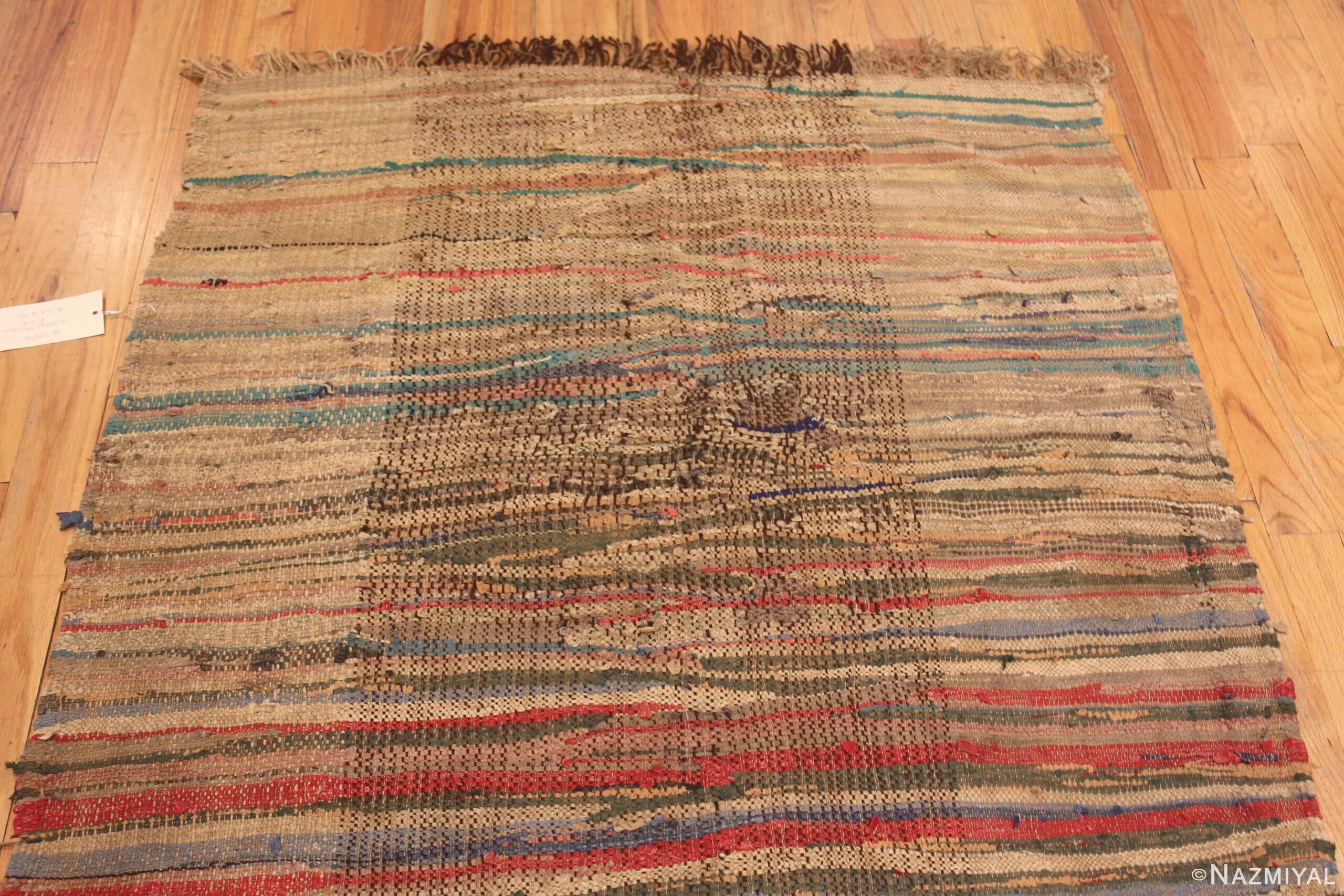
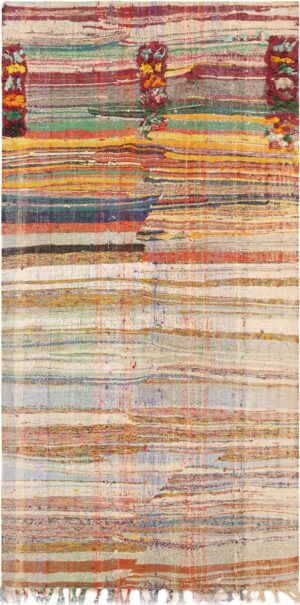
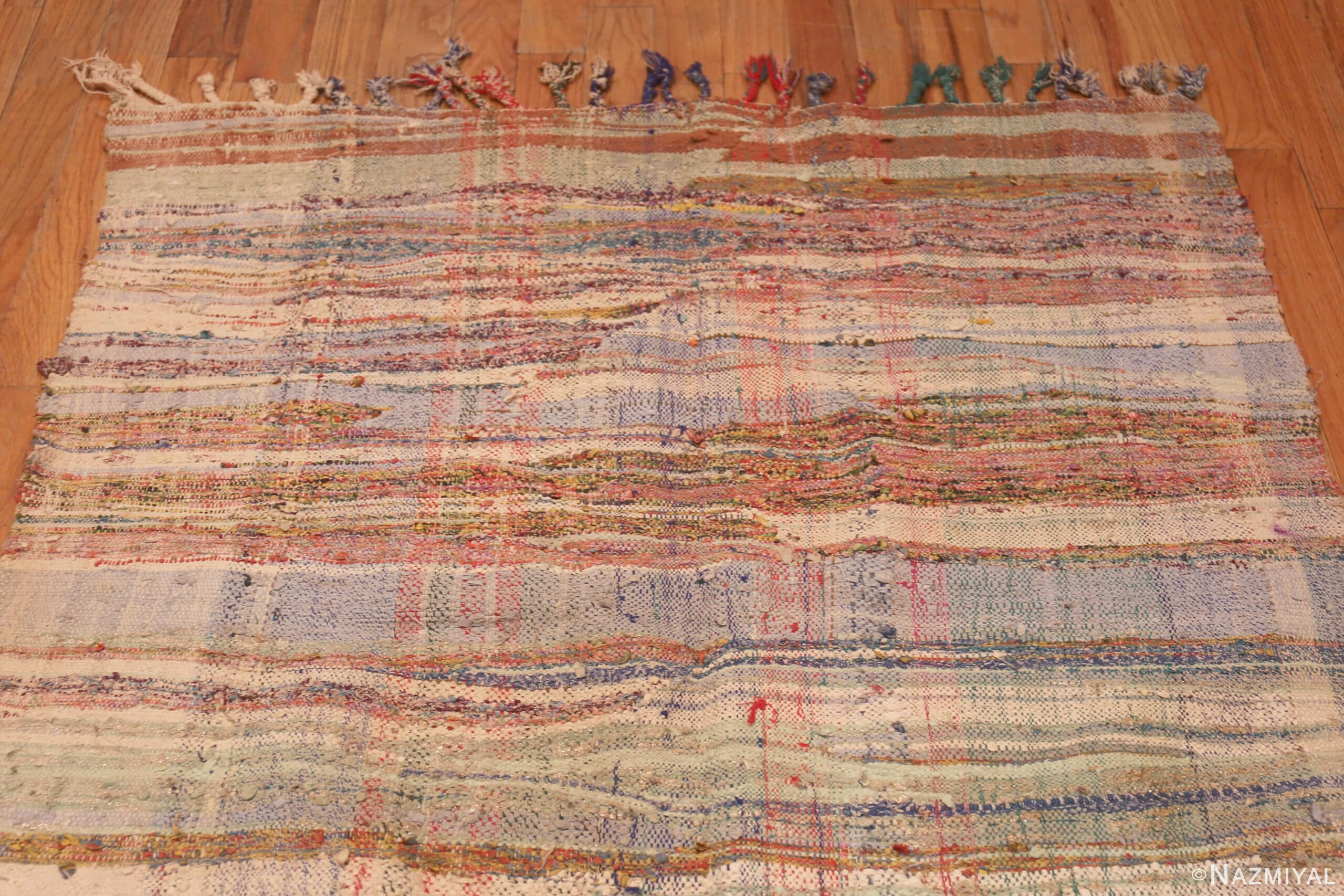
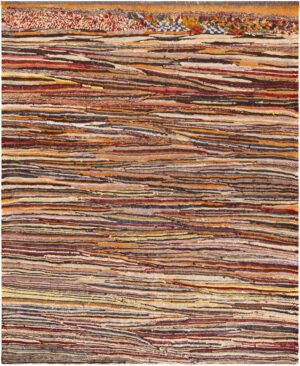
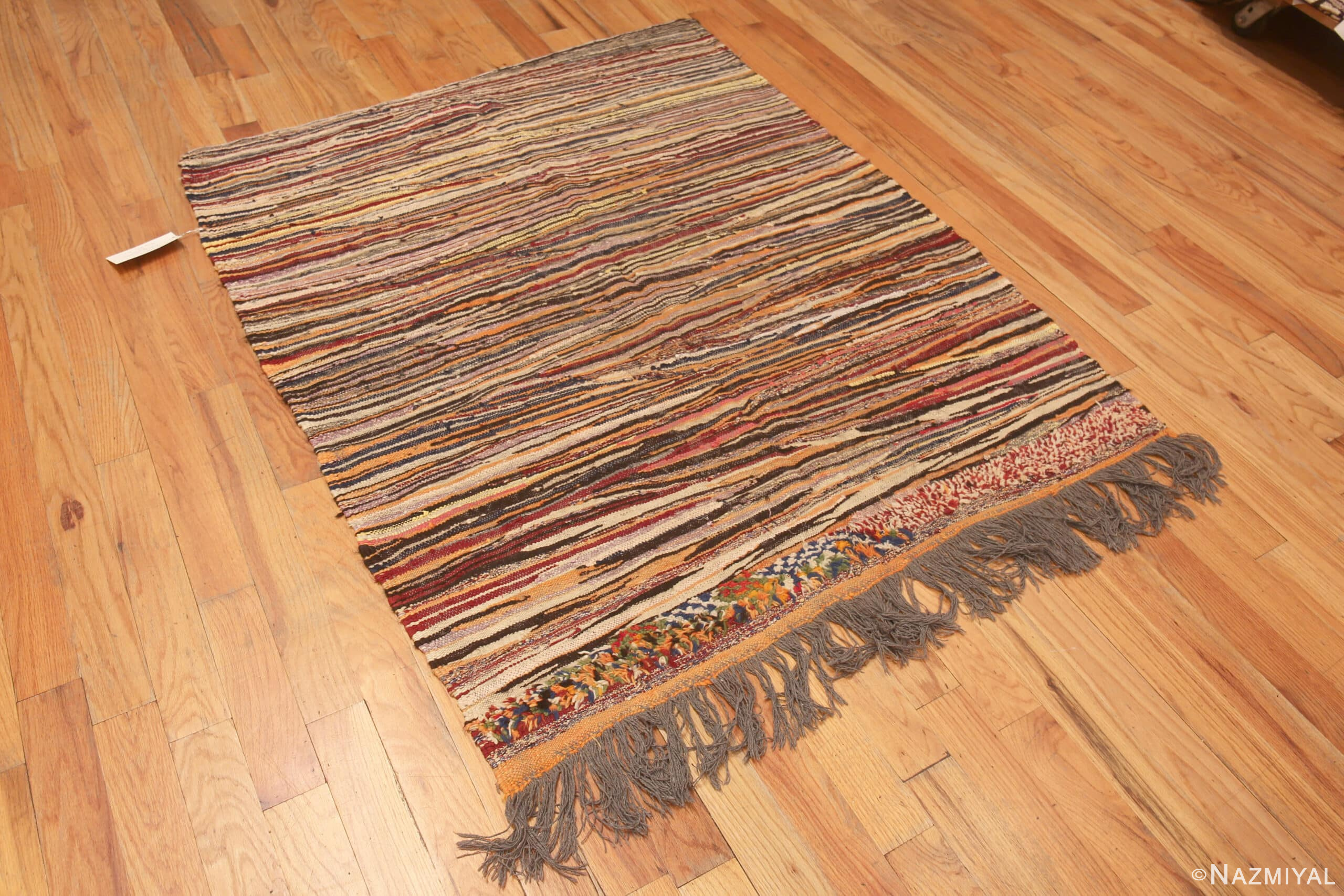
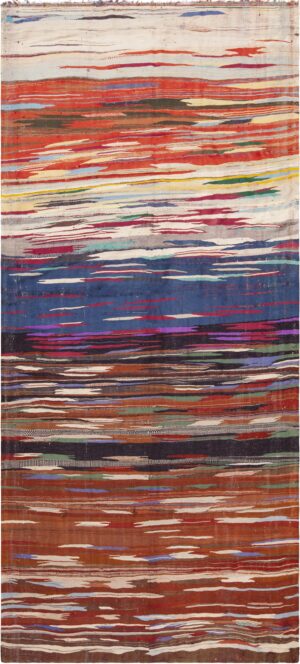
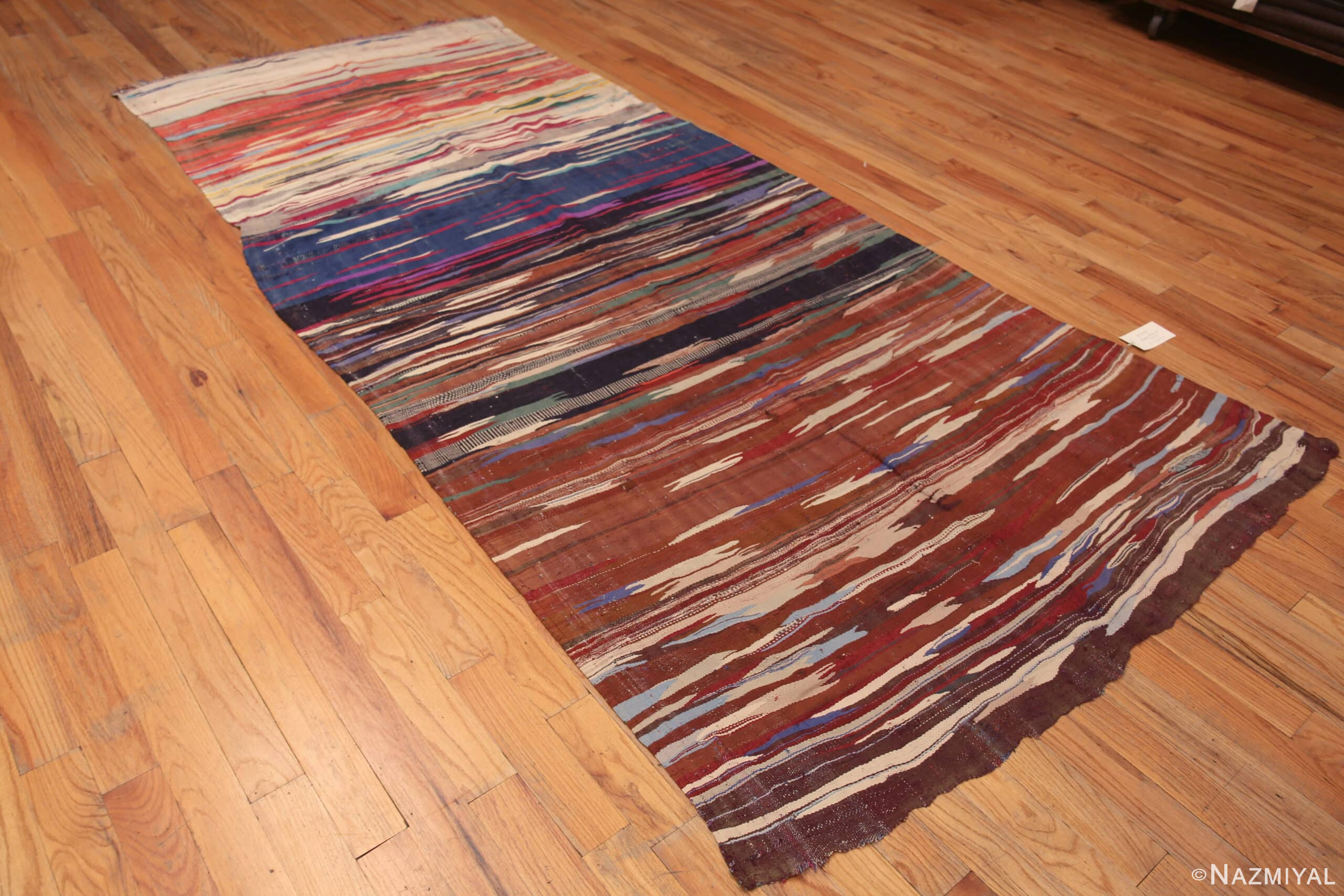
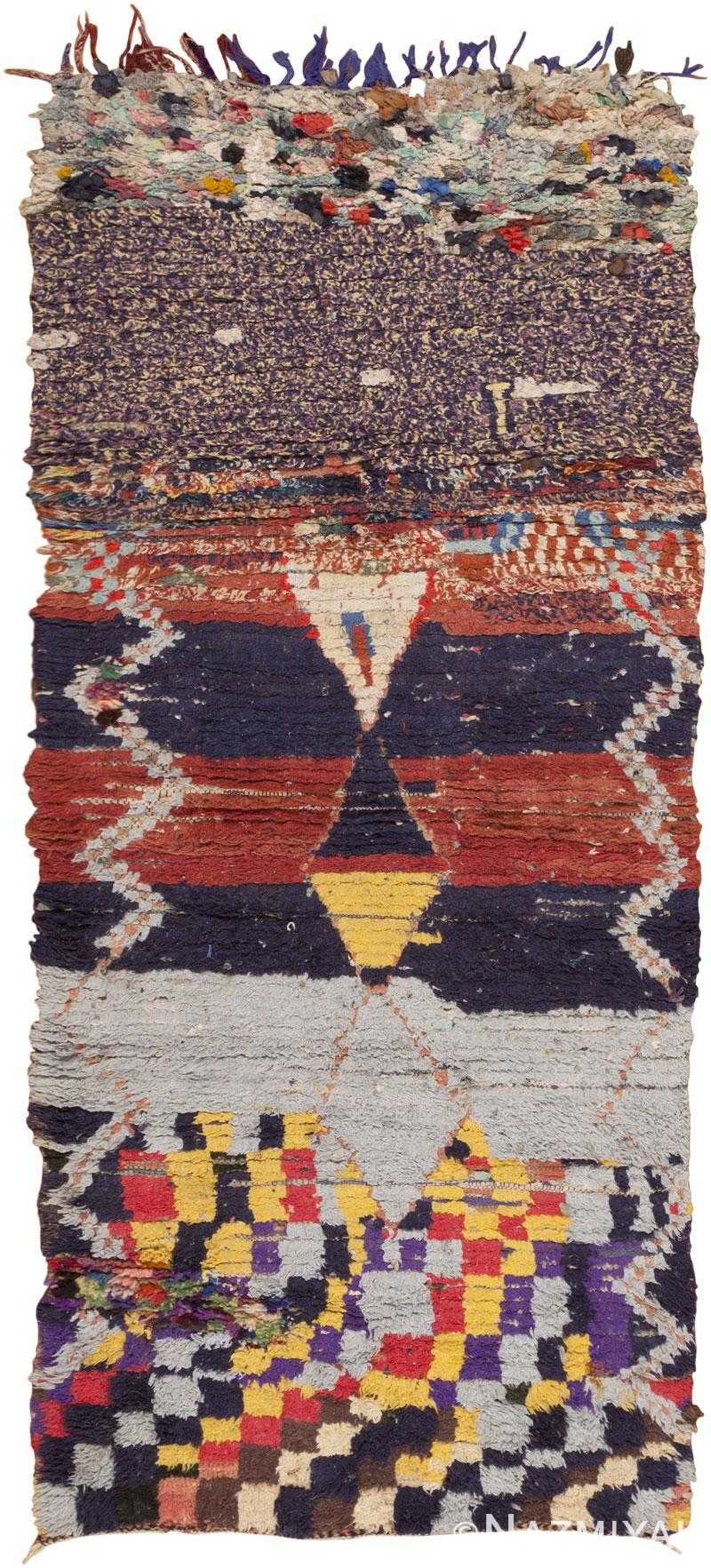
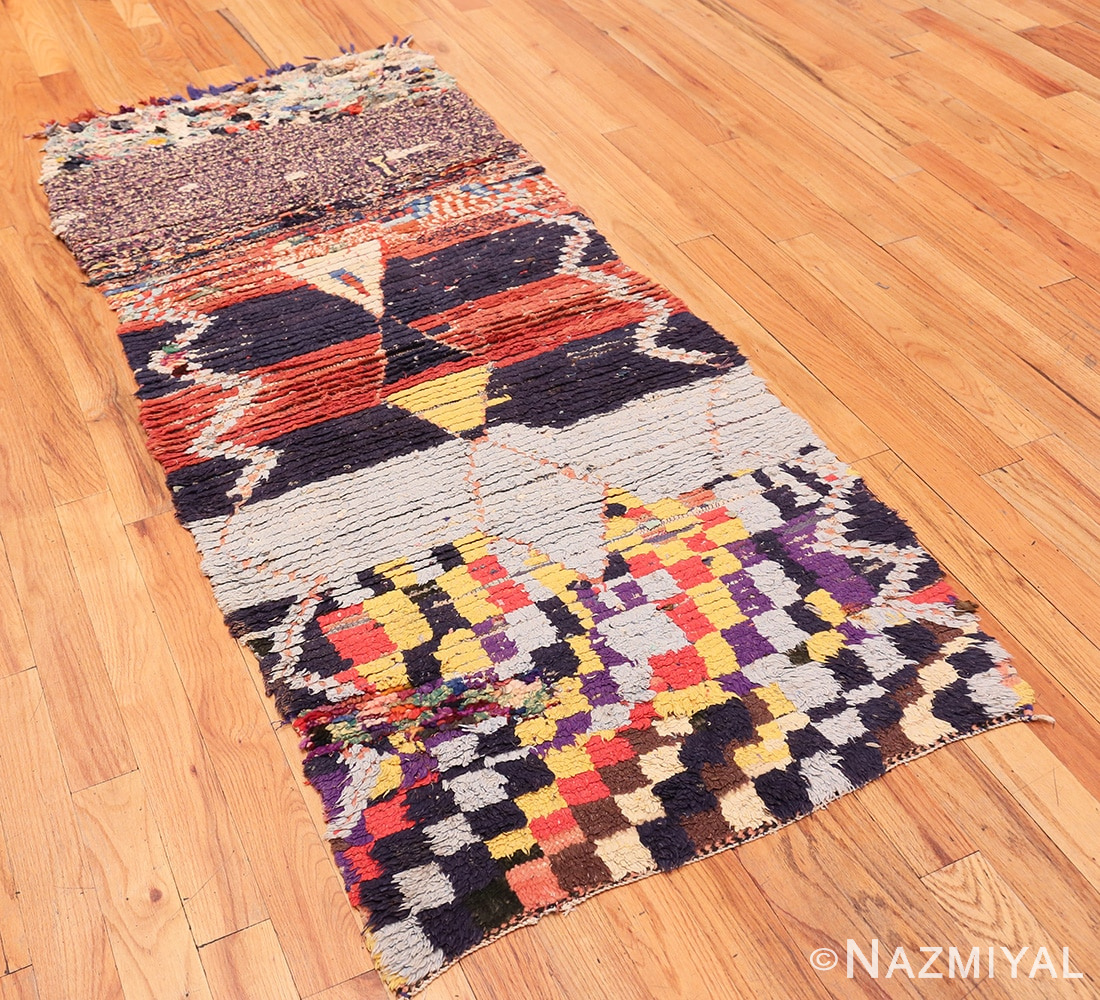
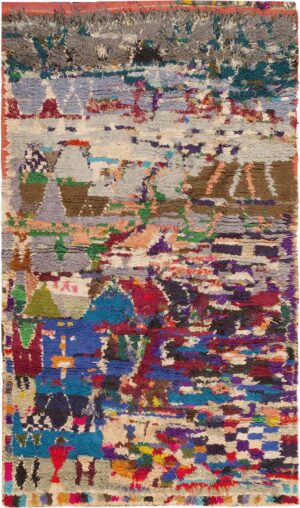
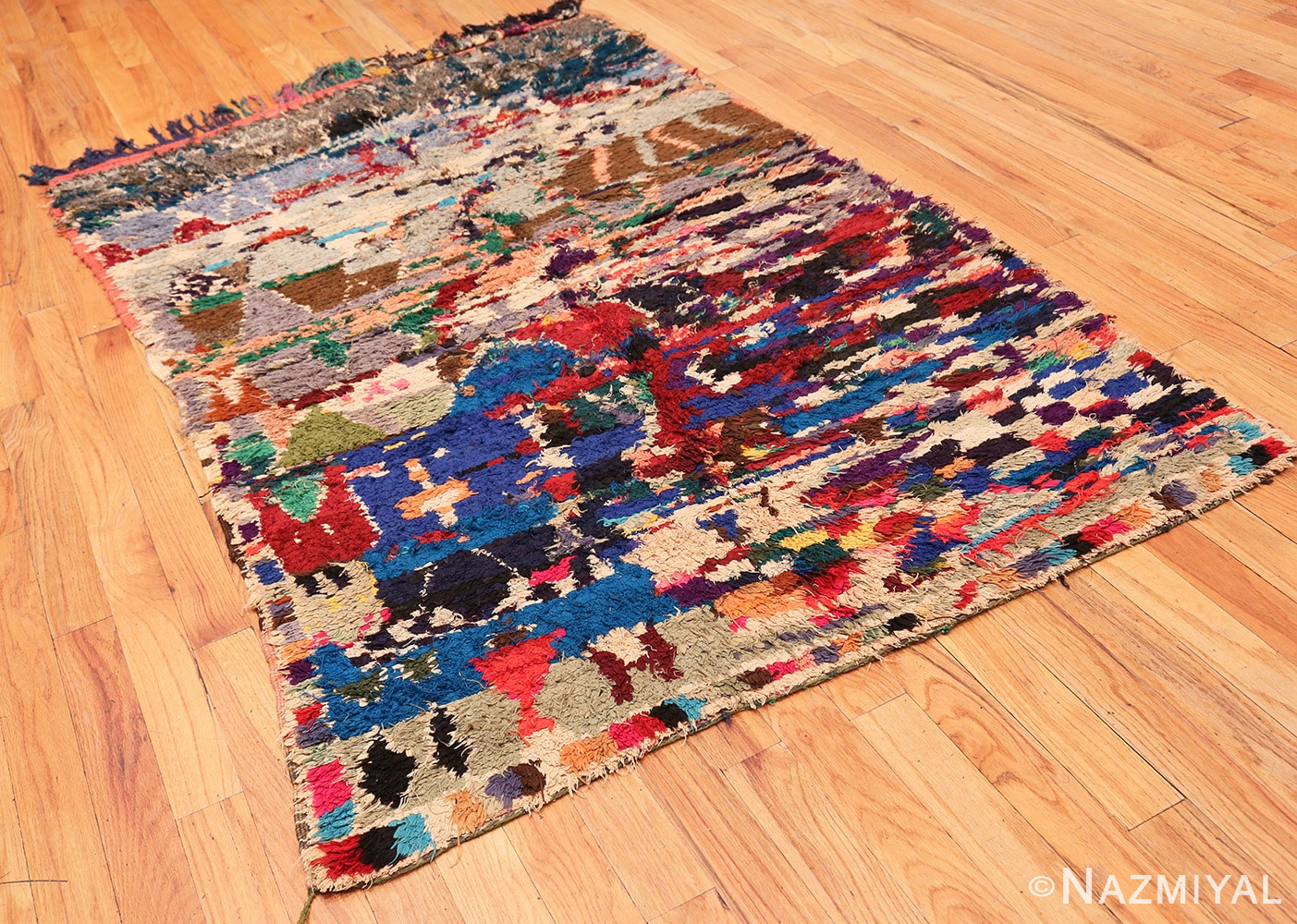
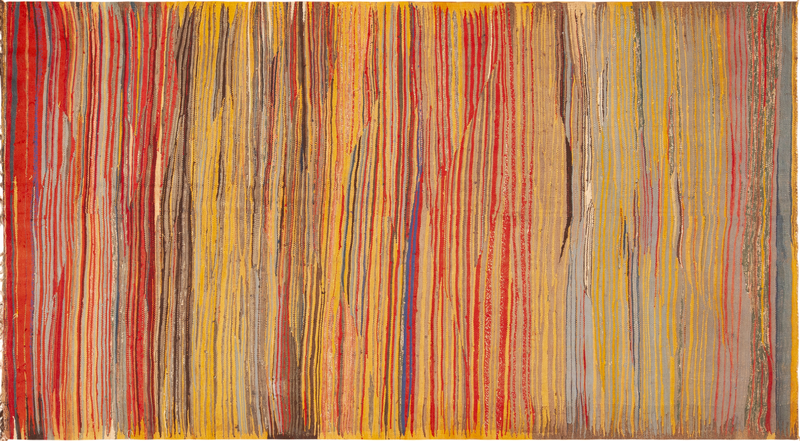
Highly expressive rugs made from repurposed and recycled textile strips — graphic, colorful, and unmistakably modern in spirit. Boucherouite rugs represent a recycling tradition within Moroccan weaving that predates contemporary sustainability consciousness by generations.
Moroccan Kilims (Flatweaves)
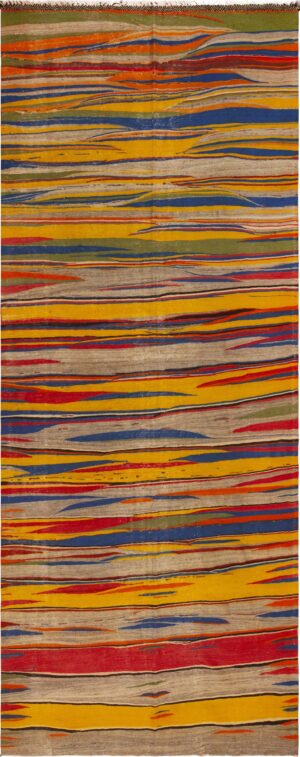
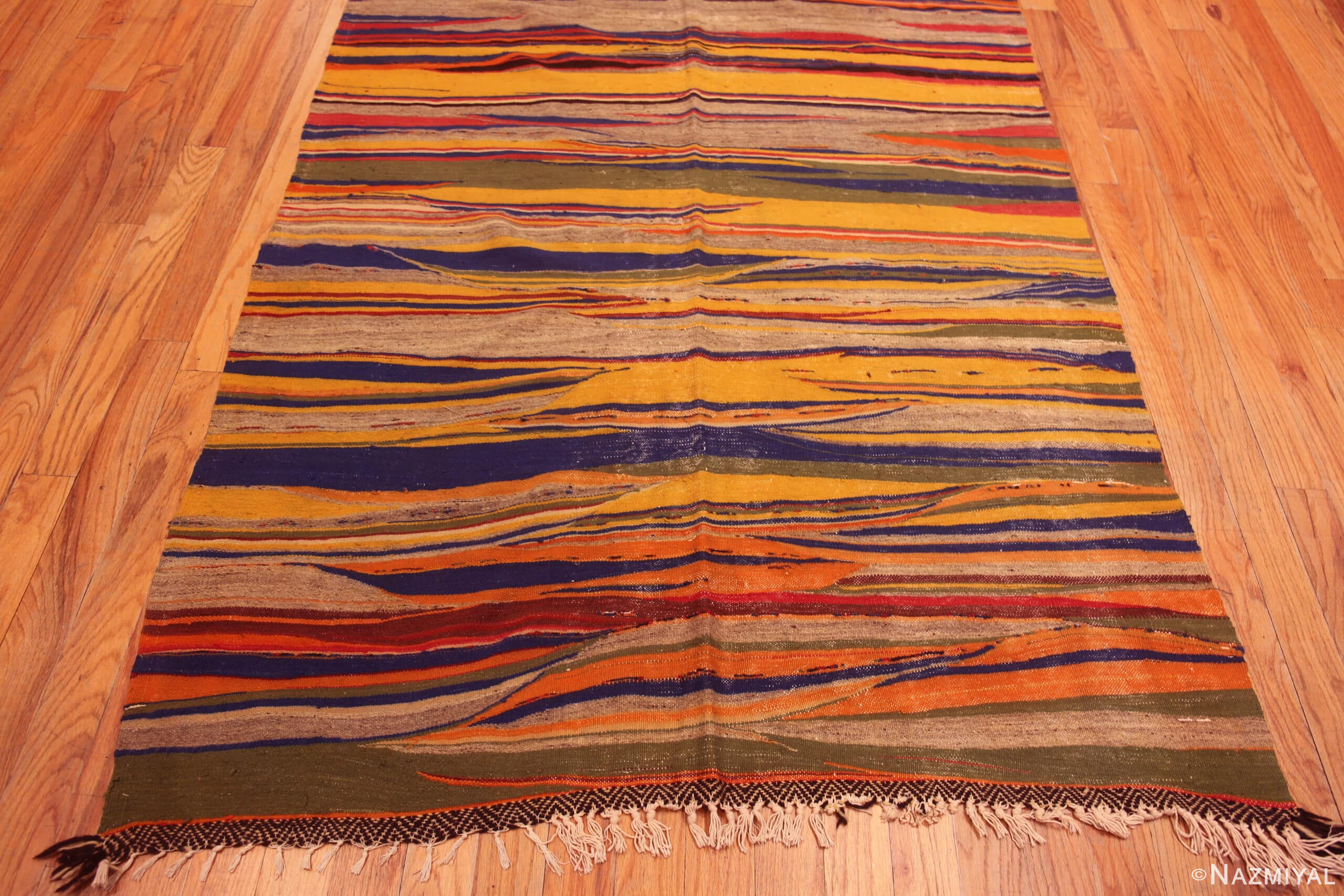
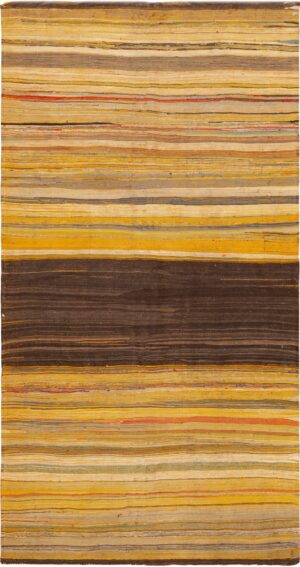
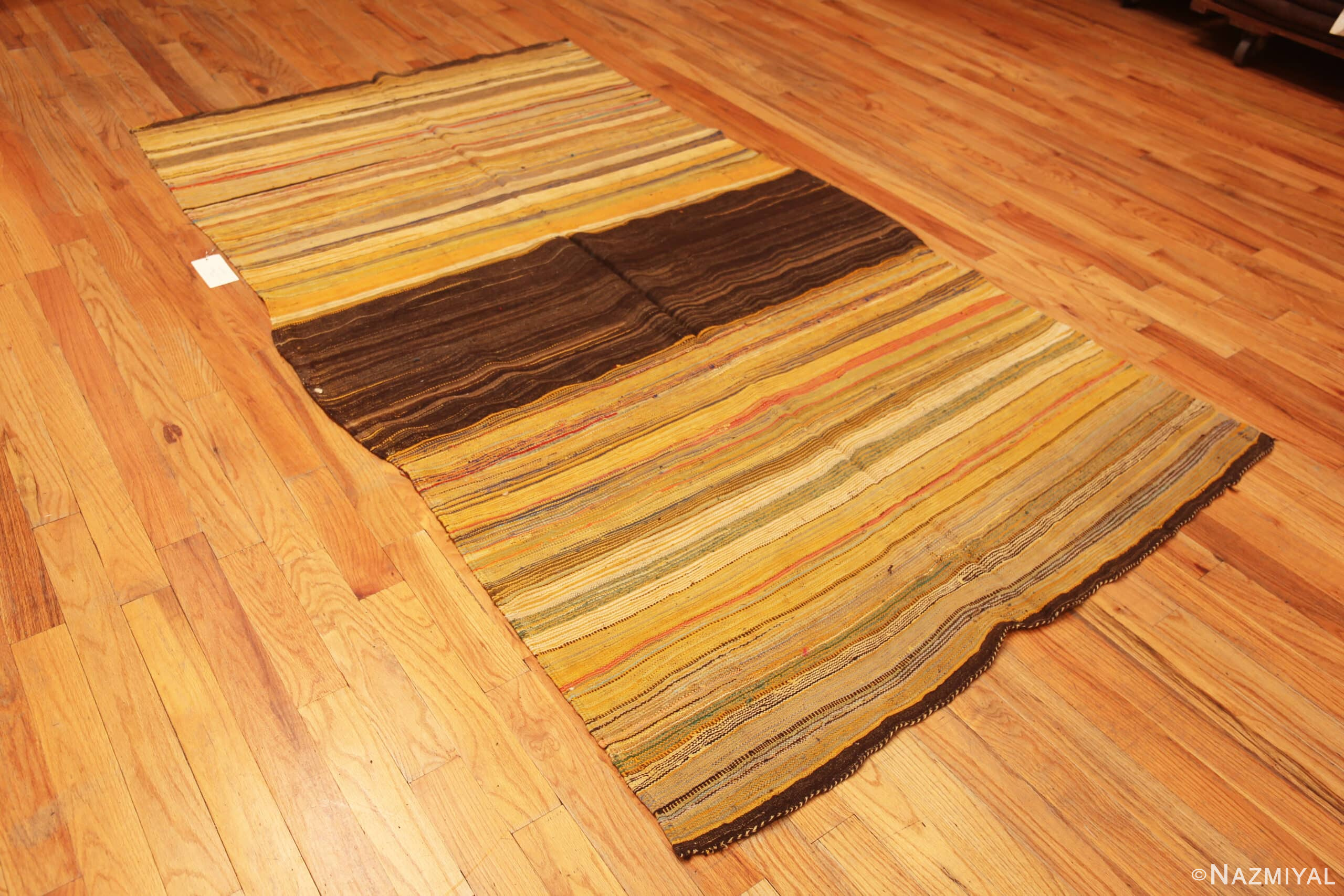
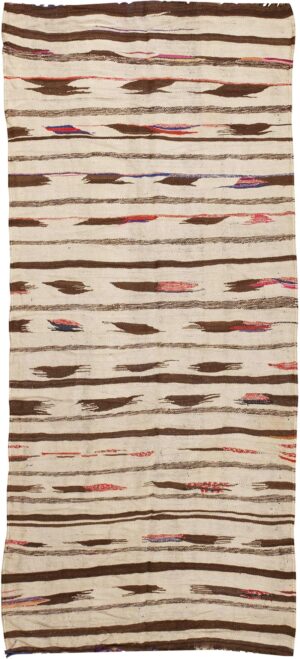
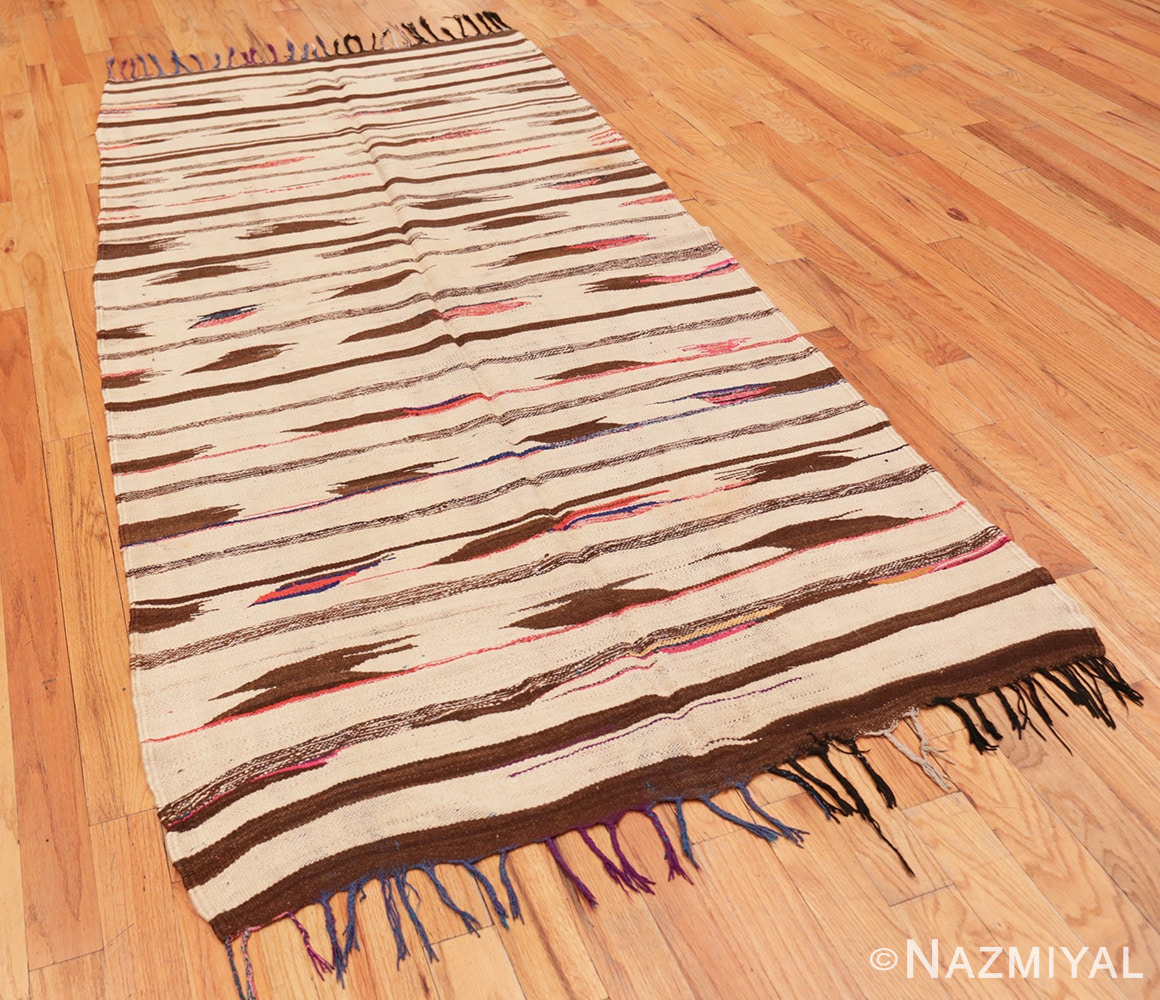
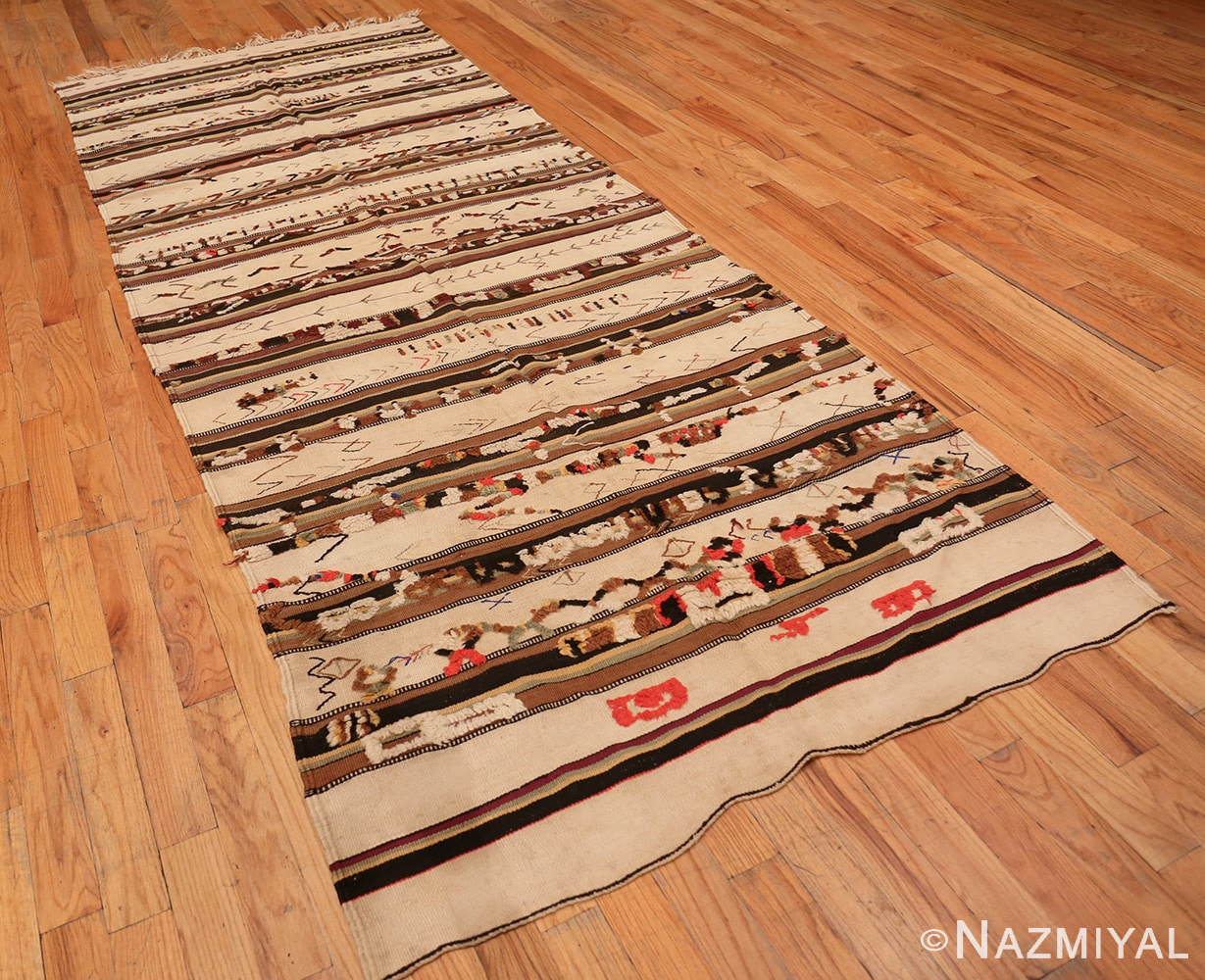
Flatwoven Moroccan rugs — lighter, lower-profile, and more graphic than pile weavings. Produced across multiple Moroccan regions, kilims were traditionally used as functional textiles within the home and are now collected for their strong geometric design and versatility.
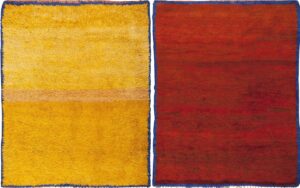
High-pile, textural statement pieces — especially strong in bedrooms and lounges where the tactile quality of the wool becomes as important as the visual design.
Moroccan rugs — unlike the great Persian and Turkish workshop traditions — were primarily made by women, within the home, for household use and community exchange. This domestic origin gives Moroccan rugs a quality that no workshop rug can replicate: each piece is genuinely personal, carrying the visual language and symbolic vocabulary of one weaver and one community.
The motifs woven into Moroccan rugs are not decorative in the conventional sense. Many carry protective, fertility, or spiritual meanings — the eye symbol, the hand of Fatima, diamond forms representing female identity and protection. These meanings are often specific to the tribe or village of origin and were passed from mother to daughter across generations without written record, embedded in the weaving tradition itself.
The mid-20th century was transformative for Moroccan rugs in the Western market. Artists and architects traveling to Morocco — drawn by the landscape, the medinas, and the material culture — brought these textiles back to European and American audiences. The modernist design world recognized something in Moroccan rugs that aligned with its own values: no hierarchy, no borders, no narrative — just confident geometry and extraordinary material presence. That recognition fundamentally changed the market for these pieces and elevated them from folk textile to collected design object.
As Jason Nazmiyal recalls from his sourcing trips: “Each piece is entirely unique, with no two pieces expressing the same pattern. Even when there is a general similarity between two different rugs, there is always at least one small detail that clearly shows they are each unique, handmade works of art. That’s what you’re really buying — not a style, but an irreplaceable original.”
Materials & Construction
Most Moroccan rugs are woven primarily in wool — often high-lanolin mountain wool from sheep grazed at altitude in the Atlas Mountains. This wool type is naturally resilient, warm, and develops a distinctive sheen and softness over time that commercial wool cannot replicate. The high lanolin content also makes it naturally water-resistant and less susceptible to dirt.
Construction falls into two primary categories:
Pile rugs: warmer, softer underfoot, more tactile — including many Berber styles and shag pieces. Pile height ranges from low and dense to plush and shaggy.
Flatweaves / kilims: lower profile, more graphic, excellent for dining rooms, high-traffic areas, and layering under other textiles.
Boucherouite rugs use repurposed textile strips rather than virgin wool — producing a more eclectic, colorful surface with its own distinct material character.
Moroccan Rugs vs Persian Rugs
If Persian rugs are your reference point, Moroccan rugs can feel like a modernist cousin — same deep cultural roots, completely different visual vocabulary.
Moroccan rugs are often:
Bolder in abstraction and personal symbolism
Borderless — the field is everything, with no formal framing system
More texture-forward — pile, shag, and tactile surface are central to the experience
Made by individual weavers from memory, not workshop cartoons
Persian rugs often emphasize:
More intricate classical drawing and floral vocabulary
Formal border systems and hierarchical composition
A wider range of workshop and city weaving systems alongside tribal traditions
Deep regional diversity from tribal Qashqai to court-level Isfahan
A practical checklist for evaluating authenticity:
Handmade structure: slight irregularities in pattern and pile are normal and desirable — they confirm hand-drawing rather than mechanical reproduction.
Materials with character: genuine Moroccan wool has a warmth and resilience that synthetic fibers cannot replicate. It should feel alive, not plastic.
Design that fits the tradition: Beni Ourain minimal lattice vs vibrant Azilal vs flatwoven kilim geometry — each has a distinct visual grammar.
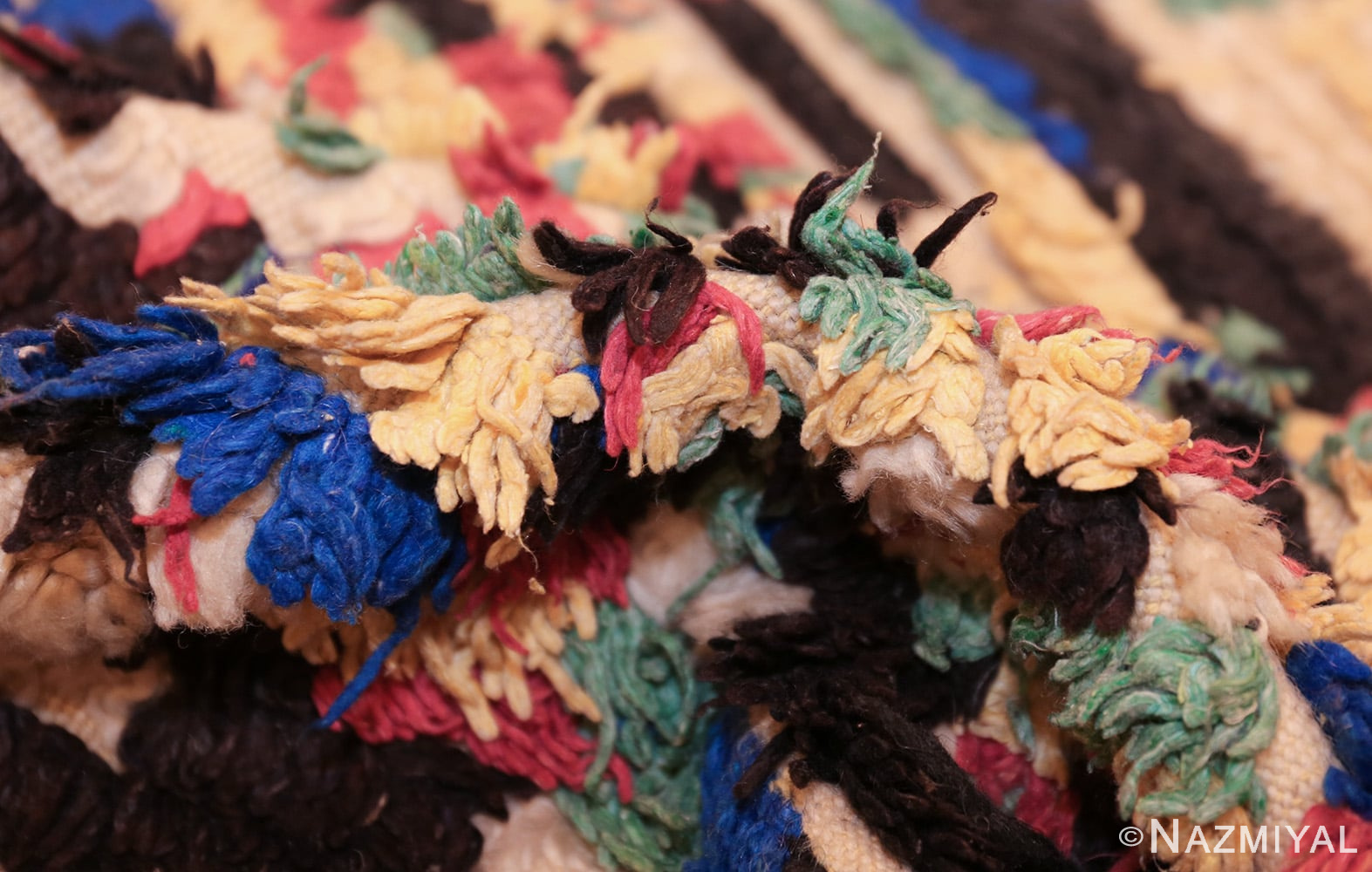
Edges and reverse: real weaving shows on the back. Glued backing or machine-like uniformity indicates reproduction.
Clear documentation: condition details, photographs of the back and edges, and provenance notes where available.
Moroccan rug collecting has matured significantly since the mid-20th century when these pieces first attracted serious Western attention. Early examples — particularly pre-1960s Beni Ourain pile rugs with strong composition, intact pile, and genuine tribal character — have become increasingly scarce and increasingly valued by serious collectors.
Value is driven by:
Design strength: composition, balance, and the originality of the hand-drawing
Materials and wool quality: high-lanolin mountain wool ages beautifully; lesser wool does not
Tribal attribution: Beni Ourain, Azilal, and other specific tribal traditions carry premium recognition
Size: true room-size Moroccan rugs with strong design are harder to source well than smaller pieces
Condition: structural integrity matters most — honest wear is acceptable, heavy structural damage is not
Authenticity and documentation
For insurance, estate planning, or collector-level purchasing:
If you’d like help narrowing options by region, tribe, construction type, or size, our team can guide you precisely and quickly.
For decades, clients have relied on Nazmiyal for guidance on identifying, valuing, and collecting rugs from Morocco — especially Beni Ourain pile weavings, Berber tribal pieces, and mid-century Moroccan design rugs sourced directly from the Atlas Mountains.
             Posted on Google        Clay Pendergrast     Trustindex verifies that the original source of the review is Google. My wife and I are so pleased with the antique Uzbek Bokhara Rug purchased from the Nazmiyal Collection. Not only does the rug have a spectacular design, it also was very reasonably priced. The way it transforms our living room, reconciling the classic modern furniture with the 1913 Craftsman interior is remarkable.         Posted on Google        Terence Hayes     Trustindex verifies that the original source of the review is Google. I have purchased multiple rugs at multiple Nazmiyal auctions and I am extremely pleased with the quality, price, and experience.  Highly recommended!         Posted on Google        Victor Florintsev     Trustindex verifies that the original source of the review is Google. The only ones I'd ever buy rugs from. The best.         Posted on Google        Jeffrey NeumanB     Trustindex verifies that the original source of the review is Google. I bought two gorgeous Serapi rugs from Farhad at Nazmiyal Rugs!  Beautiful carpets, fair prices and great service.  Very happy customer.  Farhad (the sales person) was very patient and gave us great service.         Posted on Google        john haid     Trustindex verifies that the original source of the review is Google. Alen is a gentleman and an expert.  Really great to work with.         Posted on Google        Edward Yasuna     Trustindex verifies that the original source of the review is Google. I recently purchased a modern Kandinsky rug from Nazmiyal Auctions.  It was just as described, and the director (Farhad) of the auctions had it sent to me quickly and safely.  Payment was easy, the rug was reasonably priced, and I highly recommend Nazmiyal Auctions and Antique Rugs.  Quality merchandise and first-class service.         Posted on Google        Nicholas Carr     Trustindex verifies that the original source of the review is Google. Had a excellent experience buying a rug in Nazmiyal's 1/18/26 online auction.  First, prior to the auction, viewing a number of lots at the 32nd St showroom (I had prepared a list from the online catalog). The staff were great to work with: helpful, knowledgable, honest, and flexible.  Second, after placing an online bid and winning the desired item, arranging payment and pickup was simple and straightforward. Everything went seamlessly and the overall experience was educational and fun. Many thanks to Jason and his team.         Posted on Google        Andrea Gared     Trustindex verifies that the original source of the review is Google. Everyone at Naziyal is proffessional, especially Jason and Farhad.
They are knowledgeable, truthful, and true gentlemen. I have sold several rugs through them and will always go to them first, to buy or sell. The best in the business!
Frequently Asked Questions
Moroccan rugs are distinguished by their domestic and personal origin — made primarily by women weavers within the community, for household use, encoding personal and tribal symbolism into the geometry rather than following standardized design systems. Unlike Persian workshop rugs planned in advance through design cartoons, Moroccan rugs are woven from memory and individual expression, giving them an irreplaceable individuality.
The most internationally recognized tradition is the Middle Atlas, home to the Beni Ourain confederation whose ivory-and-dark geometric pile rugs became icons of modernist design. The High Atlas produces the more colorful Azilal tradition. The Atlantic coast cities of Fez and Rabat produced more structured flatwoven pieces. Each region has a distinct visual character shaped by local materials, tribal community, and geographic isolation.
Beni Ourain is a specific tribal tradition from the Middle Atlas — typically ivory pile with dark linear geometry. Berber (Amazigh) is a broader cultural designation encompassing many Moroccan tribal weaving traditions including Beni Ourain, Azilal, Beni Mguild, and others. All Beni Ourain rugs are Berber, but not all Berber rugs are Beni Ourain.
Genuinely vintage Moroccan rugs are among the most sustainable textiles available. They were woven with natural wool, often dyed with vegetable and mineral dyes, and made to last for generations. Buying a vintage or antique Moroccan rug supports no new production — you are simply extending the useful life of an existing handmade object of cultural value.
Yes. Nazmiyal has sold Moroccan rugs to collectors and designers worldwide for decades. We provide detailed condition reports, precise measurements, and high-resolution photography. Our 3-day return policy applies — if the rug is not right for your space, you may return it.
THE NAZMIYAL NEWSLETTER
Discover Your Next Favorite Rug
Get new arrivals, rug inspiration, educational blogs, and collection highlights delivered to your inbox.
By subscribing, you agree to receive marketing emails from Nazmiyal. Unsubscribe anytime. View our Privacy Policy.