Turkish Oushak Rugs: History, Identification & Value
Oushak rugs — woven in and around the historic Oushak (Usak / Ushak) region of western Anatolia since at least the 15th century — are among the most influential carpets ever made. They appeared in European paintings by Hans Holbein and Lorenzo Lotto in the 1530s, decorated the palaces of Ottoman sultans and European monarchs, and shaped the Western world’s understanding of what a great decorative rug should look like. Their defining qualities, large-scale motifs, open drawing, softly saturated palettes — were not accidental. They were designed to read across large architectural spaces, to complement rather than compete with the room around them.
At Nazmiyal Collection, we curate one-of-a-kind Oushak carpets that bring this centuries-old tradition into contemporary and classic interiors alike. Every piece is evaluated by our specialists and presented with honest condition reporting. If you’re exploring Turkish rugs more broadly, visit our Turkish Rugs hub. For palette-first browsing, start at our rug colors hub.
Reviewed by Jason Nazmiyal — Founder, Nazmiyal Collection, 44 years in the antique rug trade.
Oushak rugs prioritize proportion and negative space — large motifs that read beautifully from across the room.
Older examples often show gentle tonal variation (abrash) — a desirable patina effect rather than a flaw.
For best results, choose size and drawing scale first, then fine-tune color harmony to your lighting and furnishings.
Oushak rugs have shaped European and American decorating taste for over five centuries — they are among the most historically significant decorative textiles ever produced.
At-a-Glance Specs
Origin: Western Anatolia, Turkey (Oushak/Usak region)
Typical eras: 15th century through early 20th century; many prized examples are late 19th century
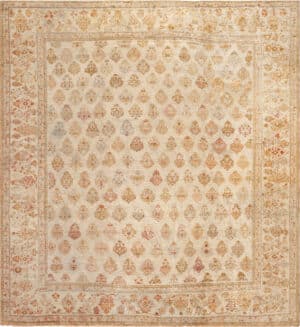
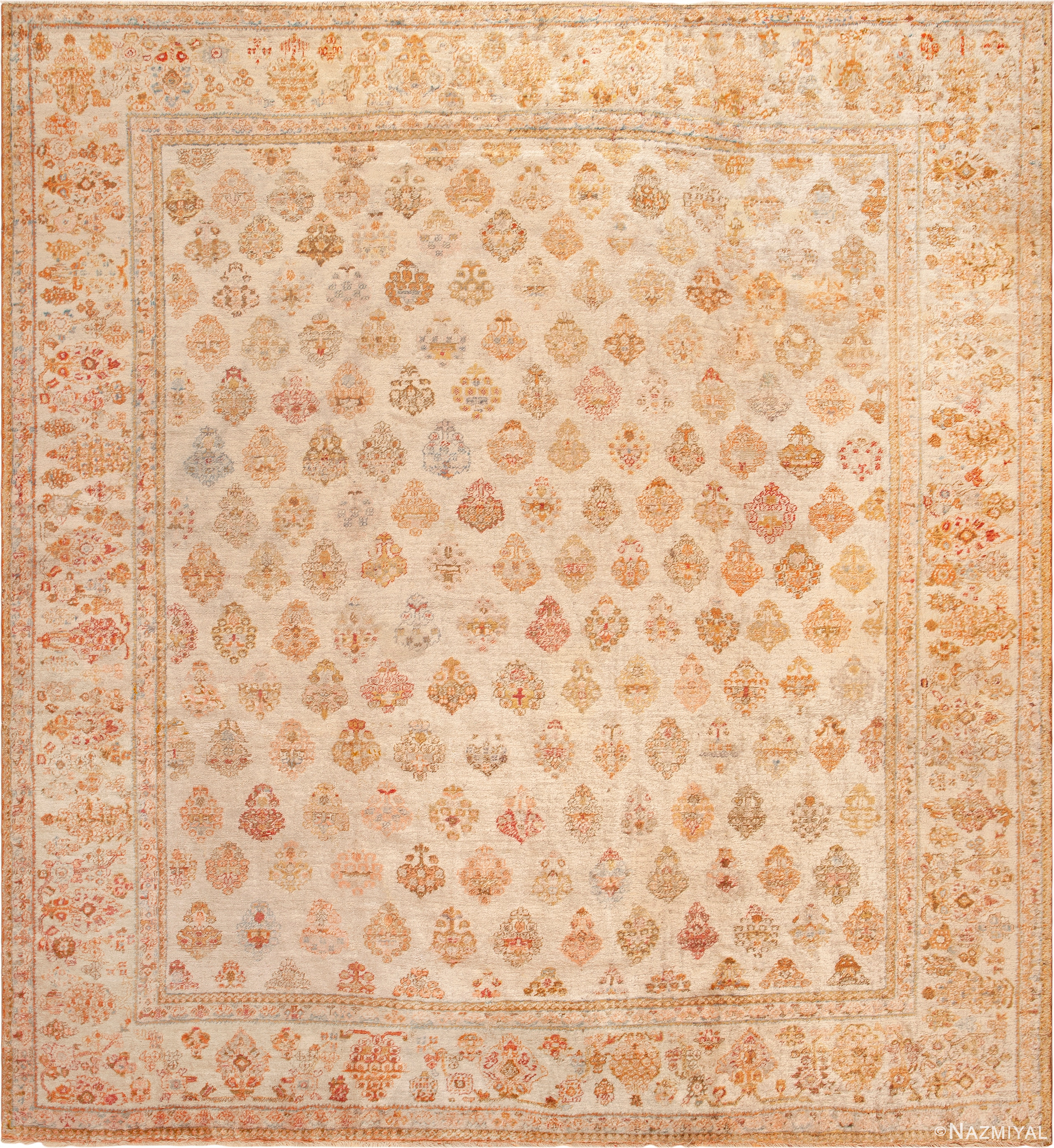
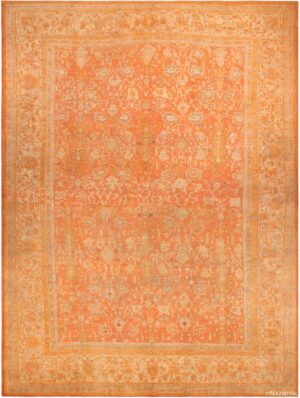
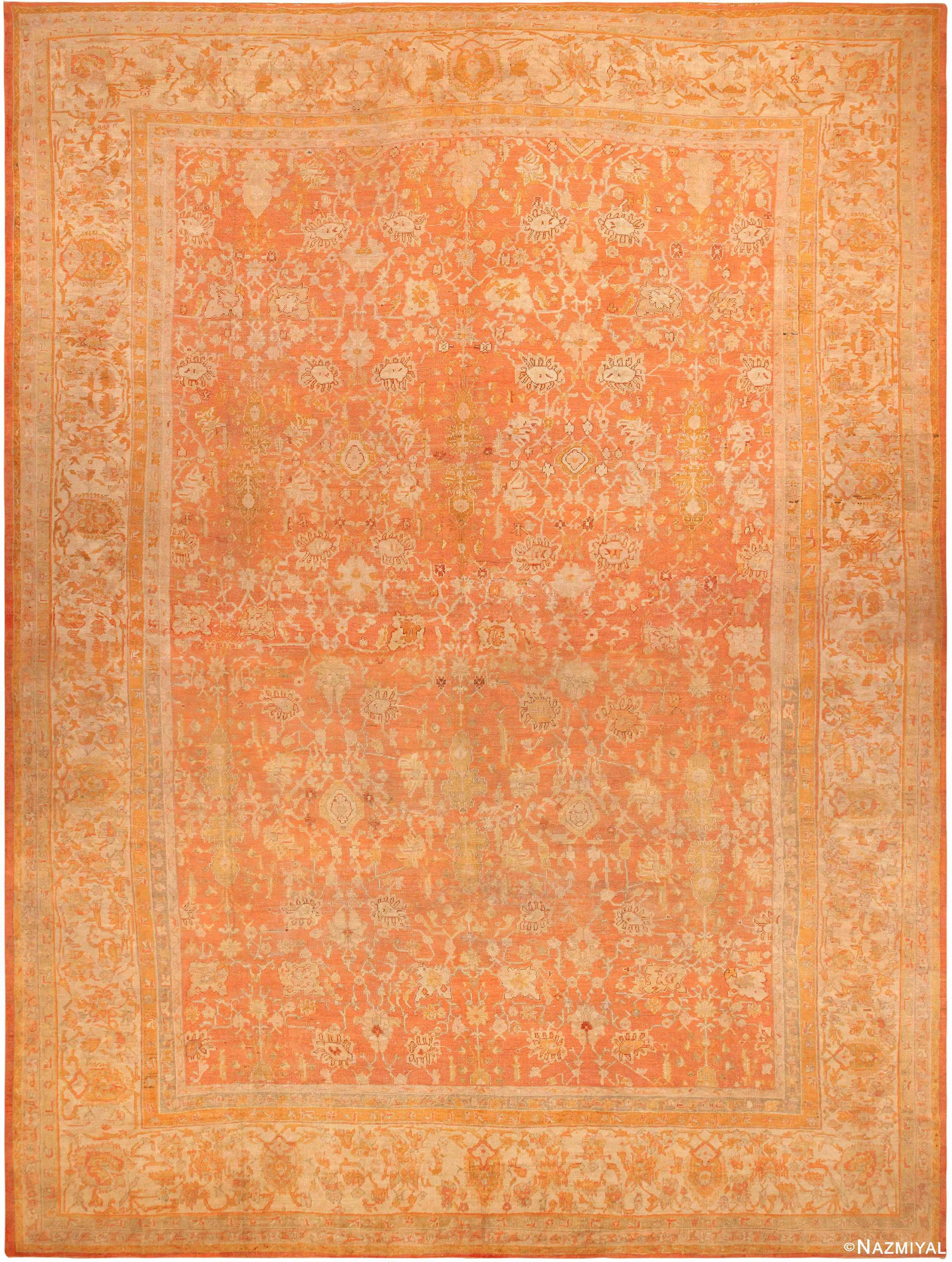
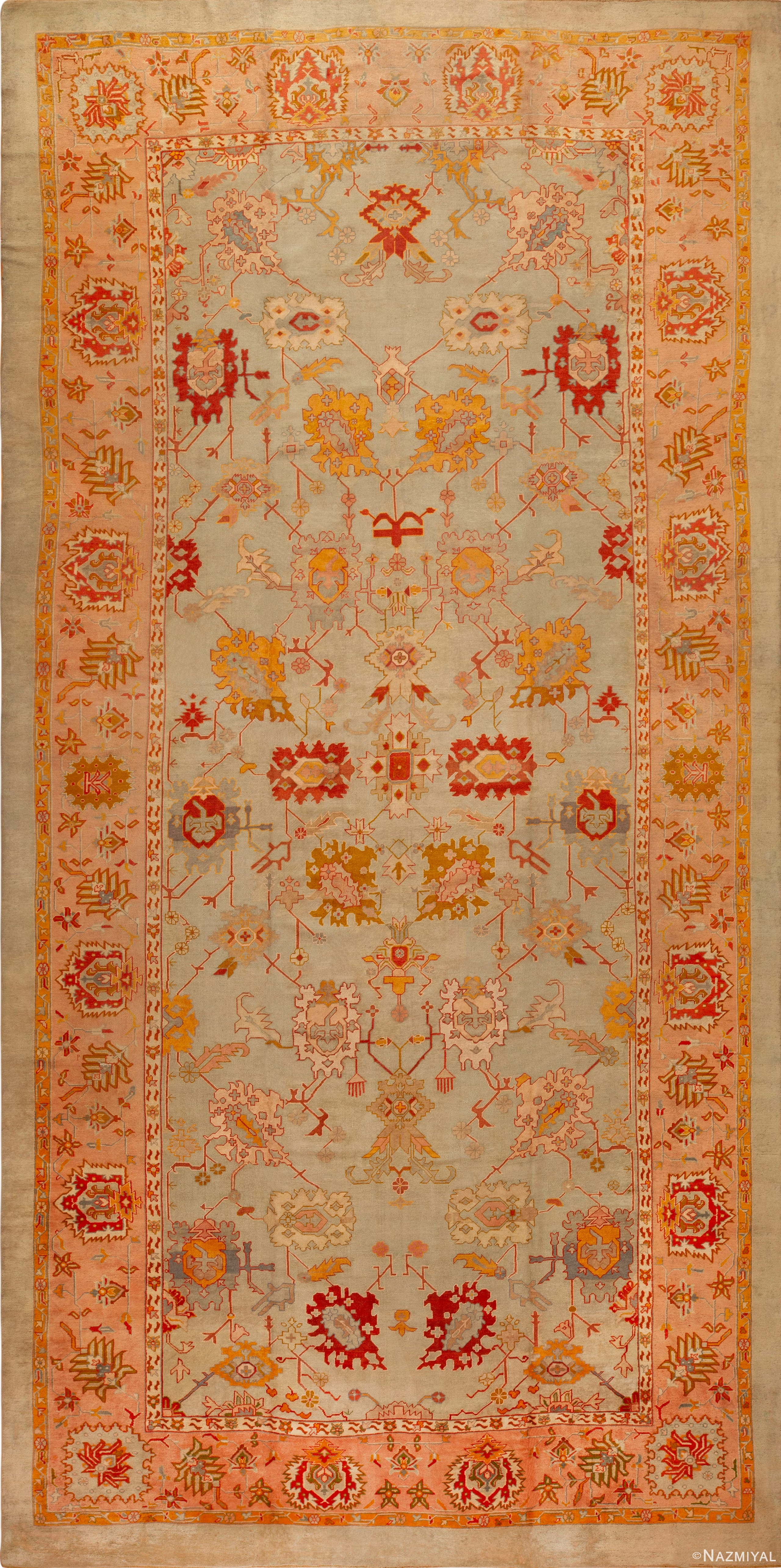
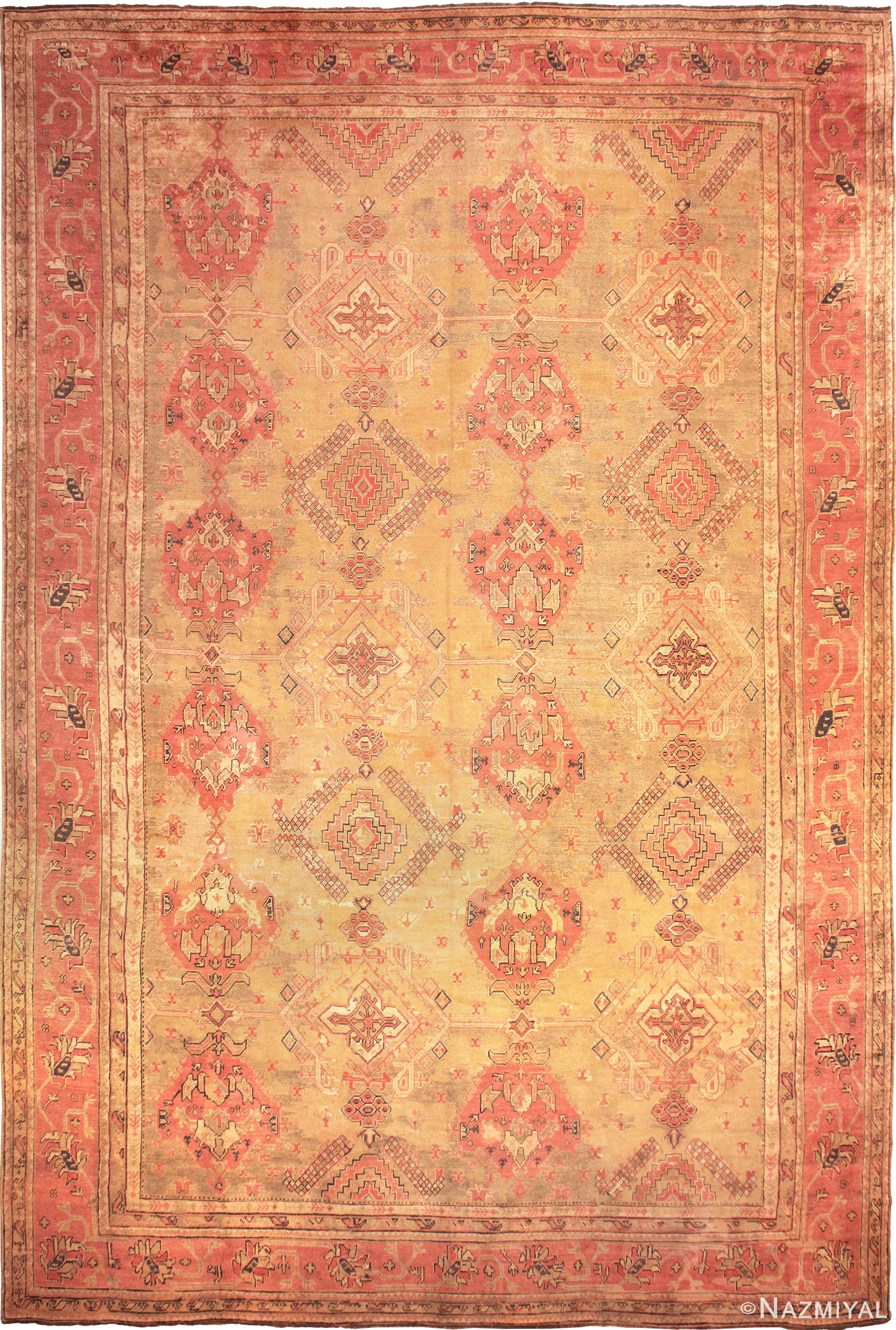
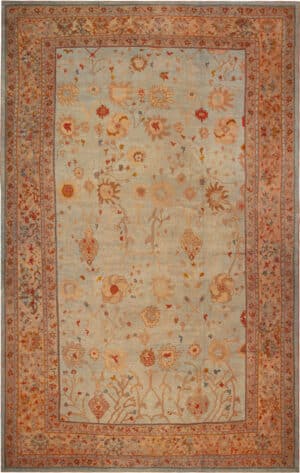
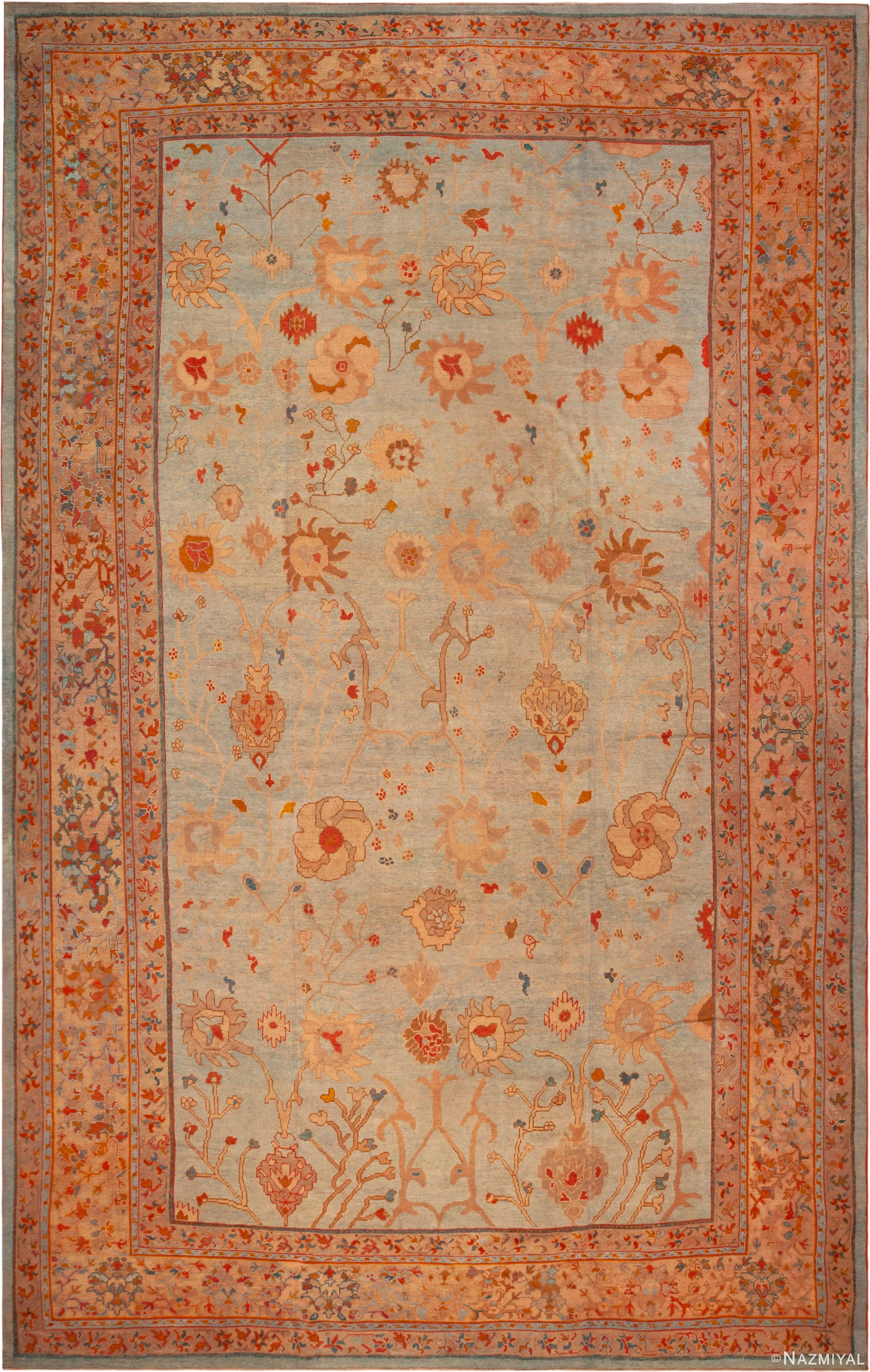
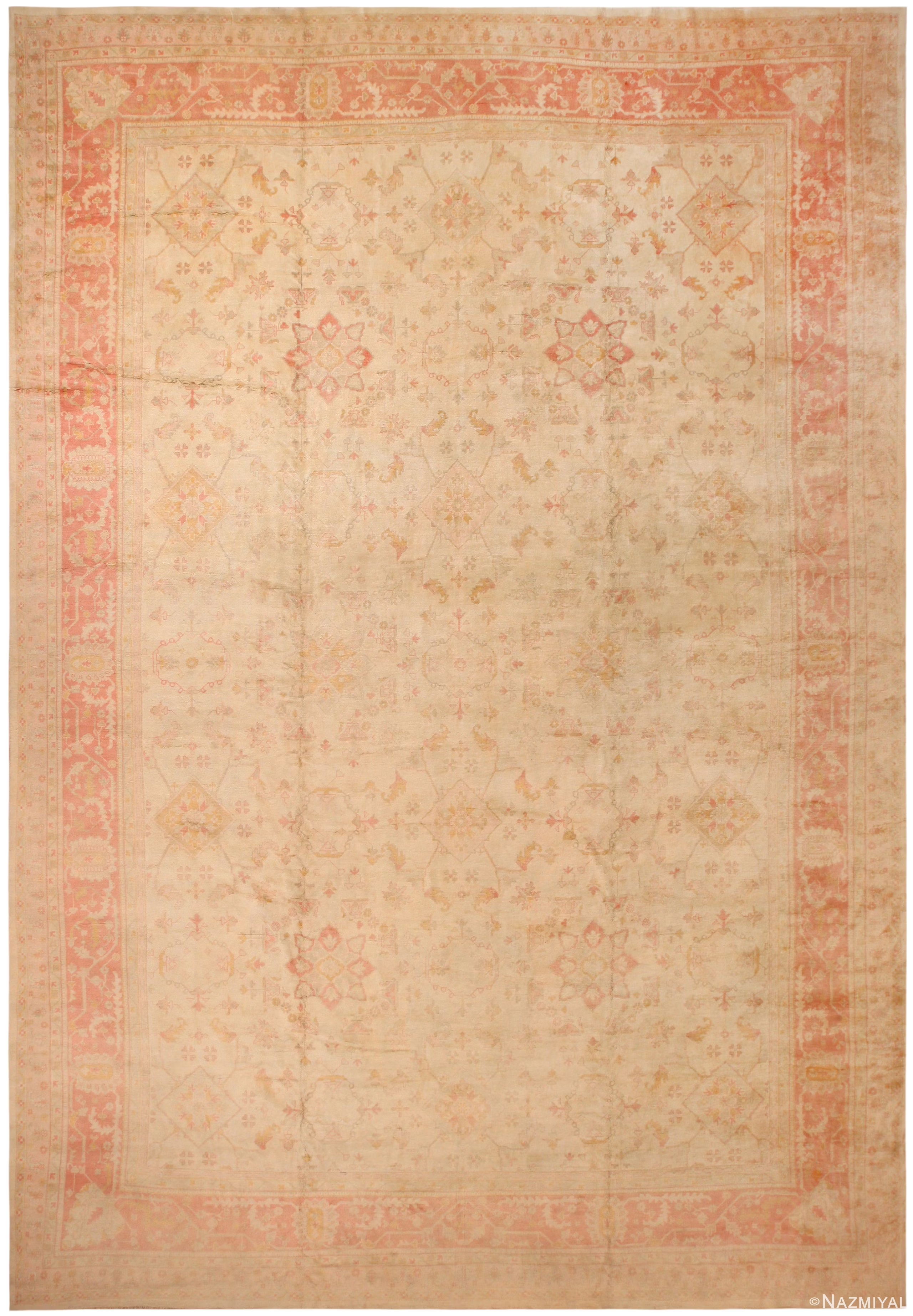
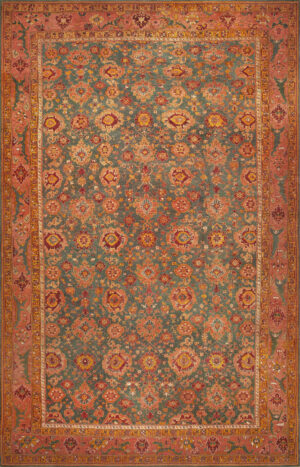
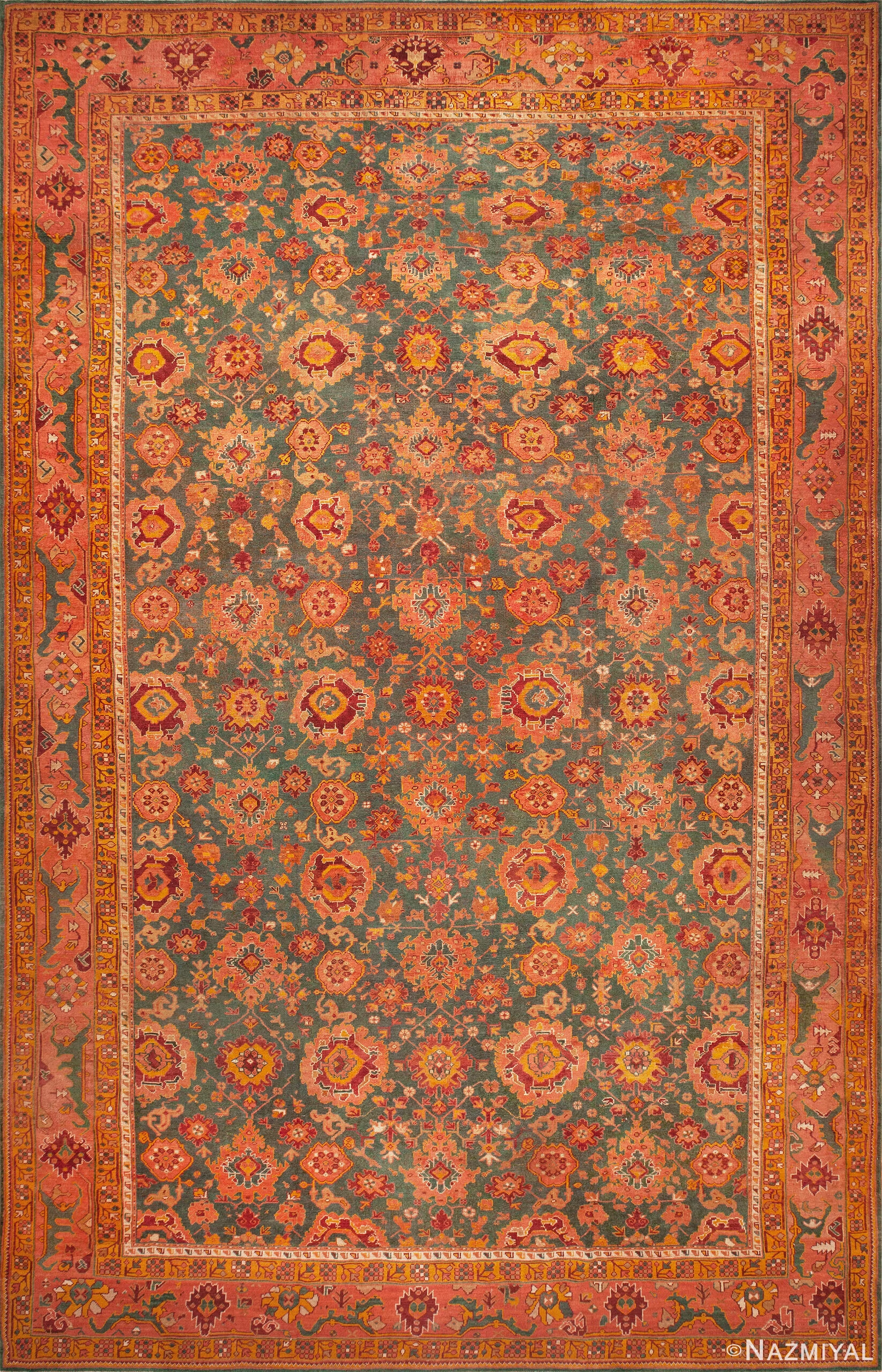
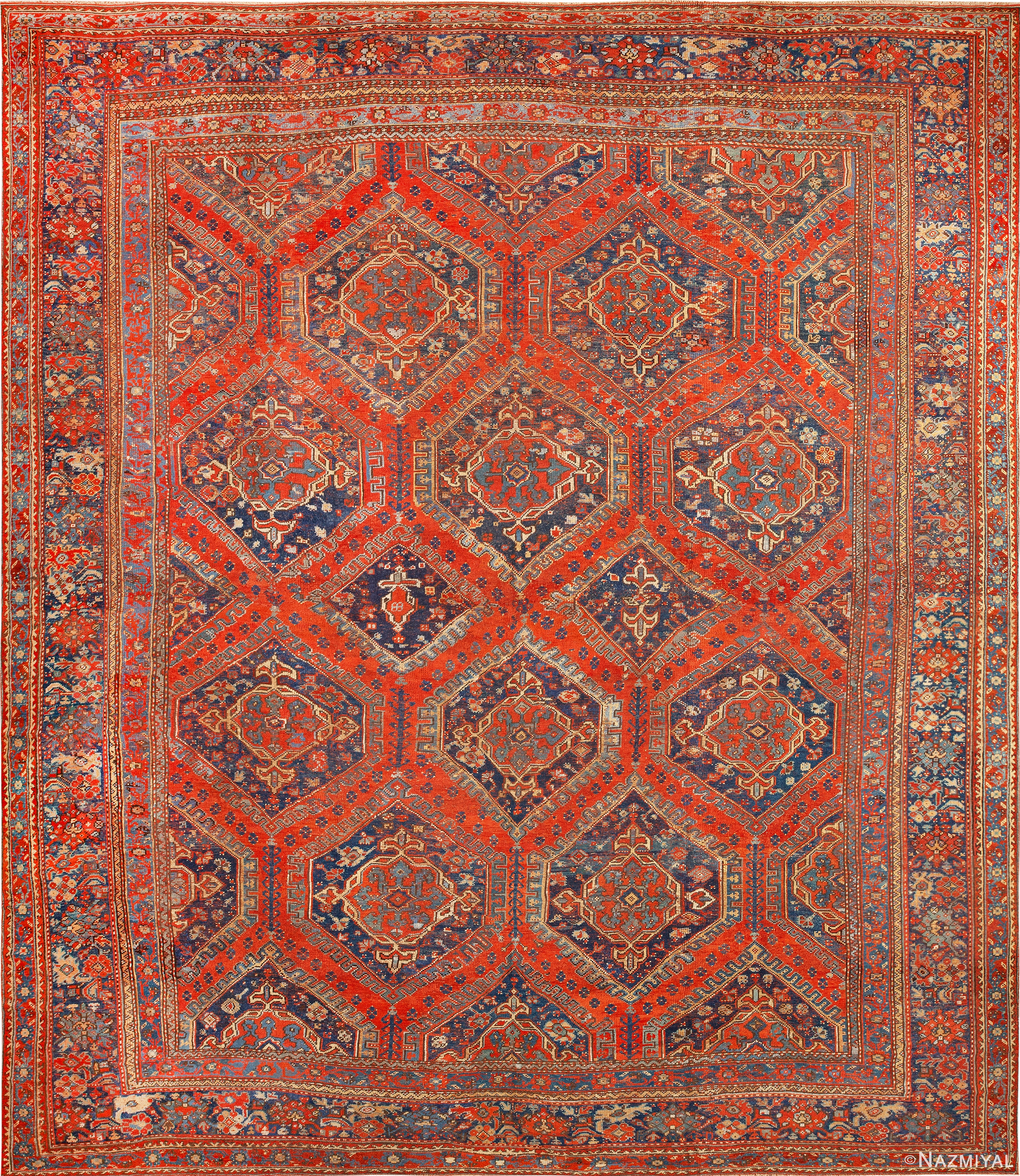
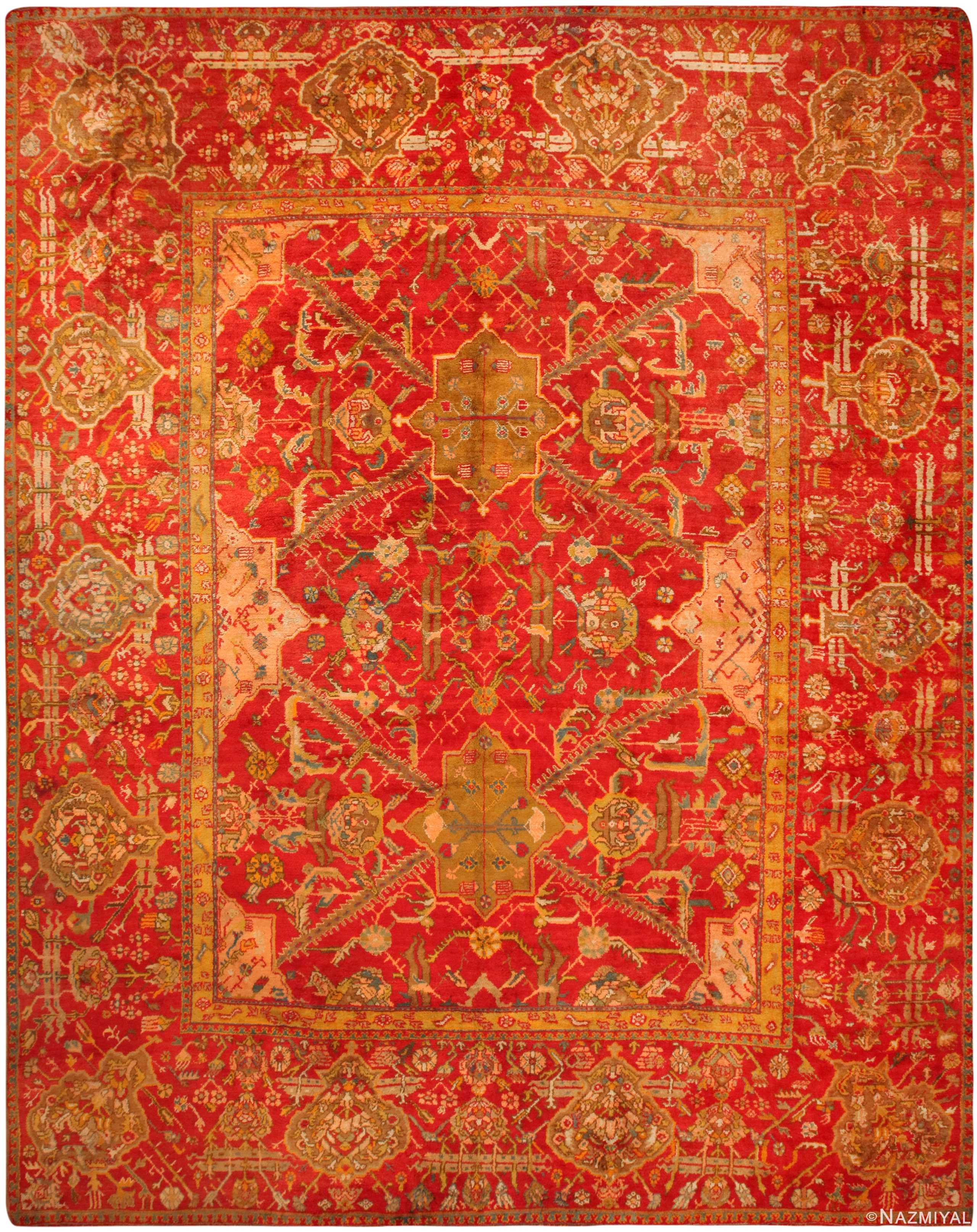
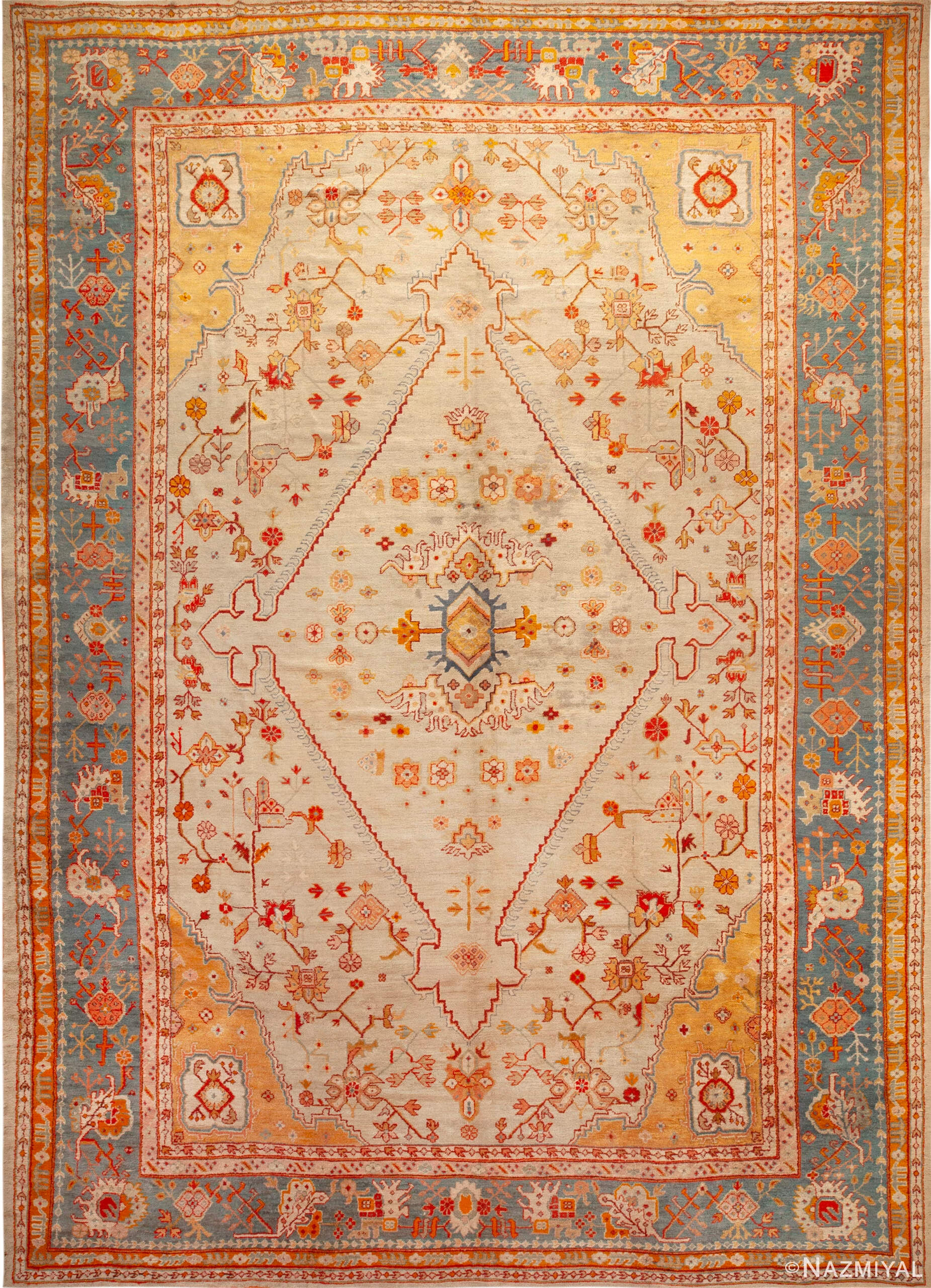
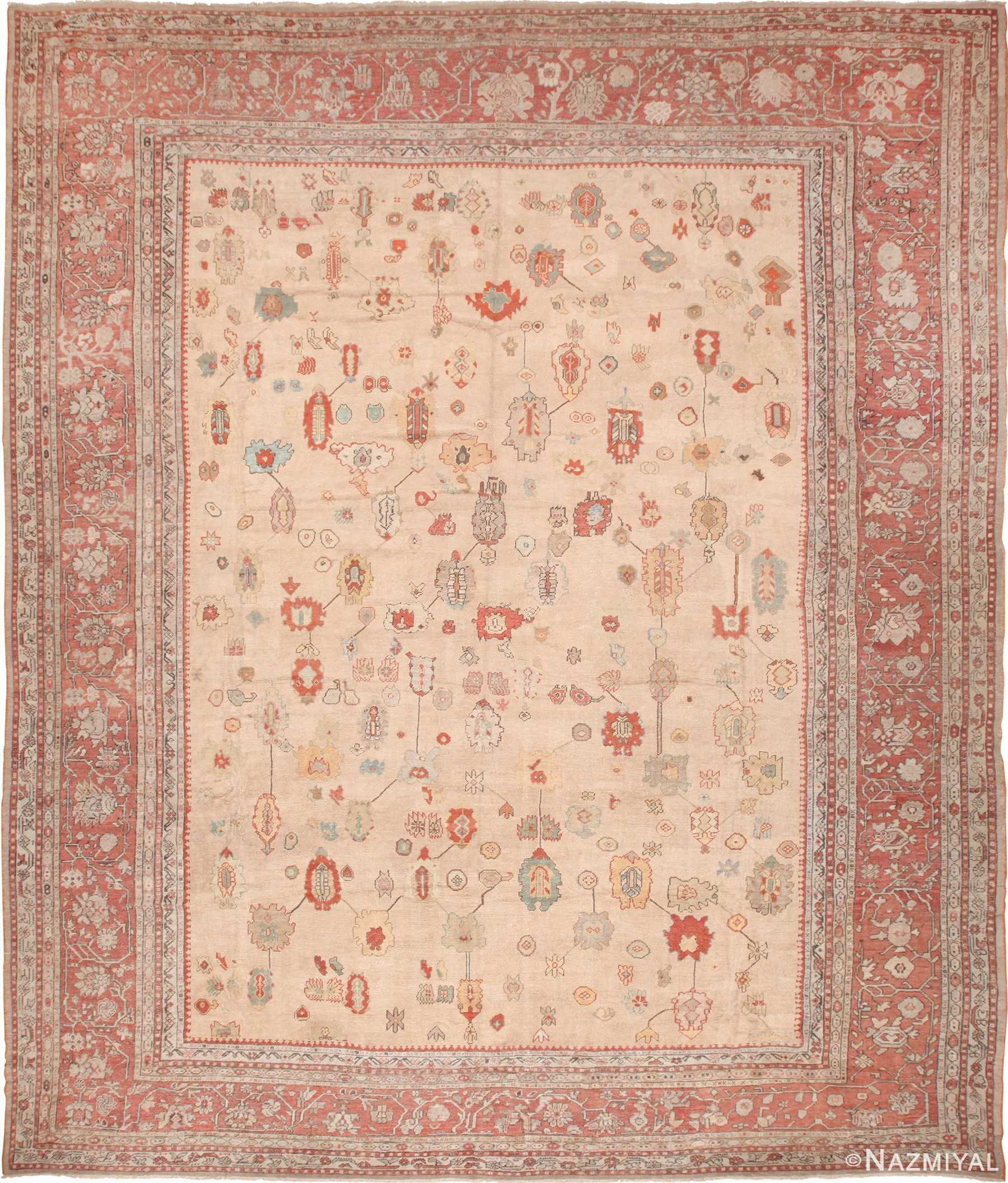
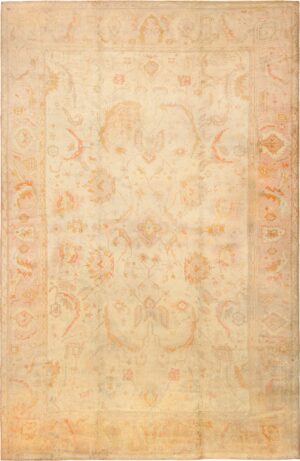
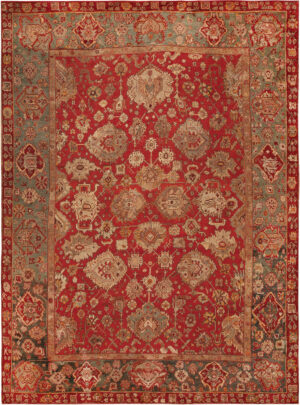
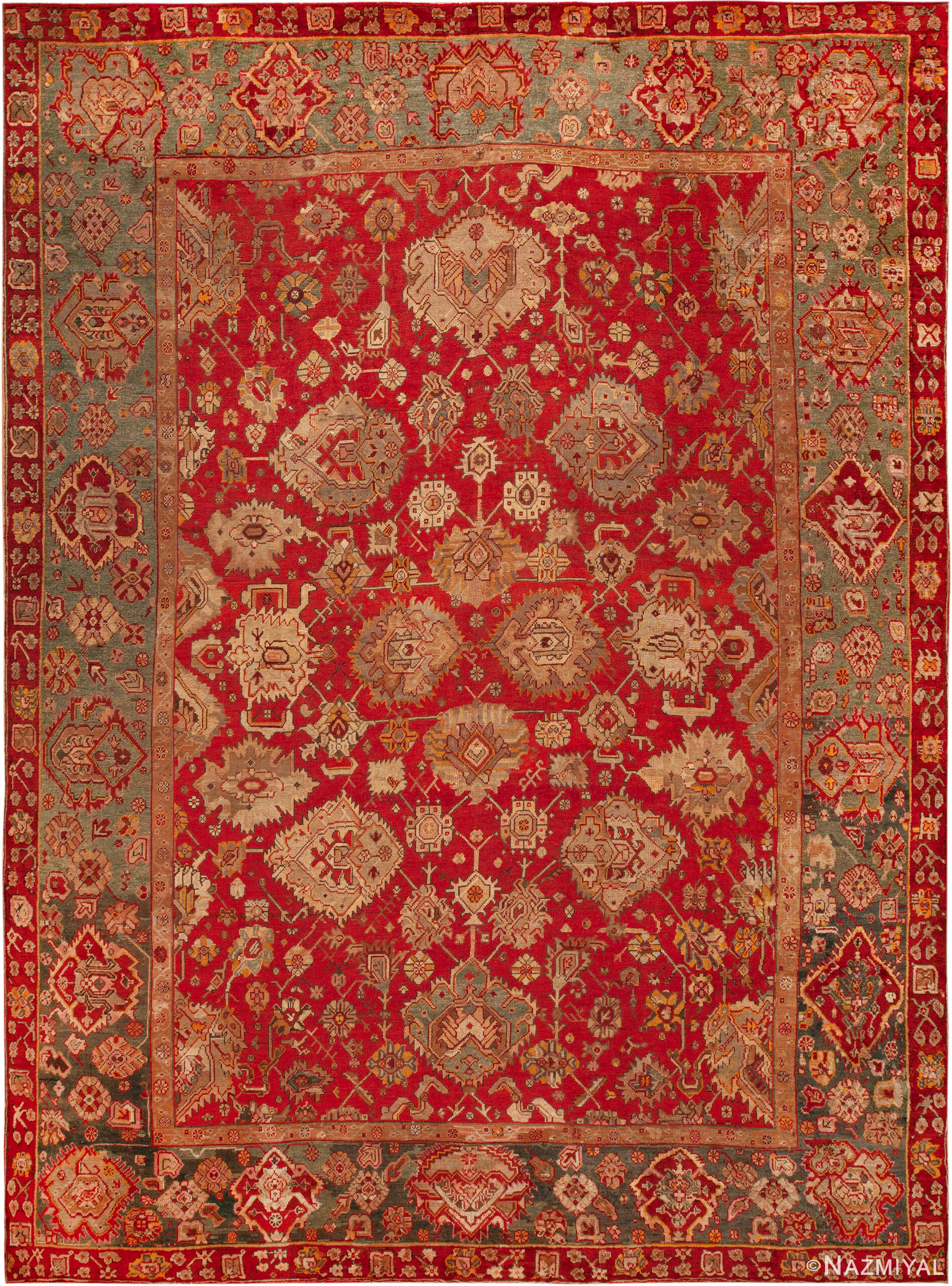
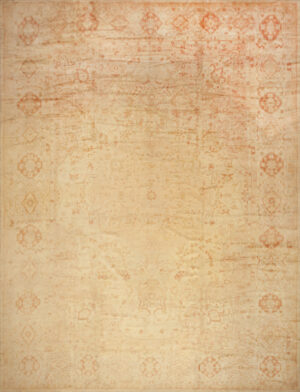
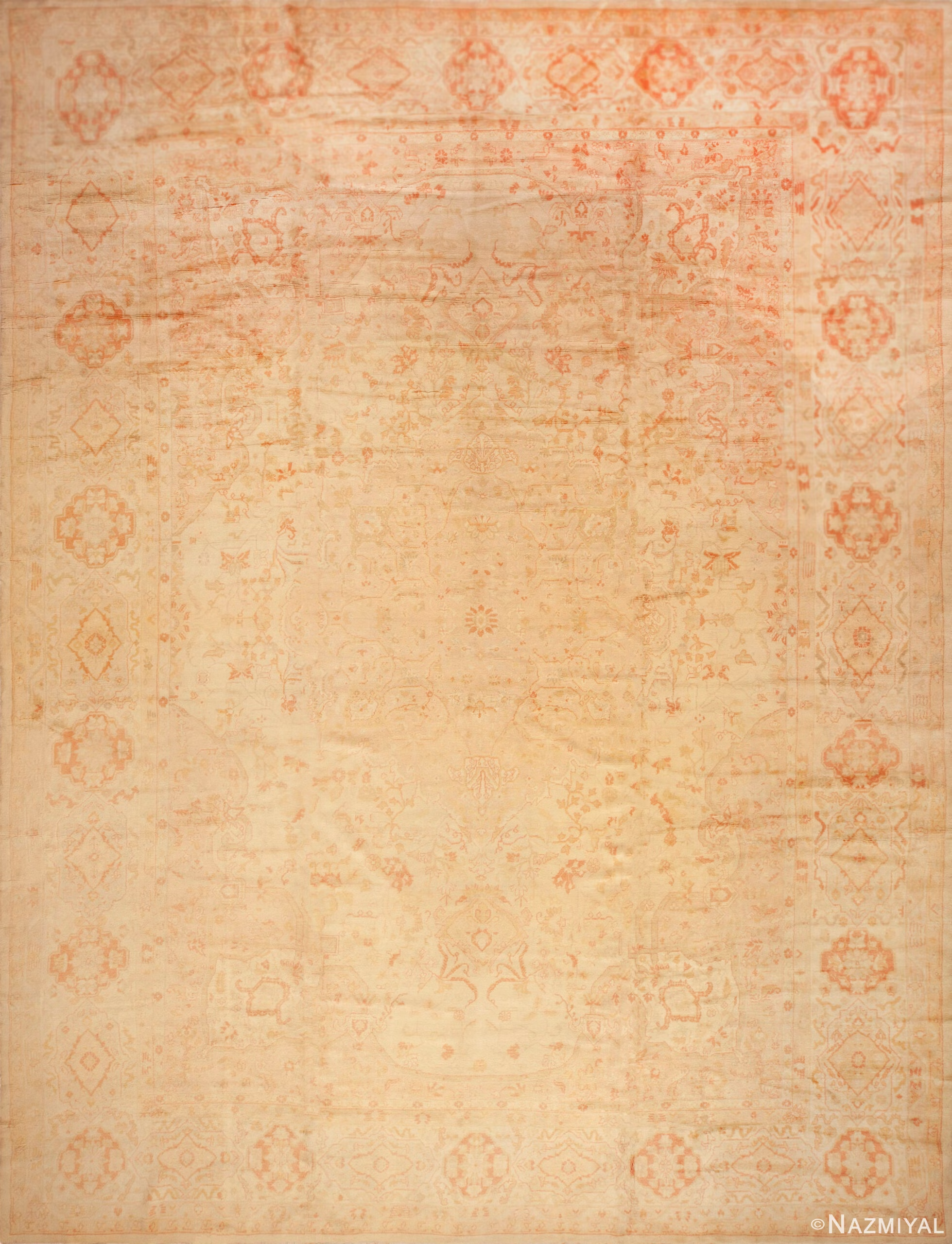
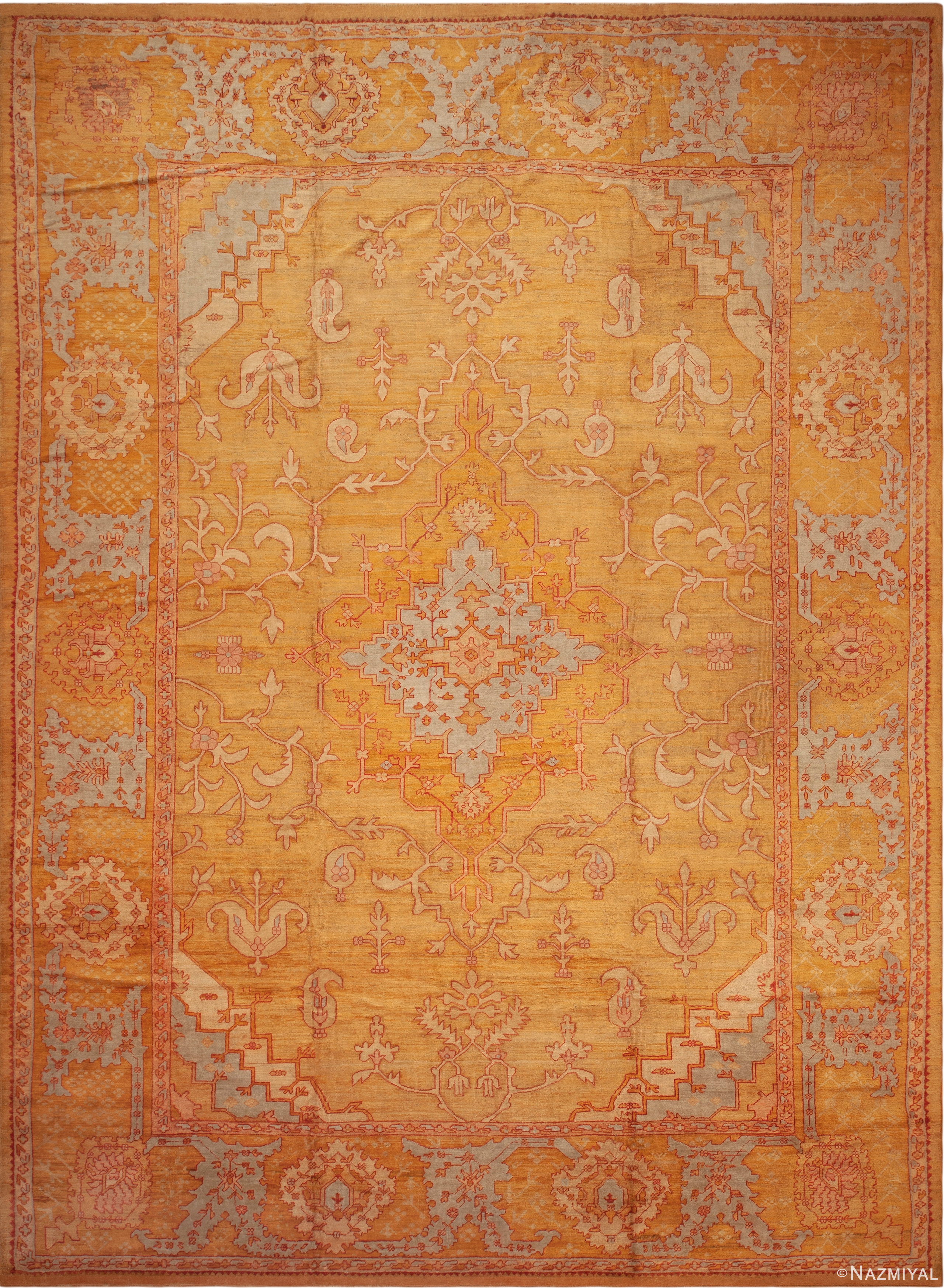
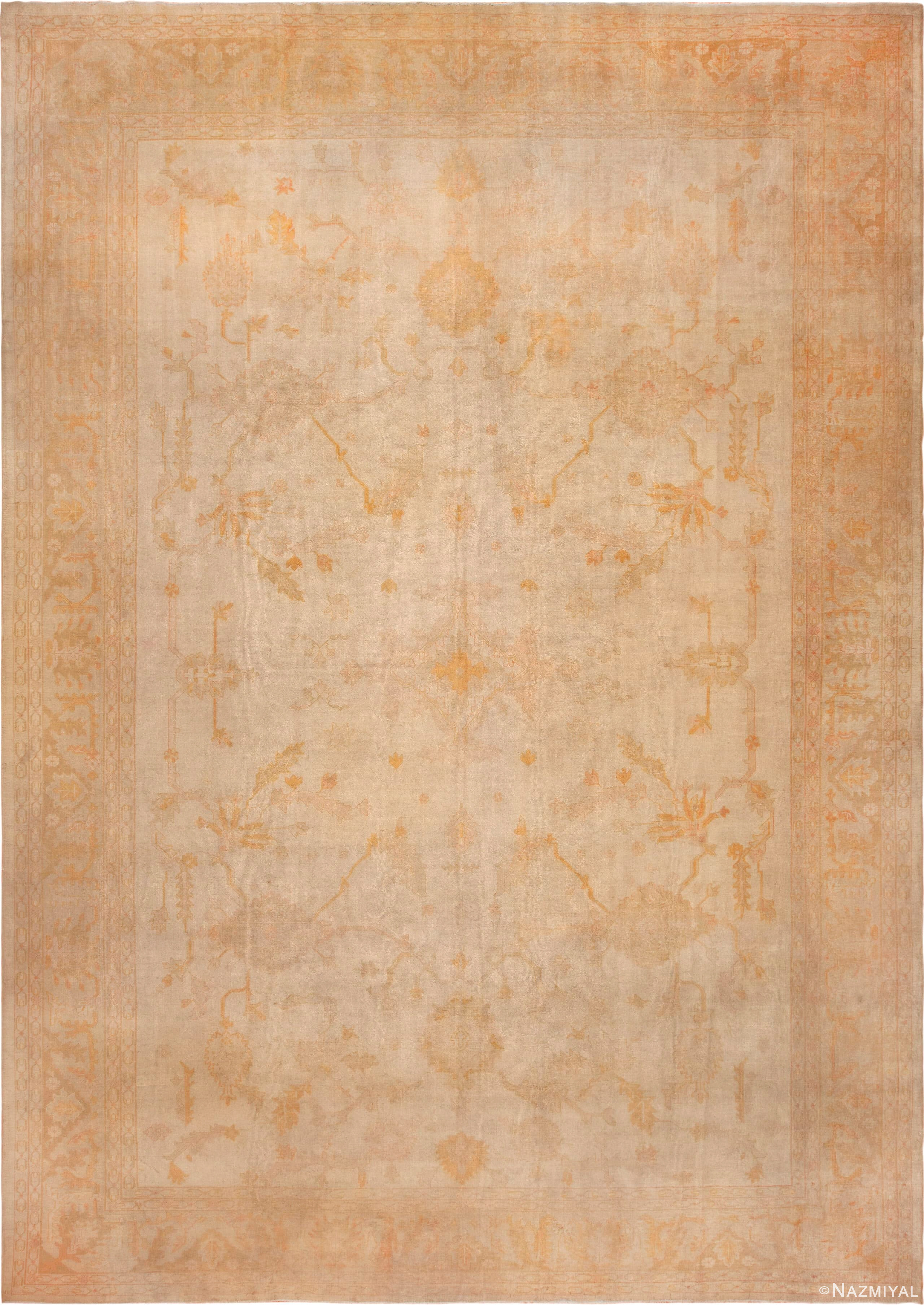
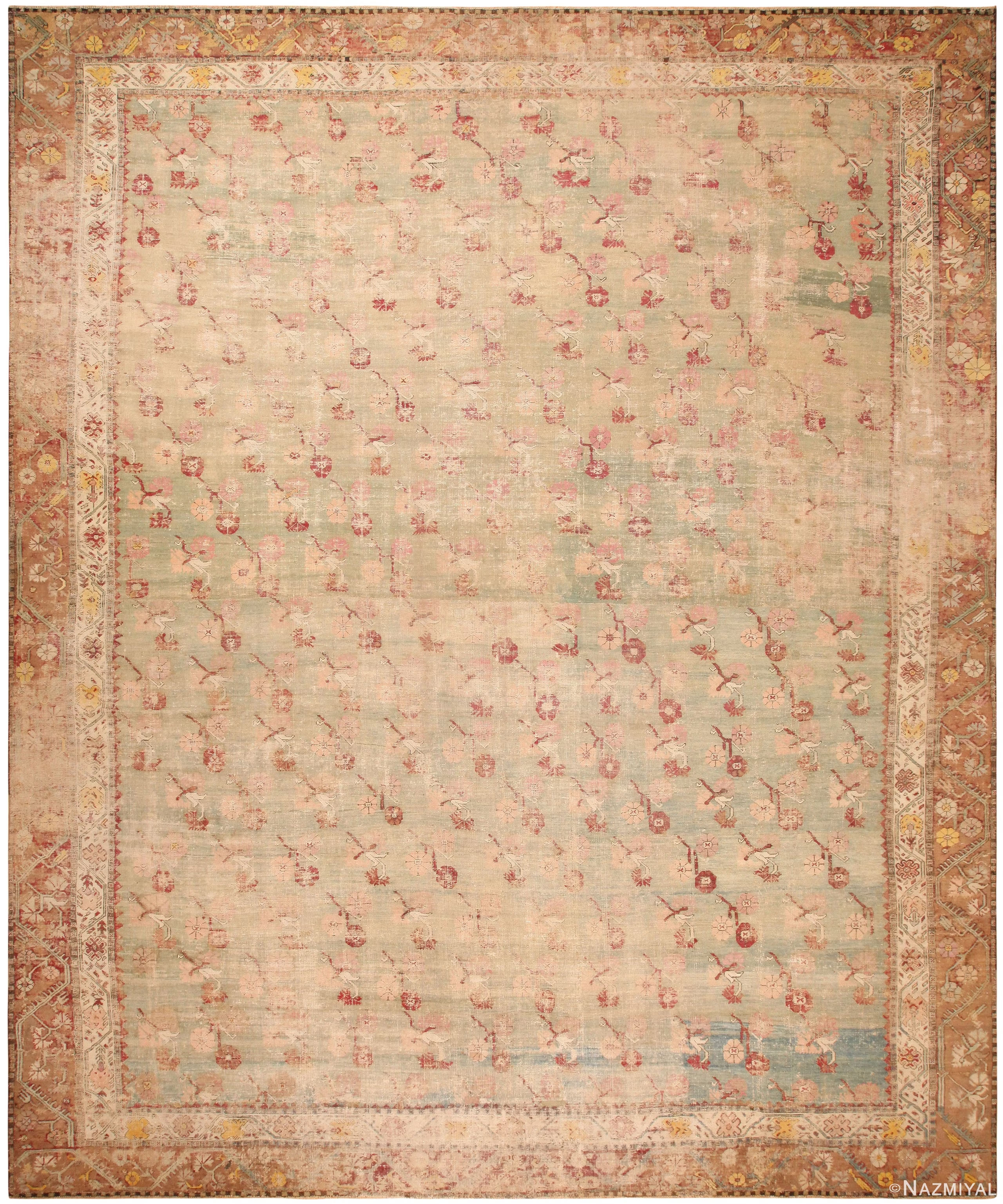
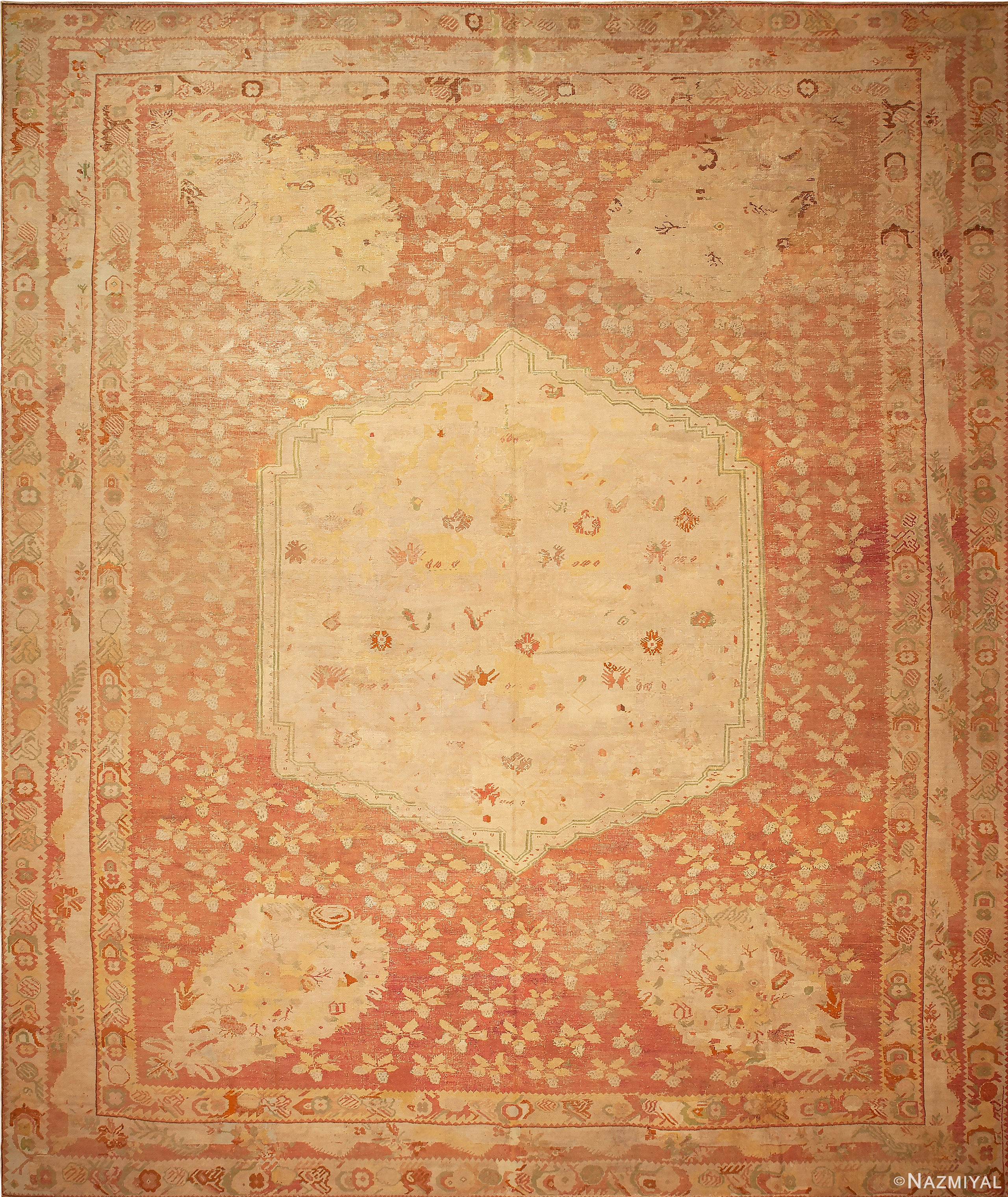
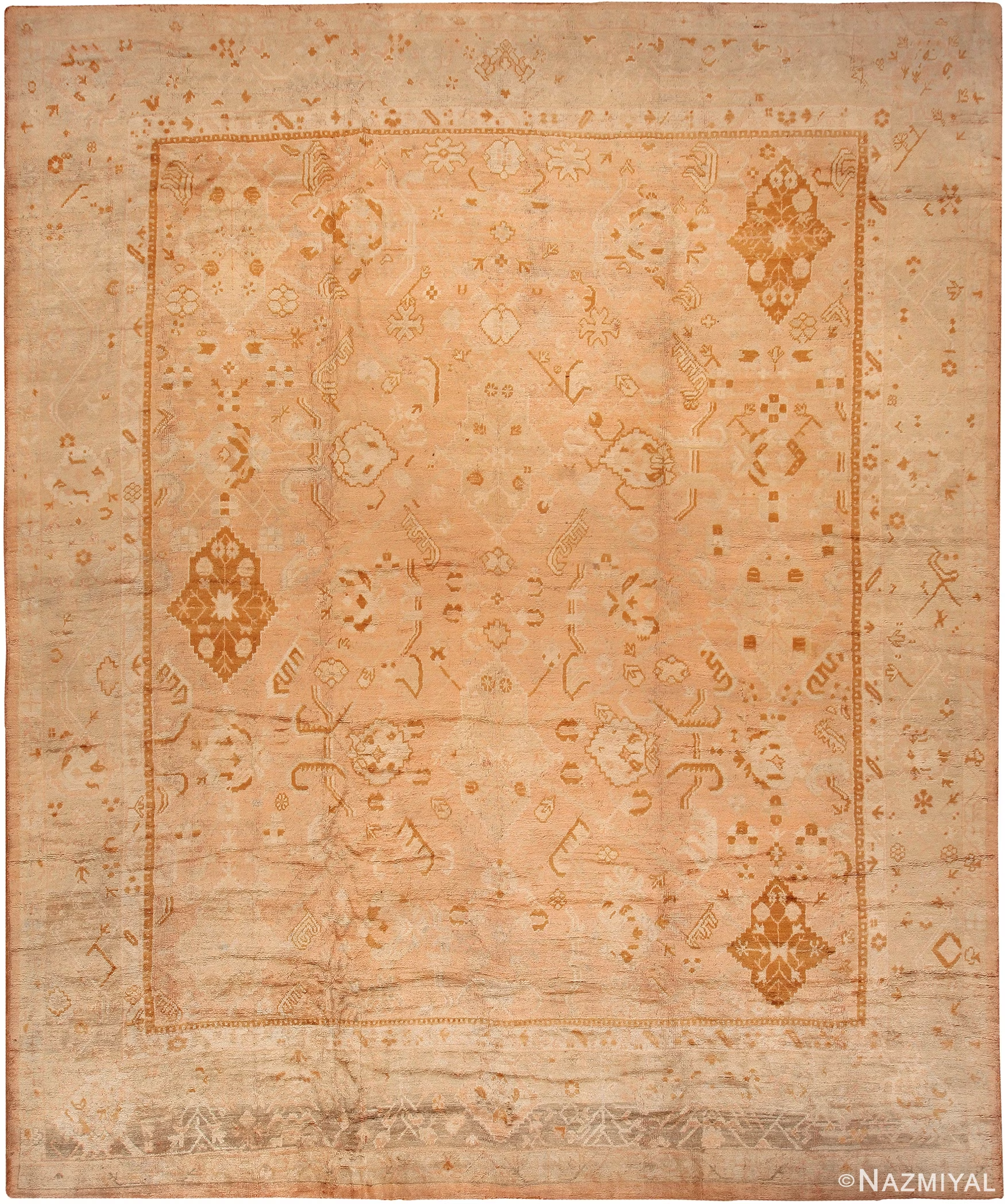
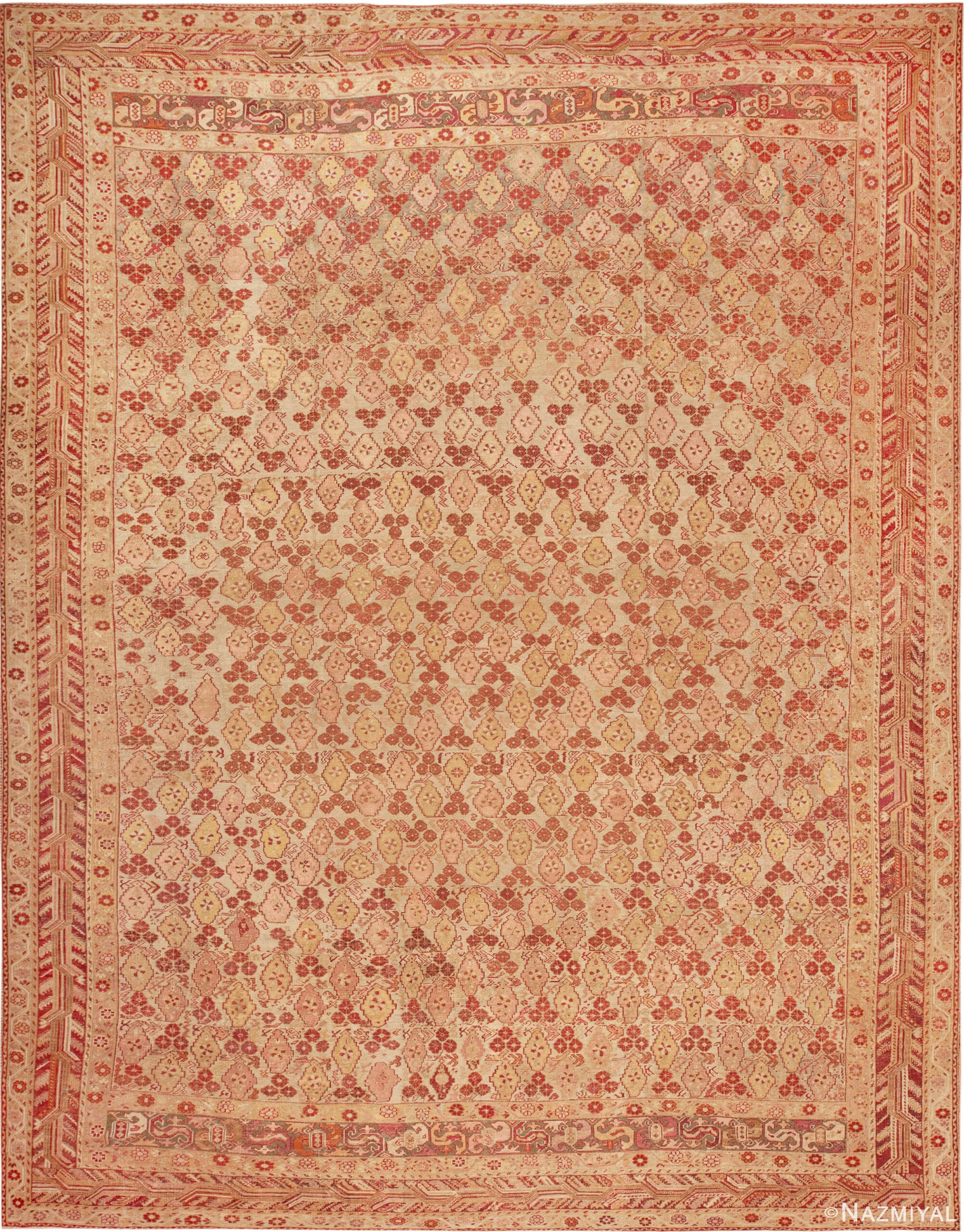
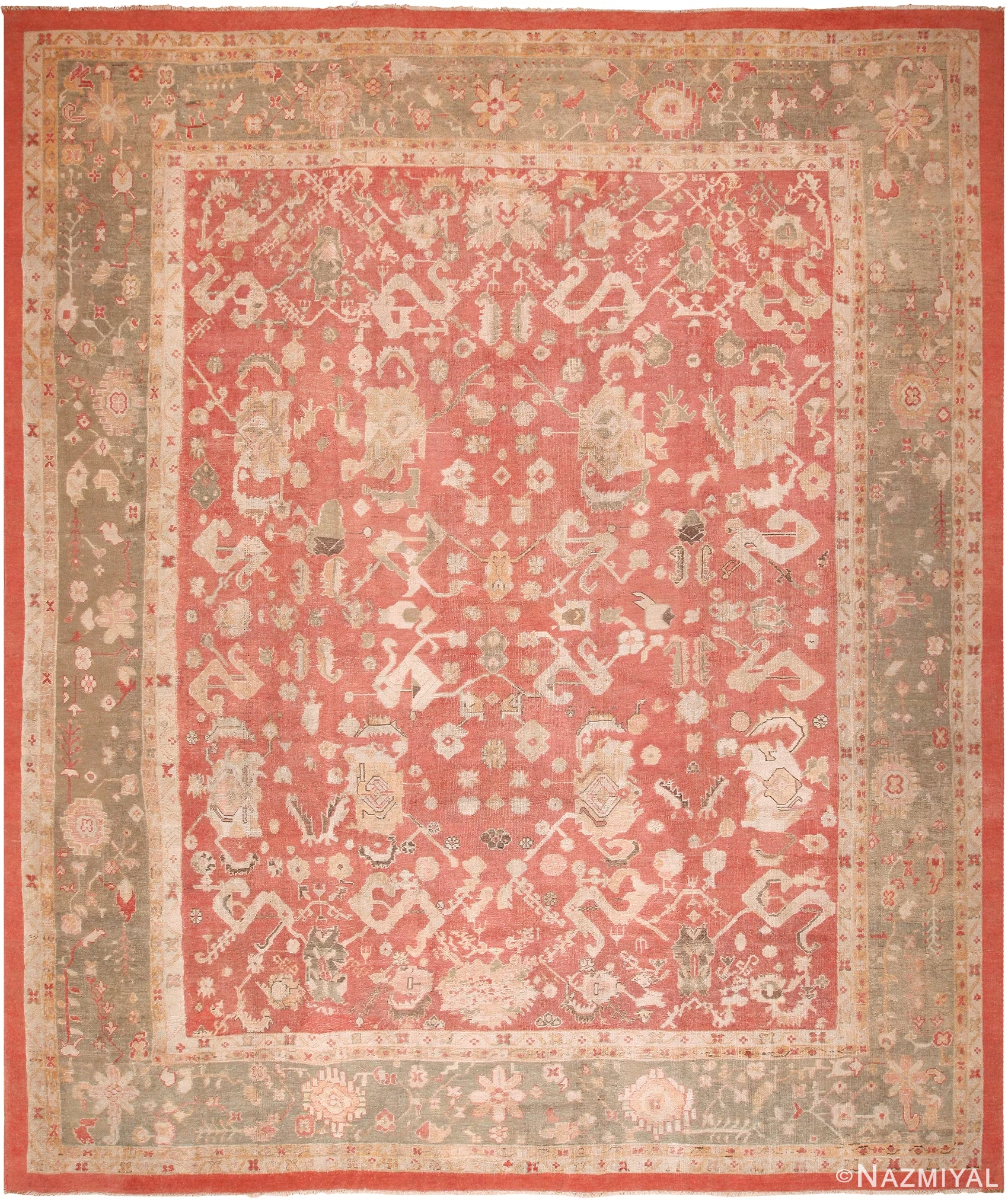
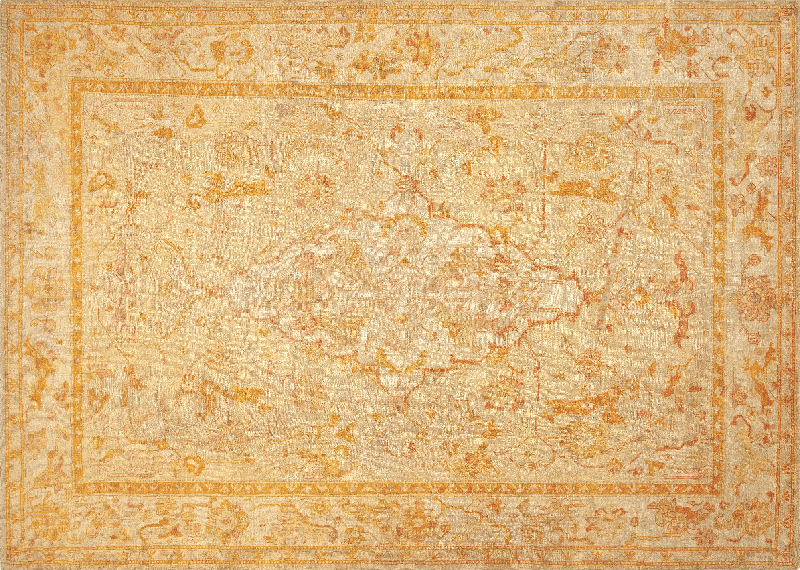
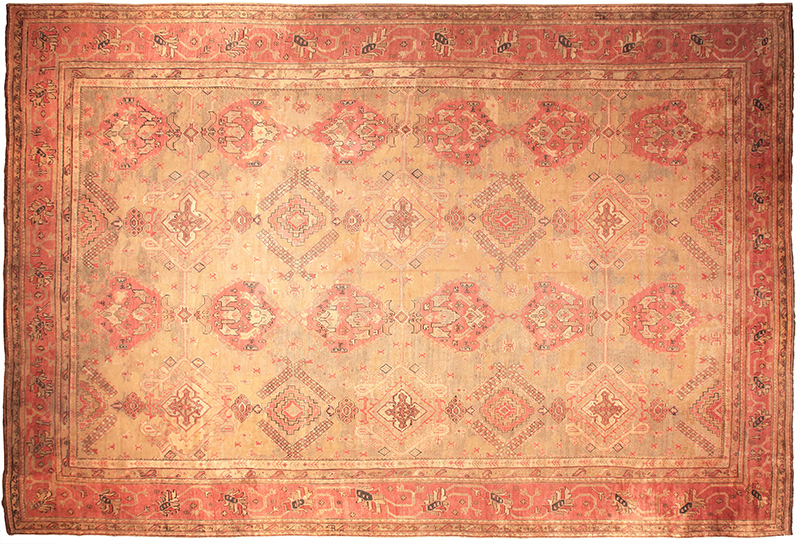
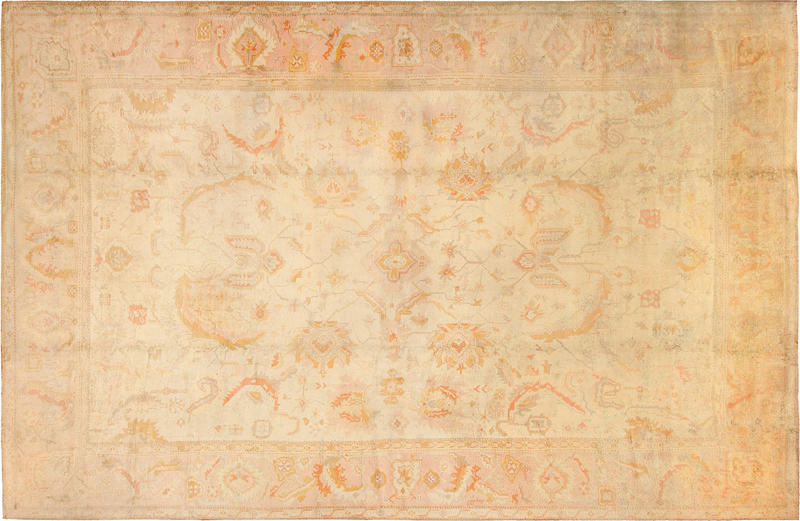
Featured pieces change as one-of-a-kind rugs sell, but these examples show the range of scale, drawing, and color harmony associated with Oushak carpets:
Oushak rugs are hand-knotted carpets woven in and around the historic Oushak (Usak) region of western Anatolia. Unlike finely detailed court carpets where the value lies in technical refinement and density, Oushak rugs are built to read across space: bold motifs, open fields, and confident proportions designed for large rooms and strong architecture. This is what makes them so enduringly useful in interior design — their visual grammar is architectural, not decorative in the fussy sense.
Because Oushak production influenced European taste from the Renaissance onward, many designers treat antique Oushaks as a foundational decorating tool — similar in function to a great Persian room-size rug, but with a more relaxed, airy grammar that integrates easily with both classical and contemporary interiors.
As Rodolfo, Nazmiyal’s senior specialist with 45 years of hands-on experience, notes: “Oushak rugs are the most forgiving great rugs in the world. Their scale and palette can absorb almost any interior — traditional, modern, transitional — without a fight. When designers ask me for a rug that will never look wrong in a room, an antique Oushak is almost always where I start.”
Oushak has been one of the most important rug-producing centers in the world since at least the 15th century. During the Ottoman Empire’s peak in the 15th and 16th centuries, Oushak workshops produced large-format carpets for palace interiors and export to European courts — and it is these export rugs that gave Oushak its global reputation.
The evidence is in the paintings. Hans Holbein the Younger, Lorenzo Lotto, and other Renaissance painters depicted Oushak rugs in their portraits and religious works — using them as symbols of wealth, status, and cultural sophistication. So prominent were Oushak rugs in these paintings that certain designs are known today as “Holbein carpets” and “Lotto carpets,” named after the painters who depicted them. By the 16th century, Oushak rugs were already shaping Western interior taste from London to Venice to Madrid.
In the late 19th century, Western appetite for Oushak rugs surged again as the antique rug market grew. The town’s workshops, unable to meet demand alone, drew on village weavers from the surrounding regions who had maintained continuous weaving traditions for centuries. This late 19th-century production — bold, room-sized, and often featuring the large allover or medallion compositions that collectors prize today — represents the peak of what most buyers now call “antique Oushak.”
Where Do Oushak Rugs Come From?
Oushak rugs originate from western Anatolia, Turkey — an area that developed into a major carpet-producing center by the early Ottoman period. The town of Oushak sits in the Aegean region of Turkey, where the mild climate, quality wool from local sheep, and established workshop traditions combined to produce rugs that were unlike anything else in the weaving world: big, bold, luminous, and instantly readable across large architectural spaces.
Because “Oushak” has become a popular design descriptor in today’s market, the name is sometimes used loosely to describe any large-scale, softly-paletteed Turkish-inspired rug — even when woven later, elsewhere, or specifically for export with simplified drawing. The most reliable approach is to evaluate each rug by structure, materials, dye behavior, and design character — not by label alone.
“Oushak” is often used to describe a decorative style — large motifs plus soft palettes — even when a rug was woven later, elsewhere, or specifically for export with simplified drawing. If you’re shopping for a genuine antique Oushak, treat the name as a starting point, not a conclusion.
Start with structure: foundation integrity matters more than pile height.
Check design behavior: older drawing feels confident and resolved, not clipped or generic.
Look for believable color: depth and tonal life usually beat flat, uniform saturation.
How to Identify an Authentic Oushak Rug
Use a combined approach: construction first, then materials, then design behavior:
Construction: hand-knotted pile; many Oushaks use the Turkish (symmetrical) knot, visible on the reverse.
Wool quality: thick, lustrous wool is characteristic; the rug should feel structurally confident and springy underfoot.
Knot density: often low-to-medium compared to court rugs — clarity and impact come from scale and proportion, not micro-detail.
Drawing: large motifs and open spacing that stay balanced and coherent across the full field.
Dye behavior: older pieces often show gentle tonal variation (abrash) that adds depth and softness — this is a sign of natural dyes, not a defect.
Finishing: ends and selvages should feel consistent with the rug’s build, not improvised repairs.
Oushak Rugs Compared to Related Rugs
If you’re deciding between families with similar decorating power, here’s the practical separation:
Oushak: open drawing, large motifs, softly saturated palettes — excellent for modern and classic rooms alike. The most architecturally versatile antique rug type.
Ziegler: export-oriented decorative family often inspired by Persian grammar; typically softer palettes and simplified drawing systems. Explore Ziegler rugs.
Persian room-size classics: often more curvilinear and dense in pattern; great when you want intricate design storytelling. Explore Persian rugs.
Other Turkish traditions: Hereke for fine-knot luxury; Anatolian village rugs for bold geometric directness. Explore Turkish rugs.
Decorative authority at scale: Oushaks anchor large interiors without visual noise — a quality very few rug types can provide.
Historic influence: they shaped European and global decorating taste for five centuries, appearing in Renaissance paintings and royal palace inventories before most Western collectors had encountered Persian rugs.
Color harmony: softly saturated palettes that remain designer favorites across changing trends — terracottas, golds, soft blues, ivories that read differently in every light.
Scarcity in strong condition: large antique Oushaks in clean, serviceable shape with intact pile and coherent drawing are increasingly difficult to replace.
Are Oushak Rugs a Good Investment?
Well-chosen antique and early vintage Oushak rugs have shown consistent demand from serious collectors and interior designers — particularly large-format pieces in strong condition with balanced drawing and natural dye palettes. As with all collectible rugs, authenticity and structural condition outperform short-term trend appeal. The finest antique Oushaks — late 19th-century pieces with full pile, coherent composition, and documented provenance — are increasingly scarce and have appreciated accordingly.
What Drives Value in Antique Oushak Rugs
Age and weaving period (antique vs early vintage vs later production)
Size and architectural usefulness (room-size through oversized)
Wool handle and foundation strength
Design clarity (large-scale drawing that stays coherent across the full field)
Color behavior (depth, tonal variation from natural dyes, harmonized palette)
Condition (structure first; cosmetic wear second)
Provenance and sourcing credibility
Types of Oushak Rugs
Medallion Oushak rugs: a central anchor with generous negative space — great for symmetrical rooms and formal furniture arrangements.
Allover Oushak rugs: repeating systems that feel calm and continuous — excellent in open-plan interiors where a dominant central medallion would feel too forceful.
Geometric Oushak rugs: bolder, more graphic drawing that still reads soft due to scale and palette.
Oversized Oushak carpets: palace-scale formats where proportion and structural integrity matter most — among the hardest antique rugs to find in genuinely strong condition.
Oushak Rugs in Interior Design
Oushak rugs are among the most widely used antique rugs in American and European interior design — particularly in the work of designers who want a rug with genuine historical weight that doesn’t impose on the room. Designers including Alexa Hampton, Bunny Williams, and Cullman & Kravis have consistently turned to antique Oushaks when they need a rug that works with traditional architecture without feeling stiff or museum-like.
Their versatility comes from a specific combination of qualities: large enough motifs to be seen across a full room, open enough fields to let the floor breathe, and palettes soft enough to work with almost any upholstery or wall color. This is why the same Oushak rug can look equally at home in a minimalist loft and a traditional Georgian townhouse.
Modern rooms: soften sharp architectural lines while keeping the room composed and intentional.
Traditional rooms: support symmetry and proportion without looking overly formal or stiff.
Eclectic rooms: unify mixed periods and furniture styles by providing a calm, structured base layer.
Pro tip from our specialists: choose size first, then drawing scale, then fine-tune color. Oushak rugs succeed or fail on proportion — the right size in the wrong color is fixable; the wrong size in the perfect color is not.
What makes Oushak rugs so sought after by interior designers? Oushak rugs offer something rare in the antique rug world: architectural scale and impact without visual fussiness. Their large motifs, open compositions, and softly saturated palettes allow them to anchor a room without competing with furniture, art, or architecture. As Rodolfo, our senior specialist, notes: an antique Oushak is almost always the starting point when a designer asks for a rug that will never look wrong in a room.
What defines an antique Oushak rug? In the trade, “antique” commonly refers to rugs woven before the mid-20th century — typically before 1940. Proper evaluation depends on structure, materials, dye behavior, and age indicators rather than the label alone. Many rugs sold as “Oushak style” are later reproductions; genuine antique Oushaks show specific characteristics in their wool quality, dye behavior, and drawing confidence that reproductions consistently fail to replicate.
Why do Oushak rugs appear in Renaissance paintings? Oushak rugs were among the first Oriental rugs to reach Western Europe in significant numbers, beginning in the 15th century via Ottoman trade routes. Painters like Hans Holbein the Younger and Lorenzo Lotto depicted them in portraits and religious works as symbols of wealth and sophistication — so consistently that certain Oushak designs are still known as “Holbein carpets” and “Lotto carpets” today. This historical presence in European visual culture is one reason Oushak rugs feel so naturally at home in Western interiors.
Are Oushak rugs finely woven? Oushak rugs are typically more open in construction than court rugs like Persian Kashan or Hereke — their knot density is lower than the most technically refined antique carpets. But this is not a limitation — it is a defining quality. Their impact comes from scale, proportion, and drawing confidence rather than microscopic detail. The wool quality in genuine antique Oushaks is exceptional, and the pile has a characteristic luster and warmth that finer-knotted rugs often lack.
Do Oushak rugs use natural dyes? Many older examples — particularly those woven before the late 19th century — show natural dye behavior: depth, tonal variation, and the gentle color shifts known as abrash that develop as different batches of hand-dyed wool age at slightly different rates. This tonal variation is considered a desirable quality, not a flaw. Later production may include synthetic dyes; assessment depends on the specific rug’s period and materials.
What size Oushak rug do I need? For living rooms, the most common approach is to choose a rug large enough that all four legs of the main seating furniture sit on it — this creates a unified conversation area. For dining rooms, extend at least 24 inches beyond the table on all sides to allow chairs to remain on the rug when pulled out. Oushak rugs are particularly forgiving in this respect: their open compositions read well even when partially covered by furniture.
Can I buy an Oushak rug remotely from Nazmiyal? Yes. Nazmiyal has sold antique Oushak rugs to collectors and designers worldwide for decades. We provide detailed condition reports, precise measurements, and high-resolution photography for every piece. Our 3-day return policy applies — if the rug is not right for your space, you may return it. Contact our team to begin.
Nazmiyal White-Glove Service
We make it easy to shop with confidence — whether you’re choosing a single statement piece or curating a full room.
Nazmiyal Collection has been a trusted source for antique rugs and vintage carpets for over 44 years. Our NYC gallery curates one-of-a-kind pieces with an emphasis on authenticity, provenance, and lasting decorative value.
Need help? Call us at (212) 545-8029 or contact our team to work with a rug specialist.
             Posted on Google        Victor Florintsev     Trustindex verifies that the original source of the review is Google. The only ones I'd ever buy rugs from. The best.         Posted on Google        Jeffrey NeumanB     Trustindex verifies that the original source of the review is Google. I bought two gorgeous Serapi rugs from Farhad at Nazmiyal Rugs!  Beautiful carpets, fair prices and great service.  Very happy customer.  Farhad (the sales person) was very patient and gave us great service.         Posted on Google        john haid     Trustindex verifies that the original source of the review is Google. Alen is a gentleman and an expert.  Really great to work with.         Posted on Google        Edward Yasuna     Trustindex verifies that the original source of the review is Google. I recently purchased a modern Kandinsky rug from Nazmiyal Auctions.  It was just as described, and the director (Farhad) of the auctions had it sent to me quickly and safely.  Payment was easy, the rug was reasonably priced, and I highly recommend Nazmiyal Auctions and Antique Rugs.  Quality merchandise and first-class service.         Posted on Google        Nicholas Carr     Trustindex verifies that the original source of the review is Google. Had a excellent experience buying a rug in Nazmiyal's 1/18/26 online auction.  First, prior to the auction, viewing a number of lots at the 32nd St showroom (I had prepared a list from the online catalog). The staff were great to work with: helpful, knowledgable, honest, and flexible.  Second, after placing an online bid and winning the desired item, arranging payment and pickup was simple and straightforward. Everything went seamlessly and the overall experience was educational and fun. Many thanks to Jason and his team.         Posted on Google        Andrea Gared     Trustindex verifies that the original source of the review is Google. Everyone at Naziyal is proffessional, especially Jason and Farhad.
They are knowledgeable, truthful, and true gentlemen. I have sold several rugs through them and will always go to them first, to buy or sell. The best in the business!         Posted on Google        Lori Silverberg     Trustindex verifies that the original source of the review is Google.          Posted on Google        Jesse Zilberman     Trustindex verifies that the original source of the review is Google. Excellent customer service! Alen was very helpful over the phone and email. The rug we acquired was stunning, and photos do not do it justice. I would definitely work with Alen and team again!         Posted on Google        Rachel Paul     Trustindex verifies that the original source of the review is Google. Jason was incredibly kind and helpful! I work for a small museum that had some rugs we had no information on. Jason responded to us quickly and gave us the information we needed for free! Incredible service, we are super thankful for his help!

 Size: 11 ft 3 in x 12 ft (3.43 m x 3.66 m)
 Size: 20 ft x 26 ft 6 in (6.1 m x 8.08 m)
 Size: 13 ft 2 in x 25 ft 3 in (4.01 m x 7.7 m)
 Size: 16 ft 3 in x 24 ft 7 in (4.95 m x 7.49 m)
 Size: 15 ft x 24 ft 2 in (4.57 m x 7.37 m)
 Size: 13 ft 10 in x 21 ft 9 in (4.22 m x 6.63 m)
 Size: 18 ft 6 in x 21 ft 4 in (5.64 m x 6.5 m)
 Size: 16 ft 4 in x 20 ft (4.98 m x 6.1 m)
 Size: 14 ft x 19 ft 10 in (4.27 m x 6.05 m)
 Size: 15 ft 10 in x 19 ft 7 in (4.83 m x 5.97 m)
 Size: 12 ft 8 in x 19 ft 7 in (3.86 m x 5.97 m)
 Size: 14 ft 7 in x 19 ft 4 in (4.44 m x 5.89 m)
 Size: 13 ft 8 in x 19 ft (4.17 m x 5.79 m)
 Size: 13 ft 6 in x 18 ft 8 in (4.11 m x 5.69 m)
 Size: 15 ft 6 in x 18 ft 7 in (4.72 m x 5.66 m)
 Size: 15 ft x 18 ft 6 in (4.57 m x 5.64 m)
 Size: 15 ft 9 in x 18 ft 6 in (4.8 m x 5.64 m)
 Size: 14 ft 10 in x 17 ft 7 in (4.52 m x 5.36 m)
 Size: 8 ft 4 in x 17 ft 3 in (2.54 m x 5.26 m)
 Size: 10 ft 3 in x 17 ft 3 in (3.12 m x 5.26 m)
 Size: 13 ft 4 in x 16 ft 8 in (4.06 m x 5.08 m)
 Size: 13 ft 6 in x 16 ft 6 in (4.11 m x 5.03 m)