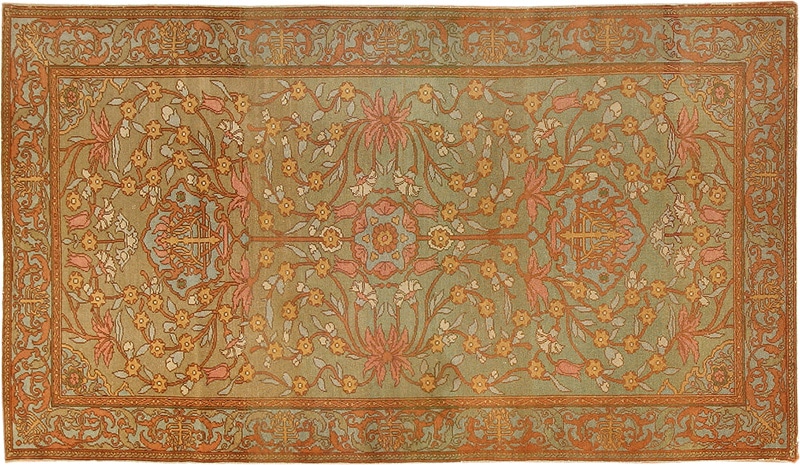
Antique Bezalel & Marbediah Carpets from Jerusalem: Plus Judaica & Israeli Artist Rugs
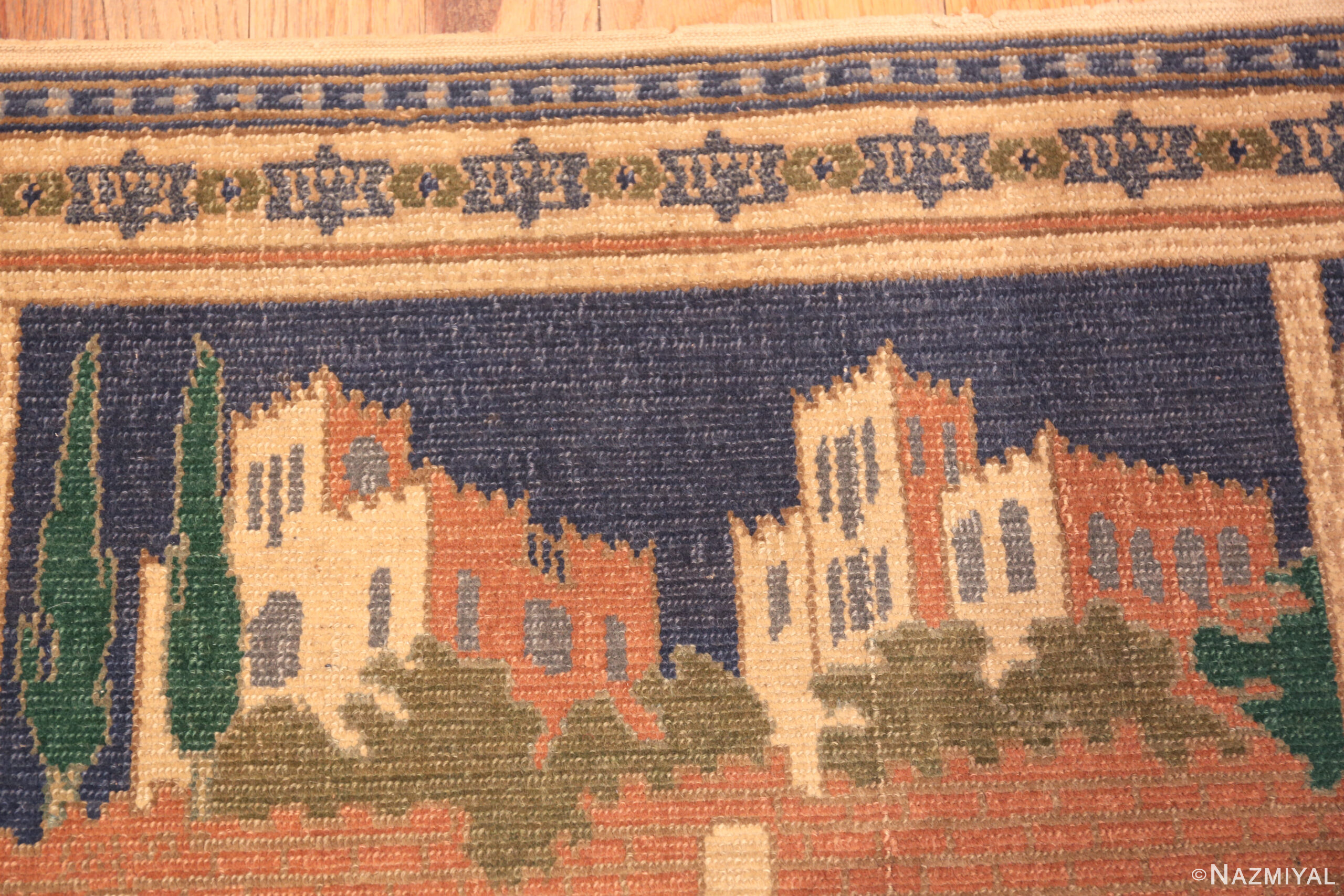
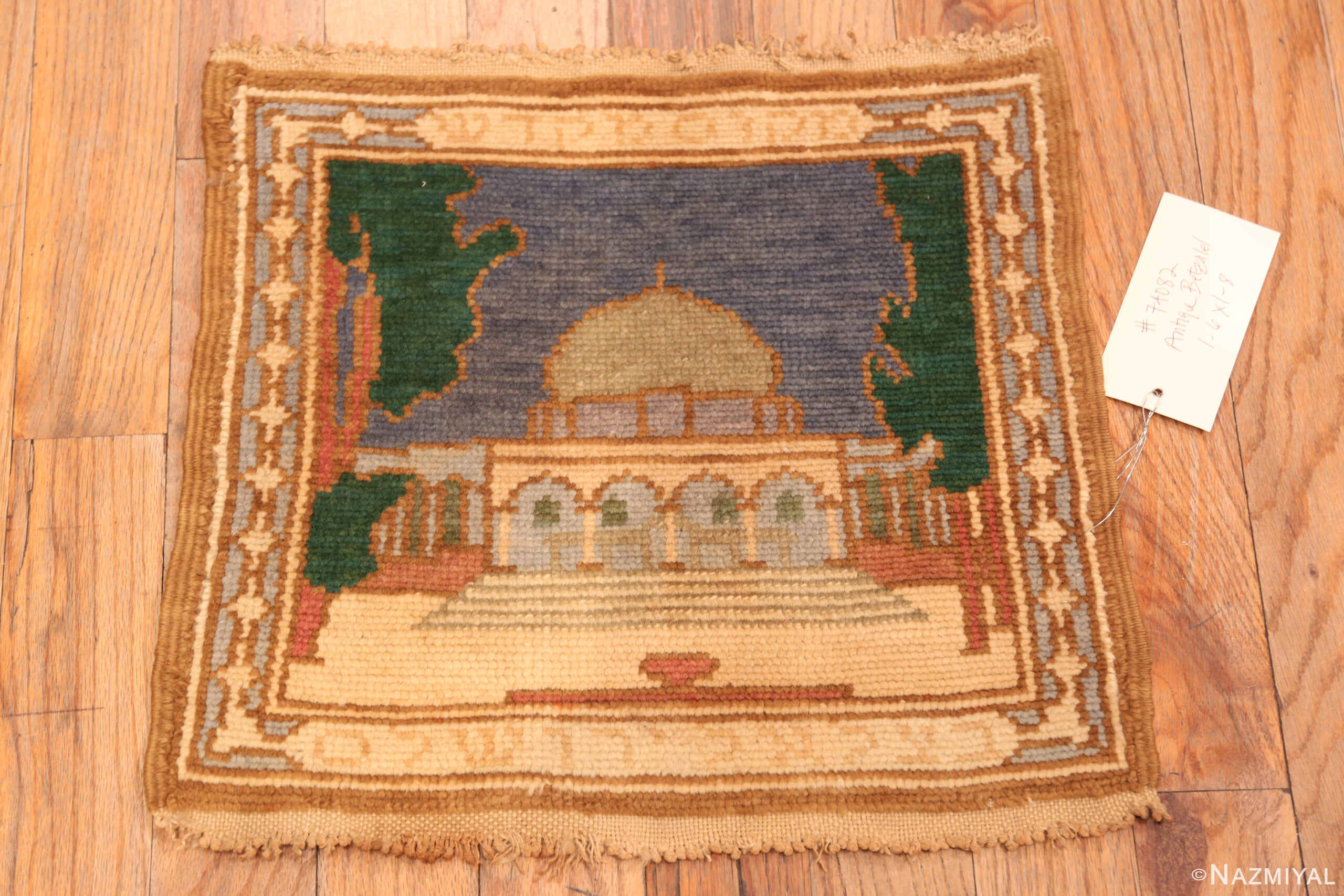
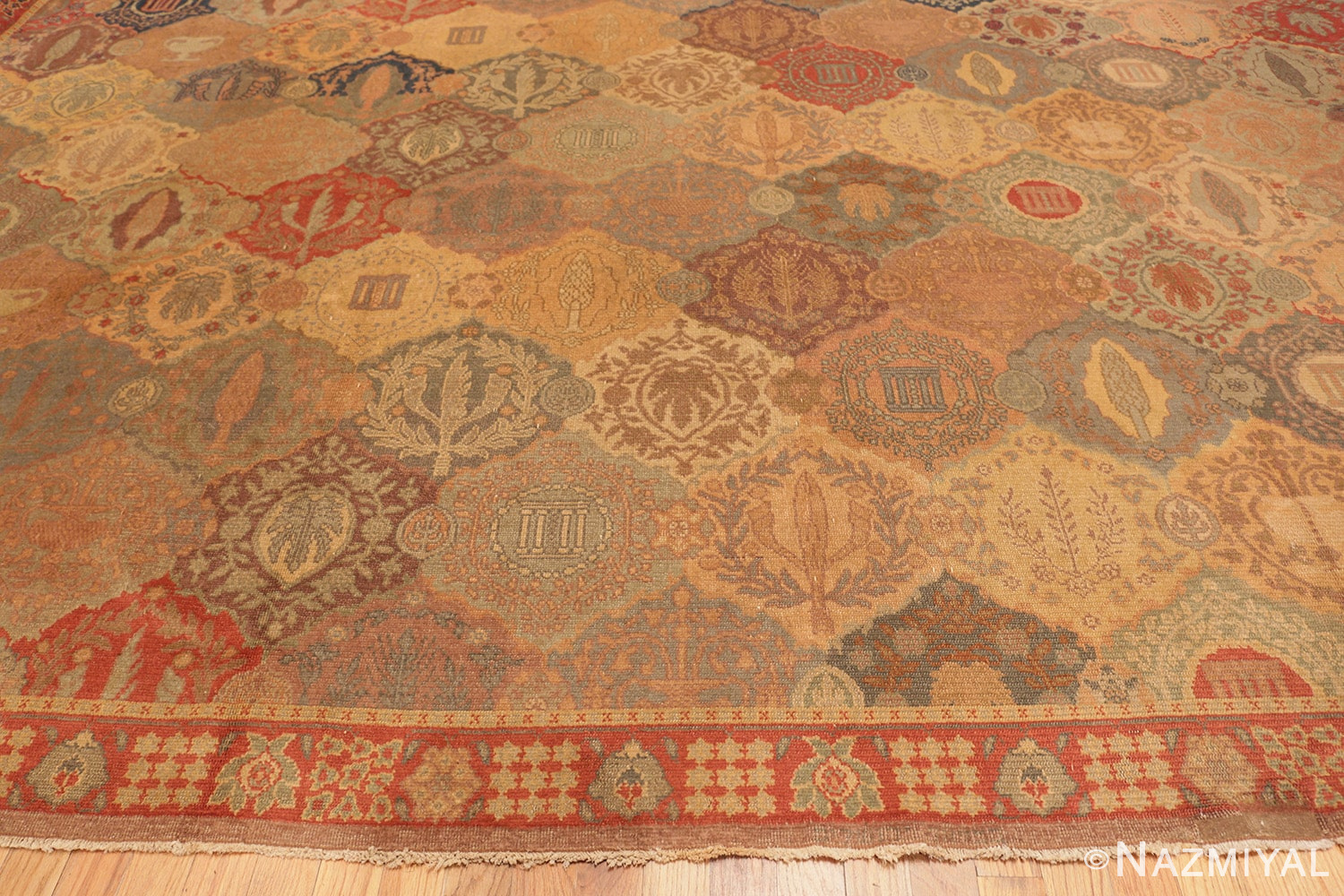
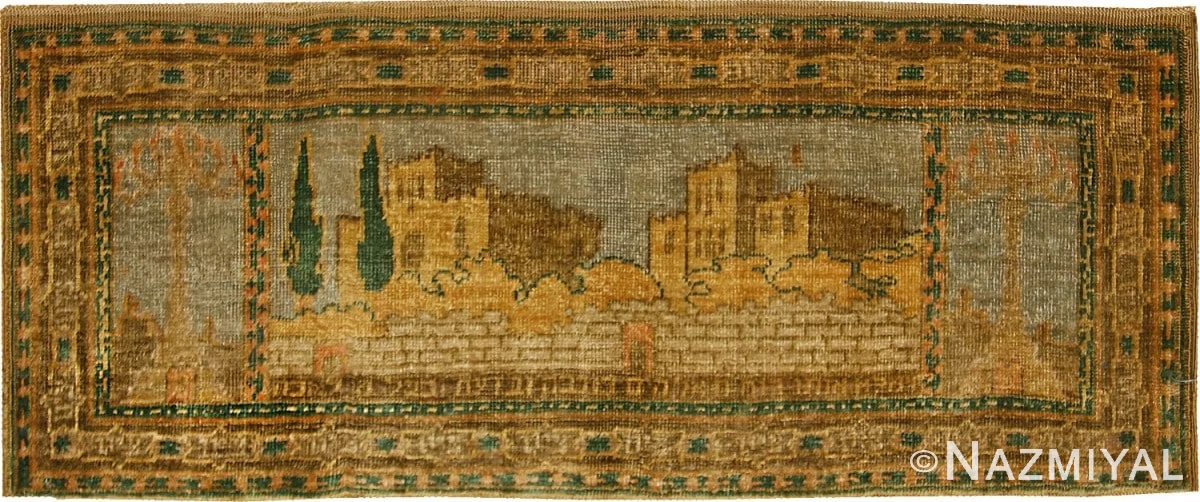
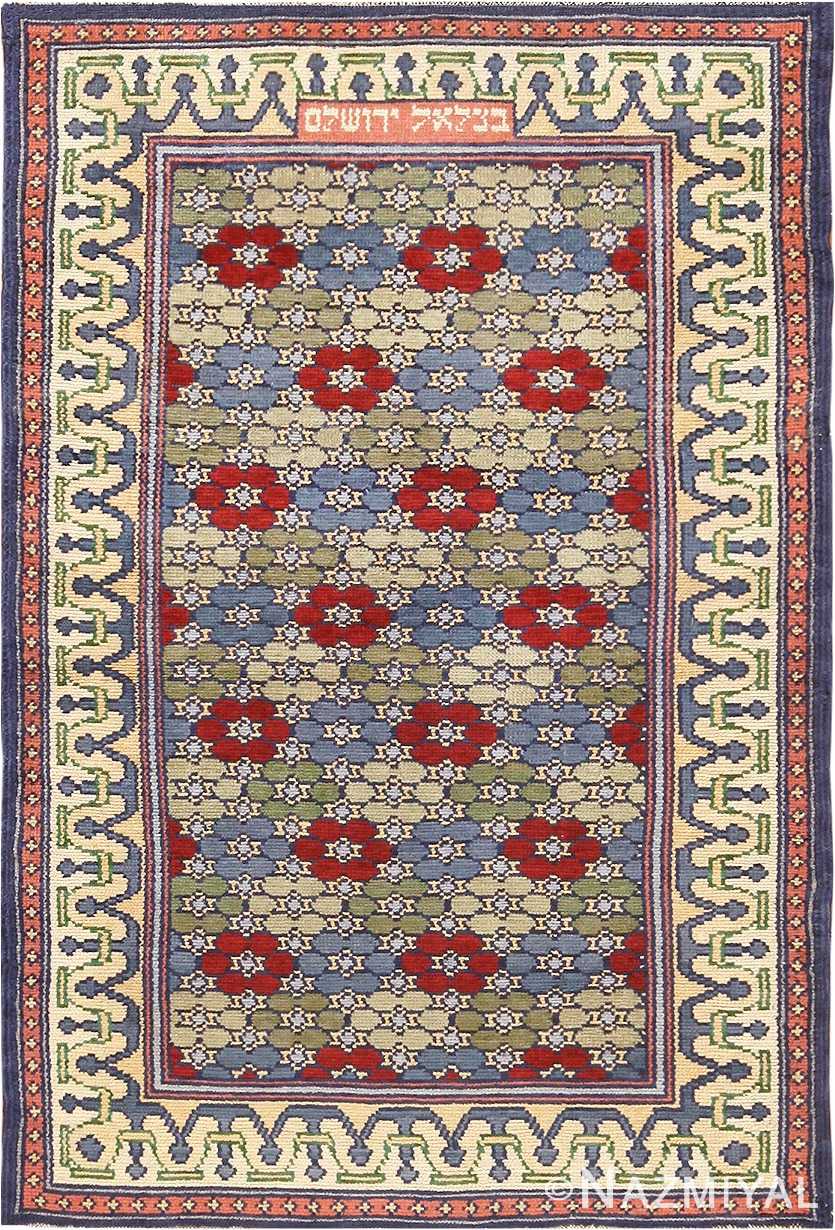
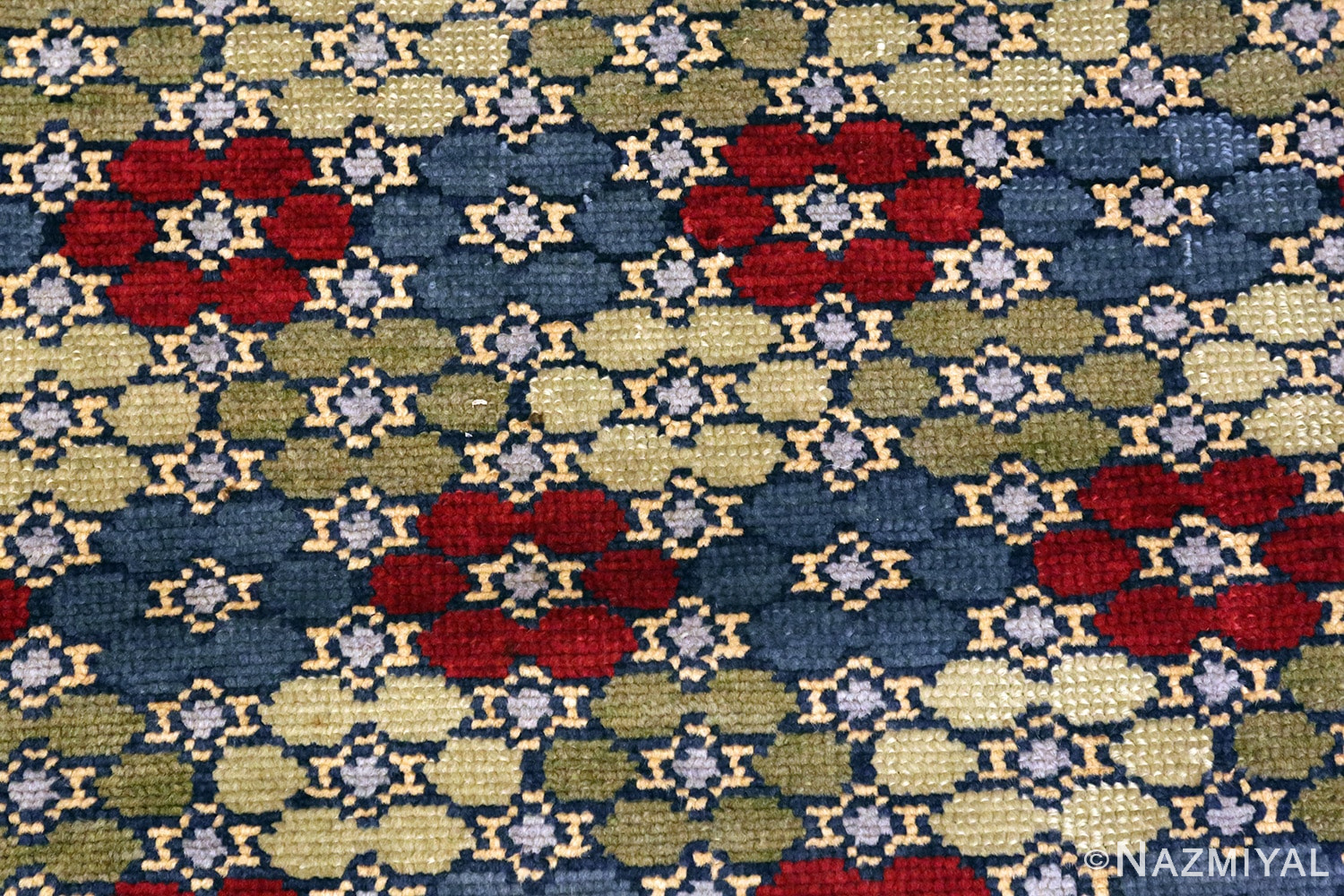
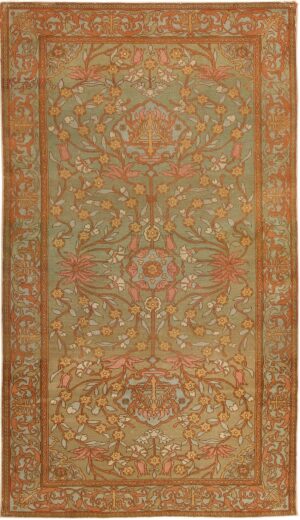
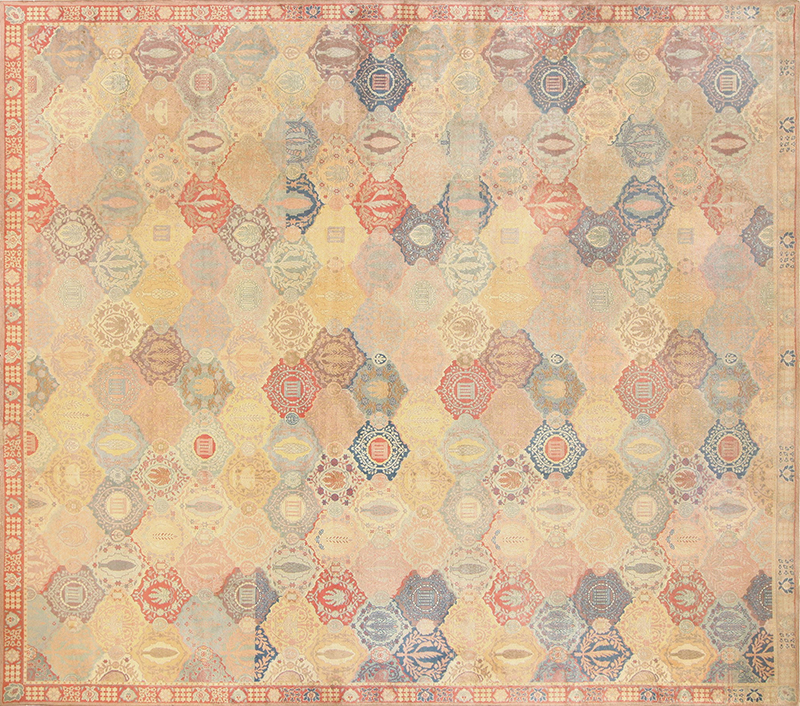
Israeli Rugs – Israel is home to a surprisingly large and well-established carpet-weaving community. Area Carpet weavers in Israel had very serious traditions that were cultural, technical and artistic. For example, the famous Marbediah workshop is named after Marvard, the Hebrew word for carpet, and the Bezalel workshop is named after the legendary designer of the Ark.
Nazmiyal defines Israeli rugs as collectible 20th-century carpets—most famously Bezalel and Marbediah workshop weavings from Jerusalem—known for Jewish symbolism, Holy Land imagery, and a distinctive blend of Middle Eastern and European design.
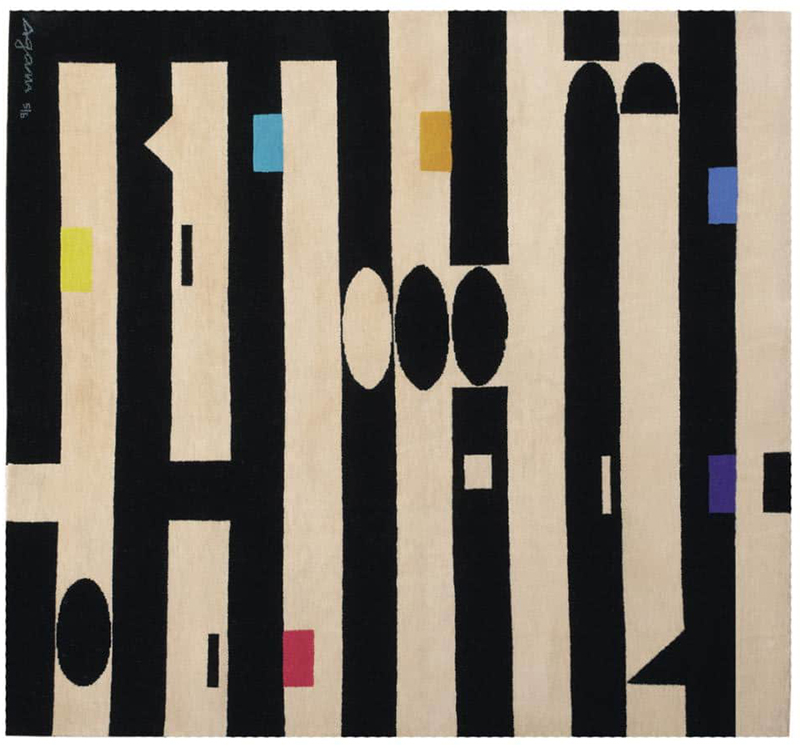
Israeli rugs don’t fit neatly into the usual “tribal vs. city workshop” map. They’re often artist-driven, with designs that read like prints, paintings, or illustrated pages—then translated into textile form.
Modern interiors: Let an Israeli pictorial rug be the artwork on the floor—keep surrounding textiles quieter.
Traditional rooms: Pair with wood, leather, and warm neutrals; the rug’s symbolism becomes the conversation piece.
Smaller Bezalel/Marbediah pieces: Consider wall display in a study, hallway vignette, or library.
For a clean contemporary look, cross-shop: Modern Rugs For patina-rich warmth, cross-shop: Vintage Rugs
Care & Maintenance
Vacuum gently (avoid aggressive beater bars on older pile).
Rotate periodically to even out light exposure.
For cleaning, use a specialist—especially if the piece includes silk or fragile inscription details.
Glossary
Bezalel: Jerusalem art-school circle associated with highly collectible symbolic carpets.
Marbediah (Marvadiah): Related weaving workshop tradition; often narrative and inscribed.
Judaica rug: A rug incorporating Jewish symbols/themes (home, synagogue, or collector pieces).
Pictorial: A scene-based rug (architecture, figures, story) rather than pure ornament.
Abrash: Natural color variation that appears in bands or shifts due to dye/wool batch changes.
FAQ
Are Israeli rugs always Bezalel rugs?
No. Bezalel is the best-known collectible group, but Israeli rugs also include Marbediah workshop pieces, Judaica-themed textiles, and later modern Israeli artist rugs.
Are Bezalel rugs hand-knotted?
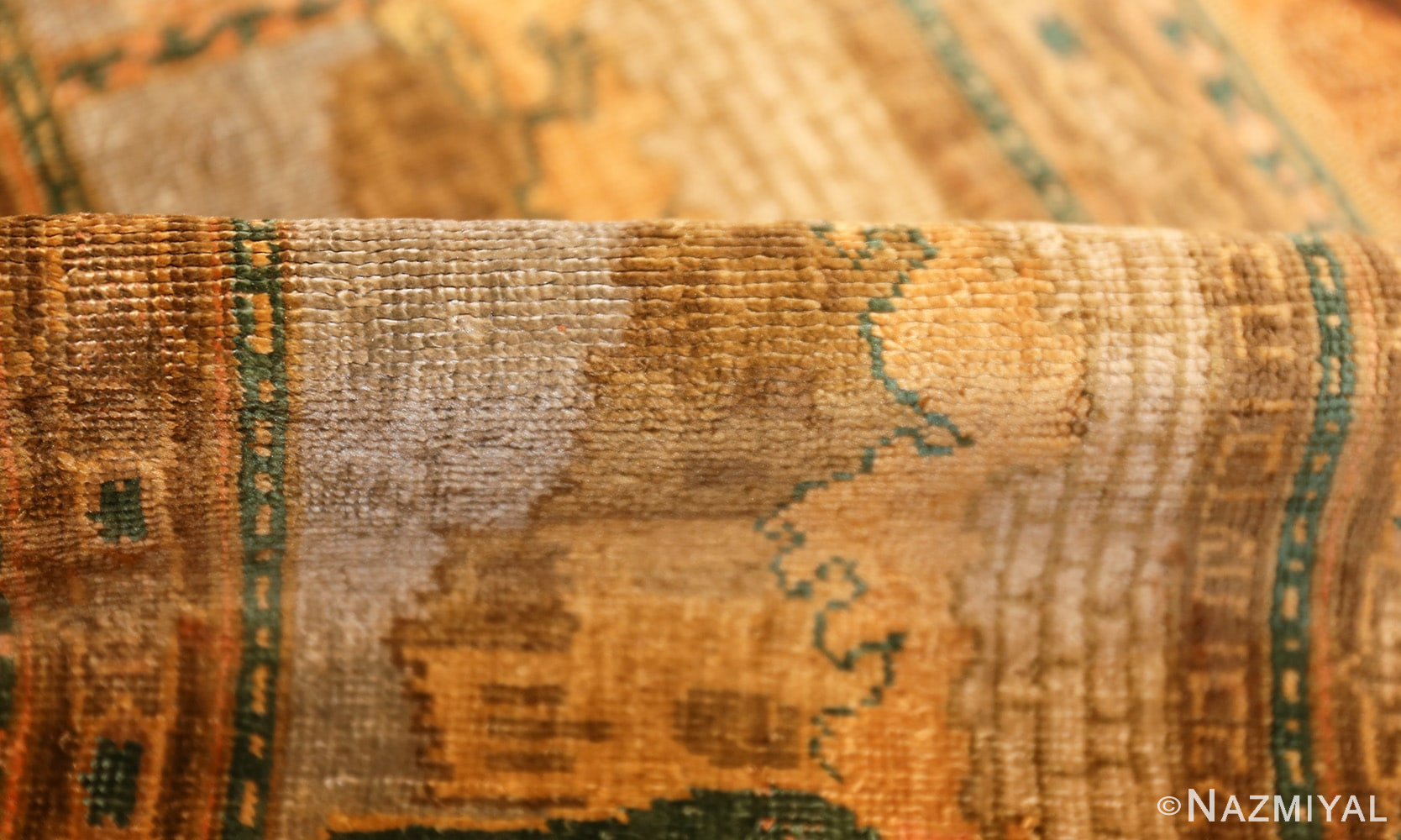
Many are knotted-pile rugs (often wool, sometimes with silk), though Israeli textiles can also include tapestry-style works depending on the piece and period.
What motifs are most common in Israeli rugs?
Hebrew inscriptions, Jerusalem/Holy Land imagery, menorahs, tribal references, symbolic animals, and decorative cartouches are common.
How do I know if my rug is truly Bezalel or Marbediah?
Look for inscriptions, Jerusalem references, Bezalel/Marbediah identifiers, and the illustrated design feel. When in doubt, compare against known examples in our Bezalel and Marbediah categories.
Are Israeli rugs collectible?
Yes—especially early Bezalel/Marbediah examples and documented artist-designed pieces. Condition, clarity of design, and provenance all impact value.
What size Israeli rugs are most desirable?
Both ends: small, highly detailed pictorial pieces for collectors, and larger room-size carpets when available (rare).
Do Israeli rugs work in modern interiors?
Very well—because the imagery and typography-like inscriptions function like graphic art, especially against quiet, contemporary furniture.
How should I clean an antique Israeli rug?
Use a specialist who understands antique pile and dye stability. Avoid harsh chemicals and aggressive mechanical cleaning.
Nazmiyal White-Glove Service
We make it easy to shop with confidence—whether you’re choosing a single statement piece or curating a full room.
Trustindex verifies that the original source of the review is Google.
My wife and I are so pleased with the antique Uzbek Bokhara Rug purchased from the Nazmiyal Collection. Not only does the rug have a spectacular design, it also was very reasonably priced. The way it transforms our living room, reconciling the classic modern furniture with the 1913 Craftsman interior is remarkable.
Posted on Google
Terence Hayes
Trustindex verifies that the original source of the review is Google.
I have purchased multiple rugs at multiple Nazmiyal auctions and I am extremely pleased with the quality, price, and experience. Highly recommended!
Posted on Google
Victor Florintsev
Trustindex verifies that the original source of the review is Google.
The only ones I'd ever buy rugs from. The best.
Posted on Google
Jeffrey NeumanB
Trustindex verifies that the original source of the review is Google.
I bought two gorgeous Serapi rugs from Farhad at Nazmiyal Rugs! Beautiful carpets, fair prices and great service. Very happy customer. Farhad (the sales person) was very patient and gave us great service.
Posted on Google
john haid
Trustindex verifies that the original source of the review is Google.
Alen is a gentleman and an expert. Really great to work with.
Posted on Google
Edward Yasuna
Trustindex verifies that the original source of the review is Google.
I recently purchased a modern Kandinsky rug from Nazmiyal Auctions. It was just as described, and the director (Farhad) of the auctions had it sent to me quickly and safely. Payment was easy, the rug was reasonably priced, and I highly recommend Nazmiyal Auctions and Antique Rugs. Quality merchandise and first-class service.
Posted on Google
Nicholas Carr
Trustindex verifies that the original source of the review is Google.
Had a excellent experience buying a rug in Nazmiyal's 1/18/26 online auction. First, prior to the auction, viewing a number of lots at the 32nd St showroom (I had prepared a list from the online catalog). The staff were great to work with: helpful, knowledgable, honest, and flexible. Second, after placing an online bid and winning the desired item, arranging payment and pickup was simple and straightforward. Everything went seamlessly and the overall experience was educational and fun. Many thanks to Jason and his team.
Posted on Google
Andrea Gared
Trustindex verifies that the original source of the review is Google.
Everyone at Naziyal is proffessional, especially Jason and Farhad.
They are knowledgeable, truthful, and true gentlemen. I have sold several rugs through them and will always go to them first, to buy or sell. The best in the business!
Frequently Asked Questions
The history of Jewish rugs and weavers goes back to the beginning of their religion. And because of their forced exodus into the world they have given and taken from many cultures. But this true of the rug industry in general, weavers have been part of cultures that have conquered and been conquered; many have been nomadic cultures.
THE NAZMIYAL NEWSLETTER
Discover Your Next Favorite Rug
Get new arrivals, rug inspiration, educational blogs, and collection highlights delivered to your inbox.
By subscribing, you agree to receive marketing emails from Nazmiyal. Unsubscribe anytime. View our Privacy Policy.