Quick Navigation

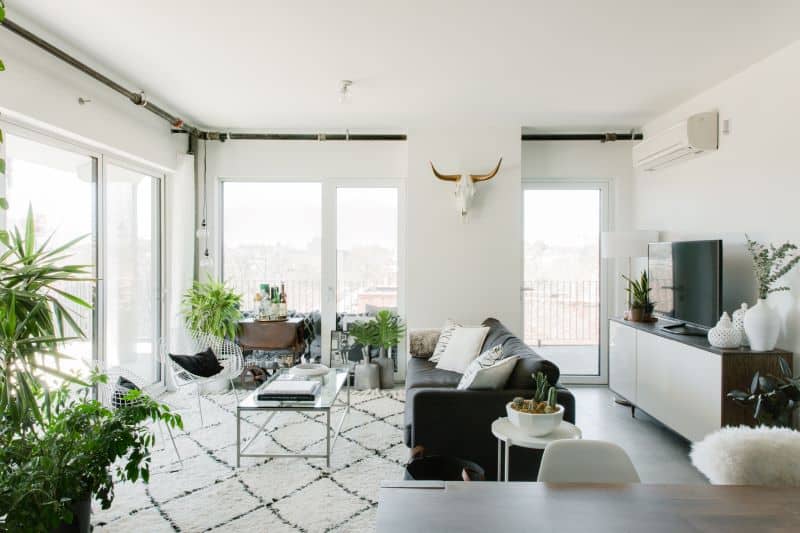
Black and white decor works in every area of the home—especially when you balance contrast with texture.
Key Takeaways
- Use black and white rugs to create clean structure—they define zones and make furniture lines feel sharper.
- The most successful rooms add texture and soft neutrals (off-white, gray, natural woods) to keep contrast from feeling stark.
- For flexibility, treat black/white as a base and rotate accents seasonally—metallics, art, and textiles do the work.
At-a-Glance Specs
- Origin: Global—black/white palettes appear in many weaving traditions and design movements.
- Era range: Antique, vintage, and modern (the palette adapts easily across decades).
- Common constructions: Pile rugs for warmth and depth; flatweaves/kilims for a crisp, tailored look.
- Materials: Wool is most common; silk highlights appear in some refined pieces.
- Typical sizes: From small accents to room-size and oversized formats, depending on layout and use.
- Palette: True black/white, plus supporting shades like ivory, cream, charcoal, and soft gray.
- What to look for: Balance of contrast, clarity of motif, and the right texture so the room feels composed—not overly graphic.
Popular Searches
Large rugs | Oversized rugs | Floral rugs | Allover rugs | Medallion layouts | Shop by color | Rug size guide
Some Great Rugs From Our Collection to Complete Your Black and White Interior Design
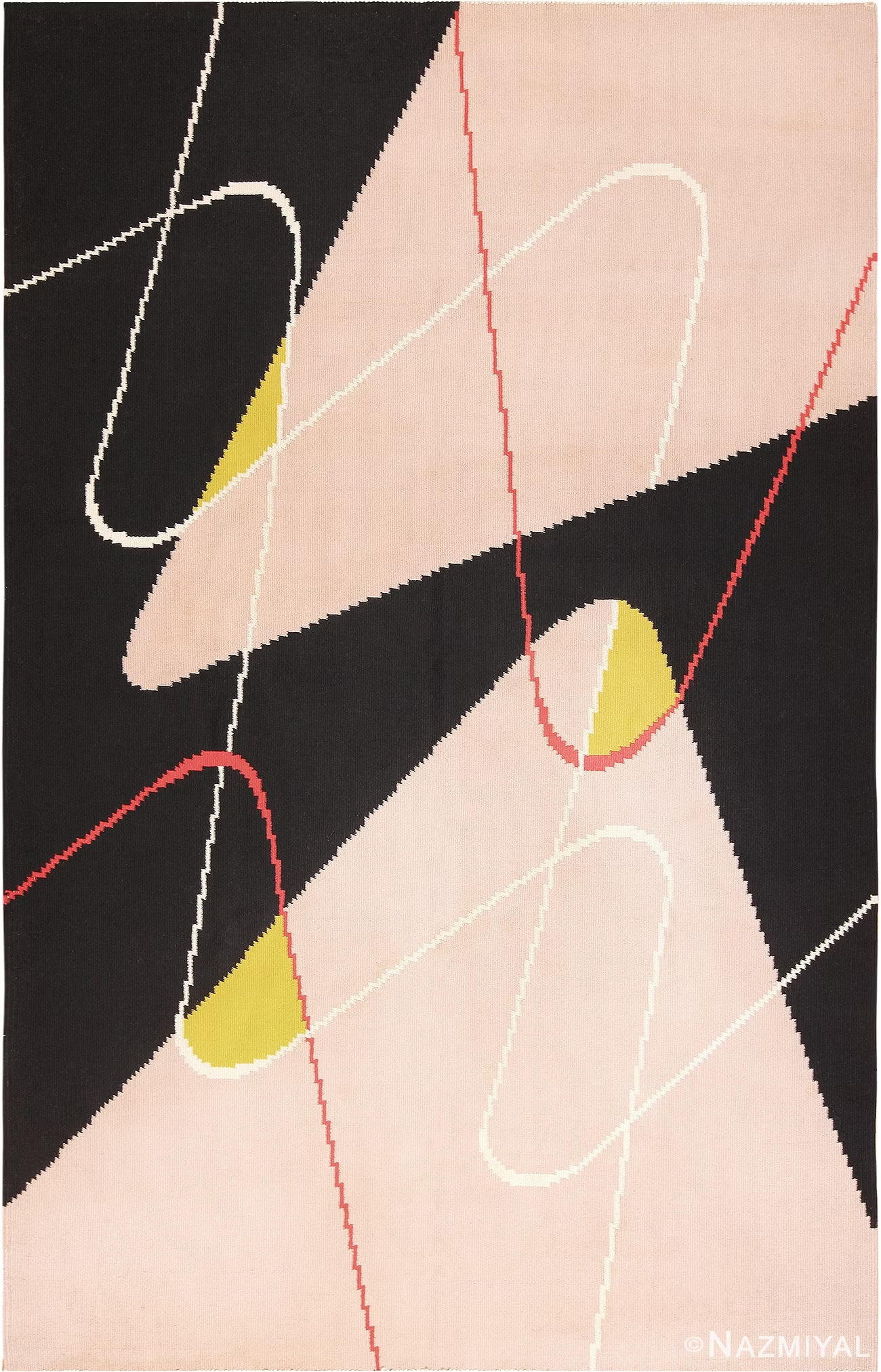
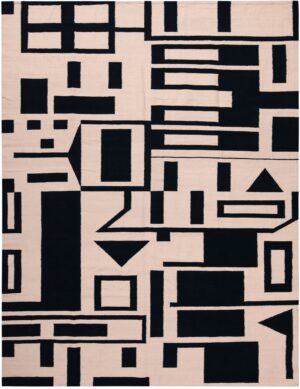
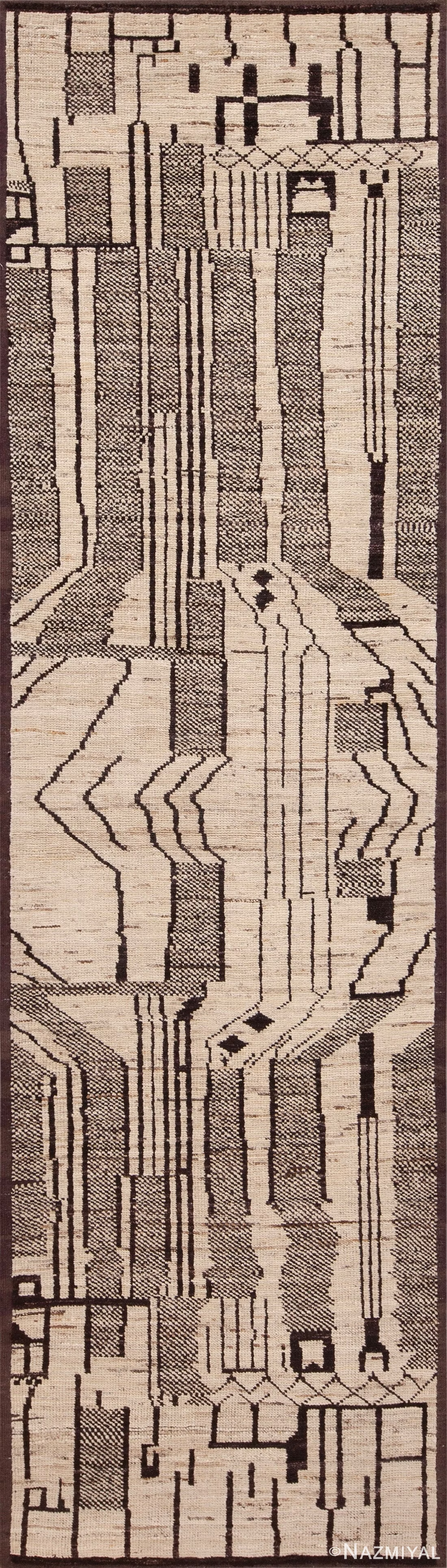
Black And Cream Flat Woven Vintage French Art Deco Rug #49929

Vintage French Art Deco Flat Woven Kilim Rug #49929
- Circa: Mid 20th Century (vintage)
- Size: 8 ft 4 in x 13 ft
- Origin / Type: French Art Deco flatweave (kilim)
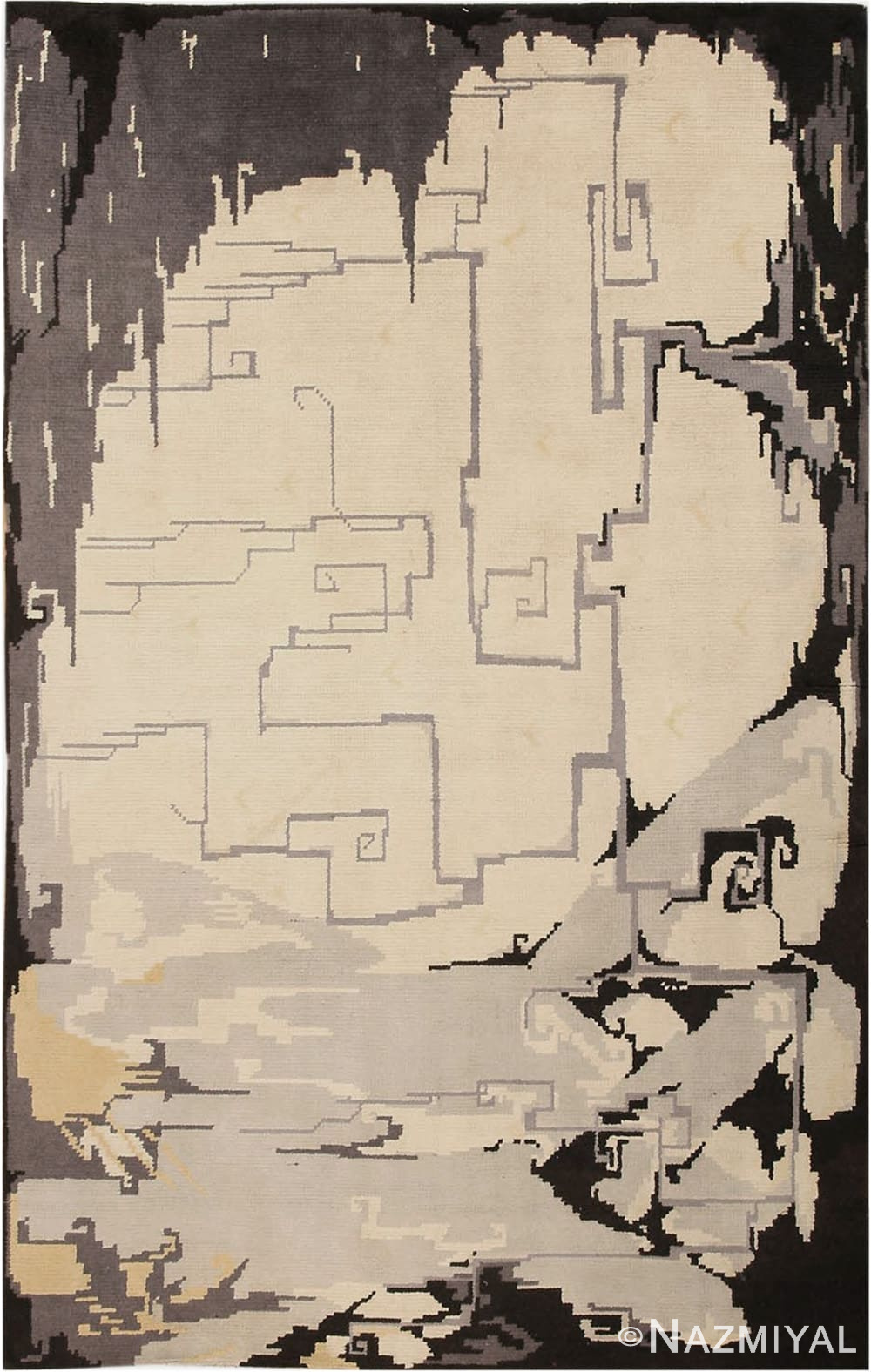
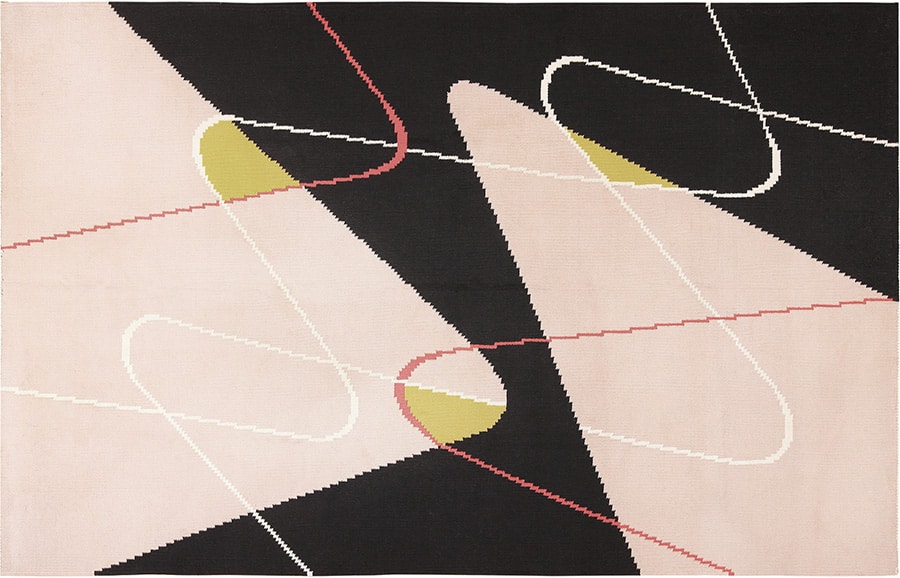
Vintage Asger Oluf Jorn Black And White Art Rug #70073

Vintage Asger Oluf Jorn Art Rug #70073
- Circa: Mid 20th Century (vintage)
- Size: 8 ft x 11 ft
- Origin / Type: Scandinavian art rug
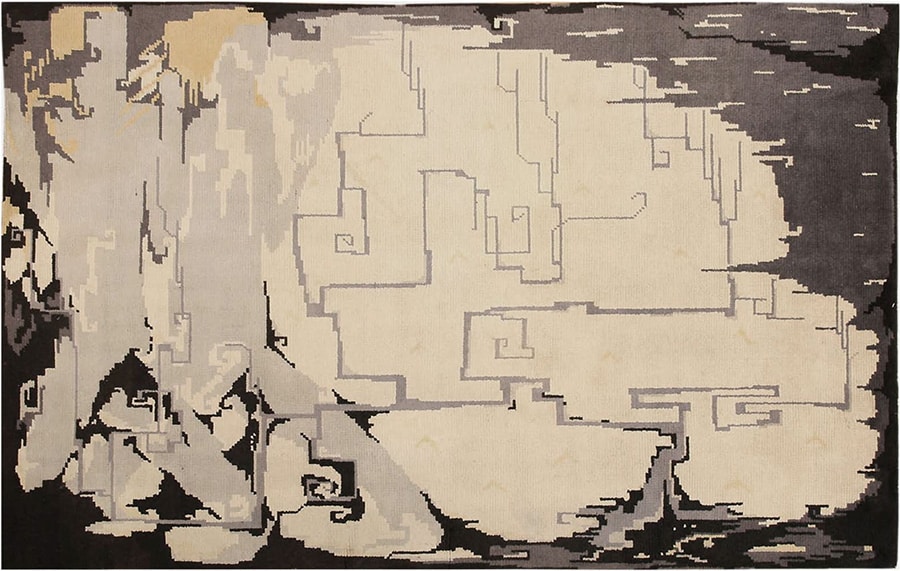
Vintage English Deco Rug by Hildo Krop #40289

Hildo Krop Rug #40289
- Circa: Early 20th Century (vintage)
- Size: 6 ft 5 in x 10 ft 1 in
- Origin / Type: English Deco rug
Identification & Construction: What Makes Black and White Rugs Feel “Right”
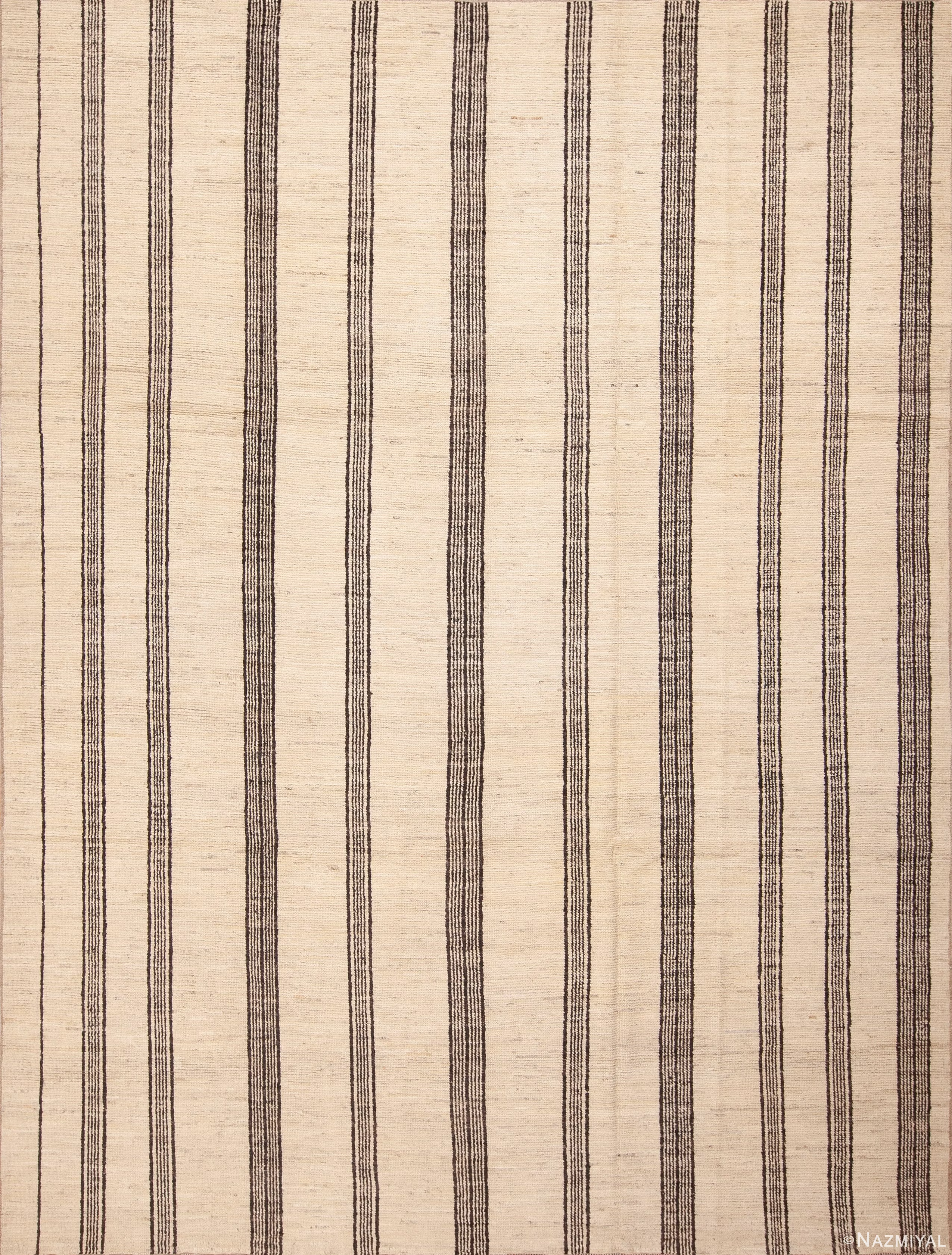
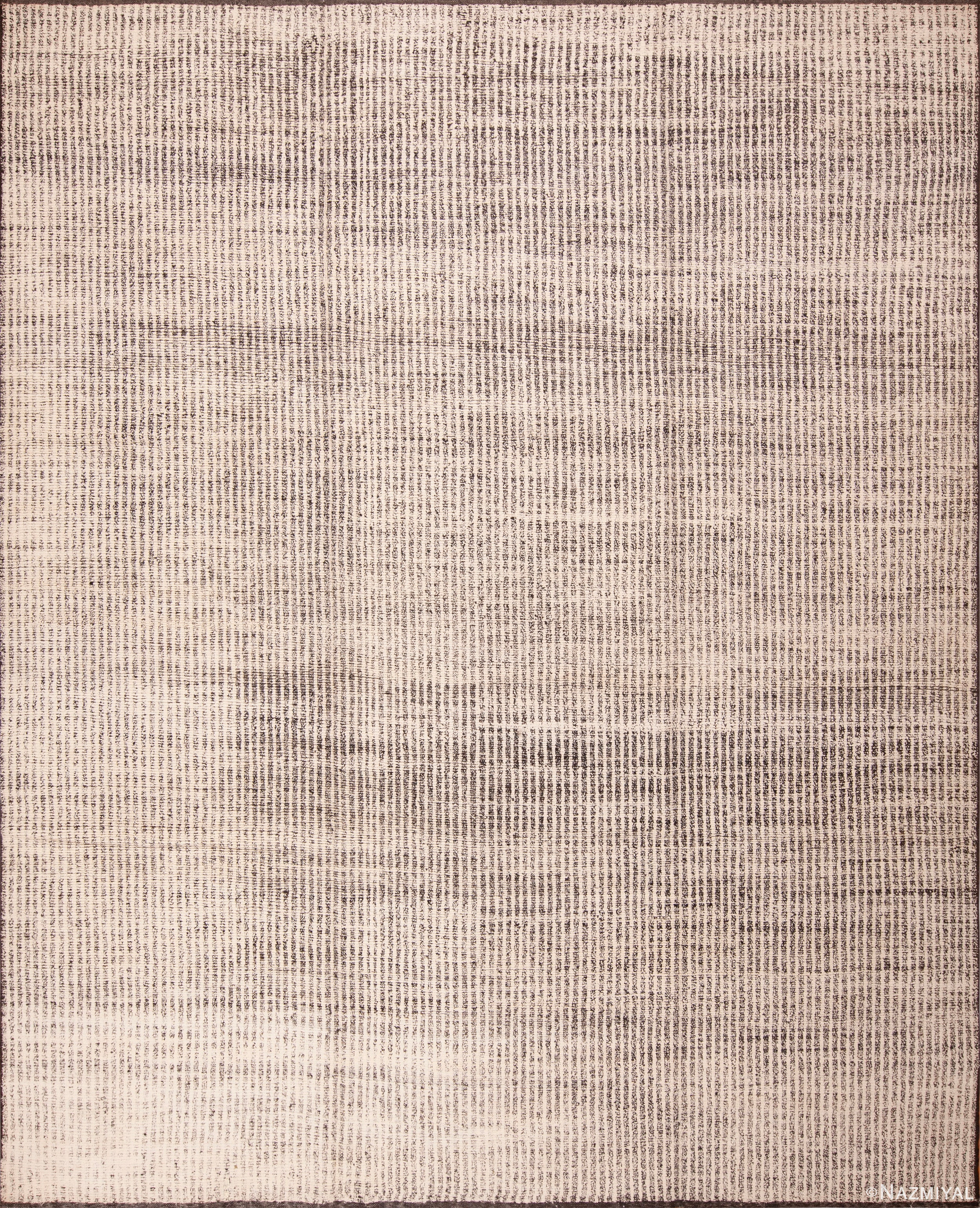
A black and white rug succeeds when contrast feels intentional rather than noisy. In practice, that usually comes down to layout (allover vs. border vs. medallion), scale (large motifs read calmer than tiny repeats), and texture (pile height and fiber character soften the graphic edge).
- Flatweaves vs. pile: Flatweaves (including kilim-style rugs) read crisp and tailored; pile rugs add depth and warmth that can make high contrast easier to live with.
- White isn’t always “white”: Many rugs use ivory, cream, or undyed wool, which looks more natural in most interiors than pure bright white.
- Black can be matte or lustrous: Some black reads soft charcoal under daylight, while others stay ink-dark—especially when paired with silk highlights or tighter construction.
You’ll find black and white palettes across many traditions, including refined Persian rugs where dark grounds and light accents create strong framing and visual depth.
Decorating & Placement Guidance
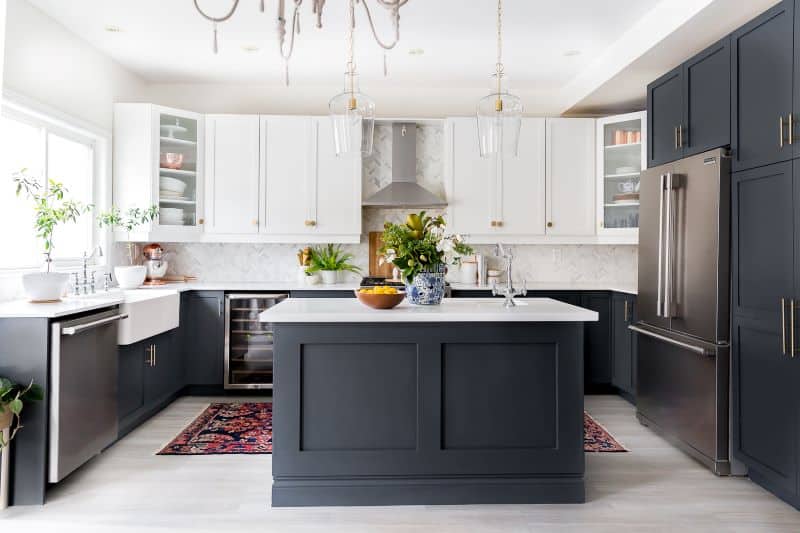
The easiest way to get black-and-white decor right is to treat the rug as architecture, then soften everything else. Designers often pair black and white rugs with layered neutrals and natural materials, and they mix eras freely—drawing warmth and patina from antique rugs, character from vintage rugs, and clean lines from modern rugs.
Advantages of Decorating with Black and White Decor
- Clean contrast: Black against white (or vice versa) makes a space feel crisp and intentional.
- Versatility: The palette supports minimalist rooms, but also works in country, cottage, and eclectic spaces when you balance it with texture.
- Art-friendly backdrop: A monochrome foundation helps artwork and objects read clearly—like a home gallery wall.

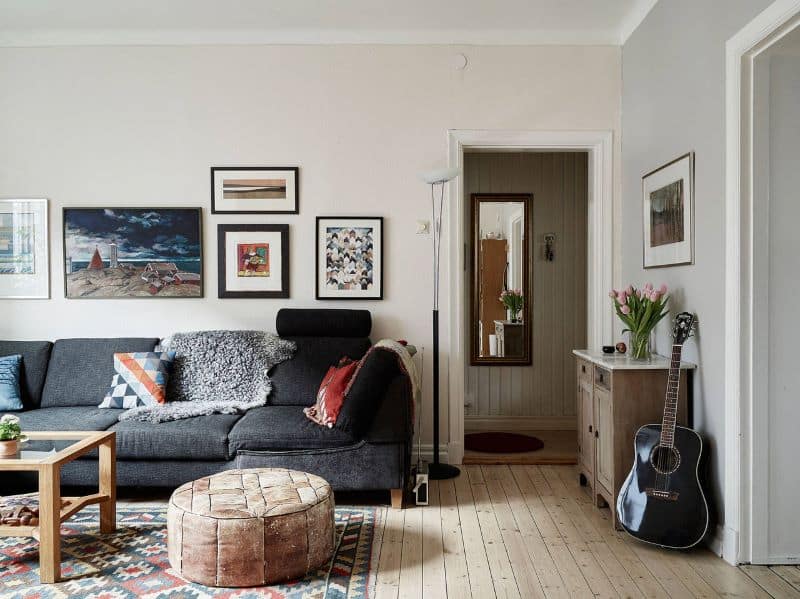
Using a stark black or white wall can make art feel curated and intentional.
Tips for Black and White Home Decor
1. Add Metallic Accents
Black and white rooms come alive with metal—black iron, brushed nickel, chrome, or warm brass. Hardware, lighting, and frames create highlights that keep the palette from feeling flat.
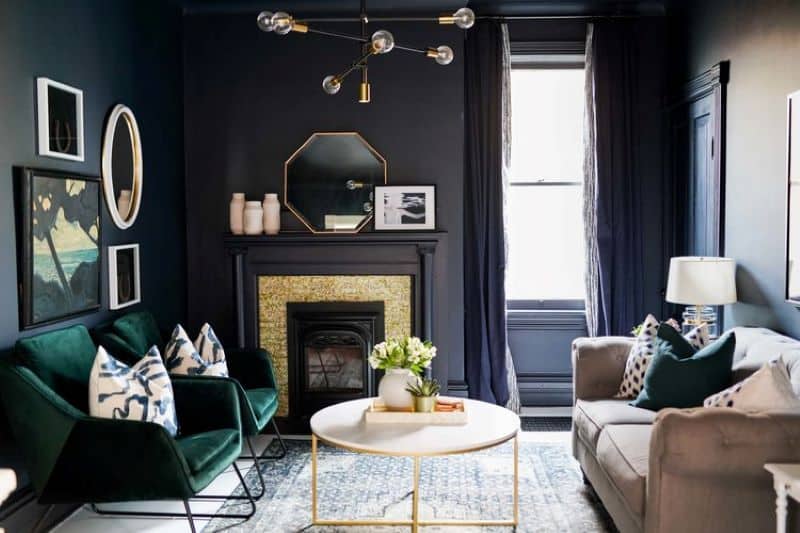
Metallic accents add depth and warmth to monochrome rooms.
2. Use Shades of Gray and Off-White
A monochrome scheme doesn’t have to be pure black and pure white. Soft grays, charcoal, and creamy whites make the room feel more layered—especially in bedrooms and relaxed living spaces.

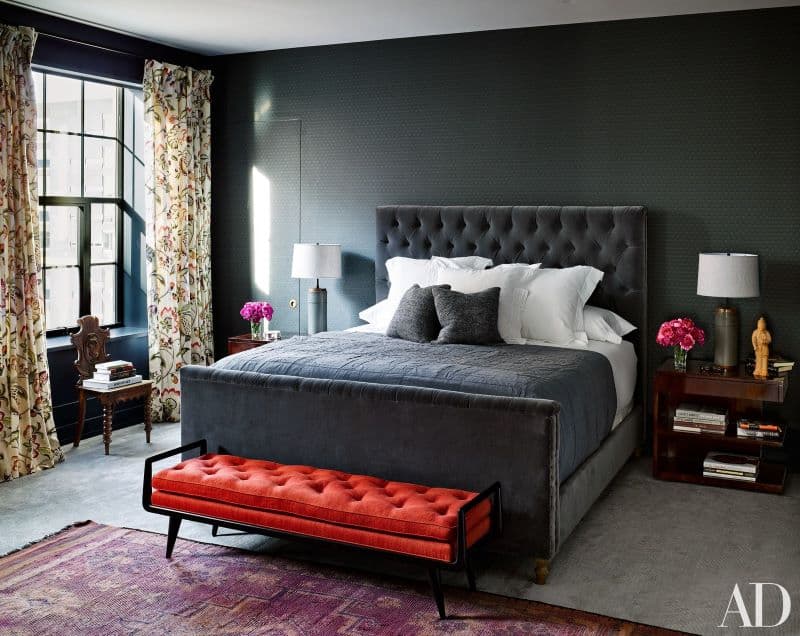
Layer grays and creams to reduce harshness while keeping the look sharp.
3. Change Accent Colors Seasonally
One advantage of black and white is that accents can rotate without redoing the room. Switch cushions, throws, florals, or tabletop decor to match the season and the mood you want.
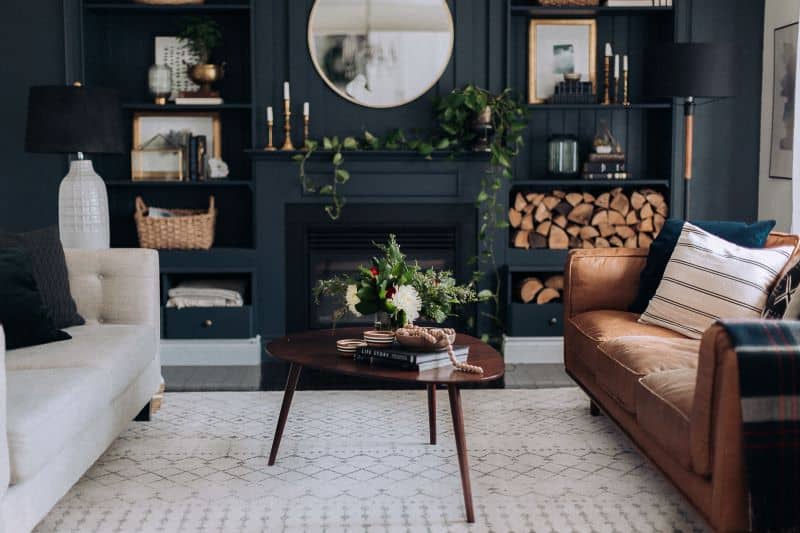
Seasonal accents let you refresh the room without changing the foundation.
4. Find Your Balance of Black and White
Balance doesn’t have to be a 50/50 split. If you want an open, bright room, lean whiter; if you want a moody, restful room, lean darker. Let light levels and furniture mass guide the ratio.
Your space doesn’t have to be a 50/50 split—choose the ratio that fits the light and mood.
Both palettes read neutral, but they behave differently in a finished room. Use this quick comparison to pick the direction that matches your space.
| What you want | Black & white rugs | Black & grey rugs |
|---|
| Maximum crispness | Highest contrast; very graphic and architectural | Softer transitions; less stark in mixed lighting |
| A calmer neutral read | Best when pattern scale is larger and textures are layered | Naturally calmer because gray bridges the contrast |
| Pairing with accents | Excellent for bold, clean accent colors | Excellent for muted, tonal palettes and softer color stories |
Closest Cousins
- Black and grey rugs — a softer cousin palette with lower contrast.
- Neutral rugs — broader beige/cream/gray direction when you want contrast without graphic edges.
- Art Deco rugs — bold geometry and strong contrast that often reads beautifully in black and white.
- Geometric rugs — clean shapes and repeating structures that suit monochrome interiors.
- Kilim rugs — flatweaves with a tailored, graphic feel.
- Vintage shag rugs — a texture-forward way to soften contrast.
- Rugs by origin — browse black and white palettes by region and weaving tradition.
Glossary
Monochrome: a palette built primarily from one color family (black/white counts as a monochrome foundation). |
Negative space: intentionally unpatterned areas that make a design feel calmer. |
Flatweave: a rug without pile (often crisp and graphic). |
Pile: the upright fiber surface that adds softness and depth. |
Abrash: natural shade variation that adds movement and character.
Full A–Z: Rug glossary
FAQ
Are black and white rugs hard to decorate around?
They can be if contrast is pushed everywhere. Keep the rug as the structure, then soften with layered neutrals (cream, gray, natural woods) and a few intentional accent pieces.
Do black and white rugs make a small room feel bigger?
They can, especially with larger-scale patterns and lighter surrounding tones. Sizing matters more than color—use the rug size guide to plan proportion first.
What’s the best black/white ratio for a room?
There’s no universal rule. Bright rooms can handle more black; dim rooms often benefit from more light ground. Let natural light and furniture mass decide the ratio.
Can I add color to a black-and-white room?
Yes—black and white are neutral. Choose one accent color family and repeat it a few times (art, textiles, accessories) for a controlled, intentional look.
How do I keep a monochrome room from feeling cold?
Use texture: wool pile, natural linen, wood, and warm metals. A textured rug (or a plush pile) can soften a high-contrast palette immediately.
Nazmiyal White-Glove Service
We make it easy to shop with confidence—whether you’re choosing a single statement piece or curating a full room.
Nazmiyal Collection has been a trusted source for antique rugs and vintage carpets for over 45 years. Our NYC gallery curates one-of-a-kind pieces with an emphasis on authenticity, provenance, and lasting decorative value.
Need help? Call us at (212) 545-8029 or visit our New York City showroom to work with a rug expert.

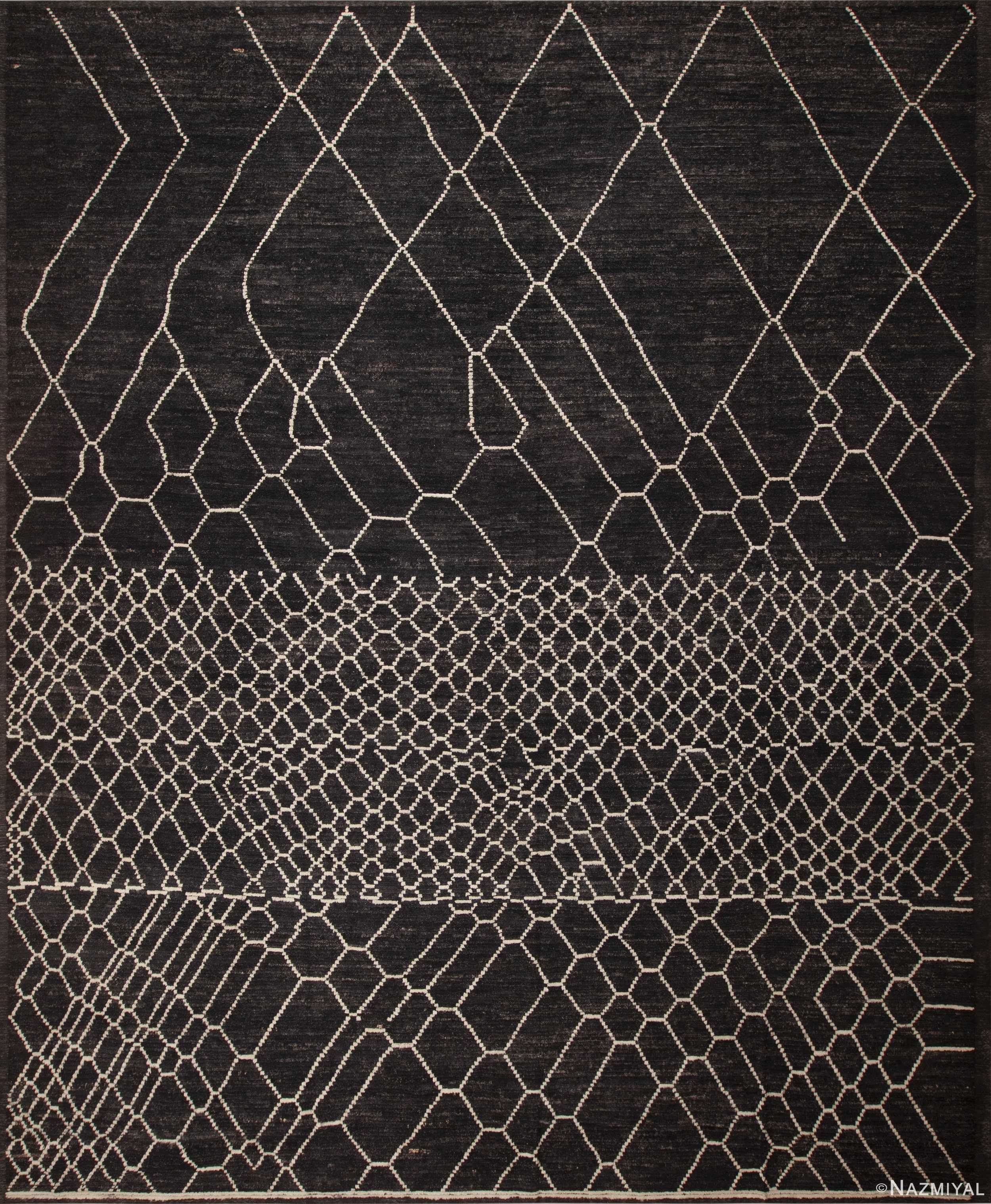
 Size: 13 ft 8 in x 19 ft 1 in (4.17 m x 5.82 m)
 Size: 14 ft 4 in x 18 ft 9 in (4.37 m x 5.71 m)
 Size: 14 ft 2 in x 16 ft 10 in (4.32 m x 5.13 m)
 Size: 12 ft 10 in x 15 ft 7 in (3.91 m x 4.75 m)
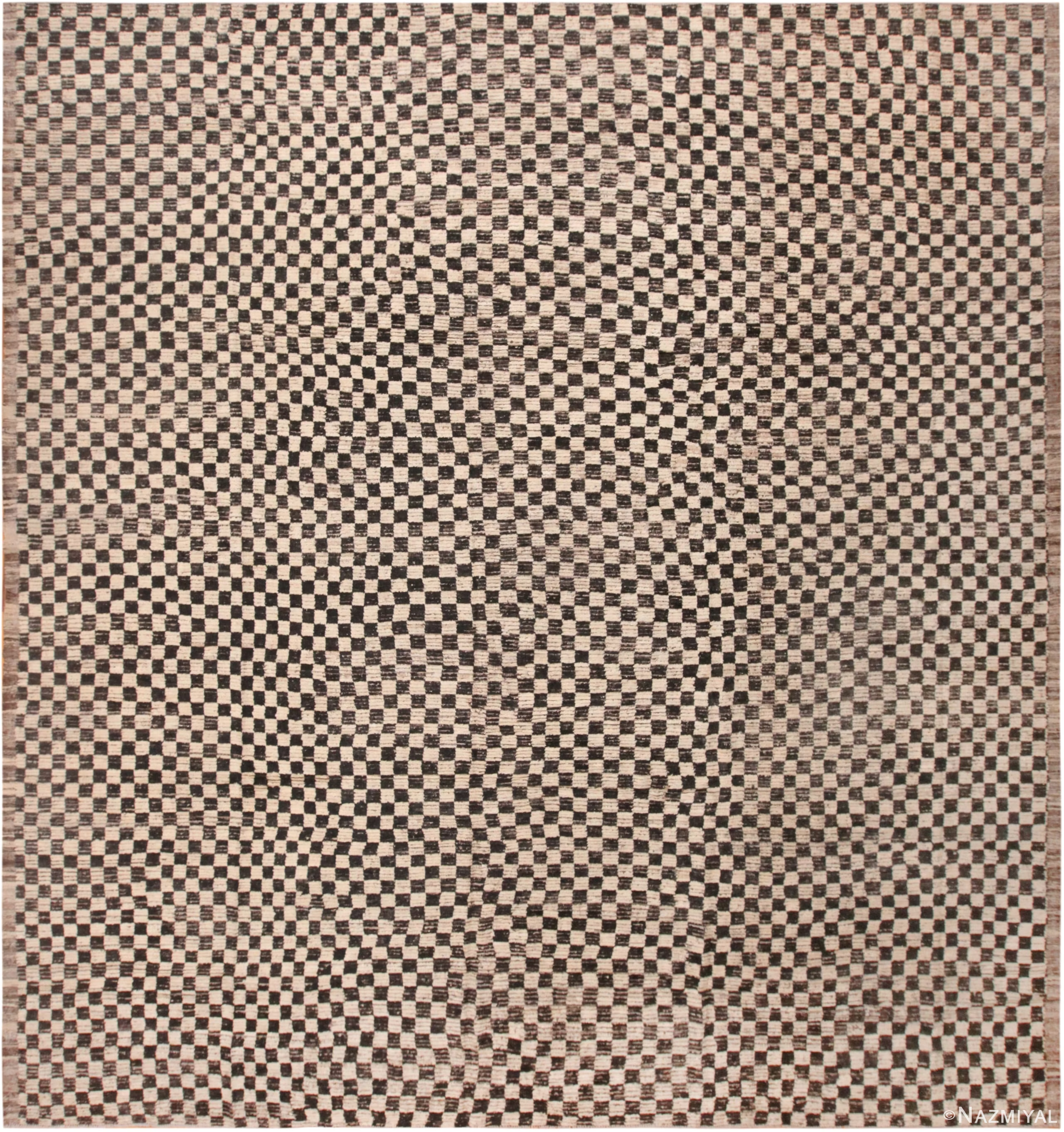
 Size: 14 ft 6 in x 14 ft 11 in (4.42 m x 4.55 m)
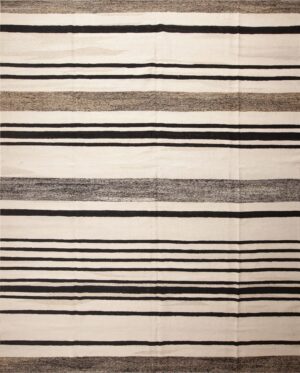
 Size: 8 ft 6 in x 13 ft 2 in (2.59 m x 4.01 m)
 Size: 8 ft 4 in x 13 ft (2.54 m x 3.96 m)
 Size: 1 ft 10 in x 12 ft 9 in (0.56 m x 3.89 m)
 Size: 2 ft x 12 ft (0.61 m x 3.66 m)
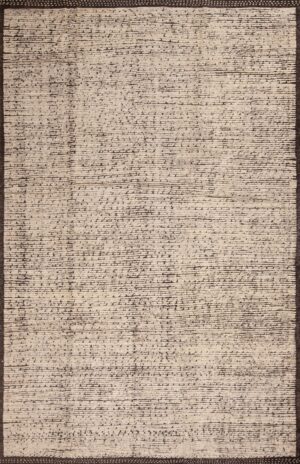
 Size: 9 ft 5 in x 11 ft 11 in (2.87 m x 3.63 m)
 Size: 9 ft 1 in x 11 ft 11 in (2.77 m x 3.63 m)
 Size: 9 ft 9 in x 11 ft 10 in (2.97 m x 3.61 m)
 Size: 9 ft x 11 ft 10 in (2.74 m x 3.61 m)
 Size: 7 ft 4 in x 11 ft 3 in (2.24 m x 3.43 m)
 Size: 3 ft x 10 ft 4 in (0.91 m x 3.15 m)
 Size: 7 ft 3 in x 9 ft 10 in (2.21 m x 3 m)
 Size: 2 ft 10 in x 9 ft 10 in (0.86 m x 3 m)
 Size: 6 ft x 9 ft (1.83 m x 2.74 m)
 Size: 2 ft 6 in x 9 ft (0.76 m x 2.74 m)