Quick Navigation
Key Takeaways
- Sarouks are known for a plush, durable pile that wears well in active rooms—hallways, foyers, and living spaces included.
- Expect classic Persian design logic—medallions, allover repeats, and bouquet fields—often rendered with confident, readable drawing.
- Because some pieces were historically re-colored for export (“painted Sarouks”), ask about dye work, condition, and restoration so you know exactly what you’re buying.
At-a-Glance Specs
- Origin: Iran (Persia), Arak region (Sarouk/Saruk family)
- Construction: hand-knotted wool pile (often on cotton foundation); many examples are noted for blue weft threads
- Common eras: late 1800s through mid-1900s (piece-dependent)
- Typical looks: bouquet fields • allover Herati repeats • medallion-and-corner layouts • vine scroll florals
- Palette notes: navy • indigo • burgundy • ivory • rose/salmon • soft greens and warm accents
- Best rooms: living rooms • dining rooms • entry halls • corridors • family rooms that need a durable foundation
- What to look for: even pile and honest wear • stable edges • clean perimeter • coherent color story • clear motif resolution
Popular Searches
Large rugs | Oversized rugs | Wool rugs | Floral rugs | Allover rugs | Medallion layouts | Shop by color | Rug size guide
Featured Sarouk Rugs from the Collection
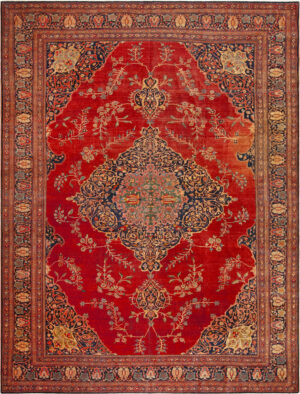
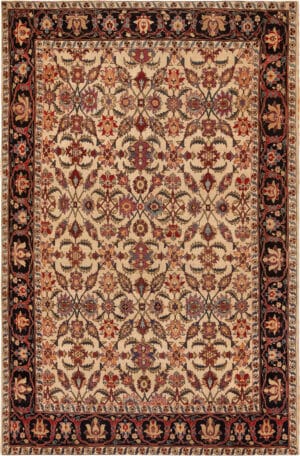
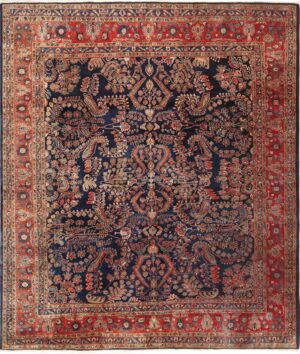
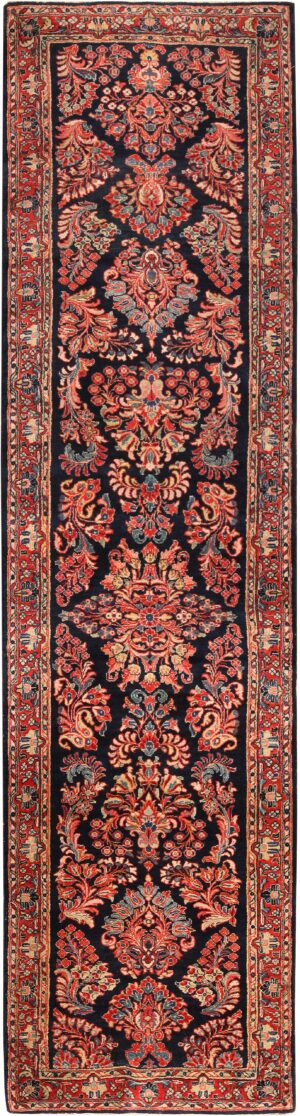
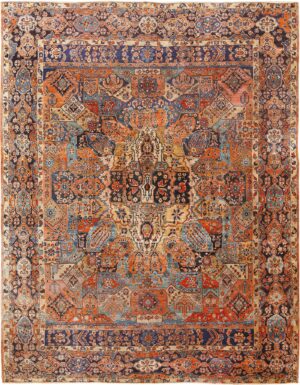
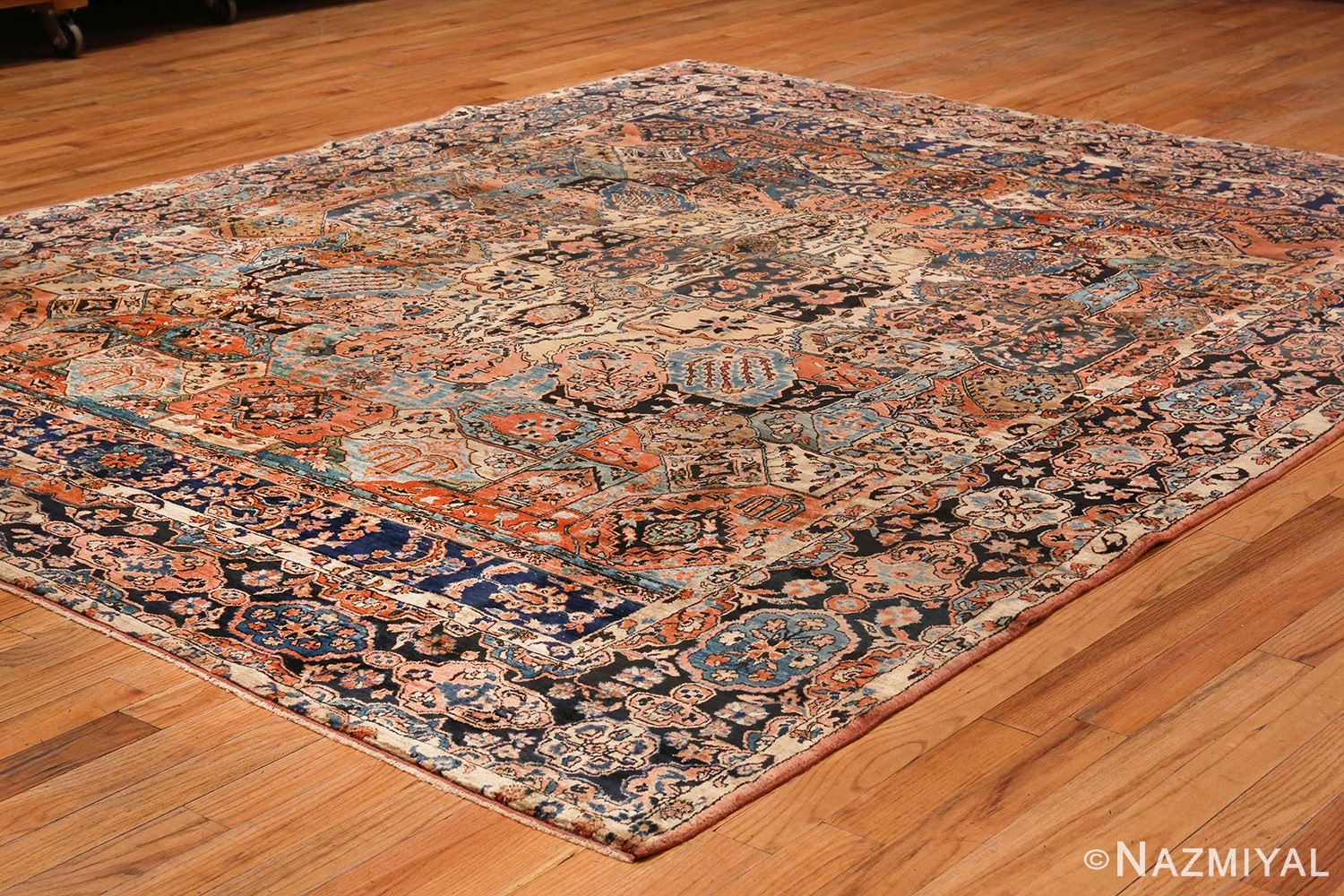
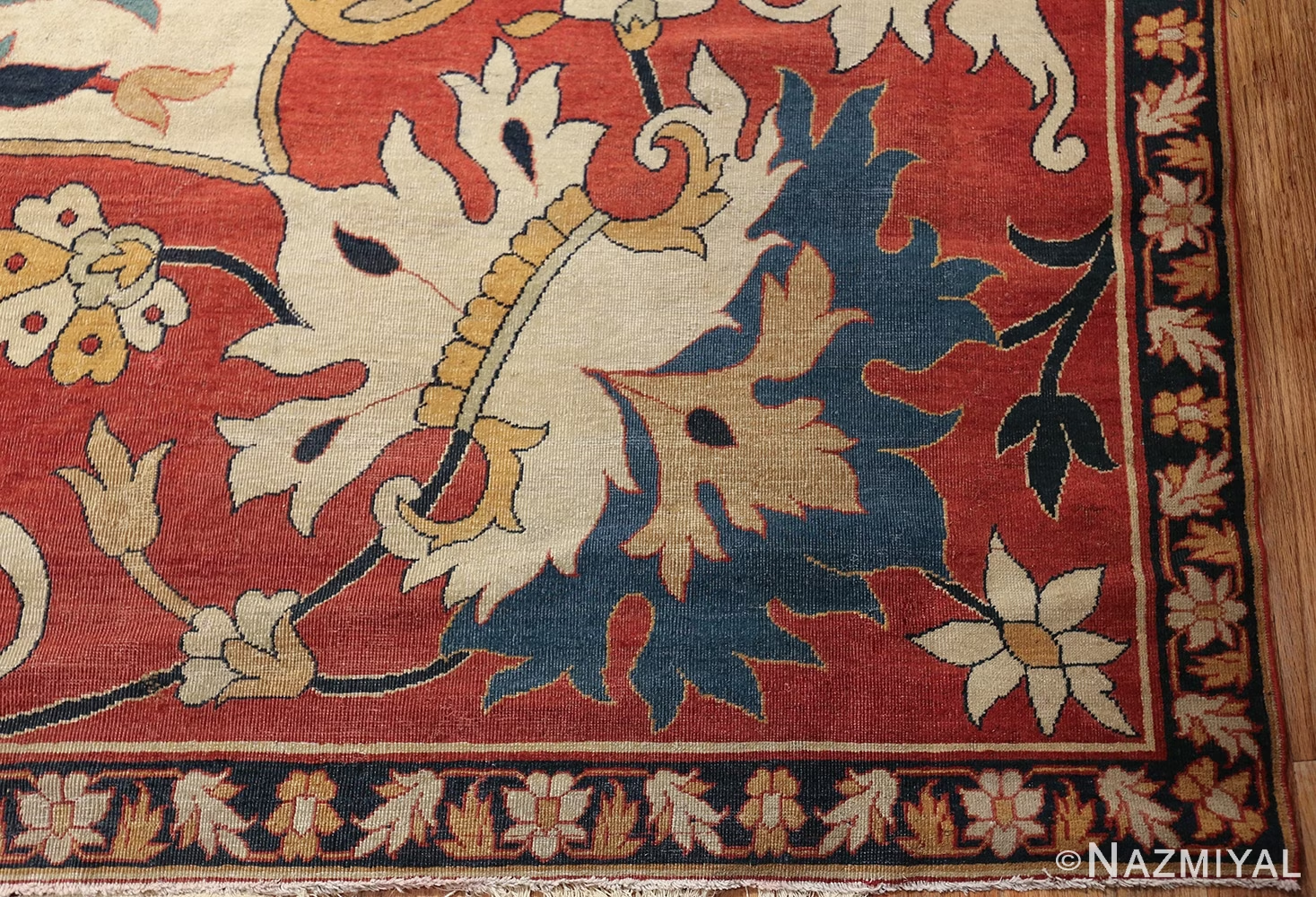
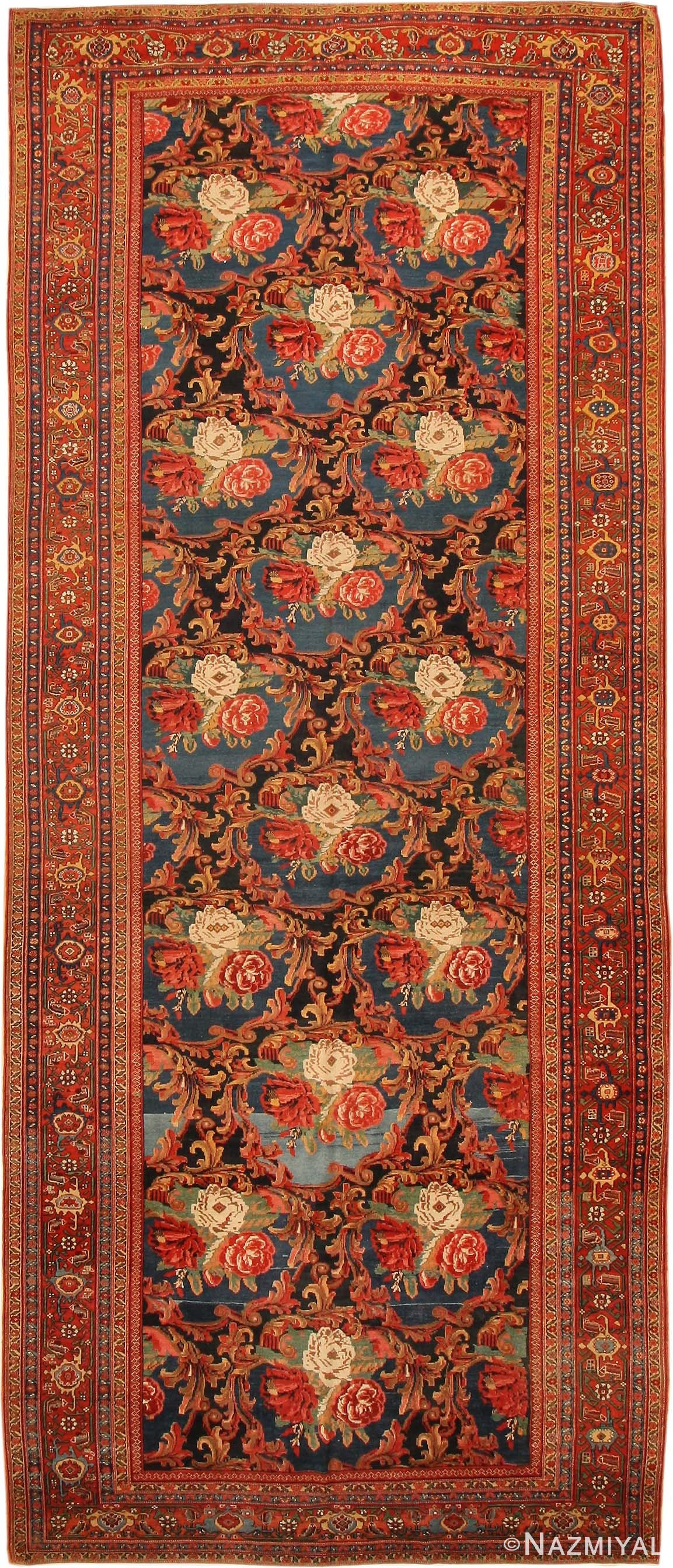
Inventory changes frequently. These featured rugs are examples of antique Sarouk carpets—showing the range from classic florals to Sarouk-Farahan cousins.
History & Design Notes
Sarouk rugs rose to prominence as highly livable, export-friendly Persian carpets—richly patterned, confidently drawn, and famously durable underfoot. Early 20th-century Western taste (especially in the United States) helped popularize deeper reds and rosy fields, including the well-known “painted” Sarouks that were re-colored to meet market demand.
Within the Sarouk family, you may see related trade names such as Sarough/Saruk, Sarouk-Farahan, and Mohajaran Sarouk—labels that often signal differences in handle, color preference, or the specific workshop/village influence behind the rug.
Identification & Construction
Design language: what Sarouks tend to “say” in a room
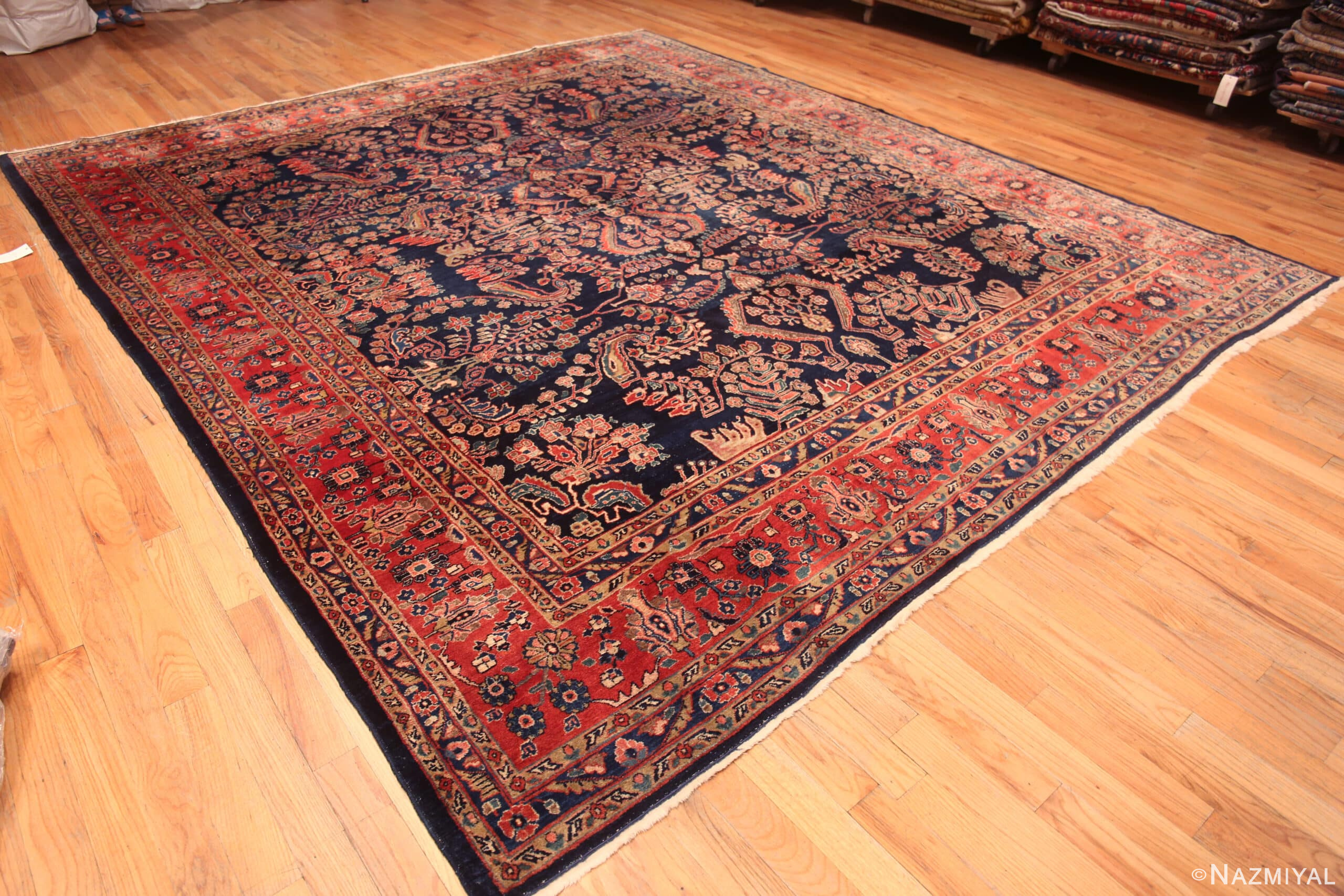
Many Sarouk carpets lean into floral abundance—bouquets, vine scrolls, and garden-like repeats—organized with the kind of symmetry and border structure collectors associate with classical Persian composition. Depending on the piece, you may find a central medallion, a dense allover system, or a bouquet field that reads like an arranged interior textile.
Structure, wool quality, and what to look for
Sarouks are often appreciated for their substantial, comfortable pile and excellent wear. When assessing a piece, pay close attention to edge stability, pile evenness, and whether color has been altered or refreshed. If you like to compare structure and regional weaving families beyond Sarouk, explore rug origins for broader context.
Decorating & Placement Guidance
Use Sarouk rugs as a “soft architecture” layer
Because Sarouk rugs carry pattern and presence without feeling chaotic, they’re a strong foundation for rooms that need warmth and cohesion—especially when you let the rug drive your accent colors (one or two repeats elsewhere is plenty). In dining rooms and living rooms, Sarouks often read polished and complete thanks to their structured borders and balanced ornament.
Match the era to your lifestyle
For a collected, time-earned look, start with an antique rug in a grounded palette. If you prefer relaxed character with flexible styling, explore vintage rugs. For cleaner lines and fewer competing motifs, a modern rug can deliver a similar “anchoring” effect with simpler pattern language.
High-traffic zones: lean into Sarouk’s strengths
If you’re placing a rug in a hallway, foyer, or heavily used living area, Sarouk’s thicker wool pile can be a practical advantage. Pair with a proper pad, keep the perimeter clean and stable, and rotate occasionally so wear stays even—especially in sunny rooms.
Sarouk Rugs vs Sultanabad Rugs
If you love the Arak-region look and want a close regional parallel, compare Sarouks with Sultanabad rugs—another highly decorative Persian category known for room-friendly patterning and strong decorating versatility.
| Feature | Sarouk Rugs | Sultanabad Rugs |
|---|
| Design feel | Bouquet florals, vine scrolls, medallions and allover repeats with a “finished” interior presence | Decorative, spacious patterning (often larger scale) that reads relaxed and room-friendly |
| Texture & wear | Often thicker, plush wool pile; known for durability | Durable and decorative; many examples excel in large living spaces |
| Best for | Hallways, foyers, living rooms, dining rooms—anywhere you want floral richness + resilience | Open-plan rooms, big living spaces, and interiors that want generous pattern scale |
| Shopping mindset | Prioritize pile health, edge stability, and color honesty (especially for “painted” examples) | Prioritize composition, condition, and how the scale reads in your room |
Closest Cousins
- Sarouk Farahan rugs — a closely related branch that often feels a touch more “workshop-classical” in drawing and composition.
- Sultanabad rugs — a regional cousin prized for decorative versatility and room-sized comfort.
- Ziegler rugs — a decorating-friendly category known for softer, market-savvy palettes that pair easily with Western interiors.
Glossary
Allover design: A repeating pattern that fills the entire field without a single dominant center.
Medallion-and-corner: A central focal motif with coordinated corner spandrels and structured borders.
Weft: The horizontal threads that run through the foundation; some Sarouk-family rugs are noted for blue wefts.
“Painted” Sarouk: A trade term for rugs that were re-colored/over-dyed to match market preferences.
For more definitions, see the rug glossary.
FAQ
Are Sarouk rugs durable?
Yes—many antique Sarouk rugs are known for resilient wool and a thicker pile, which can make them especially practical in busy living spaces.
What do Sarouk rugs usually look like?
Many feature floral ornament—bouquets, vine scrolls, and garden-like repeats—either in an allover layout or a medallion-and-corner composition with structured borders.
What does “painted Sarouk” mean?
It typically refers to Sarouk rugs that were re-colored (often to deeper reds, rose, or salmon tones) to match early 20th-century export-market taste. Ask about dye work and condition so you know what you’re buying.
Do Sarouk rugs work in modern interiors?
They can. If you keep surrounding elements calm—simple upholstery, quiet wall color, and a few intentional accents—a Sarouk can add depth and warmth without feeling heavy.
What should I check before buying an antique Sarouk?
Look for stable edges, even wear, a clean perimeter, and clear information about restoration and color work (especially on re-colored examples).
The Three Pillars of the Nazmiyal Collection
- Unmatched Inventory Depth: A wide, continually refreshed selection spanning eras, regions, and decorating moods—so you can compare options and choose with confidence.
- Rigorous Authenticity Standards: Transparent listing details, condition clarity, and a long-standing commitment to genuine antique and vintage textiles.
- Expert Advisory: Hands-on guidance from rug specialists who understand structure, design, and how a piece will live in a real room.
Nazmiyal White-Glove Service
We make it easy to shop with confidence—whether you’re choosing a single statement piece or curating a full room.
Nazmiyal Collection has been a trusted source for antique rugs and vintage carpets for over 45 years. Our NYC gallery curates one-of-a-kind pieces with an emphasis on authenticity, provenance, and lasting decorative value.
Need help? Call us at (212) 545-8029 or visit our New York City showroom to work with a rug expert.