Popular Searches
Large rugs | Oversized rugs | Floral rugs | Allover rugs | Medallion layouts | Shop by color | Rug size guide
Quick Navigation
Key Takeaways
- Mongolian rugs often emphasize negative space and “transparent” motifs that feel calm and architectural.
- Many antique examples use a restrained palette (earth tones, soft neutrals, muted jewel notes) with subtle tonal variation.
- They’re comparatively rare in the market, making strong pieces especially appealing to collectors and designers seeking a quiet statement.
At-a-Glance Specs
- Origin: Mongolia and adjacent Inner Asian production areas; many examples show strong northern Chinese design influence
- Common eras: late 19th to early 20th century (earlier survivors are uncommon)
- Weave / texture: primarily pile carpets; some “Mongolian rug” usage can also refer to felt traditions in a different context
- Materials: wool pile is most common; foundations can vary by workshop and purpose
- Typical sizes: room-size carpets • square formats • smaller area rugs
- Palette: soft neutrals • earthy browns • muted blues • occasional coral or jewel-tone accents
- What to look for: confident use of open ground • clean, simplified drawing • balanced borders • appealing wear and condition for the intended room
Featured Mongolian Rugs From Our Inventory
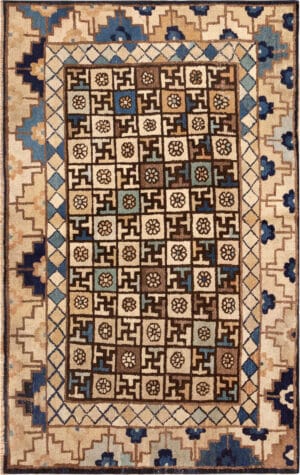
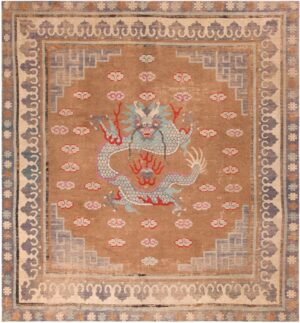
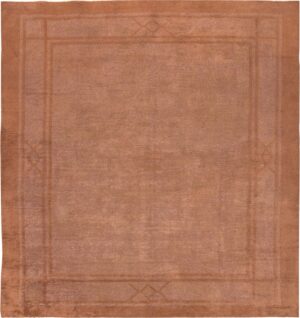
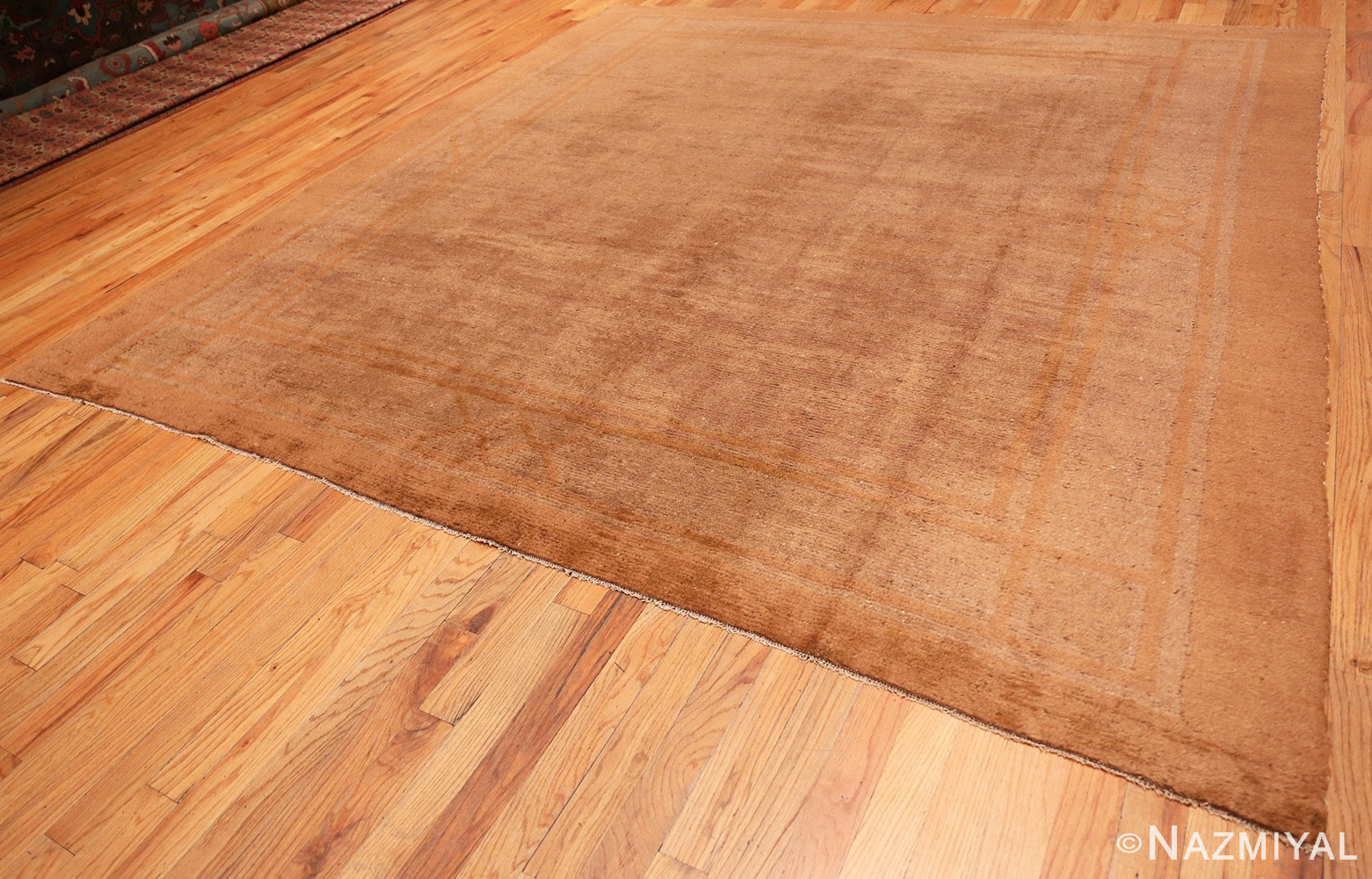
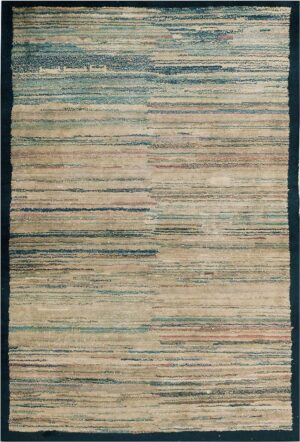
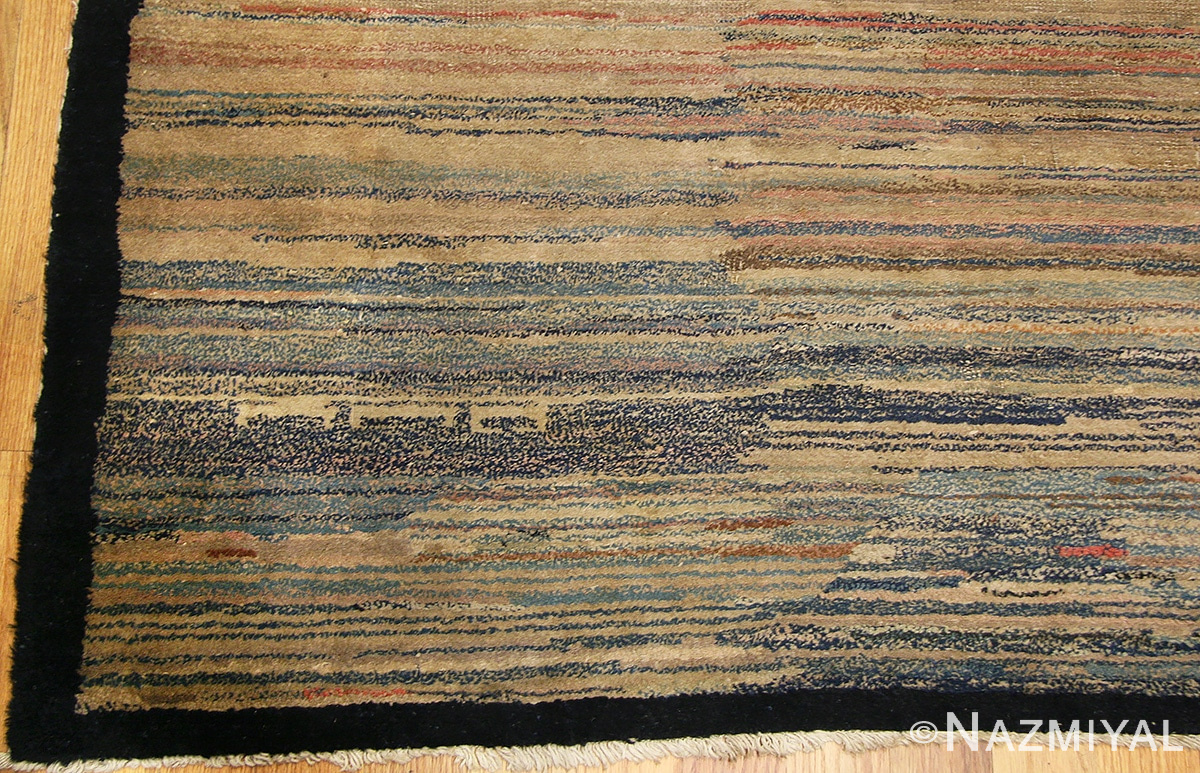
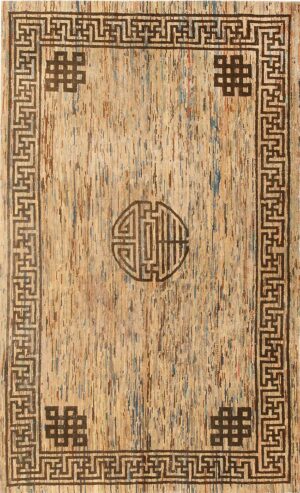
Browse the Mongolian selection on this page to compare composition (open-space medallions vs border-driven layouts), palette, and scale—then match the rug to your furniture plan using size and color filters.
Why Nazmiyal Collection? 3 Pillars of Nazmiyal Collection
When you’re shopping a rare category like Mongolian rugs, selection quality and accurate representation matter as much as design.
- Unmatched Inventory Depth: access to a broad range of rare, collector-grade rugs across styles, sizes, and eras.
- Rigorous Authenticity Standards: expert-vetted pieces that are accurately described and responsibly represented.
- Expert Advisory: real guidance on size, placement, and value—so the rug you choose works in your room and your goals.
Identification & Construction
A practical way to recognize antique Mongolian rugs is by their “quiet structure”: motifs that appear to float against a relatively uniform ground, borders that frame without crowding, and an overall preference for spacious composition. Many examples borrow vocabulary associated with northern China—fretwork, simplified medallions, and auspicious symbols—rendered with a more direct, pared-back drawing that reads graphic rather than ornate.
Most market examples are wool-pile carpets, and quality is easiest to feel and see: stable structure, clear drawing, and an intentional balance between motif and negative space. For broader country-and-region context, explore the Rug origins hub.
Decorating & Placement Guidance
Mongolian rugs excel as calm “anchors” in rooms that already have strong architecture or art: their open fields and disciplined motifs add interest without visual noise. In living rooms, choose a room-size or oversized format that supports the seating plan; in studies and bedrooms, softer palettes and tonal variation create a settled, collected feel.
For a layered look, pair Mongolian pieces with refined antique rugs, contrast them with bolder color stories from vintage rugs, or let them act as a composed foundation beneath expressive modern rugs accents elsewhere in the home.
Mongolian Rugs vs Chinese Rugs
Because many Mongolian carpets share design DNA with northern Chinese weaving, comparing the two categories helps you shop faster—especially if you’re choosing between symbolism-forward patterns and ultra-spacious, minimalist layouts.
| Feature | Mongolian rugs | Chinese rugs |
|---|
| Composition | Often favors open ground with “transparent” motifs and calm framing | Broad range: from spacious Peking/Ningxia layouts to denser symbolic arrangements |
| Motifs | Simplified auspicious symbols, medallions, and fretwork with a graphic feel | Deep symbolic vocabulary (dragons, clouds, shou, bats, scholars’ objects) depending on type |
| Palette | Restrained earth tones, soft neutrals, muted blues; subtle tonal variation is common | Can be very restrained or more colorful (especially in Art Deco-era examples) |
| How to choose | Prioritize negative space, drawing clarity, and scale that supports the room plan | Choose by subtype (Peking, Ningxia, Art Deco, etc.) and the strength of motif + condition |
If you’re also comparing to densely patterned traditions like Persian rugs, Mongolian carpets often read quieter and more architectural—ideal when you want pattern without “busy.”
Closest cousins (adjacent Chinese sub-styles):
Antique Ningxia rugs, Peking rugs
Glossary
- Negative space: intentionally open ground area that helps motifs read clearly and keeps a room feeling calm.
- Fretwork / key-pattern: linear, interlocking border geometry common across East Asian decorative arts and rugs.
- Abrash: natural tonal variation in dyed wool that creates gentle movement and depth across a field.
- Medallion: a central motif or emblem that organizes the composition (often “transparent” in Mongolian and Chinese layouts).
For more terms (materials, dyes, motifs, and condition language), see the Rug glossary.
FAQ
- Are Mongolian rugs Chinese rugs?
They’re closely related in design language. Many market examples reflect northern Chinese influence while being associated with Mongolia and adjacent Inner Asian regions. - Are antique Mongolian rugs rare?
Yes—compared with many higher-volume weaving regions, strong antique Mongolian carpets are less common, which increases collector interest when condition and design are right. - What designs are common in Mongolian rugs?
You’ll often see simplified auspicious motifs, medallions, fretwork borders, and compositions that emphasize open space. - Do Mongolian rugs work in modern interiors?
Very well. Their negative space and restrained palette can feel architectural and calm, especially in minimal or art-forward rooms. - How do I choose the right size?
Start with furniture layout: in living rooms, aim to anchor the seating group; in dining rooms, ensure chairs remain on the rug when pulled out. - How should I care for an antique Mongolian rug?
Vacuum gently, rotate periodically, address spills quickly, and use professional rug care for deeper cleaning or condition concerns.
Nazmiyal White-Glove Service
We make it easy to shop with confidence—whether you’re choosing a single statement piece or curating a full room.
Nazmiyal Collection has been a trusted source for antique rugs and vintage carpets for over 45 years. Our NYC gallery curates one-of-a-kind pieces with an emphasis on authenticity, provenance, and lasting decorative value.
Need help? Call us at (212) 545-8029 or visit our New York City showroom to work with a rug expert.